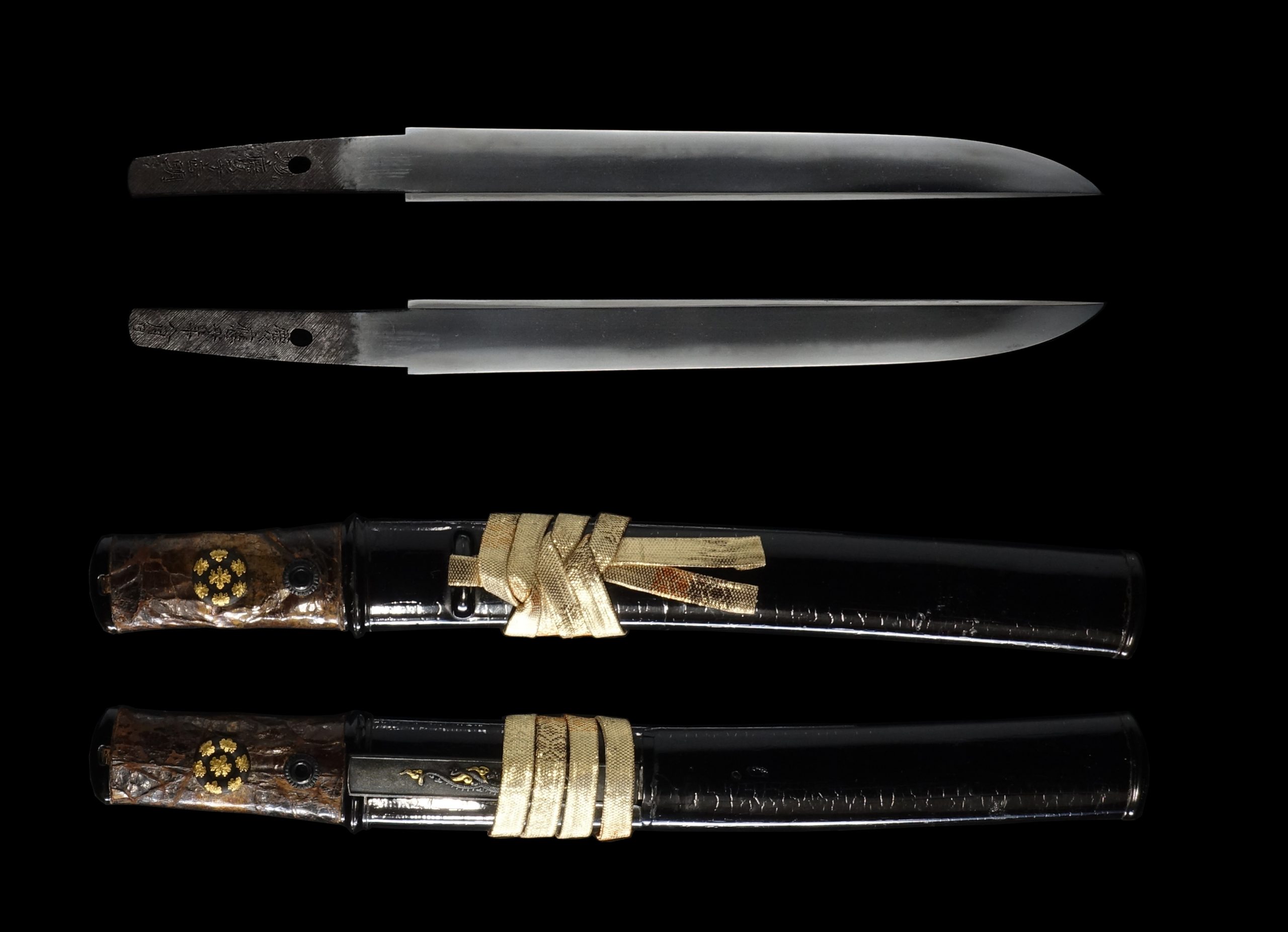
Around 1800 Suishinshi Masahide argued in his writings that the craft must return to the old masters’ methods: the fukkotō revival. His greatest successor Naotane worked convincingly in Bizen and Sōshū manners that had been dead for centuries.
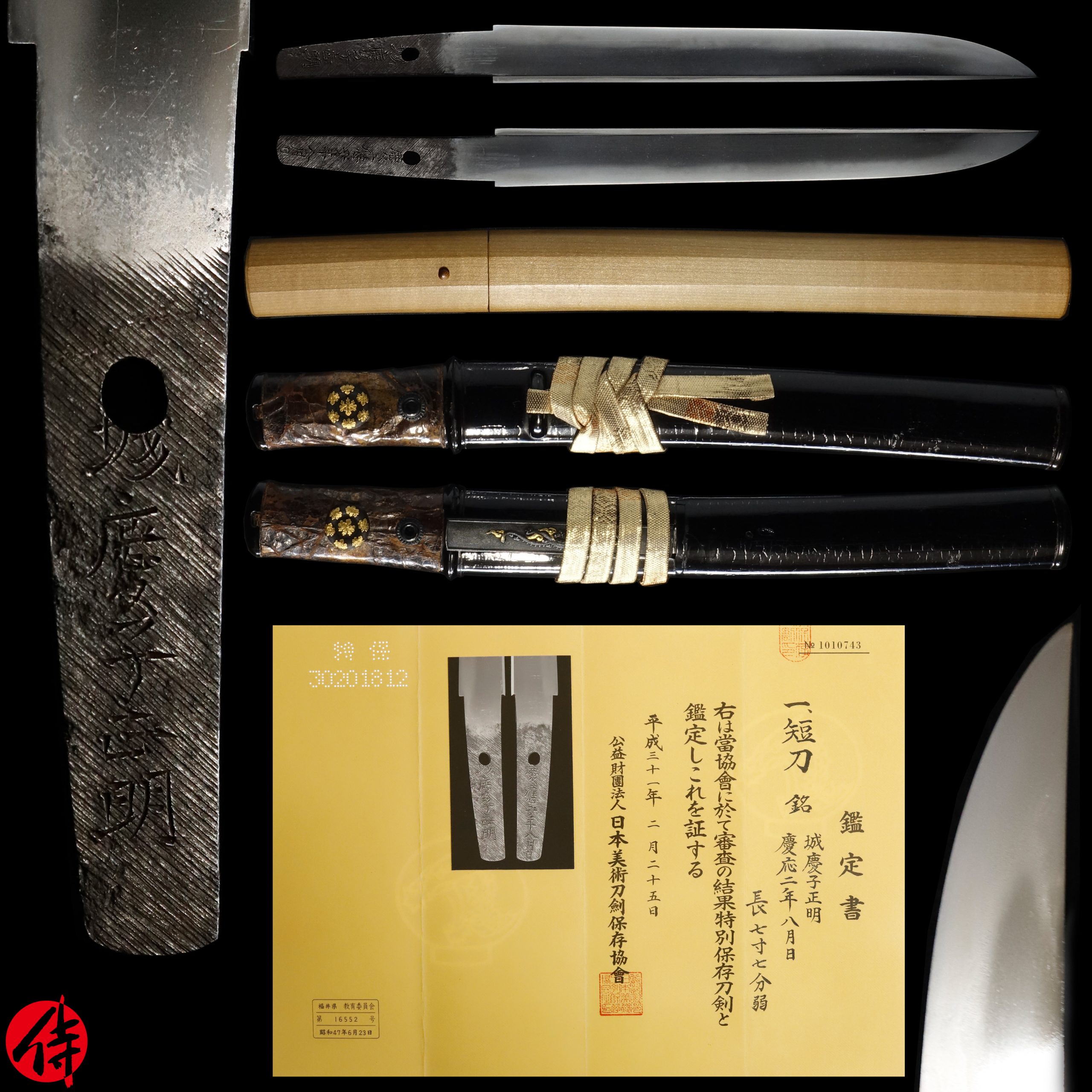
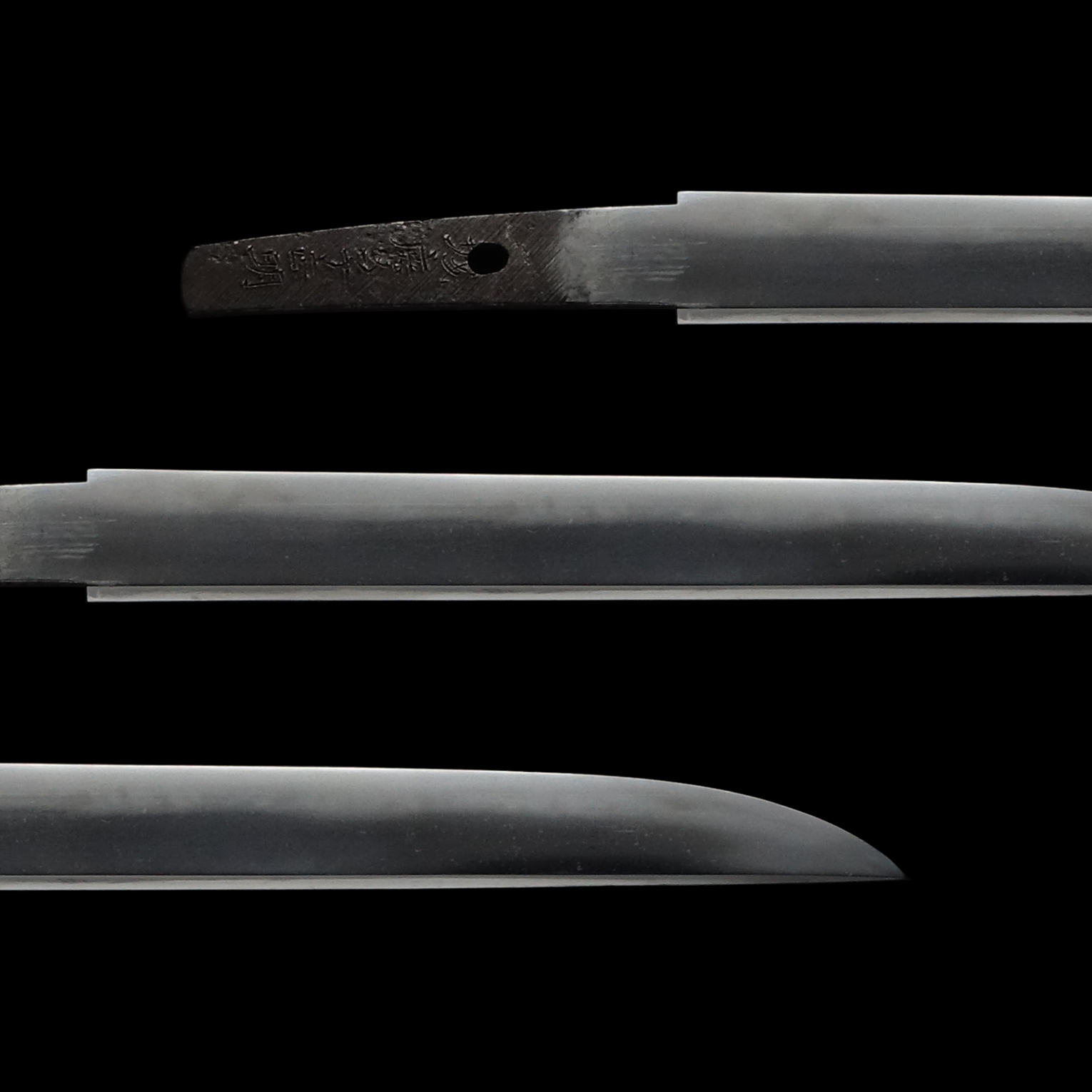
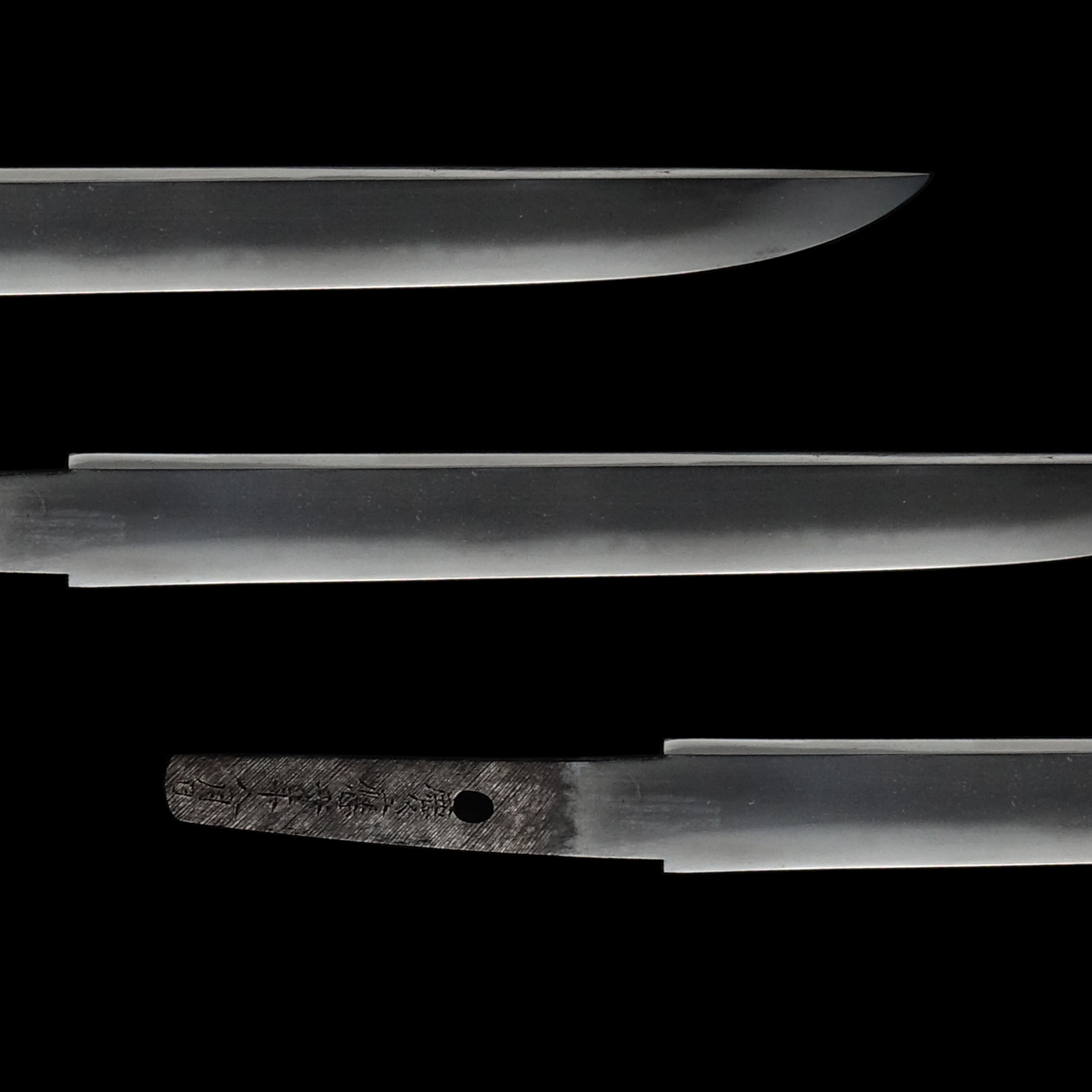
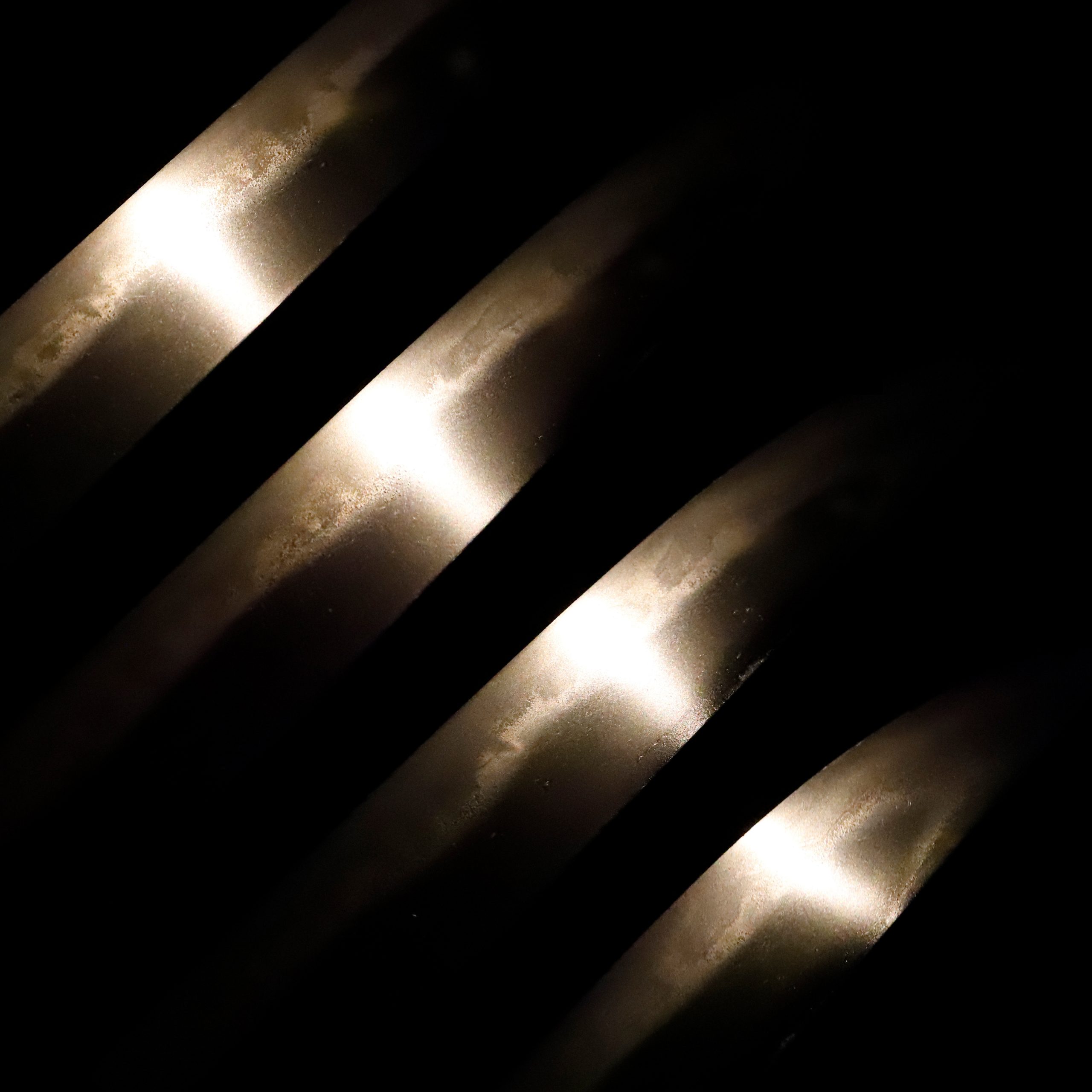
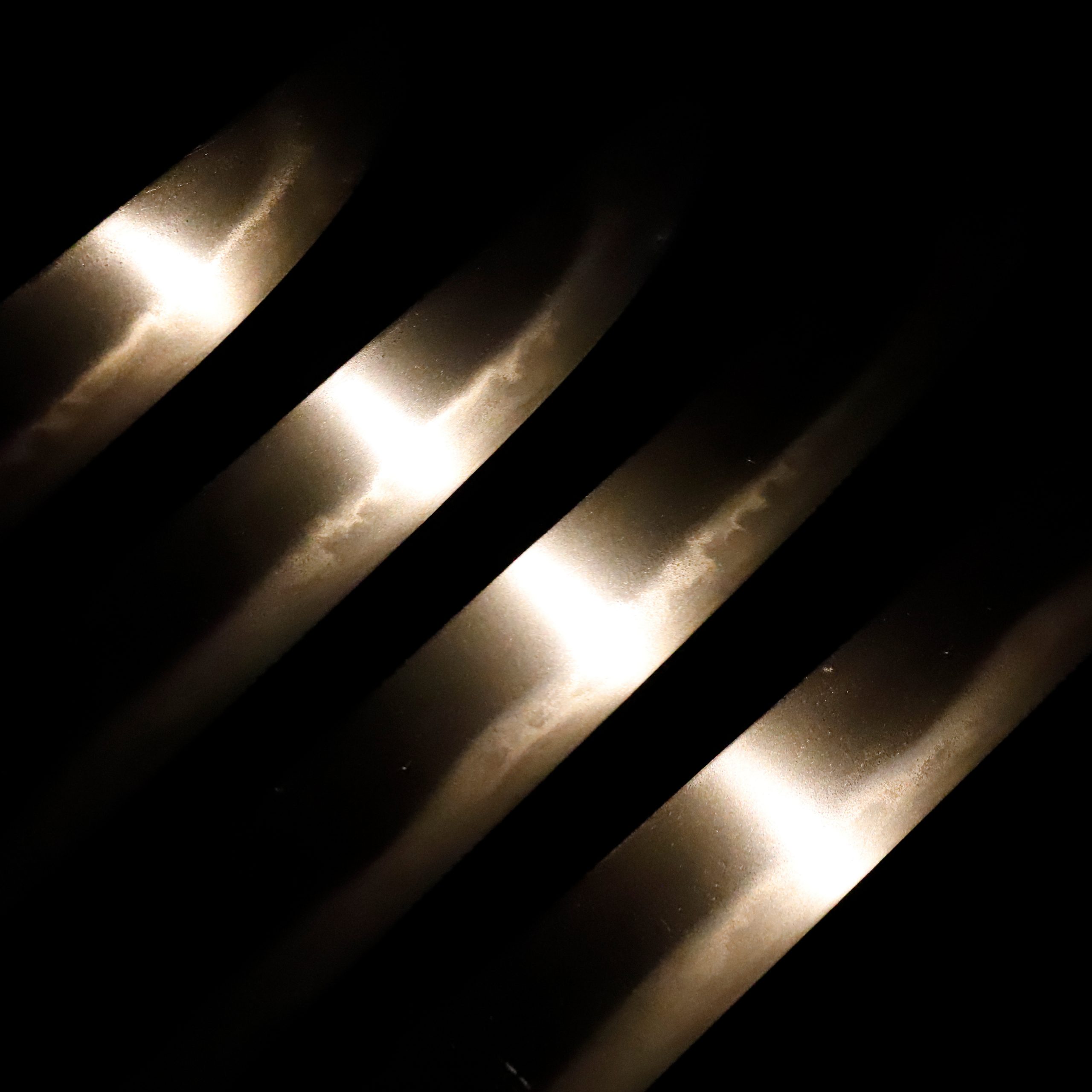
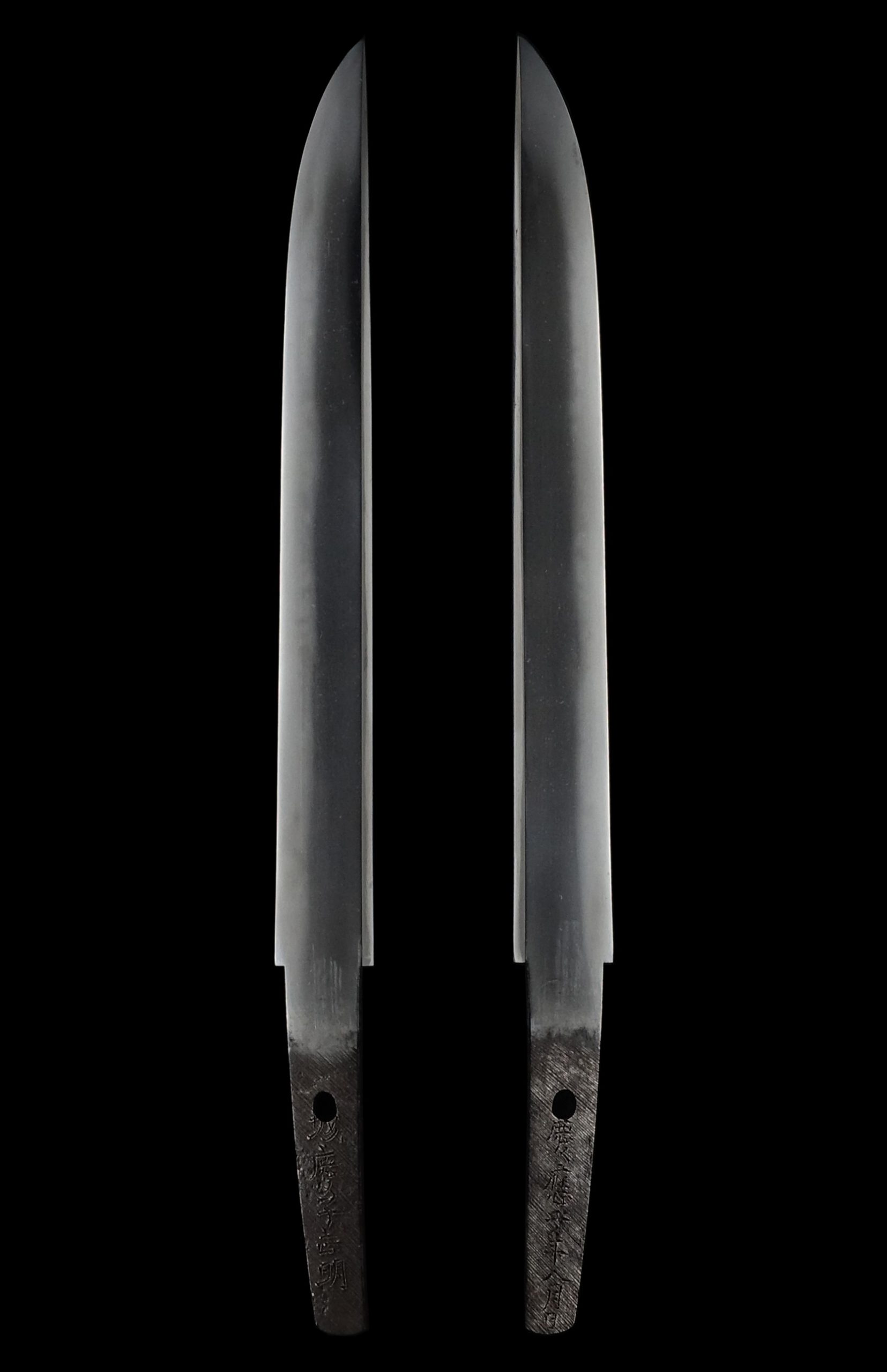
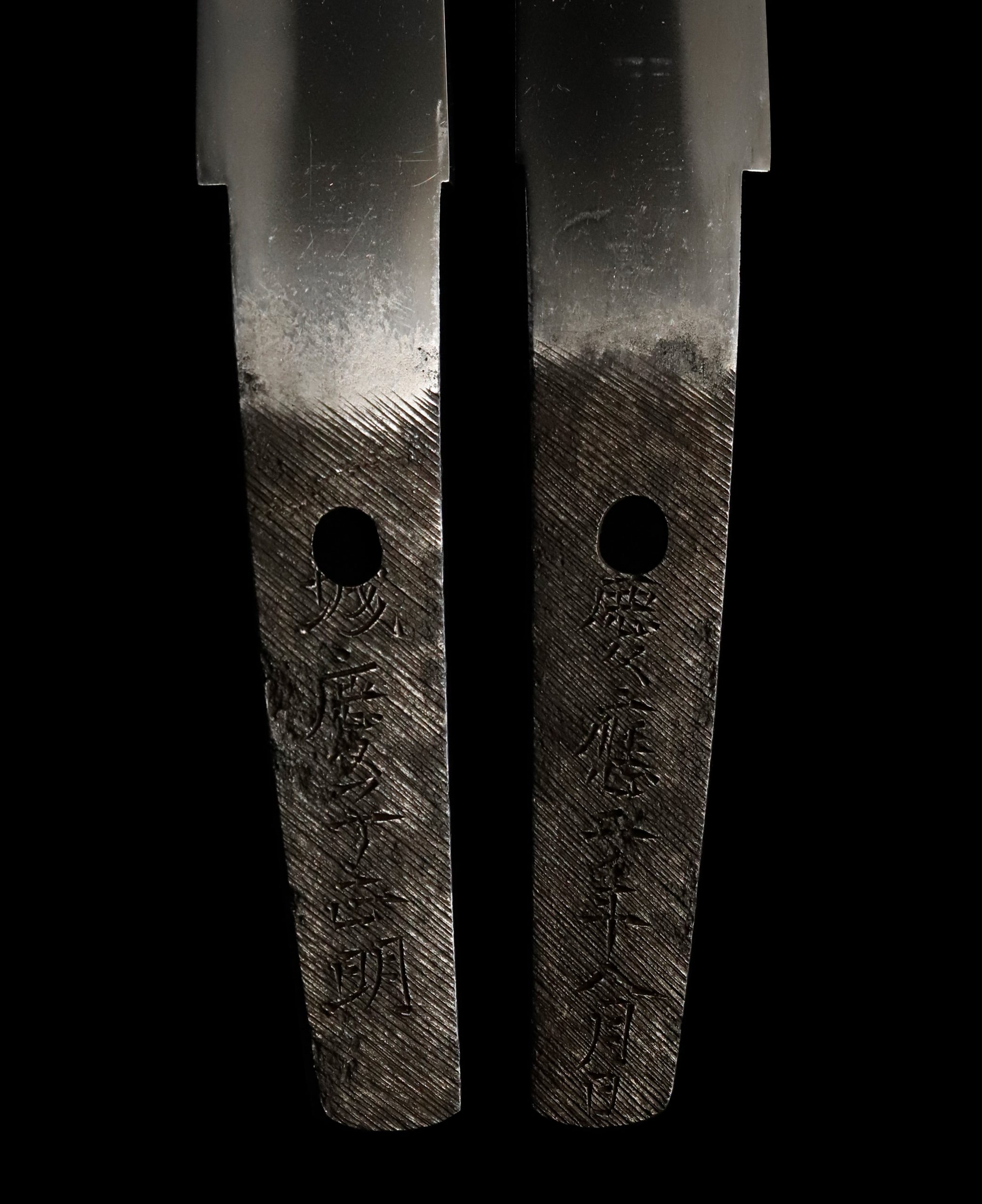
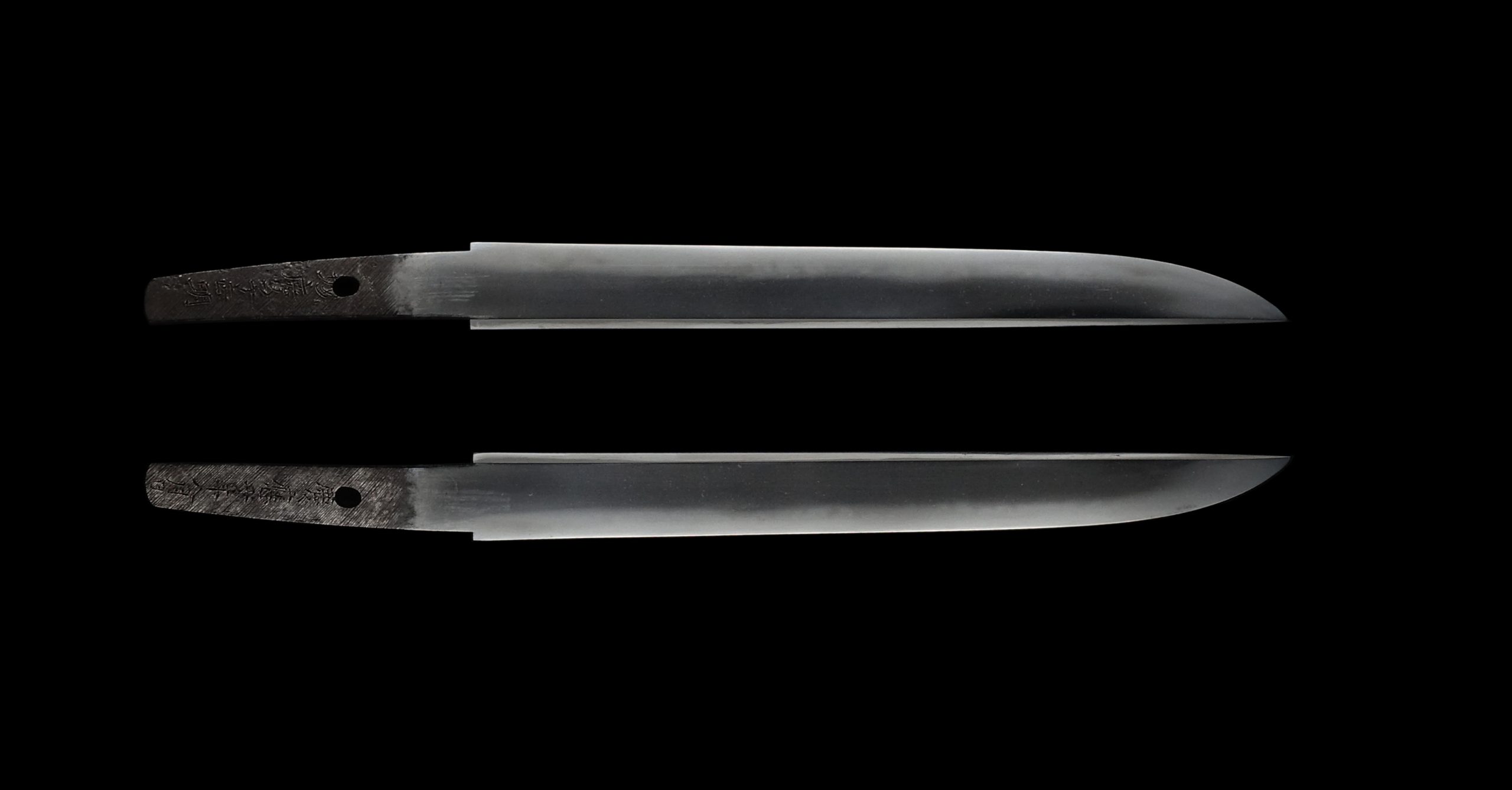
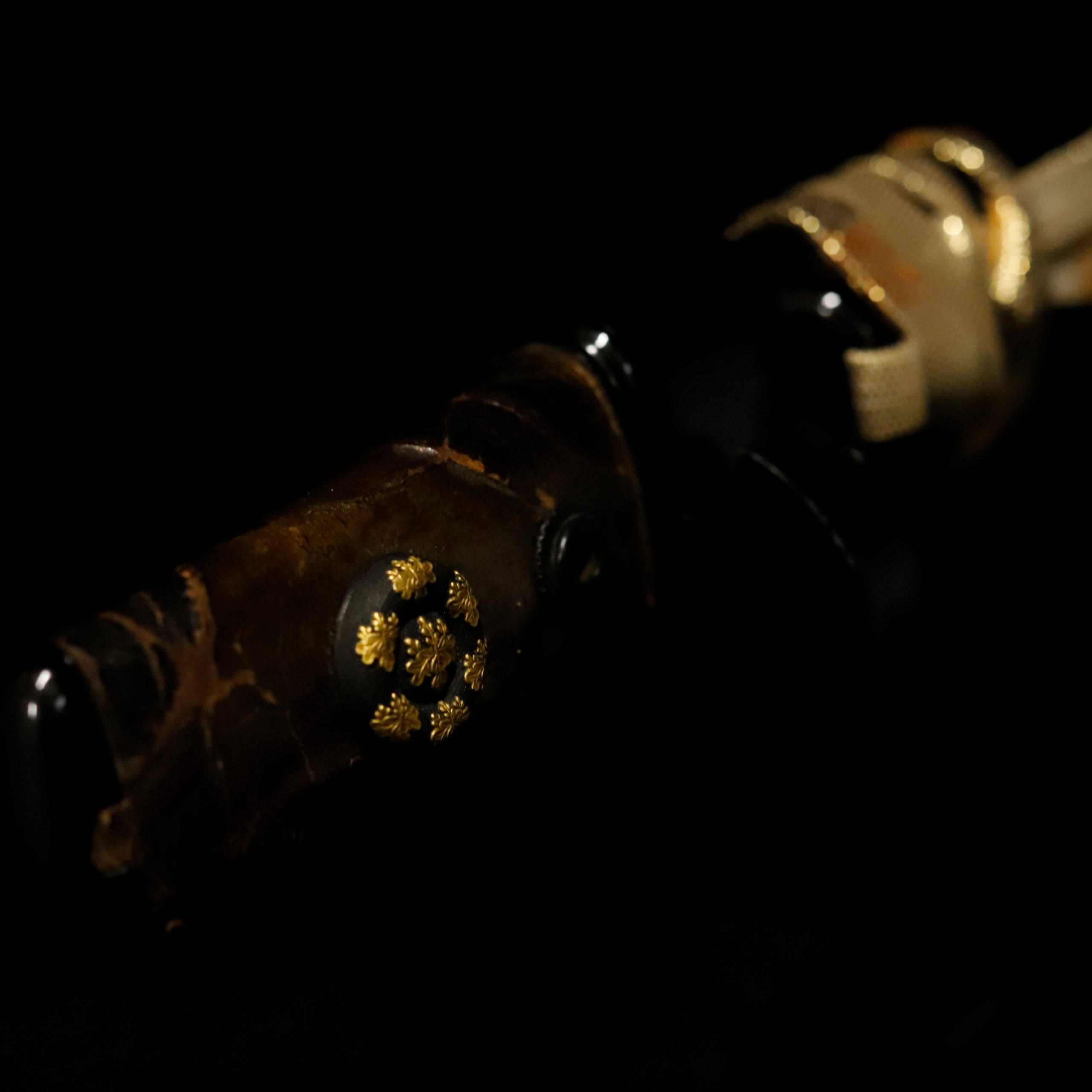
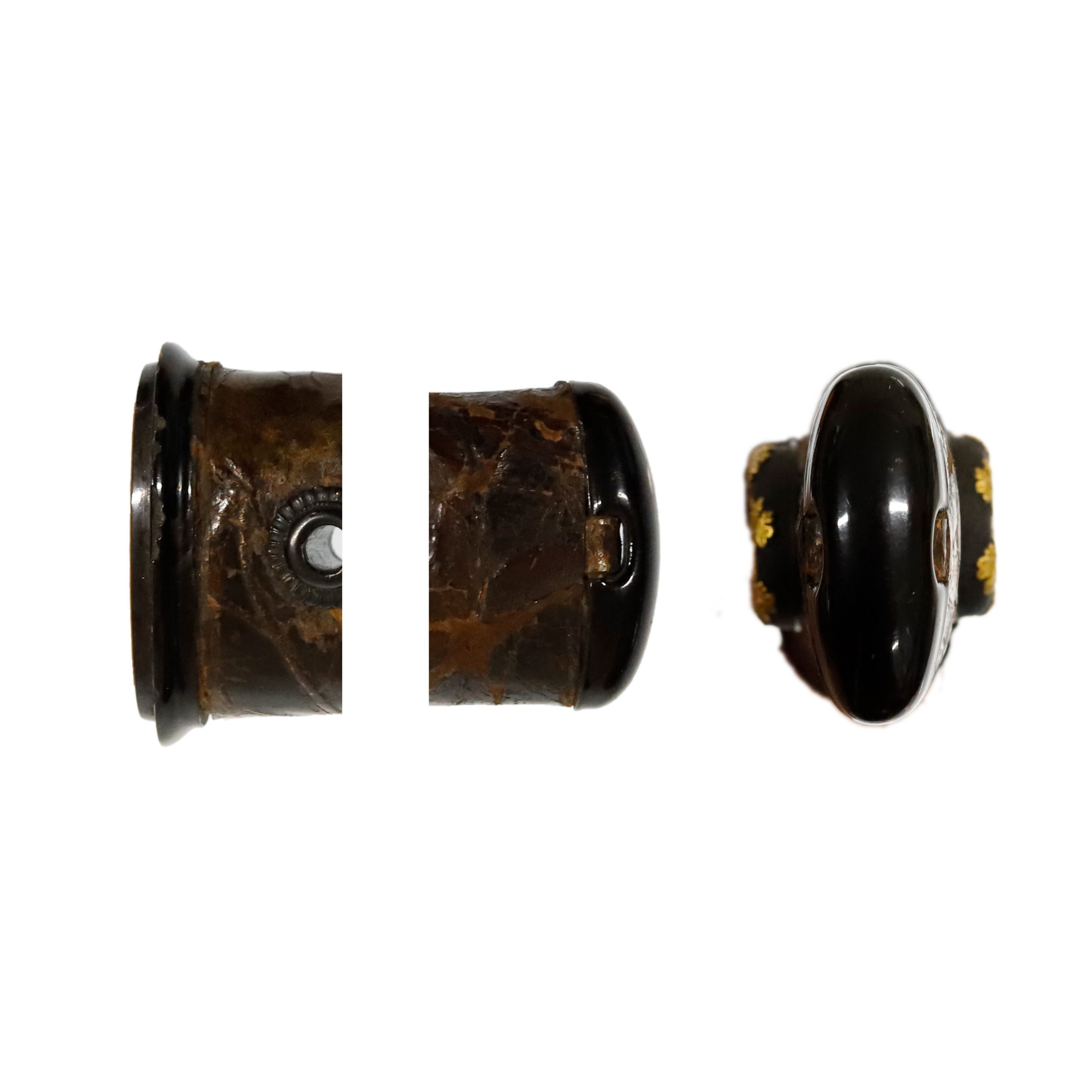
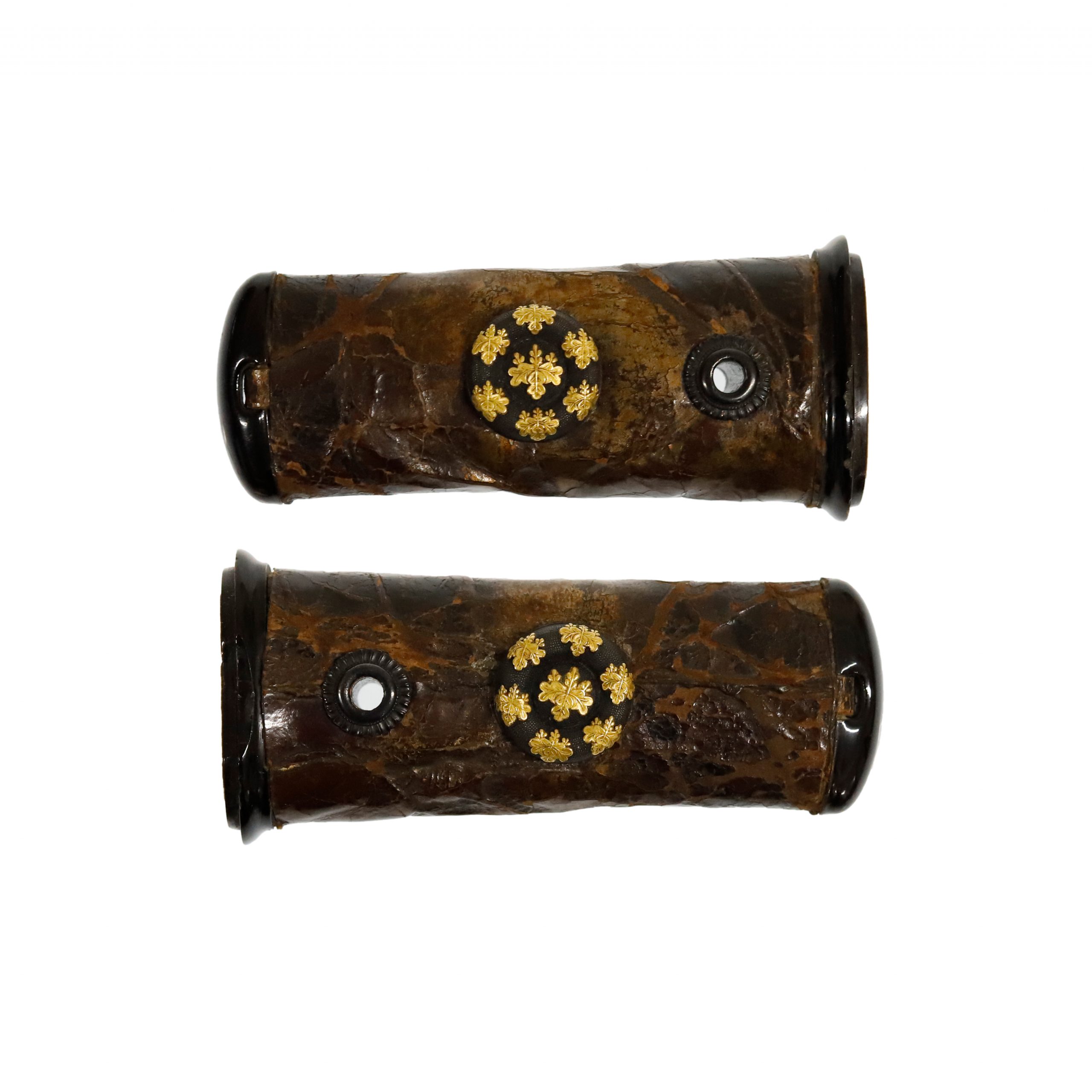
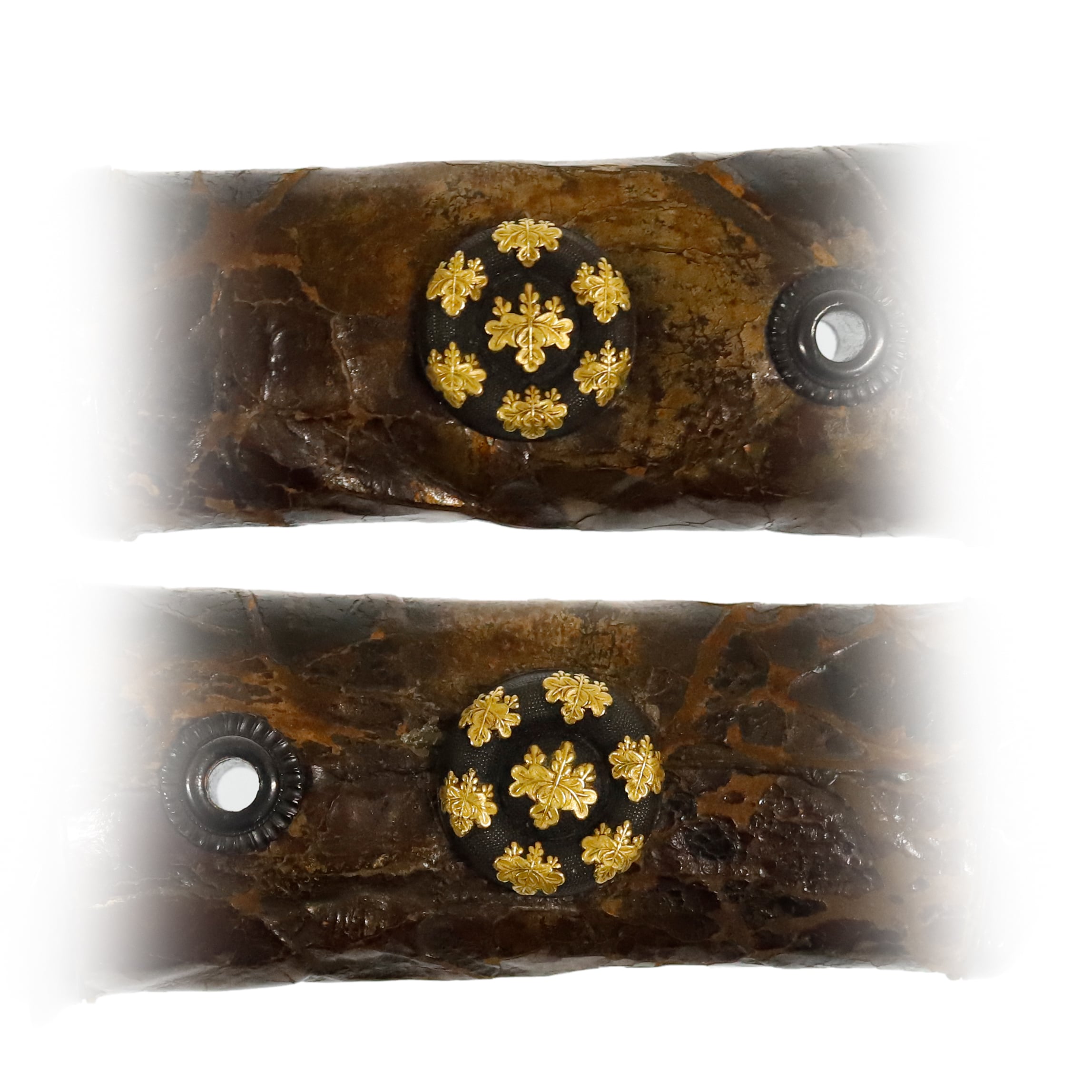
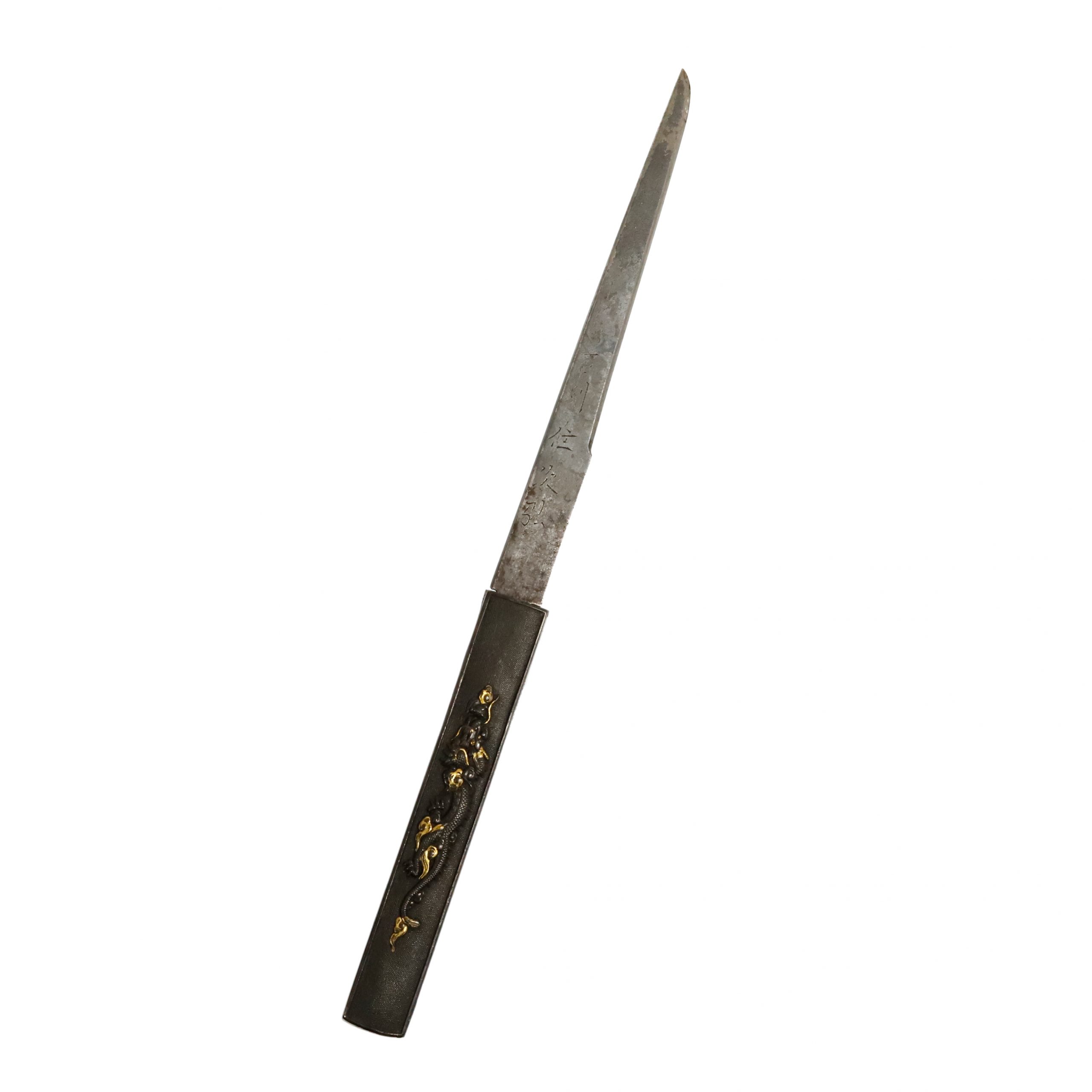
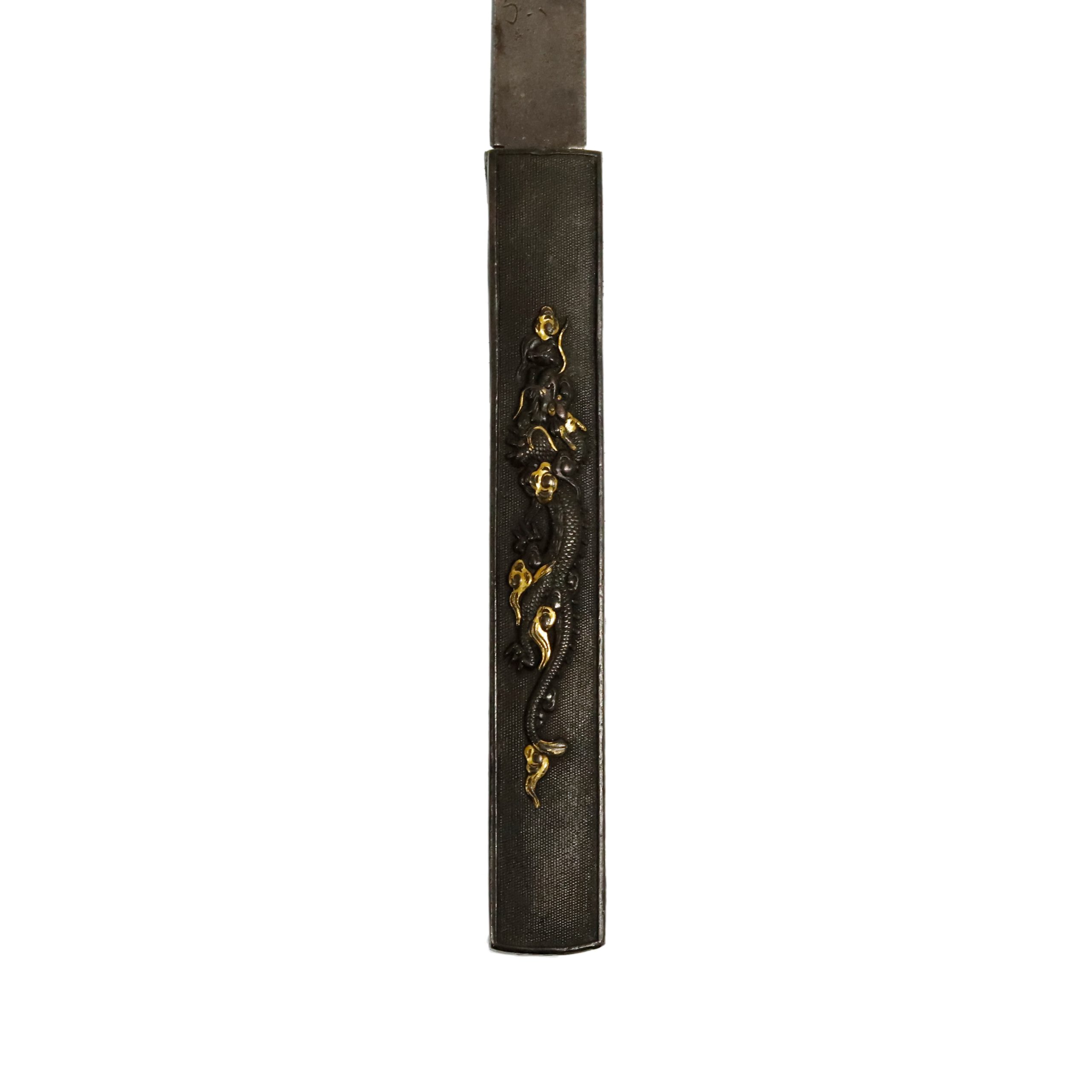
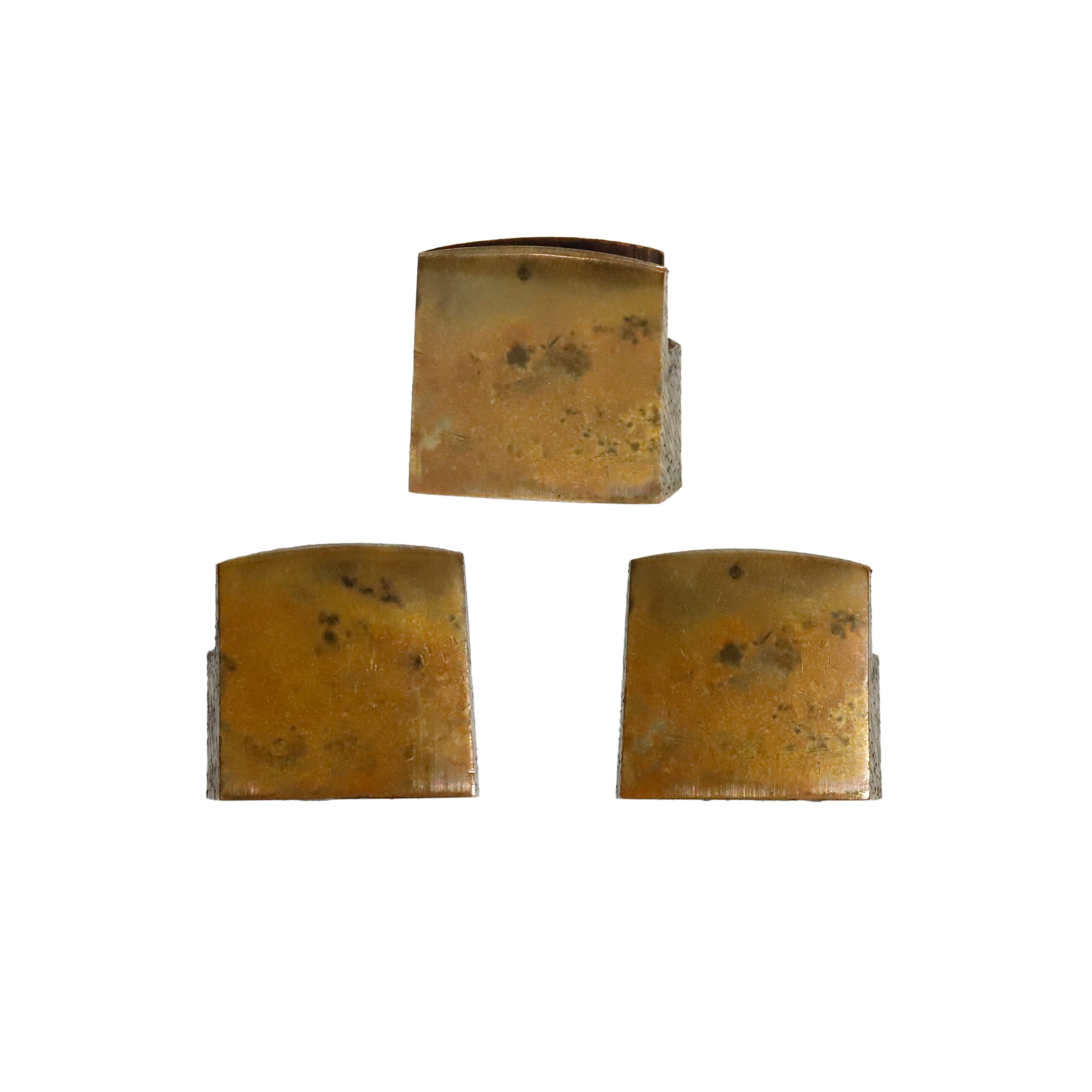
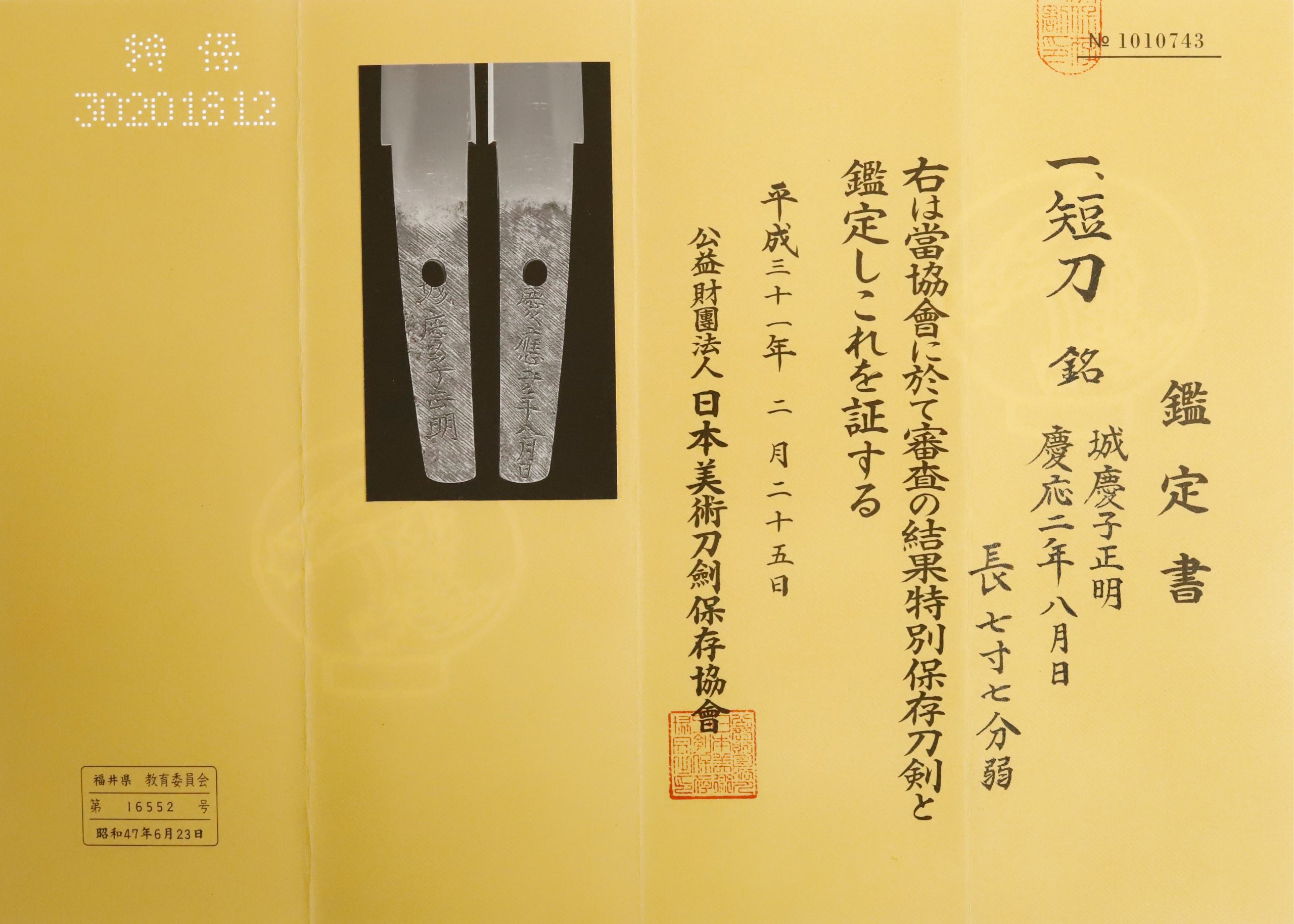
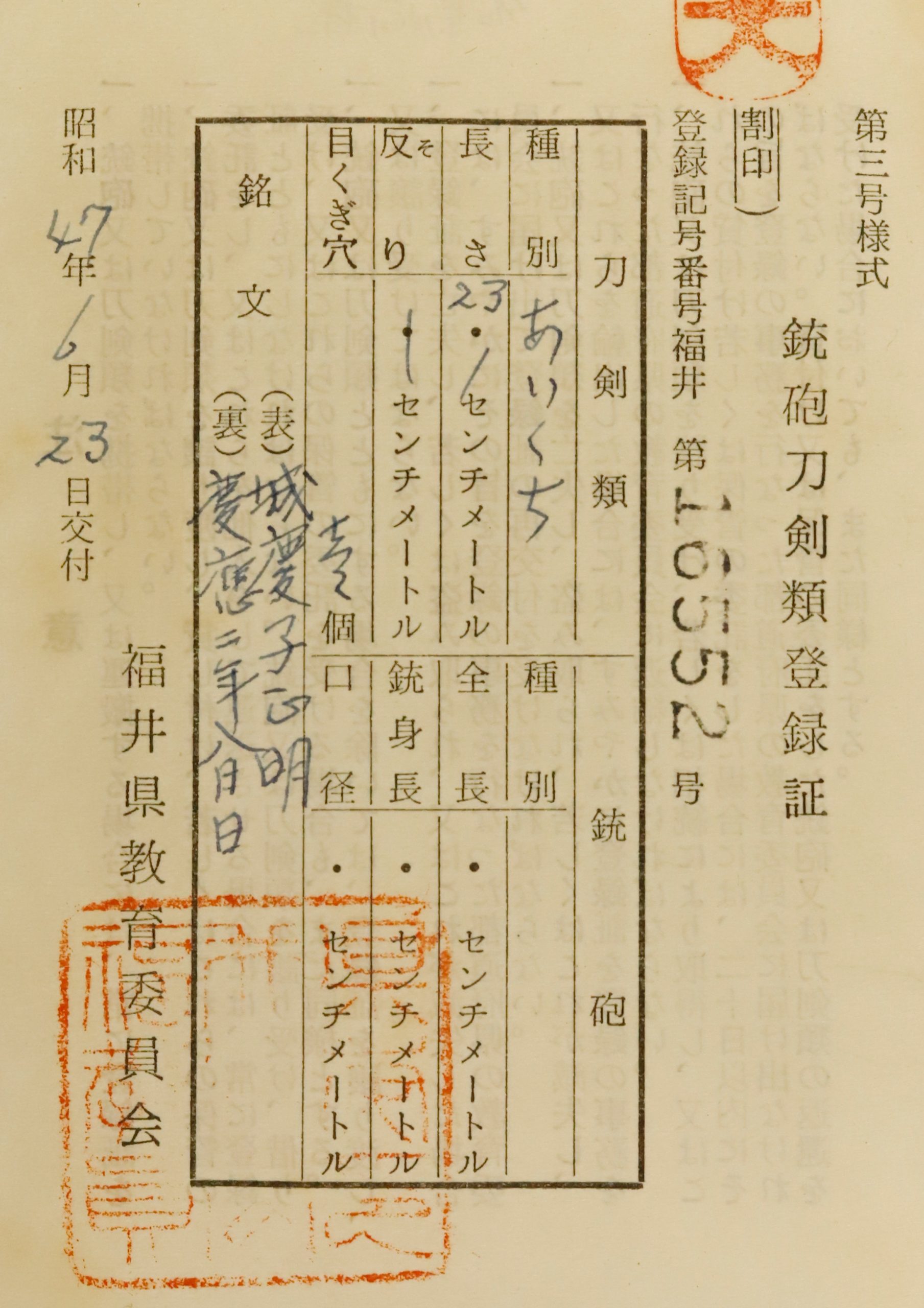
This blade was signed by Jyokeshi Masa-Aki(城慶子正明) in the second year of the Keio era(1866: the end of the Edo period). He was active in sword forging during the Kaei-early Meiji era(1848-1870). Jyokeshi Masa-Aki also signed as Takemura Tsuneemon Minamoto Masa-Aki (竹村恒右衛門源正明). Masa-Aki was born in Tsuyama city in Okayama prefecture in the 11th year of the Bunka era(1814). His real name was Takemura Tsunejiro(竹村恒次郎). It was often the case that a swordsmith’s maker’s name and his birth name were completely different. From a childhood, Masa-Aki got sword-forging training from Hosokawa Masayoshi, being his apprentice. Hosokawa Masayoshi(細川正義) is a renowned swordsmith at the end of the Edo period. Hosokawa Masayoshi had learned sword-forging techniques under the master, Suishinshi Masahide(水心子正秀), one of the most skilled swordsmiths in Samurai history. Masayoshi(Masa-Aki’s master) was extremely a skilled swordsmith, and he was good at forging blades with Choji Midare Hamon, which is the characteristic of the Bizen sword-forging style(BIZEN DEN). Masa-Aki also mastered this excellent sword-forging technique from his master. Choji Midare Hamon is an Irregular wavy tempering line, and you can see it in this blade as well. Most of Masa-Aki’s work reflects Bizen Den (One of the Five Japanese sword-forging traditions). Hosokawa Masayoshi(his master) and his son Mamori served the Matsudaira clan in the Sakushu Tsuyama domain(today’s Okayama prefecture). And Masa-Aki took over the position after they retired. He served the clan as a Hanko(藩工), who exclusively forged swords for a specific clan. He was also a Hanshi(藩士), who was a Samurai who worked under one clan or domain. Later on, Masa-Aki became an independent swordsmith in Edo city, being popular among high-class Samurai for his excellent craftsmanship. The signature also indicates that this blade was ordered by a Samurai. And, based on the fact that Masa-Aki was categorized as a top tier swordsmith at the end of the Edo period, the person who ordered this blade must have been high-class. This blade is appraised as a Tokubetsu Hozon Token(特別保存刀剣) issued by NBTHK(Nihon Bijutsu Touken Hozon Kyokai:日本美術刀剣保存協会). Fuchi-Kashira This Fuchi Kashira has a glossy black color. This coloring makes an elegant look for the work. It matches well with other parts when it is put into the handle. We hope you will enjoy the entire appearance of the Koshirae, including this Fuchi Kashira. Tsuka and Menuki We would judge this part as a kind of Menuki. The Gosan-no-Kiri (五三の桐) pattern is designed, and each mark is evenly arranged. The golden coloring remains relatively in good condition, and it adds a gorgeous atmosphere for the Koshirae. As you see in this work, the Kiri (桐, paulownia) pattern is generally composed of three standing straight inflorescences and three leaves. The number of flowers that are blooming at each inflorescence means the ranks of this design. This pattern was once used by the imperial family and people in authority at that time. Today, it is permitted to use by ordinary households and is appreciated as their family crests. According to a theory, the Houou (鳳凰, Fenghuang, a kind of sacred beast) rests its wings at the paulownia tree; therefore, it has come to be regarded as a sacred plant. Kozuka A Kogatana (小刀, small knife) is stored in the Kozuka. A dragon is designed, and clouds surround its body. The dragon is engraved carefully in details, such as the face and scales. Although some coloring has already been flaked off due to aging, it seems the gold paint was initially applied to it. Originally, the dragon was an imaginary creature found in ancient traditions or myths. Furthermore, it is regarded as a symbolic beast of auspicious signs. Its body is likened to nine animals: antlers are deer, the head is a camel, eyes are demons, the neck is a snake, belly is the Mizuchi (蛟, mythical animal in Japan which looks like a snake and have a horn and four legs), scales are fish, claws are falcons, palms are tigers, and ears are cows. It was thought that the dragon would reign at the top of all animals because of its odd-looking appearance. This beast motif is often found in sword mountings; it shows that many Samurais favored the dragon design. Its dignity appearance and holy impression might have inspired them. Authentication Paper They authenticated the blade on Feb 25th in the 31st year of Heisei (2019). They appraised it as Tokubetsu Hozon Touken, the blade especially worth preserving for Japanese society.
Offered by Samurai Museum


Shinshinto · Musashi · around 1848-1861
Fujishiro Jo saku · Tōken Taikan top 60%
3 pieces on the market now
Where Masaaki stands among comparable artisans: across all of nihontō, and within tradition, era, and period. The tiers (Foremost · Leading · Major · Notable) weigh official designations from the NBTHK and Japan's Agency for Cultural Affairs, together with historical honors of lasting repute such as the Sansaku and Meibutsu-chō.
Select a lens to see how it's measured.
Shinshinto · Musashi
67 pieces on the market now
At Hamachō in Edo, in the closing decades of the eighteenth century and the opening ones of the nineteenth, Suishinshi Masahide[[c:1]] gathered the school that would turn Japanese swordmaking back toward its medieval models. Born Kawabe Gihachirō at Akayu in Dewa in 1750, signing first as Suzuki Takahide and then Eikoku, he studied under the Shitahara smith Yoshihide of Musashi, took the name Masahide in An'ei 3, and served the Akimoto house of Yamagata before settling in Edo, where he worked for nearly fifty years. He is the founding figure of the shinshintō and the theorist of the fukko-tō (revival-sword) doctrine, the argument that the sword ought to return to its Kamakura forms. Around that teaching he drew a large body of pupils, among them Taikei Naotane, who would give the revival its fullest practical form, the future second Masayoshi (Hosokawa Morihide), and a wider Edo and provincial following that carried the program into the Mito, Yonezawa, Tsuyama, and Tatebayashi domains. The shared vocabulary of the school is the deliberate reach back into the koto traditions, worked over a tightly forged, often muji-toned ko-itame with thick ji-nie. Masahide's own prime hand was the Ōsaka-utsushi, the surging tōran-midare of Tsuda Sukehiro opening from a long yakidashi and the broad suguha after Inoue Shinkai, betrayed on even his closest copies by a blackish, coarse nie that spills from the ha into the ji. Naotane gave the revival its Bizen and Sōshū faces: a reverse-leaning chōji-midare with angular kaku-gunome and saka-ashi, modeled on the late-Kamakura Osafune masters Kagemitsu and Kanemitsu and anchored by a consciously revived midare-utsuri that no ordinary shinshintō steel carries, set beside a Sōshū notare with its whorled uzumaki-hada and coarse, striped nie. The pupils divided this inheritance along their own lines. Jirōtarō Naokatsu, Naotane's adopted son, took a Bizen-den led by a kataochi-gunome from Kanemitsu with a pervasive saka-gakari slant and chōji- or midare-utsuri in the ji.
Suishinshi Masatsugu reproduced Naotane's two traditions, Sōshū and Bizen, down to the cut of his signature. Through Masayoshi the Bizen current passed to his heir Hosokawa Masamori of Tsuyama, whose chōji clusters mixed with gunome-chōji and togariba. The Osaka wave traveled separately into Mito through Naoe Sukemasa, who set a Shinkai-styled suguha and a Sukehiro tōran over a clear ko-itame, while Chōunsai Tsunatoshi of the Uesugi service carried a nioi-deki chōji mixed with gunome, suguha, and tōran-midare, often with carving by his own hand. To kantei the school is to weigh a tradition consciously copied against the period marks the copy cannot shed: the constant of the line is that the hamon is never the pure nioi-deki of old Bizen but carries nie throughout, a difference the NBTHK names outright as the divide between koto and shinshintō. The revived utsuri in Naotane and Naokatsu, the spilling nie in Masahide, the whorled uzumaki-hada shared across the line, and the broad, thick-kasane late-Edo sugata are the surest tells, narrowed further by the school's habit of full, dated signatures that make these smiths among the most exactly knowable of their age. Masahide stands at the head as the teacher and theorist, his finest work in his Ōsaka copies rather than the doctrine he proclaimed; Naotane stands ahead of him in execution, his Bizen-den held the finest among the shinshintō. Their pupils define the late-Edo Osafune and Sōshū revivals as practiced through Edo and the domains, with Naokatsu and Masatsugu read as the next hands after Naotane and Masayoshi. The provenance of the school runs through domain commission and bestowal (Mito blades forged at the Kōrakuen by lordly order, Tsuyama and Yonezawa fief work, Naotane's Sanada daishō and a tachi recorded in Honma's inventory of the Imperial collection) rather than ancient daimyō transmission, fitting for a movement that, within a single generation at Edo, redrew the direction of nineteenth-century swordmaking by turning it back toward the old models. Learn more →
| Smith | Era | Designated |
|---|---|---|
| Naotane直胤 | 1801-1837 | 40 |
| Masahide正秀 | 1777-1817 | 28 |
| Sukemasa助政 | 1804-1825 | 8 |
| Jirotaro Naokatsu直勝 | 1805-1858 | 7 |
| Masayoshi正義 | 1791-1860 | 5 |
The Shinshintō revival
Around 1800 Suishinshi Masahide argued in his writings that the craft must return to the old masters’ methods: the fukkotō revival. His greatest successor Naotane worked convincingly in Bizen and Sōshū manners that had been dead for centuries.
A Hozon-certified blade judged to show notably superior workmanship and a better state of preservation. The bar is higher: re-tempered blades and most unsigned Muromachi/Edo works are excluded.
The NBTHK (Nihon Bijutsu Tōken Hozon Kyōkai, the Society for the Preservation of Japanese Art Swords) is a public-interest incorporated foundation founded in 1948 and supervised by Japan’s Agency for Cultural Affairs (Bunkachō); it is based at the Japanese Sword Museum in Tokyo. Its expert panels physically examine each submitted work (shinsa) and issue a certificate (kanteishō) ranking it by artistic and historical merit. NBTHK papers are the most widely recognized standard of authentication for Japanese swords and fittings.
NBTHK official siteReturns/exchanges limited to defects caused by shipping (except willful misconduct or gross negligence by the company); customers must contact within 72 hours of receiving the product.