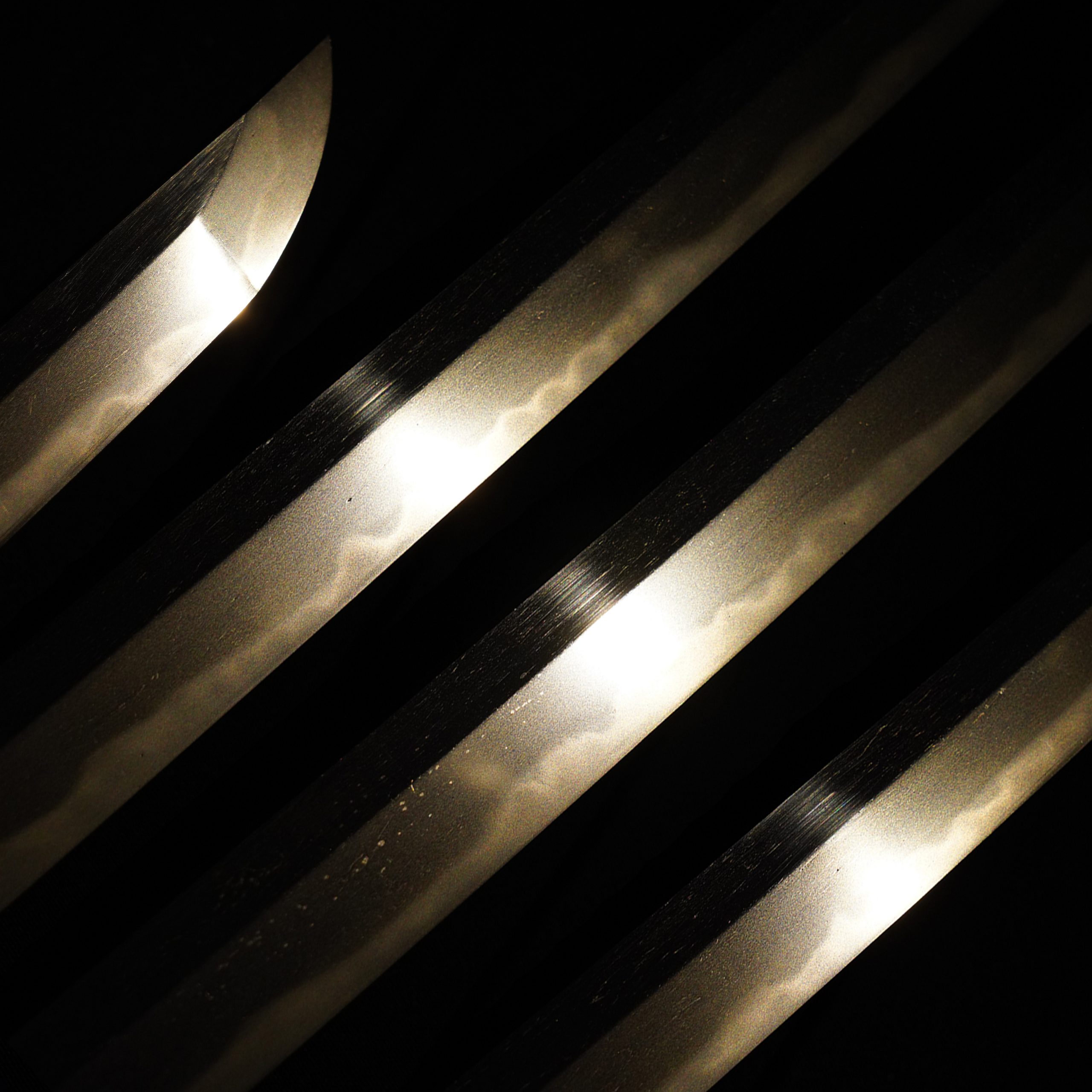
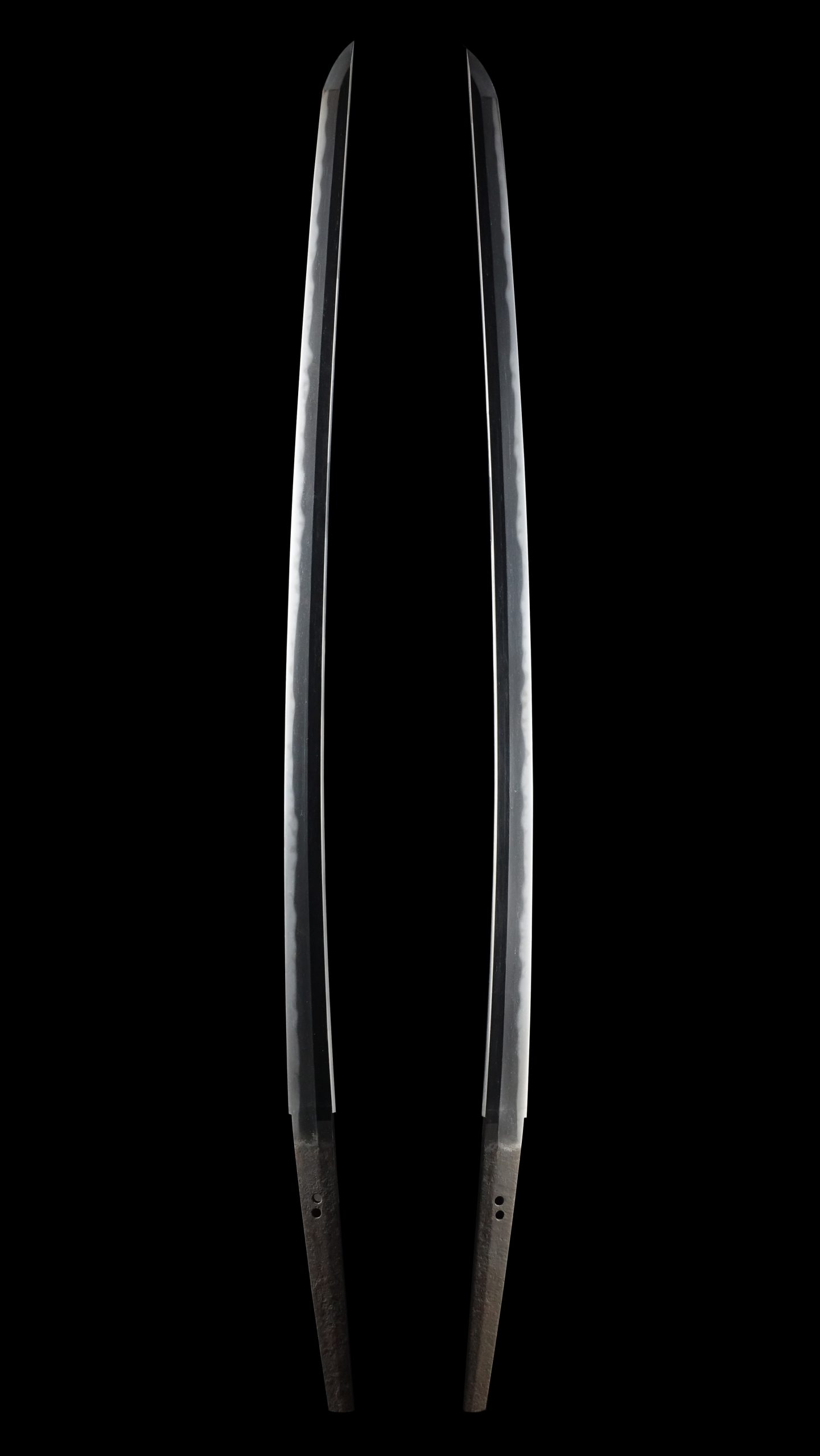
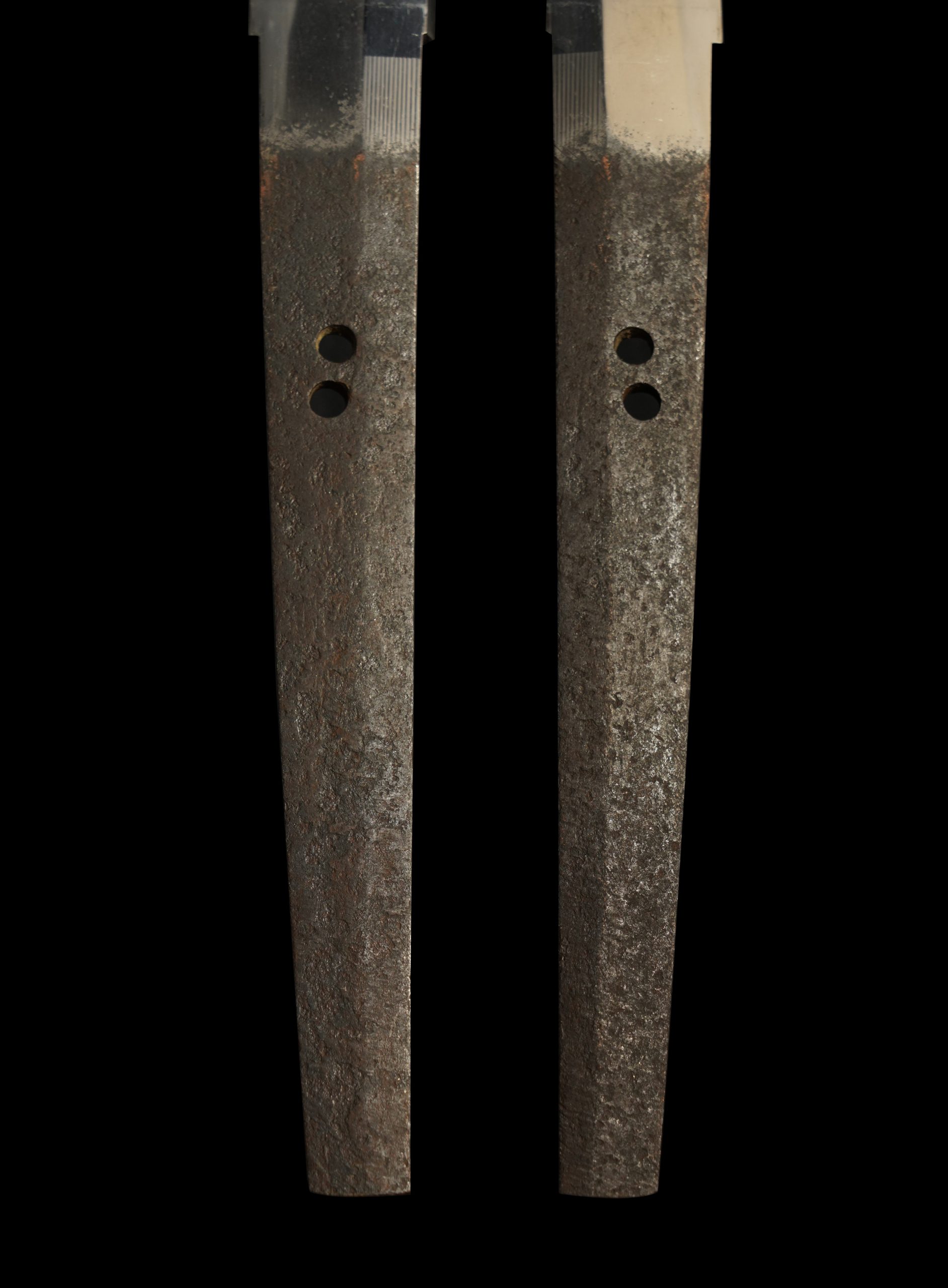
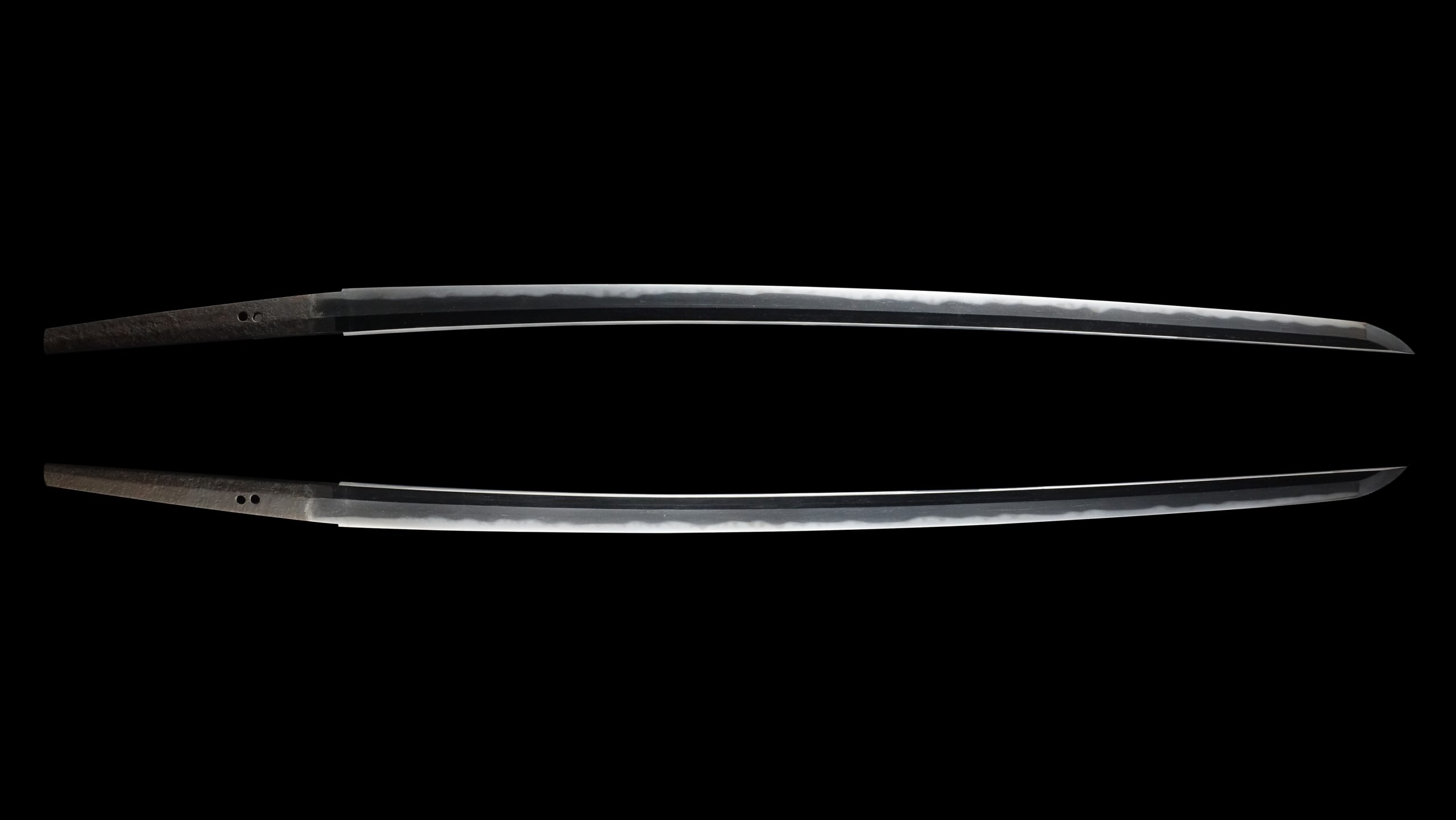
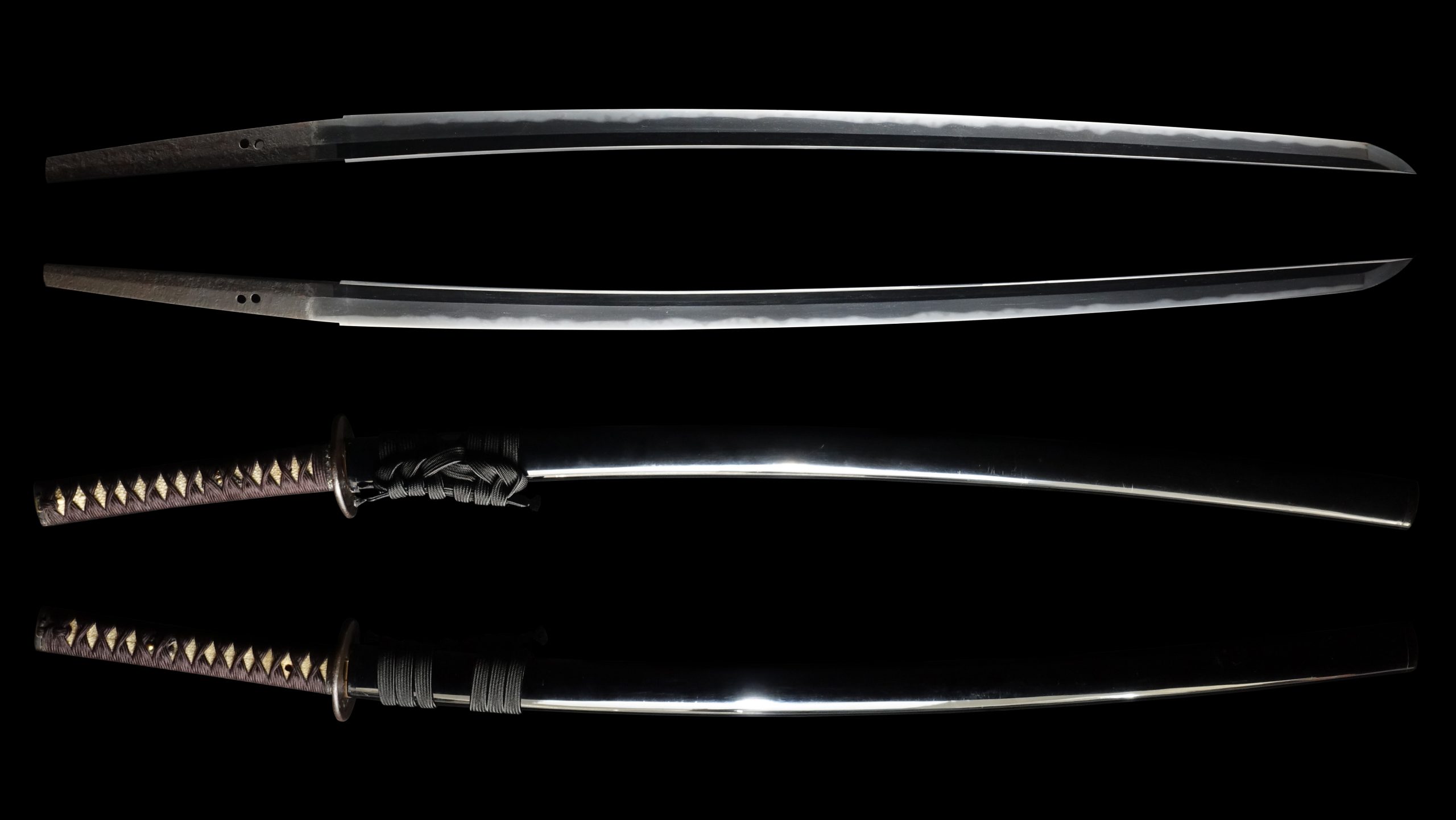
Around 1800 Suishinshi Masahide argued in his writings that the craft must return to the old masters’ methods: the fukkotō revival. His greatest successor Naotane worked convincingly in Bizen and Sōshū manners that had been dead for centuries.
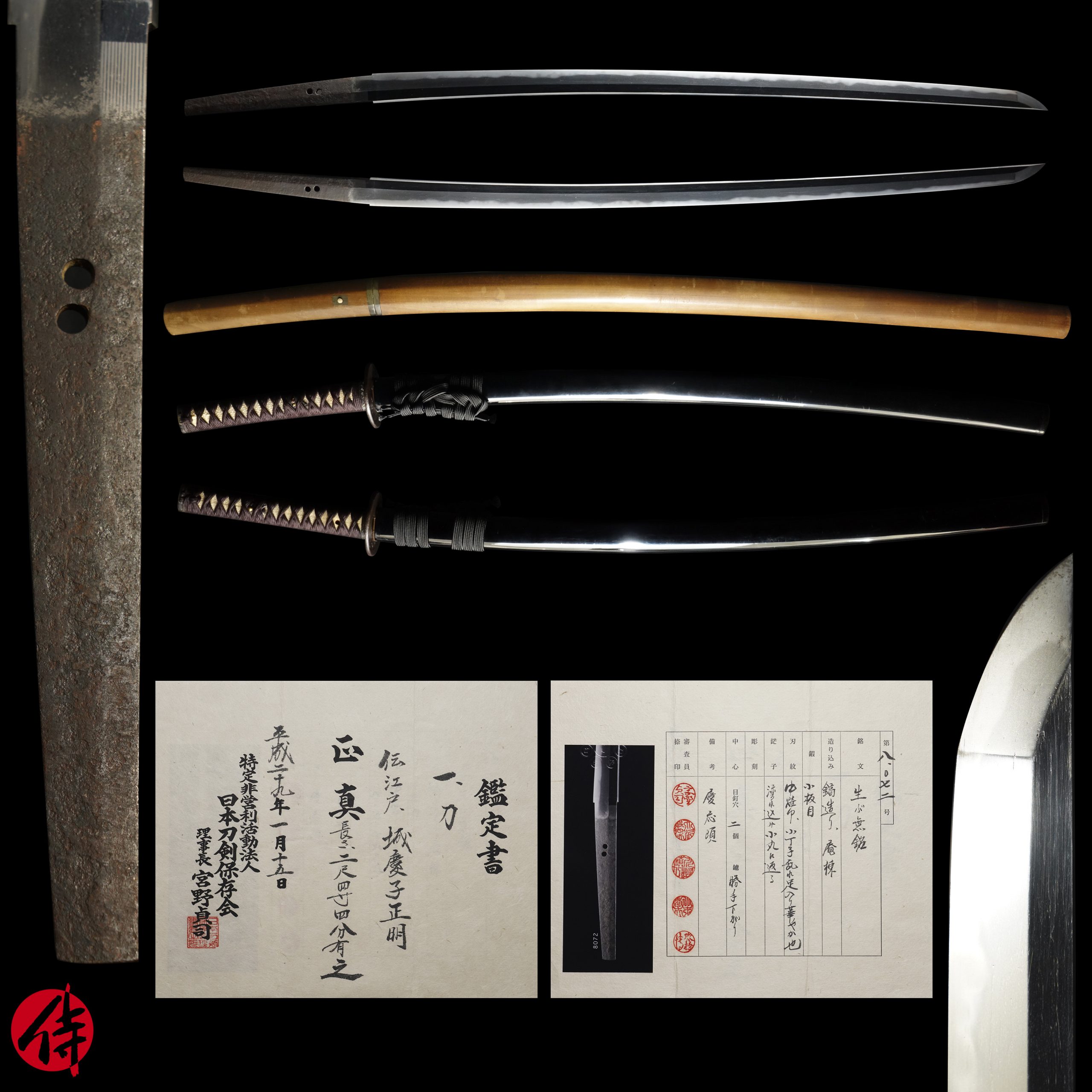
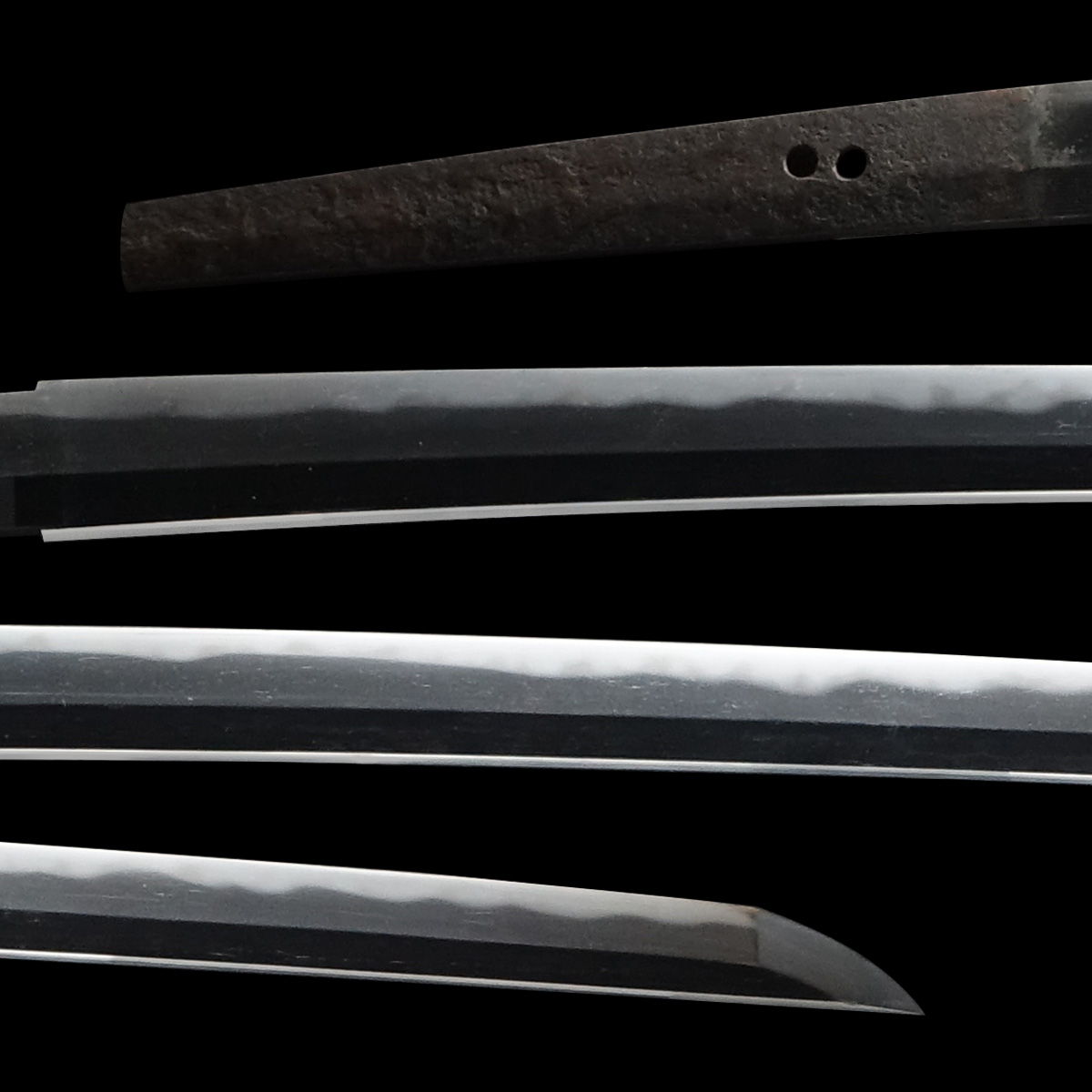
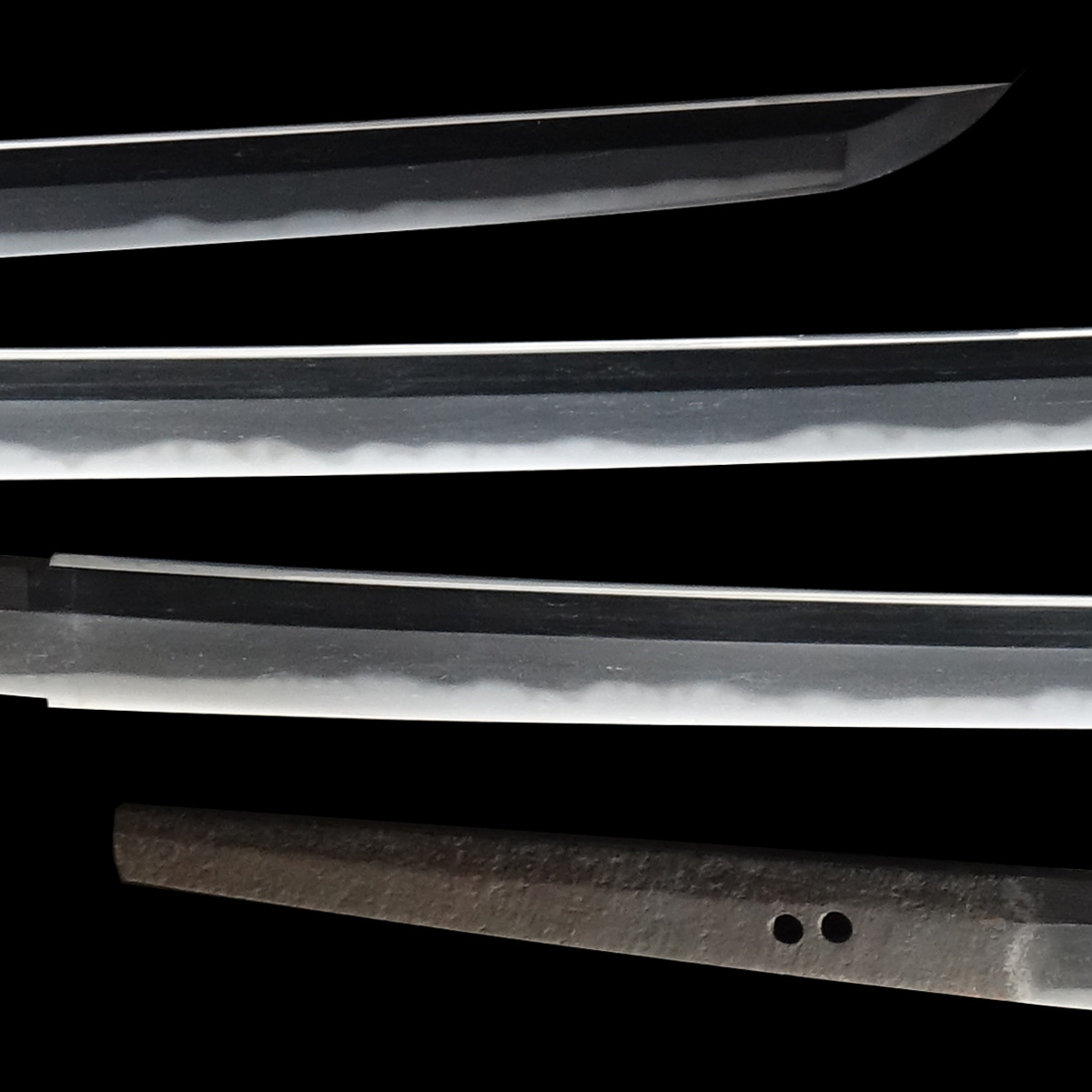
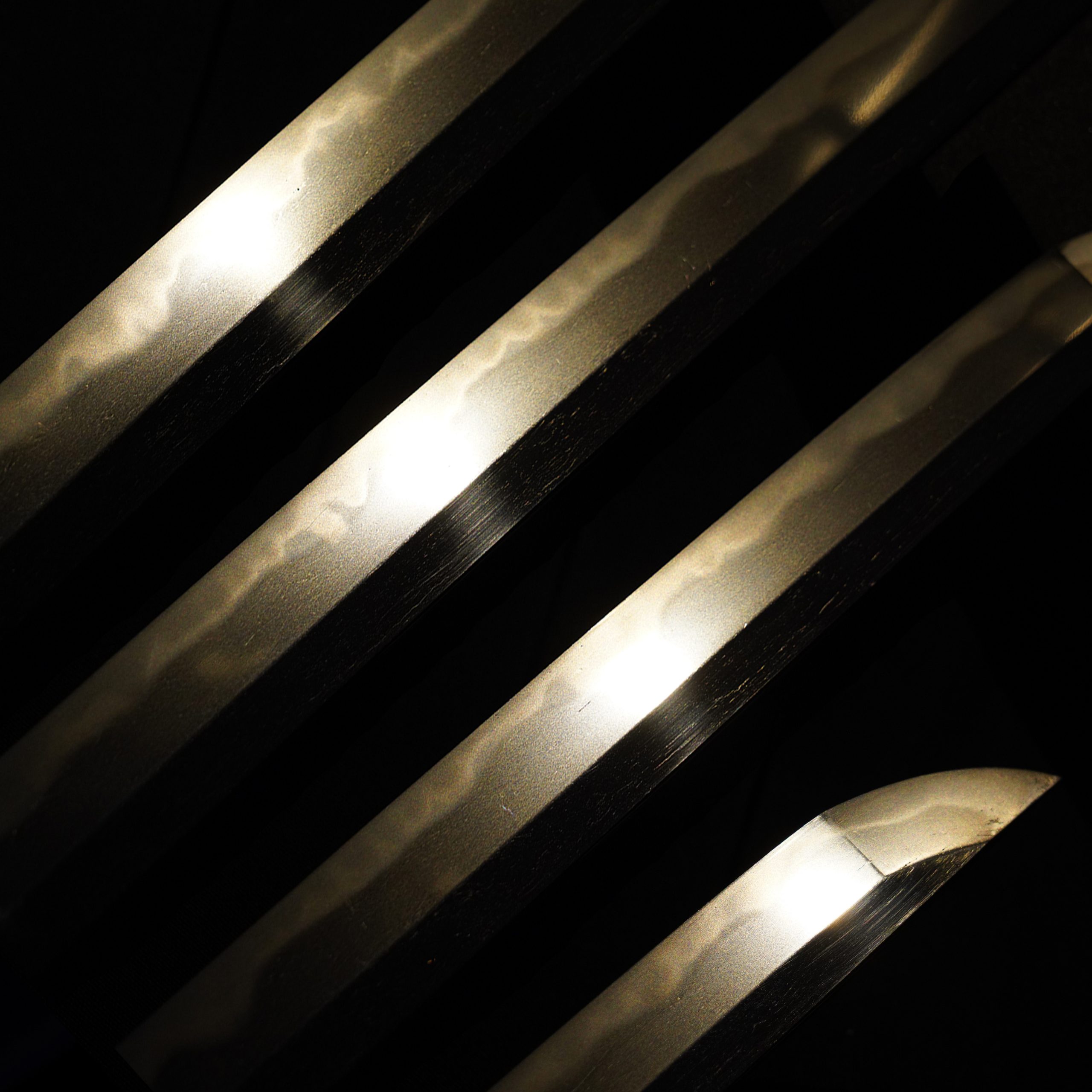
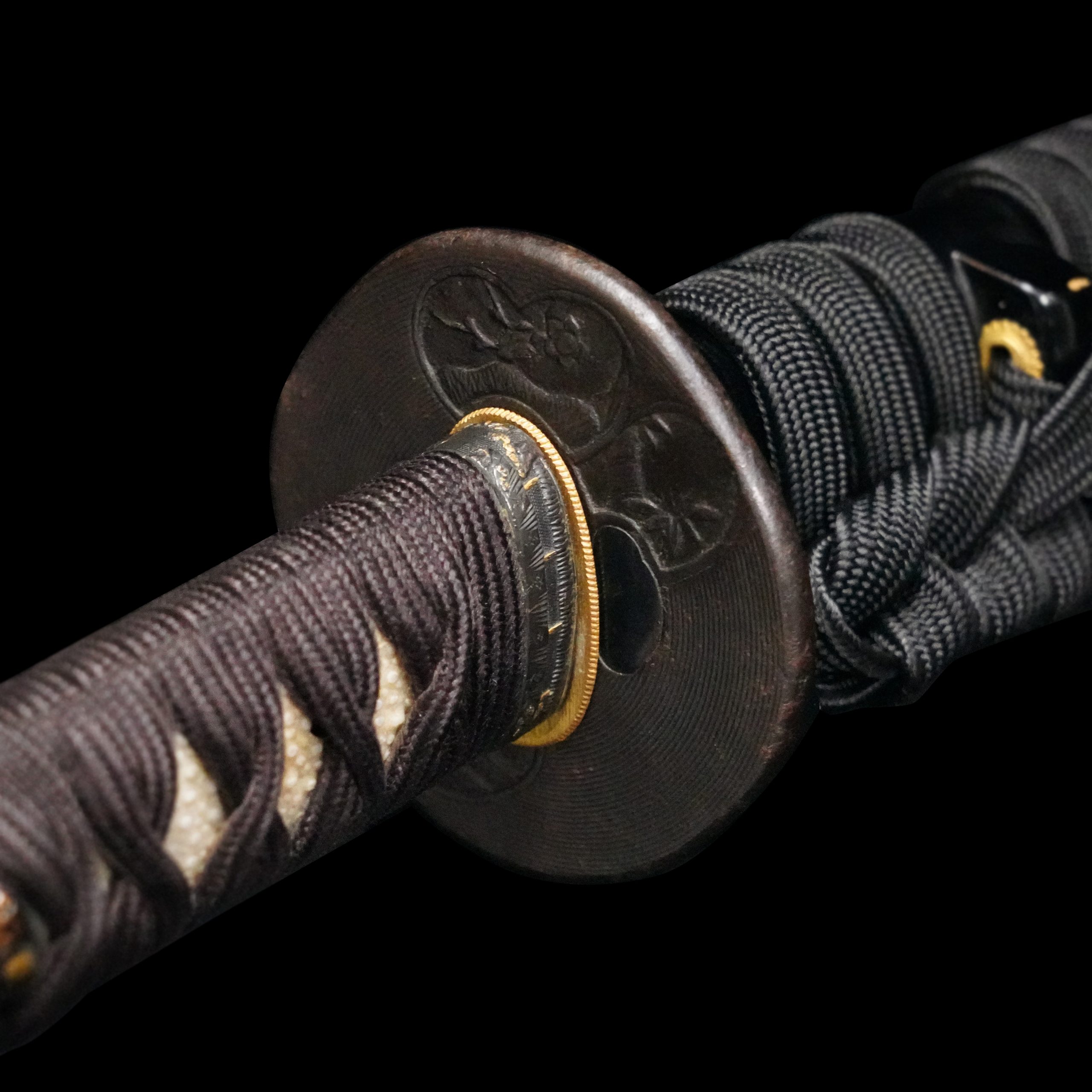
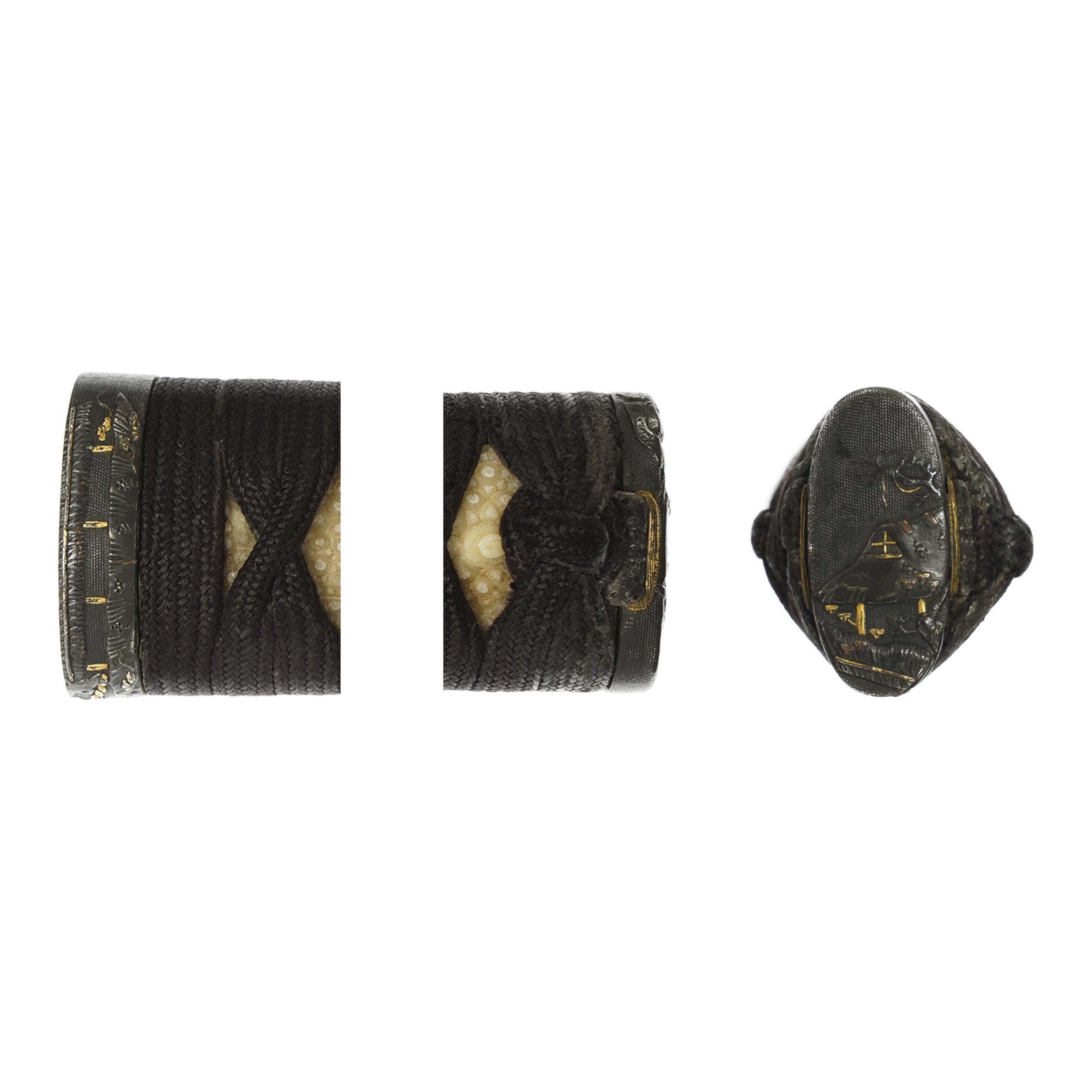
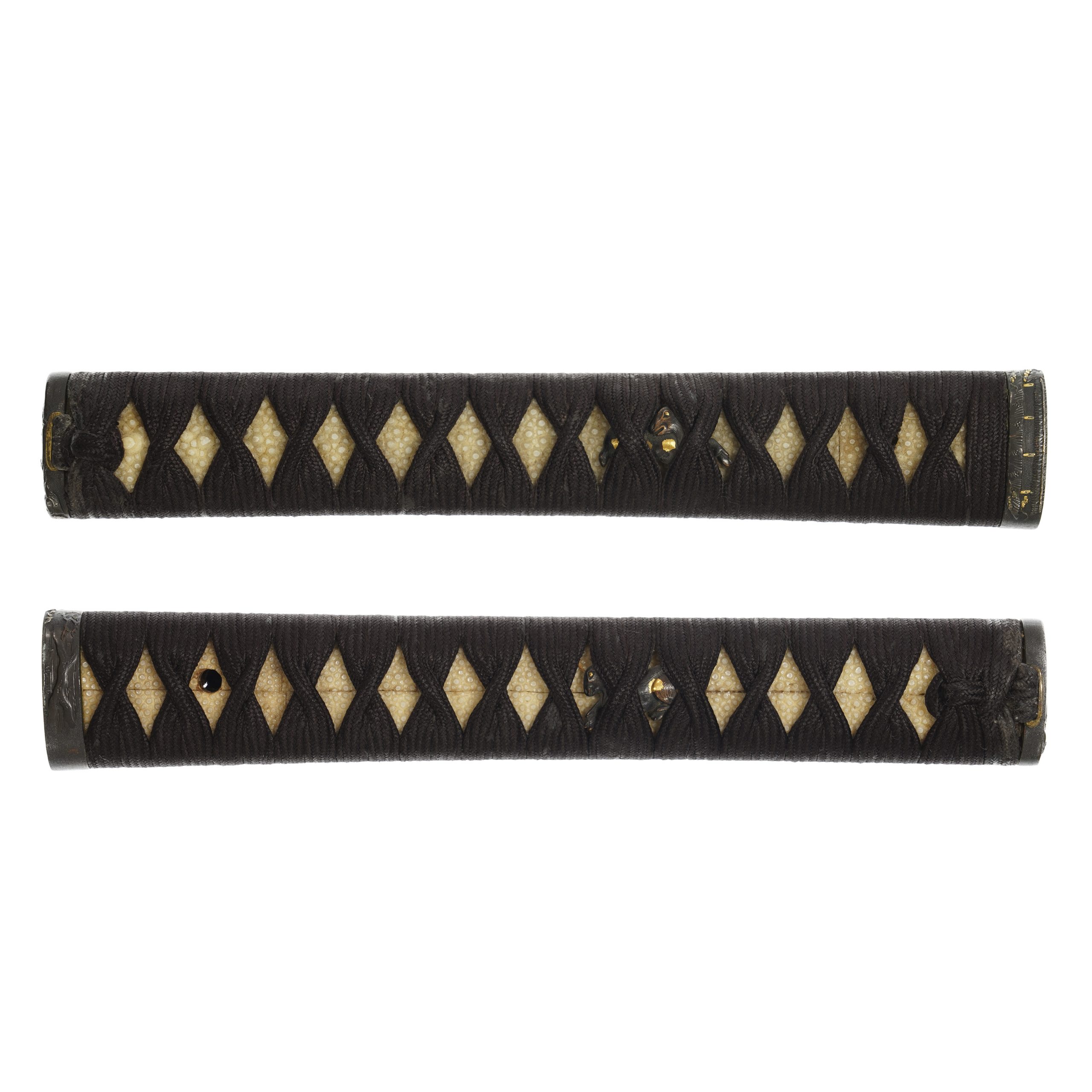
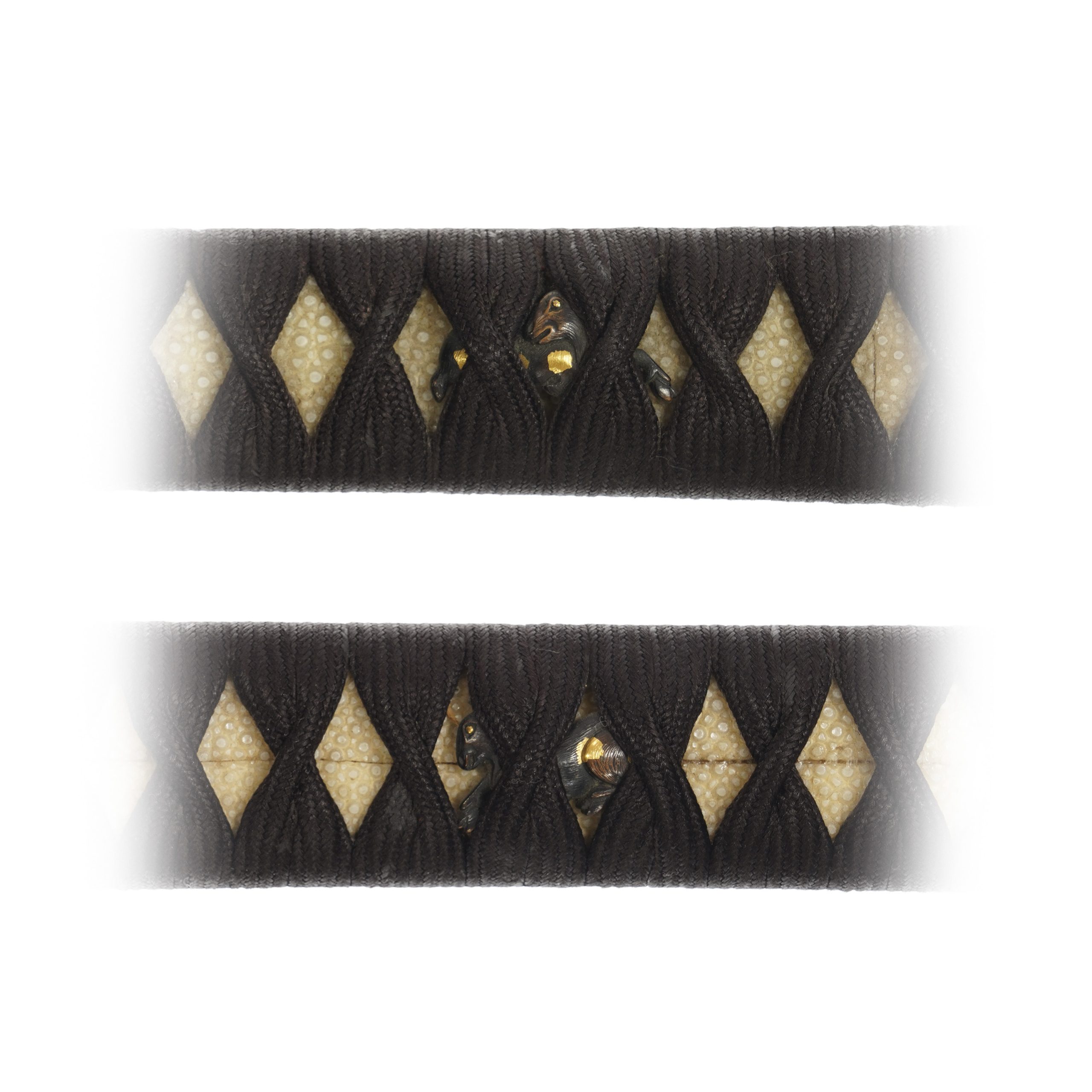
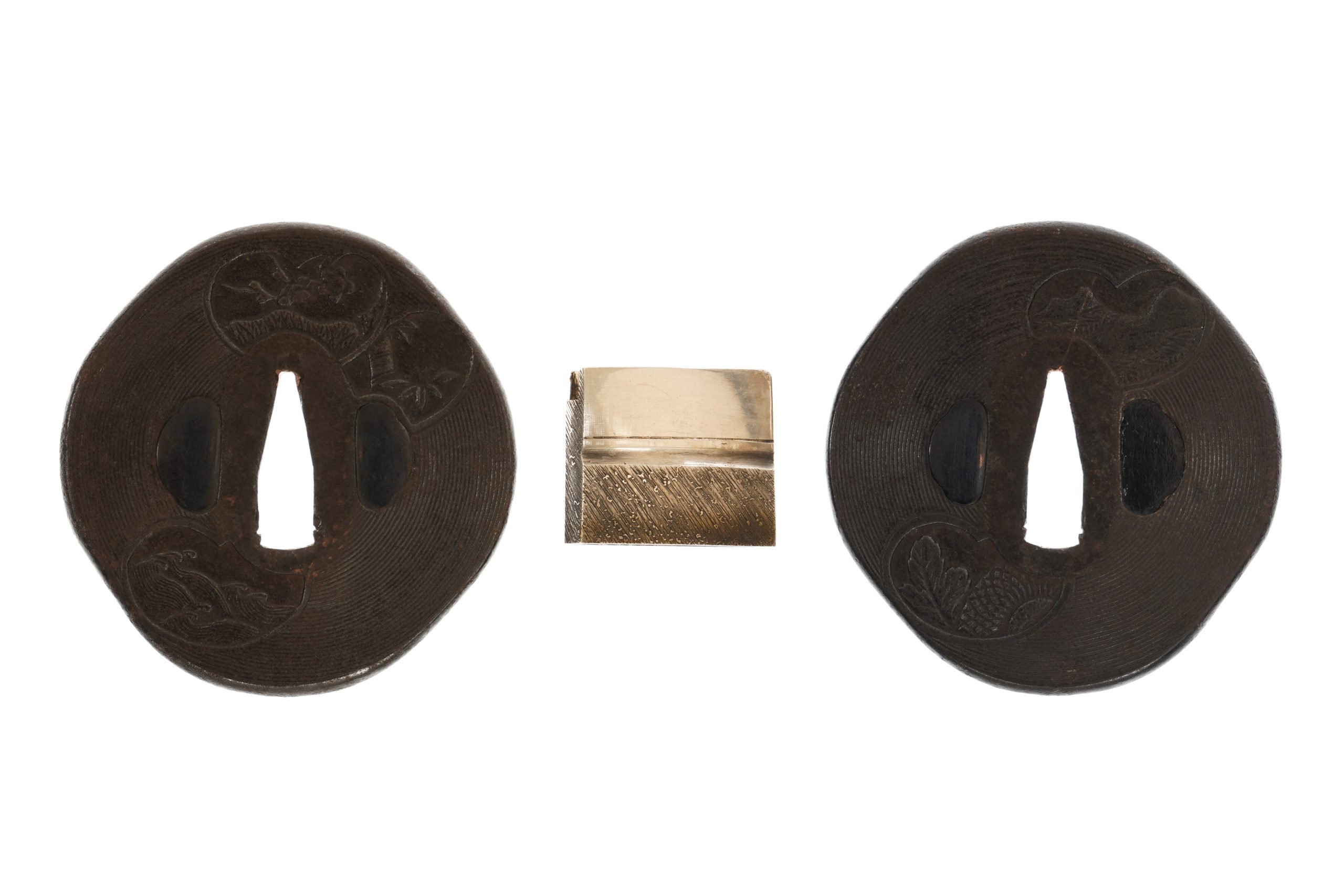
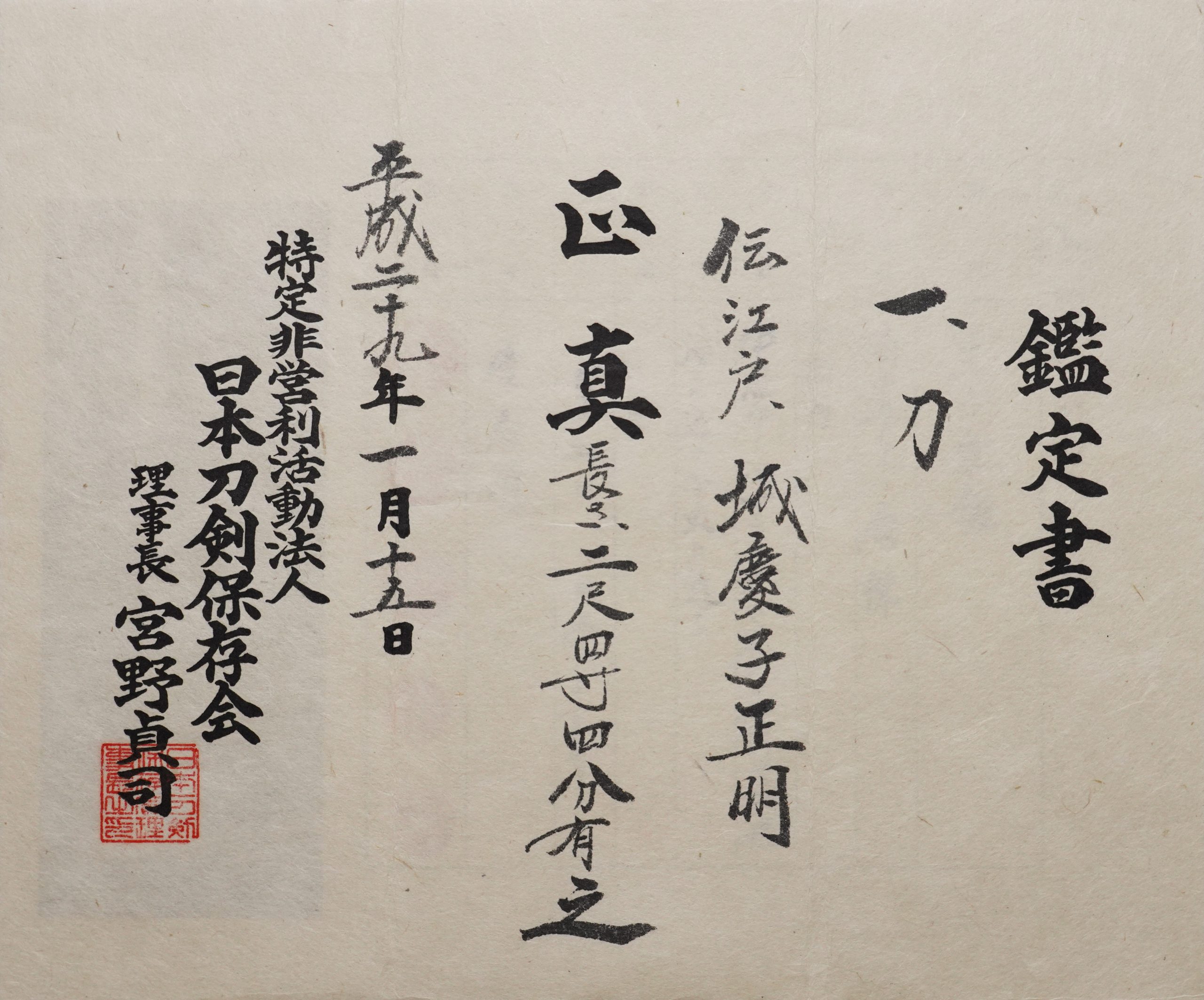
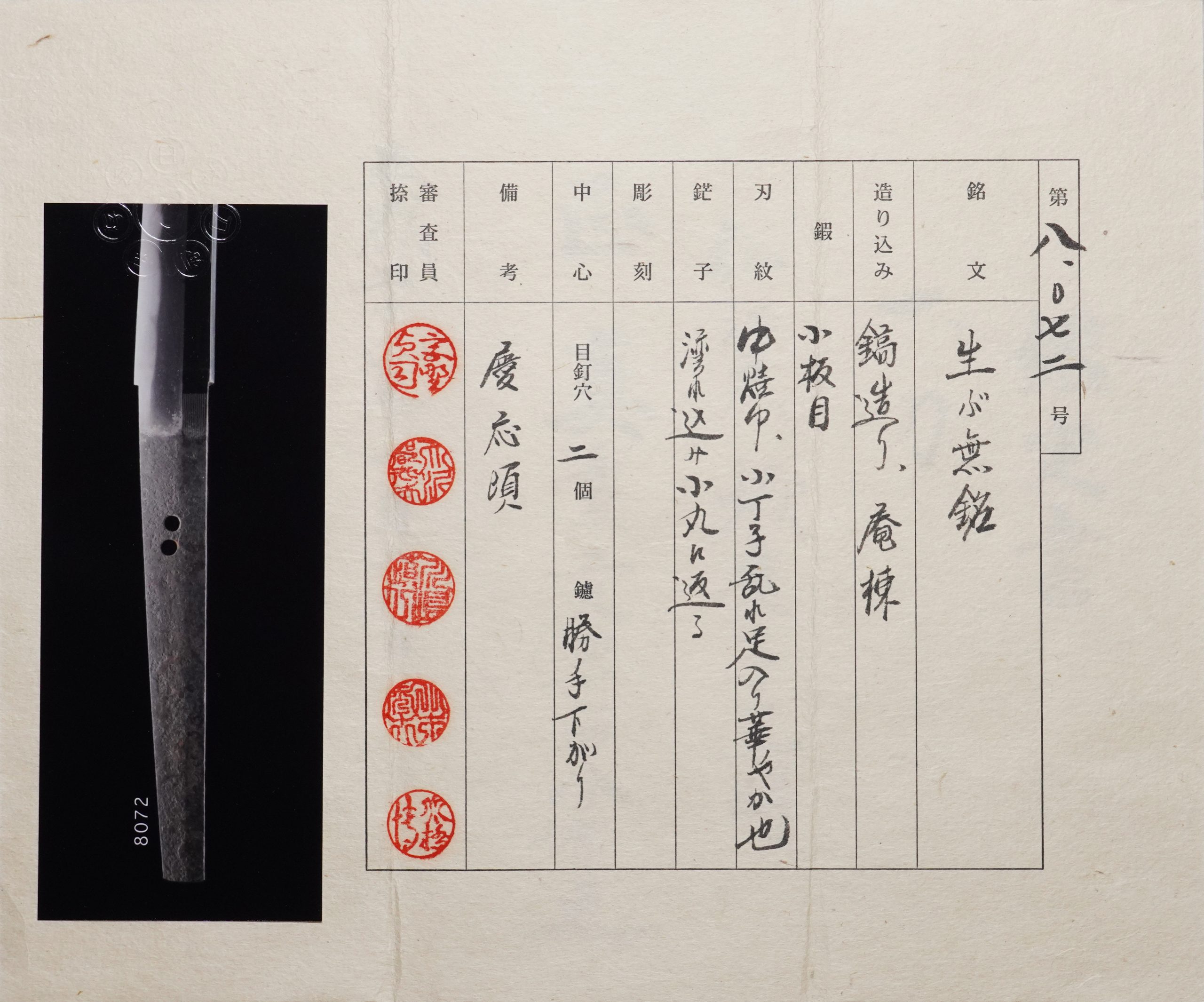
Swordsmith This blade is attributed to the work of Jyokeshi Masa-Aki(城慶子正明) according to NTHK-NPO that appraised this blade. The certificate mentioned it was approximately forged during the Keio era(1865-1868: Bakumatsu era) in Edo. Masa-Aki was active in sword-forging during the Kaei-early-Meiji era(1848-1870). Masa-Aki was born in Tsuyama city in Okayama prefecture in the 11th year of the Bunka era(1814). His real name was Takemura Tsunejiro(竹村恒次郎). It was often the case that a swordsmith’s maker’s name and his birth name were completely different. Masa-Aki moved to Edo city to become an apprentice of Hosokawa Masayoshi(細川正義), a renowned swordsmith at the end of the Edo period. Hosokawa Masayoshi had learned sword-forging techniques under the master, Suishinshi Masahide(水心子正秀), one of the most skilled swordsmiths in Samurai history. Masayoshi(Masa-Aki’s master) was extremely a skilled swordsmith and was good at forging blades with Choji Midare Hamon, which is the characteristic of Bizen sword-forging style(BIZEN DEN). Masa-Aki also mastered this excellent sword-forging technique from his master. Choji Midare Hamon is an Irregular wavy tempering line, and you can see it in this blade as well. Hosokawa Masayoshi served the Matsudaira clan in the Sakushu Tsuyama domain(today’s Okayama prefecture) while working in Edo city. And Masa-Aki took over his master’s position later in his career and served the clan, although he mainly lived in Edo city. The Background History Japan enjoyed a relatively peaceful time from the early Edo period to the mid-Edo period(the 1600s-1760s) because of the stable economy and the powerful government run by Tokugawa Shogun. Samurai didn’t have many opportunities to utilize his Katana sword in public or on battlefields during this time. Thus, they carried their swords more as a symbol of their social status. The demand for weapons decreased accordingly compared to the previous Warring state period called Sengoku Jidai. (1467-1600) However, toward the end of the Edo period(1764-1876), the Japanese sword’s role changed dramatically. With the poverty spreading in Japan, there were so many riots initiated by the civilians. Japanese sword started to play an essential role in maintaining public safety. Pressure from foreign countries to open Japanese borders also forced Samurai to order strong-looking swords to survive this tumultuous time. We believe many swordsmiths, including Masa-Aki, made great efforts to forged high-quality, practical blades for their masters to prepare for battles. This blade has a strong looking and must have been practical to use in that demanding time. There was a civil war between Tokugawa’s shogunate government and the new Meiji imperical government at the end of the Edo period. That means the original owner of this Katana might have seen the moment when Samurai’s life changed forever. After this battle, Tokugawa shogunate was ousted and the imperial government gained the control. Fuchi-Kashira The house and its surroundings are designed for this Fuchi Kashira. The ground is hit by the Nanako-Ji Tagane (魚子地鏨, chisel used for this technique). It makes delicate fish egg-shaped protrusions on the entire surface of the Fuchi Kashira and shows us the maker’s expert skill. An old type house is depicted for the Kashira part, and under the eaves is expressed at the Fuchi part. Some parts are colored with golden metal. Tsuka and Menuki Seeing from the gaps of the Tsukamiki thread, this Menuki’s motif might be a kind of animal. It is possibly the deer. The gold-colored metal is applied to the deer’s eyes. You would see that there are golden spot patterns on the body surface of these deers. The deer was thought a vehicle of the gods and regarded as a sacred animal. It is said that the deer pattern represents longevity and has been designed in paintings since ancient times. The combination of deers and autumn plants (for example, maple leaves) is often seen. Tsuba and Habaki This is an antique Tsuba made from iron. Thin lines are engraved on the surface. Several frames are arranged, and different motifs are depicted in each frame. On the front side, you would find the Ume (梅, Japanese apricot blossom), the Take (竹, bamboo), and the Nami (波, wave) patterns. Japanese apricot blossoms begin to bloom in winter that snow still covers its tree so that people thought this flower tells the arrival of spring. As it comes out in the cold season, it symbolizes the power of perseverance and vitality. Bamboos grow neatly towards the sky, and it has remarkable vitality so that this motif represents nobility and strength. Besides, the bamboo breaks straight, but its content is hollow; people thought it shows innocence. According to a Chinese legend, Houhou (鳳凰, Fenghuang) eats bamboo fruits; therefore, bamboo has been considered a sacred plant. Also, as it keeps its green color even in cold winter, people thought the bamboo pattern shows eternity and longevity. As waves’ movements continue endlessly, the wave pattern represents eternity, immortality, longevity, birth, etcetera. Also, since tides repeatedly change the shape and terrain of rocks, some people hoped for a strong will by using this motif. People used this pattern wishing for an indomitable spirit to rechallenge time and time without giving up. On the backside, the landscape and a kind of flower motifs are designed. By seeing this plant’s leaf shape, this flower might be a chrysanthemum. A long time ago, the chrysanthemum was used as a medicine for obtaining a long life, and it was brought to Japan from the Continent with this thought in the Nara period (648-781). Chrysanthemum is one of the flowers which symbolizes fall, and people appreciate it very much since ancient times. As its petals form radially, the chrysanthemum has been likened to the sun. That is why this flower pattern is treated as the symbol of perpetual youth and longevity or good health. Authentication Paper NTHK, also known as NPO Nihon Touken Hozon Kai, is the oldest organization for sword authentication of Japanese swords in modern times. It was established in 1889 during the post-Samurai era. They authenticated the blade on Jan 15th in the 29th year of Heisei (2017).
Offered by Samurai Museum


Shinshinto · Musashi · around 1848-1861
Fujishiro Jo saku · Tōken Taikan top 60%
3 pieces on the market now
Where Masaaki stands among comparable artisans: across all of nihontō, and within tradition, era, and period. The tiers (Foremost · Leading · Major · Notable) weigh official designations from the NBTHK and Japan's Agency for Cultural Affairs, together with historical honors of lasting repute such as the Sansaku and Meibutsu-chō.
Select a lens to see how it's measured.
Shinshinto · Musashi
67 pieces on the market now
At Hamachō in Edo, in the closing decades of the eighteenth century and the opening ones of the nineteenth, Suishinshi Masahide[[c:1]] gathered the school that would turn Japanese swordmaking back toward its medieval models. Born Kawabe Gihachirō at Akayu in Dewa in 1750, signing first as Suzuki Takahide and then Eikoku, he studied under the Shitahara smith Yoshihide of Musashi, took the name Masahide in An'ei 3, and served the Akimoto house of Yamagata before settling in Edo, where he worked for nearly fifty years. He is the founding figure of the shinshintō and the theorist of the fukko-tō (revival-sword) doctrine, the argument that the sword ought to return to its Kamakura forms. Around that teaching he drew a large body of pupils, among them Taikei Naotane, who would give the revival its fullest practical form, the future second Masayoshi (Hosokawa Morihide), and a wider Edo and provincial following that carried the program into the Mito, Yonezawa, Tsuyama, and Tatebayashi domains. The shared vocabulary of the school is the deliberate reach back into the koto traditions, worked over a tightly forged, often muji-toned ko-itame with thick ji-nie. Masahide's own prime hand was the Ōsaka-utsushi, the surging tōran-midare of Tsuda Sukehiro opening from a long yakidashi and the broad suguha after Inoue Shinkai, betrayed on even his closest copies by a blackish, coarse nie that spills from the ha into the ji. Naotane gave the revival its Bizen and Sōshū faces: a reverse-leaning chōji-midare with angular kaku-gunome and saka-ashi, modeled on the late-Kamakura Osafune masters Kagemitsu and Kanemitsu and anchored by a consciously revived midare-utsuri that no ordinary shinshintō steel carries, set beside a Sōshū notare with its whorled uzumaki-hada and coarse, striped nie. The pupils divided this inheritance along their own lines. Jirōtarō Naokatsu, Naotane's adopted son, took a Bizen-den led by a kataochi-gunome from Kanemitsu with a pervasive saka-gakari slant and chōji- or midare-utsuri in the ji.
Suishinshi Masatsugu reproduced Naotane's two traditions, Sōshū and Bizen, down to the cut of his signature. Through Masayoshi the Bizen current passed to his heir Hosokawa Masamori of Tsuyama, whose chōji clusters mixed with gunome-chōji and togariba. The Osaka wave traveled separately into Mito through Naoe Sukemasa, who set a Shinkai-styled suguha and a Sukehiro tōran over a clear ko-itame, while Chōunsai Tsunatoshi of the Uesugi service carried a nioi-deki chōji mixed with gunome, suguha, and tōran-midare, often with carving by his own hand. To kantei the school is to weigh a tradition consciously copied against the period marks the copy cannot shed: the constant of the line is that the hamon is never the pure nioi-deki of old Bizen but carries nie throughout, a difference the NBTHK names outright as the divide between koto and shinshintō. The revived utsuri in Naotane and Naokatsu, the spilling nie in Masahide, the whorled uzumaki-hada shared across the line, and the broad, thick-kasane late-Edo sugata are the surest tells, narrowed further by the school's habit of full, dated signatures that make these smiths among the most exactly knowable of their age. Masahide stands at the head as the teacher and theorist, his finest work in his Ōsaka copies rather than the doctrine he proclaimed; Naotane stands ahead of him in execution, his Bizen-den held the finest among the shinshintō. Their pupils define the late-Edo Osafune and Sōshū revivals as practiced through Edo and the domains, with Naokatsu and Masatsugu read as the next hands after Naotane and Masayoshi. The provenance of the school runs through domain commission and bestowal (Mito blades forged at the Kōrakuen by lordly order, Tsuyama and Yonezawa fief work, Naotane's Sanada daishō and a tachi recorded in Honma's inventory of the Imperial collection) rather than ancient daimyō transmission, fitting for a movement that, within a single generation at Edo, redrew the direction of nineteenth-century swordmaking by turning it back toward the old models. Learn more →
| Smith | Era | Designated |
|---|---|---|
| Naotane直胤 | 1801-1837 | 40 |
| Masahide正秀 | 1777-1817 | 28 |
| Sukemasa助政 | 1804-1825 | 8 |
| Jirotaro Naokatsu直勝 | 1805-1858 | 7 |
| Masayoshi正義 | 1791-1860 | 5 |
The Shinshintō revival
Around 1800 Suishinshi Masahide argued in his writings that the craft must return to the old masters’ methods: the fukkotō revival. His greatest successor Naotane worked convincingly in Bizen and Sōshū manners that had been dead for centuries.
The NTHK’s principal certificate, issued for a blade of considerable quality. It confirms a genuine signature, or, for an unsigned (mumei) work, records the judges’ attribution to a smith or school. The paper carries a detailed worksheet with a numerical point score.
The NTHK (Nihon Tōken Hozon Kai, the Society for the Preservation of the Japanese Sword) is the oldest of Japan’s sword-appraisal bodies, founded in 1910, decades before the NBTHK. After the death of its long-serving head it divided into two successor societies, the NTHK and the NTHK-NPO, both of which continue to hold shinsa. NTHK blade certificates are known for a detailed worksheet that records a numerical point score alongside the judges’ written opinion (fitting papers carry the judges’ opinion without a point score), and the society is especially respected for its attribution of unsigned (mumei) work.
Returns/exchanges limited to defects caused by shipping (except willful misconduct or gross negligence by the company); customers must contact within 72 hours of receiving the product.