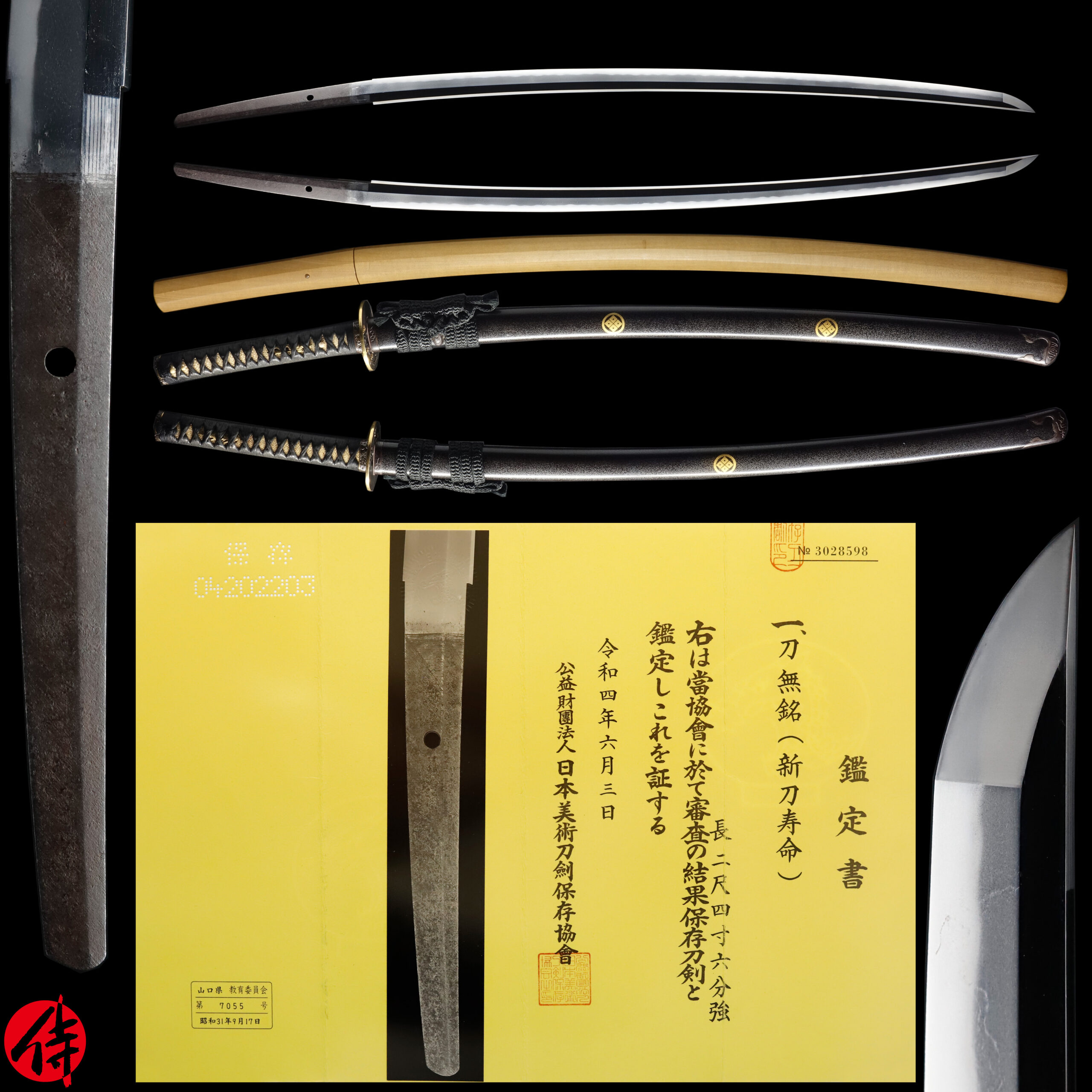
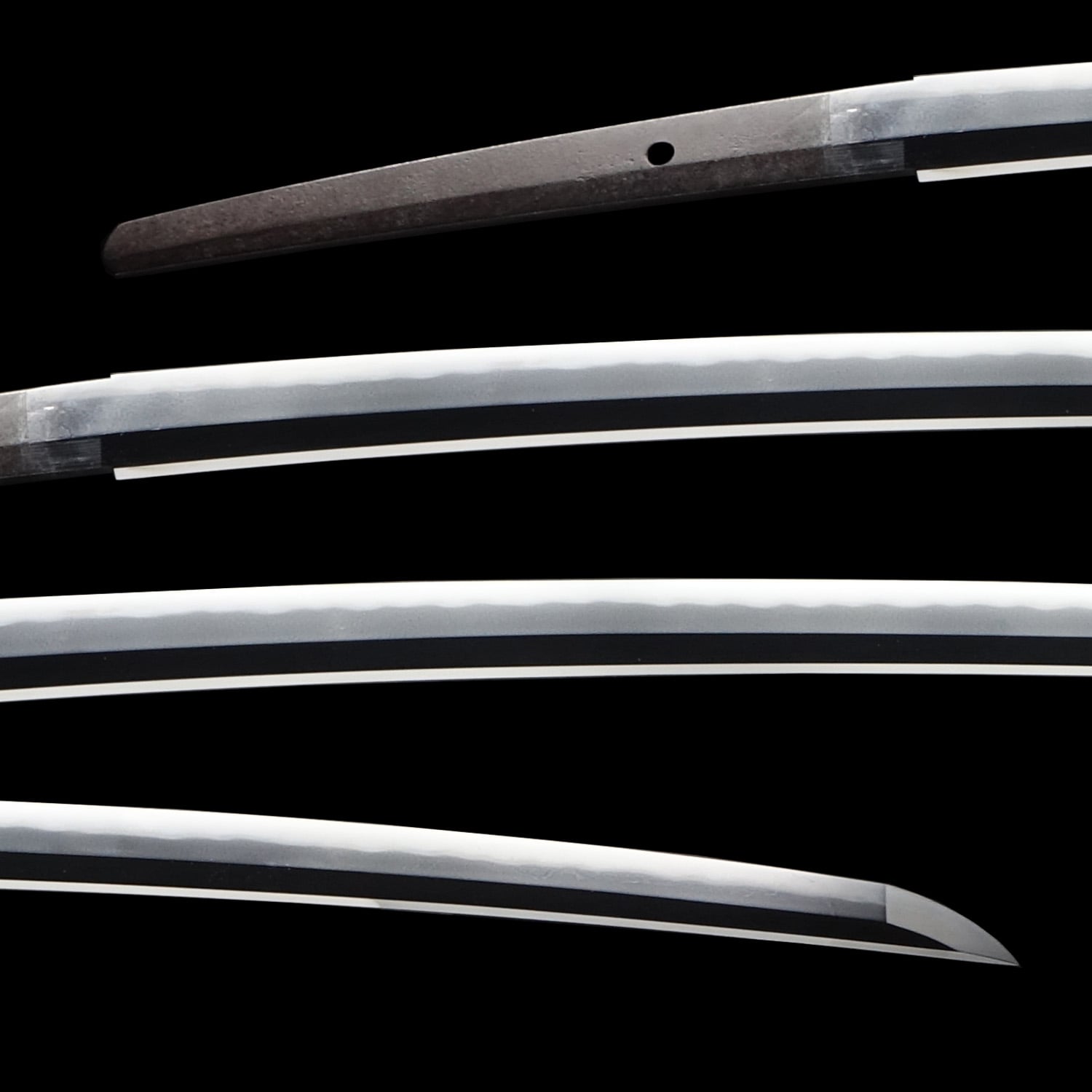
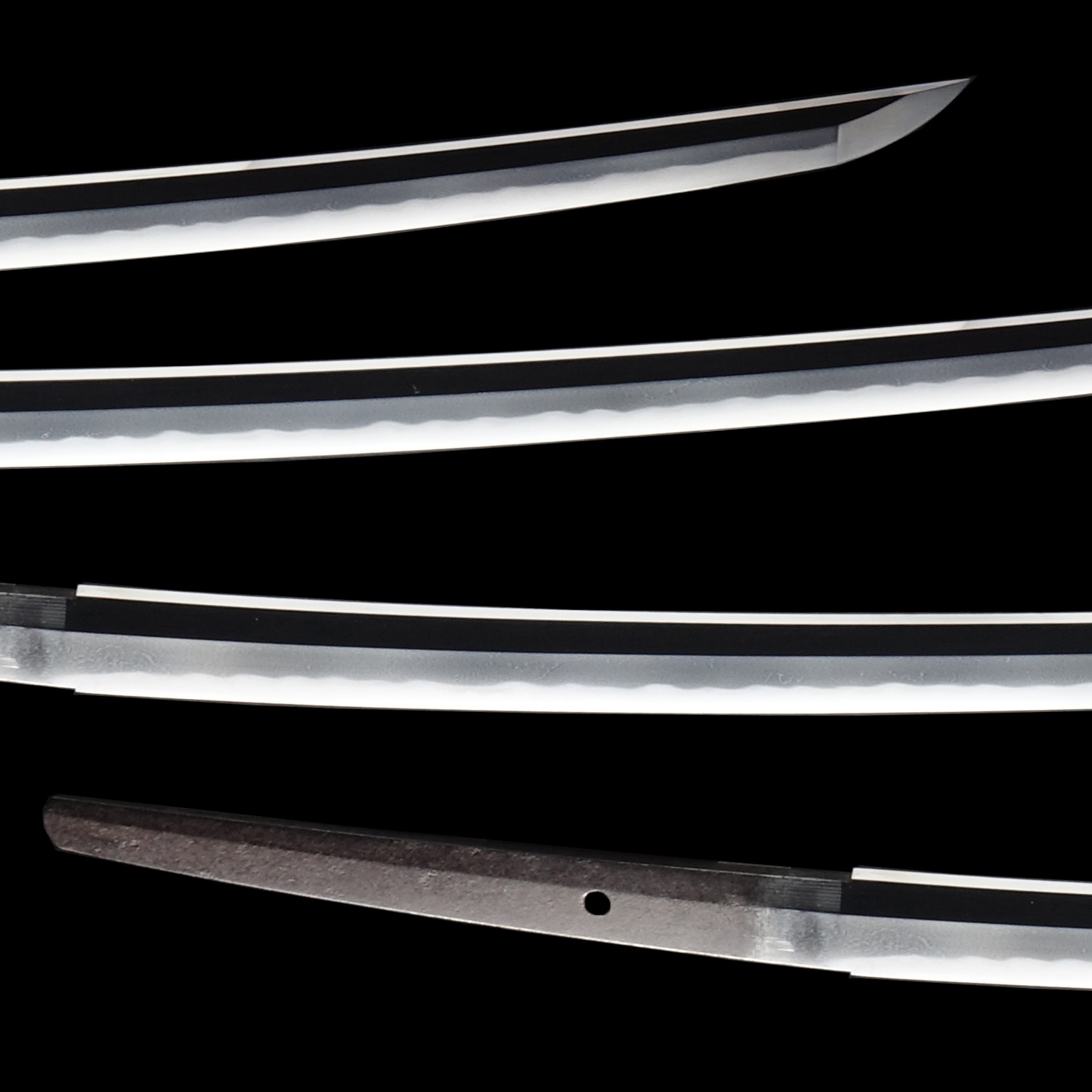
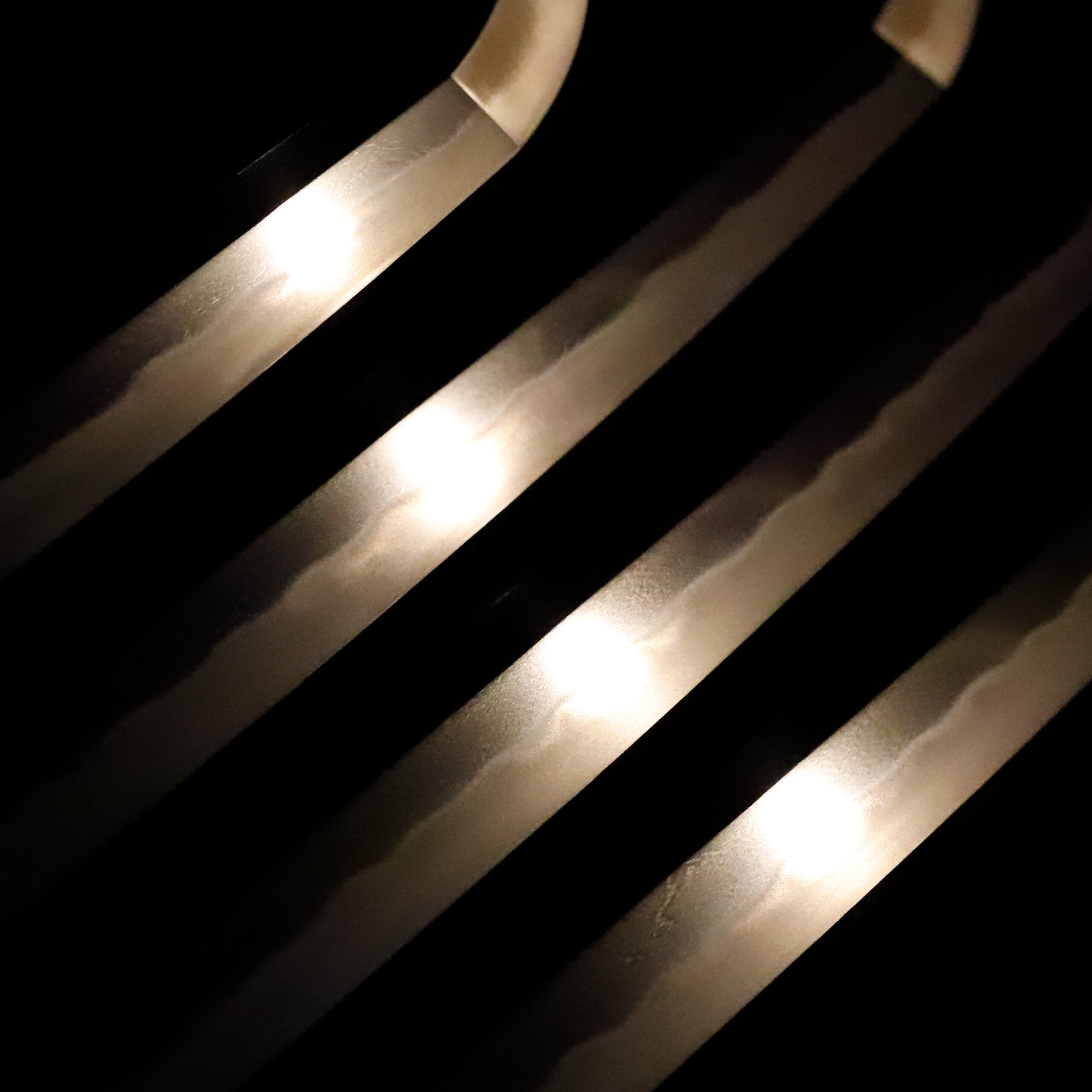
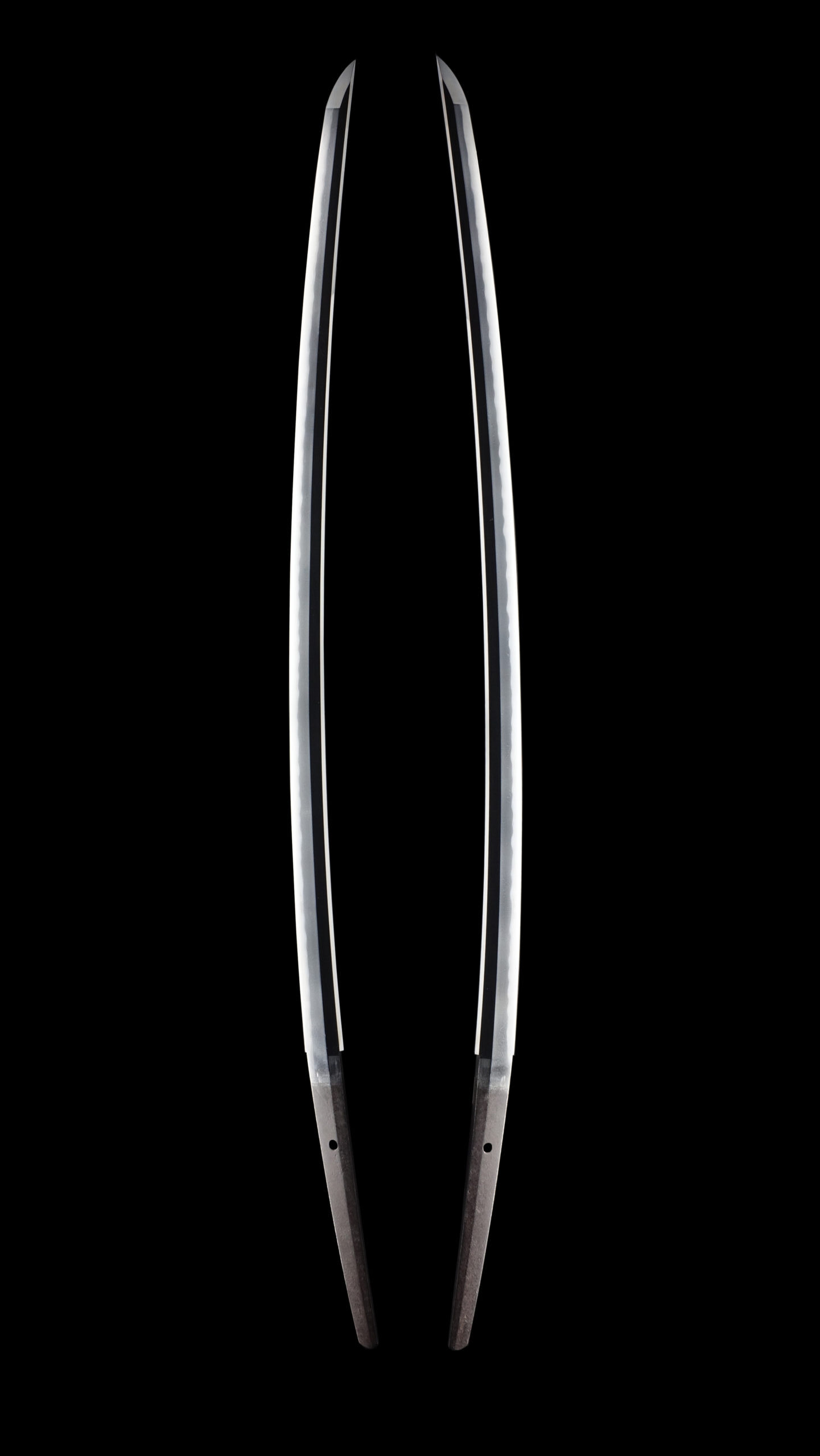
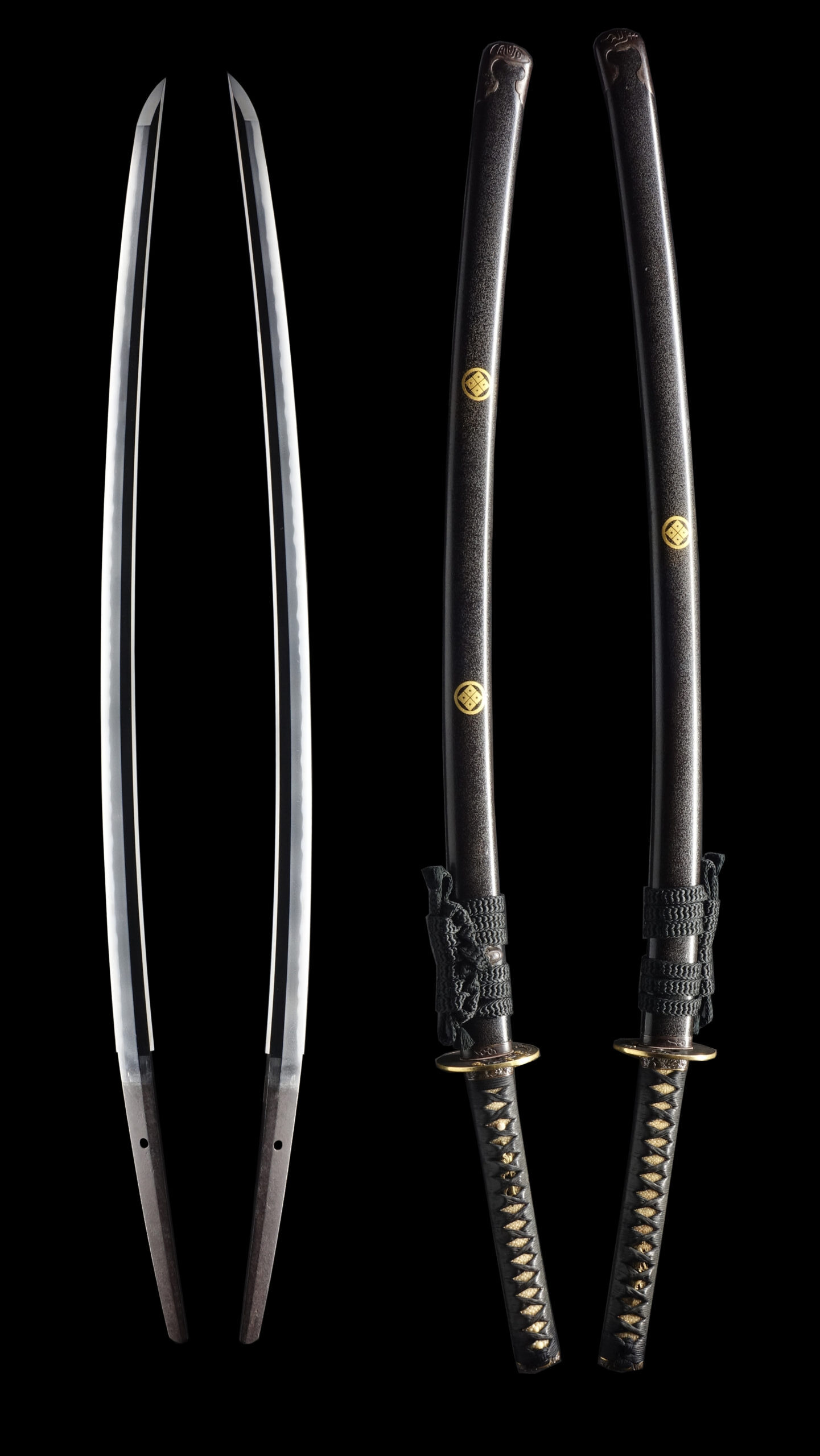
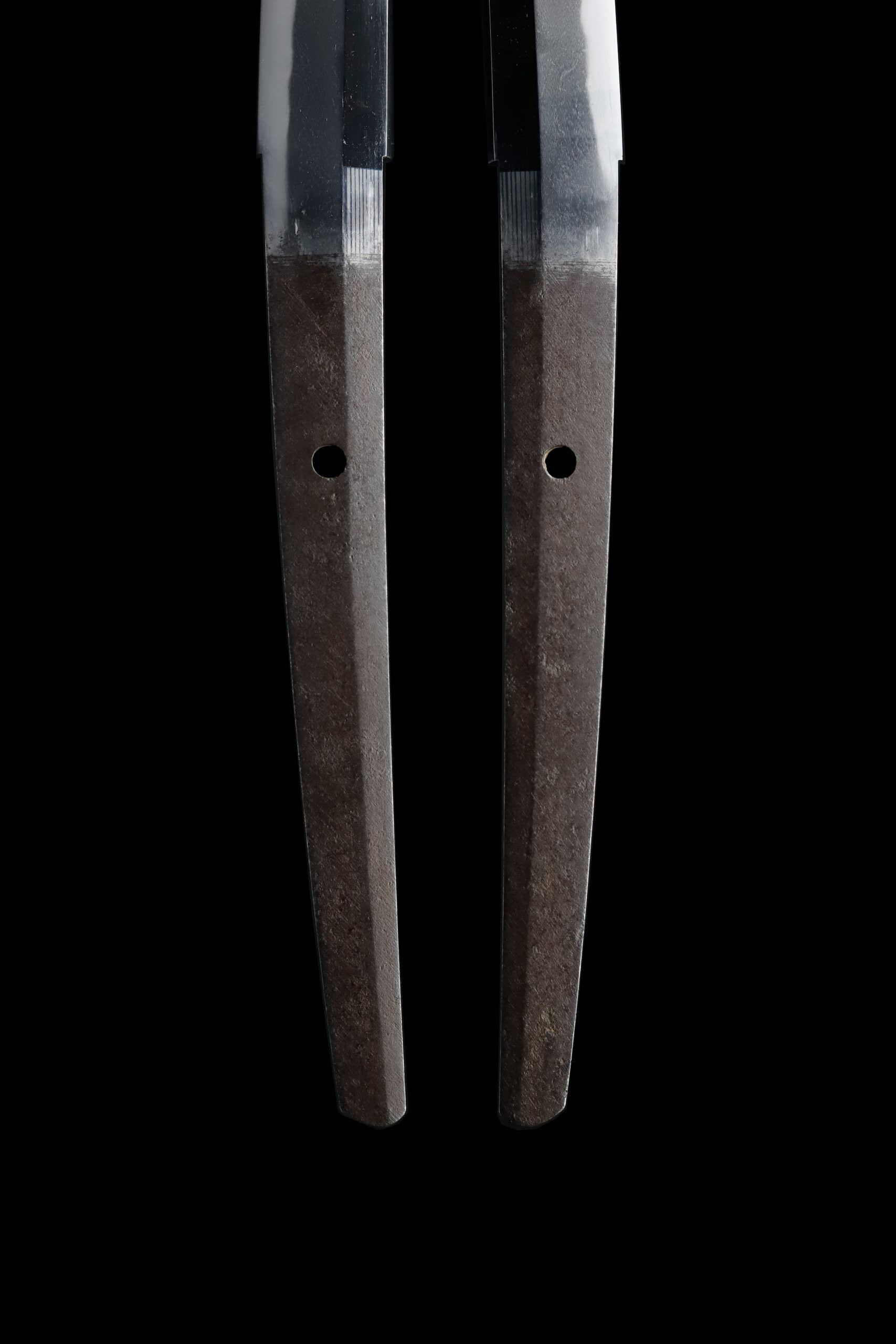
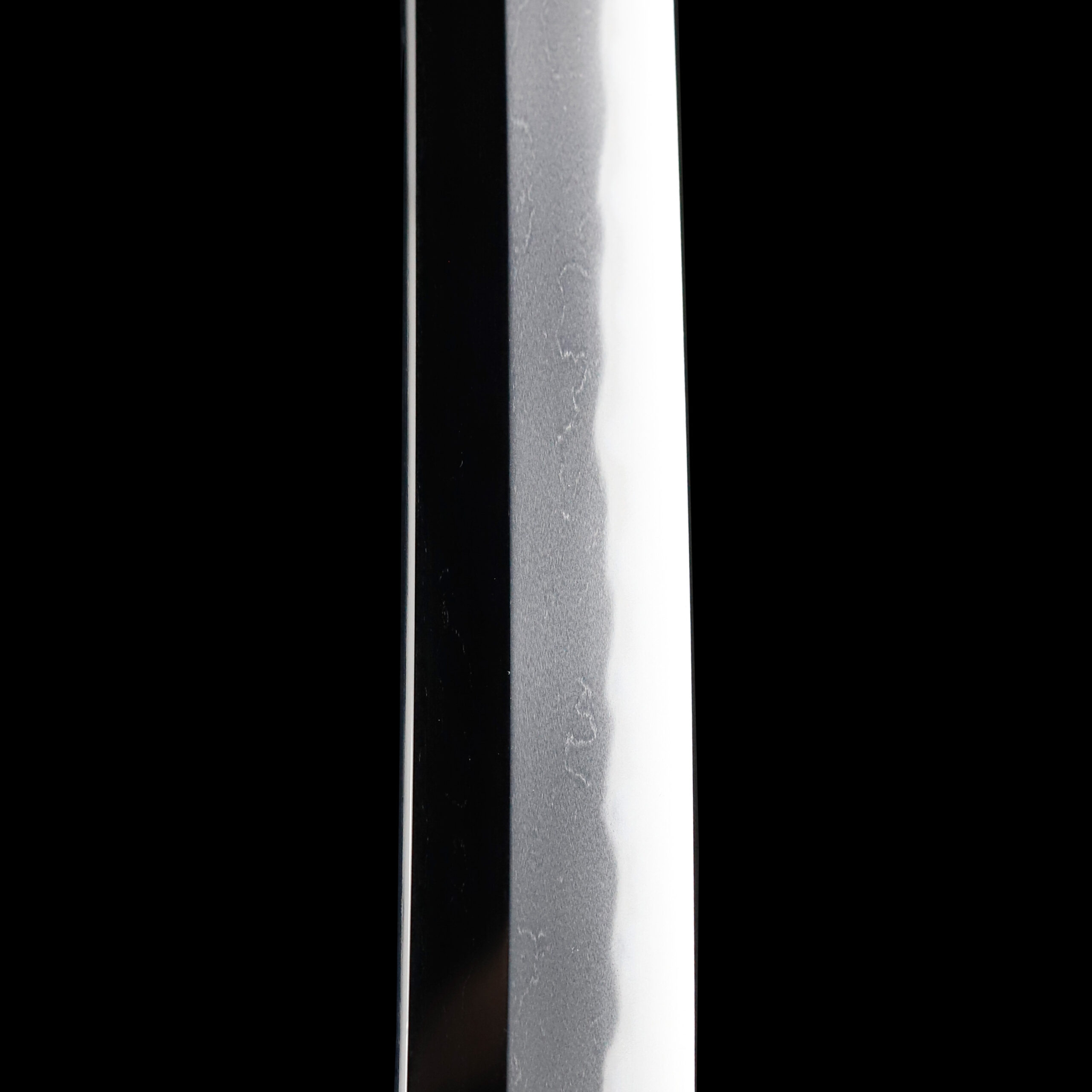
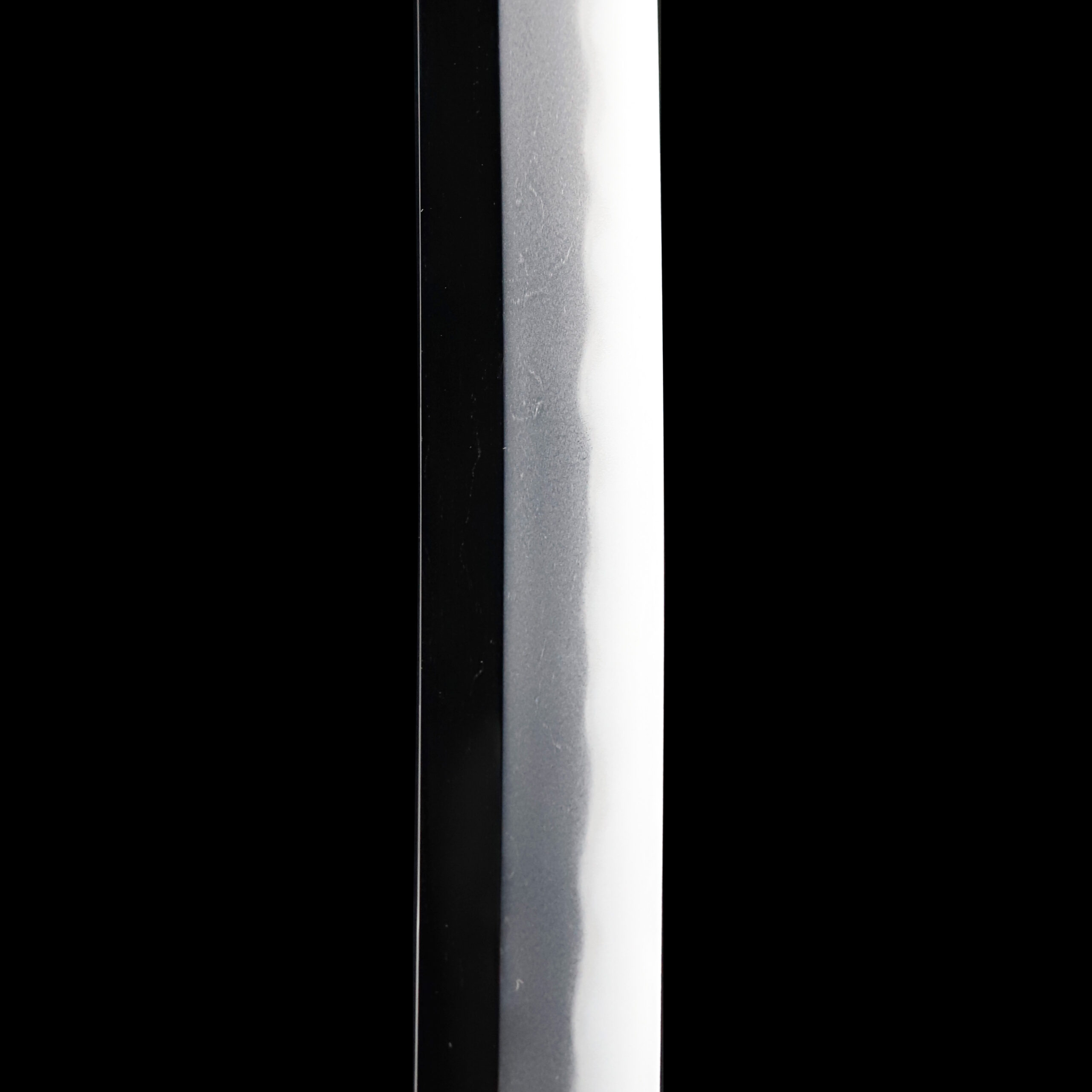
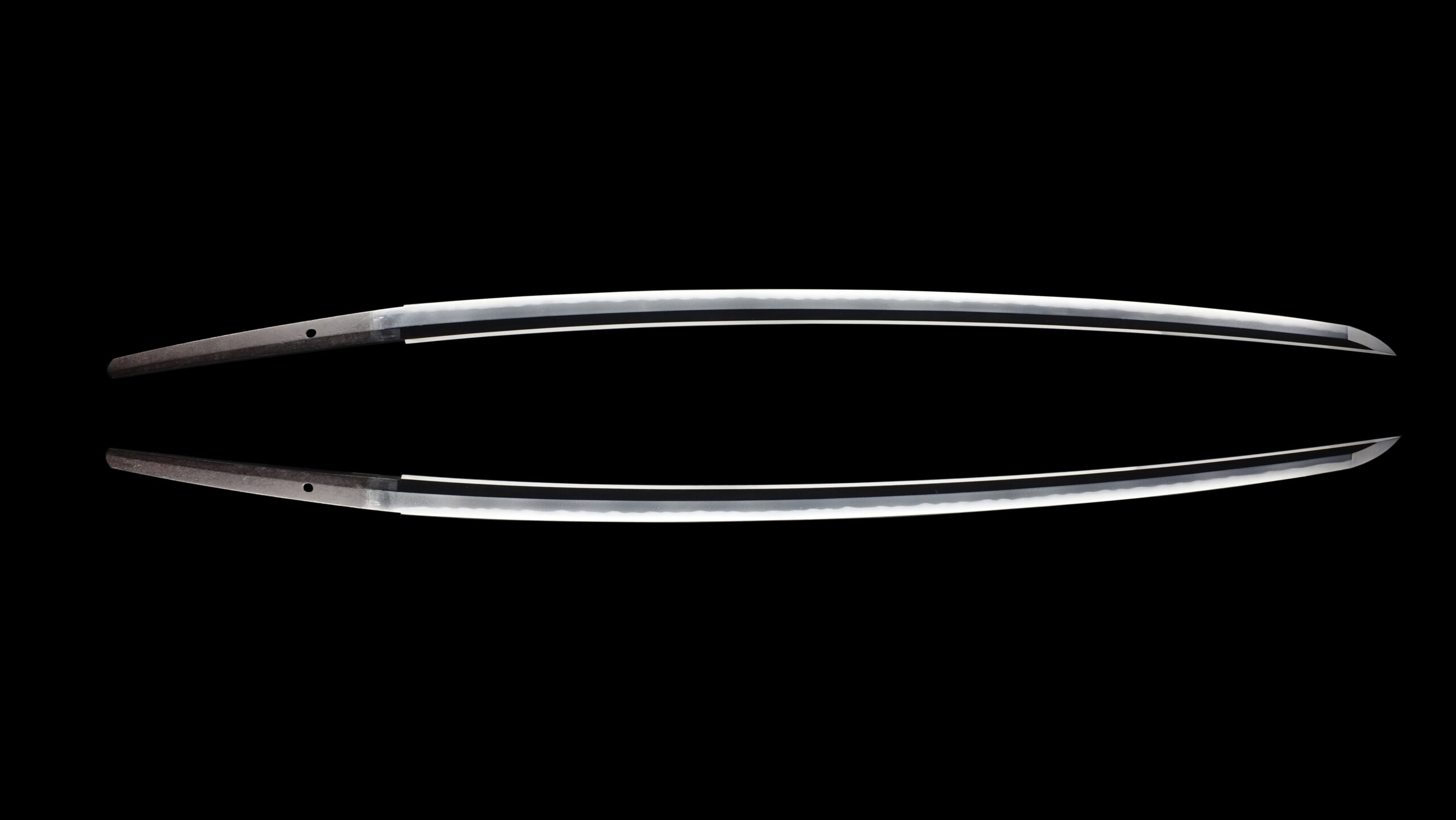
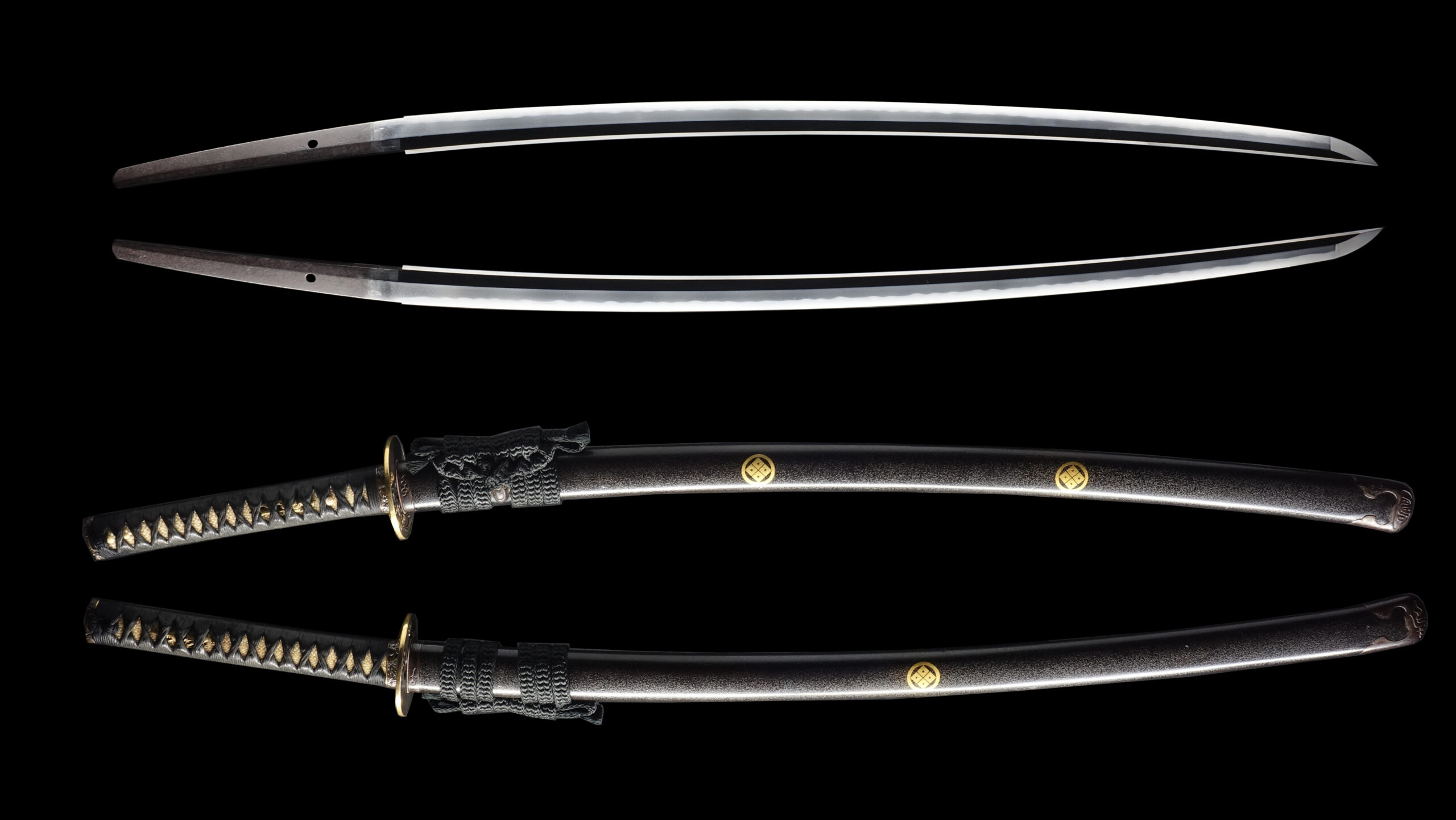
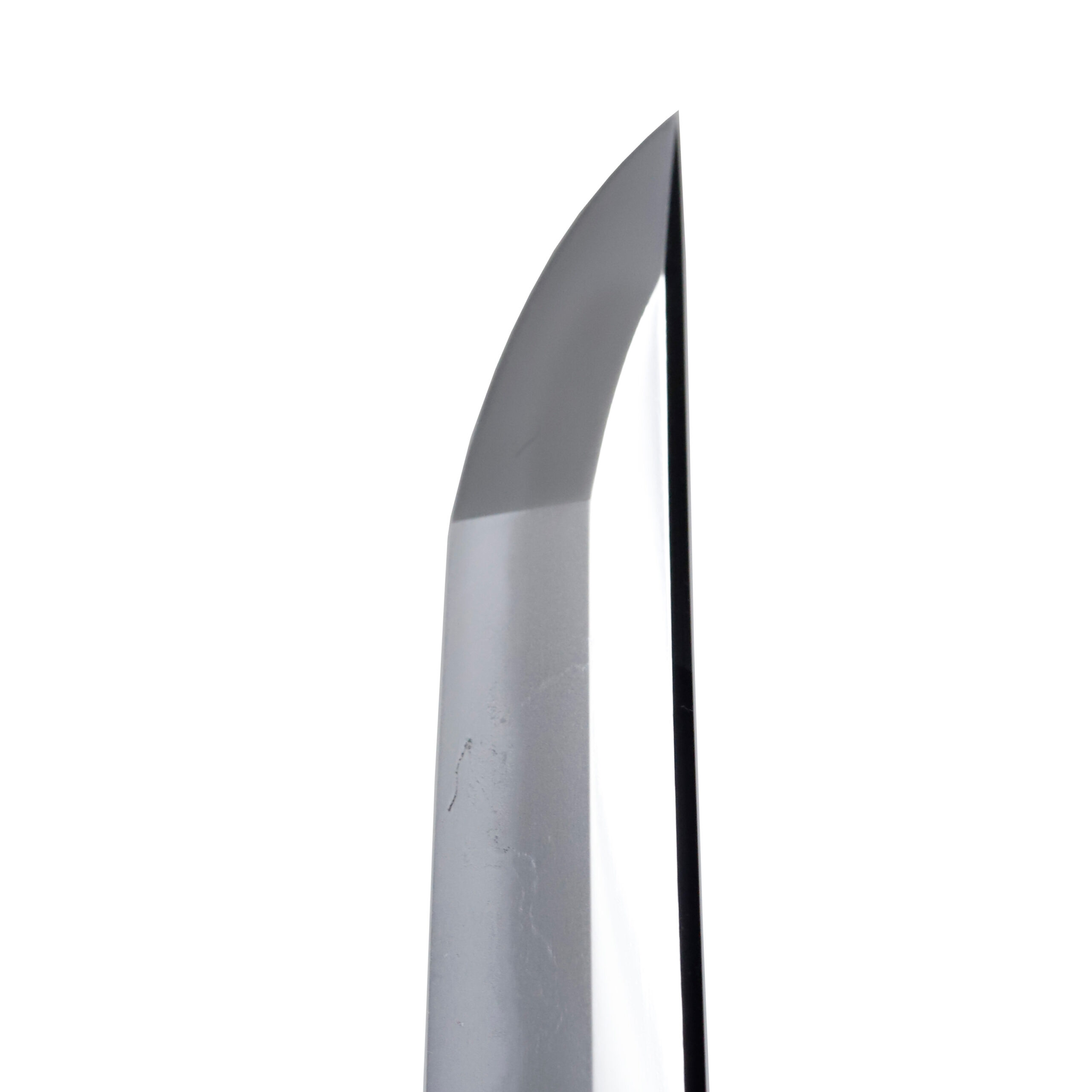
This blade is attributed to a member of Jyumyo school during early Edo Period (Early-Mid 17th century). Jyumyo is also known as Toshinaga. The JYUMYO school has its origins from YAMATO(NARA Pref.) and moved to MINO province in KAMAKURA period. The tradition continued for centuries right up until the end of EDO period. Their name “JYUMYO” means life span or longevity. As it’s meaning is so hopeful, their swords were prized as celebrated gift to DAIMYO great families among the SAMURAI society.
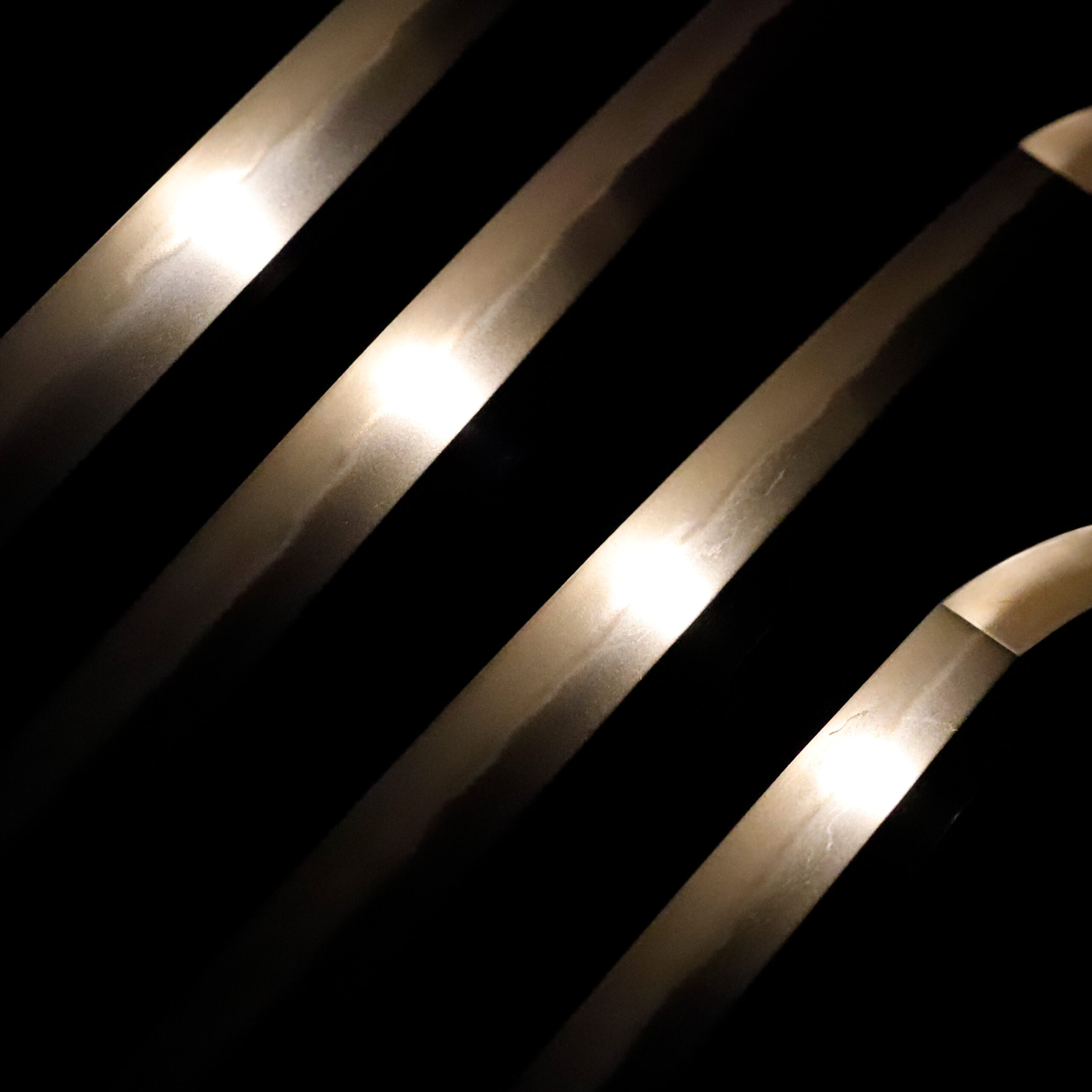
The MINO swordsmiths style, also known as MINO-DEN, basically has the TOGARI(Pointed shapes protruding from the Hamon )in a classic straight line and random temper line with some white Utsuri. MINO-DEN had its origin from YAMATO-DEN in the late KAMAKURA period(1280-1330). It flourished in the MUROMACHI period(1333-1573) and continued until the EDO period(1603-1868).
MINO-DEN especially prospered during Sengoku Jidai(Warring State period) due to the high demand for weapons. And the location of Mino province beat others. Akechi Mitsuhide controlled Mino province, and Nobunaga Oda ruled Owari province, and Tokugawa Ieyasu was the lord of Suruga (Neighboring areas). There was high demand from those powerful feudal lords and their retainers. Furthermore, so many wars occurred between the Kanto region and the Kyoto area.
Mino is located in the middle, making feudal lords feel convenient to order swords from MINO-DEN. The blades forged in MINO provinces also had the reputation of its practical design and sharpness. Many feudal lords demanded swords forged in the Mino province. The tradition of excellent sword forging skills had been passed to the Edo period, and Jyumyo is a good example.
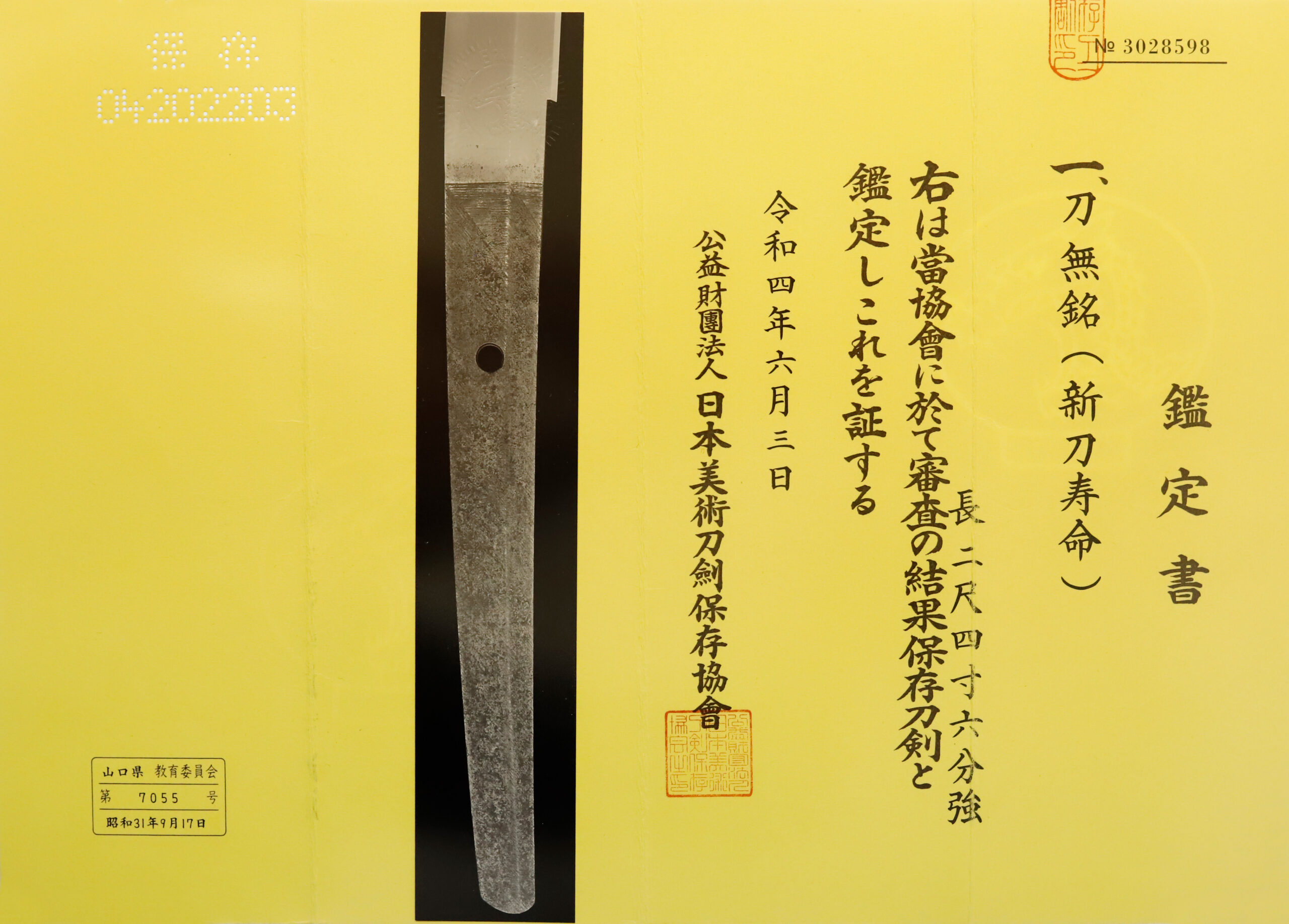
It is appraised as a Hozon Touken (保存刀剣) issued by NBTHK (Nihon Bijutsu Touken Hozon Kyokai:日本美術刀剣保存協会).
*Please keep in mind that there is a very tiny Kizu near the tip of this blade while they are all minor.
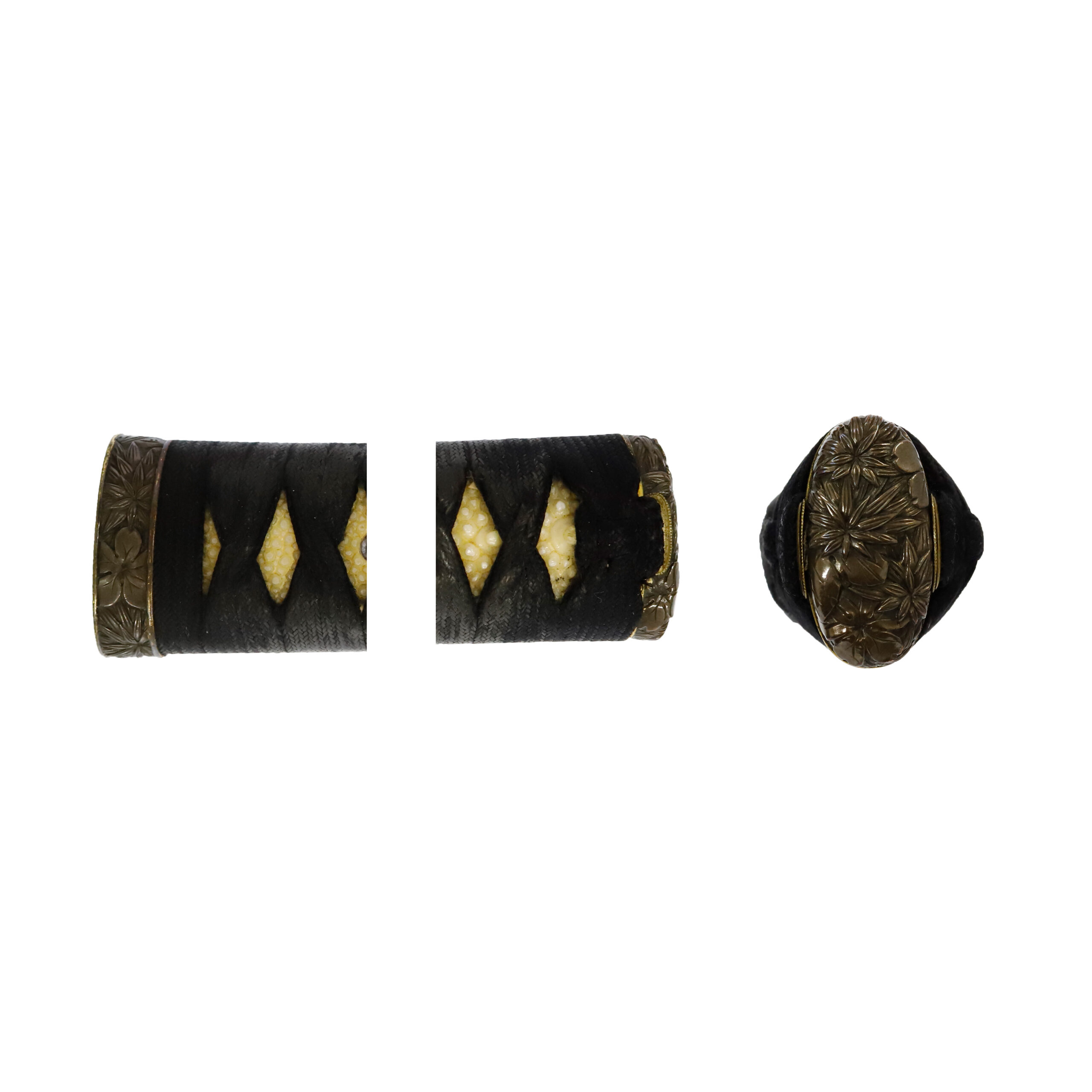
Fuchi-Kashira
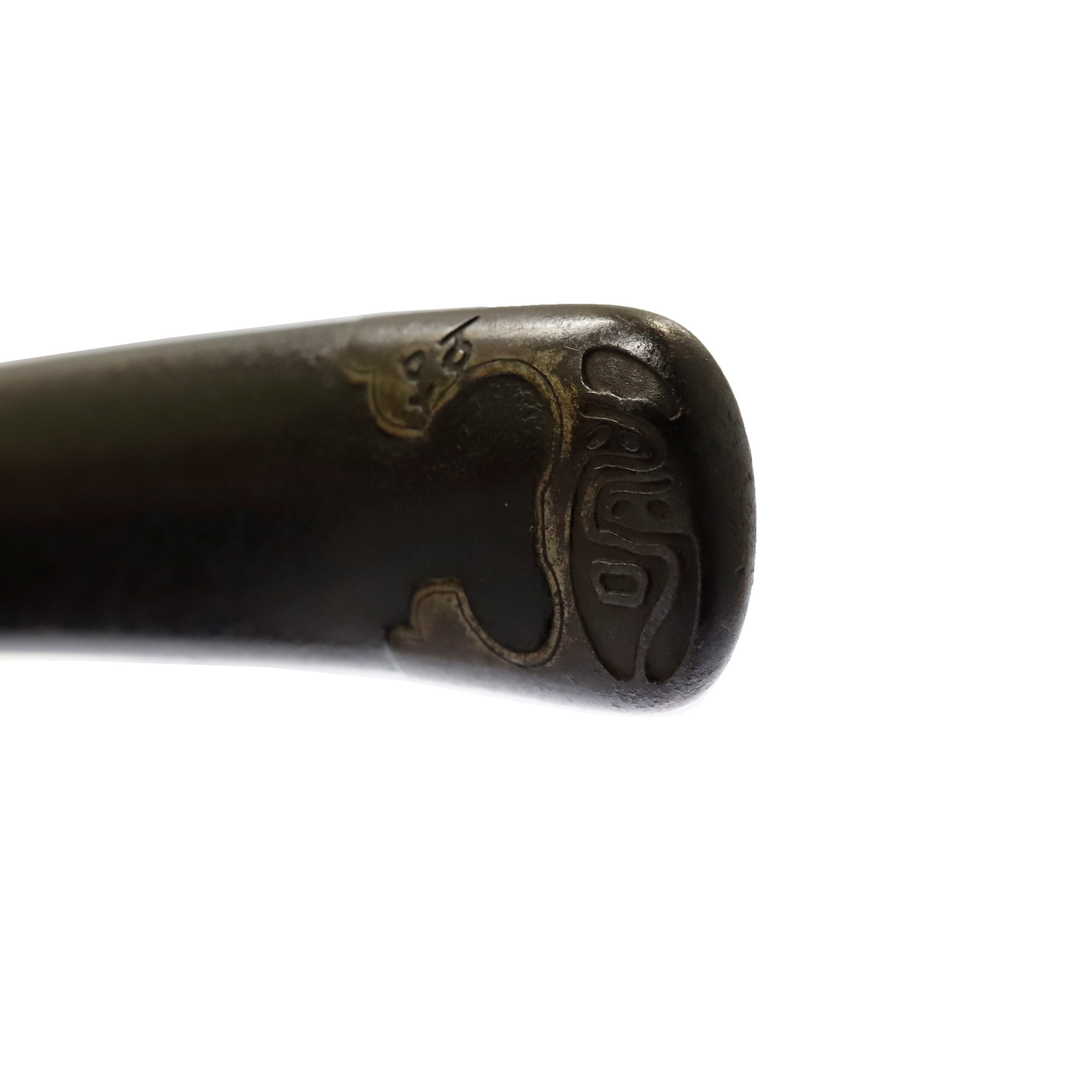
The flowers of the Sakura (桜, cherry blossom) and Kiku (菊, chrysanthemum) are engraved on this Fuchi Kashira. Two types of flowers are designed to fill the entire screen, filling the gaps. Cherry blossoms are one of the seasonal things of spring, and they have been loved for a long time in Japan. Its pattern is designed for various items, such as sword mountings, Kimonos (着物, traditional Japanese costume), and furnishings. One theory says that the god of grain exists in cherry blossoms. Therefore, this flower pattern has been treated as the symbol of a plentiful harvest. People held a traditional custom under cherry blossom trees to pray for a bumper year in ancient times. It is said this is the origin of the cherry blossom viewing picnic today.
A long time ago, chrysanthemums were used as a medicine for obtaining a long life in the continent, and it was brought to Japan with this thought in the Nara period (648-781). Chrysanthemum symbolizes fall, and people have greatly appreciated it since ancient times. The chrysanthemum has been likened to the sun as its petals form radially. That is why this flower pattern is treated as the symbol of perpetual youth and longevity or good health. In this way, this Fuchi Kashira is decorated with auspicious plant motifs.
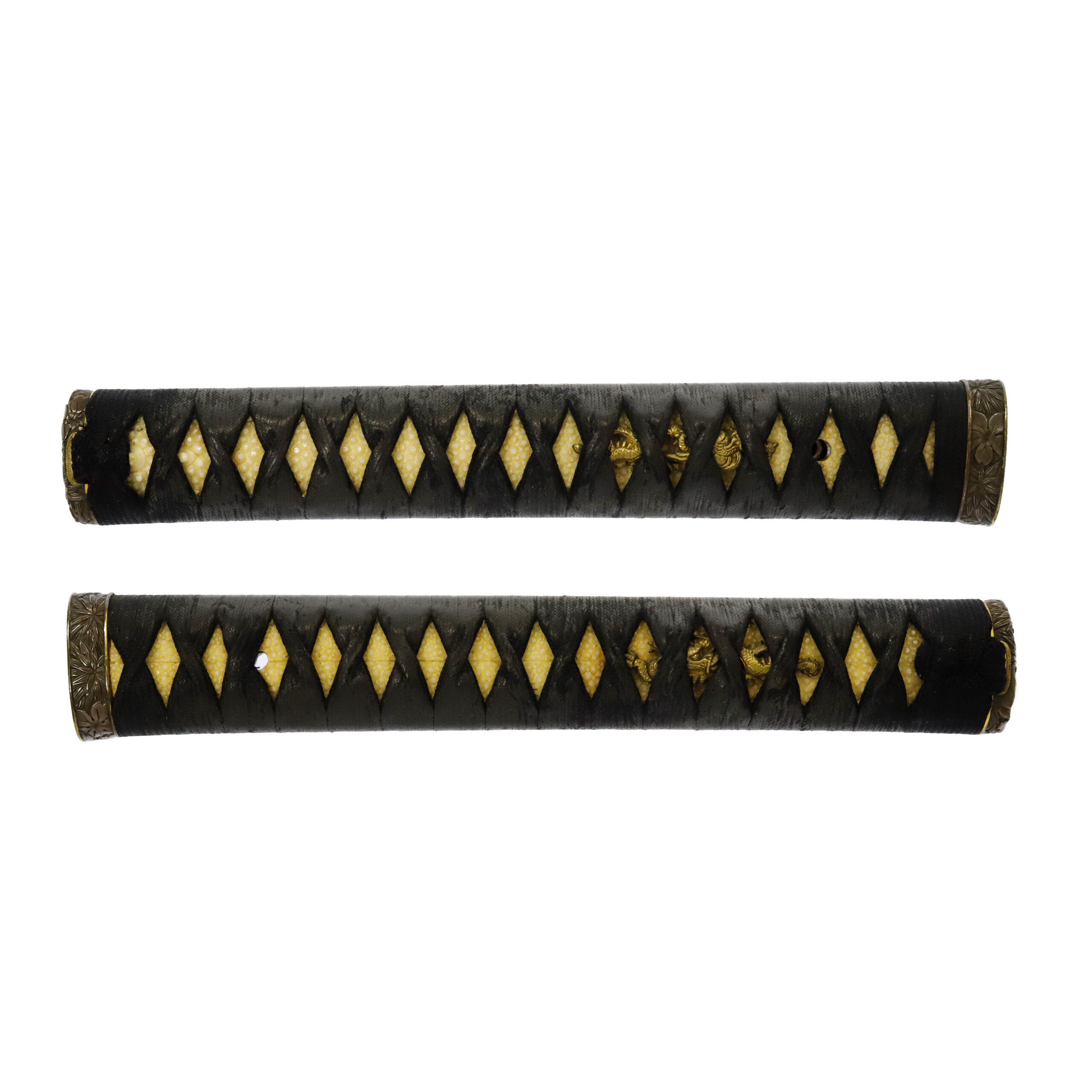
Tsuka and Menuki
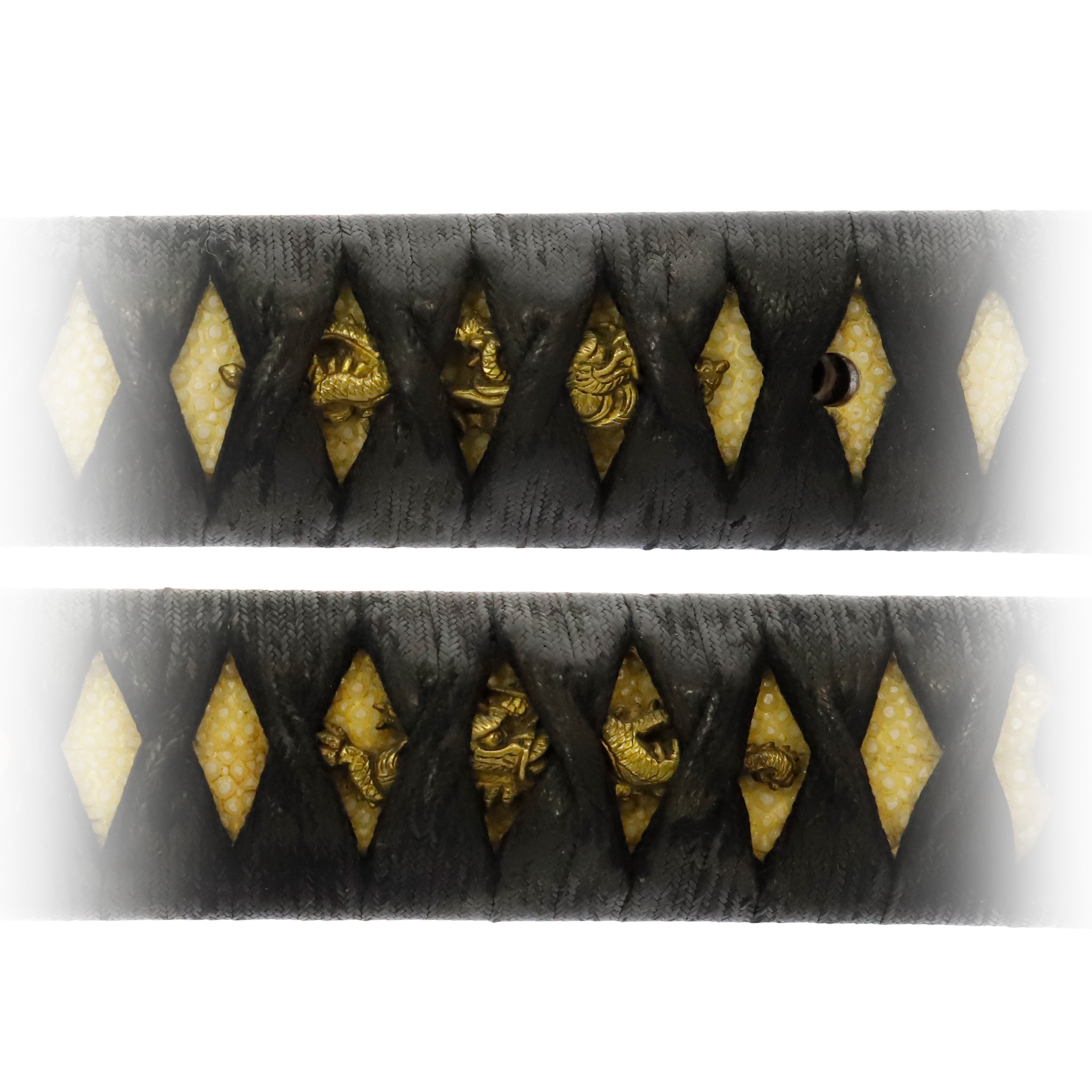
You could find the figure of a dragon designed as a Menuki on each side of the handle. Golden paint is applied to these dragons, and this coloring makes an elegant color contrast with the black color of the Tsukamaki thread. Initially, dragons were imaginary creatures found in ancient foreign traditions and myths. Furthermore, it is regarded as a symbolic beast of auspicious signs. Its body is likened to nine animals: antlers are deer, the head is a camel, eyes are demons, the neck is a snake, the belly is the Mizuchi (蛟, a mythical animal in Japan that looks like a snake and has a horn and four legs), scales are fish, claws are falcons, palms are tigers and ears are cows. A dragon was thought to reign at the top of all animals because of its odd appearance. Based on our experiences, there are lots of dragon-designed sword mountings. It shows that many Samurai warriors favored this dignified beast motif.
If you focus on the upper side Menuki’s dragon’s hand, you will find that it brings a ball-shaped object in its hand. This item is the Nyoi Houju (如意宝珠, Cintāmaṇi), a fantasy jewel that fulfills any desire and gives out treasure, clothes, food, and drinks. Moreover, it heals illness and suffering, removes evils, purifies muddy water, and prevents disasters. It is said this magical item is taken from the brain of the dragon king.
Tsuba and Habaki
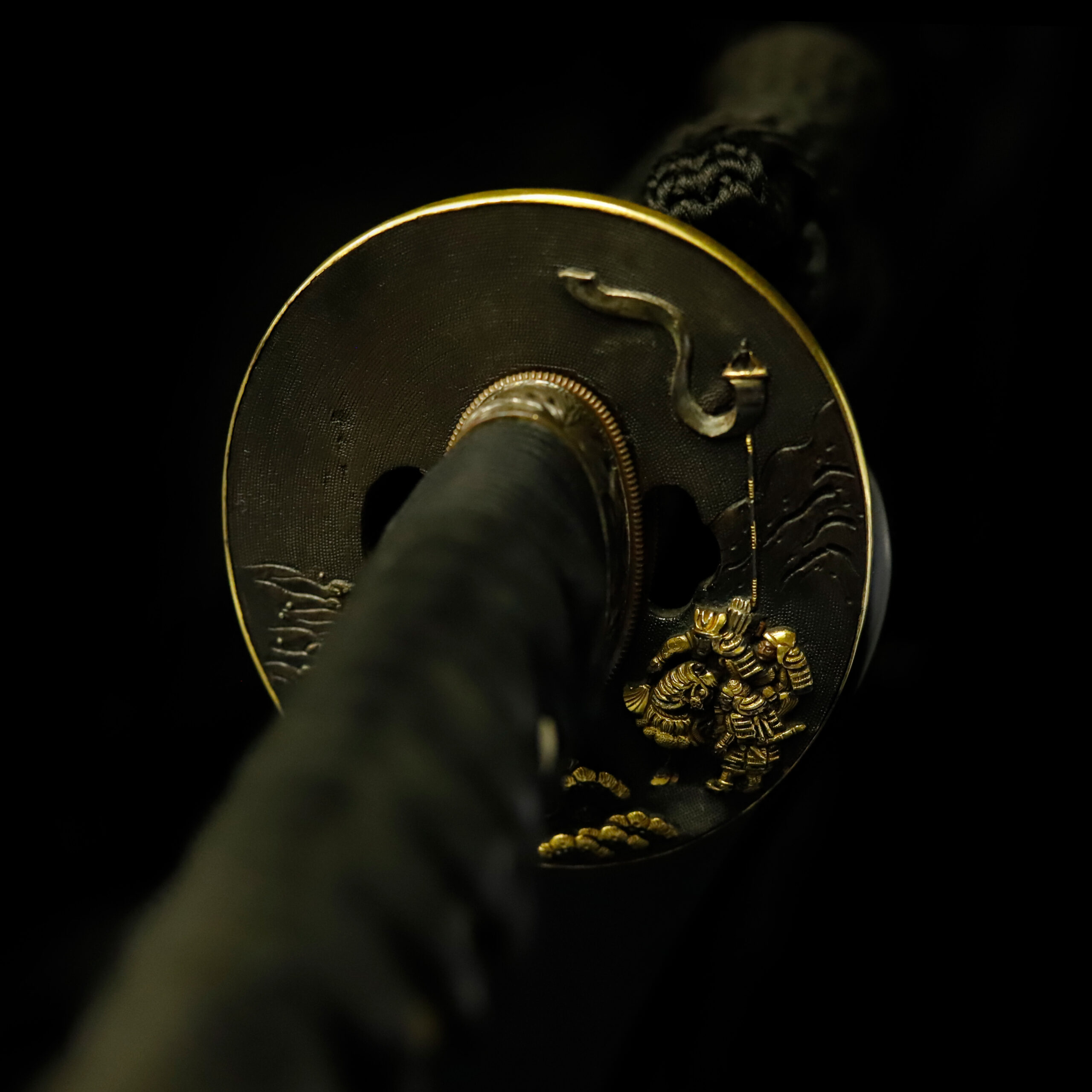
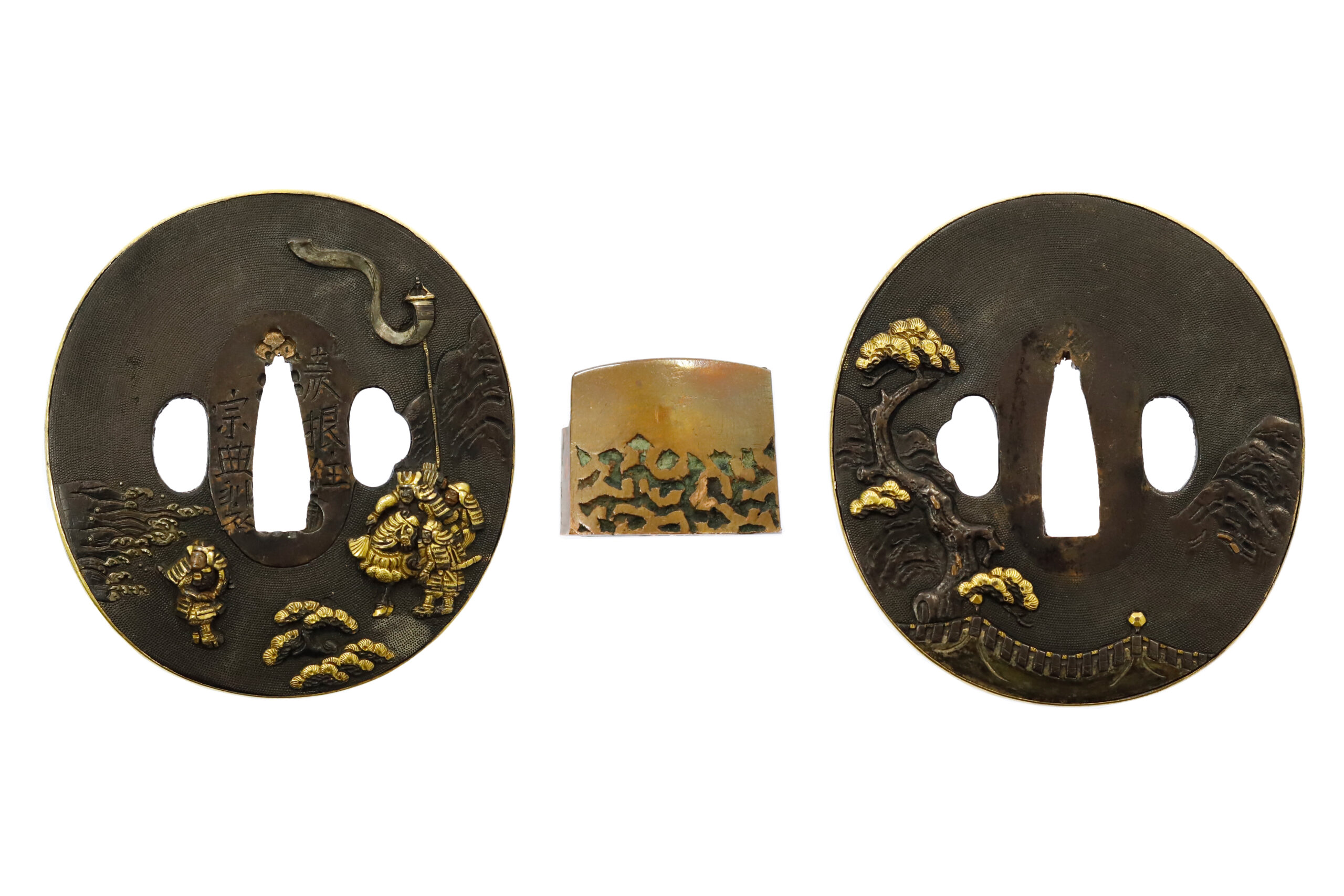
According to the signature, this Tsuba’s maker is Souten (宗典). There was a famous metalworker whose name was Mogarashi/Souheishi Nyudoh Souten (藻柄子 入道 宗典). Please note that we are unsure whether this Tsuba was made this Souten. We would like to propose it just as a possibility. It is said he worked actively in the middle of the Edo period. He lived in Hikone (彦根) area, Oumi-no Kuni (近江国, today’s Shiga prefecture). He was good at the Takabori Iroe (高彫色絵) technique and originated the Hikone-Bori (彦根彫) style. He trained many disciples and played an active role in his longevity over 75 years old. The second Souten was the first’s son. He followed the first’s designs and created lots of excellent Tsubas. It is said that lots of fake Souten Tsubas were made; it shows his works were highly appreciated.
About the design, this Tsuba depicts the scenery of a battlefield at a waterside. You would find four Samurai warriors with gorgeous armor. The fact that they all have grim expressions and are looking in the same direction might hint that their enemy is ahead of them. How they are wary of their surroundings gives a sense of tension that a fierce battle will occur in this land. This Tsuba’s design is suitable for the decoration of Samurai weapons.
Authentication Paper
They authenticated the blade on June 3rd in the 4th year of Reiwa (2022). They appraised it as Hozon Touken, the blade especially worth preserving for Japanese society.
Registration Number
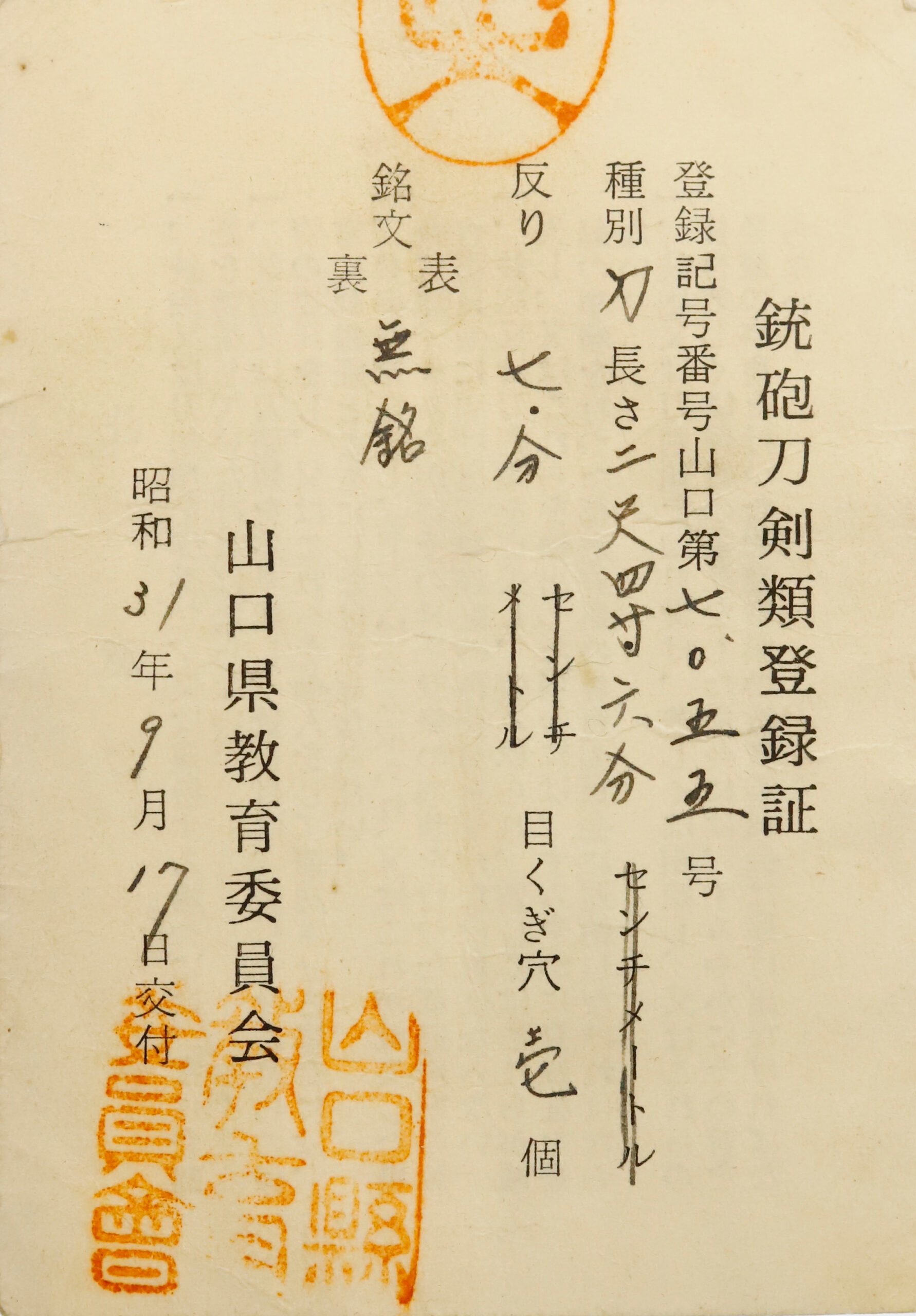
It is called Jyu Hou Touken Rui Tourokusho (銃砲刀剣類登録証).

 NihontoWatch