Unification closed the mass market, and Seki’s smiths moved to where the new money was: the Mishina line to Kyōto with court titles, Daidō smiths to castle towns across the provinces. Mino became the great technical ancestor of the Shintō age.
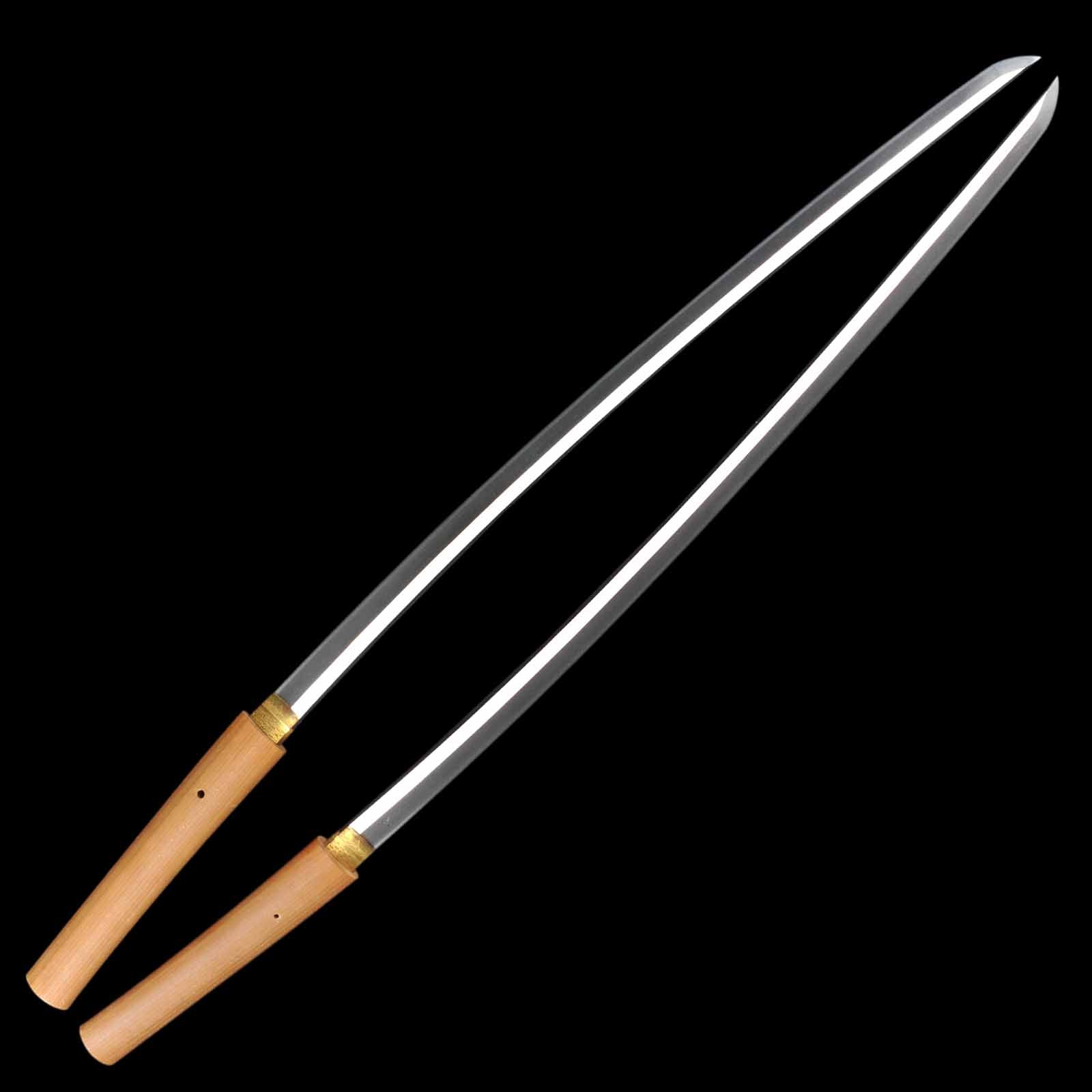
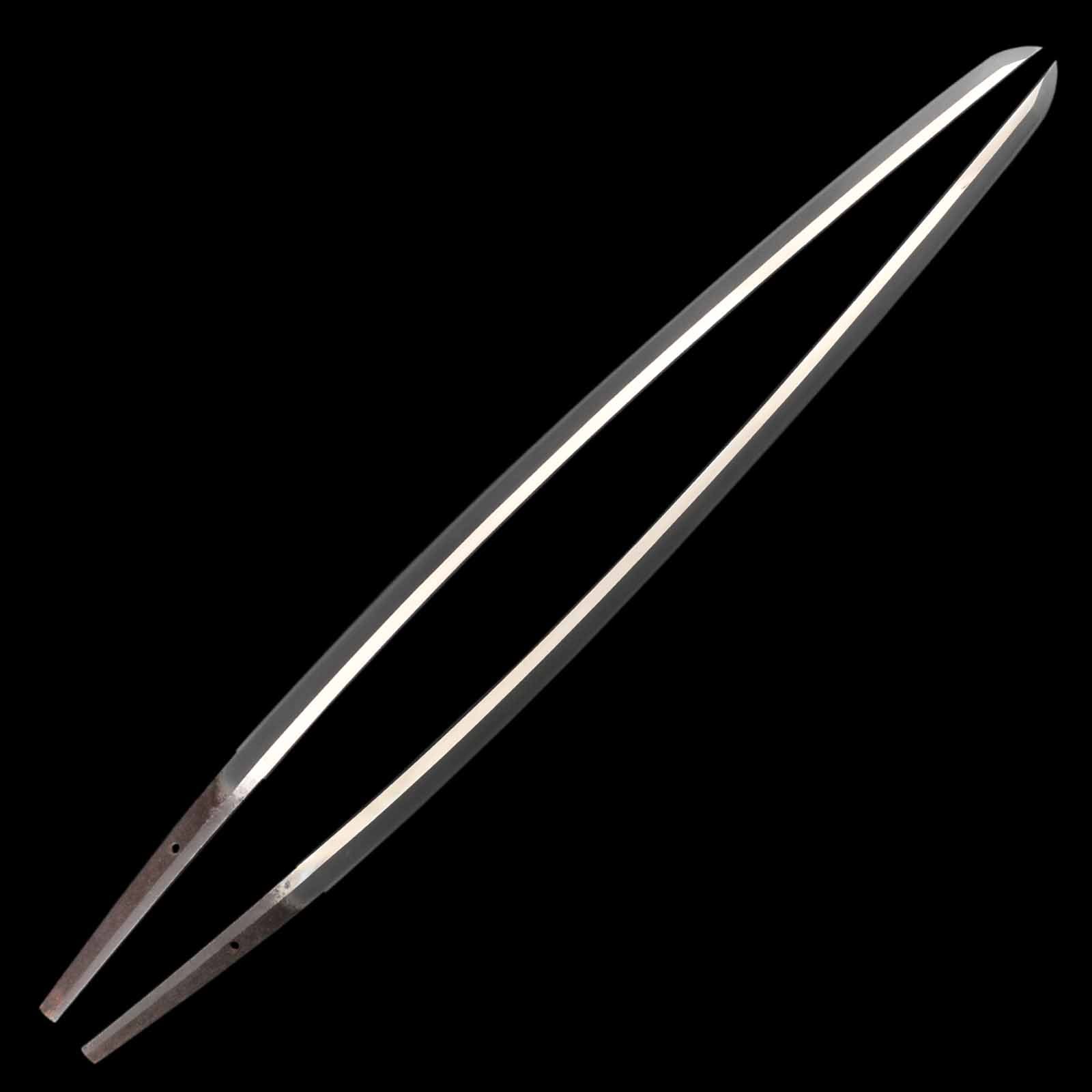
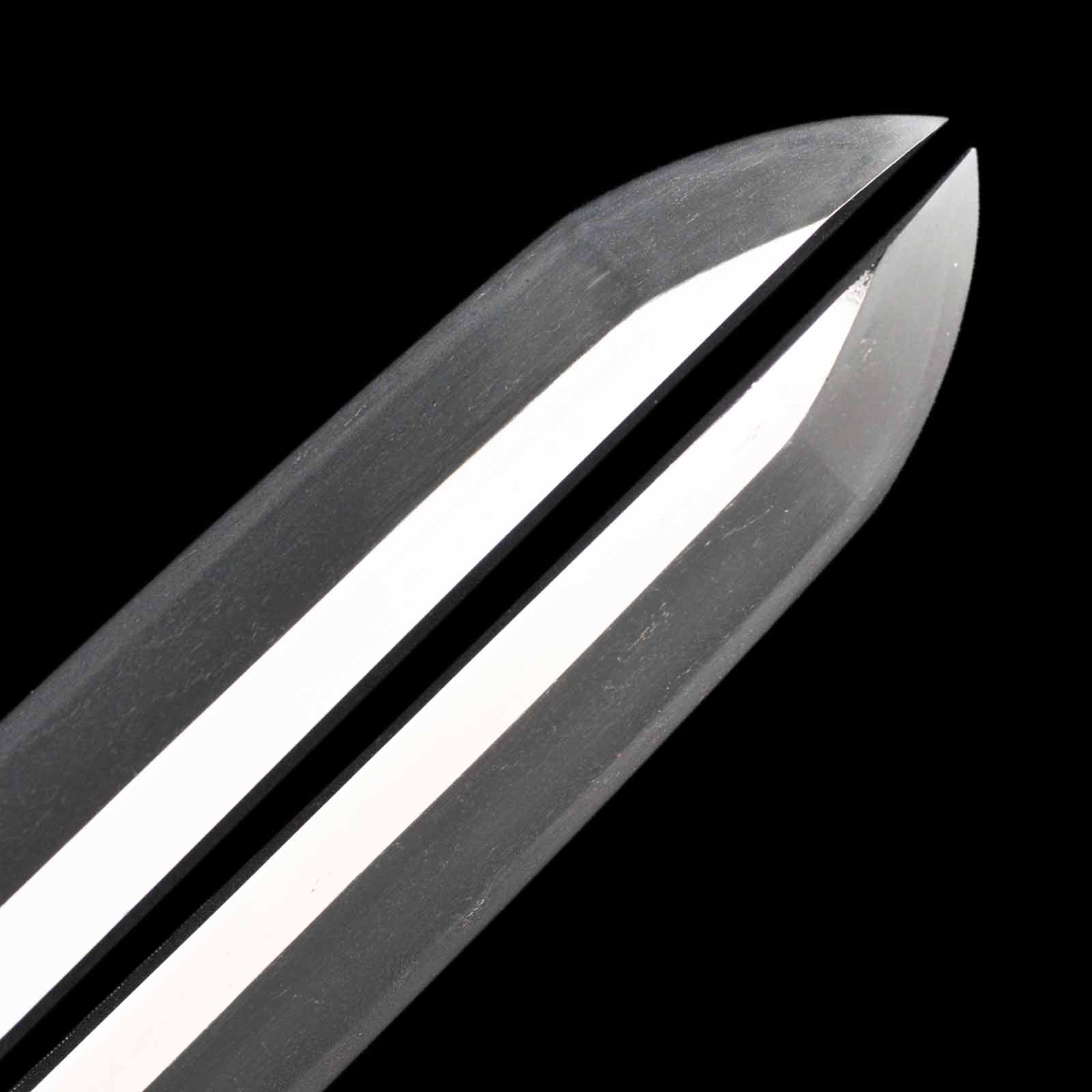
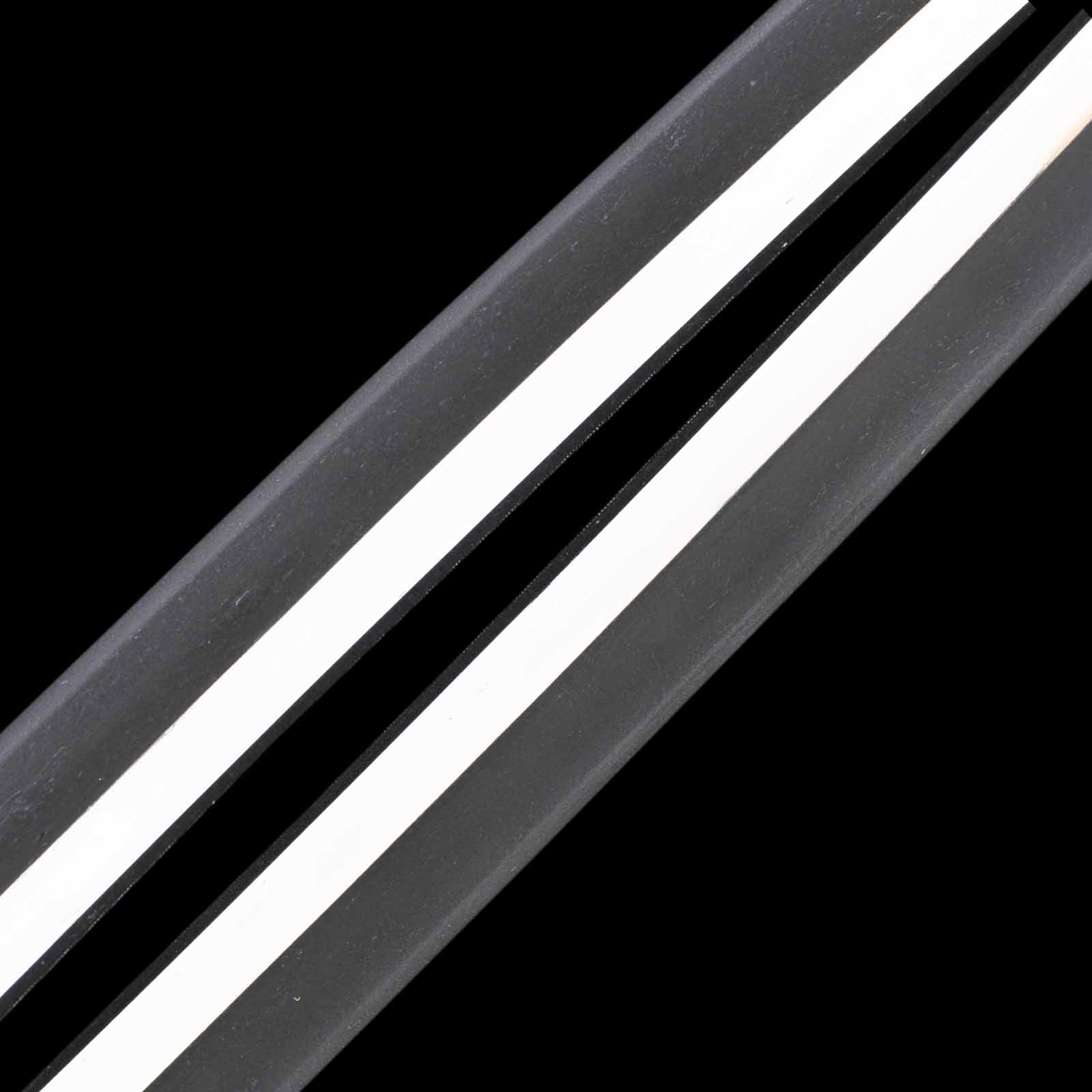
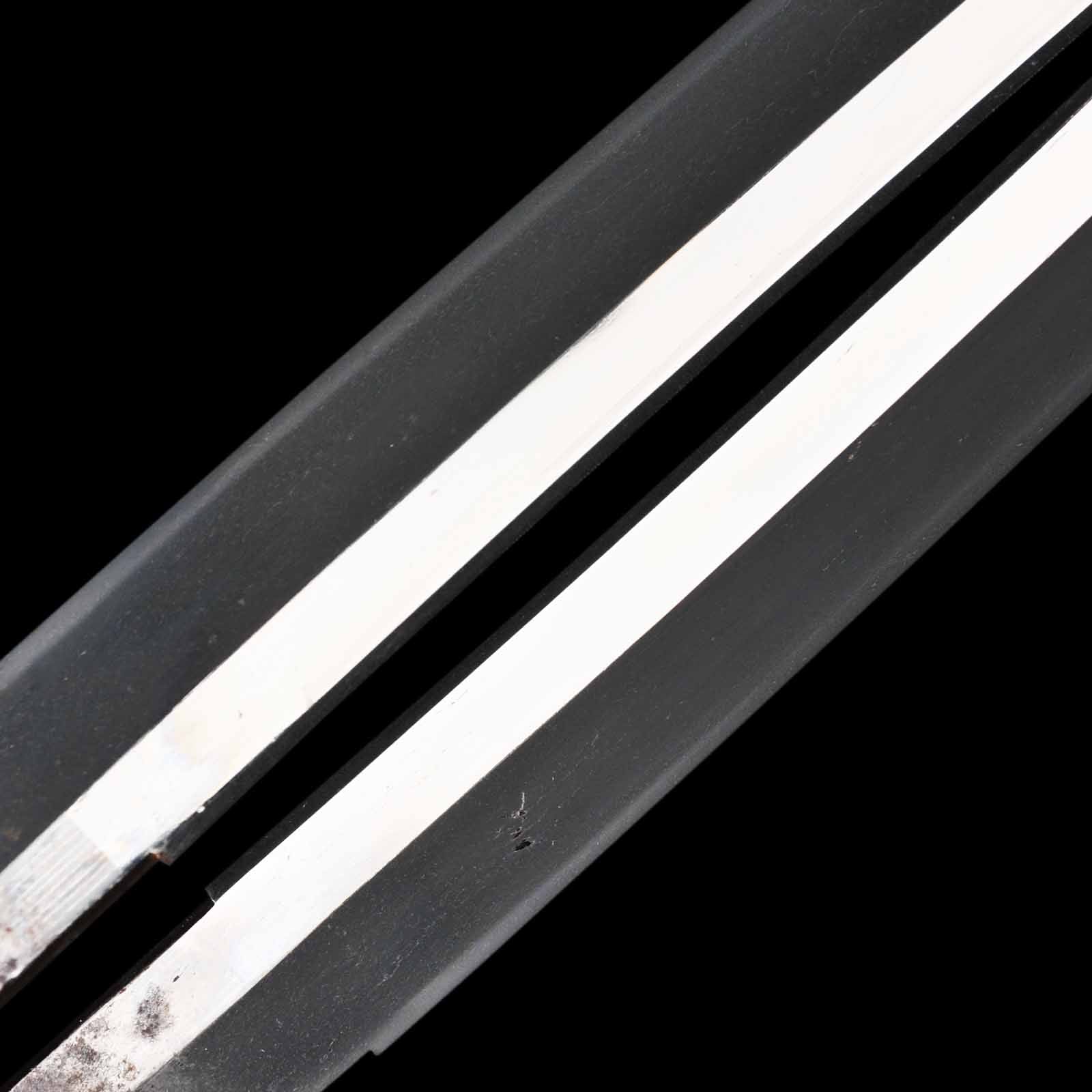
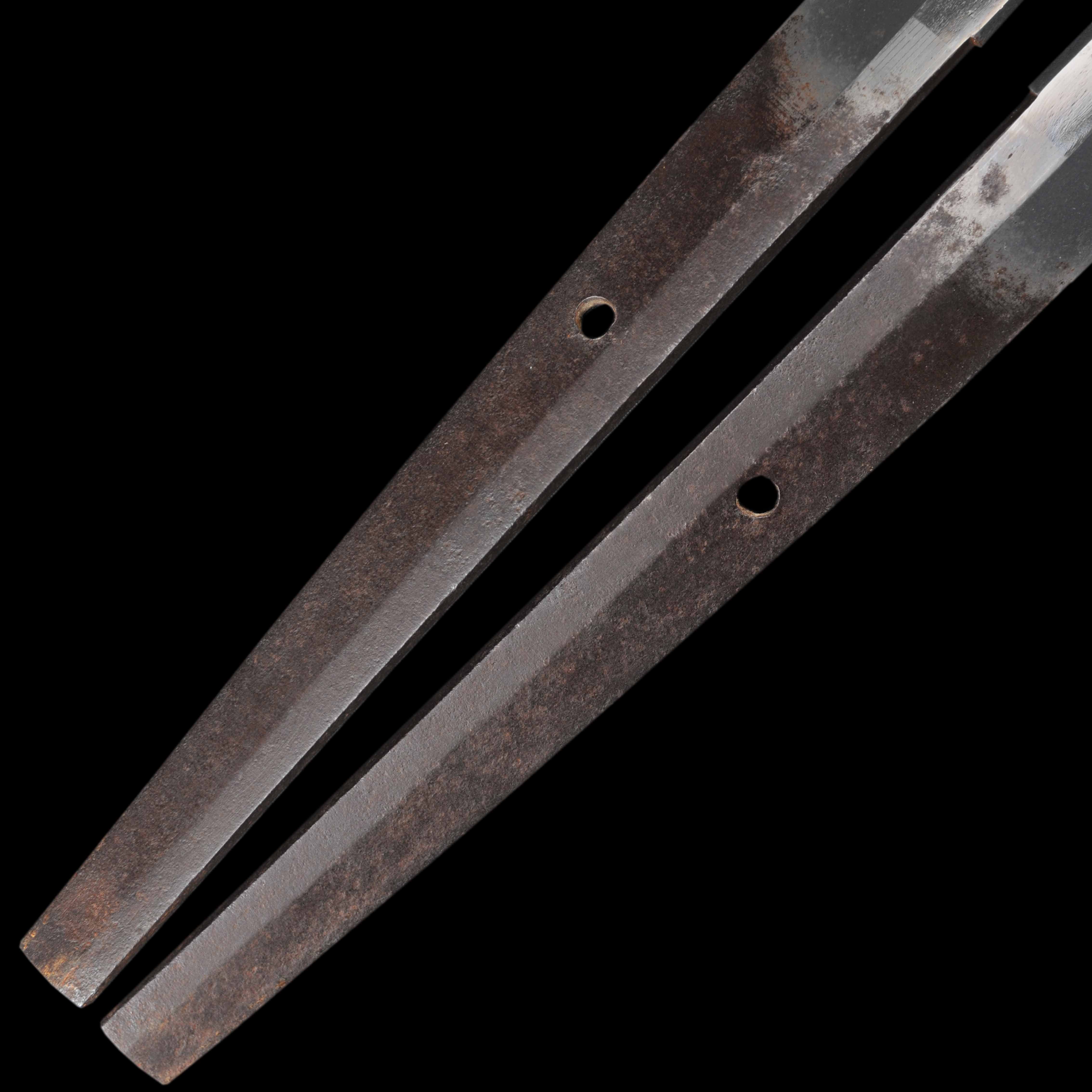
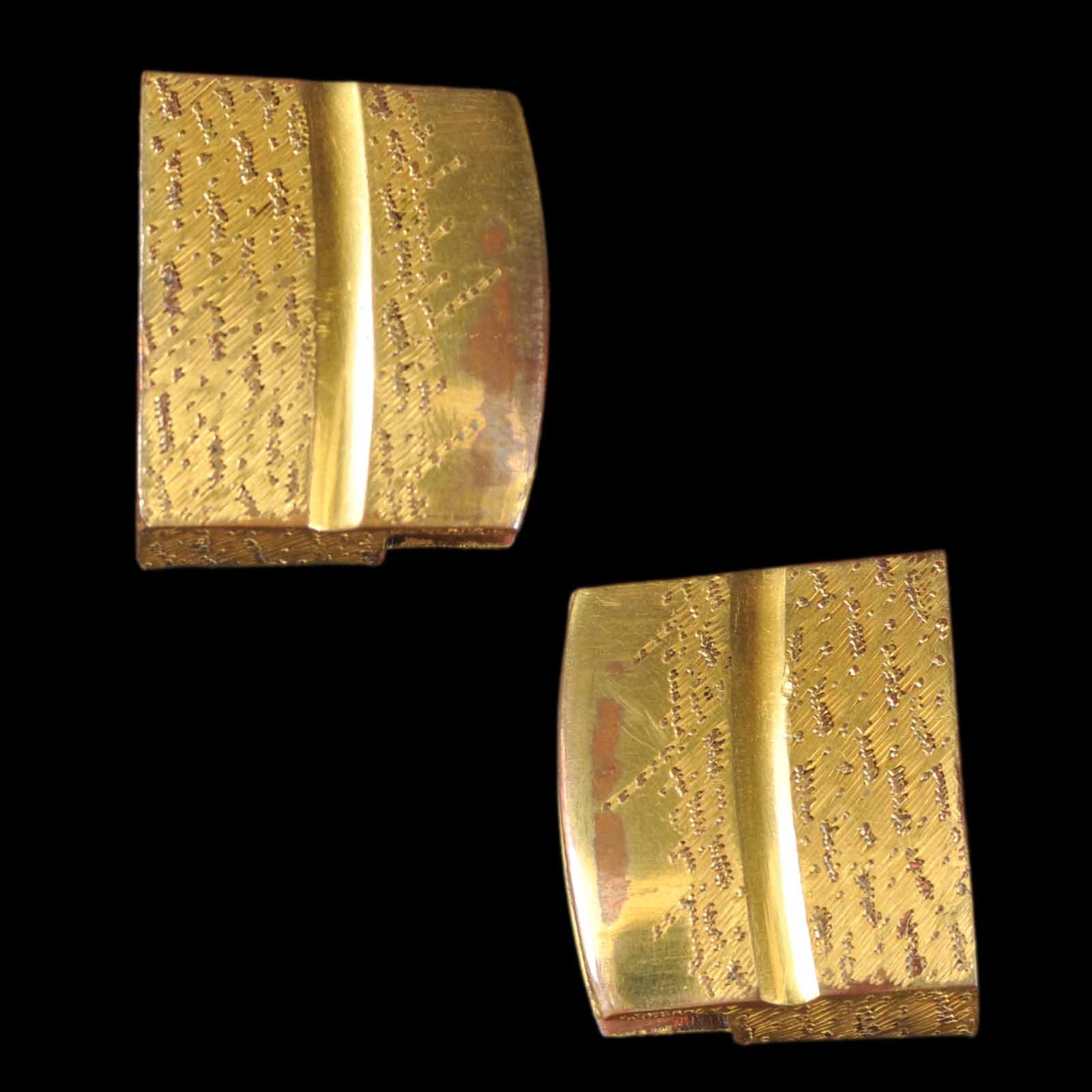
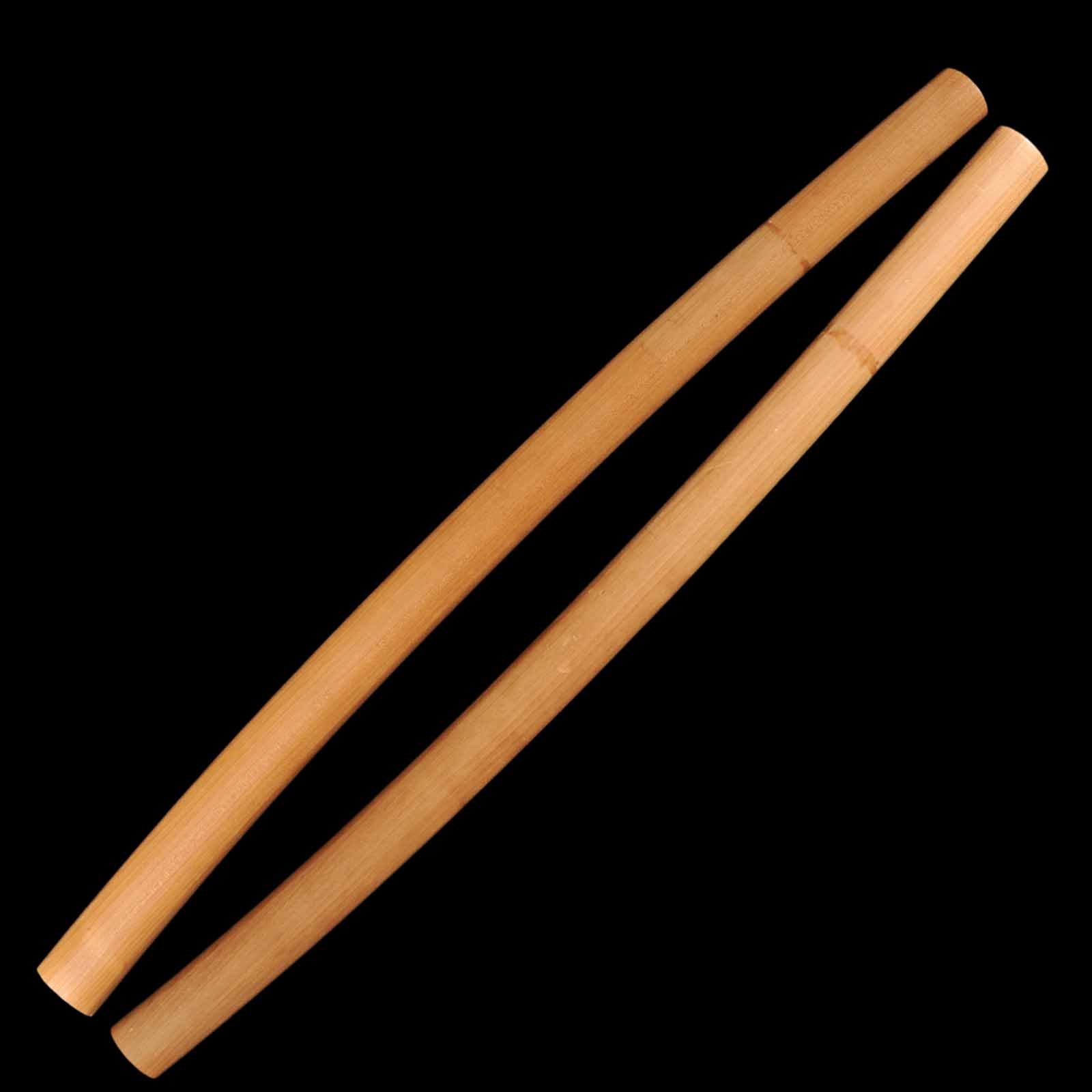
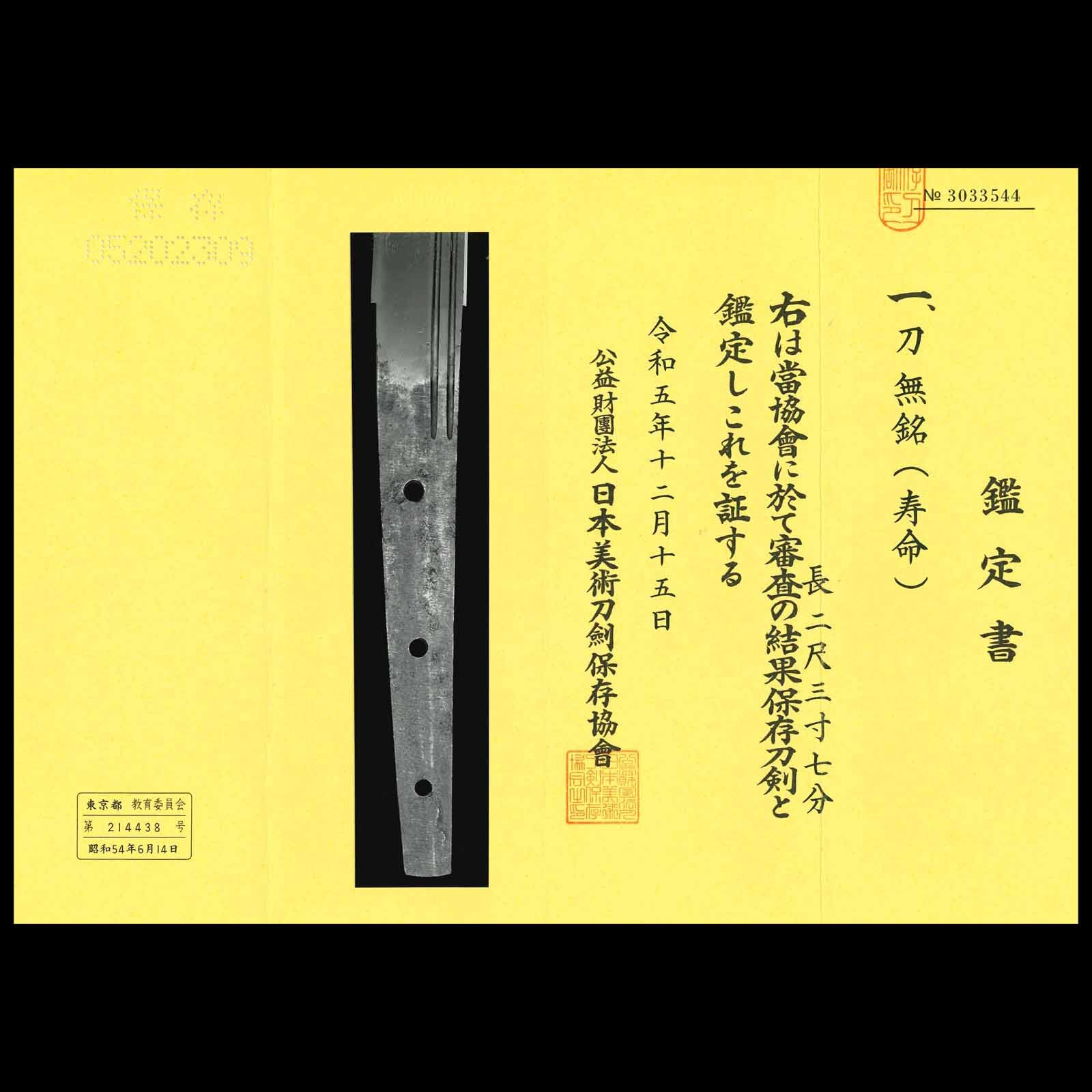
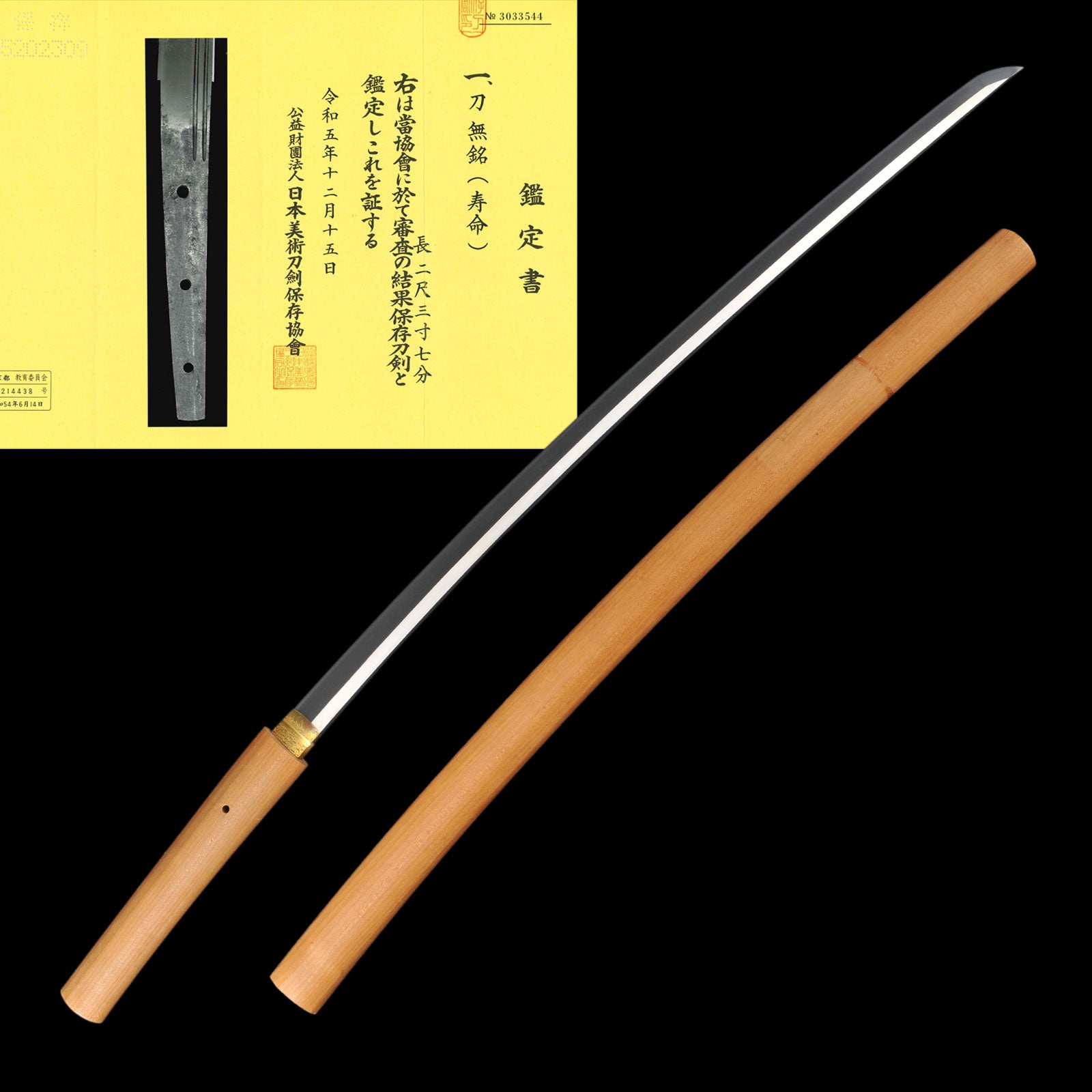
Proudly present a well-preserved, unsigned katana accompanied by a scabbard note from Kansan, a master appraiser of Japanese swords, and an authentication certificate from the Society for the Preservation of Japanese Art Swords. What makes this piece unique is that while Kansan identified it as “Ko-yoshii,” the Society for the Preservation of Japanese Art Swords authenticated it as a work by Toshinaga, resulting in completely different appraisal conclusions. The blade is in excellent condition and has been fully polished. The jigane features a well-compacted itame-hada with visible chikei. The hamon displays fine, orderly gunome patterns, and the niokuchi is tightly defined. Kin-sen is also visible within the hamon. Although this is an unsigned sword, Sato Kanzan, an authority on Japanese sword appraisal, identified it as a work by Ko-yoshii during the Year of the Rabbit in the Showa era and inscribed the scabbard. The Year of the Rabbit in the Showa era can be presumed to be either 1951 or 1963. The Yoshii school is a group of swordsmiths descended from Noritsune, who forged swords on the opposite bank of the Yoshii River in Bizen, across from Osafune Village, from the late Kamakura period onward. Swords from the late Kamakura period through the Nanbokucho period are referred to as “Ko-yoshii.” On the other hand, in December 2023, the Society for the Preservation of Japanese Art Swords certified this as a work by Toshinaga. Toshinaga refers to a school of swordsmiths active from the late Kamakura period through the end of the Edo period in Mino Province (present-day Gifu Prefecture) and other regions. Because the kanji for “Toshinaga” can also be read as “Jumyo” (meaning “long life”), the name was considered auspicious, making these swords highly prized among the samurai class as gifts or celebratory items. While their style draws from the Yamato tradition, they possessed a wide range of techniques. They are characterized by the powerful jigane and hamon typical of
Offered by Tozando
This piece has sold
9 on the market
Get an email when new Jumyo School work hits the market.


Mino-den · Mino
9 pieces on the market now
Mino in the Momoyama period
Unification closed the mass market, and Seki’s smiths moved to where the new money was: the Mishina line to Kyōto with court titles, Daidō smiths to castle towns across the provinces. Mino became the great technical ancestor of the Shintō age.
Certifies a genuine blade worth preserving: a signature confirmed correct, or, if unsigned, an era, province, and school that the NBTHK can reliably identify.
The NBTHK (Nihon Bijutsu Tōken Hozon Kyōkai, the Society for the Preservation of Japanese Art Swords) is a public-interest incorporated foundation founded in 1948 and supervised by Japan’s Agency for Cultural Affairs (Bunkachō); it is based at the Japanese Sword Museum in Tokyo. Its expert panels physically examine each submitted work (shinsa) and issue a certificate (kanteishō) ranking it by artistic and historical merit. NBTHK papers are the most widely recognized standard of authentication for Japanese swords and fittings.
NBTHK official siteAs a general rule, returns/exchanges are not accepted on Japanese sword orders unless damaged upon delivery. Other items: returns/exchanges accepted within 7 days of delivery. Cancellation for personal reasons incurs a 30% restocking fee (70% refunded). Return shipping must be prepaid and insured by the buyer; shipping/handling fees are non-refundable. Contact katana@tozando.co.jp to initiate a return.