Around 1800 Suishinshi Masahide argued in his writings that the craft must return to the old masters’ methods: the fukkotō revival. His greatest successor Naotane worked convincingly in Bizen and Sōshū manners that had been dead for centuries.
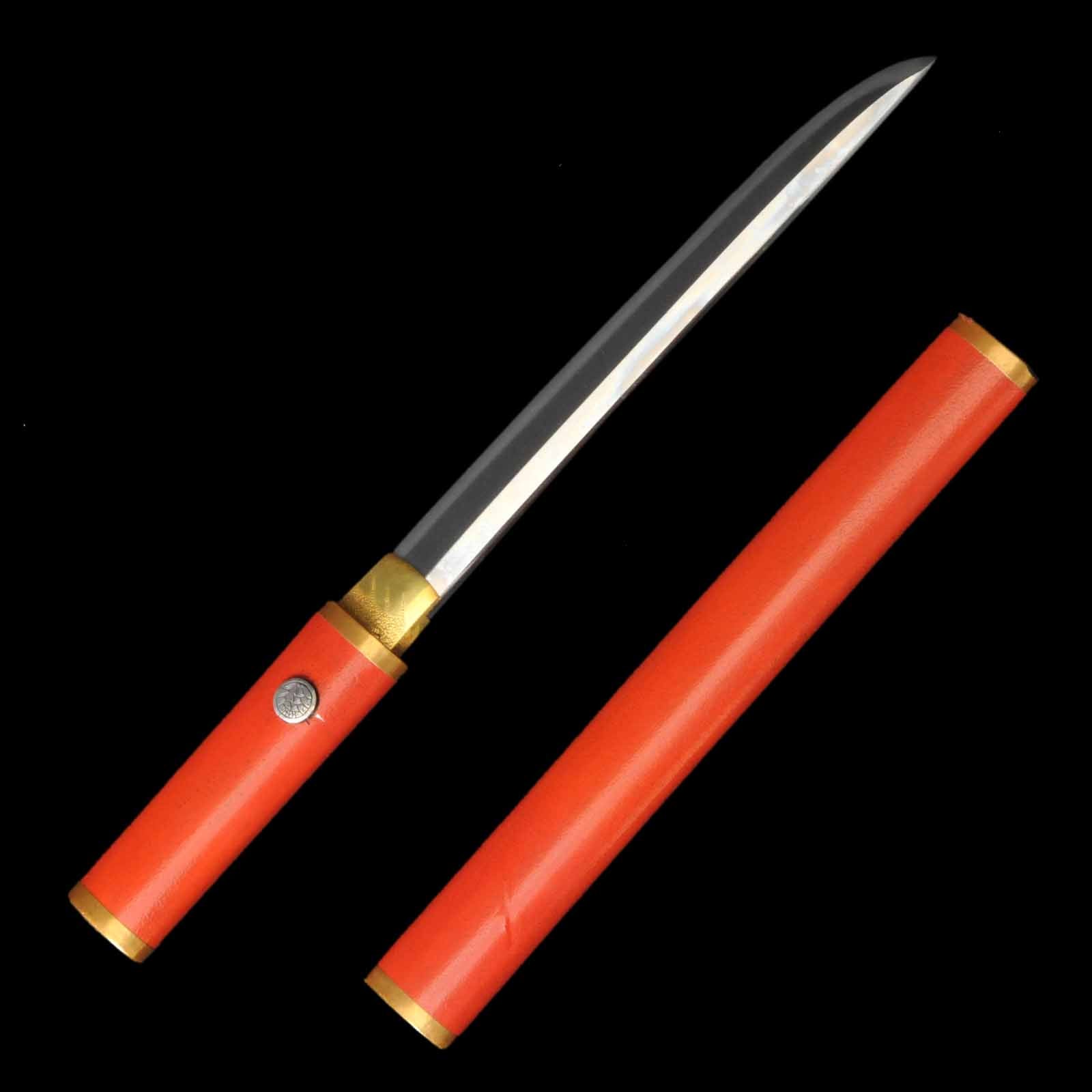
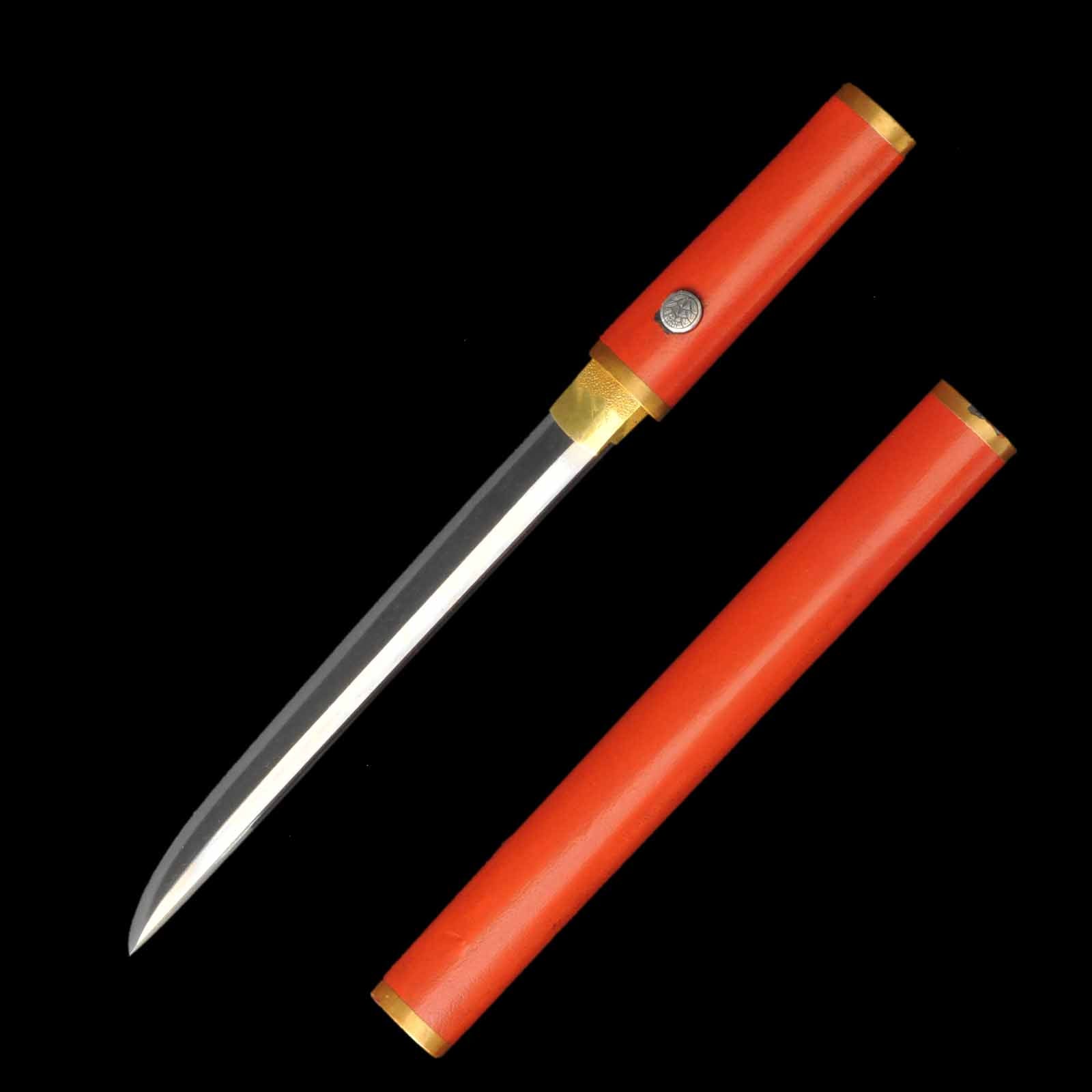
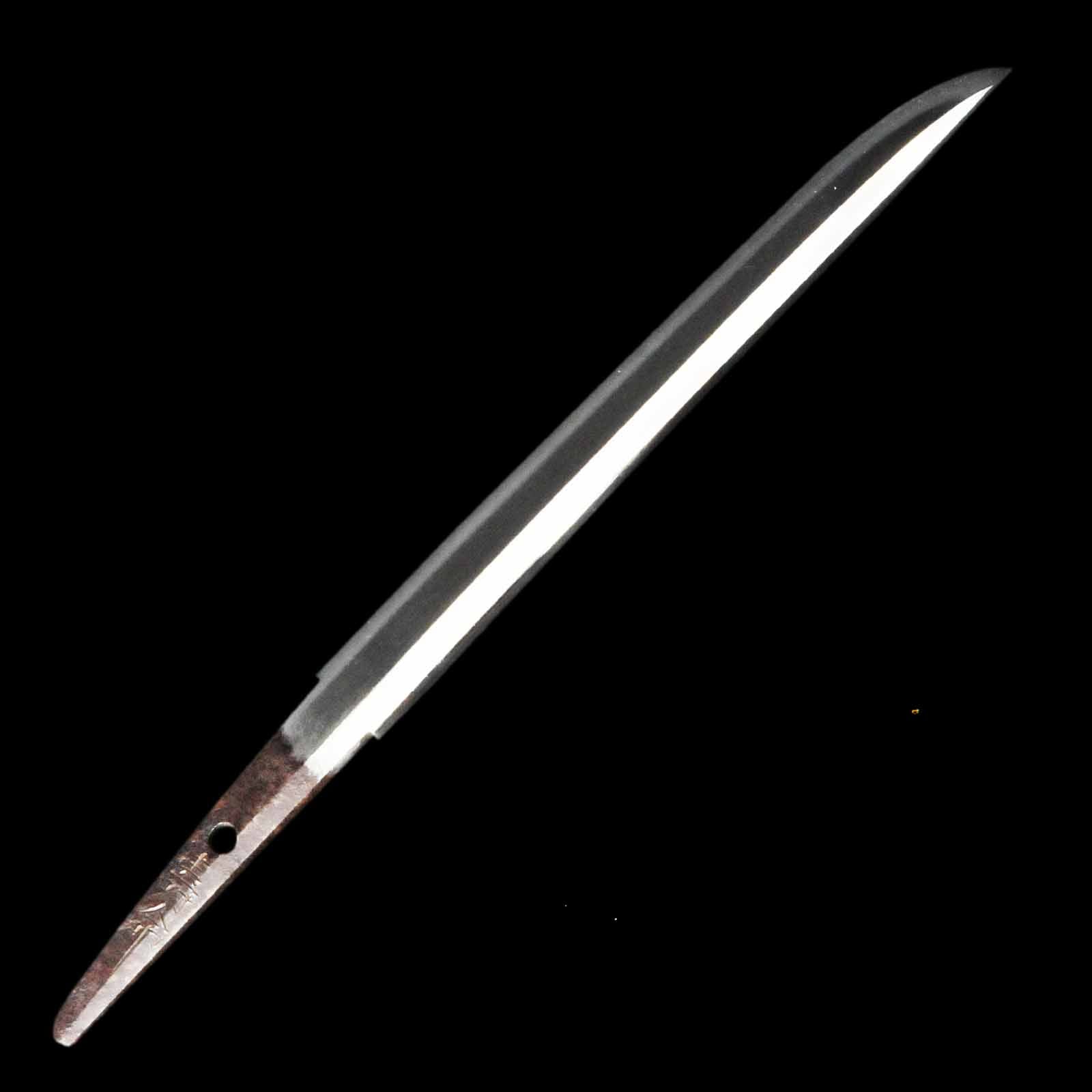
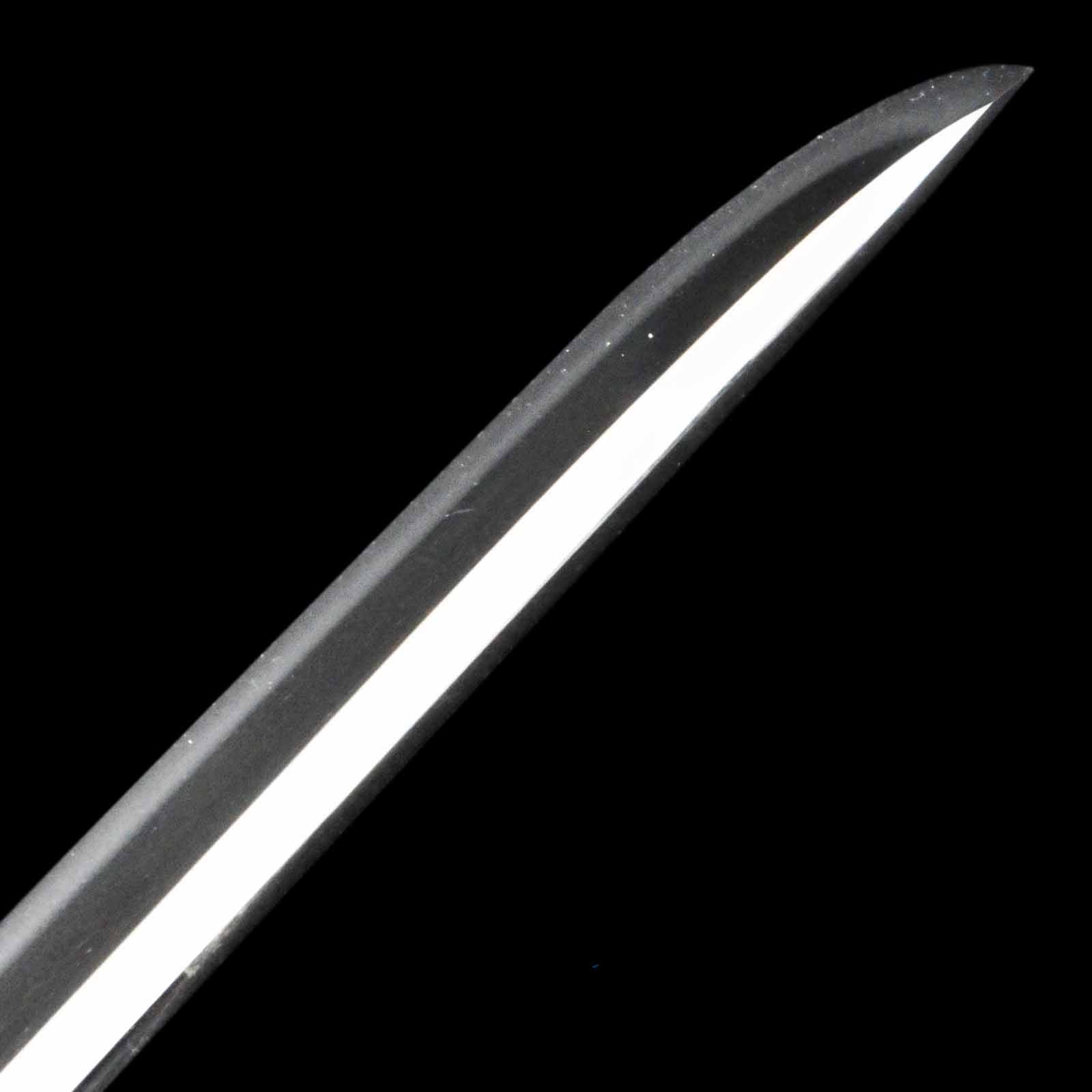
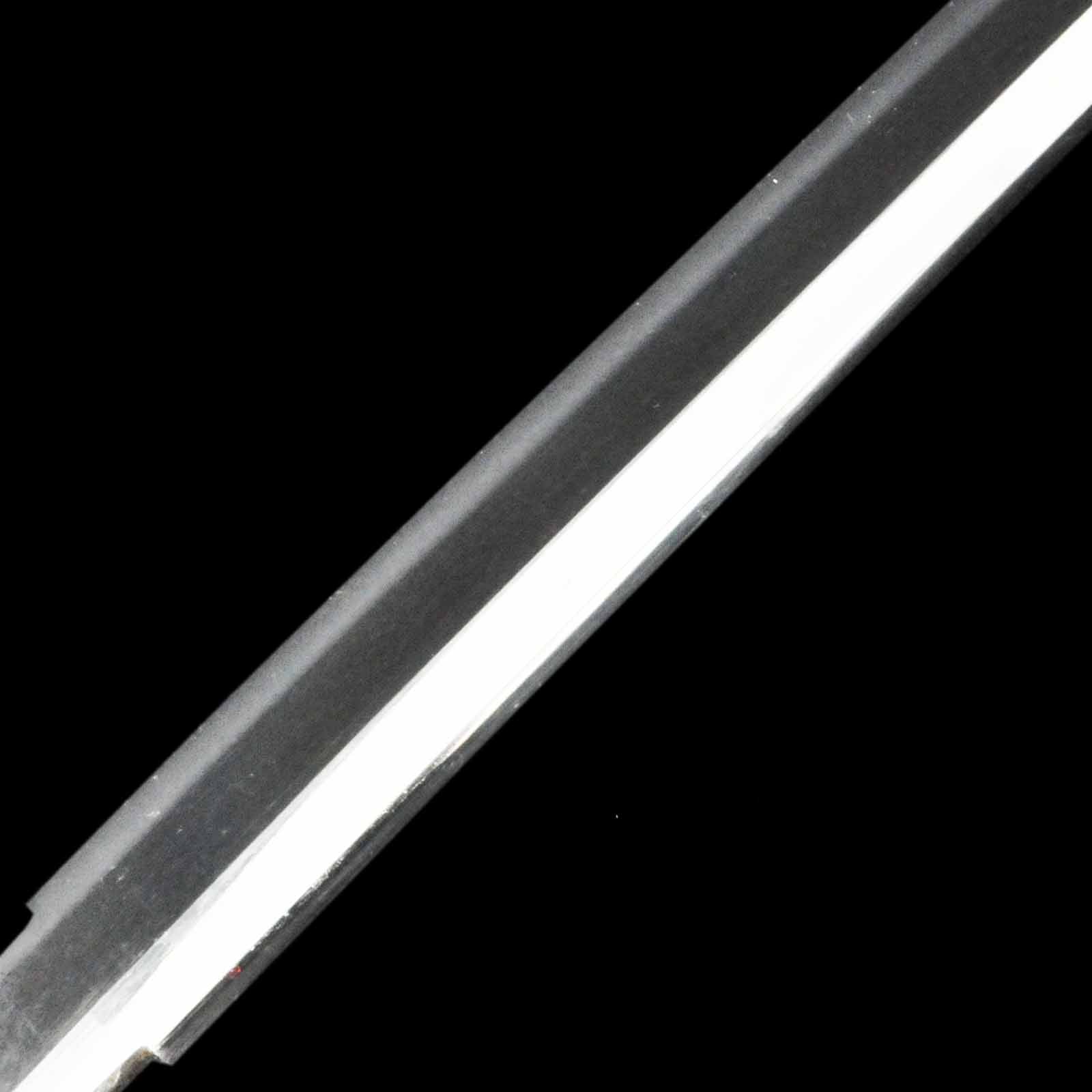
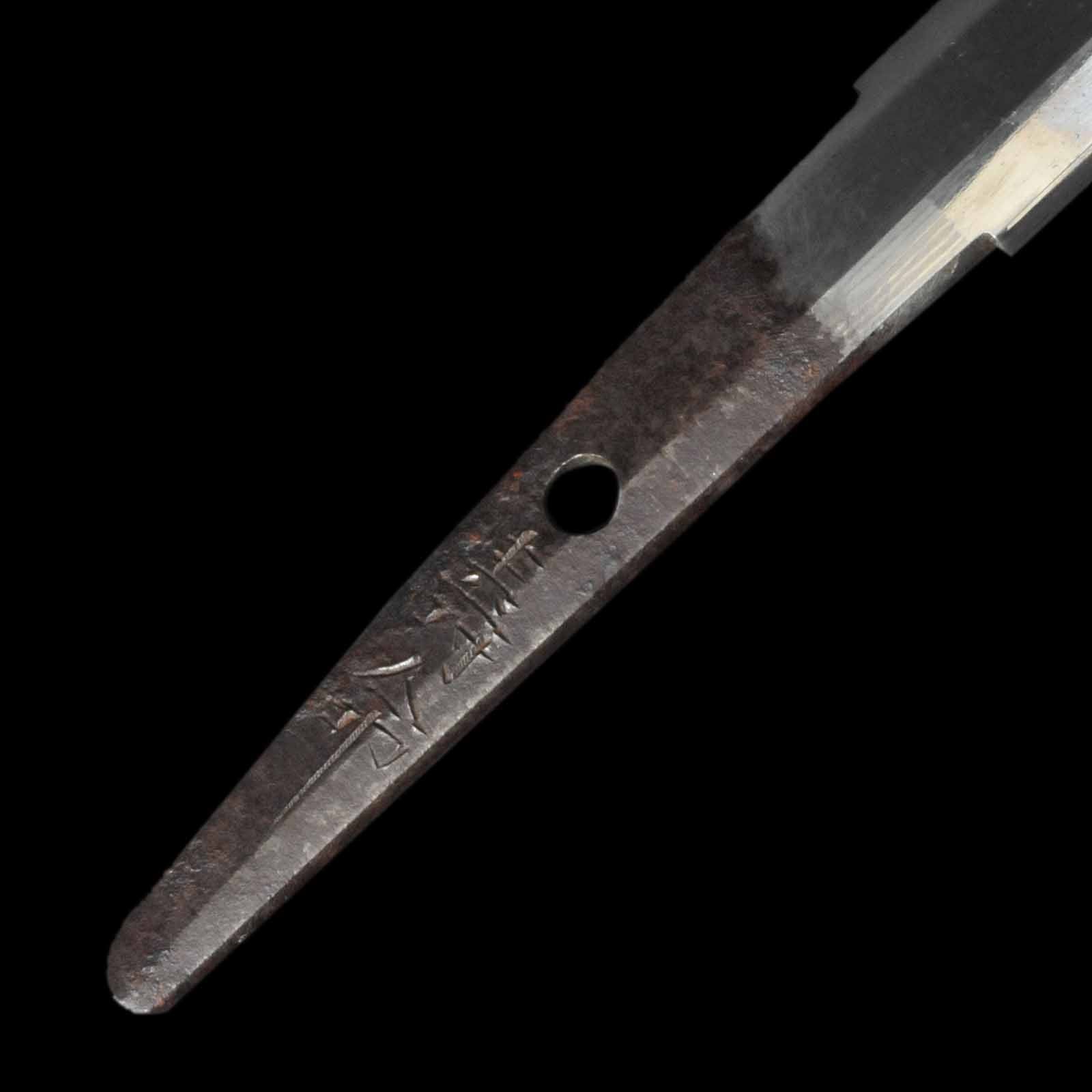
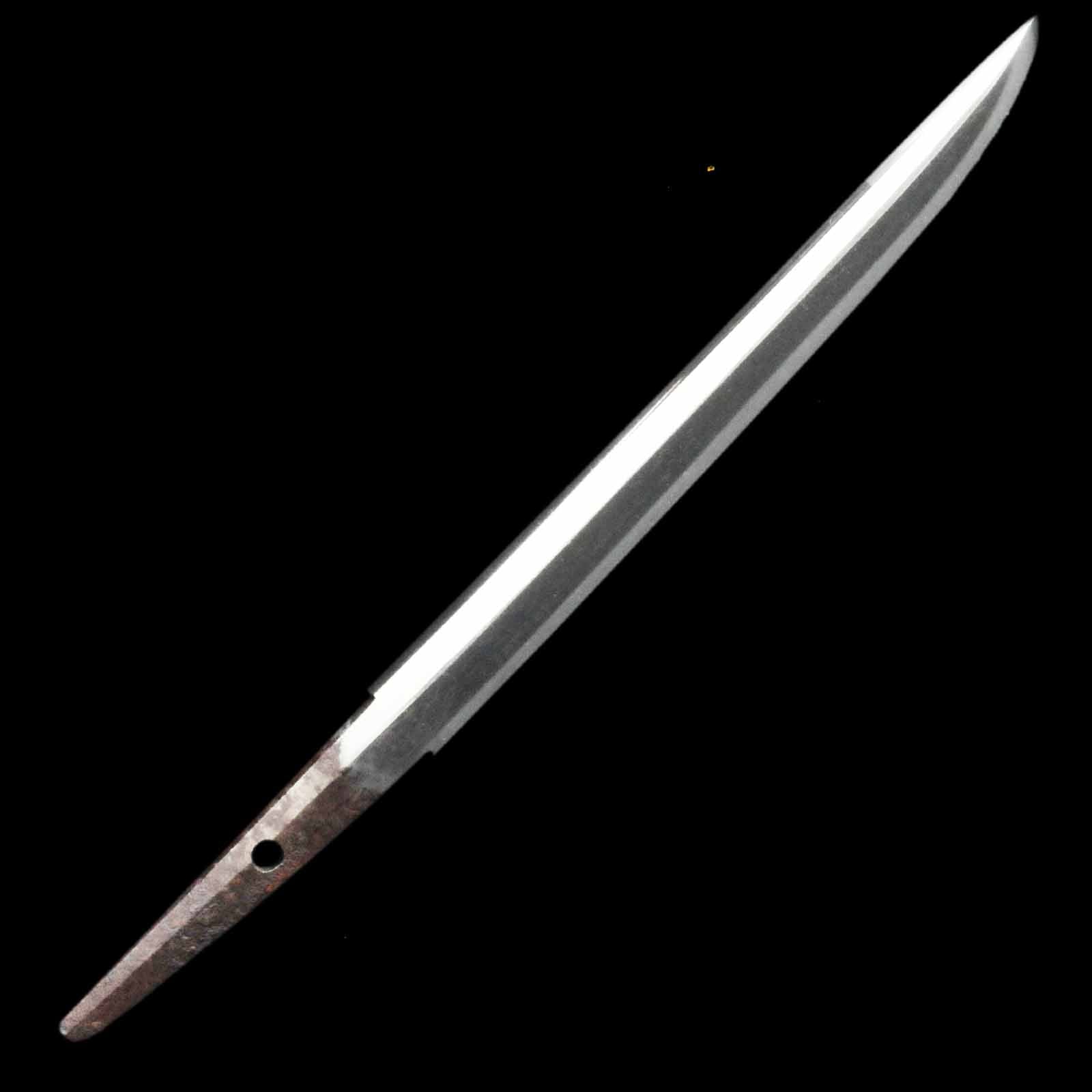
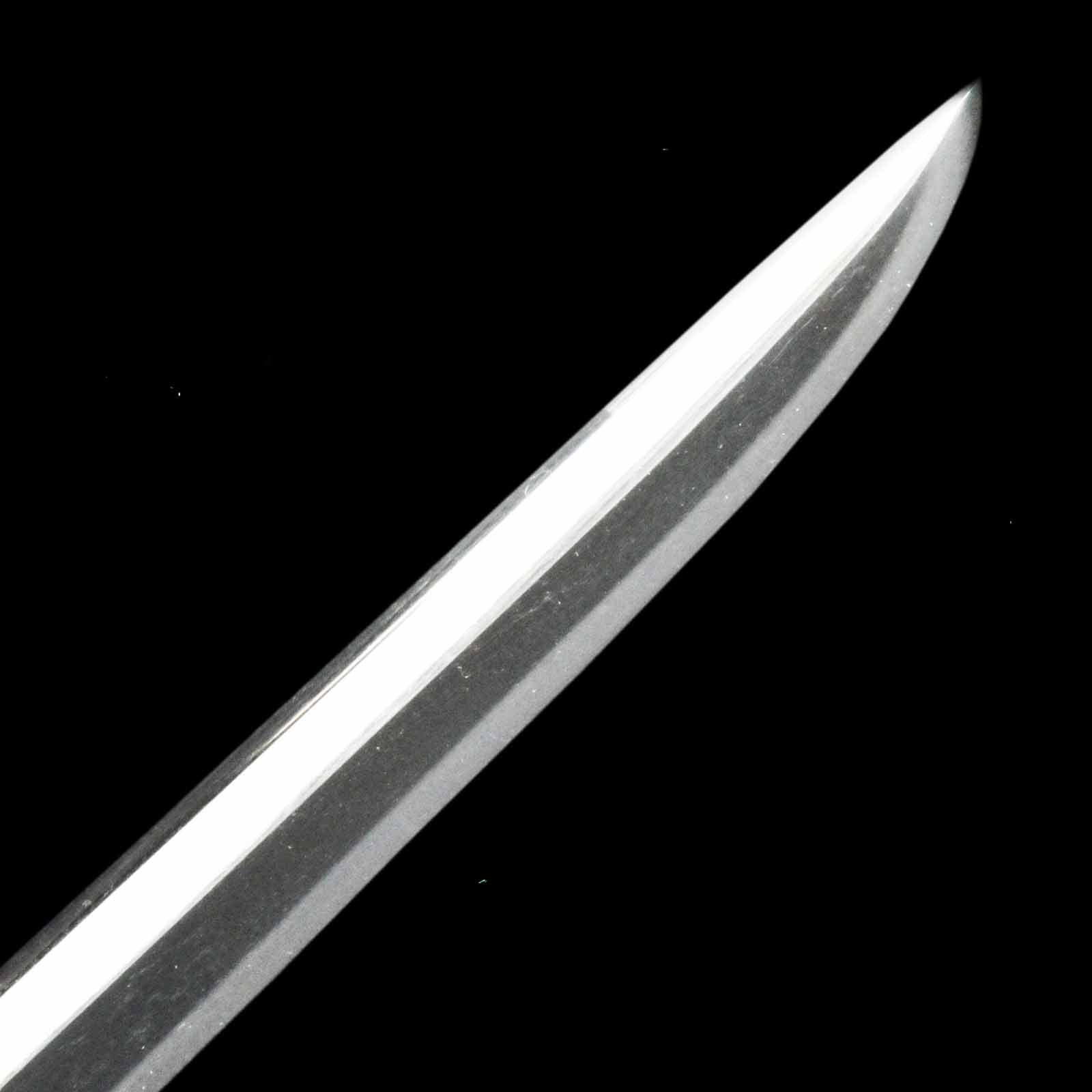
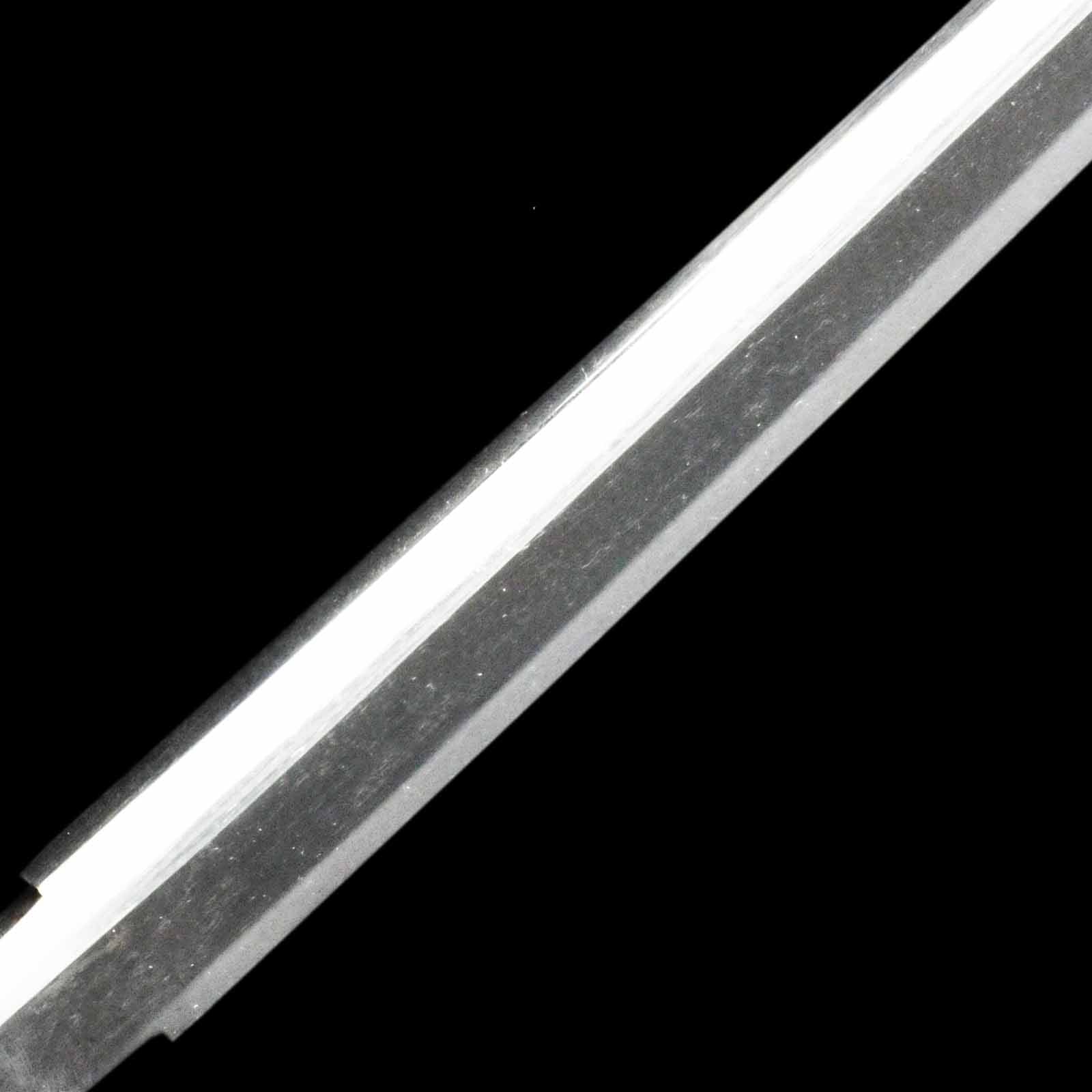
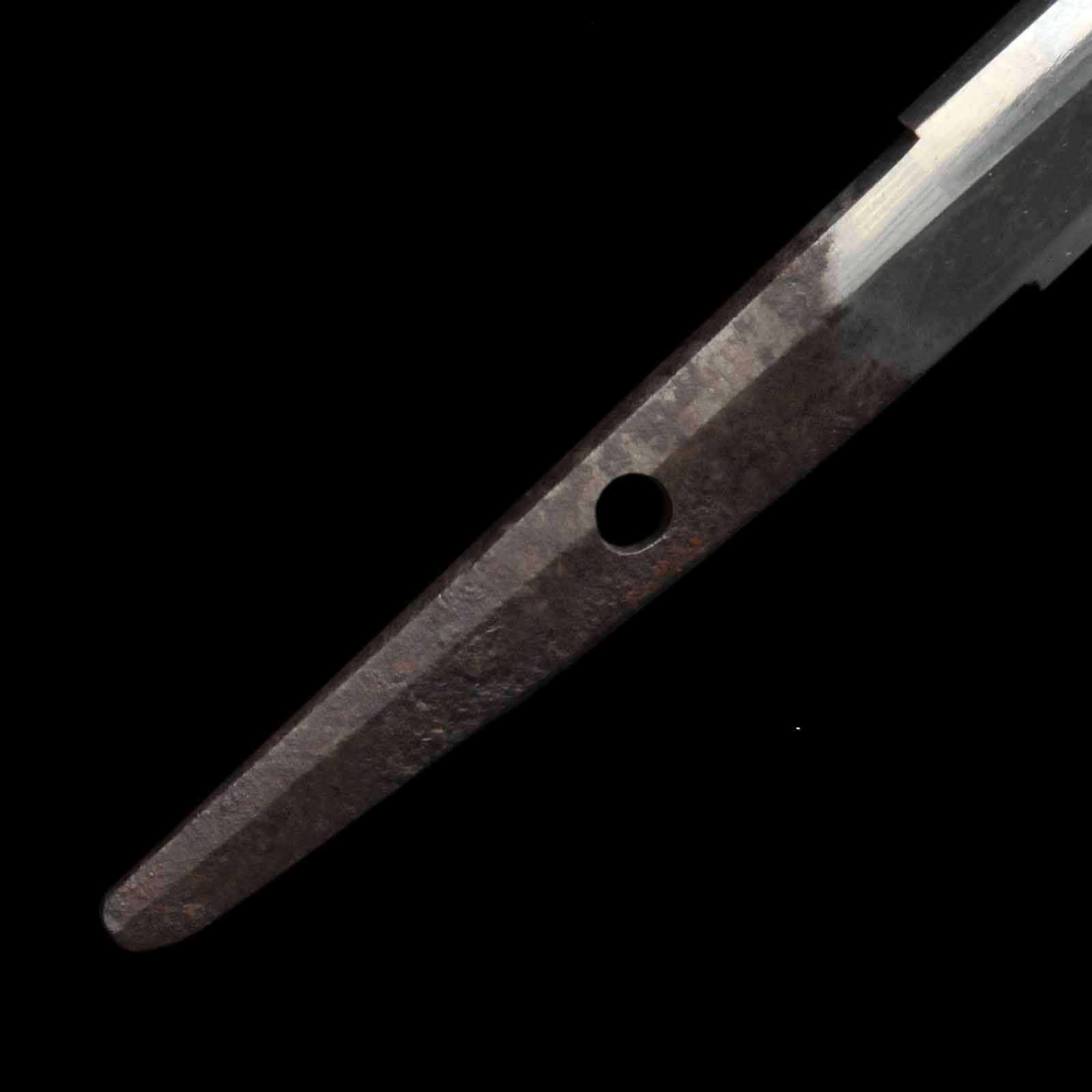
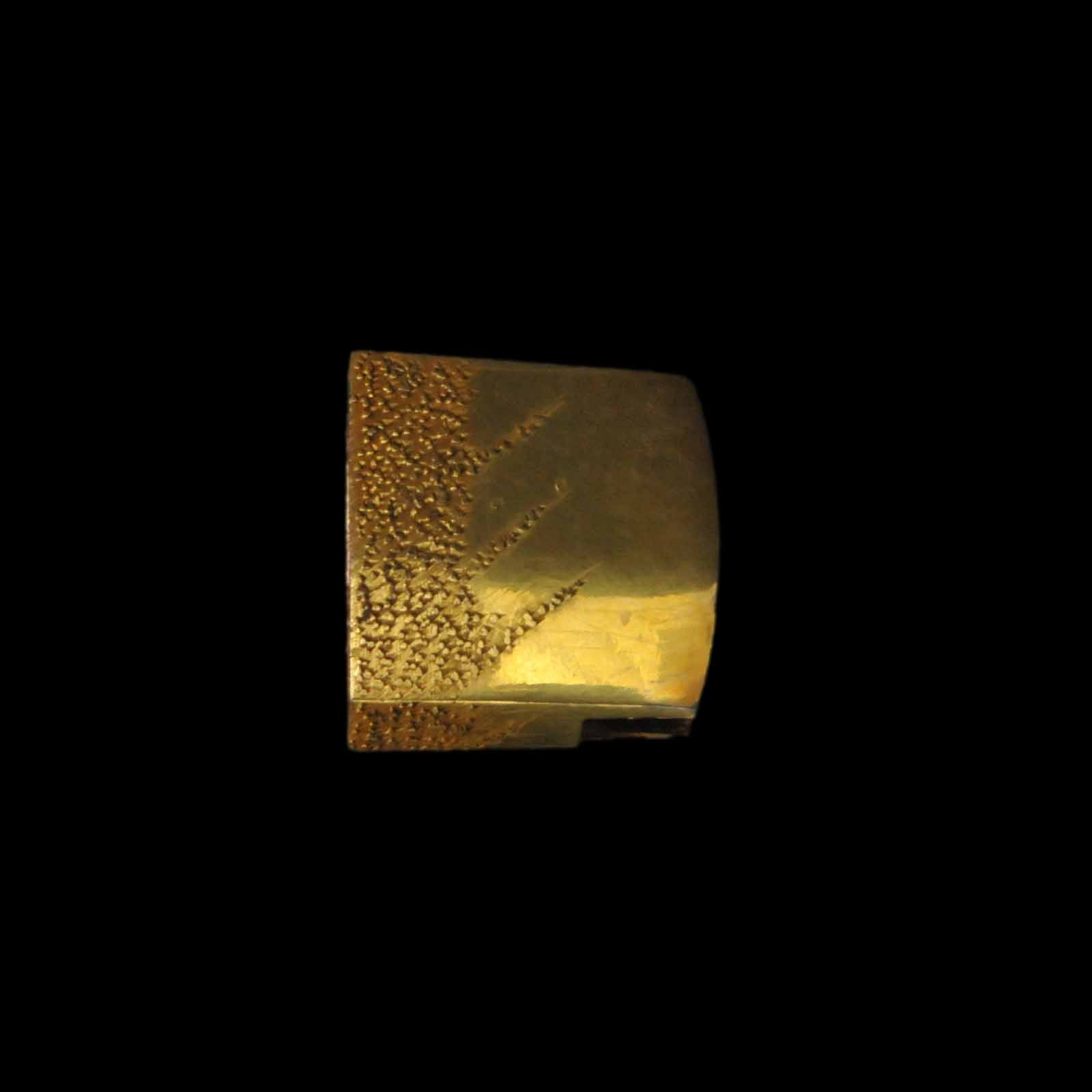
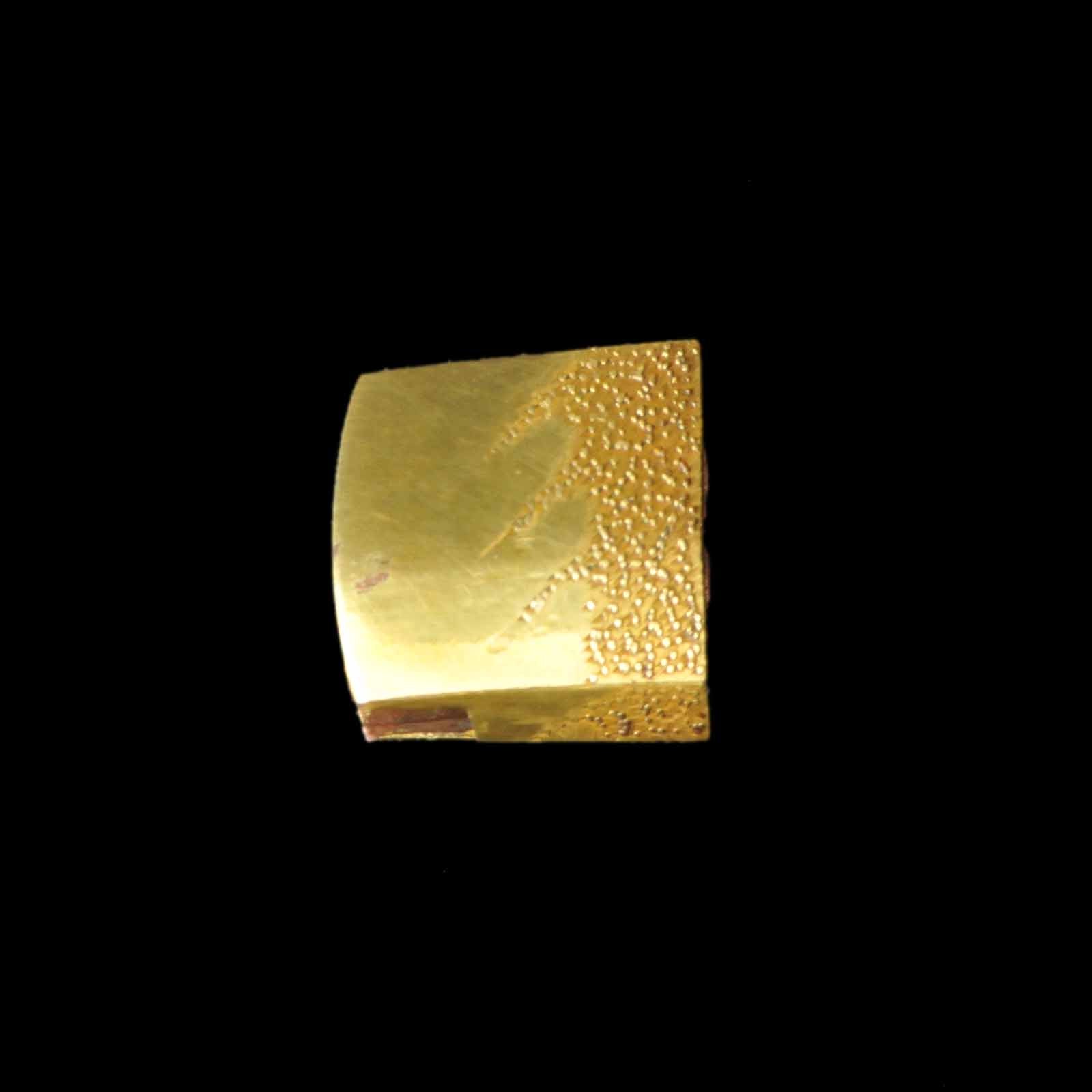
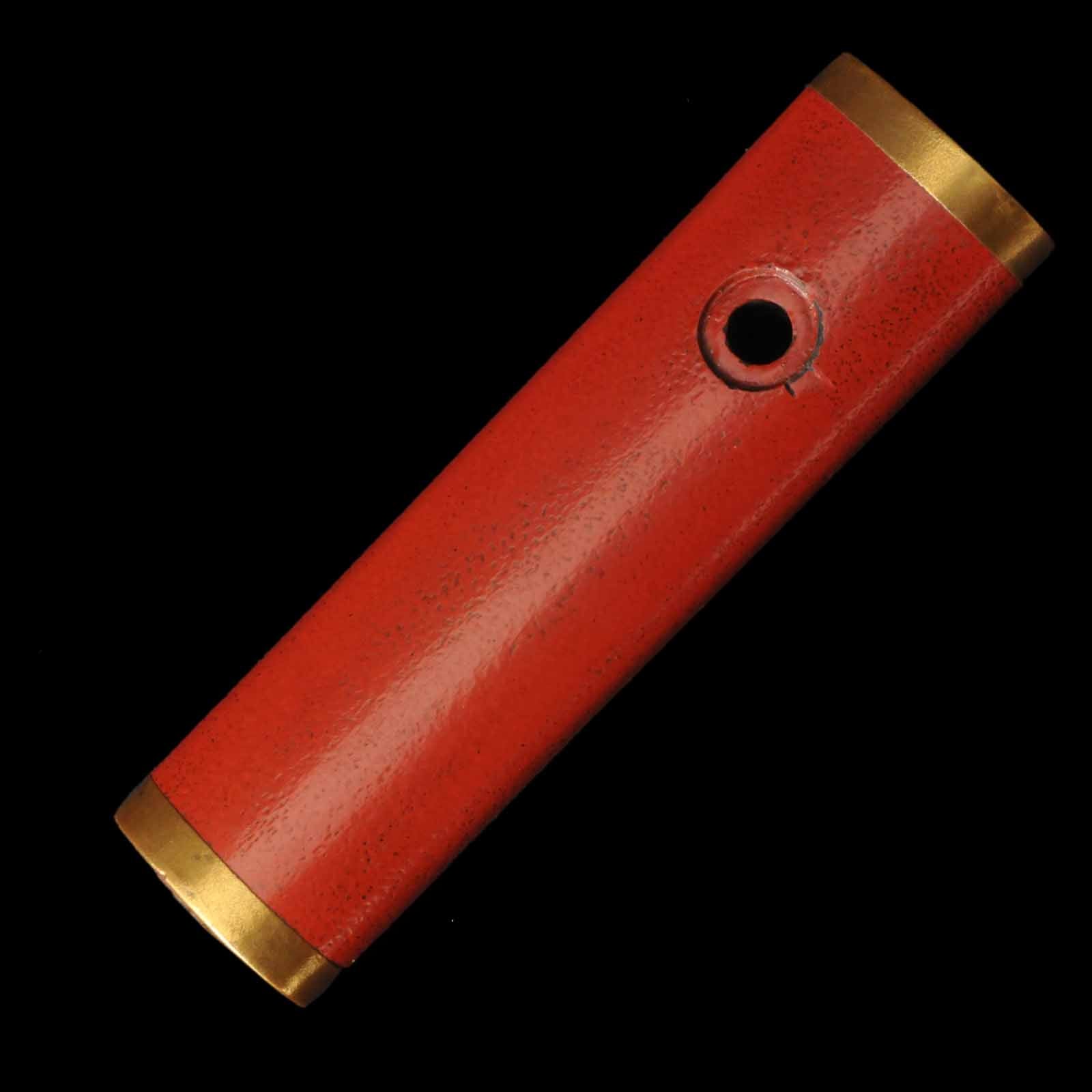
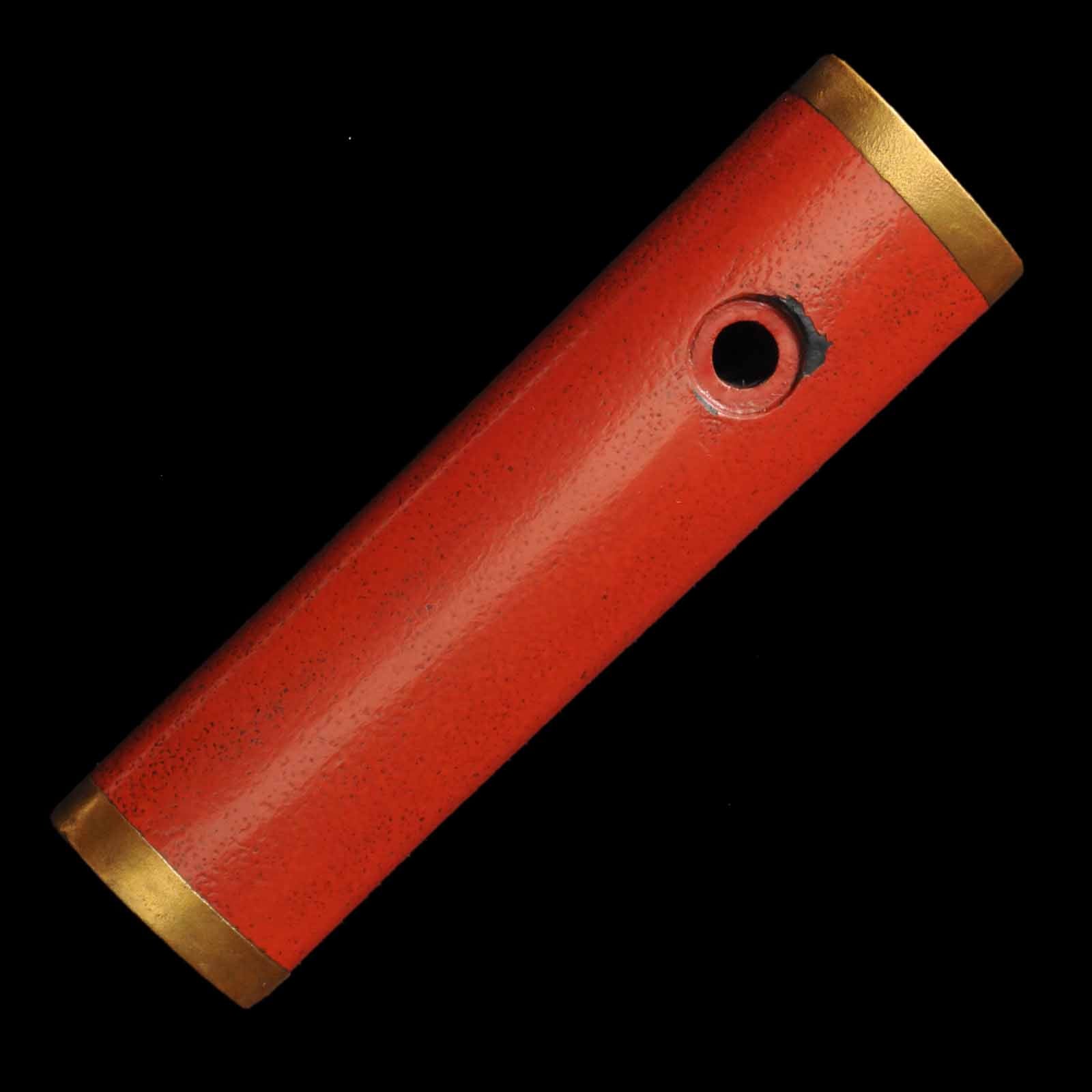
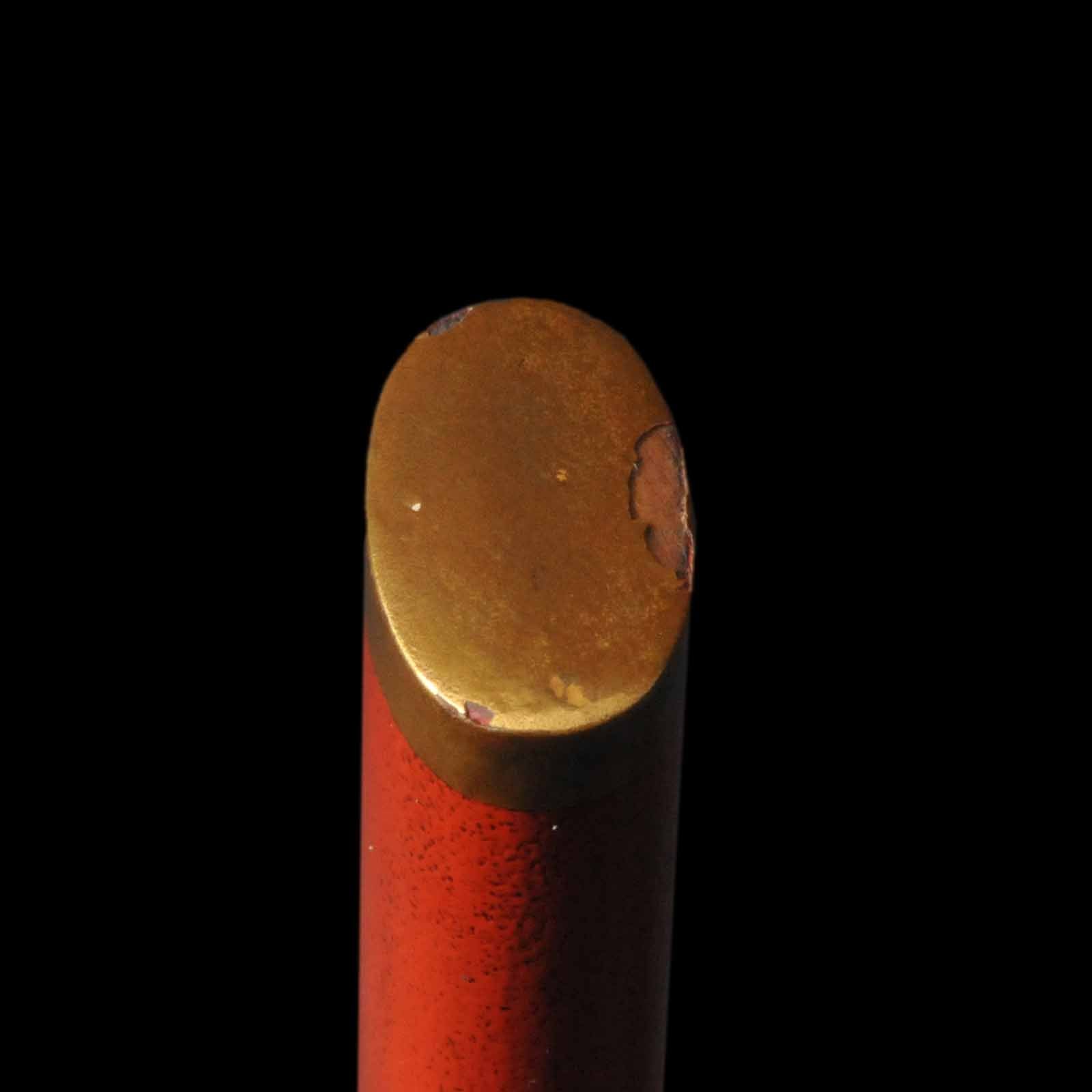
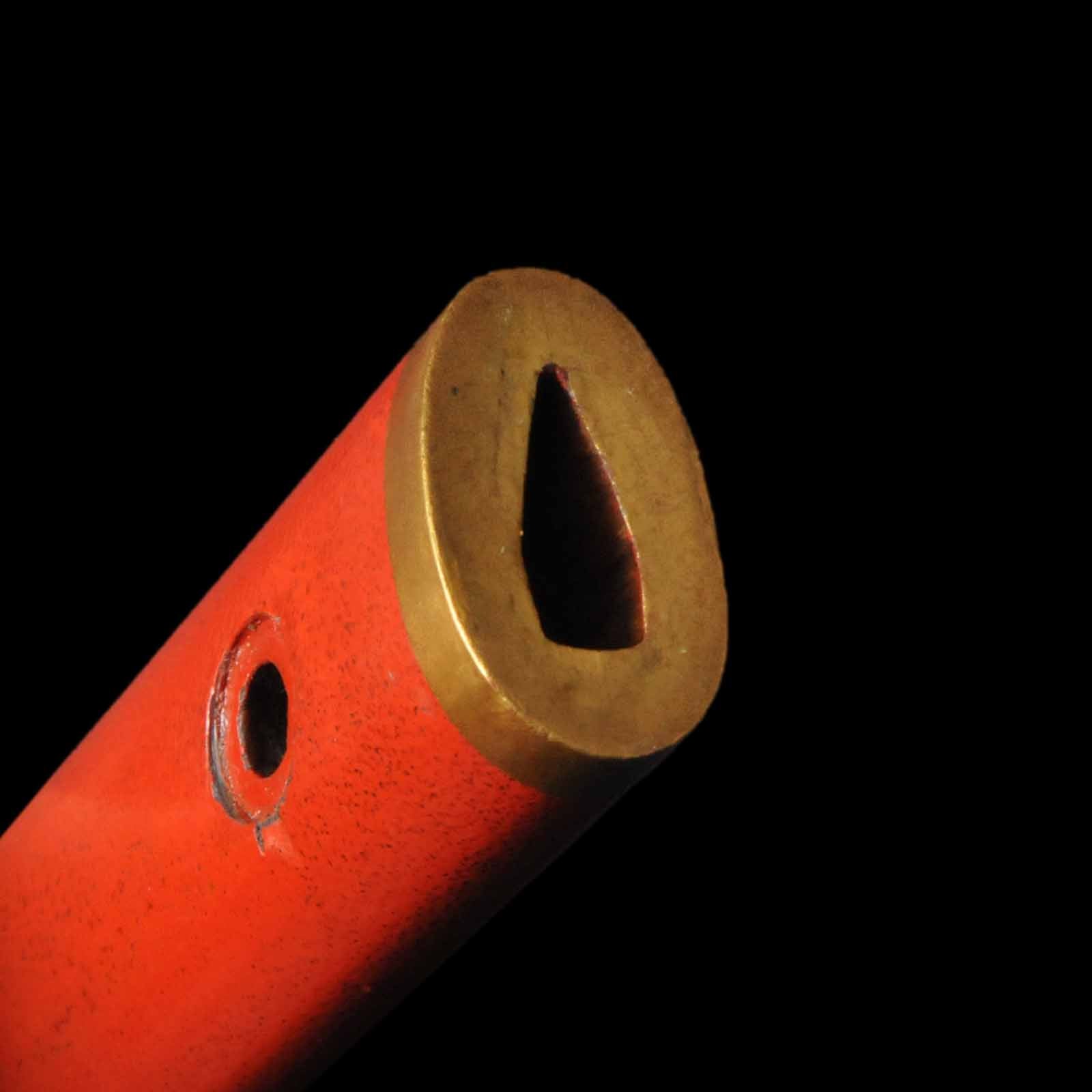
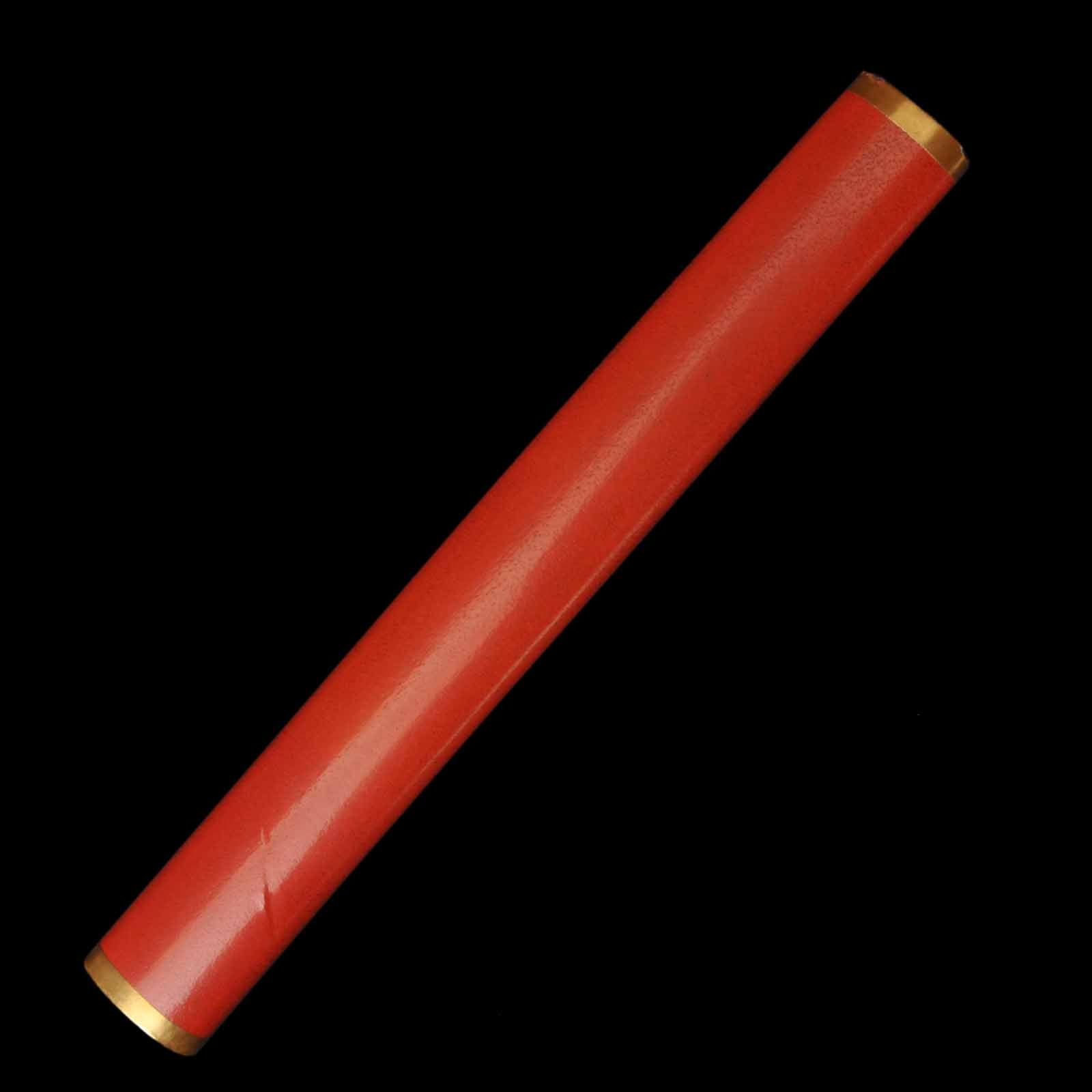
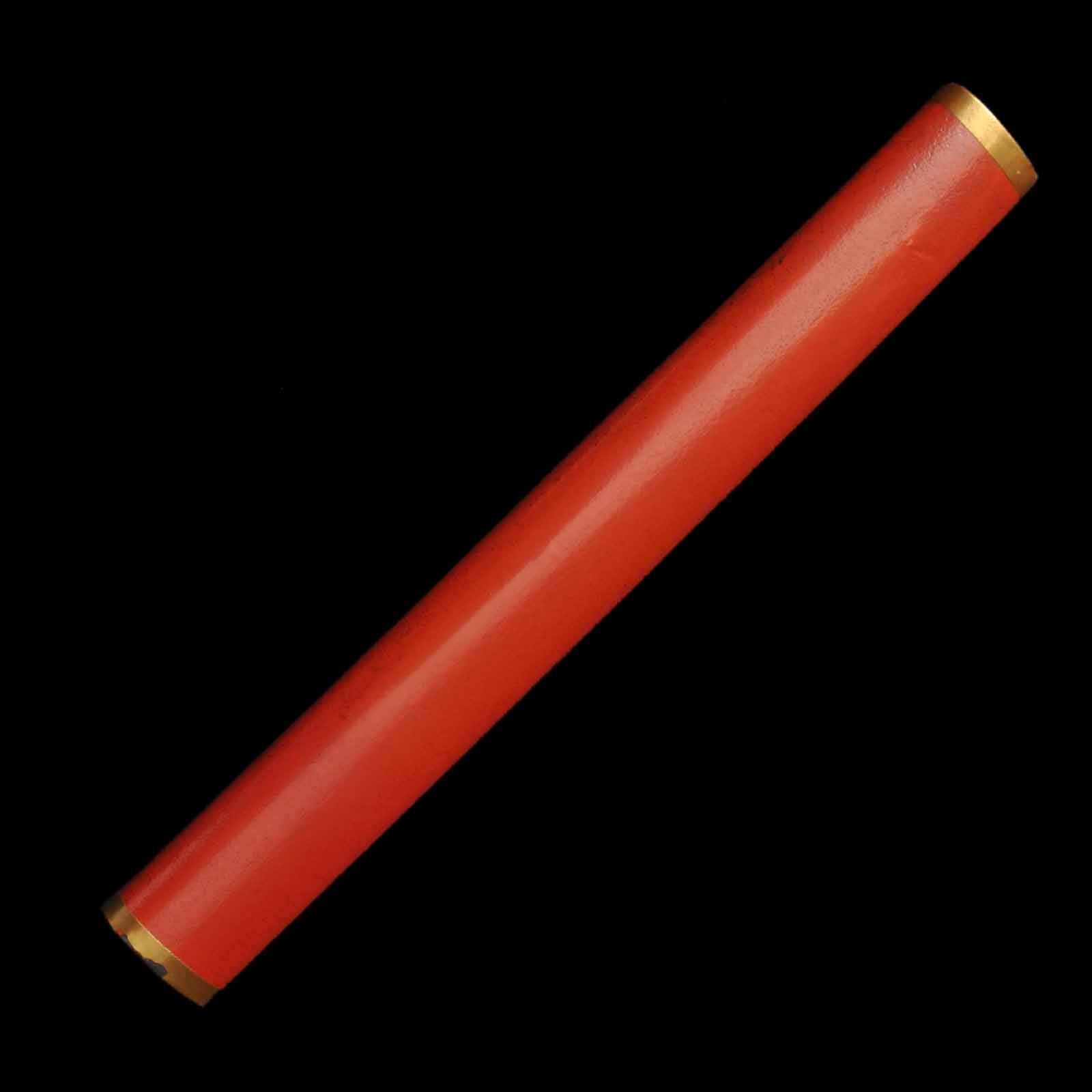
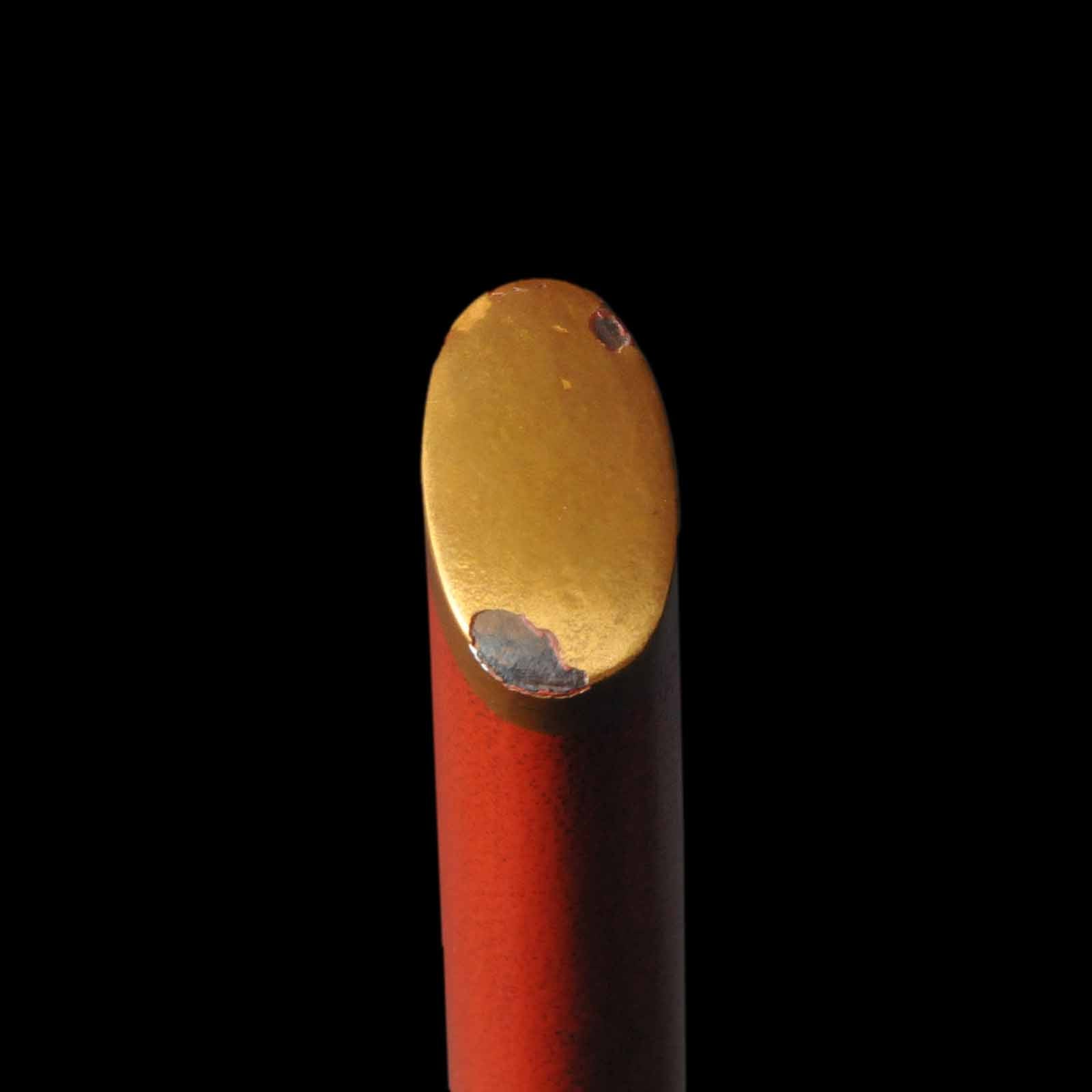
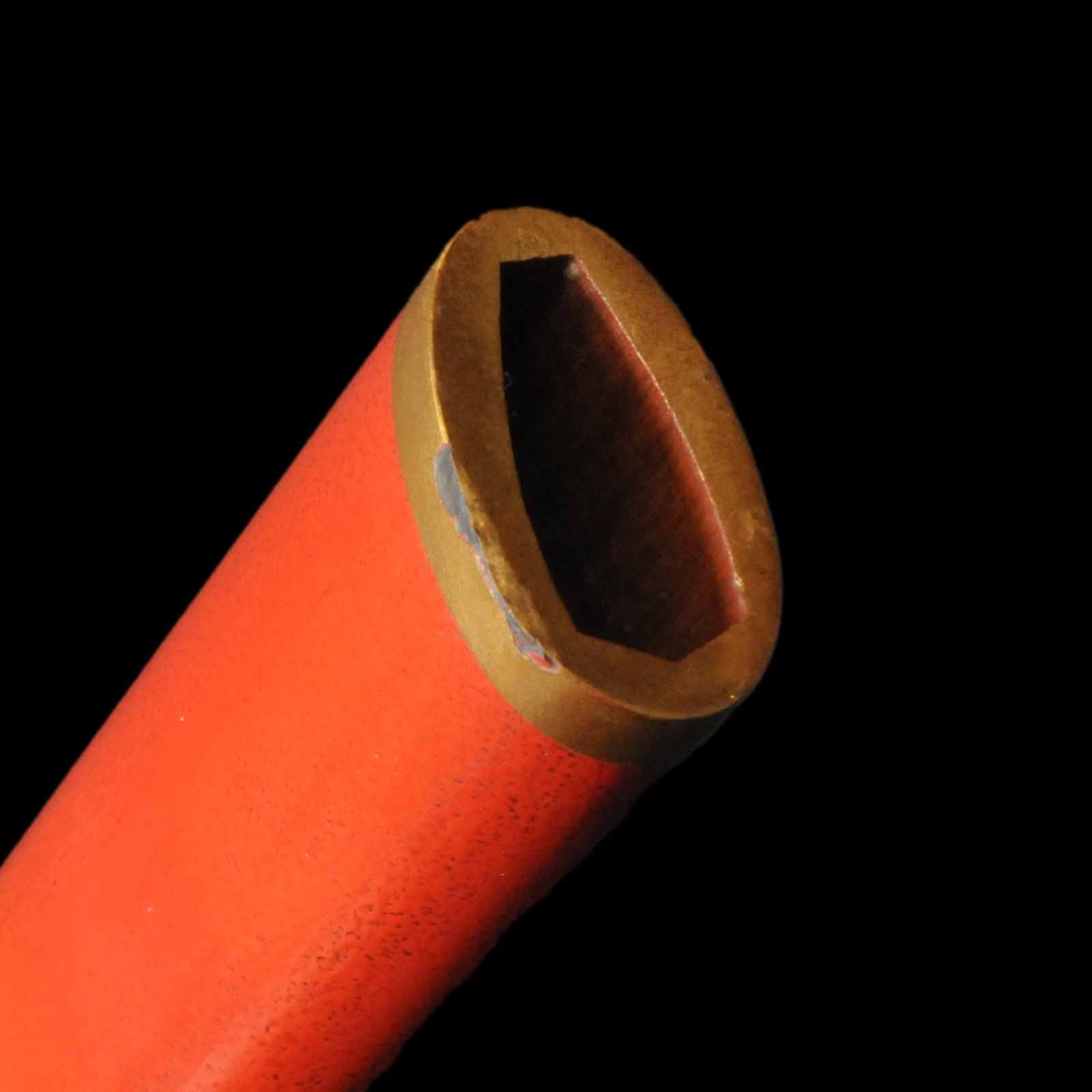
This piece is a shob zukuri pocket sword equipped with a bright vermilion lacquered aikuchi koshirae. The sword is extremely well preserved, with zero flaws such as flaws, rust, or chips. The jigane is beautiful itame and shows chikei and yubashiri. Hamon is elegant suguha and nioikuchi is well tightened. The name toshinaga is engraved on the nakago. Toshinaga was a swordsmith from Mino (present-day Gifu Prefecture) who left many works from around the end of the Kamakura period to the late Edo period. In particular, there were several Toshinaga of the same name in the Edo period, which is the largest number of shinto works in the Mino area. Since the name Toshinaga can be read as “ longevity ” in Kanji (Chinese characters), it was highly prized as a gift among samurai families because of its good fortune. Koshirae is uniformly lacquered in vermilion, giving them a very festive appearance. The mekugi is a metal bolt type, and the Kamon family crest of dakimyoga is featured. If your loved one is interested in Japanese swords, this is the best gift item and an excellent piece as your own lucky charm. Blade length: 18.6 cm Curvature: 0.1 cm Number of Mekugi hole: 1 Motohaba: 19.2 mm Motokasane: 5.2 mm Signature: Toshinaga(front) Era: Shinto Structure: Shobu-zukuri, Iori-mune Jigane: Itame Hamon: Suguha Boshi: Massugu Haitte Komaru ni Kaeru Weight: 120 g(blade only)/150 g(without Saya) Nakago: Ubu Koshirae: Vermillion-lacquered Aikuchi Original Registration No.: Tokyo 225129 Please contact us if the katana you are looking for is not listed here.
Offered by Tozando
This piece has sold
9 on the market
Get an email when new Jumyo School work hits the market.


Mino-den · Mino
9 pieces on the market now
The Shinshintō revival
Around 1800 Suishinshi Masahide argued in his writings that the craft must return to the old masters’ methods: the fukkotō revival. His greatest successor Naotane worked convincingly in Bizen and Sōshū manners that had been dead for centuries.
As a general rule, returns/exchanges are not accepted on Japanese sword orders unless damaged upon delivery. Other items: returns/exchanges accepted within 7 days of delivery. Cancellation for personal reasons incurs a 30% restocking fee (70% refunded). Return shipping must be prepaid and insured by the buyer; shipping/handling fees are non-refundable. Contact katana@tozando.co.jp to initiate a return.