Perry’s arrival in 1853 unraveled the Tokugawa peace and created the first mass demand for working swords in two centuries. Kiyomaro, called the Masamune of Yotsuya, died on its eve; Munetsugu and Yukihide carried the boom to the end.
 NihontoWatchNihontoWatch
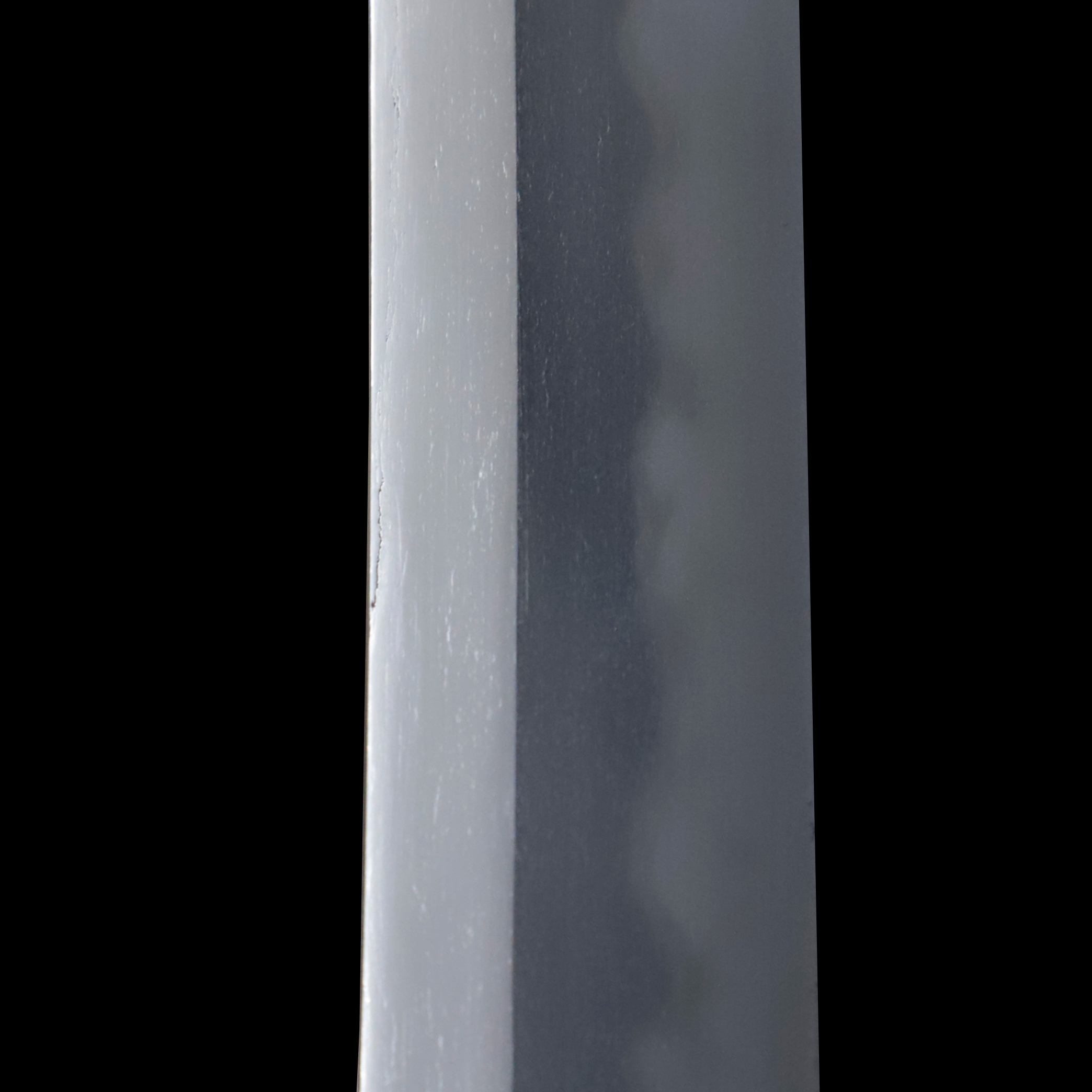
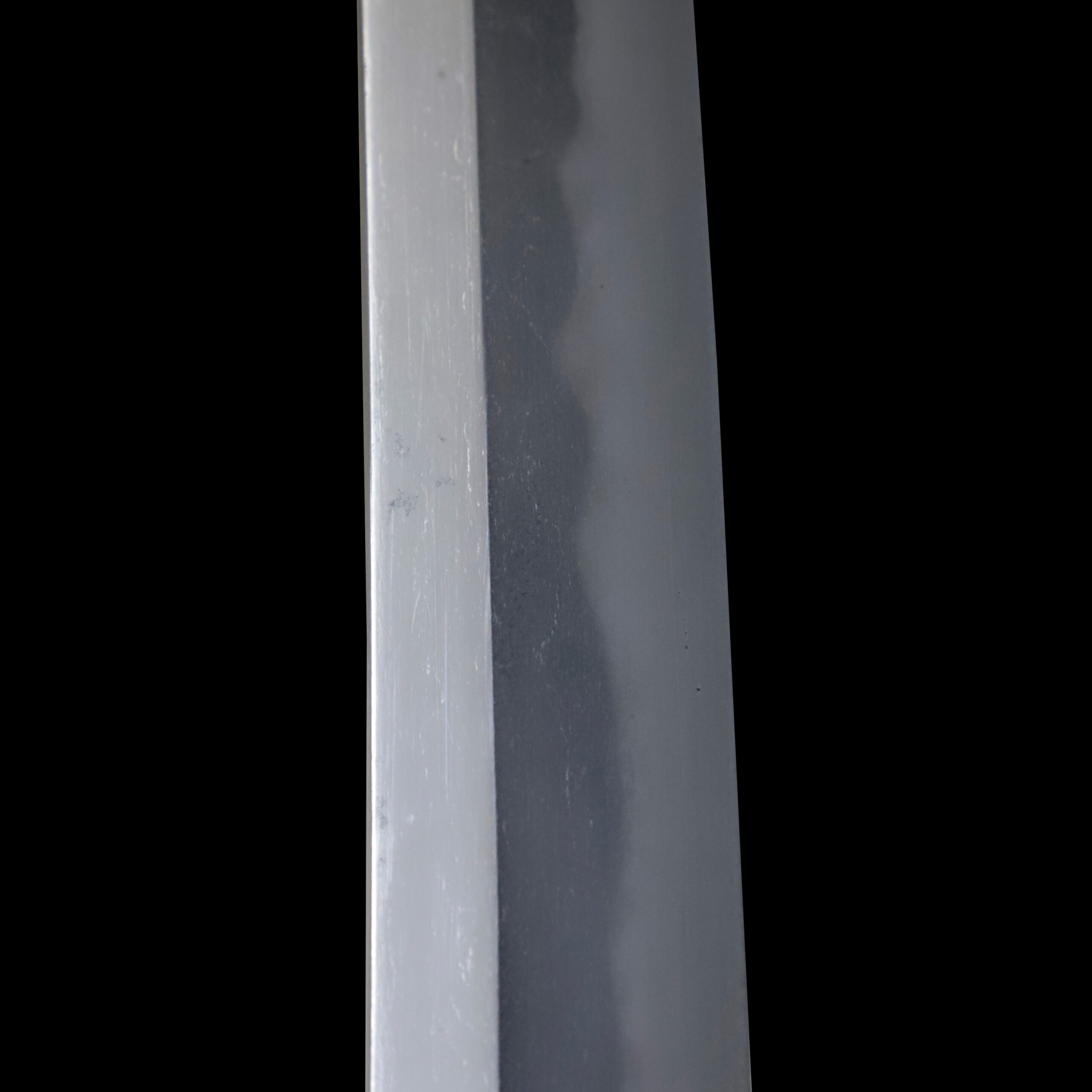
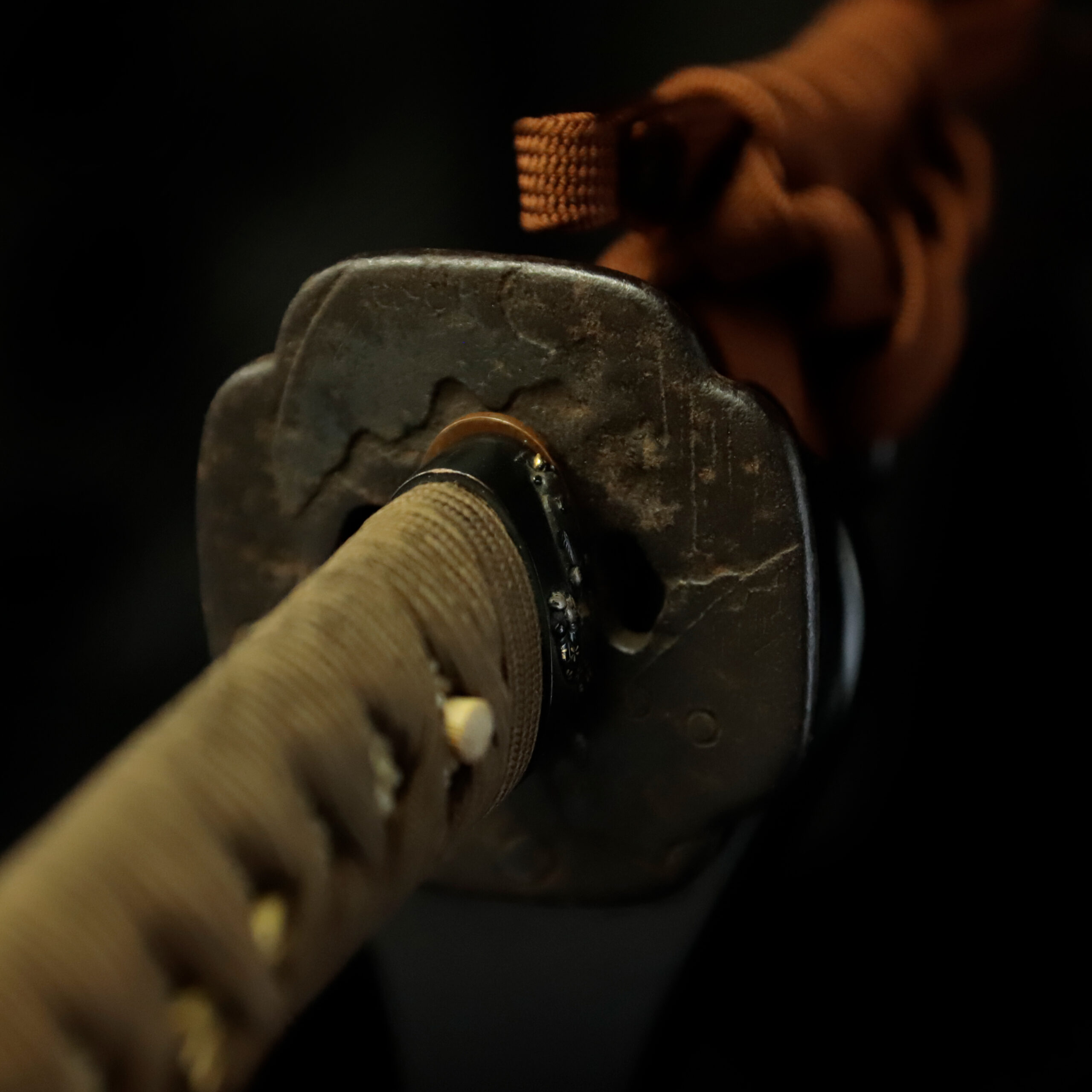
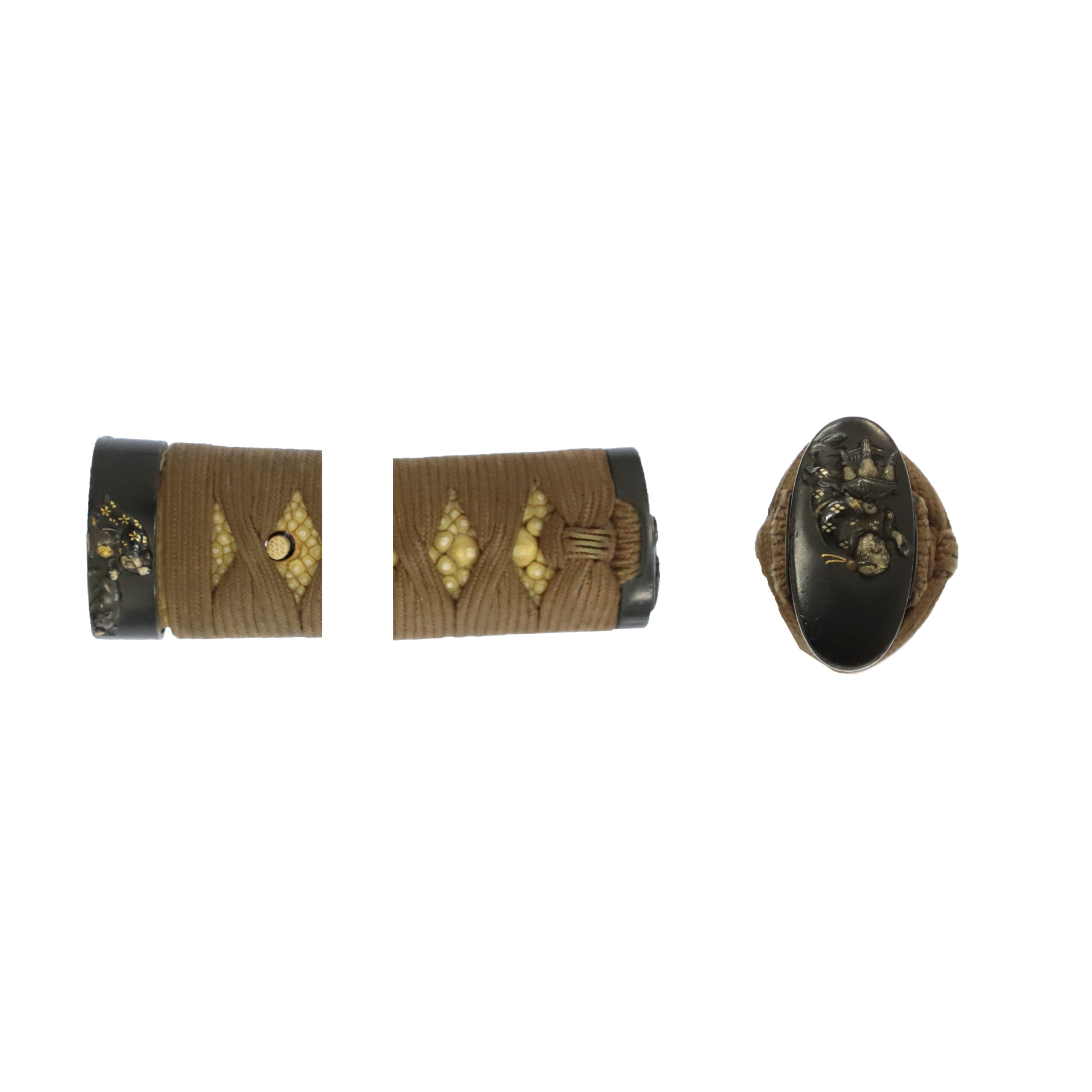
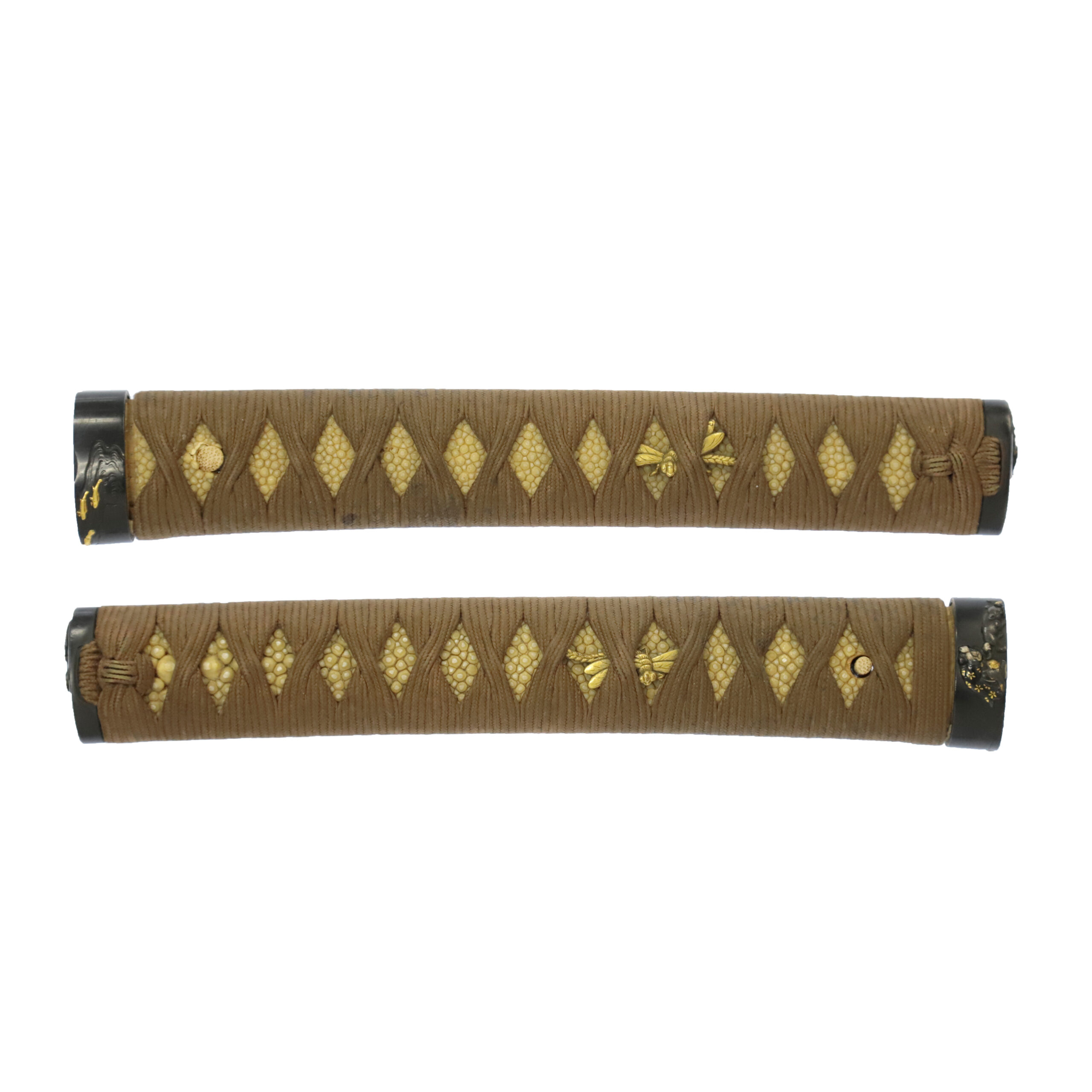
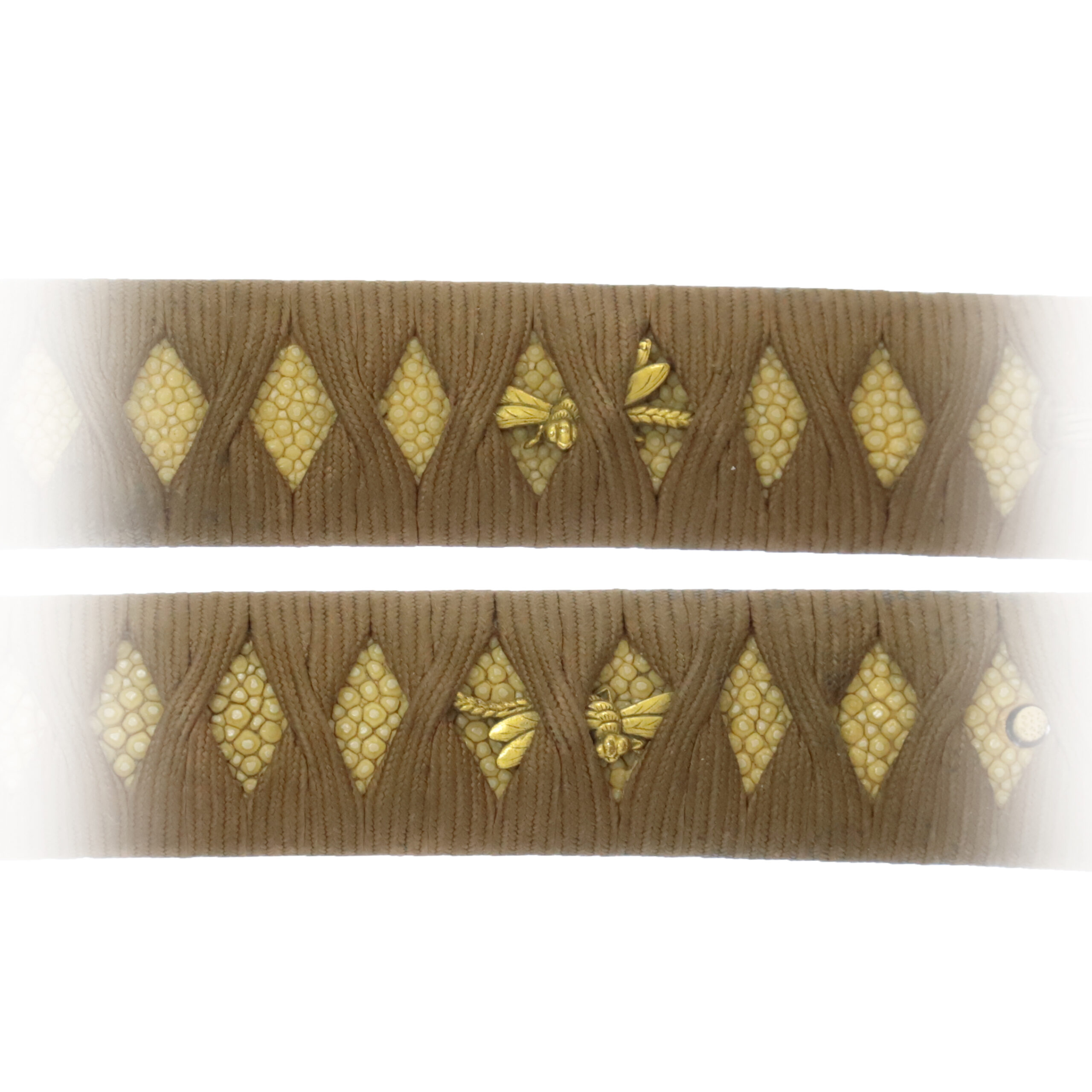
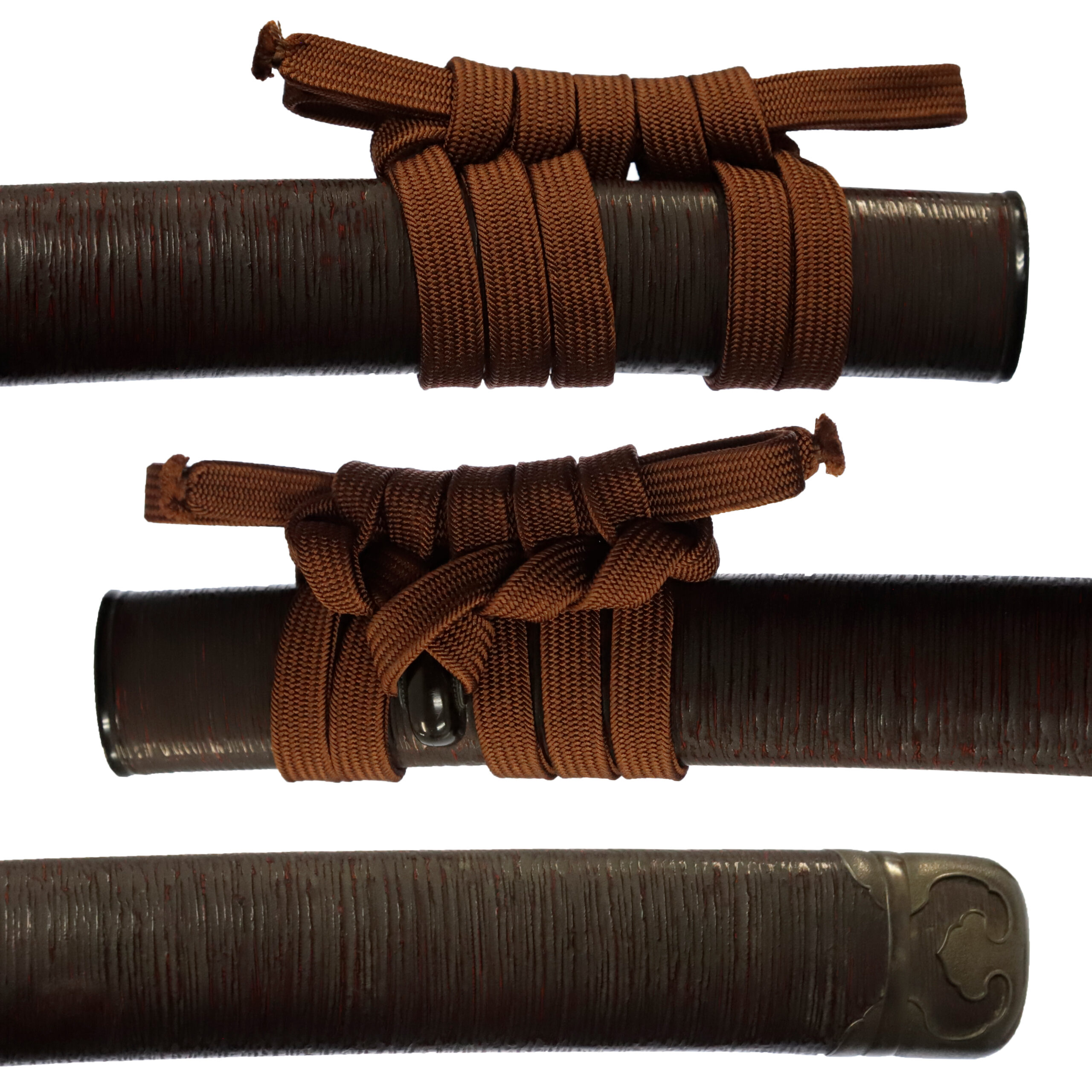
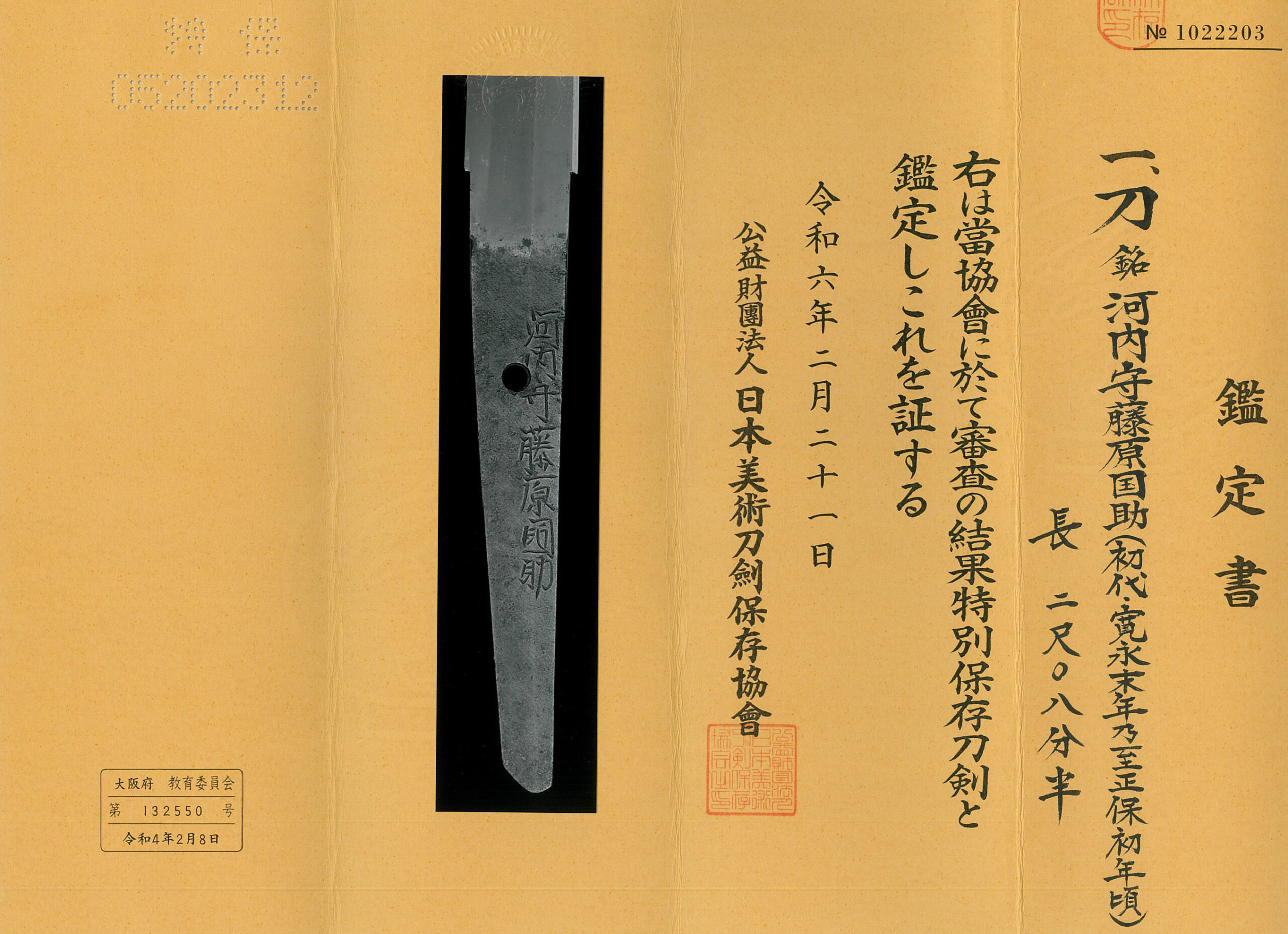
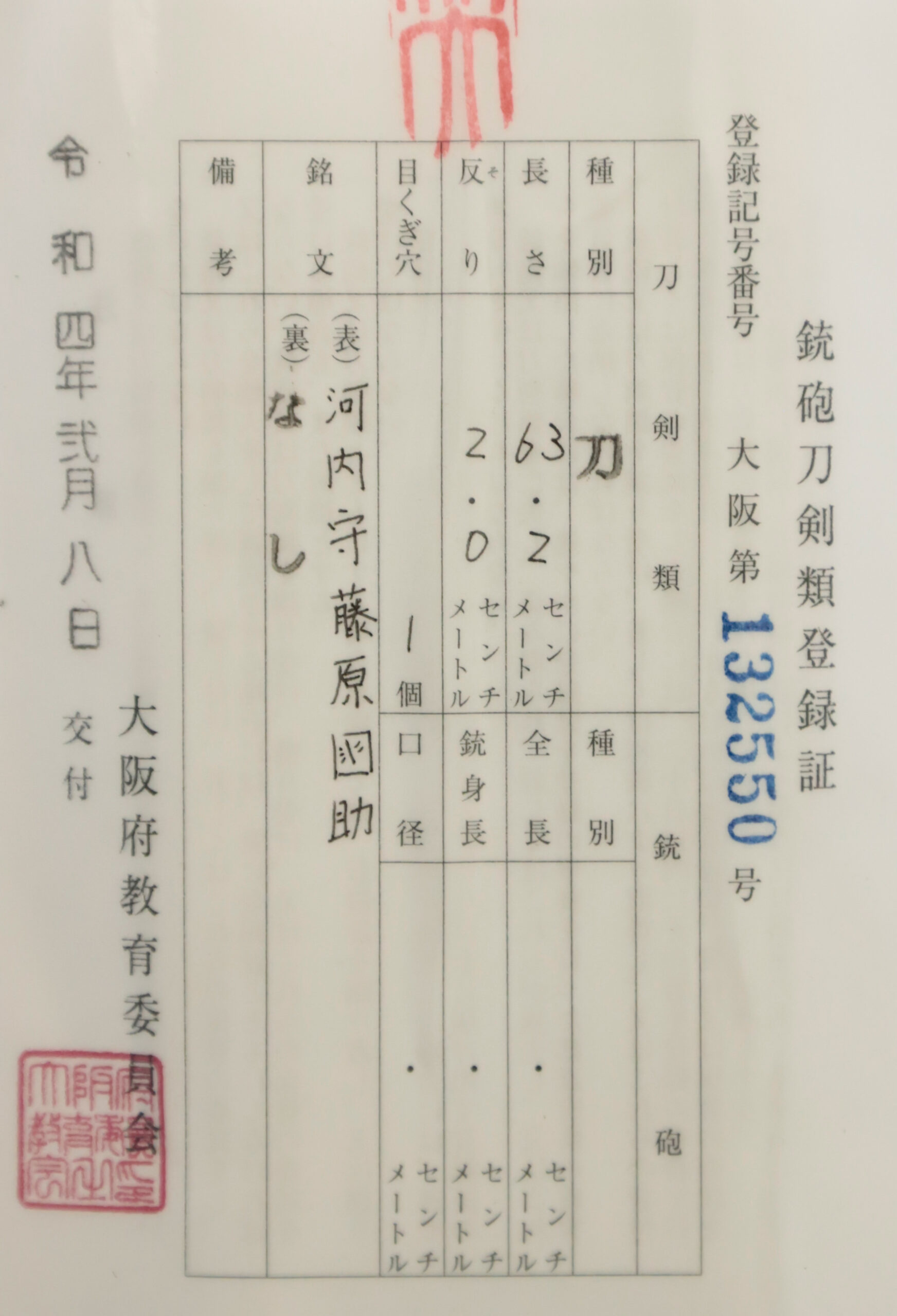
This blade was signed by Kawachi no Kami Fujiwara Kunisuke (河内守藤原国助). Kunisuke was one of the most well-known swordsmiths in Osaka during the early Edo period. There were three generations of Kunisuke in total. And, NBTHK Tokubetsu Hozon paper mentions that it was signed by the first-gen Kunisuke. They estimate it was forged during the Kan-Ei~The beginning of the Shoho era (1640s). The first-gen Kunisuke was born in Ise province(today’s Mie province) and served Seki Kazumasa, the head of Kameyama castle. However, after the Seki clan was destroyed, he moved to Kyoto. He became an apprentice of Horikawa Kunihiro, one of the most famous swordsmiths during the early Edo period. After Kunihiro deceased, Kunisuke learned the sword-forging technique from Echigo no Kami Kunitomo. Eventually, he moved to Osaka with Izumi no Kami Kunisada to become an independent sword maker in the seventh year of Kaenei(1630). It is said that he played an essential role in making Osaka Shinto movement. the superb craftsmanship of the first-gen was passed down to the next two generations. Osaka Shinto The blades forged by Kunisuke are categorized as Osaka Shinto. Shinto is Japanese Sword terminology that refers to the swords forged during 1596-1781. The blades made in the Osaka area during this period are called Osaka Shinto. There are many famous swordsmiths in this Osaka Shinto era. After Hideyoshi Toyotomi built Osaka castle, Osaka city flourished as a castle town and became the business center. Many swordsmiths moved to Osaka to look for better opportunities. They not only forged swords for those Samurai who lived in Osaka but also for feudal lords nationwide. Ikanshi Tadatsuna(Awataguchi Omi no Kami Tadatsuna), Inoue Shinkai, and Tsuda Sukehiro are the most famous among many swordsmiths. One of the most notable characteristics of Osaka Shinto is its beauty in Jigane. Jigane is a visible steel surface pattern created by folding and hammering during the forging process), which made it possible by the location of Osaka. Osaka had close access to the Tamahagane(special carbon steel to make Japanese swords) production sites. The swordsmiths residing in Osaka were able to get high-quality carbon steel from these sites. It is appraised as a Tokubetsu Hozon Token(特別保存刀剣) issued by NBTHK(Nihon Bijutsu Touken Hozon Kyokai:日本美術刀剣保存協会). *Please keep in mind that there are a couple of visible Kitae Kizu on this blade. If you like to see more detailed condition, please feel free to contact us. Tsuka and Menuki Dragonflies have been inhabited in Japan for a long time. Since they prey quickly, their heroic figure was sometimes the object of belief. The dragonfly was called the Kachimushi (勝ち虫, winning insect) during the Warring States period because of its fearless character. Dragonflies fly around fast to catch pests, moving only forward, not backward. Therefore, people thought the behaviors of this insect showed the spirit of Futaiten (不退転); it is a state of mind or a state in which a person has some conviction and does not give in to difficulties. It is very persuasive that Samurai warriors cherished this design as an auspicious motif because of the spirit that Samurai should be prepared for the battlefields. Not only for sword mountings, dragonfly patterns were also incorporated into various items such as helmets, armor, battle coats, etcetera. Above all, the dragonfly patterns combined with arrows and iris flowers were pleased. Allow was once one of the Samurai’s primary weapons. Needless to say, it is closely related to Samurai culture. The Iris flower is called the Shoubu (菖蒲) in Japanese, and there is the word Shoubu (勝負), which means battle. So, “Shoubu” (菖蒲, iris flower) and “Shoubu” (勝負, fight), these two words have the same pronunciation; therefore, the iris flower pattern reminds Samurai warriors battlefields. Authentication Paper They authenticated the blade on Feb 21st in the 6th year of Reiwa (2024). They appraised it as Tokubetsu Hozon Touken, the blade especially worth preserving for Japanese society.
Offered by Samurai Museum
This piece has sold
Get an email when a new Horikawa Kunisuke piece hits the market.

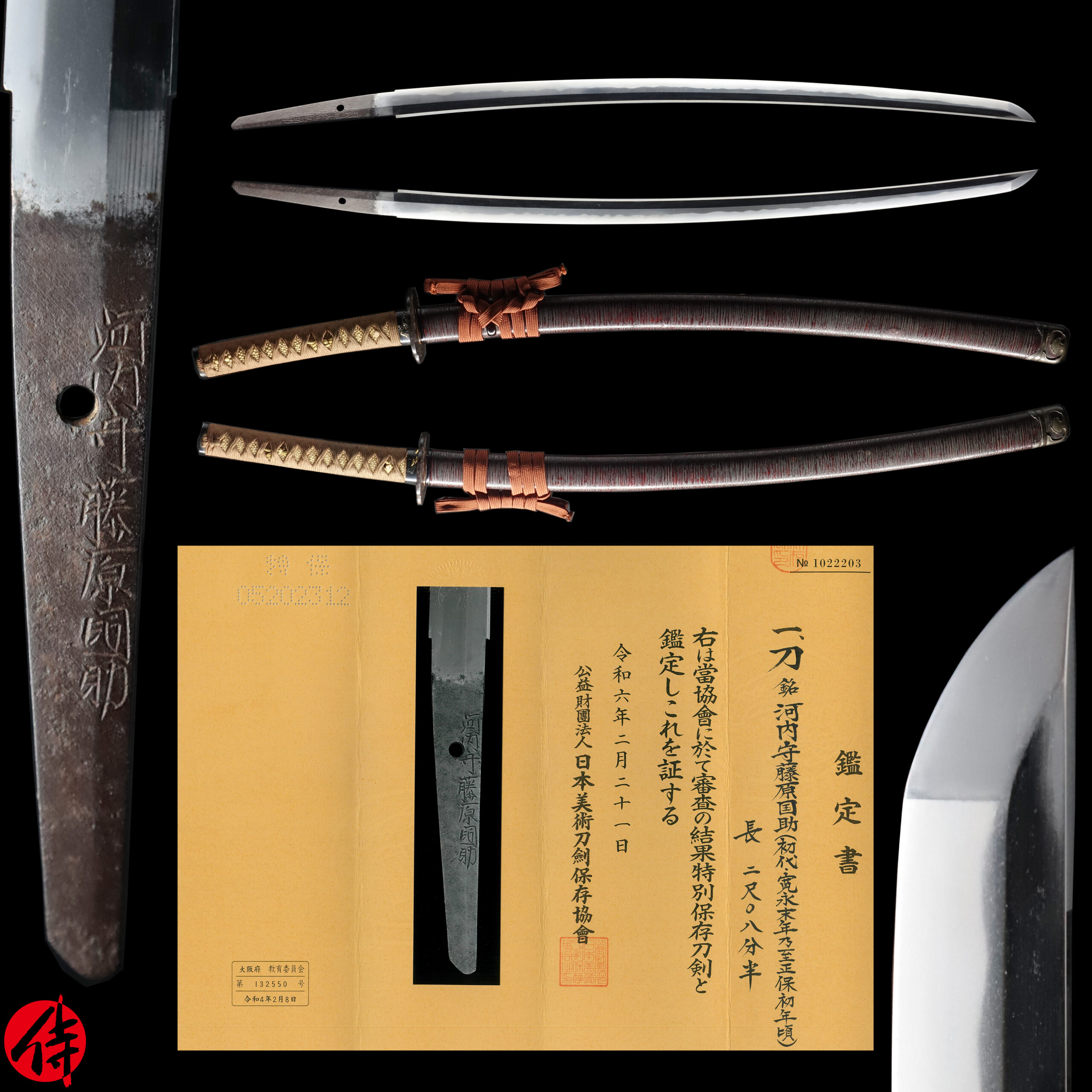
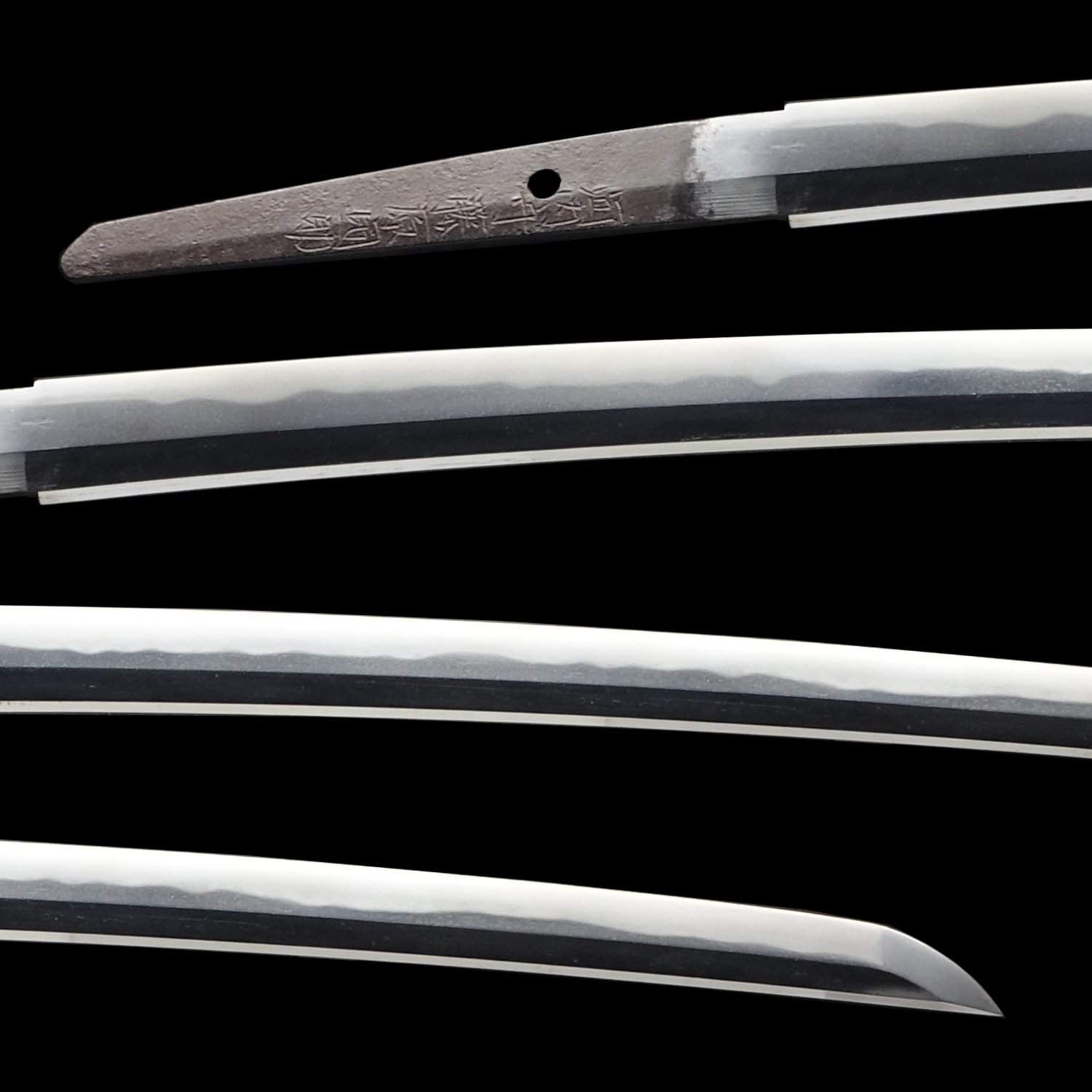
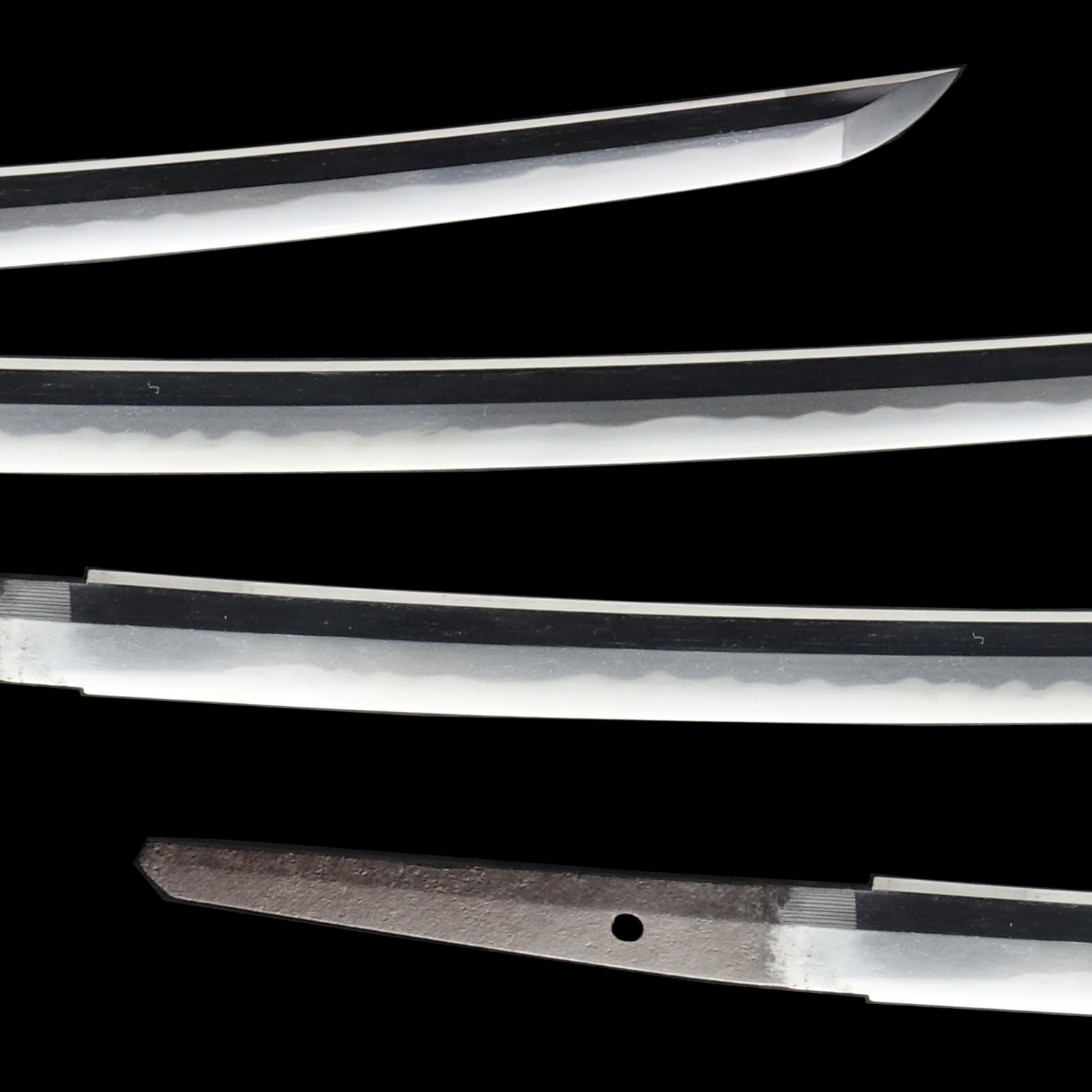
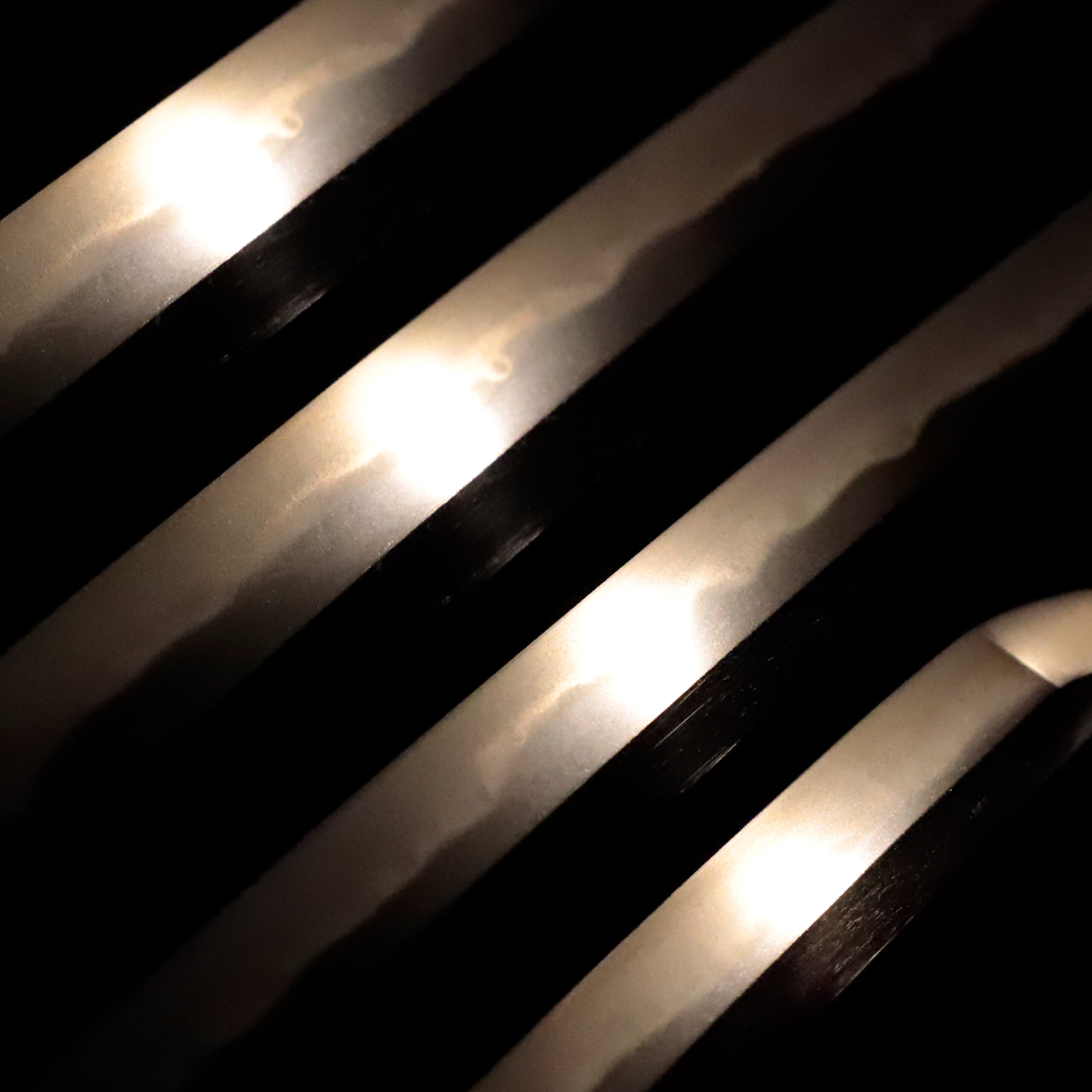
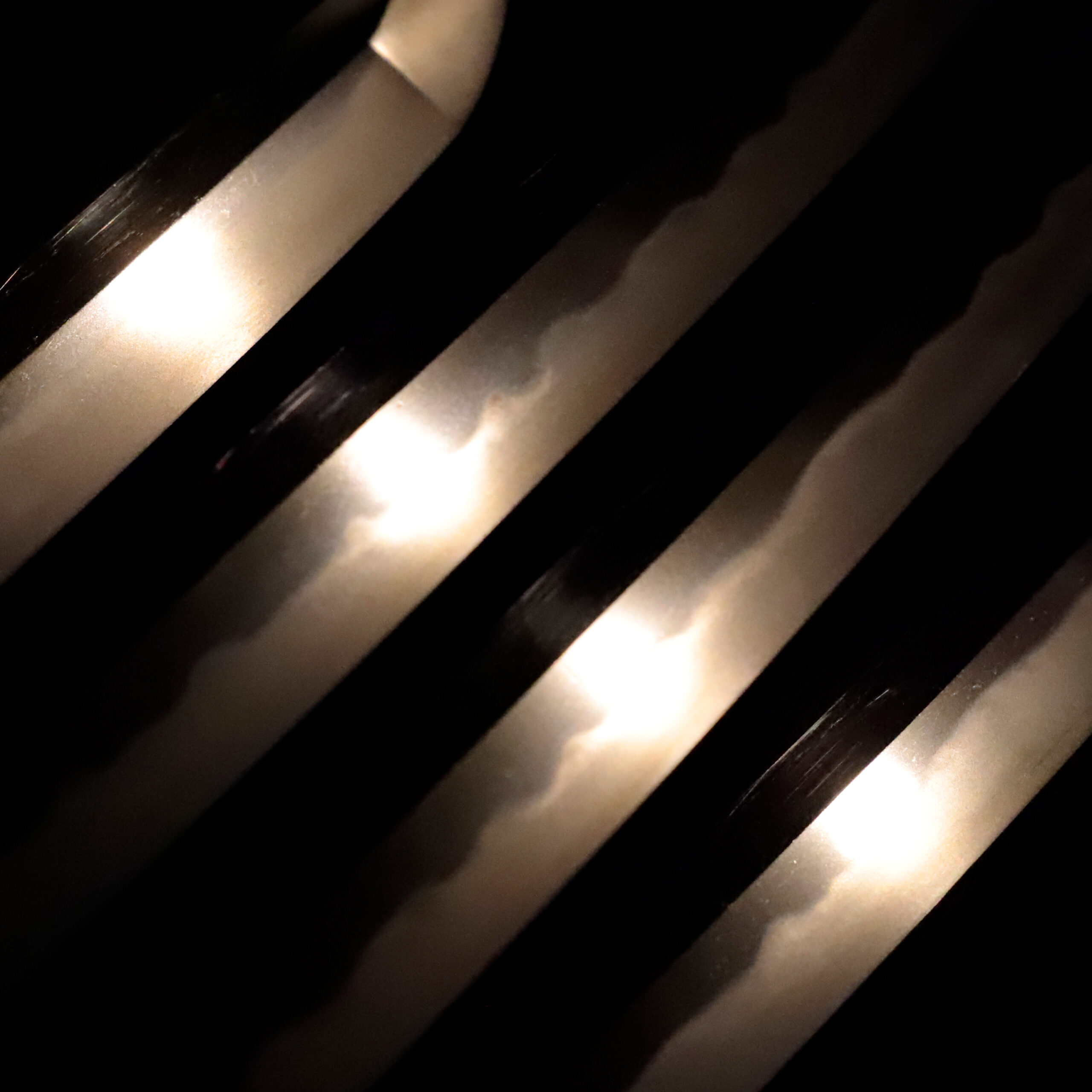
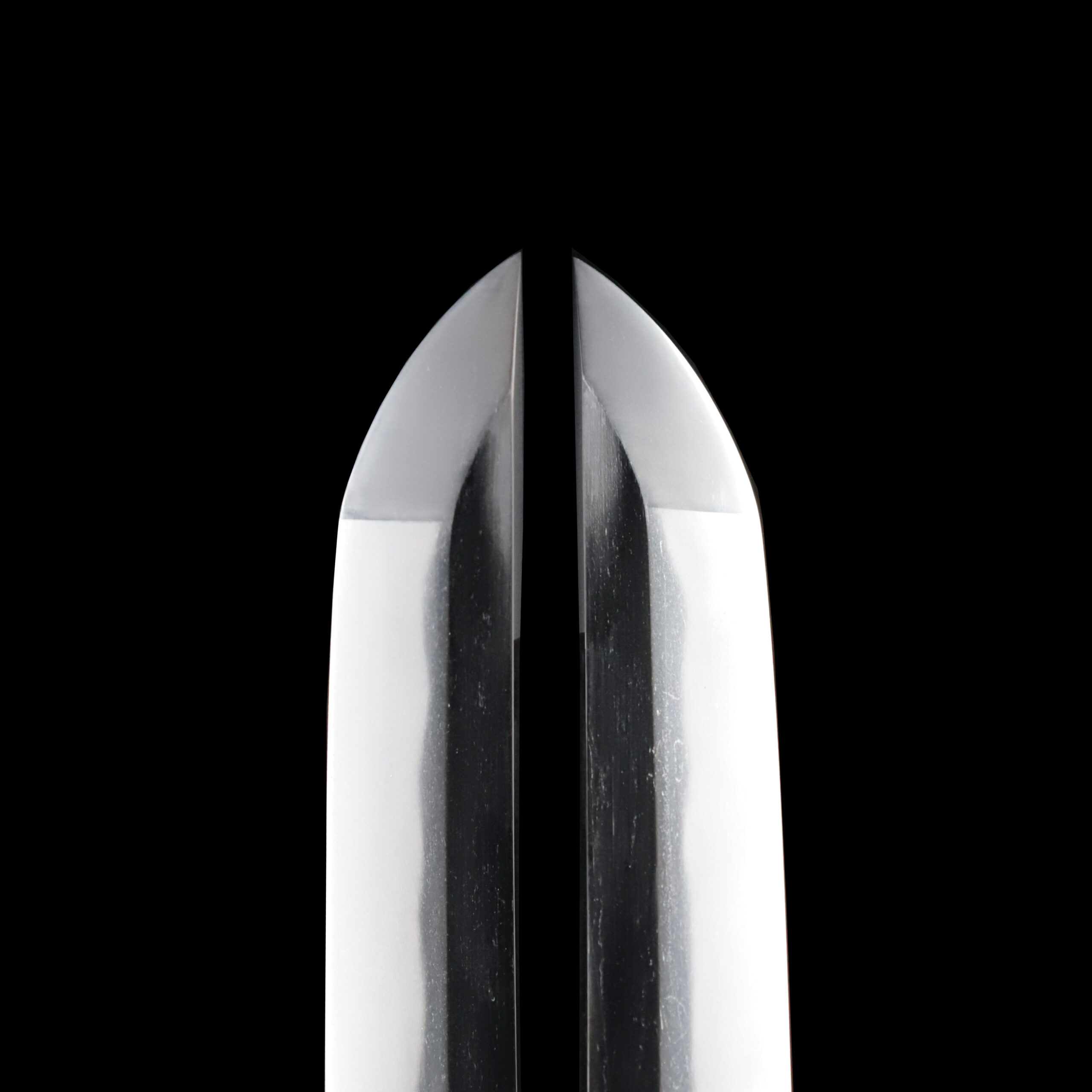
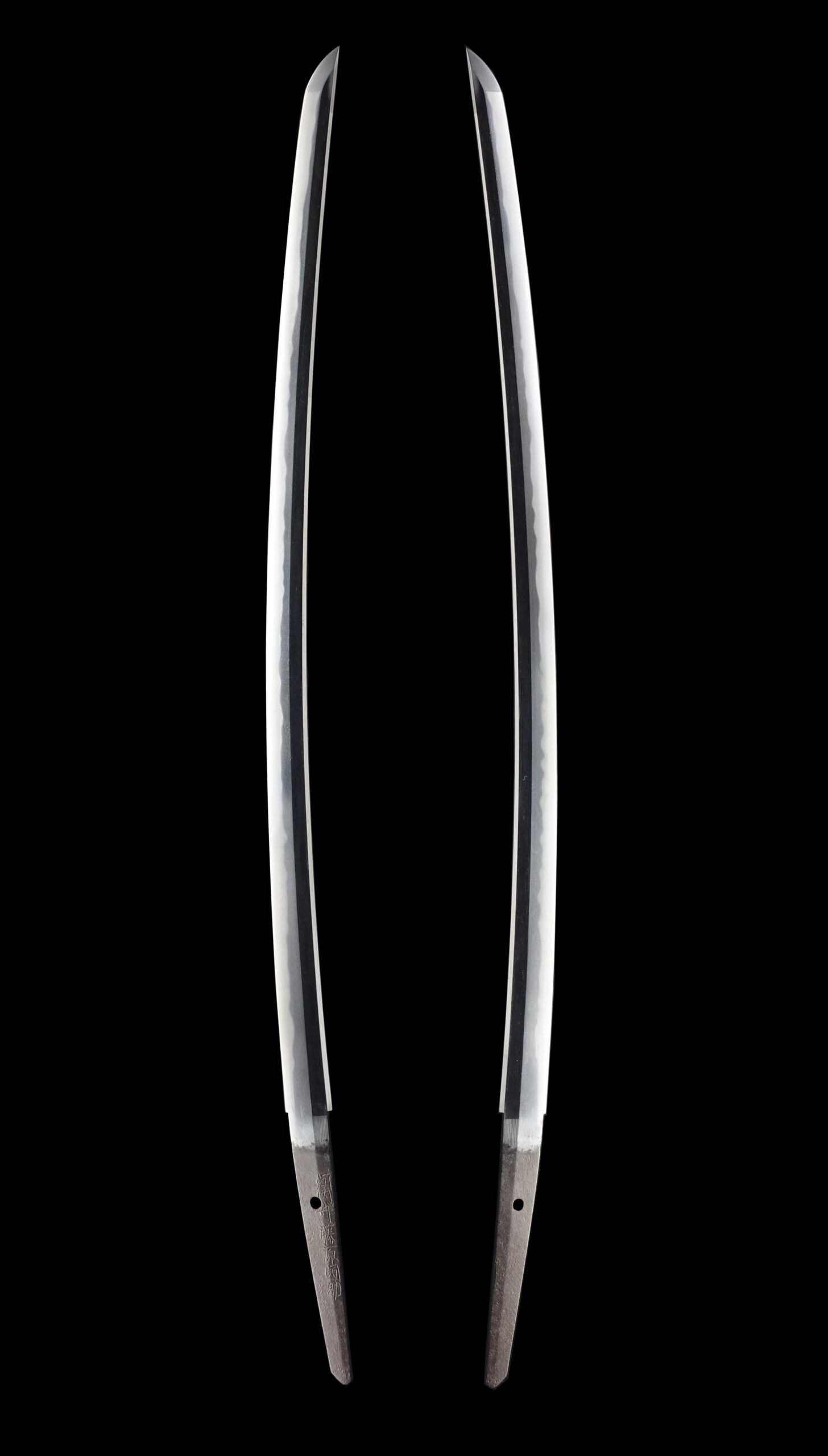
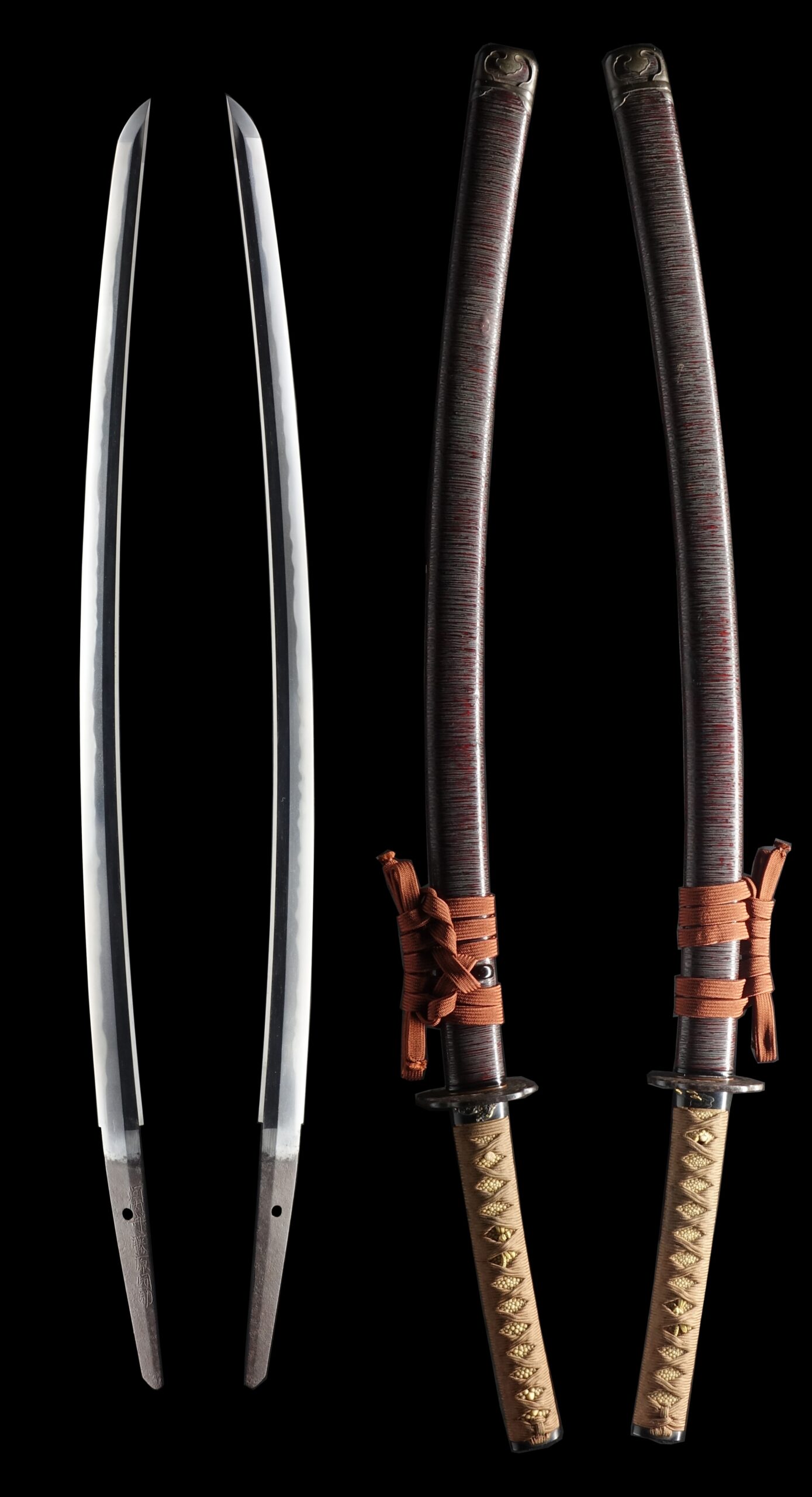
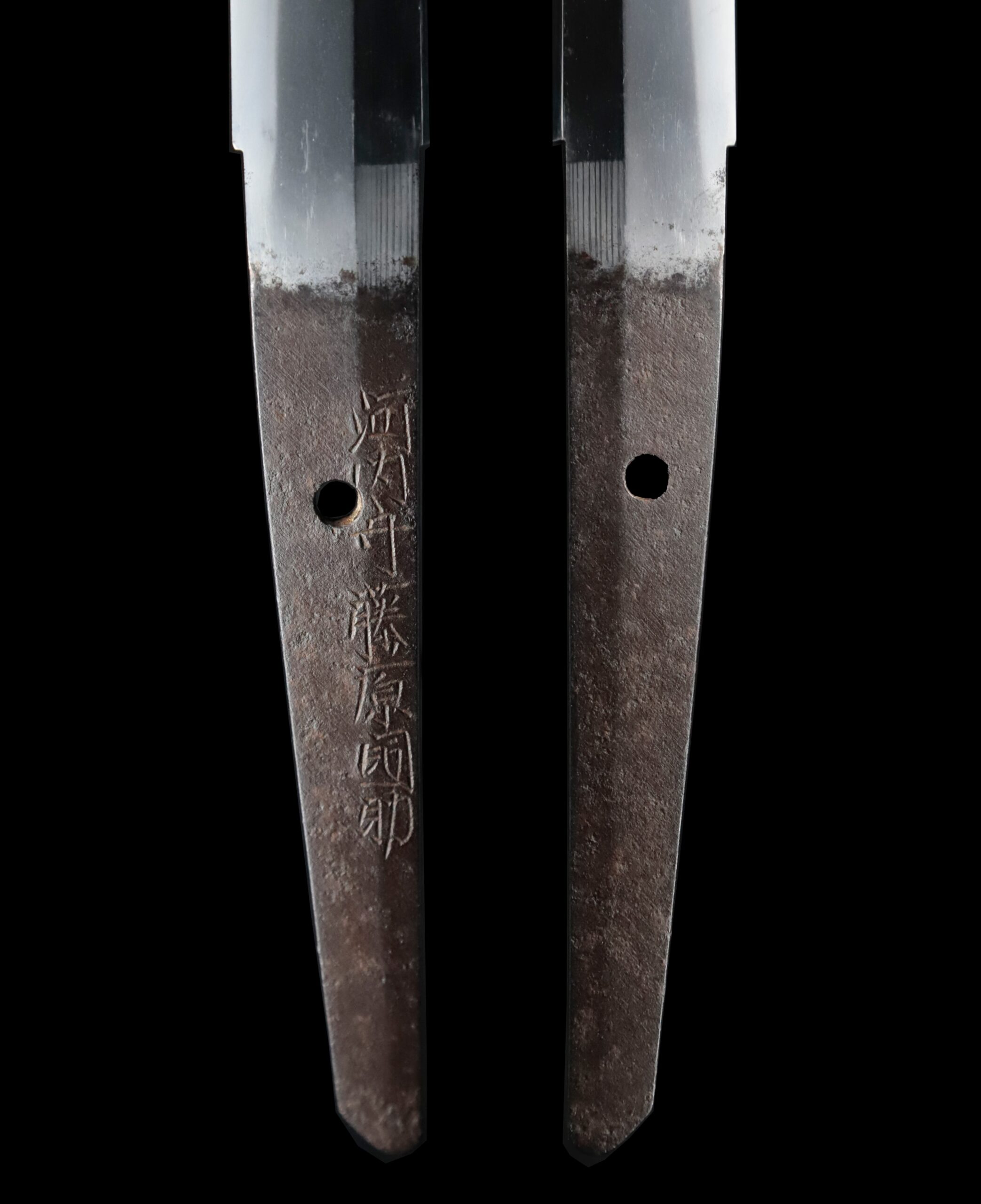
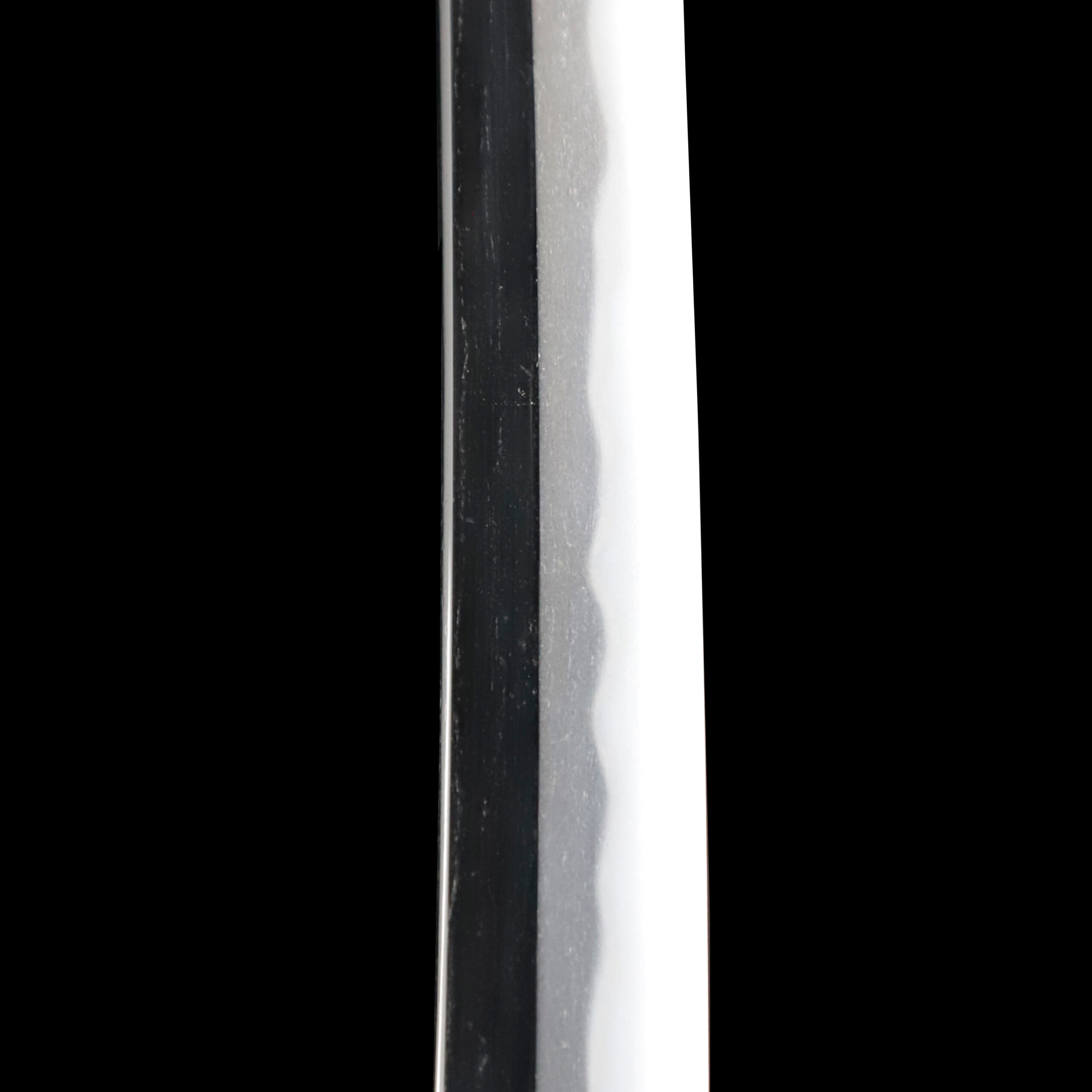
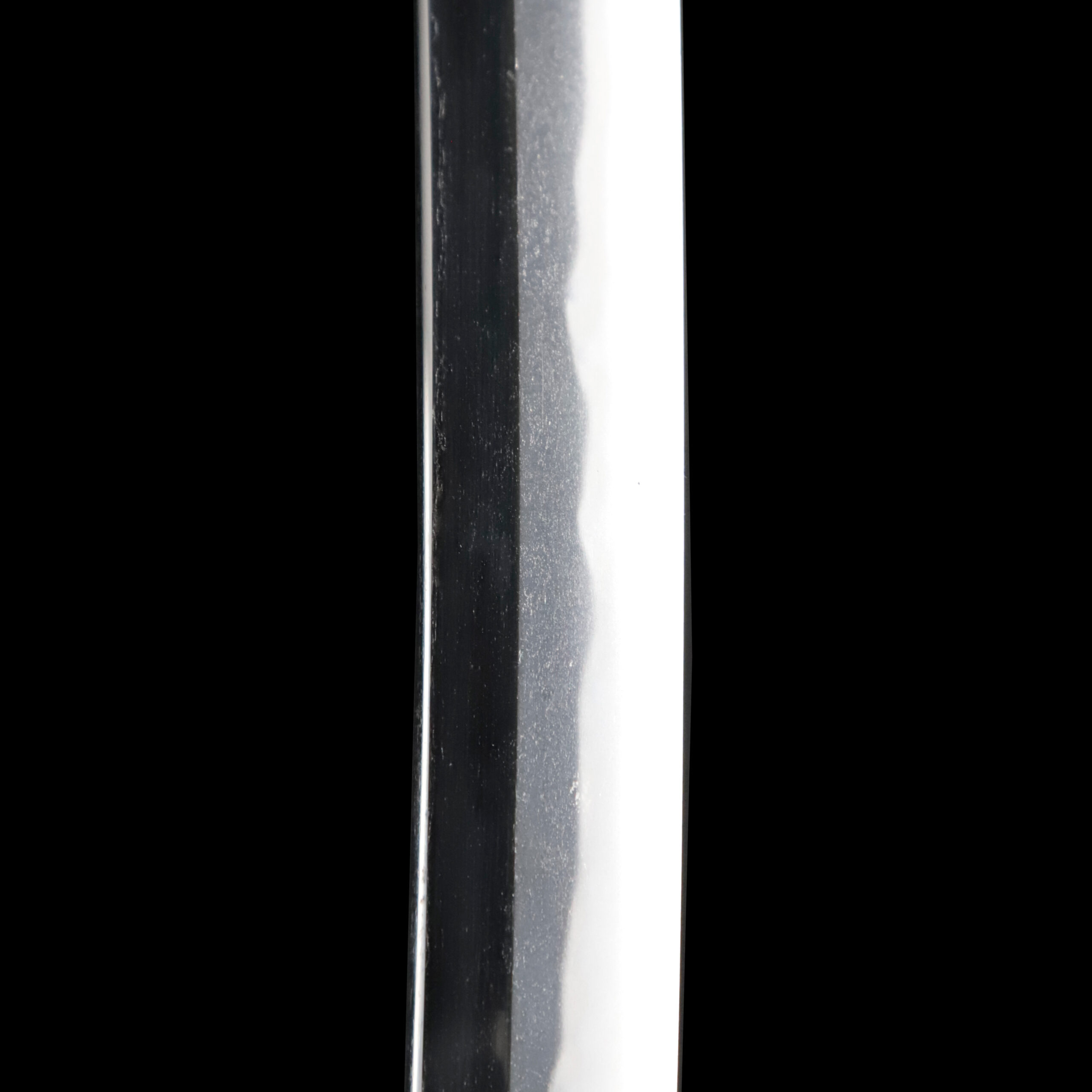
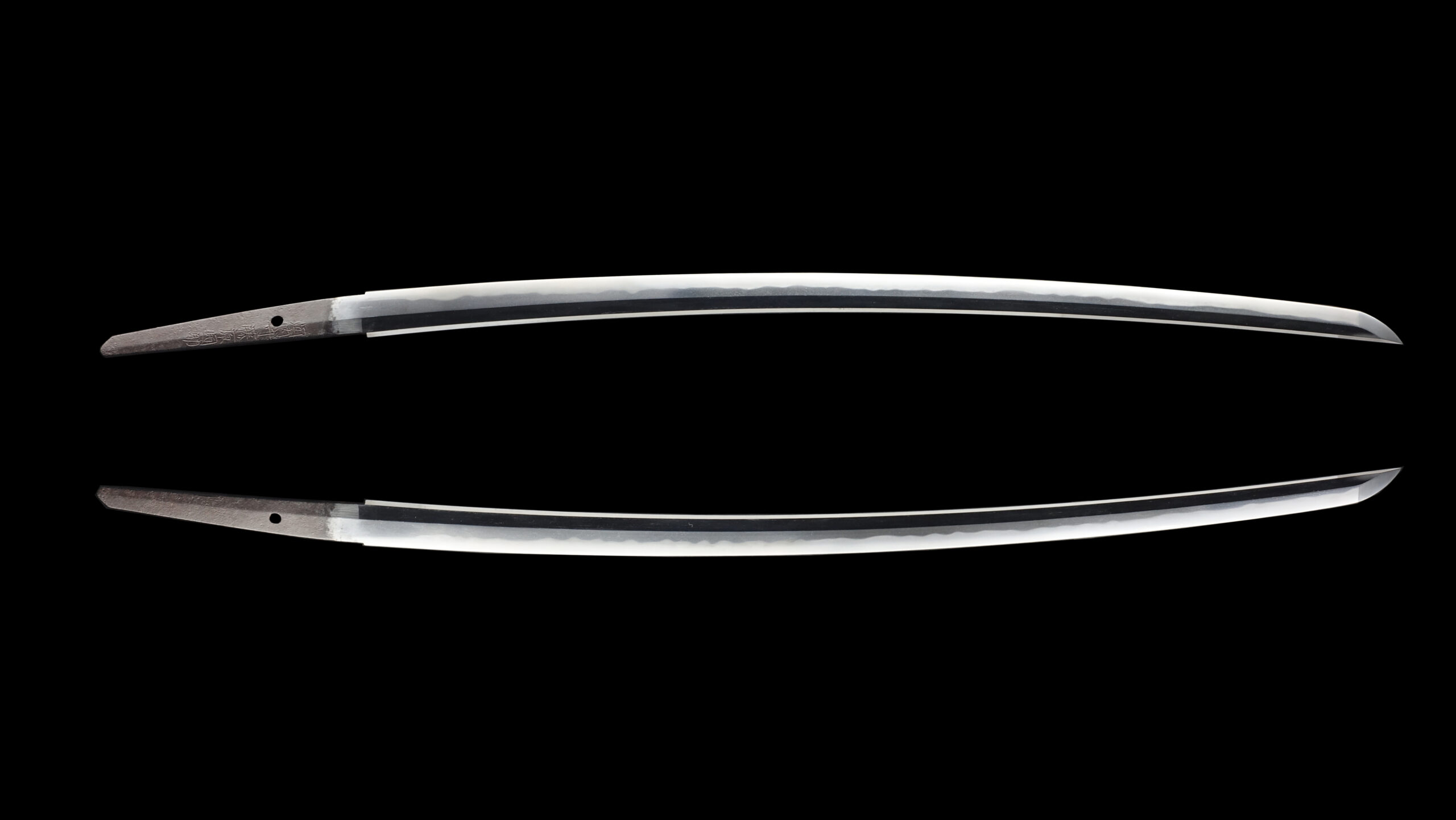
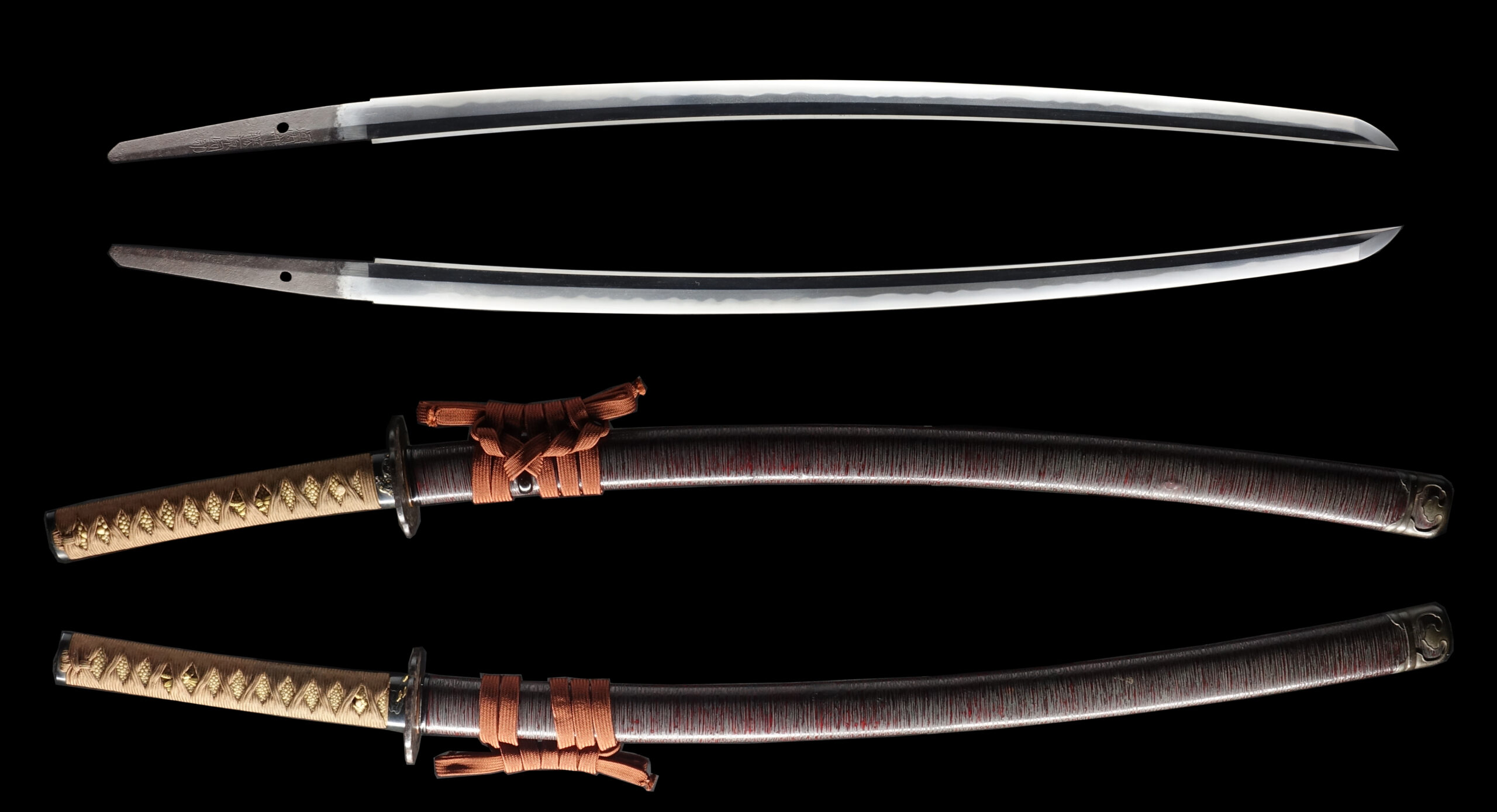
Horikawa school, Osaka Shinto (Settsu); Ishido-derived · Settsu · around 1624-1650
Fujishiro Jo-jo saku · Tōken Taikan top 17%
6 pieces on the market now
The first-generation Kawachi no Kami Kunisuke was among the last pupils of Horikawa Kunihiro in Kyoto. After Kunihiro died in Keichō 19 he moved to Ōsaka with the elder Kunisada, Izumi no Kami, and the two became pioneers of the Ōsaka shintō smiths, with a lasting influence on the swordmaking of the city. The published sources record that he came from Kanbe in Ise Province and drew on the stream of the Ishidō smiths. They also judge, from the style of his early work and the cut of his signature, that his teacher in practice was the senior fellow-disciple Echigo no Kami Kunitomo rather than Kunihiro himself. His title of Kawachi no Kami is placed around Genna 9, close to the elder Kunisada's, because a naginata and a tantō signed Kawachi no Kami and dated Kan'ei 3 survive, together with undated works of still earlier style. That Kan'ei 3 date is his earliest, and tradition gives his death as Shōhō 4.
His Ishidō descent is the key to his hand. Within the Horikawa group, the sources write, he was the one who "most excelled at chōji"[[c:1]], so that some trace of clove pattern surfaces somewhere within his irregular temper; one later paper puts it as "chōji mixes into the temper more than in anyone else of the school"[[c:2]]. The sources treat that trace as the very point by which a blade is appraised as Kunisuke rather than another Horikawa hand.
His recognized manner opens from a straight yakidashi above the hamachi. Above it the temper widens into gunome mixed with chōji, ko-notare and pointed elements, with ashi entering, ko-nie well adhered, and sunagashi and kinsuji running through. The jigane is a tightly packed ko-itame or itame with thick ji-nie and chikei. The bōshi is a ko-maru, often swept with hakikake. His work is extremely close to the elder Kunisada's, and the sources name the differences: against Kunisada "his hardened area is broader and his chōji conspicuous"[[c:3]], his yakidashi broadens gradually as it rises, and his bōshi is tempered deep. A katana showing all of these is read as "the manner in which he most excelled"[[c:4]].
A second register shows the Horikawa schooling plainly. On one katakiriba wakizashi the itame stands and turns zanguri, the temper is a nie-laden ko-notare with gunome, and the sources call it a work of "strongly Horikawa coloring"[[c:5]]. Other blades are read against particular masters: one wakizashi carries "a Seki coloring"[[c:6]], which the sources tie to Kunitomo; another recalls Kunitomo's own temper; others recall the elder Kunisada. Carving is rare in his work, and the few carved blades, with naginata-hi, goma-bashi and a relief kurikara, are noted as such.
The sources keep a careful line between him and his son, the second-generation Kawachi no Kami known as Naka-Kawachi, who carried the name and turned wholly to the Ishidō chōji. One early paper reads a katana's conspicuous chōji as the forerunner of the son's style. A blade dated Kan'ei 19 is debated: either his own late work, or an early work of the second generation made before Shōhō 4.
Fujishiro rates him Jō-jō saku. Thirty-two of his blades stand in the Jūyō rank, with one in the prewar Jūyō Bijutsuhin and one in the Imperial Collection. The published sources call his finest signed katana "one of the most outstanding among his works"[[c:7]] and others "his typical work"[[c:8]], and they value a naginata dated Kan'ei 3 because "its Kan'ei 3 date is also valuable reference material"[[c:9]]. Provenance, where recorded, includes the Itakura family and the Imperial Family. His surviving work is comparatively small, and katana are scarce, so a signed Jūyō example of the first generation comes to market only from time to time.
Where Kunisuke stands among comparable artisans: across all of nihontō, and within tradition, era, and period. The tiers (Foremost · Leading · Major · Notable) weigh official designations from the NBTHK and Japan's Agency for Cultural Affairs, together with historical honors of lasting repute such as the Sansaku and Meibutsu-chō.
Select a lens to see how it's measured.
Years he was demonstrably active, proven by signed-and-dated blades
Shinto · Yamashiro
64 pieces on the market now
At Ichijo Horikawa in Kyoto, from Keicho 4 (1599), Horikawa Kunihiro gathered the pupils whose work the published sources name with his own as the opening of the shinto age. Kunihiro himself reached forging late and by a roundabout road. Born Tanaka and serving as a warrior under the Ito of Obi castle in Hyuga, he wandered the provinces after that house fell, forging where he stopped, his earliest dated blade cut in Hyuga in Tensho 4 (1576); his itinerant Tensho-uchi looked to late Soshu and late Seki, often run toward a hitatsura-like effect over devotional carving. The settlement in Kyoto changed that. There his stated aim, the sources write, lay in the revival of the Soshu-den tradition, the leaning strongest toward Shizu, and around that ideal he trained the men who carried his manner forward: Dewa no Kami Kunimichi, Kuniyasu, Osumi no Jo Masahiro, Echigo no Kami Kunitomo, the elder Kunisada and Kunisuke, with later and minor hands reaching Settsu, Echizen and Edo. Many of them, born like the master at Obi, followed him from Hyuga to the capital. The shared vocabulary is read first in the steel. The school forges an itame mixed with mokume that stands up, the grain raised into the loose, granular surface the commentaries name outright, the zanguri hada particular to Horikawa work, with ji-nie lying thick and chikei entering; on many blades a mizukage rises obliquely from the machi. Over that ground the prime manner is the Keicho-shinto sugata, wide with little taper and an extended chu-kissaki or o-kissaki, the build likened to a Nanbokucho odachi cut down, tempered in a notare and gunome with thick nie, sunagashi and long kinsuji, the nioiguchi often sinking into shizumi. Within that frame the pupils diverge sharply.
Kunimichi runs the flamboyant Shizu copy fully out and turns his boshi pointed in the Mishina manner, the Sanpin boshi the school otherwise does not show. Masahiro keeps the same Soshu-den worked at lower temperature, his temper calm and his mokume conspicuous; Kuniyasu and Kunitsugu stand closest of all to the master and signed for him. Kunitomo turns alone toward late Seki, his gunome round-headed and his chisel the finest in the group, and the elder Kunisada and Kunisuke carry the zanguri steel south into Osaka, the latter keeping the Ishido clove he was born to. Hiroyuki holds suguha over a blackish steel that recalls old Yamato, and the two Echizen Kunikiyo forge a dark, dense hokkoku-gane under a calm chu-suguha. A collector seeks Horikawa because the school stands at a hinge: Kunihiro is read as the first hand of the new-sword age, and the line he taught runs forward into the Osaka tradition through Kunisada and Kunisuke and into Echizen through Kunikiyo. To kantei the work, read the steel first, the standing zanguri surface and the oblique mizukage, then the sinking nioiguchi and the Soshu-revival notare with its sunagashi and kinsuji; the individual hand declares itself in the departures, Kunimichi's pointed boshi, Kunitomo's Seki gunome and compact tang, Kuniyasu's reversed file marks and two-character mei, Hiroyuki's kiri-yasuri. The founder and his closest pupils sit at the top of the line, Kunihiro signing almost everything he made, the large kata-ochi two-character mei beside his long residence signatures; because Kuniyasu, Masahiro, Kunitsugu and Hiromi worked as his daisaku, a share of the blades signed Kunihiro are in fact theirs. Provenance runs through the houses of the founder's own story and of the country, the Hyuga Ito he had served, the Shimazu of Kagoshima, the Imperial Family and Toyotomi Hideyori, with the tachi Kunihiro dedicated to the Hataeda Hachimangu still in the shrine's keeping. A signed Horikawa blade reaches a private collection only from time to time, carrying on its nakago the hand with which the new sword begins. Learn more →
| Smith | Era | Designated |
|---|---|---|
| Kunihiro國廣 | 1573-1613 | 147 |
| Kunimichi國路 | 1615-1624 | 75 |
| Kunisada國貞 | 1624-1646 | 87 |
| Kunitomo國儔 | 1596-1615 | 27 |
| Masahiro正弘 | 1596-1615 | 16 |
Bakumatsu: the last war market
Perry’s arrival in 1853 unraveled the Tokugawa peace and created the first mass demand for working swords in two centuries. Kiyomaro, called the Masamune of Yotsuya, died on its eve; Munetsugu and Yukihide carried the boom to the end.
A Hozon-certified blade judged to show notably superior workmanship and a better state of preservation. The bar is higher: re-tempered blades and most unsigned Muromachi/Edo works are excluded.
The NBTHK (Nihon Bijutsu Tōken Hozon Kyōkai, the Society for the Preservation of Japanese Art Swords) is a public-interest incorporated foundation founded in 1948 and supervised by Japan’s Agency for Cultural Affairs (Bunkachō); it is based at the Japanese Sword Museum in Tokyo. Its expert panels physically examine each submitted work (shinsa) and issue a certificate (kanteishō) ranking it by artistic and historical merit. NBTHK papers are the most widely recognized standard of authentication for Japanese swords and fittings.
NBTHK official siteReturns/exchanges limited to defects caused by shipping (except willful misconduct or gross negligence by the company); customers must contact within 72 hours of receiving the product.