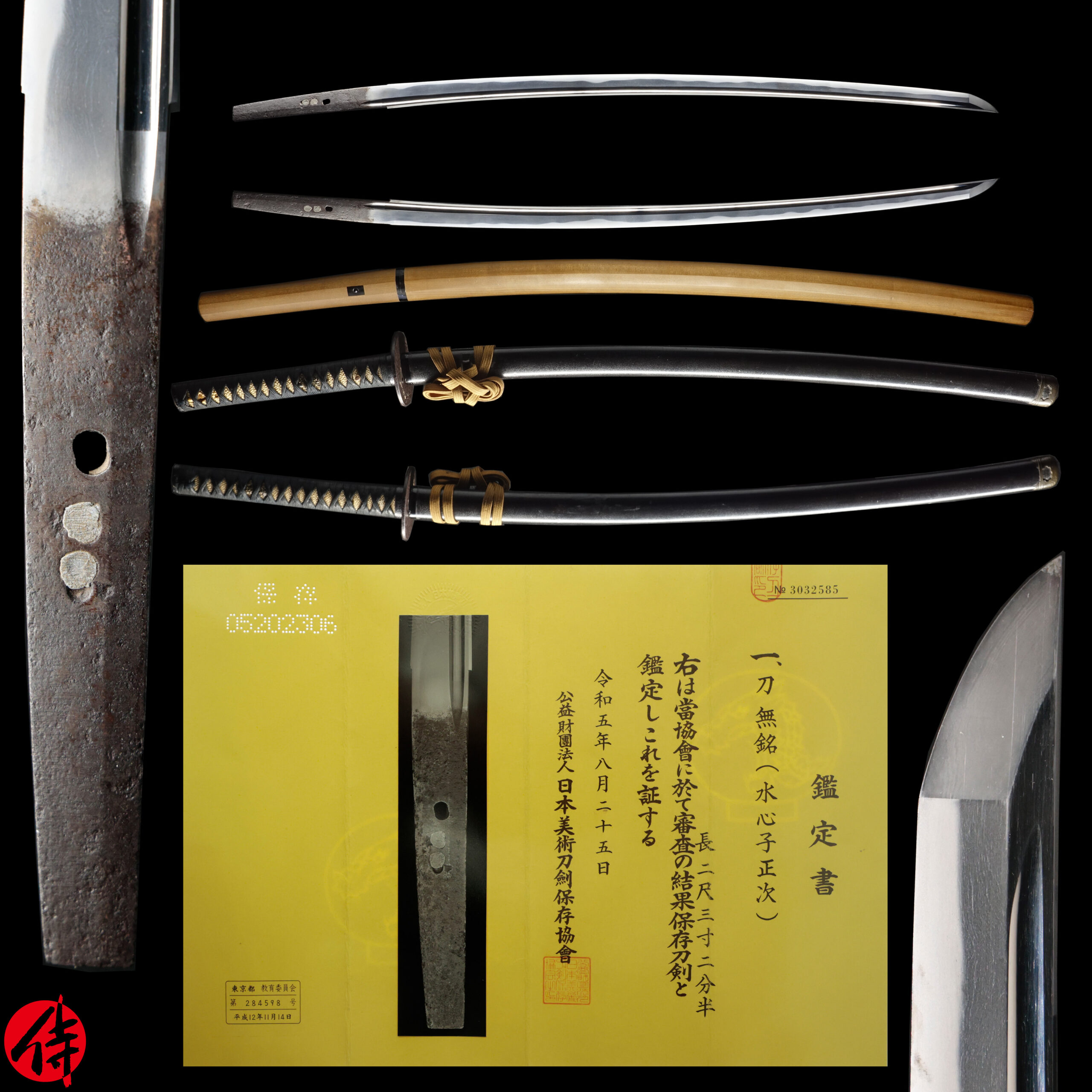
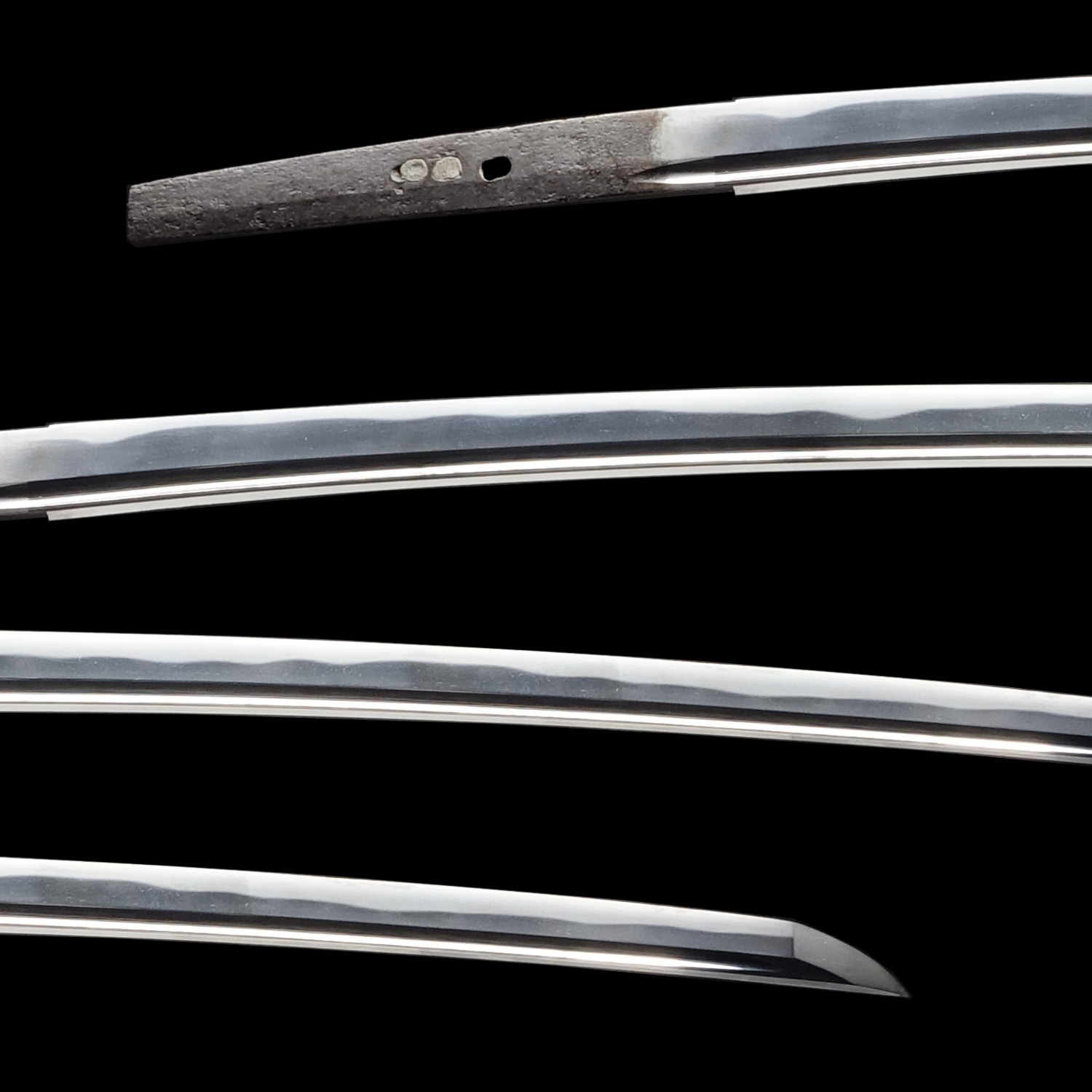
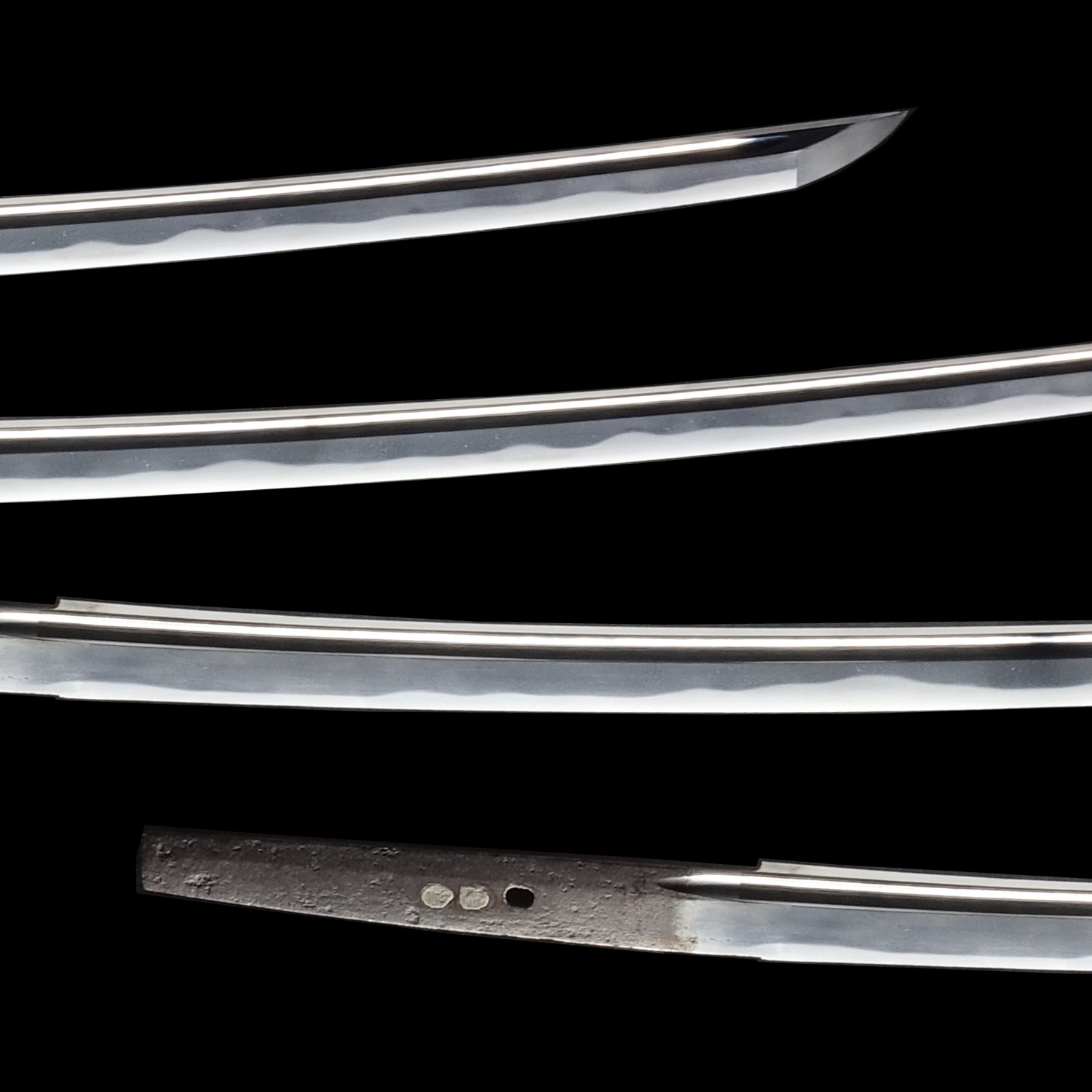
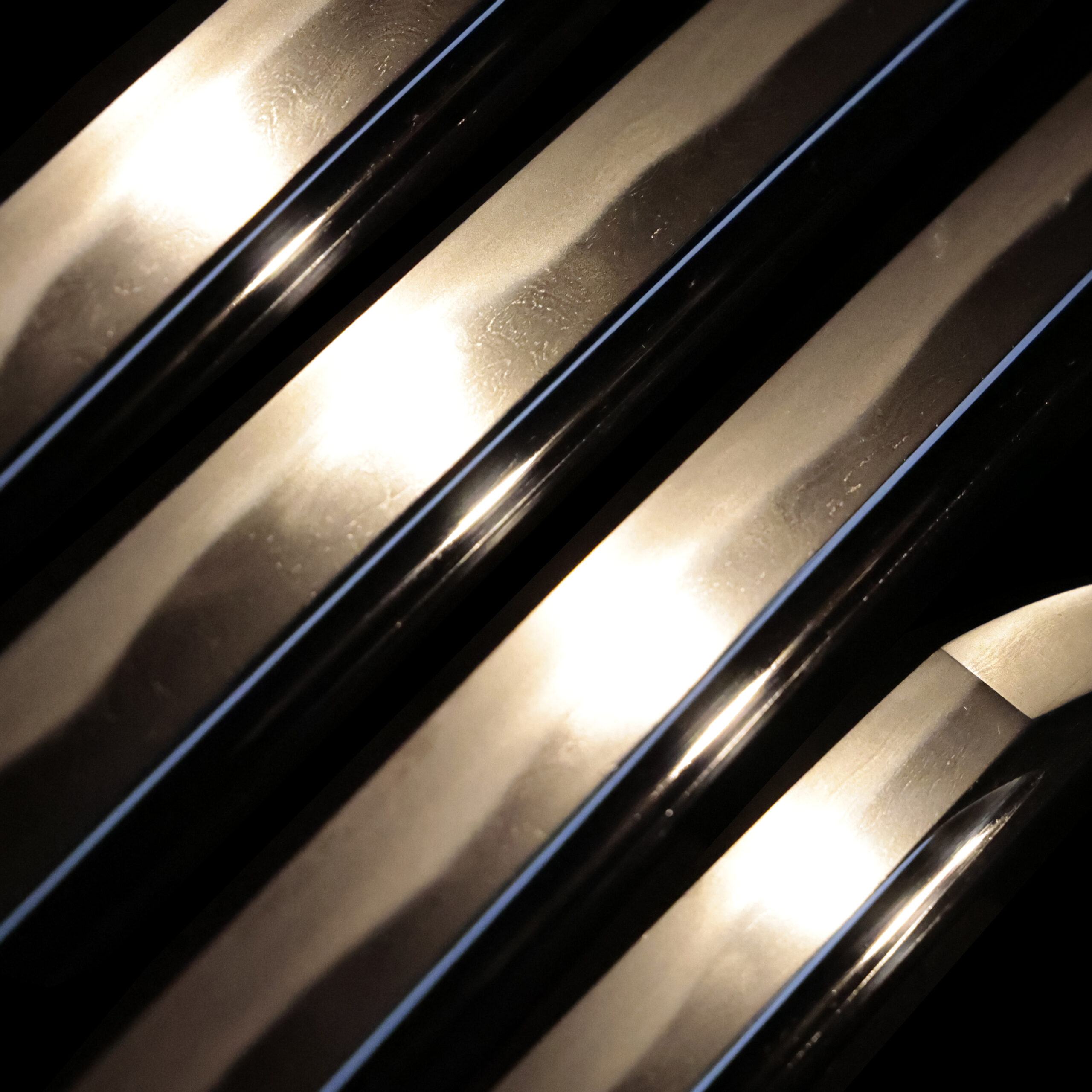
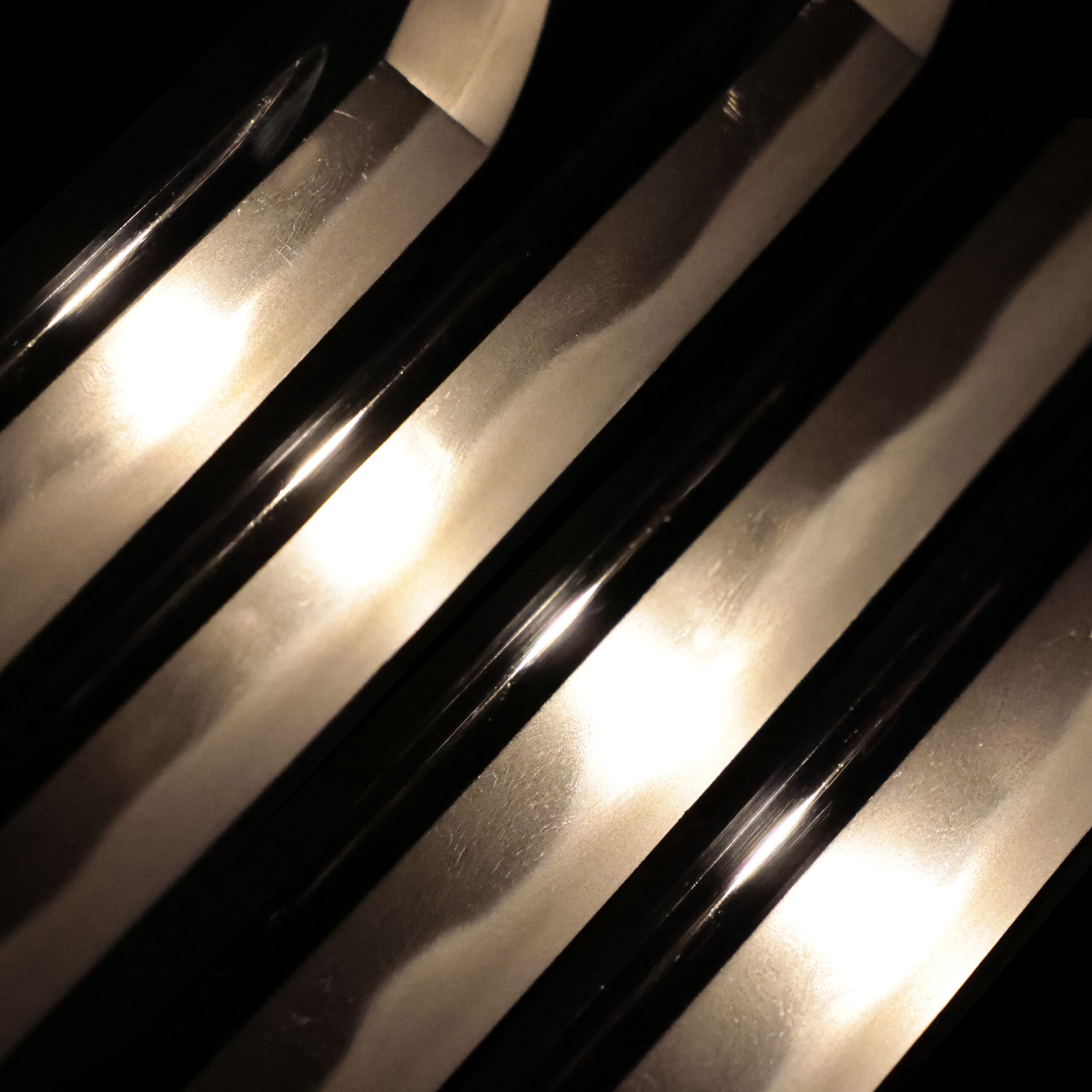
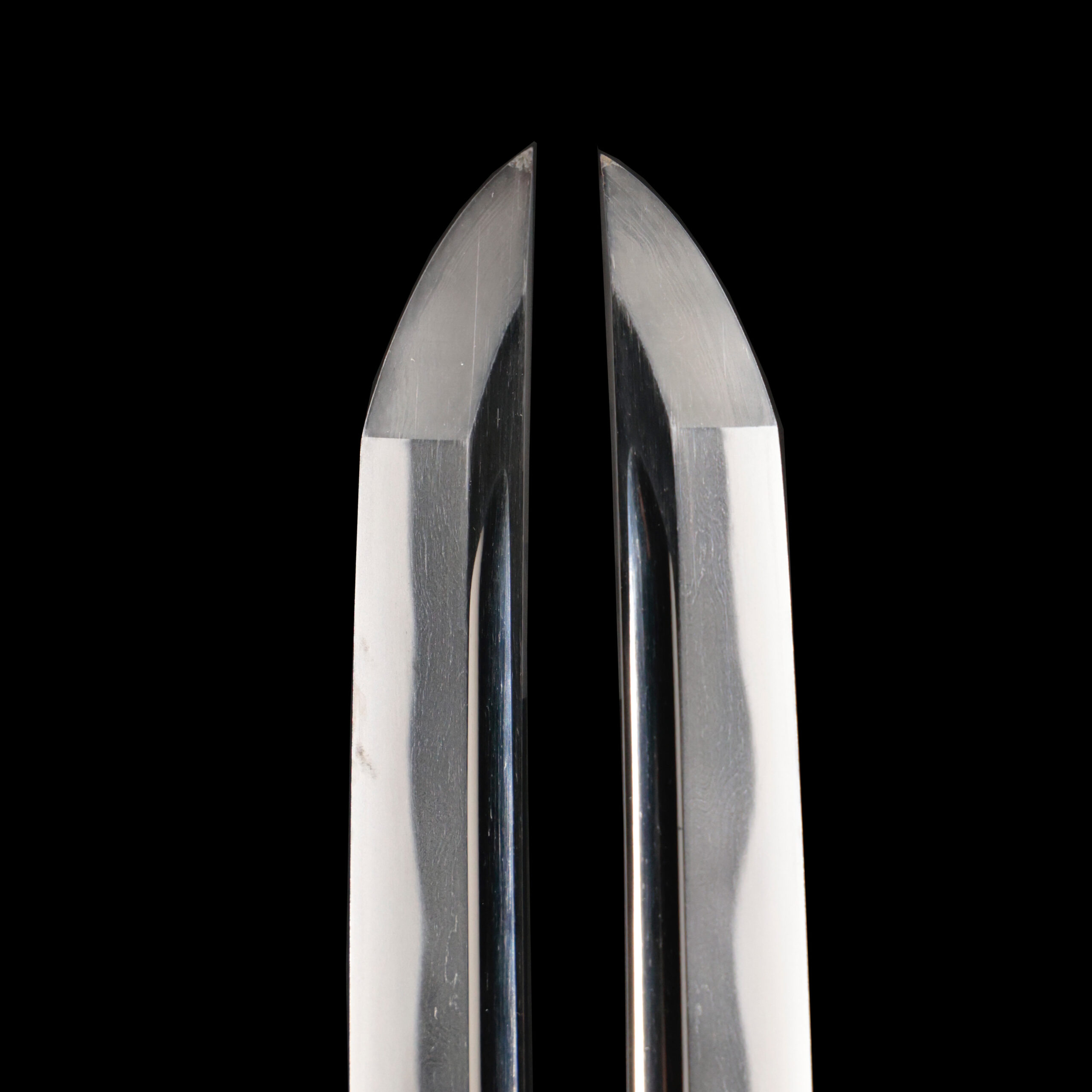
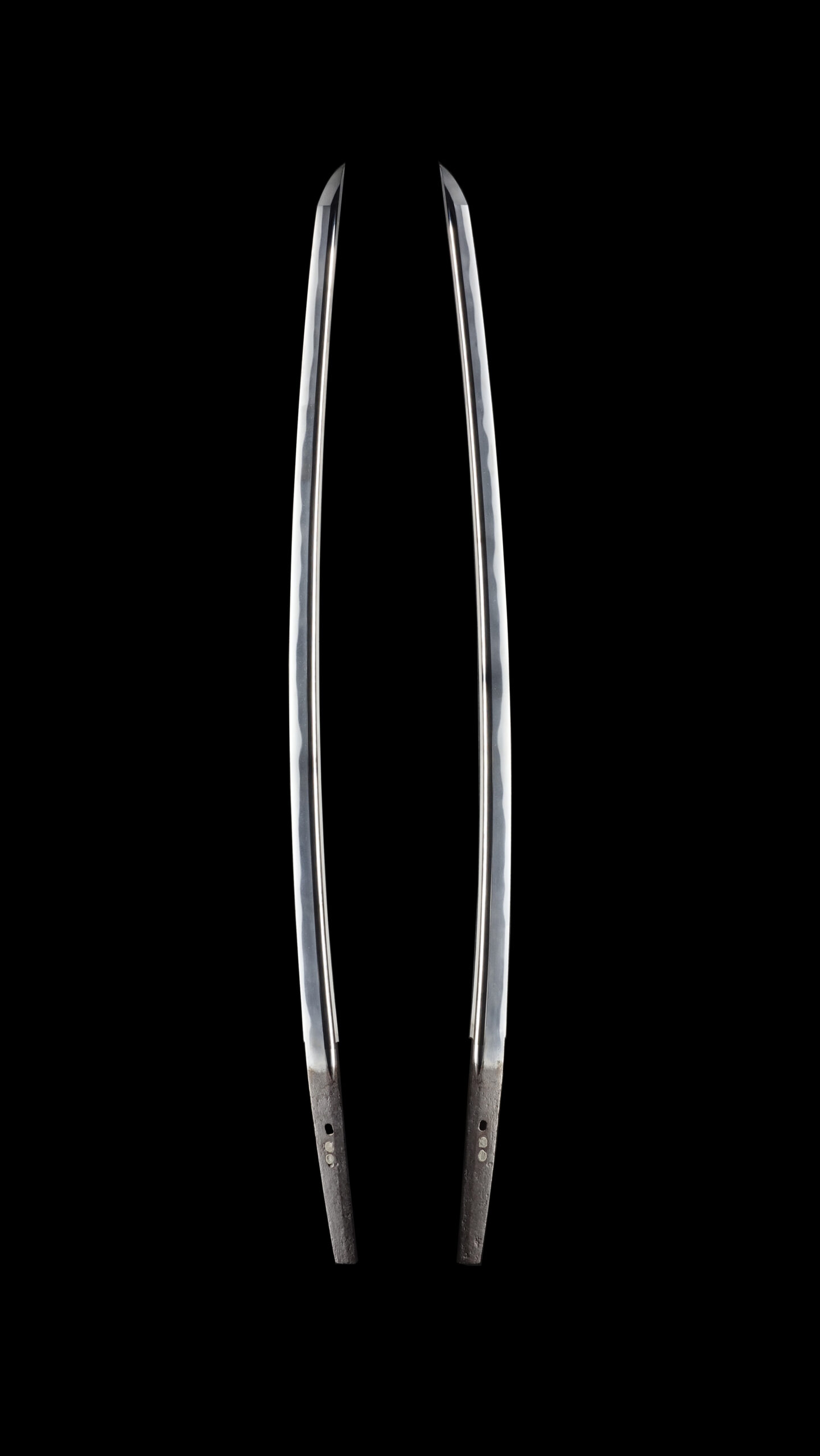
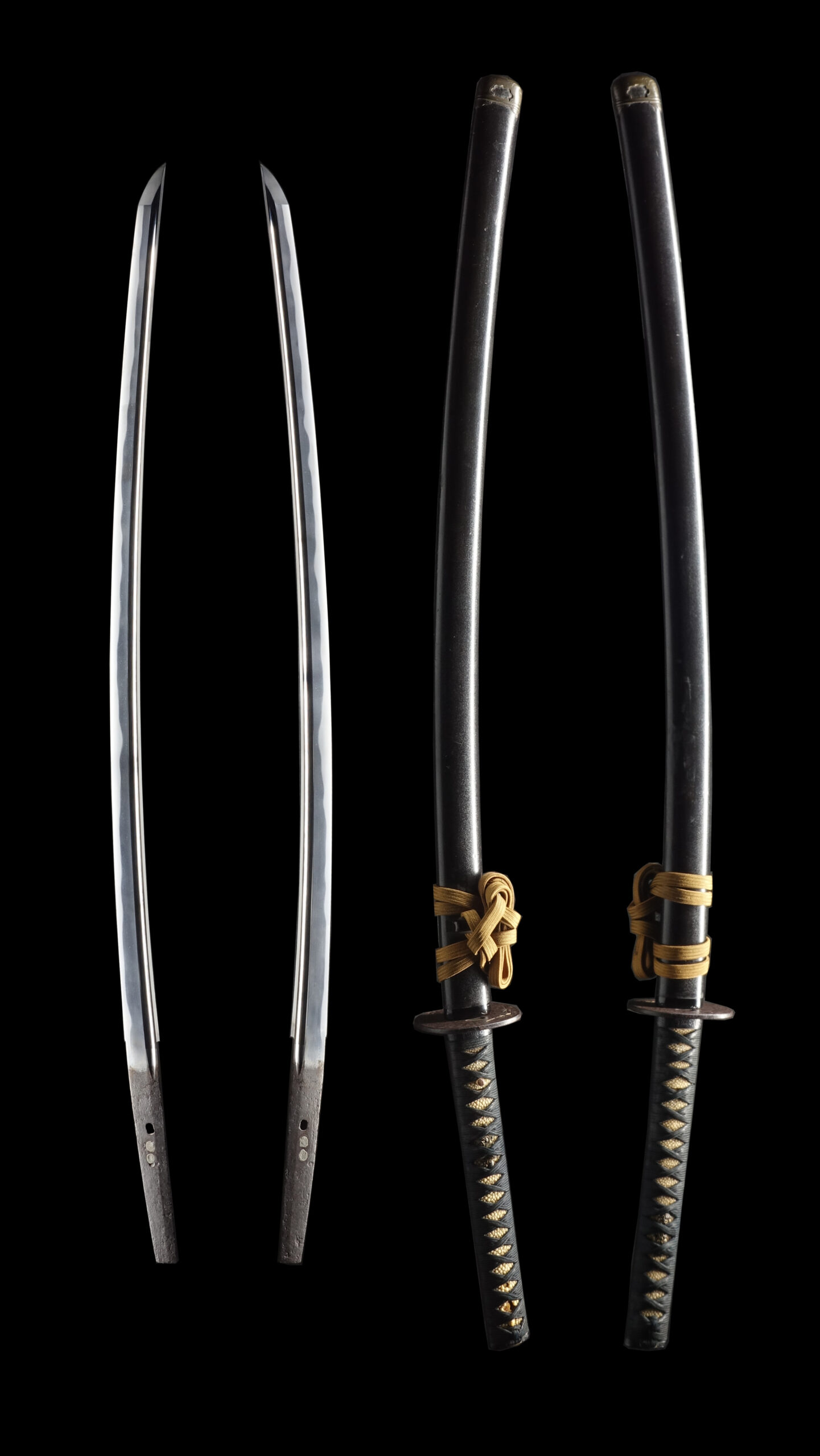
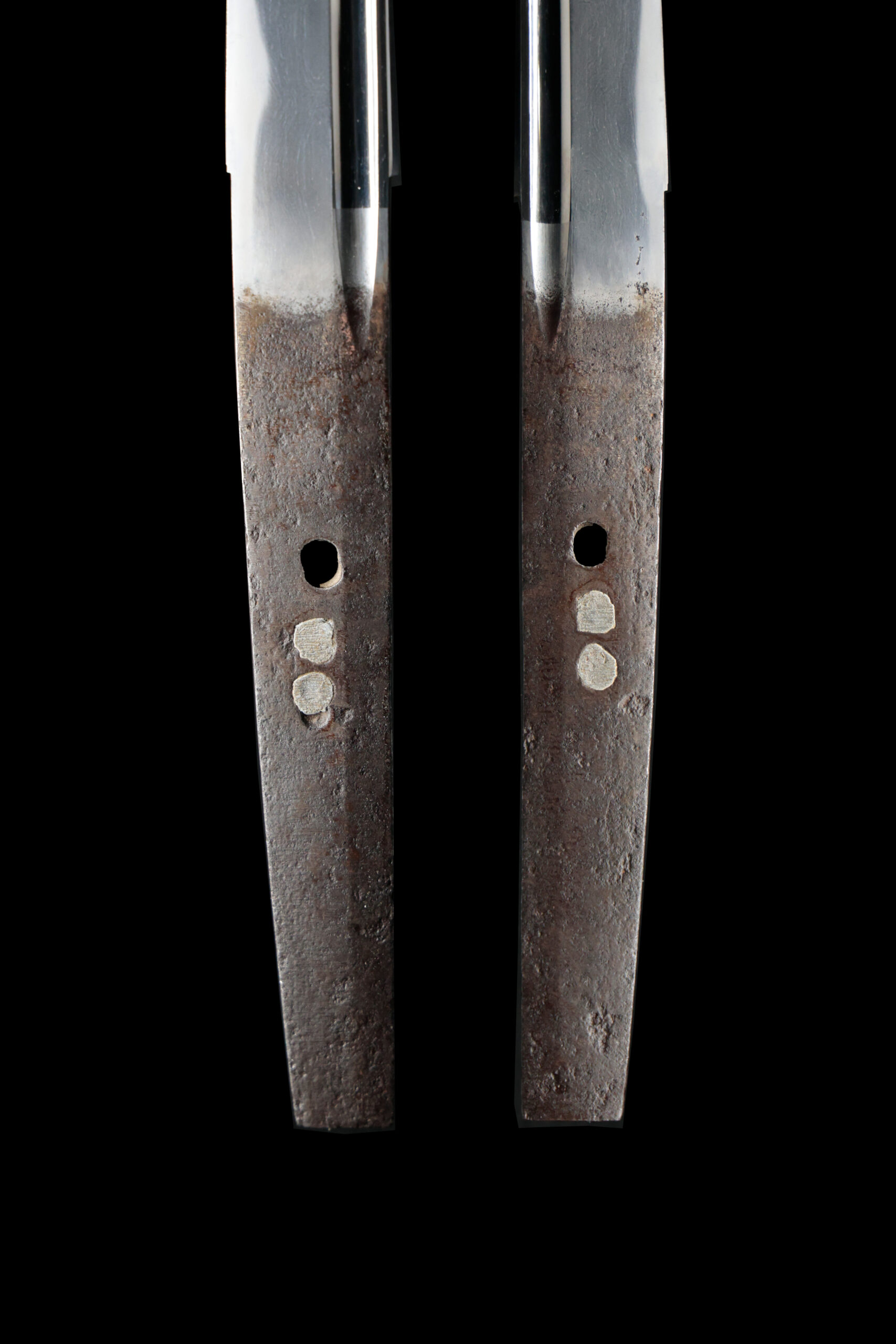
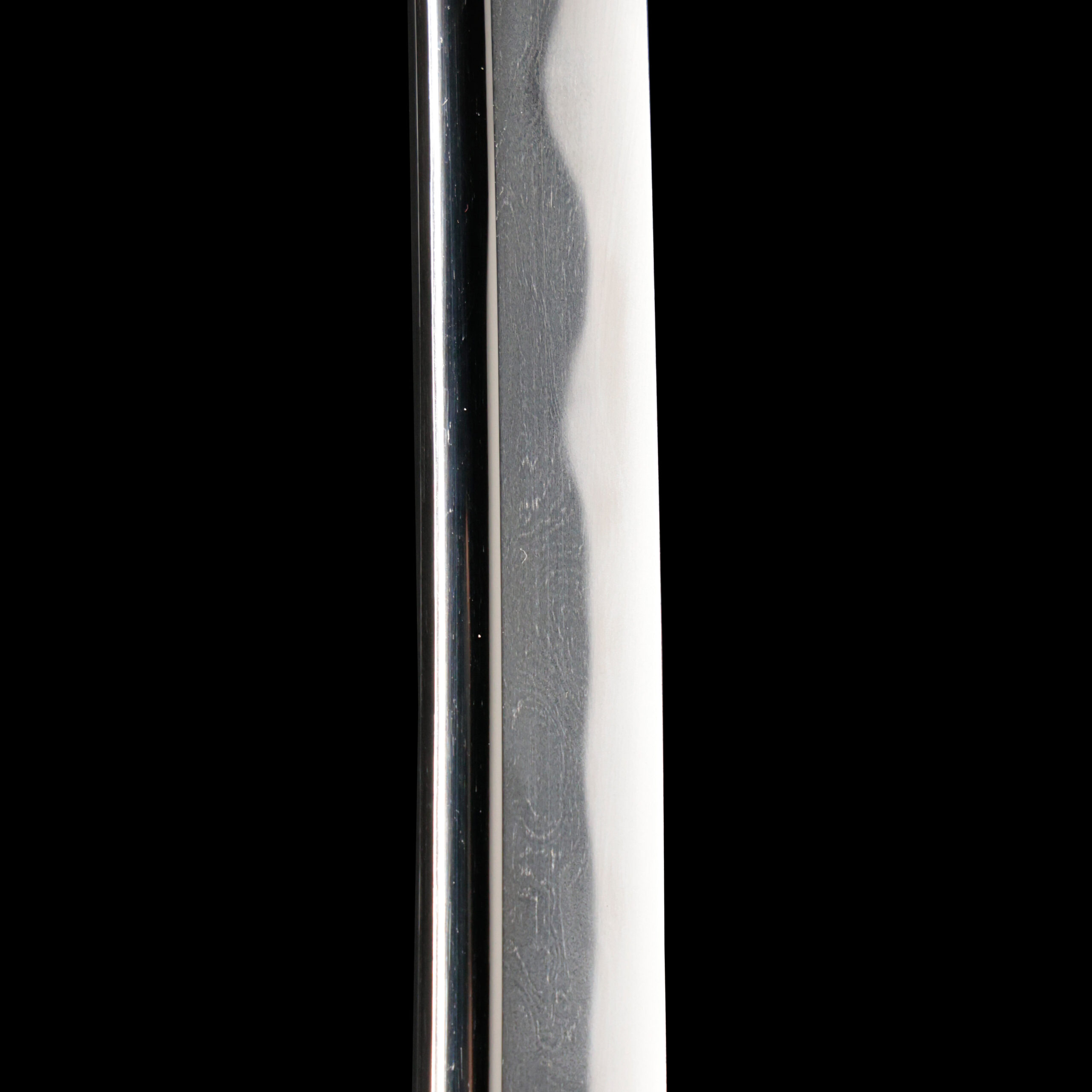
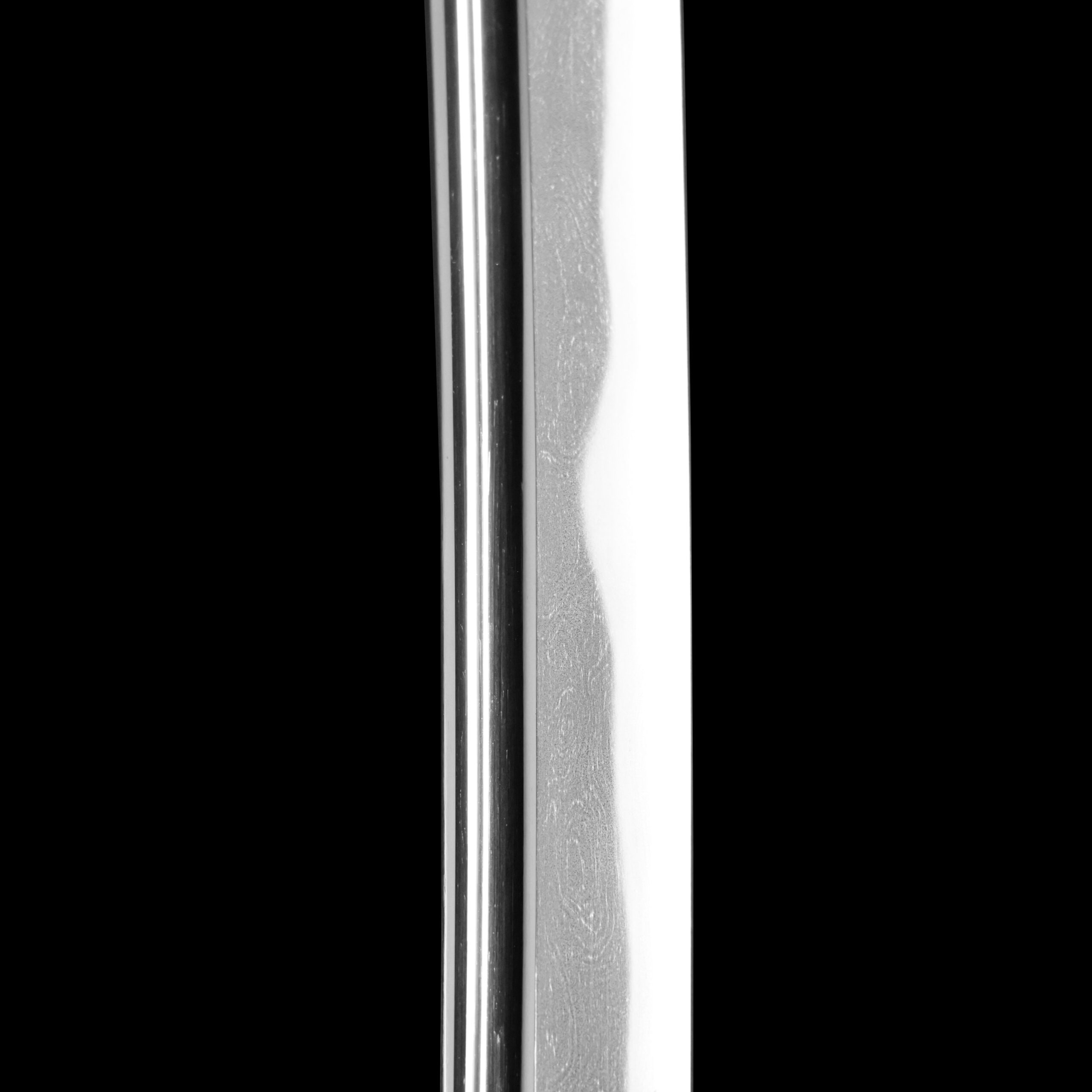
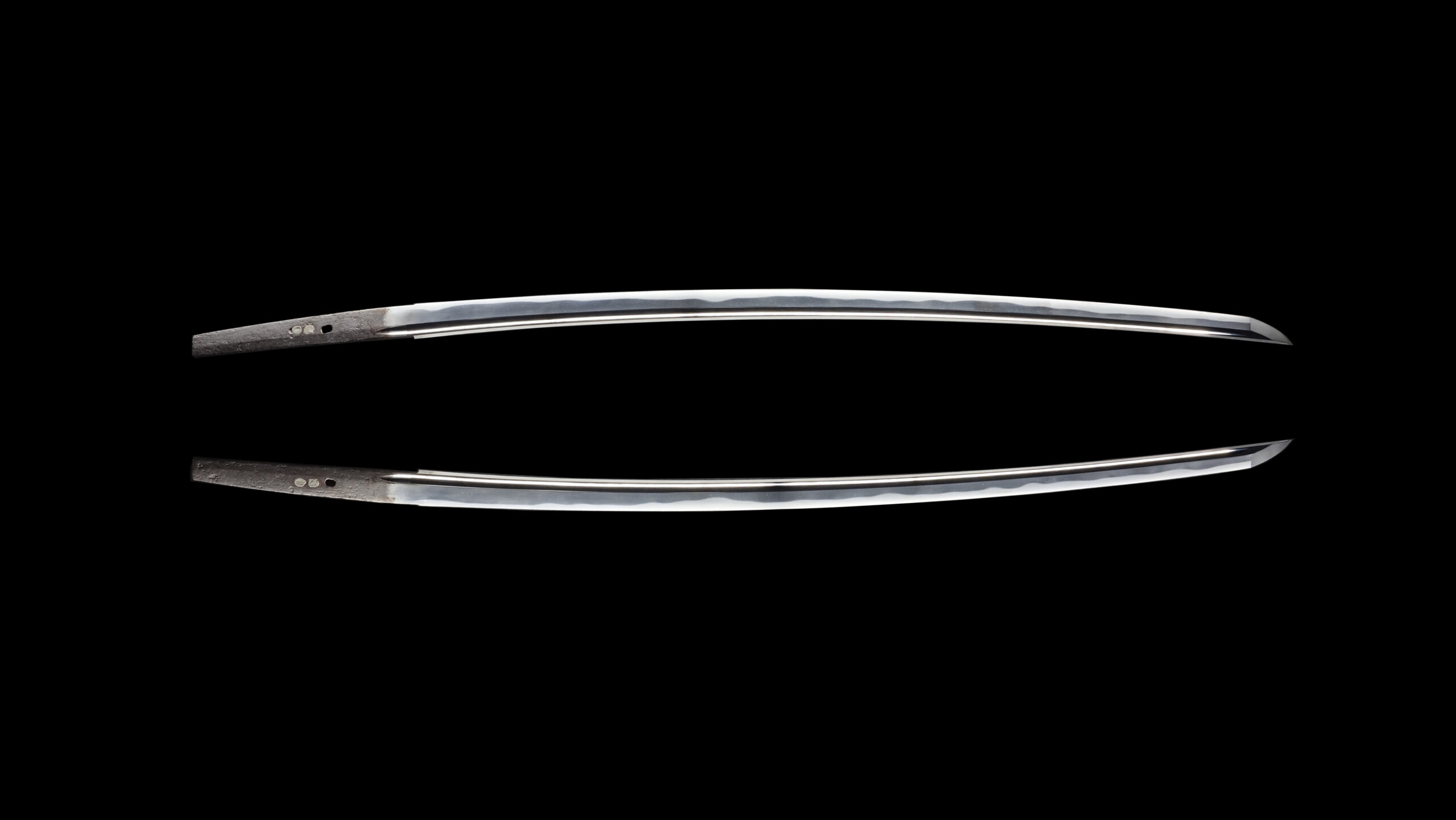
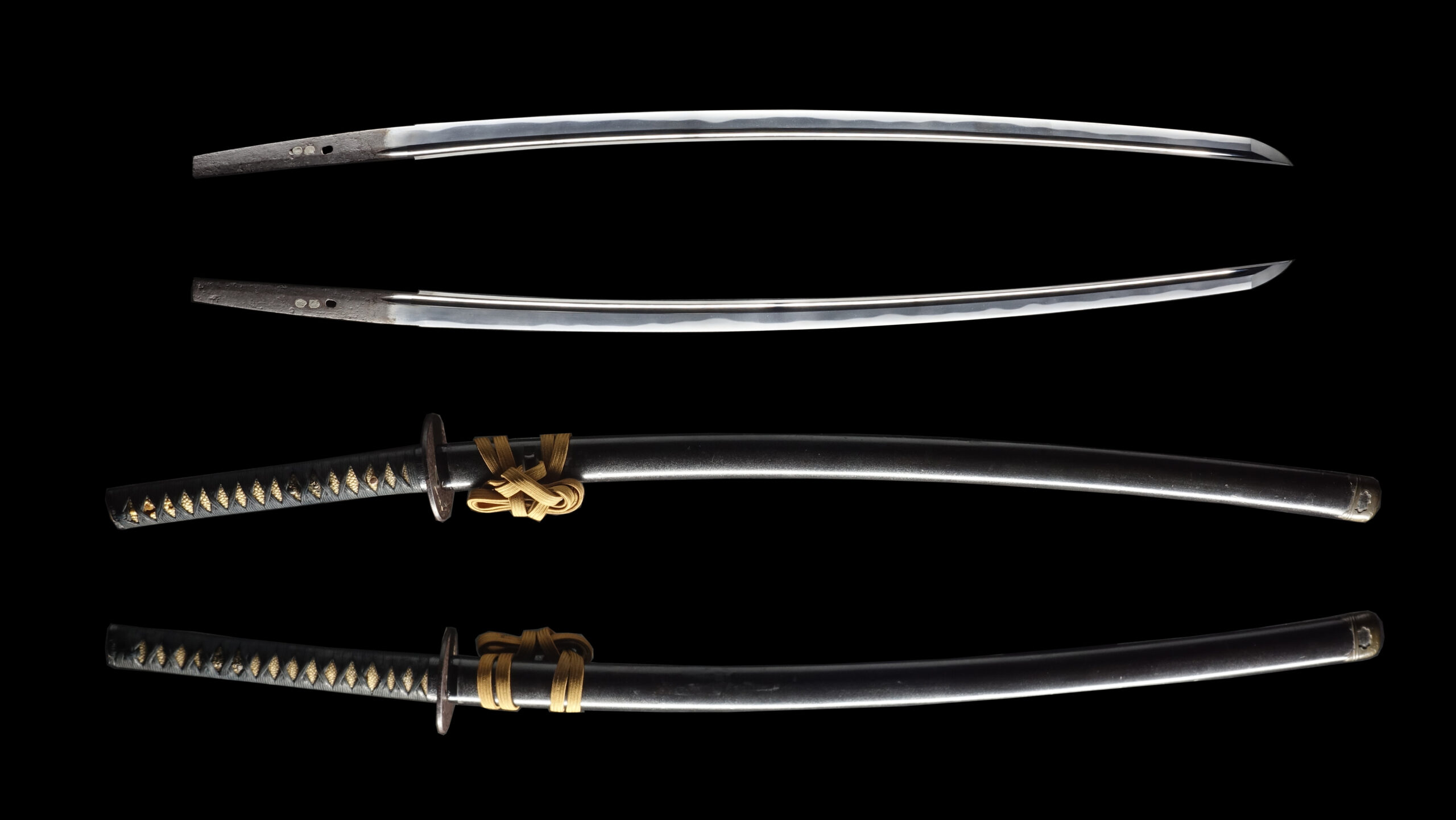
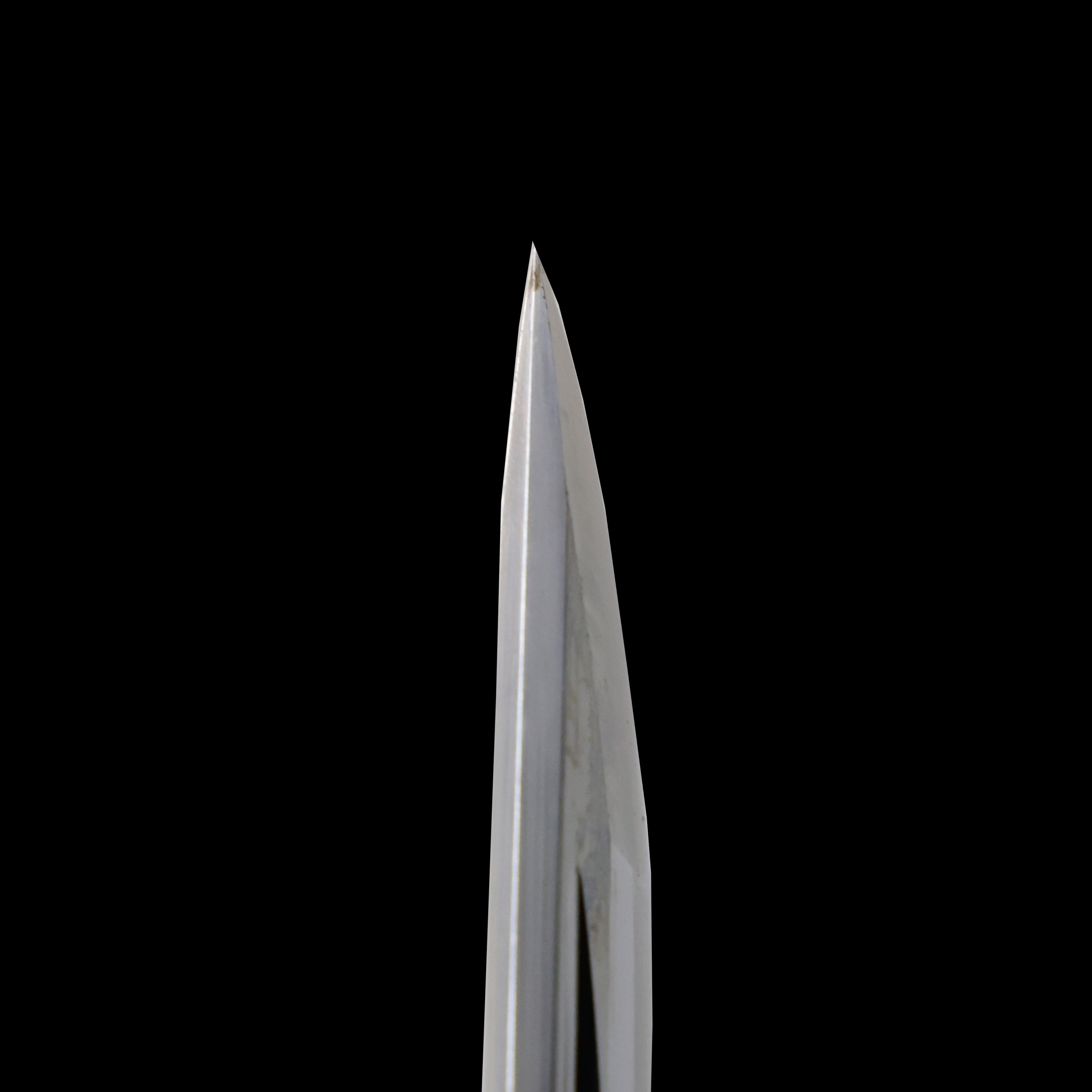
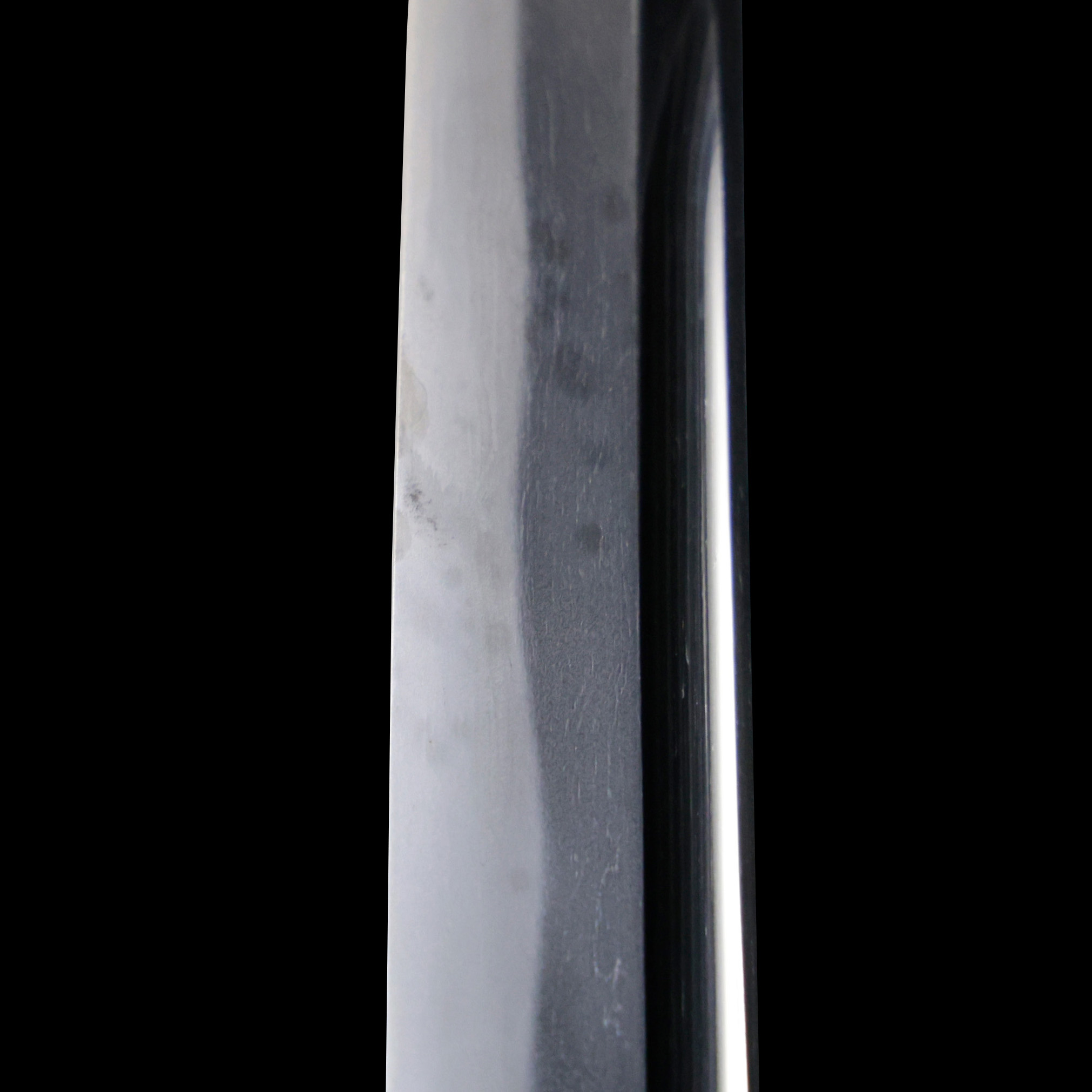
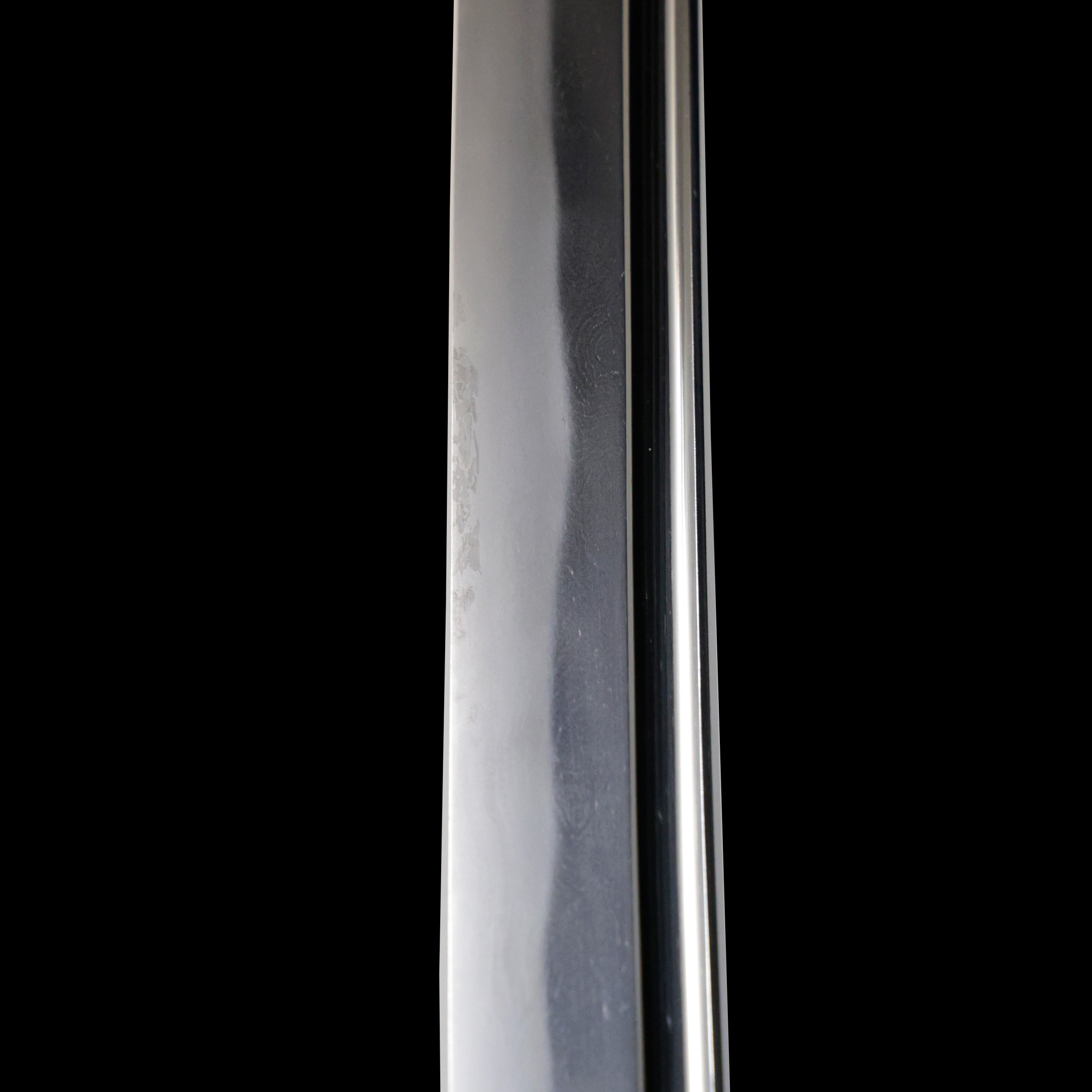
Around 1800 Suishinshi Masahide argued in his writings that the craft must return to the old masters’ methods: the fukkotō revival. His greatest successor Naotane worked convincingly in Bizen and Sōshū manners that had been dead for centuries.
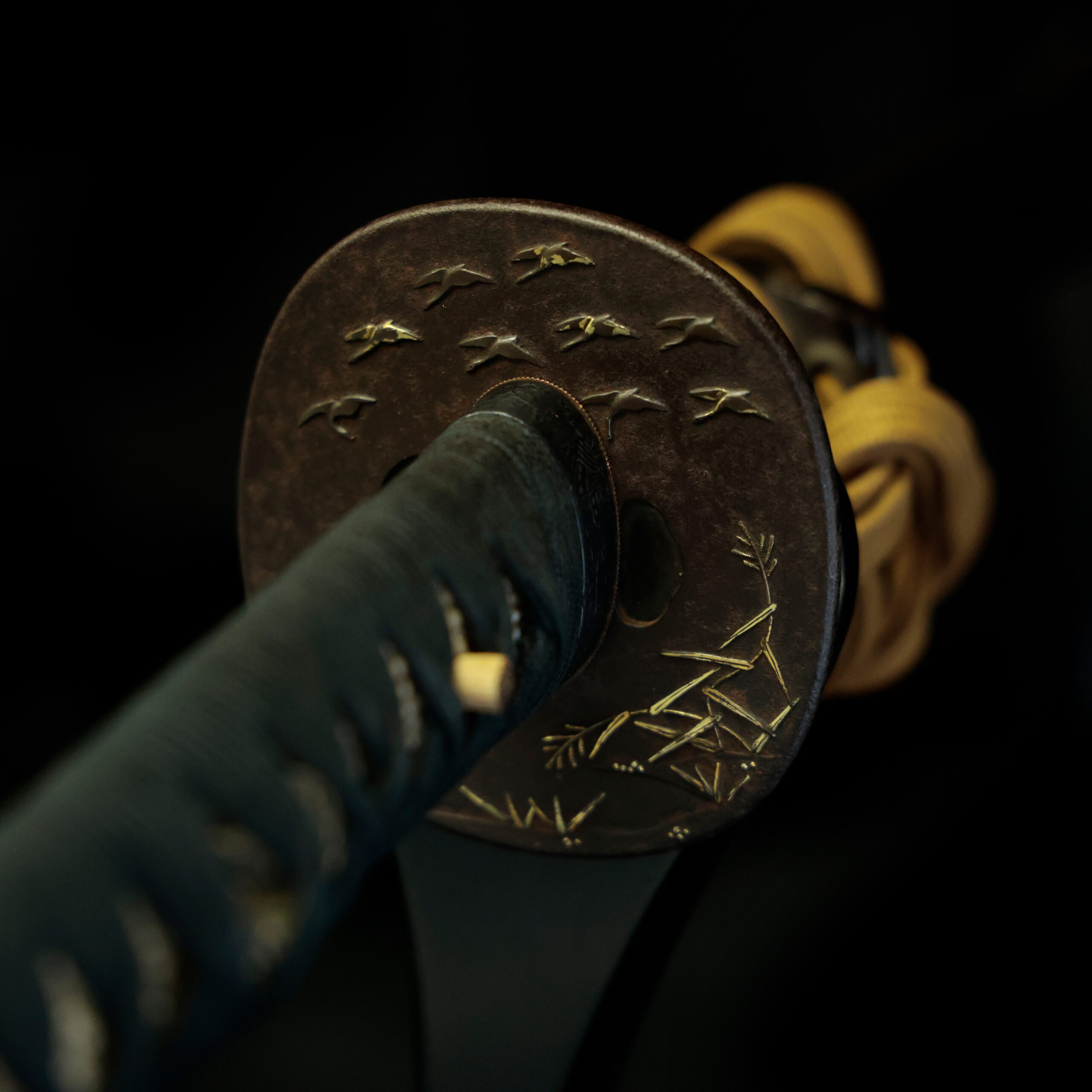
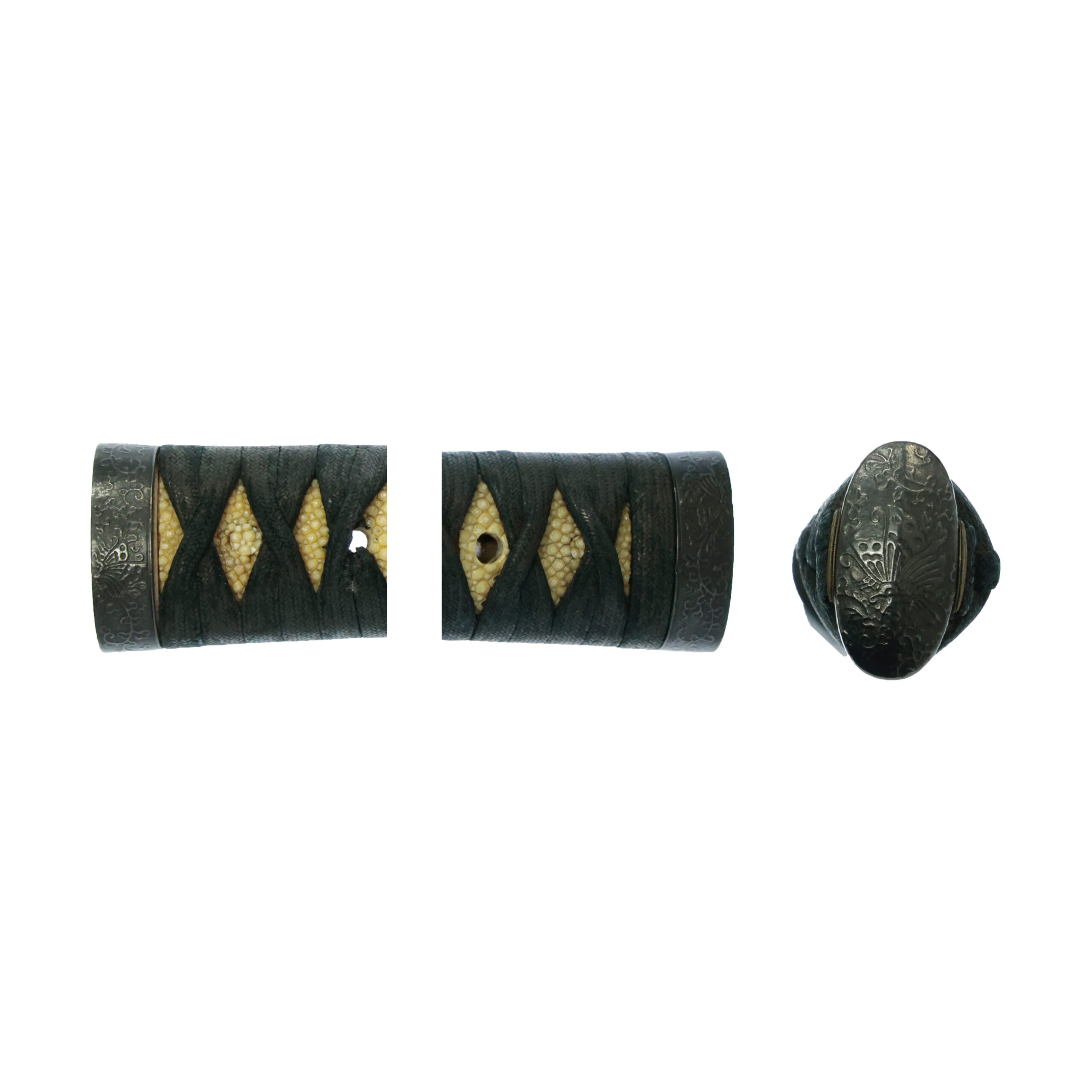
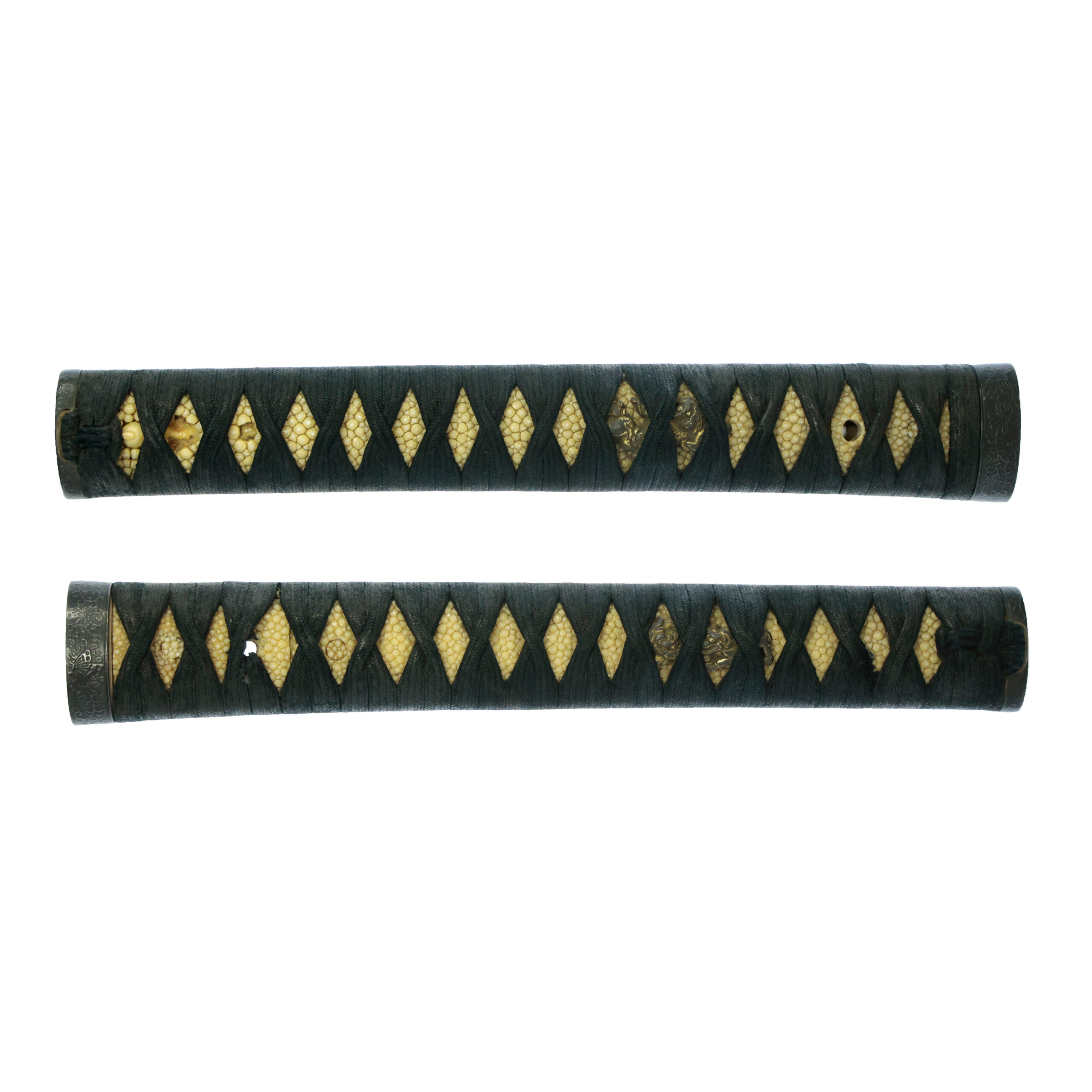
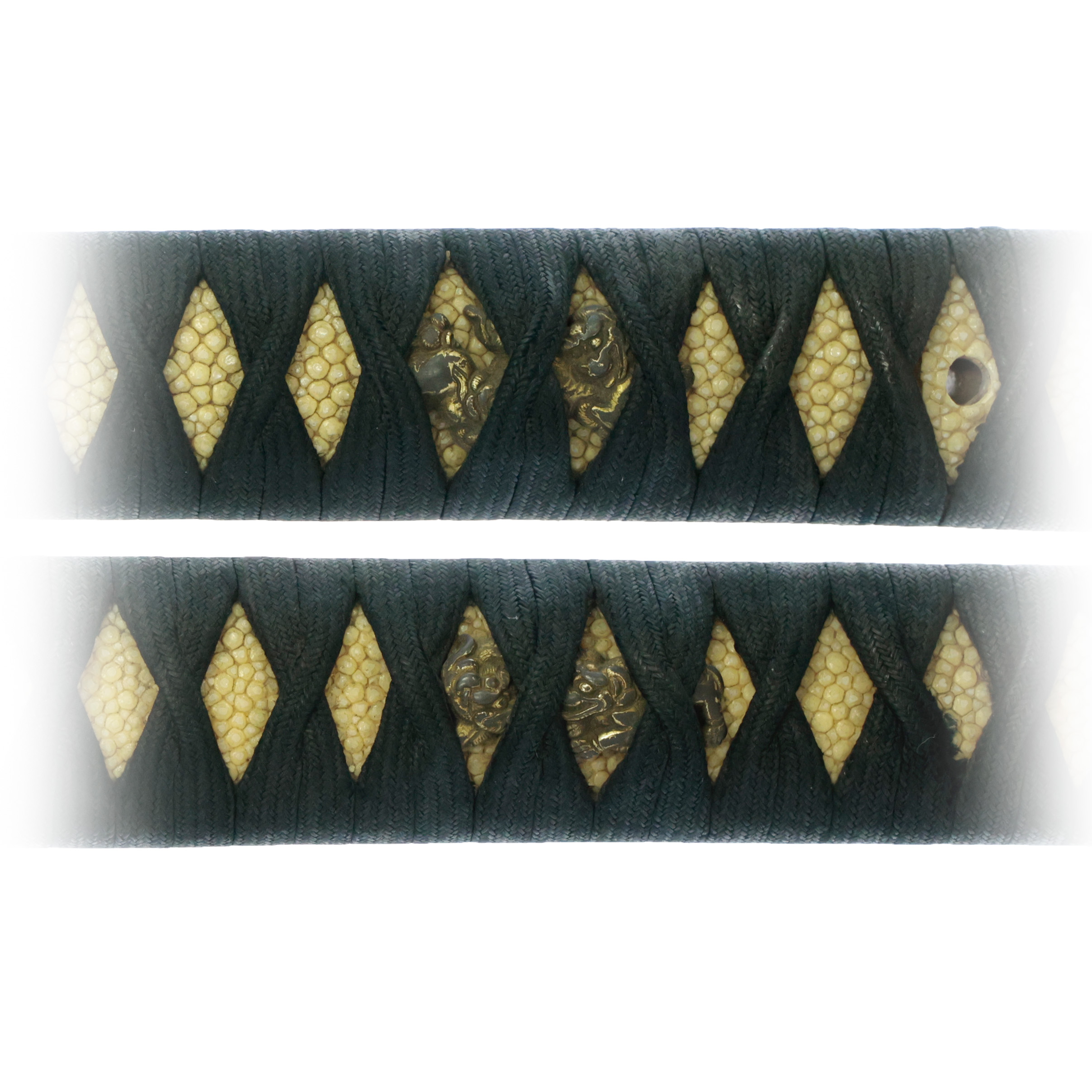
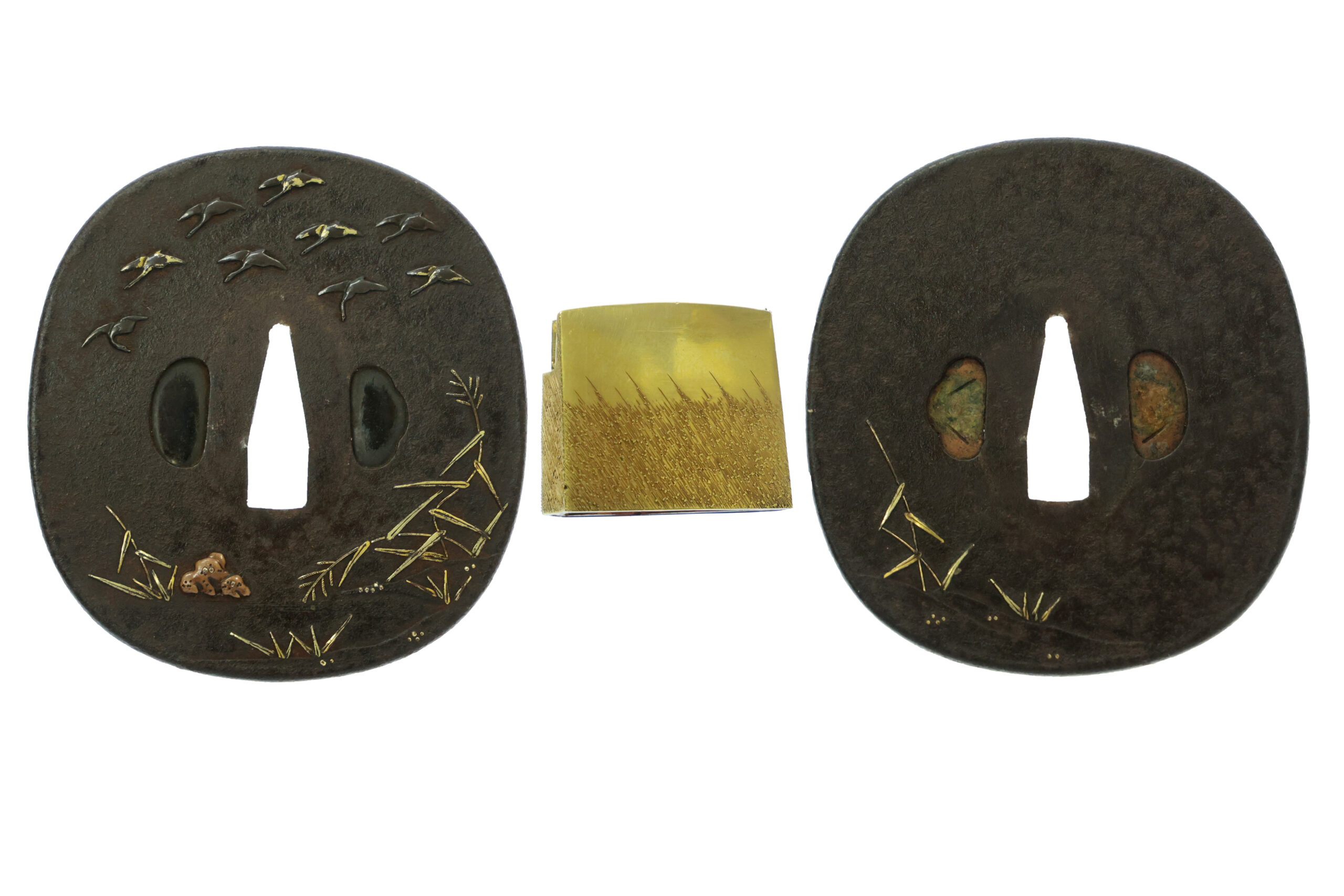
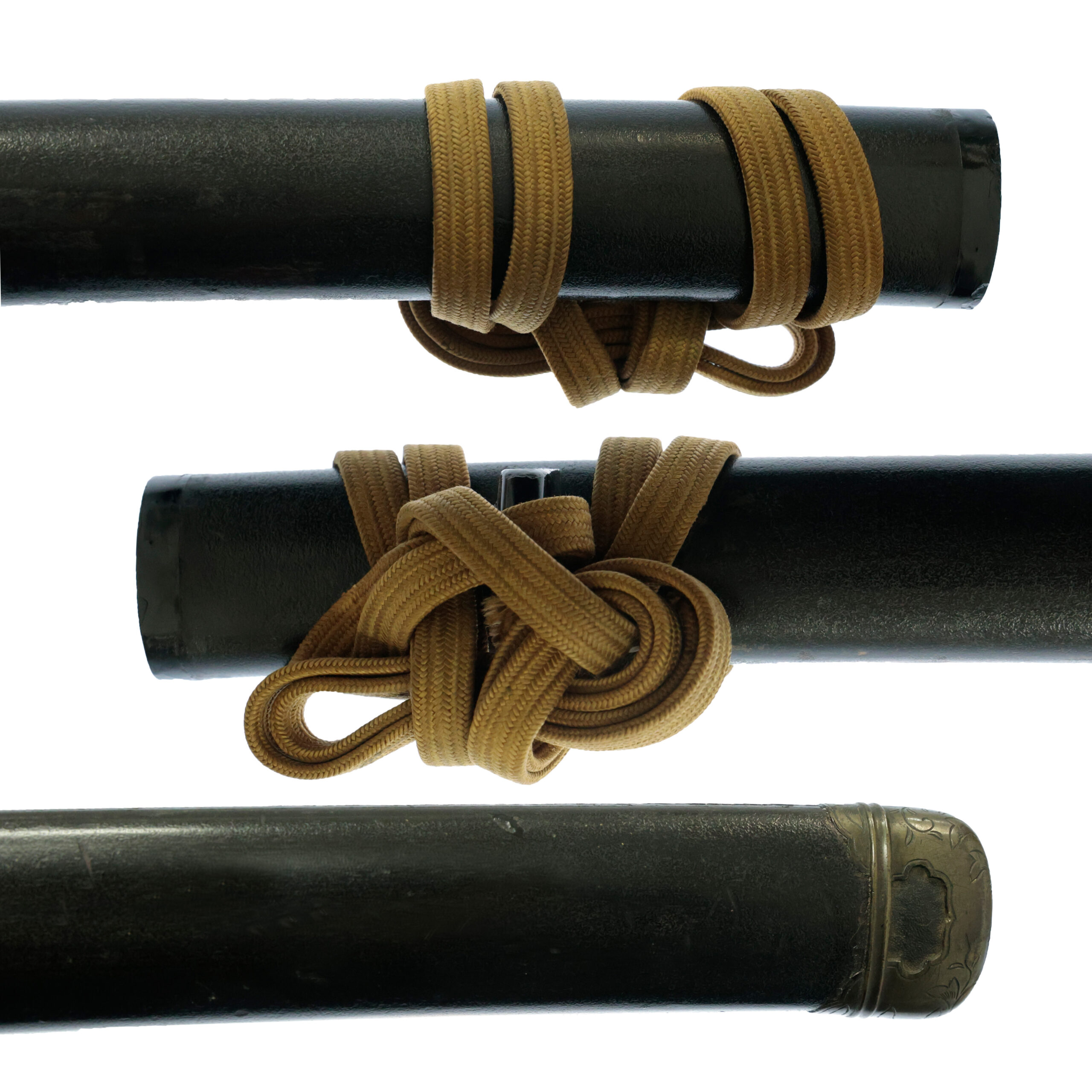
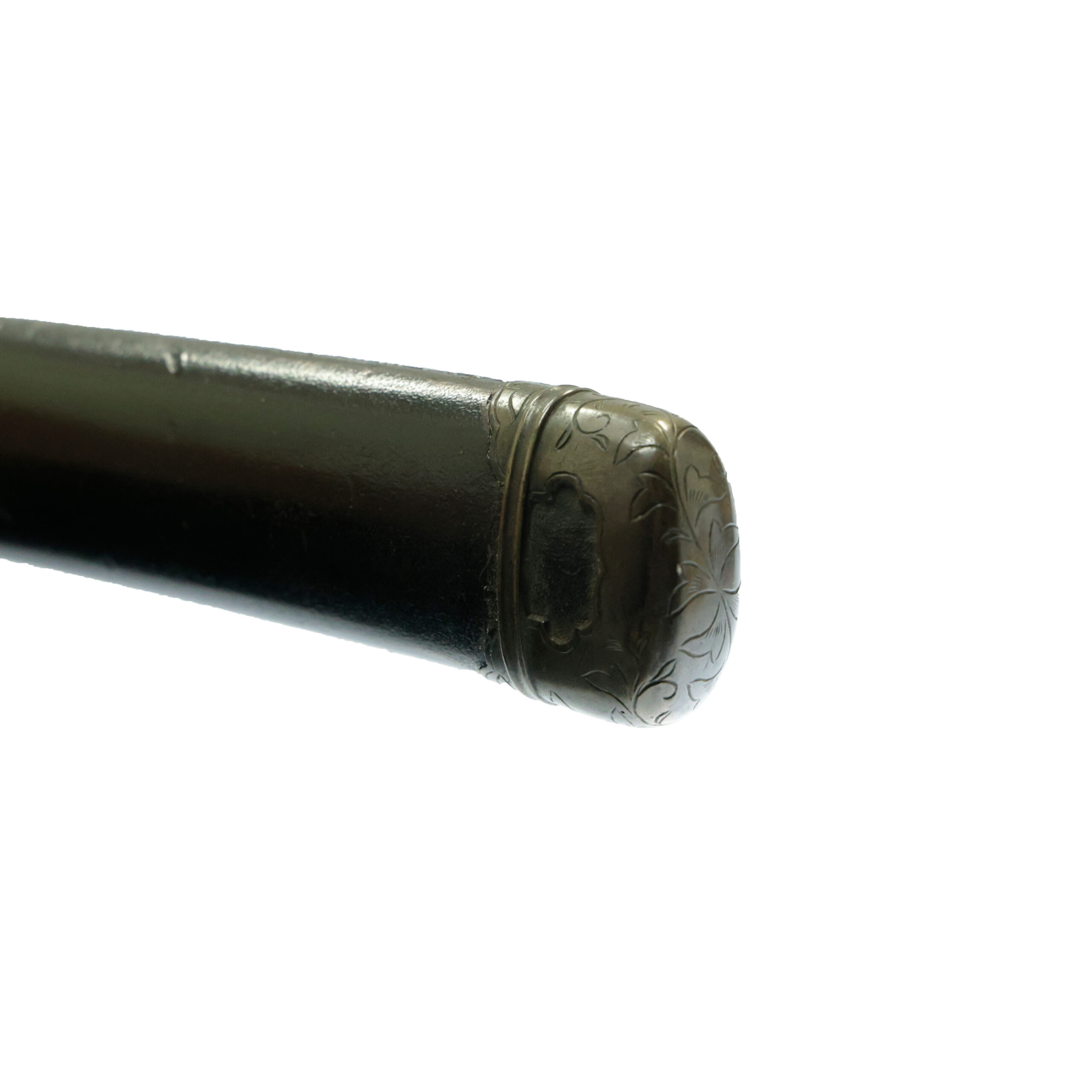
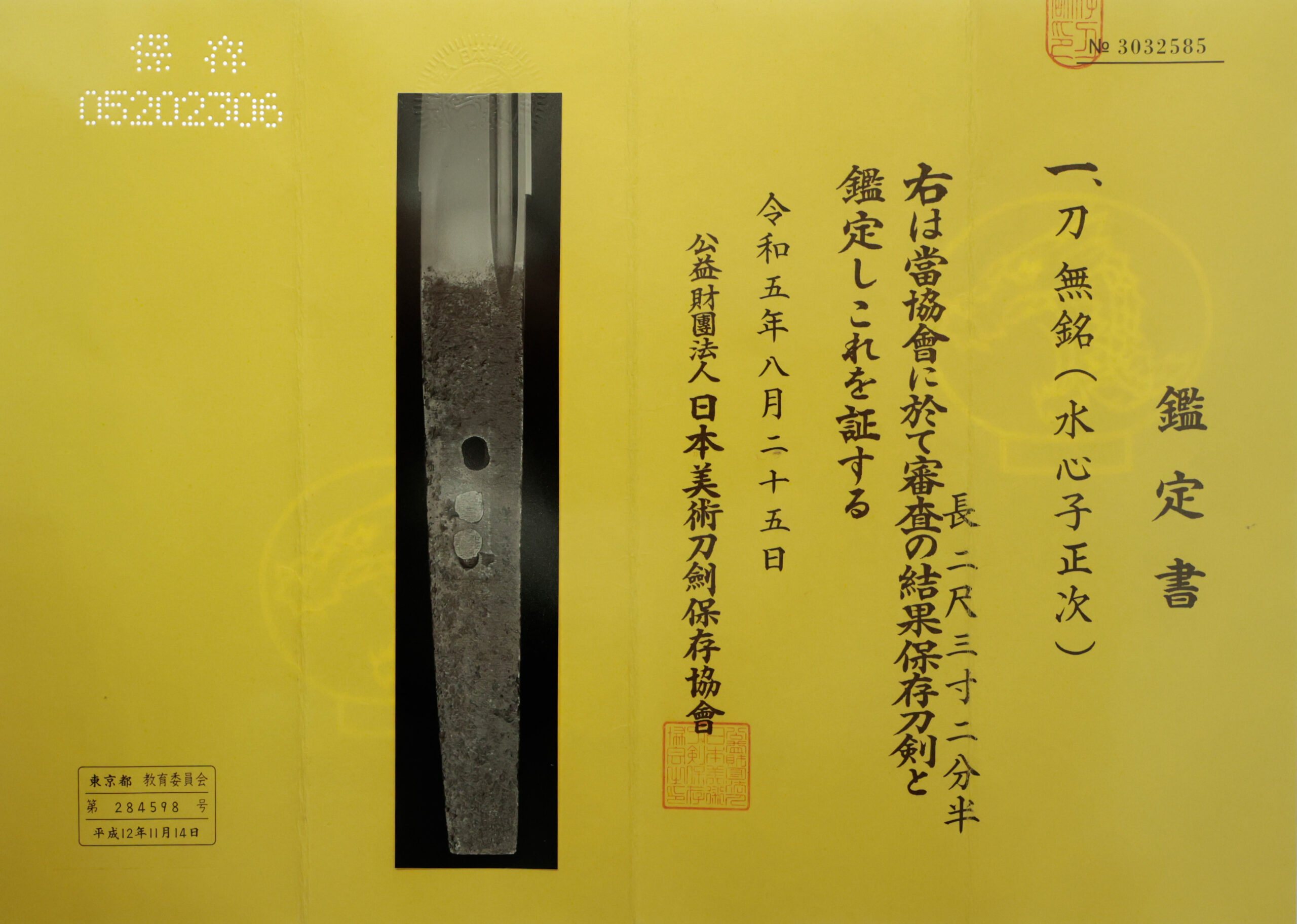
This blade is attributed to Suishinshi Masatsugu (水心子正次), who was active during the late Edo period (the early – mid 19th century). Masatsugu was born in the 1oth year of the Bunka era (1813) and his real name was Kawabe Hokushi. It is said that he was adopted by Suishinshi Masahide (水心子正秀) for his excellent skills as a swordsmith, and was trained by Takei Naotane (大慶直胤), an apprentice of Suishinshi Masahide: both Suishinshi Masahide and Taikei Naotane are known as the three most renowned swordsmiths during the late Edo period (the other is Minamoto Kiyomaro). Then, Masatsugu became Naotane’s son-in-law later, and took over the main family of Suishinshi. Also, he forged blades as an Okakaekaji, a swordsmith who exclusively forged swords for a specific domain or clan, to serve the Akimoto family like Masahide and Naotane. Suishinshi Masahide was born in the third year of the Kan-En era (1750) in the Yonezawa domain in Dewa province (Today’s Yamagata/Akita prefecture). His birth name was Suzuki Sanjiro (鈴木三治郎). When he was about 18 years old, he started learning blacksmithing techniques from a local blacksmith named Yoshizawa Sanjiro, who specialized in producing farming tools in Dewa Koku. Later on, Masahide decided to become a swordsmith. In 1771, when he was 22 years old, he moved to Musashi Koku (Today’s Tokyo) to become an apprentice of Miyagawa Yoshihide, also known as Shitahara Yoshihide. Masahide learned sword-forging techniques under this master, who belonged to Shitahara School, one of the most prestigious schools in this area. After finishing his apprenticeship, he returned to Dewa Koku. His craftsmanship was widely recognized in the province. In 1774, Masahide started to serve Akimoto Tsunetomo, the head of the domain, because of his superb sword-forging techniques. It is said that he began to use Suishinshi as his title during this time and changed his maker’s name to Kawabe Gihachiro Masahide. In 1781, he moved to the Edo City, settling in a house owned by the Akimoto clan. He was always curious to know various sword-forging techniques. He started to search how Japanese swords were made during the late Heian-Azuchi Momoyama period (late 12th-late 16th century: KOTO era), especially the ones made with SOSHU DEN and BIZEN DEN traditions. He often visited the offsprings of renowned swordsmiths in the old days to know the secret of old sword-forging techniques. One of the most notable episodes is when he visited Yamamura Tsunahiro, an offspring of Masamune, one of the historical figures in Japanese sword forging. And he improved his craftsmanship there as well. Back in the day, the mainstream Japanese swords were less curved and muscular. However, he started to feel something was missing in those blades made in his days by exploring ancient Japanese swords. Therefore, he announced Token Fukko Ron (刀剣復古論), where swordsmiths need to go back to the old way the blades were forged. This theory resonated with many sword makers back then. Eventually, this theory became mainstream. While he published about ten books on how to forge Japanese swords and other related topics, he was also passionate about training his apprentices. Many apprentices who had learned sword-forging techniques from him later became famous swordsmiths, such as Chounsai Tsunatoshi and Takei Naotane. Considering this fact, he played an essential role in the late Edo period. He is listed as Edo Sansaku (One of the three most prestigious swordsmiths). The other two are Taikei Naotane (大慶直胤) and Minamoto Kiyomaro (源清麿). Taikei Natane was born in the seventh year of the Anei era (1778) into a family that made sickles, a farming tool, for living in Dewa Koku (Today’s Yamagata prefecture). From a younger age, he got interested in becoming a swordsmith while learning blacksmithing skills. During the late Kansei era (1789-1801), he left his hometown and moved to Edo City to become an apprentice for Suishinshi Masahide, as mentioned above. He learned excellent craftsmanship from Masahide in a house owned by Akimoto family, which was the head of Dewa Koku. It is said that Naotane became an independent swordsmith in 1801. He started to serve Akimoto family in 1812 through the introduction from Suishinshi Masahide. And he received the honorable official title of Chikuzen Daijo (筑前大掾) in 1822. In 1848, he visited Kyoto and forged a Tachi blade for Takatsuka family, one of the imperial lineage, and received another title called Minosuke (美濃介). The more Naotane gained fame, the more often he was invited by a feudal lord or high-class Samurai in other provinces to forge blades. He created swords nationwide in his late career. The works of Naotane have been highly appreciated because he played an essential role in Japanese sword history at the end of the Edo period. It is said that he mastered all the five Japanese sword traditions called Gokaten (五箇伝). They are Bizen DEN, Mino Den, Soshu Den, Yamashiro Den and Yamato Den. It is said that he was especially excellent at Bizen and Soshu Den. Masatsugu died in the first year of the Manen era (1860), when he was 47, three years after his master Takei Naotane died in the fourth year of the Ansei era (1857). Even though his active period was short and his remaining works are considered few, he was said to be highly skilled and created some masterpieces, inheriting his master’s style well. This blade is appraised as a Hozon Touken (保存刀剣) issued by NBTHK (Nihon Bijutsu Touken Hozon Kyokai: 日本美術刀剣保存協会). *Please keep in mind that there are a few visible Kitae Kizu on the blade. Fuchi-Kashira Butterflies (蝶 ,Chou) are depicted on this Fuchi Kashira. People preferred a butterfly pattern due to its growth process, beauty, and auspiciousness among the various animal patterns. A larva becomes a chrysalis, and it grows up into a butterfly. Since this insect changes its looks, it symbolizes being reborn; therefore, Samurai loved this design. In this way, butterflies are seen as symbols of human life, death, and resurrection and are said to house the souls of the dead. Also, the arabesque (唐草, Karakusa) pattern is depicted. The Karakusa pattern is a design in which stems and leaves of vines are twined and make curves. Since ivy has a strong vitality and grows up without interruption, people regarded this design as a symbol of prosperity and longevity. Vine is called Tsuru (蔓) in Japanese, and it has another pronunciation; “Man.” There is a word 万 (it is also read Man), which means ten thousand. In the Karakusa pattern, leaves and vines are connected like Obi (帯, belt). The word “帯” can also be read “Tai.” Due to its pronunciation, the term “代 (Tai)” is associated. From this word-association game, an idiom 万代 is associated, and it means a thousand generations. In other words, we could imagine that people used this design wishing prosperity and longevity for their clans for a long time. Tsuka and Menuki We assume the motif of this Menuki is the Karajishi (唐獅子). The Shishi (獅子) means a lion in Japanese, and the Karajishi is a lion brought from the continent to Japan in the Toh period (唐, Tang dynasty, 618-907). The same as the Fuchi Kashira, this Menuki is also colored with shiny golden paint. It makes this work look gorgeous and enhances the elegant impression of the entire handle part. The Karajishi typically has curly hair for its head, neck, body, and tail, as seen on this work. In Buddhism, the Karajishi is regarded as a symbol of wisdom, and Monju Bosatu (文殊菩薩, Manjushri Bodhisattva) rides lions. According to a theory, the Karajishi is the origin of Komainu (狛犬, stone guardian dogs that exorcize evil spirits). It shows this animal motif has been familiar to Japanese people since ancient times. Dragons and Karajishis, this handle part is decorated with such auspicious beast motifs. Please keep in mind that the Samehada (鮫肌, shark skin covering the handle) is partly missing. Tsuba and Habaki The theme of this Tsuba is the Kari yuki Monyou (雁行文様). You would find wild geese (雁, Kari) flying diagonally, and the plants similar to Ashi (葦, reed) growing near water. The wild goose is a migratory bird, arriving in Japan in autumn to overwinter and returning to the north in the spring. Therefore, it represents autumn. Also, it is said that in the Manyoshu (万葉集), the oldest surviving anthology of Japanese poetry compiled from the late 7th century to the late 8th century, this kind of autumn scene depicting geese and a waterside with reeds is included. Also, because of its unique call, Kari is known as “a bird that carries good luck and good news,” meaning that it carries a message with its ancestors and brings good news. This bird was incorporated into designs for sword mountings and family crests. We would say this bird motif has been familiar to Japanese people since ancient times. Saya Ichou (銀杏 ,Ginkgo Biloba) pattern is designed on this Saya. This plant contains lots of water; therefore, it is fire-resistant. It does not quickly die even if flames burn it. Because of its strong vitality and longevity, the Ichou pattern has been considered a good-luck motif. In Japan, Ichou trees can often be found in shrines. People worship it as the Goshinboku (ご神木, tree of worship) and treat it respectfully. Also, many families use this plant pattern for their family crests. In Japanese, there is another word that has the same pronunciation as the Ichou (銀杏). It is written as “異朝” and means a foreign country. Based on this common pronunciation, people thought the Ichou (銀杏) pattern showed the joy of welcoming honored guests from overseas. Authentication Paper They authenticated the blade on August 25th in the 5th year of Reiwa (2023). They appraised it as Hozon Touken, the blade worth preserving for Japanese society.
Offered by Samurai Museum
This piece has sold
Get an email when a new Suishinshi Masatsugu piece hits the market.


Suishinshi Masahide line (Shinshinto), Edo · Musashi · around 1844-1848
Fujishiro Jo saku · Tōken Taikan top 60%
3 pieces on the market now
A katana dated Tenpō 12, mid-autumn of 1841 and signed Suishinshi Masatsugu carries, on the reverse of its tang, the name of the man who commissioned it, and the published commentary on it sets out the whole of what is known of the smith. Masatsugu, also called Kawabe Kitaji, was a late-Edo shinshintō maker of Edo who took the art-name Suishinshi and so, in substance, succeeded as the third head of the Kawabe house. The line was that of Suishinshi Masahide, the father of shinshintō, but Masatsugu's own hand came by a more particular descent: he trained under Taikei Naotane, Masahide's foremost pupil, and is recorded to have become Naotane's son-in-law, with a further tradition that he was a son of the second-generation Masahide. He lived in Okachimachi, Shitaya, pursued a life given to swordmaking, and is said to have died on the eleventh day of the third month of Man'en 1, 1860. Of his manner the published sources are emphatic and exact, holding that down even to the cut of his signature his workmanship is wholly Naotane's rather than the broader Suishinshi style[[c:1]], and that he excelled in the two traditions Naotane himself worked, Sōshū-den and Bizen-den[[c:2]].
His representative manner is the Sōshū-den one, and three of his Jūyō katana are read by the judges as exemplars of it. Over a tightly forged ko-itame the hamon runs as a ko-notare broken by gunome and small gunome with chōji-like heads mixed in, the nioi deep and the nie thick, with patches of coarse nie intermingled. Along the habuchi the line frays into hotsure, sunagashi and nie-suji stream vigorously, a nijūba effect appears, kinsuji enter and slight tobiyaki detaches from the temper. These activities are not occasional but constant, running through every blade in the group, so that the swept boshi, turning round with frequent hakikake, and the kinsuji and sunagashi crossing the ji and ha are the connective tissue of his work rather than its highlights. The temper sits on a build that is large and robust, the mihaba wide, the kasane thick, the sori rather deep and the point carried out to an extended chū-kissaki, in one late piece to a full ō-kissaki. The published sources call the best of these large works free of any breakdown and outstanding among his oeuvre[[c:3]], a katana in which his true strengths are fully brought to bear[[c:4]].
The jigane is a closely packed ko-itame, well forged, on one blade running into a moist, clinging texture with chikei-like shining lines entering frequently, on another mixing ō-mokume into the lower body, and on the latest mixing in somewhat larger mokume throughout. Over it the ji-nie lies thick and fine chikei enter, the steel on his clearest pieces notably bright, so that both ji and ha shine with a clear quality. In one work of Tenpō 8 the nioiguchi takes on a subdued, sinking character, but elsewhere the keynote is brightness; on the Tenpō 12 katana now in an American collection the published sources single out the way both ji and ha are richly covered in nie and brilliantly clear, calling it a piece that recalls the manner of his teacher Naotane[[c:5]]. The Sōshū-den hand he favored is therefore read first in this combination of a thick, bright nie ji and a nie-worked midareba, the activity gathered as much in the ji as along the edge.
The second of his two traditions, the Bizen-den, leads instead with chōji. On the katana in the American collection the hamon is chōji mixed with gunome, the ashi long and entering well, the nioi deep and the nie thick, with small tobiyaki mingling in the yakigashira and a nioiguchi that runs bright and clear; the forging beneath keeps the same tightly packed ko-itame with its ji-nie and chikei. The latest of the dated katana, of Tenpō 6, shows how close the two traditions stood in his hand: over a forging that mixes mokume recalling Naotane's whirlpool-like uzumaki-hada[[c:6]] runs a notare-toned midareba centered on gunome with chōji and pointed elements, frequent tobiyaki, long ashi and the nie thickly adhering. That blade carries on the omote, set toward the mune, the divine title Hachiman Daijin, a votive inscription, while the date and the smith's name with kaō are cut at the center of the reverse. Both registers, the judges insist, descend alike from Naotane, and the difference between them is the difference between the two manners Naotane himself taught rather than two phases of Masatsugu's career.
What sets his work apart is therefore best read by his own grounded traits and by the closeness of his hand to his teacher's. The published sources describe his domain as one inherited whole from Naotane, in workmanship and in the very chisel-cut of his characters, so that the heavy-in-hand, grand and powerful taihai of his katana, thickly covered in nie and bright[[c:7]], reads as the faithful continuation of his master's art rather than as an independent invention. His signature is itself part of the kantei: a bold, slightly thick-chiseled five-character mei with kaō on the omote of an ubu tang finished with large ō-sujikai kesshō yasurime, the date and frequently a commissioner's name added on the reverse, the cut following Naotane in every particular. Against the broader Suishinshi school, which after Masahide's Bizen-den revival ran in many directions, Masatsugu's distinction is precisely his fidelity to the one teacher whose two traditions he reproduced with such evenness of quality.
Masatsugu's record on the books is modest in extent and consistent in level. Four of his katana have passed Jūyō Tōken, all of them signed, dated work spanning Tenpō 6 to Tenpō 12, and the reference texts rate him Jō saku in skill, with a Tokō Taikan valuation in the middle range for a shinshintō smith. None of his blades carries a recorded provenance of named houses, and his designations stay at the Jūyō tier; his is a body of designated Jūyō katana rather than of museum-held heritage, and the holders entered on his blades are private collectors in Tochigi, Tokyo and the United States. For a collector this places him within reach in a way the great Kamakura names are not: a signed, dated Masatsugu katana in full Sōshū-den, large and bright and unmistakably of Naotane's school, is the kind of shinshintō work that comes to the serious market from time to time rather than once in a generation, and one of his four Jūyō blades appearing is a real but not unattainable opportunity. He is best had as what the published sources make him, a faithful and skilled inheritor of Taikei Naotane in whom the Sōshū-den of the shinshintō revival is carried at full strength.
Where Masatsugu stands among comparable artisans: across all of nihontō, and within tradition, era, and period. The tiers (Foremost · Leading · Major · Notable) weigh official designations from the NBTHK and Japan's Agency for Cultural Affairs, together with historical honors of lasting repute such as the Sansaku and Meibutsu-chō.
Select a lens to see how it's measured.
Shinshinto · Musashi
70 pieces on the market now
At Hamachō in Edo, in the closing decades of the eighteenth century and the opening ones of the nineteenth, Suishinshi Masahide[[c:1]] gathered the school that would turn Japanese swordmaking back toward its medieval models. Born Kawabe Gihachirō at Akayu in Dewa in 1750, signing first as Suzuki Takahide and then Eikoku, he studied under the Shitahara smith Yoshihide of Musashi, took the name Masahide in An'ei 3, and served the Akimoto house of Yamagata before settling in Edo, where he worked for nearly fifty years. He is the founding figure of the shinshintō and the theorist of the fukko-tō (revival-sword) doctrine, the argument that the sword ought to return to its Kamakura forms. Around that teaching he drew a large body of pupils, among them Taikei Naotane, who would give the revival its fullest practical form, the future second Masayoshi (Hosokawa Morihide), and a wider Edo and provincial following that carried the program into the Mito, Yonezawa, Tsuyama, and Tatebayashi domains. The shared vocabulary of the school is the deliberate reach back into the koto traditions, worked over a tightly forged, often muji-toned ko-itame with thick ji-nie. Masahide's own prime hand was the Ōsaka-utsushi, the surging tōran-midare of Tsuda Sukehiro opening from a long yakidashi and the broad suguha after Inoue Shinkai, betrayed on even his closest copies by a blackish, coarse nie that spills from the ha into the ji. Naotane gave the revival its Bizen and Sōshū faces: a reverse-leaning chōji-midare with angular kaku-gunome and saka-ashi, modeled on the late-Kamakura Osafune masters Kagemitsu and Kanemitsu and anchored by a consciously revived midare-utsuri that no ordinary shinshintō steel carries, set beside a Sōshū notare with its whorled uzumaki-hada and coarse, striped nie. The pupils divided this inheritance along their own lines. Jirōtarō Naokatsu, Naotane's adopted son, took a Bizen-den led by a kataochi-gunome from Kanemitsu with a pervasive saka-gakari slant and chōji- or midare-utsuri in the ji.
Suishinshi Masatsugu reproduced Naotane's two traditions, Sōshū and Bizen, down to the cut of his signature. Through Masayoshi the Bizen current passed to his heir Hosokawa Masamori of Tsuyama, whose chōji clusters mixed with gunome-chōji and togariba. The Osaka wave traveled separately into Mito through Naoe Sukemasa, who set a Shinkai-styled suguha and a Sukehiro tōran over a clear ko-itame, while Chōunsai Tsunatoshi of the Uesugi service carried a nioi-deki chōji mixed with gunome, suguha, and tōran-midare, often with carving by his own hand. To kantei the school is to weigh a tradition consciously copied against the period marks the copy cannot shed: the constant of the line is that the hamon is never the pure nioi-deki of old Bizen but carries nie throughout, a difference the NBTHK names outright as the divide between koto and shinshintō. The revived utsuri in Naotane and Naokatsu, the spilling nie in Masahide, the whorled uzumaki-hada shared across the line, and the broad, thick-kasane late-Edo sugata are the surest tells, narrowed further by the school's habit of full, dated signatures that make these smiths among the most exactly knowable of their age. Masahide stands at the head as the teacher and theorist, his finest work in his Ōsaka copies rather than the doctrine he proclaimed; Naotane stands ahead of him in execution, his Bizen-den held the finest among the shinshintō. Their pupils define the late-Edo Osafune and Sōshū revivals as practiced through Edo and the domains, with Naokatsu and Masatsugu read as the next hands after Naotane and Masayoshi. The provenance of the school runs through domain commission and bestowal (Mito blades forged at the Kōrakuen by lordly order, Tsuyama and Yonezawa fief work, Naotane's Sanada daishō and a tachi recorded in Honma's inventory of the Imperial collection) rather than ancient daimyō transmission, fitting for a movement that, within a single generation at Edo, redrew the direction of nineteenth-century swordmaking by turning it back toward the old models. Learn more →
| Smith | Era | Designated |
|---|---|---|
| Naotane直胤 | 1801-1837 | 40 |
| Masahide正秀 | 1777-1817 | 28 |
| Sukemasa助政 | 1804-1825 | 8 |
| Jirotaro Naokatsu直勝 | 1805-1858 | 7 |
| Masayoshi正義 | 1791-1860 | 5 |
The Shinshintō revival
Around 1800 Suishinshi Masahide argued in his writings that the craft must return to the old masters’ methods: the fukkotō revival. His greatest successor Naotane worked convincingly in Bizen and Sōshū manners that had been dead for centuries.
Certifies a genuine blade worth preserving: a signature confirmed correct, or, if unsigned, an era, province, and school that the NBTHK can reliably identify.
The NBTHK (Nihon Bijutsu Tōken Hozon Kyōkai, the Society for the Preservation of Japanese Art Swords) is a public-interest incorporated foundation founded in 1948 and supervised by Japan’s Agency for Cultural Affairs (Bunkachō); it is based at the Japanese Sword Museum in Tokyo. Its expert panels physically examine each submitted work (shinsa) and issue a certificate (kanteishō) ranking it by artistic and historical merit. NBTHK papers are the most widely recognized standard of authentication for Japanese swords and fittings.
NBTHK official siteReturns/exchanges limited to defects caused by shipping (except willful misconduct or gross negligence by the company); customers must contact within 72 hours of receiving the product.