Power sat in Kamakura, but taste was still made in Kyōto. The Awataguchi school’s pear-skin steel became a byword for perfection, and the Rai line supplied dignified tachi to the court, senior warriors, and the great temples alike.
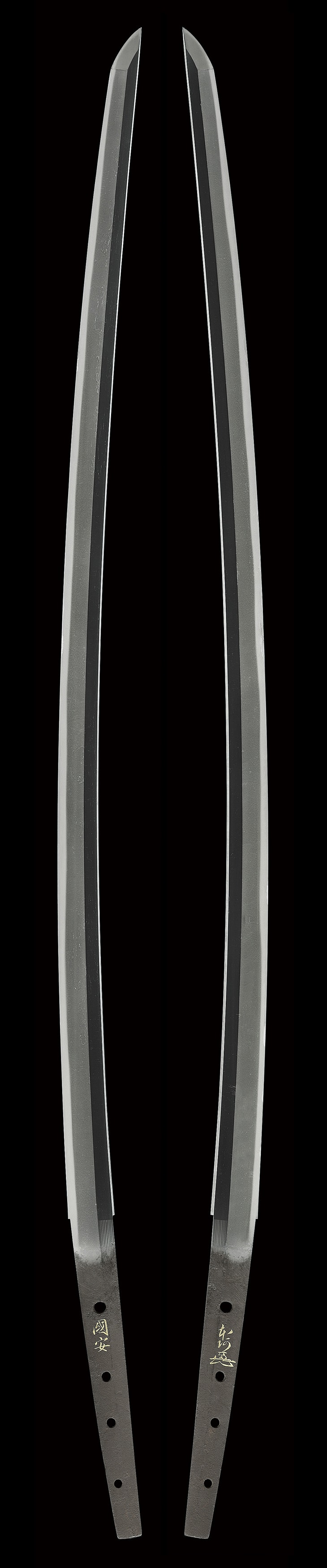
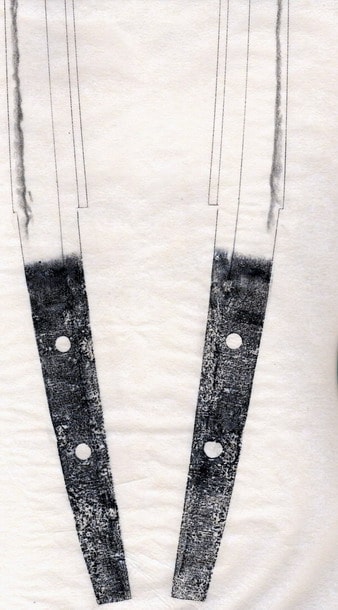
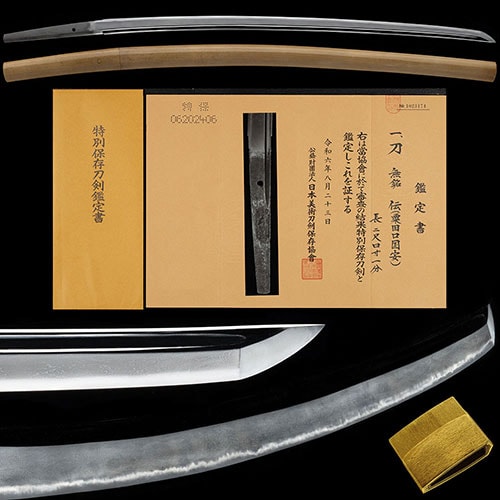
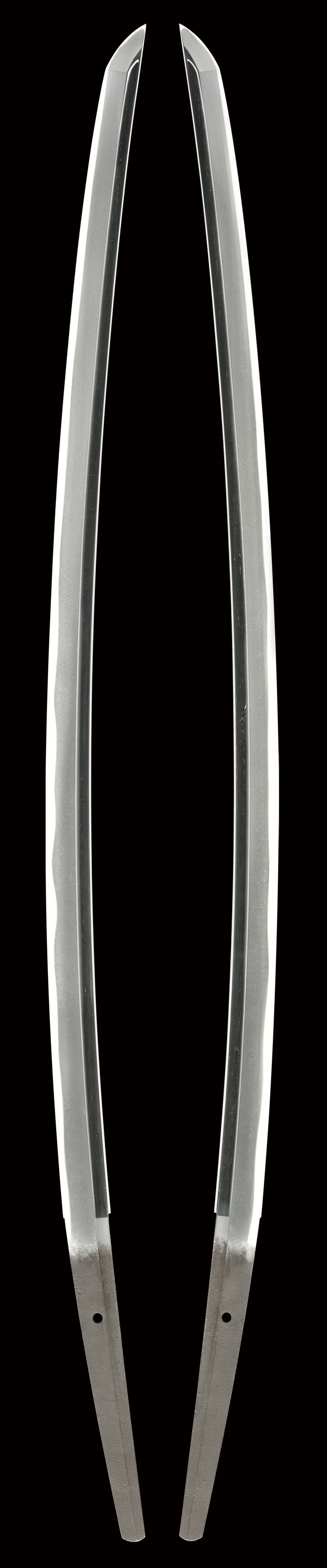
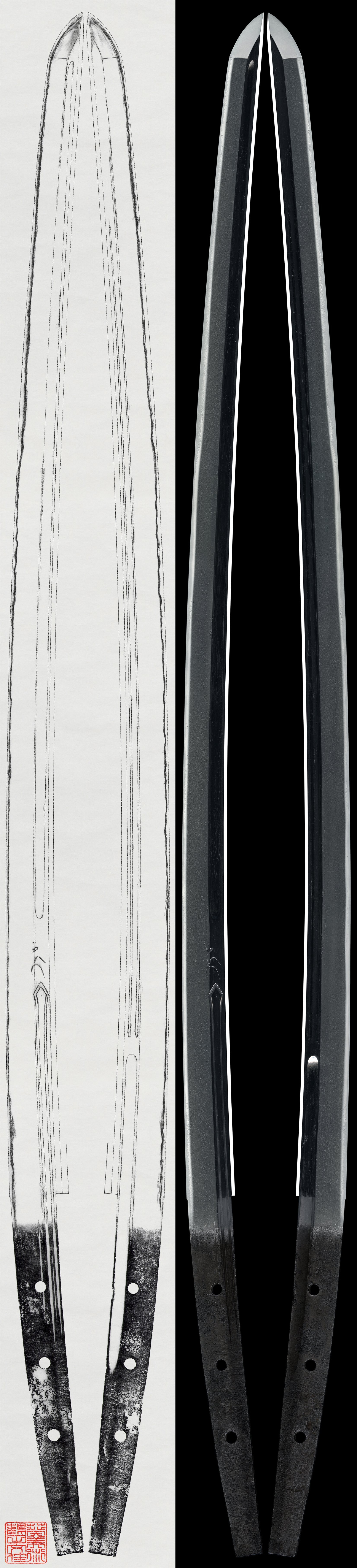
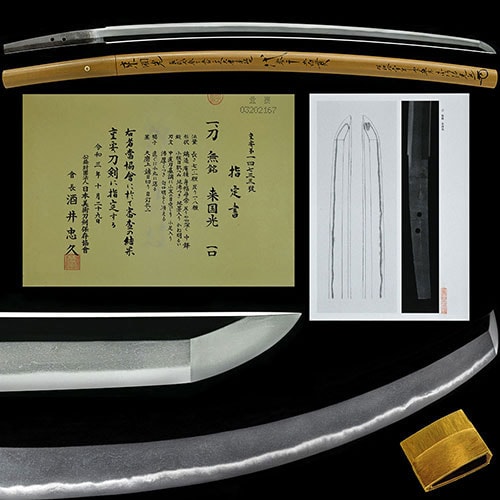
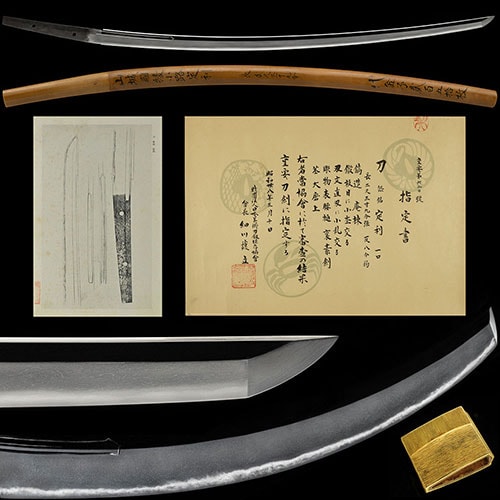
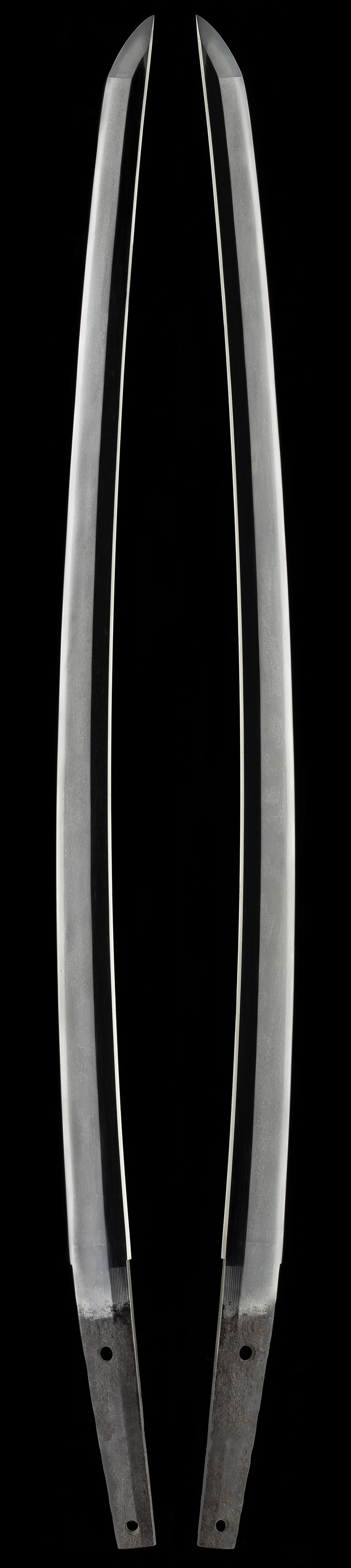
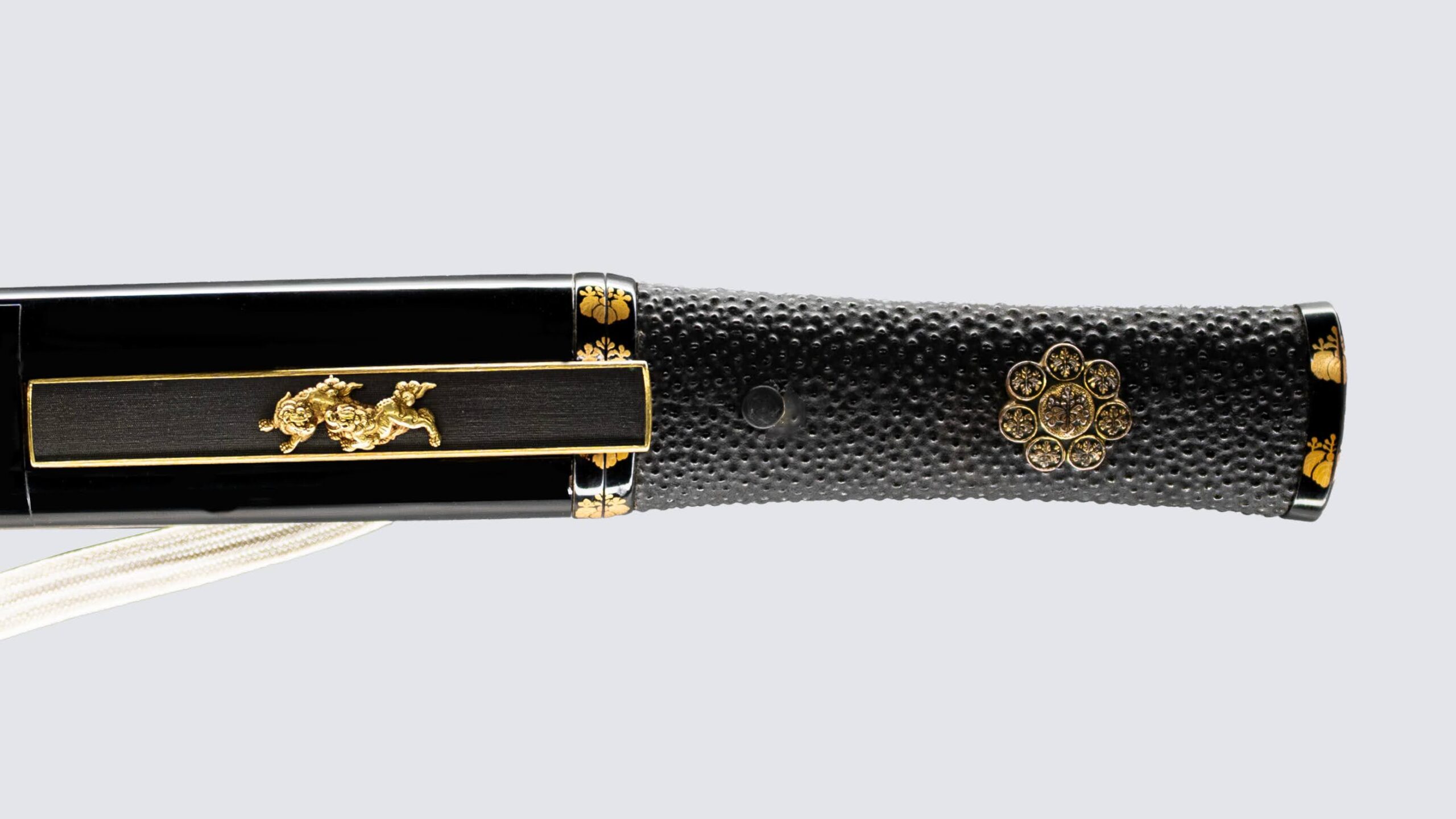
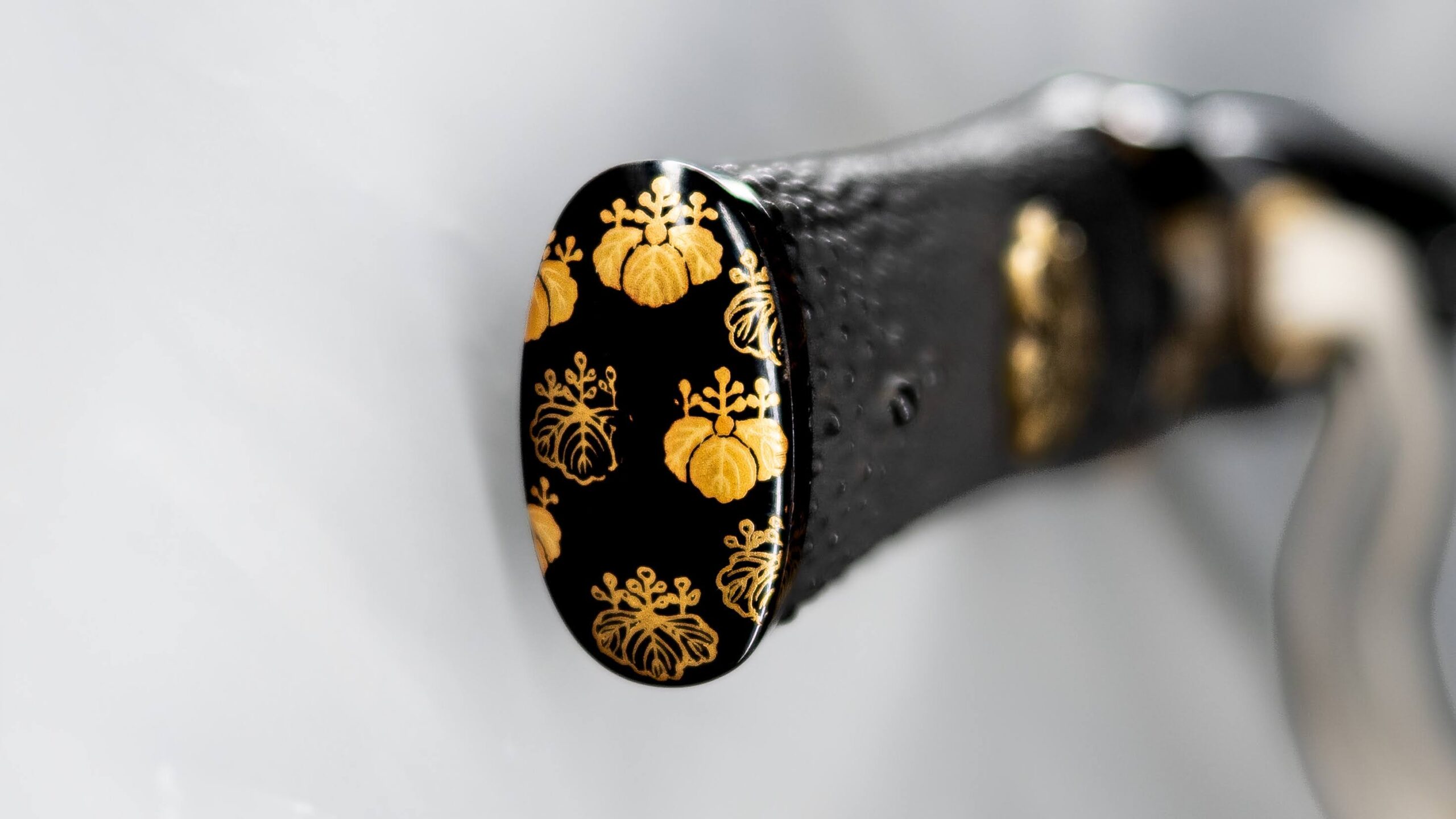
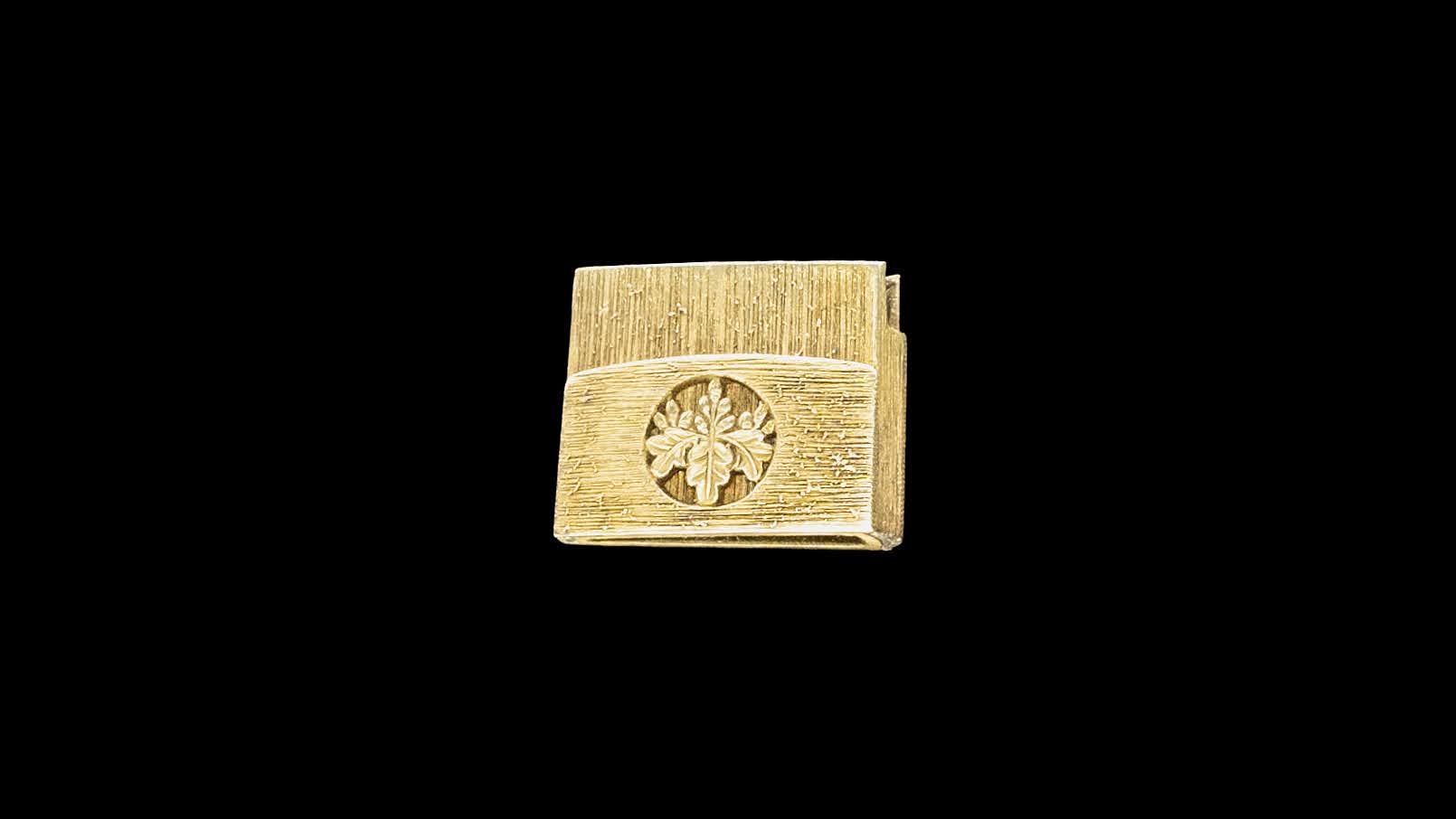
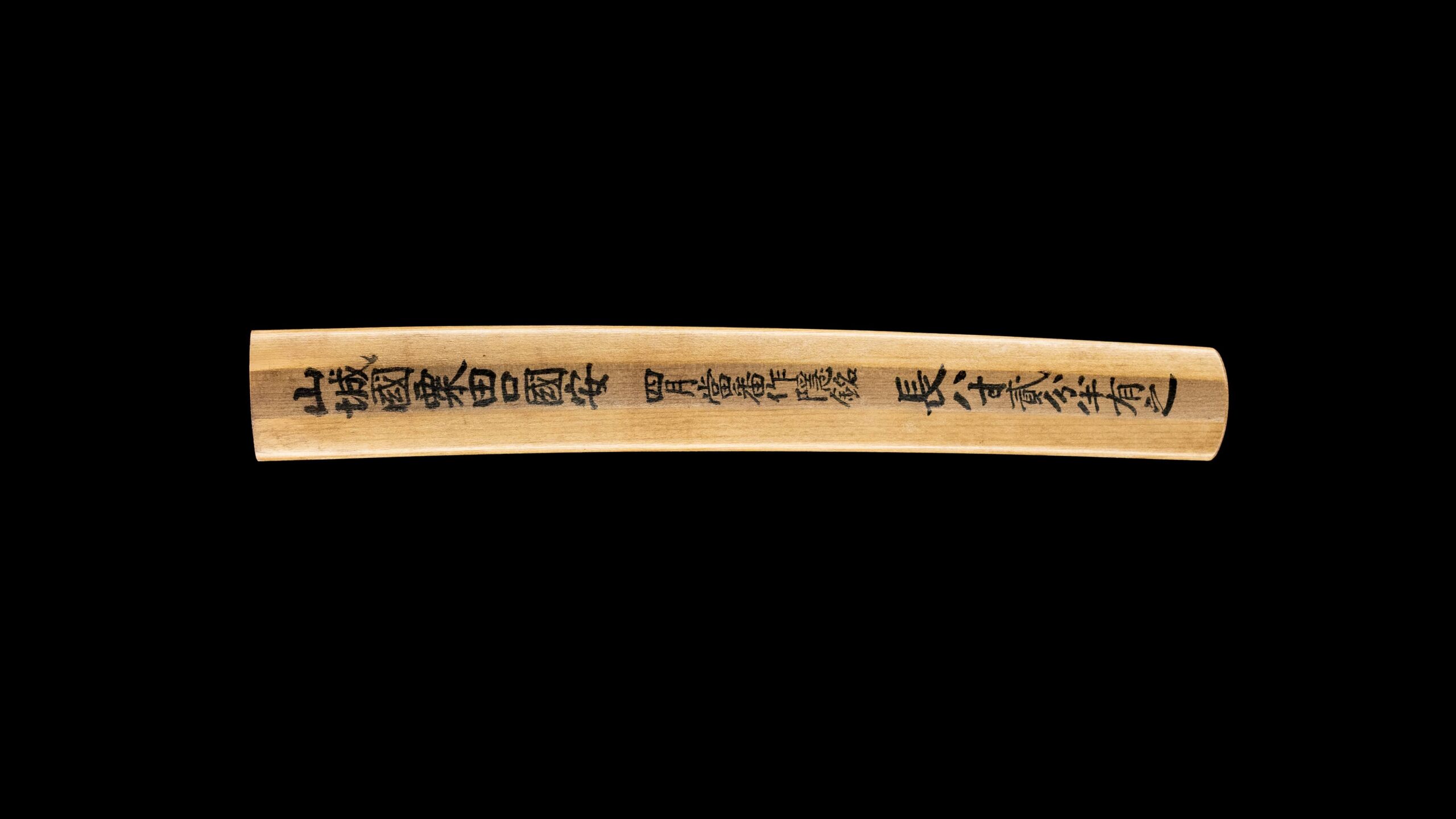
This is an unsigned tanto attributed to Awataguchi Kuniyasu from the Kamakura period. It features an itame grain mixing faint Masame with a Suguha Hamon exhibiting Hotsure and Uichigaiba. The accompanying Aikuchi Koshirae is in black lacquer with Makie paulownia.
 NihontoWatch
mumei · Awataguchi · Kamakura · nagasa 25cm
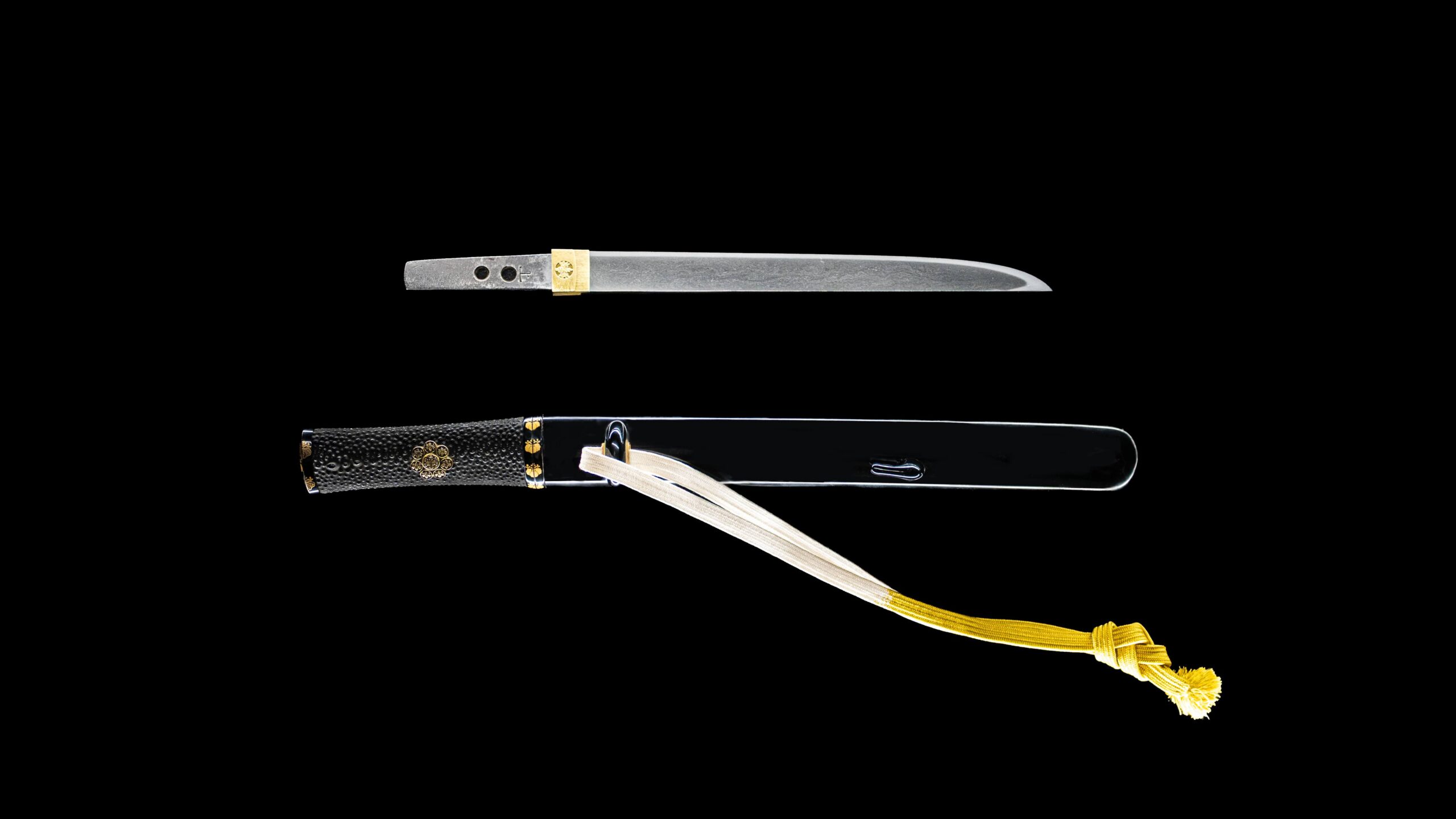
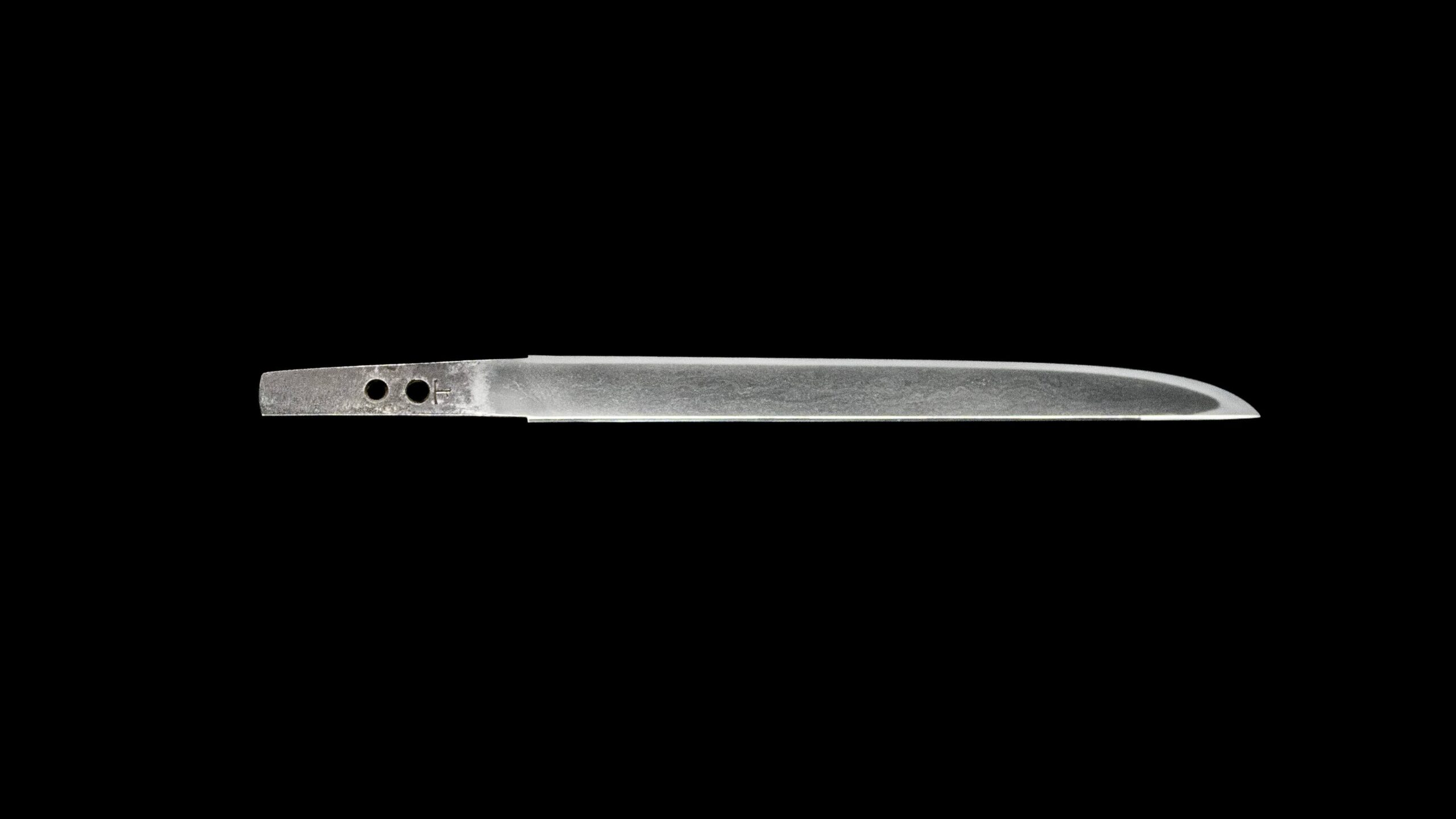
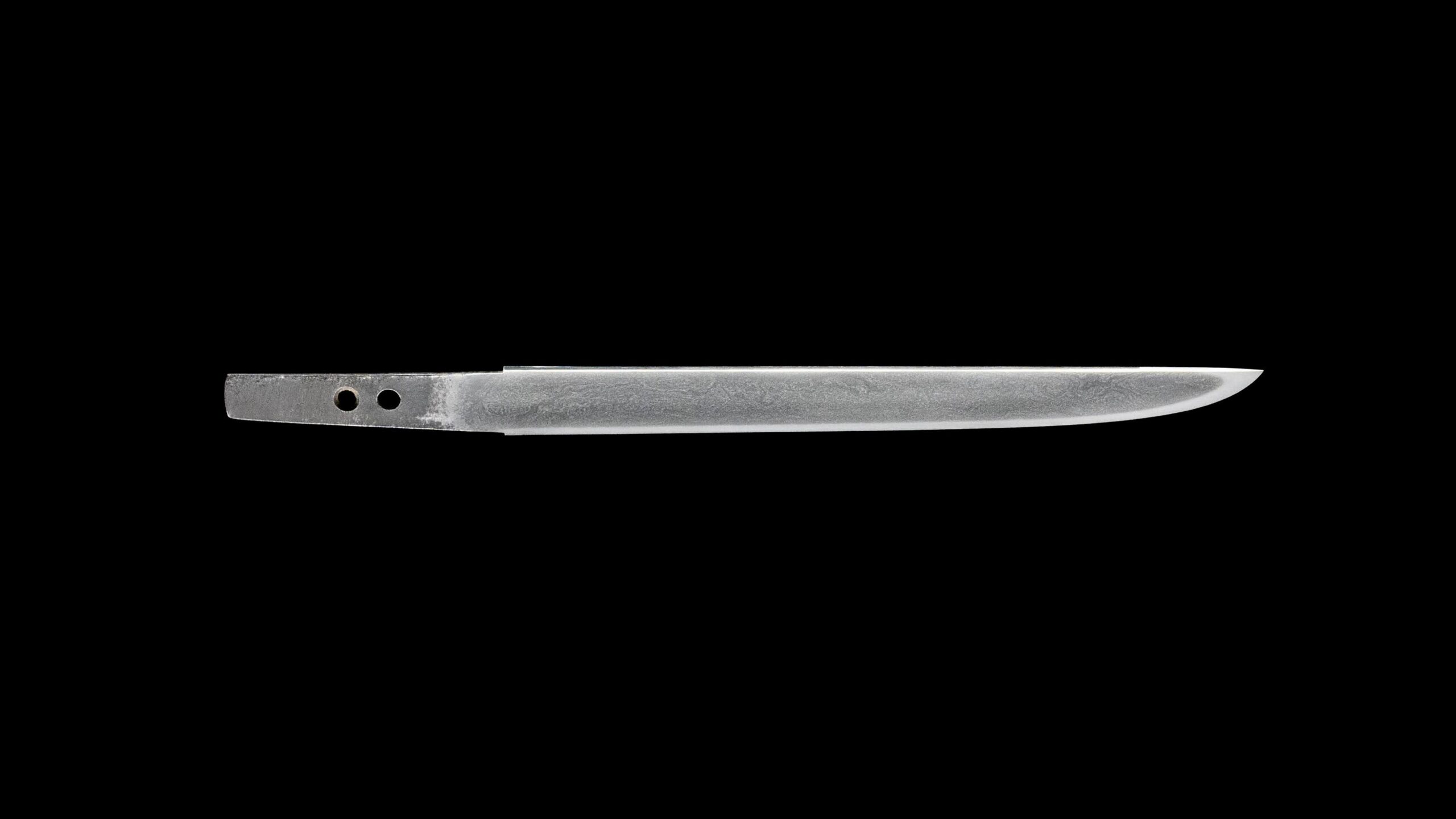
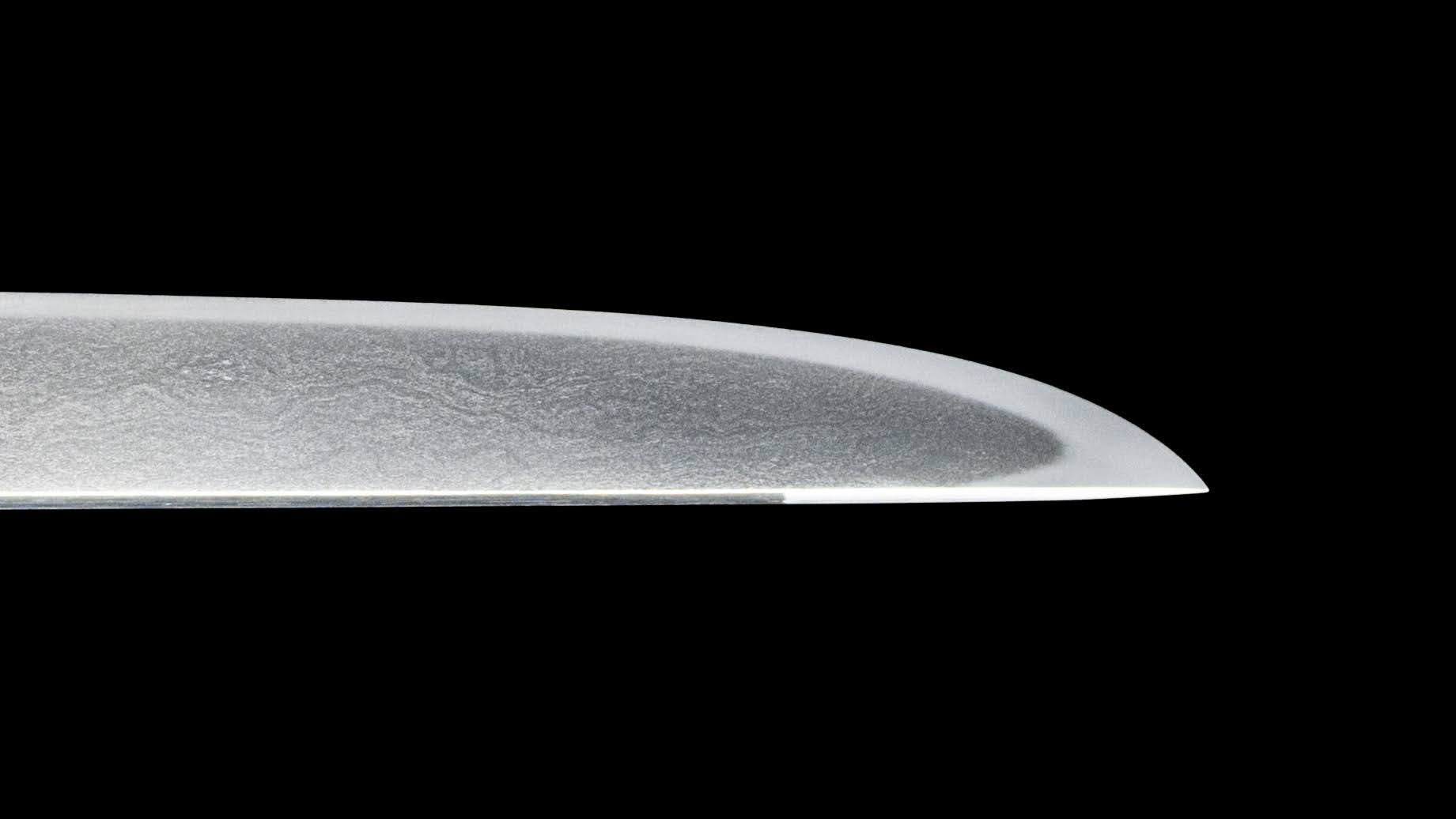
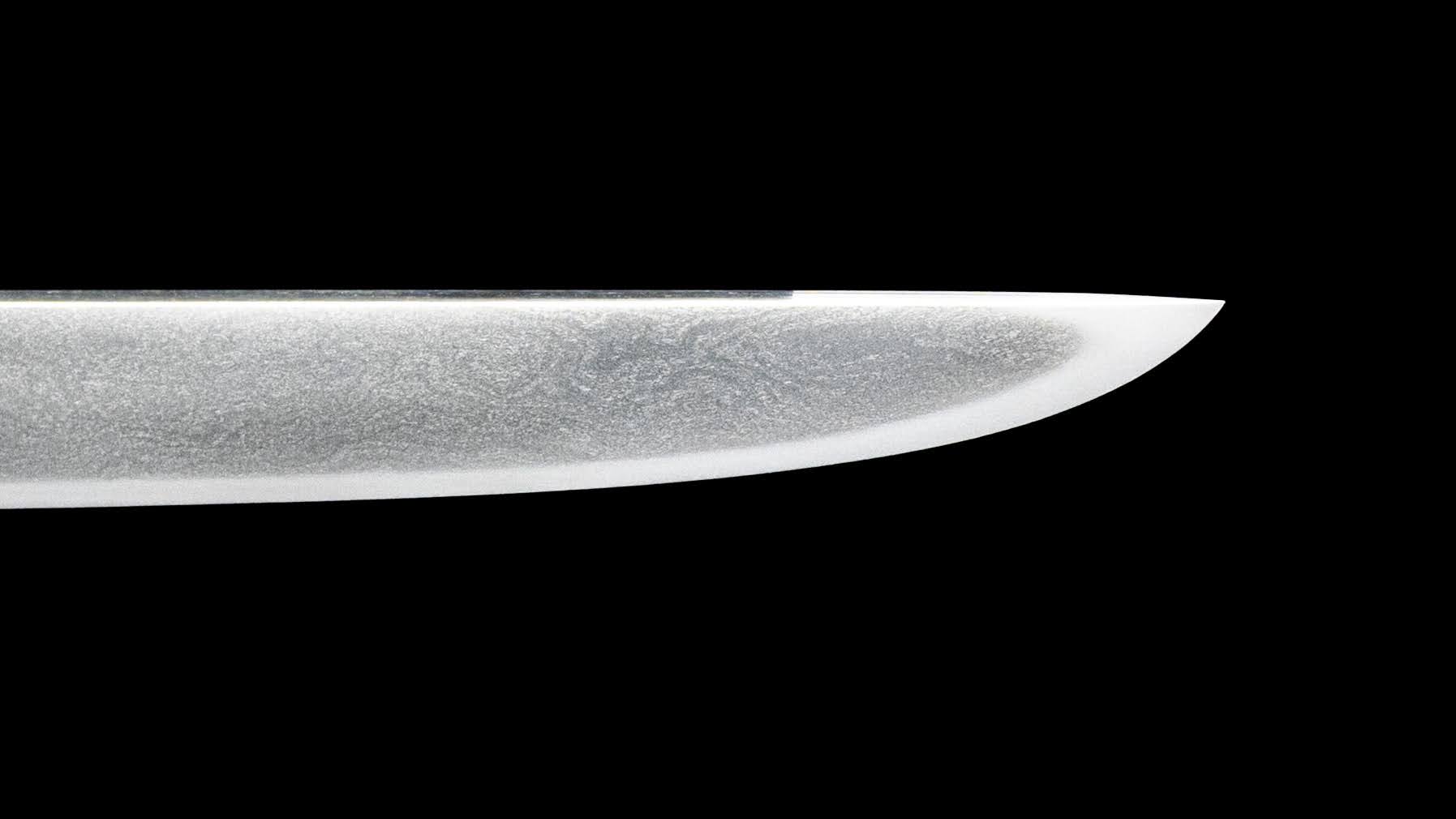
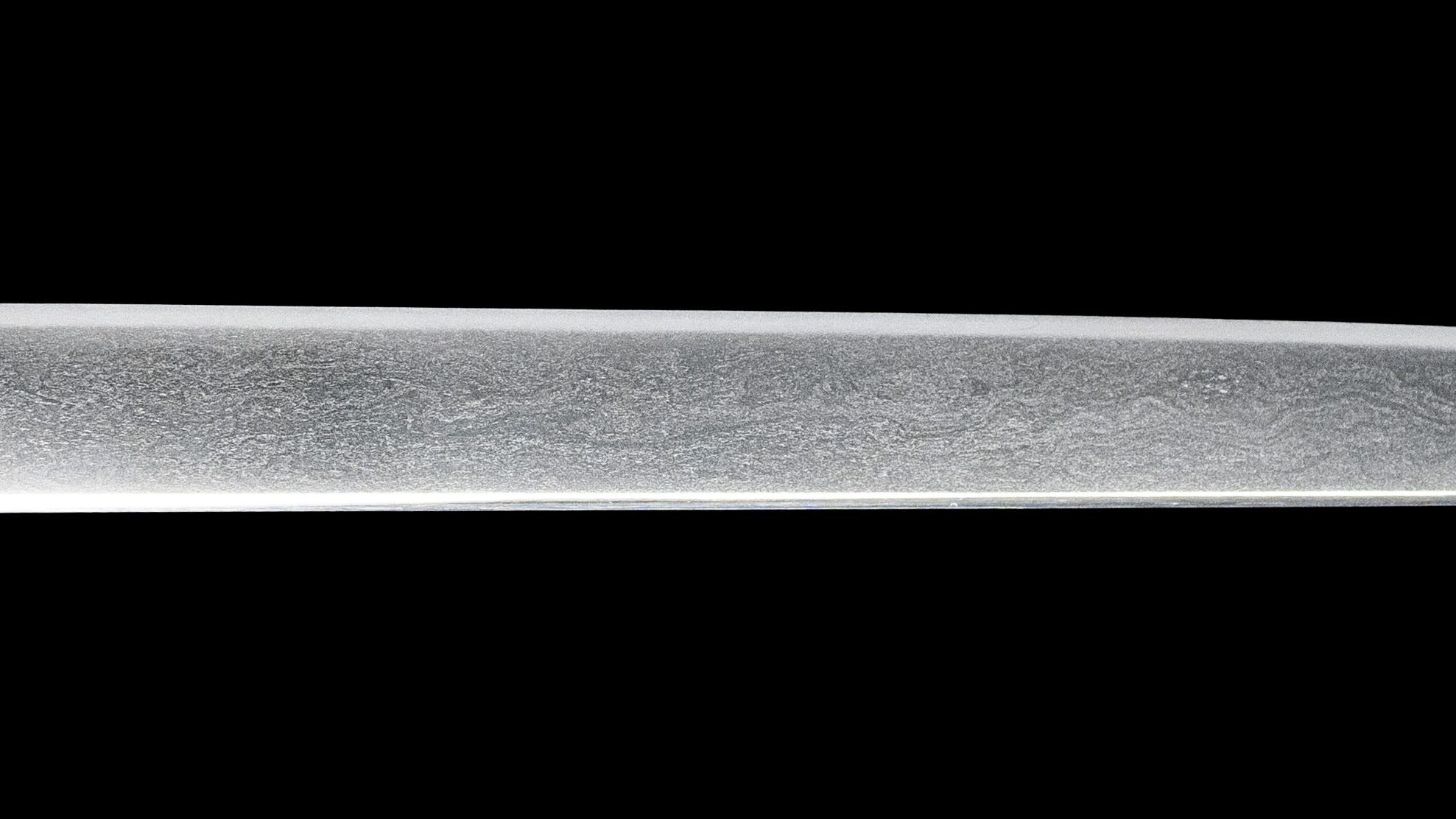
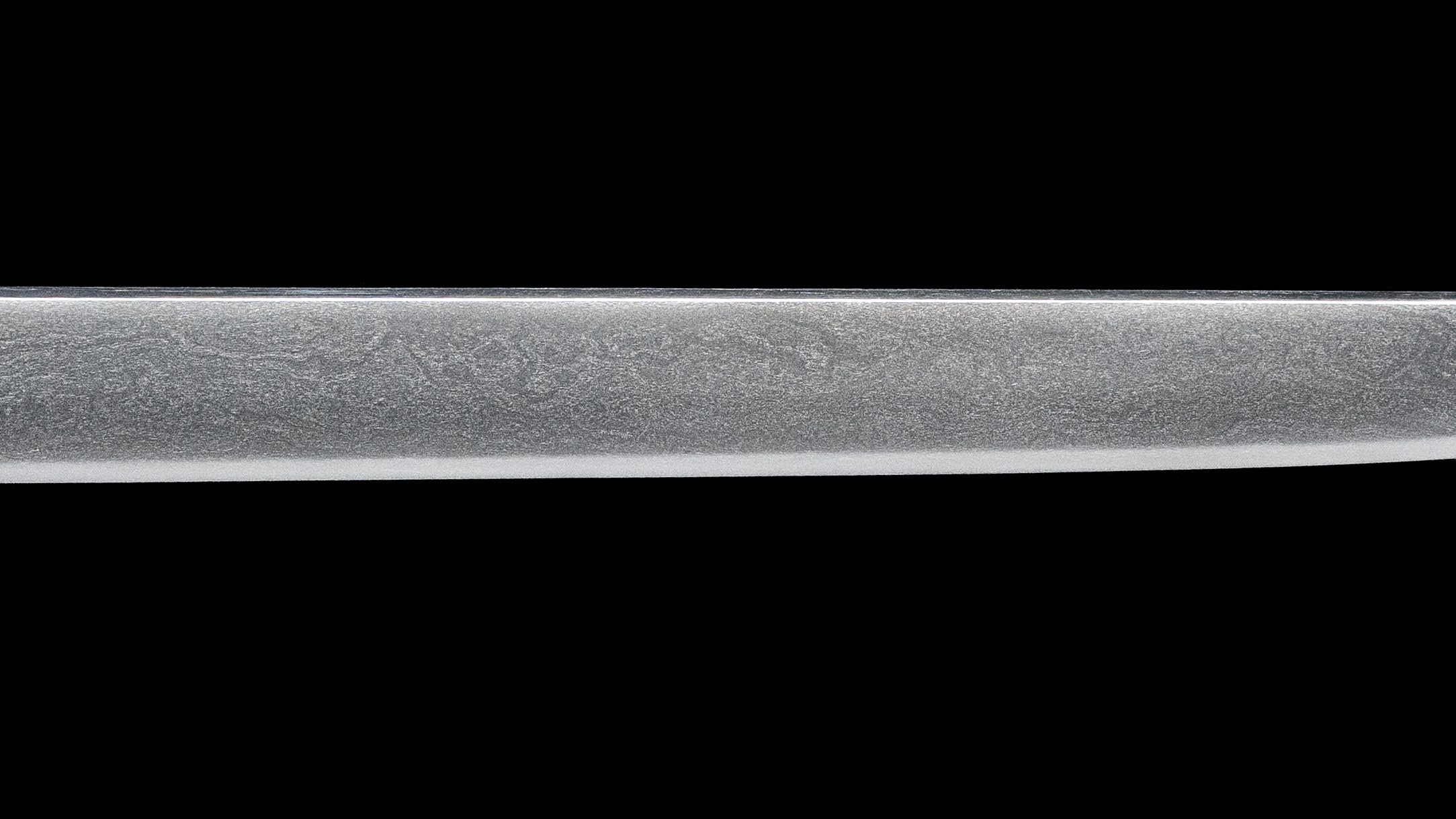
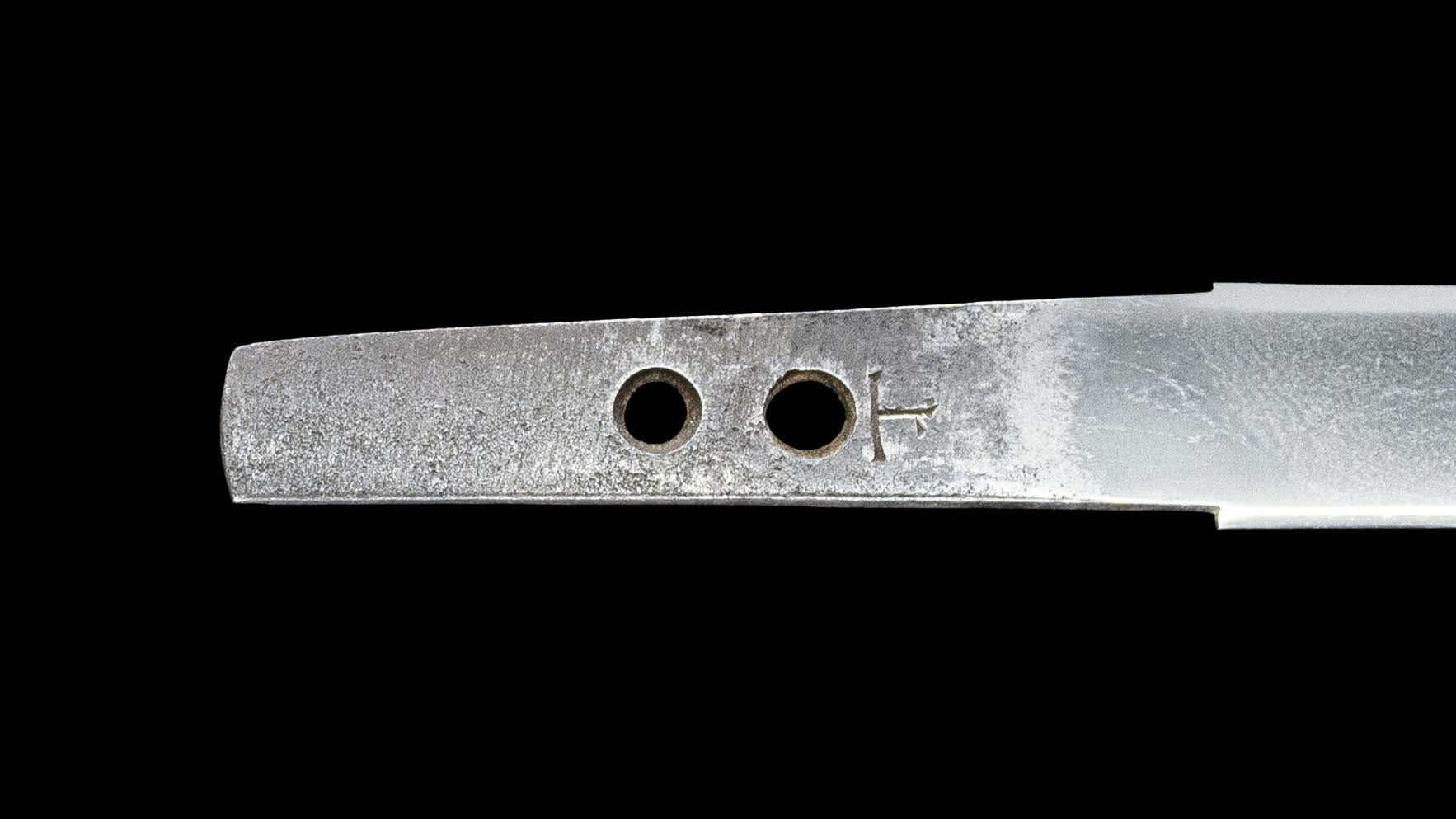
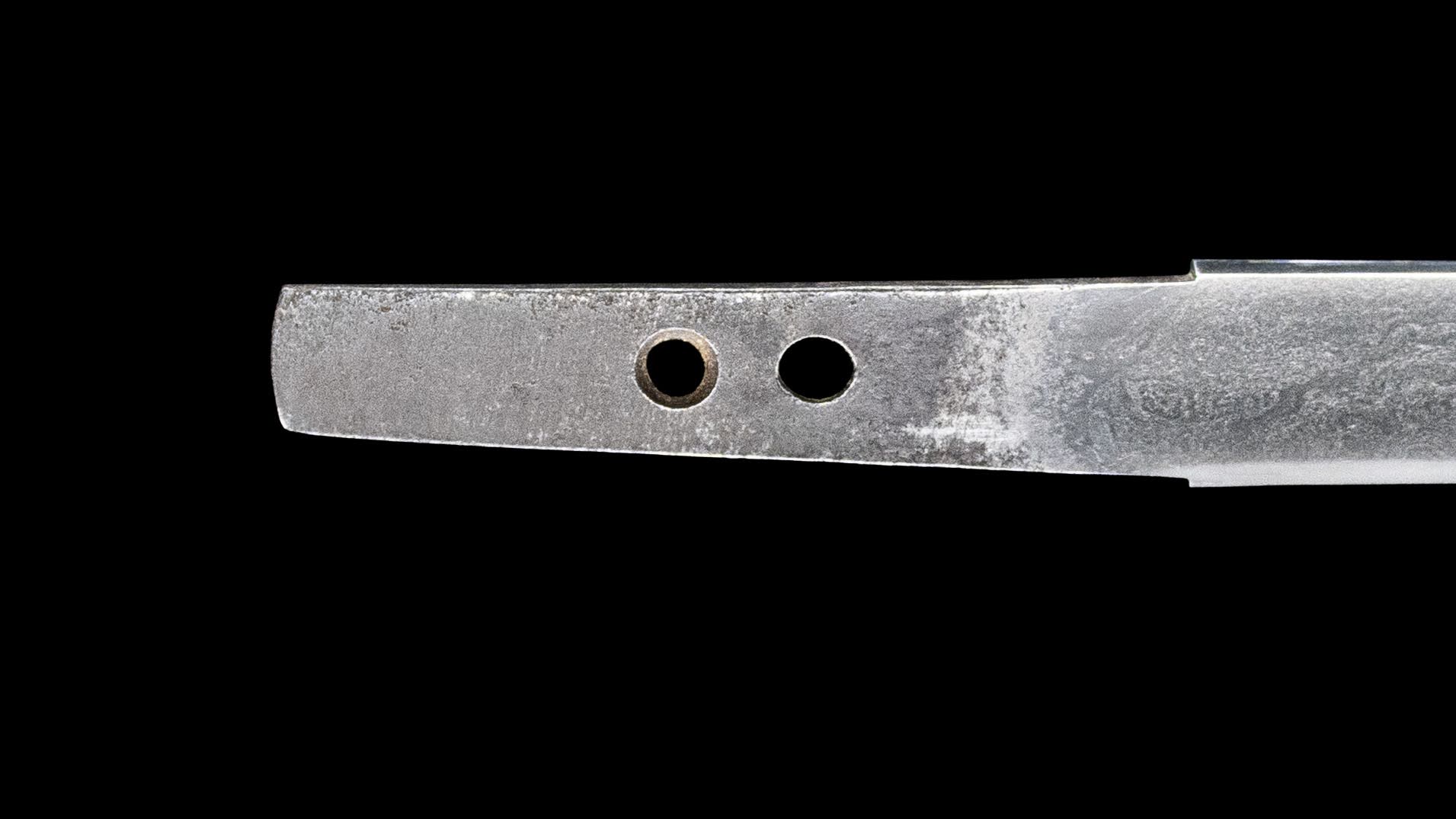
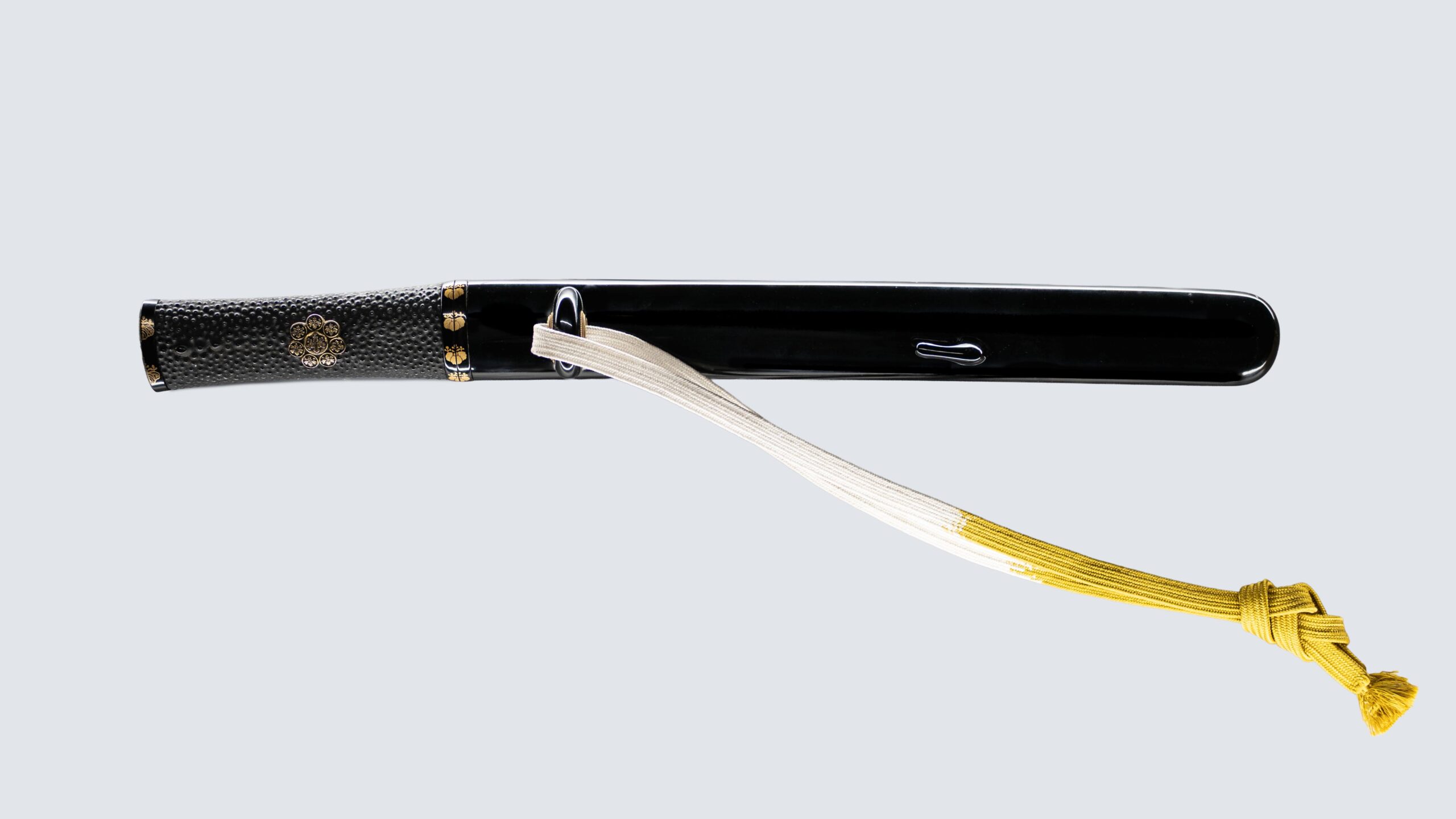
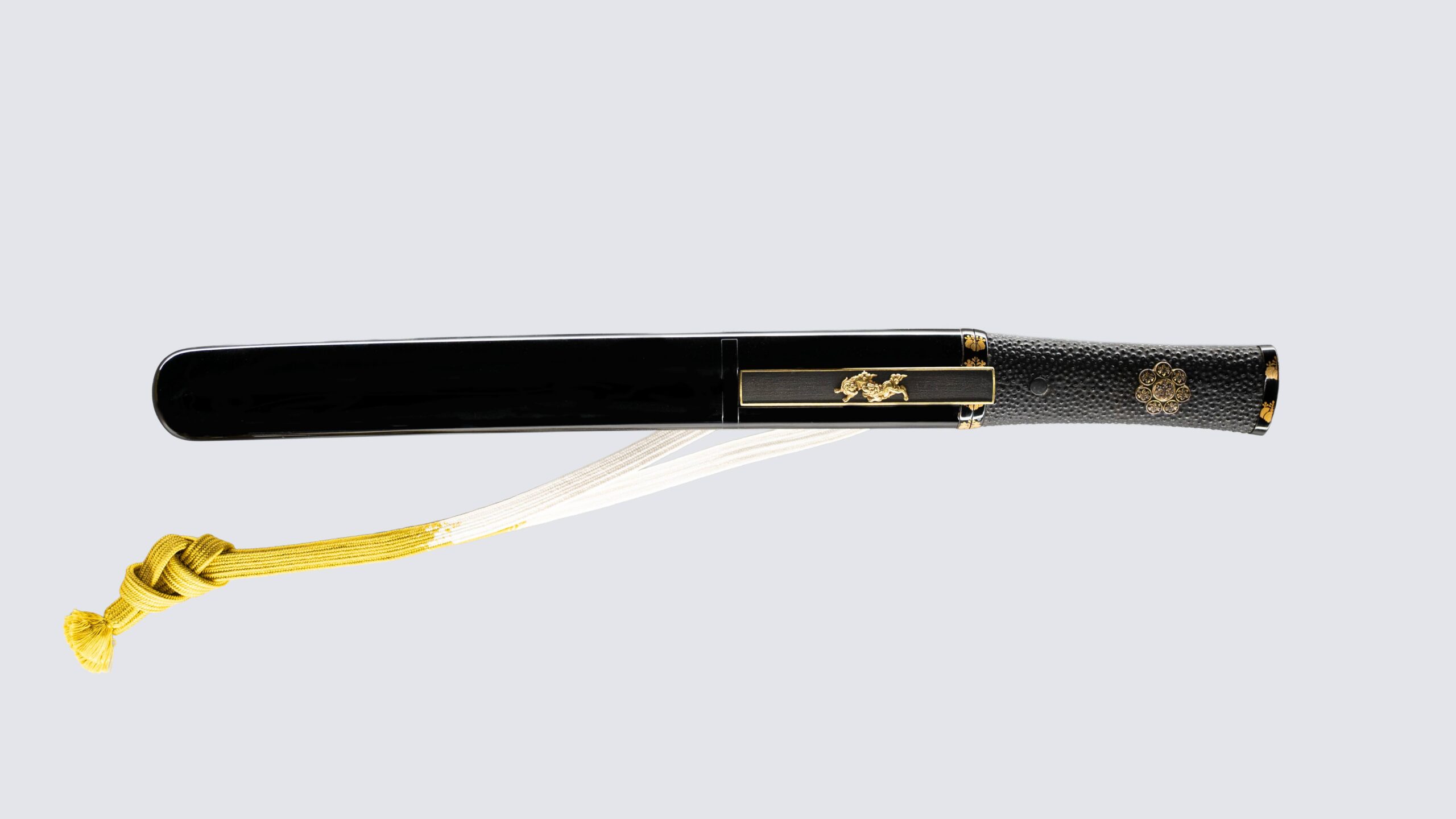
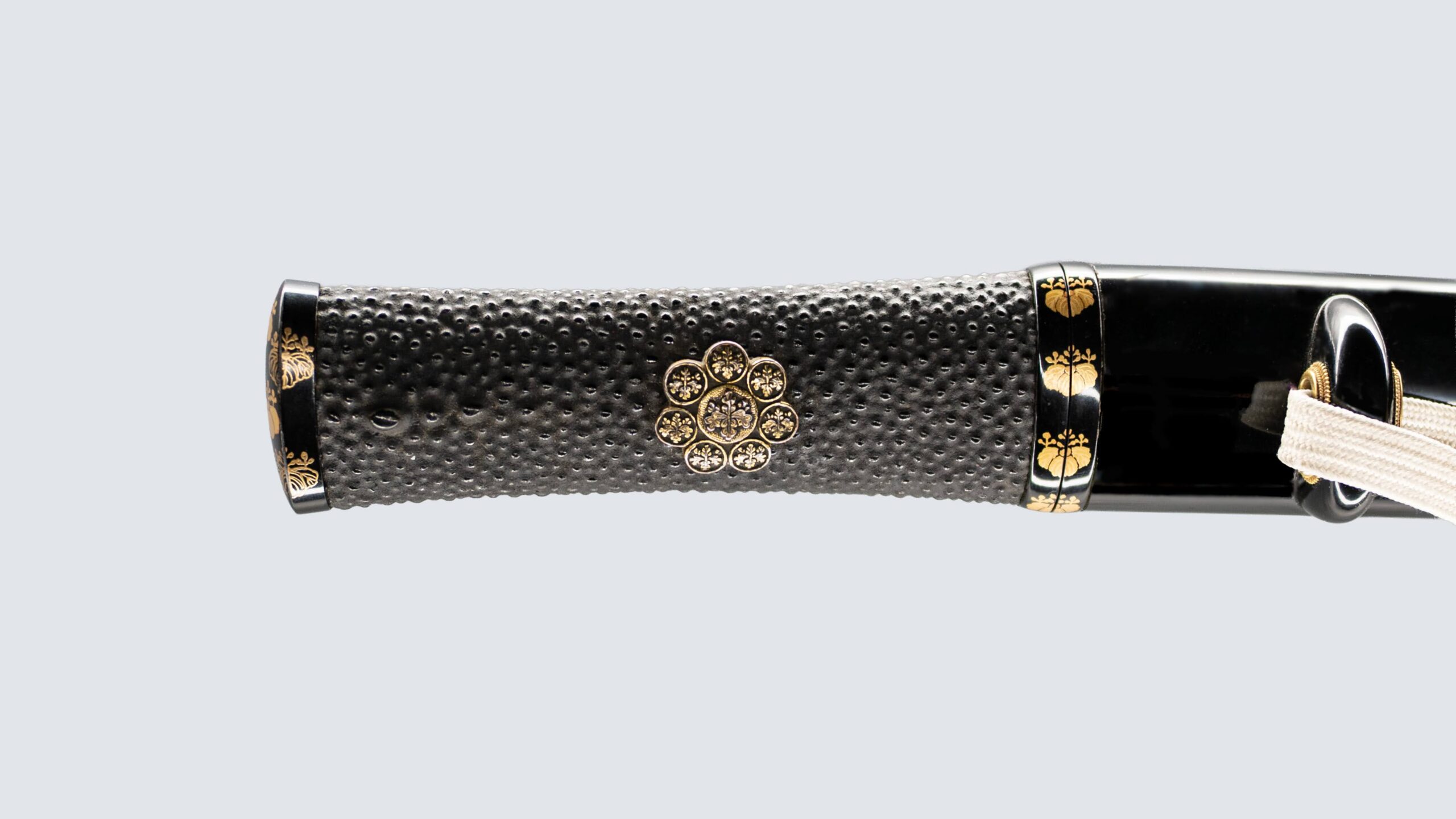
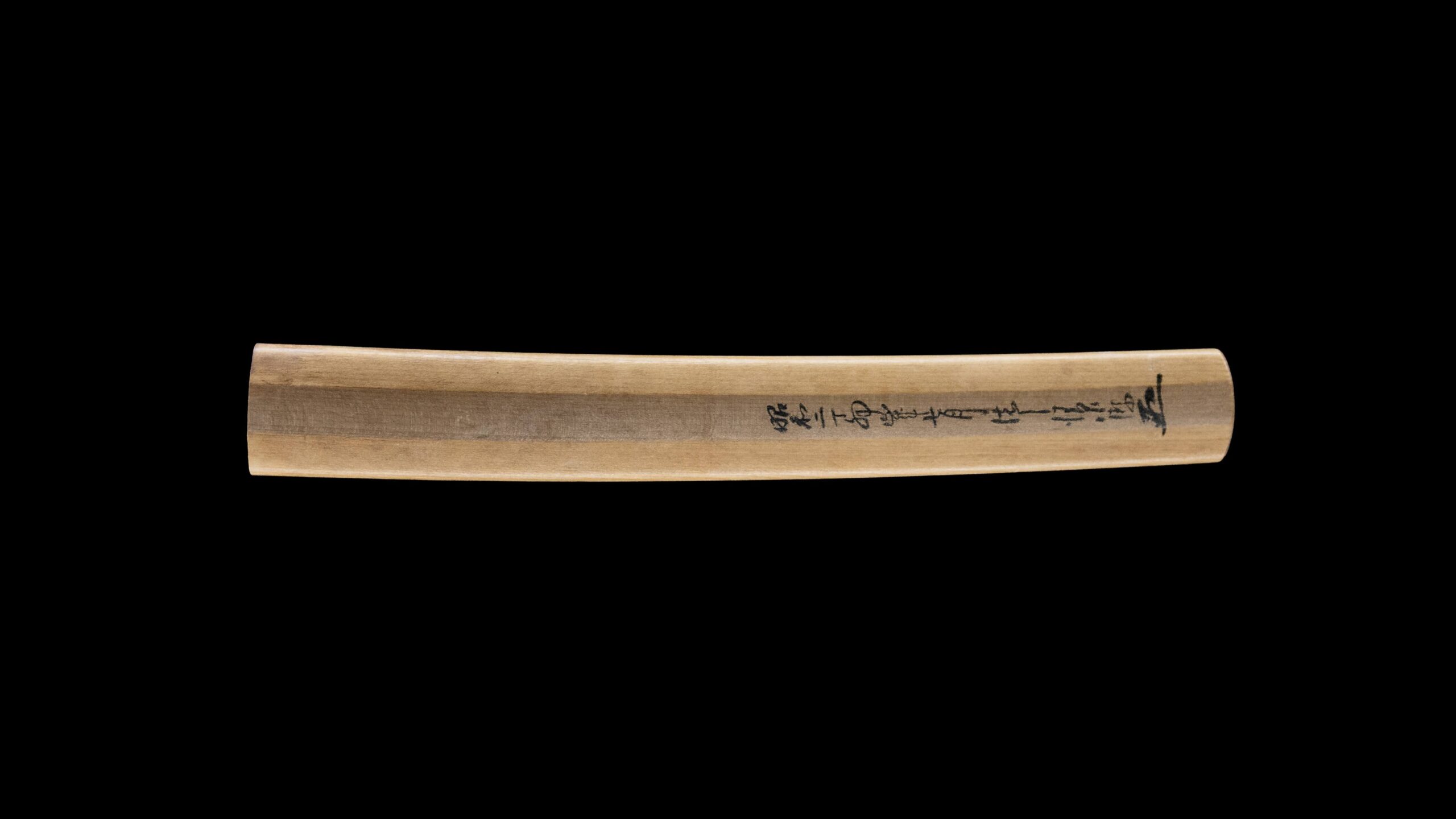
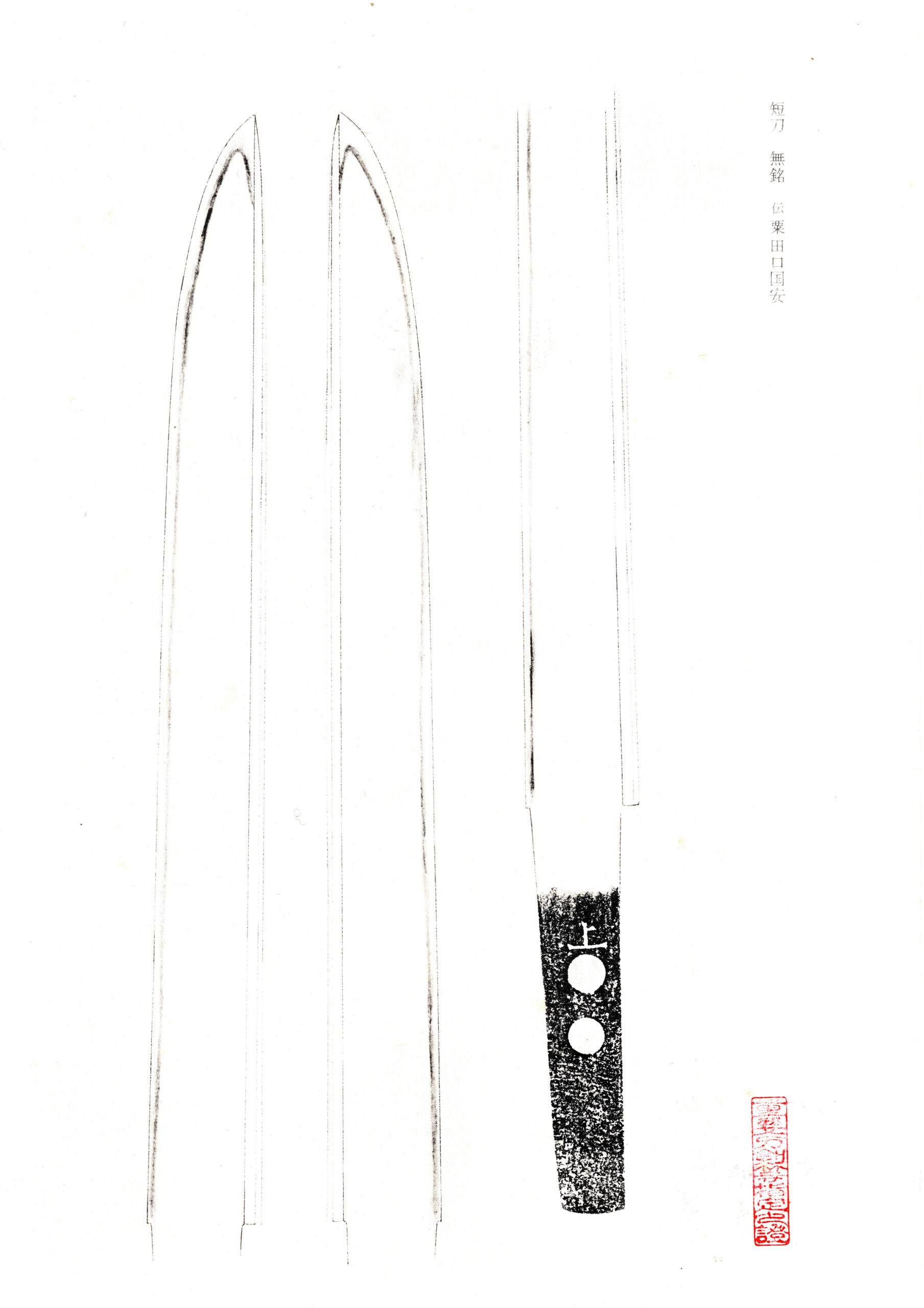
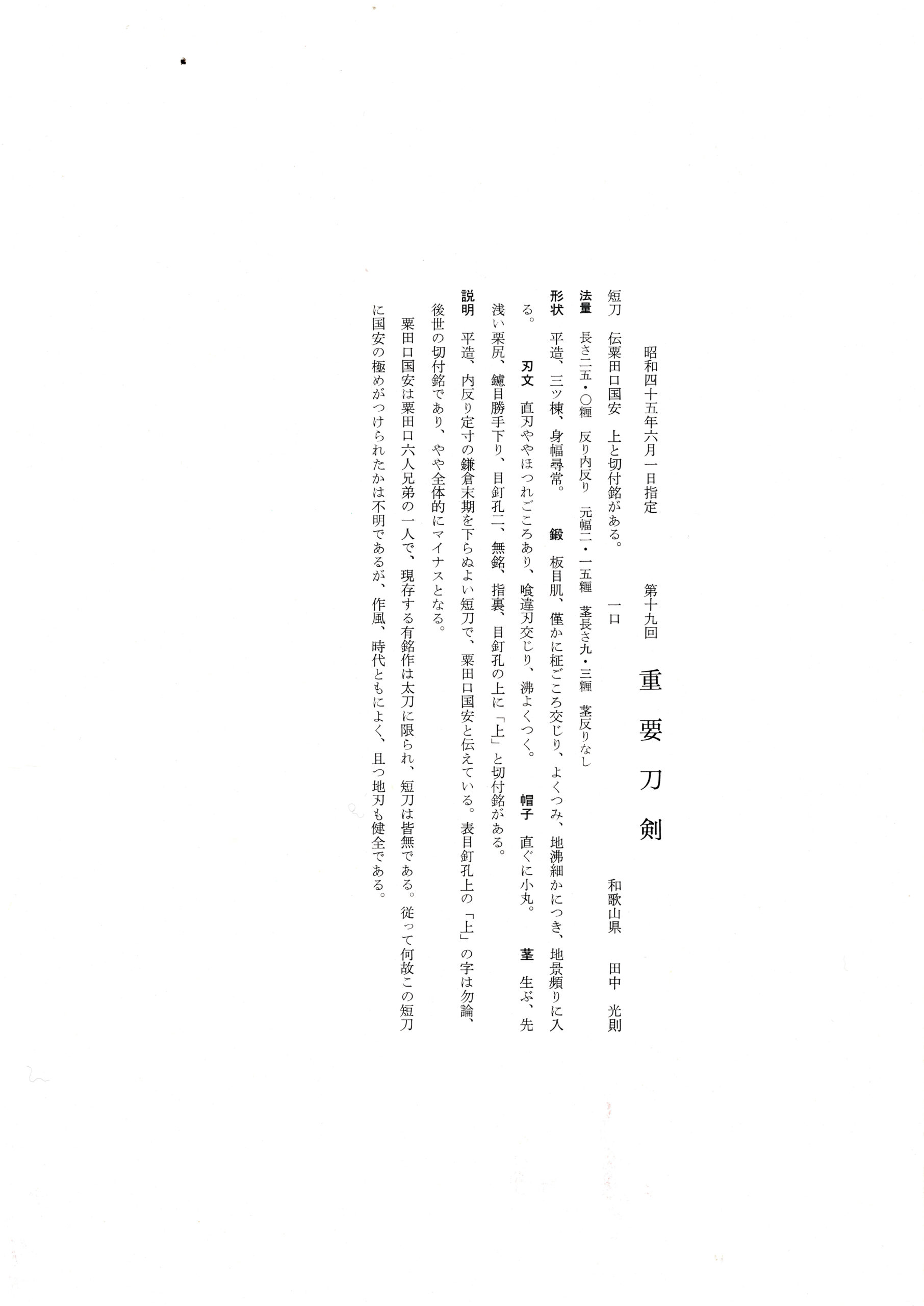
Awataguchi (Yamashiro) · Yamashiro · around 1199-1201
Fujishiro Sai-jo saku · Tōken Taikan top 3%
Awataguchi Kuniyasu worked at Awataguchi in Kyoto in the early Kamakura period, third of the six brothers, Kunitomo, Hisakuni, Kuniyasu, Kunikiyo, Arikuni and Kunitsuna, who made the school famous, and was called Tosaburo (藤三郎). The published sources count him, with his elder brothers Kunitomo and Hisakuni, among the goban-kaji of the Retired Emperor Go-Toba, and the sword references place his activity around the Jokyu era (1219 to 1222). His surviving signed works are tachi, comparatively numerous for so early a smith; the single signed tanto, recognized at Juyo session 31, is for that reason called "extremely precious"[[c:1]]. Fujishiro grades him Sai-jo saku.
His blades keep the figure of their day, slender, with high koshizori and a small kissaki, the curve settling faintly toward the point; one source reads the bearing as a gentle taoyame grace. On this figure he tempers a small-patterned ko-midare in ko-nie-deki, mixing ko-choji and ko-gunome over a suguha base, with kinsuji and fine sunagashi in the ha. The intervals of the midare press close, for "many examples show the spacing of the midare drawn tight"[[c:2]], and where the small gunome run linked in series the judges go further, writing of one unsigned katana that by this linked tendency "even within the school it should be possible to specify Kuniyasu"[[c:3]]. The nioiguchi, "as with Kunitomo, characteristically clouds into urumi"[[c:4]]; yubashiri gathers above the yakigashira, where one source finds "this smith's habitual hand"[[c:5]] plainly discernible; on another blade the forked, karimata-like uchinoke at the yakigashira reveals the same characteristic features. The boshi runs sugu to a small ko-maru, at times yakizume, the tip lightly brushed with hakikake.
The jigane divides in two, and the published sources state the split outright: in his forging "there are two kinds, one with standing hada and one tightly knit"[[c:6]]. The tight register is packed ko-itame, ji-nie adhering in fine dust, slender chikei woven through, at times a faint nie-utsuri rising toward the shinogi; the surface takes on the pear-skin texture the sources call "the school's characteristic nashiji-hada"[[c:7]], and blades of this kind are read as "the manner closer to Hisakuni"[[c:8]]. The standing register shows itame with the grain raised, jifu mingled in and chikei conspicuous, and the published record ties it to his signed work: "among this smith's signed pieces those with prominently standing itame are comparatively many"[[c:9]].
The two registers sort loosely by signature: most unsigned attributions are of the refined nashiji type and travel on Hon'ami judgments, a kinpun-mei of Hon'ami Koson, a kinzogan of Hon'ami Mitsutada, an origami of Hon'ami Koyu dated Genbun 3 (1738). The scholarship is candid about his softest quality: an early text judges of the shadowed dullness that often settles in his edge that "rather than a point of appreciation it is instead a defect"[[c:10]], while later texts call the urumi "one of this smith's notable features"[[c:11]]. His two-character signature was cut both large and small, and "in either case the character An shows its distinctive features"[[c:12]], its cursive abbreviation always the same, a major point in judging his mei. Honma notes of the attributed pieces that "among the kiwame-mono there are occasionally wide ones like this sword"[[c:13]], robust blades apart from his usual slender build.
Within Awataguchi he is the midare brother. The school's later course runs through Norikuni to Kuniyoshi and Yoshimitsu and settles into bright suguha, while Kuniyasu holds to the compressed ko-midare of the founding generation and its clouded nioiguchi. His sugata follows Hisakuni, and his tightest jigane approaches that brother closely; yet the linked ko-gunome picks him out alone within the school, and the pressed intervals and the urumi he shares only with Kunitomo. Against the later generations the judgment entered on his signed tanto is direct: "compared with Norikuni and Kuniyoshi the interior of the ha works well"[[c:14]], fully showing, the same text concludes, the depth of flavor of Awataguchi work.
Twenty-three designated works stand on record: three Important Cultural Properties, all signed tachi, with five Juyo Bijutsuhin, two Tokubetsu Juyo and twelve Juyo, fourteen blades in the Tokubetsu Juyo and Juyo tiers together; nine pieces in the record are signed against eleven unsigned. Eleven blades carry recorded provenance, through the Owari Tokugawa house, one a gift of the shogun Tokugawa Tsunayoshi to Yoshimichi, fourth lord of Owari, and through the Tsugaru, Nanbu, Matsudaira, Mizoguchi and Hosokawa families and the Imperial Family. Of recorded whereabouts his blades rest with the Tokugawa Art Museum, the Tokyo National Museum, the Sano Art Museum and the NBTHK itself. The three Important Cultural Properties are patrimony, preserved where they stand; some fifteen blades of recorded rank sit in the tiers that may lawfully change hands, and most are held rather than traded. The published record remarks that signed tachi by Kuniyasu are encountered from time to time, and that is the honest measure of him: a goban-kaji of Go-Toba whose work a patient collector may still hope to meet, though each appearance of a Juyo example is an occasion.
Where Kuniyasu stands among comparable artisans: across all of nihontō, and within tradition, era, and period. The tiers (Foremost · Leading · Major · Notable) weigh official designations from the NBTHK and Japan's Agency for Cultural Affairs, together with historical honors of lasting repute such as the Sansaku and Meibutsu-chō.
Select a lens to see how it's measured.
Yamashiro-den · Yamashiro
4 pieces on the market now
The steel is the first thing one learns to read in Awataguchi work: a ko-itame kneaded so tight that the surface takes on the pear-skin sheen the texts name nashiji-hada, the ji-nie dusted over it fine and even, slender chikei threading through, the whole carrying a moist luster (潤い) and a clarity that recurs in notice after notice. This is the steel of the early Yamashiro tradition at its summit. The forge stood at the foot of the Awataguchi slope in Kyoto, on the highway running toward Omi, and a community of smiths already worked there by the early Kamakura period; the tale collection Uji Shui Monogatari attests their presence, so this is a house with a documented place in the literature of its own century. The school is conventionally founded on the six brothers, Kunitomo the eldest, then Hisakuni, Kuniyasu, Kunikiyo, Arikuni and Kunitsuna, sons of the founder Kunika (also given as Kuniie). Kunitomo, Hisakuni and Kuniyasu were summoned as goban-kaji to forge on rotation at the cloistered court of the Retired Emperor Go-Toba, and Hisakuni is even transmitted as a teacher to the sovereign; that imperial patronage is the reason a slender tachi with so quiet a temper carries the authority it does. What binds the house across four generations is restraint married to refinement. Over the nashiji-hada the brothers set a calm suguha leaning into a shallow notare, mixed with ko-midare, ko-gunome and ko-choji, the nioiguchi tight and bright, ko-ashi and yo entering, kinsuji and sunagashi running within the ha; the boshi turns in a refined ko-maru that very often sweeps with hakikake. This is the opposite pole from the clove-flower flamboyance of contemporary Bizen, an edge whose interest lies in the activity within rather than the height of the pattern. Within that shared vocabulary the members are told apart by habit. Kunitomo and Kuniyasu hold to the compressed ko-midare of the founding generation, their nioiguchi clouding into urumi; Kuniyasu's linked ko-gunome picks him out alone within the school.
Kunitsuna is the divergence, a robust o-itame standing prominently over thick ji-nie, with conspicuously strong ha-nie that leans toward the Sagami manner about to be born. The later course runs through Norikuni, the bridge generation, into the tanto age of Kuniyoshi and Yoshimitsu, where the temper settles into bright suguha in fine ko-nie. Kuniyoshi's tell is the nijuba, the doubled (at times trebled) line along the ha; Yoshimitsu's is the linear kuisagari dropping of nie into the ji beneath the boshi, his suguha a narrow hoso-suguha under a bright nioiguchi. For the collector the school divides into work that can be studied and work that can be owned. Its summit, Toshiro Yoshimitsu, crowns the close of the line; paired with Shintogo Kunimitsu of Sagami as a master of the tanto and a virtuoso of suguha, and ranked in the Edo period with Masamune and Go among the Three Great Works under Heaven, he is a smith met in the great collections rather than possessed, his signed tanto the standard against which every attribution is measured. His teacher Kuniyoshi, whose nashiji-hada the texts name outright, is by Awataguchi measure not wholly beyond reach, his o-suriage mumei katana anchored on the doubled line. The house also seeded the eastern tradition: Kunitsuna's transmitted descent runs on to Shintogo Kunimitsu, the de facto founder of Soshu, whose own refined nashiji steel passes for Awataguchi until the chikei and kinsuji betray it, and from whose quiet nie-laden suguha Yukimitsu, Masamune and Norishige drew the nie-midare of the mature tradition. The refined nie-suguha the brothers fixed was likewise the wellspring the Rai masters drew from, the two hands sitting so close in the eye that gold-inlaid Rai attributions appear on blades grouped with Hisakuni. To kantei an Awataguchi blade is to read the pear-skin steel first, then the quiet nie-laden suguha, then the swept boshi, and to know which brother or pupil the habits name; to acquire one, of any generation, is among the scarcest encounters early Yamashiro affords. Learn more →
| Smith | Era | Designated |
|---|---|---|
| Yoshimitsu吉光 | 1259-1260 | 44 |
| Kuniyoshi國吉 | 1275-1278 | 51 |
| Kunitsuna國綱 | 1240-1264 | 18 |
| Hisakuni久國 | 1190-1199 | 21 |
| Norikuni則國 | 1222-1224 | 15 |
Yamashiro in the Kamakura period
Power sat in Kamakura, but taste was still made in Kyōto. The Awataguchi school’s pear-skin steel became a byword for perfection, and the Rai line supplied dignified tachi to the court, senior warriors, and the great temples alike.
A blade of top-grade workmanship and condition, formally judged to rank with a nationally recognized Important Art Object (Jūyō Bijutsuhin). Awarded only at the NBTHK’s competitive annual examination.
Of Japan’s roughly 2.5 million registered swords, only 12,307 (about 1 in 203) have ever attained Jūyō.
The NBTHK (Nihon Bijutsu Tōken Hozon Kyōkai, the Society for the Preservation of Japanese Art Swords) is a public-interest incorporated foundation founded in 1948 and supervised by Japan’s Agency for Cultural Affairs (Bunkachō); it is based at the Japanese Sword Museum in Tokyo. Its expert panels physically examine each submitted work (shinsa) and issue a certificate (kanteishō) ranking it by artistic and historical merit. NBTHK papers are the most widely recognized standard of authentication for Japanese swords and fittings.
NBTHK official siteReturns accepted within 7 days of receipt (JP terms; EN page states 3 days). Customer must contact within the window and return at own cost. Refund after items confirmed in original condition; repair fees charged if damage occurs.
This is an unsigned tanto attributed to Awataguchi Kuniyasu from the Kamakura period. It features an itame grain mixing faint Masame with a Suguha Hamon exhibiting Hotsure and Uichigaiba. The accompanying Aikuchi Koshirae is in black lacquer with Makie paulownia.
NihontoWatchmumei · Awataguchi · Kamakura · nagasa 25cm
Awataguchi (Yamashiro) · Yamashiro · around 1199-1201
Fujishiro Sai-jo saku · Tōken Taikan top 3%
Awataguchi Kuniyasu worked at Awataguchi in Kyoto in the early Kamakura period, third of the six brothers, Kunitomo, Hisakuni, Kuniyasu, Kunikiyo, Arikuni and Kunitsuna, who made the school famous, and was called Tosaburo (藤三郎). The published sources count him, with his elder brothers Kunitomo and Hisakuni, among the goban-kaji of the Retired Emperor Go-Toba, and the sword references place his activity around the Jokyu era (1219 to 1222). His surviving signed works are tachi, comparatively numerous for so early a smith; the single signed tanto, recognized at Juyo session 31, is for that reason called "extremely precious"[[c:1]]. Fujishiro grades him Sai-jo saku.
His blades keep the figure of their day, slender, with high koshizori and a small kissaki, the curve settling faintly toward the point; one source reads the bearing as a gentle taoyame grace. On this figure he tempers a small-patterned ko-midare in ko-nie-deki, mixing ko-choji and ko-gunome over a suguha base, with kinsuji and fine sunagashi in the ha. The intervals of the midare press close, for "many examples show the spacing of the midare drawn tight"[[c:2]], and where the small gunome run linked in series the judges go further, writing of one unsigned katana that by this linked tendency "even within the school it should be possible to specify Kuniyasu"[[c:3]]. The nioiguchi, "as with Kunitomo, characteristically clouds into urumi"[[c:4]]; yubashiri gathers above the yakigashira, where one source finds "this smith's habitual hand"[[c:5]] plainly discernible; on another blade the forked, karimata-like uchinoke at the yakigashira reveals the same characteristic features. The boshi runs sugu to a small ko-maru, at times yakizume, the tip lightly brushed with hakikake.
The jigane divides in two, and the published sources state the split outright: in his forging "there are two kinds, one with standing hada and one tightly knit"[[c:6]]. The tight register is packed ko-itame, ji-nie adhering in fine dust, slender chikei woven through, at times a faint nie-utsuri rising toward the shinogi; the surface takes on the pear-skin texture the sources call "the school's characteristic nashiji-hada"[[c:7]], and blades of this kind are read as "the manner closer to Hisakuni"[[c:8]]. The standing register shows itame with the grain raised, jifu mingled in and chikei conspicuous, and the published record ties it to his signed work: "among this smith's signed pieces those with prominently standing itame are comparatively many"[[c:9]].
The two registers sort loosely by signature: most unsigned attributions are of the refined nashiji type and travel on Hon'ami judgments, a kinpun-mei of Hon'ami Koson, a kinzogan of Hon'ami Mitsutada, an origami of Hon'ami Koyu dated Genbun 3 (1738). The scholarship is candid about his softest quality: an early text judges of the shadowed dullness that often settles in his edge that "rather than a point of appreciation it is instead a defect"[[c:10]], while later texts call the urumi "one of this smith's notable features"[[c:11]]. His two-character signature was cut both large and small, and "in either case the character An shows its distinctive features"[[c:12]], its cursive abbreviation always the same, a major point in judging his mei. Honma notes of the attributed pieces that "among the kiwame-mono there are occasionally wide ones like this sword"[[c:13]], robust blades apart from his usual slender build.
Within Awataguchi he is the midare brother. The school's later course runs through Norikuni to Kuniyoshi and Yoshimitsu and settles into bright suguha, while Kuniyasu holds to the compressed ko-midare of the founding generation and its clouded nioiguchi. His sugata follows Hisakuni, and his tightest jigane approaches that brother closely; yet the linked ko-gunome picks him out alone within the school, and the pressed intervals and the urumi he shares only with Kunitomo. Against the later generations the judgment entered on his signed tanto is direct: "compared with Norikuni and Kuniyoshi the interior of the ha works well"[[c:14]], fully showing, the same text concludes, the depth of flavor of Awataguchi work.
Twenty-three designated works stand on record: three Important Cultural Properties, all signed tachi, with five Juyo Bijutsuhin, two Tokubetsu Juyo and twelve Juyo, fourteen blades in the Tokubetsu Juyo and Juyo tiers together; nine pieces in the record are signed against eleven unsigned. Eleven blades carry recorded provenance, through the Owari Tokugawa house, one a gift of the shogun Tokugawa Tsunayoshi to Yoshimichi, fourth lord of Owari, and through the Tsugaru, Nanbu, Matsudaira, Mizoguchi and Hosokawa families and the Imperial Family. Of recorded whereabouts his blades rest with the Tokugawa Art Museum, the Tokyo National Museum, the Sano Art Museum and the NBTHK itself. The three Important Cultural Properties are patrimony, preserved where they stand; some fifteen blades of recorded rank sit in the tiers that may lawfully change hands, and most are held rather than traded. The published record remarks that signed tachi by Kuniyasu are encountered from time to time, and that is the honest measure of him: a goban-kaji of Go-Toba whose work a patient collector may still hope to meet, though each appearance of a Juyo example is an occasion.
Where Kuniyasu stands among comparable artisans: across all of nihontō, and within tradition, era, and period. The tiers (Foremost · Leading · Major · Notable) weigh official designations from the NBTHK and Japan's Agency for Cultural Affairs, together with historical honors of lasting repute such as the Sansaku and Meibutsu-chō.
Select a lens to see how it's measured.
Yamashiro-den · Yamashiro
4 pieces on the market now
The steel is the first thing one learns to read in Awataguchi work: a ko-itame kneaded so tight that the surface takes on the pear-skin sheen the texts name nashiji-hada, the ji-nie dusted over it fine and even, slender chikei threading through, the whole carrying a moist luster (潤い) and a clarity that recurs in notice after notice. This is the steel of the early Yamashiro tradition at its summit. The forge stood at the foot of the Awataguchi slope in Kyoto, on the highway running toward Omi, and a community of smiths already worked there by the early Kamakura period; the tale collection Uji Shui Monogatari attests their presence, so this is a house with a documented place in the literature of its own century. The school is conventionally founded on the six brothers, Kunitomo the eldest, then Hisakuni, Kuniyasu, Kunikiyo, Arikuni and Kunitsuna, sons of the founder Kunika (also given as Kuniie). Kunitomo, Hisakuni and Kuniyasu were summoned as goban-kaji to forge on rotation at the cloistered court of the Retired Emperor Go-Toba, and Hisakuni is even transmitted as a teacher to the sovereign; that imperial patronage is the reason a slender tachi with so quiet a temper carries the authority it does. What binds the house across four generations is restraint married to refinement. Over the nashiji-hada the brothers set a calm suguha leaning into a shallow notare, mixed with ko-midare, ko-gunome and ko-choji, the nioiguchi tight and bright, ko-ashi and yo entering, kinsuji and sunagashi running within the ha; the boshi turns in a refined ko-maru that very often sweeps with hakikake. This is the opposite pole from the clove-flower flamboyance of contemporary Bizen, an edge whose interest lies in the activity within rather than the height of the pattern. Within that shared vocabulary the members are told apart by habit. Kunitomo and Kuniyasu hold to the compressed ko-midare of the founding generation, their nioiguchi clouding into urumi; Kuniyasu's linked ko-gunome picks him out alone within the school.
Kunitsuna is the divergence, a robust o-itame standing prominently over thick ji-nie, with conspicuously strong ha-nie that leans toward the Sagami manner about to be born. The later course runs through Norikuni, the bridge generation, into the tanto age of Kuniyoshi and Yoshimitsu, where the temper settles into bright suguha in fine ko-nie. Kuniyoshi's tell is the nijuba, the doubled (at times trebled) line along the ha; Yoshimitsu's is the linear kuisagari dropping of nie into the ji beneath the boshi, his suguha a narrow hoso-suguha under a bright nioiguchi. For the collector the school divides into work that can be studied and work that can be owned. Its summit, Toshiro Yoshimitsu, crowns the close of the line; paired with Shintogo Kunimitsu of Sagami as a master of the tanto and a virtuoso of suguha, and ranked in the Edo period with Masamune and Go among the Three Great Works under Heaven, he is a smith met in the great collections rather than possessed, his signed tanto the standard against which every attribution is measured. His teacher Kuniyoshi, whose nashiji-hada the texts name outright, is by Awataguchi measure not wholly beyond reach, his o-suriage mumei katana anchored on the doubled line. The house also seeded the eastern tradition: Kunitsuna's transmitted descent runs on to Shintogo Kunimitsu, the de facto founder of Soshu, whose own refined nashiji steel passes for Awataguchi until the chikei and kinsuji betray it, and from whose quiet nie-laden suguha Yukimitsu, Masamune and Norishige drew the nie-midare of the mature tradition. The refined nie-suguha the brothers fixed was likewise the wellspring the Rai masters drew from, the two hands sitting so close in the eye that gold-inlaid Rai attributions appear on blades grouped with Hisakuni. To kantei an Awataguchi blade is to read the pear-skin steel first, then the quiet nie-laden suguha, then the swept boshi, and to know which brother or pupil the habits name; to acquire one, of any generation, is among the scarcest encounters early Yamashiro affords. Learn more →
| Smith | Era | Designated |
|---|---|---|
| Yoshimitsu吉光 | 1259-1260 | 44 |
| Kuniyoshi國吉 | 1275-1278 | 51 |
| Kunitsuna國綱 | 1240-1264 | 18 |
| Hisakuni久國 | 1190-1199 | 21 |
| Norikuni則國 | 1222-1224 | 15 |
Yamashiro in the Kamakura period
Power sat in Kamakura, but taste was still made in Kyōto. The Awataguchi school’s pear-skin steel became a byword for perfection, and the Rai line supplied dignified tachi to the court, senior warriors, and the great temples alike.
A blade of top-grade workmanship and condition, formally judged to rank with a nationally recognized Important Art Object (Jūyō Bijutsuhin). Awarded only at the NBTHK’s competitive annual examination.
Of Japan’s roughly 2.5 million registered swords, only 12,307 (about 1 in 203) have ever attained Jūyō.
The NBTHK (Nihon Bijutsu Tōken Hozon Kyōkai, the Society for the Preservation of Japanese Art Swords) is a public-interest incorporated foundation founded in 1948 and supervised by Japan’s Agency for Cultural Affairs (Bunkachō); it is based at the Japanese Sword Museum in Tokyo. Its expert panels physically examine each submitted work (shinsa) and issue a certificate (kanteishō) ranking it by artistic and historical merit. NBTHK papers are the most widely recognized standard of authentication for Japanese swords and fittings.
NBTHK official siteReturns accepted within 7 days of receipt (JP terms; EN page states 3 days). Customer must contact within the window and return at own cost. Refund after items confirmed in original condition; repair fees charged if damage occurs.