NihontoWatch MonNihontoWatch
Market
Encyclopedia
Kantei
NihontoWatch MonNihontoWatch
Market
Encyclopedia
Kantei

Description

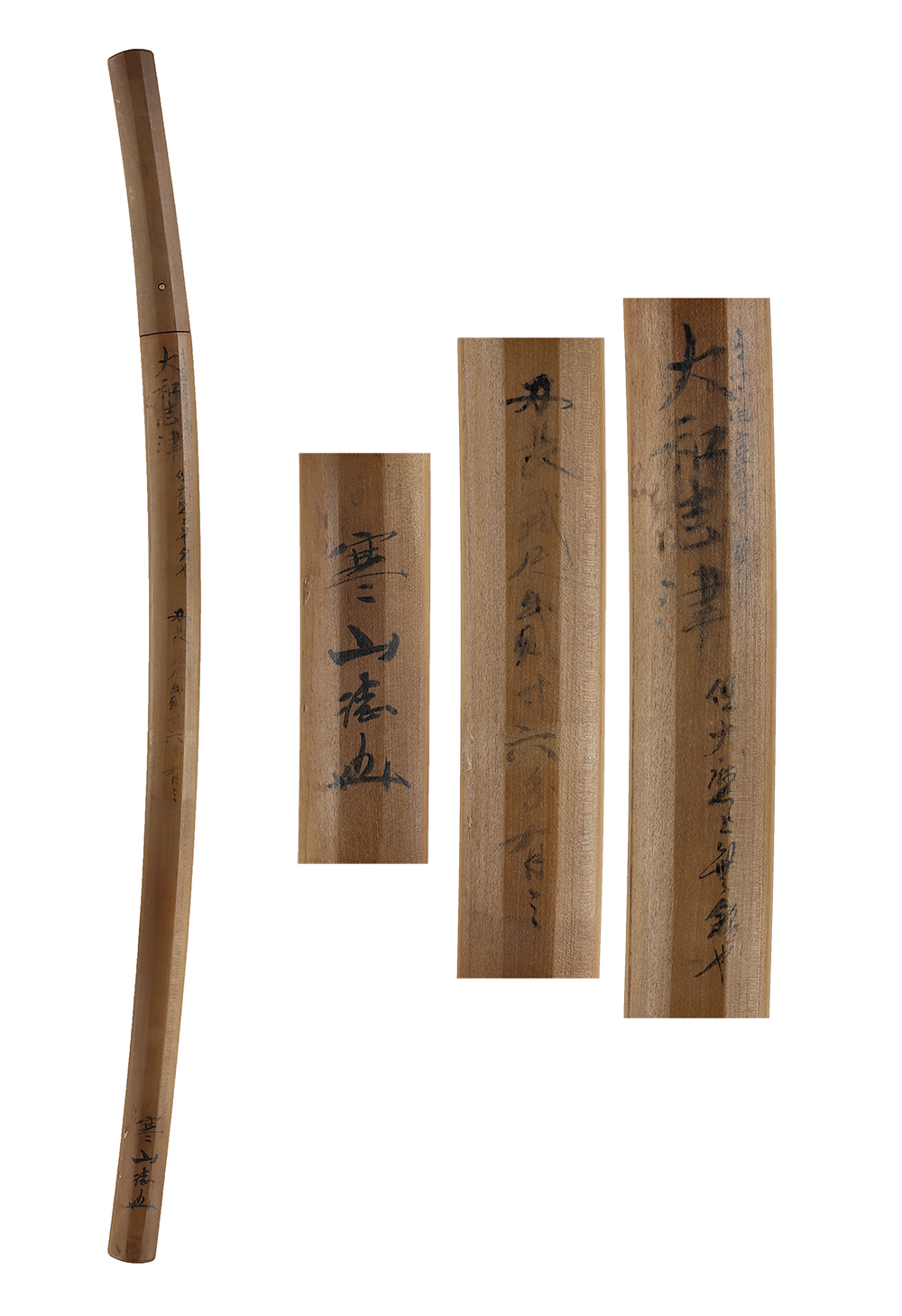
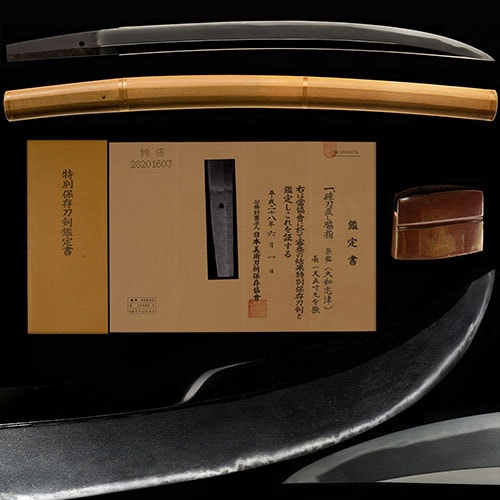
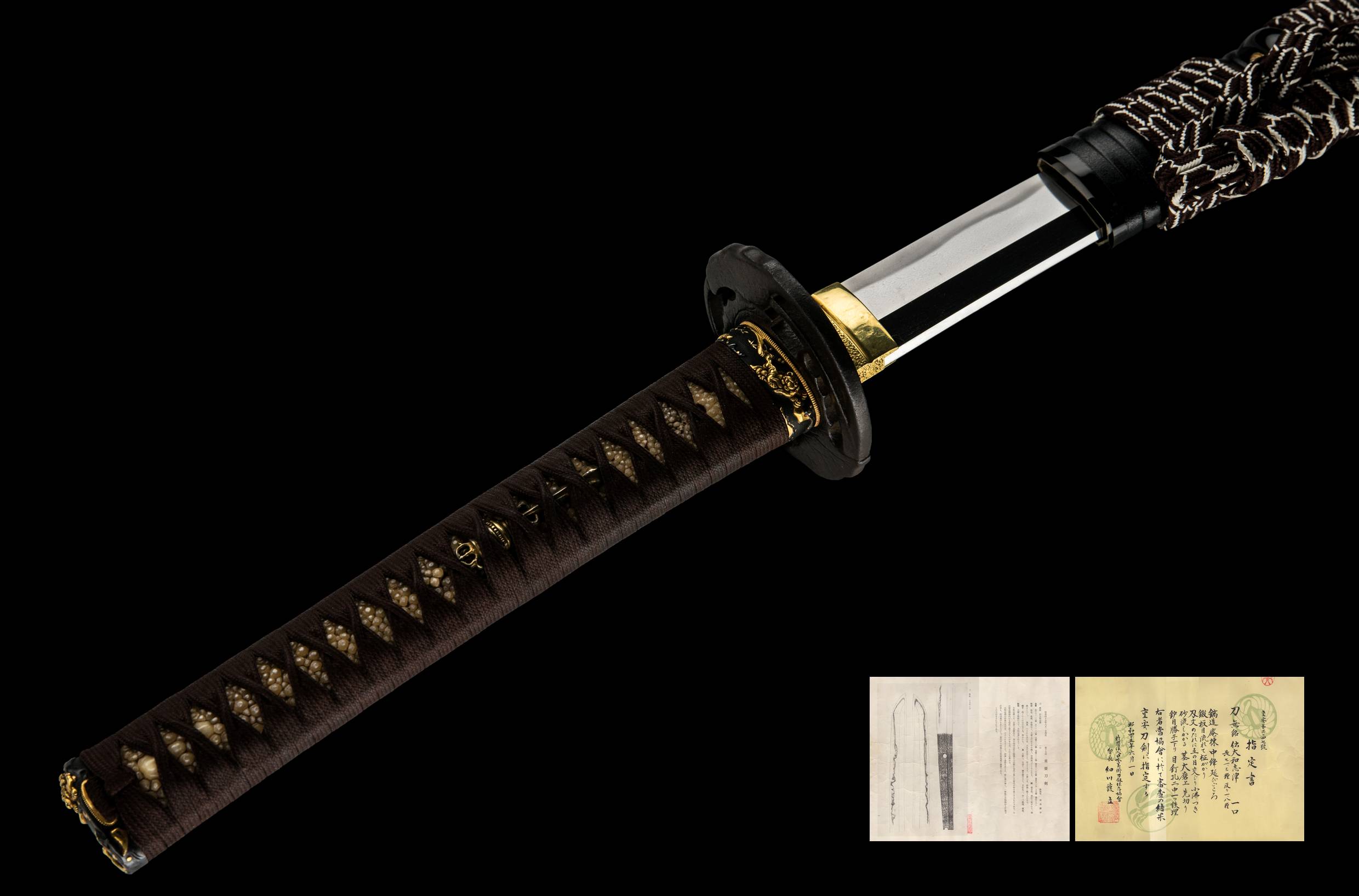
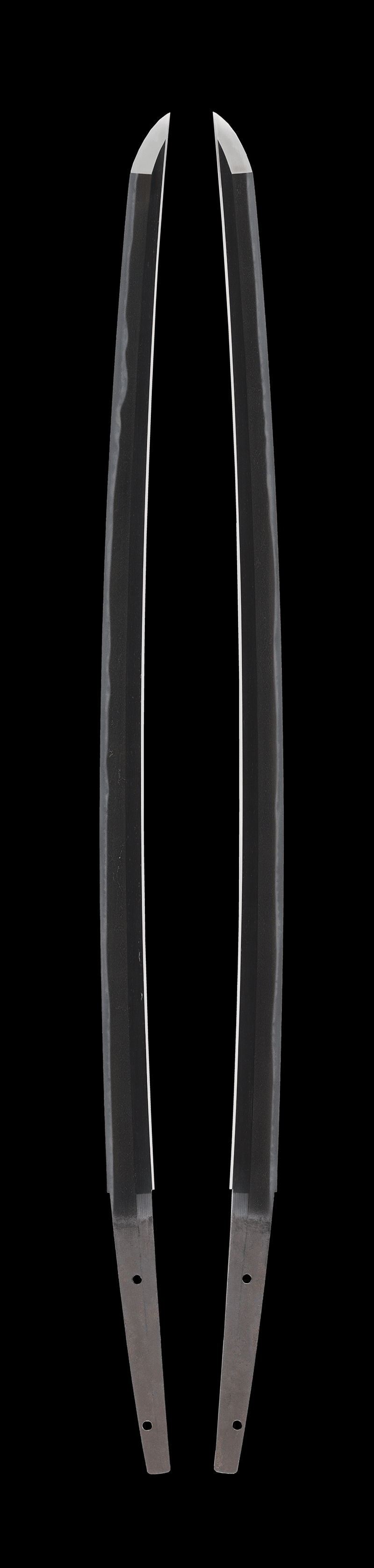
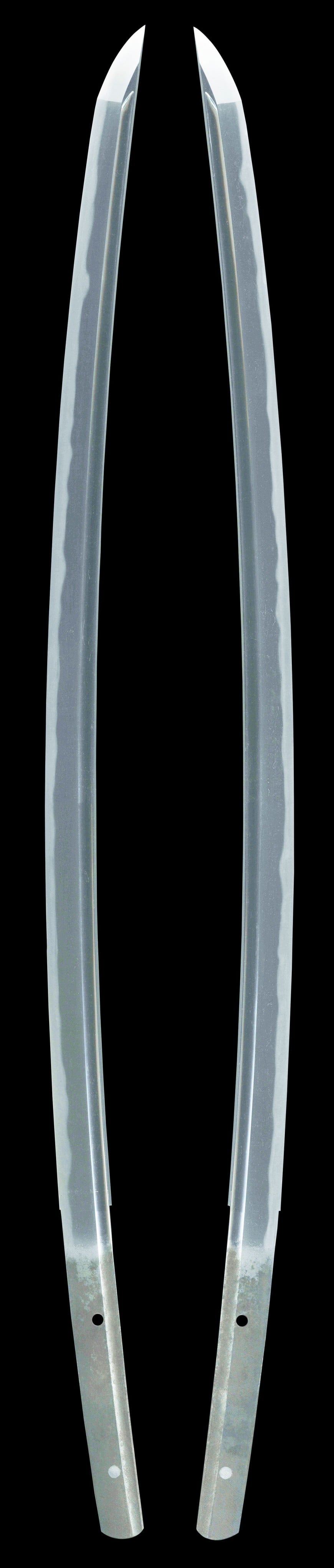
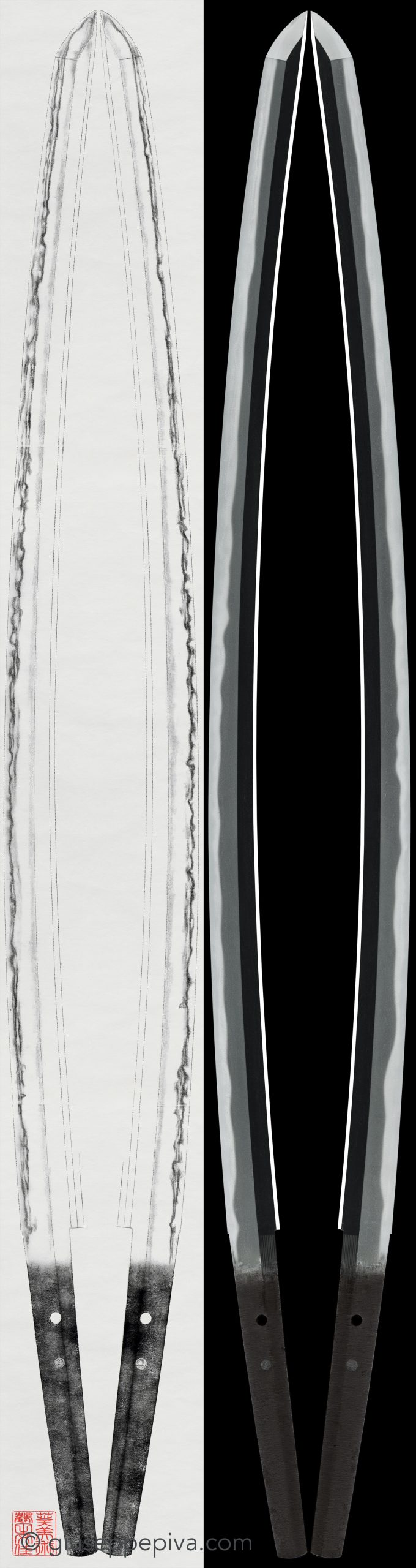
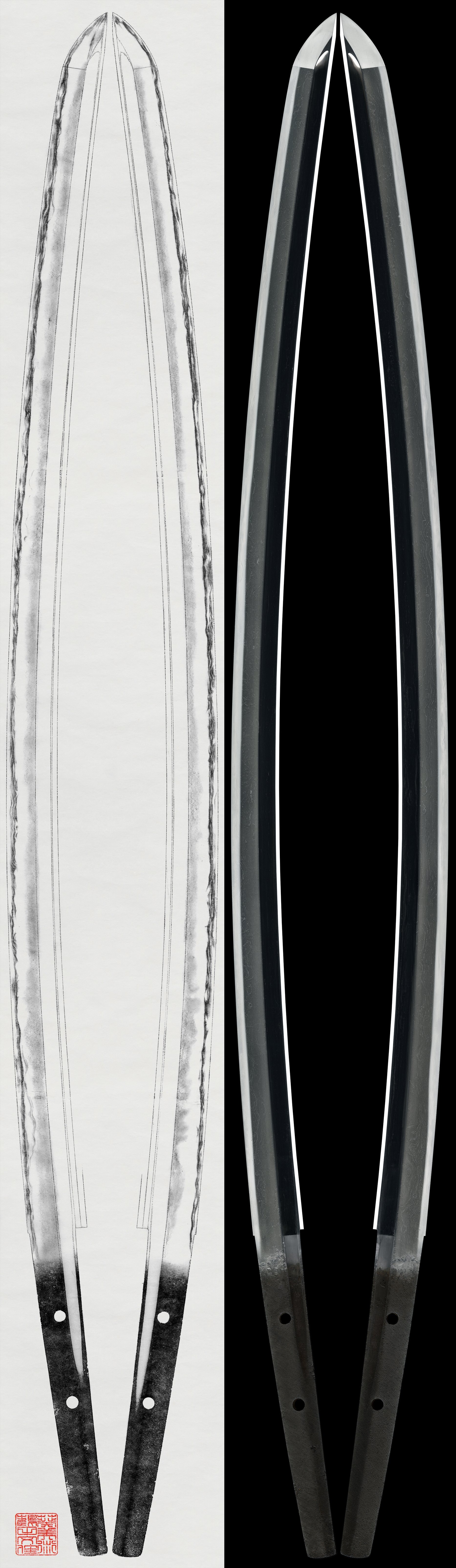
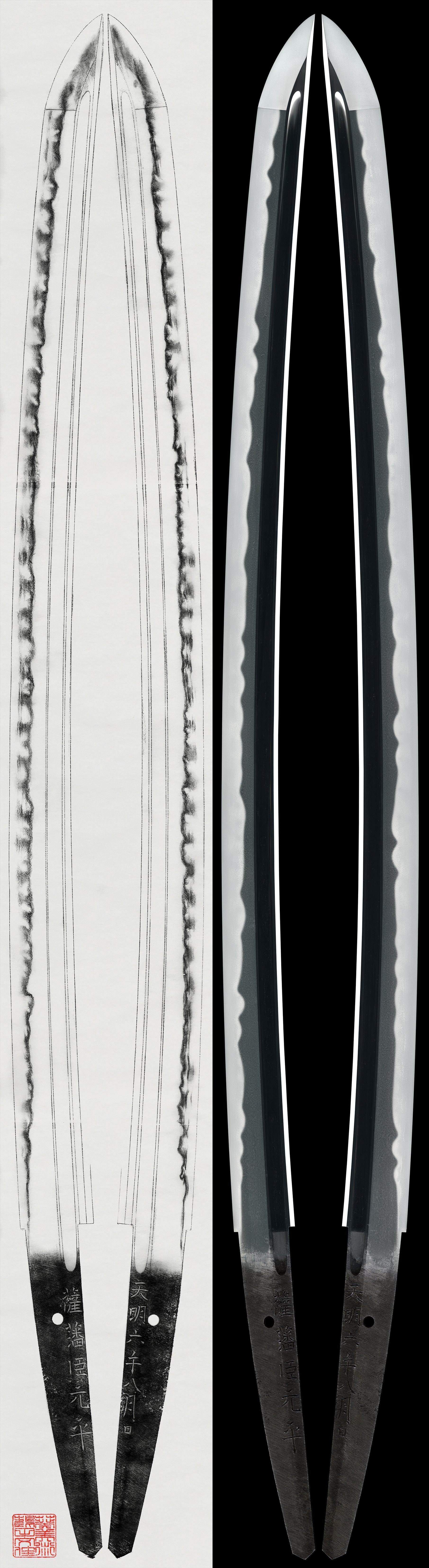
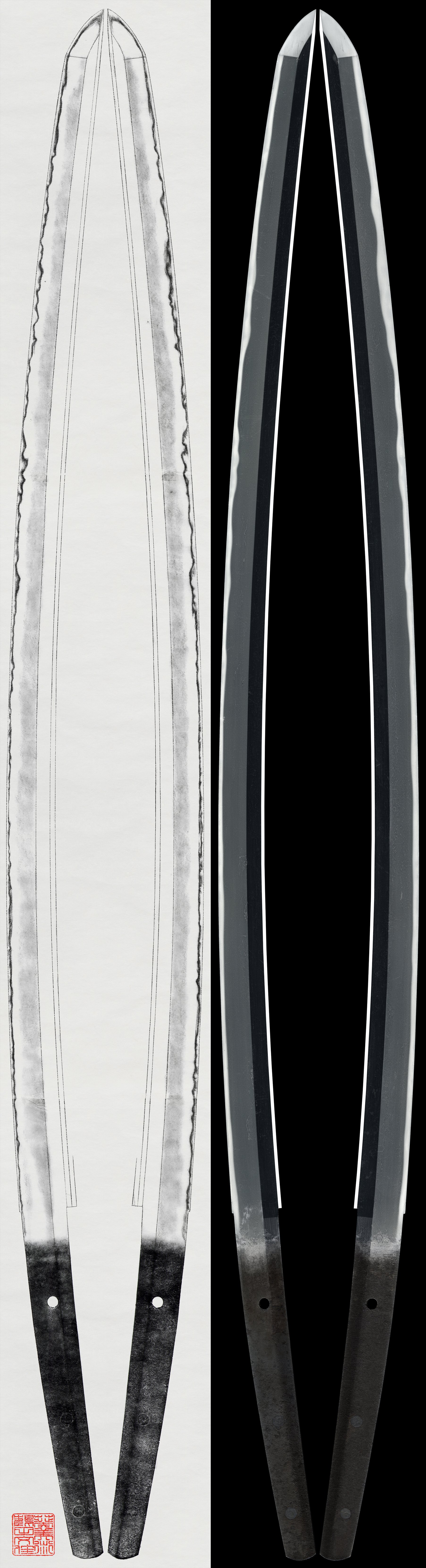
This is an o-suriage, unsigned katana attributed to Yamato-Shizu, a school known for retaining strong Yamato tradition elements. It features a substantial mihaba and kasane, with an exceptionally well-forged, fine ko-itame hada and a low gunome-midare hamon. The blade is a 16th NBTHK Juyo Token, dating from the late Nanbokucho period to the early Kamakura period.

NBTHK Setsumei

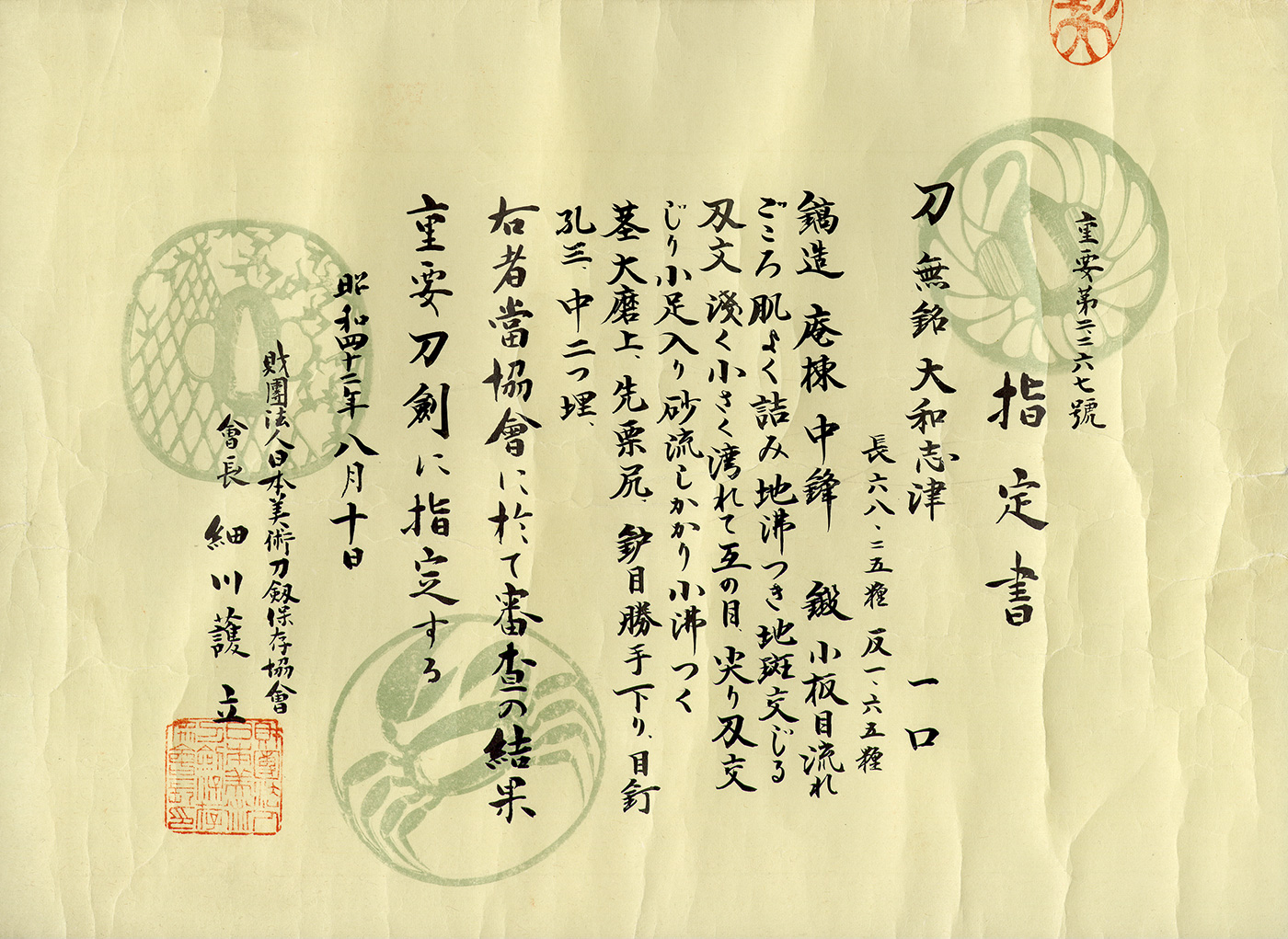
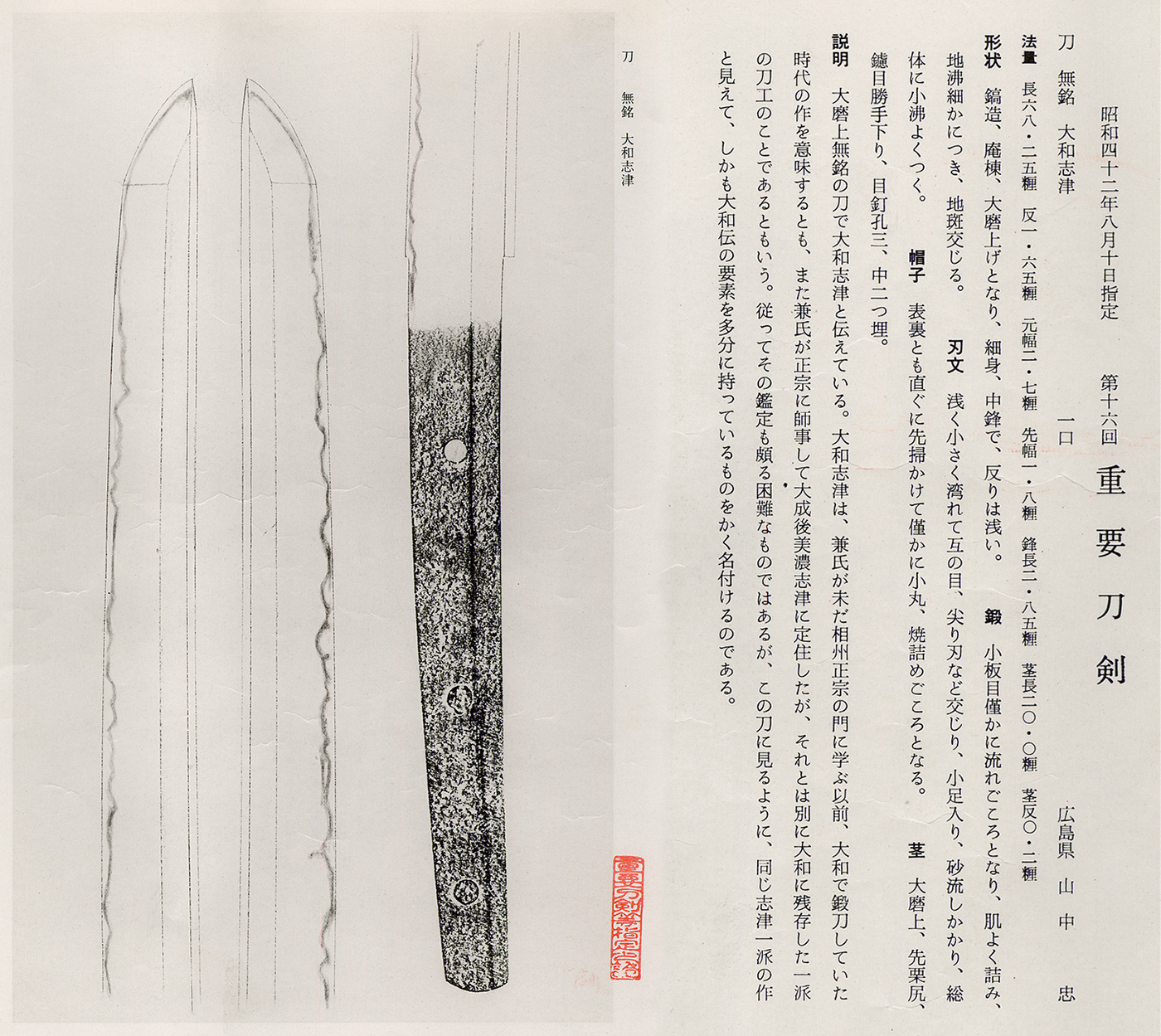
Jūyō-Tōken, 16th Session — Designated August 10, 1967 Katana, mumei: Yamato Shizu (大和志津) 1 item. Measurements Nagasa 68.25 cm, sori 1.65 cm, motohaba 2.7 cm, sakihaba 1.8 cm, kissaki-nagasa 2.85 cm, nakago-nagasa 20.0 cm, nakago-sori 0.2 cm Description Keijō: shinogi-zukuri, iori-mune; ō-suriage; slender mihaba with chū-kissaki; the sori is shallow. Kitae: ko-itame with a slight tendency toward nagare-gokoro; the grain is well-packed; fine ji-nie adheres, and jifu is intermingled. Hamon: shallow and small, with an urumi (moist/soft) quality; a mixture of gunome and togariba; ko-ashi enter and sunagashi runs through; overall ko-nie adheres well. Bōshi: on both omote and ura, sugu; toward the point it becomes hakikake; a slight ko-maru, with a tendency toward yakitsume. Horimono: None. Nakago: ō-suriage; yasurime are katte-sagari; three mekugi-ana, with the central two plugged; nakago-jiri is large kurijiri. Artisan Yamato Shizu Era Late Kamakura to early Nanbokuchō period Explanation This is an ō-suriage, mumei katana that has been handed down as Yamato Shizu. Concerning Yamato Shizu, it is said either that the term denotes works forged by Kaneuji during the period when, before studying under the Sagami master Masamune, he was still making swords in Yamato; or else that, although Kaneuji settled permanently at Shizu in Mino after having apprenticed under Masamune and achieving maturity, there existed separately a group of swordsmiths who remained in Yamato, and that this term refers to them. Accordingly, appraising such works is extremely difficult. However, as seen in this blade, when a work appears to be by the same Shizu group and, moreover, possesses a considerable measure of Yamato-tradition elements, it is designated by this name.

NihontoWatch MonNihontoWatch
MarketEncyclopediaKantei
Swords›Yamato-den›Shizu›Yamato Shizu›Katana: Mumei (Unsigned) Yamato-Shizu (16th NBTHK Juyo Token)
katanaJūyō
Yamato Shizu School

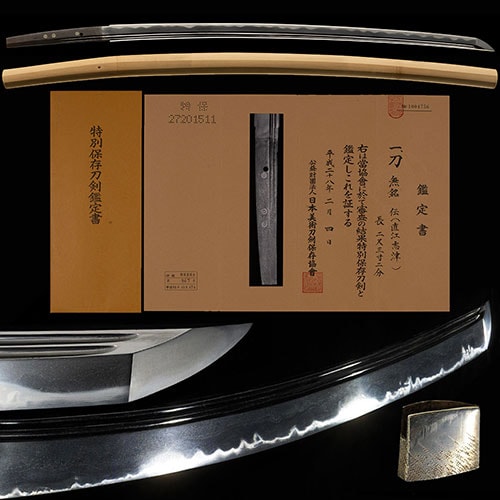
Katana: Mumei (Unsigned) Yamato-Shizu (16th NBTHK Juyo Token)

mumei · Yamato-Shizu · Nanbokucho · nagasa 68cm · sori 1.8cm

¥2,700,000
Visit seller website →
KatanaJūyō
Could you name the smith from the blade alone? Today’s kantei →
Yamato Shizu School — 1 of 6
Yamato Shizu School — 2 of 6
Yamato Shizu School — 3 of 6
Yamato Shizu School — 4 of 6
Yamato Shizu School — 5 of 6
Yamato Shizu School — 6 of 6
1 / 6
1 / 6
Yamato Shizu School — 1 of 6Yamato Shizu School — 2 of 6Yamato Shizu School — 3 of 6Yamato Shizu School — 4 of 6Yamato Shizu School — 5 of 6Yamato Shizu School — 6 of 6
KatanaJūyō
Could you name the smith from the blade alone? Today’s kantei →
Measurements & details
Smith
Yamato Shizu School
Type
Katana
School
Yamato Shizu
Period
Nanbokucho
Province
Yamato
Signature
Unsigned(0% of this smith's designated works are signed)
Measurements
Nagasa 68cmSori 1.8cmMotohaba 2.74cmSakihaba 1.84cmKasane 0.52cmWeight 575g
Description

This is an o-suriage, unsigned katana attributed to Yamato-Shizu, a school known for retaining strong Yamato tradition elements. It features a substantial mihaba and kasane, with an exceptionally well-forged, fine ko-itame hada and a low gunome-midare hamon. The blade is a 16th NBTHK Juyo Token, dating from the late Nanbokucho period to the early Kamakura period.

NBTHK Zufu Commentary

Juyo #16

AI translation — may contain errors

-, 16th Session — Designated August 10, 1967

, : Yamato (大和志津)

1 item.

Measurements 68.25 cm, 1.65 cm, 2.7 cm, 1.8 cm, 2.85 cm, 20.0 cm, 0.2 cm

Description Keijō: , ; ; slender with ; the is shallow. : with a slight tendency toward ; the grain is well-packed; fine adheres, and is intermingled. : shallow and small, with an (moist/soft) quality; a mixture of and ; enter and runs through; overall adheres well. : on both and , ; toward the point it becomes ; a slight , with a tendency toward . : None. : ; are ; three , with the central two plugged; is large .

Artisan Yamato

Era Late to early period

Explanation This is an , that has been handed down as Yamato . Concerning Yamato , it is said either that the term denotes works forged by Kaneuji during the period when, before studying under the master Masamune, he was still making swords in Yamato; or else that, although Kaneuji settled permanently at in after having apprenticed under Masamune and achieving maturity, there existed separately a group of swordsmiths who remained in Yamato, and that this term refers to them.

Accordingly, appraising such works is extremely difficult. However, as seen in this blade, when a work appears to be by the group and, moreover, possesses a considerable measure of Yamato-tradition elements, it is designated by this name.

About the school

Yamato Shizu

大和志津

Yamato-den · Yamato

3 pieces on the market now

›

Within the broad family of Shizu work, the setsumei reserve the name "Yamato Shizu"[[c:1]] for a specific subset. In the original sense, the term denotes the blades Shizu Saburō Kaneuji (兼氏 / 包氏) made while still resident in Yamato Province, before he settled at Shizu in Tagi District of Mino, during the years he signed with the characters read Kanetsugu (包氏). Kaneuji had trained first in the Yamato tradition of the Tegai line before entering the workshop of Masamune, becoming counted among the Masamune Juttetsu, and his Yamato roots persisted in the work he produced prior to the Mino removal. " The corpus accordingly spans the late Kamakura through the Nanbokuchō period, and most surviving examples are mumei, ō-suriage katana whose attribution rests on workmanship rather than signature. The shared vocabulary across these blades is consistent. The kitae is itame that flows and inclines toward masame, the grain often standing (hada-dachi), with mokume and nagare mixed in; near the edge the masame grows conspicuous. Thick ji-nie adheres, chikei enter frequently, the steel is sometimes slightly blackish, and a faint nie-utsuri or jifu-like texture may appear. The hamon rests on a suguha or ko-notare base into which gunome, ko-gunome, and a pointed edge (togariba, togari-gokoro) are mixed, with ashi and yō entering well.

Nie adheres thickly, the nioiguchi is bright, and along the habuchi the setsumei repeatedly note hotsure, nijūba, kuichigai-ba, uchi-noke, and yubashiri, with tobiyaki in places. Kinsuji and sunagashi run conspicuously, and the bōshi tends to hakikake, often turning toward yakizume or a flame-like (kaen-fū) form, sometimes finishing ko-maru. The judges describe this as a Yamato-den temperament intermingled with Soshu-den and Mino character. Recognition turns on that balance: against Shizu proper, the Yamato coloration shows in the high shinogi, the masame-laden flowing grain, the hotsure and kuichigai-ba along the edge, and the swept, flame-like bōshi; against Naoe Shizu, the work reads earlier and more nie-laden, closer to Kaneuji's own hand than to the later, calmer Mino continuation. In kantei the diagnostic weight falls on the masame-inclined standing grain, the suguha-to-ko-notare edge carrying gunome and togariba, and the dense Yamato-type habuchi activity (nijūba, kuichigai-ba, uchi-noke, yubashiri) coupled with bright nie and frequent kinsuji and sunagashi; the yakizume or kaen-style bōshi confirms the reading, and one judge likened a particularly fine ground to Hōenaga (包永) of the Yamato homeland. The signed tantō bear out the lineage: the Kanetsugu tantō with the gō "Sansui"[[c:2]], and another signed piece bestowed by the shogunal house upon the Makino family, both anchor the group to a documented name-line, while certain midare passages were judged to recall the meibutsu Bunbe Shizu. Provenance recorded in the setsumei reaches into prominent houses: a katana transmitted in the Chōfu Mōri family of Nagato, and a blade held as the personal sword of Ōmura Masujirō. Taken together, the Yamato Shizu blades occupy a distinct position between the Yamato schools that formed Kaneuji and the Soshu manner he carried into Mino, a grouping the NBTHK treats as readily affirmable on the strength of its grain and its activity. Learn more →

1 recorded smiths113 designated works
Leading smiths
SmithEraDesignated
Kaneuji包氏1350-137519
Explore the Yamato Shizu school →

Historical context

Yamato in the Nanbokuchō period

›

When the Southern Court made its capital at Yoshino, in Yamato itself, the province’s schools were at their height: the late Tegai line, Shikkake Norinaga, and the pure masame of Hōshō. Their technique was already spreading across the provinces.

Yamato in the Nanbokuchō period →

NBTHK Certificate
Jūyō Tōken重要刀剣
Important Sword
›

A blade of top-grade workmanship and condition, formally judged to rank with a nationally recognized Important Art Object (Jūyō Bijutsuhin). Awarded only at the NBTHK’s competitive annual examination.

Of Japan’s roughly 2.5 million registered swords, only 12,307 (about 1 in 203) have ever attained Jūyō.

About the NBTHK›

The NBTHK (Nihon Bijutsu Tōken Hozon Kyōkai, the Society for the Preservation of Japanese Art Swords) is a public-interest incorporated foundation founded in 1948 and supervised by Japan’s Agency for Cultural Affairs (Bunkachō); it is based at the Japanese Sword Museum in Tokyo. Its expert panels physically examine each submitted work (shinsa) and issue a certificate (kanteishō) ranking it by artistic and historical merit. NBTHK papers are the most widely recognized standard of authentication for Japanese swords and fittings.

NBTHK official site→
Seller
A
Aoi Art
🇯🇵Ships from Japan
›
✓Verified dealeraoijapan.com
Settles in JPY
✓Ships worldwide✓English supportWire transferPayPalCredit card
Return policy

If you wish to return an item, please notify us within 3 days of receipt. After this period we cannot accept cancellations. Please ship the return to us within 5 business days. Cancellation is conditional on the item being kept in the same condition as at the time of sale, so please handle it with care.

View all of Aoi Art’s listings→View this item on the dealer’s site→

Previously sold — Yamato Shizu School

View all →
Eirakudo
Tokuho
Wakizashi - Tokuho - by Yamato Shizu School - Yamato Shizu Wakizashi - Tokubetsu Hozon TokenWakizashi - Tokuho - by Yamato Shizu School - Yamato Shizu Wakizashi - Tokubetsu Hozon Token
Sold

Wakizashi

ByYamato Shizu School
SOLD
Tokka Biz
Hozon
Wakizashi - Hozon - by Yamato Shizu School - Attributed to Yamato ShizuWakizashi - Hozon - by Yamato Shizu School - Attributed to Yamato Shizu
Sold

Wakizashi

ByYamato Shizu School
SOLD
Eirakudo
Hozon
Katana - Hozon - by Yamato Shizu School - Yamato Shizu Katana Hozon TokenKatana - Hozon - by Yamato Shizu School - Yamato Shizu Katana Hozon Token
Sold

Katana

ByYamato Shizu School
SOLD
Unique Japan
Jūyō
Katana - Jūyō - by Yamato Shizu School - Yamato ShizuKatana - Jūyō - by Yamato Shizu School - Yamato Shizu
Sold

Katana

ByYamato Shizu School
SOLD

More from the Yamato Shizu school

View all →
Aoi Art
Tokuho
Katana - Tokuho - by Yamato Shizu School - Yamato Shizu KaneujiKatana - Tokuho - by Yamato Shizu School - Yamato Shizu Kaneuji

Katana

ByYamato Shizu School
¥2,300,000
Iida Koendo
Tokuho
Katana - Tokuho - by Yamato Shizu School - Mumei Yamato SizuKatana - Tokuho - by Yamato Shizu School - Mumei Yamato Sizu

Katana

ByYamato Shizu School
¥2,200,000

More from the Shizu school

View all →
Wakeidou
Tokuho
Katana - Tokuho - by Naoe Shizu School - Mumei Naoe ShizuKatana - Tokuho - by Naoe Shizu School - Mumei Naoe Shizu

Katana

ByNaoe Shizu School
¥1,500,000
Choshuya
Tokuho
Katana - Tokuho - by Naoe Shizu School - Unsigned (O-suriage), attributed to Naoe ShizuKatana - Tokuho - by Naoe Shizu School - Unsigned (O-suriage), attributed to Naoe Shizu

Katana

ByNaoe Shizu School
Ask
Sanmei
Tokuho
Katana - Tokuho - by Naoe Shizu School - Katana unsigned attributed to a work of Naoe-ShizuKatana - Tokuho - by Naoe Shizu School - Katana unsigned attributed to a work of Naoe-Shizu

Katana

ByNaoe Shizu School
¥1,350,000
Aoi Art
Tokuho
Katana - Tokuho - by Naoe Shizu School - Mumei (Attributed to Naoe Shizu)Katana - Tokuho - by Naoe Shizu School - Mumei (Attributed to Naoe Shizu)

Katana

ByNaoe Shizu School
¥2,200,000
Eirakudo
Tokuho
Katana - Tokuho - by Naoe Shizu School - Naoe Shizu - Tokubetsu Hozon TokenKatana - Tokuho - by Naoe Shizu School - Naoe Shizu - Tokubetsu Hozon Token

Katana

ByNaoe Shizu School
Ask
Giuseppe Piva
Jūyō
Katana - Jūyō - by Shizu School - Shizu - Juyo Token, circa 1320Katana - Jūyō - by Shizu School - Shizu - Juyo Token, circa 1320

Katana

ByShizu School
Ask
Sanmei
Tokuho
Katana - Tokuho - by Naoe Shizu School - Unsigned Kanenobu with Higo Uchigatana KoshiraeKatana - Tokuho - by Naoe Shizu School - Unsigned Kanenobu with Higo Uchigatana Koshirae

Katana

ByNaoe Shizu School
Ask
Choshuya
Tokuho
Katana - Tokuho - by Naoe Shizu Kanenobu - O-suriage Mumei KanenobuKatana - Tokuho - by Naoe Shizu Kanenobu - O-suriage Mumei Kanenobu

Katana

ByNaoe Shizu Kanenobu
Ask

More from the Yamato tradition

View all →
Aoi Art
Jūyō
Katana - Jūyō - by Taima School - Mumei (Taima)Katana - Jūyō - by Taima School - Mumei (Taima)

Katana

ByTaima School
¥4,500,000
Eirakudo
Tokuho
Katana - Tokuho - by Shikkake School - Shikkake - Tokubetsu Hozon TokenKatana - Tokuho - by Shikkake School - Shikkake - Tokubetsu Hozon Token

Katana

ByShikkake School
¥950,000
Goushuya
Tokujū
Katana - Tokuju - by Satsuma Yasuyo - Tokubetsu Juyo Token (One-Leaf Aoi Mon) Shume no Kami Ichihei Fujiwara Ason Yasuyo, Made in Satsushu Kirei-gun on an Auspicious Day in March, Kyoho 12Katana - Tokuju - by Satsuma Yasuyo - Tokubetsu Juyo Token (One-Leaf Aoi Mon) Shume no Kami Ichihei Fujiwara Ason Yasuyo, Made in Satsushu Kirei-gun on an Auspicious Day in March, Kyoho 12

Katana

BySatsuma Yasuyo
Ask
Aoi Art
Jūyō
Katana - Jūyō - by Satsuma Motohira - Sappan Shin Motohira (1786)Katana - Jūyō - by Satsuma Motohira - Sappan Shin Motohira (1786)

Katana

BySatsuma Motohira
¥5,000,000
Sanmei
Tokuho
Tachi - Tokuho - by Senjuin School - Unsigned SenjuinTachi - Tokuho - by Senjuin School - Unsigned Senjuin

Tachi

BySenjuin School
¥1,250,000
Choshuya
Tokuho
Katana - Tokuho - by Tegai School - Unsigned (O-suriage) TegaiKatana - Tokuho - by Tegai School - Unsigned (O-suriage) Tegai

Katana

ByTegai School
¥1,250,000
Touken Komachi
Tokuho
Katana - Tokuho - by Senjuin School - Senjuin - ShirasayaKatana - Tokuho - by Senjuin School - Senjuin - Shirasaya

Katana

BySenjuin School
¥880,000
Touken Komachi
Tokuho
Katana - Tokuho - by Tegai Kanenaga - Katana in ShirasayaKatana - Tokuho - by Tegai Kanenaga - Katana in Shirasaya

Katana

ByTegai Kanenaga
¥3,000,000

Swords

  • Katana
  • Wakizashi
  • Tantō
  • Tachi
  • Naginata
  • Yari
  • Japanese Swords
  • Samurai Swords

Fittings

  • Tsuba
  • Fuchi-Kashira
  • Kozuka
  • Menuki
  • Sword Guards (Tsuba)

Armor

  • Kabuto
  • Samurai Armor
  • All Samurai Armor

By Certification

  • Tokujū
  • Jūyō
  • Tokuho
  • Hozon

Resources

  • Dealer Directory
  • Artist Directory
  • The Daily Kantei
  • Glossary
  • Browse All
Nihontowatch© 2026
TermsPrivacyCookiesAbout

¥2,700,000

View on Aoi Art

Description

This is an o-suriage, unsigned katana attributed to Yamato-Shizu, a school known for retaining strong Yamato tradition elements. It features a substantial mihaba and kasane, with an exceptionally well-forged, fine ko-itame hada and a low gunome-midare hamon. The blade is a 16th NBTHK Juyo Token, dating from the late Nanbokucho period to the early Kamakura period.

NBTHK Setsumei

Jūyō-Tōken, 16th Session — Designated August 10, 1967 Katana, mumei: Yamato Shizu (大和志津) 1 item. Measurements Nagasa 68.25 cm, sori 1.65 cm, motohaba 2.7 cm, sakihaba 1.8 cm, kissaki-nagasa 2.85 cm, nakago-nagasa 20.0 cm, nakago-sori 0.2 cm Description Keijō: shinogi-zukuri, iori-mune; ō-suriage; slender mihaba with chū-kissaki; the sori is shallow. Kitae: ko-itame with a slight tendency toward nagare-gokoro; the grain is well-packed; fine ji-nie adheres, and jifu is intermingled. Hamon: shallow and small, with an urumi (moist/soft) quality; a mixture of gunome and togariba; ko-ashi enter and sunagashi runs through; overall ko-nie adheres well. Bōshi: on both omote and ura, sugu; toward the point it becomes hakikake; a slight ko-maru, with a tendency toward yakitsume. Horimono: None. Nakago: ō-suriage; yasurime are katte-sagari; three mekugi-ana, with the central two plugged; nakago-jiri is large kurijiri. Artisan Yamato Shizu Era Late Kamakura to early Nanbokuchō period Explanation This is an ō-suriage, mumei katana that has been handed down as Yamato Shizu. Concerning Yamato Shizu, it is said either that the term denotes works forged by Kaneuji during the period when, before studying under the Sagami master Masamune, he was still making swords in Yamato; or else that, although Kaneuji settled permanently at Shizu in Mino after having apprenticed under Masamune and achieving maturity, there existed separately a group of swordsmiths who remained in Yamato, and that this term refers to them. Accordingly, appraising such works is extremely difficult. However, as seen in this blade, when a work appears to be by the same Shizu group and, moreover, possesses a considerable measure of Yamato-tradition elements, it is designated by this name.

NihontoWatch MonNihontoWatch
MarketEncyclopediaKantei
Swords›Yamato-den›Shizu›Yamato Shizu›Katana: Mumei (Unsigned) Yamato-Shizu (16th NBTHK Juyo Token)
katanaJūyō
Yamato Shizu School

Katana: Mumei (Unsigned) Yamato-Shizu (16th NBTHK Juyo Token)

mumei · Yamato-Shizu · Nanbokucho · nagasa 68cm · sori 1.8cm

¥2,700,000
Visit seller website →
KatanaJūyō
Could you name the smith from the blade alone? Today’s kantei →
Yamato Shizu School — 1 of 6
Yamato Shizu School — 2 of 6
Yamato Shizu School — 3 of 6
Yamato Shizu School — 4 of 6
Yamato Shizu School — 5 of 6
Yamato Shizu School — 6 of 6
1 / 6
1 / 6
Yamato Shizu School — 1 of 6Yamato Shizu School — 2 of 6Yamato Shizu School — 3 of 6Yamato Shizu School — 4 of 6Yamato Shizu School — 5 of 6Yamato Shizu School — 6 of 6
KatanaJūyō
Could you name the smith from the blade alone? Today’s kantei →
Measurements & details
Smith
Yamato Shizu School
Type
Katana
School
Yamato Shizu
Period
Nanbokucho
Province
Yamato
Signature
Unsigned(0% of this smith's designated works are signed)
Measurements
Nagasa 68cmSori 1.8cmMotohaba 2.74cmSakihaba 1.84cmKasane 0.52cmWeight 575g
Description

This is an o-suriage, unsigned katana attributed to Yamato-Shizu, a school known for retaining strong Yamato tradition elements. It features a substantial mihaba and kasane, with an exceptionally well-forged, fine ko-itame hada and a low gunome-midare hamon. The blade is a 16th NBTHK Juyo Token, dating from the late Nanbokucho period to the early Kamakura period.

NBTHK Zufu Commentary

Juyo #16

AI translation — may contain errors

-, 16th Session — Designated August 10, 1967

, : Yamato (大和志津)

1 item.

Measurements 68.25 cm, 1.65 cm, 2.7 cm, 1.8 cm, 2.85 cm, 20.0 cm, 0.2 cm

Description Keijō: , ; ; slender with ; the is shallow. : with a slight tendency toward ; the grain is well-packed; fine adheres, and is intermingled. : shallow and small, with an (moist/soft) quality; a mixture of and ; enter and runs through; overall adheres well. : on both and , ; toward the point it becomes ; a slight , with a tendency toward . : None. : ; are ; three , with the central two plugged; is large .

Artisan Yamato

Era Late to early period

Explanation This is an , that has been handed down as Yamato . Concerning Yamato , it is said either that the term denotes works forged by Kaneuji during the period when, before studying under the master Masamune, he was still making swords in Yamato; or else that, although Kaneuji settled permanently at in after having apprenticed under Masamune and achieving maturity, there existed separately a group of swordsmiths who remained in Yamato, and that this term refers to them.

Accordingly, appraising such works is extremely difficult. However, as seen in this blade, when a work appears to be by the group and, moreover, possesses a considerable measure of Yamato-tradition elements, it is designated by this name.

About the school

Yamato Shizu

大和志津

Yamato-den · Yamato

3 pieces on the market now

›

Within the broad family of Shizu work, the setsumei reserve the name "Yamato Shizu"[[c:1]] for a specific subset. In the original sense, the term denotes the blades Shizu Saburō Kaneuji (兼氏 / 包氏) made while still resident in Yamato Province, before he settled at Shizu in Tagi District of Mino, during the years he signed with the characters read Kanetsugu (包氏). Kaneuji had trained first in the Yamato tradition of the Tegai line before entering the workshop of Masamune, becoming counted among the Masamune Juttetsu, and his Yamato roots persisted in the work he produced prior to the Mino removal. " The corpus accordingly spans the late Kamakura through the Nanbokuchō period, and most surviving examples are mumei, ō-suriage katana whose attribution rests on workmanship rather than signature. The shared vocabulary across these blades is consistent. The kitae is itame that flows and inclines toward masame, the grain often standing (hada-dachi), with mokume and nagare mixed in; near the edge the masame grows conspicuous. Thick ji-nie adheres, chikei enter frequently, the steel is sometimes slightly blackish, and a faint nie-utsuri or jifu-like texture may appear. The hamon rests on a suguha or ko-notare base into which gunome, ko-gunome, and a pointed edge (togariba, togari-gokoro) are mixed, with ashi and yō entering well.

Nie adheres thickly, the nioiguchi is bright, and along the habuchi the setsumei repeatedly note hotsure, nijūba, kuichigai-ba, uchi-noke, and yubashiri, with tobiyaki in places. Kinsuji and sunagashi run conspicuously, and the bōshi tends to hakikake, often turning toward yakizume or a flame-like (kaen-fū) form, sometimes finishing ko-maru. The judges describe this as a Yamato-den temperament intermingled with Soshu-den and Mino character. Recognition turns on that balance: against Shizu proper, the Yamato coloration shows in the high shinogi, the masame-laden flowing grain, the hotsure and kuichigai-ba along the edge, and the swept, flame-like bōshi; against Naoe Shizu, the work reads earlier and more nie-laden, closer to Kaneuji's own hand than to the later, calmer Mino continuation. In kantei the diagnostic weight falls on the masame-inclined standing grain, the suguha-to-ko-notare edge carrying gunome and togariba, and the dense Yamato-type habuchi activity (nijūba, kuichigai-ba, uchi-noke, yubashiri) coupled with bright nie and frequent kinsuji and sunagashi; the yakizume or kaen-style bōshi confirms the reading, and one judge likened a particularly fine ground to Hōenaga (包永) of the Yamato homeland. The signed tantō bear out the lineage: the Kanetsugu tantō with the gō "Sansui"[[c:2]], and another signed piece bestowed by the shogunal house upon the Makino family, both anchor the group to a documented name-line, while certain midare passages were judged to recall the meibutsu Bunbe Shizu. Provenance recorded in the setsumei reaches into prominent houses: a katana transmitted in the Chōfu Mōri family of Nagato, and a blade held as the personal sword of Ōmura Masujirō. Taken together, the Yamato Shizu blades occupy a distinct position between the Yamato schools that formed Kaneuji and the Soshu manner he carried into Mino, a grouping the NBTHK treats as readily affirmable on the strength of its grain and its activity. Learn more →

1 recorded smiths113 designated works
Leading smiths
SmithEraDesignated
Kaneuji包氏1350-137519
Explore the Yamato Shizu school →

Historical context

Yamato in the Nanbokuchō period

›

When the Southern Court made its capital at Yoshino, in Yamato itself, the province’s schools were at their height: the late Tegai line, Shikkake Norinaga, and the pure masame of Hōshō. Their technique was already spreading across the provinces.

Yamato in the Nanbokuchō period →

NBTHK Certificate
Jūyō Tōken重要刀剣
Important Sword
›

A blade of top-grade workmanship and condition, formally judged to rank with a nationally recognized Important Art Object (Jūyō Bijutsuhin). Awarded only at the NBTHK’s competitive annual examination.

Of Japan’s roughly 2.5 million registered swords, only 12,307 (about 1 in 203) have ever attained Jūyō.

About the NBTHK›

The NBTHK (Nihon Bijutsu Tōken Hozon Kyōkai, the Society for the Preservation of Japanese Art Swords) is a public-interest incorporated foundation founded in 1948 and supervised by Japan’s Agency for Cultural Affairs (Bunkachō); it is based at the Japanese Sword Museum in Tokyo. Its expert panels physically examine each submitted work (shinsa) and issue a certificate (kanteishō) ranking it by artistic and historical merit. NBTHK papers are the most widely recognized standard of authentication for Japanese swords and fittings.

NBTHK official site→
Seller
A
Aoi Art
🇯🇵Ships from Japan
›
✓Verified dealeraoijapan.com
Settles in JPY
✓Ships worldwide✓English supportWire transferPayPalCredit card
Return policy

If you wish to return an item, please notify us within 3 days of receipt. After this period we cannot accept cancellations. Please ship the return to us within 5 business days. Cancellation is conditional on the item being kept in the same condition as at the time of sale, so please handle it with care.

View all of Aoi Art’s listings→View this item on the dealer’s site→

Previously sold — Yamato Shizu School

View all →
Eirakudo
Tokuho
Wakizashi - Tokuho - by Yamato Shizu School - Yamato Shizu Wakizashi - Tokubetsu Hozon TokenWakizashi - Tokuho - by Yamato Shizu School - Yamato Shizu Wakizashi - Tokubetsu Hozon Token
Sold

Wakizashi

ByYamato Shizu School
SOLD
Tokka Biz
Hozon
Wakizashi - Hozon - by Yamato Shizu School - Attributed to Yamato ShizuWakizashi - Hozon - by Yamato Shizu School - Attributed to Yamato Shizu
Sold

Wakizashi

ByYamato Shizu School
SOLD
Eirakudo
Hozon
Katana - Hozon - by Yamato Shizu School - Yamato Shizu Katana Hozon TokenKatana - Hozon - by Yamato Shizu School - Yamato Shizu Katana Hozon Token
Sold

Katana

ByYamato Shizu School
SOLD
Unique Japan
Jūyō
Katana - Jūyō - by Yamato Shizu School - Yamato ShizuKatana - Jūyō - by Yamato Shizu School - Yamato Shizu
Sold

Katana

ByYamato Shizu School
SOLD

More from the Yamato Shizu school

View all →
Aoi Art
Tokuho
Katana - Tokuho - by Yamato Shizu School - Yamato Shizu KaneujiKatana - Tokuho - by Yamato Shizu School - Yamato Shizu Kaneuji

Katana

ByYamato Shizu School
¥2,300,000
Iida Koendo
Tokuho
Katana - Tokuho - by Yamato Shizu School - Mumei Yamato SizuKatana - Tokuho - by Yamato Shizu School - Mumei Yamato Sizu

Katana

ByYamato Shizu School
¥2,200,000

More from the Shizu school

View all →
Wakeidou
Tokuho
Katana - Tokuho - by Naoe Shizu School - Mumei Naoe ShizuKatana - Tokuho - by Naoe Shizu School - Mumei Naoe Shizu

Katana

ByNaoe Shizu School
¥1,500,000
Choshuya
Tokuho
Katana - Tokuho - by Naoe Shizu School - Unsigned (O-suriage), attributed to Naoe ShizuKatana - Tokuho - by Naoe Shizu School - Unsigned (O-suriage), attributed to Naoe Shizu

Katana

ByNaoe Shizu School
Ask
Sanmei
Tokuho
Katana - Tokuho - by Naoe Shizu School - Katana unsigned attributed to a work of Naoe-ShizuKatana - Tokuho - by Naoe Shizu School - Katana unsigned attributed to a work of Naoe-Shizu

Katana

ByNaoe Shizu School
¥1,350,000
Aoi Art
Tokuho
Katana - Tokuho - by Naoe Shizu School - Mumei (Attributed to Naoe Shizu)Katana - Tokuho - by Naoe Shizu School - Mumei (Attributed to Naoe Shizu)

Katana

ByNaoe Shizu School
¥2,200,000
Eirakudo
Tokuho
Katana - Tokuho - by Naoe Shizu School - Naoe Shizu - Tokubetsu Hozon TokenKatana - Tokuho - by Naoe Shizu School - Naoe Shizu - Tokubetsu Hozon Token

Katana

ByNaoe Shizu School
Ask
Giuseppe Piva
Jūyō
Katana - Jūyō - by Shizu School - Shizu - Juyo Token, circa 1320Katana - Jūyō - by Shizu School - Shizu - Juyo Token, circa 1320

Katana

ByShizu School
Ask
Sanmei
Tokuho
Katana - Tokuho - by Naoe Shizu School - Unsigned Kanenobu with Higo Uchigatana KoshiraeKatana - Tokuho - by Naoe Shizu School - Unsigned Kanenobu with Higo Uchigatana Koshirae

Katana

ByNaoe Shizu School
Ask
Choshuya
Tokuho
Katana - Tokuho - by Naoe Shizu Kanenobu - O-suriage Mumei KanenobuKatana - Tokuho - by Naoe Shizu Kanenobu - O-suriage Mumei Kanenobu

Katana

ByNaoe Shizu Kanenobu
Ask

More from the Yamato tradition

View all →
Aoi Art
Jūyō
Katana - Jūyō - by Taima School - Mumei (Taima)Katana - Jūyō - by Taima School - Mumei (Taima)

Katana

ByTaima School
¥4,500,000
Eirakudo
Tokuho
Katana - Tokuho - by Shikkake School - Shikkake - Tokubetsu Hozon TokenKatana - Tokuho - by Shikkake School - Shikkake - Tokubetsu Hozon Token

Katana

ByShikkake School
¥950,000
Goushuya
Tokujū
Katana - Tokuju - by Satsuma Yasuyo - Tokubetsu Juyo Token (One-Leaf Aoi Mon) Shume no Kami Ichihei Fujiwara Ason Yasuyo, Made in Satsushu Kirei-gun on an Auspicious Day in March, Kyoho 12Katana - Tokuju - by Satsuma Yasuyo - Tokubetsu Juyo Token (One-Leaf Aoi Mon) Shume no Kami Ichihei Fujiwara Ason Yasuyo, Made in Satsushu Kirei-gun on an Auspicious Day in March, Kyoho 12

Katana

BySatsuma Yasuyo
Ask
Aoi Art
Jūyō
Katana - Jūyō - by Satsuma Motohira - Sappan Shin Motohira (1786)Katana - Jūyō - by Satsuma Motohira - Sappan Shin Motohira (1786)

Katana

BySatsuma Motohira
¥5,000,000
Sanmei
Tokuho
Tachi - Tokuho - by Senjuin School - Unsigned SenjuinTachi - Tokuho - by Senjuin School - Unsigned Senjuin

Tachi

BySenjuin School
¥1,250,000
Choshuya
Tokuho
Katana - Tokuho - by Tegai School - Unsigned (O-suriage) TegaiKatana - Tokuho - by Tegai School - Unsigned (O-suriage) Tegai

Katana

ByTegai School
¥1,250,000
Touken Komachi
Tokuho
Katana - Tokuho - by Senjuin School - Senjuin - ShirasayaKatana - Tokuho - by Senjuin School - Senjuin - Shirasaya

Katana

BySenjuin School
¥880,000
Touken Komachi
Tokuho
Katana - Tokuho - by Tegai Kanenaga - Katana in ShirasayaKatana - Tokuho - by Tegai Kanenaga - Katana in Shirasaya

Katana

ByTegai Kanenaga
¥3,000,000

Swords

  • Katana
  • Wakizashi
  • Tantō
  • Tachi
  • Naginata
  • Yari
  • Japanese Swords
  • Samurai Swords

Fittings

  • Tsuba
  • Fuchi-Kashira
  • Kozuka
  • Menuki
  • Sword Guards (Tsuba)

Armor

  • Kabuto
  • Samurai Armor
  • All Samurai Armor

By Certification

  • Tokujū
  • Jūyō
  • Tokuho
  • Hozon

Resources

  • Dealer Directory
  • Artist Directory
  • The Daily Kantei
  • Glossary
  • Browse All
Nihontowatch© 2026
TermsPrivacyCookiesAbout

¥2,700,000

View on Aoi Art
NihontoWatch MonNihontoWatch
Market
Encyclopedia
Kantei
NihontoWatch MonNihontoWatch
Market
Encyclopedia
Kantei