When the Southern Court made its capital at Yoshino, in Yamato itself, the province’s schools were at their height: the late Tegai line, Shikkake Norinaga, and the pure masame of Hōshō. Their technique was already spreading across the provinces.
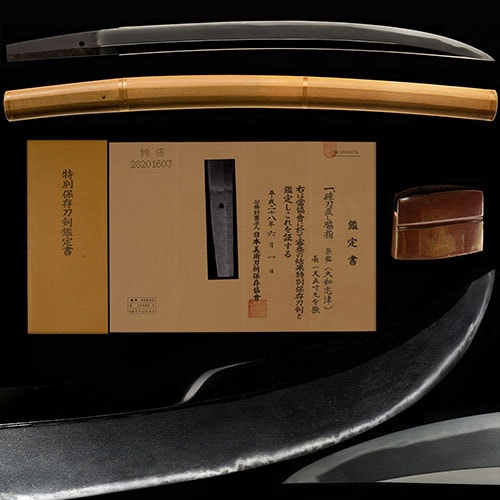
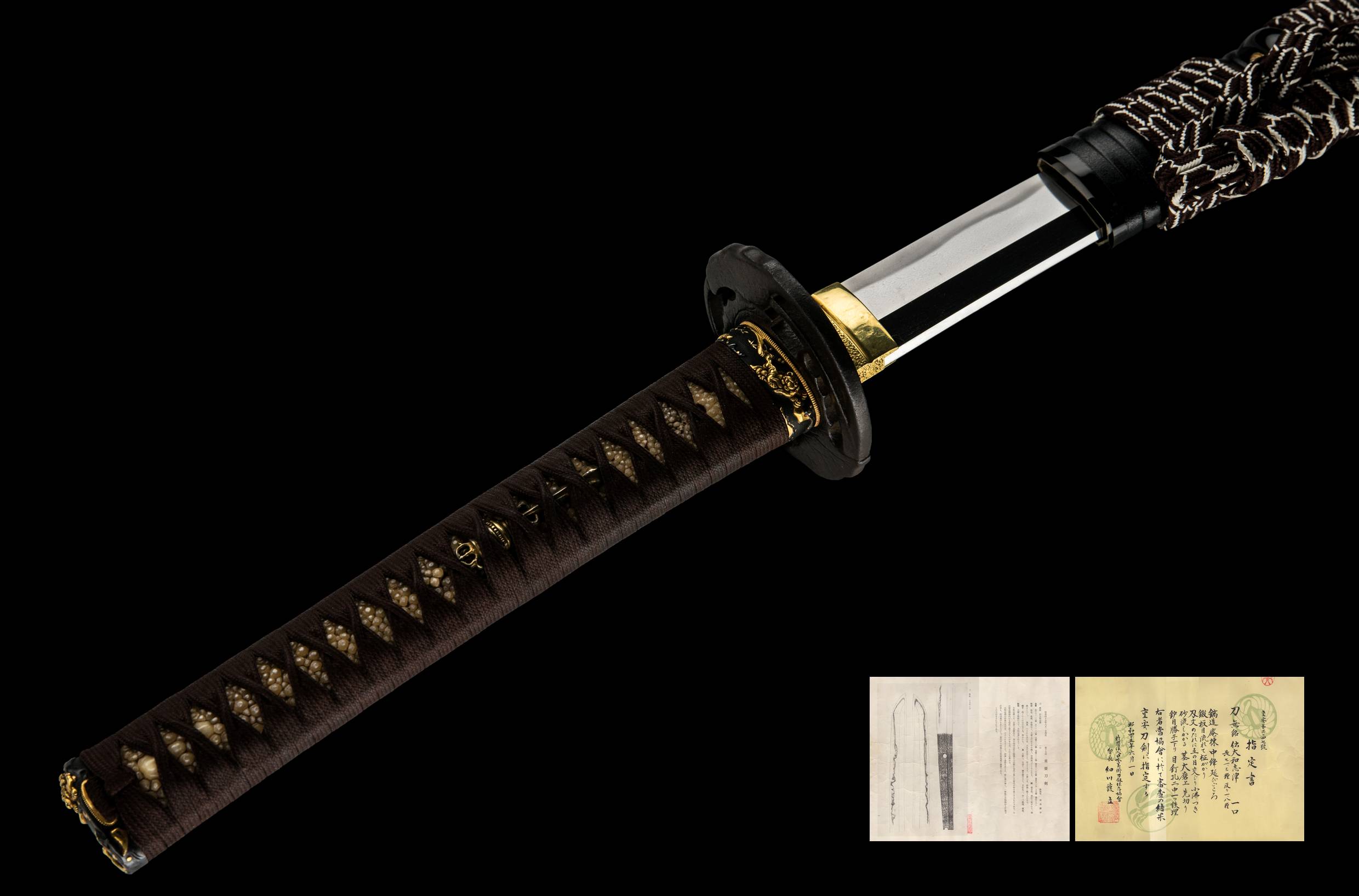
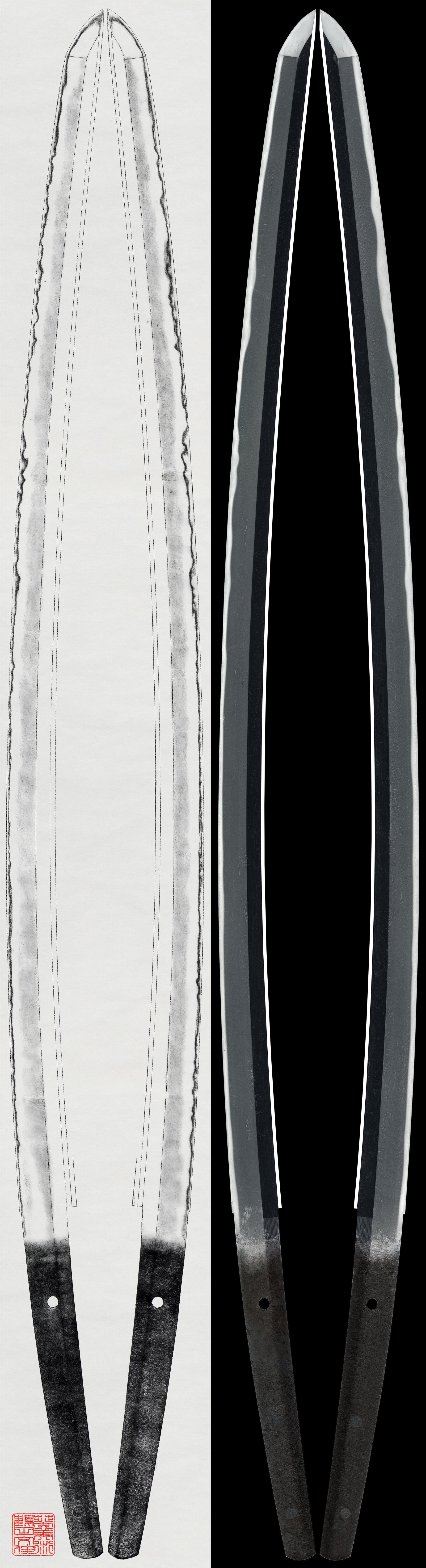
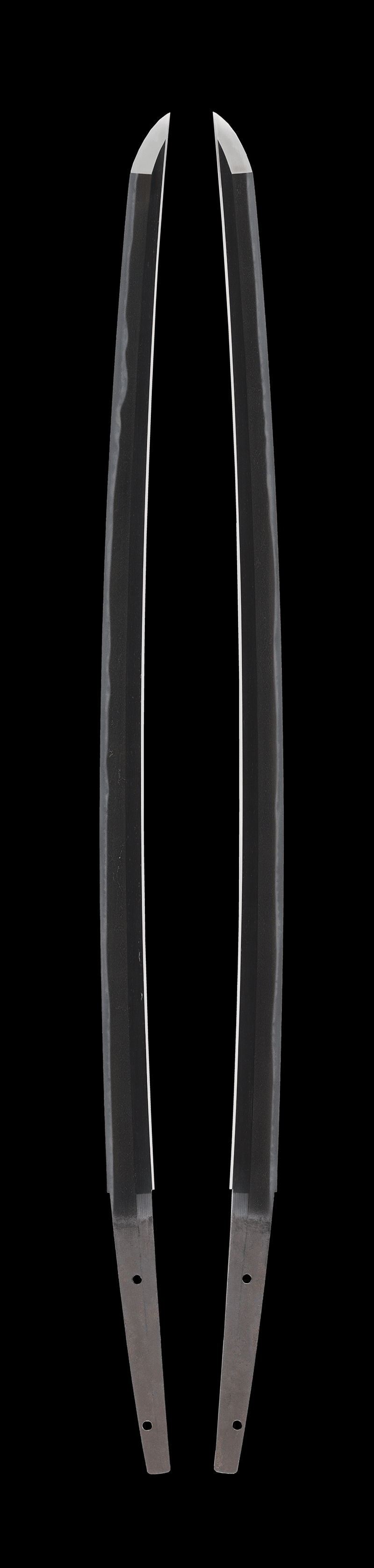
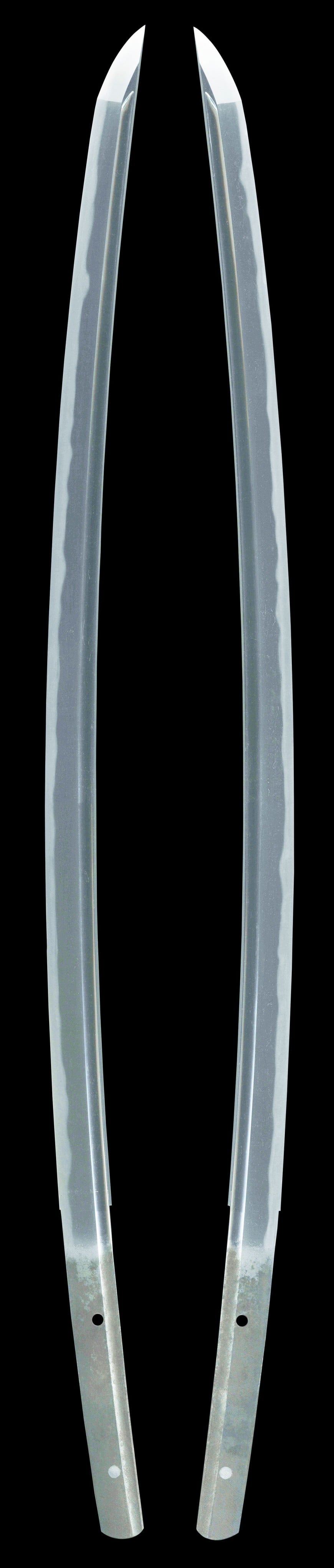
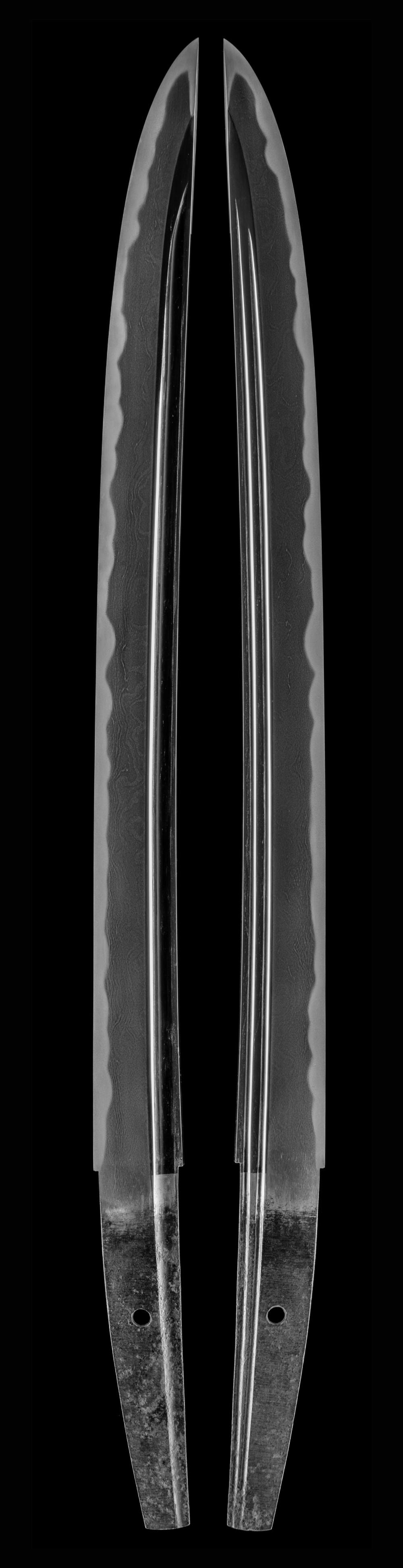
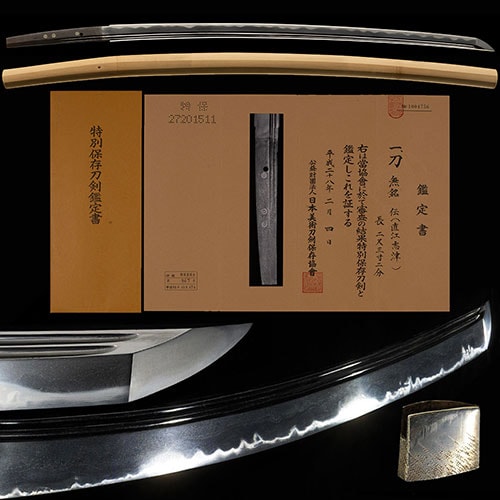
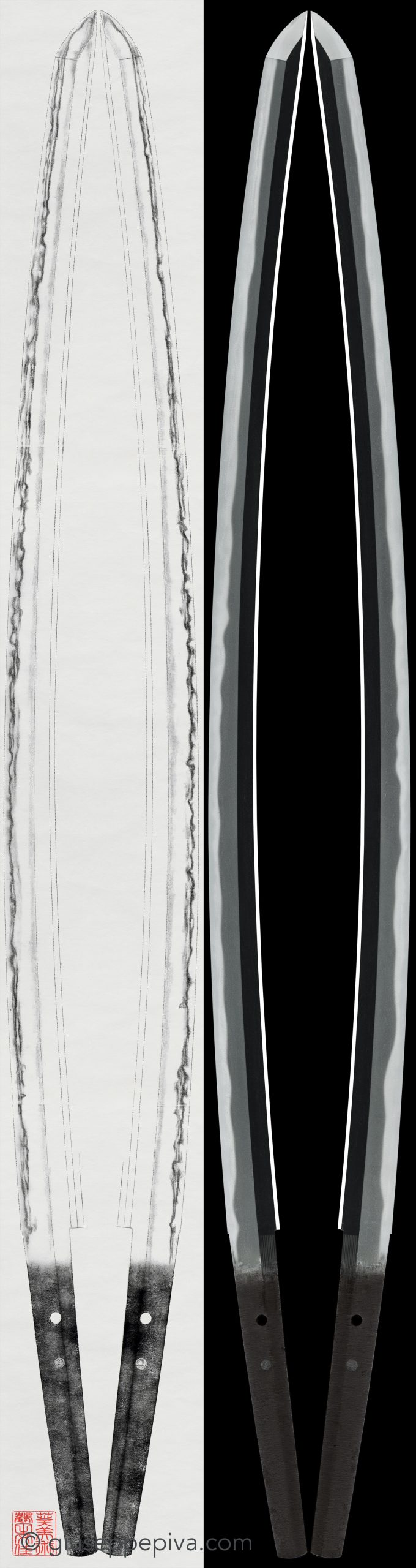
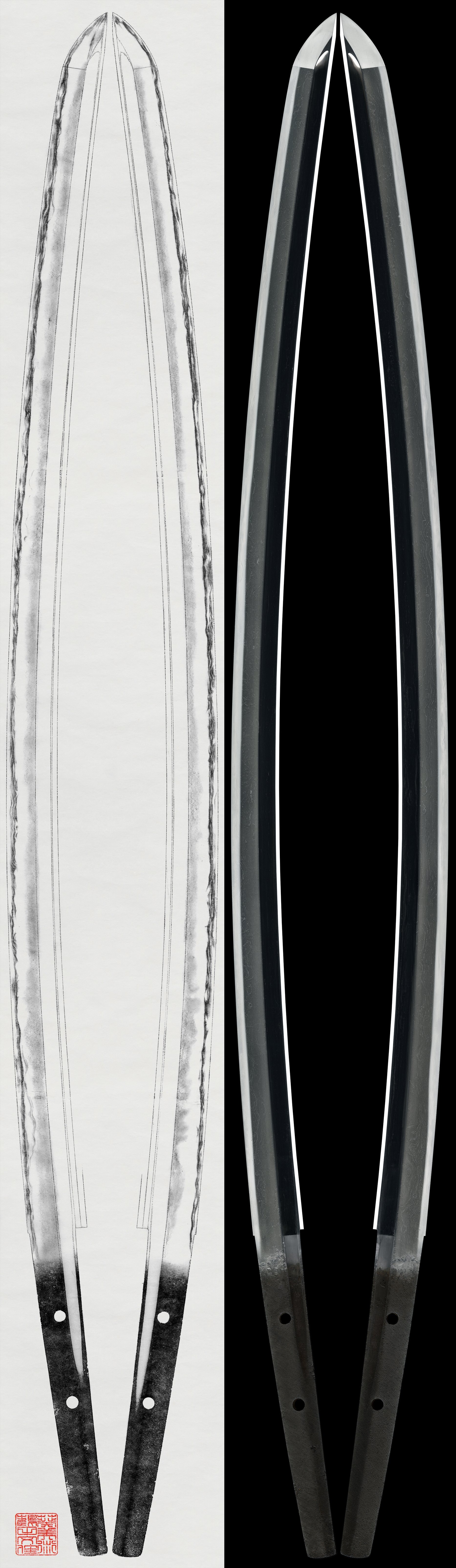
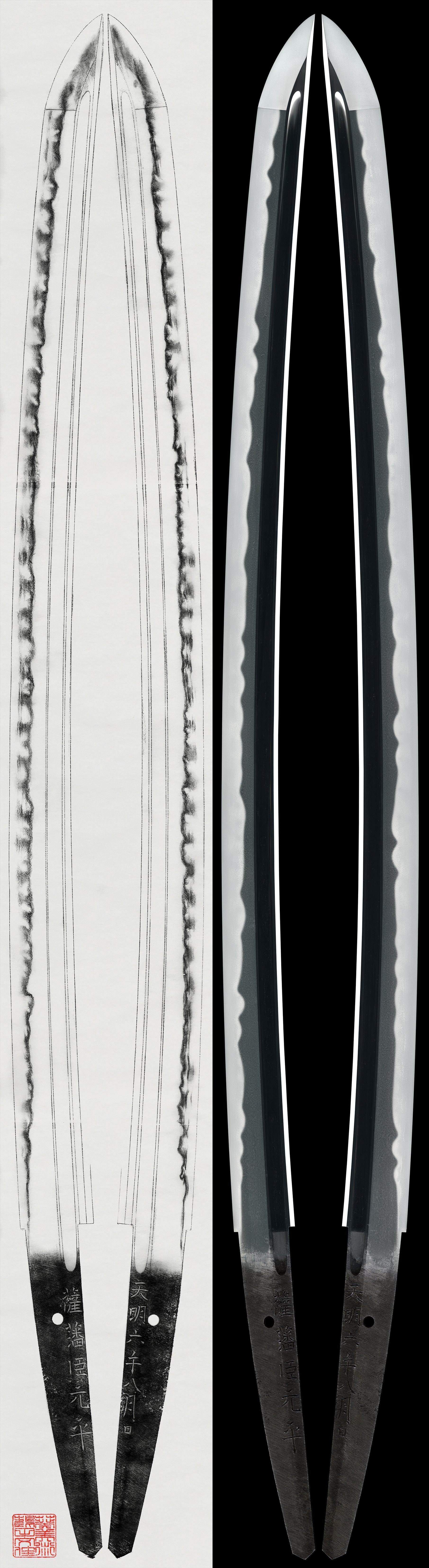
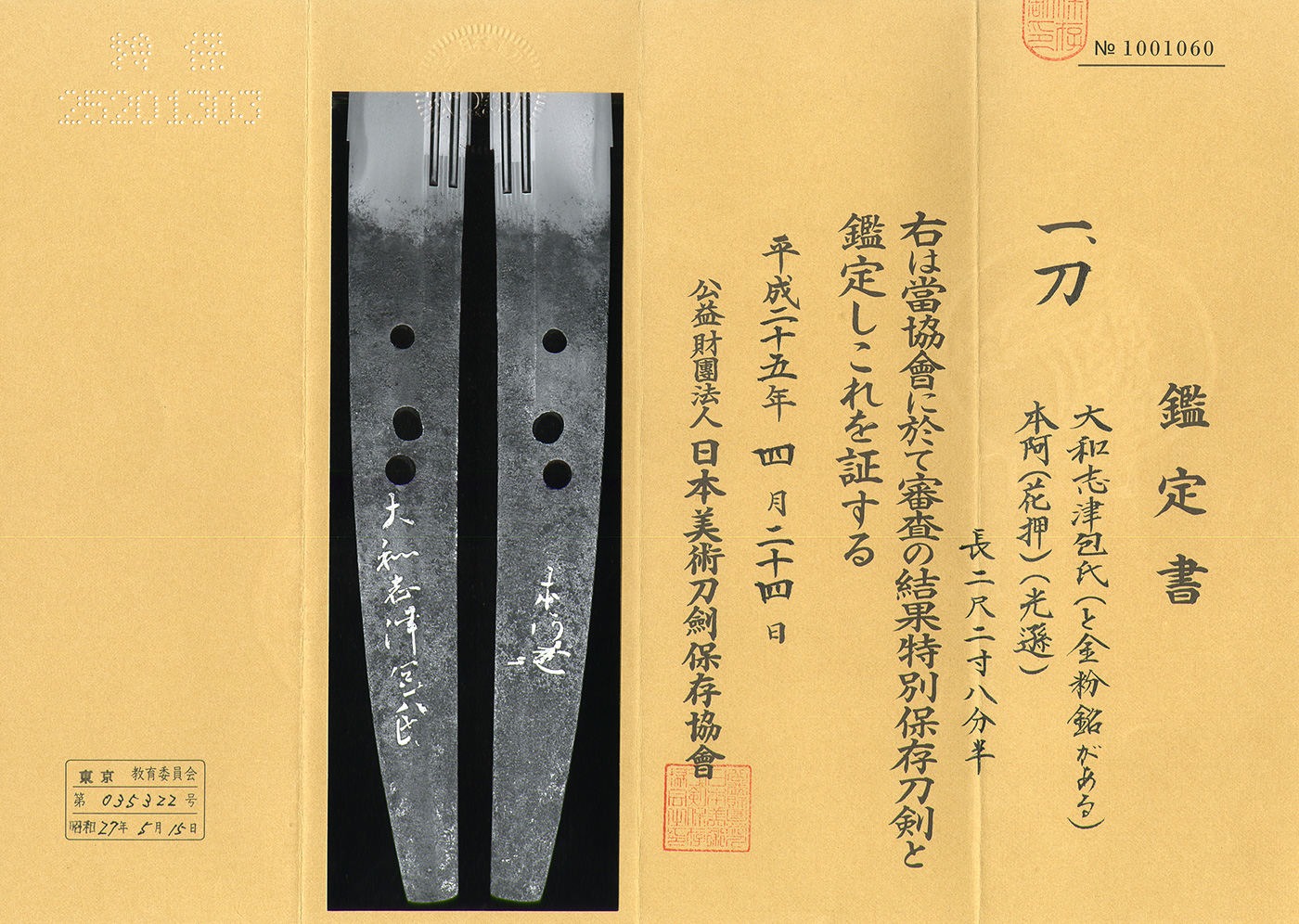
This is a robust Katana attributed to Yamato Shizu Kaneuji, featuring a gold-inlaid attribution by Hon'ami Koson. The blade exhibits a wide mihaba, double bohi, and a gentle ko-gunome-midare hamon. It comes with both shirasaya and a koshirae, and is certified as NBTHK Tokubetsu Hozon Token.
 NihontoWatch
kinzogan-mei · Shizu · Nanbokucho · nagasa 69.2cm · sori 0.5cm




Yamato-den · Yamato
3 pieces on the market now
Within the broad family of Shizu work, the setsumei reserve the name "Yamato Shizu"[[c:1]] for a specific subset. In the original sense, the term denotes the blades Shizu Saburō Kaneuji (兼氏 / 包氏) made while still resident in Yamato Province, before he settled at Shizu in Tagi District of Mino, during the years he signed with the characters read Kanetsugu (包氏). Kaneuji had trained first in the Yamato tradition of the Tegai line before entering the workshop of Masamune, becoming counted among the Masamune Juttetsu, and his Yamato roots persisted in the work he produced prior to the Mino removal. " The corpus accordingly spans the late Kamakura through the Nanbokuchō period, and most surviving examples are mumei, ō-suriage katana whose attribution rests on workmanship rather than signature. The shared vocabulary across these blades is consistent. The kitae is itame that flows and inclines toward masame, the grain often standing (hada-dachi), with mokume and nagare mixed in; near the edge the masame grows conspicuous. Thick ji-nie adheres, chikei enter frequently, the steel is sometimes slightly blackish, and a faint nie-utsuri or jifu-like texture may appear. The hamon rests on a suguha or ko-notare base into which gunome, ko-gunome, and a pointed edge (togariba, togari-gokoro) are mixed, with ashi and yō entering well.
Nie adheres thickly, the nioiguchi is bright, and along the habuchi the setsumei repeatedly note hotsure, nijūba, kuichigai-ba, uchi-noke, and yubashiri, with tobiyaki in places. Kinsuji and sunagashi run conspicuously, and the bōshi tends to hakikake, often turning toward yakizume or a flame-like (kaen-fū) form, sometimes finishing ko-maru. The judges describe this as a Yamato-den temperament intermingled with Soshu-den and Mino character. Recognition turns on that balance: against Shizu proper, the Yamato coloration shows in the high shinogi, the masame-laden flowing grain, the hotsure and kuichigai-ba along the edge, and the swept, flame-like bōshi; against Naoe Shizu, the work reads earlier and more nie-laden, closer to Kaneuji's own hand than to the later, calmer Mino continuation. In kantei the diagnostic weight falls on the masame-inclined standing grain, the suguha-to-ko-notare edge carrying gunome and togariba, and the dense Yamato-type habuchi activity (nijūba, kuichigai-ba, uchi-noke, yubashiri) coupled with bright nie and frequent kinsuji and sunagashi; the yakizume or kaen-style bōshi confirms the reading, and one judge likened a particularly fine ground to Hōenaga (包永) of the Yamato homeland. The signed tantō bear out the lineage: the Kanetsugu tantō with the gō "Sansui"[[c:2]], and another signed piece bestowed by the shogunal house upon the Makino family, both anchor the group to a documented name-line, while certain midare passages were judged to recall the meibutsu Bunbe Shizu. Provenance recorded in the setsumei reaches into prominent houses: a katana transmitted in the Chōfu Mōri family of Nagato, and a blade held as the personal sword of Ōmura Masujirō. Taken together, the Yamato Shizu blades occupy a distinct position between the Yamato schools that formed Kaneuji and the Soshu manner he carried into Mino, a grouping the NBTHK treats as readily affirmable on the strength of its grain and its activity. Learn more →
| Smith | Era | Designated |
|---|---|---|
| Kaneuji包氏 | 1350-1375 | 19 |
Yamato in the Nanbokuchō period
When the Southern Court made its capital at Yoshino, in Yamato itself, the province’s schools were at their height: the late Tegai line, Shikkake Norinaga, and the pure masame of Hōshō. Their technique was already spreading across the provinces.
A Hozon-certified blade judged to show notably superior workmanship and a better state of preservation. The bar is higher: re-tempered blades and most unsigned Muromachi/Edo works are excluded.
The NBTHK (Nihon Bijutsu Tōken Hozon Kyōkai, the Society for the Preservation of Japanese Art Swords) is a public-interest incorporated foundation founded in 1948 and supervised by Japan’s Agency for Cultural Affairs (Bunkachō); it is based at the Japanese Sword Museum in Tokyo. Its expert panels physically examine each submitted work (shinsa) and issue a certificate (kanteishō) ranking it by artistic and historical merit. NBTHK papers are the most widely recognized standard of authentication for Japanese swords and fittings.
NBTHK official siteIf you wish to return an item, please notify us within 3 days of receipt. After this period we cannot accept cancellations. Please ship the return to us within 5 business days. Cancellation is conditional on the item being kept in the same condition as at the time of sale, so please handle it with care.
¥2,300,000
This is a robust Katana attributed to Yamato Shizu Kaneuji, featuring a gold-inlaid attribution by Hon'ami Koson. The blade exhibits a wide mihaba, double bohi, and a gentle ko-gunome-midare hamon. It comes with both shirasaya and a koshirae, and is certified as NBTHK Tokubetsu Hozon Token.
NihontoWatchkinzogan-mei · Shizu · Nanbokucho · nagasa 69.2cm · sori 0.5cm
Yamato-den · Yamato
3 pieces on the market now
Within the broad family of Shizu work, the setsumei reserve the name "Yamato Shizu"[[c:1]] for a specific subset. In the original sense, the term denotes the blades Shizu Saburō Kaneuji (兼氏 / 包氏) made while still resident in Yamato Province, before he settled at Shizu in Tagi District of Mino, during the years he signed with the characters read Kanetsugu (包氏). Kaneuji had trained first in the Yamato tradition of the Tegai line before entering the workshop of Masamune, becoming counted among the Masamune Juttetsu, and his Yamato roots persisted in the work he produced prior to the Mino removal. " The corpus accordingly spans the late Kamakura through the Nanbokuchō period, and most surviving examples are mumei, ō-suriage katana whose attribution rests on workmanship rather than signature. The shared vocabulary across these blades is consistent. The kitae is itame that flows and inclines toward masame, the grain often standing (hada-dachi), with mokume and nagare mixed in; near the edge the masame grows conspicuous. Thick ji-nie adheres, chikei enter frequently, the steel is sometimes slightly blackish, and a faint nie-utsuri or jifu-like texture may appear. The hamon rests on a suguha or ko-notare base into which gunome, ko-gunome, and a pointed edge (togariba, togari-gokoro) are mixed, with ashi and yō entering well.
Nie adheres thickly, the nioiguchi is bright, and along the habuchi the setsumei repeatedly note hotsure, nijūba, kuichigai-ba, uchi-noke, and yubashiri, with tobiyaki in places. Kinsuji and sunagashi run conspicuously, and the bōshi tends to hakikake, often turning toward yakizume or a flame-like (kaen-fū) form, sometimes finishing ko-maru. The judges describe this as a Yamato-den temperament intermingled with Soshu-den and Mino character. Recognition turns on that balance: against Shizu proper, the Yamato coloration shows in the high shinogi, the masame-laden flowing grain, the hotsure and kuichigai-ba along the edge, and the swept, flame-like bōshi; against Naoe Shizu, the work reads earlier and more nie-laden, closer to Kaneuji's own hand than to the later, calmer Mino continuation. In kantei the diagnostic weight falls on the masame-inclined standing grain, the suguha-to-ko-notare edge carrying gunome and togariba, and the dense Yamato-type habuchi activity (nijūba, kuichigai-ba, uchi-noke, yubashiri) coupled with bright nie and frequent kinsuji and sunagashi; the yakizume or kaen-style bōshi confirms the reading, and one judge likened a particularly fine ground to Hōenaga (包永) of the Yamato homeland. The signed tantō bear out the lineage: the Kanetsugu tantō with the gō "Sansui"[[c:2]], and another signed piece bestowed by the shogunal house upon the Makino family, both anchor the group to a documented name-line, while certain midare passages were judged to recall the meibutsu Bunbe Shizu. Provenance recorded in the setsumei reaches into prominent houses: a katana transmitted in the Chōfu Mōri family of Nagato, and a blade held as the personal sword of Ōmura Masujirō. Taken together, the Yamato Shizu blades occupy a distinct position between the Yamato schools that formed Kaneuji and the Soshu manner he carried into Mino, a grouping the NBTHK treats as readily affirmable on the strength of its grain and its activity. Learn more →
| Smith | Era | Designated |
|---|---|---|
| Kaneuji包氏 | 1350-1375 | 19 |
Yamato in the Nanbokuchō period
When the Southern Court made its capital at Yoshino, in Yamato itself, the province’s schools were at their height: the late Tegai line, Shikkake Norinaga, and the pure masame of Hōshō. Their technique was already spreading across the provinces.
A Hozon-certified blade judged to show notably superior workmanship and a better state of preservation. The bar is higher: re-tempered blades and most unsigned Muromachi/Edo works are excluded.
The NBTHK (Nihon Bijutsu Tōken Hozon Kyōkai, the Society for the Preservation of Japanese Art Swords) is a public-interest incorporated foundation founded in 1948 and supervised by Japan’s Agency for Cultural Affairs (Bunkachō); it is based at the Japanese Sword Museum in Tokyo. Its expert panels physically examine each submitted work (shinsa) and issue a certificate (kanteishō) ranking it by artistic and historical merit. NBTHK papers are the most widely recognized standard of authentication for Japanese swords and fittings.
NBTHK official siteIf you wish to return an item, please notify us within 3 days of receipt. After this period we cannot accept cancellations. Please ship the return to us within 5 business days. Cancellation is conditional on the item being kept in the same condition as at the time of sale, so please handle it with care.
¥2,300,000