NihontoWatch MonNihontoWatch
MarketEncyclopediaKantei
NihontoWatch MonNihontoWatch
Market
Encyclopedia
Kantei
Overview·Historical importance·Designations·Kantei·Provenance·Blade Forms·Signatures
OverviewHistorical importanceDesignationsKanteiProvenanceBlade FormsSignatures
  1. Schools
  2. Shizu
  3. Yamato Shizu
  4. Kaneuji

Shizu Kaneuji

包氏

Tokujū
Vol. 24, No. 17 · Katana

Shizu Kaneuji

包氏

19 ranked works

Leading smith
ProvinceYamatoEraEnbun (1356–1361)PeriodNanbokuchōSchoolShizu>Yamato ShizuTraditionYamato-denGeneration2ndFujishiroJo-jo sakuToko Taikan800(top 14%)TypeSwordsmithCodeKAN416
4Tokubetsu Jūyō15Jūyō Tōken

Overview

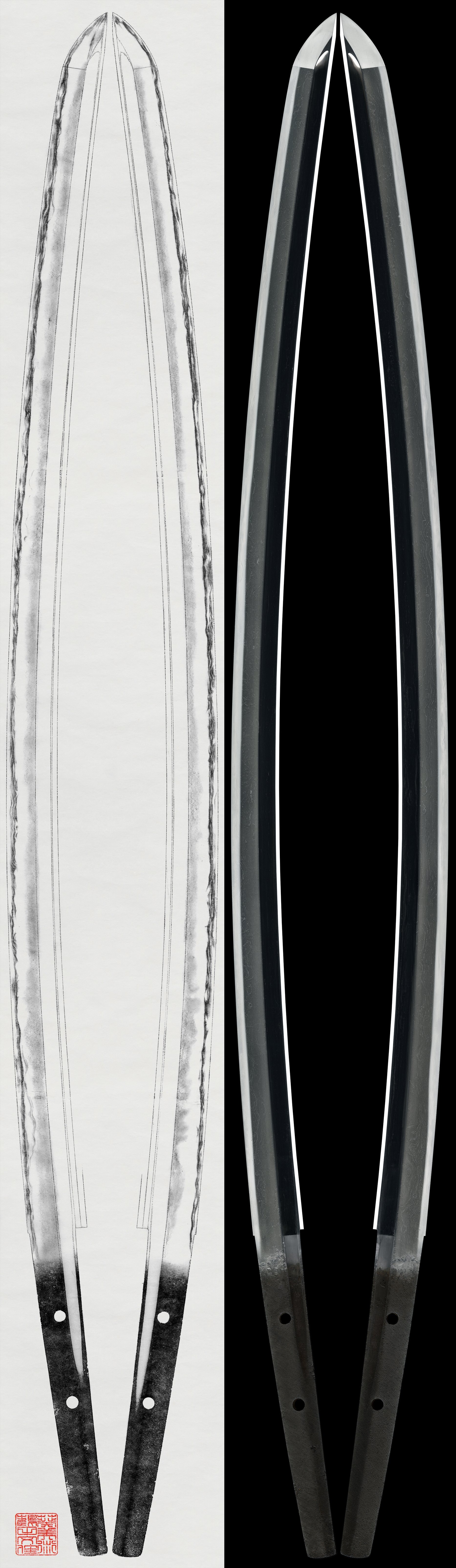
Kaneuji written 包氏 is the Yamato side of one of the great names of the tradition. The published sources are consistent on the point: 包氏 was the signature that Saburō Kaneuji used while he was resident in Yamato, before he studied under Masamune, changed the first character of his name to 兼, and settled at in Tagi District of Province. Works of that Yamato phase have been called Yamato since antiquity. The term did not stay so narrow. As the 's commentary puts it, even after the master moved to there were smiths who did not follow him but remained in Yamato and succeeded to the 包氏 name into the period, and in the broad sense "such makers too are included under the designation Yamato ". 416 gathers both senses under one name, and its workmanship is read throughout as the Yamato base carrying a admixture.

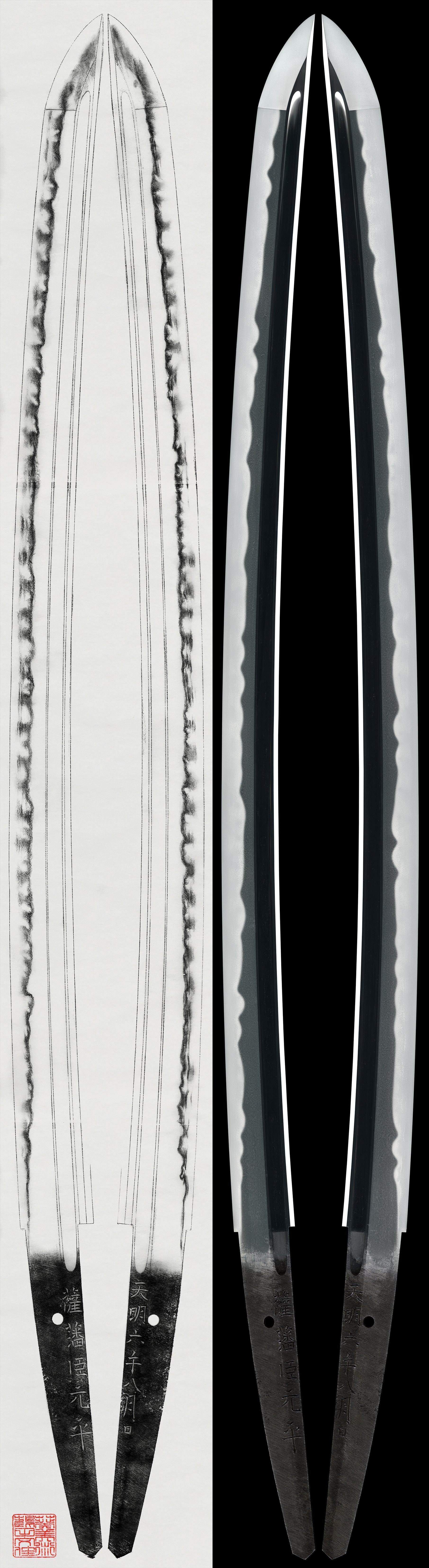
The hand divides into two registers, and the published record draws the line plainly. The first is the signed and dated piece: and , wide in body and somewhat , the thin, with a little , the two-character cut large and fine below the peg-hole. Over an that tends to stand a little, with and , the temper is a or a shallow set with pointed , and entering, well adhered, slight and , with ; one dated Jōji 1 (1362) adds coarse and a , and an Enbun carries a raised and a in its groove. The published sources stress that only a few such signed pieces survive, dated to the Kannō, Jōji and Enbun years, that some run to a -like full temper, and that "the manner of workmanship is not uniform"; they are valued, with their dates, as material for the study of the name.

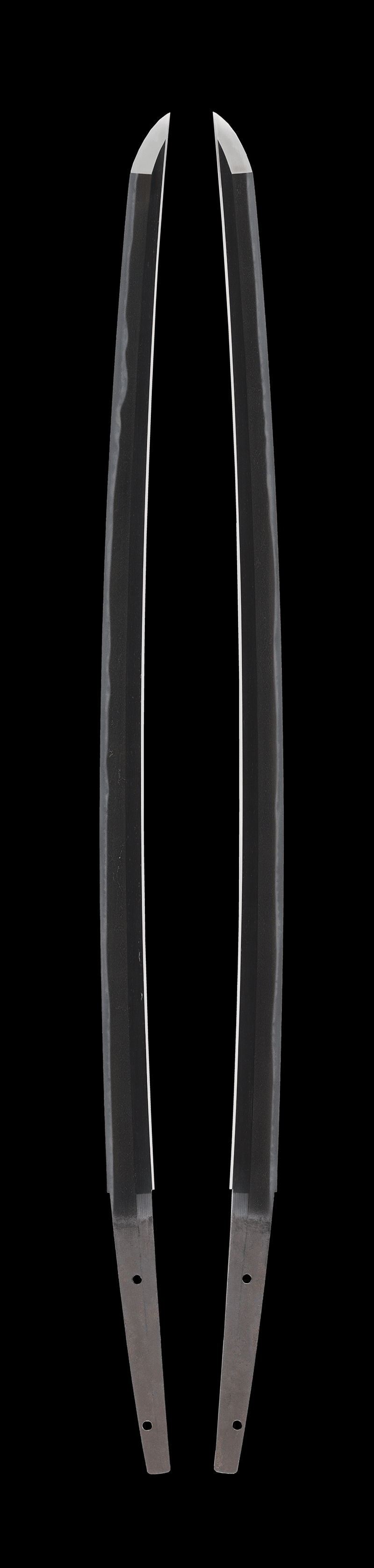
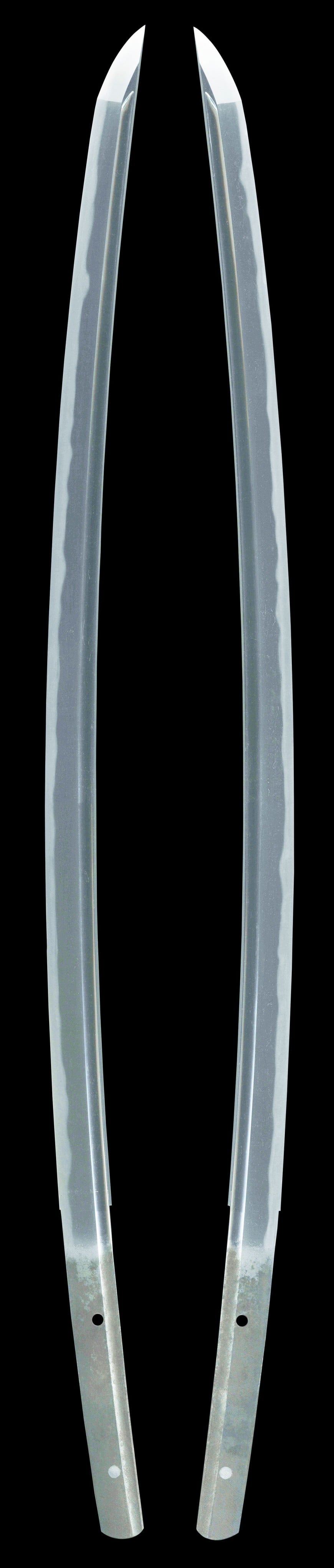
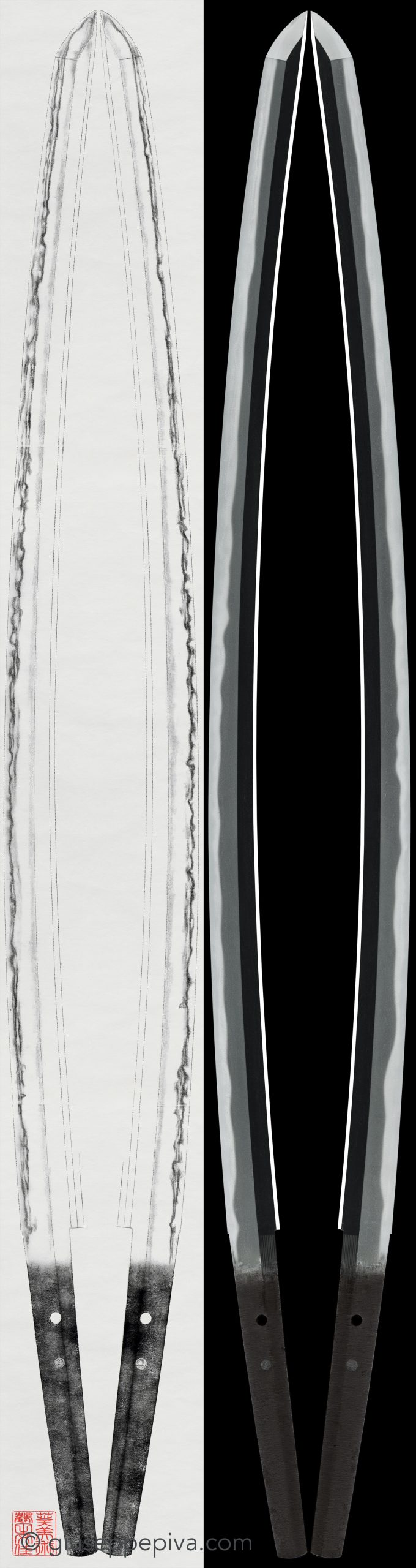
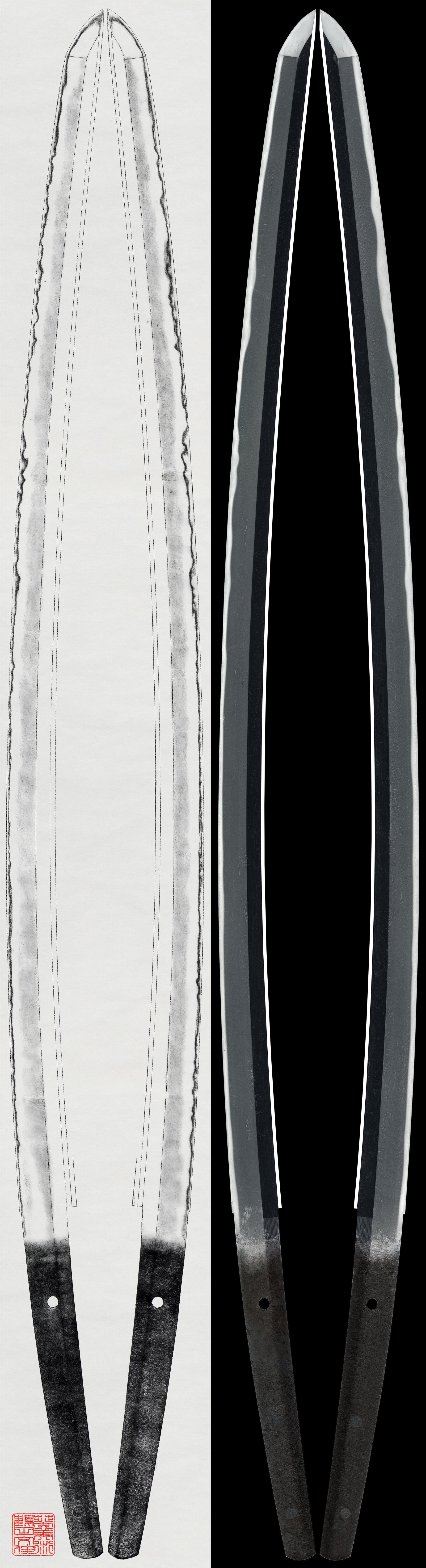
The second and larger register is the , appraised as Yamato . Here the construction is with a notably high , the somewhat wide, the extended. The flows strongly toward and stands a little, lying thick and entering, one blade adding a -like texture and a faintly blackish steel. The temper rides a or base into which are set linked, round-headed and with pointed ; and enter, the is thick, the shows , and run frequently, and the is bright. The runs straight to a small round, or sweeps into vigorous and to a flame-like form, with carved through the body.

What the commentary names as the tell of the school is precise. The linked, round-headed on a calm -to- base is the trait "that Yamato particularly excelled at within the province", the feature that separates the school from the plainer mainstream; and over it the -leaning flowing , the high , the edge and the flame-swept are read as the Yamato temperament surfacing within a -toned whole. The judges put it in those terms repeatedly, finding in such blades that "a Yamato temperament is intermingled" and, of one , that "the characteristic -based style associated with 包氏 is clearly expressed in both and ". It is a hand at once unmistakably Yamato in bones and in surface.

This double identity carries the central scholarly question around the name, and the published sources do not resolve it so much as record its sides. In the broad reading, 416 is Kaneuji's pre- Yamato self together with the successors who kept his signature at home. One commentary states the opposite directly, that the 包氏 "has no connection with Kaneuji, who migrated from Yamato" and is a separate smith of the name, certain not only from the signature compendia but from the surviving blades. Either way the attributions rest on era and school rather than on a single personal mark, and the work is held distinct from purely Yamato pieces, which "differ from the genuine -school manner" by their stronger , their and their -tradition flavour. At its finest the manner approaches the celebrated Bunbu , one judged to "call to mind the Bunbu ".

For the collector this is a -touched Yamato name of real standing rather than of the very first rank. Fujishiro grades the smith Jō-jō . There are no National Treasures and no Important Cultural Properties under the code; the record runs instead through the and tiers, four blades at and thirteen at , seventeen designated works in all. Provenance is genuinely distinguished where it survives: a was the personal sword of Ōmura Masujirō, the Bakumatsu figure remembered as the founder of Japan's modern army; another was held in the Chōfu Mōri family of Nagato; and two of the signed descend from the Makino house, one bestowed by the shogunal family and bearing the gō "Minemuri." The signed and dated pieces are the rarities, only a handful on record and prized as research material; the Yamato come to market from time to time, with patience, a Yamato hand wearing Masamune's influence that a private collector can realistically hope to encounter.

Historical importance

Where Kaneuji stands among comparable artisans: across all of nihontō, and within tradition, era, and period. The tiers (Foremost · Leading · Major · Notable) weigh official designations from the NBTHK and Japan's Agency for Cultural Affairs, together with historical honors of lasting repute such as the Sansaku and Meibutsu-chō.

随一
Foremost
屈指
Leading
有数
Major
著名
Notable

Select a lens to see how it's measured.

Designations

Kokuhō—
Jūyō Bunkazai—
Jūyō Bijutsuhin—
Gyobutsu—
Tokubetsu Jūyō4
Jūyō Tōken15

Elite Standing

Kantei

Provenance

Blade Forms

Distribution across 19 ranked works

Signatures

Signature types across 19 ranked works

Currently Available

More from the Yamato Shizu school

View all →
Aoi Art
Jūyō
Katana - Jūyō - by Yamato Shizu School - Mumei (Unsigned) Yamato-ShizuKatana - Jūyō - by Yamato Shizu School - Mumei (Unsigned) Yamato-Shizu

Katana

ByYamato Shizu School
¥2,700,000
Aoi Art
Tokuho
Katana - Tokuho - by Yamato Shizu School - Yamato Shizu KaneujiKatana - Tokuho - by Yamato Shizu School - Yamato Shizu Kaneuji

Katana

ByYamato Shizu School
¥2,300,000
Iida Koendo
Tokuho
Katana - Tokuho - by Yamato Shizu School - Mumei Yamato SizuKatana - Tokuho - by Yamato Shizu School - Mumei Yamato Sizu

Katana

ByYamato Shizu School
¥2,200,000

More from the Shizu school

View all →
Wakeidou
Tokuho
Katana - Tokuho - by Naoe Shizu School - Mumei Naoe ShizuKatana - Tokuho - by Naoe Shizu School - Mumei Naoe Shizu

Katana

ByNaoe Shizu School
¥1,500,000
Choshuya
Tokuho
Katana - Tokuho - by Naoe Shizu School - Unsigned (O-suriage), attributed to Naoe ShizuKatana - Tokuho - by Naoe Shizu School - Unsigned (O-suriage), attributed to Naoe Shizu

Katana

ByNaoe Shizu School
Ask
Sanmei
Tokuho
Katana - Tokuho - by Naoe Shizu School - Katana unsigned attributed to a work of Naoe-ShizuKatana - Tokuho - by Naoe Shizu School - Katana unsigned attributed to a work of Naoe-Shizu

Katana

ByNaoe Shizu School
¥1,350,000
Aoi Art
Tokuho
Katana - Tokuho - by Naoe Shizu School - Mumei (Attributed to Naoe Shizu)Katana - Tokuho - by Naoe Shizu School - Mumei (Attributed to Naoe Shizu)

Katana

ByNaoe Shizu School
¥2,200,000
Eirakudo
Tokuho
Katana - Tokuho - by Naoe Shizu School - Naoe Shizu - Tokubetsu Hozon TokenKatana - Tokuho - by Naoe Shizu School - Naoe Shizu - Tokubetsu Hozon Token

Katana

ByNaoe Shizu School
Ask
Giuseppe Piva
Jūyō
Katana - Jūyō - by Shizu School - Shizu - Juyo Token, circa 1320Katana - Jūyō - by Shizu School - Shizu - Juyo Token, circa 1320

Katana

ByShizu School
Ask
Sanmei
Tokuho
Katana - Tokuho - by Naoe Shizu School - Unsigned Kanenobu with Higo Uchigatana KoshiraeKatana - Tokuho - by Naoe Shizu School - Unsigned Kanenobu with Higo Uchigatana Koshirae

Katana

ByNaoe Shizu School
Ask
Choshuya
Tokuho
Katana - Tokuho - by Naoe Shizu Kanenobu - O-suriage Mumei KanenobuKatana - Tokuho - by Naoe Shizu Kanenobu - O-suriage Mumei Kanenobu

Katana

ByNaoe Shizu Kanenobu
Ask

More from the Yamato tradition

View all →
Aoi Art
Jūyō
Katana - Jūyō - by Taima School - Mumei (Taima)Katana - Jūyō - by Taima School - Mumei (Taima)

Katana

ByTaima School
¥4,500,000
Goushuya
Tokujū
Katana - Tokuju - by Satsuma Yasuyo - Tokubetsu Juyo Token (One-Leaf Aoi Mon) Shume no Kami Ichihei Fujiwara Ason Yasuyo, Made in Satsushu Kirei-gun on an Auspicious Day in March, Kyoho 12Katana - Tokuju - by Satsuma Yasuyo - Tokubetsu Juyo Token (One-Leaf Aoi Mon) Shume no Kami Ichihei Fujiwara Ason Yasuyo, Made in Satsushu Kirei-gun on an Auspicious Day in March, Kyoho 12

Katana

BySatsuma Yasuyo
Ask
Aoi Art
Jūyō
Katana - Jūyō - by Satsuma Motohira - Sappan Shin Motohira (1786)Katana - Jūyō - by Satsuma Motohira - Sappan Shin Motohira (1786)

Katana

BySatsuma Motohira
¥5,000,000
Sanmei
Tokuho
Tachi - Tokuho - by Senjuin School - Unsigned SenjuinTachi - Tokuho - by Senjuin School - Unsigned Senjuin

Tachi

BySenjuin School
¥1,250,000
Choshuya
Tokuho
Katana - Tokuho - by Tegai School - Unsigned (O-suriage) TegaiKatana - Tokuho - by Tegai School - Unsigned (O-suriage) Tegai

Katana

ByTegai School
¥1,250,000
Touken Komachi
Tokuho
Katana - Tokuho - by Senjuin School - Senjuin - ShirasayaKatana - Tokuho - by Senjuin School - Senjuin - Shirasaya

Katana

BySenjuin School
¥880,000
Touken Matsumoto
Hozon
Katana - Hozon - by Tegai Kanenori - Yamato Daijo Fujiwara KanenoriKatana - Hozon - by Tegai Kanenori - Yamato Daijo Fujiwara Kanenori

Katana

ByTegai Kanenori
¥400,000
Touken Komachi
Tokuho
Katana - Tokuho - by Senjuin School - Mumei (attributed to Senju-in) with Shirasaya and KoshiraeKatana - Tokuho - by Senjuin School - Mumei (attributed to Senju-in) with Shirasaya and Koshirae

Katana

BySenjuin School
¥1,250,000

Kaneuji

Kaneuji(包氏) was a Japanese swordsmith of the Yamato Shizu school in Yamato province, active during the Enbun (1356-1361) period.

The work follows the Yamato-den tradition.

Designated works by Kaneuji include 4 Tokubetsu Jūyō, 15 Jūyō.