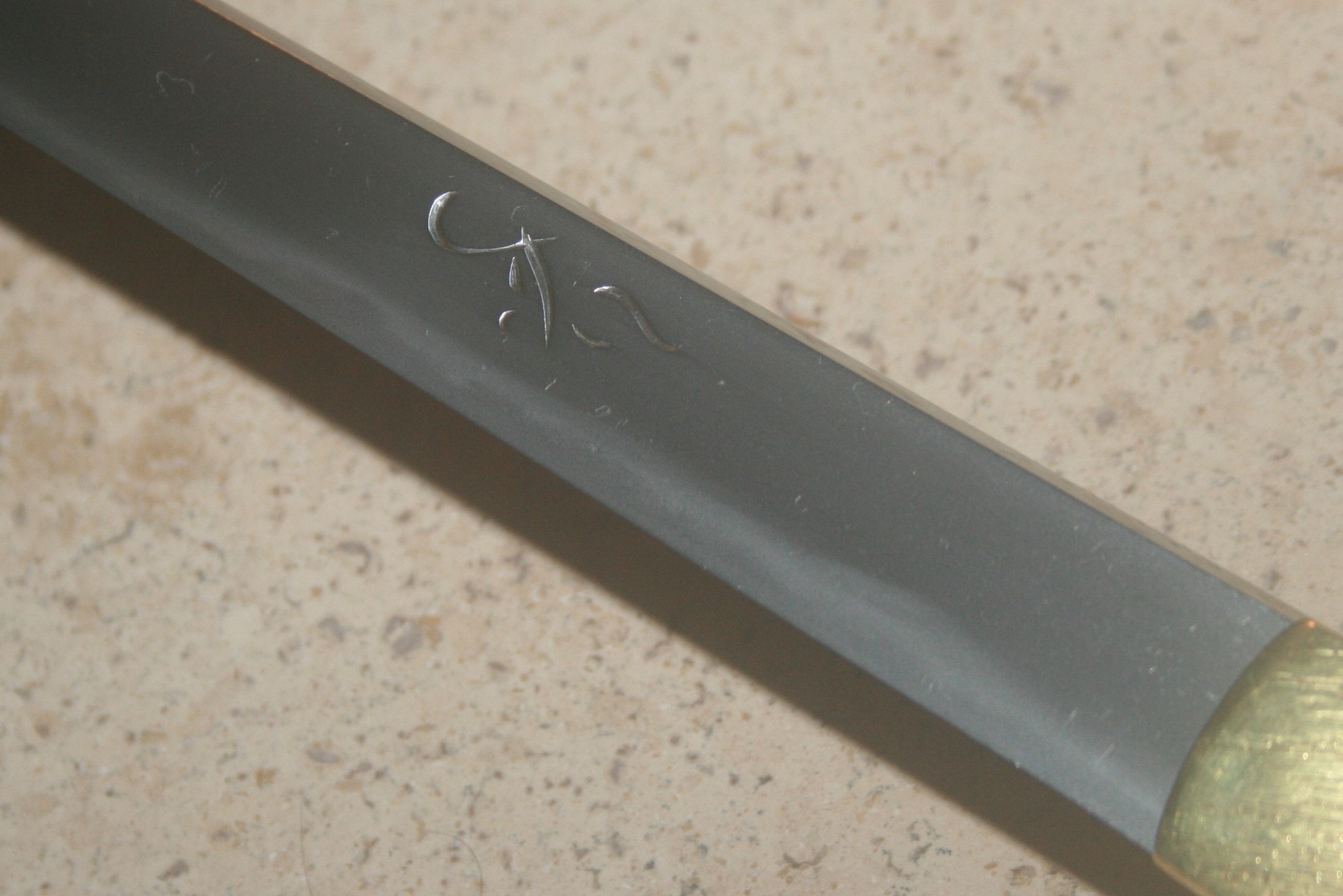
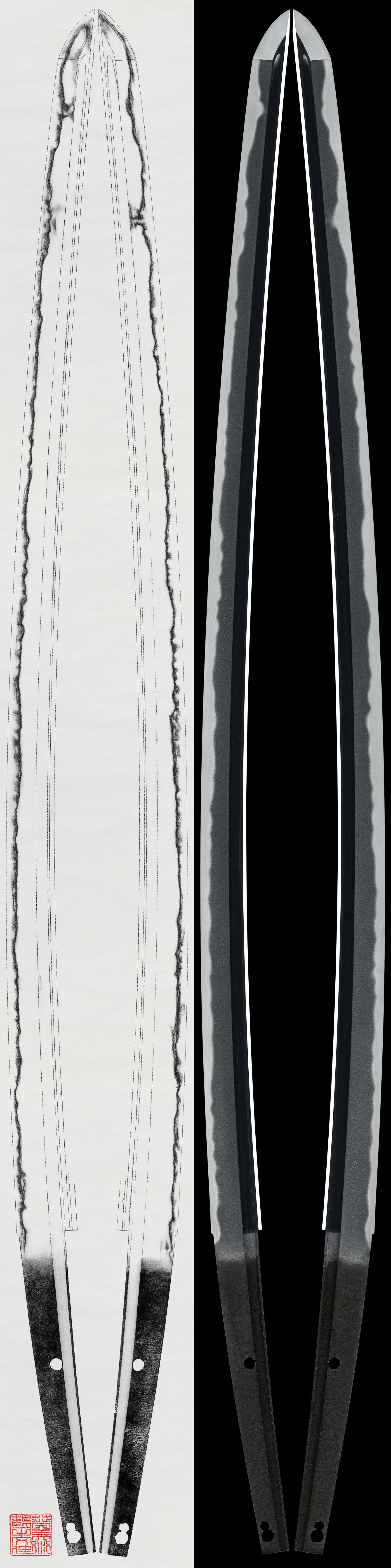
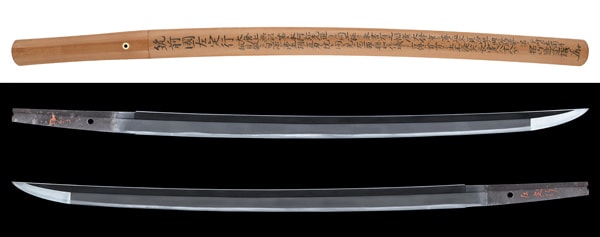
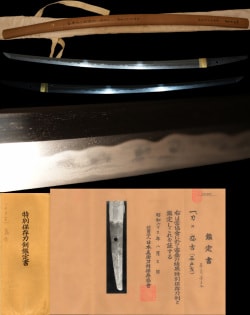
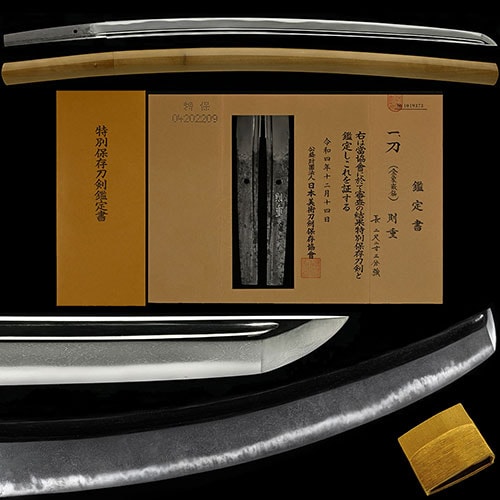
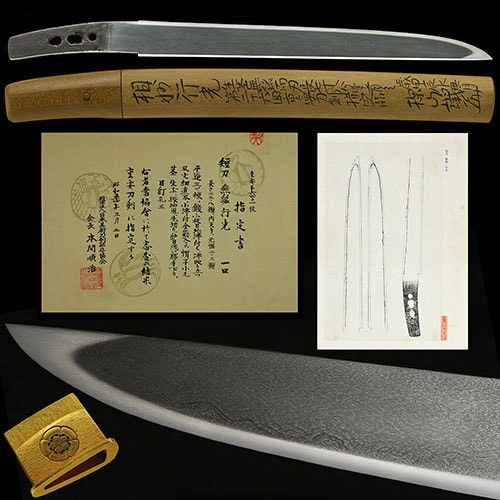
Yasuyoshi, the son of O-, succeeded as the second generation of the lineage and is traditionally said to have moved from to Choshu (Nagato Province). This account is supported by an extant dated Shohei 17 (1362) bearing the inscription "Choshu-ju Yasuyoshi," whose manner of signing matches his usual style. Subsequent works explicitly stating "Choshu Yasuyoshi" include examples dated to the Eiwa and Oei eras. The Oei-dated pieces are judged to be by a successor generation on the basis of workmanship and signature style, while whether the Eiwa-dated works represent late production by the first generation or early work by a successor remains a subject for future research. Descendants and students continued the Yasuyoshi name for several generations from the late through the early period, collectively known as "Choshu ."
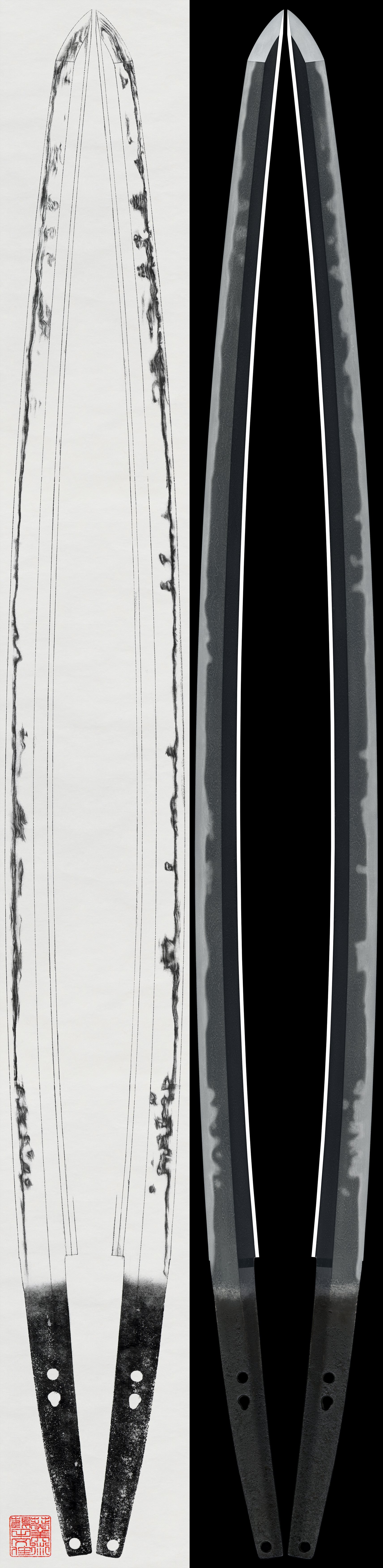
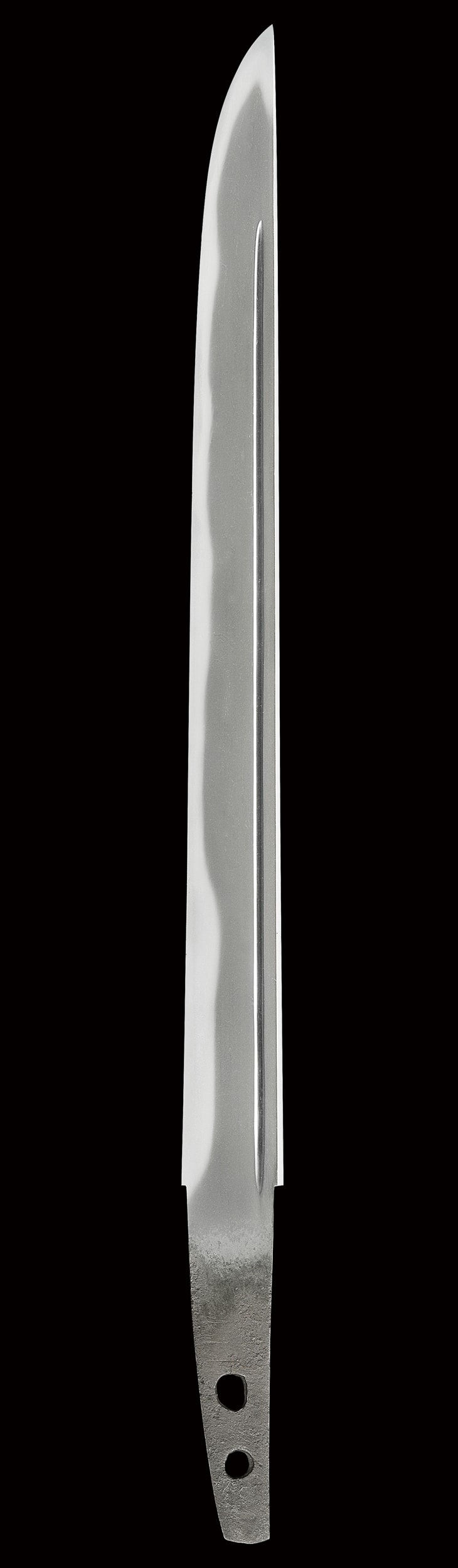
In the forge, Yasuyoshi's work typically displays mixed with and , with the grain sometimes standing and adhering. A whitish is a hallmark of the school, and tightly forged pieces show extremely fine with delicate and clear steel. The most characteristically takes the form of shallow mixed with , with entering and a that is bright and clear. The temper is primarily -dominant with , accompanied by fine and . The typically enters in with a pointed tendency and a long . Compared with O-, the consistently note that Yasuyoshi's work does not exhibit the degree of brilliance in both and temper, though certain pieces with strong and demonstrate a broader range within his oeuvre.
Yasuyoshi's blades are generally of larger and more imposing than those of his father, with wide and thin . Among his finer works, the forging is well-refined and compact, with the school's characteristic features clearly retained. Pieces of distinguished provenance, including examples transmitted in the Inshu Ikeda and Maeda collections, attest to the esteem in which his work has long been held.