Sixty years of war between two courts drove blades long and broad, and Osafune met the demand: Kanemitsu and Chōgi led forges serving the provincial warriors who did the fighting, while Sōshū influence arrived with the armies to create Sōden-Bizen.
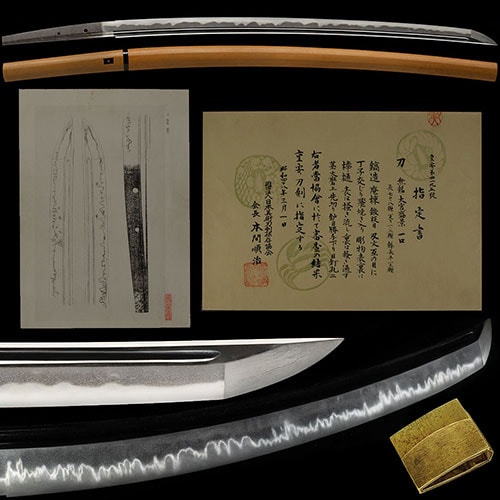
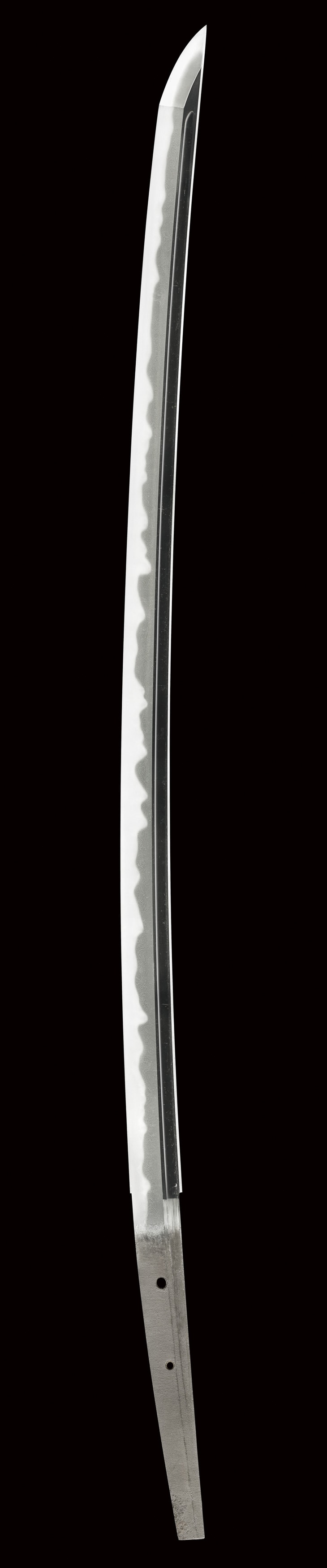
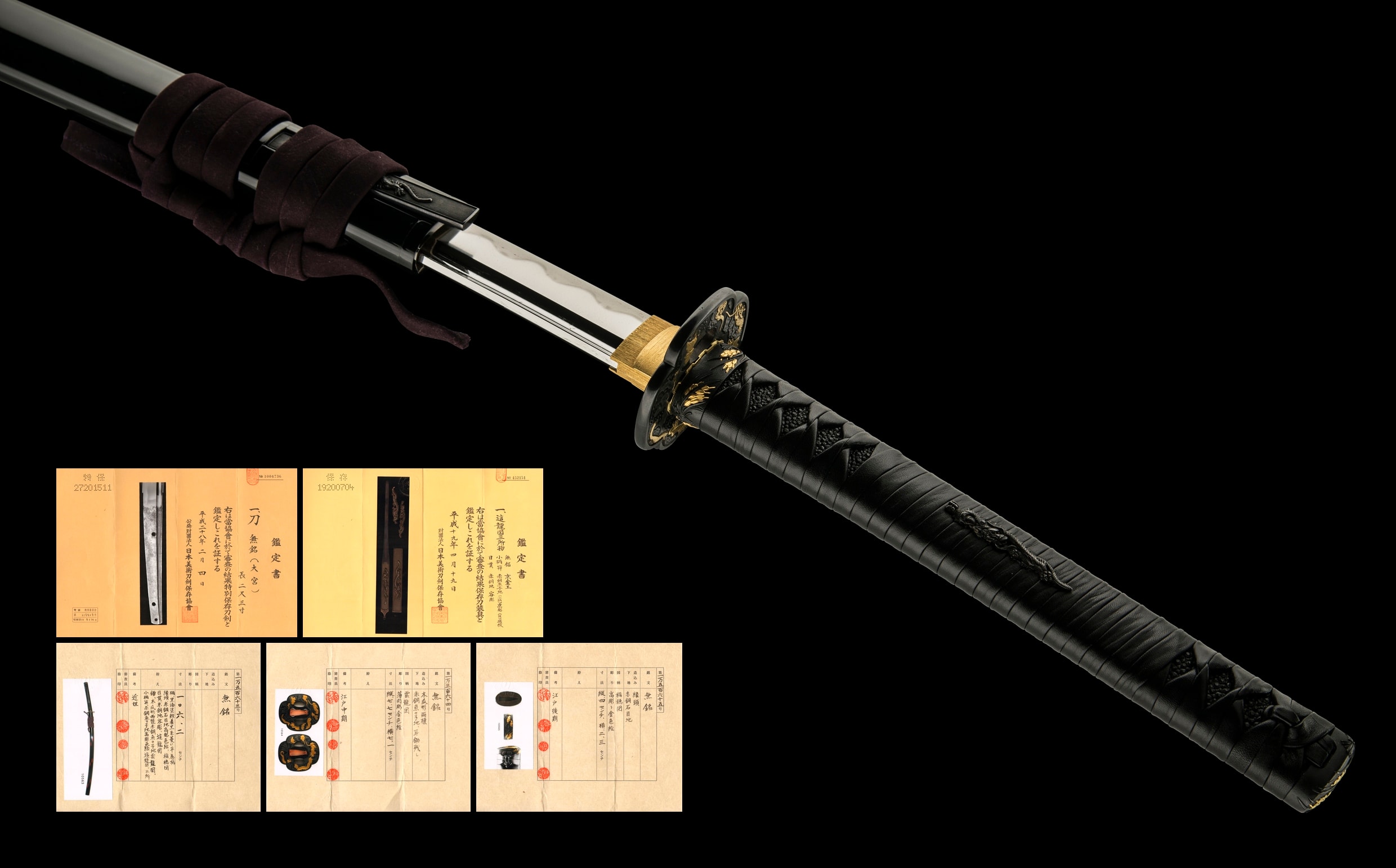
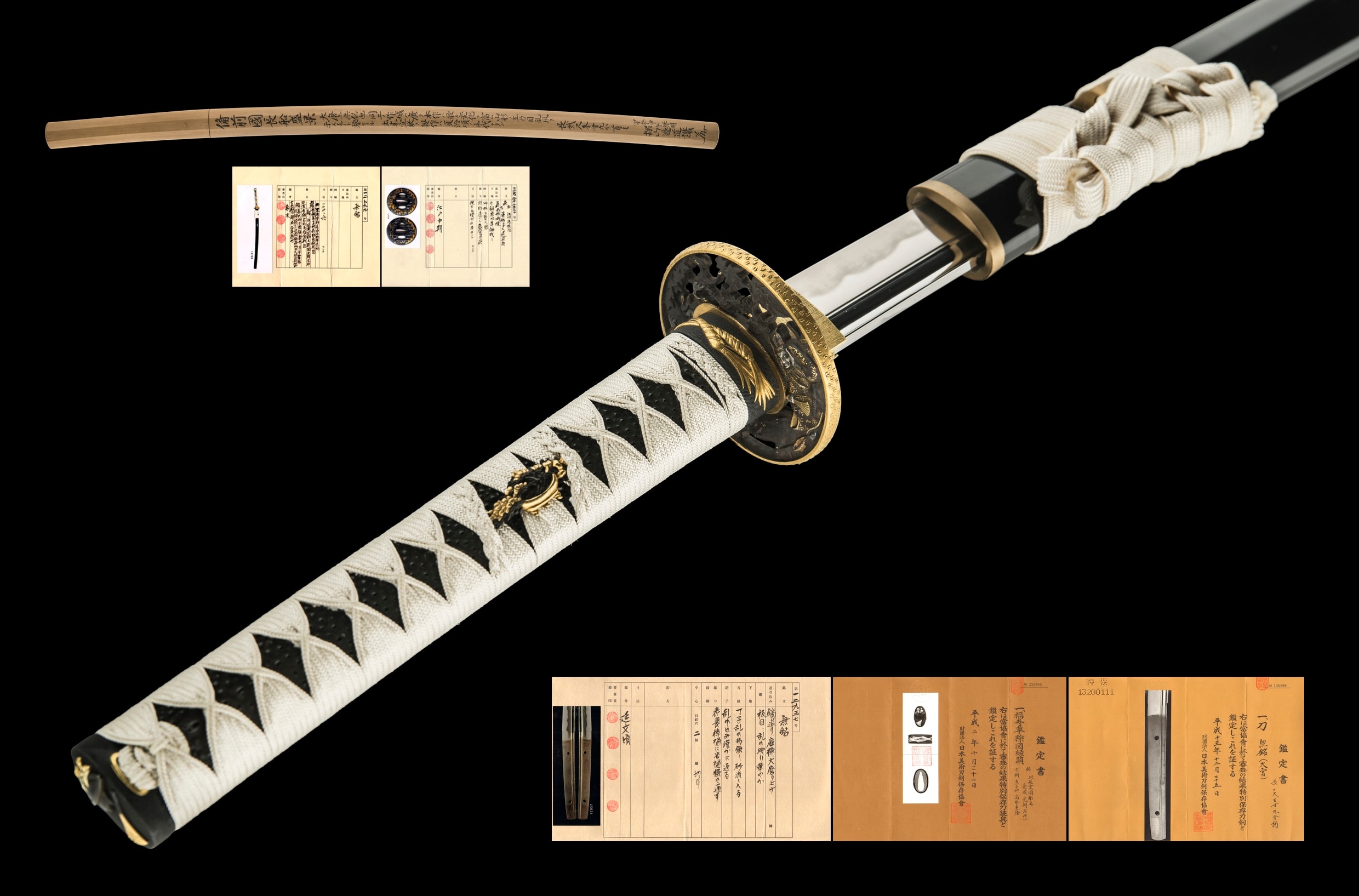
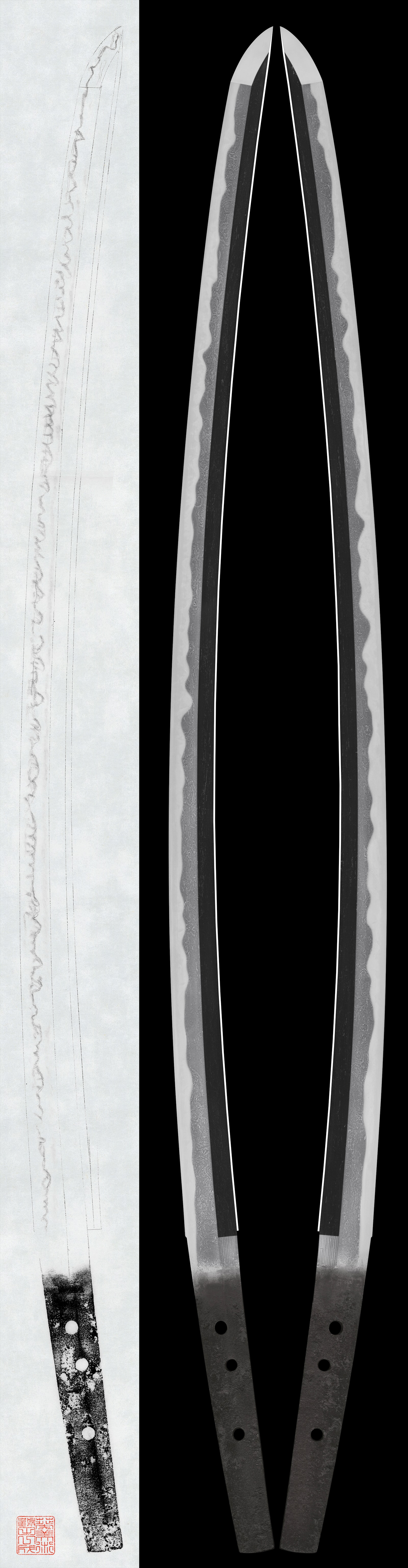
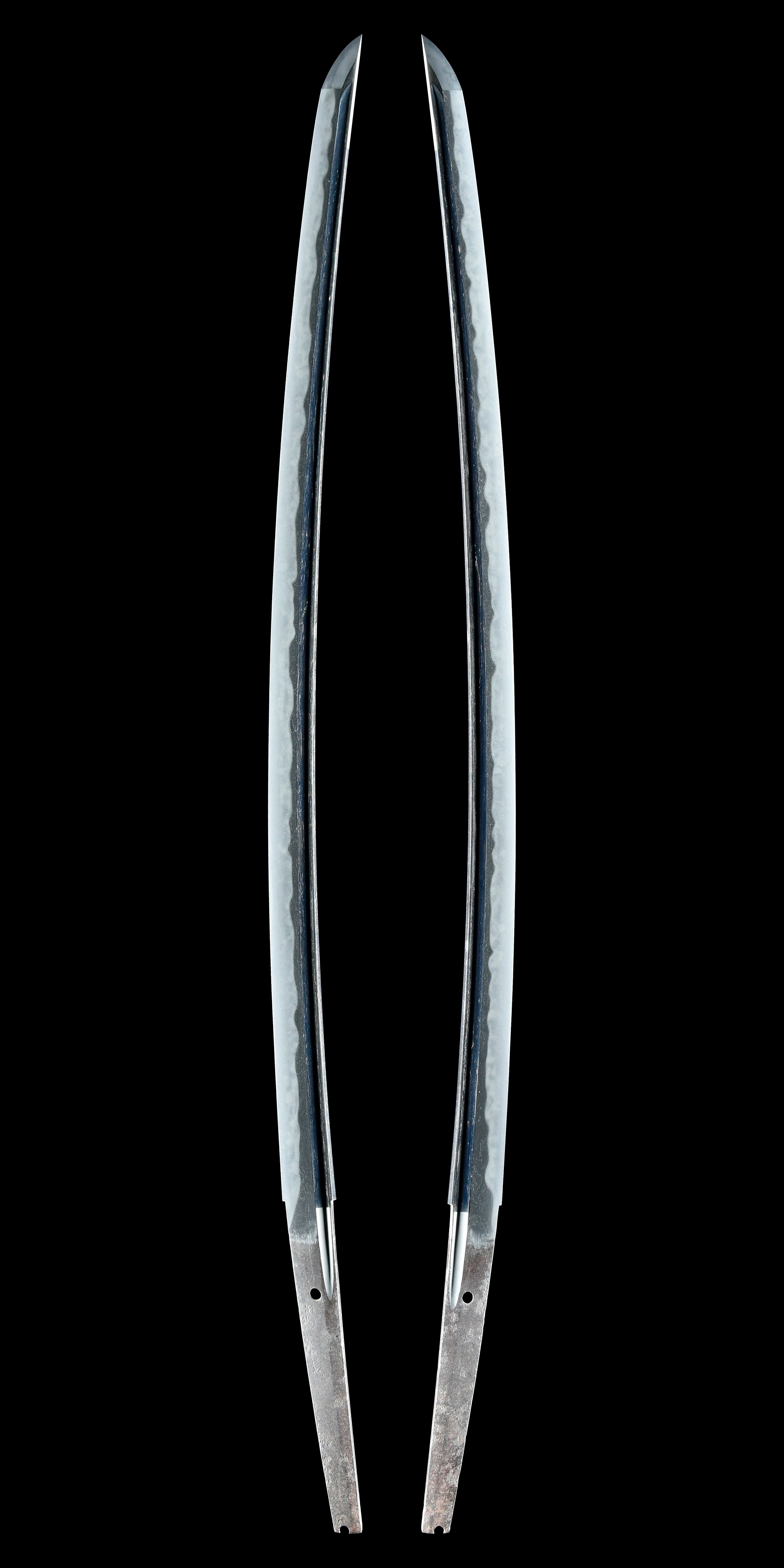
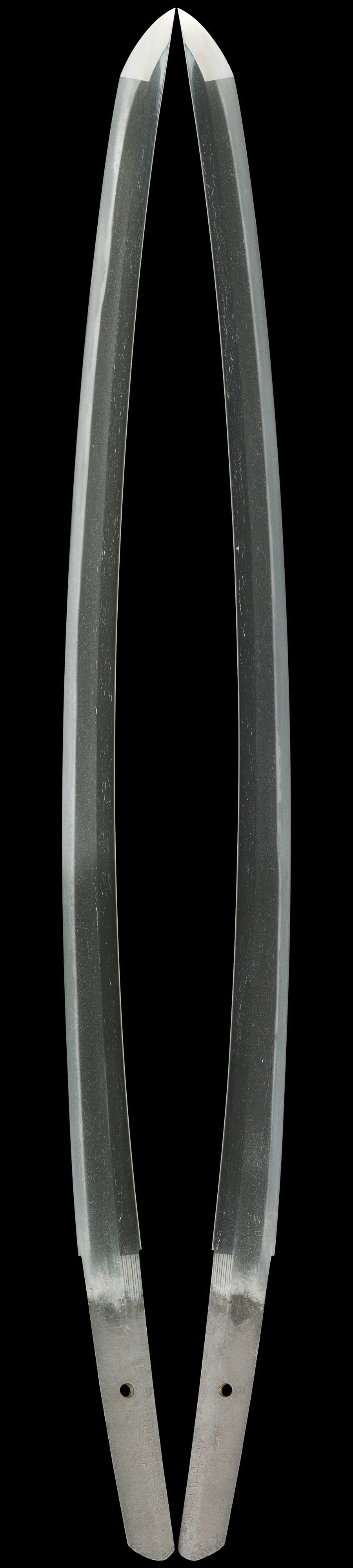
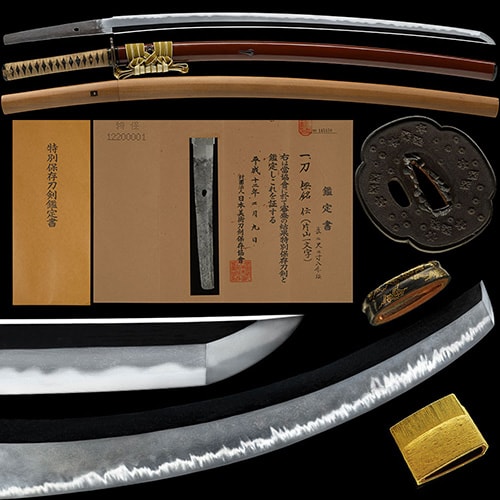
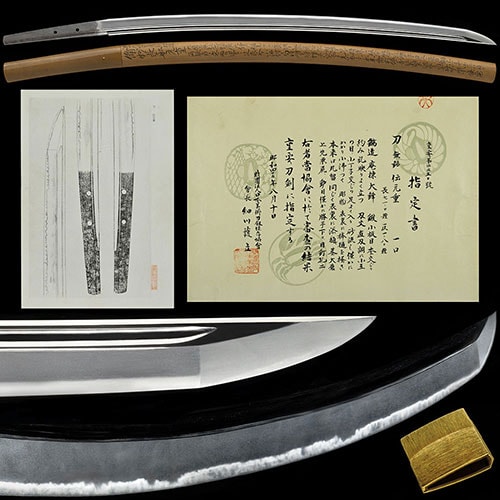
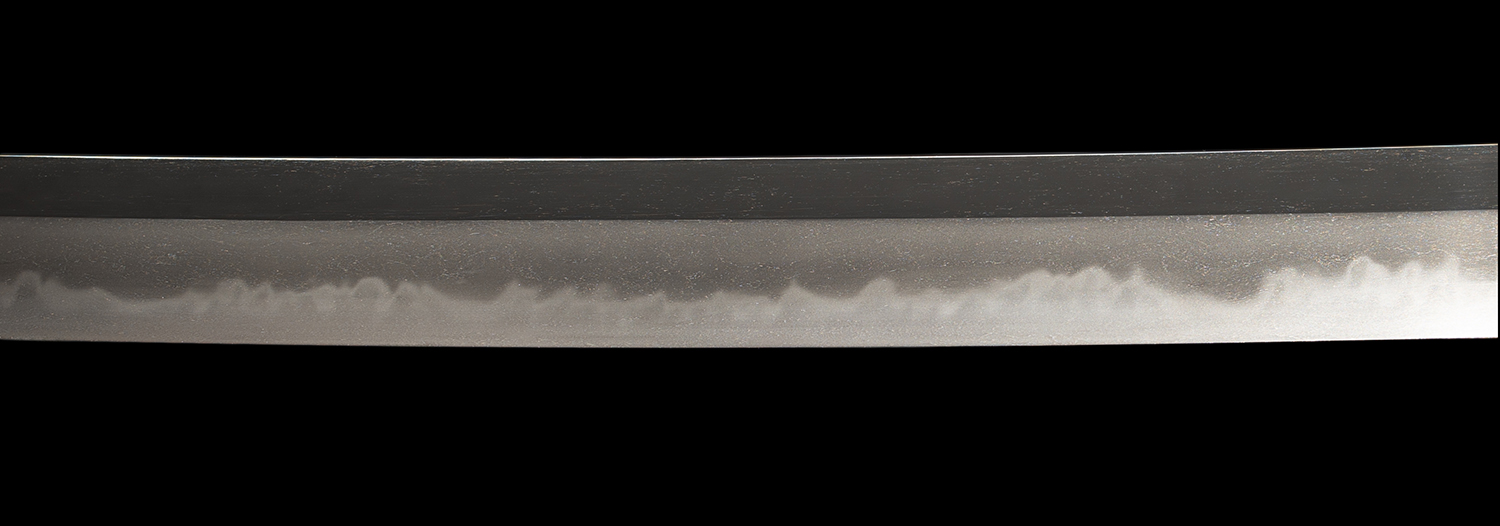
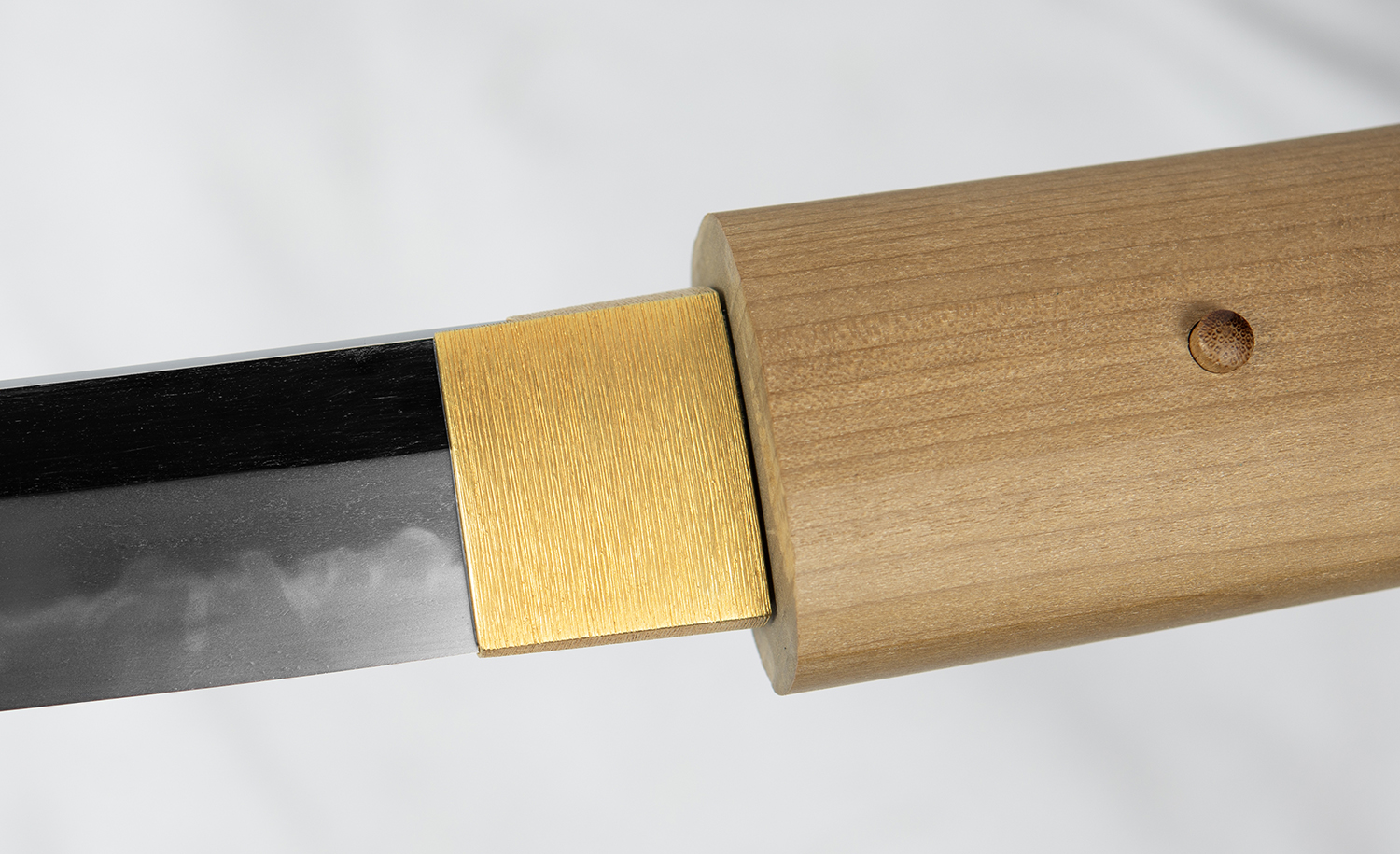
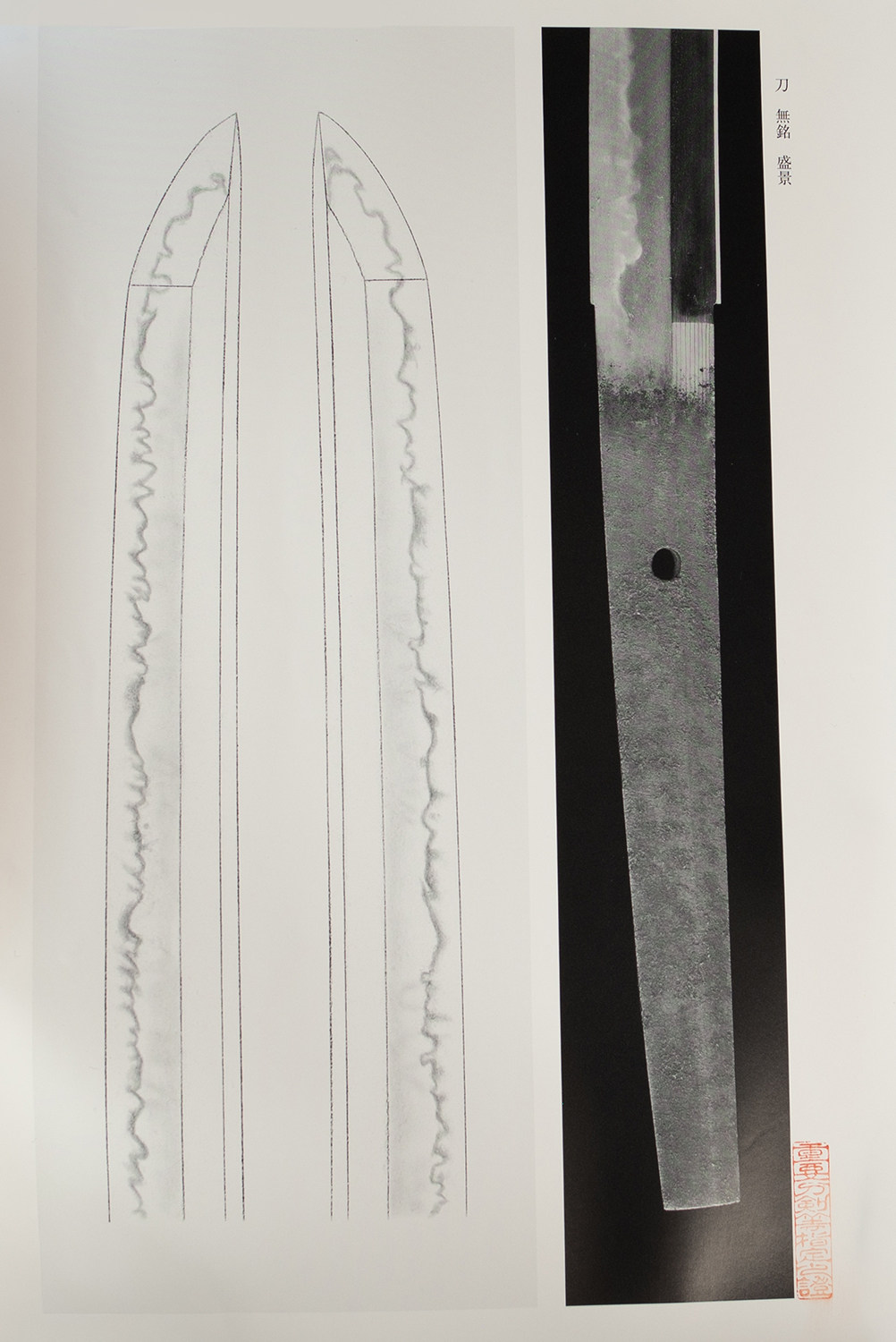
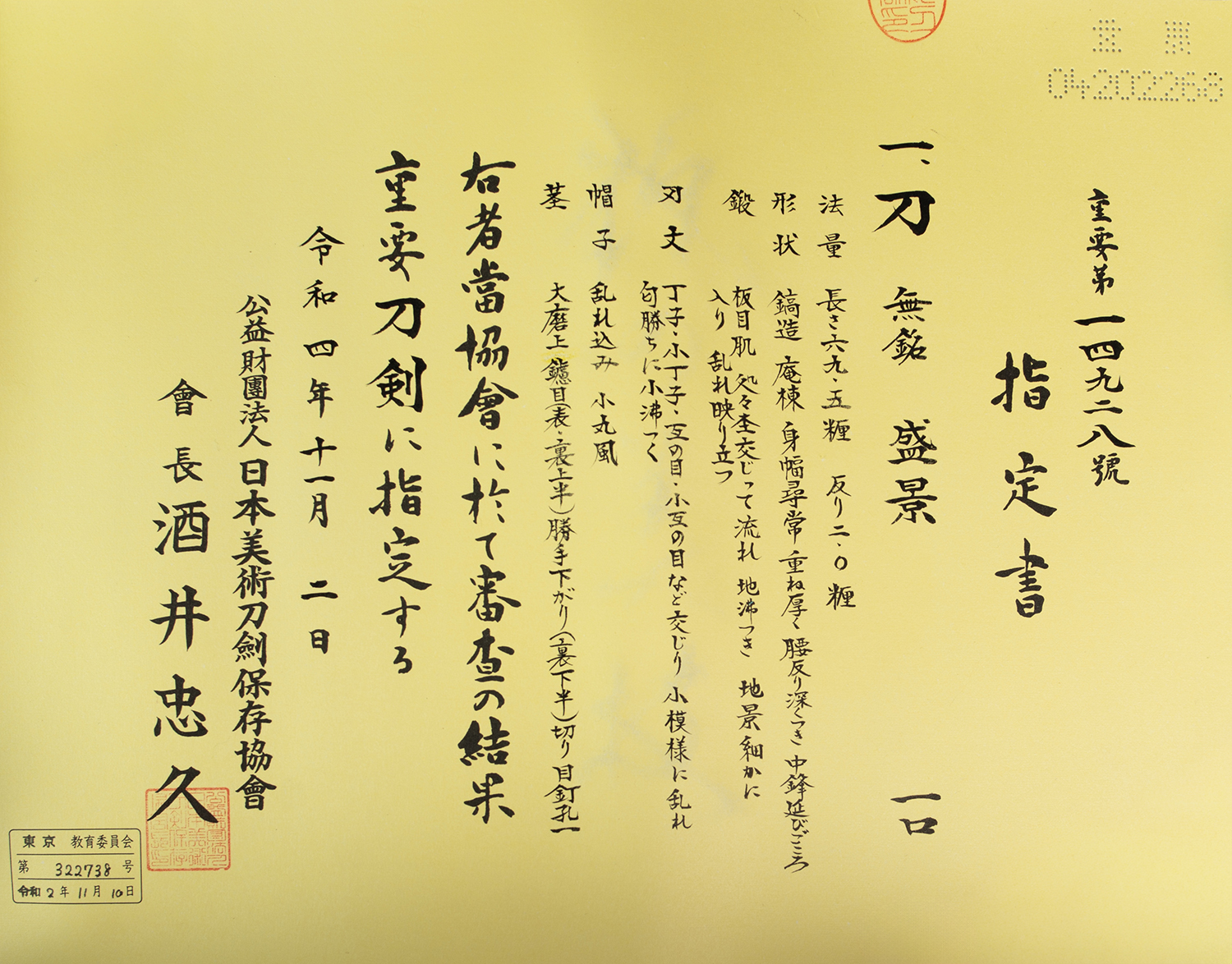
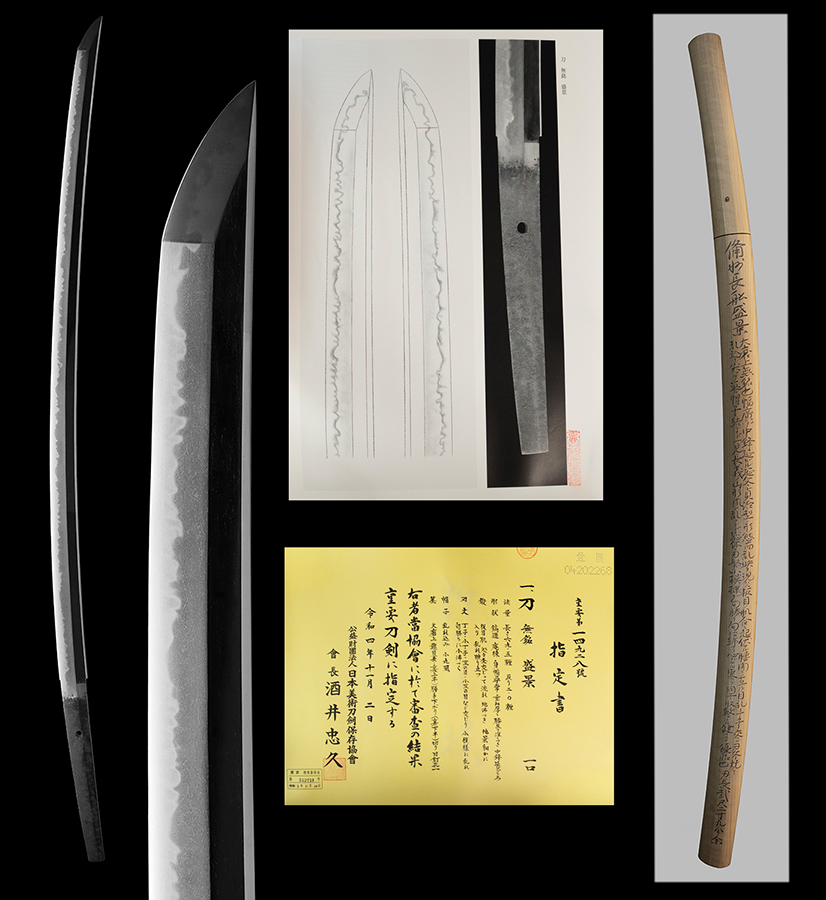
This is an exceptional Soden Bizen katana by Morikage, designated as a 68th Juyo Token by the NBTHK. It features a powerful Enbun-Joji sugata with a wide mihaba and a vibrant hamon displaying choji, gunome, and midare patterns. The blade is mumei (unsigned) but attributed to Morikage, a Jo Saku smith, and comes with a shira-saya with a sayagaki by Tanobe Michihiro.
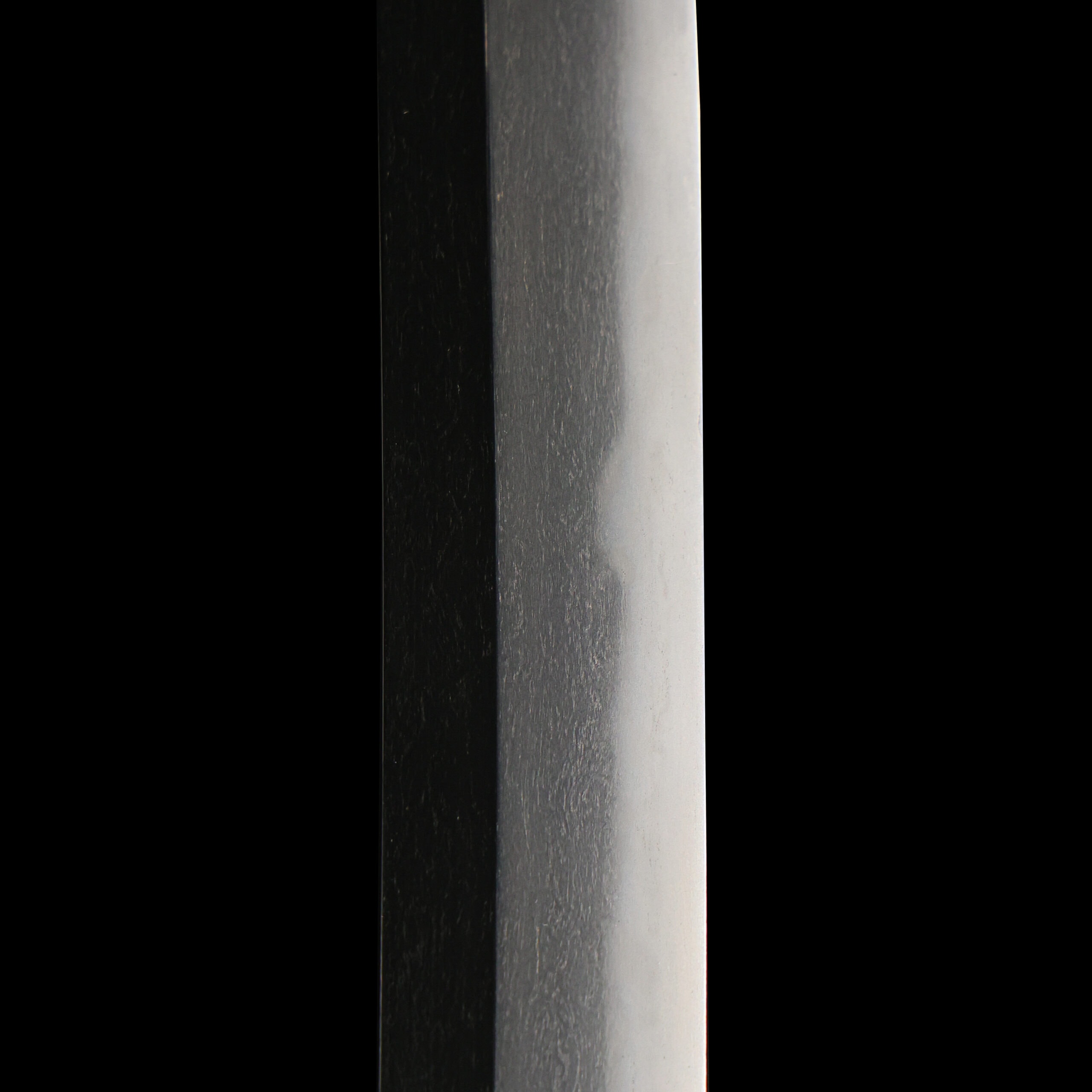
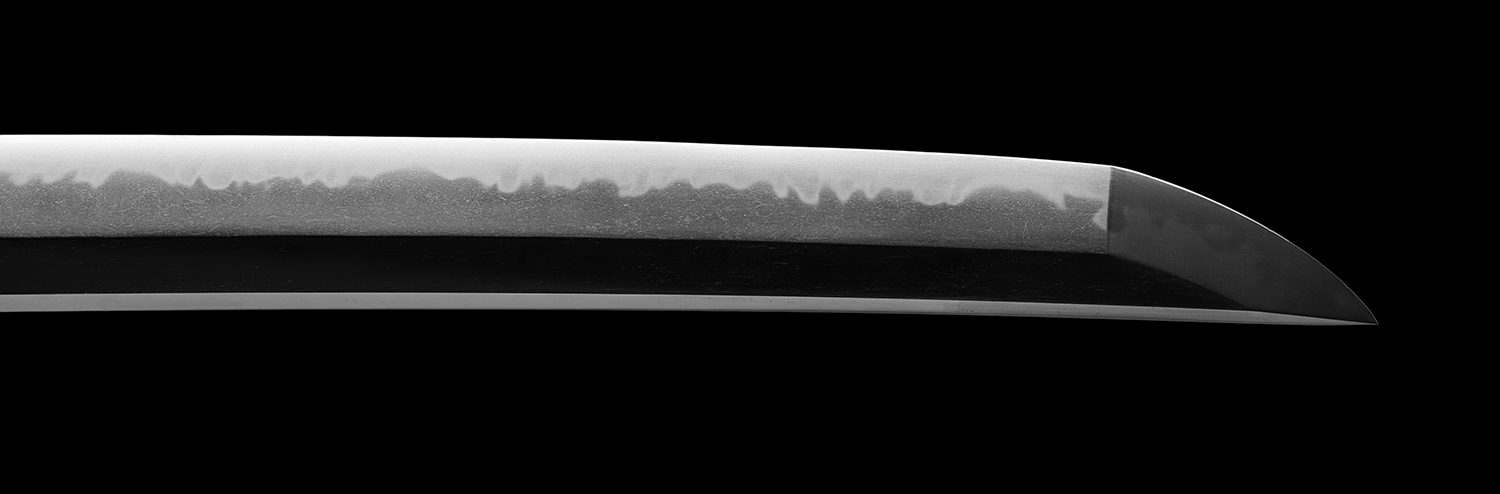
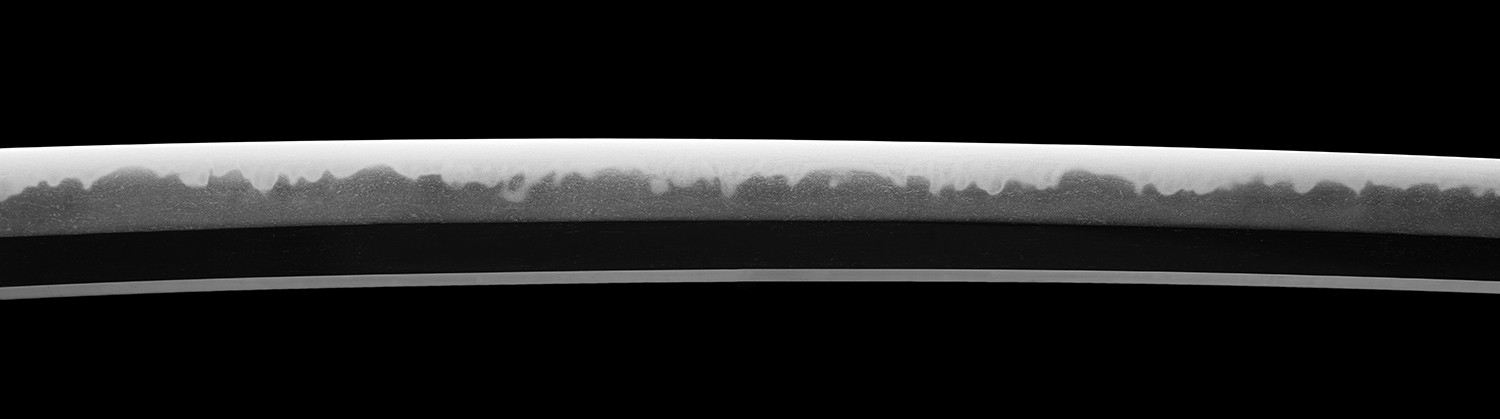
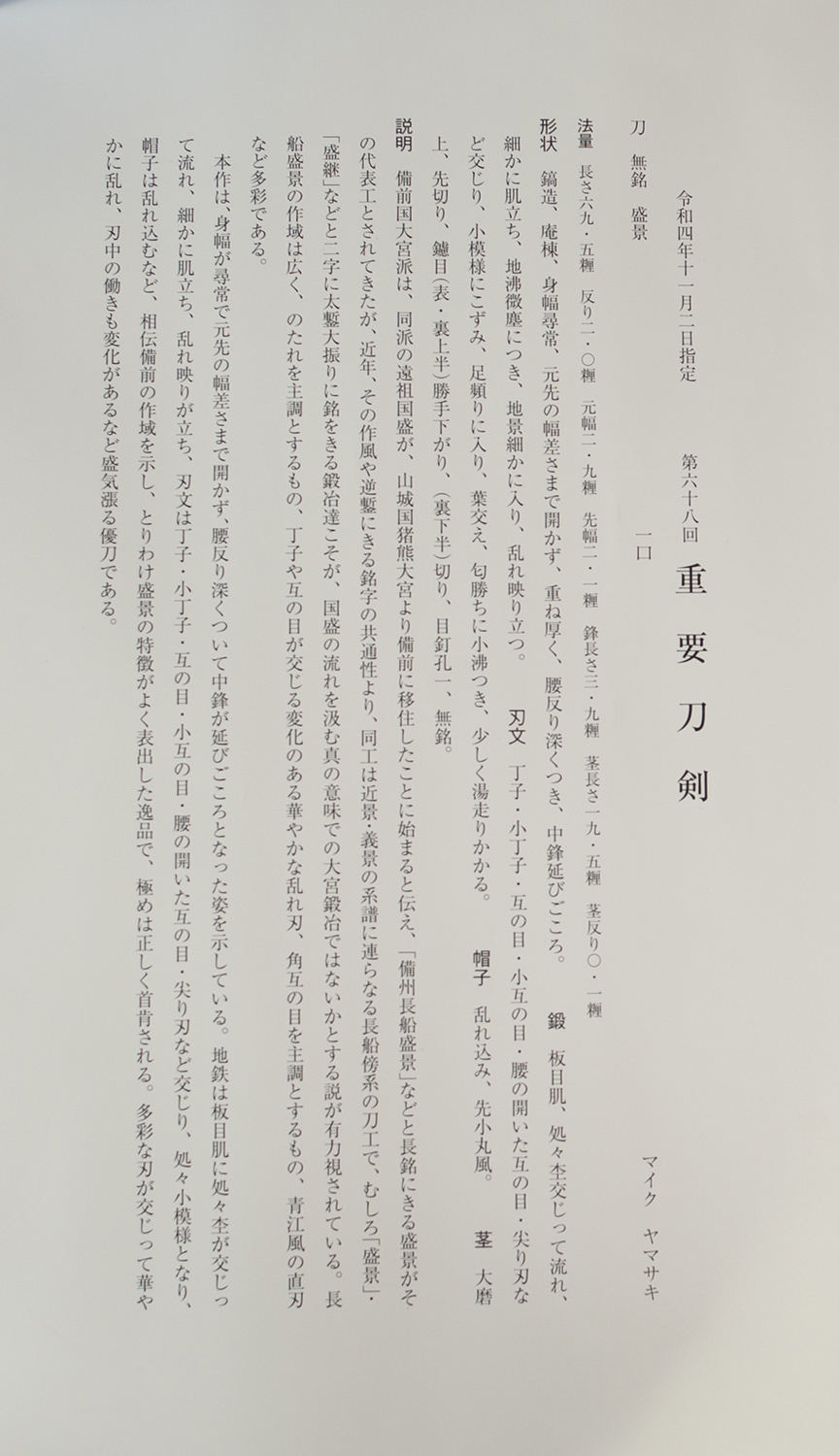
備前国大宮派は、同派の遠祖国盛が、山城国猪熊大宮より備前に移住したことに始まると伝え、「備州長船盛景」などと長銘にきる盛景がそ の代表工とされてきたが、近年、その作風や逆鏨にきる銘字の共通性より、同工は近景・義景の系譜に連らなる長船傍系の刀工で、むしろ「盛景」・ 「盛継」などと二字に太鏨大振りに銘をきる鍛冶達こそが、国盛の流れを汲む真の意味での大宮鍛冶ではないかとする説が有力視されている。長 船盛景の作域は広く、のたれを主調とするもの、丁子や互の目が交じる変化のある華やかな乱れ刃、角互の目を主調とするもの、青江風の直刃 など多彩である。 本作は、身幅が尋常で元先の幅差さまで開かず、腰反り深くついて中鋒が延びごころとなった姿を示している。地鉄は板目肌に処々杢が交じっ て流れ、細かに肌立ち、乱れ映りが立ち、刃文は丁子・小丁子・互の目・小互の目・腰の開いた互の目・尖り刃など交じり、処々小模様となり、 帽子は乱れ込むなど、相伝備前の作域を示し、とりわけ盛景の特徴がよく表出した逸品で、極めは正しく首肯される。多彩な刃が交じって華や かに乱れ、刃中の働きも変化があるなど盛気張る優刀である。
 NihontoWatch
mumei · Osafune · Enbun (1356-1361) ND · nagasa 69.5cm · sori 2cm


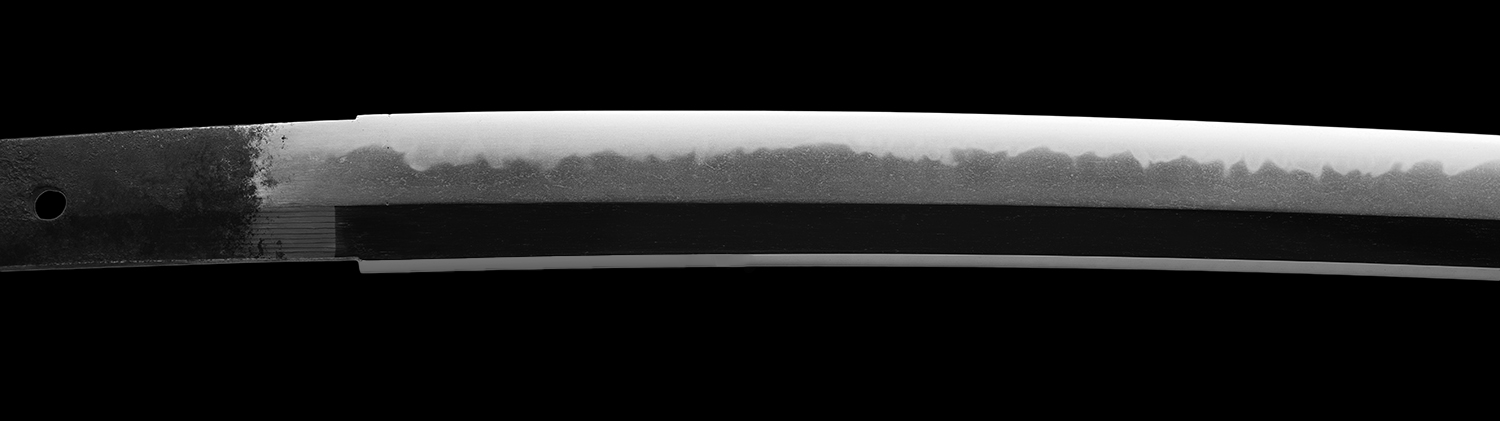
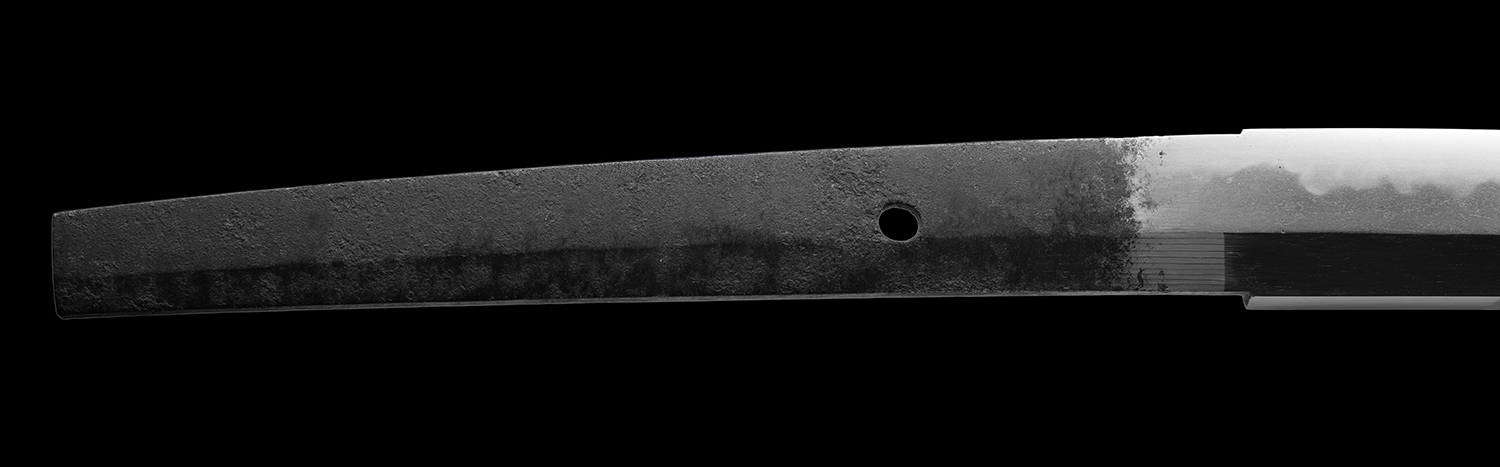
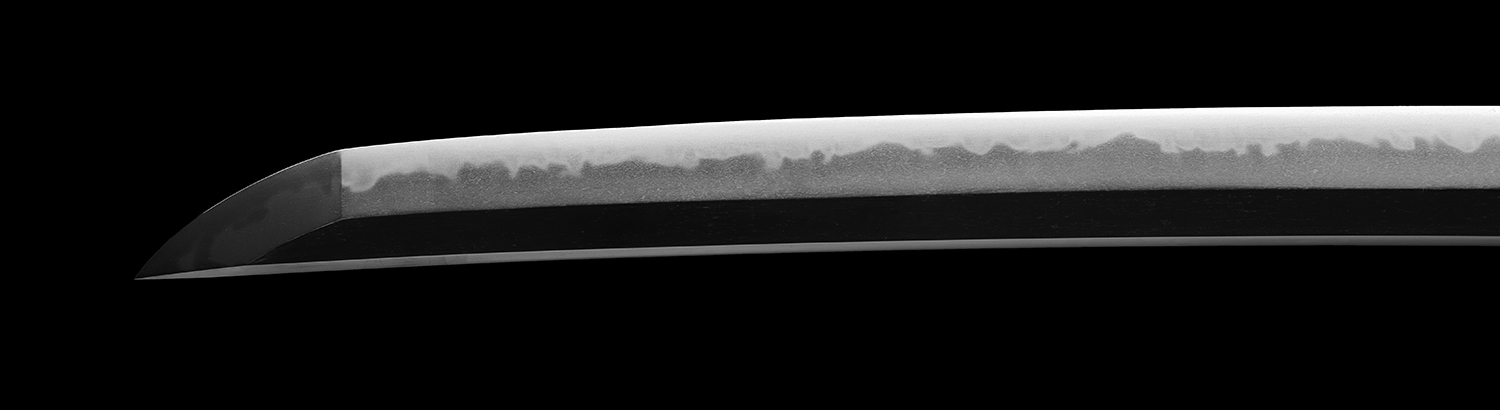
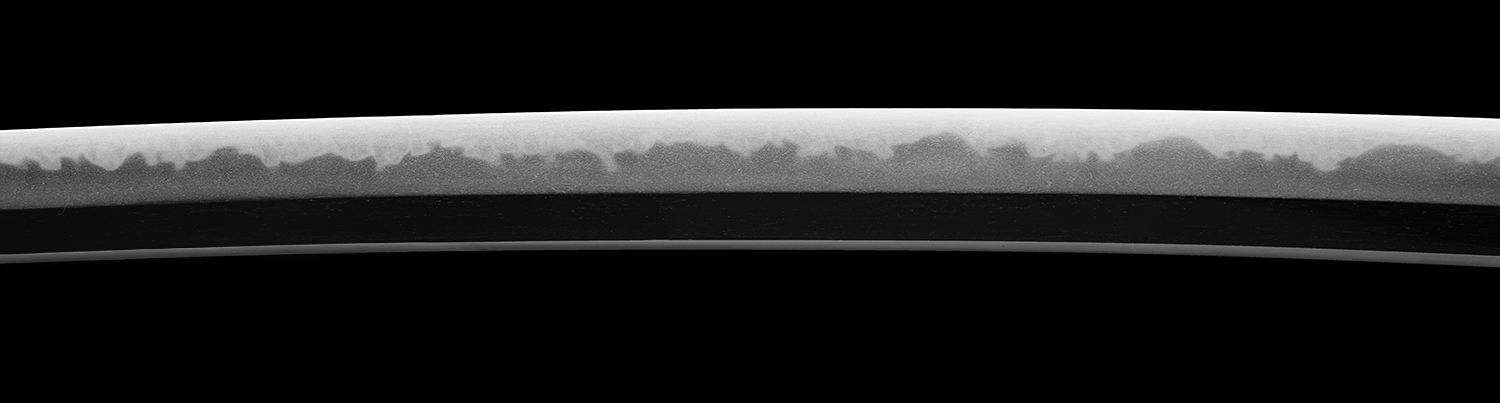
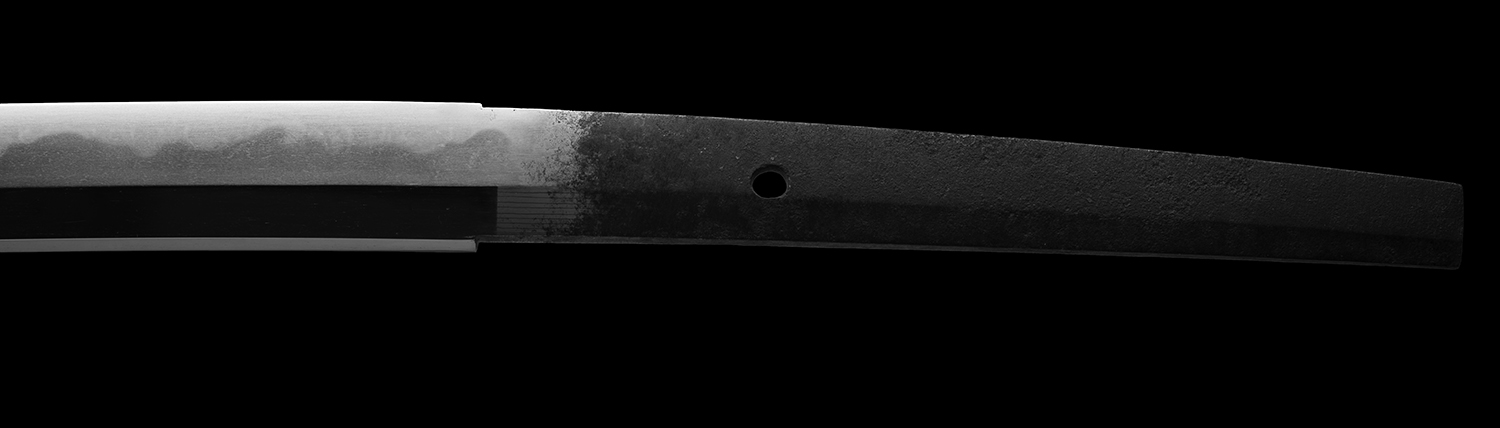
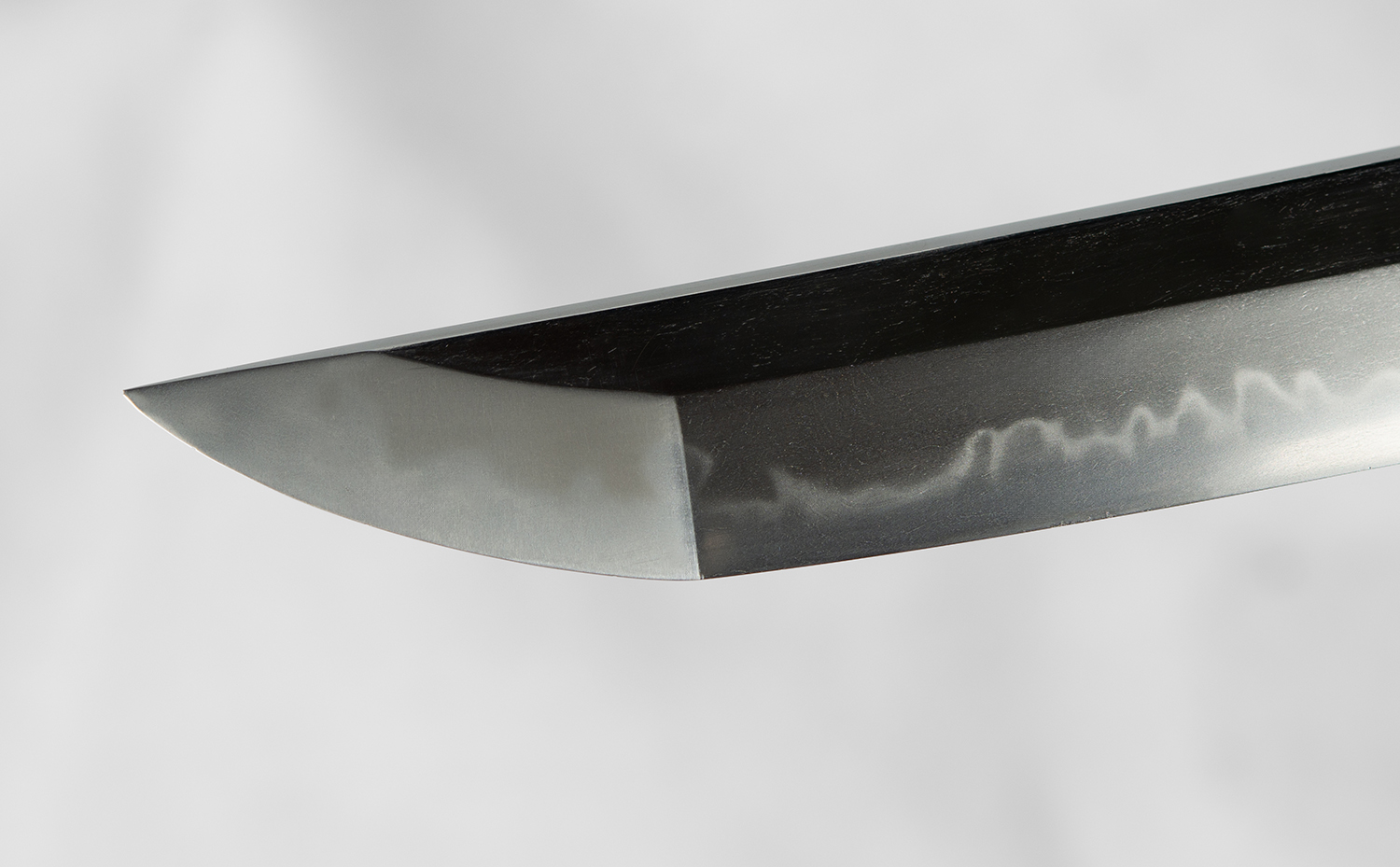
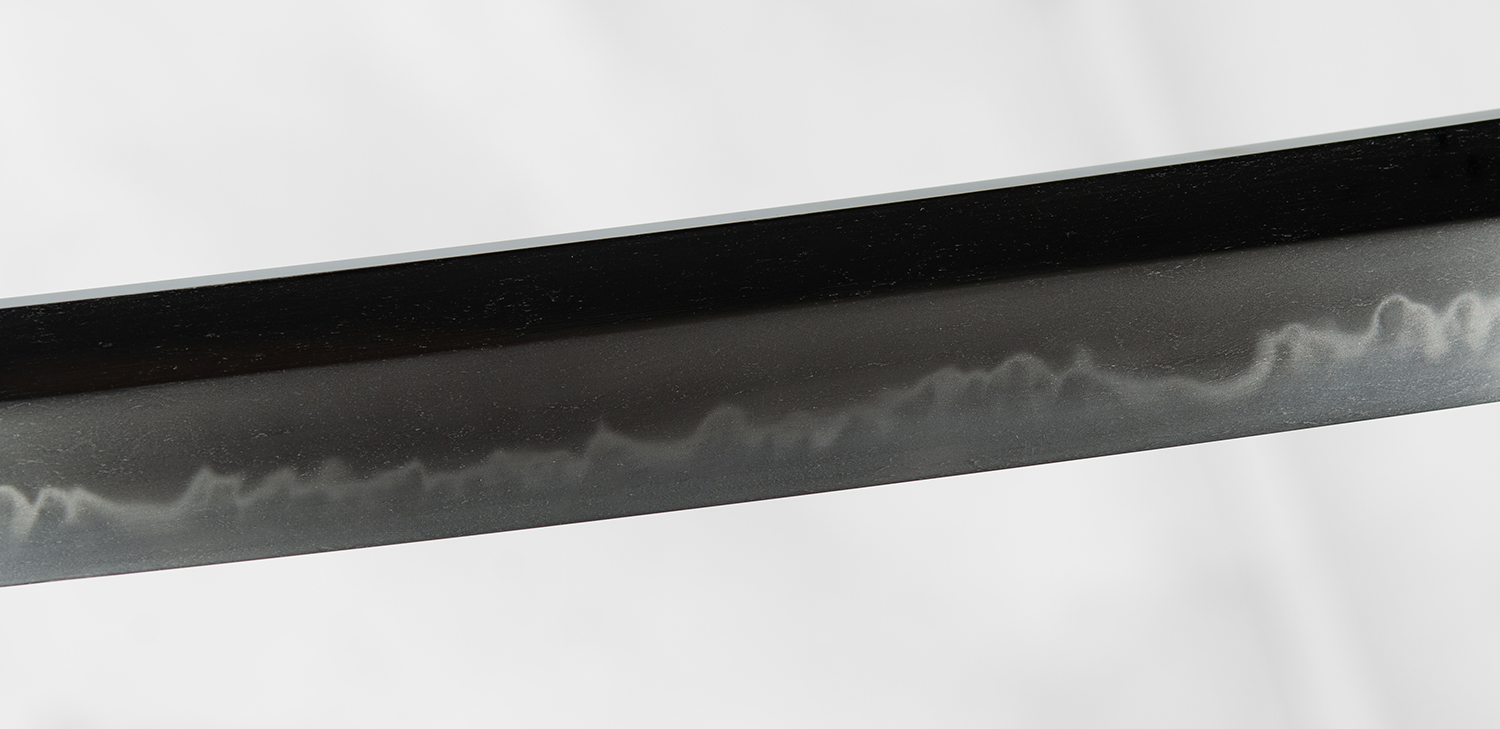
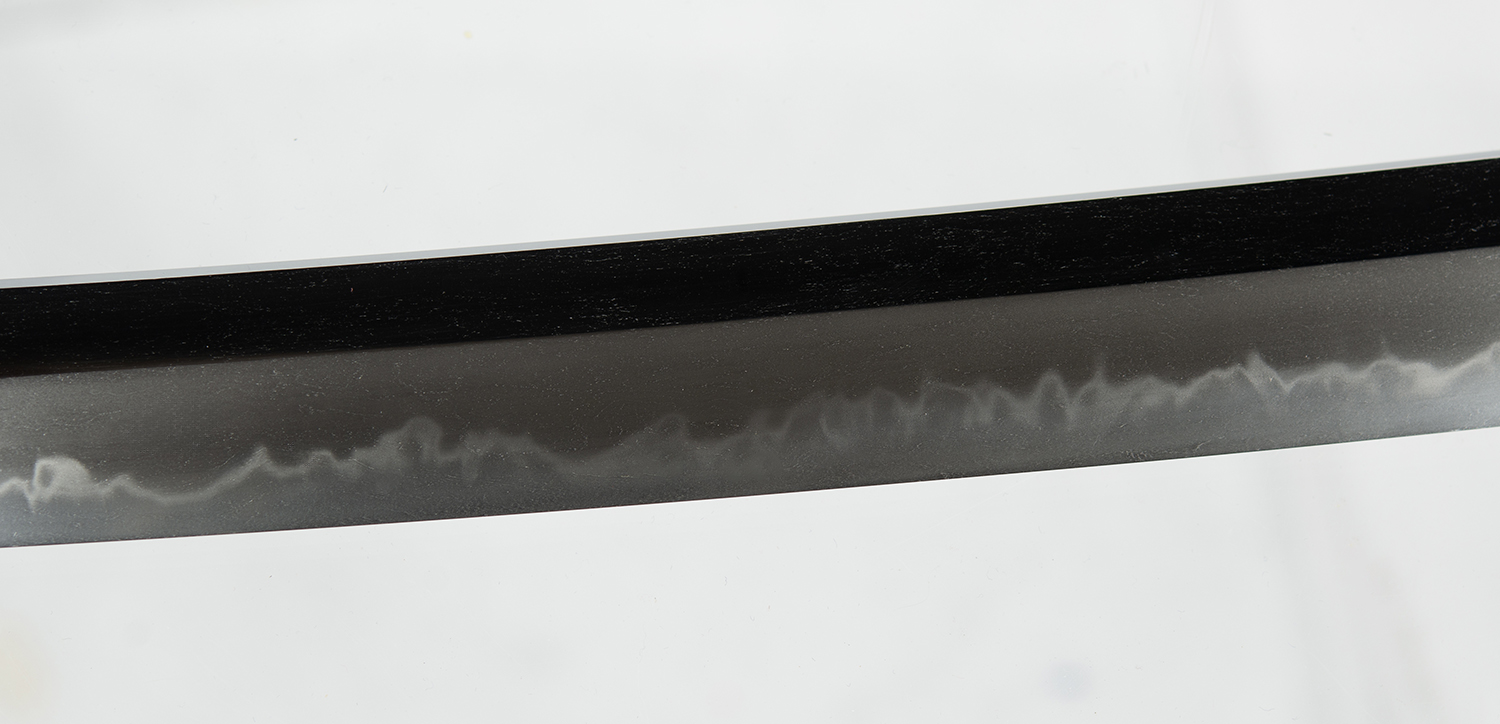

Bizen Osafune Ōmiya group (Sōden-Bizen) · Bizen · around 1356-1390
Fujishiro Jo-jo saku · Tōken Taikan top 18%
2 pieces on the market now
Morikage worked at Osafune in Bizen through the height of the Nanbokuchō period, cutting long, dated signatures such as Bishū Osafune Morikage on tachi, naginata and tantō across the Ōan, Jōji, Eiwa and Kakei years. He is the central figure of the Bizen Ōmiya group, a line traced in the published sources to the remote ancestor Kunimori, who is said to have moved to Bizen from Inokuma Ōmiya in Yamashiro Province in the Kamakura period. Works by the early Ōmiya smiths Kunimori and Sukemori are extremely rare, and within the Nanbokuchō group it is Morikage who left by far the largest body of work and the highest reputation. The NBTHK's published commentary states it plainly, that among the smiths of the line in this period "Morikage left the largest number of works and is also the most skilled"[[c:1]]. His Fujishiro grade is Jō-jō saku.
His characteristic hand is a Sōden-Bizen temper built not on the clove-flower of mainstream Osafune but on a ko-notare base. Into that undulating line he sets gunome, angular elements and a pointed tendency, with ashi and yō entering well, ko-nie adhering, and fine sunagashi and kinsuji running through the ha. The published sources read the temper as distinctly his own. On a converted-naginata of Tokubetsu Jūyō rank they note that the notare does not become broadly undulating in the manner of Kanemitsu but keeps short foothills and somewhat angular crests, features that, they say, clearly articulate Morikage's individual character. A quiet tell recurs across his work: the nioiguchi tends to a subdued shizumi rather than the bright, showy temper of the leading Osafune names of his day.
The jigane is the constant beneath that range. Over a standing itame mixed with mokume, the grain often opening, he lays a fine ji-nie, chikei entering finely, patches of jifu in the steel, and a Bizen midare-utsuri that stands on his signed and unsigned blades alike. The strength of the nie in both ji and ha is what the judges call the mark of Sōden-Bizen in his work. The bōshi runs midare-komi, finishing in a pointed or small-round turnback with hakikake, and the carvings range from a plain bō-hi through futasuji-hi to bonji and a sankō-ken on the finest pieces.
What the published sources stress above all is the breadth of his range. They describe it as wide, encompassing work in which notare predominates, a florid and changeful midare with chōji and gunome mixed in, work centred on angular gunome, and even a suguha in an Aoe manner. The dated, signed pieces are the spine of this picture, since they fix his hand to specific years from the Ōan era onward, while the suguha register stands at its quiet extreme. Of one signed tachi of Eiwa 2 the commentary remarks that, at a glance, it presents "exactly the kind of suguha manner that calls Aoe and the Unrui smiths to mind"[[c:2]], holding it among the very best of his output and a blade that makes his diversity readily understood. A modern scholarly question hangs over the name itself: on shared workmanship and the reverse-chisel forms of his signature characters, the published sources record a theory, now widely entertained, that this long-signature Morikage may belong instead to an Osafune collateral line connected to Chikakage and Yoshikage, and that the smiths who cut bold, large two-character signatures may be the true Ōmiya hands. The matter is left open for further study.
The larger face of his surviving record is the o-suriage mumei katana attributed to him. These are wide-bodied, the sori shallow and the kissaki extended in the archetypal Nanbokuchō shape, the hamon a ko-notare mixed with gunome and at times small chōji. The published sources affirm them as unmistakable Sōden-Bizen, then place Morikage by contrast: his bright midare-utsuri and subdued, chōji-mixed temper hold him apart from Kanemitsu, whose temper is broader, and from the box-shaped large midare of the Chōgi group. Yet the kinship to Chōgi is real and acknowledged. The commentary on one Tokubetsu Jūyō katana, noting how the Ōmiya line tends to be overshadowed by Kanemitsu and Chōgi, says outright that "his workmanship resembles Chōgi and stands beside it"[[c:3]]. He belongs, in short, to the front rank of Nanbokuchō Sōden-Bizen, a maker whose attribution rests on era, school and these careful distinctions rather than on a single flamboyant trait.
For the collector Morikage is an attainable name among the great Nanbokuchō hands, though one to be met with patience. He has no National Treasures; his designated record runs instead through two Important Cultural Properties, three Tokubetsu Jūyō and a long Jūyō roll, ninety blades in the Tokubetsu Jūyō and Jūyō tiers in all, with one further Jūyō Bijutsuhin from the prewar designations. His provenance is that of the daimyō houses, his blades carried in the Nabeshima of Hizen, the Uesugi, the Date and the Hisamatsu-Matsudaira, with one piece recorded in Imperial keeping. The published commentary singles out individual works in the strongest terms, calling one converted naginata "an outstanding example among his works of that form"[[c:4]]. Because most designated blades stay in long-held collections, a signed and dated Ōmiya Morikage comes to light only from time to time, and a privately held one is a notable thing for a collector to encounter, a securely documented witness to the broad and skilled hand at the centre of the Ōmiya school.
Where Morikage stands among comparable artisans: across all of nihontō, and within tradition, era, and period. The tiers (Foremost · Leading · Major · Notable) weigh official designations from the NBTHK and Japan's Agency for Cultural Affairs, together with historical honors of lasting repute such as the Sansaku and Meibutsu-chō.
Select a lens to see how it's measured.
Years he was demonstrably active, proven by signed-and-dated blades
Bizen-den · Bizen
7 pieces on the market now
The Omiya school (大宮) of Bizen traces its name and its blood to Kyoto, not to the Bizen heartland where it eventually settled. The published sources follow the line back to a remote ancestor, Kunimori, who is said to have left Inokuma Omiya in Yamashiro province and moved into Bizen during the Kamakura period, around the Bun'o years. With him the group carried a Yamashiro sensibility into the province of choji, and that transplanted origin remains the key to everything the school later became. Works by the earliest Omiya hands, Kunimori and Sukemori, survive in extremely small numbers, so the line first comes clearly into view at the close of the Kamakura period and then flowers through the height of the Nanbokucho era. Several names recur across these generations, among them Morishige, whose name passed down successive smiths from the late Kamakura into the Muromachi period; but the figure who left by far the largest body of work, and the highest reputation[[c:1]], is Morikage, who worked at Osafune and cut long, dated signatures such as Bishu Osafune Morikage across the Oan, Joji, Eiwa and Kakei years. What binds these smiths into a recognizable group is a particular blend, a temper that reads as Soden-Bizen yet is built differently from the clove-flower of mainstream Osafune. The jigane is the constant beneath the range: a standing itame mixed with mokume, the grain tending to open, with fine ji-nie, chikei entering, patches of jifu in the steel, and a Bizen midare-utsuri that rises on signed and mumei blades alike. Upon that ground the school sets a midare in which gunome, choji and an angular, pointed tendency intermingle, with ashi and yo entering well, nioi deepening to ko-nie, and fine sunagashi and kinsuji running through the ha. The recurring tells are a Yamashiro-tinged ji carrying that strong nie, and a boshi running midare-komi to a small round or a pointed turnback with hakikake. Within this shared vocabulary the hands diverge.
Morikage tends to a ko-notare base with somewhat angular crests and a subdued, shizumi nioiguchi rather than a showy temper, while his range stretches from that quiet register to a suguha the commentary likens to Aoe and the Unrui smiths[[c:2]]. Morishige favors a bold, opened-waist gunome, the koshi-hiraki pattern mixed with choji into flamboyant undulations. The breadth itself is a school trait, the published sources describing the Omiya saku-iki as wide, taking in notare-dominant work, florid choji-gunome midare, angular gunome, and the Aoe-manner suguha at its quiet edge. To kantei an Omiya blade is to read this fusion of Yamashiro-den refinement and Bizen-den flamboyance, then to separate it from its larger Osafune neighbors. The bright midare-utsuri and the nie-strong ji hold the school apart from Kanemitsu, whose temper undulates more broadly, and from the box-shaped large midare of Chogi, though the kinship to Chogi is real and acknowledged in the commentary, which places Morikage's workmanship beside it[[c:3]]. The school is often overshadowed by those two names, which makes the distinguishing read the more useful: the standing itame with its utsuri, the angular pointed elements, and the comparatively restrained nioiguchi. Morikage stands at the front rank of Nanbokucho Soden-Bizen and carries a Jo-jo saku grade in Fujishiro; his provenance runs through the daimyo houses, the Nabeshima of Hizen, the Uesugi, the Date and the Hisamatsu-Matsudaira, with a piece recorded in Imperial keeping. A modern scholarly question hangs over the name itself, the published sources recording a theory, now widely entertained, that the long-signature Morikage may belong to an Osafune collateral line connected to Chikakage and Yoshikage, and that the smiths who cut bold, large two-character signatures may be the true Omiya hands; the matter is left open. By the late Muromachi the distinctive Omiya traits fade, the Shinkuro generation of Morishige showing no difference from the general Sue-Bizen type, evidence that the subsidiary line was at last absorbed into the dominant Osafune school, a trajectory that gives the group its documentary value for the study of how Bizen's lesser lineages were drawn into the mainstream. Learn more →
| Smith | Era | Designated |
|---|---|---|
| Morikage盛景 | 1356-1390 | 92 |
| Morikage盛景 | 1299-1302 | 5 |
| Nobuhide延秀 | 1302-1303 | 0 |
| Norifusa則房 | 1199-1201 | 0 |
| Morishige盛重 | 1394-1428 | 2 |
Bizen in the Nanbokuchō period
Sixty years of war between two courts drove blades long and broad, and Osafune met the demand: Kanemitsu and Chōgi led forges serving the provincial warriors who did the fighting, while Sōshū influence arrived with the armies to create Sōden-Bizen.
A blade of top-grade workmanship and condition, formally judged to rank with a nationally recognized Important Art Object (Jūyō Bijutsuhin). Awarded only at the NBTHK’s competitive annual examination.
Of Japan’s roughly 2.5 million registered swords, only 12,307 (about 1 in 203) have ever attained Jūyō.
The NBTHK (Nihon Bijutsu Tōken Hozon Kyōkai, the Society for the Preservation of Japanese Art Swords) is a public-interest incorporated foundation founded in 1948 and supervised by Japan’s Agency for Cultural Affairs (Bunkachō); it is based at the Japanese Sword Museum in Tokyo. Its expert panels physically examine each submitted work (shinsa) and issue a certificate (kanteishō) ranking it by artistic and historical merit. NBTHK papers are the most widely recognized standard of authentication for Japanese swords and fittings.
NBTHK official site3 day inspection period on all sales. Items can be returned for any reason for a full refund, less return shipping cost. Returned items must be in the same condition as when purchased.

$46,000
This is an exceptional Soden Bizen katana by Morikage, designated as a 68th Juyo Token by the NBTHK. It features a powerful Enbun-Joji sugata with a wide mihaba and a vibrant hamon displaying choji, gunome, and midare patterns. The blade is mumei (unsigned) but attributed to Morikage, a Jo Saku smith, and comes with a shira-saya with a sayagaki by Tanobe Michihiro.
備前国大宮派は、同派の遠祖国盛が、山城国猪熊大宮より備前に移住したことに始まると伝え、「備州長船盛景」などと長銘にきる盛景がそ の代表工とされてきたが、近年、その作風や逆鏨にきる銘字の共通性より、同工は近景・義景の系譜に連らなる長船傍系の刀工で、むしろ「盛景」・ 「盛継」などと二字に太鏨大振りに銘をきる鍛冶達こそが、国盛の流れを汲む真の意味での大宮鍛冶ではないかとする説が有力視されている。長 船盛景の作域は広く、のたれを主調とするもの、丁子や互の目が交じる変化のある華やかな乱れ刃、角互の目を主調とするもの、青江風の直刃 など多彩である。 本作は、身幅が尋常で元先の幅差さまで開かず、腰反り深くついて中鋒が延びごころとなった姿を示している。地鉄は板目肌に処々杢が交じっ て流れ、細かに肌立ち、乱れ映りが立ち、刃文は丁子・小丁子・互の目・小互の目・腰の開いた互の目・尖り刃など交じり、処々小模様となり、 帽子は乱れ込むなど、相伝備前の作域を示し、とりわけ盛景の特徴がよく表出した逸品で、極めは正しく首肯される。多彩な刃が交じって華や かに乱れ、刃中の働きも変化があるなど盛気張る優刀である。
NihontoWatchmumei · Osafune · Enbun (1356-1361) ND · nagasa 69.5cm · sori 2cm
Bizen Osafune Ōmiya group (Sōden-Bizen) · Bizen · around 1356-1390
Fujishiro Jo-jo saku · Tōken Taikan top 18%
2 pieces on the market now
Morikage worked at Osafune in Bizen through the height of the Nanbokuchō period, cutting long, dated signatures such as Bishū Osafune Morikage on tachi, naginata and tantō across the Ōan, Jōji, Eiwa and Kakei years. He is the central figure of the Bizen Ōmiya group, a line traced in the published sources to the remote ancestor Kunimori, who is said to have moved to Bizen from Inokuma Ōmiya in Yamashiro Province in the Kamakura period. Works by the early Ōmiya smiths Kunimori and Sukemori are extremely rare, and within the Nanbokuchō group it is Morikage who left by far the largest body of work and the highest reputation. The NBTHK's published commentary states it plainly, that among the smiths of the line in this period "Morikage left the largest number of works and is also the most skilled"[[c:1]]. His Fujishiro grade is Jō-jō saku.
His characteristic hand is a Sōden-Bizen temper built not on the clove-flower of mainstream Osafune but on a ko-notare base. Into that undulating line he sets gunome, angular elements and a pointed tendency, with ashi and yō entering well, ko-nie adhering, and fine sunagashi and kinsuji running through the ha. The published sources read the temper as distinctly his own. On a converted-naginata of Tokubetsu Jūyō rank they note that the notare does not become broadly undulating in the manner of Kanemitsu but keeps short foothills and somewhat angular crests, features that, they say, clearly articulate Morikage's individual character. A quiet tell recurs across his work: the nioiguchi tends to a subdued shizumi rather than the bright, showy temper of the leading Osafune names of his day.
The jigane is the constant beneath that range. Over a standing itame mixed with mokume, the grain often opening, he lays a fine ji-nie, chikei entering finely, patches of jifu in the steel, and a Bizen midare-utsuri that stands on his signed and unsigned blades alike. The strength of the nie in both ji and ha is what the judges call the mark of Sōden-Bizen in his work. The bōshi runs midare-komi, finishing in a pointed or small-round turnback with hakikake, and the carvings range from a plain bō-hi through futasuji-hi to bonji and a sankō-ken on the finest pieces.
What the published sources stress above all is the breadth of his range. They describe it as wide, encompassing work in which notare predominates, a florid and changeful midare with chōji and gunome mixed in, work centred on angular gunome, and even a suguha in an Aoe manner. The dated, signed pieces are the spine of this picture, since they fix his hand to specific years from the Ōan era onward, while the suguha register stands at its quiet extreme. Of one signed tachi of Eiwa 2 the commentary remarks that, at a glance, it presents "exactly the kind of suguha manner that calls Aoe and the Unrui smiths to mind"[[c:2]], holding it among the very best of his output and a blade that makes his diversity readily understood. A modern scholarly question hangs over the name itself: on shared workmanship and the reverse-chisel forms of his signature characters, the published sources record a theory, now widely entertained, that this long-signature Morikage may belong instead to an Osafune collateral line connected to Chikakage and Yoshikage, and that the smiths who cut bold, large two-character signatures may be the true Ōmiya hands. The matter is left open for further study.
The larger face of his surviving record is the o-suriage mumei katana attributed to him. These are wide-bodied, the sori shallow and the kissaki extended in the archetypal Nanbokuchō shape, the hamon a ko-notare mixed with gunome and at times small chōji. The published sources affirm them as unmistakable Sōden-Bizen, then place Morikage by contrast: his bright midare-utsuri and subdued, chōji-mixed temper hold him apart from Kanemitsu, whose temper is broader, and from the box-shaped large midare of the Chōgi group. Yet the kinship to Chōgi is real and acknowledged. The commentary on one Tokubetsu Jūyō katana, noting how the Ōmiya line tends to be overshadowed by Kanemitsu and Chōgi, says outright that "his workmanship resembles Chōgi and stands beside it"[[c:3]]. He belongs, in short, to the front rank of Nanbokuchō Sōden-Bizen, a maker whose attribution rests on era, school and these careful distinctions rather than on a single flamboyant trait.
For the collector Morikage is an attainable name among the great Nanbokuchō hands, though one to be met with patience. He has no National Treasures; his designated record runs instead through two Important Cultural Properties, three Tokubetsu Jūyō and a long Jūyō roll, ninety blades in the Tokubetsu Jūyō and Jūyō tiers in all, with one further Jūyō Bijutsuhin from the prewar designations. His provenance is that of the daimyō houses, his blades carried in the Nabeshima of Hizen, the Uesugi, the Date and the Hisamatsu-Matsudaira, with one piece recorded in Imperial keeping. The published commentary singles out individual works in the strongest terms, calling one converted naginata "an outstanding example among his works of that form"[[c:4]]. Because most designated blades stay in long-held collections, a signed and dated Ōmiya Morikage comes to light only from time to time, and a privately held one is a notable thing for a collector to encounter, a securely documented witness to the broad and skilled hand at the centre of the Ōmiya school.
Where Morikage stands among comparable artisans: across all of nihontō, and within tradition, era, and period. The tiers (Foremost · Leading · Major · Notable) weigh official designations from the NBTHK and Japan's Agency for Cultural Affairs, together with historical honors of lasting repute such as the Sansaku and Meibutsu-chō.
Select a lens to see how it's measured.
Years he was demonstrably active, proven by signed-and-dated blades
Bizen-den · Bizen
7 pieces on the market now
The Omiya school (大宮) of Bizen traces its name and its blood to Kyoto, not to the Bizen heartland where it eventually settled. The published sources follow the line back to a remote ancestor, Kunimori, who is said to have left Inokuma Omiya in Yamashiro province and moved into Bizen during the Kamakura period, around the Bun'o years. With him the group carried a Yamashiro sensibility into the province of choji, and that transplanted origin remains the key to everything the school later became. Works by the earliest Omiya hands, Kunimori and Sukemori, survive in extremely small numbers, so the line first comes clearly into view at the close of the Kamakura period and then flowers through the height of the Nanbokucho era. Several names recur across these generations, among them Morishige, whose name passed down successive smiths from the late Kamakura into the Muromachi period; but the figure who left by far the largest body of work, and the highest reputation[[c:1]], is Morikage, who worked at Osafune and cut long, dated signatures such as Bishu Osafune Morikage across the Oan, Joji, Eiwa and Kakei years. What binds these smiths into a recognizable group is a particular blend, a temper that reads as Soden-Bizen yet is built differently from the clove-flower of mainstream Osafune. The jigane is the constant beneath the range: a standing itame mixed with mokume, the grain tending to open, with fine ji-nie, chikei entering, patches of jifu in the steel, and a Bizen midare-utsuri that rises on signed and mumei blades alike. Upon that ground the school sets a midare in which gunome, choji and an angular, pointed tendency intermingle, with ashi and yo entering well, nioi deepening to ko-nie, and fine sunagashi and kinsuji running through the ha. The recurring tells are a Yamashiro-tinged ji carrying that strong nie, and a boshi running midare-komi to a small round or a pointed turnback with hakikake. Within this shared vocabulary the hands diverge.
Morikage tends to a ko-notare base with somewhat angular crests and a subdued, shizumi nioiguchi rather than a showy temper, while his range stretches from that quiet register to a suguha the commentary likens to Aoe and the Unrui smiths[[c:2]]. Morishige favors a bold, opened-waist gunome, the koshi-hiraki pattern mixed with choji into flamboyant undulations. The breadth itself is a school trait, the published sources describing the Omiya saku-iki as wide, taking in notare-dominant work, florid choji-gunome midare, angular gunome, and the Aoe-manner suguha at its quiet edge. To kantei an Omiya blade is to read this fusion of Yamashiro-den refinement and Bizen-den flamboyance, then to separate it from its larger Osafune neighbors. The bright midare-utsuri and the nie-strong ji hold the school apart from Kanemitsu, whose temper undulates more broadly, and from the box-shaped large midare of Chogi, though the kinship to Chogi is real and acknowledged in the commentary, which places Morikage's workmanship beside it[[c:3]]. The school is often overshadowed by those two names, which makes the distinguishing read the more useful: the standing itame with its utsuri, the angular pointed elements, and the comparatively restrained nioiguchi. Morikage stands at the front rank of Nanbokucho Soden-Bizen and carries a Jo-jo saku grade in Fujishiro; his provenance runs through the daimyo houses, the Nabeshima of Hizen, the Uesugi, the Date and the Hisamatsu-Matsudaira, with a piece recorded in Imperial keeping. A modern scholarly question hangs over the name itself, the published sources recording a theory, now widely entertained, that the long-signature Morikage may belong to an Osafune collateral line connected to Chikakage and Yoshikage, and that the smiths who cut bold, large two-character signatures may be the true Omiya hands; the matter is left open. By the late Muromachi the distinctive Omiya traits fade, the Shinkuro generation of Morishige showing no difference from the general Sue-Bizen type, evidence that the subsidiary line was at last absorbed into the dominant Osafune school, a trajectory that gives the group its documentary value for the study of how Bizen's lesser lineages were drawn into the mainstream. Learn more →
| Smith | Era | Designated |
|---|---|---|
| Morikage盛景 | 1356-1390 | 92 |
| Morikage盛景 | 1299-1302 | 5 |
| Nobuhide延秀 | 1302-1303 | 0 |
| Norifusa則房 | 1199-1201 | 0 |
| Morishige盛重 | 1394-1428 | 2 |
Bizen in the Nanbokuchō period
Sixty years of war between two courts drove blades long and broad, and Osafune met the demand: Kanemitsu and Chōgi led forges serving the provincial warriors who did the fighting, while Sōshū influence arrived with the armies to create Sōden-Bizen.
A blade of top-grade workmanship and condition, formally judged to rank with a nationally recognized Important Art Object (Jūyō Bijutsuhin). Awarded only at the NBTHK’s competitive annual examination.
Of Japan’s roughly 2.5 million registered swords, only 12,307 (about 1 in 203) have ever attained Jūyō.
The NBTHK (Nihon Bijutsu Tōken Hozon Kyōkai, the Society for the Preservation of Japanese Art Swords) is a public-interest incorporated foundation founded in 1948 and supervised by Japan’s Agency for Cultural Affairs (Bunkachō); it is based at the Japanese Sword Museum in Tokyo. Its expert panels physically examine each submitted work (shinsa) and issue a certificate (kanteishō) ranking it by artistic and historical merit. NBTHK papers are the most widely recognized standard of authentication for Japanese swords and fittings.
NBTHK official site3 day inspection period on all sales. Items can be returned for any reason for a full refund, less return shipping cost. Returned items must be in the same condition as when purchased.
$46,000