Unification closed the mass market, and Seki’s smiths moved to where the new money was: the Mishina line to Kyōto with court titles, Daidō smiths to castle towns across the provinces. Mino became the great technical ancestor of the Shintō age.
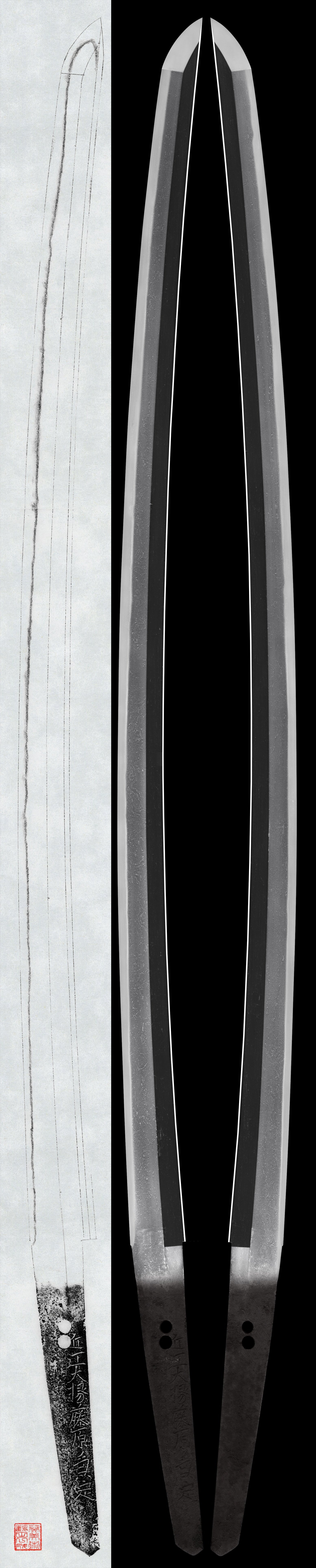
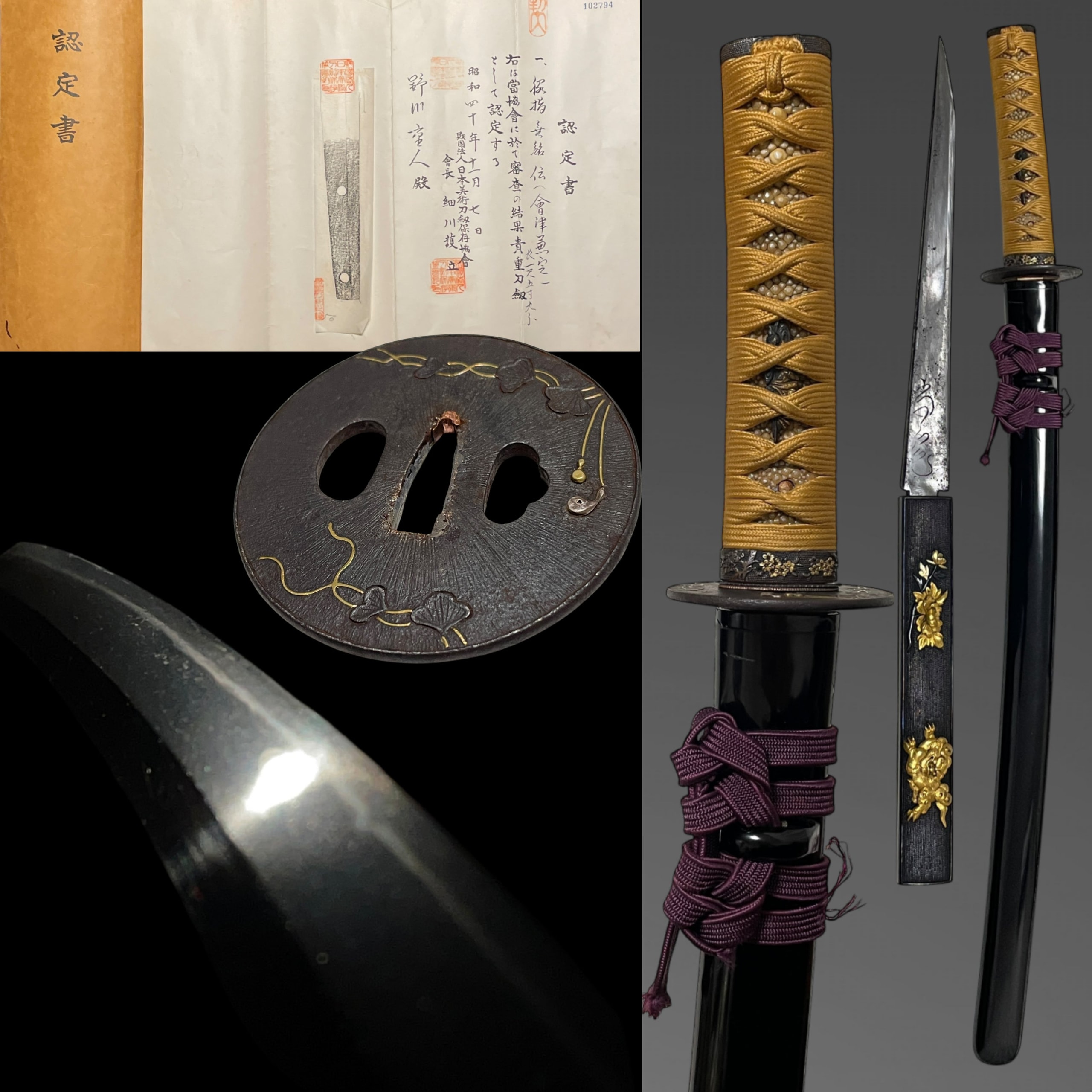
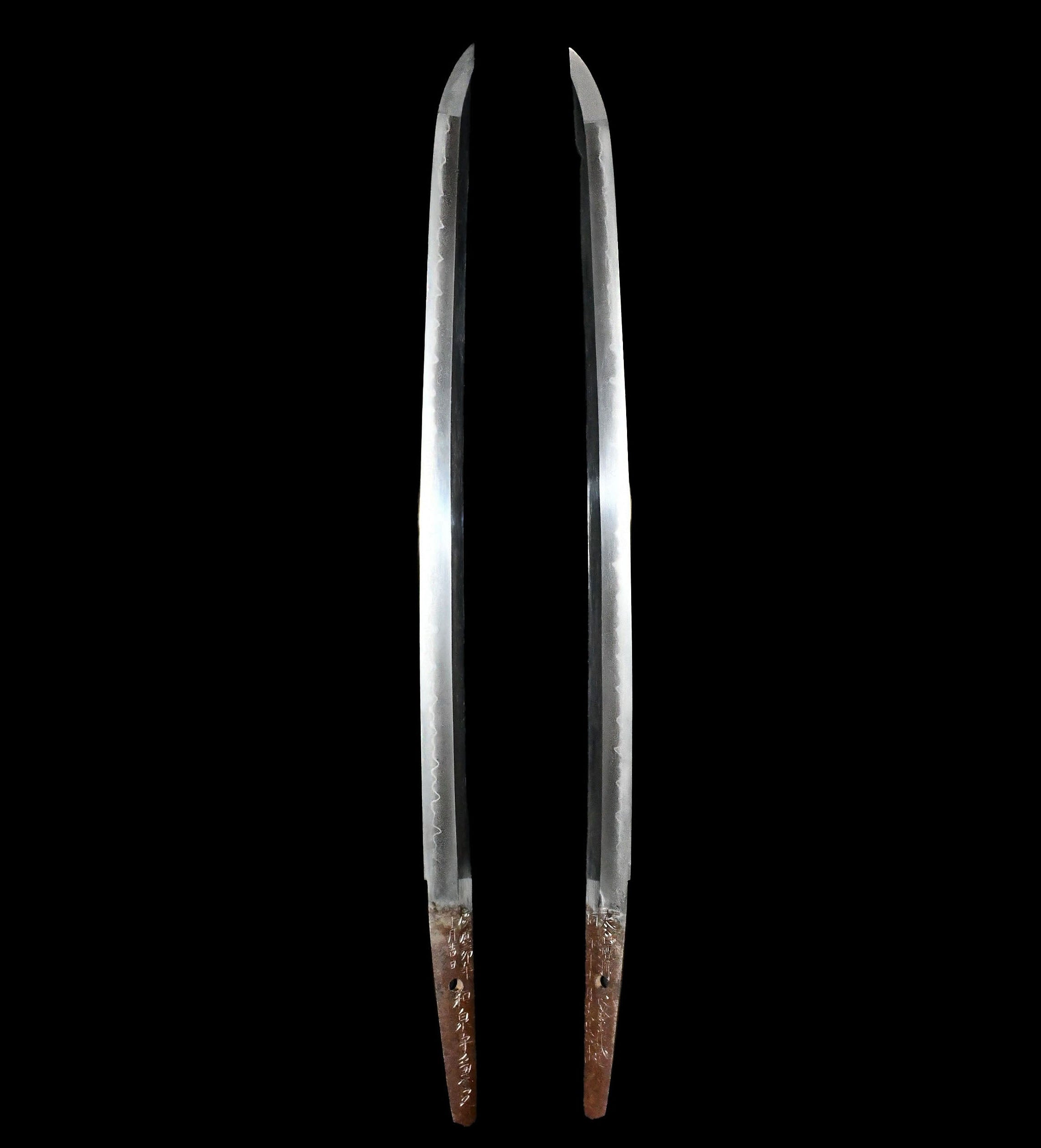
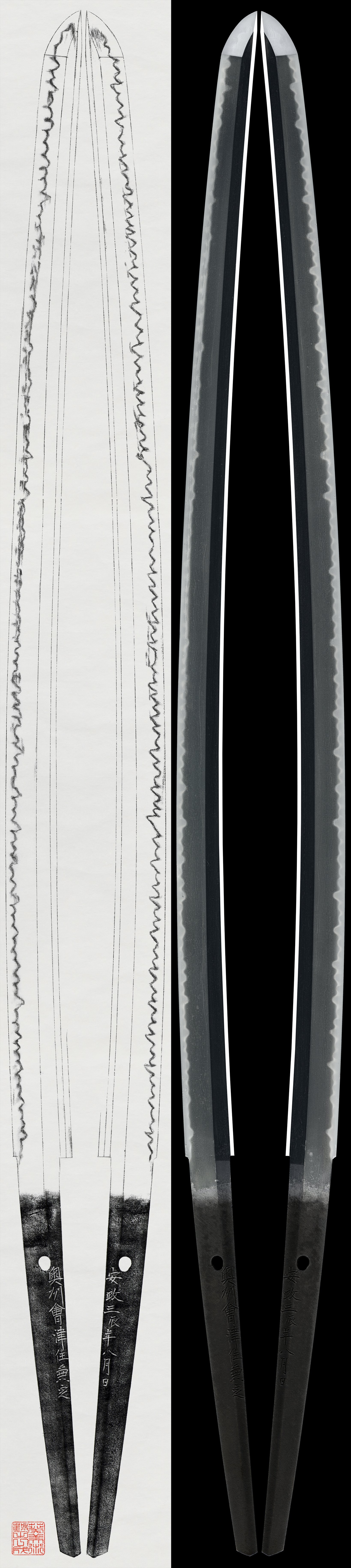
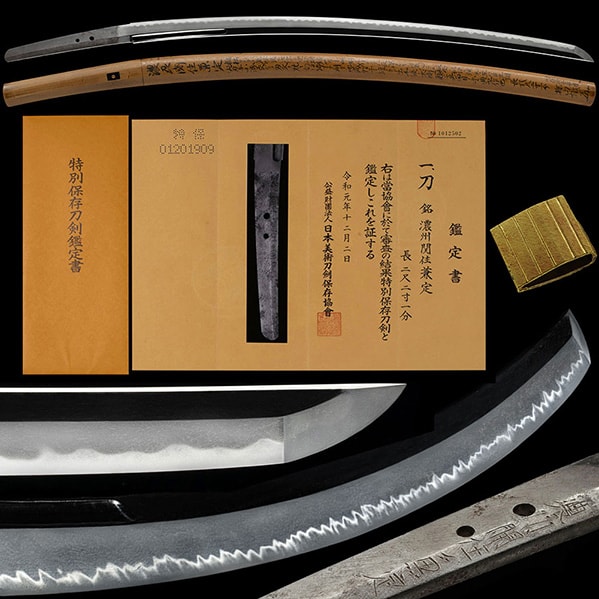
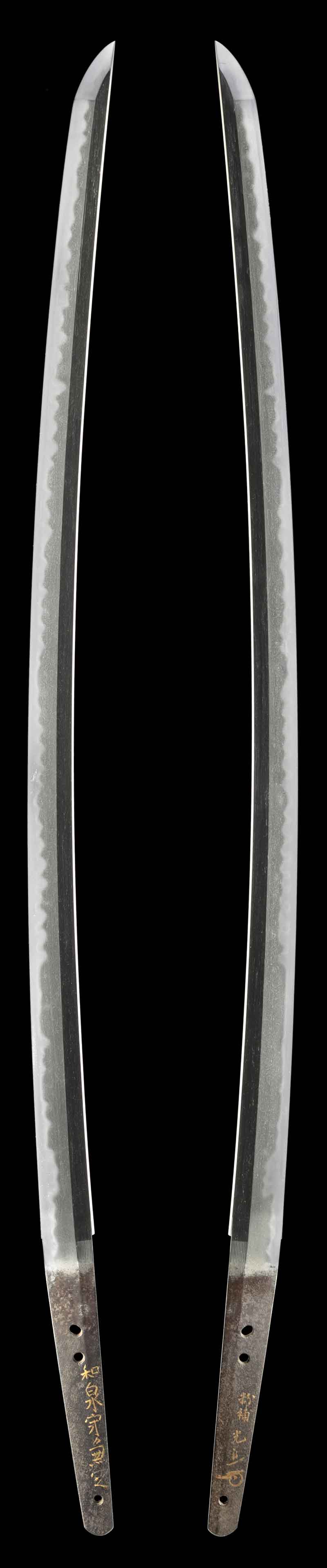
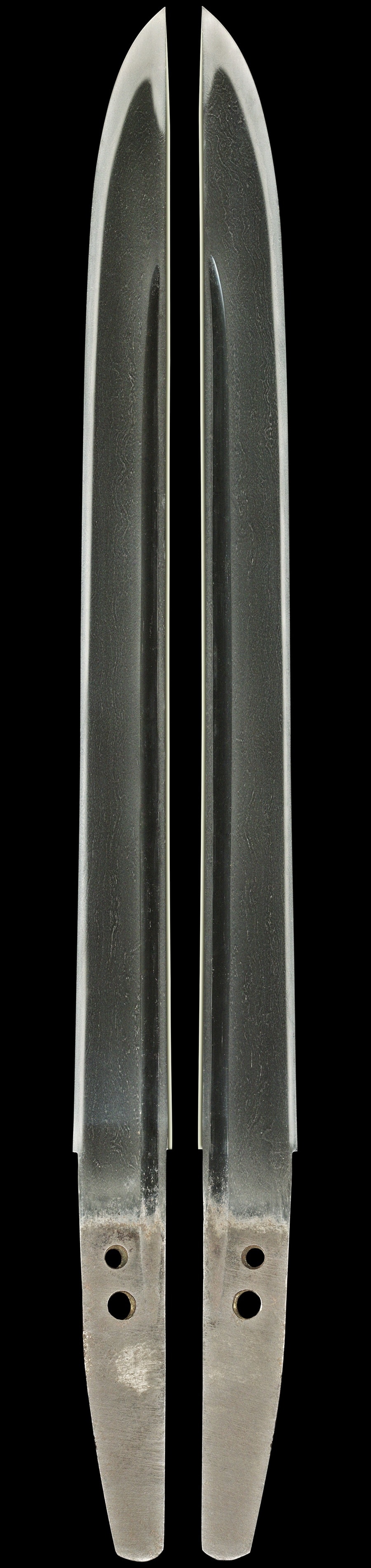
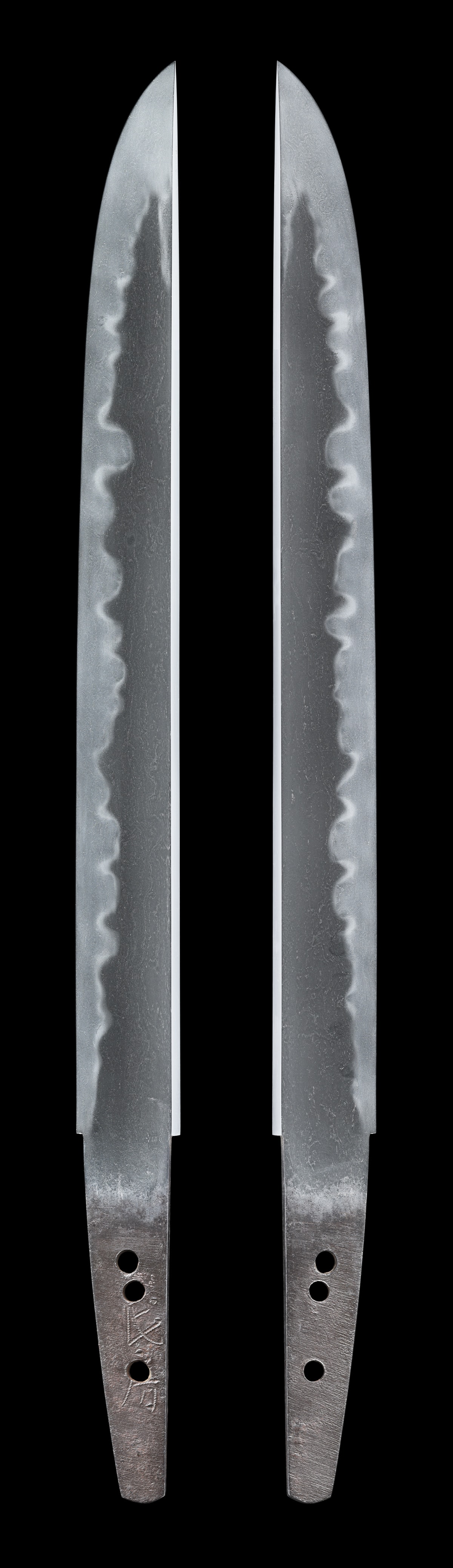
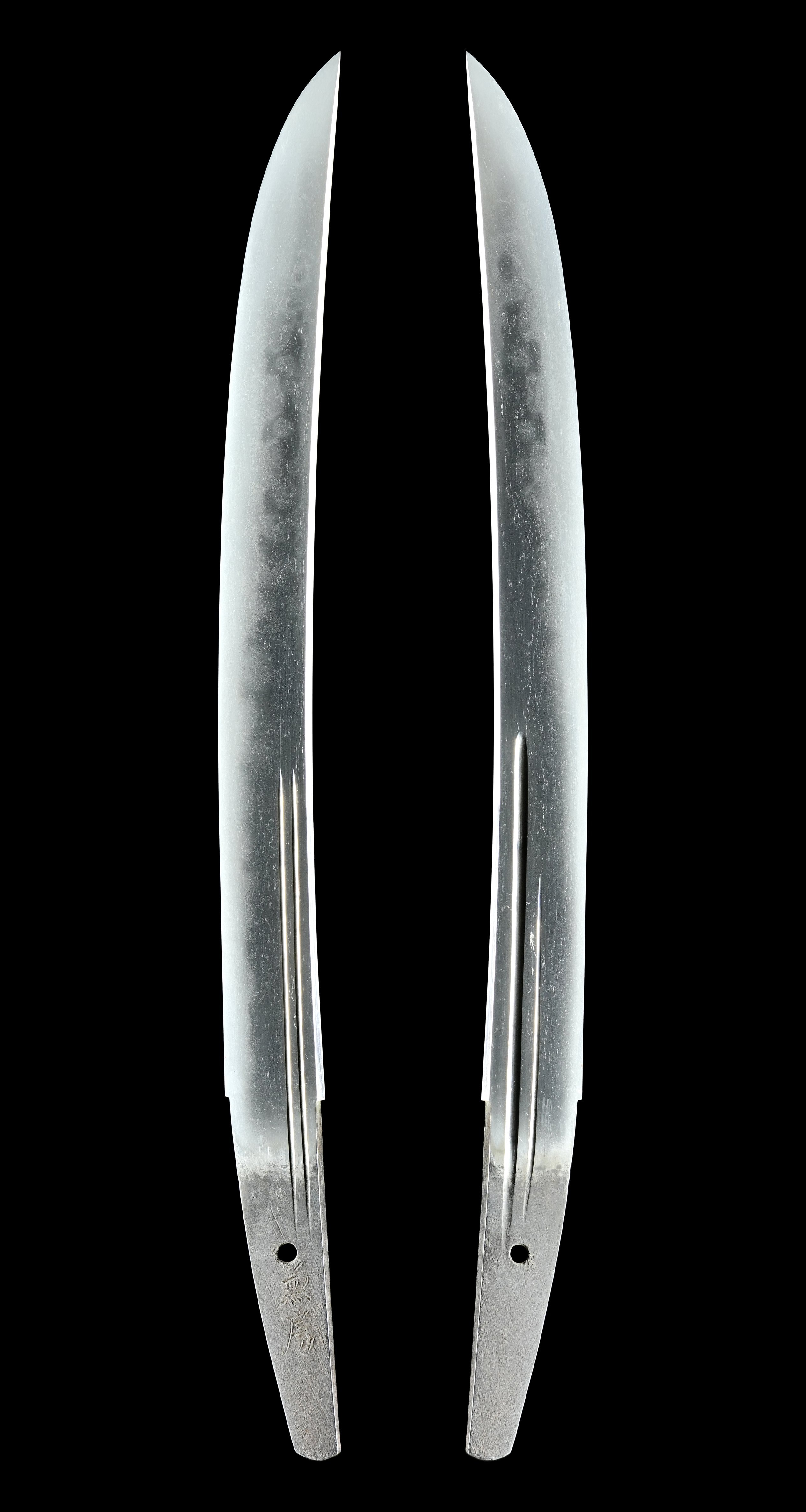
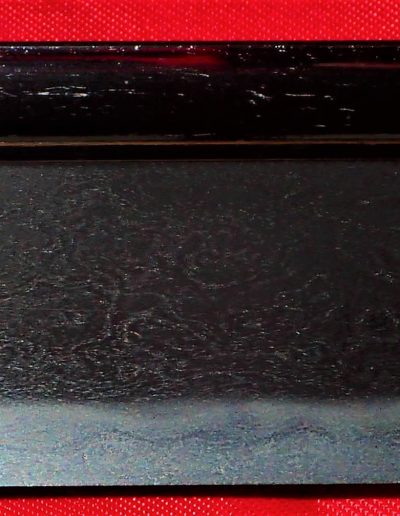
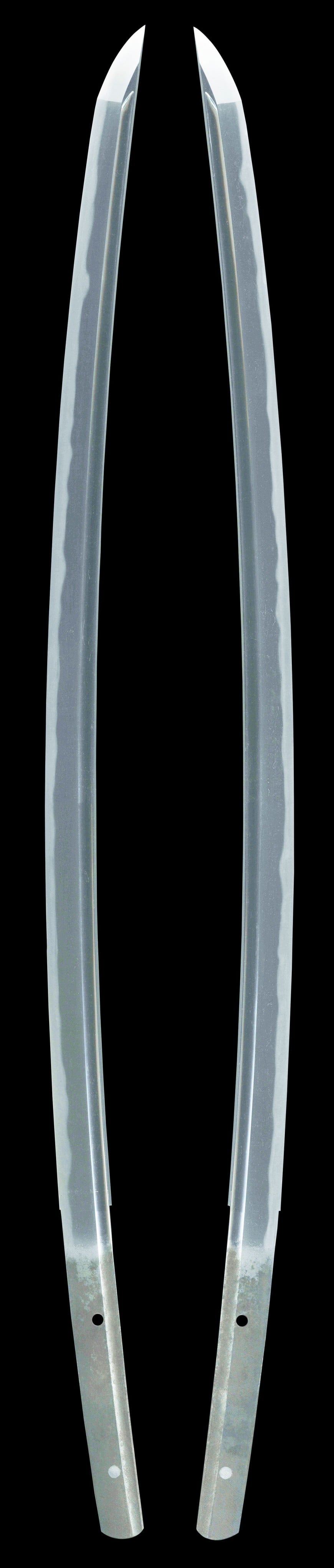
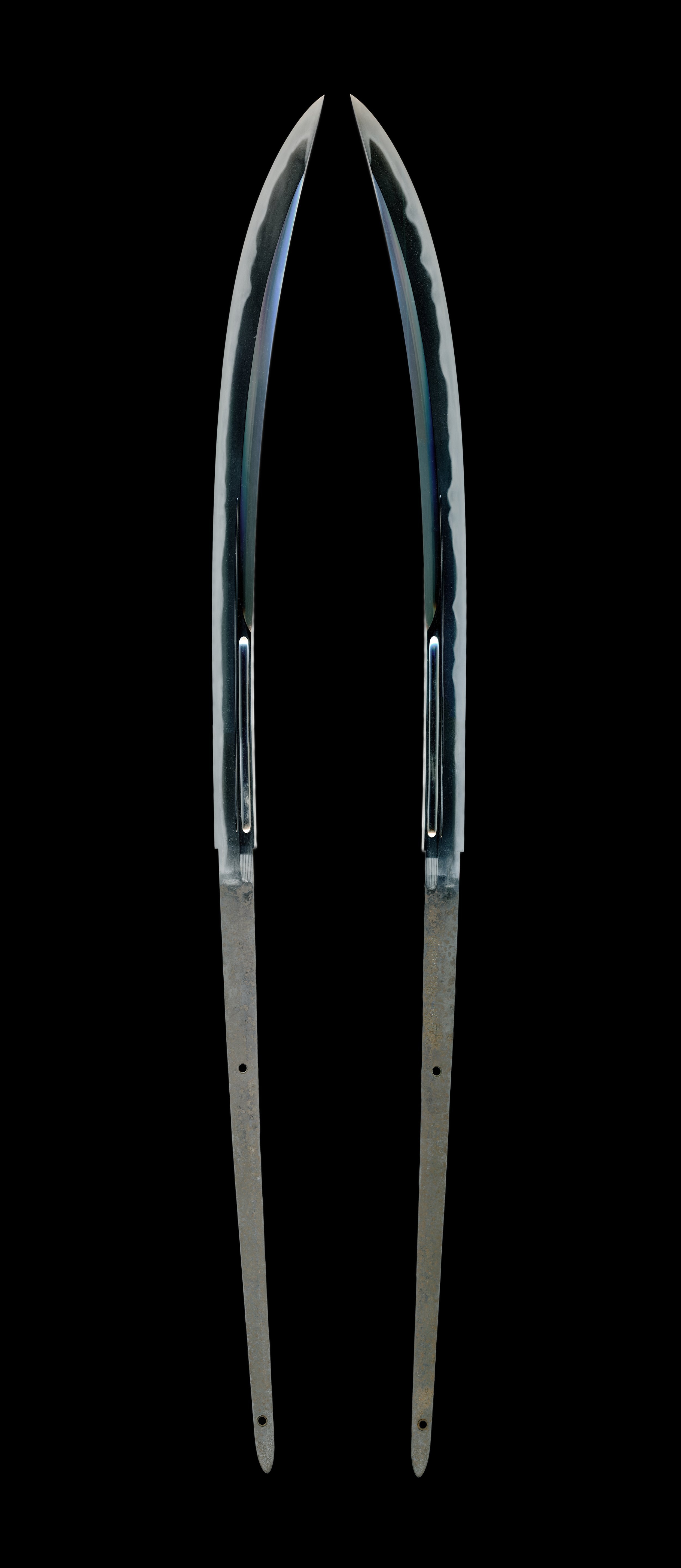
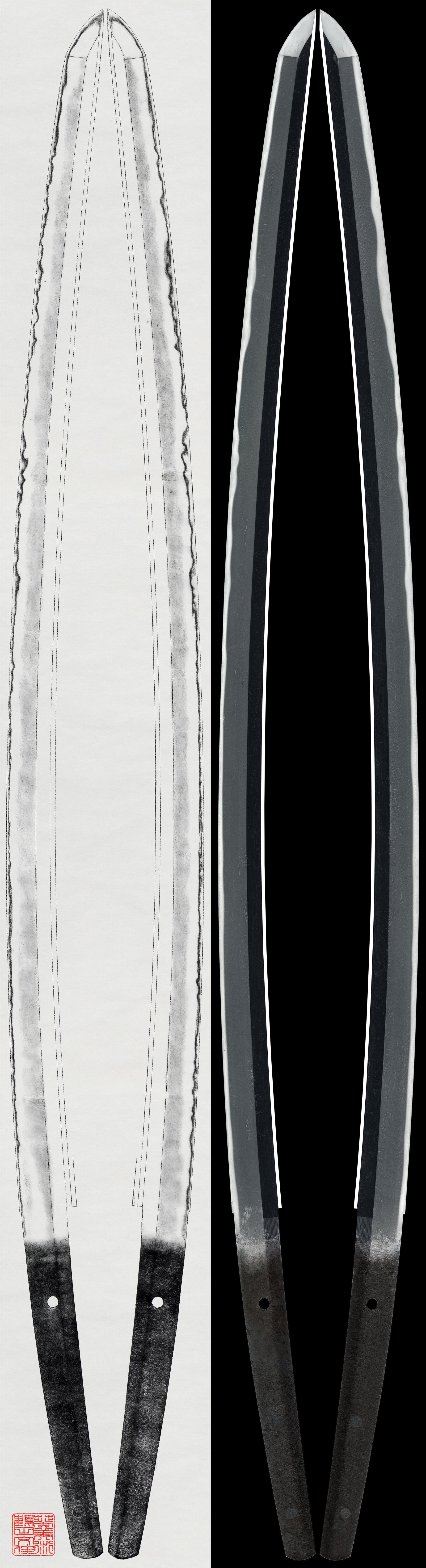
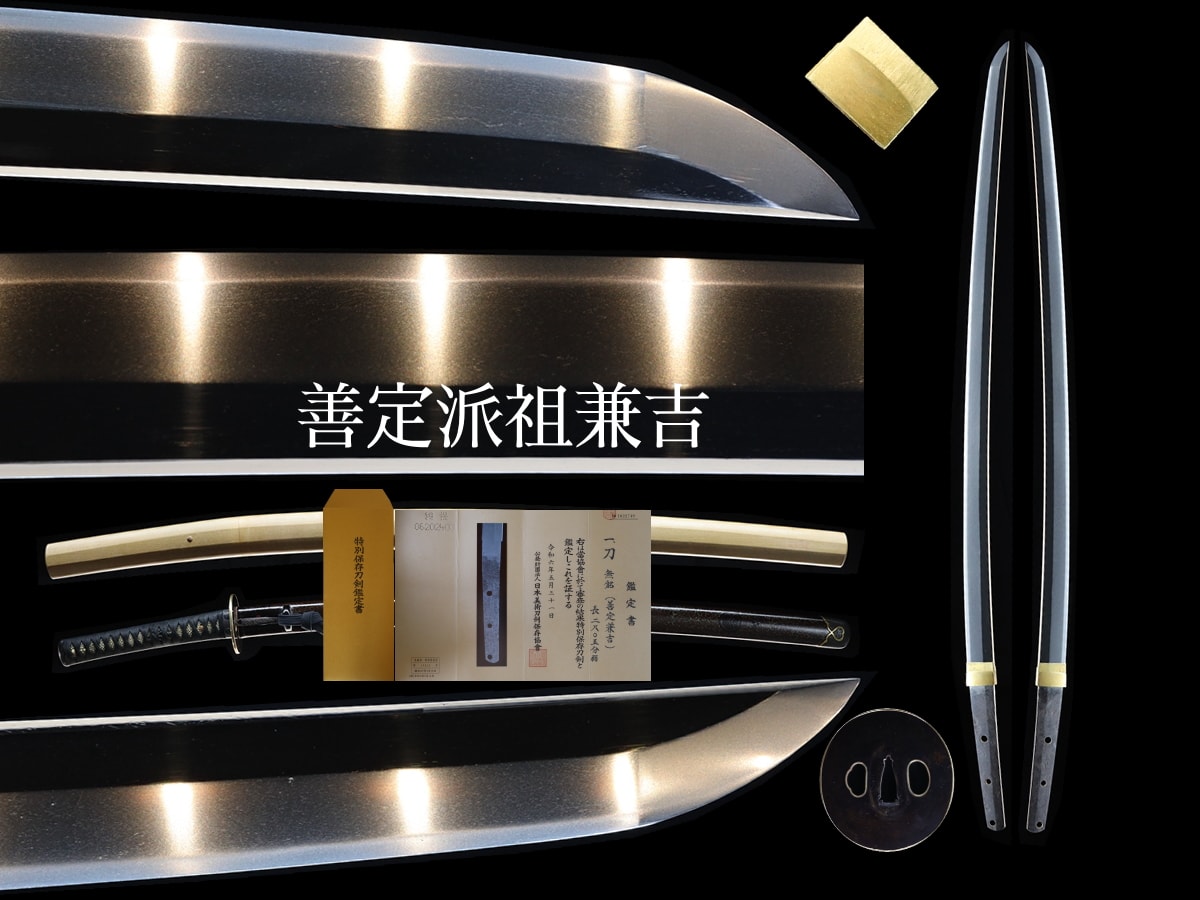
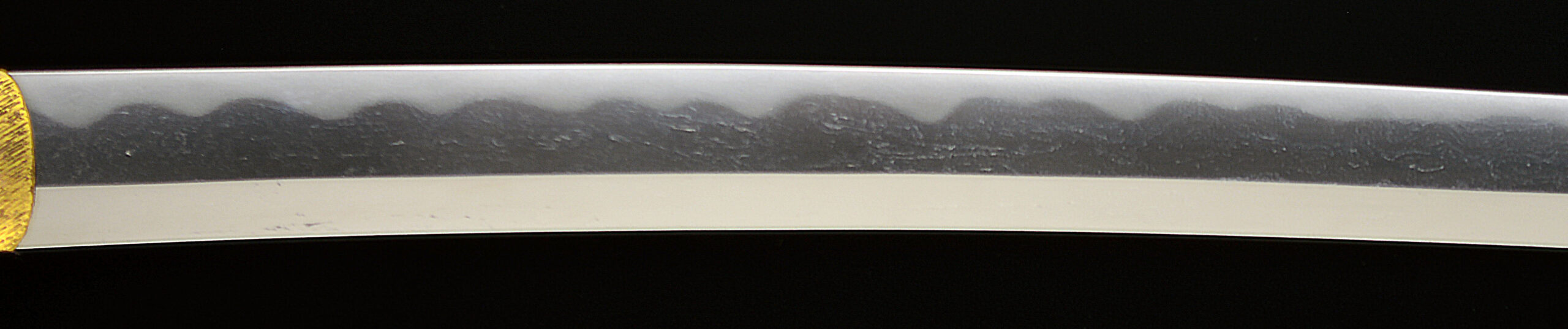
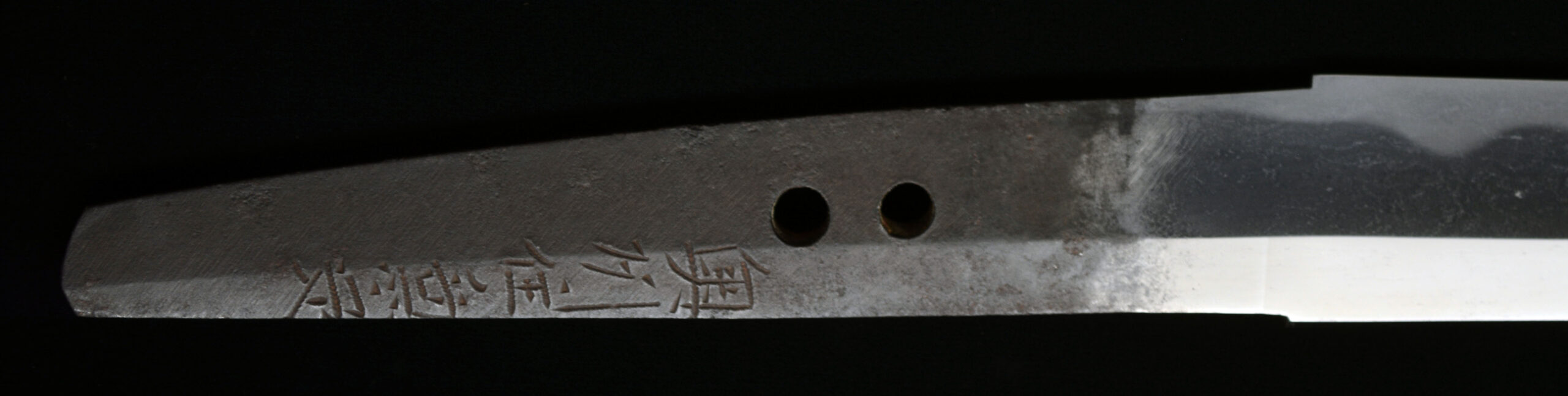
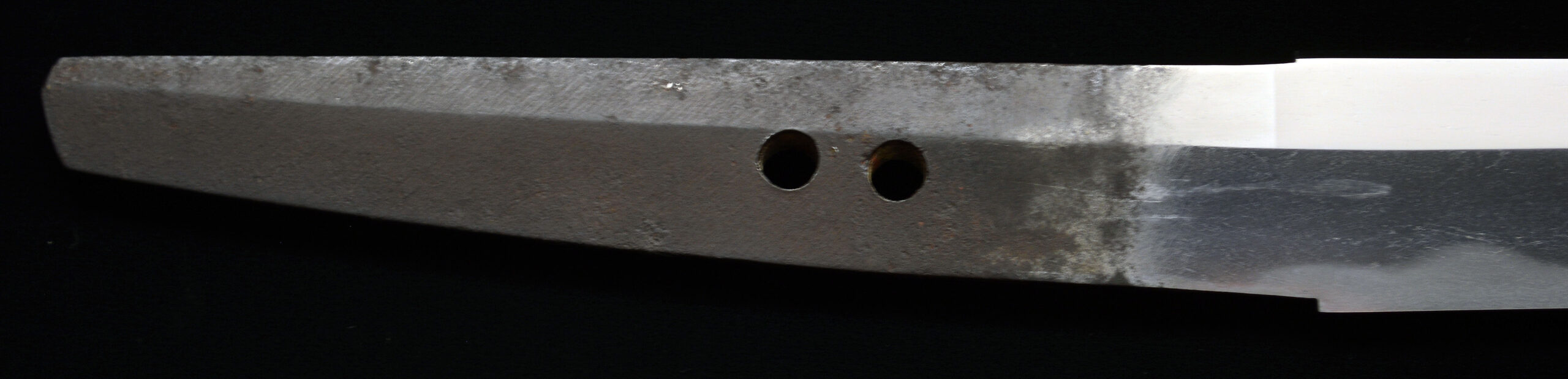
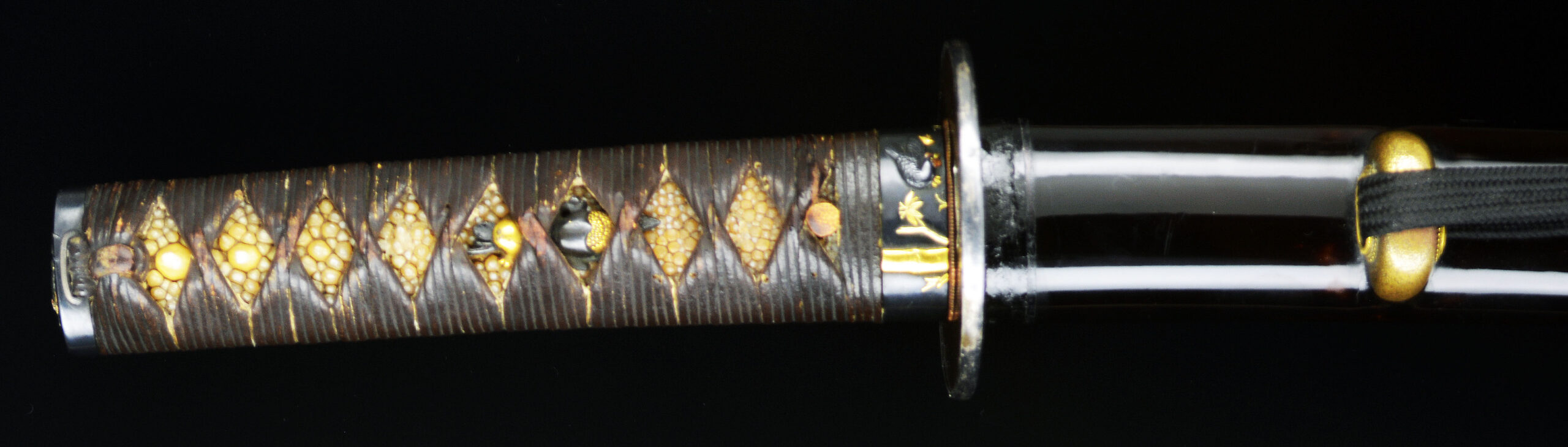
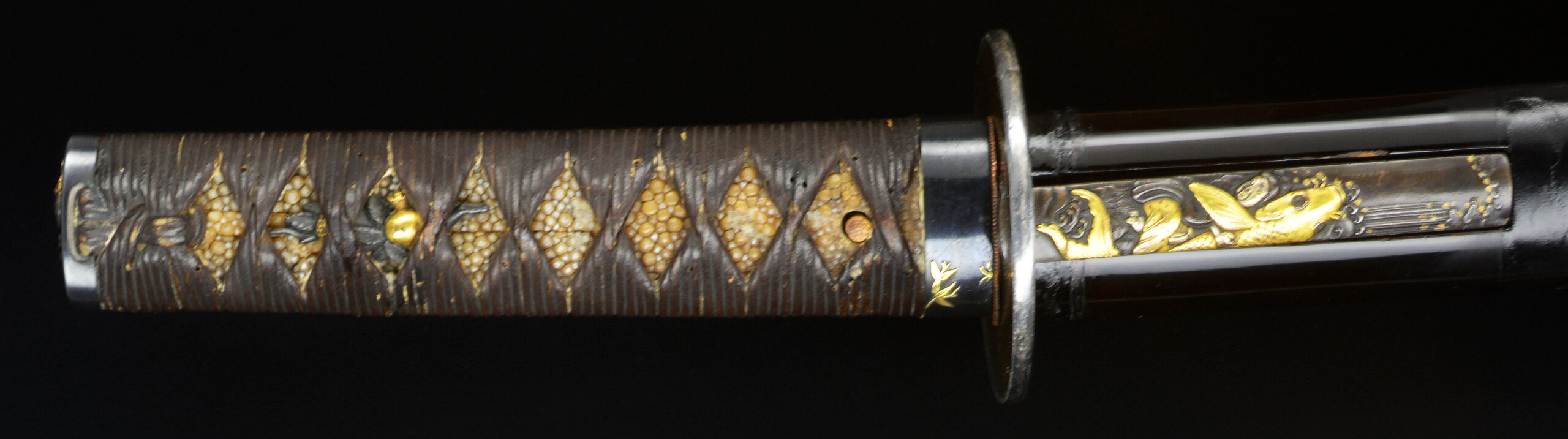
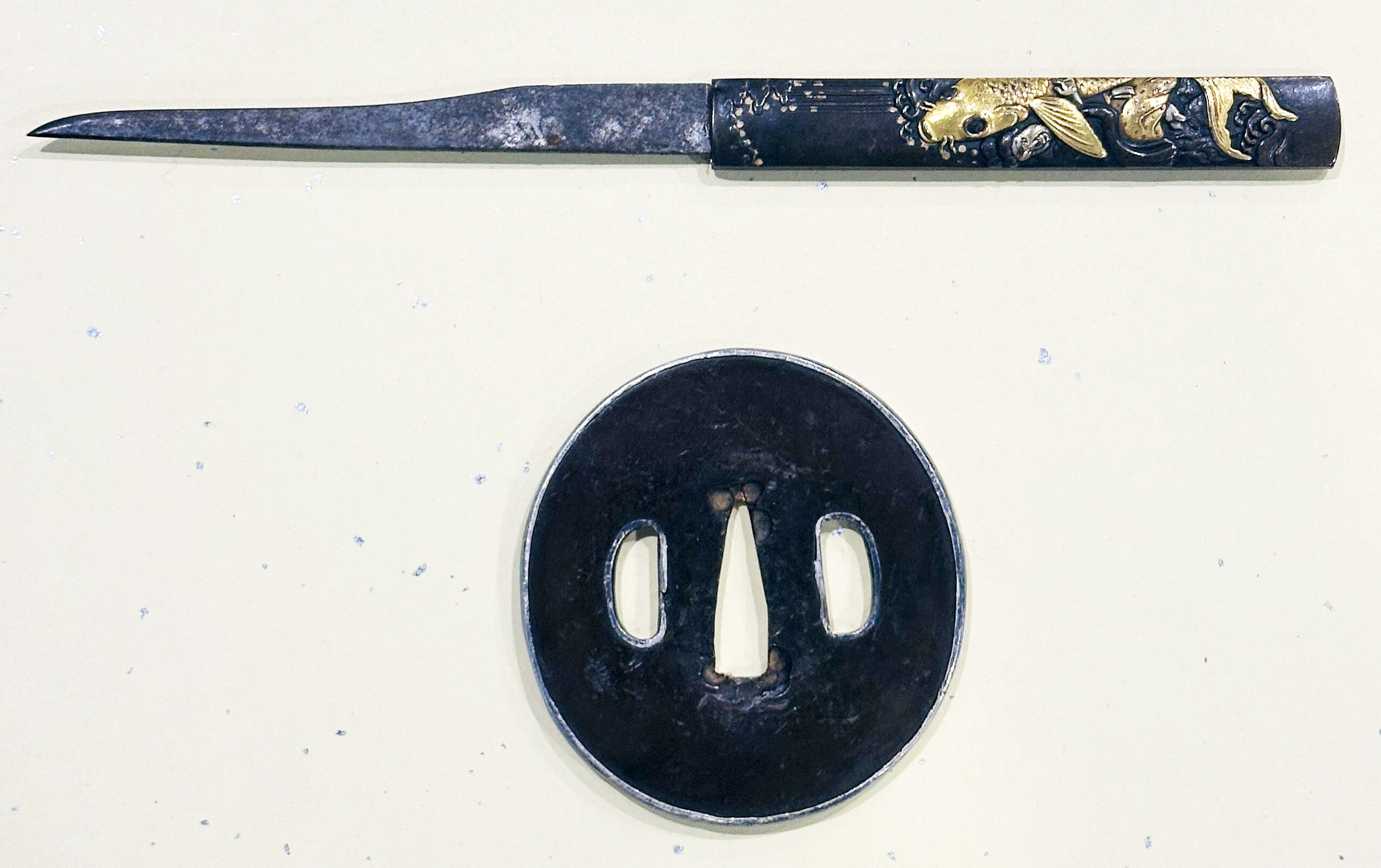
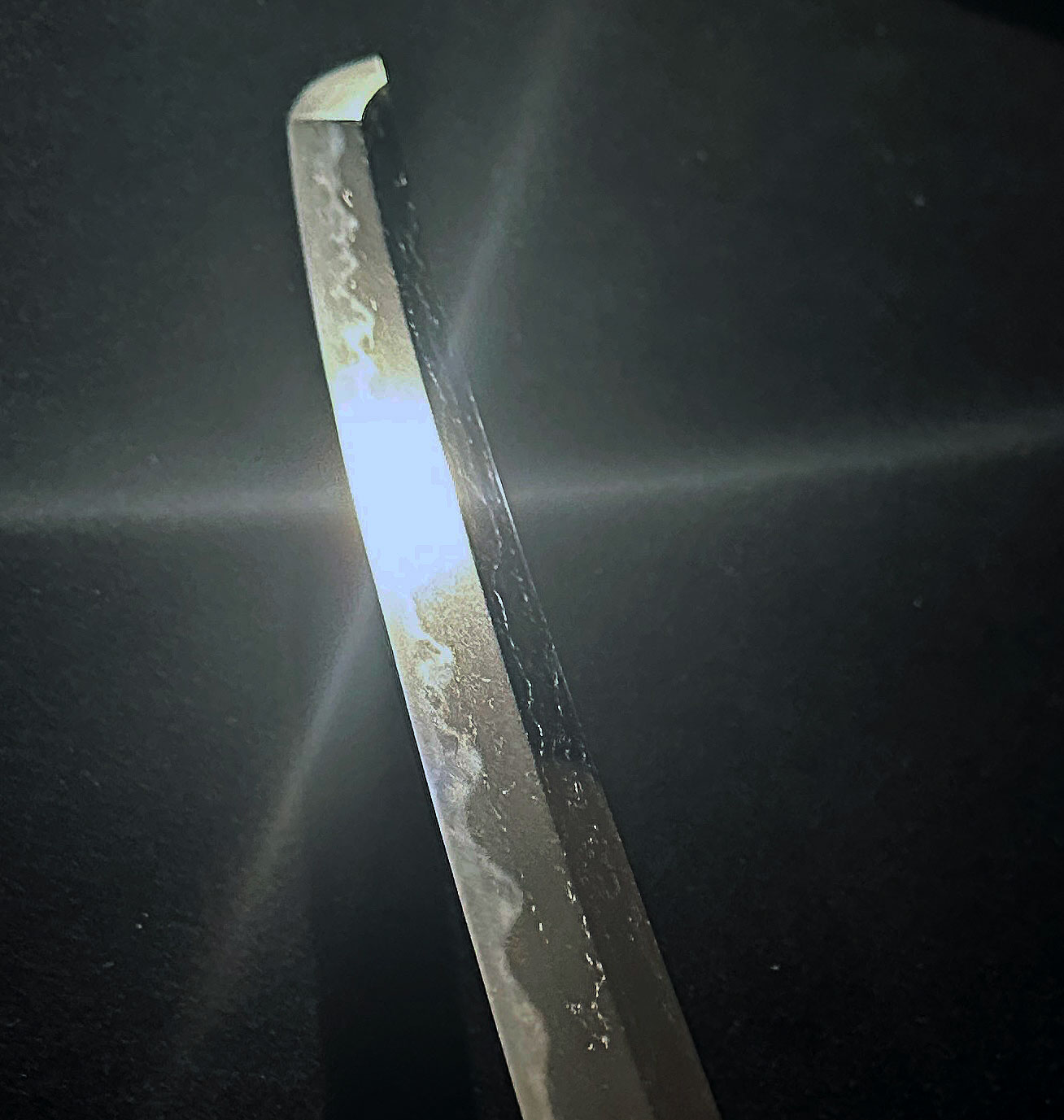
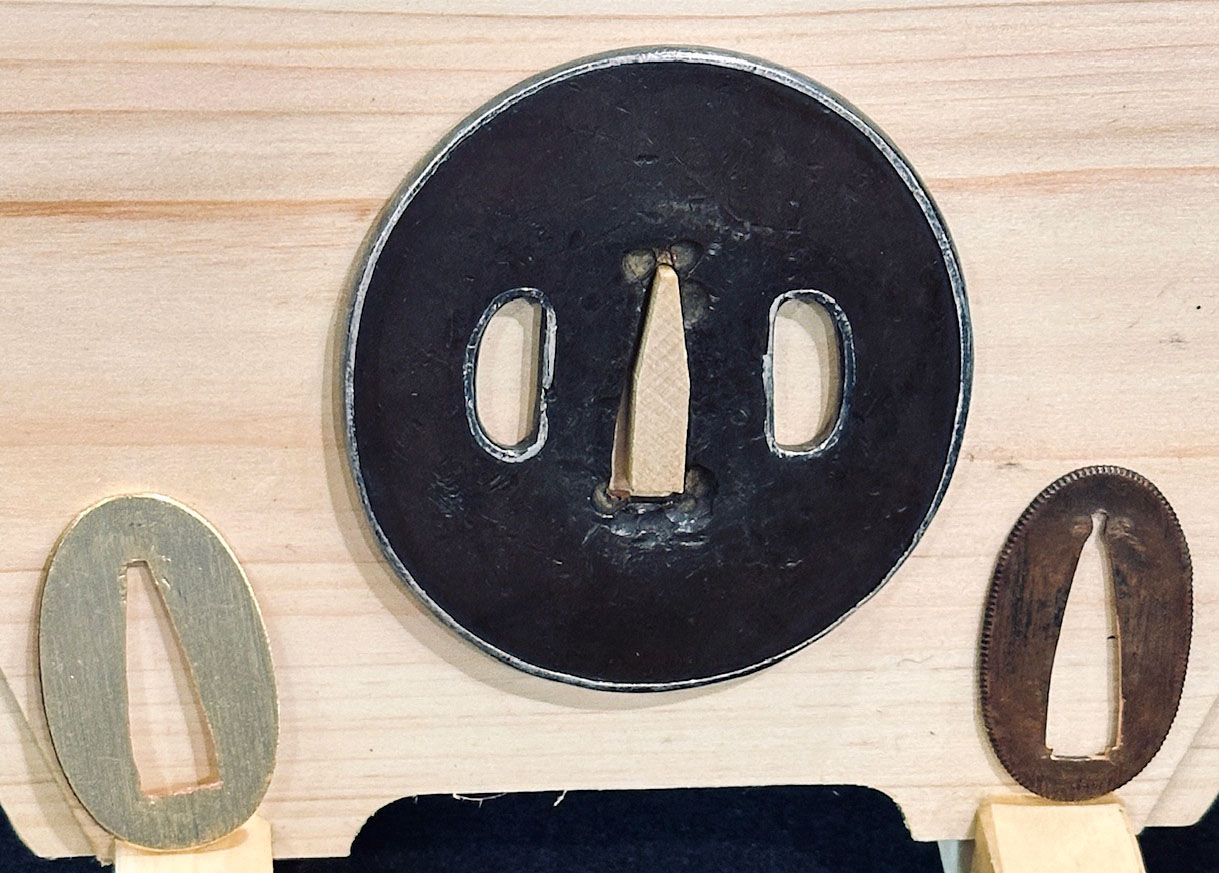
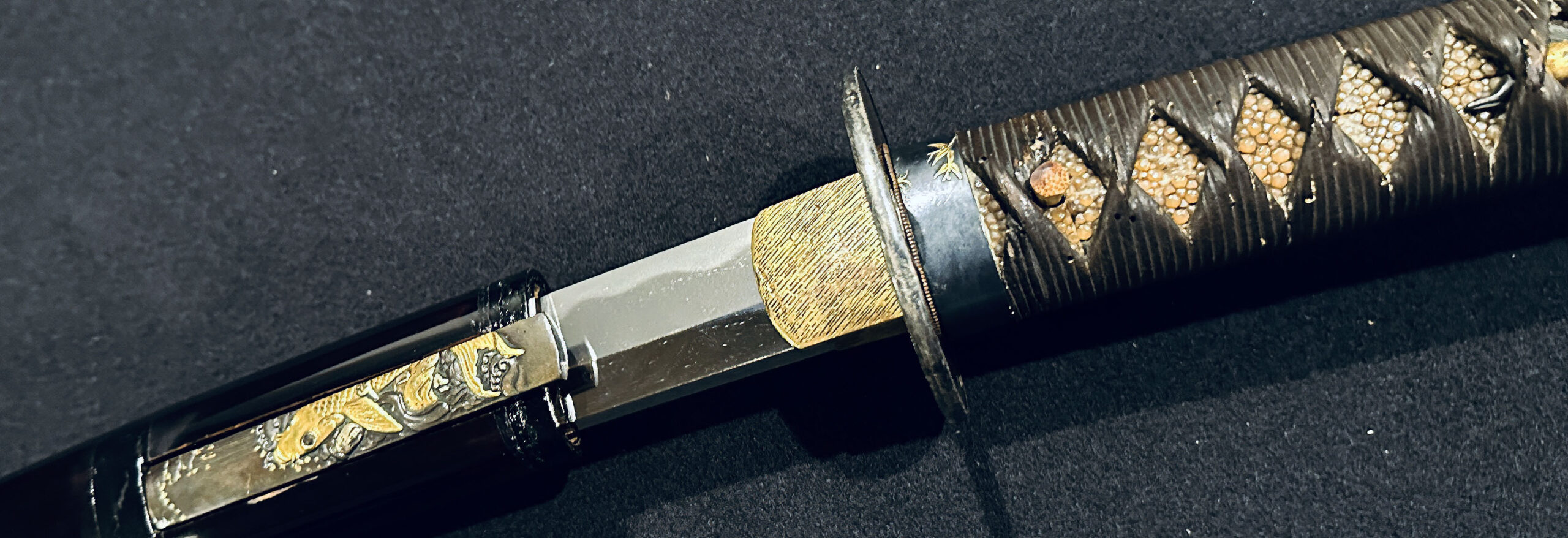
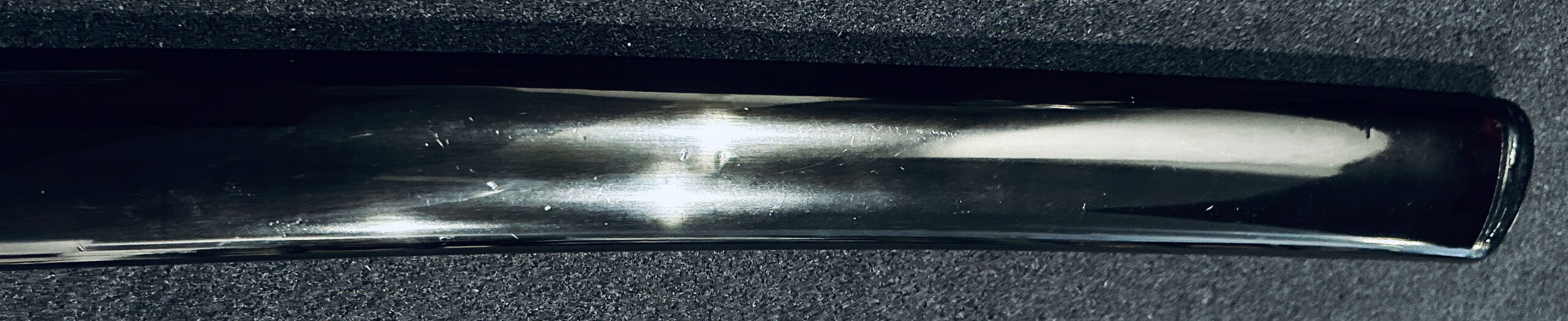
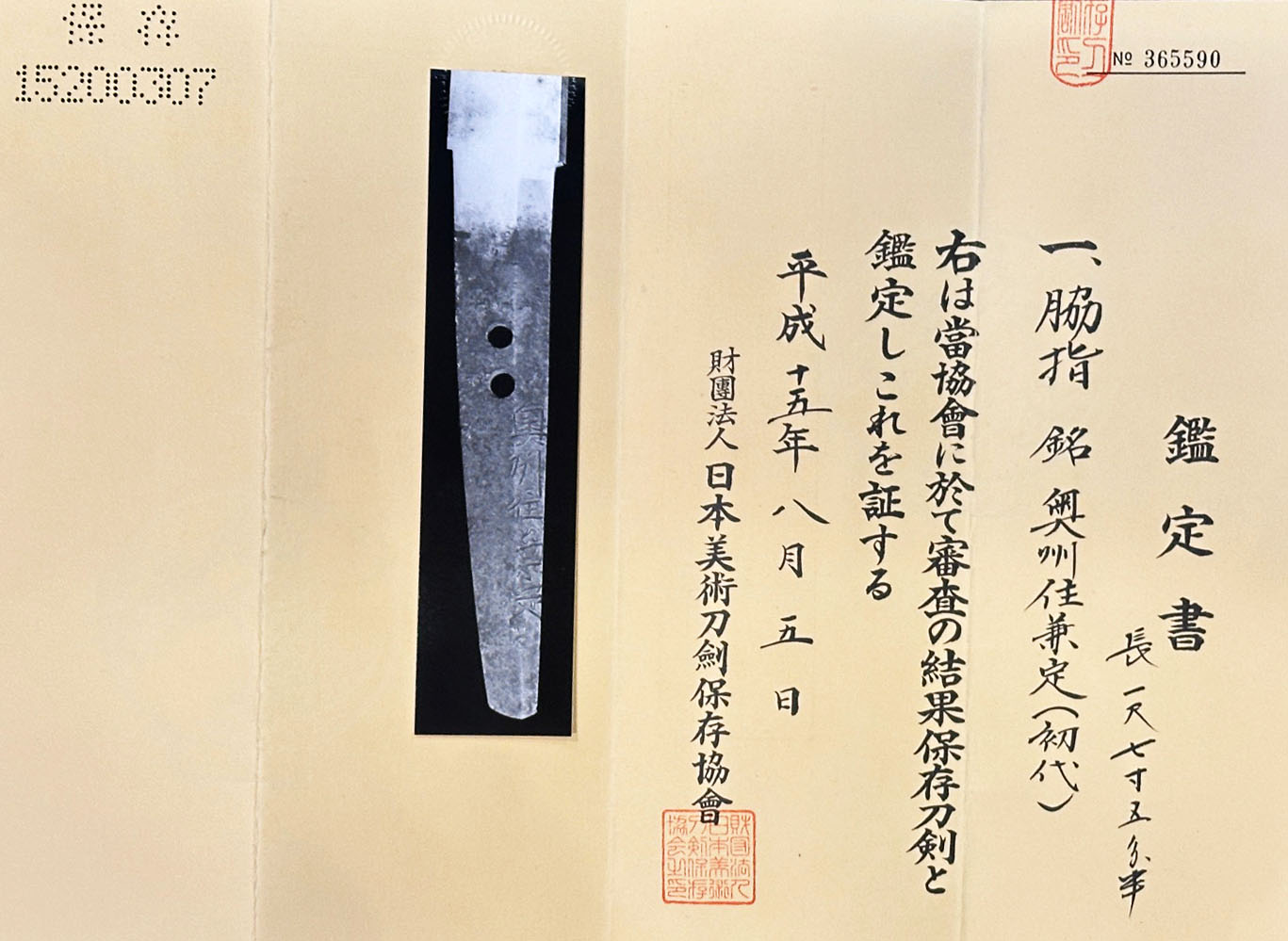
This is a wakizashi by the 1st generation Aizu Kanesada, a renowned smith who served many Sengoku period warlords. The blade exhibits a robust style reminiscent of Horikawa-mono and Sanpin-ichimon, with a zanguri jigane and a vibrant hamon with deep nioi. It comes with both a shirasaya and koshirae, and is accompanied by an NBTHK Hozon Token certificate.
 NihontoWatch
mei · Momoyama · nagasa 53.4cm · sori 1.2cm










Mino-den · Iwashiro
7 pieces on the market now
| Smith | Era | Designated |
|---|---|---|
| Kanesada兼定 | 1818-1869 | 0 |
| Kanesada兼定 | 1624-1644 | 0 |
| Kanesada兼定 | 1624-1644 | 0 |
| Kanesada兼定 | 1655-1658 | 0 |
| Kanesada兼定 | 1661-1673 | 0 |
Mino in the Momoyama period
Unification closed the mass market, and Seki’s smiths moved to where the new money was: the Mishina line to Kyōto with court titles, Daidō smiths to castle towns across the provinces. Mino became the great technical ancestor of the Shintō age.
Certifies a genuine blade worth preserving: a signature confirmed correct, or, if unsigned, an era, province, and school that the NBTHK can reliably identify.
The NBTHK (Nihon Bijutsu Tōken Hozon Kyōkai, the Society for the Preservation of Japanese Art Swords) is a public-interest incorporated foundation founded in 1948 and supervised by Japan’s Agency for Cultural Affairs (Bunkachō); it is based at the Japanese Sword Museum in Tokyo. Its expert panels physically examine each submitted work (shinsa) and issue a certificate (kanteishō) ranking it by artistic and historical merit. NBTHK papers are the most widely recognized standard of authentication for Japanese swords and fittings.
NBTHK official siteCooling-off available within one week after arrival, Japan domestic only. Defective items may be returned; no refund if condition differs from sale or item was used.
¥490,000
This is a wakizashi by the 1st generation Aizu Kanesada, a renowned smith who served many Sengoku period warlords. The blade exhibits a robust style reminiscent of Horikawa-mono and Sanpin-ichimon, with a zanguri jigane and a vibrant hamon with deep nioi. It comes with both a shirasaya and koshirae, and is accompanied by an NBTHK Hozon Token certificate.
NihontoWatchmei · Momoyama · nagasa 53.4cm · sori 1.2cm
Mino-den · Iwashiro
7 pieces on the market now
| Smith | Era | Designated |
|---|---|---|
| Kanesada兼定 | 1818-1869 | 0 |
| Kanesada兼定 | 1624-1644 | 0 |
| Kanesada兼定 | 1624-1644 | 0 |
| Kanesada兼定 | 1655-1658 | 0 |
| Kanesada兼定 | 1661-1673 | 0 |
Mino in the Momoyama period
Unification closed the mass market, and Seki’s smiths moved to where the new money was: the Mishina line to Kyōto with court titles, Daidō smiths to castle towns across the provinces. Mino became the great technical ancestor of the Shintō age.
Certifies a genuine blade worth preserving: a signature confirmed correct, or, if unsigned, an era, province, and school that the NBTHK can reliably identify.
The NBTHK (Nihon Bijutsu Tōken Hozon Kyōkai, the Society for the Preservation of Japanese Art Swords) is a public-interest incorporated foundation founded in 1948 and supervised by Japan’s Agency for Cultural Affairs (Bunkachō); it is based at the Japanese Sword Museum in Tokyo. Its expert panels physically examine each submitted work (shinsa) and issue a certificate (kanteishō) ranking it by artistic and historical merit. NBTHK papers are the most widely recognized standard of authentication for Japanese swords and fittings.
NBTHK official siteCooling-off available within one week after arrival, Japan domestic only. Defective items may be returned; no refund if condition differs from sale or item was used.
¥490,000