Sengoku Seki was an industry: smiths organized under their tutelary Kasuga shrine, arming the war bands of central Japan. Magoroku Kanemoto’s sanbonsugi and the finest Kanesada work prove quality survived inside mass production.
 NihontoWatchNihontoWatch
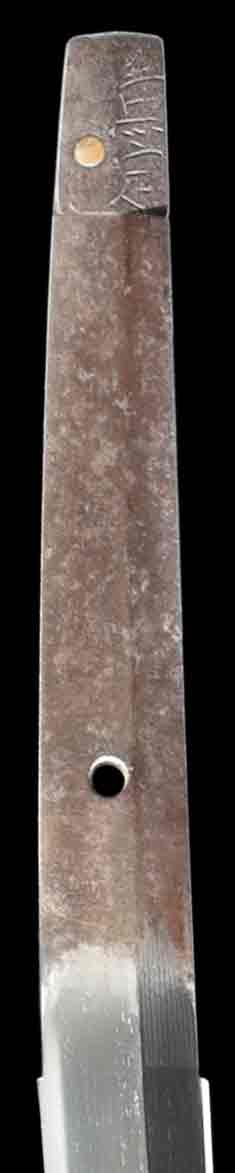
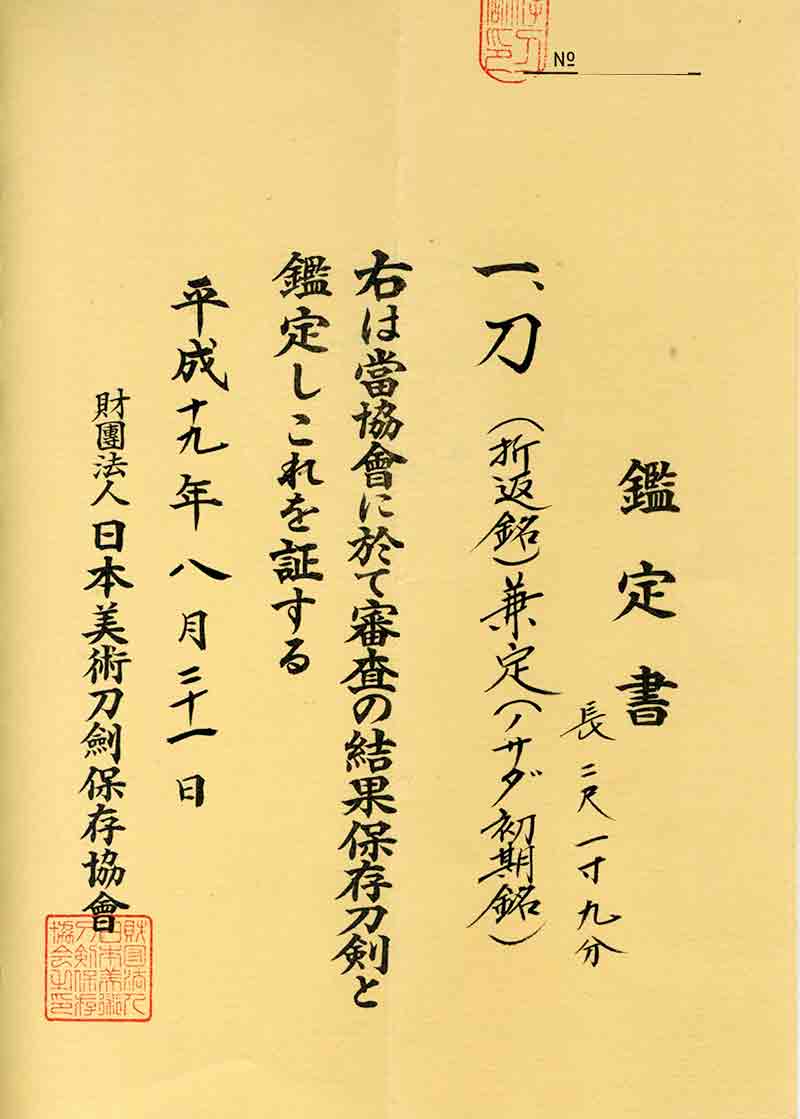
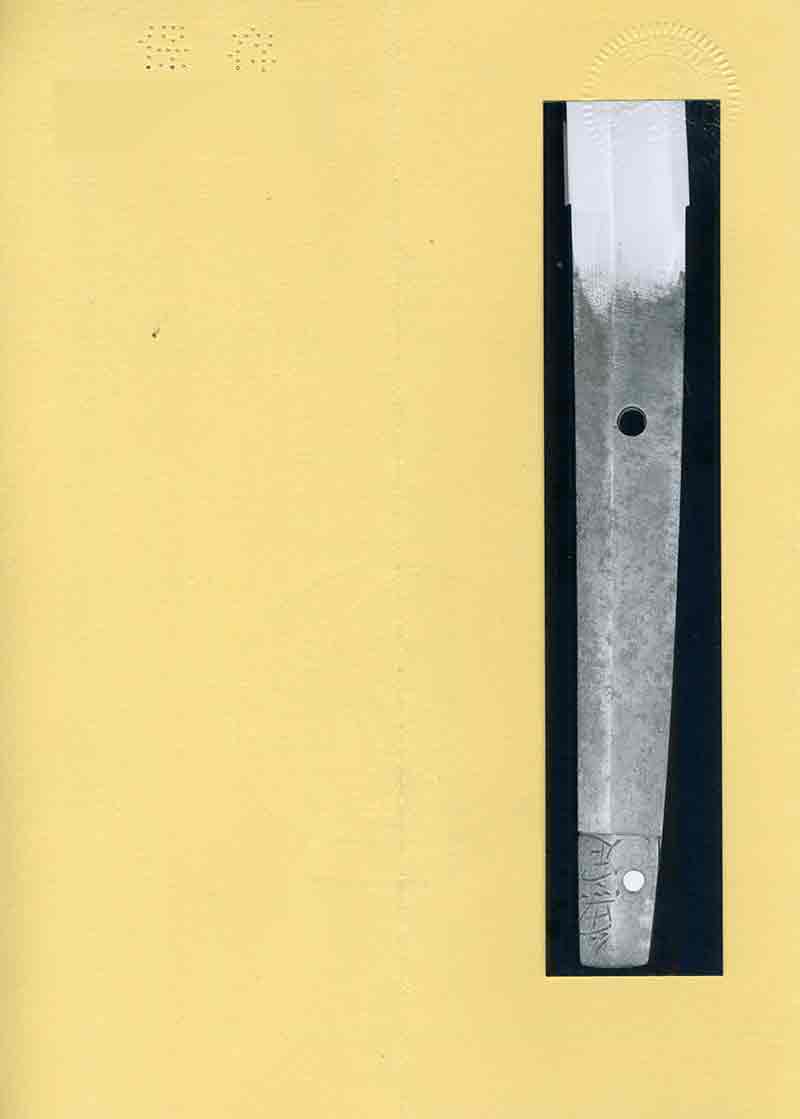
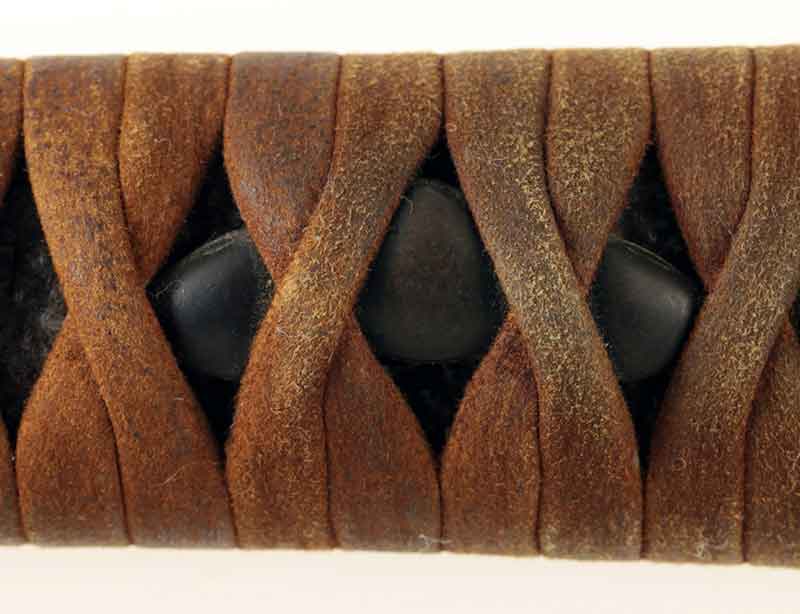
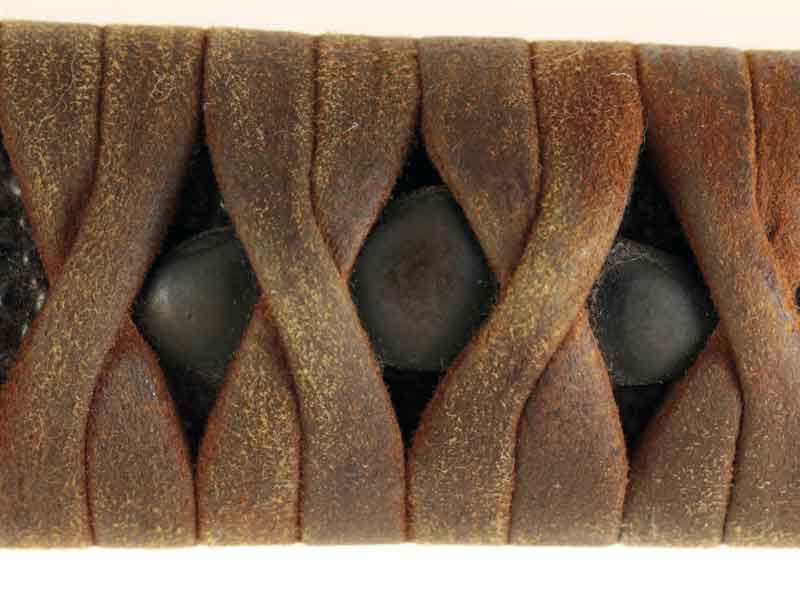
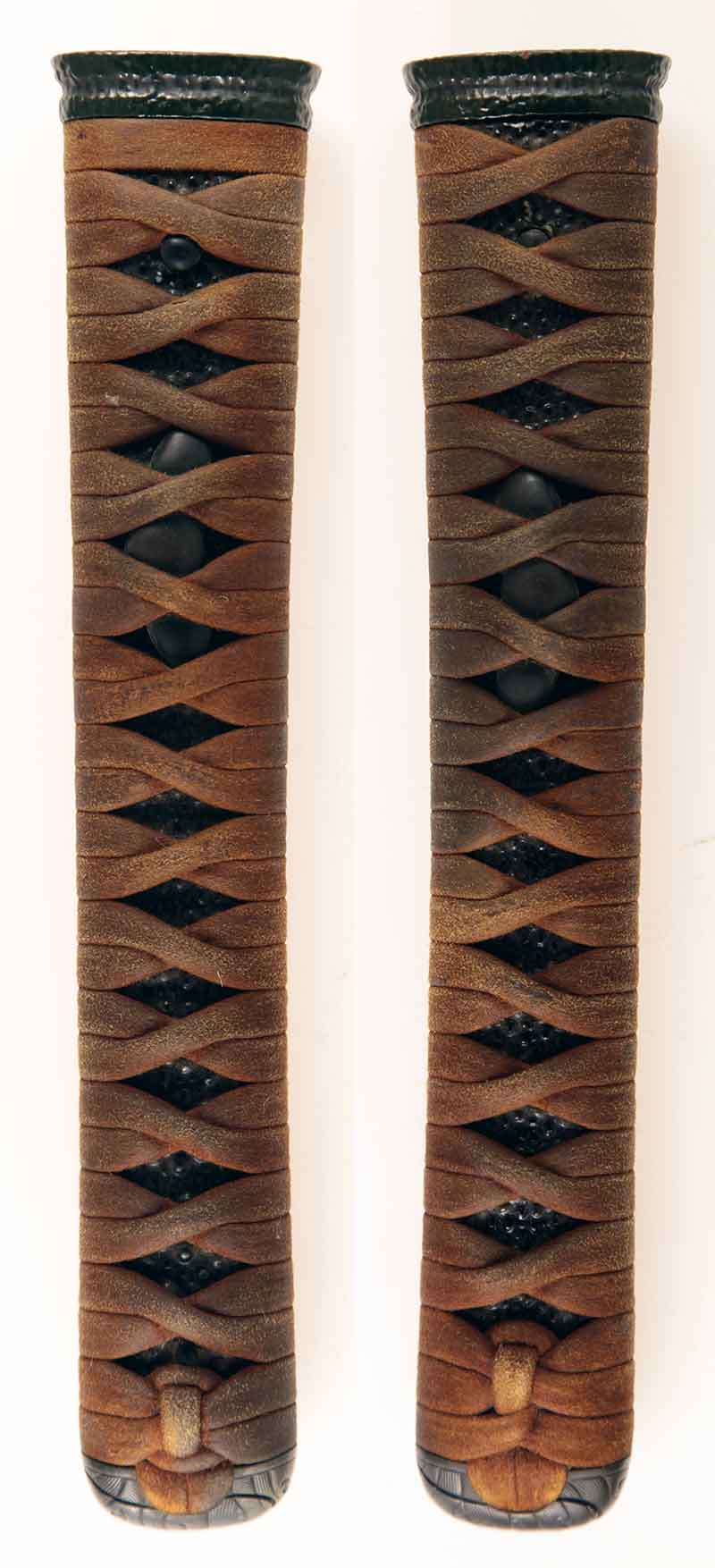
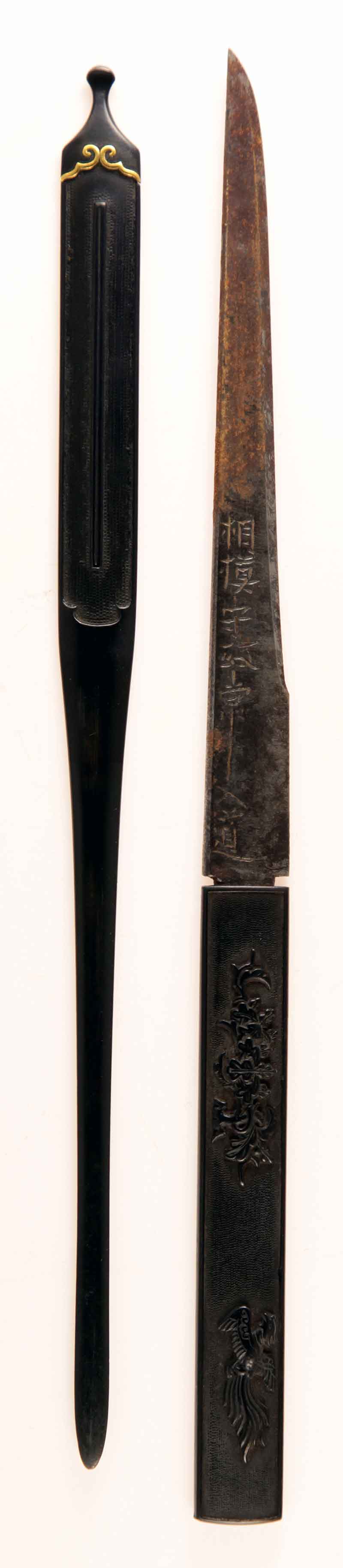
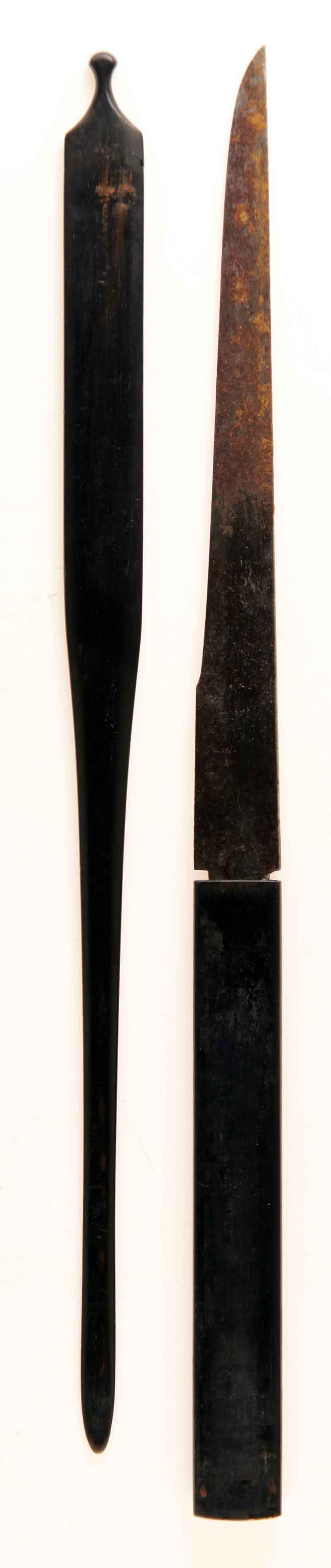
Izumi no Kami Kanesada (Nosada) is a swordsmith who represents the Mino smiths of the late Muromachi period alongside Magoroku Kanemoto; because he carved the inside of the u-kanmuri radical of the character "Sada" as "No", he is called "Nosada" and is generally distinguished from the third generation known as "Hikisada". However, the "Koto Mei Shuruku" states, "The same second generation struck Izumi no Kami Fujiwara, carving the Meio era name, the Sada character form is block style and many are made while residing in Seki, from the beginning of Eisho he carved the No character in this way, therefore he is called Nosada," showing that he initially carved the character Sada in kaisho style, and there are surviving examples from Meio 2 and Meio 8. And while it is said that the transition to the "Nosada" mei occurred at the beginning of Eisho, based on extant swords, it is correct to place it after Meio 8, 11th month and before Meio 9, 8th month. Kanesada (Nosada) was a swordsmith who was permitted the zuryo title "Izumi no Kami", which was rare during the Koto period; regarding the receipt of "Izumi no Kami", it is said to be Eisho 7 to 8, and many sword books describe him as an "exceptionally skilled master". In contrast to Kanemoto's midareba dominated by togari-ba known as "Sanbonsugi", Kanesada (Nosada) tempered hamon mixing round gunome, notare, and gunome choji, providing variety, and a characteristic is that the kitae is well-kneaded and superior. This is an example where Kanesada tempered suguha, and as noted in the sayagaki by Sato Kanzan Sensei, it is a Yamashiro-den Rai Kunitoshi utsushi. Kanesada's Rai utsushi are seen in tanto as well as katana, and as a characteristic, the fact that the jigane is significantly more refined than his usual work is noteworthy. Although there are rare examples of Rai utsushi by Magoroku Kanemoto, who is considered the other of the twin jewels of Mino smiths, even Kanemoto does not reach Kanesada regarding the refinement of the jigane. The jigane of this work has small itame hada well-kneaded and tight, slightly masagakari, jinie attaches well, chikei enters, shirake utsuri stands out clearly, and a moisture is felt in the steel. The hamon is chu-suguha, slightly tinged with notare-gokoro, nioiguchi is tight, slightly konie attaches based in nioi, kinsuji enters, and sunagashi is applied, showing an excellent workmanship that approaches the original work of Rai Kunitoshi. As a side note, the katana by Kanesada owned by Hosokawa Tadaoki called "Kasen Kanesada" has a Nosada mei of "Noshu Seki ju Kanesada saku" with a nagasa of 1 shaku 9 sun 9 bu 5 rin (60.5cm) in suguha deki, and it is said that its sharpness was outstanding. The accompanying Kasen koshirae is also a type of Higo koshirae, similar to this work. It is a former possession of Ise Torahiko O, who collected Horikawa Kunihiro, represented by "Yamanbagiri Kunihiro", and Horikawa-mono. Koto Saijo-saku Saijo O-wazamono Sato Kanzan Sensei Sayagaki "Mino no Kuni Kanesada Niji orikaeshi-mei ari kore Rai Kunitoshi utsushi katana no hitsu nari hacho ni-shaku is-sun kyu-bu ari kore Showa 39 Tango no tsuki kichijitsu Kanzan shirusu (kaō)" Former possession of Ise Torahiko O * Currently, the sageo differs from the image.
Offered by Tsuruginoya





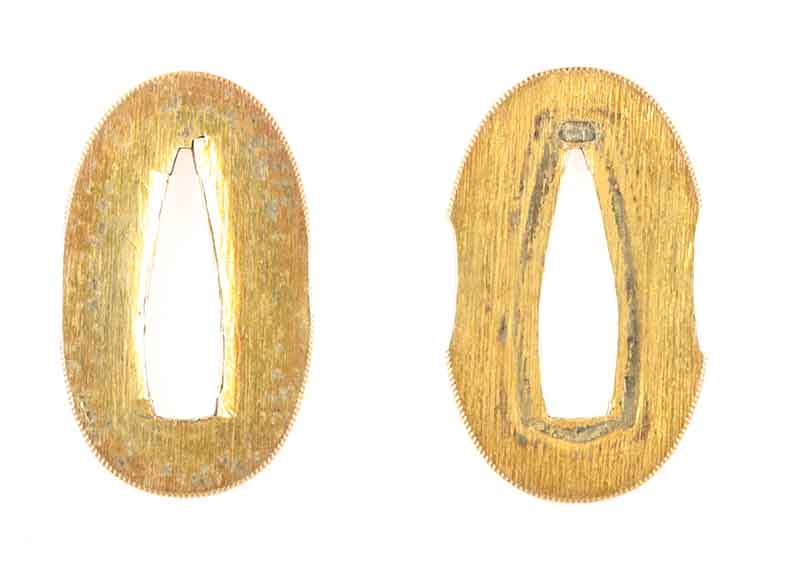
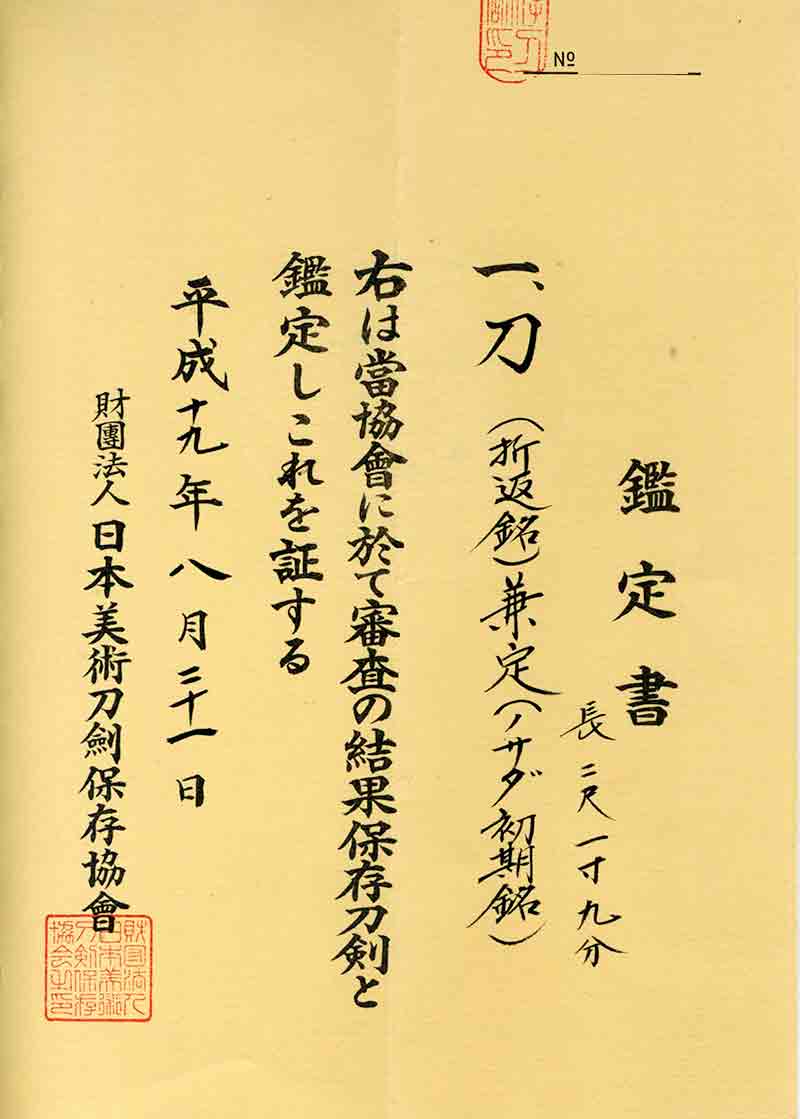
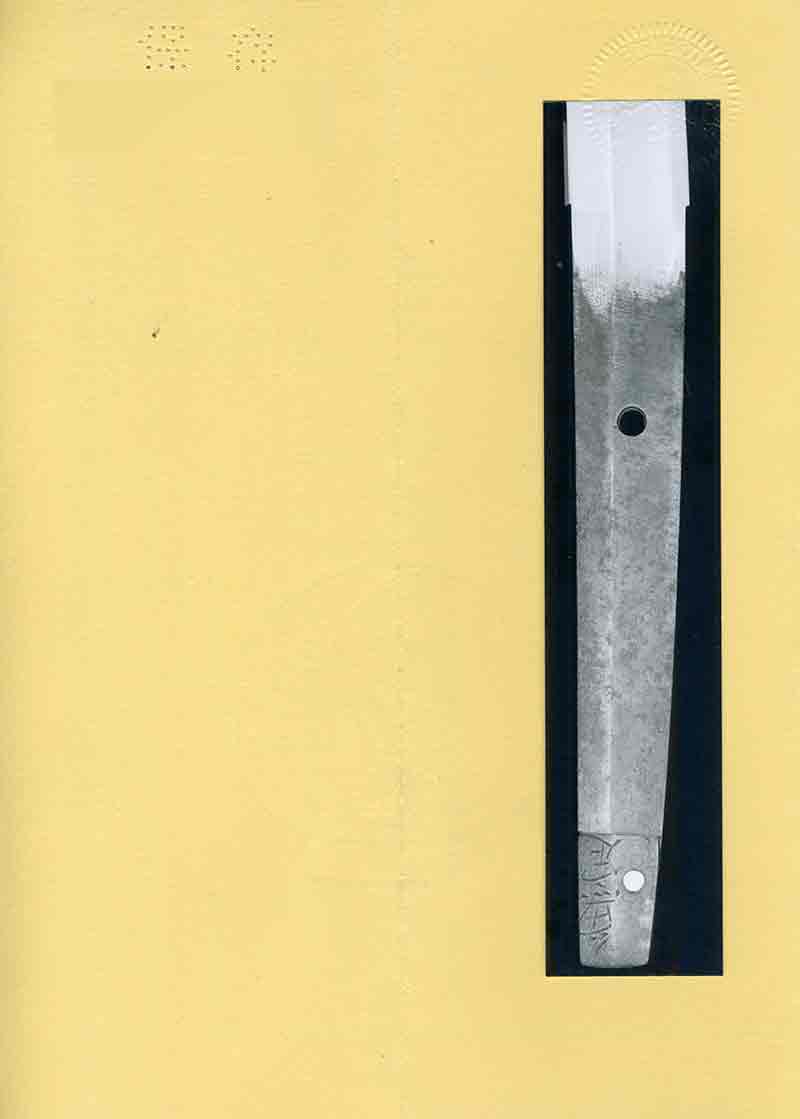
Machine translation of the shop's Japanese ·
Machine translation from the shop's Japanese · may contain errors ·
Seki (Mino) — Izumi no Kami Kanesada, "Nosada" · Mino · around 1492-1515
Fujishiro Jo-jo saku · Tōken Taikan top 14%
5 pieces on the market now
Kanesada is the second-generation Izumi no Kami Kanesada of Seki in Mino, the smith universally called "Nosada" because he cut the character sada (定) with the element inside the u-crown formed as 之. The published sources place his working life across the Meio years into Daiei, in the closing decades of the Muromachi period, and rank him with Kanemoto as a representative Mino smith of his age. He was, as the published commentary notes, a rare case in the kotO era of a smith granted the court title Izumi no Kami, and he often cut the Fujiwara surname as well. The first generation having signed plainly, it was this hand that carried the name to its height, and the swordbooks call him simply "an excellent master"[[c:1]]. The change from a standard-script sada to the 之 form that earned him his nickname is placed by the published sources around the eleventh month of Meio 8 and before the eighth month of Meio 9; the third-generation "Hikisada" is kept distinct from him.
His recognized strength is the lively Mino hand. The shape is the late-Muromachi katana, wide in body with sakizori and at times an o-kissaki, dignified and imposing, the hiraniku full as on a blade meant to cut. Over an itame that runs a little in places and is overall well forged, the jigane carries ji-nie and a whitish shirake-utsuri. The temper is a busy mixture, gunome with choji and pointed togariba elements, nioi-dominant with ko-nie, slight ashi and yo, sunagashi running through, and very slight tobiyaki. The boshi runs as a midare-komi with hakikake, tending to a pointed turnback. Of his finest piece in this manner the published commentary writes that the ji and ha are both clear and that it shows "the true strength of Nosada, the finest example among this smith's works"[[c:2]].
The jigane is the constant of his hand. Itame, sometimes tightening into ko-itame mixed with mokume, with ji-nie and a whitish cast, appears on nearly every blade; where the grain runs it leans toward masame, and the utsuri it carries is the pale shirake of Mino steel rather than the bright midare-utsuri of Bizen. That whitish jigane is itself the discriminator the judges return to, the feature that separates his work from the brighter Bizen utsuri. Over it the nioiguchi is laid tight and clear, the activity carried in ashi, sunagashi and ko-nie; one shortened katana widens toward the middle into a more flamboyant midare with tobiyaki, while the body of the temper stays a busy gunome.
His work divides into two registers, and the published sources draw the line themselves. Beside the lively Mino temper stands a deliberate Yamashiro imitation, a slender suguha over a closely packed ko-itame, which the commentary says was made with Rai Kunitoshi and the Yamashiro masters as the explicit target. Of this register the judges write that as a Kyo-mono utsushi among all the Kanesada, "none surpasses this example"[[c:3]]. The tell that the hand is still his is named in the same breath: even at this level of workmanship there is fushi within the edge, a faint gunome mingling in the otherwise quiet suguha, the shape leaning to sakizori, the itame turning whitish where Yamashiro steel would not. He worked the full range, katana, tanto and the rare naginata, and a small number of blades carry a chrysanthemum crest and the inscription that they were made at Yamada in Ise, the so-called Yamada-uchi pieces treasured for that mark.
What sets him apart within the Seki group is exactly what the judges name. Several Muromachi smiths cut the Kanesada name and a number held the Izumi no Kami title, so the published sources treat the generational divisions as not yet settled, and grant that at least four distinguishable hands cut the 之 form. Among them his signature style is "the most extolled, and in fact the most skillful"[[c:4]], the maker whose dated Eisho works the commentary singles out as the finest of the group. His bright, busy Mino temper over a whitish itame, and his slender Rai-styled suguha with its hidden gunome, are the grounded marks that hold him apart from the plainer Seki output around him; the published record calls his oeuvre "broad in scope and high in artistic value"[[c:5]].
For the collector he is a great late-kotO name, well represented but never common. Fujishiro grades him Jo-jo saku. He has no National Treasures and no Important Cultural Properties on this record; his standing is carried instead by one Tokubetsu Juyo and a long line of Juyo blades, with a Juyo Bijutsuhin tachi among them, and his blades pass through the highest daimyO provenance. The Tokubetsu Juyo katana was the personal sash-sword of Miura Shogen, chief retainer of the Kii Tokugawa house; one tachi was forged for Takeda Sakyo no Daibu Nobutora, father of Shingen; a chrysanthemum-crested katana points to an imperial connection, and his blades are recorded with the Shimazu, Satake, Kyogoku, Yamauchi and Akimoto houses and in the Sano Art Museum. With only a single piece in the Tokubetsu Juyo tier and the rest at Juyo and below, a signed Nosada comes to market from time to time rather than rarely, more findable than the great Kamakura names, yet a fine dated Eisho example with sound provenance remains a landmark when it appears, a sword by the smith the swordbooks call an excellent master.
Where Kanesada stands among comparable artisans: across all of nihontō, and within tradition, era, and period. The tiers (Foremost · Leading · Major · Notable) weigh official designations from the NBTHK and Japan's Agency for Cultural Affairs, together with historical honors of lasting repute such as the Sansaku and Meibutsu-chō.
Select a lens to see how it's measured.
Years he was demonstrably active, proven by signed-and-dated blades
Mino-den · Mino
19 pieces on the market now
Seki in Mino province supplied the base for the Kanesada line, whose blades the NBTHK places among the representative work of the Mino-den in the closing phase of the Muromachi period. The setsumei consistently pair Kanesada with Kanemoto as the two leading masters of Sue-Seki, the late Seki group active with Seki as its center, where (as one 31st-session katana notes) the Mino smiths flourished second only to Bizen. Within the line the signatures sort by how the character sada (定) is cut: when the element under the u-kanmuri (う冠) appears as 之, the smith is called Nosada (之定), and when it appears as 疋, Hikisada (疋定). Several generations and individuals carried each name, which the entries for the tantō in Honma's inventory of the Imperial collection (Kotō #85 to #87) state makes precise identification difficult; a kanwaku of ordinary workmanship is mentioned alongside them, and one entry records that a Kanesada was called Hachiya Seki, residing at Hachiya in the same province. The standout is the second-generation Izumi no Kami Kanesada, the Nosada the records single out for high technical ability and for receiving, rare in the kotō era, the court title Izumi no Kami. Per the Kotō Mei Shūroku cited in the 14th Tokuju setsumei, he first cut sada in kaisho (standard script) and shifted to the 之 form, the change placed by extant works between the eleventh month of Meiō 8 and before the eighth month of Meiō 9, with Nosada signatures running on to about Daiei 6 (1526). Several blades carry domain provenance: Nosada works pass through the Tosa Yamanouchi, Akita Satake, Shimazu, and Tatebayashi Akimoto families, and one was made for Takeda Nobutora, father of Shingen. The shared vocabulary the setsumei draw is a refined itame-hada, frequently mixed with nagare (flowing grain) or mokume and tending to stand up as hada-dachi, carrying ji-nie, chikei, and very often a whitish shirake-utsuri. Against Kanemoto's pointed, togariba-dominant sanbon-sugi, Kanesada is defined by variety: rounded gunome, ko-notare, and gunome-chōji, with togariba and yahazu-like elements mixed in, ashi and yō entering, sunagashi and kinsuji running, and a nioiguchi the records repeatedly call bright and clear (saeru). A second register is the elegant suguha the setsumei name Rai-utsushi, an evocation of Rai work that the 30th-session tantō likens directly to Rai Kuniyoshi; the 45th-session tantō ties the same Kyō-modeled chū-suguha to a Nosada early signature.
The hand is read most clearly in Nosada: a gunome-chōji base broken into modest rises and falls, a jigane that is brighter and more thoroughly nerareta (well-kneaded) than ordinary Sue-Seki, and, on katana, a slender to standard mihaba with pronounced taper and slightly elevated sakizori. When Nosada turns to notare the silhouette broadens with a larger kissaki. The bōshi runs midare-komi to ko-maru, at times Jizō-flavored, and a mizukage-like stand-up at the machi recurs. Lesser Kanesada and the Hikisada works read as plainer and, where togari-heavy gunome dominates a tantō, the inventory entries judge the manner unusual and late. For kantei the registers converge on Seki signatures: taka-no-ha (and on tantō often higaki) yasurime, ubu kurijiri or, in later years, iriyama-gata tangs with sujikai file, and the diagnostic 之-versus-疋 reading of sada. Tang-form drift, higaki kurijiri giving way to sujikai iriyama-gata, lets the 50th-session tantō be dated to late Daiei. The cutting reputation is carried in metal: kinzōgan cutting-test inscriptions appear on the 14th-session Tokuju katana, owned as a personal sash-sword by Miura Shōgen, karō of the Kii Tokugawa, and on a 58th-session katana, while another names Kosuga Tatewaki of the Tsuyama Matsudaira and another the Nawa cutting record. The Jūyō-Bijutsuhin Nosada for Takeda Nobutora is recorded in the Kokon Kaji Bikō and Mino-tō Taikan; the 62nd-session katana survives in the oshigata of Kōzu Haku. On this evidence the line holds standing as the Mino tradition's most accomplished late voice, Nosada its peak hand for a brightness and refinement uncommon for Seki. Learn more →
| Smith | Era | Designated |
|---|---|---|
| Kanesada兼定 | 1492-1515 | 35 |
| Kanesada兼定 | 1532-1555 | 0 |
| Kanesada兼定 | 1558-1570 | 0 |
| Kanesada兼定 | 1573-1592 | 0 |
| Kanesada兼定 | 1521-1528 | 1 |
Mino in the Muromachi period
Sengoku Seki was an industry: smiths organized under their tutelary Kasuga shrine, arming the war bands of central Japan. Magoroku Kanemoto’s sanbonsugi and the finest Kanesada work prove quality survived inside mass production.
Certifies a genuine blade worth preserving: a signature confirmed correct, or, if unsigned, an era, province, and school that the NBTHK can reliably identify.
The NBTHK (Nihon Bijutsu Tōken Hozon Kyōkai, the Society for the Preservation of Japanese Art Swords) is a public-interest incorporated foundation founded in 1948 and supervised by Japan’s Agency for Cultural Affairs (Bunkachō); it is based at the Japanese Sword Museum in Tokyo. Its expert panels physically examine each submitted work (shinsa) and issue a certificate (kanteishō) ranking it by artistic and historical merit. NBTHK papers are the most widely recognized standard of authentication for Japanese swords and fittings.
NBTHK official sitePlease exercise cooling-off within 8 days of the item's arrival. (1) We cannot accept items that have been altered or worked on in any way (e.g. test cutting, polishing or other work, display at viewing meetings, photography, taking oshigata rubbings, use for appreciation, copying of books). (2) Return shipping is at the customer's expense. (3) Costs other than the item price (bank transfer fees, cash-on-delivery fees, installment fees, etc.) cannot be refunded. (4) For cash-on-delivery and similar payments, the refund is made after the payment has reached us. (5) We cannot accept a return when a trade-in item is involved. (6) Items delivered overseas cannot be returned or refunded (because of the time involved and, for swords, the surrender of the registration certificate and other circumstances).
¥4,000,000