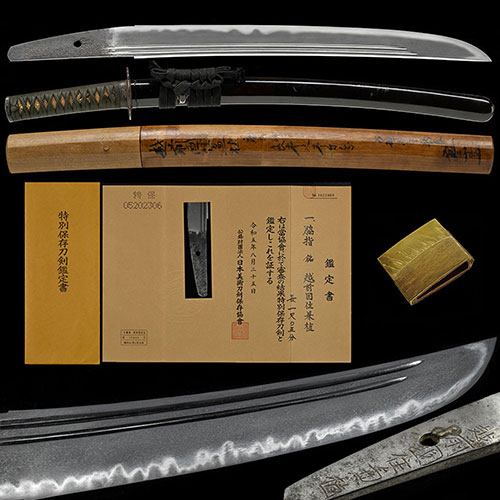
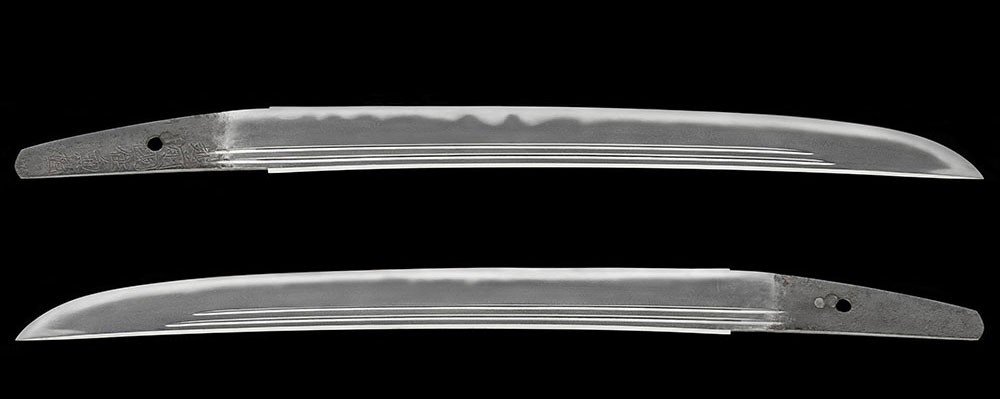
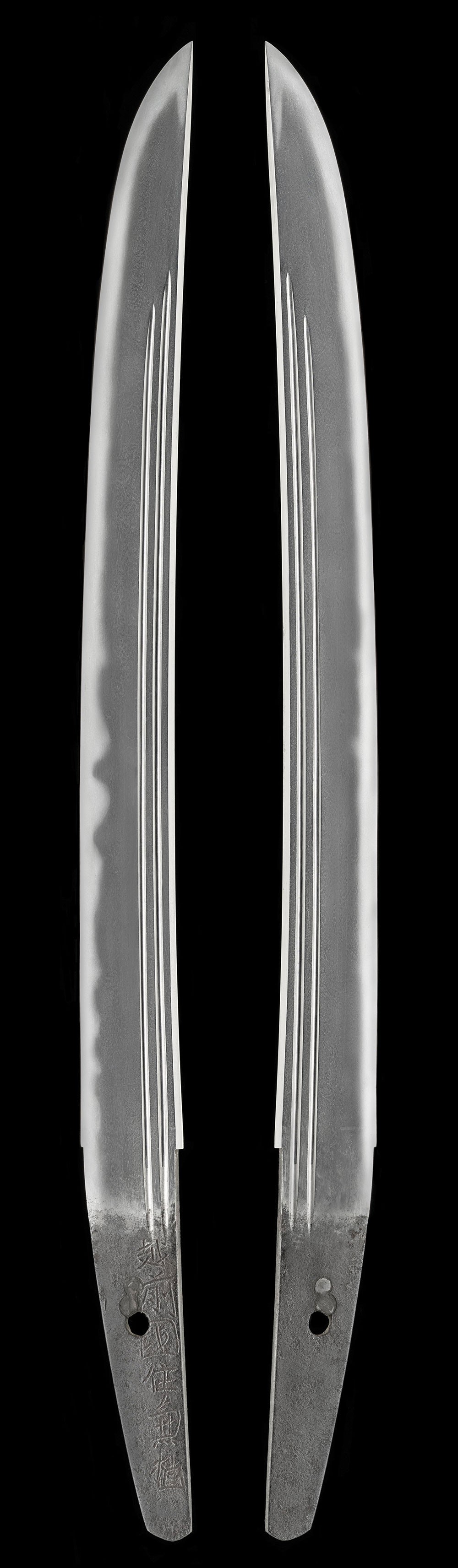
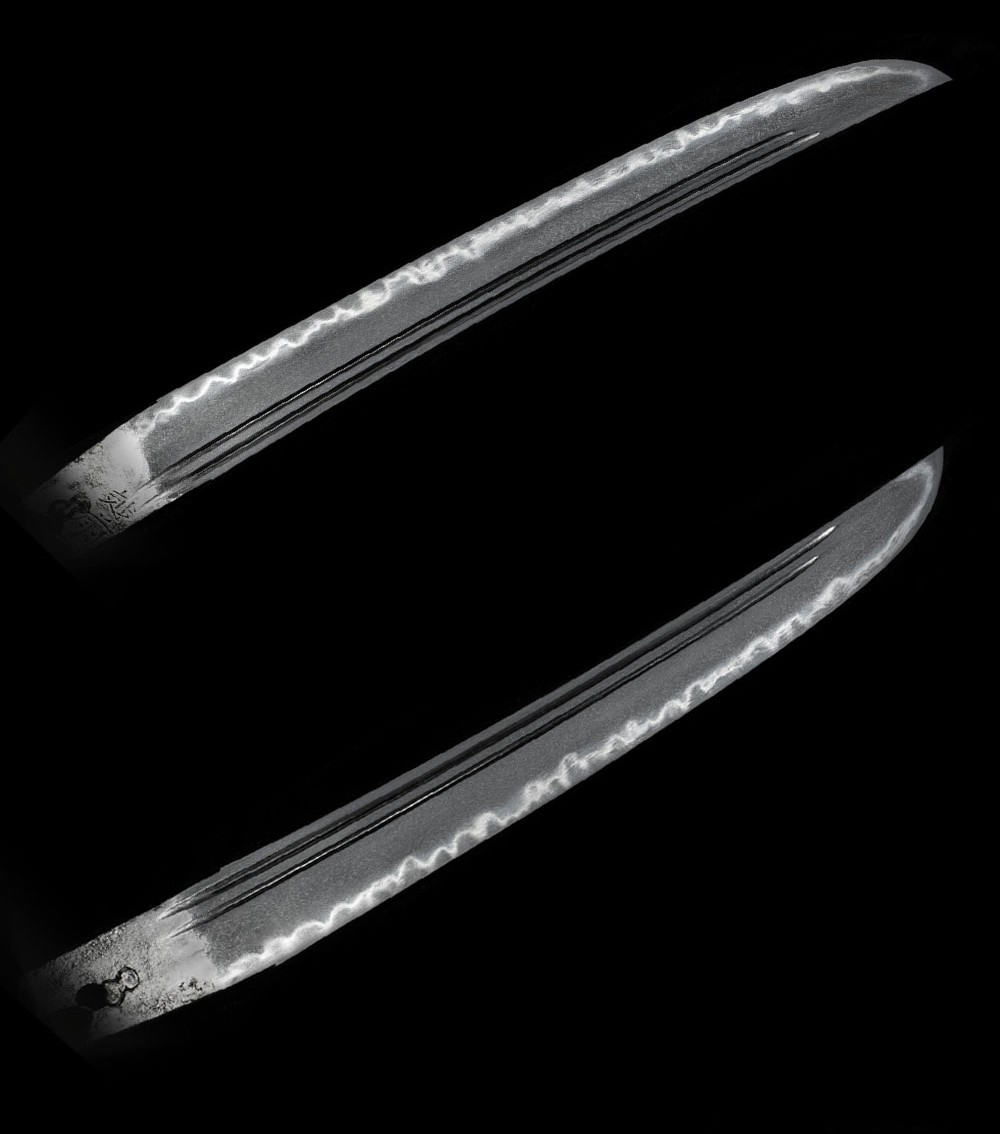
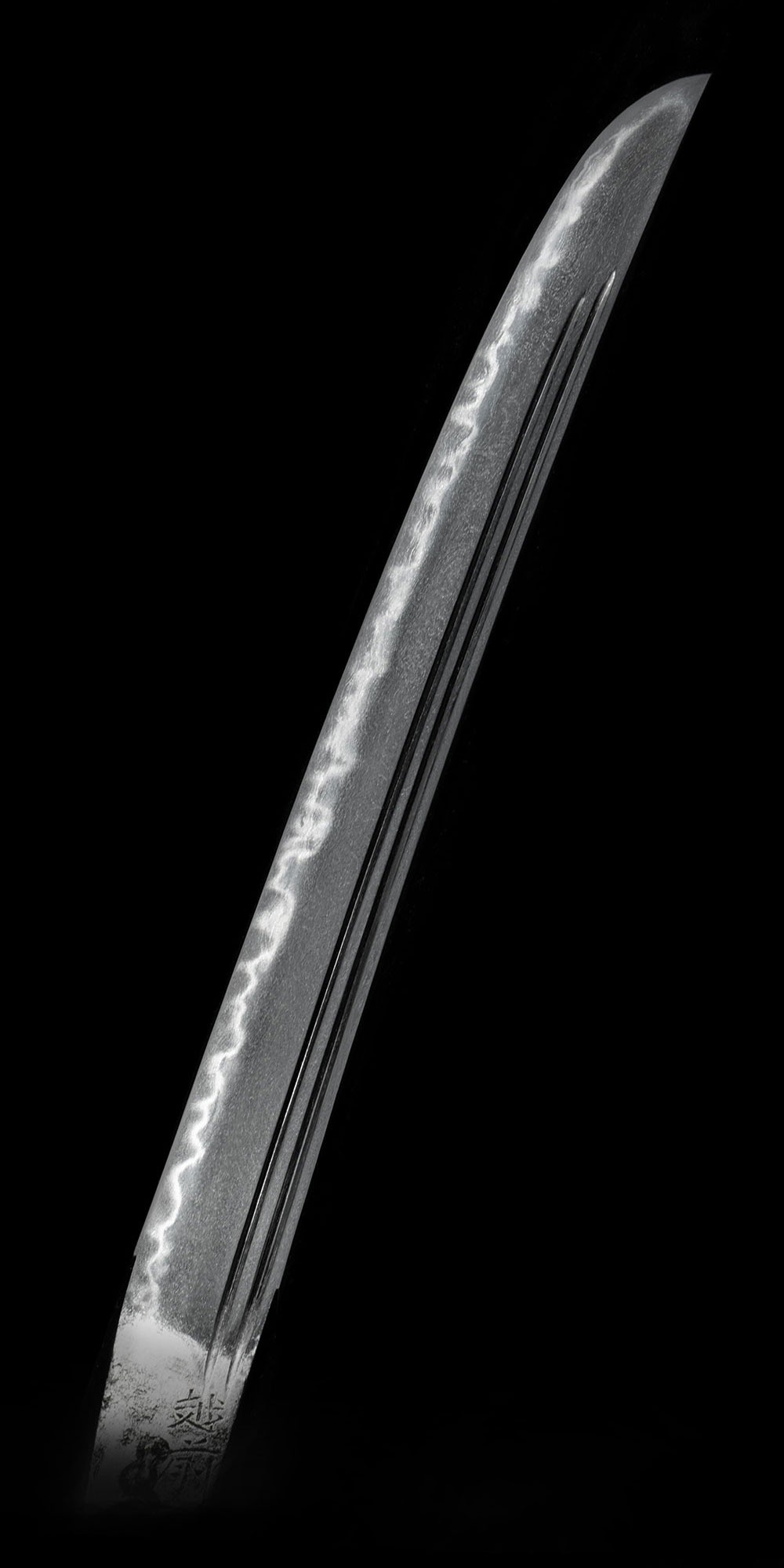
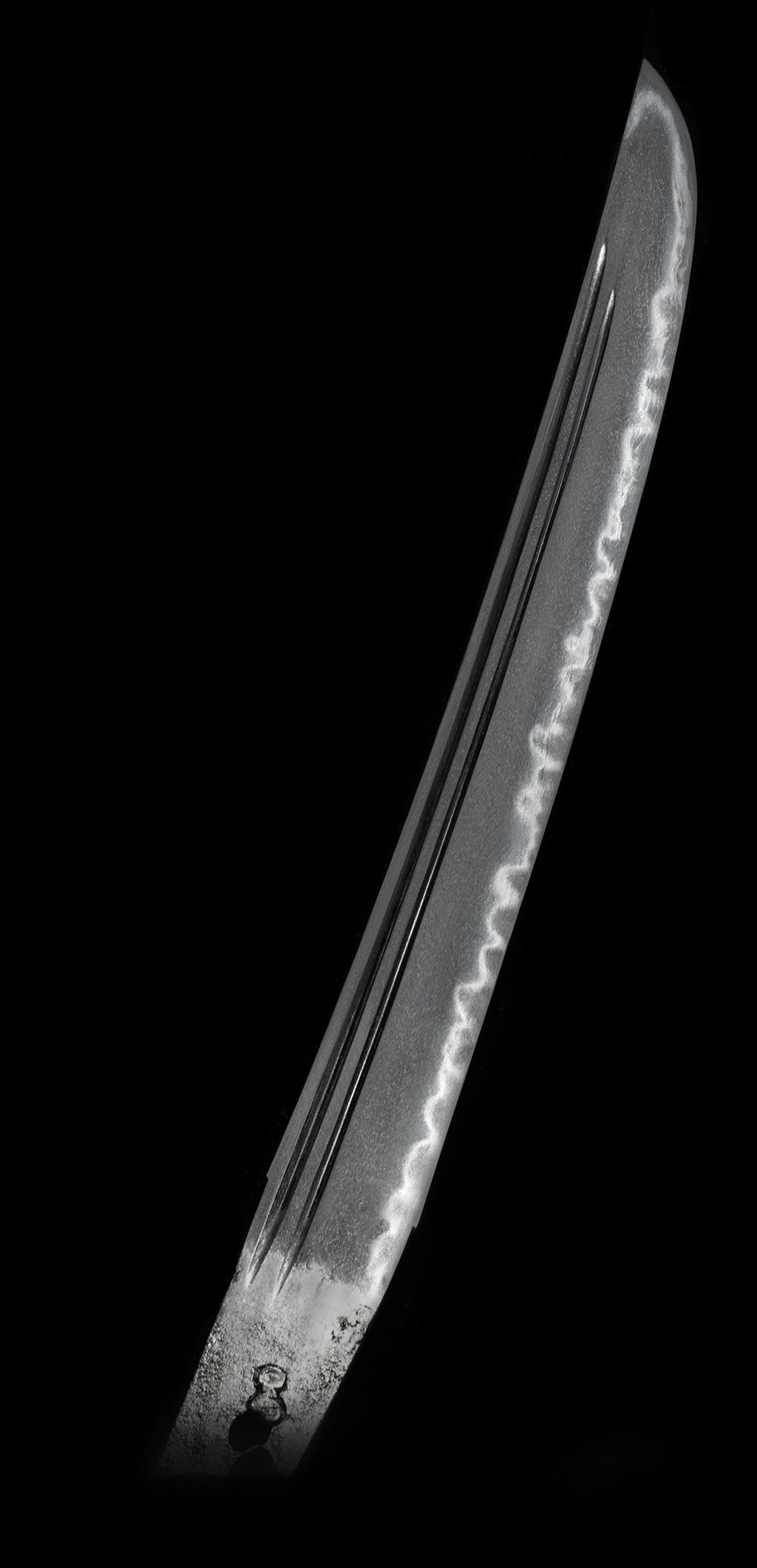
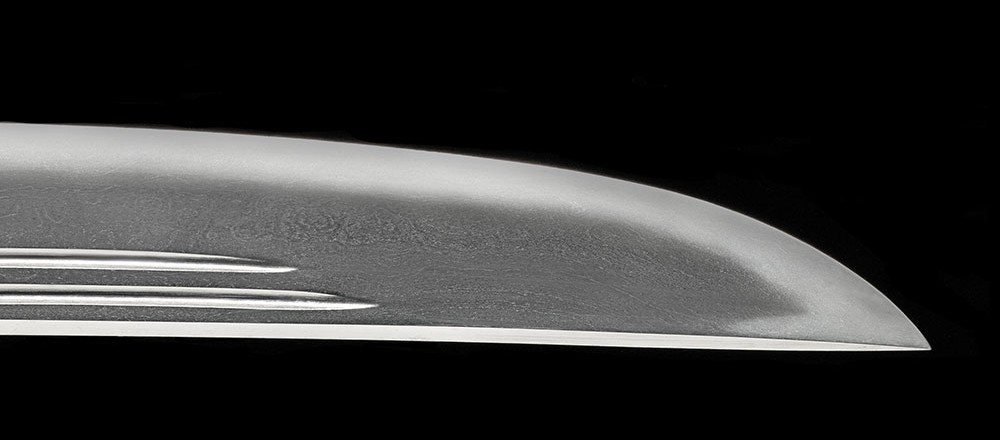
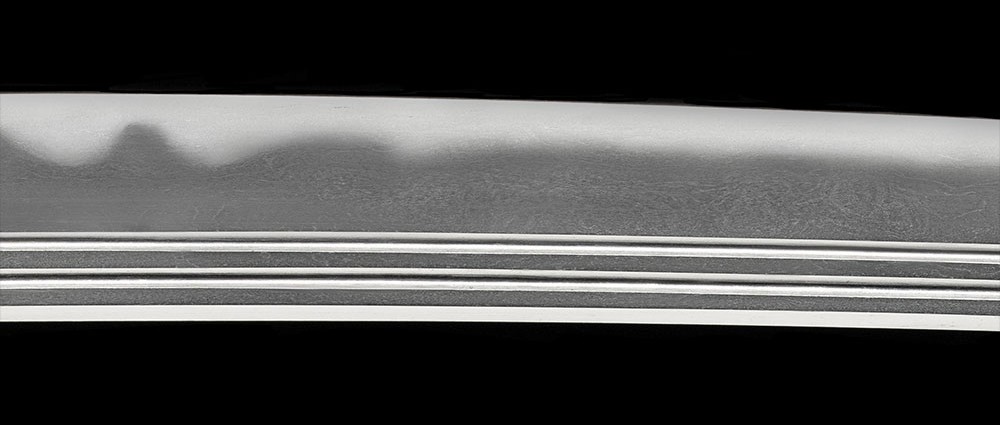
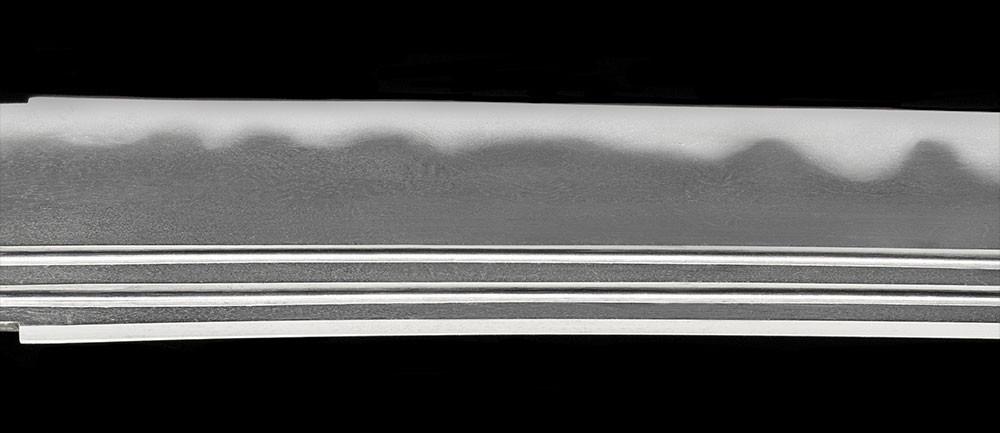
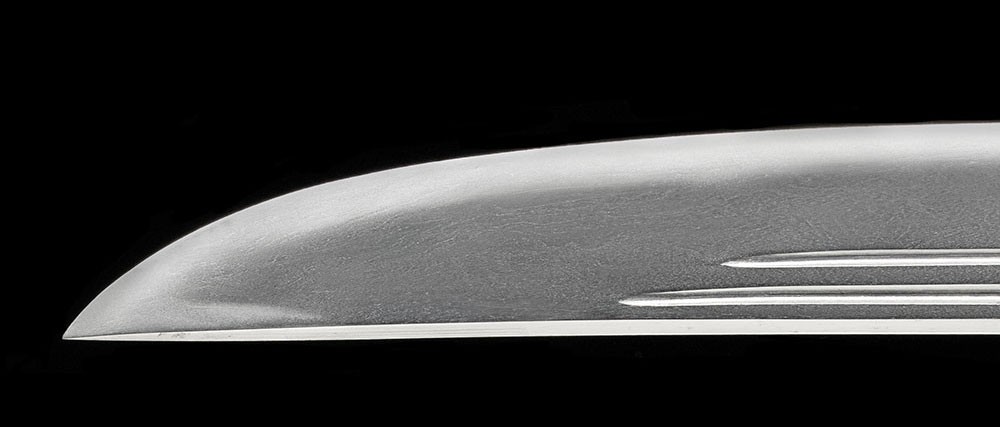
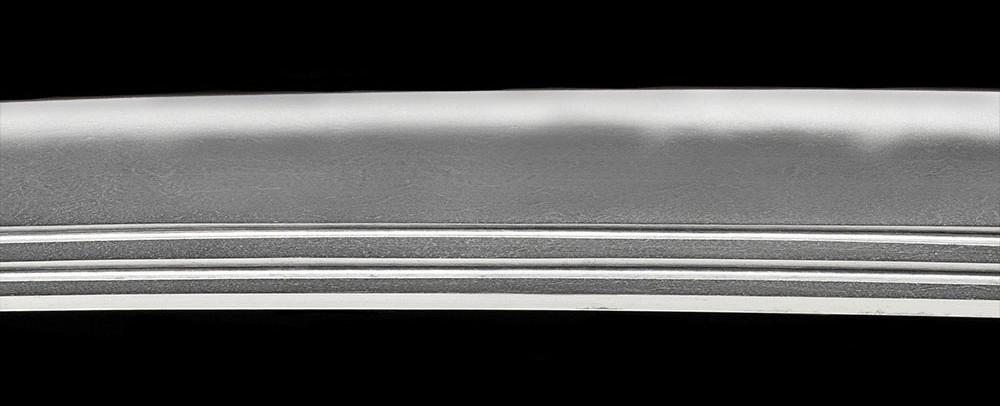
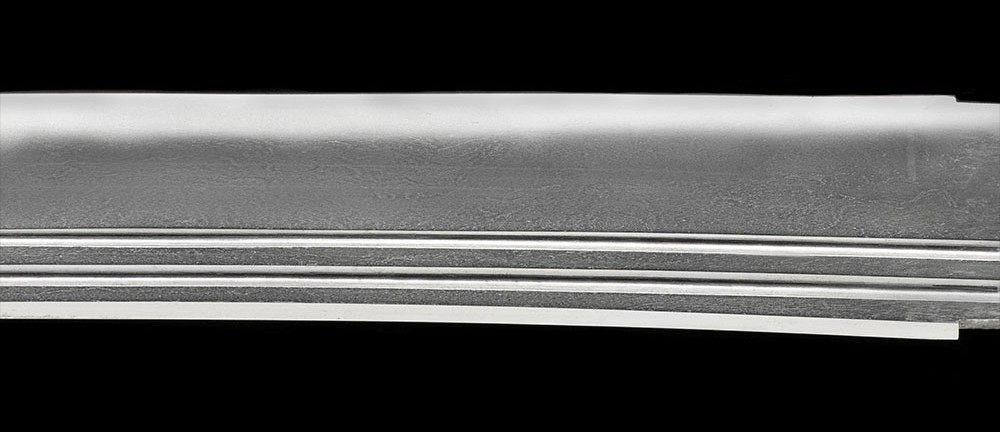
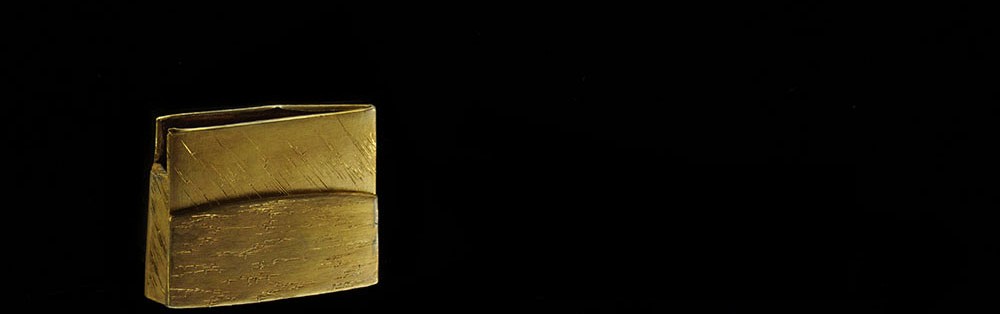
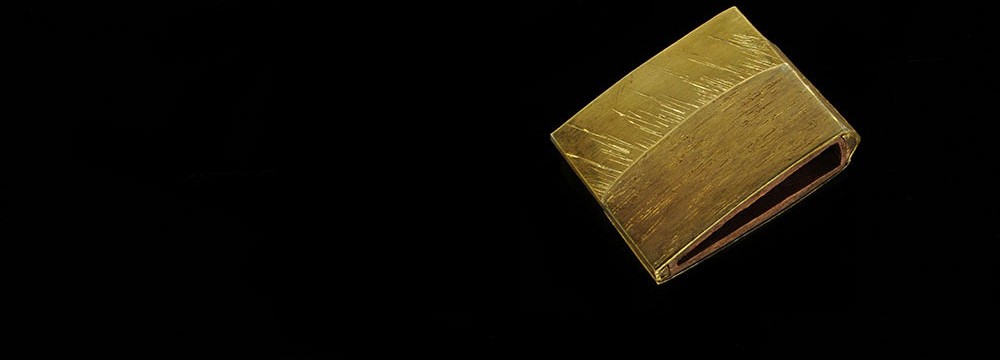
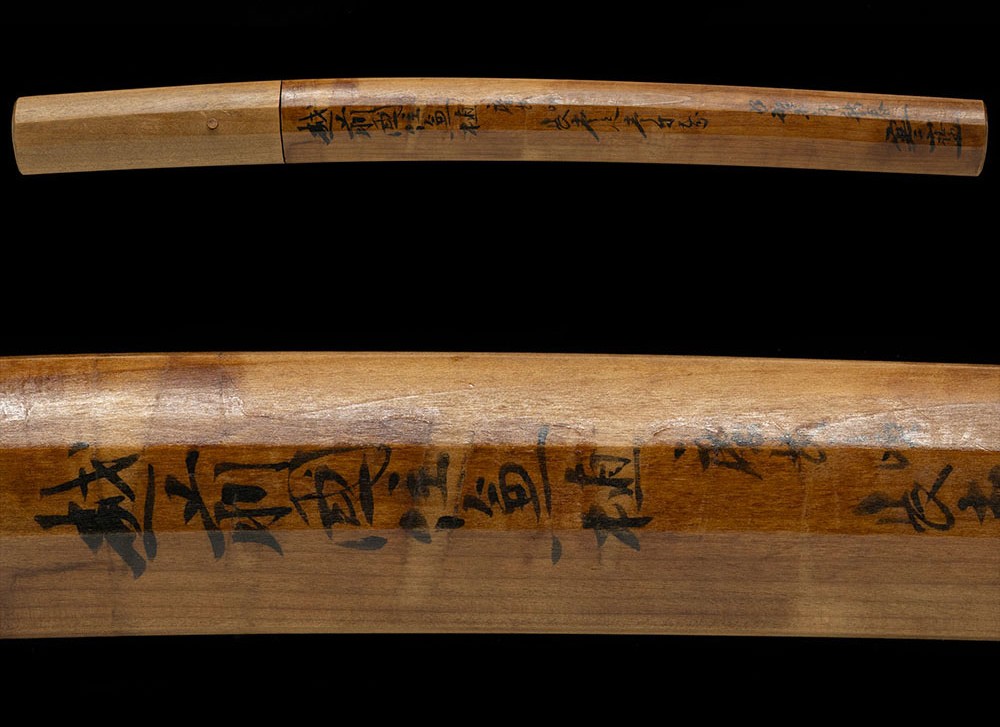
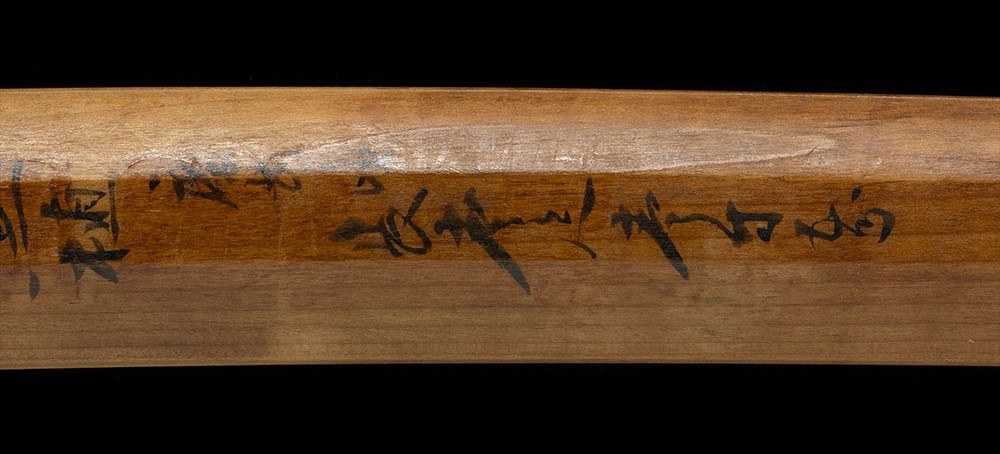
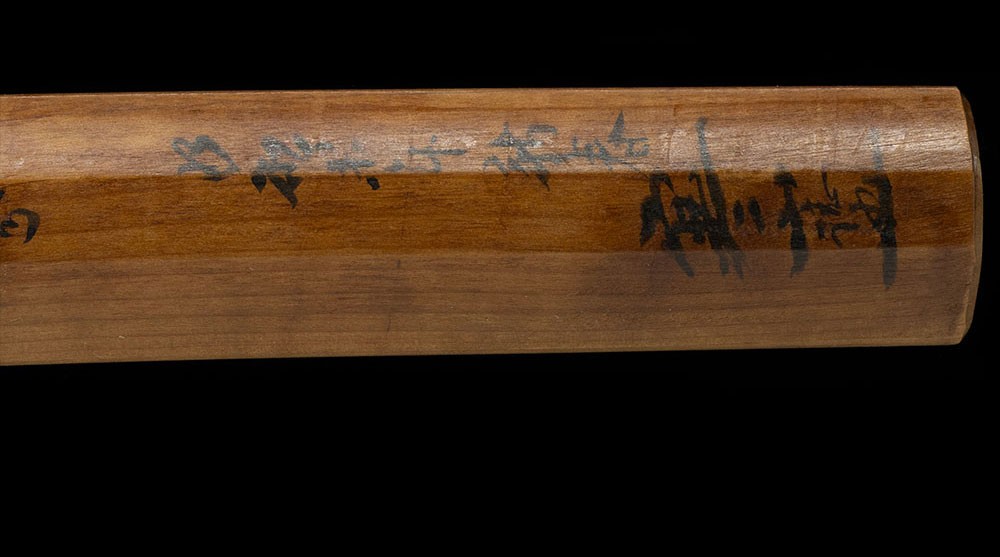
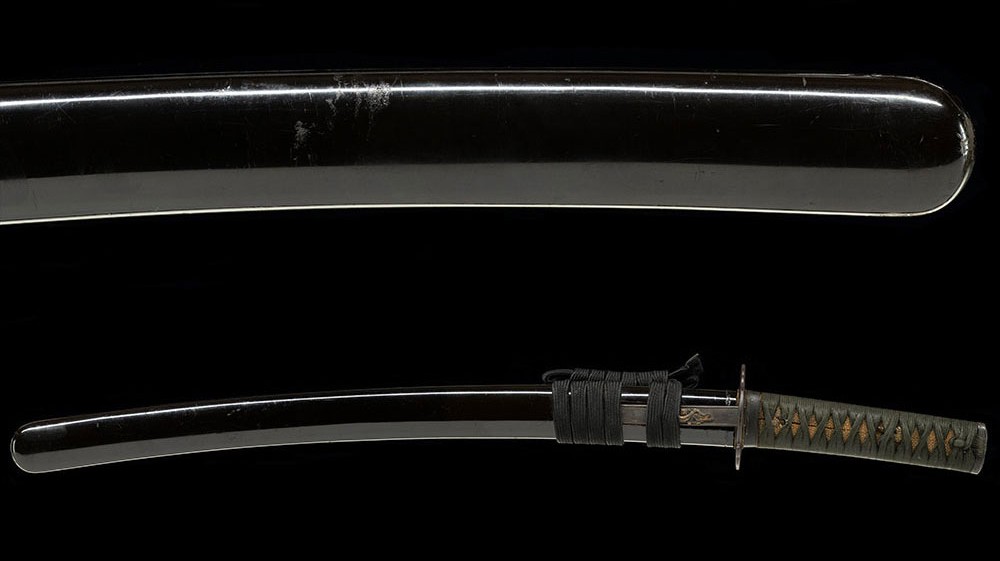
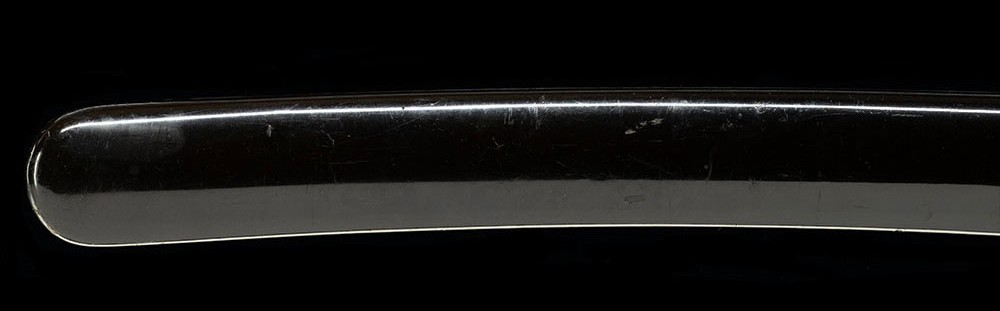
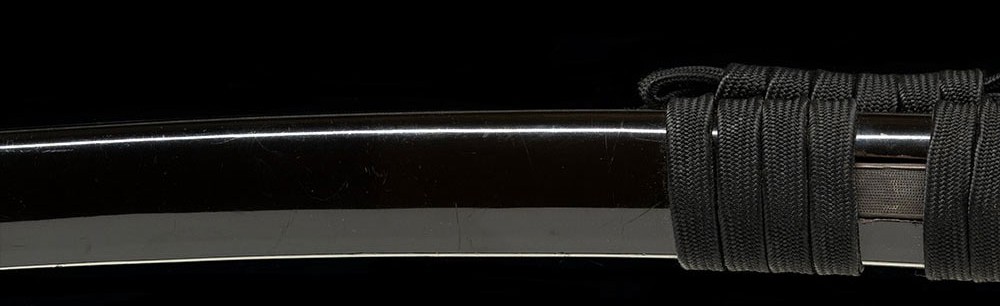
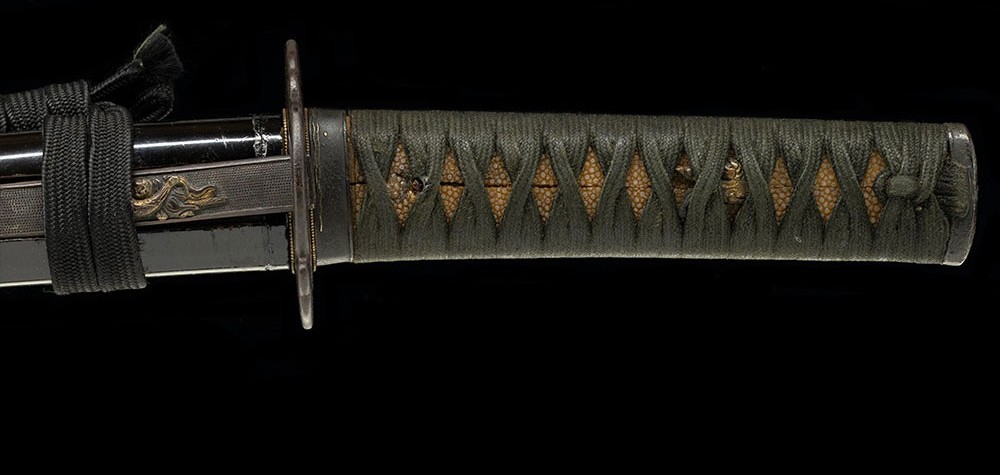
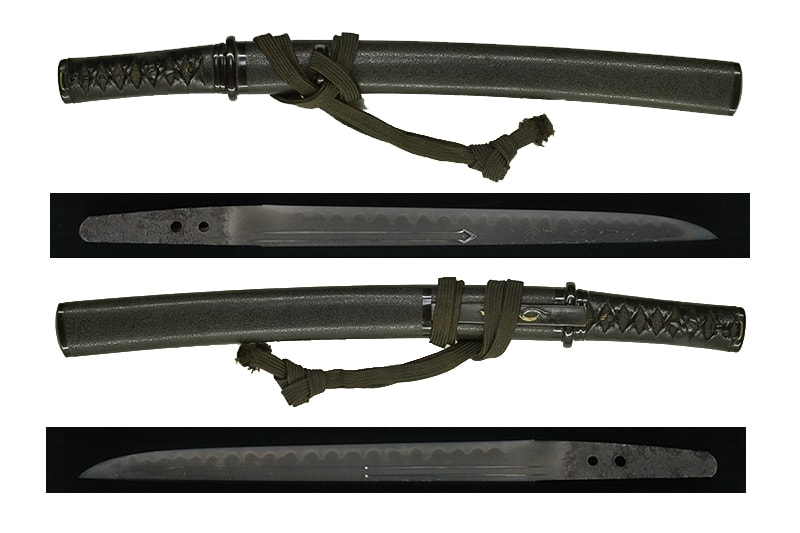
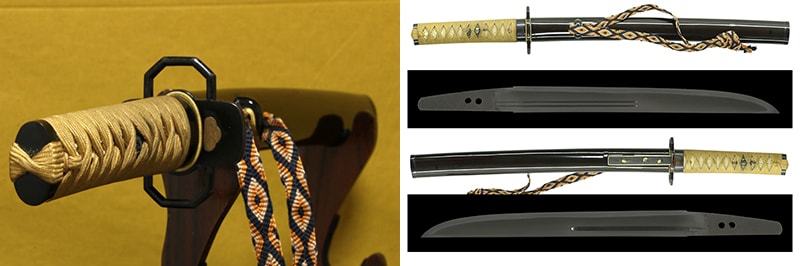
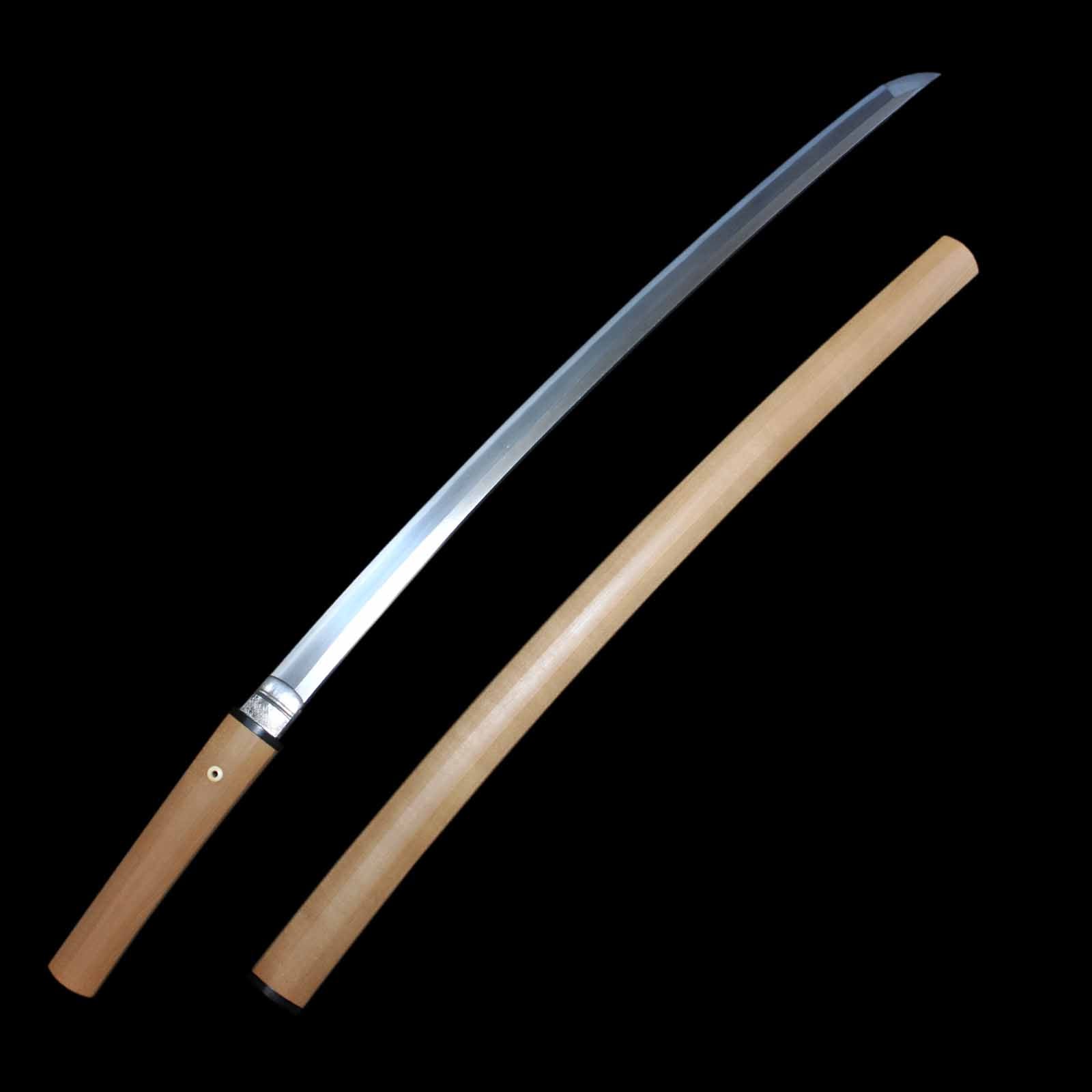
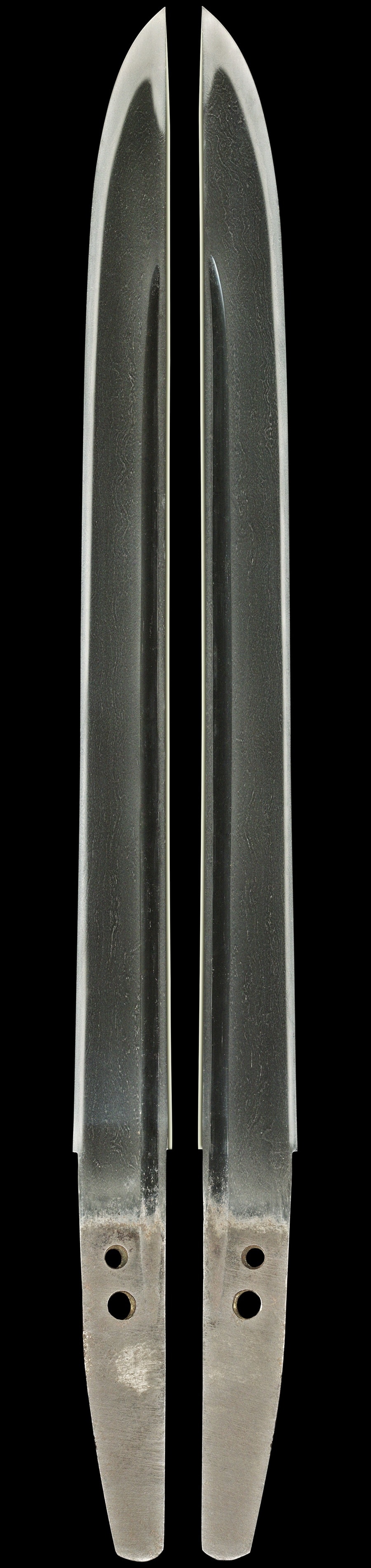
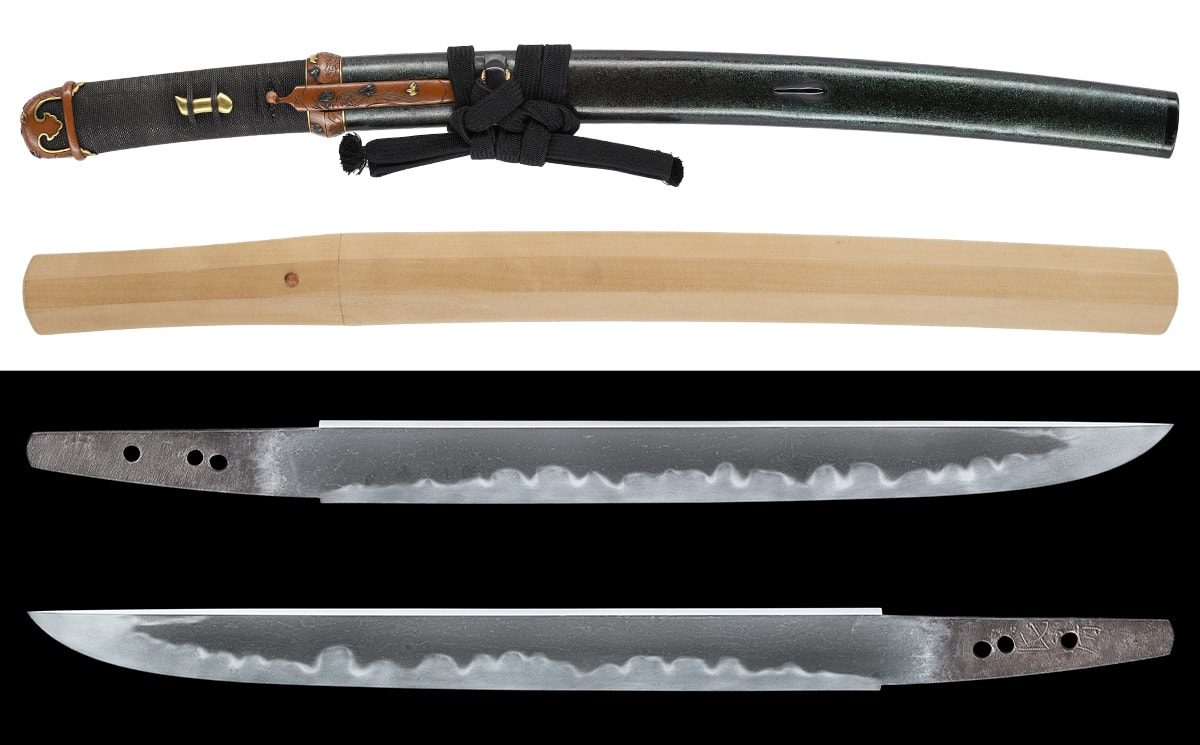
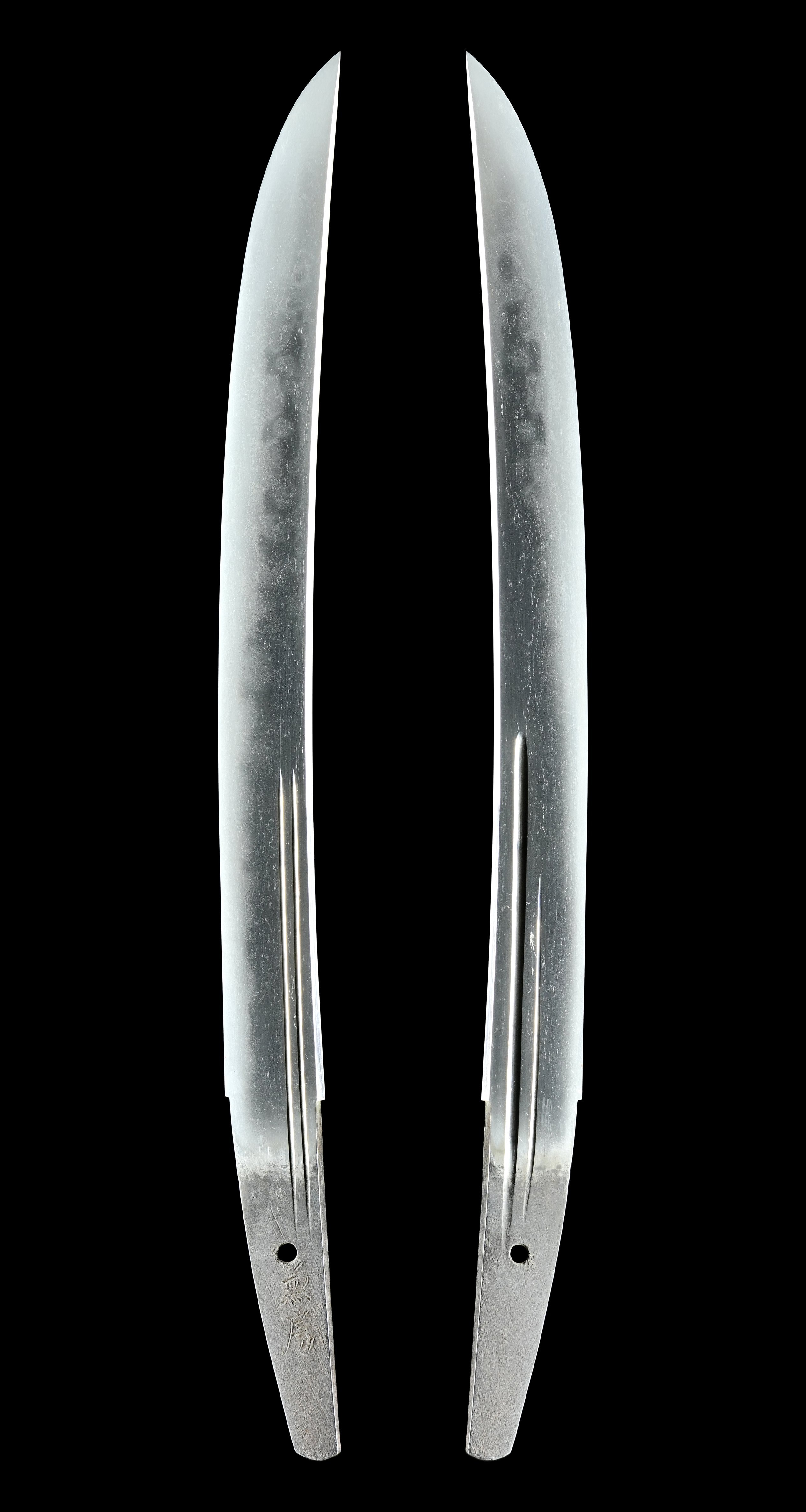
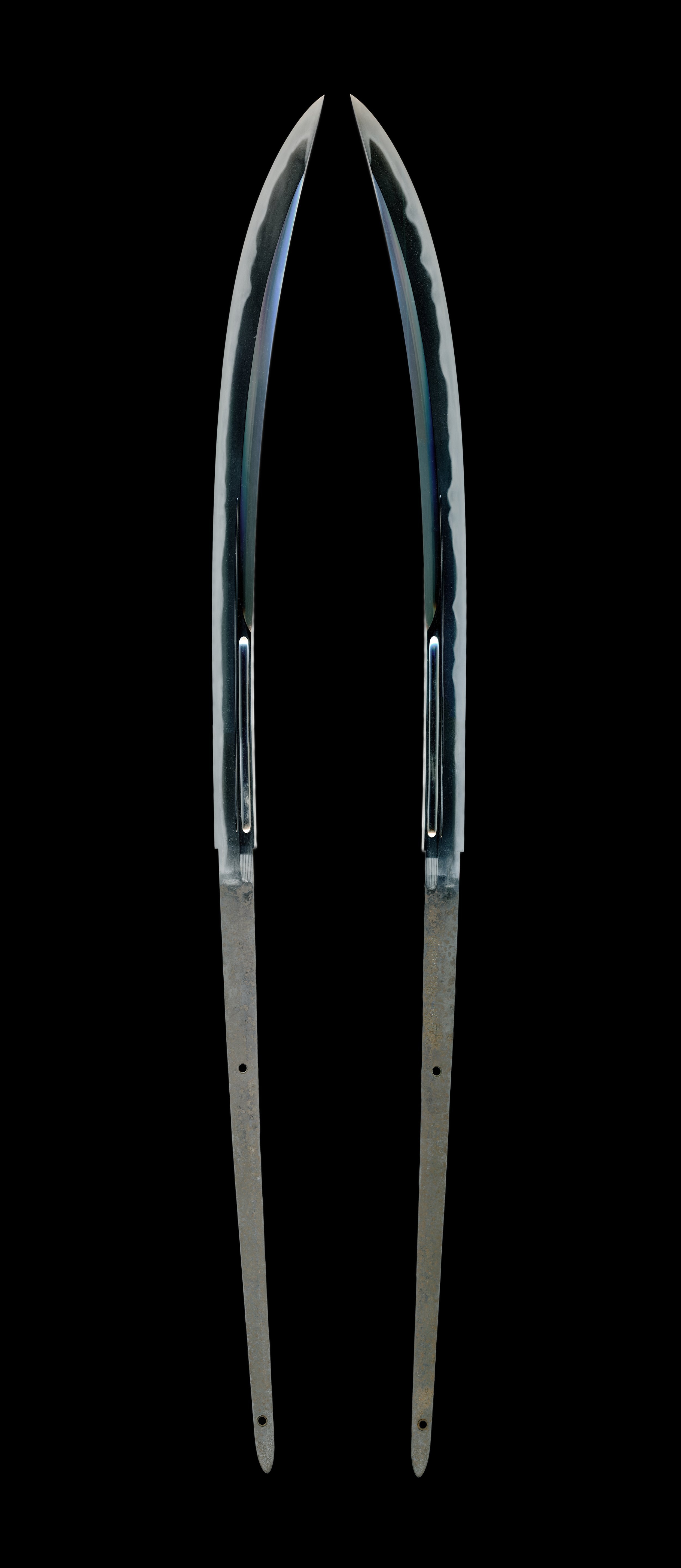
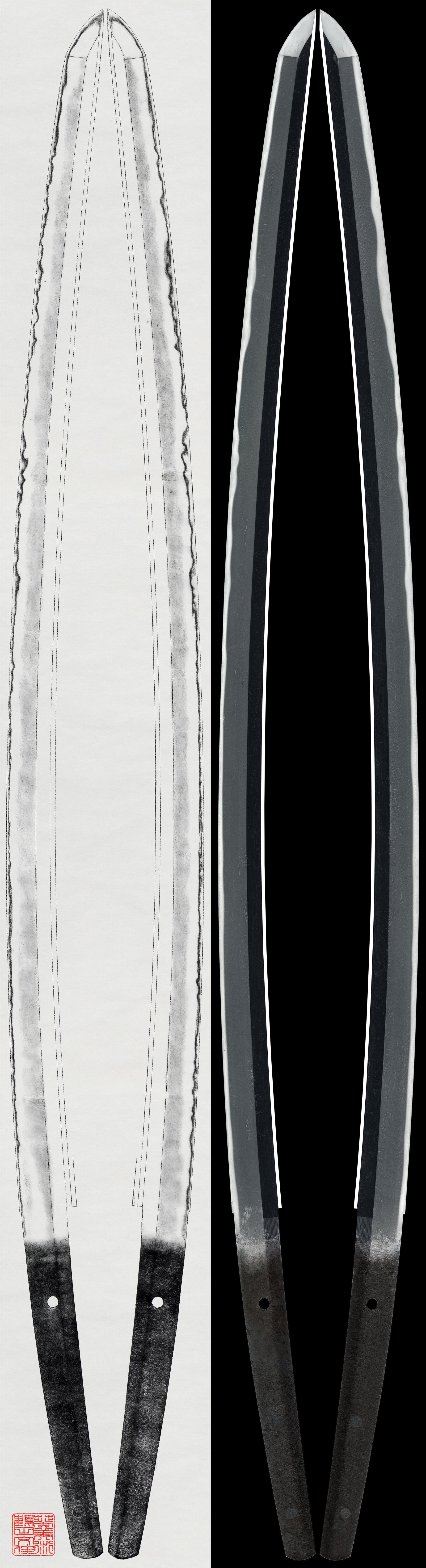
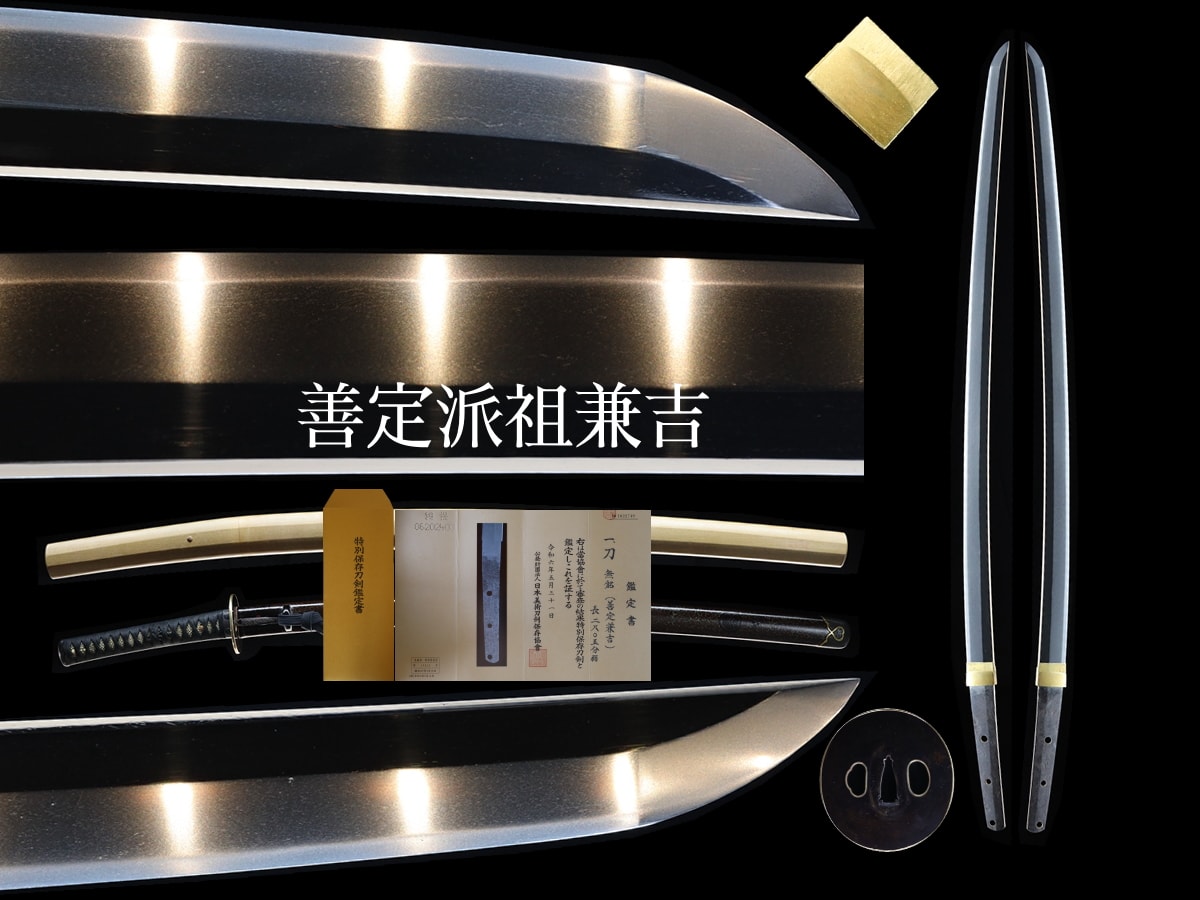
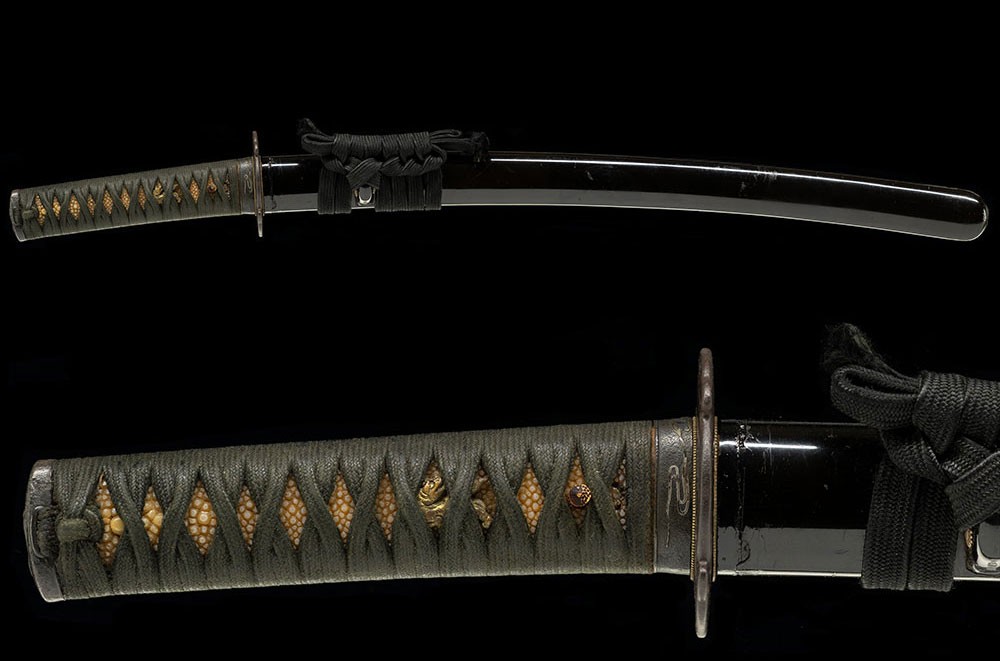
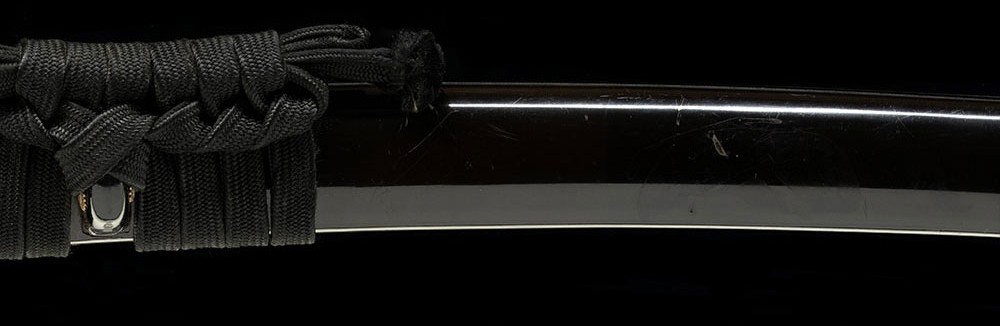
This is a wakizashi made by Kanetane from Echizen province during the Edo period. It comes with a black wax-lacquered scabbard koshirae. The blade features a gunome and chouji hamon with kinsuji and sunagashi.
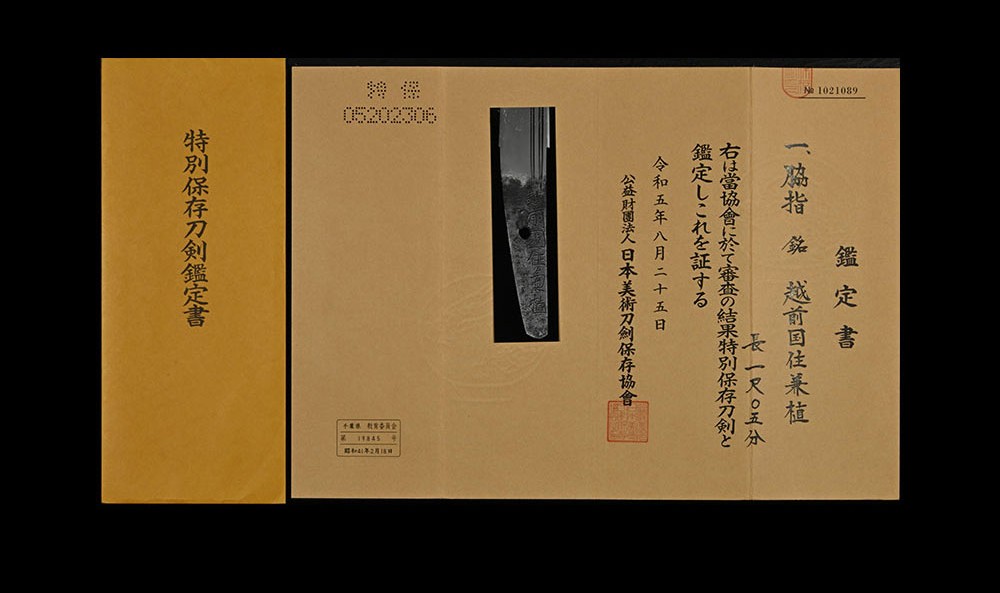
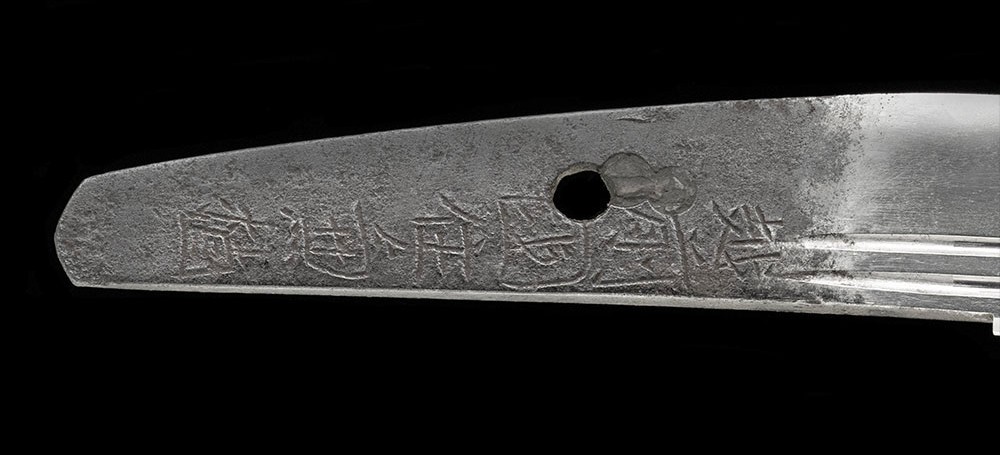
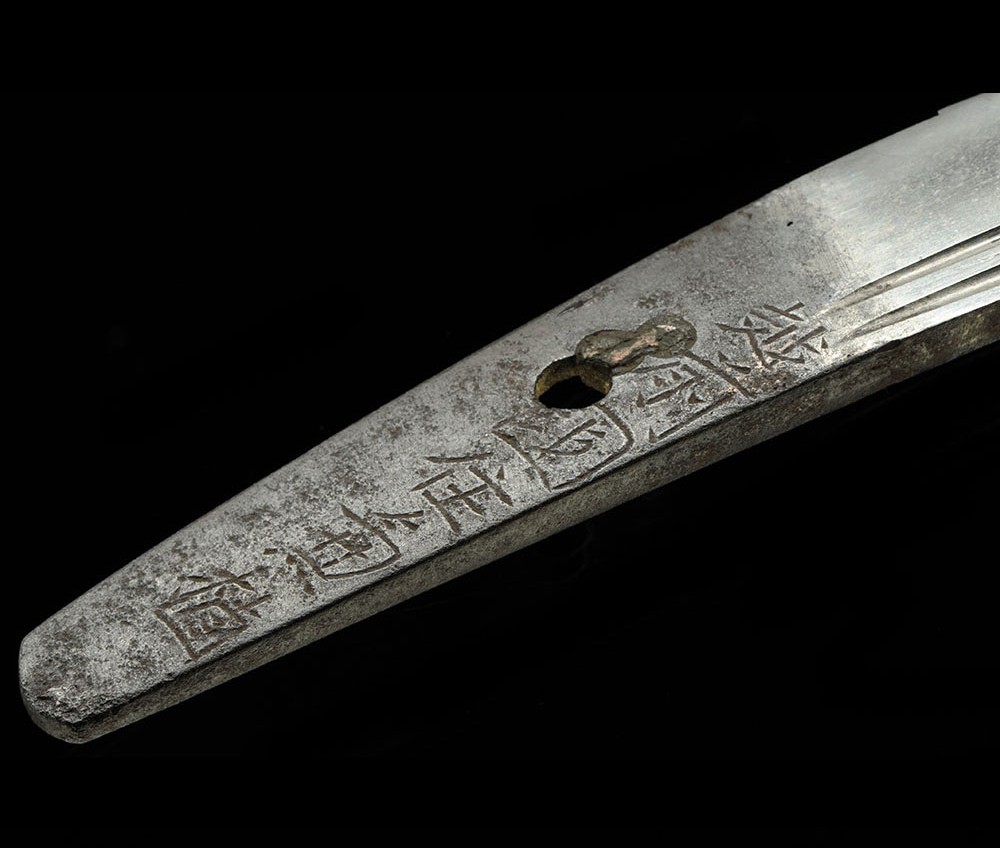
Certificate reading — 銘 越前国住兼植
mei · Edo · nagasa 31.8cm · sori 0.4cm


Mino-den · Echizen · around 1615-1624
Fujishiro Jo saku · Tōken Taikan top 49%
4 pieces on the market now
Kaneue traces his origins to the smiths of Gino in Mino Province, who later migrated to Echizen. The NBTHK identifies from his signature "a connection to the line of the Seki smiths," and positions the first generation's activity in the Keicho era, squarely within the formative period of shinto production. Several generations bearing the same name succeeded one another — the meikan records successive smiths through Kan'ei, Enpo, and Genroku — each producing skillful work and transmitting the vestiges of the Seki-fu (Seki style). Because the shodai Echizen Kaneue's style and carvings share features common to the Echizen Shimosaka group, "it may be supposed that the shodai Echizen Kaneue was perhaps originally from Mino, assimilated early with the Shimosaka smiths of Omi, and later moved to Echizen."
The characteristic sugata of Kaneue's work presents the archetypal Keicho shinto form: wide mihaba with minimal narrowing from base to tip, thick kasane, and an elongated chu-kissaki conveying a weighty, solid, and robust taihai. The jihada is itame mixed with mokume, with standing grain and a somewhat darkened "kane" tone described as "distinctive to northern-region workmanship." The hamon is narrow and fundamentally suguha, with shallow, small notare and a running admixture of small gunome; abundant ko-ashi, interspersed yo, ko-nie, and finely applied sunagashi produce what the NBTHK characterizes as "a calm and restrained style" in which "there is, in one vein, something that corresponds to the manner of Higo Daijo Sadakuni." The carvings — particularly the kurikara in relief within the hitsu — are "deeply cut and forceful in their incision" and display the characteristics of Kinai-bori, comparable to those seen on works by Yasutsugu of the same province.
The NBTHK reserves its highest praise for the shodai's work, declaring his Tokubetsu-Juyo katana to be "the shodai Echizen Kaneue's finest work, and among his extant pieces no superior example is seen." Both jigane and tempering are described as "outstanding among this smith's works," and the workmanship in ji and ha is called "exceptionally splendid." His production is recognized as embodying a Mino-Seki manner distinct from the Yasutsugu lineage — a distinction the NBTHK credits as the very reason that "Echizen-Seki came to be celebrated."
Where Kanetane stands among comparable artisans: across all of nihontō, and within tradition, era, and period. The tiers (Foremost · Leading · Major · Notable) weigh official designations from the NBTHK and Japan's Agency for Cultural Affairs, together with historical honors of lasting repute such as the Sansaku and Meibutsu-chō.
Select a lens to see how it's measured.
Mino-den · Mino
144 pieces on the market now
Seki (関), in Mino Province, grew from two roots set down in the Nanbokuchō period and rose to become the great center of mass sword production in the late medieval age. Learn more →
| Smith | Era | Designated |
|---|---|---|
| Kinju金重 | 1340-1346 | 45 |
| Ujifusa氏房 | 1596-1615 | 16 |
| Kaneyuki金行 | 1350-1352 | 10 |
| Ujifusa氏房 | 1571-1592 | 9 |
| Kanekore兼之 | 1504-1555 | 7 |
A Hozon-certified blade judged to show notably superior workmanship and a better state of preservation. The bar is higher: re-tempered blades and most unsigned Muromachi/Edo works are excluded.
The NBTHK (Nihon Bijutsu Tōken Hozon Kyōkai, the Society for the Preservation of Japanese Art Swords) is a public-interest incorporated foundation founded in 1948 and supervised by Japan’s Agency for Cultural Affairs (Bunkachō); it is based at the Japanese Sword Museum in Tokyo. Its expert panels physically examine each submitted work (shinsa) and issue a certificate (kanteishō) ranking it by artistic and historical merit. NBTHK papers are the most widely recognized standard of authentication for Japanese swords and fittings.
NBTHK official siteReturns/exchanges/cancellations not accepted after shipment except for significant defects; if defective, return/exchange possible within 3 days of arrival (return shipping paid by customer).
This is a wakizashi made by Kanetane from Echizen province during the Edo period. It comes with a black wax-lacquered scabbard koshirae. The blade features a gunome and chouji hamon with kinsuji and sunagashi.
Certificate reading — 銘 越前国住兼植
mei · Edo · nagasa 31.8cm · sori 0.4cm


Mino-den · Echizen · around 1615-1624
Fujishiro Jo saku · Tōken Taikan top 49%
4 pieces on the market now
Kaneue traces his origins to the smiths of Gino in Mino Province, who later migrated to Echizen. The NBTHK identifies from his signature "a connection to the line of the Seki smiths," and positions the first generation's activity in the Keicho era, squarely within the formative period of shinto production. Several generations bearing the same name succeeded one another — the meikan records successive smiths through Kan'ei, Enpo, and Genroku — each producing skillful work and transmitting the vestiges of the Seki-fu (Seki style). Because the shodai Echizen Kaneue's style and carvings share features common to the Echizen Shimosaka group, "it may be supposed that the shodai Echizen Kaneue was perhaps originally from Mino, assimilated early with the Shimosaka smiths of Omi, and later moved to Echizen."
The characteristic sugata of Kaneue's work presents the archetypal Keicho shinto form: wide mihaba with minimal narrowing from base to tip, thick kasane, and an elongated chu-kissaki conveying a weighty, solid, and robust taihai. The jihada is itame mixed with mokume, with standing grain and a somewhat darkened "kane" tone described as "distinctive to northern-region workmanship." The hamon is narrow and fundamentally suguha, with shallow, small notare and a running admixture of small gunome; abundant ko-ashi, interspersed yo, ko-nie, and finely applied sunagashi produce what the NBTHK characterizes as "a calm and restrained style" in which "there is, in one vein, something that corresponds to the manner of Higo Daijo Sadakuni." The carvings — particularly the kurikara in relief within the hitsu — are "deeply cut and forceful in their incision" and display the characteristics of Kinai-bori, comparable to those seen on works by Yasutsugu of the same province.
The NBTHK reserves its highest praise for the shodai's work, declaring his Tokubetsu-Juyo katana to be "the shodai Echizen Kaneue's finest work, and among his extant pieces no superior example is seen." Both jigane and tempering are described as "outstanding among this smith's works," and the workmanship in ji and ha is called "exceptionally splendid." His production is recognized as embodying a Mino-Seki manner distinct from the Yasutsugu lineage — a distinction the NBTHK credits as the very reason that "Echizen-Seki came to be celebrated."
Where Kanetane stands among comparable artisans: across all of nihontō, and within tradition, era, and period. The tiers (Foremost · Leading · Major · Notable) weigh official designations from the NBTHK and Japan's Agency for Cultural Affairs, together with historical honors of lasting repute such as the Sansaku and Meibutsu-chō.
Select a lens to see how it's measured.
Mino-den · Mino
144 pieces on the market now
Seki (関), in Mino Province, grew from two roots set down in the Nanbokuchō period and rose to become the great center of mass sword production in the late medieval age. Learn more →
| Smith | Era | Designated |
|---|---|---|
| Kinju金重 | 1340-1346 | 45 |
| Ujifusa氏房 | 1596-1615 | 16 |
| Kaneyuki金行 | 1350-1352 | 10 |
| Ujifusa氏房 | 1571-1592 | 9 |
| Kanekore兼之 | 1504-1555 | 7 |
A Hozon-certified blade judged to show notably superior workmanship and a better state of preservation. The bar is higher: re-tempered blades and most unsigned Muromachi/Edo works are excluded.
The NBTHK (Nihon Bijutsu Tōken Hozon Kyōkai, the Society for the Preservation of Japanese Art Swords) is a public-interest incorporated foundation founded in 1948 and supervised by Japan’s Agency for Cultural Affairs (Bunkachō); it is based at the Japanese Sword Museum in Tokyo. Its expert panels physically examine each submitted work (shinsa) and issue a certificate (kanteishō) ranking it by artistic and historical merit. NBTHK papers are the most widely recognized standard of authentication for Japanese swords and fittings.
NBTHK official siteReturns/exchanges/cancellations not accepted after shipment except for significant defects; if defective, return/exchange possible within 3 days of arrival (return shipping paid by customer).