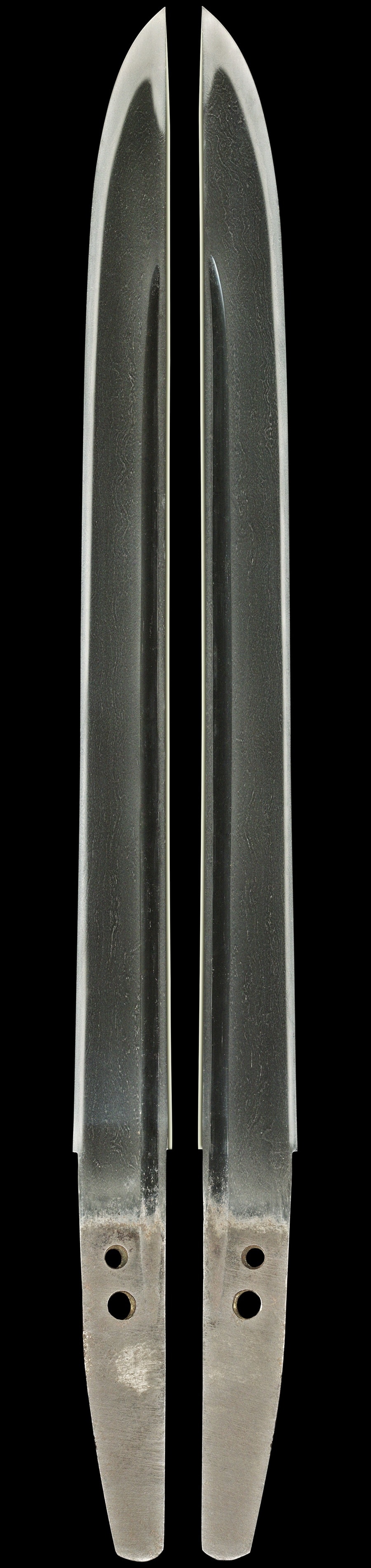
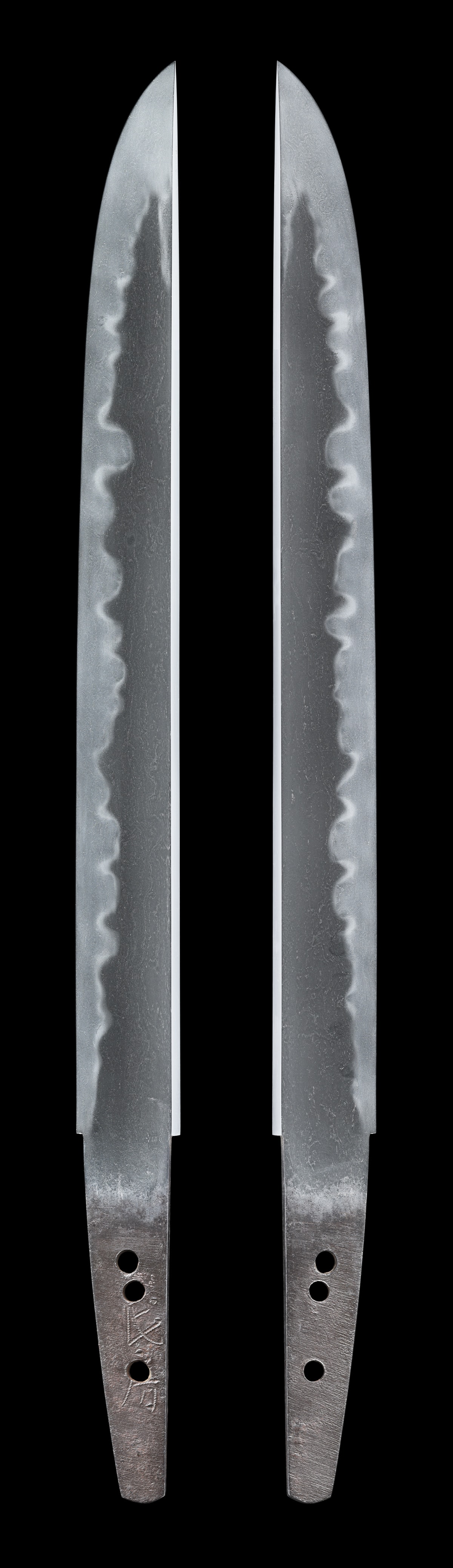
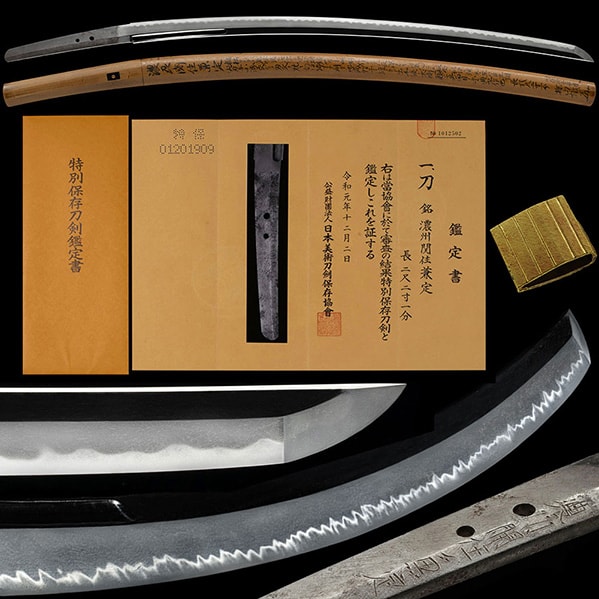
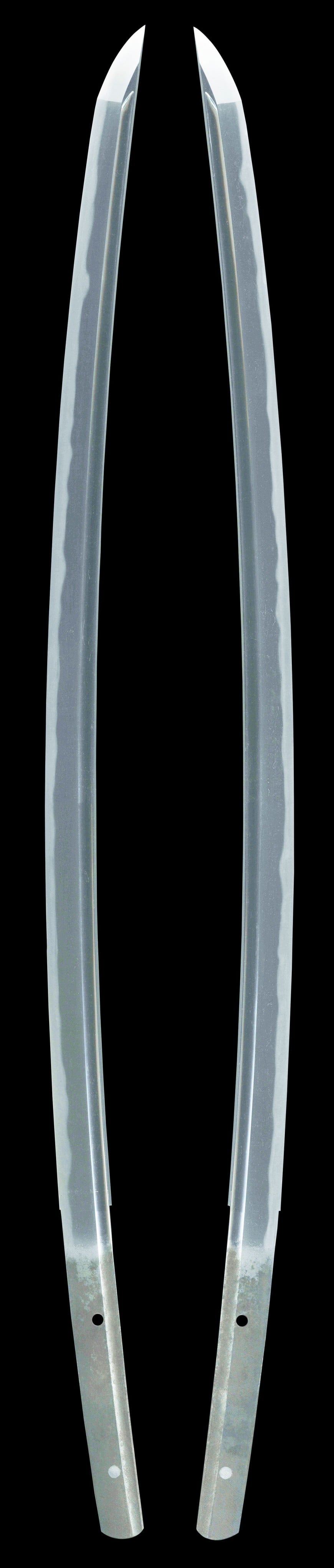
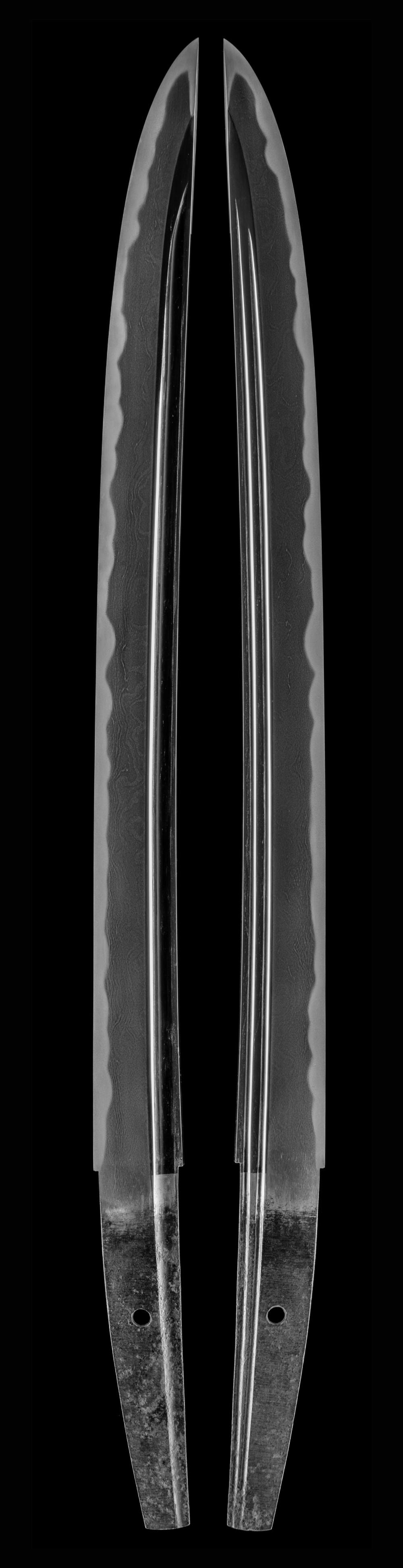
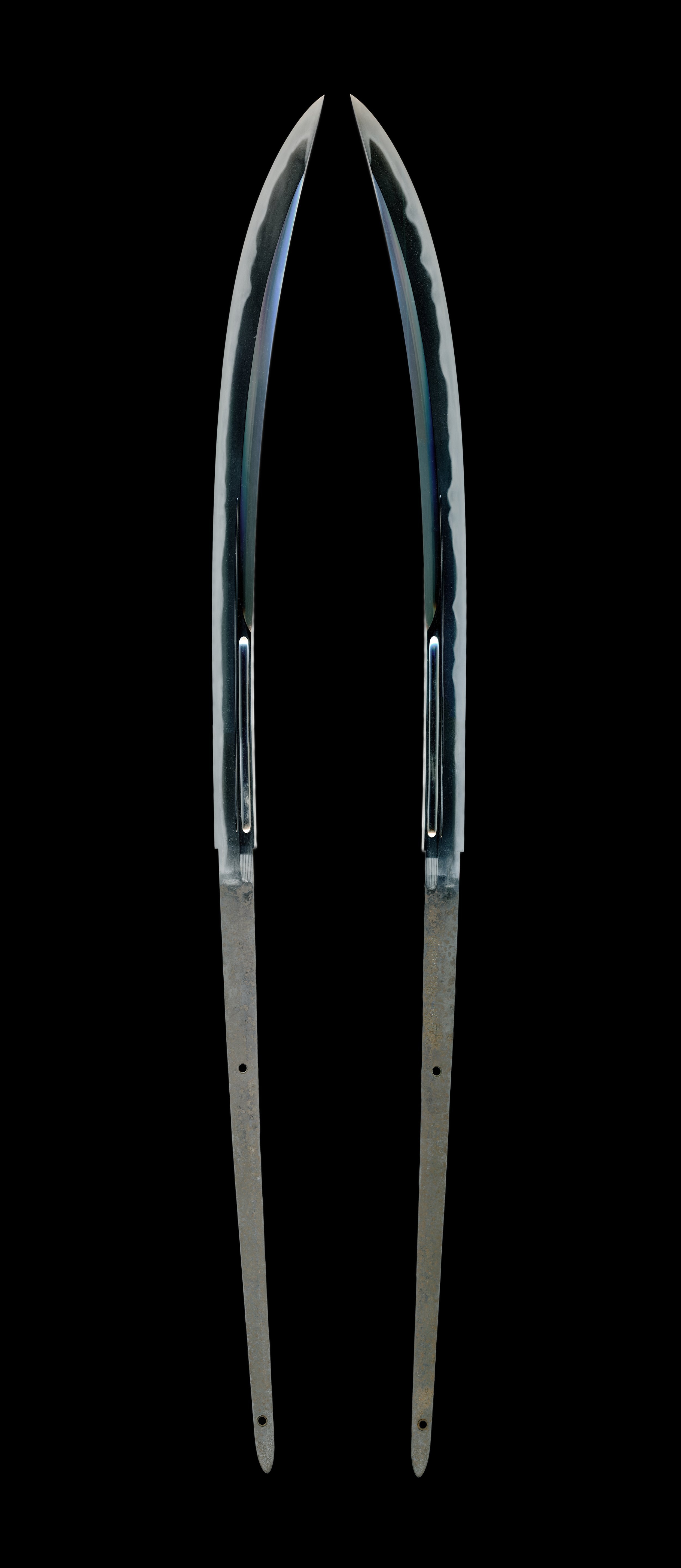
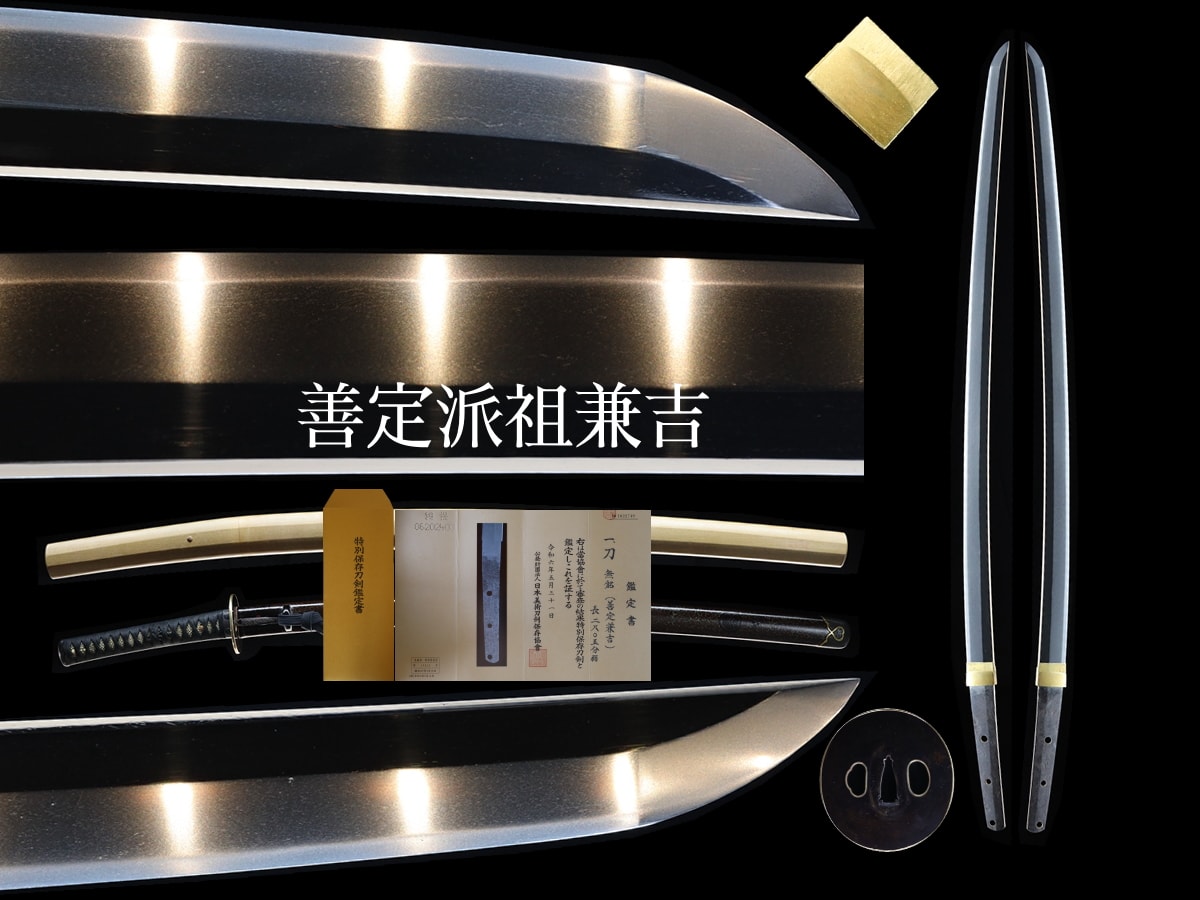
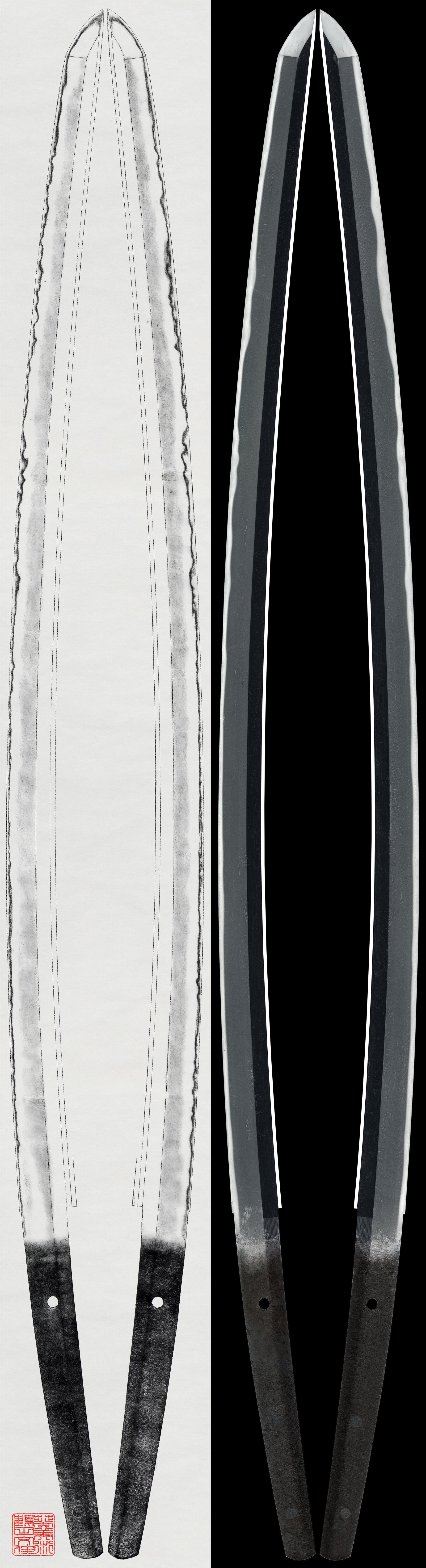
Kaneue traces his origins to the smiths of Gino in Province, who later migrated to . The identifies from his signature "a connection to the line of the Seki smiths," and positions the first generation's activity in the Keicho era, squarely within the formative period of production. Several generations bearing the name succeeded one another — the records successive smiths through 'ei, Enpo, and Genroku — each producing skillful work and transmitting the vestiges of the Seki- (Seki style). Because the Kaneue's style and carvings share features common to the Shimosaka group, "it may be supposed that the Kaneue was perhaps originally from , assimilated early with the Shimosaka smiths of Omi, and later moved to ."
The characteristic of Kaneue's work presents the archetypal Keicho form: wide with minimal narrowing from base to tip, thick , and an elongated conveying a weighty, solid, and robust . The is mixed with , with standing grain and a somewhat darkened "" tone described as "distinctive to northern-region workmanship." The is narrow and fundamentally , with shallow, small and a running admixture of small ; abundant , interspersed , , and finely applied produce what the characterizes as "a calm and restrained style" in which "there is, in one vein, something that corresponds to the manner of Daijo Sadakuni." The carvings — particularly the in relief within the — are "deeply cut and forceful in their incision" and display the characteristics of Kinai-bori, comparable to those seen on works by Yasutsugu of the province.
The reserves its highest praise for the 's work, declaring his to be "the Kaneue's finest work, and among his extant pieces no superior example is seen." Both and tempering are described as "outstanding among this smith's works," and the workmanship in and is called "exceptionally splendid." His production is recognized as embodying a -Seki manner distinct from the Yasutsugu lineage — a distinction the credits as the very reason that "-Seki came to be celebrated."