Edo was the sword’s age of connoisseurship: the Hon’ami appraisers, the shogunal register of famous blades of 1719, and a thriving literature turned the sword into an object of study even as it ceased to be drawn in war.
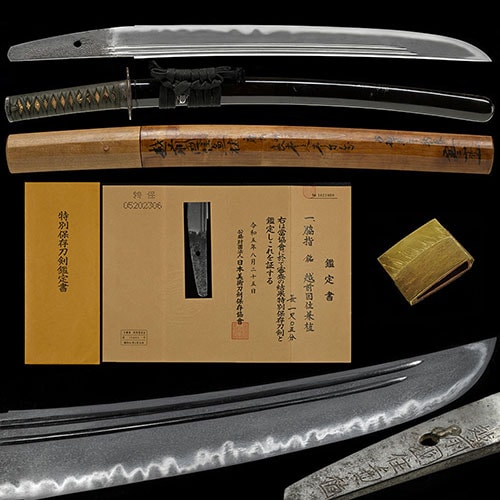
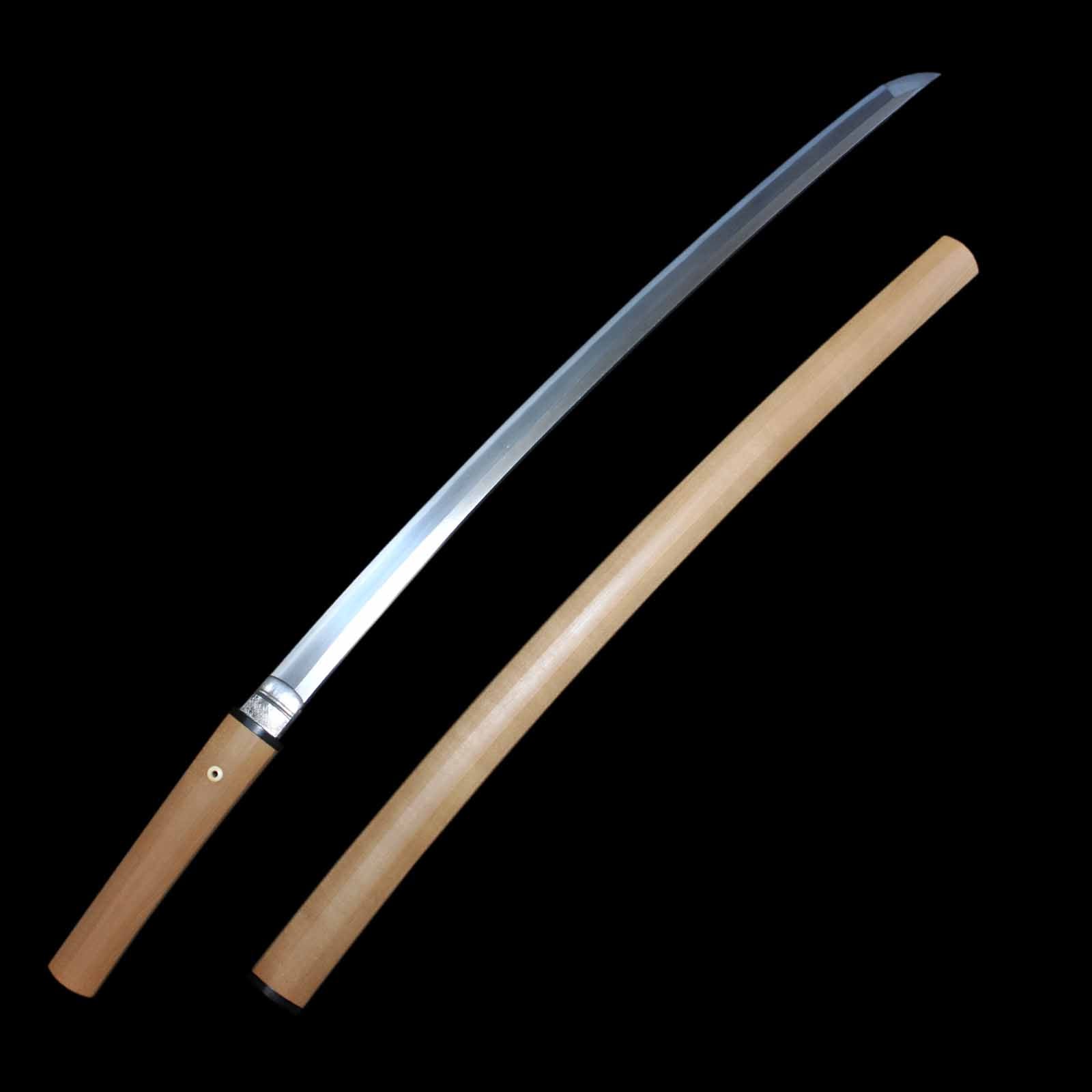
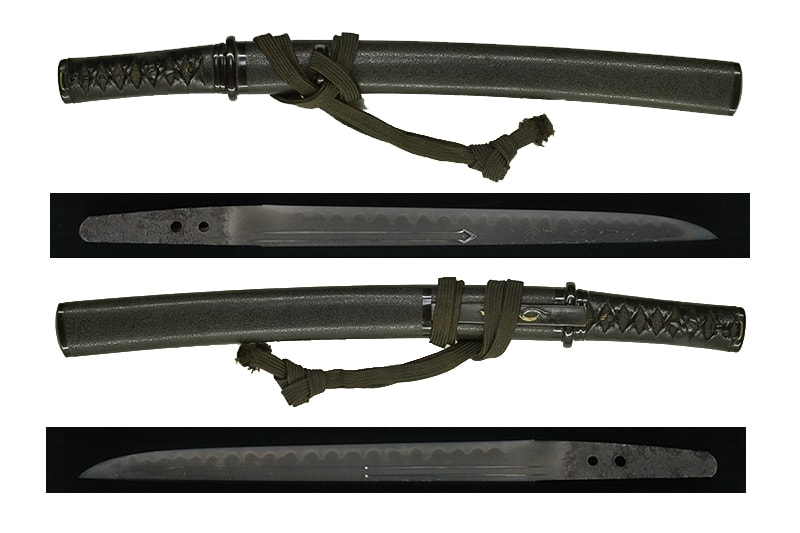
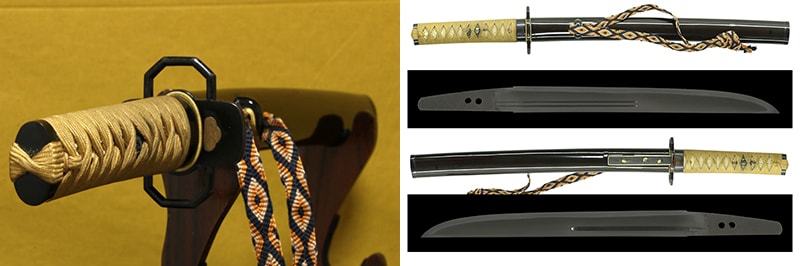
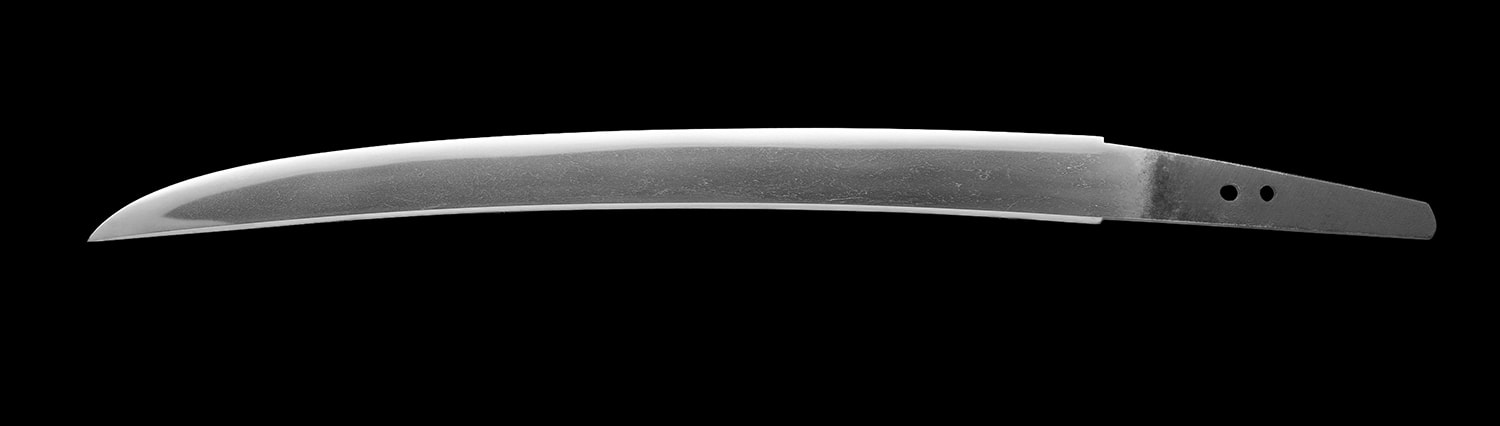
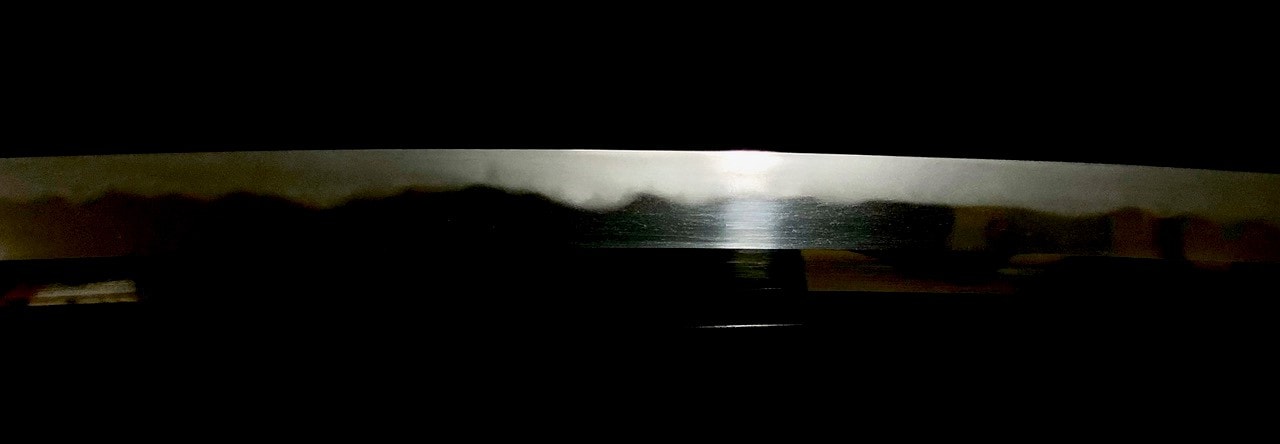
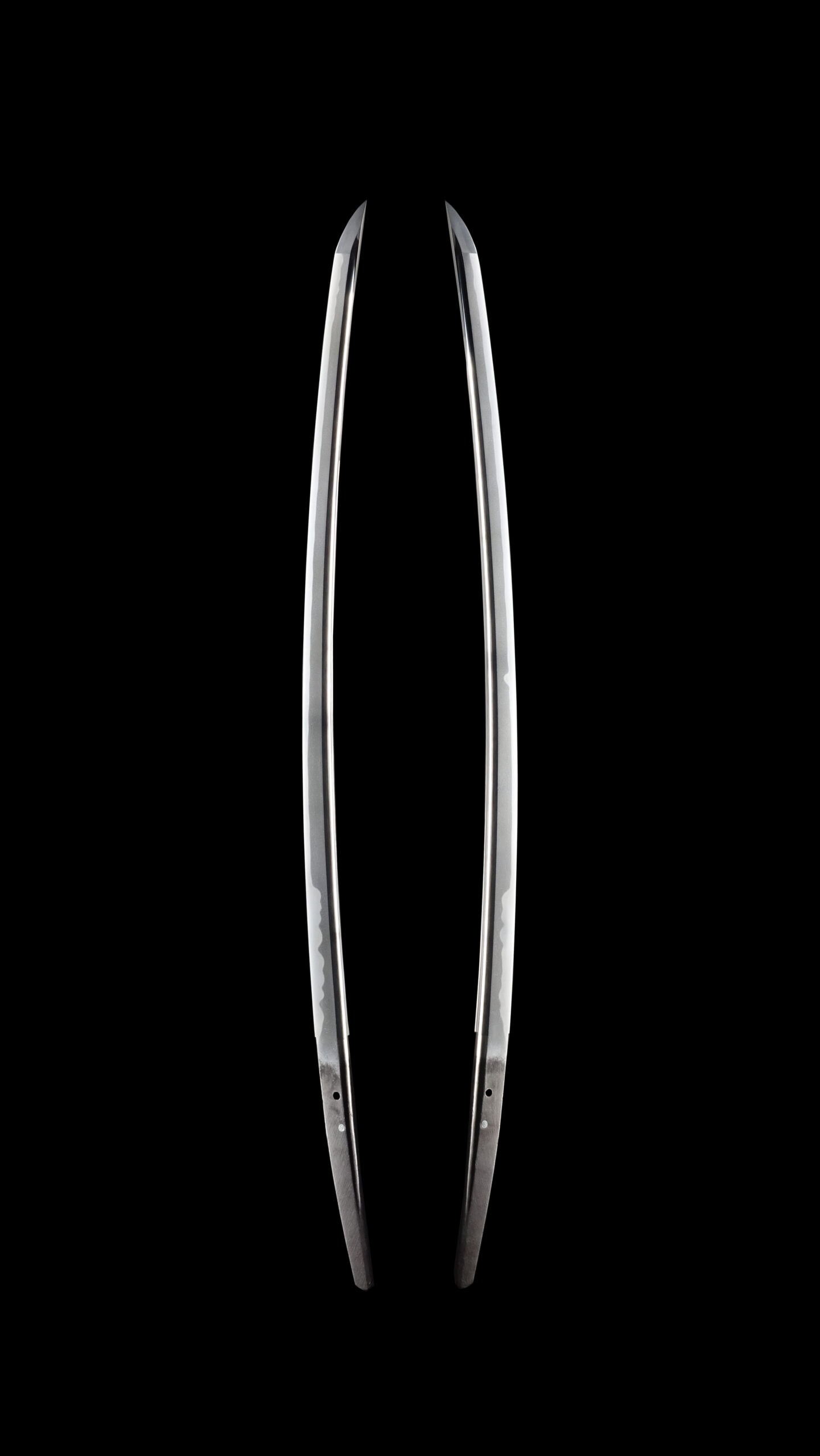
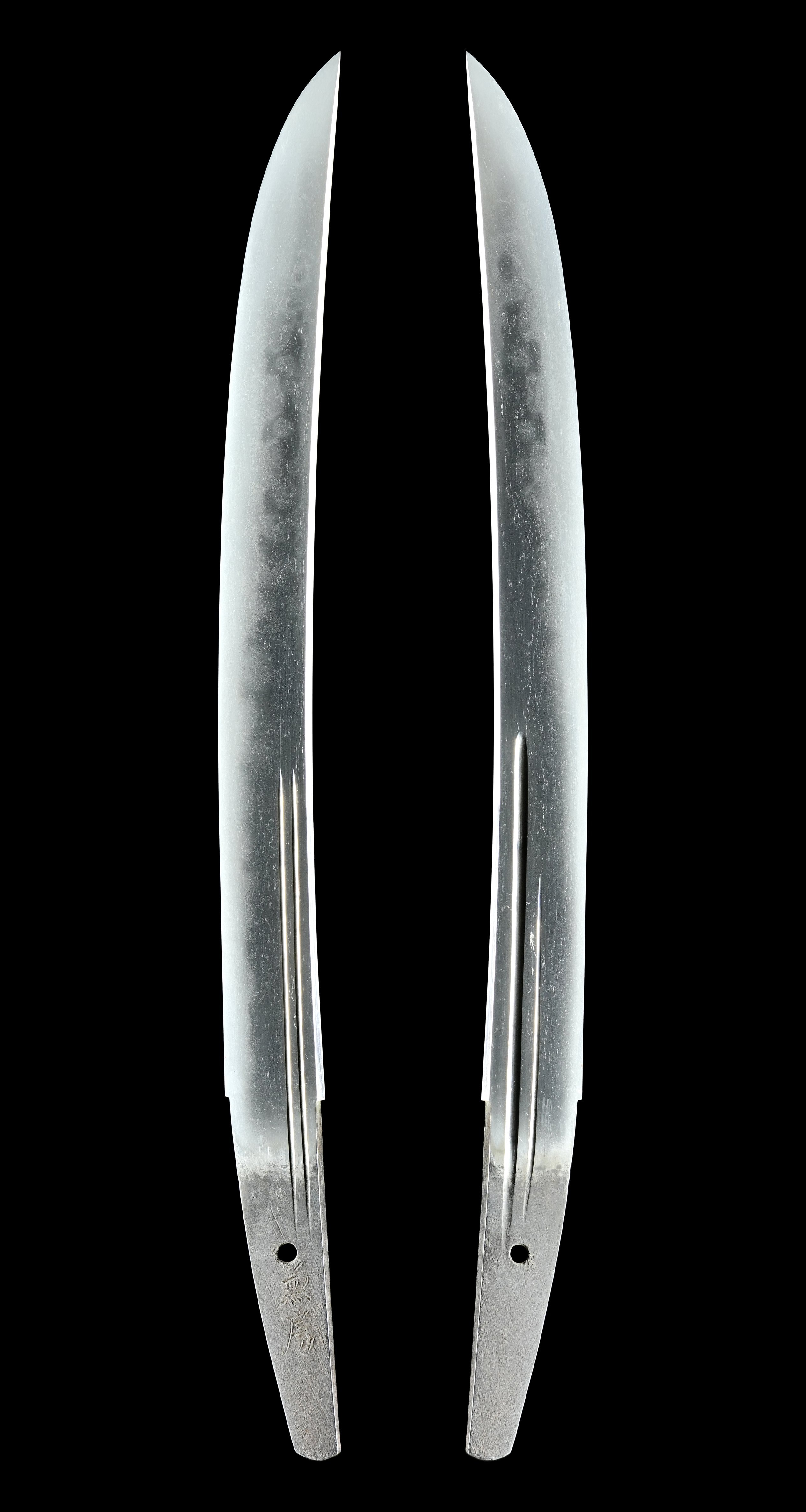
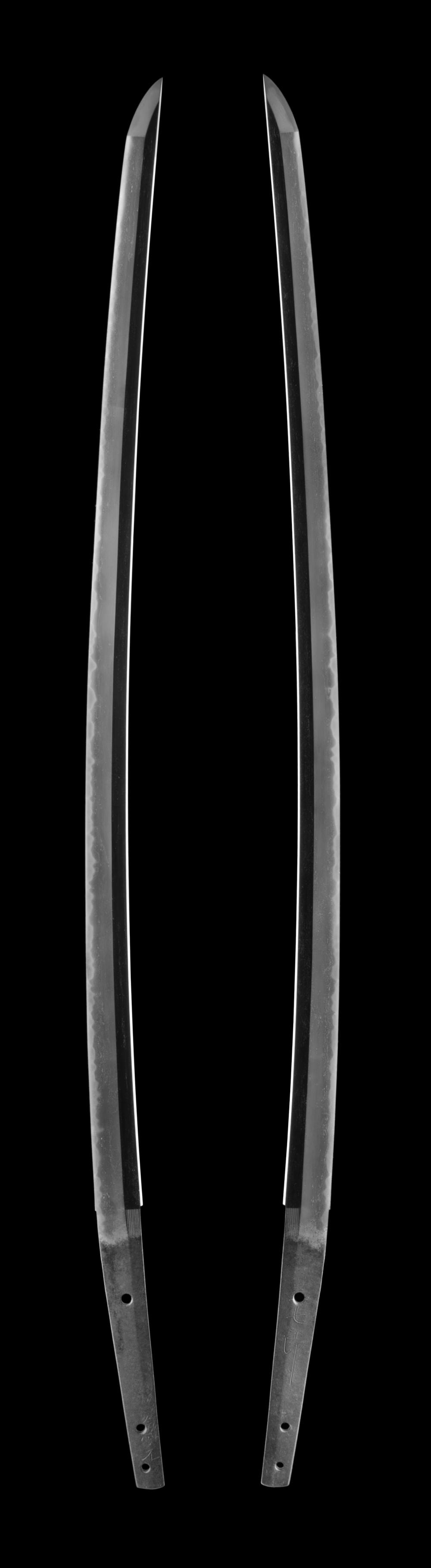
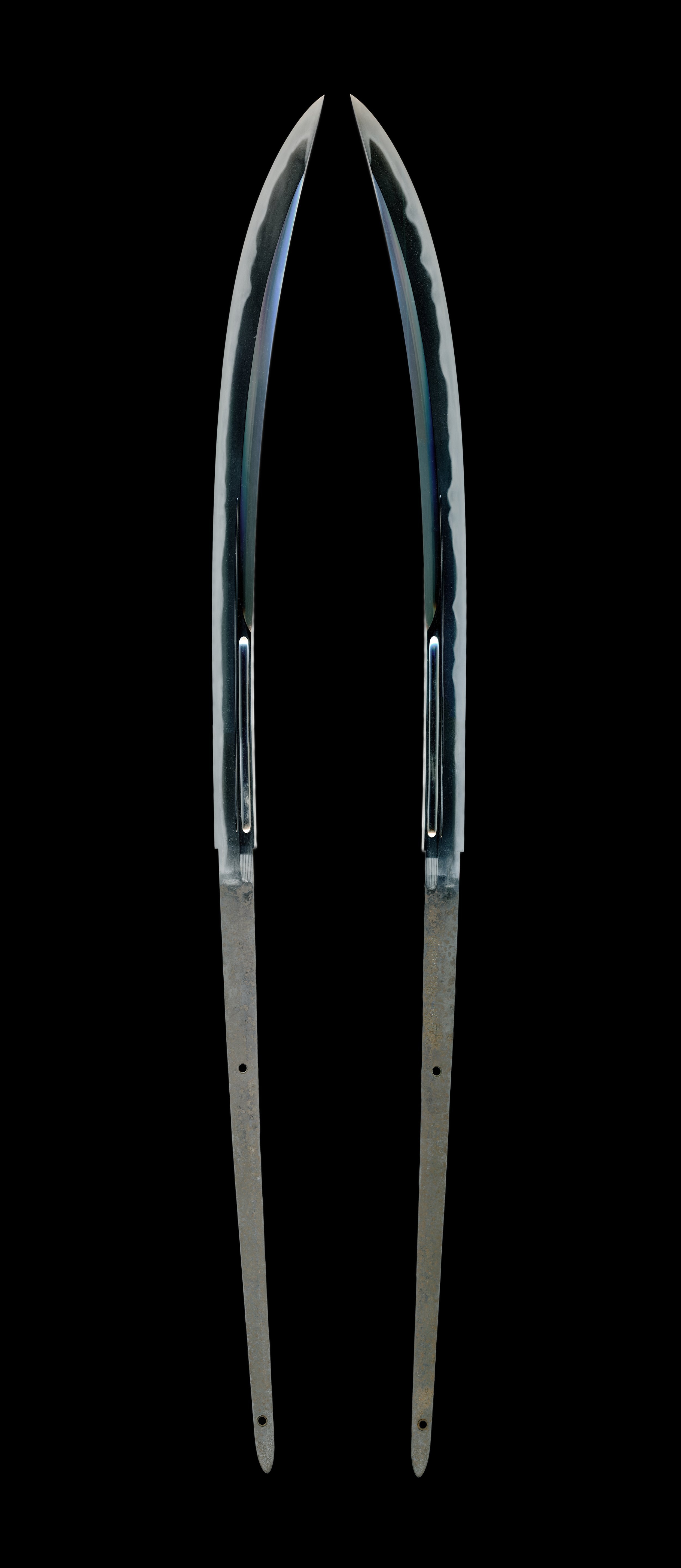
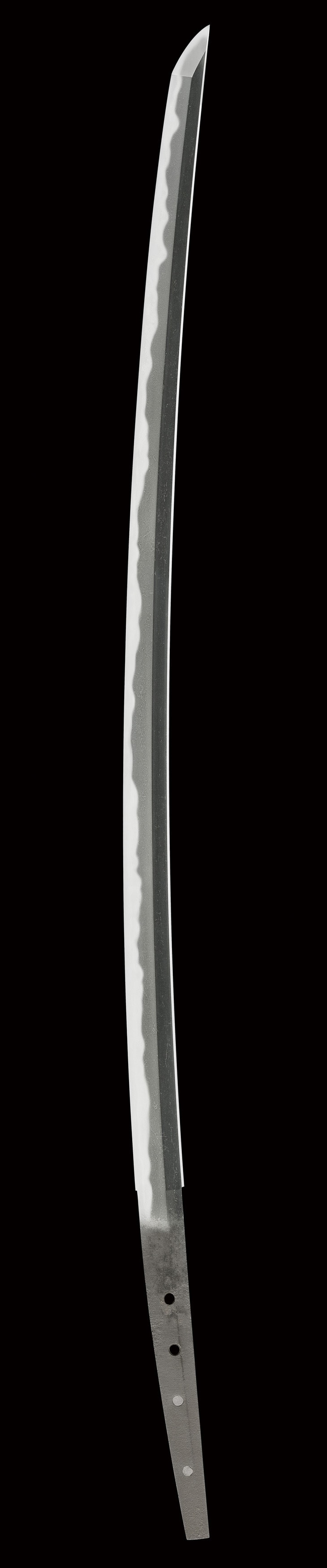
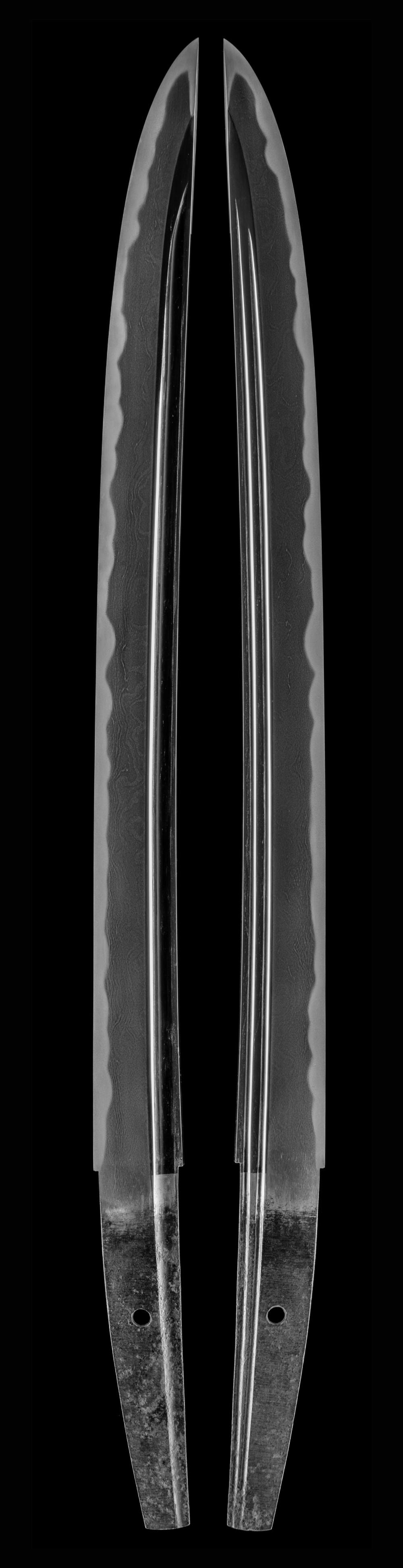
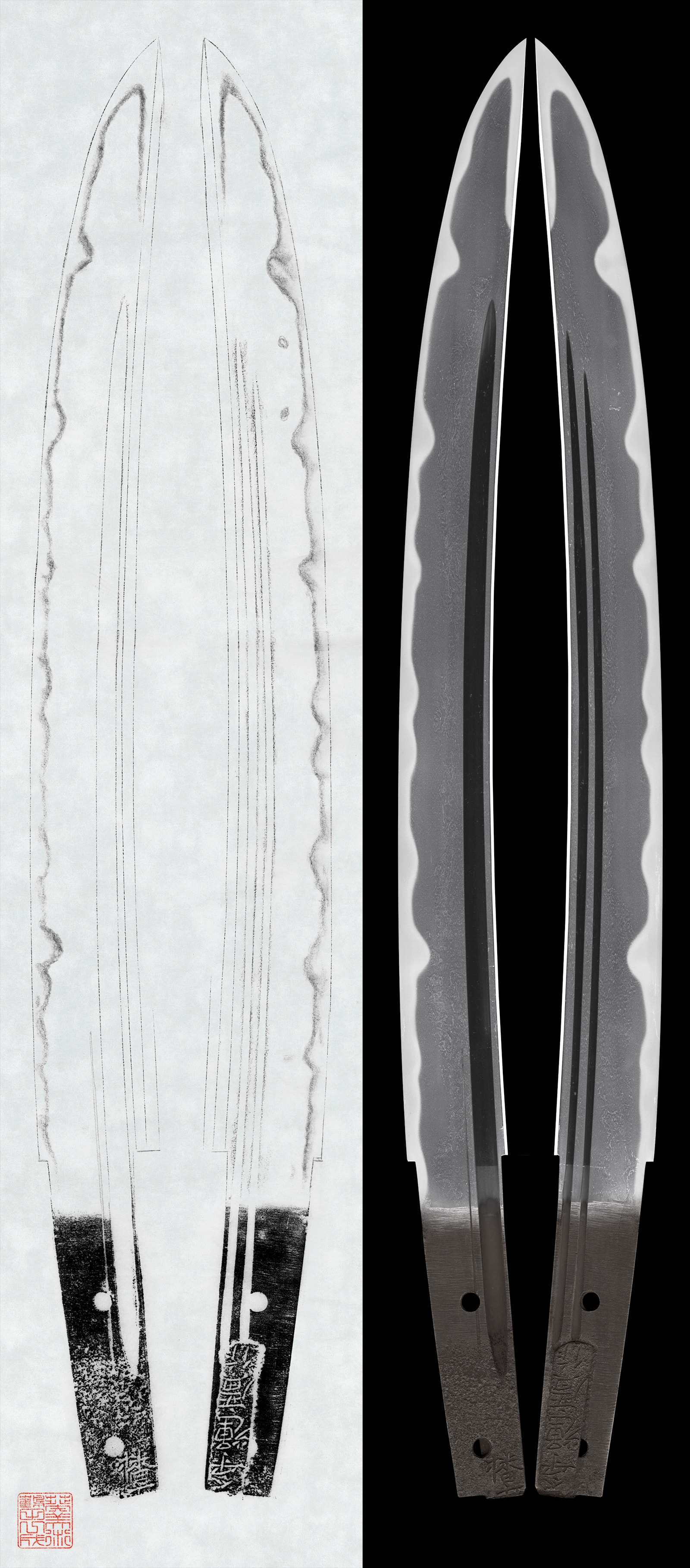
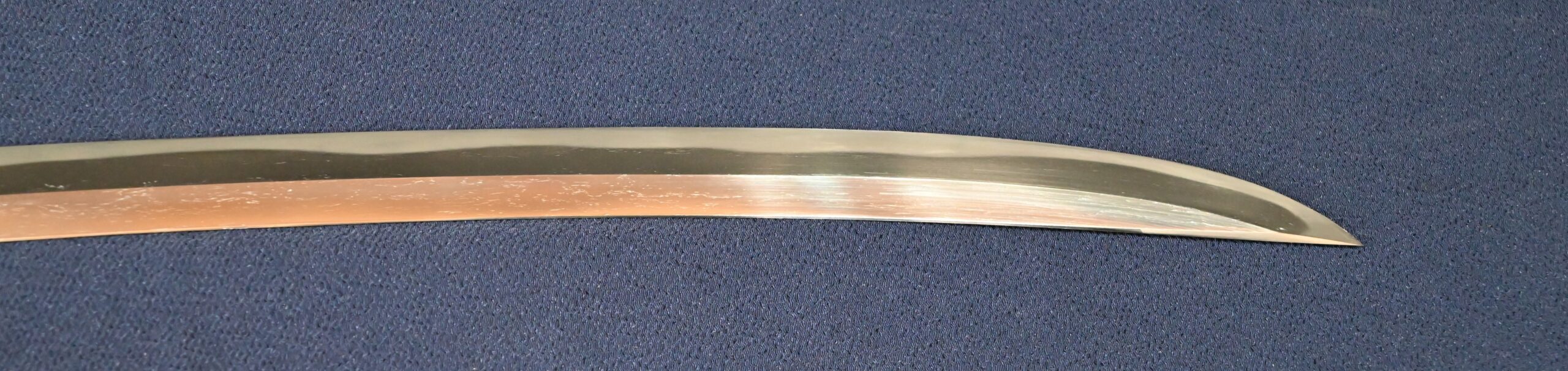
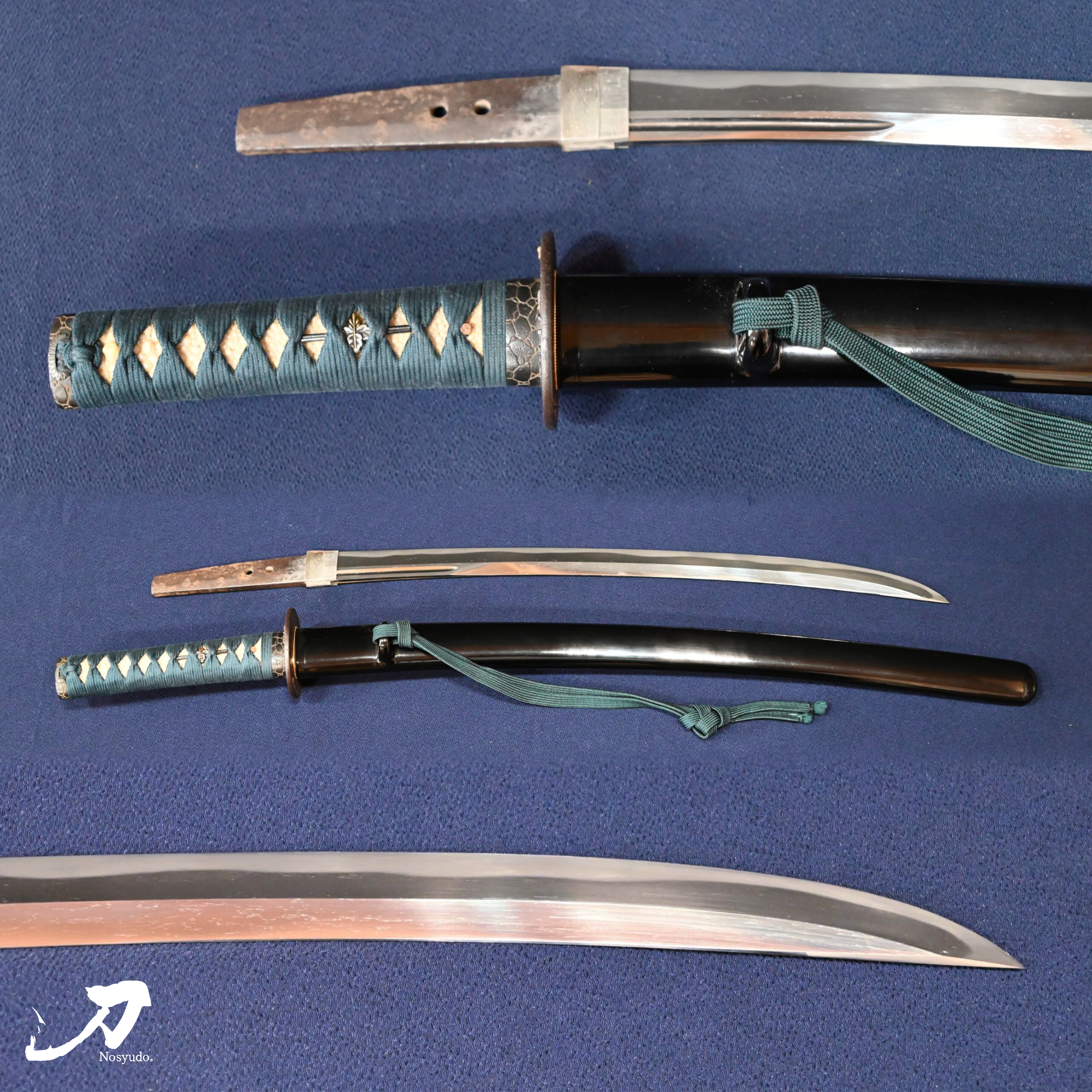
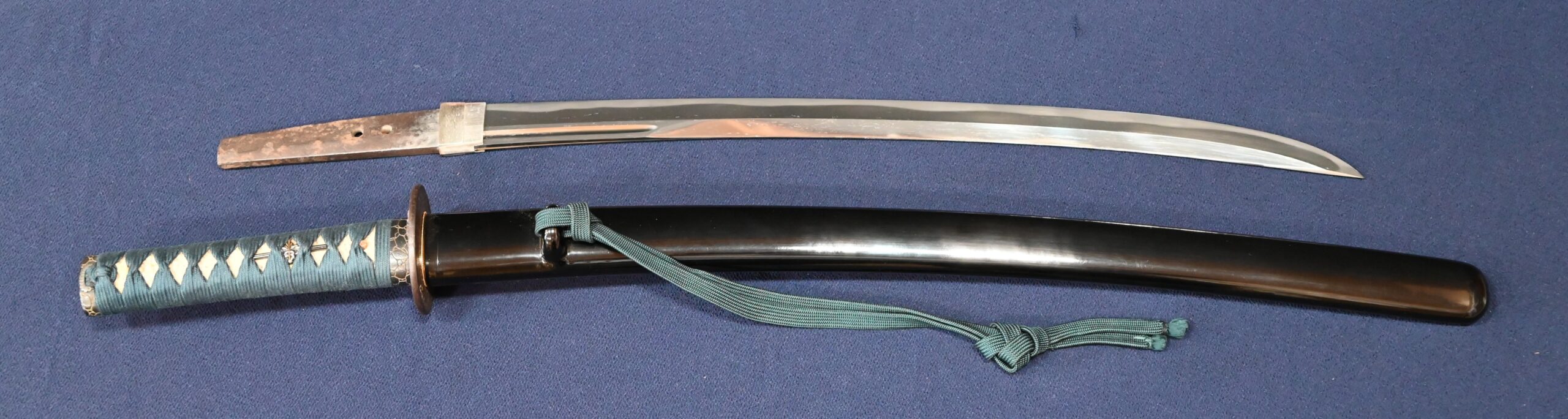
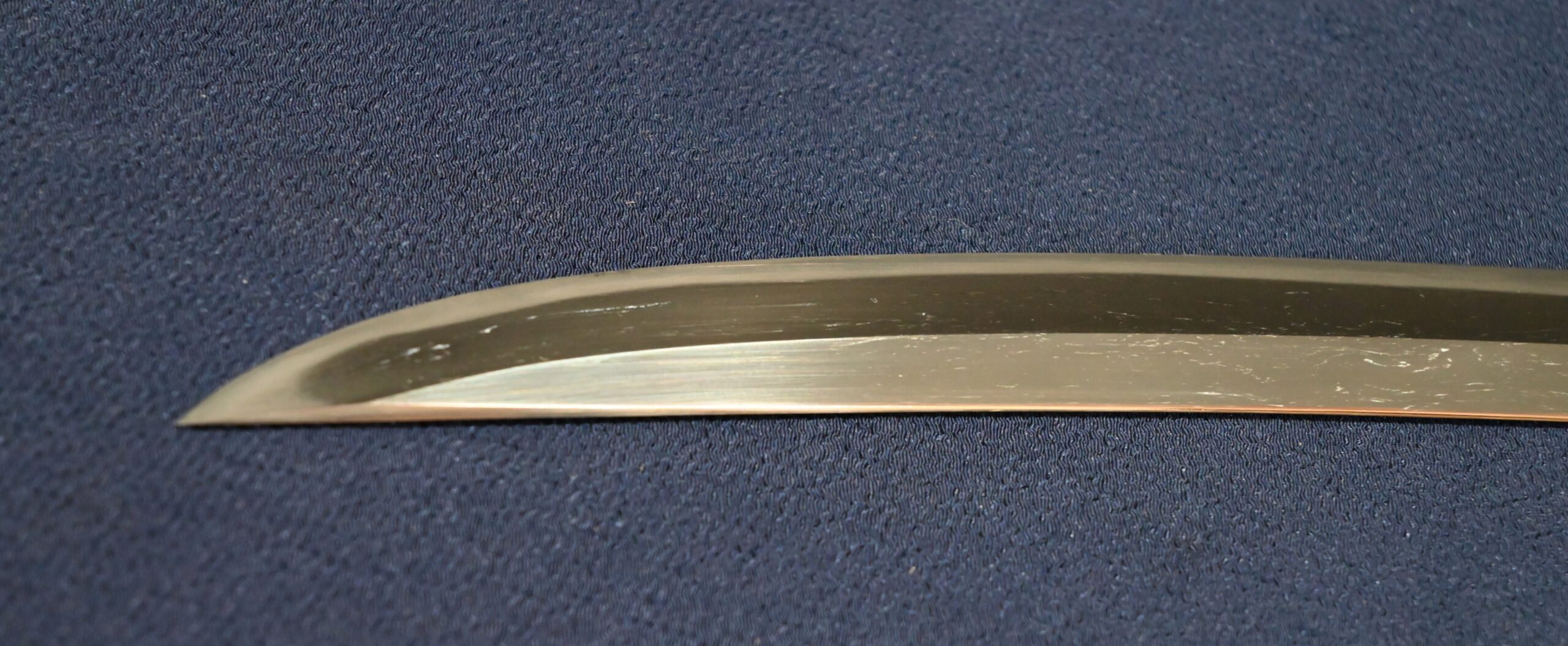
This is a mumei wakizashi attributed to Kaneue of Echizen province, active during the early Edo period. It features an ubukubi-zukuri form with an iori-mune, an itame hada, and a gunome-midare hamon with yubashiri. The blade comes with an NBTHK Kicho Token certificate and is housed in both koshirae and shirasaya.
 NihontoWatch
mumei · Genna (1615-1624) · nagasa 48cm · sori 0.8cm
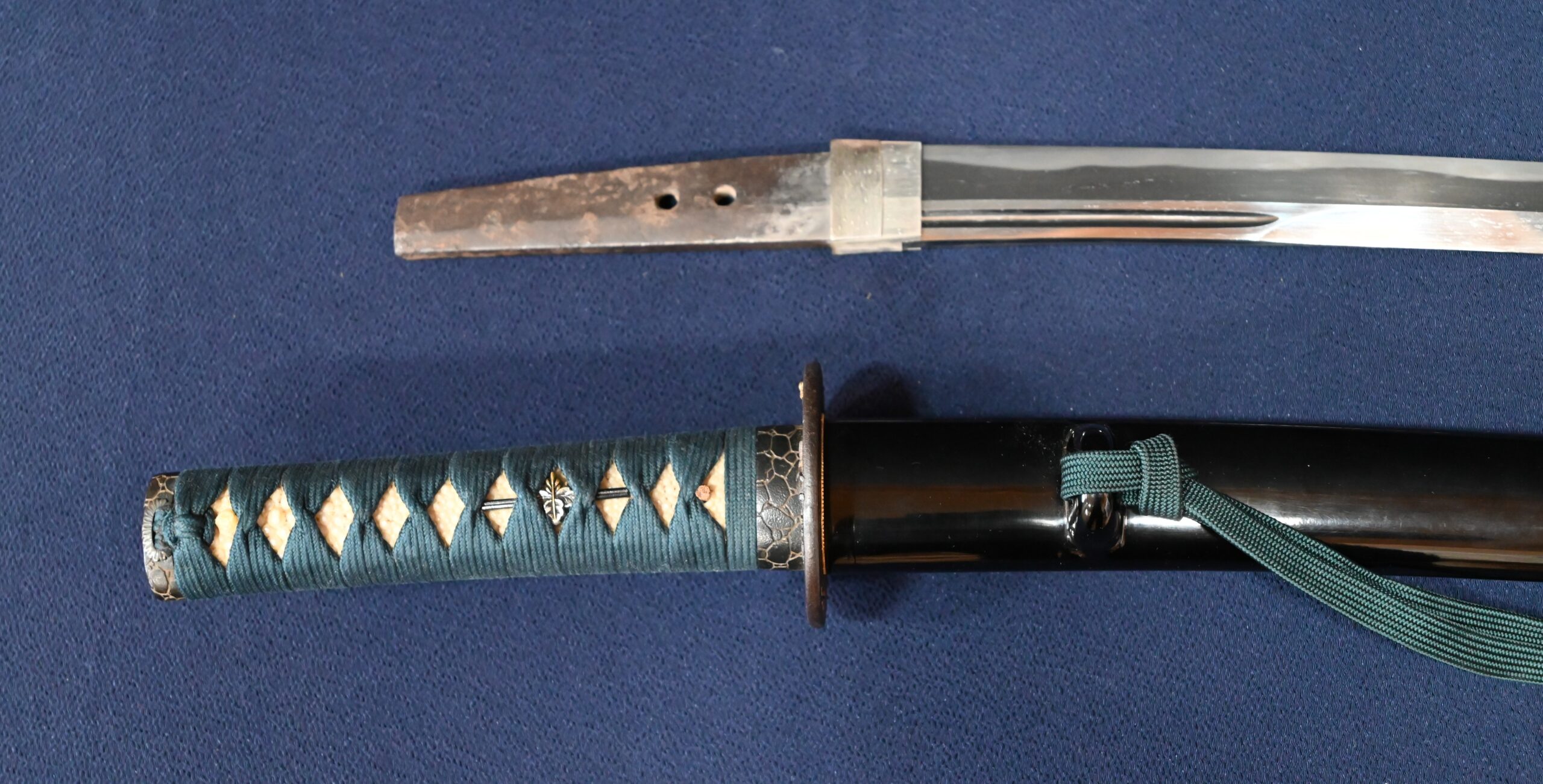
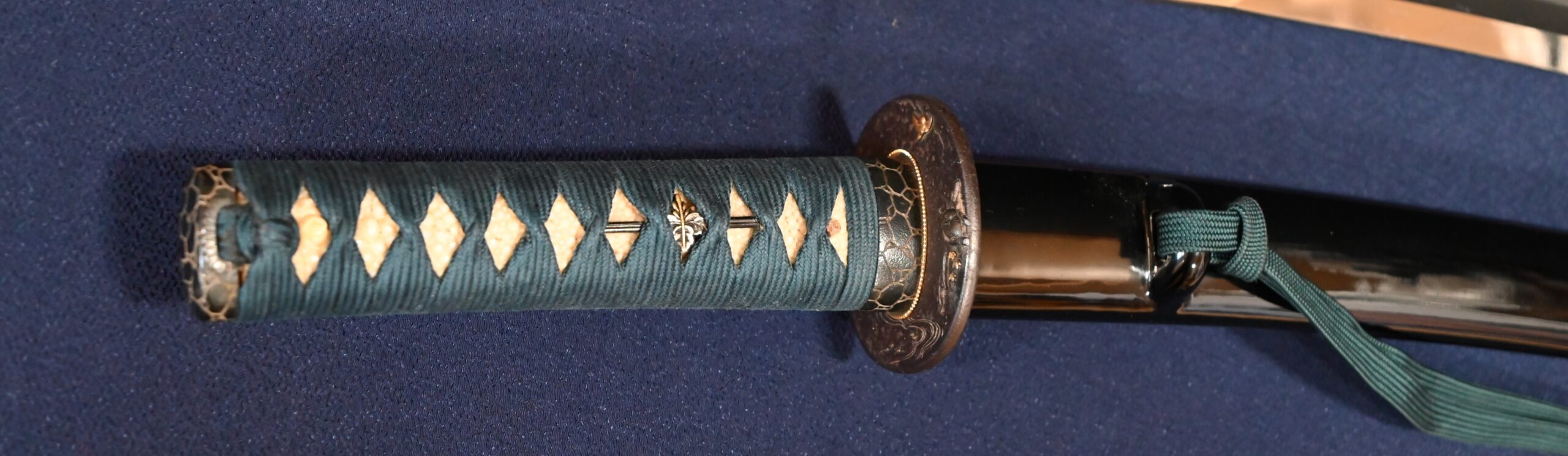
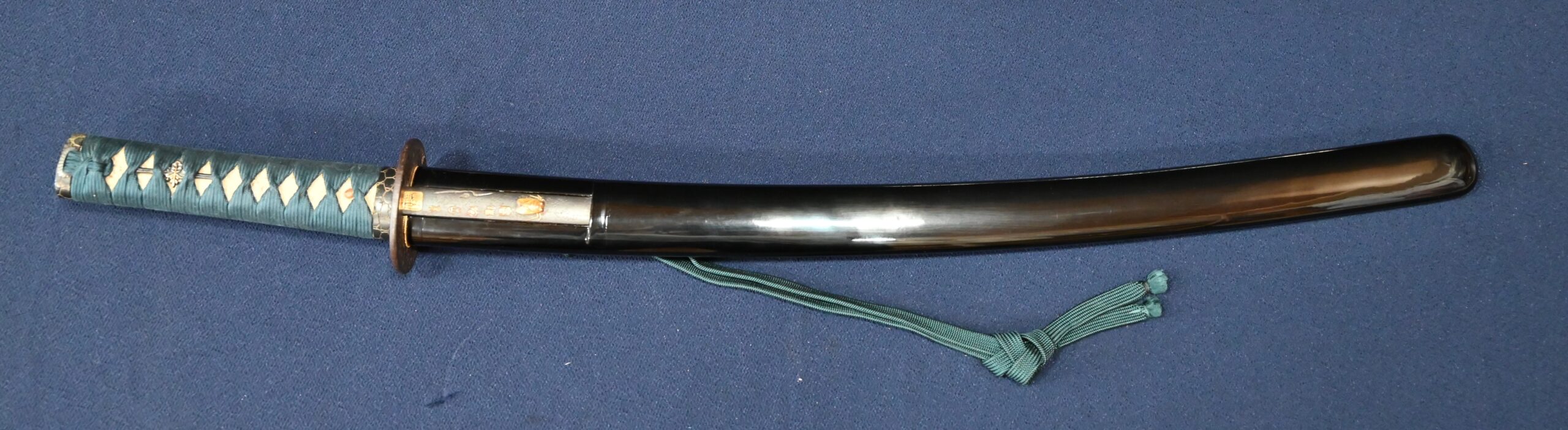
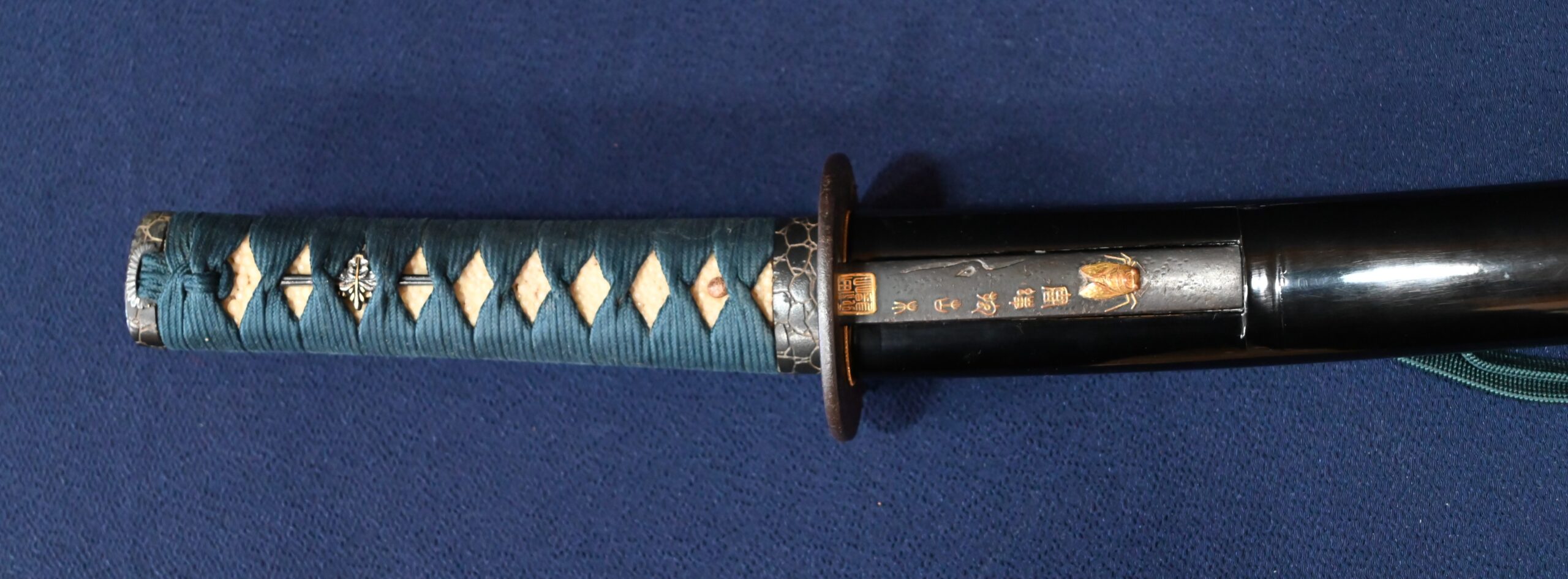
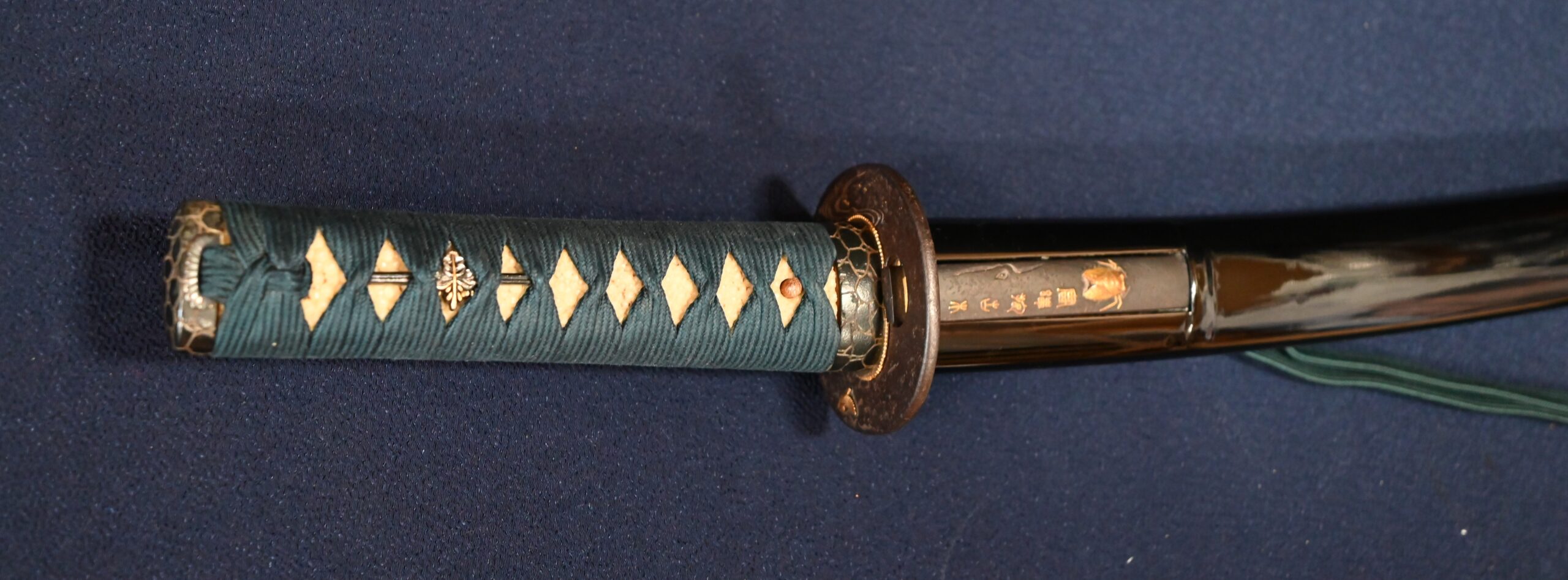
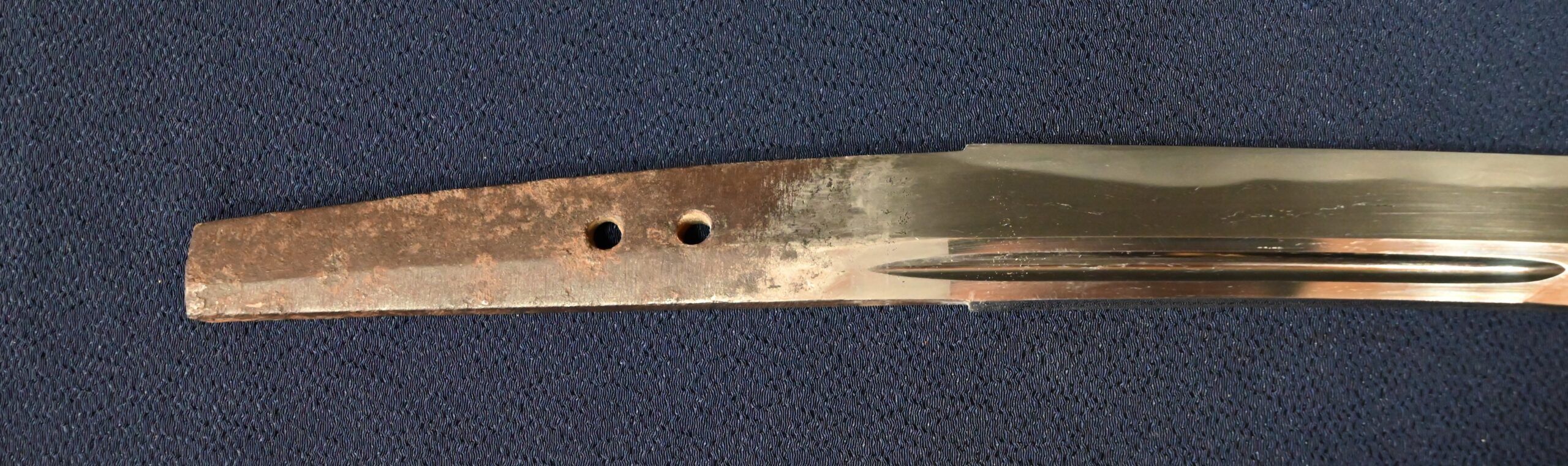
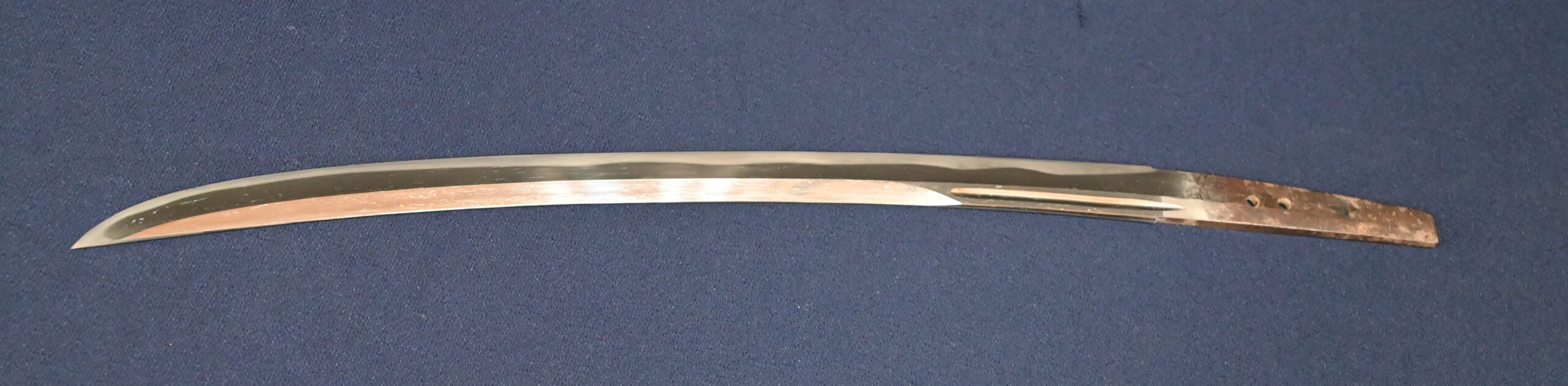
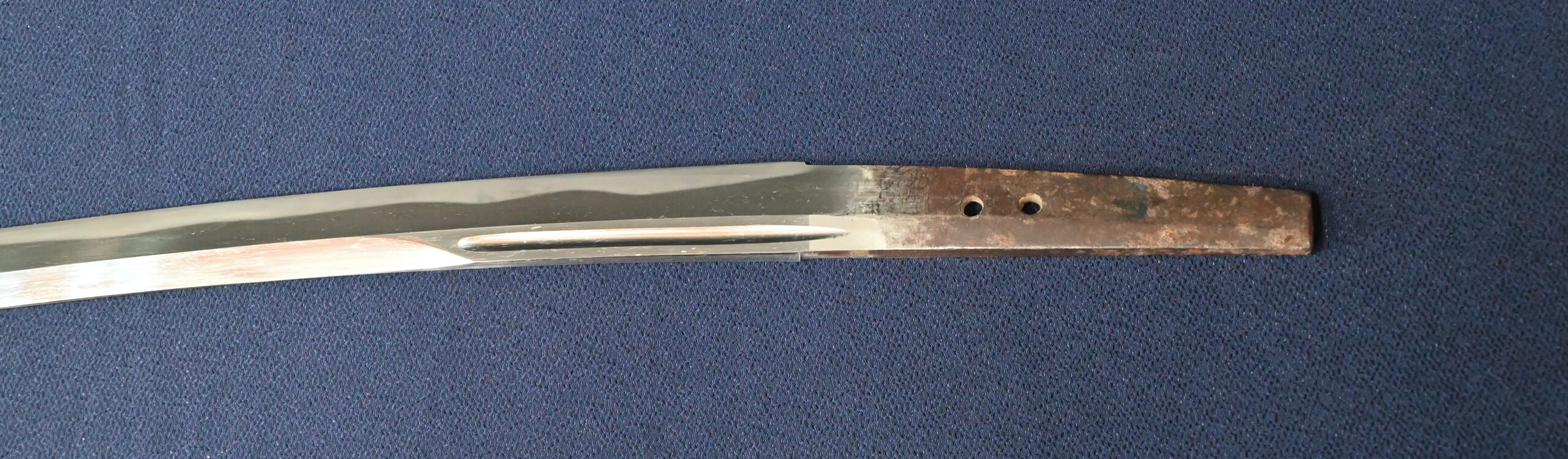
Mino-den · Echizen · around 1615-1624
Fujishiro Jo saku · Tōken Taikan top 49%
4 pieces on the market now
Kaneue traces his origins to the smiths of Gino in Mino Province, who later migrated to Echizen. The NBTHK identifies from his signature "a connection to the line of the Seki smiths," and positions the first generation's activity in the Keicho era, squarely within the formative period of shinto production. Several generations bearing the same name succeeded one another — the meikan records successive smiths through Kan'ei, Enpo, and Genroku — each producing skillful work and transmitting the vestiges of the Seki-fu (Seki style). Because the shodai Echizen Kaneue's style and carvings share features common to the Echizen Shimosaka group, "it may be supposed that the shodai Echizen Kaneue was perhaps originally from Mino, assimilated early with the Shimosaka smiths of Omi, and later moved to Echizen."
The characteristic sugata of Kaneue's work presents the archetypal Keicho shinto form: wide mihaba with minimal narrowing from base to tip, thick kasane, and an elongated chu-kissaki conveying a weighty, solid, and robust taihai. The jihada is itame mixed with mokume, with standing grain and a somewhat darkened "kane" tone described as "distinctive to northern-region workmanship." The hamon is narrow and fundamentally suguha, with shallow, small notare and a running admixture of small gunome; abundant ko-ashi, interspersed yo, ko-nie, and finely applied sunagashi produce what the NBTHK characterizes as "a calm and restrained style" in which "there is, in one vein, something that corresponds to the manner of Higo Daijo Sadakuni." The carvings — particularly the kurikara in relief within the hitsu — are "deeply cut and forceful in their incision" and display the characteristics of Kinai-bori, comparable to those seen on works by Yasutsugu of the same province.
The NBTHK reserves its highest praise for the shodai's work, declaring his Tokubetsu-Juyo katana to be "the shodai Echizen Kaneue's finest work, and among his extant pieces no superior example is seen." Both jigane and tempering are described as "outstanding among this smith's works," and the workmanship in ji and ha is called "exceptionally splendid." His production is recognized as embodying a Mino-Seki manner distinct from the Yasutsugu lineage — a distinction the NBTHK credits as the very reason that "Echizen-Seki came to be celebrated."
Where Kanetane stands among comparable artisans: across all of nihontō, and within tradition, era, and period. The tiers (Foremost · Leading · Major · Notable) weigh official designations from the NBTHK and Japan's Agency for Cultural Affairs, together with historical honors of lasting repute such as the Sansaku and Meibutsu-chō.
Select a lens to see how it's measured.
Mino-den · Mino
154 pieces on the market now
Seki (関), in Mino Province, grew from two roots set down in the Nanbokuchō period and rose to become the great center of mass sword production in the late medieval age. The published sources trace the wellspring of Mino swordmaking to Kinju (whose name the commentary also reads Kaneshige), counted since antiquity among the Masamune Jittetsu, the ten disciples of Sōshū Masamune, and to Kaneuji of the Shizu line; the Kokon Meizukushi records Kinju as a native of Tsuruga in Echizen who "crossed over to Seki and resided there," carrying the Sōshū-den manner east. Beneath that Sagami inheritance lay a Yamato foundation, legible in the Tegai descent of the Seki Zensada line through Kaneyoshi, so that the Mino-den the Seki workshops forged stands as a fusion of Yamato grain and Sōshū activity in nie. From this Nanbokuchō founding the name multiplied across the Muromachi period into Sue-Seki, the last and largest body of the tradition; its representative masters at the close of the old-sword age were Magoroku Kanemoto, famed for the sanbonsugi, and Izumi no Kami Kanesada, the smith called Nosada, while the Kanefusa, Ujifusa and Daidō hands worked beside them and the move of Wakasa no Kami Ujifusa to Kiyosu carried the Mino body to the threshold of Owari shintō. A common Mino vocabulary binds the Seki body, however widely its members range. The forging is an itame that stands and runs to masame, often mixed with mokume and nagare, over which rises the cool whitish shirake-utsuri of Mino steel rather than the bright midare-utsuri of Bizen; this pale, standing jigane is the constant tell the judges read first, present alike on Kinju's Nanbokuchō katana, Kaneyoshi's Ōei tachi and Nosada's late-Muromachi blades. Over it the smiths temper gunome into which the pointed togariba of Mino enters, with ko-nie clinging to a tight nioiguchi, ashi and yō, and sunagashi streaming through; the bōshi answers in midare-komi turning to a pointed or jizō-cast ko-maru swept with hakikake. From this shared grammar the individual hands diverge.
Kanemoto fixed the regular three-cedar sanbonsugi of pointed teeth; Kanefusa devised the rounded-head, constricted-waist "Kanefusa midare"; Kinju and the early founders held a calmer, rounder gunome away from the restless Shizu line, their work laid with thicker ji-nie and dry, standing grain. The late masters carried the manner to a higher finish: Nosada wove togariba among rounder forms for a broader temper than Kanemoto's one-sided file, and turned at times to a slender Rai-styled suguha with a hidden gunome; Kaneyoshi held instead to a cool ito-suguha, the disciplined Yamato face of late Seki, lightly broken with ko-gunome. A collector seeks Seki because it is the connoisseur's ground for reading Mino-den across a vast body of signed and attributed work. The kantei runs through the jigane first: the standing, masame-leaning itame and the whitish shirake separate a Seki blade from Bizen and Yamashiro, after which the pointed togariba, the dry nie, and the pointed or jizō bōshi confirm the province; the discriminations the judges draw, Kinju held apart from Shizu by his rounder gunome, Nosada parted from Kanemoto by his breadth, give the eye its anchors. Within the school the standing of the best members is settled: Magoroku Kanemoto for the sanbonsugi, Nosada whom the swordbooks call simply "an excellent master" and the most accomplished of the several Kanesada hands, and the early Kinju as a rare and precious founding name, his record running through the Jūyō tier with the signed pieces few and the long blades attributed den. Signature works carry real provenance: a Kinju tantō presented to the Tokugawa shogunal house in 1679, a Nosada katana borne by a chief retainer of the Kii Tokugawa and a tachi forged for the father of Takeda Shingen, a Kaneyoshi tachi transmitted in the Chikuzen Kuroda family. Beyond connoisseurship, Seki's blades earned a battlefield reputation for cutting; the full hiraniku and stout build of the Sue-Seki katana, made to sever, set the wazamono standing that made Mino the working sword of its age. Learn more →
| Smith | Era | Designated |
|---|---|---|
| Kinju金重 | 1340-1346 | 45 |
| Ujifusa氏房 | 1596-1615 | 16 |
| Kaneyuki金行 | 1350-1352 | 10 |
| Ujifusa氏房 | 1571-1592 | 9 |
| Kanekore兼之 | 1504-1555 | 7 |
Edo was the sword’s age of connoisseurship: the Hon’ami appraisers, the shogunal register of famous blades of 1719, and a thriving literature turned the sword into an object of study even as it ceased to be drawn in war.
This work carries older NBTHK “Kichō”-era papers, which the NBTHK no longer issues and now regards as unreliable. To confirm the attribution, submission to an official Japanese examination body (such as the NBTHK or NTHK) for modern certification could be considered.
This is a mumei wakizashi attributed to Kaneue of Echizen province, active during the early Edo period. It features an ubukubi-zukuri form with an iori-mune, an itame hada, and a gunome-midare hamon with yubashiri. The blade comes with an NBTHK Kicho Token certificate and is housed in both koshirae and shirasaya.
NihontoWatchmumei · Genna (1615-1624) · nagasa 48cm · sori 0.8cm
Mino-den · Echizen · around 1615-1624
Fujishiro Jo saku · Tōken Taikan top 49%
4 pieces on the market now
Kaneue traces his origins to the smiths of Gino in Mino Province, who later migrated to Echizen. The NBTHK identifies from his signature "a connection to the line of the Seki smiths," and positions the first generation's activity in the Keicho era, squarely within the formative period of shinto production. Several generations bearing the same name succeeded one another — the meikan records successive smiths through Kan'ei, Enpo, and Genroku — each producing skillful work and transmitting the vestiges of the Seki-fu (Seki style). Because the shodai Echizen Kaneue's style and carvings share features common to the Echizen Shimosaka group, "it may be supposed that the shodai Echizen Kaneue was perhaps originally from Mino, assimilated early with the Shimosaka smiths of Omi, and later moved to Echizen."
The characteristic sugata of Kaneue's work presents the archetypal Keicho shinto form: wide mihaba with minimal narrowing from base to tip, thick kasane, and an elongated chu-kissaki conveying a weighty, solid, and robust taihai. The jihada is itame mixed with mokume, with standing grain and a somewhat darkened "kane" tone described as "distinctive to northern-region workmanship." The hamon is narrow and fundamentally suguha, with shallow, small notare and a running admixture of small gunome; abundant ko-ashi, interspersed yo, ko-nie, and finely applied sunagashi produce what the NBTHK characterizes as "a calm and restrained style" in which "there is, in one vein, something that corresponds to the manner of Higo Daijo Sadakuni." The carvings — particularly the kurikara in relief within the hitsu — are "deeply cut and forceful in their incision" and display the characteristics of Kinai-bori, comparable to those seen on works by Yasutsugu of the same province.
The NBTHK reserves its highest praise for the shodai's work, declaring his Tokubetsu-Juyo katana to be "the shodai Echizen Kaneue's finest work, and among his extant pieces no superior example is seen." Both jigane and tempering are described as "outstanding among this smith's works," and the workmanship in ji and ha is called "exceptionally splendid." His production is recognized as embodying a Mino-Seki manner distinct from the Yasutsugu lineage — a distinction the NBTHK credits as the very reason that "Echizen-Seki came to be celebrated."
Where Kanetane stands among comparable artisans: across all of nihontō, and within tradition, era, and period. The tiers (Foremost · Leading · Major · Notable) weigh official designations from the NBTHK and Japan's Agency for Cultural Affairs, together with historical honors of lasting repute such as the Sansaku and Meibutsu-chō.
Select a lens to see how it's measured.
Mino-den · Mino
154 pieces on the market now
Seki (関), in Mino Province, grew from two roots set down in the Nanbokuchō period and rose to become the great center of mass sword production in the late medieval age. The published sources trace the wellspring of Mino swordmaking to Kinju (whose name the commentary also reads Kaneshige), counted since antiquity among the Masamune Jittetsu, the ten disciples of Sōshū Masamune, and to Kaneuji of the Shizu line; the Kokon Meizukushi records Kinju as a native of Tsuruga in Echizen who "crossed over to Seki and resided there," carrying the Sōshū-den manner east. Beneath that Sagami inheritance lay a Yamato foundation, legible in the Tegai descent of the Seki Zensada line through Kaneyoshi, so that the Mino-den the Seki workshops forged stands as a fusion of Yamato grain and Sōshū activity in nie. From this Nanbokuchō founding the name multiplied across the Muromachi period into Sue-Seki, the last and largest body of the tradition; its representative masters at the close of the old-sword age were Magoroku Kanemoto, famed for the sanbonsugi, and Izumi no Kami Kanesada, the smith called Nosada, while the Kanefusa, Ujifusa and Daidō hands worked beside them and the move of Wakasa no Kami Ujifusa to Kiyosu carried the Mino body to the threshold of Owari shintō. A common Mino vocabulary binds the Seki body, however widely its members range. The forging is an itame that stands and runs to masame, often mixed with mokume and nagare, over which rises the cool whitish shirake-utsuri of Mino steel rather than the bright midare-utsuri of Bizen; this pale, standing jigane is the constant tell the judges read first, present alike on Kinju's Nanbokuchō katana, Kaneyoshi's Ōei tachi and Nosada's late-Muromachi blades. Over it the smiths temper gunome into which the pointed togariba of Mino enters, with ko-nie clinging to a tight nioiguchi, ashi and yō, and sunagashi streaming through; the bōshi answers in midare-komi turning to a pointed or jizō-cast ko-maru swept with hakikake. From this shared grammar the individual hands diverge.
Kanemoto fixed the regular three-cedar sanbonsugi of pointed teeth; Kanefusa devised the rounded-head, constricted-waist "Kanefusa midare"; Kinju and the early founders held a calmer, rounder gunome away from the restless Shizu line, their work laid with thicker ji-nie and dry, standing grain. The late masters carried the manner to a higher finish: Nosada wove togariba among rounder forms for a broader temper than Kanemoto's one-sided file, and turned at times to a slender Rai-styled suguha with a hidden gunome; Kaneyoshi held instead to a cool ito-suguha, the disciplined Yamato face of late Seki, lightly broken with ko-gunome. A collector seeks Seki because it is the connoisseur's ground for reading Mino-den across a vast body of signed and attributed work. The kantei runs through the jigane first: the standing, masame-leaning itame and the whitish shirake separate a Seki blade from Bizen and Yamashiro, after which the pointed togariba, the dry nie, and the pointed or jizō bōshi confirm the province; the discriminations the judges draw, Kinju held apart from Shizu by his rounder gunome, Nosada parted from Kanemoto by his breadth, give the eye its anchors. Within the school the standing of the best members is settled: Magoroku Kanemoto for the sanbonsugi, Nosada whom the swordbooks call simply "an excellent master" and the most accomplished of the several Kanesada hands, and the early Kinju as a rare and precious founding name, his record running through the Jūyō tier with the signed pieces few and the long blades attributed den. Signature works carry real provenance: a Kinju tantō presented to the Tokugawa shogunal house in 1679, a Nosada katana borne by a chief retainer of the Kii Tokugawa and a tachi forged for the father of Takeda Shingen, a Kaneyoshi tachi transmitted in the Chikuzen Kuroda family. Beyond connoisseurship, Seki's blades earned a battlefield reputation for cutting; the full hiraniku and stout build of the Sue-Seki katana, made to sever, set the wazamono standing that made Mino the working sword of its age. Learn more →
| Smith | Era | Designated |
|---|---|---|
| Kinju金重 | 1340-1346 | 45 |
| Ujifusa氏房 | 1596-1615 | 16 |
| Kaneyuki金行 | 1350-1352 | 10 |
| Ujifusa氏房 | 1571-1592 | 9 |
| Kanekore兼之 | 1504-1555 | 7 |
Edo was the sword’s age of connoisseurship: the Hon’ami appraisers, the shogunal register of famous blades of 1719, and a thriving literature turned the sword into an object of study even as it ceased to be drawn in war.
This work carries older NBTHK “Kichō”-era papers, which the NBTHK no longer issues and now regards as unreliable. To confirm the attribution, submission to an official Japanese examination body (such as the NBTHK or NTHK) for modern certification could be considered.