Sengoku Seki was an industry: smiths organized under their tutelary Kasuga shrine, arming the war bands of central Japan. Magoroku Kanemoto’s sanbonsugi and the finest Kanesada work prove quality survived inside mass production.
 NihontoWatchNihontoWatch
This blade is attributed to Kanenobu (兼延), active during the mid-late Muromachi period (approximately 500 years ago) in Owari province (today’s Aichi prefecture). He was categorized as a Owari Seki swordsmith and his lineage is related to Naoe Shizu school in Mino province (Today’s Gifu prefecture). During the end of the Kamakura period (early 14th century), a swordsmith named Kaneuji moved from Yamato province (today’s Nara prefecture) to Shizu village in Mino province and founded the school. In the Nanbokucho period, his son and apprentices, including Kanetomo, Kanetoshi, and Kanenobu, moved the school to Naoe village in Mino province. Those who belonged to this school were called Naoe Shizu swordsmiths based on where they lived. The maker’s name, Kanenobu, lasted a few generations, and the first-gen Kanenobu was the second son of the Kaneuji, the founder of the school, being active during the mid-Nanbokucho era (1358-). And the second generation was active during the end of the Nanbokucho period (1390-). Shiga Seki Kanenobu is a descendant of a member of this prestigious school. Kanenobu’s works and those of his school show strong influence from Mino-den, the swordsmith tradition of Mino province, which was famous for its practical and sharp cutting ability. Mino-den swords are characterized by togari-ba (pointed shapes in the hamon), straight temper lines mixed with irregular patterns, and sometimes a whitish utsuri (shadow-like reflection on the blade). Originating from Yamato-den in the late Kamakura period (1280–1330), Mino-den flourished throughout the Muromachi period (1333–1573) and continued well into the Edo period (1603–1868). The prosperity of Mino and Owari swordsmiths was closely tied to the turbulent Sengoku Jidai (Warring States period), when the demand for weapons surged. At that time, powerful warlords such as Oda Nobunaga (Owari province), Akechi Mitsuhide (Mino province), and Tokugawa Ieyasu (neighboring Suruga province) dominated central Japan. Because of its geographical location between Kyoto and the Kanto region, Mino was ideally situated for supplying swords to feudal lords. Many Mino swordsmiths, including those of the Kanenobu lineage, were invited to relocate to other domains, which contributed to the spread of their style. Horimono This blade features exquisite carvings (horimono, 彫物) that demonstrate the refined craftsmanship of its maker. One side is carved with a bōhi (棒樋), a straight groove running along the blade. In addition to enhancing its visual appearance, a bōhi reduces the blade’s weight and can improve its balance. The groove ends in the kakinagashi (掻流し) style, gradually tapering off and flowing naturally into the surface of the blade. Its graceful execution reflects the swordsmith’s technical skill and artistic sensitivity. The other side is carved with a suken (素剣), a stylized double-edged Buddhist sword. This motif is often interpreted as a simplified representation of the sankozuka-ken (三鈷柄剣), a ritual sword with a three-pronged vajra-shaped hilt associated with Fudō Myō-ō (不動明王; Sanskrit: Acala), an important deity in Esoteric Buddhism. Fudō Myō-ō’s sword symbolizes the wisdom that cuts through ignorance, worldly attachments, and evil. The suken carving may therefore have served not only as decoration but also as a spiritual symbol of protection and purification. This blade is appraised as a Hozon Token (保存刀剣) issued by NBTHK (Nihon Bijutsu Touken Hozon Kyokai:日本美術刀剣保存協会). *Please keep in mind that there are a few Kitae Kizu on the blade. Fuchi-Kashira The theme of this Fuchi-Kashira is Karajishi (唐獅子, lion) and waves. The Shishi (獅子) means a lion in Japanese, and the Karajishi is a lion brought from the continent to Japan in the Toh period (唐, Tang dynasty, 618-907). The Karajishi typically has curly hair for its head, neck, body, and tail, as seen on this work. In Buddhism, the Karajishi is regarded as a symbol of wisdom, and Monju Bosatu (文殊菩薩, Manjushri Bodhisattva) rides lions. According to a theory, the Karajishi is the origin of Komainu (狛犬, stone guardian dogs that exorcize evil spirits). It shows this animal motif has been familiar to Japanese people since ancient times. Tsuka and Menuki The design depicted on the menuki is the Igeta ni Ichi-ji Mon (井桁に一字紋). This family crest combines an igeta, a diamond-shaped wooden framework traditionally placed around the upper part of a well, with the Japanese character ichi (一), meaning “one,” at its center. Wells were essential sources of water and life, and igeta designs came to be associated with prosperity and the continuation of the family line. The bold horizontal stroke of ichi gives the crest a simple yet dignified appearance. Like other Japanese family crests, this design served as a distinctive symbol of a family’s identity and heritage. Tsuba and Habaki The theme of this Tsuba is the combination of Tora (虎, tiger) and Take (竹, bamboo) called Take-Tora zu (竹虎図). It is a popular and classical design. The tiger is a brave animal. A theory says people considered the tiger pattern would protect people from evil spirits. Therefore, its pattern has been treated as a talisman. The tiger design has also been regarded as the symbol of life activity when “tiger” is written by a Japanese Kanji character (漢字, a kind of Japanese letter) based on its meaning. It is said people wished boys’ healthy growth by using the tiger pattern. Bamboos grow neatly towards the sky, and it is vital so that this motif represents nobility and strength. Besides, the bamboo breaks straight, but its content is hollow; people thought it shows innocence. According to a Chinese legend, Houhou (鳳凰, Fenghuang) eats bamboo fruits; therefore, bamboo has been considered a sacred plant. Also, as it keeps its green color even in cold winter, people thought the bamboo pattern shows eternity and longevity. We would say that the bamboo pattern is one of the familiar designs for Japanese people since ancient times. Authentication Paper They authenticated the blade on June 3rd in the 8th year of Reiwa (2026). They appraised it as Hozon Touken, the blade worth preserving for Japanese society.
Offered by Samurai Museum
2 on the market

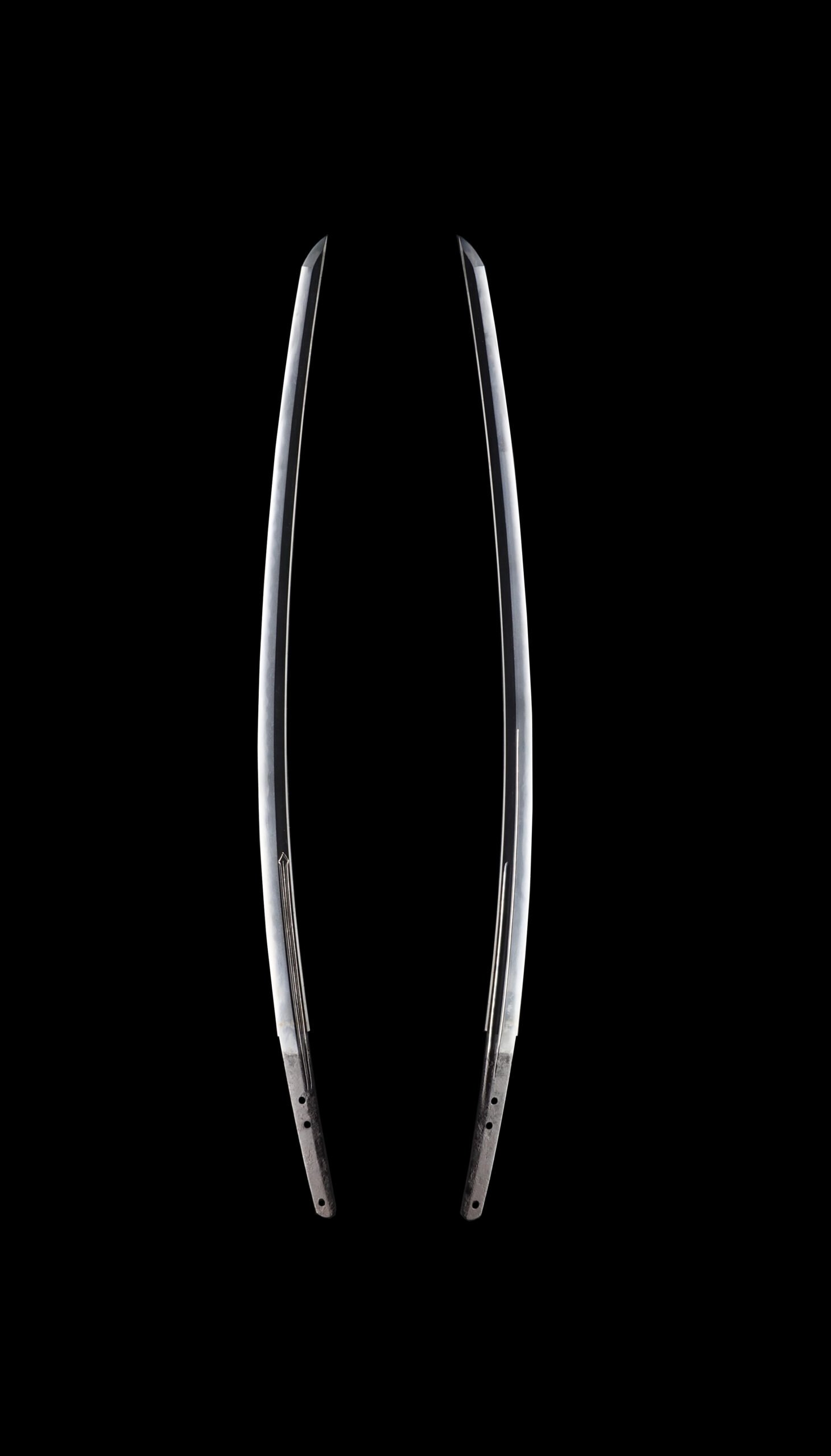
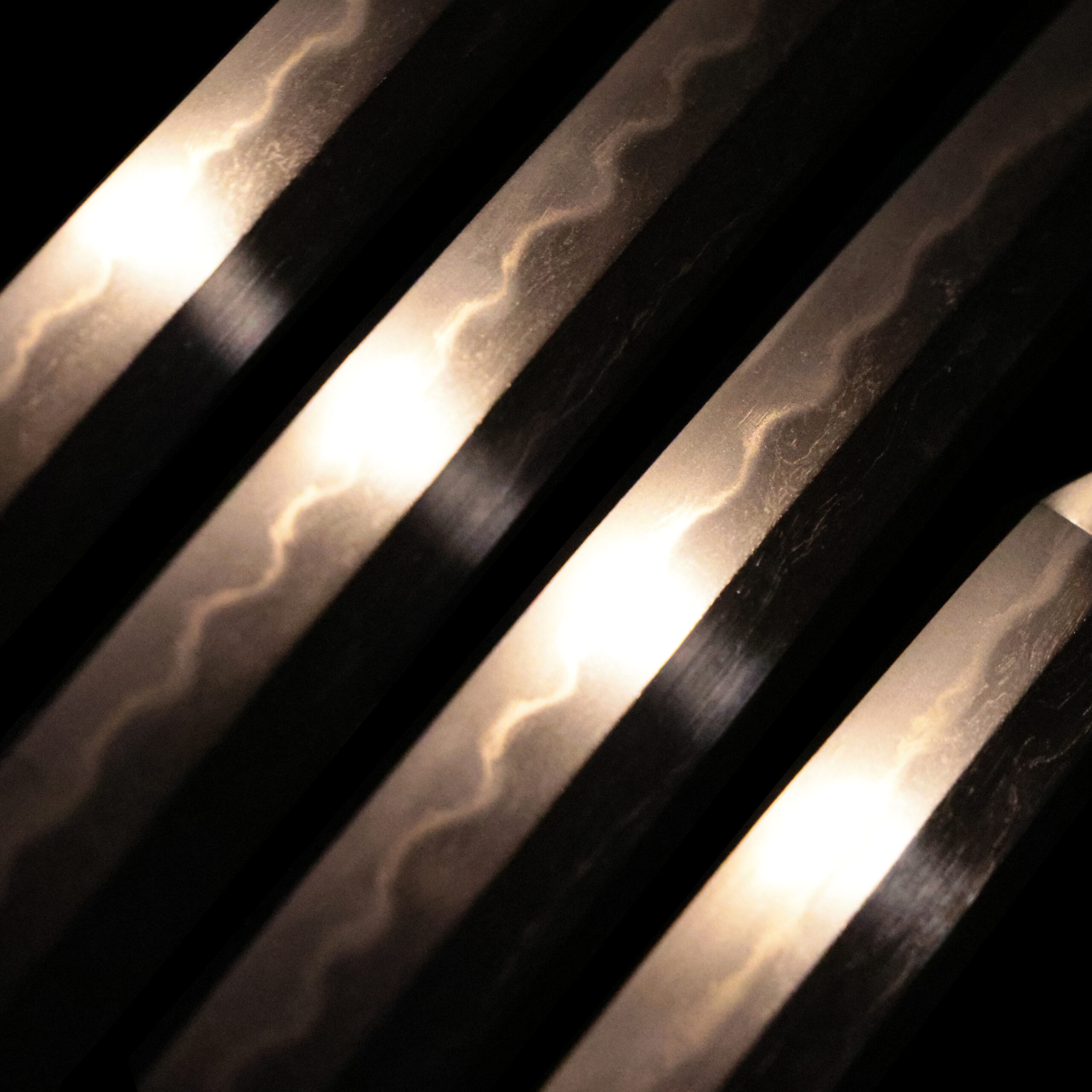
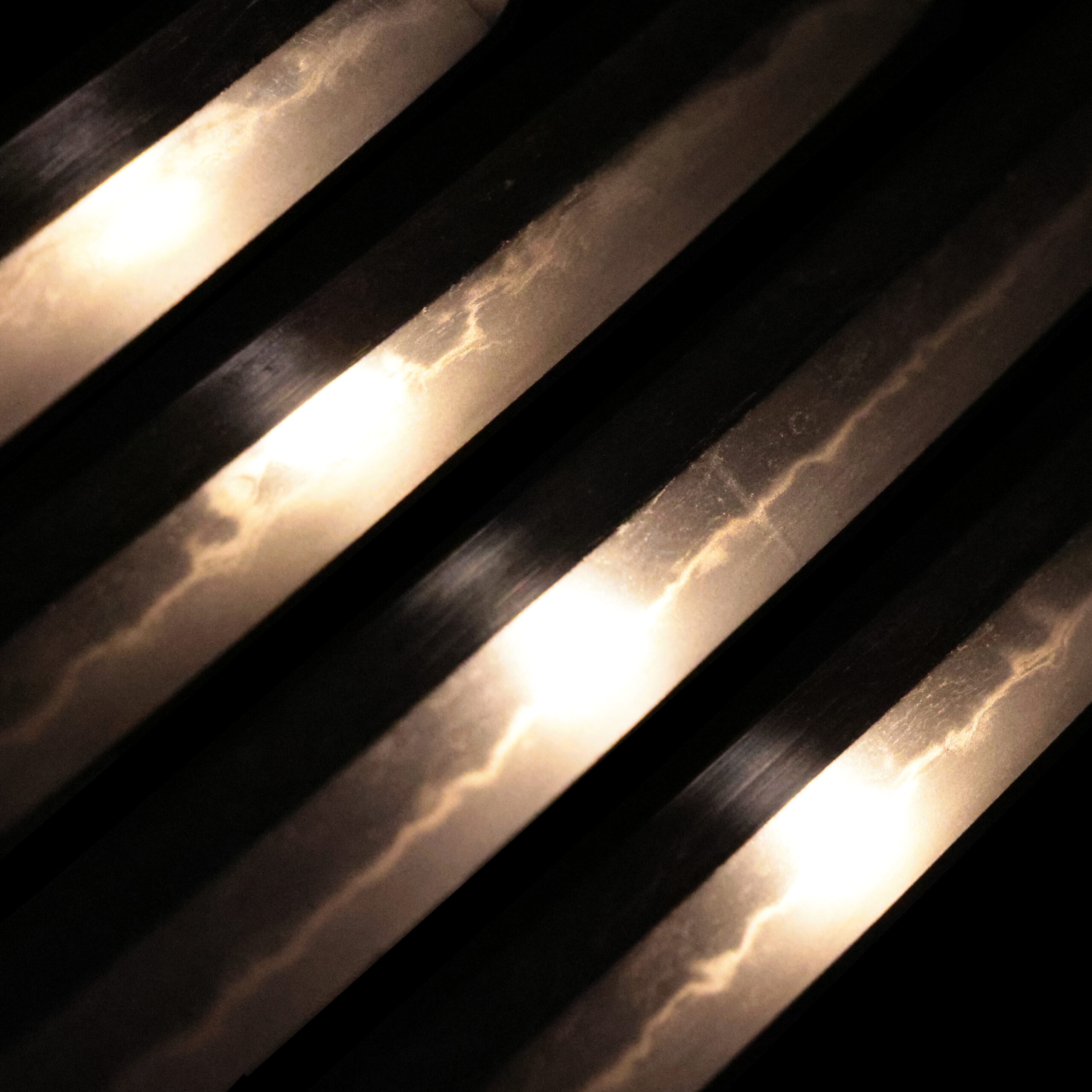
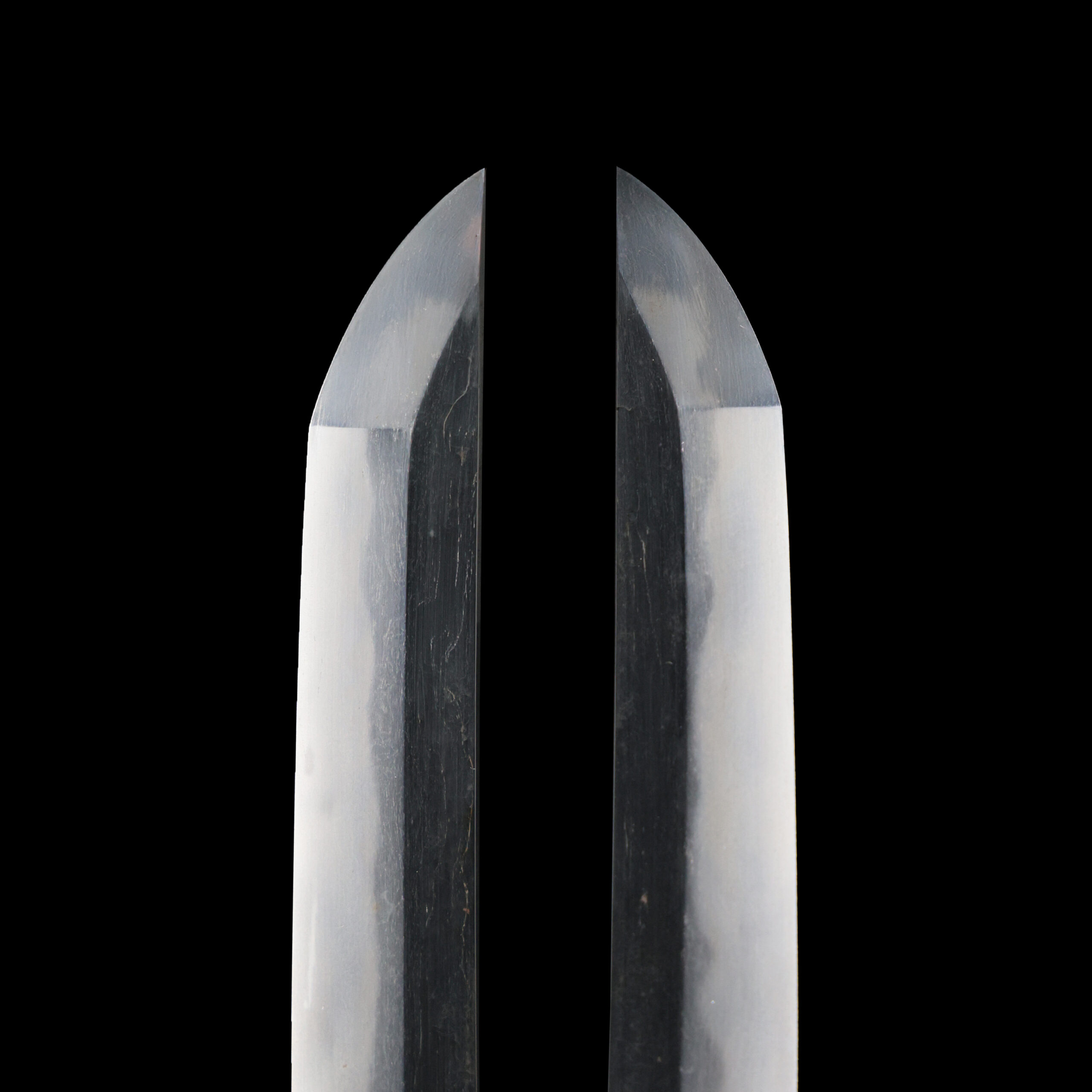
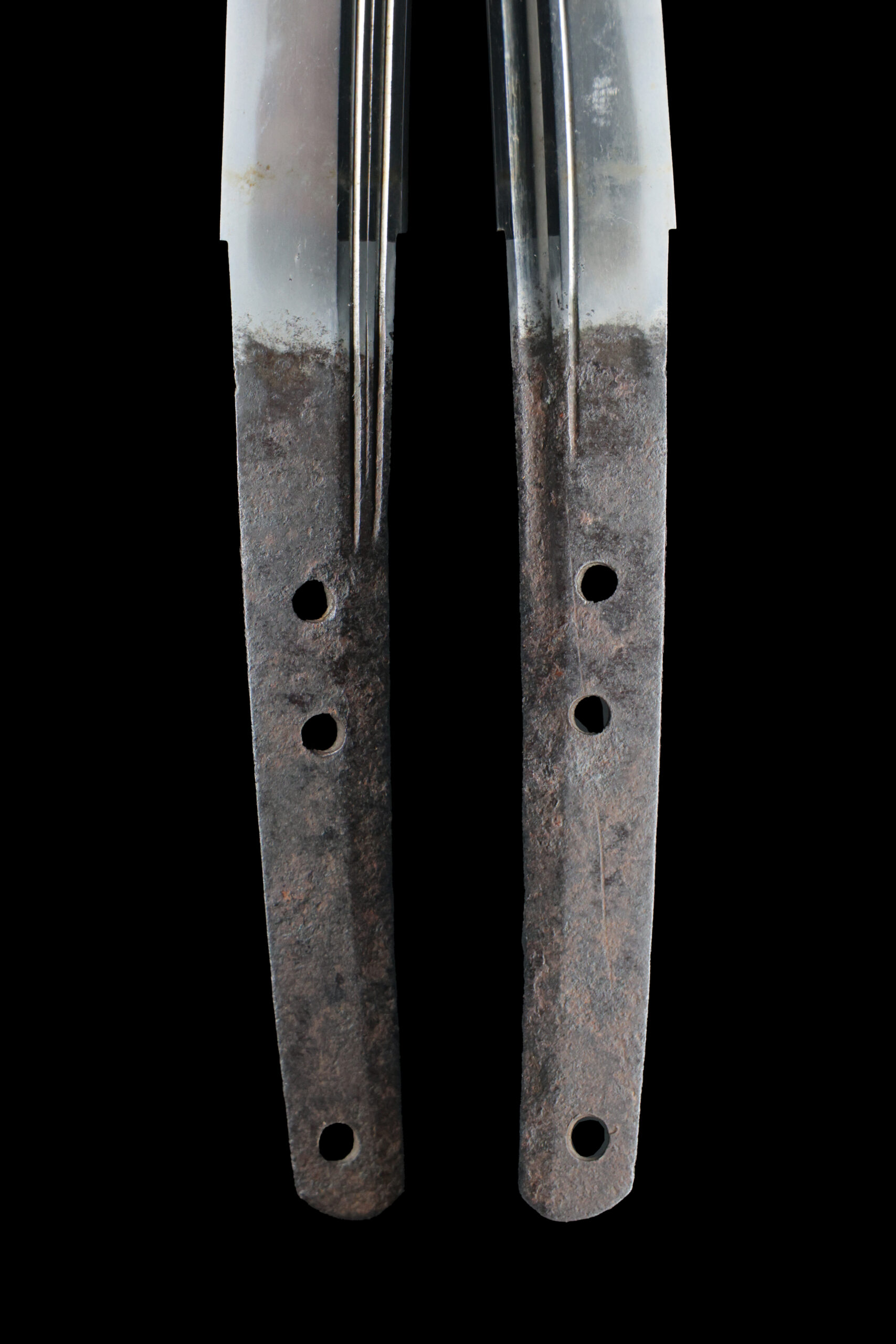
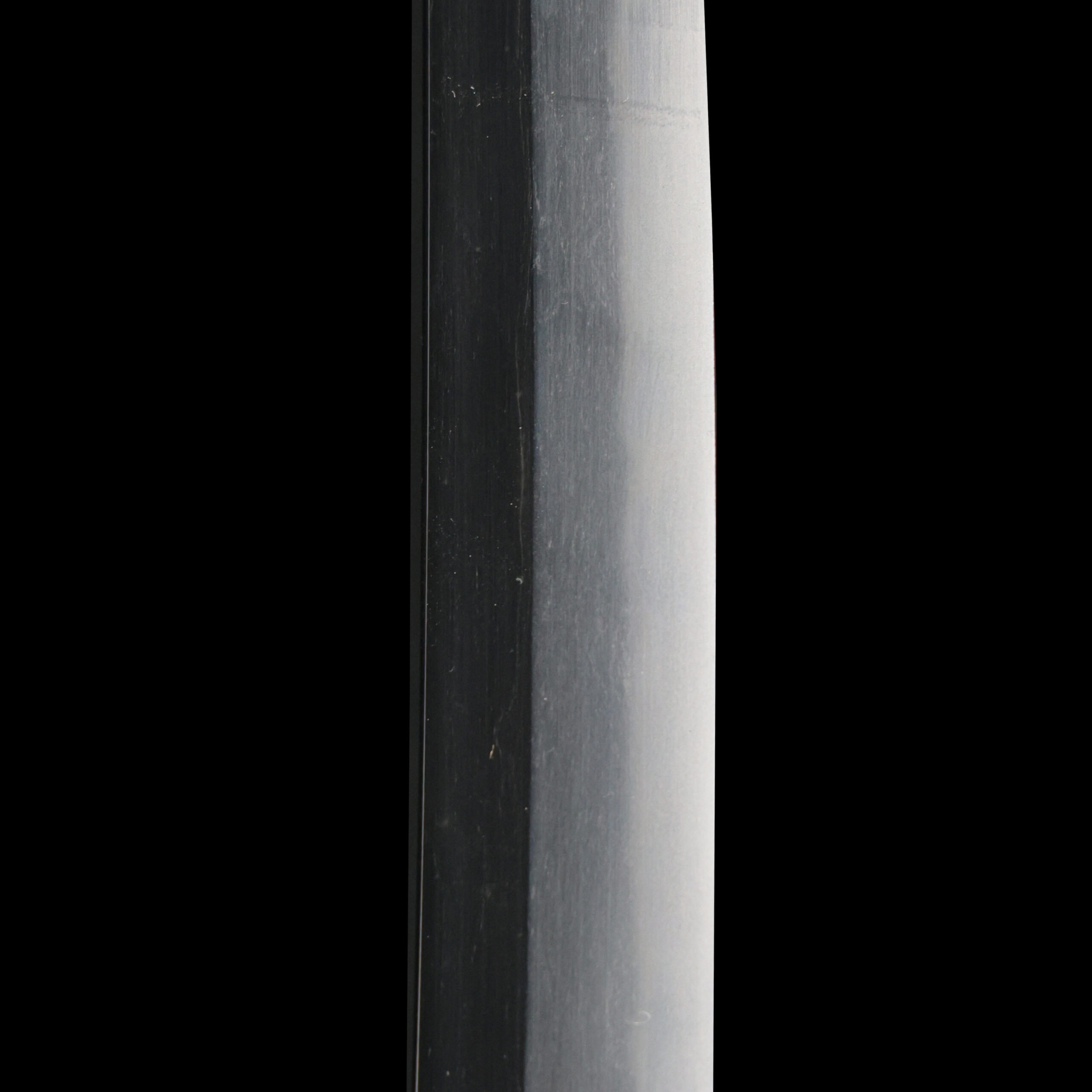
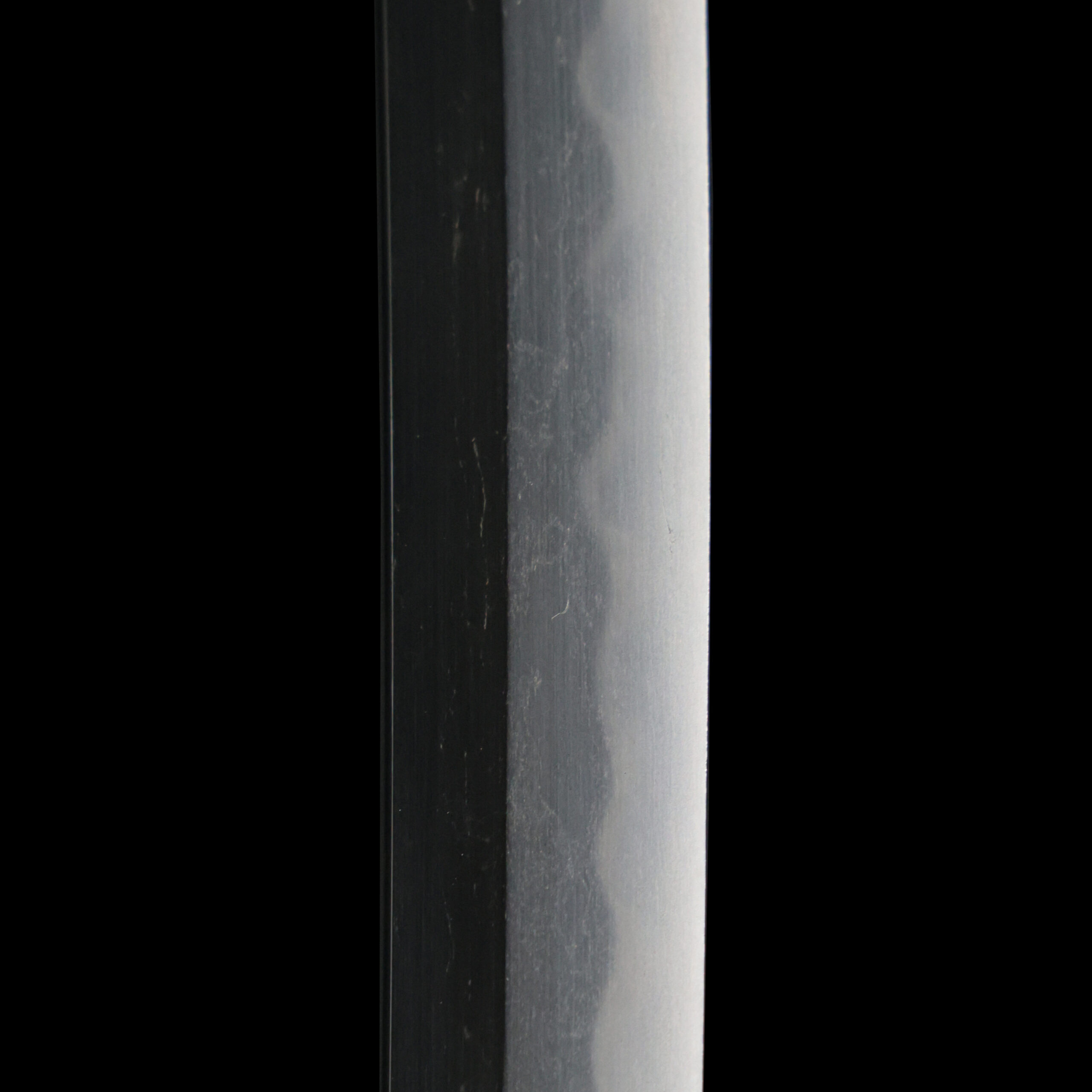
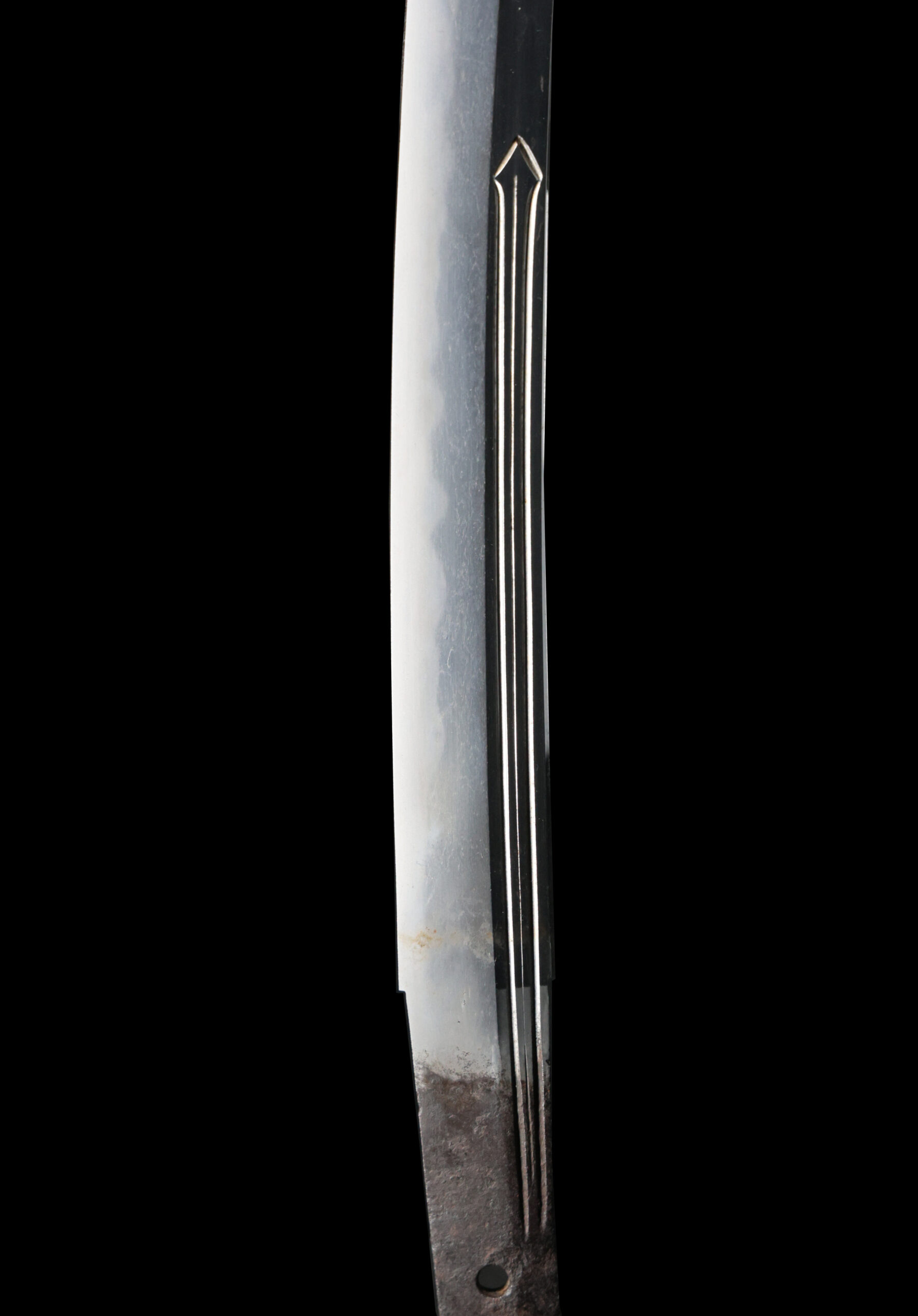
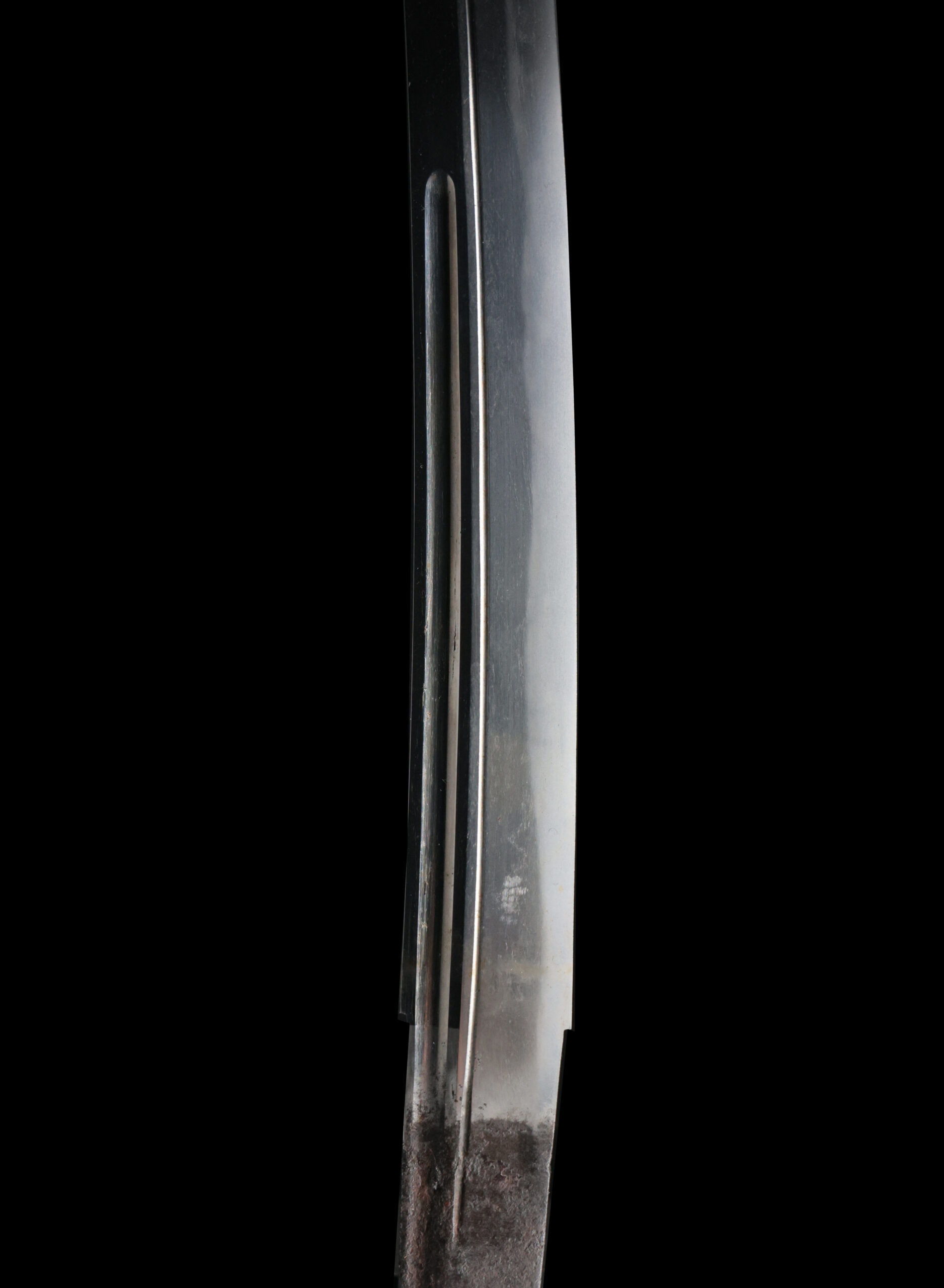
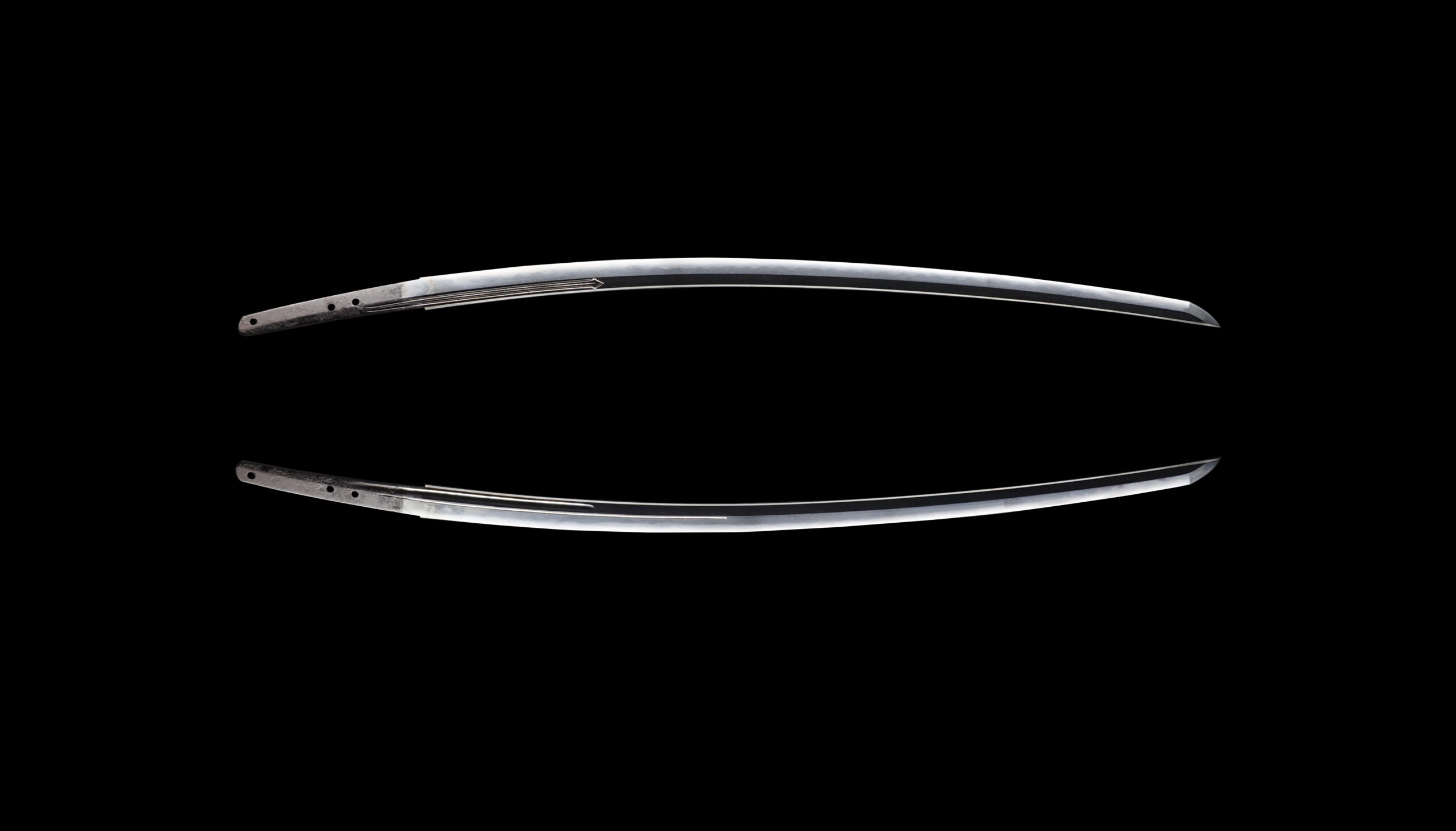
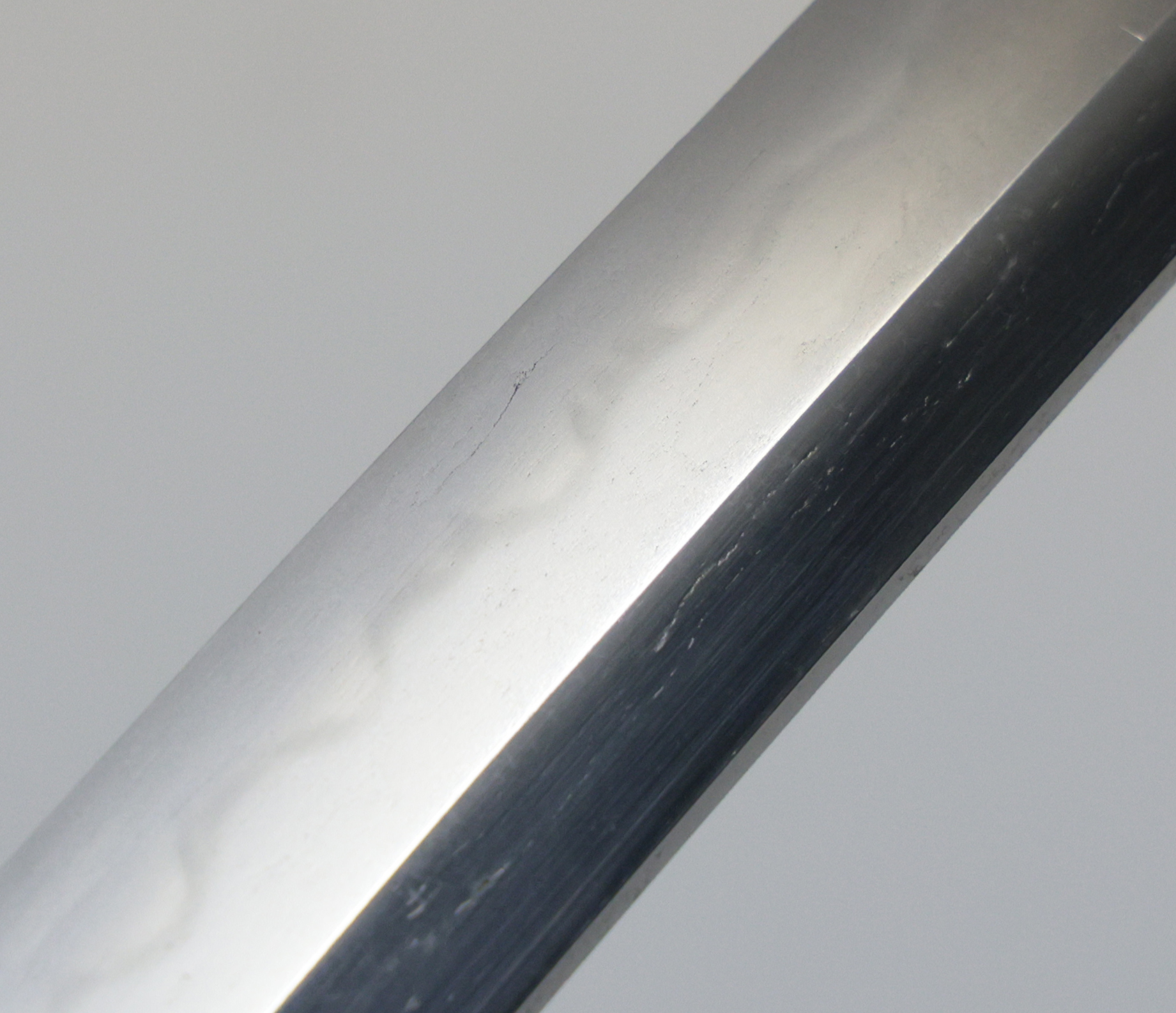
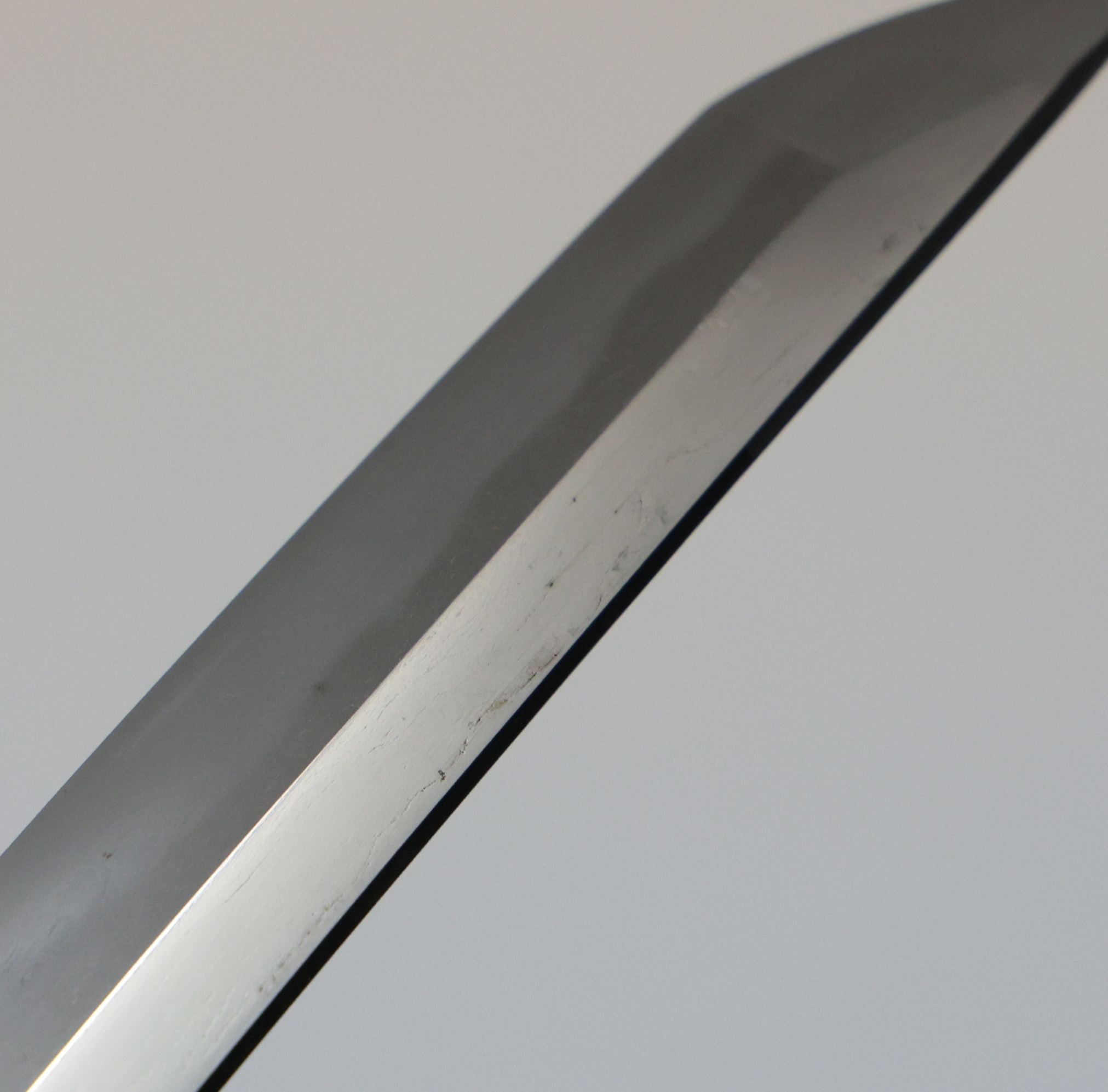
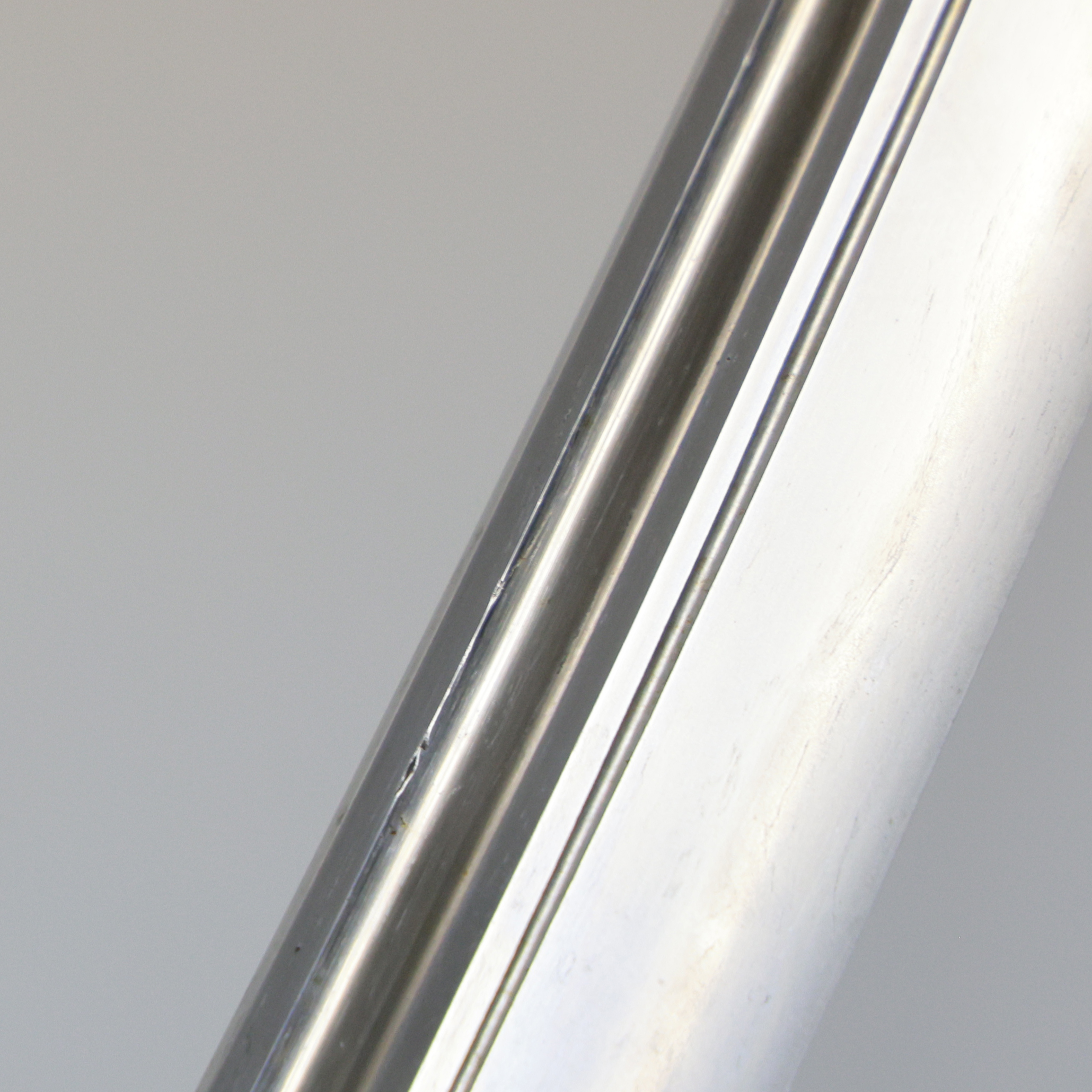
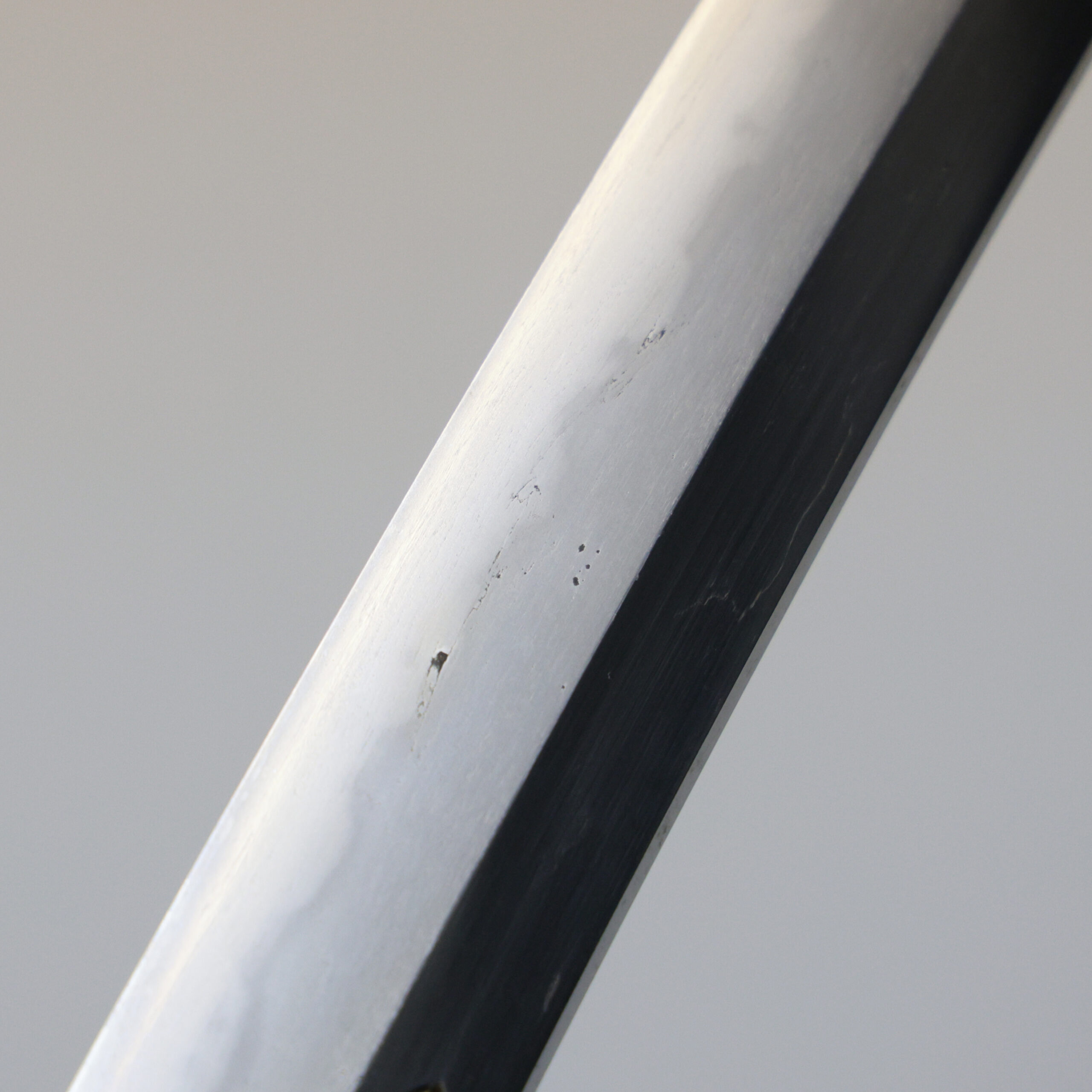
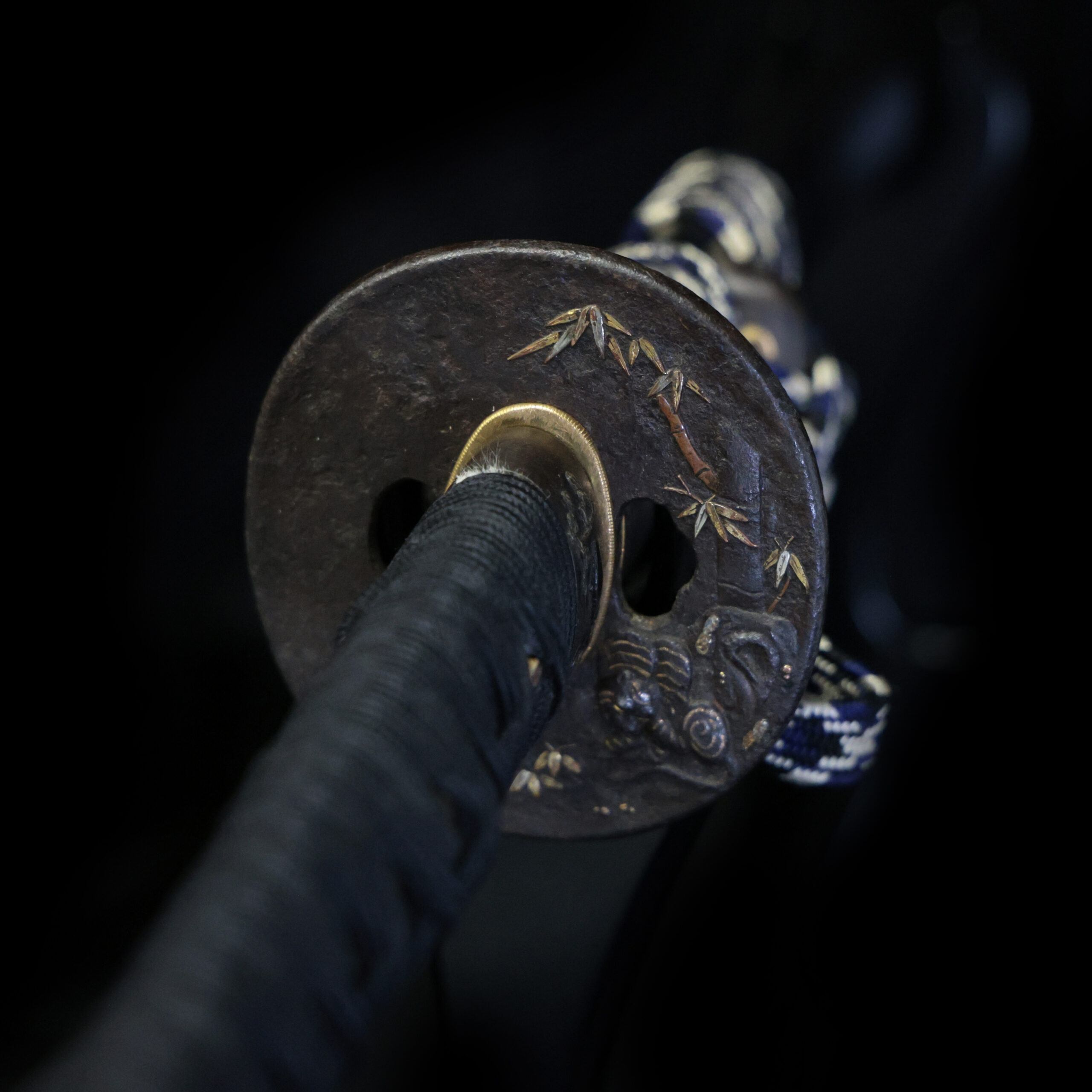
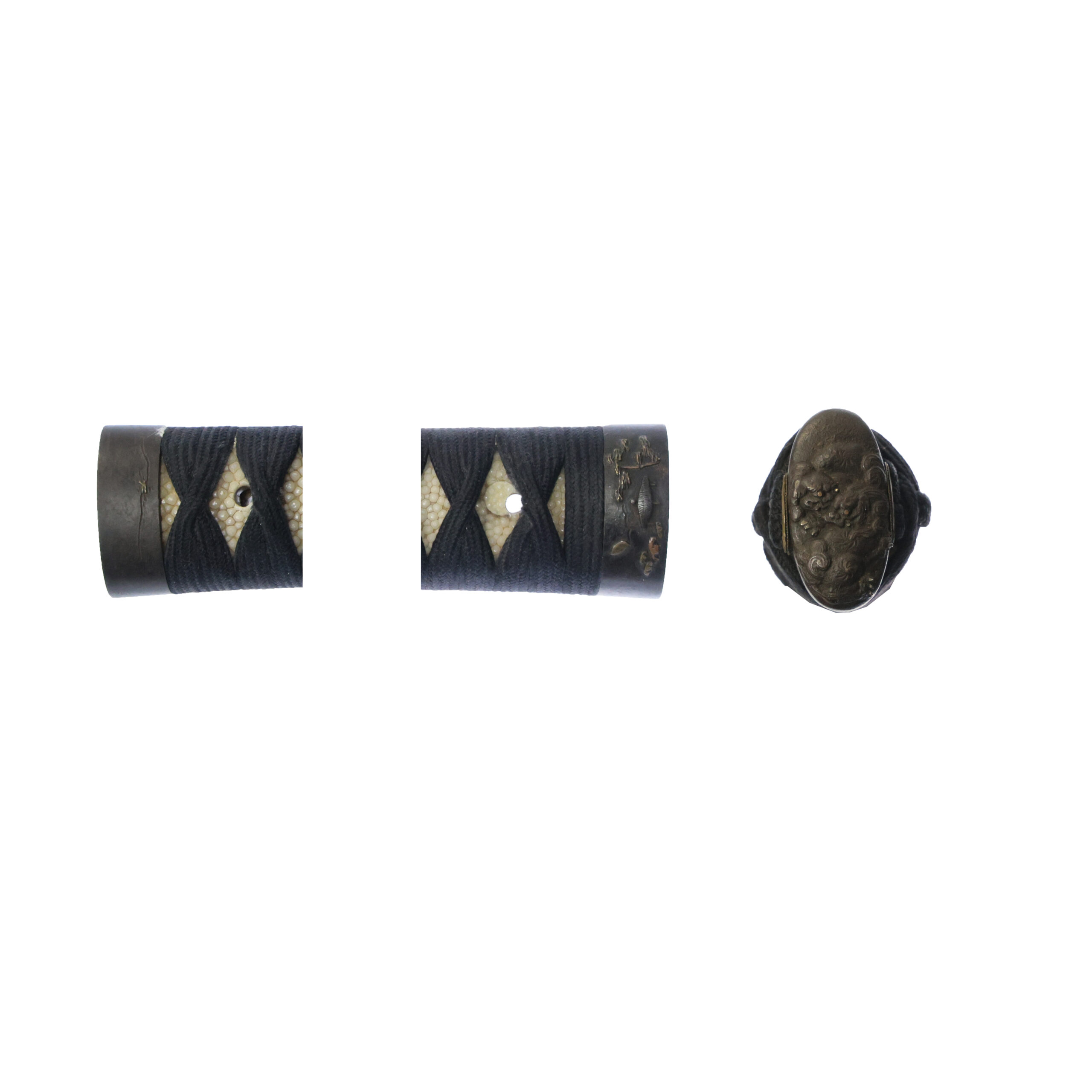
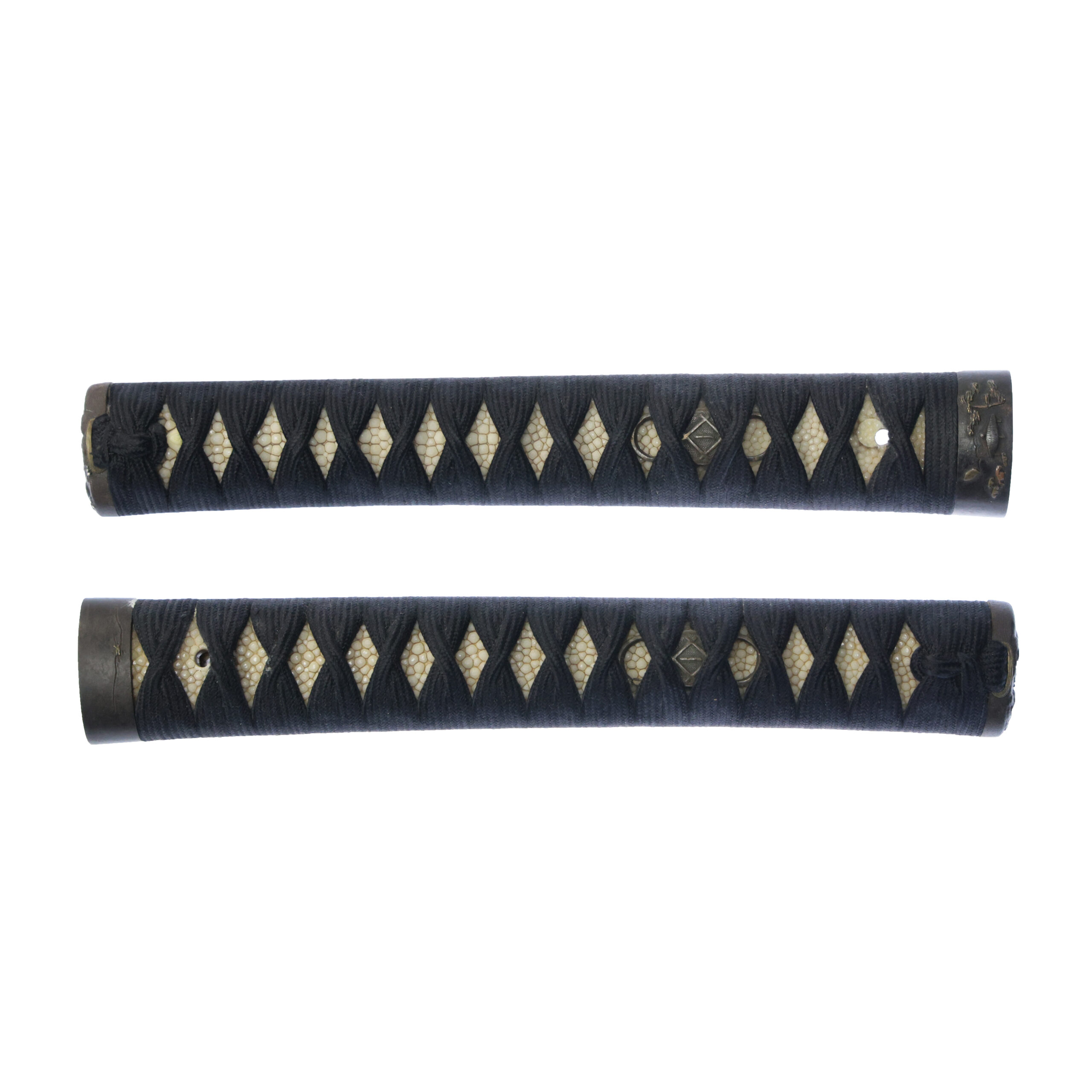
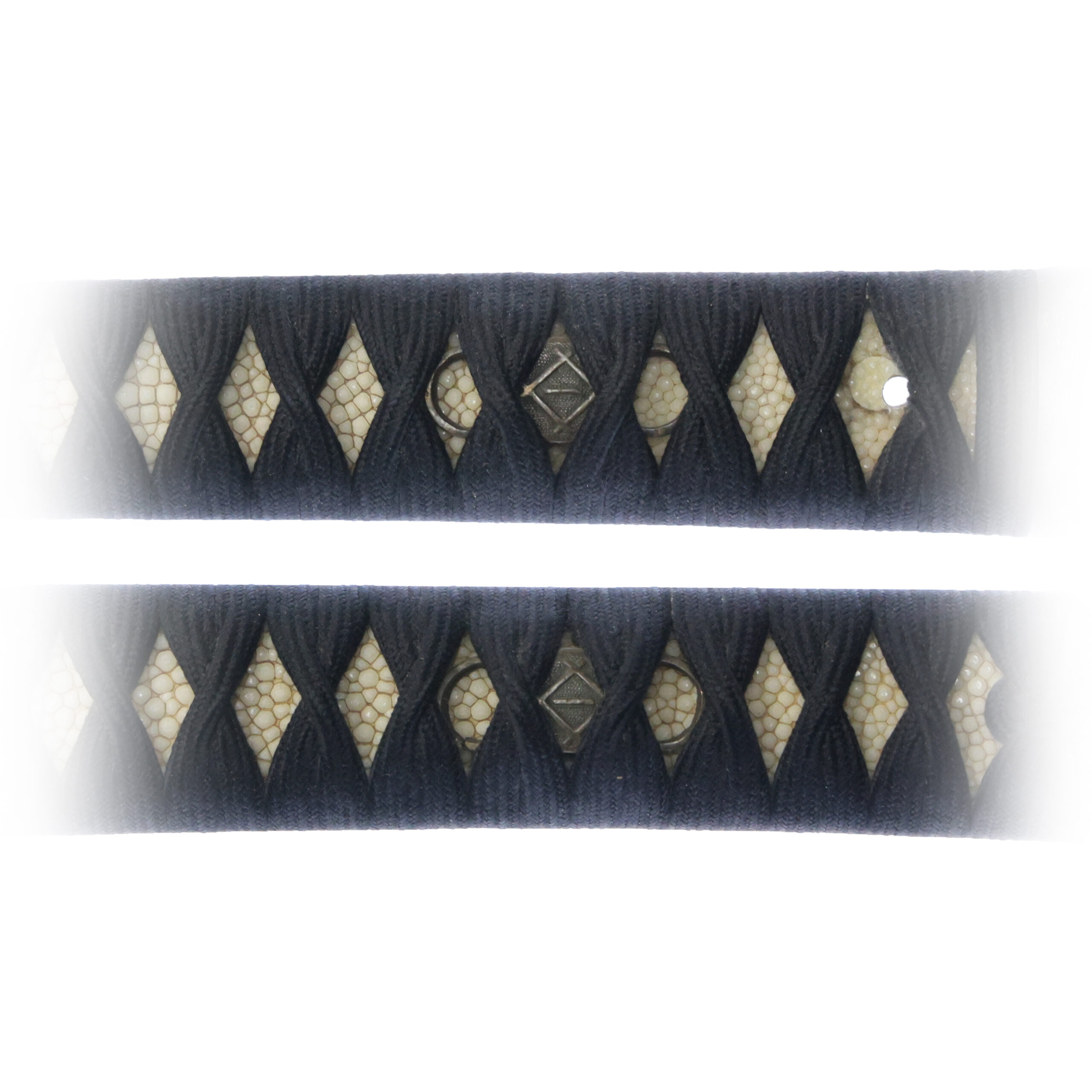
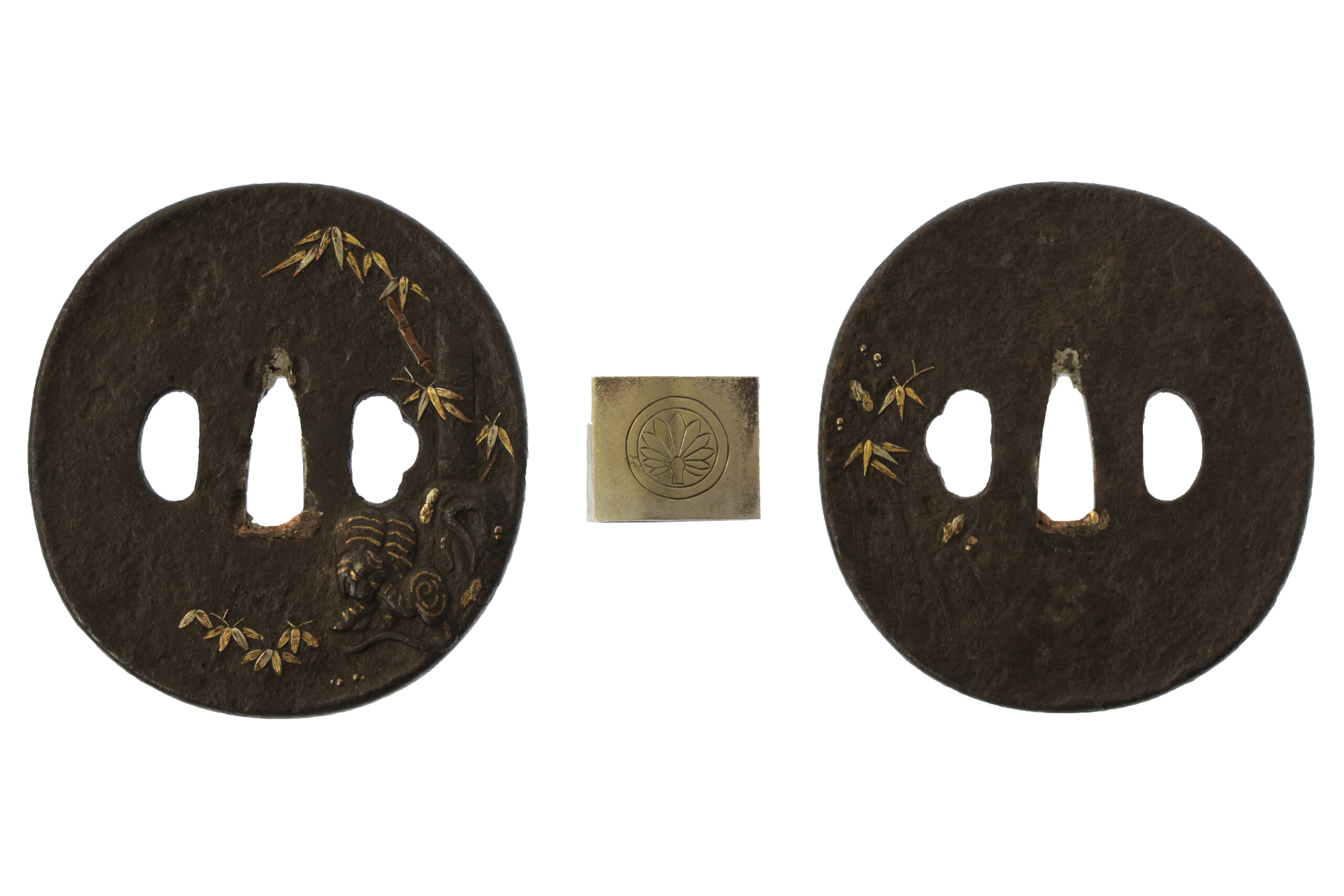
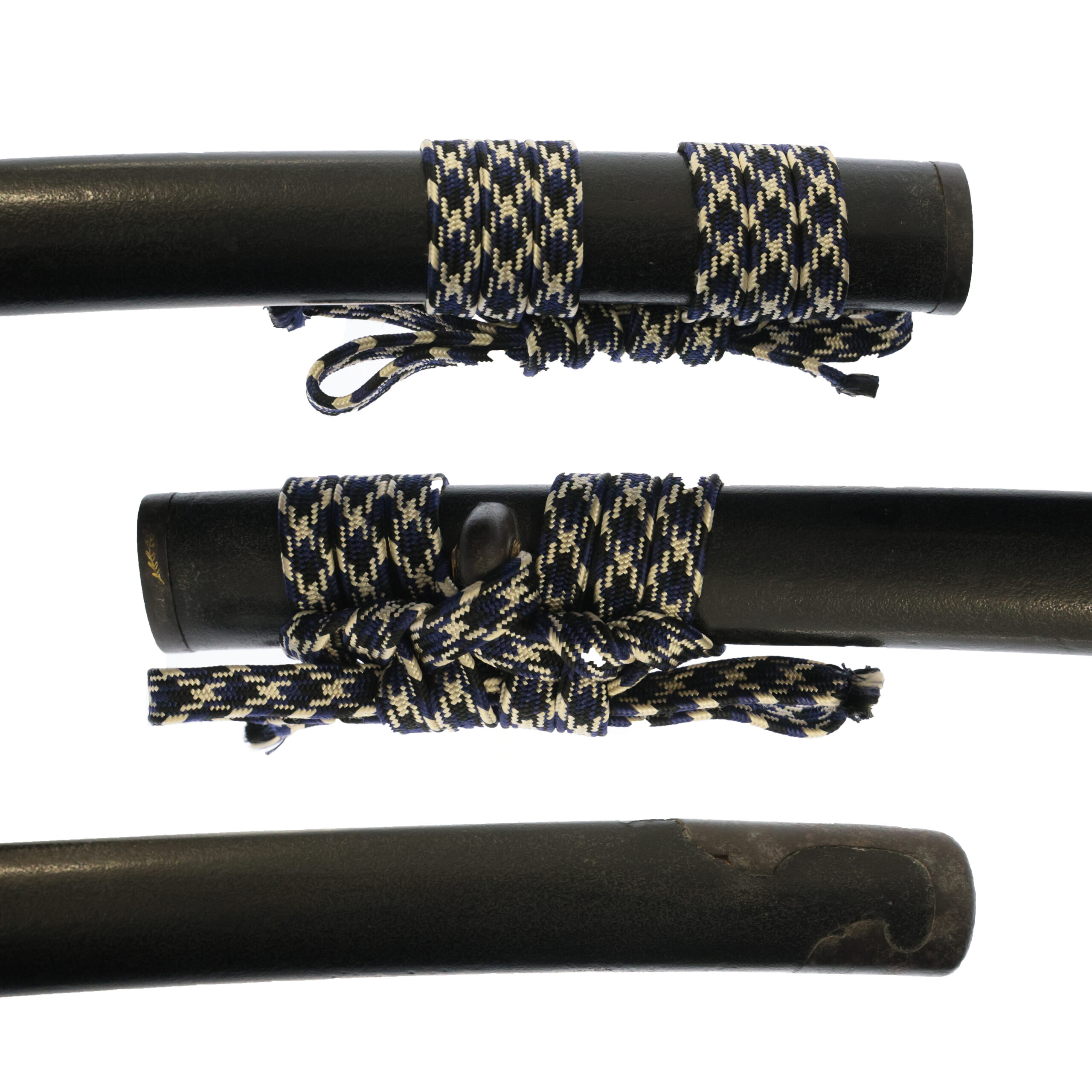
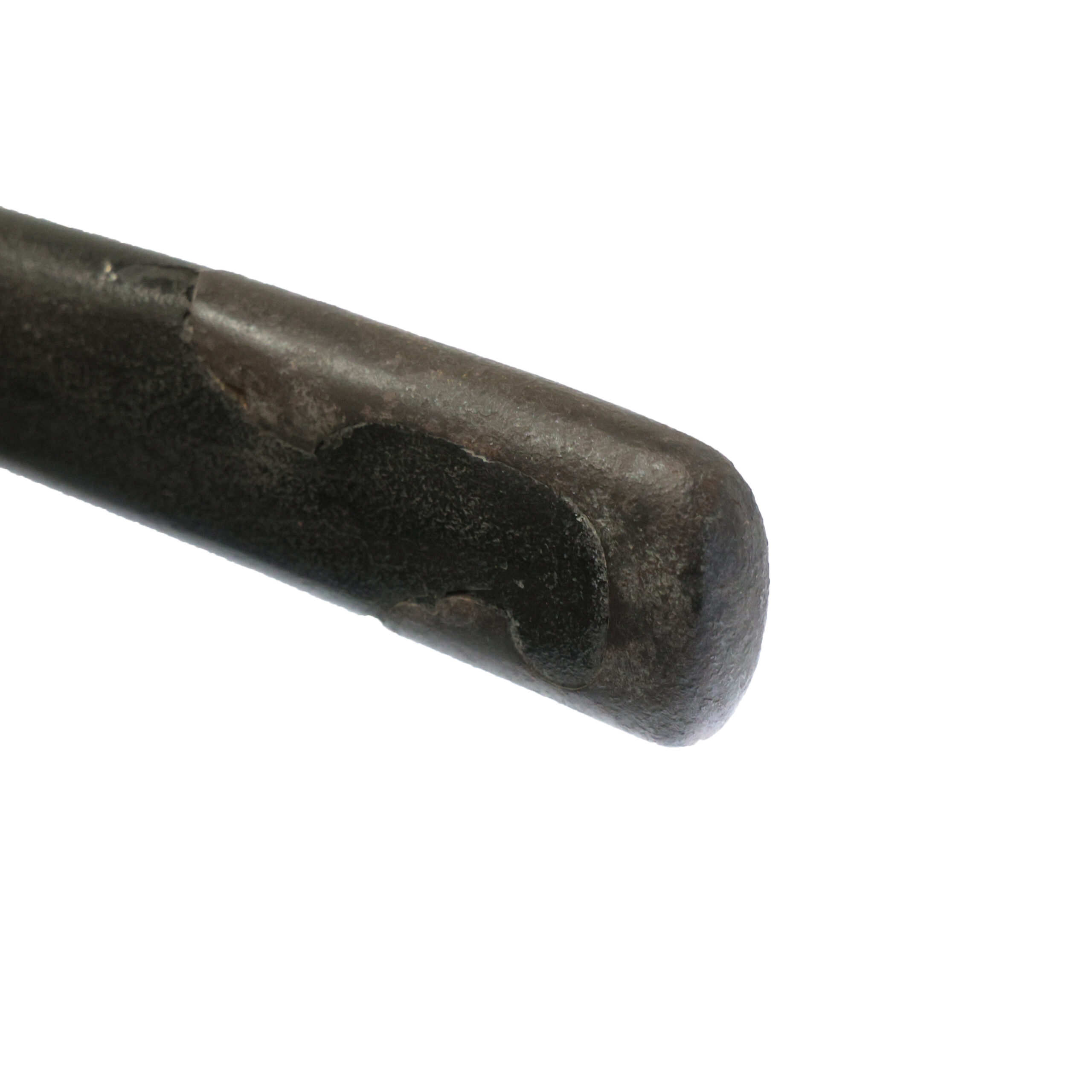
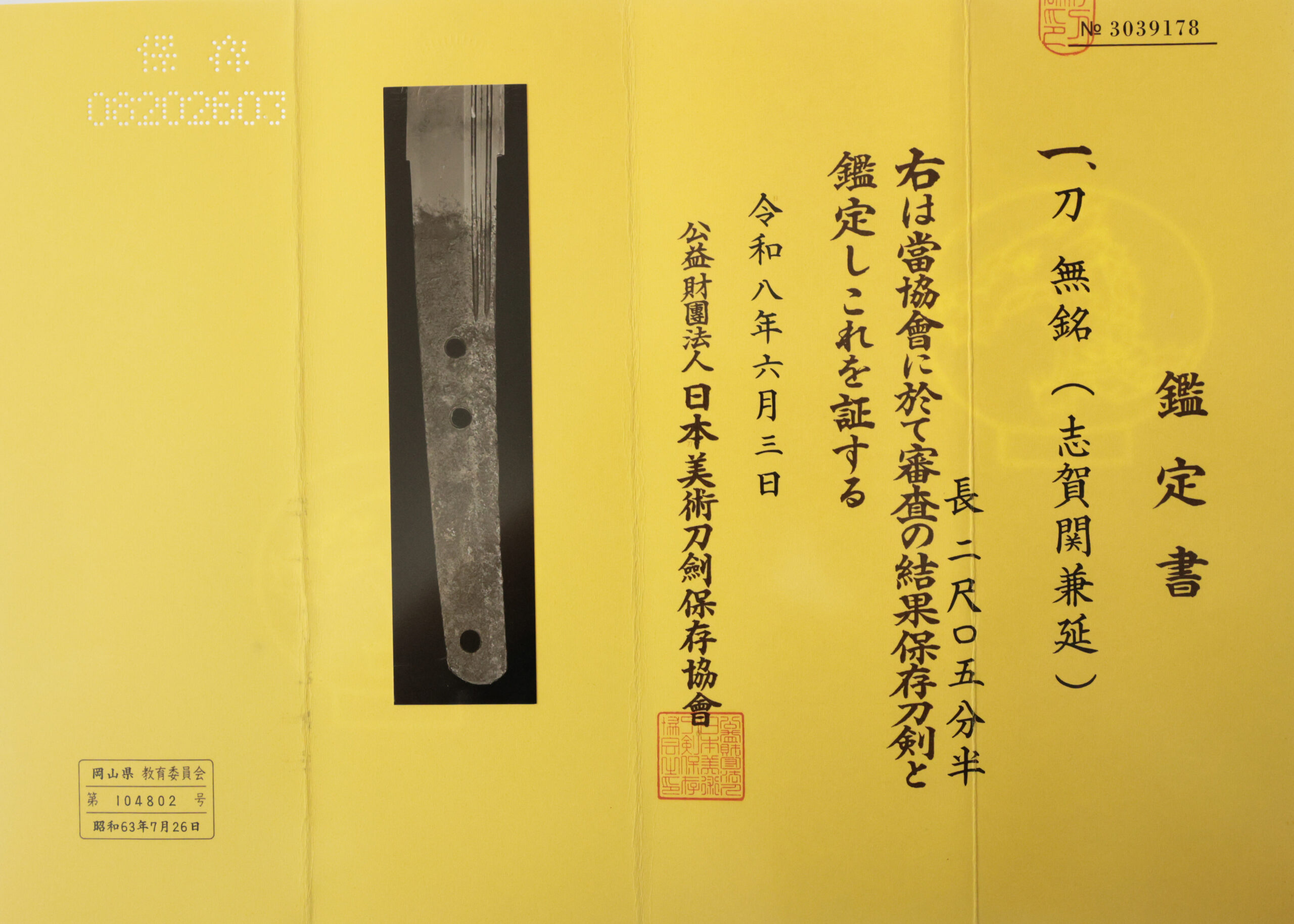
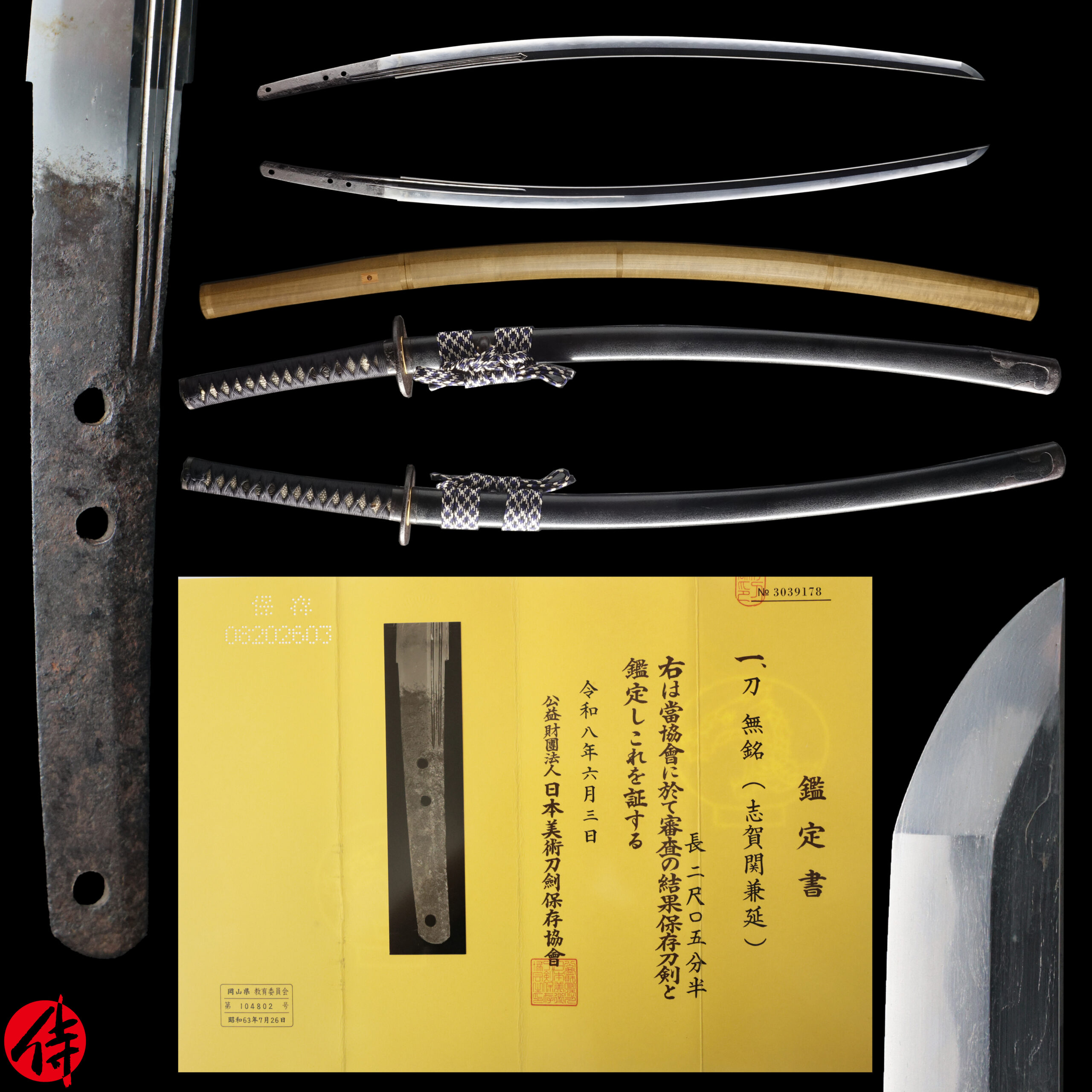
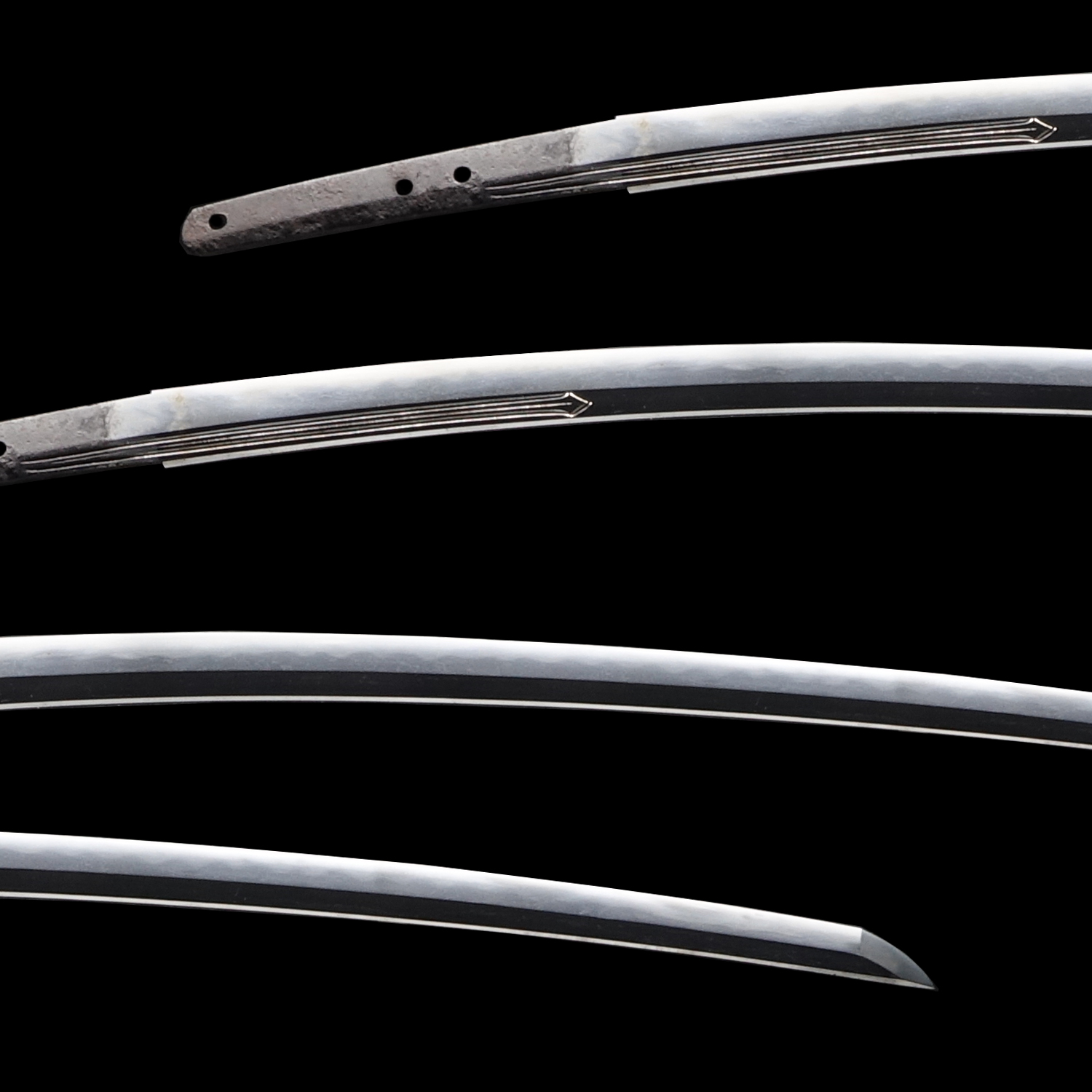
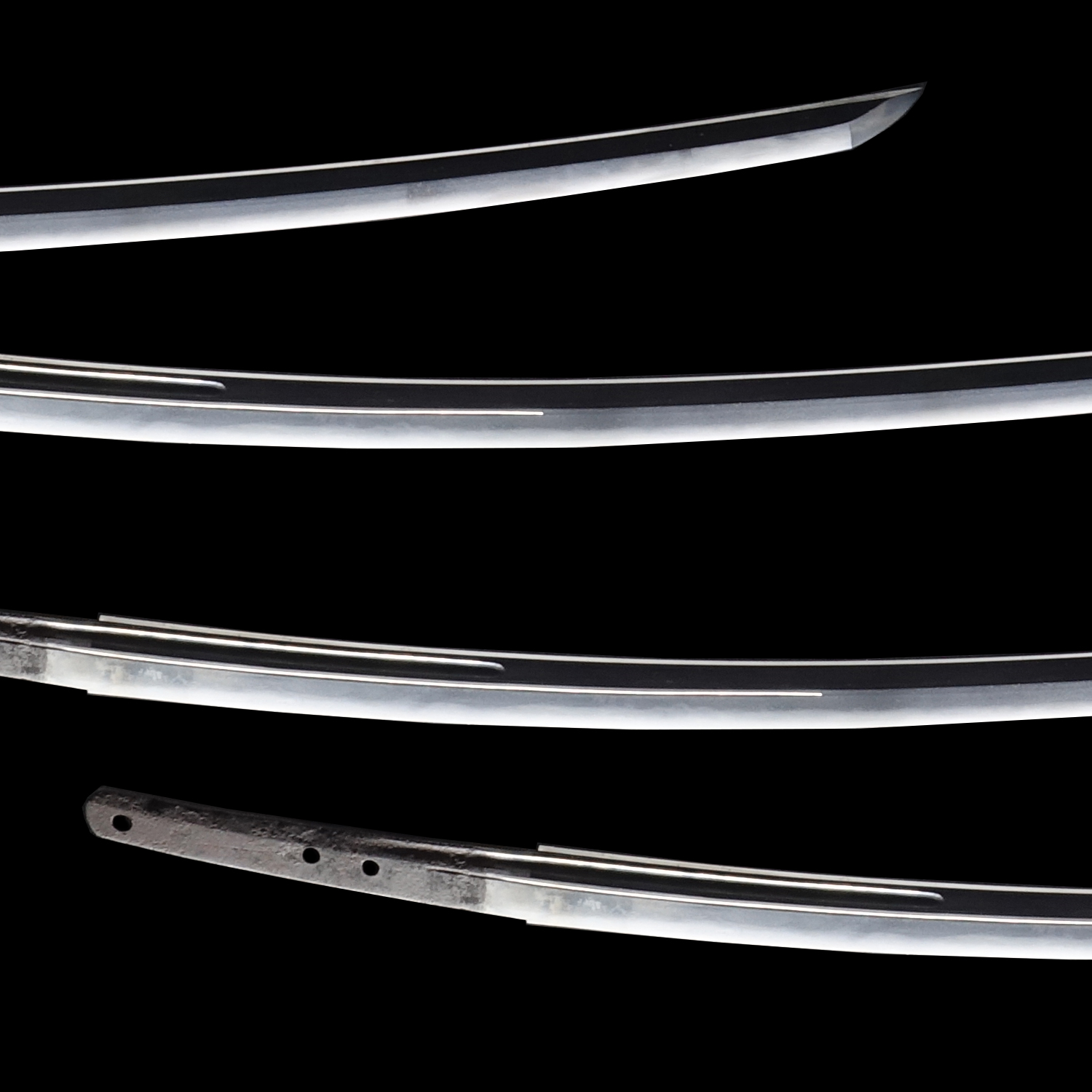
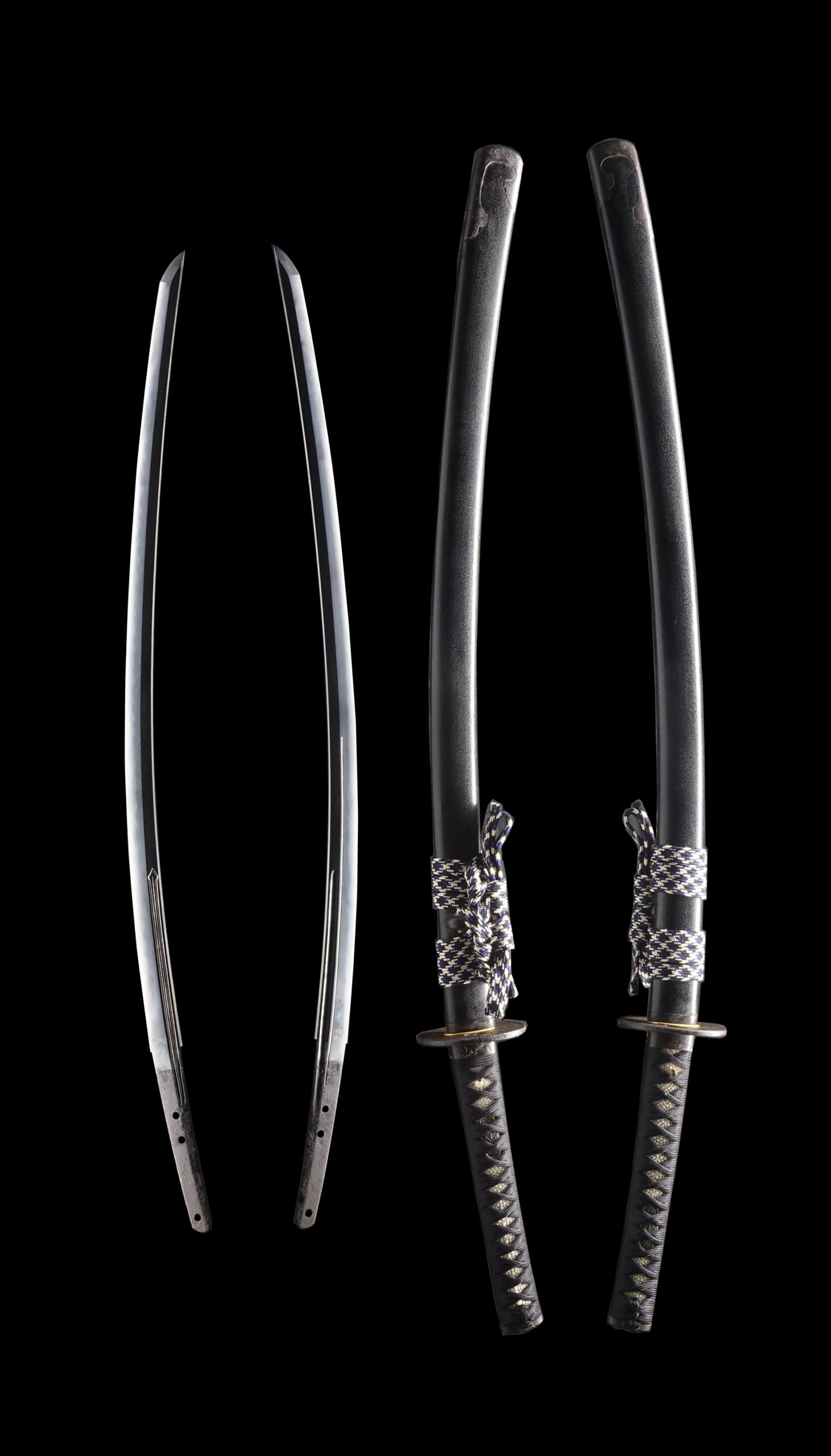
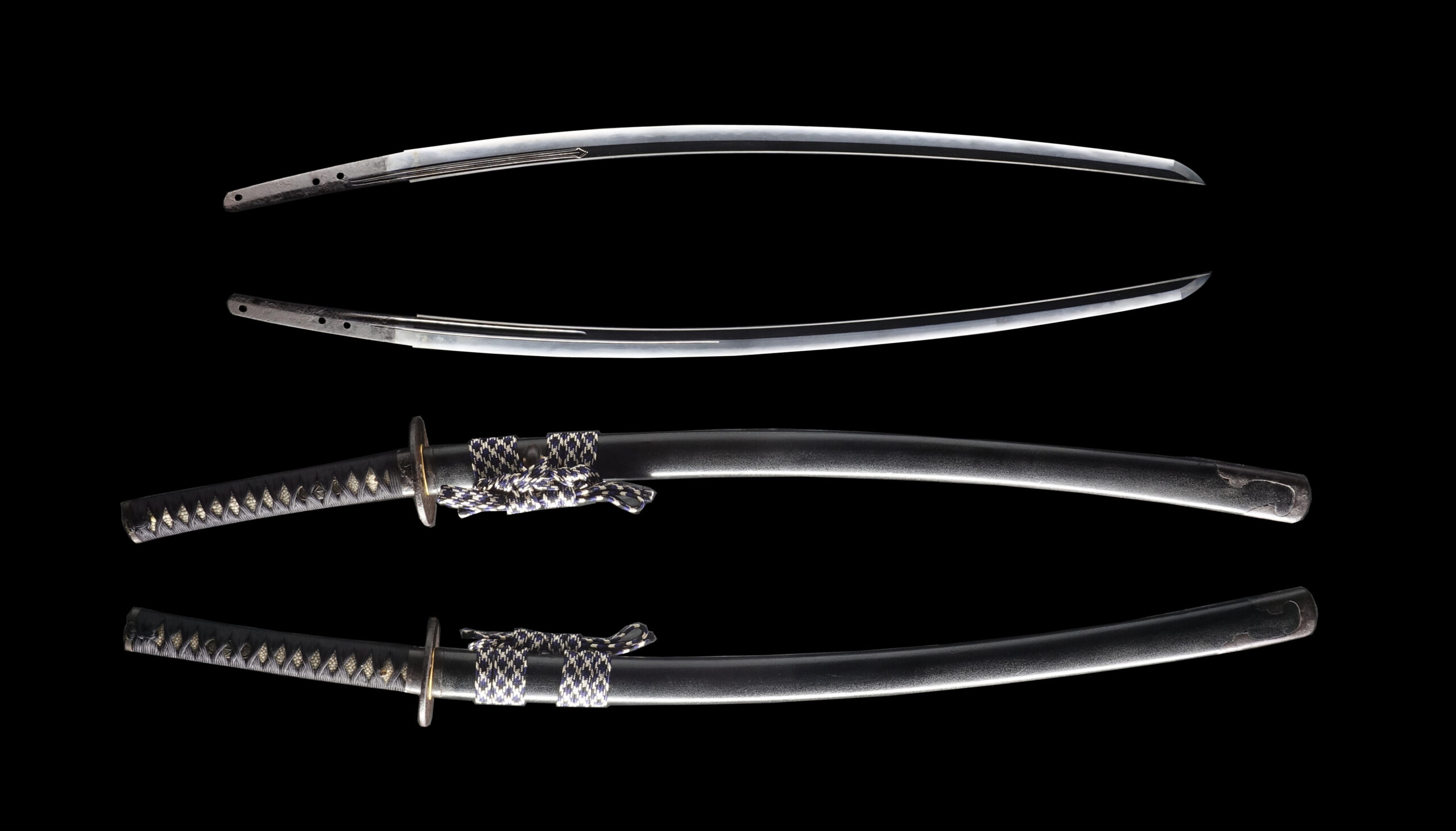
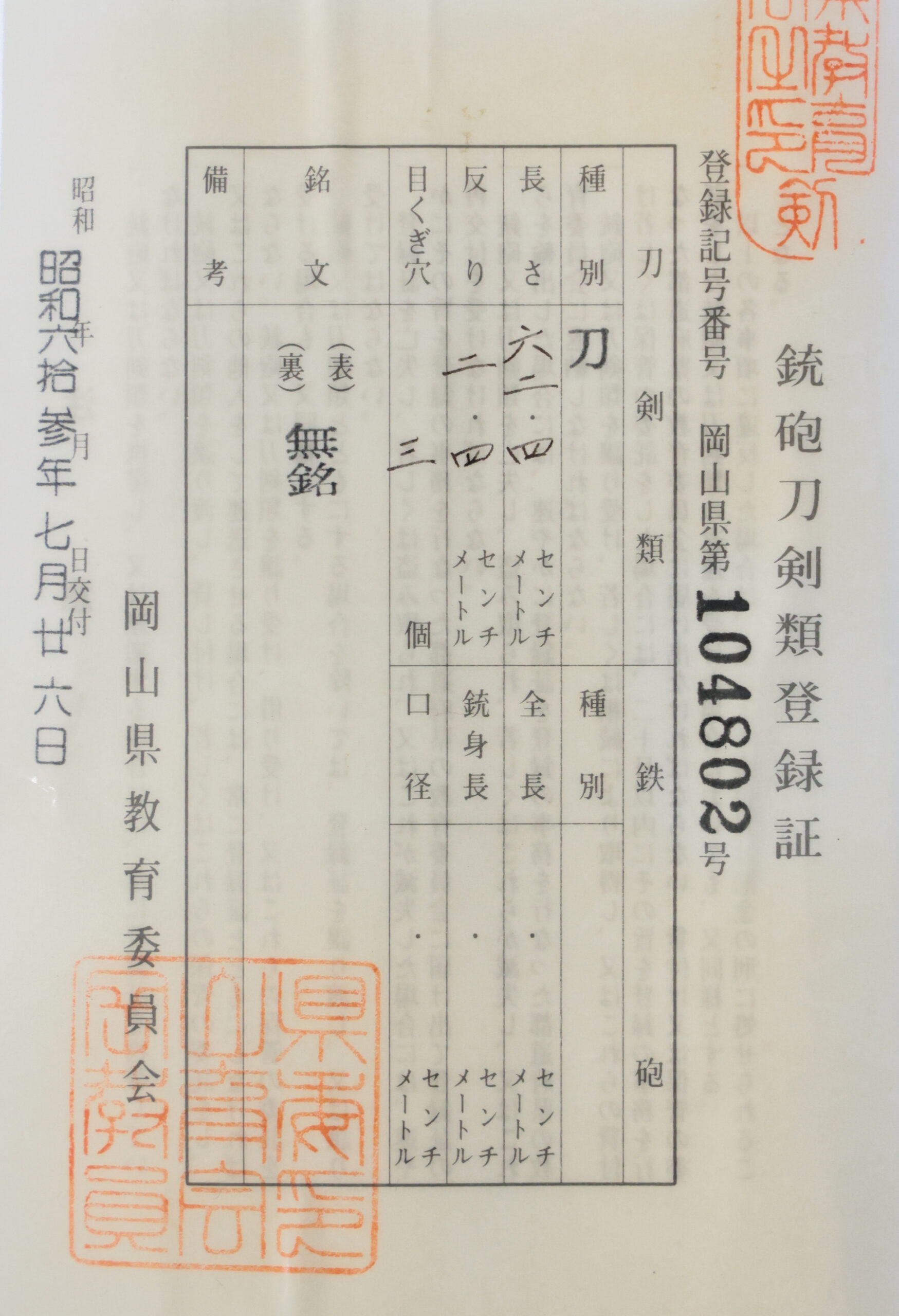
As written by the shop
Mino-den · Owari · around 1492-1501
Fujishiro Jo saku · Tōken Taikan top 49%
2 pieces on the market now
Where Kanenobu stands among comparable artisans: across all of nihontō, and within tradition, era, and period. The tiers (Foremost · Leading · Major · Notable) weigh official designations from the NBTHK and Japan's Agency for Cultural Affairs, together with historical honors of lasting repute such as the Sansaku and Meibutsu-chō.
Select a lens to see how it's measured.
Mino-den · Mino
129 pieces on the market now
Seki (関), in Mino Province, grew from two roots set down in the Nanbokuchō period and rose to become the great center of mass sword production in the late medieval age. The published sources trace the wellspring of Mino swordmaking to Kinju (whose name the commentary also reads Kaneshige), counted since antiquity among the Masamune Jittetsu, the ten disciples of Sōshū Masamune, and to Kaneuji of the Shizu line; the Kokon Meizukushi records Kinju as a native of Tsuruga in Echizen who "crossed over to Seki and resided there," carrying the Sōshū-den manner east. Beneath that Sagami inheritance lay a Yamato foundation, legible in the Tegai descent of the Seki Zensada line through Kaneyoshi, so that the Mino-den the Seki workshops forged stands as a fusion of Yamato grain and Sōshū activity in nie. From this Nanbokuchō founding the name multiplied across the Muromachi period into Sue-Seki, the last and largest body of the tradition; its representative masters at the close of the old-sword age were Magoroku Kanemoto, famed for the sanbonsugi, and Izumi no Kami Kanesada, the smith called Nosada, while the Kanefusa, Ujifusa and Daidō hands worked beside them and the move of Wakasa no Kami Ujifusa to Kiyosu carried the Mino body to the threshold of Owari shintō. A common Mino vocabulary binds the Seki body, however widely its members range. The forging is an itame that stands and runs to masame, often mixed with mokume and nagare, over which rises the cool whitish shirake-utsuri of Mino steel rather than the bright midare-utsuri of Bizen; this pale, standing jigane is the constant tell the judges read first, present alike on Kinju's Nanbokuchō katana, Kaneyoshi's Ōei tachi and Nosada's late-Muromachi blades. Over it the smiths temper gunome into which the pointed togariba of Mino enters, with ko-nie clinging to a tight nioiguchi, ashi and yō, and sunagashi streaming through; the bōshi answers in midare-komi turning to a pointed or jizō-cast ko-maru swept with hakikake. From this shared grammar the individual hands diverge.
Kanemoto fixed the regular three-cedar sanbonsugi of pointed teeth; Kanefusa devised the rounded-head, constricted-waist "Kanefusa midare"; Kinju and the early founders held a calmer, rounder gunome away from the restless Shizu line, their work laid with thicker ji-nie and dry, standing grain. The late masters carried the manner to a higher finish: Nosada wove togariba among rounder forms for a broader temper than Kanemoto's one-sided file, and turned at times to a slender Rai-styled suguha with a hidden gunome; Kaneyoshi held instead to a cool ito-suguha, the disciplined Yamato face of late Seki, lightly broken with ko-gunome. A collector seeks Seki because it is the connoisseur's ground for reading Mino-den across a vast body of signed and attributed work. The kantei runs through the jigane first: the standing, masame-leaning itame and the whitish shirake separate a Seki blade from Bizen and Yamashiro, after which the pointed togariba, the dry nie, and the pointed or jizō bōshi confirm the province; the discriminations the judges draw, Kinju held apart from Shizu by his rounder gunome, Nosada parted from Kanemoto by his breadth, give the eye its anchors. Within the school the standing of the best members is settled: Magoroku Kanemoto for the sanbonsugi, Nosada whom the swordbooks call simply "an excellent master" and the most accomplished of the several Kanesada hands, and the early Kinju as a rare and precious founding name, his record running through the Jūyō tier with the signed pieces few and the long blades attributed den. Signature works carry real provenance: a Kinju tantō presented to the Tokugawa shogunal house in 1679, a Nosada katana borne by a chief retainer of the Kii Tokugawa and a tachi forged for the father of Takeda Shingen, a Kaneyoshi tachi transmitted in the Chikuzen Kuroda family. Beyond connoisseurship, Seki's blades earned a battlefield reputation for cutting; the full hiraniku and stout build of the Sue-Seki katana, made to sever, set the wazamono standing that made Mino the working sword of its age. Learn more →
| Smith | Era | Designated |
|---|---|---|
| Kinju金重 | 1340-1346 | 42 |
| Kaneyuki金行 | 1350-1352 | 10 |
| Kanekore兼之 | 1504-1555 | 7 |
| Kanenori兼法 | 1579-1615 | 5 |
| Nagasada永貞 | 1862-1866 | 5 |
Mino in the Muromachi period
Sengoku Seki was an industry: smiths organized under their tutelary Kasuga shrine, arming the war bands of central Japan. Magoroku Kanemoto’s sanbonsugi and the finest Kanesada work prove quality survived inside mass production.
Certifies a genuine blade worth preserving: a signature confirmed correct, or, if unsigned, an era, province, and school that the NBTHK can reliably identify.
The NBTHK (Nihon Bijutsu Tōken Hozon Kyōkai, the Society for the Preservation of Japanese Art Swords) is a public-interest incorporated foundation founded in 1948 and supervised by Japan’s Agency for Cultural Affairs (Bunkachō); it is based at the Japanese Sword Museum in Tokyo. Its expert panels physically examine each submitted work (shinsa) and issue a certificate (kanteishō) ranking it by artistic and historical merit. NBTHK papers are the most widely recognized standard of authentication for Japanese swords and fittings.
NBTHK official siteReturns/exchanges limited to defects caused by shipping (except willful misconduct or gross negligence by the company); customers must contact within 72 hours of receiving the product.
¥680,000