NihontoWatch Mon

NihontoWatch

MarketAuctions
Encyclopedia
NihontoWatch Mon

NihontoWatch

MarketAuctions
Encyclopedia

Description

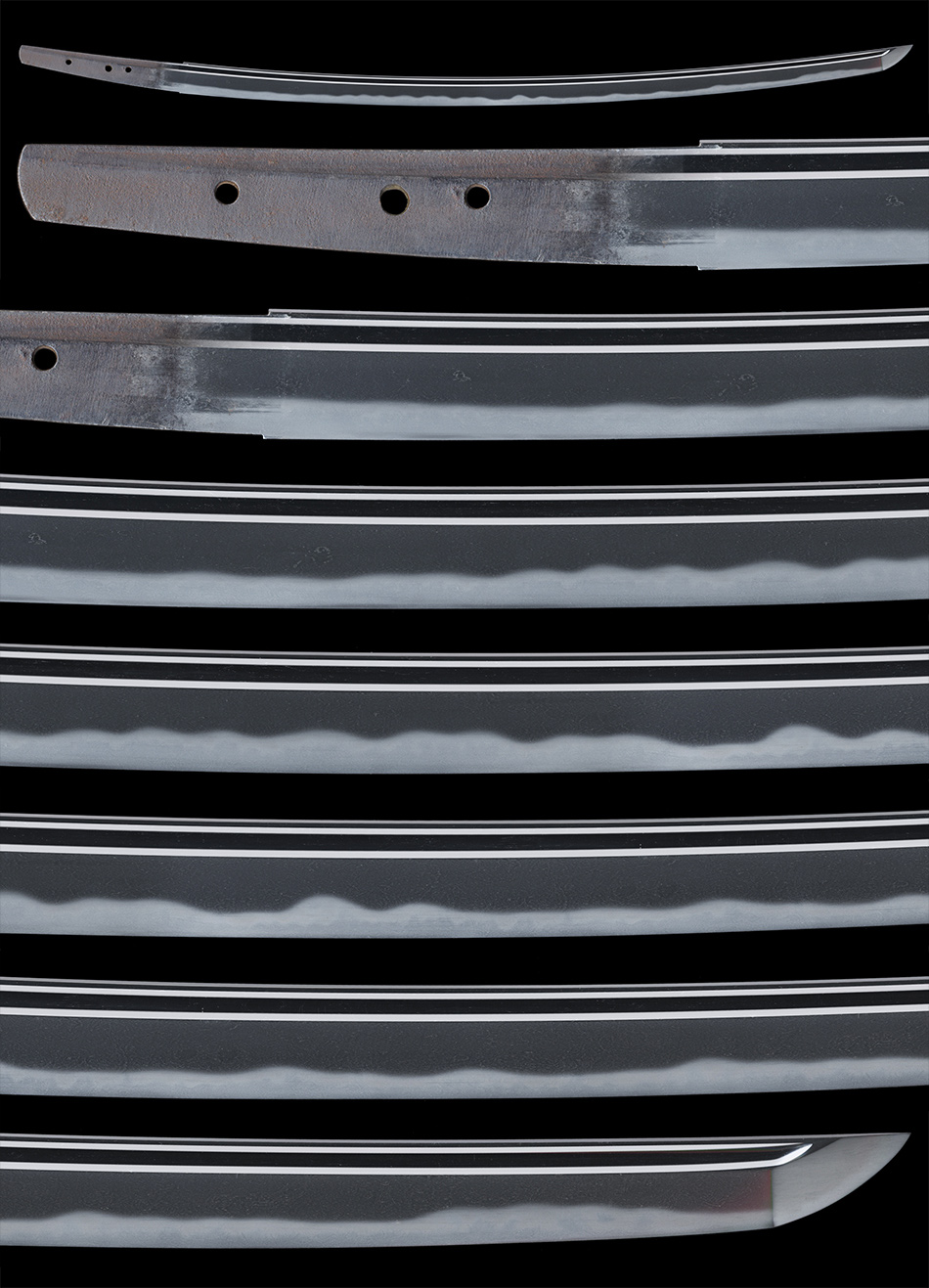
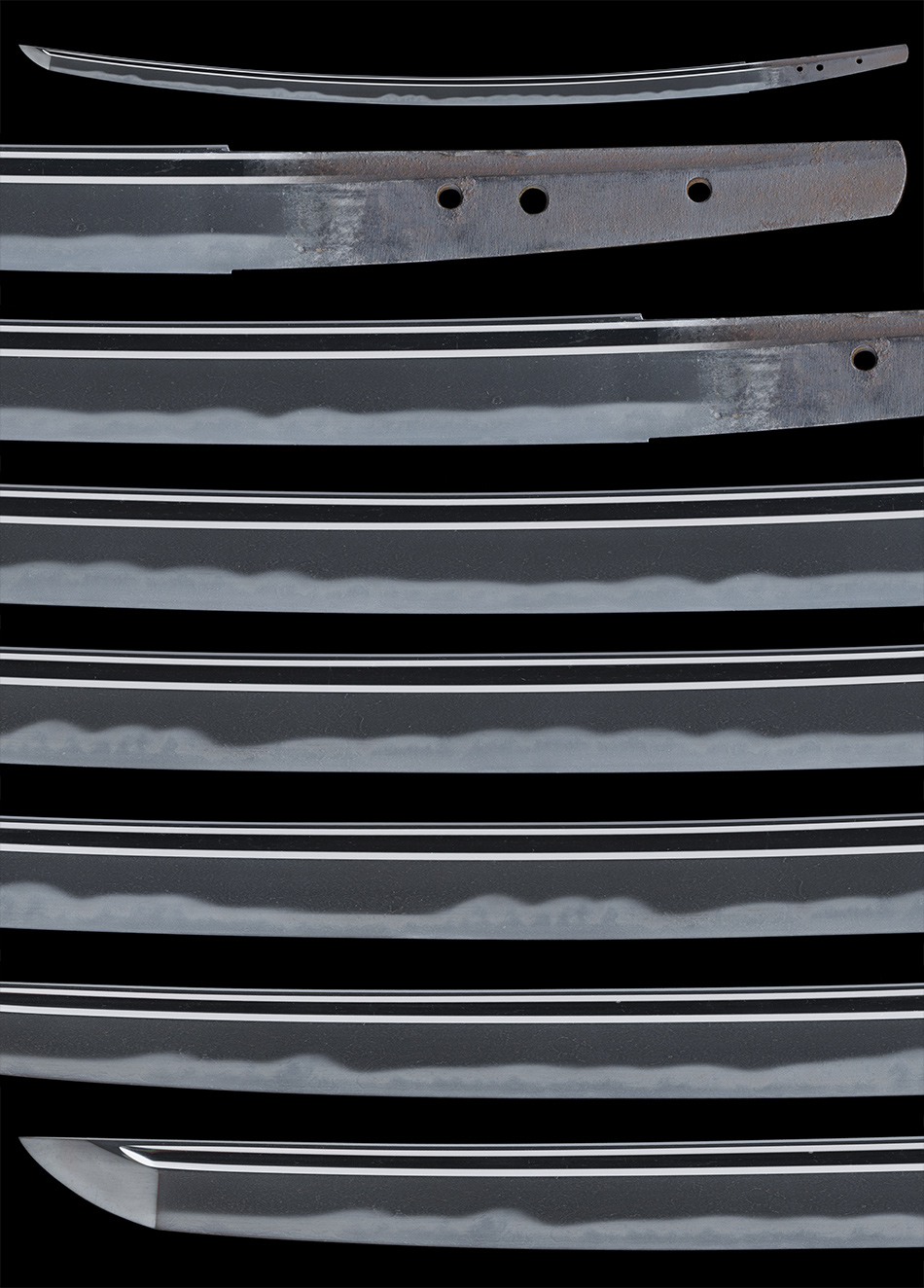
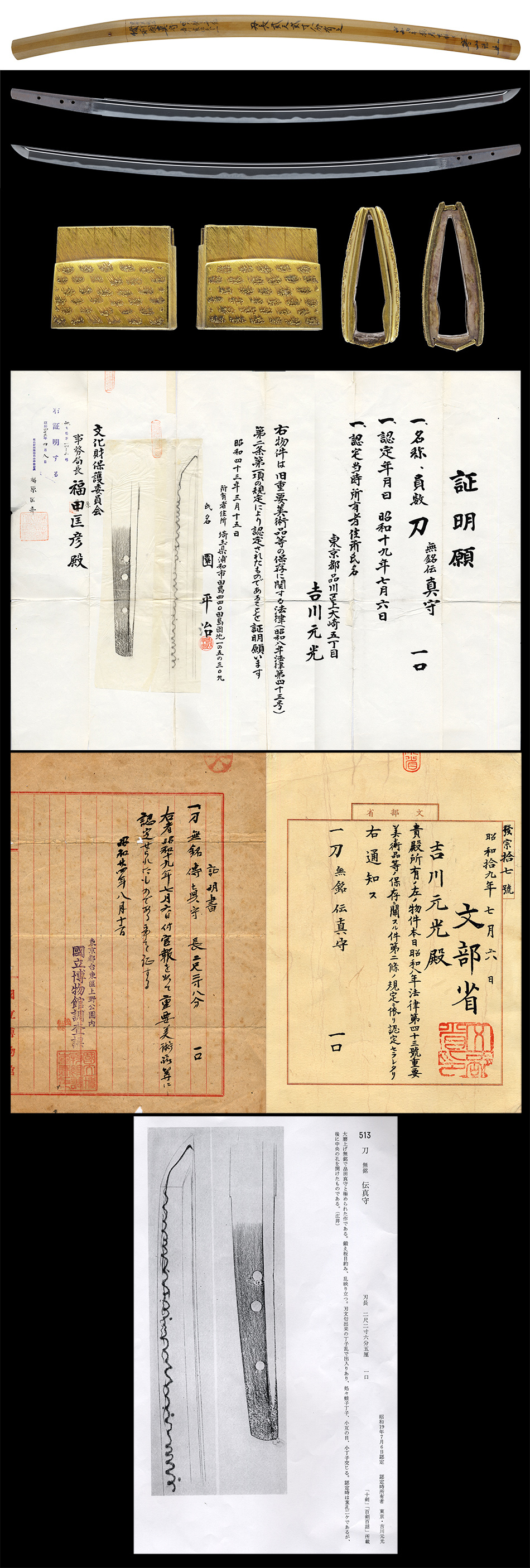
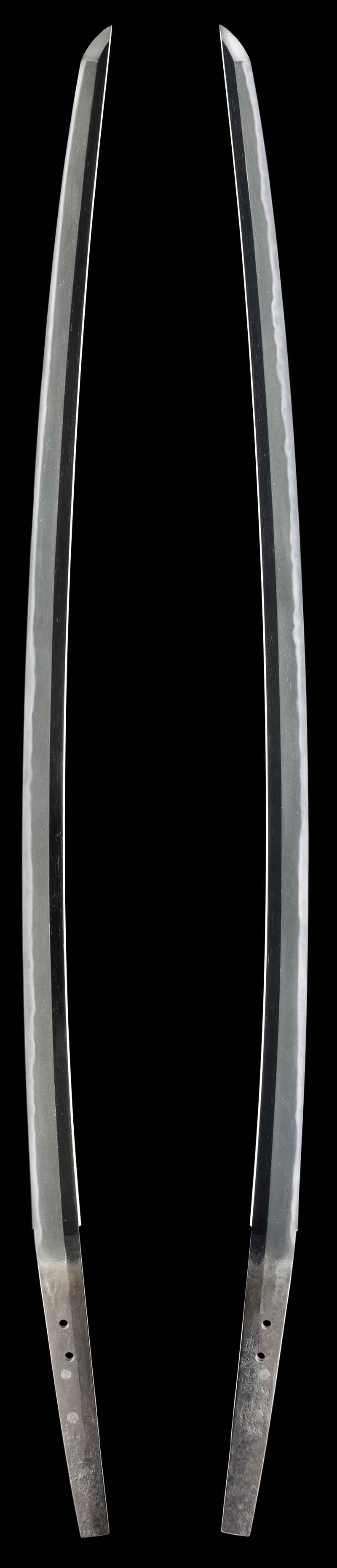
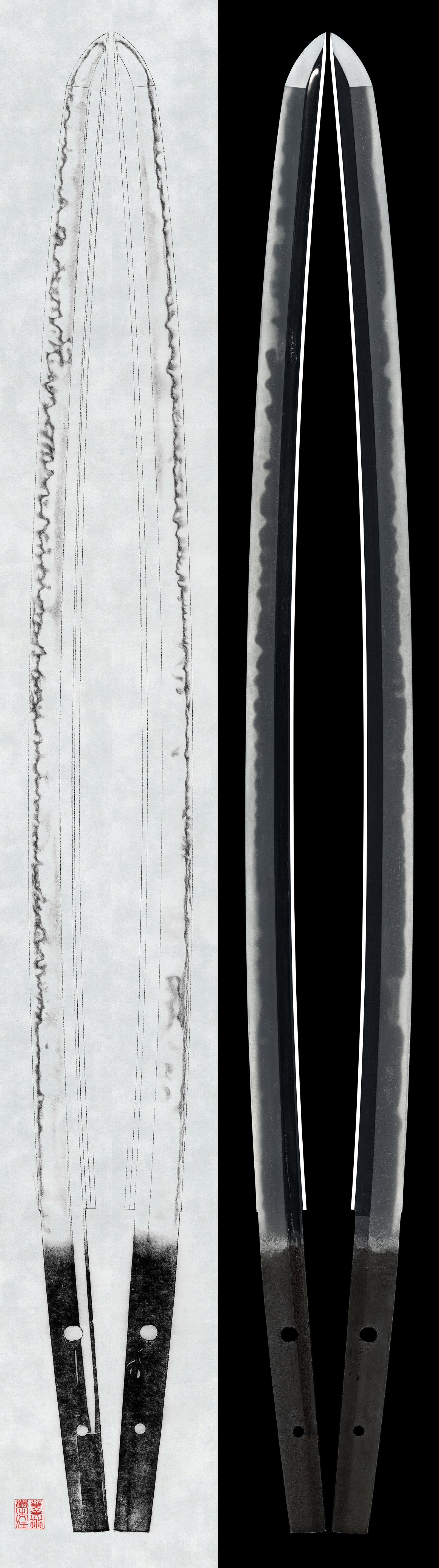
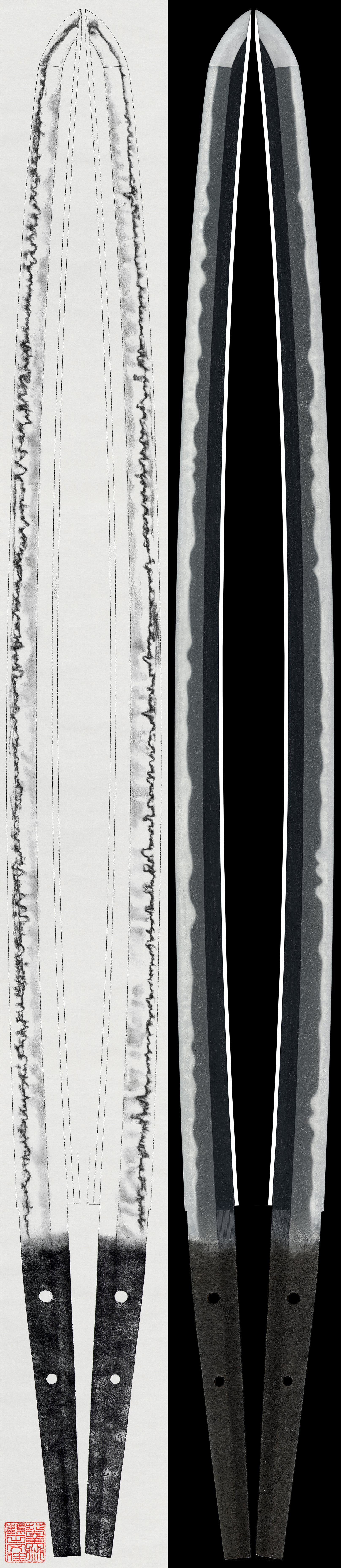
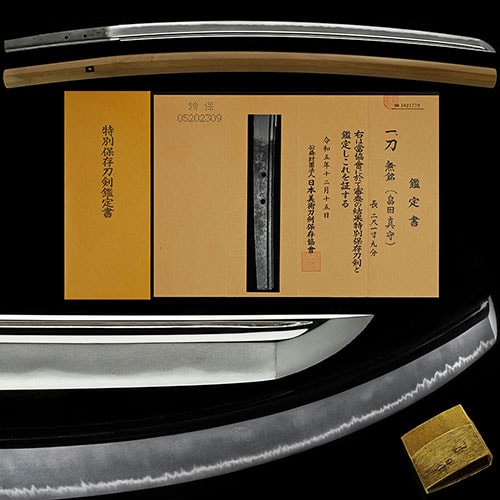
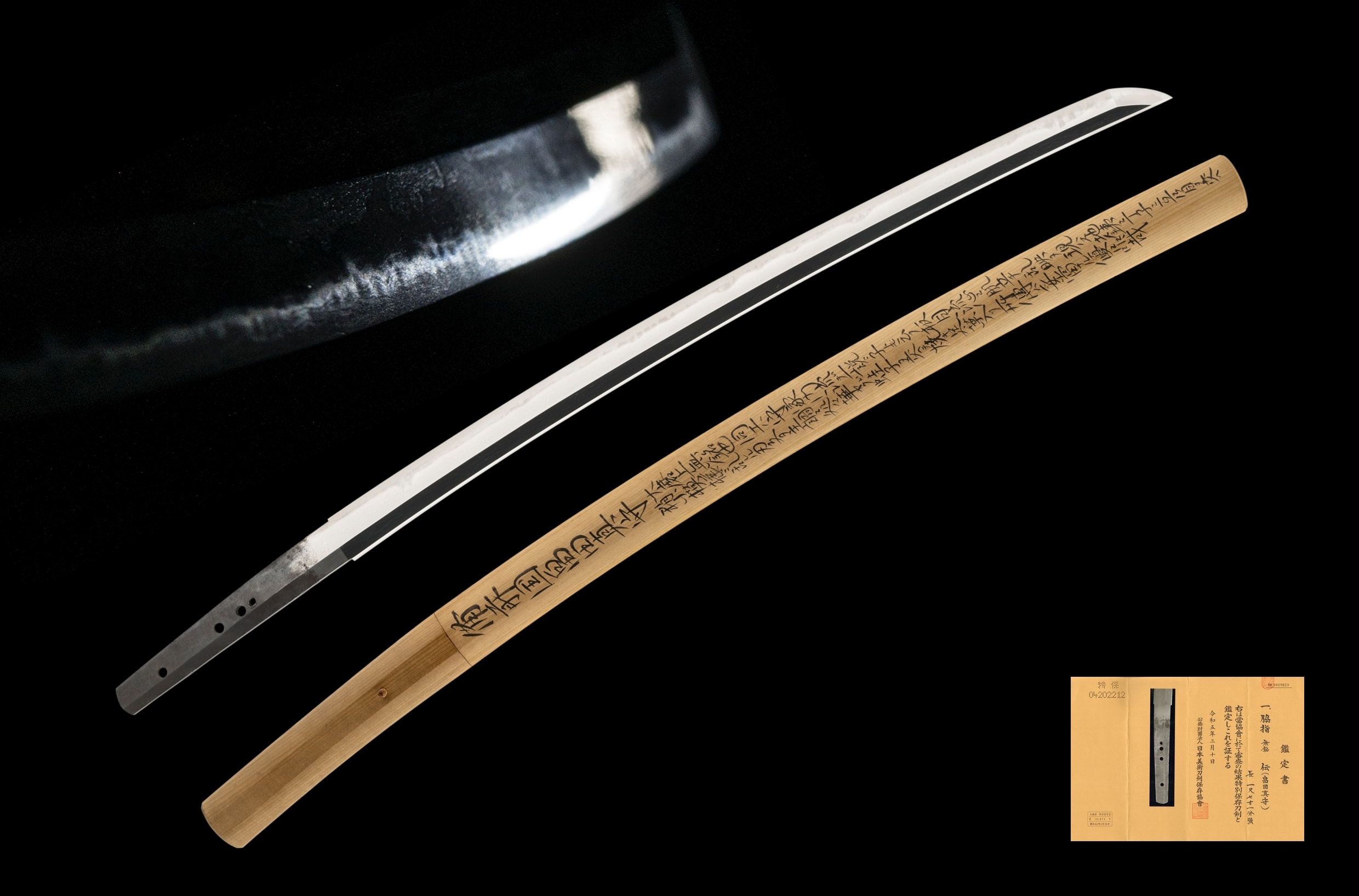
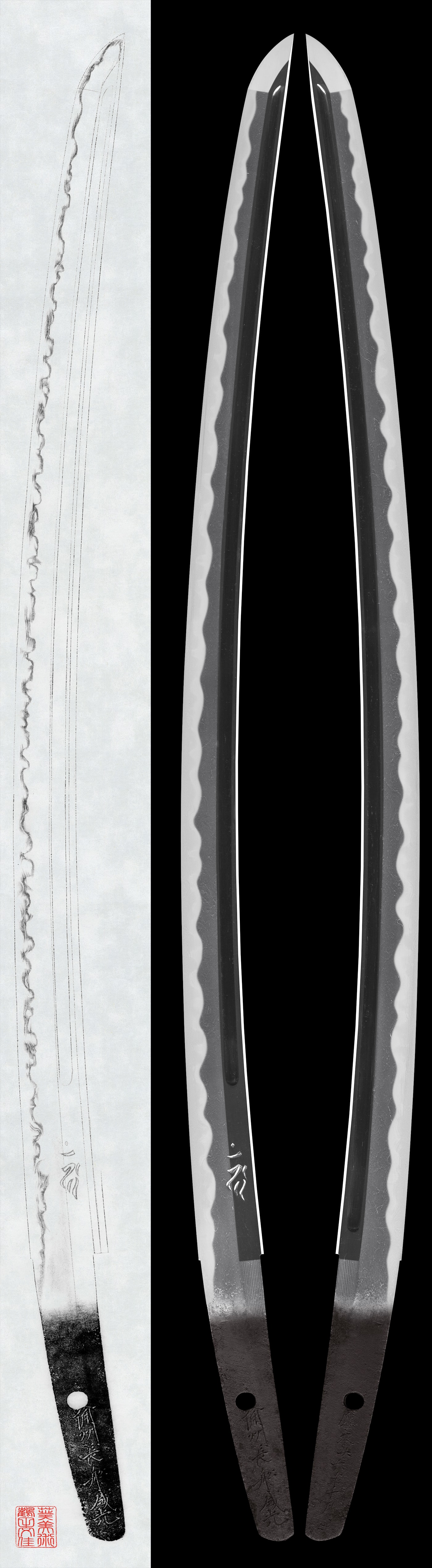
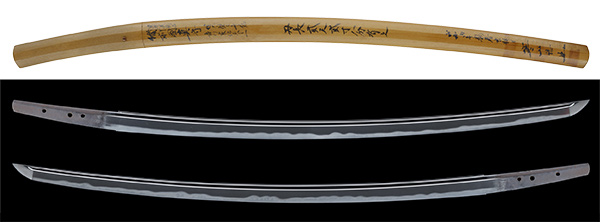
This is a katana attributed to Sanemori from the late Kamakura period. It features an itame hada with midare-utsuri, and a choji-midare hamon with nioi. The sword was once owned by the Kikkawa family, lords of the Iwakuni domain, and was designated as an Important Art Object by the Ministry of Education in Showa 19.

NihontoWatch MonNihontoWatch
MarketAuctionsEncyclopedia
Swords›Bizen-den›Hatakeda›Sanemori›Katana: Sanemori - Juyo Bijutsuhin
katanaJūyō Bijutsuhin
Hatakeda Sanemori

Katana: Sanemori - Juyo Bijutsuhin

mumei · Kamakura · nagasa 68.6cm · sori 2.2cm

SOLD
Hatakeda Sanemori — 1 of 5
Hatakeda Sanemori — 2 of 5
Hatakeda Sanemori — 3 of 5
Hatakeda Sanemori — 4 of 5
Hatakeda Sanemori — 5 of 5
1 / 5
1 / 5
Hatakeda Sanemori — 1 of 5Hatakeda Sanemori — 2 of 5Hatakeda Sanemori — 3 of 5Hatakeda Sanemori — 4 of 5Hatakeda Sanemori — 5 of 5
Measurements & details
Smith
Hatakeda Sanemori
Type
Katana
School
Hatakeda
Period
Around 1277–1293(Shoo)
Province
Bizen
Signature
Unsigned(40% of this smith's designated works are signed)
Measurements
Nagasa 68.6cmSori 2.2cmMotohaba 3cmSakihaba 2.5cmKasane 0.68cm
Description

This is a katana attributed to Sanemori from the late Kamakura period. It features an itame hada with midare-utsuri, and a choji-midare hamon with nioi. The sword was once owned by the Kikkawa family, lords of the Iwakuni domain, and was designated as an Important Art Object by the Ministry of Education in Showa 19.

About the maker

Sanemori

眞守

Hatakeda (Bizen) · Bizen · around 1277-1293

Fujishiro Jo-jo saku · Tōken Taikan top 8%

4 pieces on the market now

›

In Shoo 2 (1289), Hatakeda Sanemori signed a tachi with the long inscription Bizen no kuni Osafune junin Sama no jo Sanemori tsukuru, adding the yotsume-bishi crest and, a rarity for him, a date. Dated works of the Kenji, Koan and Shoo eras (1275 to 1293) survive, and the published sources state plainly that "his period of activity is clear." He is held to be the son of Hatakeda Moriie, by other accounts his pupil or grandson; it is also suggested that he served as one of Moriie's daisaku smiths, which would explain the scarcity of his own signed blades. Neither Moriie nor Sanemori ever signed Hatakeda-ju, the residence in the mei always reading Osafune, so Hatakeda is understood as a hamlet within Osafune village. His dated pieces fall in precisely the years of Osafune Nagamitsu, and that position, between his father's flamboyance and the composure of the Osafune mainline, is the axis on which everything written about him turns.

His prime manner is a choji-midare laced with kawazuko-choji, the pinched-waist tadpole choji in which, the published sources write, the Hatakeda smiths were "skilled as a specialty"[[c:1]]. What separates him from the father is scale. The NBTHK's standing formula for him, repeated in more than twenty of his texts, runs: "compared with Moriie, the midare generally tends toward a somewhat smaller pattern"[[c:2]]. The clusters sit a degree smaller, the rise and fall of the yakiba is less pronounced, and the tadpole heads often show plainest on the ura side. Gunome and togariba mix into the choji, ashi and yo enter richly, and the temper is nioi-primary with ko-nie, the nioiguchi described again and again as bright. Kinsuji and sunagashi work through the ha with small tobiyaki in places, and the boshi runs midare-komi or settles sugu in ko-maru, often with a pointed tendency and light hakikake.

The jigane carries the school's tell. He forges itame mixed with mokume that tends to stand, with fine thick ji-nie and chikei, under a vivid midare-utsuri; on the dated Shoo tachi the utsuri takes a mottled, jifu-utsuri-like state. The standing tendency is milder than in Moriie yet stronger than in the Osafune smiths. Beside it a second class of forging exists, a tightly knit ko-itame of great refinement; of one such blade, formerly of the Saijo Matsudaira family of Iyo, the NBTHK writes that it is "the finest among works attributed to this smith"[[c:3]]. A school point shows in the sugata as well: compared with Mitsutada and the Osafune smiths, the Hatakeda kissaki tends to extend, and his tachi keep a high koshizori with funbari.

The published sources sort his work into three manners: the flamboyant choji-midare, gunome mixed with choji, and a suguha-cho class, the latter two generally quieter than the father throughout. The mei divides along the same line. Most blades carry a two-character signature in one of two cuttings: the bold cutting yields flamboyant works resembling Moriie, while the small cutting is "generally close to Nagamitsu and Kagemitsu"[[c:4]]. The largest-signed and most flamboyantly tempered tachi he had seen, Honma Junji judged "without doubt the work of the first generation"[[c:5]]. Long signatures bearing the office title are rare and appear as both Sama no jo and Uma no jo; the Uma no jo tachi carries a chu-suguha with shallow notare, the rare signed ken a hoso-suguha with a yakizume boshi. Behind the two cuttings lies a deeper question: "it is thought there were two generations of the same name, but distinguishing them by the characters of the mei is at present difficult." The name itself demands care, for smiths signing Sanemori existed in Heian-period Hoki at Ohara and among the Kamakura-period Bitchu Aoe; the NBTHK notes that "their mei and workmanship of course differ in each case."

At his best the question is no longer his father but Osafune itself. The dated Shoo 2 tachi, the published sources write, "at first glance calls to mind a superior work of Nagamitsu"[[c:6]], and only the slightly standing jigane gives the Hatakeda line away. On rank the same sources are frank: "on the whole he does not reach Moriie, and the boshi especially falls short"[[c:7]]. Yet the same smaller pattern and gentler rise and fall that keep him below the father are what carry his quieter blades toward the Osafune masters. Unsigned attributions therefore rest on his own combination: the tadpole-laced choji over a slightly standing itame under vivid utsuri, the whole one degree calmer than Moriie. In one Tokubetsu Juyo case the appraisal was settled because the nakago shape closely matches his extant signed work. Surviving signed tachi are relatively few, and the published sources note that no tanto has been seen[[c:8]].

Fujishiro rates him Jo-jo saku, and fifty-seven designated works stand on record. There are no National Treasures among them, but six blades are Important Cultural Properties, one transmitted in the Asano family of Aki, and five are prewar Juyo Bijutsuhin, once held by collectors such as Kuroda Nagamichi and Kurokawa Fukusaburo. Five blades hold the Tokubetsu Juyo rank and forty-one the Juyo, forty-six in the two tiers together. His blades passed through the Kishu Tokugawa family, the Shimazu of Satsuma, the Saijo Matsudaira of Iyo, and the Mori, Kuroda and Maeda houses. Of recorded whereabouts today, examples rest in collections including the Kyushu National Museum, the Hayashibara Museum of Art and the Kurokawa Research Institute. For the collector he is more approachable than the great Osafune names yet still a smith of patience: most of what circulates is osuriage mumei, resting on the smaller-patterned tadpole choji, and such a blade appears only from time to time. A signed piece is another matter. The two-character tachi are few, the long-signed and dated works fewer still, and when one of the latter changes hands it is an event, carrying as it does the residence, the office title and the year in the smith's own hand.

Historical importance

Where Sanemori stands among comparable artisans: across all of nihontō, and within tradition, era, and period. The tiers (Foremost · Leading · Major · Notable) weigh official designations from the NBTHK and Japan's Agency for Cultural Affairs, together with historical honors of lasting repute such as the Sansaku and Meibutsu-chō.

随一
Foremost
屈指
Leading
有数
Major
著名
Notable

Select a lens to see how it's measured.

Designation record
57 designated works
Jūyō Bunkazai
6
Jūyō Bijutsuhin
5
Tokubetsu Jūyō
5
Jūyō
41
4 works by Sanemori on the market→
Sanemori — full profileHatakeda (Bizen) school

Dated Works

Years he was demonstrably active, proven by signed-and-dated blades

Active period
1277–1289Editorial estimate: 1277–1293
2 of 17 designated works carry a date
1270
1280
1290
About the school

Hatakeda

畠田

Bizen-den · Bizen

7 pieces on the market now

›

The Hatakeda school (畠田) takes its name from a hamlet in Bizen lying hard against Osafune village, and from that address its founder, Moriie, is called Hatakeda Moriie. The published sources place his line across the great middle decades of Kamakura, the earliest dated work a tachi of Bun'ei 9 (1272), with the name running on through the Nanbokucho years. Learn more →

11 recorded smiths162 designated works
Leading smiths
SmithEraDesignated
Moriie守家1259-126033
Moriie守家1232-123327
Sanemori眞守1277-129357
Mitsumori光守1278-128813
Moriie守家1280-129914
Explore the Hatakeda school →
Government Designation
Jūyō Bijutsuhin重要美術品
Important Art Object
›

A blade designated by the Japanese government for its high artistic and historical value, a standing comparable to an Important Sword. The designation carries an export restriction: a Jūyō Bijutsuhin is kept within Japan and forfeits its status if it ever leaves the country.

About this designation›

The Important Art Object (Jūyō Bijutsuhin) designation dates to the 1933 Law for the Preservation of Important Works of Fine Arts, passed during the Great Depression to stem the outflow of Japan’s cultural treasures abroad. The systems of Important Cultural Property and National Treasure did not yet cover privately-held works, so accreditation by the Minister of Education marked an object as a quasi-National Treasure that could not be exported. About 8,300 works were accredited before the system closed, roughly 1,000 of them swords. The 1950 Law for the Protection of Cultural Properties superseded it: higher-ranked pieces were promoted to Important Cultural Property, the rest kept their standing Jūyō Bijutsuhin status, and no new designations have been made since.

Seller
W
World Seiyudo
Established 2008 · 18 yrs on the market
🇯🇵Ships from Japan
›
✓Verified dealerworld-seiyudo.com
✓Ships worldwide✓English supportWire transferPayPalCredit card
Return policy

No cooling-off period or returns; refund only if the purchased sword is proven fake, capped at purchase price (excludes commission sales, accessories, auction items).

View all of World Seiyudo’s listings→View this item on the dealer’s site→

More works by Hatakeda Sanemori

View all →
Aoi Art
Jūyō
Katana - Jūyō - by Hatakeda Sanemori - Mumei (Unsigned) (Hatakeda Sanemori)Katana - Jūyō - by Hatakeda Sanemori - Mumei (Unsigned) (Hatakeda Sanemori)

Katana

ByHatakeda Sanemori
¥6,000,000
Tsuruginoya
Jūyō
Tachi - Jūyō - by Hatakeda Sanemori - Hatakeda Sanemori - Formerly owned by General Sadao ArakiTachi - Jūyō - by Hatakeda Sanemori - Hatakeda Sanemori - Formerly owned by General Sadao Araki

Tachi

ByHatakeda Sanemori
¥14,500,000
Aoi Art
Jūyō
Wakizashi - Jūyō - by Hatakeda Sanemori - Mumei (attributed to Hatakeda Sanemori)Wakizashi - Jūyō - by Hatakeda Sanemori - Mumei (attributed to Hatakeda Sanemori)

Wakizashi

ByHatakeda Sanemori
¥4,800,000
Samurai Museum
Jūyō
Katana - Jūyō - by Hatakeda Sanemori - Antique Japanese Sword Katana Attributed to Hatakeda Sanemori NBTHK JUYO TOKEN CertificateKatana - Jūyō - by Hatakeda Sanemori - Antique Japanese Sword Katana Attributed to Hatakeda Sanemori NBTHK JUYO TOKEN Certificate

Katana

ByHatakeda Sanemori
¥50,826

Previously sold by Hatakeda Sanemori

Eirakudo
Tokuho
Katana - Tokuho - by Hatakeda Sanemori - Hatakeda Sanemori - Tokubetsu Hozon TokenKatana - Tokuho - by Hatakeda Sanemori - Hatakeda Sanemori - Tokubetsu Hozon Token
Sold

Katana

ByHatakeda Sanemori
SOLD

More from the Hatakeda school

View all →
Choshuya
Jūyō
Katana - Jūyō - by Hatakeda Moritoshi - Kinpun-mei Hatakeda Moritoshi, Date Family (Kao)Katana - Jūyō - by Hatakeda Moritoshi - Kinpun-mei Hatakeda Moritoshi, Date Family (Kao)

Katana

ByHatakeda Moritoshi
¥5,000,000
Samurai Shokai
Hozon
Tanto - Hozon - by Hatakeda School - Moriie (Hatakeda) (Koto Saijo Saku) (Re-quenched)Tanto - Hozon - by Hatakeda School - Moriie (Hatakeda) (Koto Saijo Saku) (Re-quenched)

Tantō

ByHatakeda School
¥850,000
Unique Japan
Tokuho
Wakizashi - Tokuho - by Hatakeda School - A Sanemori WakizashiWakizashi - Tokuho - by Hatakeda School - A Sanemori Wakizashi

Wakizashi

ByHatakeda School
Ask

More from the Bizen tradition

View all →
Katanahanbai
Tokuho
Wakizashi - Tokuho - by Osafune Tomomitsu - Bishu Osafune Tomomitsu - Dated Teiji 5th Year, 8th MonthWakizashi - Tokuho - by Osafune Tomomitsu - Bishu Osafune Tomomitsu - Dated Teiji 5th Year, 8th Month

Wakizashi

ByOsafune Tomomitsu
¥4,800,000
Eirakudo
Jūyō Bijutsuhin
Katana - Jubi - by Chu-Aoe Sadatsugu - Aoe Sadatsugu - Juyo BijutsuhinKatana - Jubi - by Chu-Aoe Sadatsugu - Aoe Sadatsugu - Juyo Bijutsuhin

Katana

ByChu-Aoe Sadatsugu
Ask
Tsuruginoya
Jūyō
Katana - Jūyō - by Fukuoka Ichimonji School - Mumei Fukuoka IchimonjiKatana - Jūyō - by Fukuoka Ichimonji School - Mumei Fukuoka Ichimonji

Katana

ByFukuoka Ichimonji School
¥10,000,000
Nihonto.com
Jūyō
Tanto - Jūyō - by Osafune Kagemitsu - Juyo Tanto by Bizen KagemitsuTanto - Jūyō - by Osafune Kagemitsu - Juyo Tanto by Bizen Kagemitsu

Tantō

ByOsafune Kagemitsu
¥89,500
Eirakudo
Jūyō
Tachi - Jūyō - by Fukuoka Ichimonji School - Fukuoka Ichimonji - Juyo TokenTachi - Jūyō - by Fukuoka Ichimonji School - Fukuoka Ichimonji - Juyo Token

Tachi

ByFukuoka Ichimonji School
Ask
Aoi Art
Tokuho
Katana - Tokuho - by Osafune Motomitsu - Mumei (Attributed to Osafune Motomitsu)Katana - Tokuho - by Osafune Motomitsu - Mumei (Attributed to Osafune Motomitsu)

Katana

ByOsafune Motomitsu
¥1,200,000
Aoi Art
Jūyō
Katana - Jūyō - by Yoshioka Ichimonji Sukemitsu - Ichi Bizen-koku Yoshioka Sakon Sho (Sukemitsu)Katana - Jūyō - by Yoshioka Ichimonji Sukemitsu - Ichi Bizen-koku Yoshioka Sakon Sho (Sukemitsu)

Katana

ByYoshioka Ichimonji Sukemitsu
¥9,500,000
Goushuya
Jūyō
Katana - Jūyō - by Osafune Kanemitsu - Kanemitsu with Gold Inlay InscriptionKatana - Jūyō - by Osafune Kanemitsu - Kanemitsu with Gold Inlay Inscription

Katana

ByOsafune Kanemitsu
Ask

Swords

  • Katana
  • Wakizashi
  • Tantō
  • Tachi
  • Naginata
  • Yari

Fittings

  • Tsuba
  • Fuchi-Kashira
  • Kozuka
  • Menuki

By Certification

  • Tokujū
  • Jūyō
  • Tokuho
  • Hozon

Resources

  • Dealer Directory
  • Artist Directory
  • Glossary
  • Browse All
Nihontowatch© 2026
TermsPrivacyCookiesAbout

Description

This is a katana attributed to Sanemori from the late Kamakura period. It features an itame hada with midare-utsuri, and a choji-midare hamon with nioi. The sword was once owned by the Kikkawa family, lords of the Iwakuni domain, and was designated as an Important Art Object by the Ministry of Education in Showa 19.

NihontoWatch MonNihontoWatch
MarketAuctionsEncyclopedia
Swords›Bizen-den›Hatakeda›Sanemori›Katana: Sanemori - Juyo Bijutsuhin
katanaJūyō Bijutsuhin
Hatakeda Sanemori

Katana: Sanemori - Juyo Bijutsuhin

mumei · Kamakura · nagasa 68.6cm · sori 2.2cm

SOLD
Hatakeda Sanemori — 1 of 5
Hatakeda Sanemori — 2 of 5
Hatakeda Sanemori — 3 of 5
Hatakeda Sanemori — 4 of 5
Hatakeda Sanemori — 5 of 5
1 / 5
1 / 5
Hatakeda Sanemori — 1 of 5Hatakeda Sanemori — 2 of 5Hatakeda Sanemori — 3 of 5Hatakeda Sanemori — 4 of 5Hatakeda Sanemori — 5 of 5
Measurements & details
Smith
Hatakeda Sanemori
Type
Katana
School
Hatakeda
Period
Around 1277–1293(Shoo)
Province
Bizen
Signature
Unsigned(40% of this smith's designated works are signed)
Measurements
Nagasa 68.6cmSori 2.2cmMotohaba 3cmSakihaba 2.5cmKasane 0.68cm
Description

This is a katana attributed to Sanemori from the late Kamakura period. It features an itame hada with midare-utsuri, and a choji-midare hamon with nioi. The sword was once owned by the Kikkawa family, lords of the Iwakuni domain, and was designated as an Important Art Object by the Ministry of Education in Showa 19.

About the maker

Sanemori

眞守

Hatakeda (Bizen) · Bizen · around 1277-1293

Fujishiro Jo-jo saku · Tōken Taikan top 8%

4 pieces on the market now

›

In Shoo 2 (1289), Hatakeda Sanemori signed a tachi with the long inscription Bizen no kuni Osafune junin Sama no jo Sanemori tsukuru, adding the yotsume-bishi crest and, a rarity for him, a date. Dated works of the Kenji, Koan and Shoo eras (1275 to 1293) survive, and the published sources state plainly that "his period of activity is clear." He is held to be the son of Hatakeda Moriie, by other accounts his pupil or grandson; it is also suggested that he served as one of Moriie's daisaku smiths, which would explain the scarcity of his own signed blades. Neither Moriie nor Sanemori ever signed Hatakeda-ju, the residence in the mei always reading Osafune, so Hatakeda is understood as a hamlet within Osafune village. His dated pieces fall in precisely the years of Osafune Nagamitsu, and that position, between his father's flamboyance and the composure of the Osafune mainline, is the axis on which everything written about him turns.

His prime manner is a choji-midare laced with kawazuko-choji, the pinched-waist tadpole choji in which, the published sources write, the Hatakeda smiths were "skilled as a specialty"[[c:1]]. What separates him from the father is scale. The NBTHK's standing formula for him, repeated in more than twenty of his texts, runs: "compared with Moriie, the midare generally tends toward a somewhat smaller pattern"[[c:2]]. The clusters sit a degree smaller, the rise and fall of the yakiba is less pronounced, and the tadpole heads often show plainest on the ura side. Gunome and togariba mix into the choji, ashi and yo enter richly, and the temper is nioi-primary with ko-nie, the nioiguchi described again and again as bright. Kinsuji and sunagashi work through the ha with small tobiyaki in places, and the boshi runs midare-komi or settles sugu in ko-maru, often with a pointed tendency and light hakikake.

The jigane carries the school's tell. He forges itame mixed with mokume that tends to stand, with fine thick ji-nie and chikei, under a vivid midare-utsuri; on the dated Shoo tachi the utsuri takes a mottled, jifu-utsuri-like state. The standing tendency is milder than in Moriie yet stronger than in the Osafune smiths. Beside it a second class of forging exists, a tightly knit ko-itame of great refinement; of one such blade, formerly of the Saijo Matsudaira family of Iyo, the NBTHK writes that it is "the finest among works attributed to this smith"[[c:3]]. A school point shows in the sugata as well: compared with Mitsutada and the Osafune smiths, the Hatakeda kissaki tends to extend, and his tachi keep a high koshizori with funbari.

The published sources sort his work into three manners: the flamboyant choji-midare, gunome mixed with choji, and a suguha-cho class, the latter two generally quieter than the father throughout. The mei divides along the same line. Most blades carry a two-character signature in one of two cuttings: the bold cutting yields flamboyant works resembling Moriie, while the small cutting is "generally close to Nagamitsu and Kagemitsu"[[c:4]]. The largest-signed and most flamboyantly tempered tachi he had seen, Honma Junji judged "without doubt the work of the first generation"[[c:5]]. Long signatures bearing the office title are rare and appear as both Sama no jo and Uma no jo; the Uma no jo tachi carries a chu-suguha with shallow notare, the rare signed ken a hoso-suguha with a yakizume boshi. Behind the two cuttings lies a deeper question: "it is thought there were two generations of the same name, but distinguishing them by the characters of the mei is at present difficult." The name itself demands care, for smiths signing Sanemori existed in Heian-period Hoki at Ohara and among the Kamakura-period Bitchu Aoe; the NBTHK notes that "their mei and workmanship of course differ in each case."

At his best the question is no longer his father but Osafune itself. The dated Shoo 2 tachi, the published sources write, "at first glance calls to mind a superior work of Nagamitsu"[[c:6]], and only the slightly standing jigane gives the Hatakeda line away. On rank the same sources are frank: "on the whole he does not reach Moriie, and the boshi especially falls short"[[c:7]]. Yet the same smaller pattern and gentler rise and fall that keep him below the father are what carry his quieter blades toward the Osafune masters. Unsigned attributions therefore rest on his own combination: the tadpole-laced choji over a slightly standing itame under vivid utsuri, the whole one degree calmer than Moriie. In one Tokubetsu Juyo case the appraisal was settled because the nakago shape closely matches his extant signed work. Surviving signed tachi are relatively few, and the published sources note that no tanto has been seen[[c:8]].

Fujishiro rates him Jo-jo saku, and fifty-seven designated works stand on record. There are no National Treasures among them, but six blades are Important Cultural Properties, one transmitted in the Asano family of Aki, and five are prewar Juyo Bijutsuhin, once held by collectors such as Kuroda Nagamichi and Kurokawa Fukusaburo. Five blades hold the Tokubetsu Juyo rank and forty-one the Juyo, forty-six in the two tiers together. His blades passed through the Kishu Tokugawa family, the Shimazu of Satsuma, the Saijo Matsudaira of Iyo, and the Mori, Kuroda and Maeda houses. Of recorded whereabouts today, examples rest in collections including the Kyushu National Museum, the Hayashibara Museum of Art and the Kurokawa Research Institute. For the collector he is more approachable than the great Osafune names yet still a smith of patience: most of what circulates is osuriage mumei, resting on the smaller-patterned tadpole choji, and such a blade appears only from time to time. A signed piece is another matter. The two-character tachi are few, the long-signed and dated works fewer still, and when one of the latter changes hands it is an event, carrying as it does the residence, the office title and the year in the smith's own hand.

Historical importance

Where Sanemori stands among comparable artisans: across all of nihontō, and within tradition, era, and period. The tiers (Foremost · Leading · Major · Notable) weigh official designations from the NBTHK and Japan's Agency for Cultural Affairs, together with historical honors of lasting repute such as the Sansaku and Meibutsu-chō.

随一
Foremost
屈指
Leading
有数
Major
著名
Notable

Select a lens to see how it's measured.

Designation record
57 designated works
Jūyō Bunkazai
6
Jūyō Bijutsuhin
5
Tokubetsu Jūyō
5
Jūyō
41
4 works by Sanemori on the market→
Sanemori — full profileHatakeda (Bizen) school

Dated Works

Years he was demonstrably active, proven by signed-and-dated blades

Active period
1277–1289Editorial estimate: 1277–1293
2 of 17 designated works carry a date
1270
1280
1290
About the school

Hatakeda

畠田

Bizen-den · Bizen

7 pieces on the market now

›

The Hatakeda school (畠田) takes its name from a hamlet in Bizen lying hard against Osafune village, and from that address its founder, Moriie, is called Hatakeda Moriie. The published sources place his line across the great middle decades of Kamakura, the earliest dated work a tachi of Bun'ei 9 (1272), with the name running on through the Nanbokucho years. Learn more →

11 recorded smiths162 designated works
Leading smiths
SmithEraDesignated
Moriie守家1259-126033
Moriie守家1232-123327
Sanemori眞守1277-129357
Mitsumori光守1278-128813
Moriie守家1280-129914
Explore the Hatakeda school →
Government Designation
Jūyō Bijutsuhin重要美術品
Important Art Object
›

A blade designated by the Japanese government for its high artistic and historical value, a standing comparable to an Important Sword. The designation carries an export restriction: a Jūyō Bijutsuhin is kept within Japan and forfeits its status if it ever leaves the country.

About this designation›

The Important Art Object (Jūyō Bijutsuhin) designation dates to the 1933 Law for the Preservation of Important Works of Fine Arts, passed during the Great Depression to stem the outflow of Japan’s cultural treasures abroad. The systems of Important Cultural Property and National Treasure did not yet cover privately-held works, so accreditation by the Minister of Education marked an object as a quasi-National Treasure that could not be exported. About 8,300 works were accredited before the system closed, roughly 1,000 of them swords. The 1950 Law for the Protection of Cultural Properties superseded it: higher-ranked pieces were promoted to Important Cultural Property, the rest kept their standing Jūyō Bijutsuhin status, and no new designations have been made since.

Seller
W
World Seiyudo
Established 2008 · 18 yrs on the market
🇯🇵Ships from Japan
›
✓Verified dealerworld-seiyudo.com
✓Ships worldwide✓English supportWire transferPayPalCredit card
Return policy

No cooling-off period or returns; refund only if the purchased sword is proven fake, capped at purchase price (excludes commission sales, accessories, auction items).

View all of World Seiyudo’s listings→View this item on the dealer’s site→

More works by Hatakeda Sanemori

View all →
Aoi Art
Jūyō
Katana - Jūyō - by Hatakeda Sanemori - Mumei (Unsigned) (Hatakeda Sanemori)Katana - Jūyō - by Hatakeda Sanemori - Mumei (Unsigned) (Hatakeda Sanemori)

Katana

ByHatakeda Sanemori
¥6,000,000
Tsuruginoya
Jūyō
Tachi - Jūyō - by Hatakeda Sanemori - Hatakeda Sanemori - Formerly owned by General Sadao ArakiTachi - Jūyō - by Hatakeda Sanemori - Hatakeda Sanemori - Formerly owned by General Sadao Araki

Tachi

ByHatakeda Sanemori
¥14,500,000
Aoi Art
Jūyō
Wakizashi - Jūyō - by Hatakeda Sanemori - Mumei (attributed to Hatakeda Sanemori)Wakizashi - Jūyō - by Hatakeda Sanemori - Mumei (attributed to Hatakeda Sanemori)

Wakizashi

ByHatakeda Sanemori
¥4,800,000
Samurai Museum
Jūyō
Katana - Jūyō - by Hatakeda Sanemori - Antique Japanese Sword Katana Attributed to Hatakeda Sanemori NBTHK JUYO TOKEN CertificateKatana - Jūyō - by Hatakeda Sanemori - Antique Japanese Sword Katana Attributed to Hatakeda Sanemori NBTHK JUYO TOKEN Certificate

Katana

ByHatakeda Sanemori
¥50,826

Previously sold by Hatakeda Sanemori

Eirakudo
Tokuho
Katana - Tokuho - by Hatakeda Sanemori - Hatakeda Sanemori - Tokubetsu Hozon TokenKatana - Tokuho - by Hatakeda Sanemori - Hatakeda Sanemori - Tokubetsu Hozon Token
Sold

Katana

ByHatakeda Sanemori
SOLD

More from the Hatakeda school

View all →
Choshuya
Jūyō
Katana - Jūyō - by Hatakeda Moritoshi - Kinpun-mei Hatakeda Moritoshi, Date Family (Kao)Katana - Jūyō - by Hatakeda Moritoshi - Kinpun-mei Hatakeda Moritoshi, Date Family (Kao)

Katana

ByHatakeda Moritoshi
¥5,000,000
Samurai Shokai
Hozon
Tanto - Hozon - by Hatakeda School - Moriie (Hatakeda) (Koto Saijo Saku) (Re-quenched)Tanto - Hozon - by Hatakeda School - Moriie (Hatakeda) (Koto Saijo Saku) (Re-quenched)

Tantō

ByHatakeda School
¥850,000
Unique Japan
Tokuho
Wakizashi - Tokuho - by Hatakeda School - A Sanemori WakizashiWakizashi - Tokuho - by Hatakeda School - A Sanemori Wakizashi

Wakizashi

ByHatakeda School
Ask

More from the Bizen tradition

View all →
Katanahanbai
Tokuho
Wakizashi - Tokuho - by Osafune Tomomitsu - Bishu Osafune Tomomitsu - Dated Teiji 5th Year, 8th MonthWakizashi - Tokuho - by Osafune Tomomitsu - Bishu Osafune Tomomitsu - Dated Teiji 5th Year, 8th Month

Wakizashi

ByOsafune Tomomitsu
¥4,800,000
Eirakudo
Jūyō Bijutsuhin
Katana - Jubi - by Chu-Aoe Sadatsugu - Aoe Sadatsugu - Juyo BijutsuhinKatana - Jubi - by Chu-Aoe Sadatsugu - Aoe Sadatsugu - Juyo Bijutsuhin

Katana

ByChu-Aoe Sadatsugu
Ask
Tsuruginoya
Jūyō
Katana - Jūyō - by Fukuoka Ichimonji School - Mumei Fukuoka IchimonjiKatana - Jūyō - by Fukuoka Ichimonji School - Mumei Fukuoka Ichimonji

Katana

ByFukuoka Ichimonji School
¥10,000,000
Nihonto.com
Jūyō
Tanto - Jūyō - by Osafune Kagemitsu - Juyo Tanto by Bizen KagemitsuTanto - Jūyō - by Osafune Kagemitsu - Juyo Tanto by Bizen Kagemitsu

Tantō

ByOsafune Kagemitsu
¥89,500
Eirakudo
Jūyō
Tachi - Jūyō - by Fukuoka Ichimonji School - Fukuoka Ichimonji - Juyo TokenTachi - Jūyō - by Fukuoka Ichimonji School - Fukuoka Ichimonji - Juyo Token

Tachi

ByFukuoka Ichimonji School
Ask
Aoi Art
Tokuho
Katana - Tokuho - by Osafune Motomitsu - Mumei (Attributed to Osafune Motomitsu)Katana - Tokuho - by Osafune Motomitsu - Mumei (Attributed to Osafune Motomitsu)

Katana

ByOsafune Motomitsu
¥1,200,000
Aoi Art
Jūyō
Katana - Jūyō - by Yoshioka Ichimonji Sukemitsu - Ichi Bizen-koku Yoshioka Sakon Sho (Sukemitsu)Katana - Jūyō - by Yoshioka Ichimonji Sukemitsu - Ichi Bizen-koku Yoshioka Sakon Sho (Sukemitsu)

Katana

ByYoshioka Ichimonji Sukemitsu
¥9,500,000
Goushuya
Jūyō
Katana - Jūyō - by Osafune Kanemitsu - Kanemitsu with Gold Inlay InscriptionKatana - Jūyō - by Osafune Kanemitsu - Kanemitsu with Gold Inlay Inscription

Katana

ByOsafune Kanemitsu
Ask

Swords

  • Katana
  • Wakizashi
  • Tantō
  • Tachi
  • Naginata
  • Yari

Fittings

  • Tsuba
  • Fuchi-Kashira
  • Kozuka
  • Menuki

By Certification

  • Tokujū
  • Jūyō
  • Tokuho
  • Hozon

Resources

  • Dealer Directory
  • Artist Directory
  • Glossary
  • Browse All
Nihontowatch© 2026
TermsPrivacyCookiesAbout
NihontoWatch Mon

NihontoWatch

MarketAuctions
Encyclopedia
NihontoWatch Mon

NihontoWatch

MarketAuctions
Encyclopedia