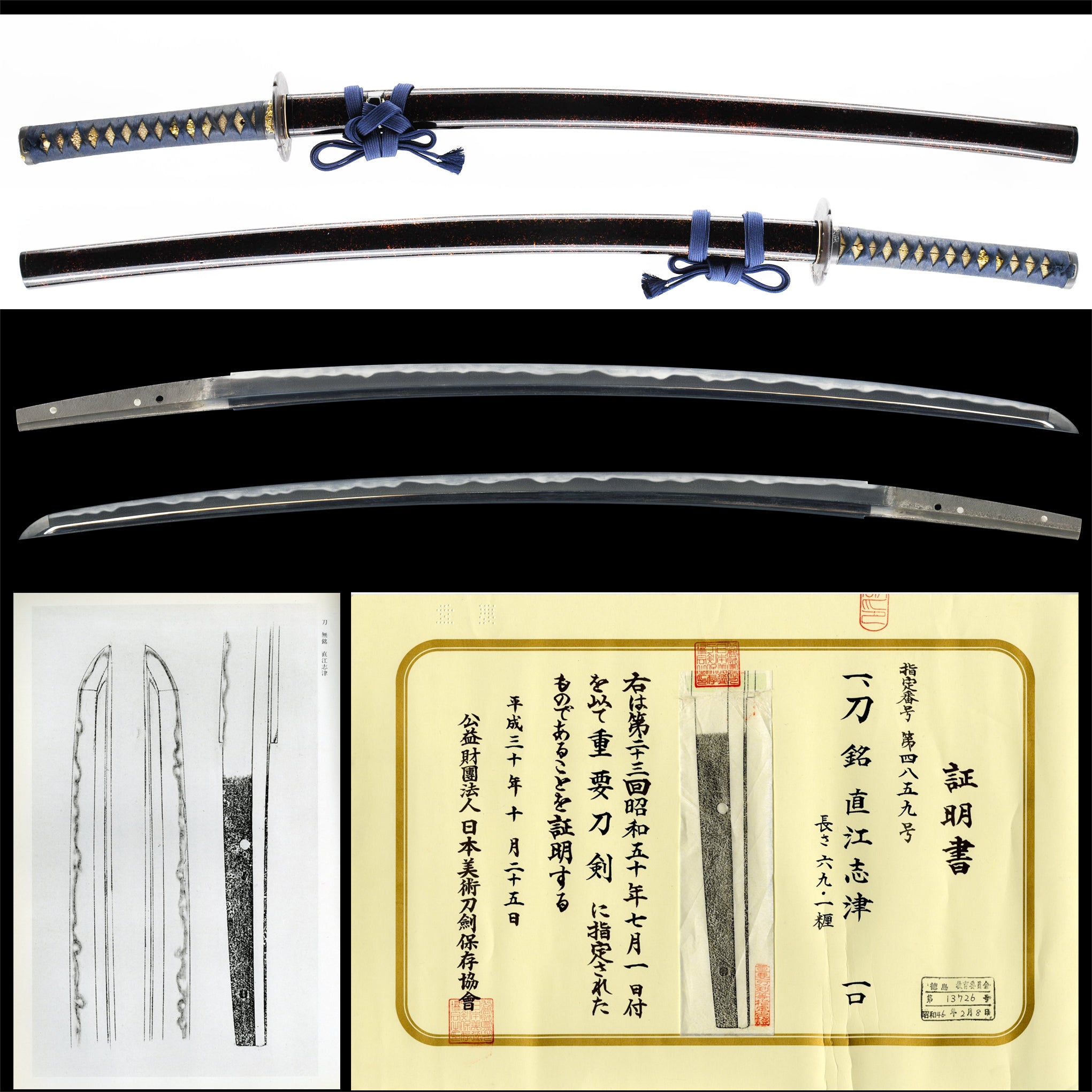
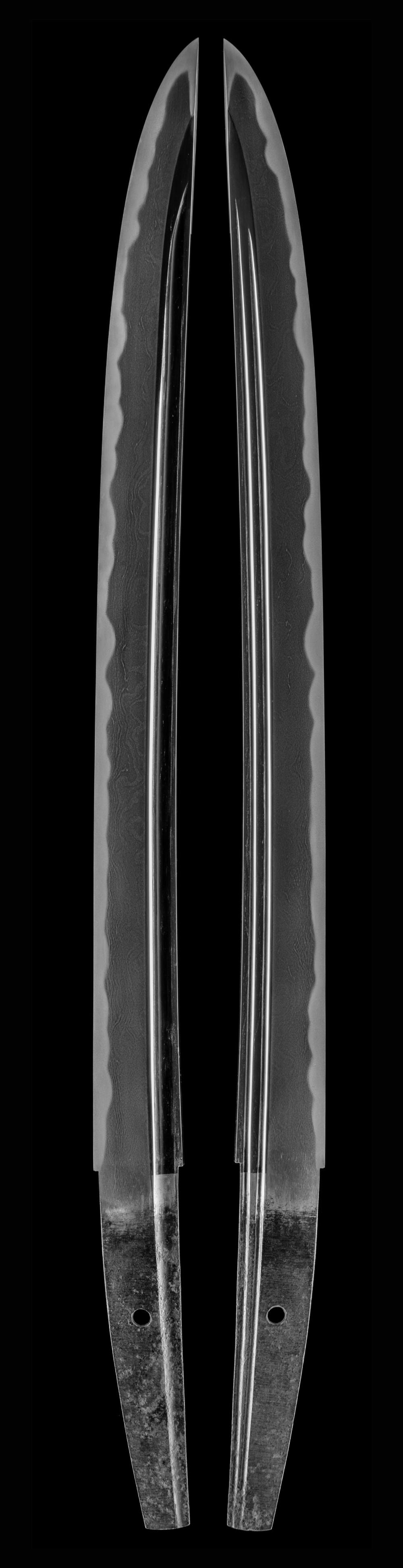
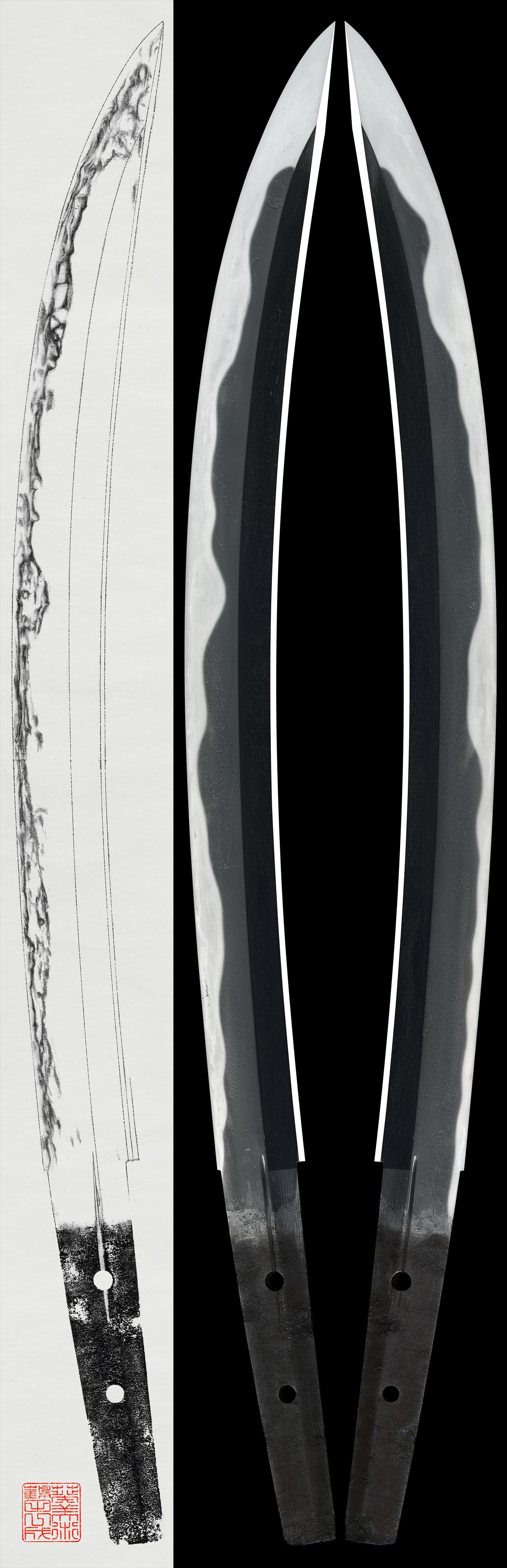
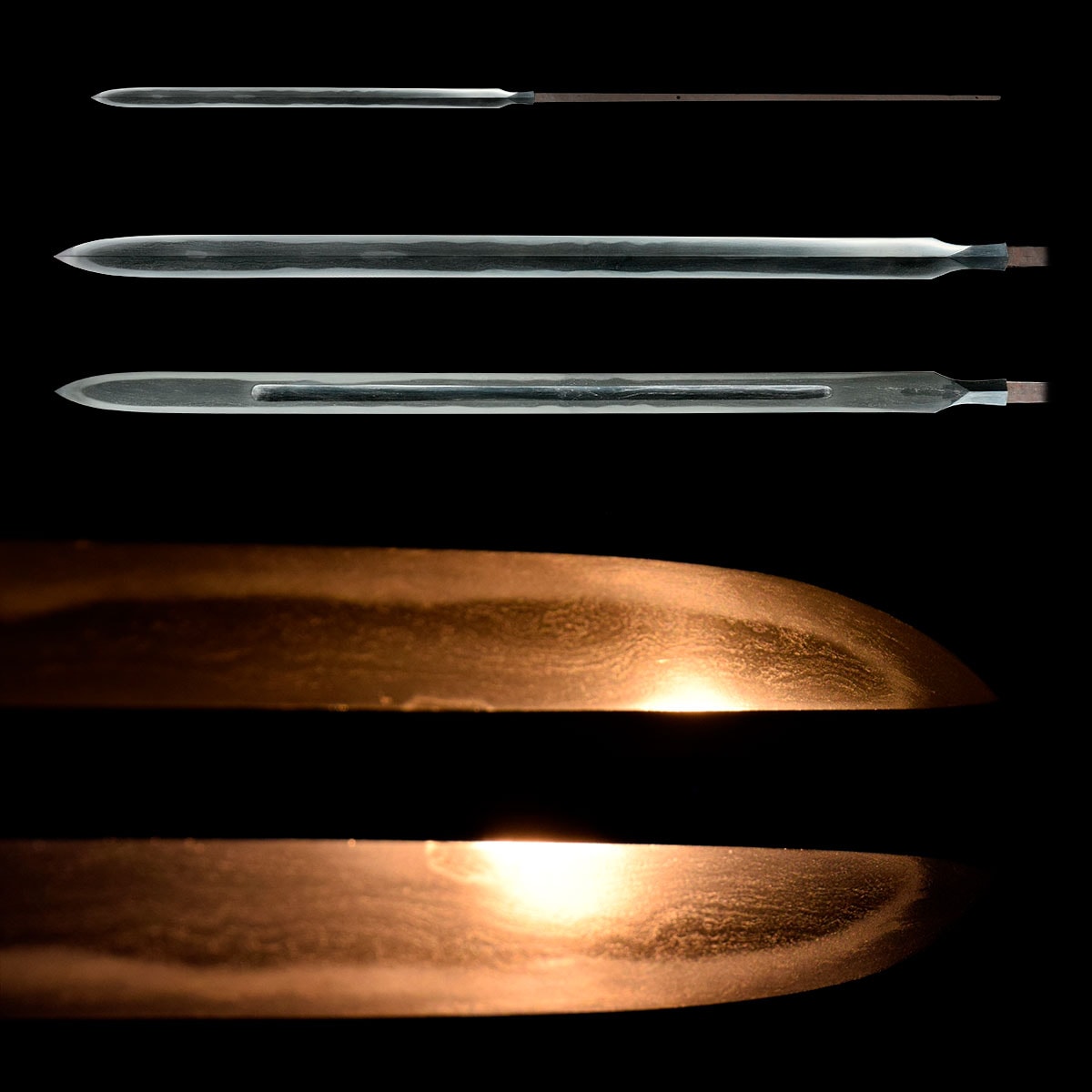
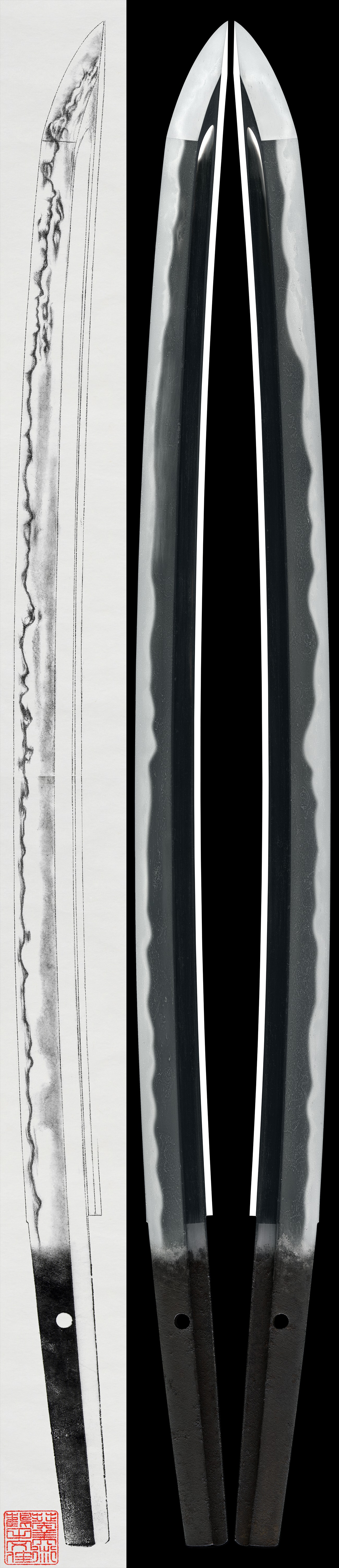
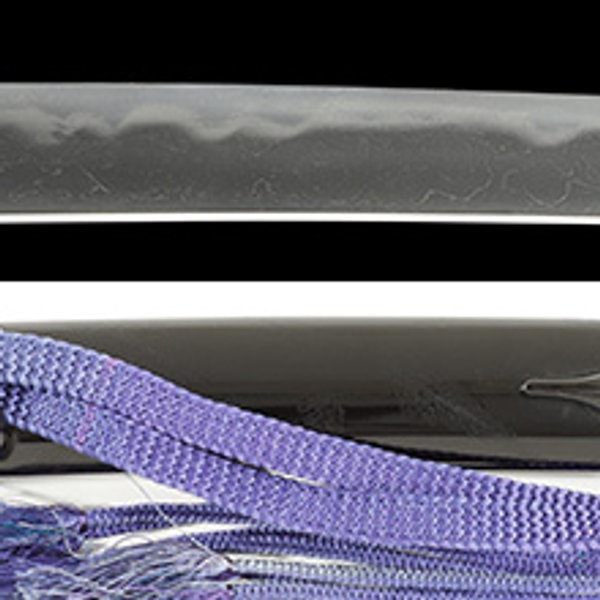
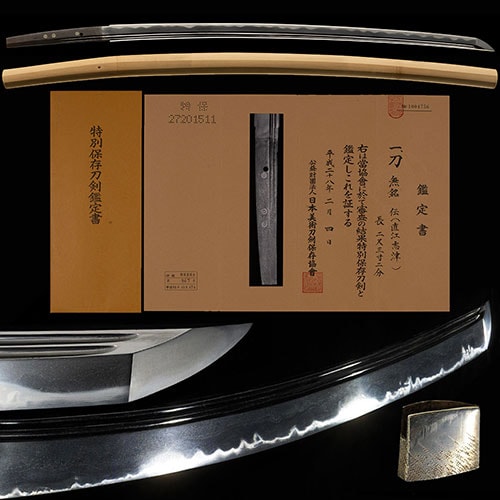
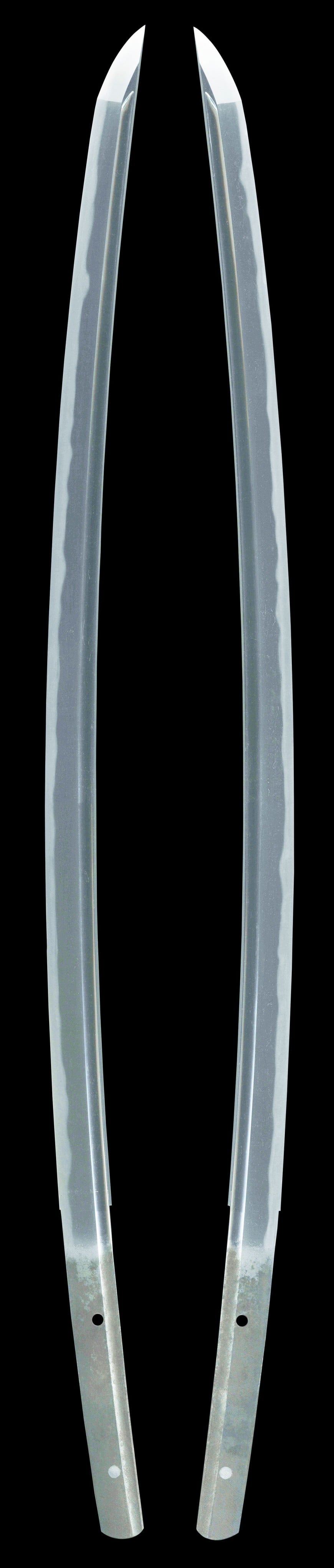
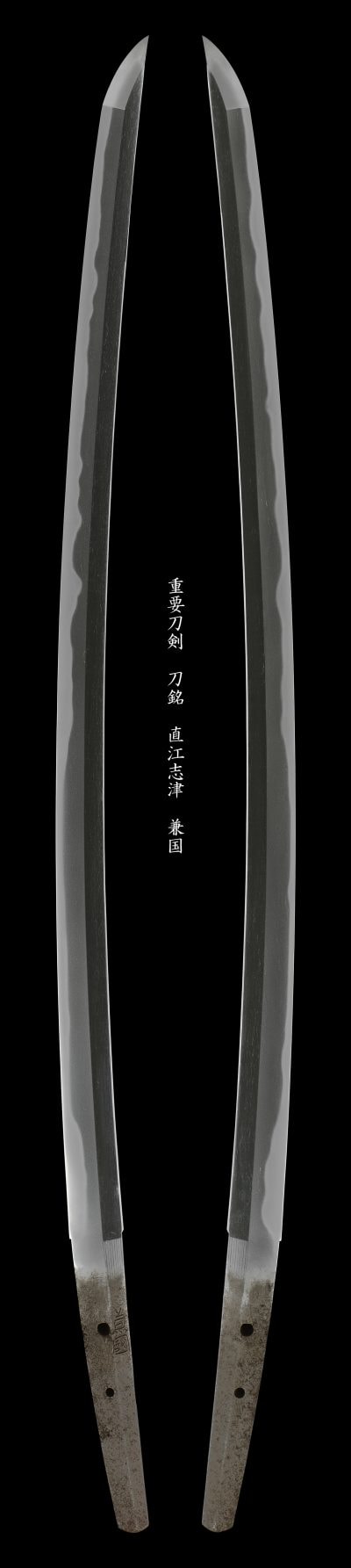
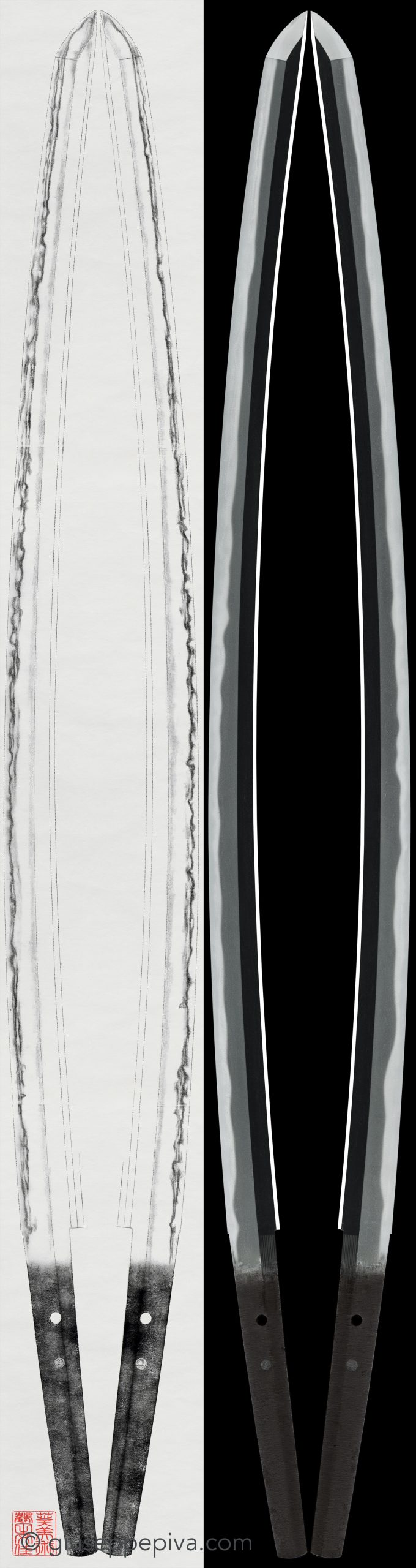
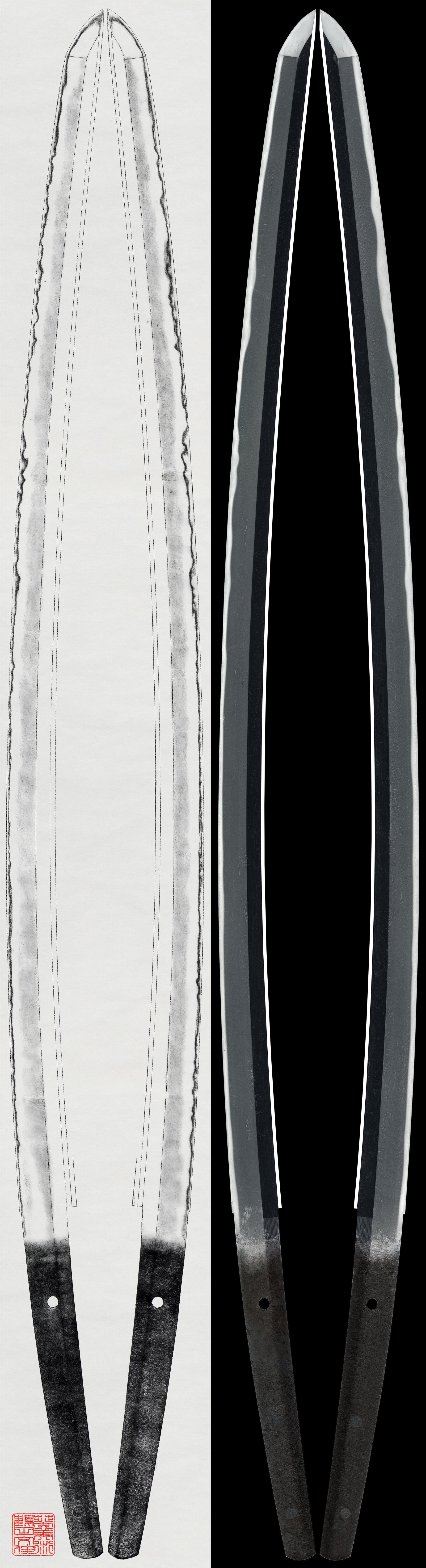
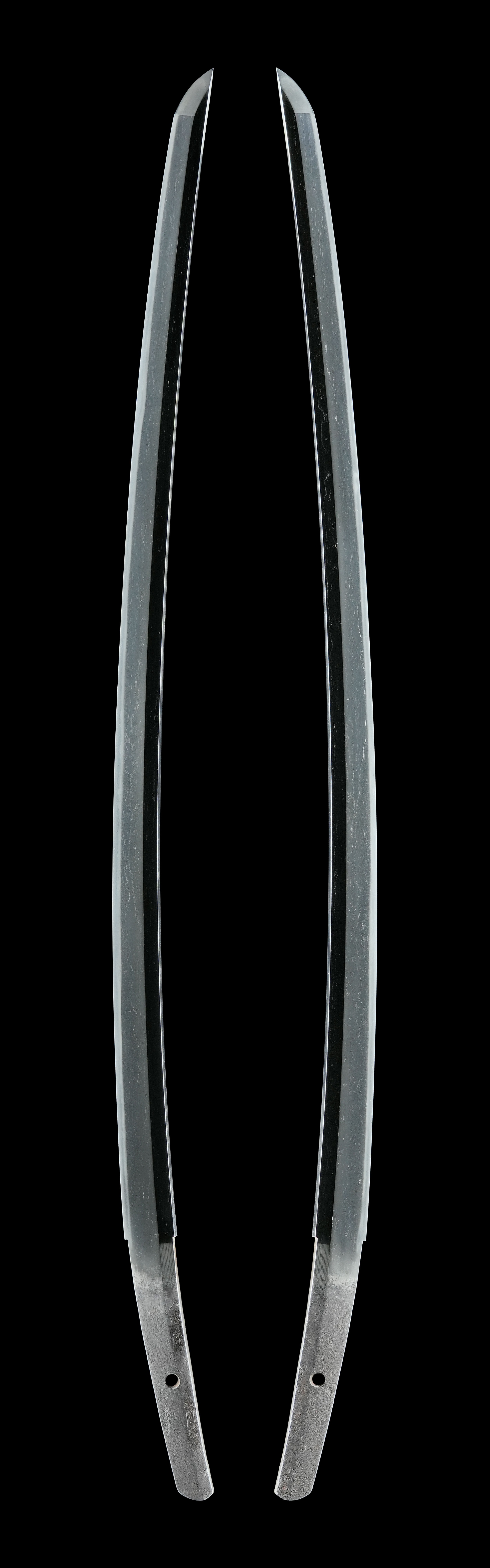
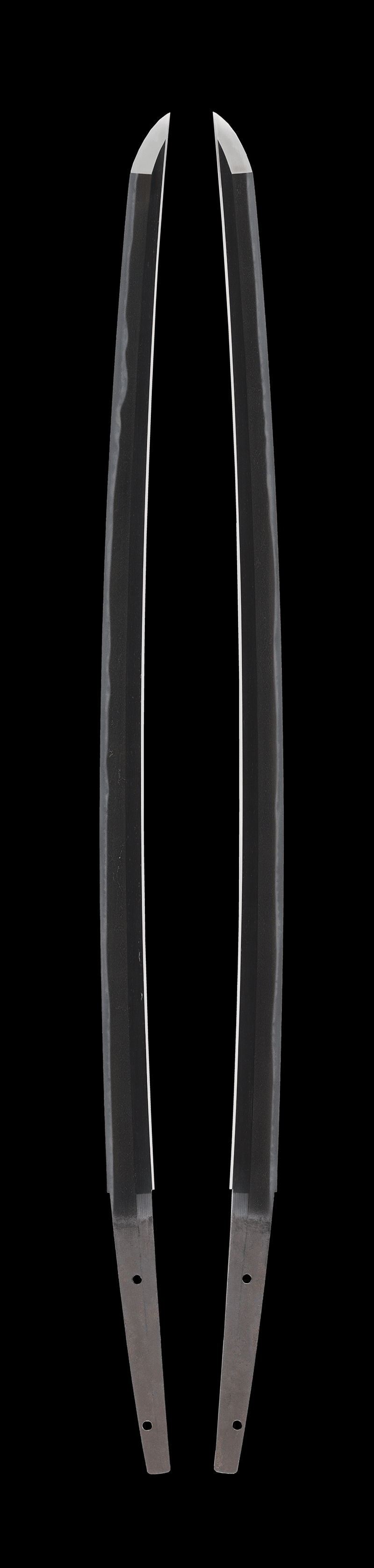
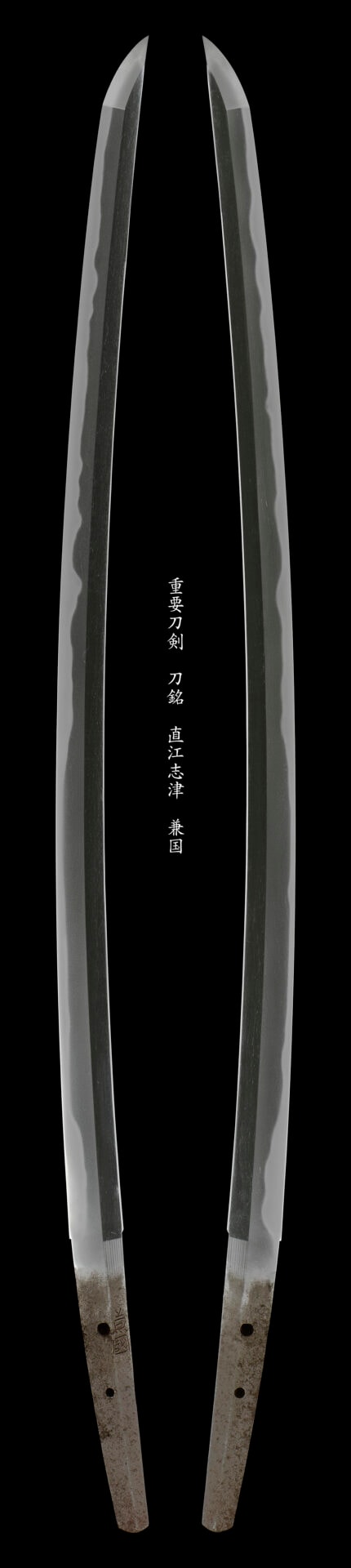
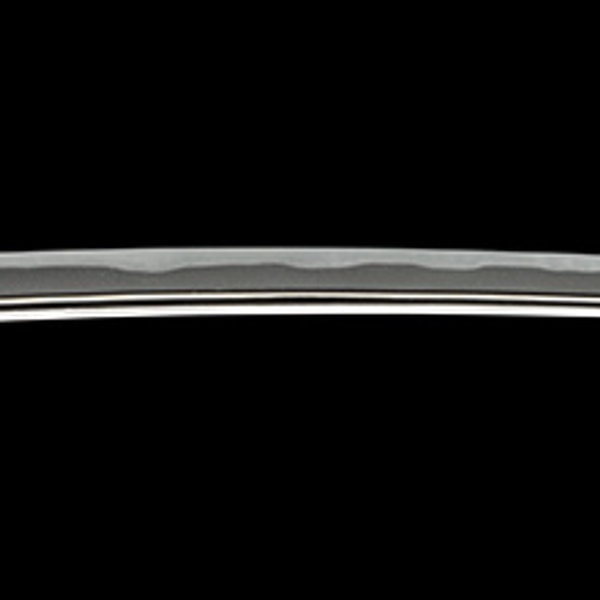
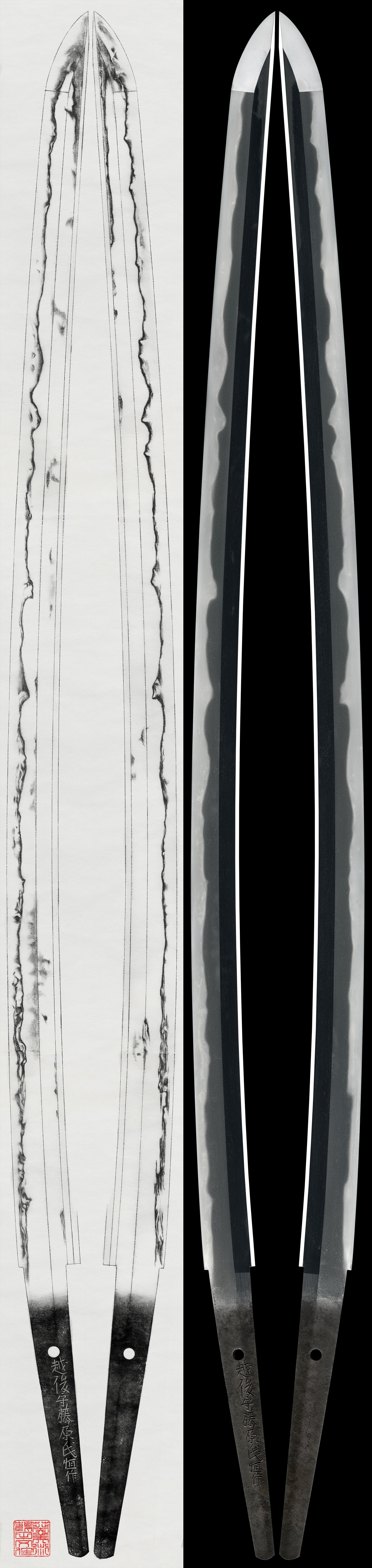
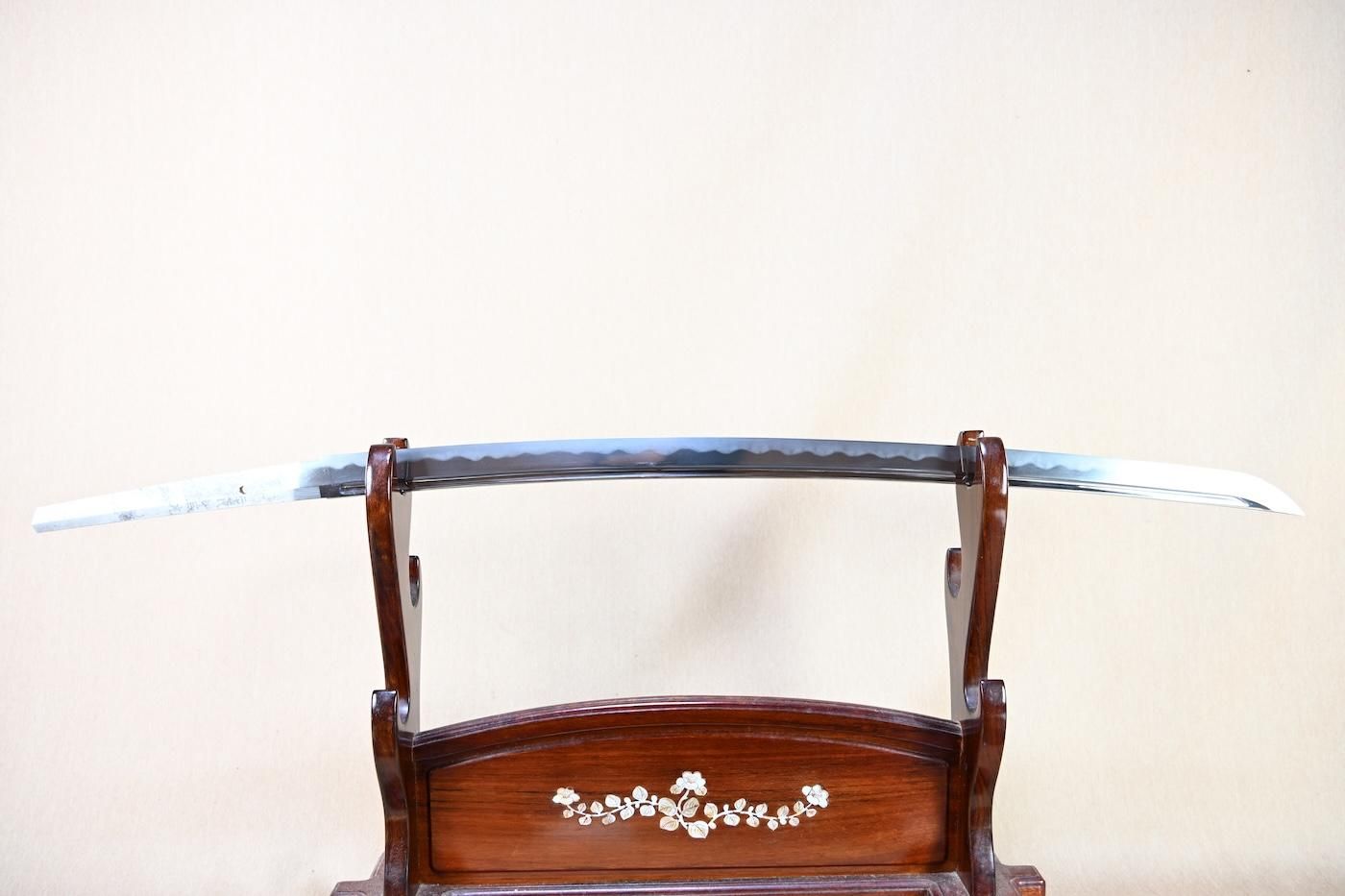
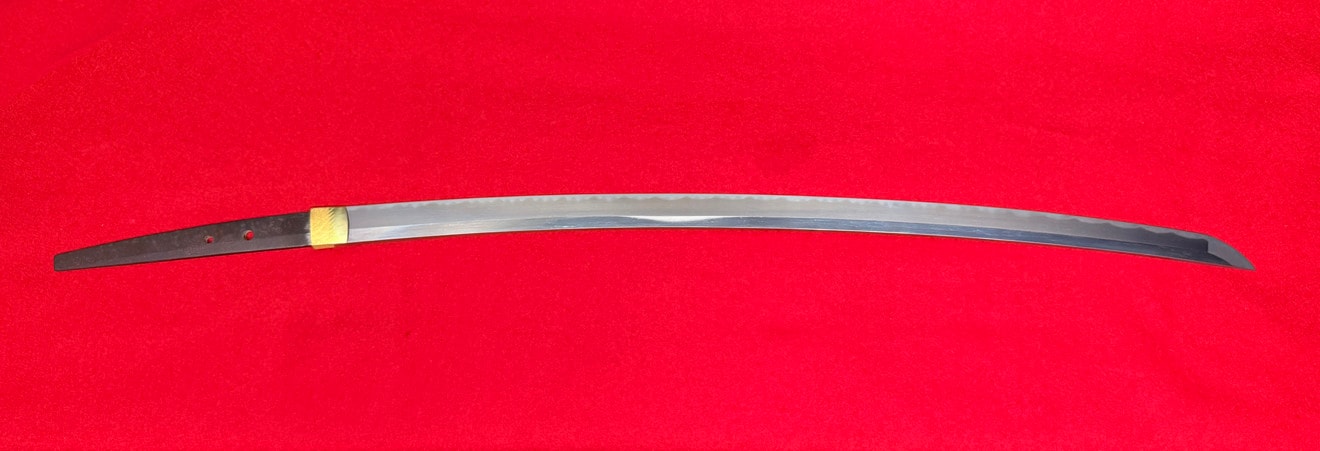
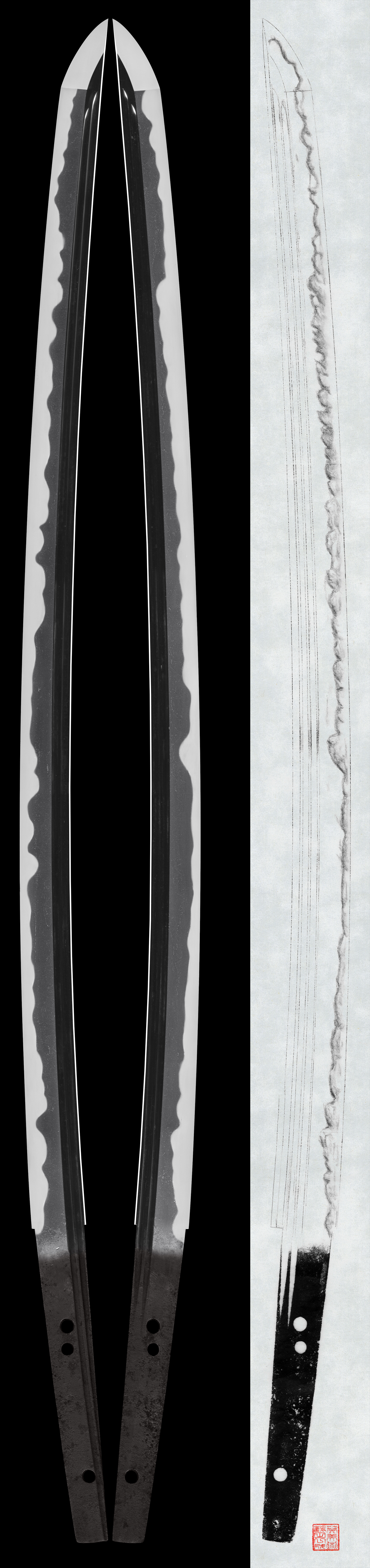
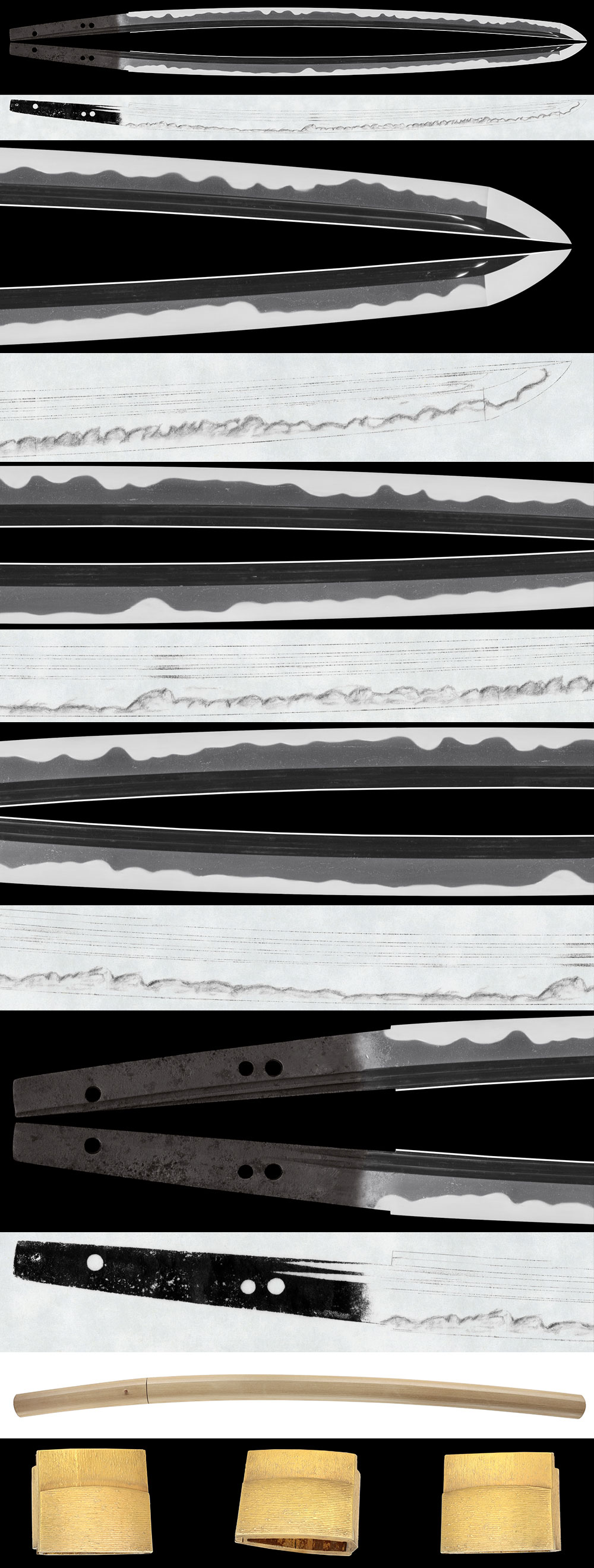
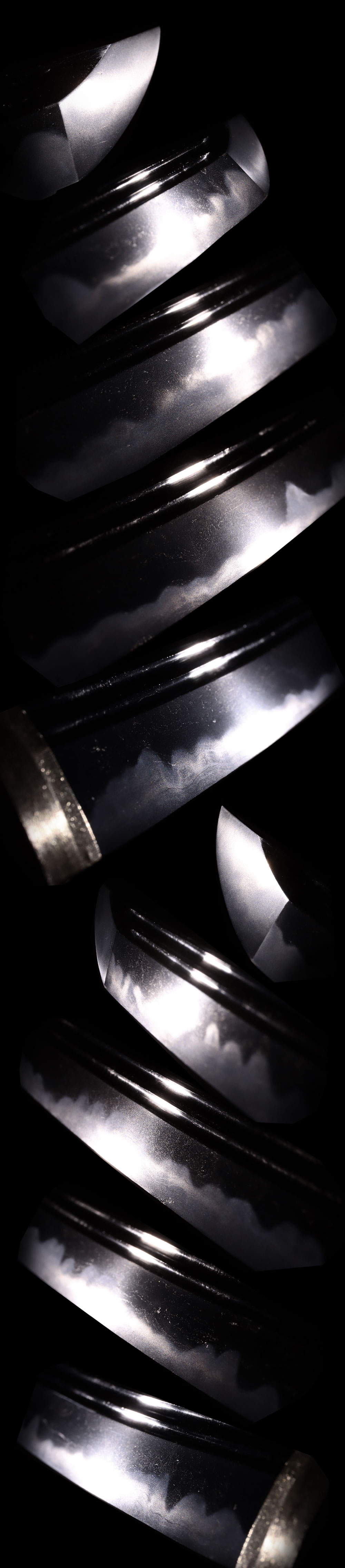
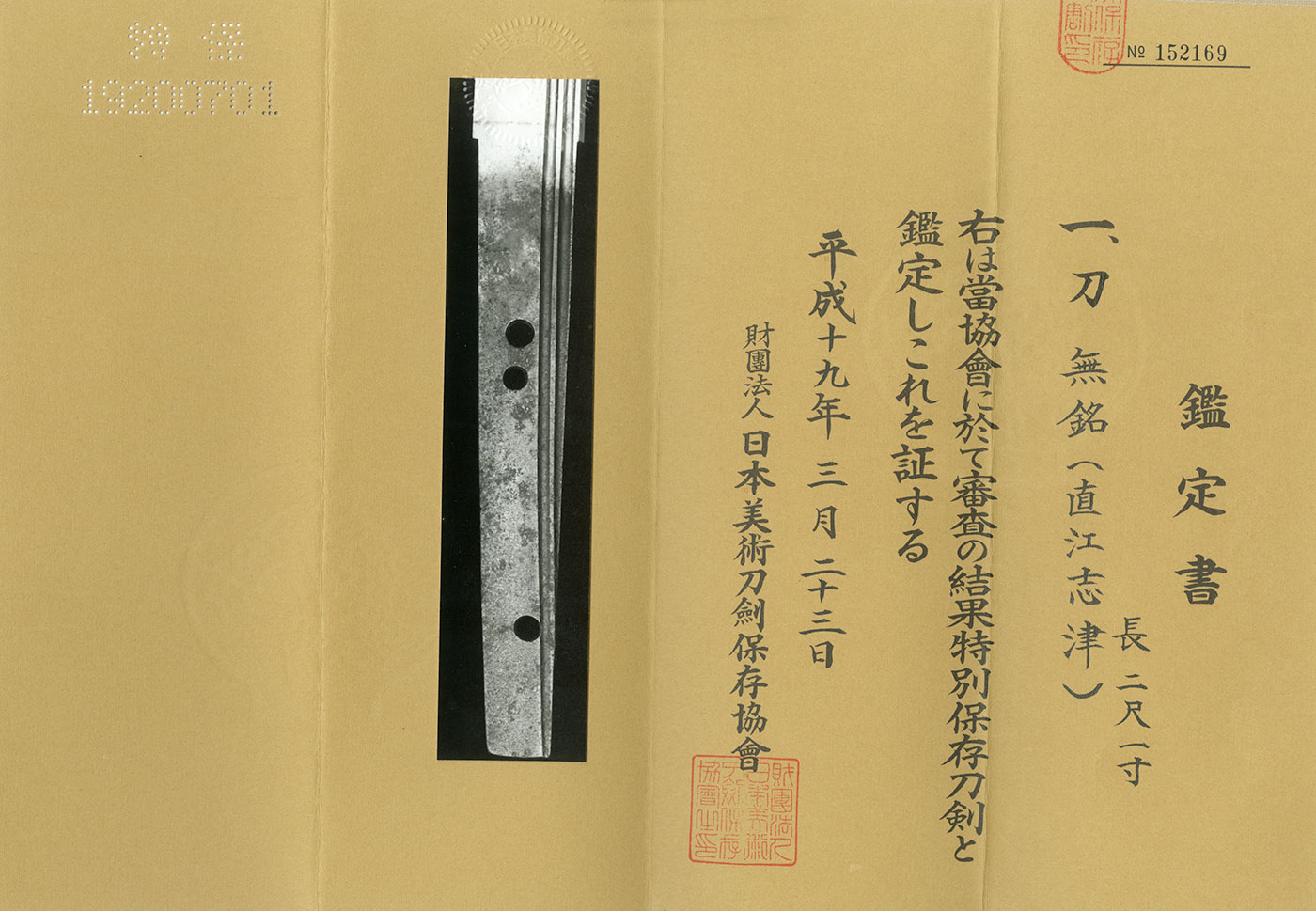
This is a katana attributed to Naoe Shizu school from the Nanbokucho period. The blade is suriage with machi-okuri and features substantial width and thickness, with double grooves carved on the shinogi-ji, and a slightly elongated kissaki. It has been certified as Tokubetsu Hozon by NBTHK.
 NihontoWatch
mumei · Koto · nagasa 63.64cm · sori 1.36cm
Mino-den · Mino
18 pieces on the market now
Within the province of Mino, in the decades of the Nanbokucho period, a body of smiths gathered at Naoe carrying forward the manner of Shizu Saburo Kaneuji, and from that locality they took the name Naoe Shizu. Kaneuji, originally a member of the Yamato Tegai group who studied under Masamune of Sagami and is counted among the Ten Disciples of Masamune (Masamune jittetsu), settled first at Shizu in Mino and established a flourishing school. His pupils and successors, among them Kanetomo, Kanetsugu, Kaneshige, and Kanenobu, relocated within the province to Naoe and forged there, and the smiths of that group are collectively termed Naoe Shizu to distinguish them from Shizu proper, which signifies Kaneuji himself. The lineage is in essence the second generation of the Shizu line, the Soshu-den of Masamune received through Kaneuji and translated into the steel and temper of Mino; the name ran on across several generations into the Muromachi, so that the reference works list more than one Kanetomo, around the Oan era and again around Oei, while the core Nanbokucho production falls in the Kanno, Enbun, Joji, and Oan years of the middle fourteenth century, anchored by the few signed and dated pieces such as a Kanno-dated wakizashi by Kanetsugu. The shared vocabulary of the school is the Shizu manner rendered in Mino. The forging is itame mixed with mokume and nagare-hada, frequently flowing toward masame and standing at times into hada-dachi, over which thick ji-nie settles and chikei enter well, the dark grain-lines threading a steel that is clear and legible; the midare-utsuri a Bizen smith would carry is absent, the ji speaking instead through the depth of its nie. The hamon is a Soshu-den notare crossed with the pointed togariba of Mino-den, gunome and ko-notare tempered in nie or ko-nie, often showing a saka-tendency, with ashi and yo entering and uchi-noke, yubashiri, and tobiyaki along the habuchi; through the temper run sunagashi and kinsuji in profusion, the streaming nie-lines and bright lightning-lines that are the school's surest sign, the nioiguchi deep and brightening at the best examples into something clear and lucid. The boshi answers the ha in midare-komi or notare-komi, turning in a ko-maru or sweeping into yakizume, the point frequently brushed with hakikake.
Within this common ground the hands separate. Kanetomo is read by the linking of round-headed gunome in sequence, calm and elegant in the ko-nie-deki the sources hold him most proficient in; Kanetsugu inclines toward the saka-slanted gunome and togariba with a more powerful, compelling dekiguchi; Tametsugu, a Norishige hand resettled inland rather than a direct Naoe smith, carries a larger, more billowing notare-midare over a steel that darkens, a manner the commentary holds to differ from Shizu and Kaneshige. Set against Kaneuji himself, the Naoe Shizu smiths work in a milder, more workmanlike register, the hada standing less strongly and the chikei fewer than in the master whose manner most closely approaches Masamune. To kantei a Naoe Shizu blade is to read the Soshu activity through a Mino frame, distinguishing it above from Shizu proper, whose forging stands and brightens more vigorously and whose ji and ha carry the higher Sagami character, and below from the later Sue-Seki, whose togariba harden into a drier, more regular tooth without the deep ji-nie and the run of kinsuji and sunagashi; a suguha blade with a whitish shirake tone, by contrast, reads away from the line entirely, toward the Zenjo hands who also bore these names. The strongest members, Kanetomo and Kanetsugu above all, hold their place in the Juyo register, their signed tanto and wakizashi designated Important Art Objects serving as the documentary spine against which the unsigned majority is measured. For the body of the school survives o-suriage and mumei, broad Nanbokucho katana and tanto attributed by resemblance to those scarce signatures, so that signed examples are held exceptionally valuable and reach private hands only with patience. Provenance is thin but real, blades descending through the Naruse and Akaboshi collections, a pair preserved at Atsuta Jingu, and others held by the NBTHK; the typical encounter remains a mumei attribution carrying the open Naoe jigane and the streaming nie of a tradition the smiths of Mino took from Masamune and made their own. Learn more →
| Smith | Era | Designated |
|---|---|---|
| Kanetomo兼友 | 1336-1340 | 11 |
| Kaneuji兼氏 | 1342-1345 | 3 |
| Kanenobu兼延 | 1368-1375 | 0 |
| Kaneuji兼氏 | 1394-1428 | 0 |
| Kanenobu兼延 | 1390-1394 | 0 |
A Hozon-certified blade judged to show notably superior workmanship and a better state of preservation. The bar is higher: re-tempered blades and most unsigned Muromachi/Edo works are excluded.
The NBTHK (Nihon Bijutsu Tōken Hozon Kyōkai, the Society for the Preservation of Japanese Art Swords) is a public-interest incorporated foundation founded in 1948 and supervised by Japan’s Agency for Cultural Affairs (Bunkachō); it is based at the Japanese Sword Museum in Tokyo. Its expert panels physically examine each submitted work (shinsa) and issue a certificate (kanteishō) ranking it by artistic and historical merit. NBTHK papers are the most widely recognized standard of authentication for Japanese swords and fittings.
NBTHK official siteIf you wish to return an item, please notify us within 3 days of receipt. After this period we cannot accept cancellations. Please ship the return to us within 5 business days. Cancellation is conditional on the item being kept in the same condition as at the time of sale, so please handle it with care.