Around 1800 Suishinshi Masahide argued in his writings that the craft must return to the old masters’ methods: the fukkotō revival. His greatest successor Naotane worked convincingly in Bizen and Sōshū manners that had been dead for centuries.
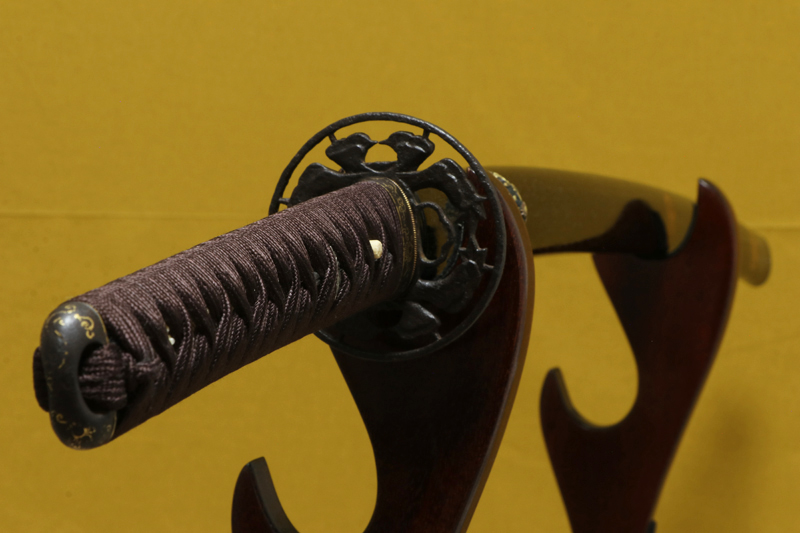
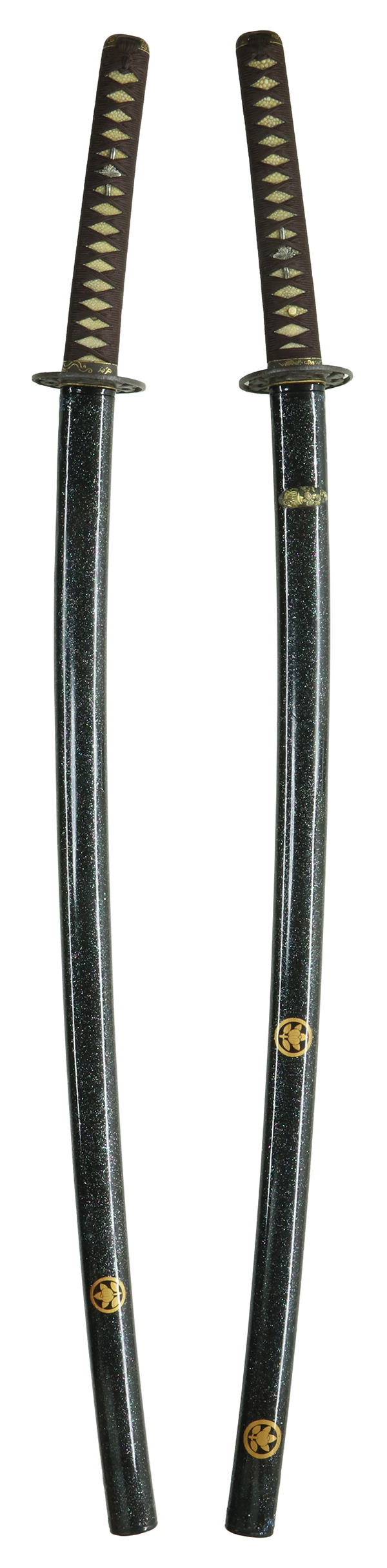
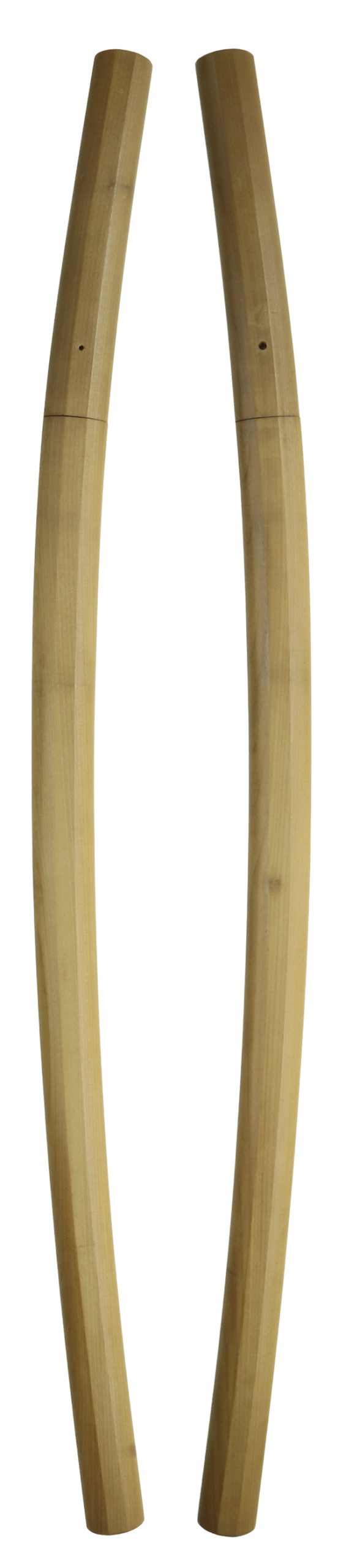
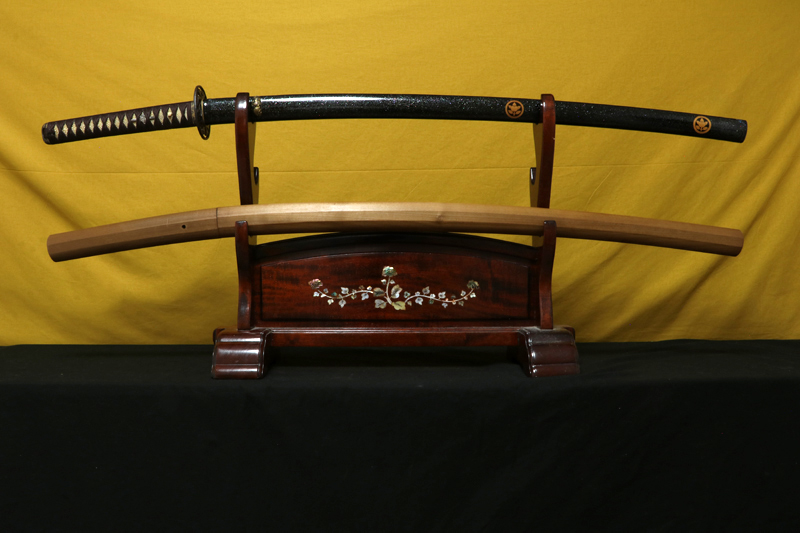
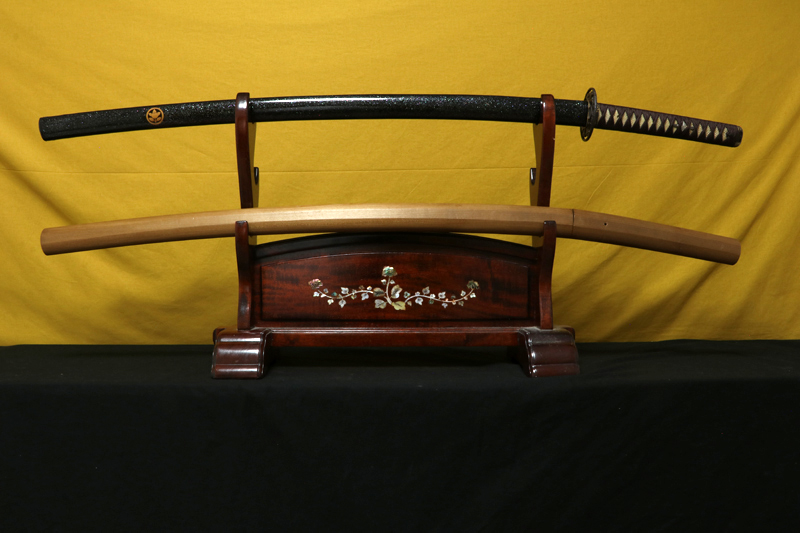
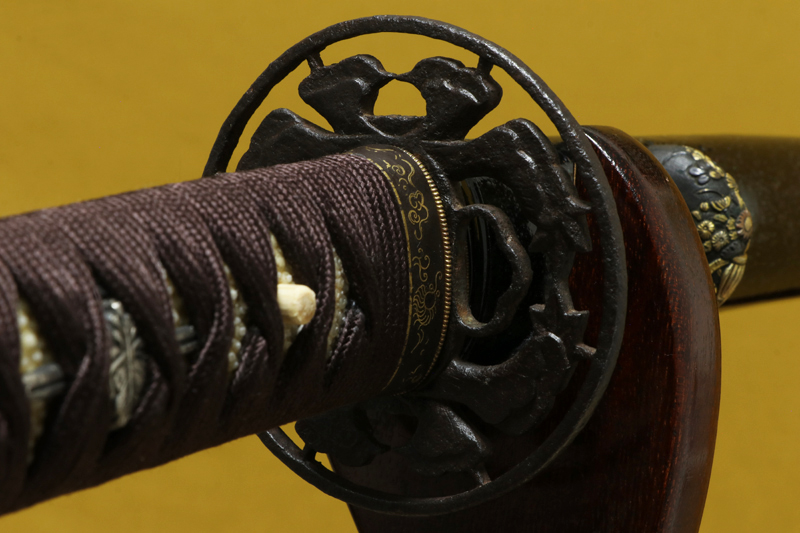
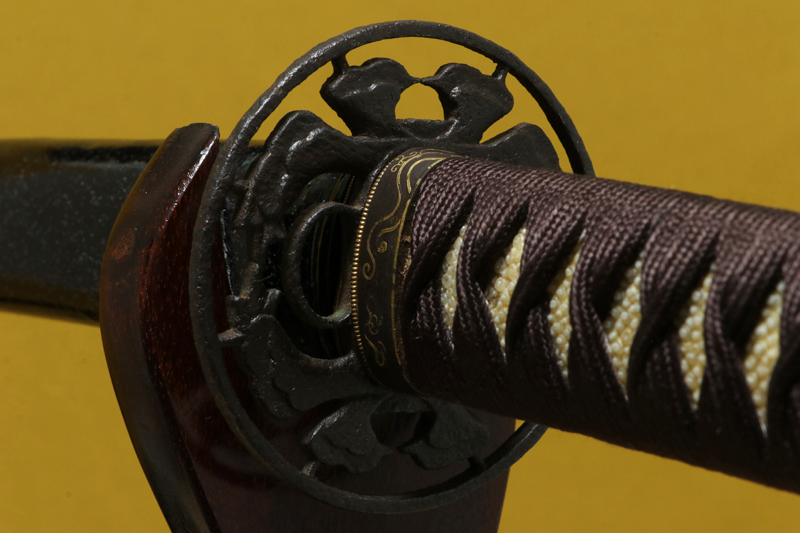
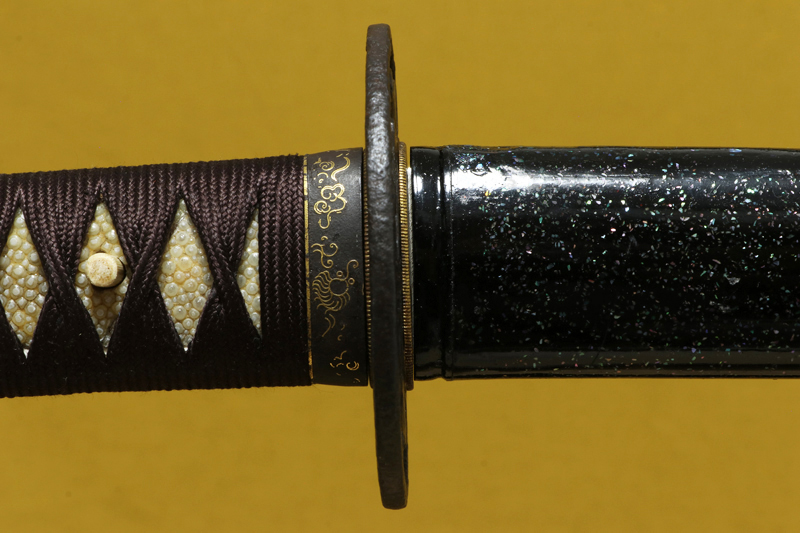
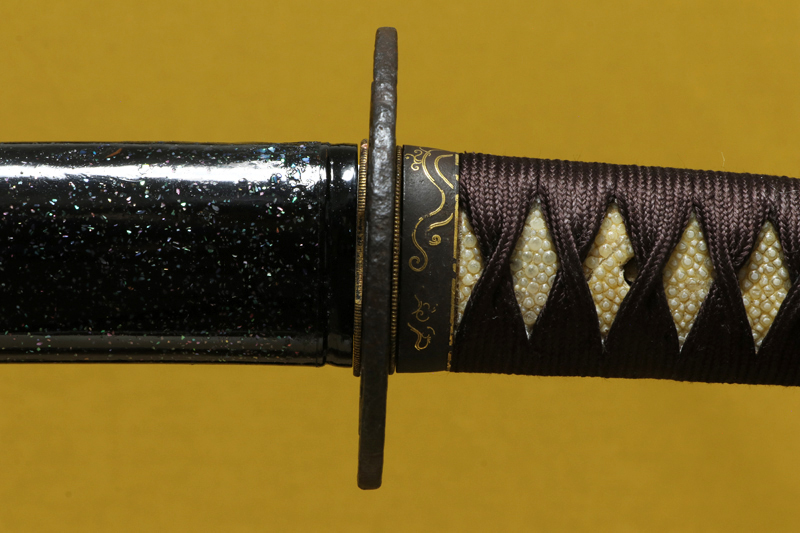
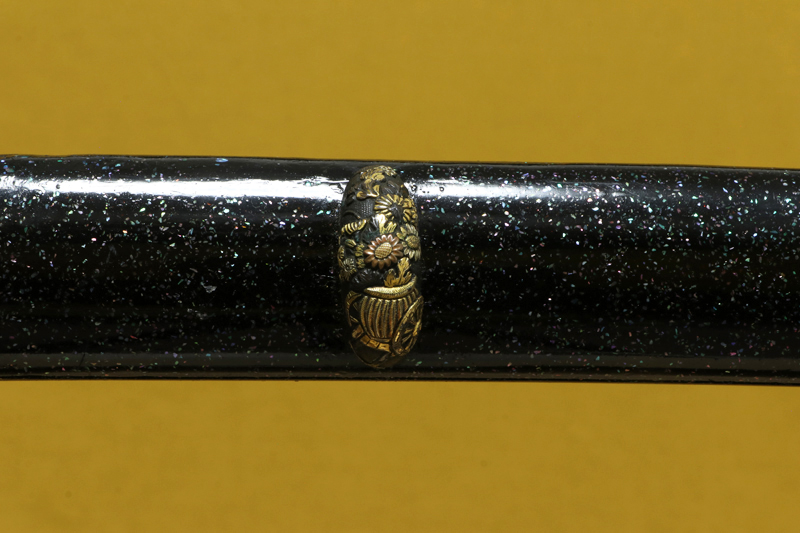
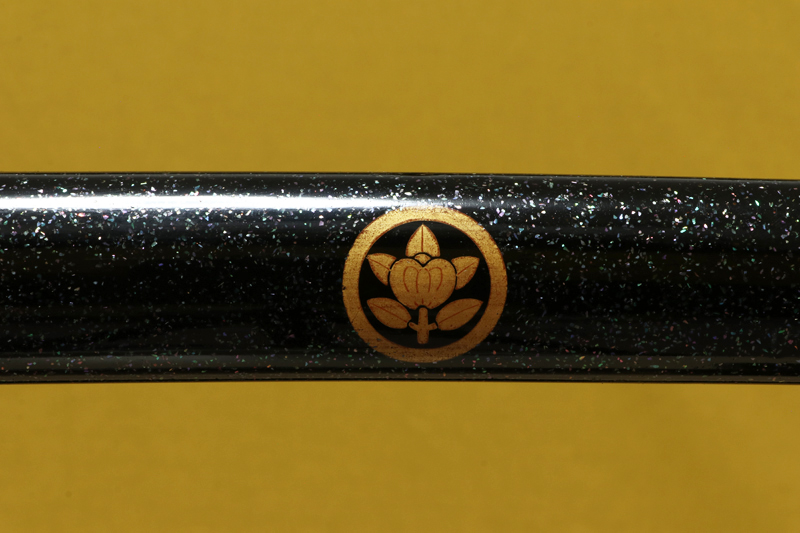
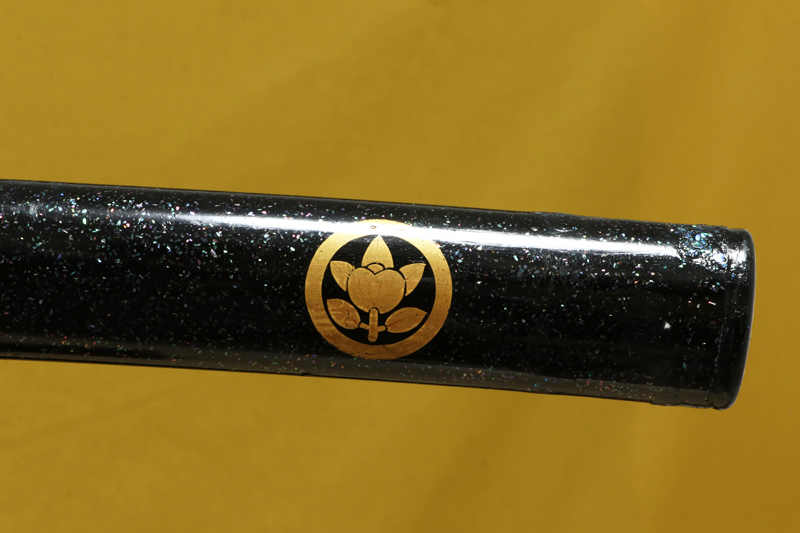
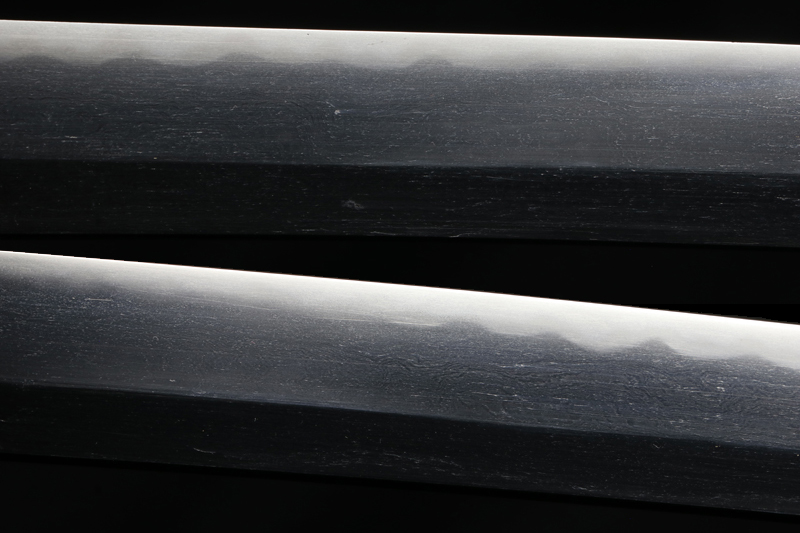
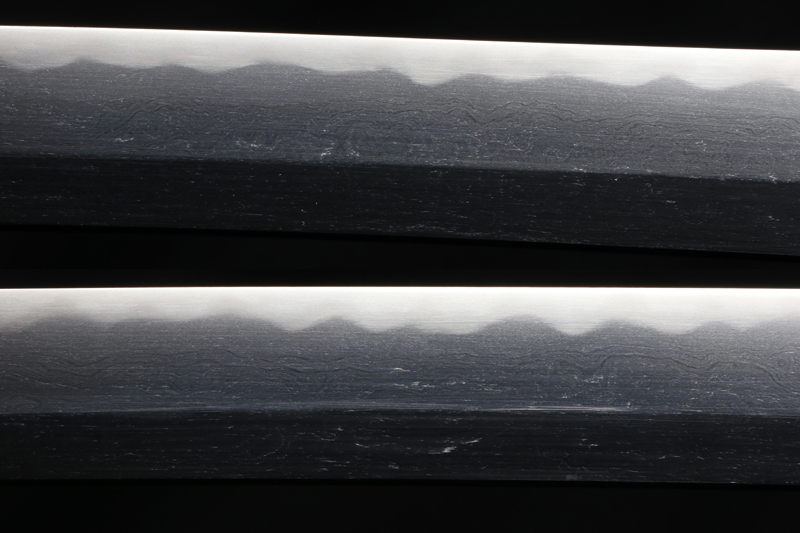
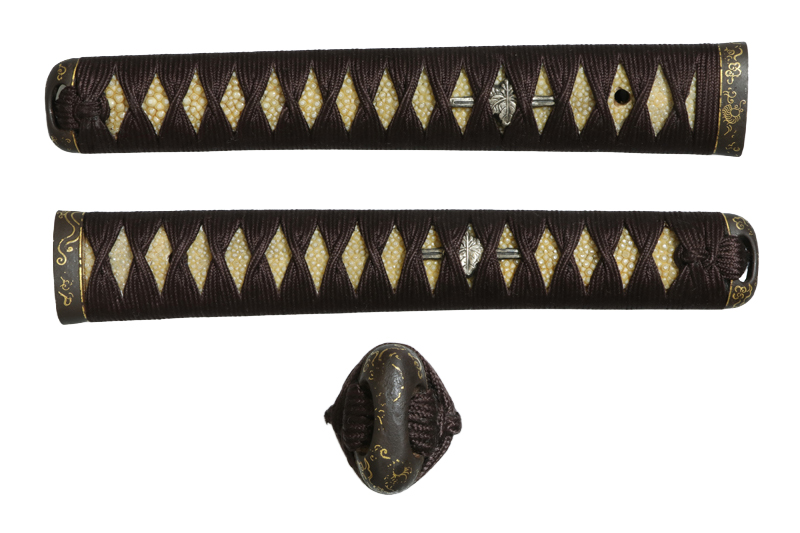
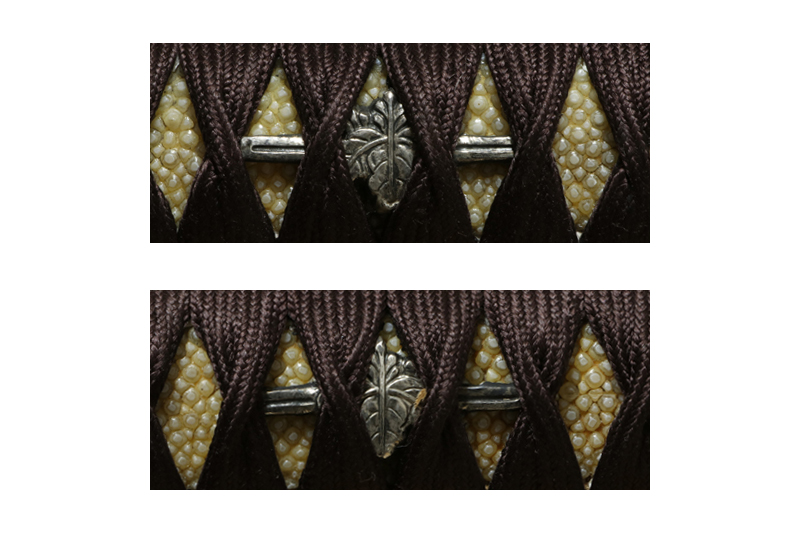
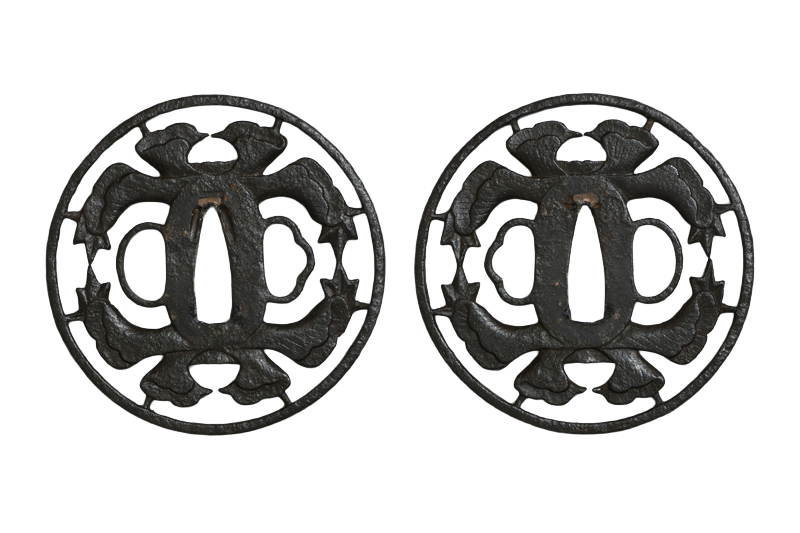
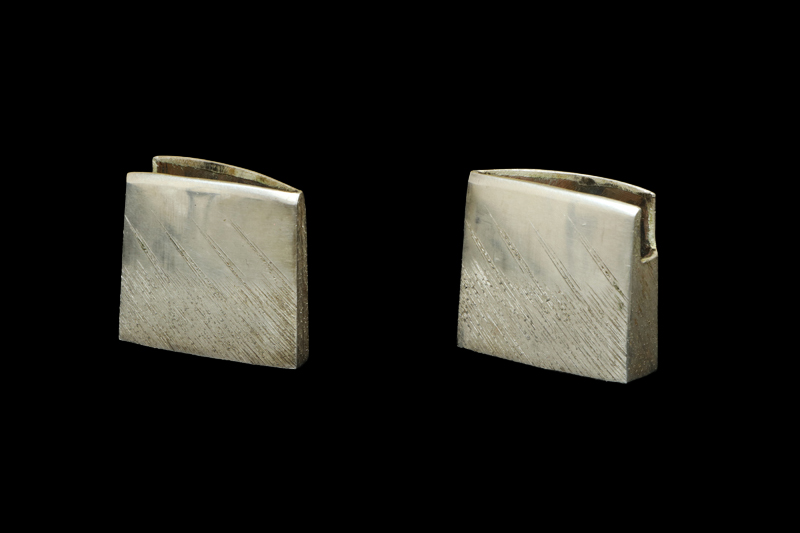
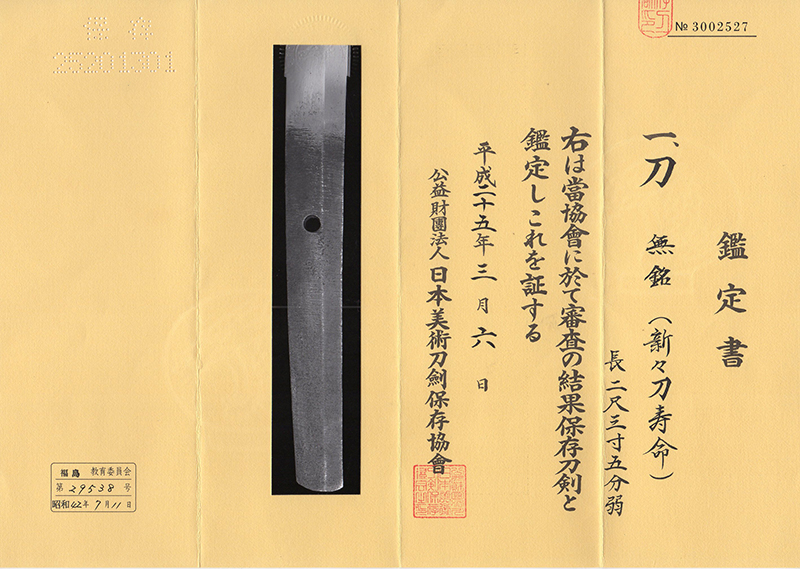
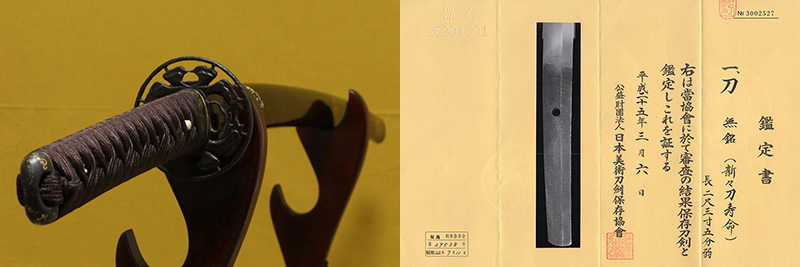
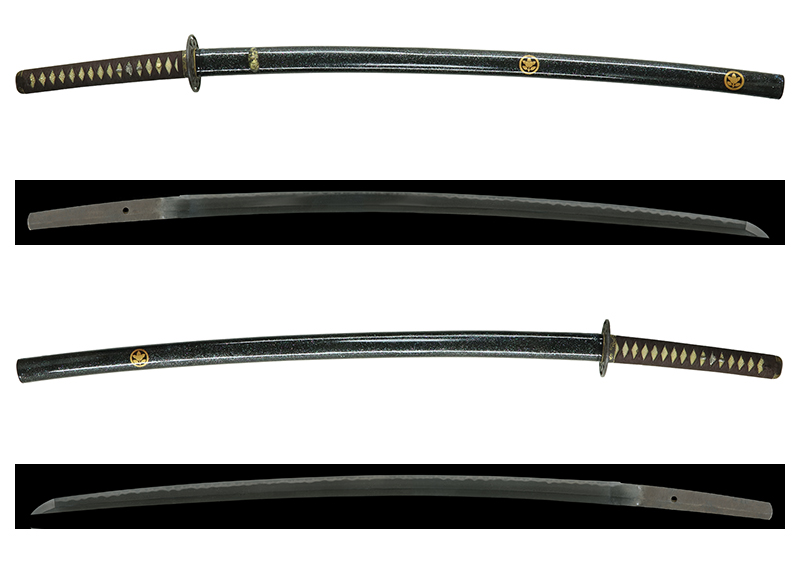
Hozaon Token Shinshin-to mumei Jumyo with Koshirae and Shirosaya Jumyo is a lineage of swordsmiths descended from the Tegai school of the Yamato tradition, active from the Muromachi period to the Edo period. This work is thought to be from the early Shinshin-to period, an excellent piece with itame-hada and a gunome-midare hamon. Although it is an old polish, the jihada and hamon can be well appreciated. The koshirae features high-quality fittings and a luxurious kai-chirashi lacquered saya decorated with the Maru-ni-Tachibana family crest in maki-e, and the tsuka-ito has been rewrapped. Both the blade and koshirae are in good condition, and with its particularly luxurious koshirae, this is a sword recommended for appreciation and collection. Toshinaga is a lineage of swordsmiths descended from the Tegai school of the Yamato tradition, active from the Muromachi to the late Edo period. This sword is believed to date from the early Shinshinto period, featuring an itame-hada and gunome-midare hamon. Despite its old polish, the jihada and hamon remain clearly visible. The high-quality koshirae features fine fittings and a luxurious shell-sprinkled lacquered saya decorated with the Maru-ni-Tachibana family crest in maki-e. The tsuka-ito has been newly rewrapped. Both the blade and koshirae are in good overall condition. With its particularly magnificent koshirae, this sword is highly recommended for appreciation and collection. 「体配 style」 Shinogi-zukuri with an iori-mune, slightly narrow mihaba, standard kasane, torii-zori, and chu-kissaki. The nakago is ubu, with kiri-yasuri file marks and a kurijiri tip. 「地鉄 jigane」 The jigane is itame-hada mixed with ko-itame, with ji-nie and prominent shirake-utsuri. 「刃紋 hamon」 The hamon is gunome mixed with togari-ba. The habuchi is covered with ko-nie and features sunagashi, while kinsuji appears within the hamon. The boshi follows the hamon, turning back with a slightly pointed tip. 「特徴 detailed」 Jumyo (寿命) is a lineage of swordsmiths originating from the Tegai school of the Yamato tradition. Due to the auspicious name “Jumyo,” these smiths received many commissions over successive generations, and the lineage continued for a long time from the early Muromachi period to the late Edo period. This sword is believed to have been made by Jumyo during the early Shinshin-to period. It features an itame-hada and a gunome-midare hamon. Although there is some cloudiness due to the old polish, the jihada and hamon remain clearly visible. The koshirae is exceptionally fine, and excellent fittings are used on the tsuka. The deteriorated tsuka-ito has been newly rewrapped. The saya is a high-grade kai-chirashi lacquered saya, featuring a luxurious design with the Maru-ni-Tachibana family crest in maki-e. Both the blade and koshirae are in generally good condition, and with its particularly magnificent koshirae, this sword is highly recommended for appreciation and collection. Toshinaga (寿命) is a lineage of swordsmiths originating from the Tegai school of the Yamato tradition. Due to the auspicious meaning of the name “Toshinaga” (寿命, meaning “long life”), these smiths received many commissions over successive generations, and the lineage continued from the early Muromachi period to the late Edo period. This sword is believed to have been made by Toshinaga during the early Shinshinto period. It features an itame-hada with a gunome-midare hamon. Although the blade has some cloudiness due to its old polish, the jihada and hamon remain clearly visible. The koshirae is exceptionally fine, featuring high-quality fittings. The tsuka-ito has been newly rewrapped to replace the deteriorated original wrapping. The saya is particularly luxurious, featuring an expensive shell-sprinkled lacquer finish (kai-chirashi) decorated with a beautifully executed maki-e design of the “Maru-ni-Tachibana” family crest. Both the blade and koshirae are in generally good condition. With its particularly magnificent koshirae, this sword is highly recommended for appreciation and collection. 「拵 Koshirae」 Habaki: Suaka-ji silver-plated single-piece Koshi-Yujo style. Tsuba: Iron base with openwork design of holly. Fuchikashira: Iron base with gold zogan. Menuki: Solid silver with design of paulownia crest. Tsuka: The tsuka-ito is dark brown silk in morotsumami-maki style. Saya: Kai-chirashi saya, with maki-e of the Maru-ni-Tachibana family crest. Kurikata-kanagu: Shakudo nanako-ji with gold and silver zogan of a flower cart and chrysanthemums. 「刀剣の状態 condition of blade」 Polish: It is cloudy due to an old polish, but the jihada and hamon are clearly visible. Flaws: There are no flaws that would constitute a defect.
Tegai School手掻派
Offered by Giheiya
Its photos show a certificate that isn’t in our records yet. Papers can come from different bodies (the NBTHK, the NTHK and smaller societies), and only current NBTHK or NTHK shinsa papers are the independent check we rely on. Please ask the dealer which body issued them. — Hoshi


Translated from the shop's Japanese ·
Rows still in Japanese are as written by the shop
Machine translation from the shop's Japanese · may contain errors ·
Yamato-den · Yamato
22 pieces on the market now
Outside the Tegaimon (転害門), the western great gate of Todai-ji, a lineage of smiths forged for the temple through the closing decades of the Kamakura period, and from that monastic ground rose the Tegai school (手掻), one of the five branches of the Yamato-den. The published commentary of the NBTHK names Kanenaga (包永) its founder, placing his activity around the Shoo era (1288 to 1293) while reading his own workmanship, and a tanto by an early hand of his circle dated Karyaku 4 (1329), as evidence of a beginning reaching back further into middle and late Kamakura. The school took its name from the gate by which it worked, and the long Nanto-ju and Tegai-ju signatures cut by its later smiths keep that Nara setting on record. Among the five Yamato traditions Tegai was the largest in scale, and as the Muromachi years advanced it appears to have absorbed the others so that it alone effectively continued, a span the surviving generations of Kanenaga, Kanekiyo (包清), Kanetsugu (包次), Kanetoshi (包俊), Kanesada (包貞), and Kanemasa (包真) carry from the late Kamakura into the Eisho and Kyoroku eras. A Tegai blade is read first in the steel and then along the edge. The forging is itame mixed with mokume that flows into nagare and inclines toward masame near the ha, standing open in a hada-dachi character, with thick ji-nie, chikei entering frequently, and at times a whitish shirake utsuri toward the mune. Over that ground runs a suguha base, seldom left plain, taking in shallow notare, ko-midare, and ko-gunome; the habuchi frays into hotsure, with uchinoke, kuichigai-ba, nijuba, yubashiri drifting into the ji, and sunagashi and kinsuji sweeping through. The boshi answers in kind, swept with hakikake and finishing yakizume or turning back in a small ko-maru. Within this shared vocabulary the corpus divides along the Ko-Tegai and Sue-Tegai axis.
The founder's hand, the Ko-Tegai prime, carries the strongest nie among Yamato works, round and lustrous, over a bright and clear jigane, with many tachi holding a dignified, high-toned bearing; the Meibutsu Konotegashiwa Kanenaga even tempers omote and ura differently. The later Sue-Tegai generations part company, the steel turning whitish, the nioiguchi tightening toward ko-nie, and the temper broadening at the last toward ogunome and a hitatsura tendency near Muramasa, as in the late Tegai-ju Kanekiyo blades. To kantei a Tegai blade is to place it within Yamato and then along its own line. Against Senjuin, Shikkake, Taima, and Hosho, all working the same standing masame-inclined grain under fraying suguha, Tegai is told by the strength and brightness of its nie; Honma noted of the first generation a sparkle at times recalling Awataguchi Hisakuni, and one Tokubetsu Juyo tachi was read as rivaling the upper Soshu masters. Where Hosho runs a near-pure masame and a plain edge, and where Shikkake Norinaga strings his ko-gunome into connected rows, Kanenaga holds the suguha-cho through its shallow notare and lets yubashiri, uchinoke, and nijuba play above the habuchi with unusual freedom; the Rai suguha of Yamashiro, by contrast, runs clean over a close ko-itame. Rated Jo-jo saku by Fujishiro, Kanenaga stands at the head of the school, his signed tachi (the character Kane compressed, the second vertical of Naga drawn out long) unusually numerous for so early a smith, though most survive suriage and the o-suriage mumei attributions ride on the quality of the nie. The provenance is deep, running through shrines, the Tokugawa, Date, and Hachisuka families and, formerly, the Imperial Family, with recorded holders including the Tokyo National Museum and the Tokugawa Art Museum. The later names hold mainly to the Juyo register and to private and designated hands, valued as fixed reference points for the Yamato-den, where the founder's bright, heavy nie over standing Yamato steel remains the measure by which the whole school is judged. Learn more →

| Smith | Era | Designated |
|---|---|---|
| Kanenaga包永 | 1288-1312 | 66 |
| Kanekiyo包清 | 1362-1370 | 8 |
| Kanetoshi包俊 | 1381-1384 | 4 |
| Kanetsugu包次 | 1317-1333 | 4 |
| Kanekiyo包清 | 1429-1441 | 3 |
The Shinshintō revival
Around 1800 Suishinshi Masahide argued in his writings that the craft must return to the old masters’ methods: the fukkotō revival. His greatest successor Naotane worked convincingly in Bizen and Sōshū manners that had been dead for centuries.
We could not find an authenticity certificate on the seller’s listing. Japanese swords and fittings are normally papered by the NBTHK (or the NTHK). Without one, the attribution is the seller’s own assessment and has not been independently verified — treat it with caution and ask the dealer about certification before buying.
Within 3 days of the item's arrival, we offer a refund or an exchange. Return shipping and the bank transfer fee for the refund are at the customer's expense.
¥430,000