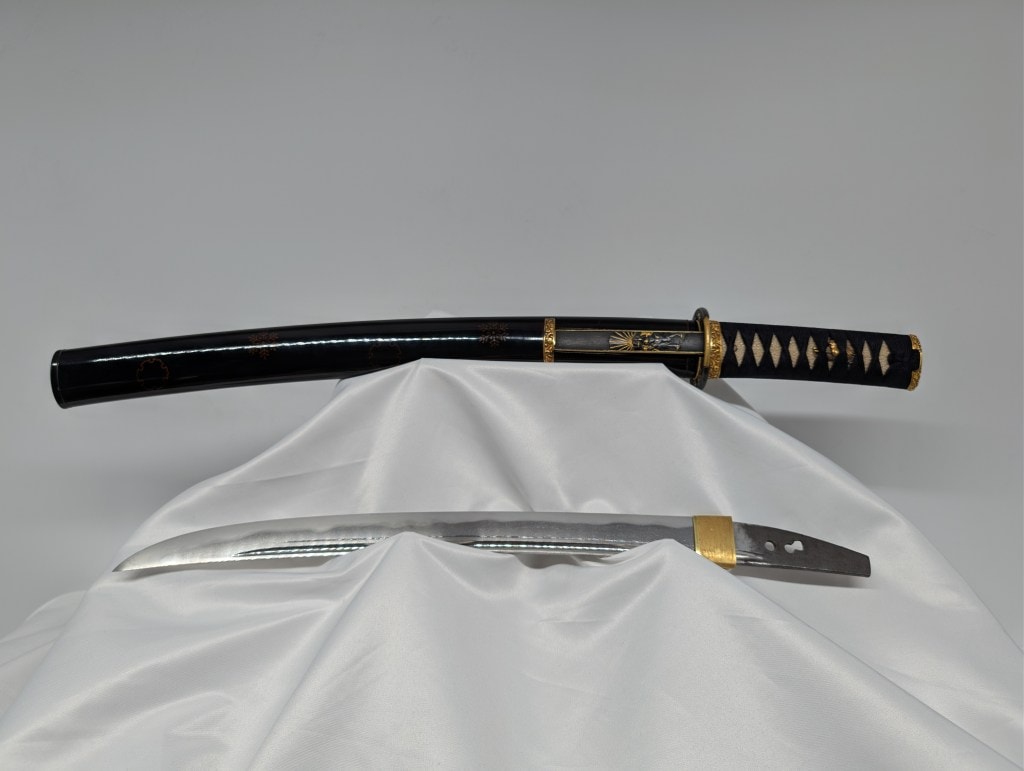
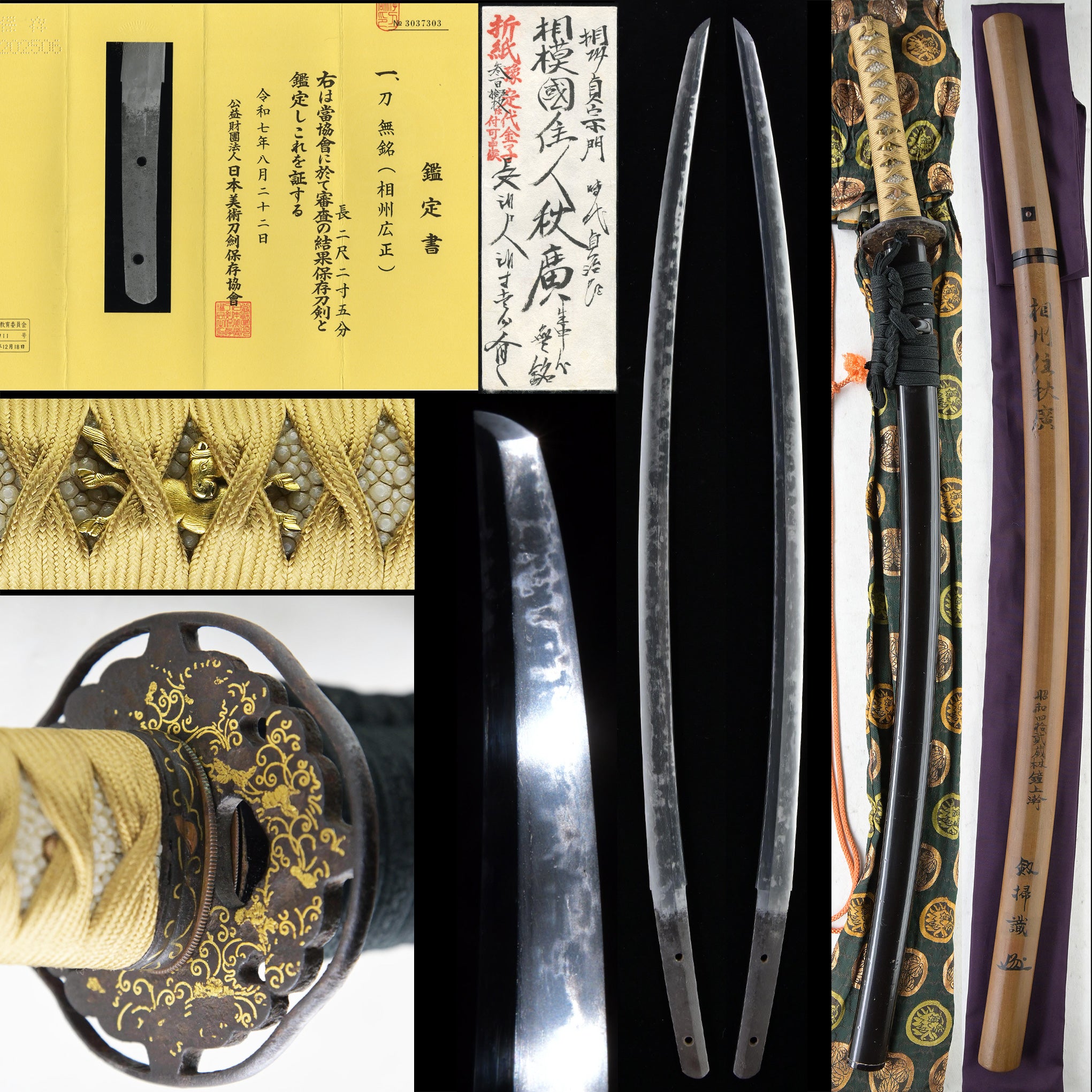
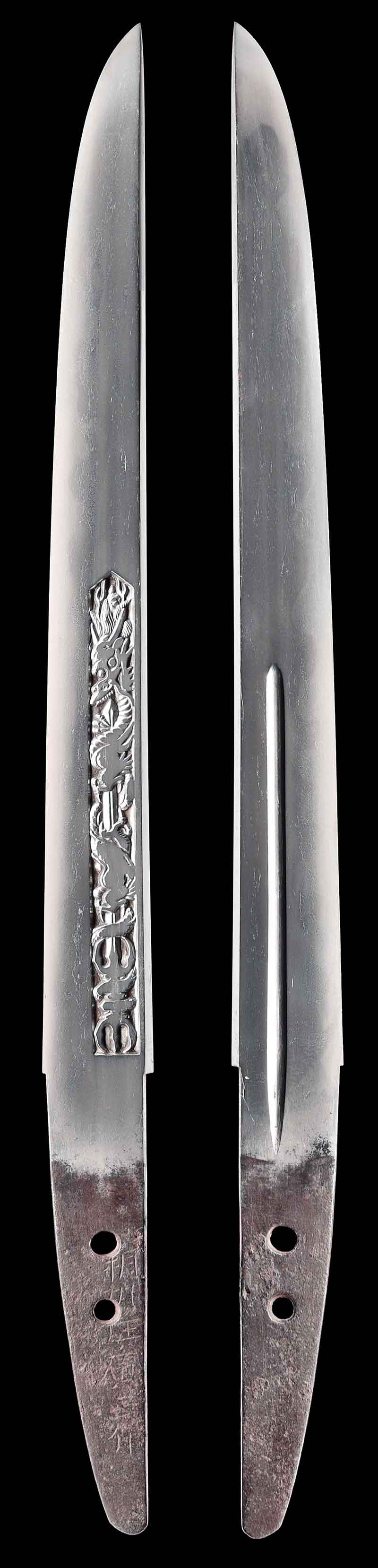
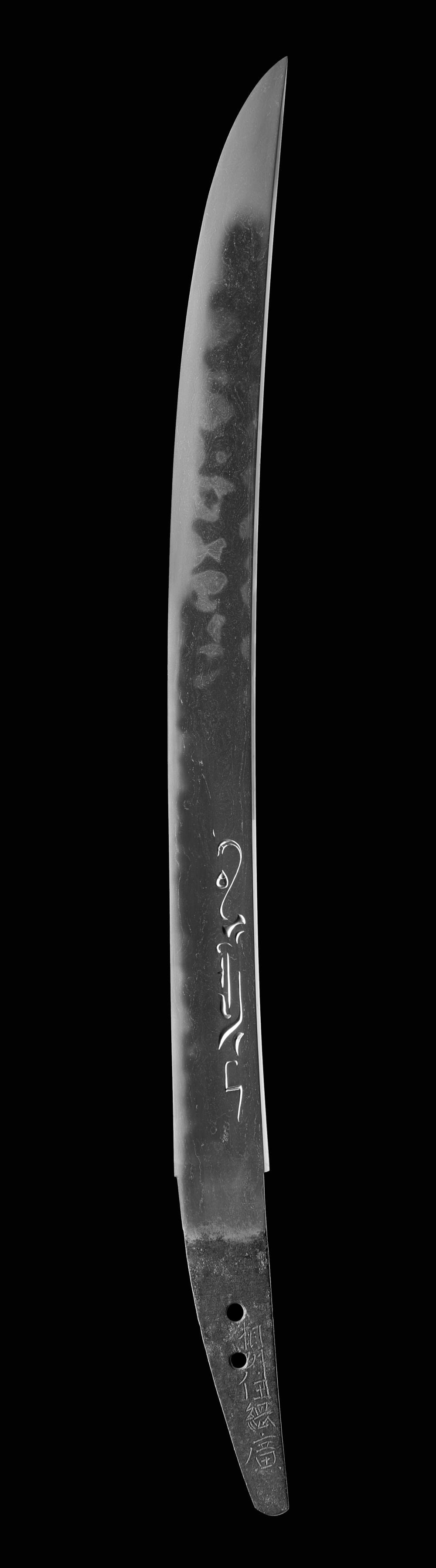
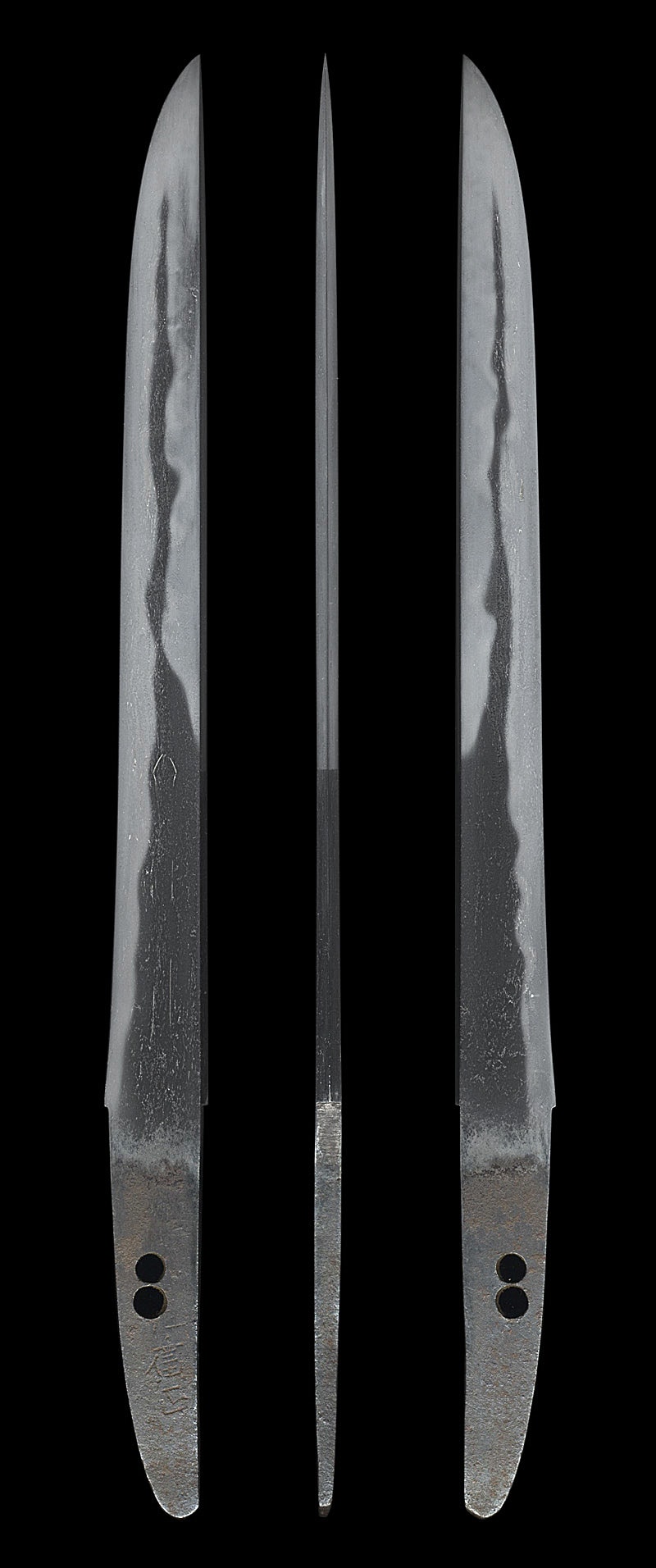
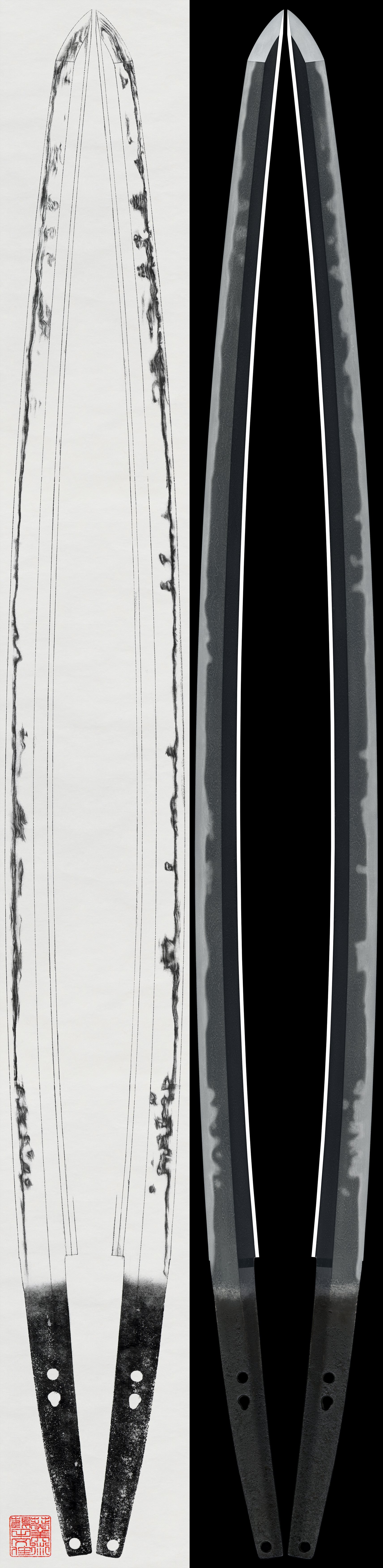
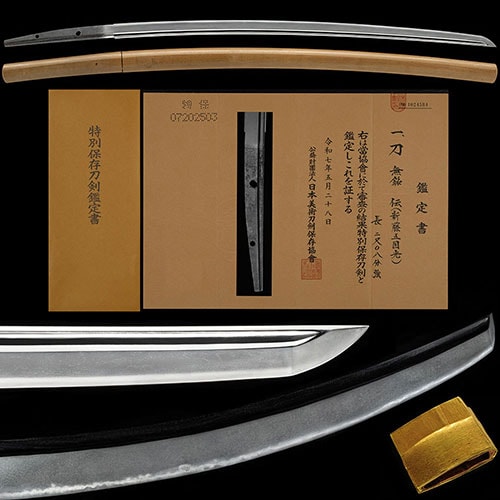
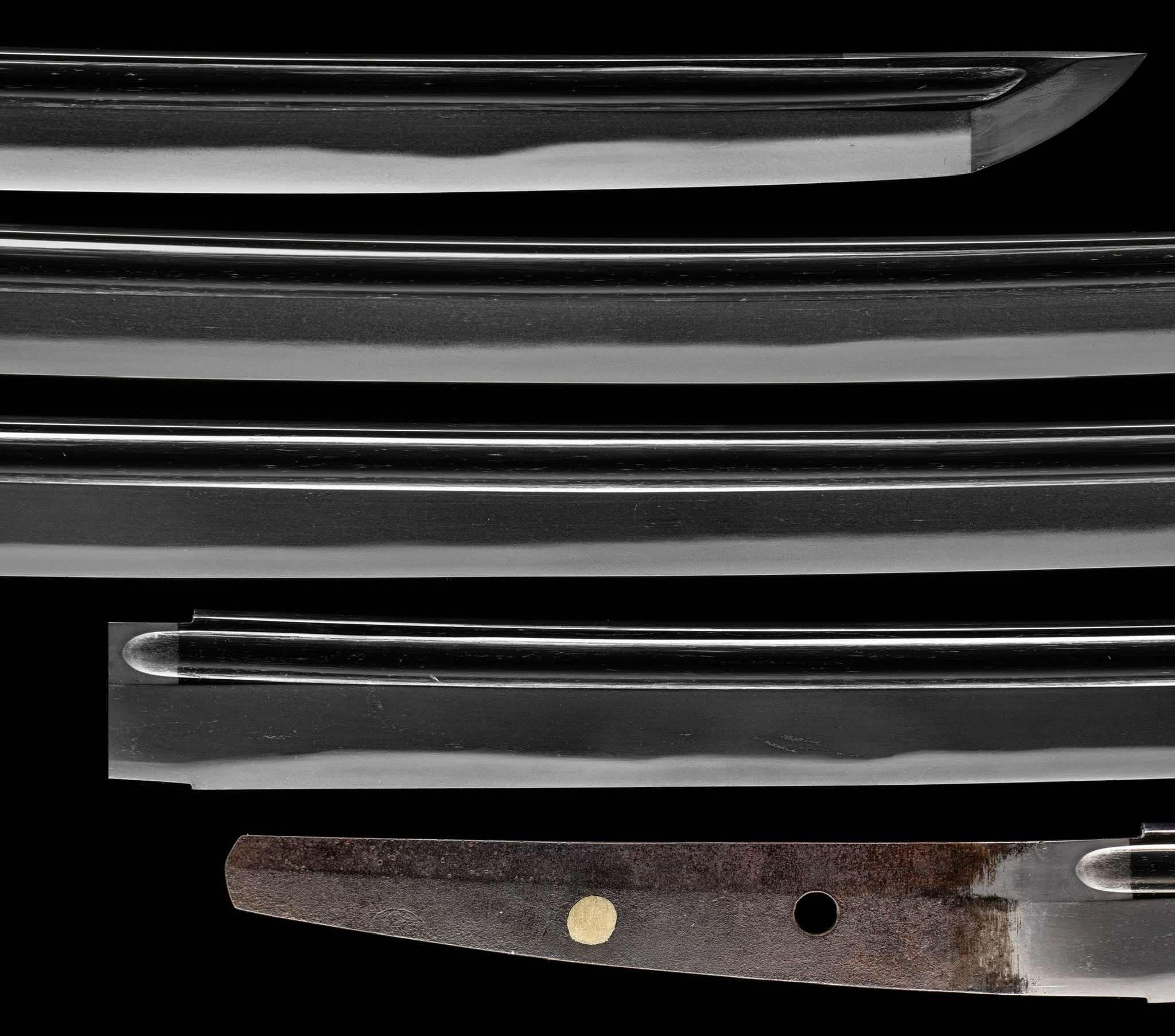
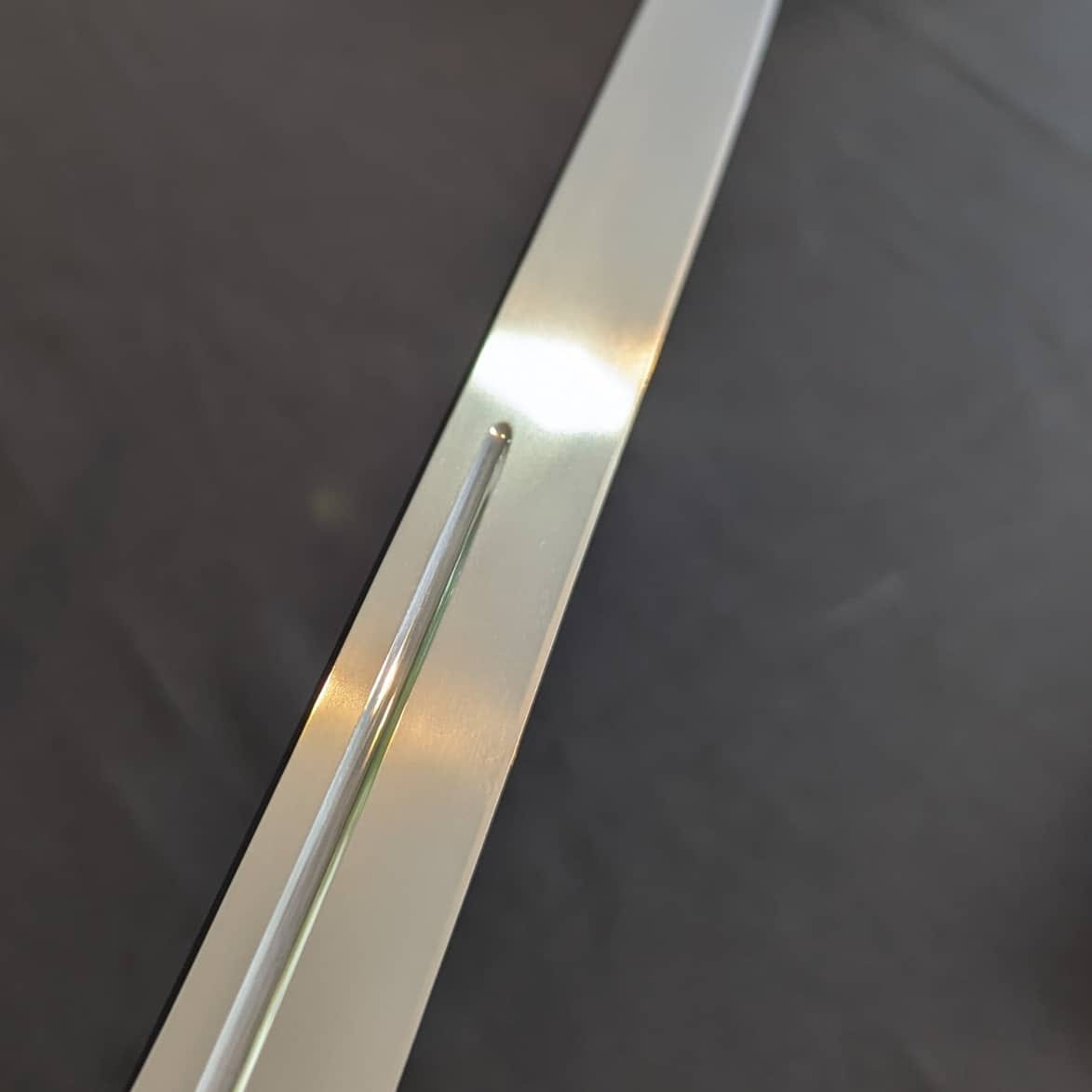
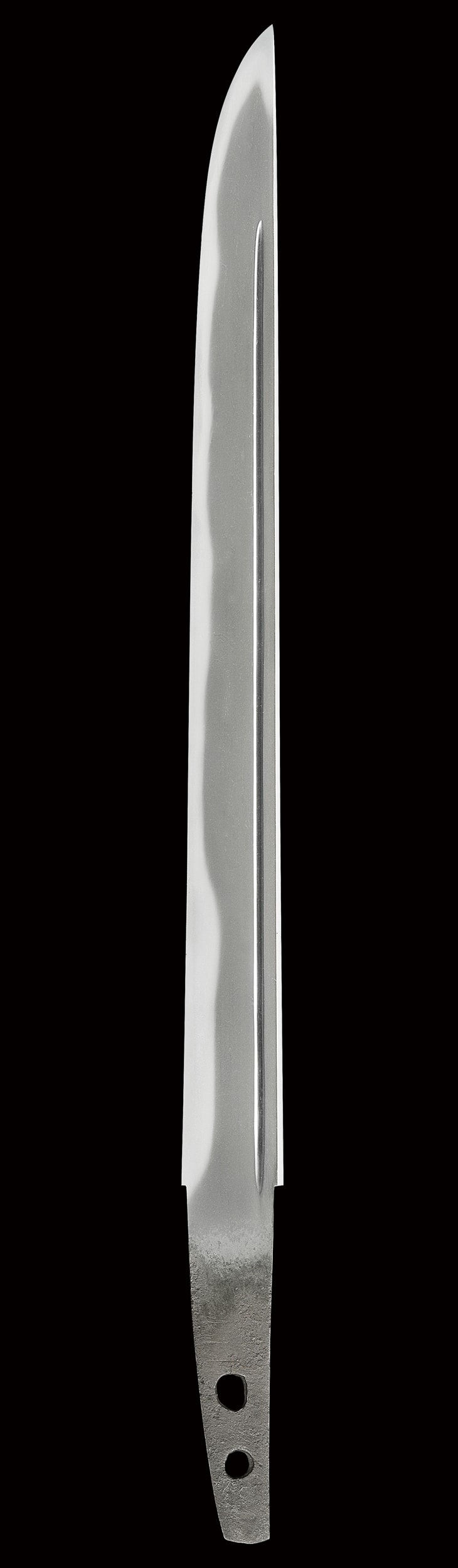
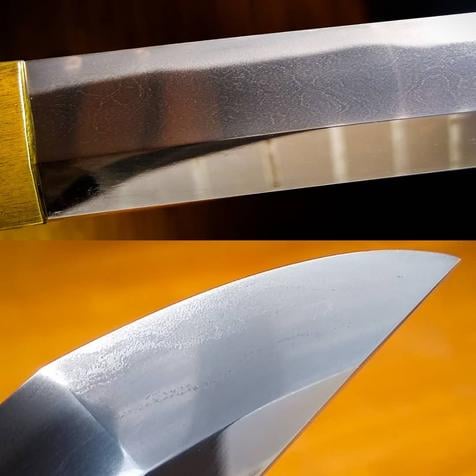
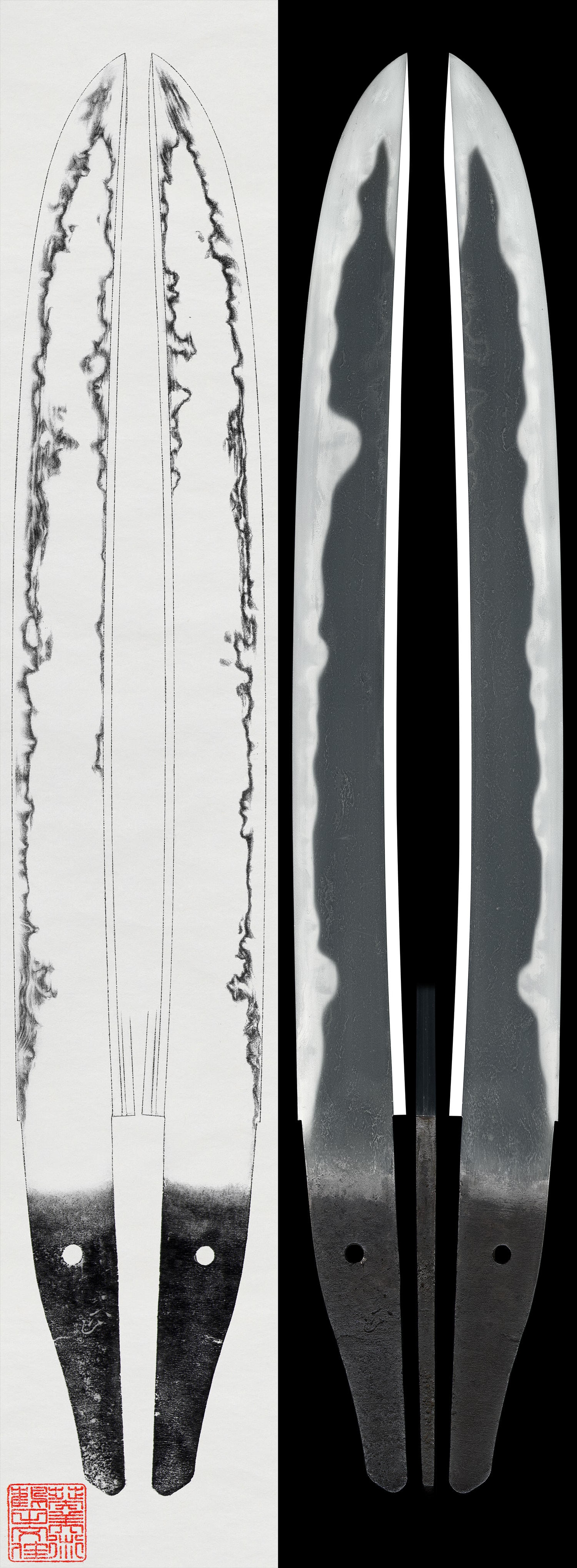
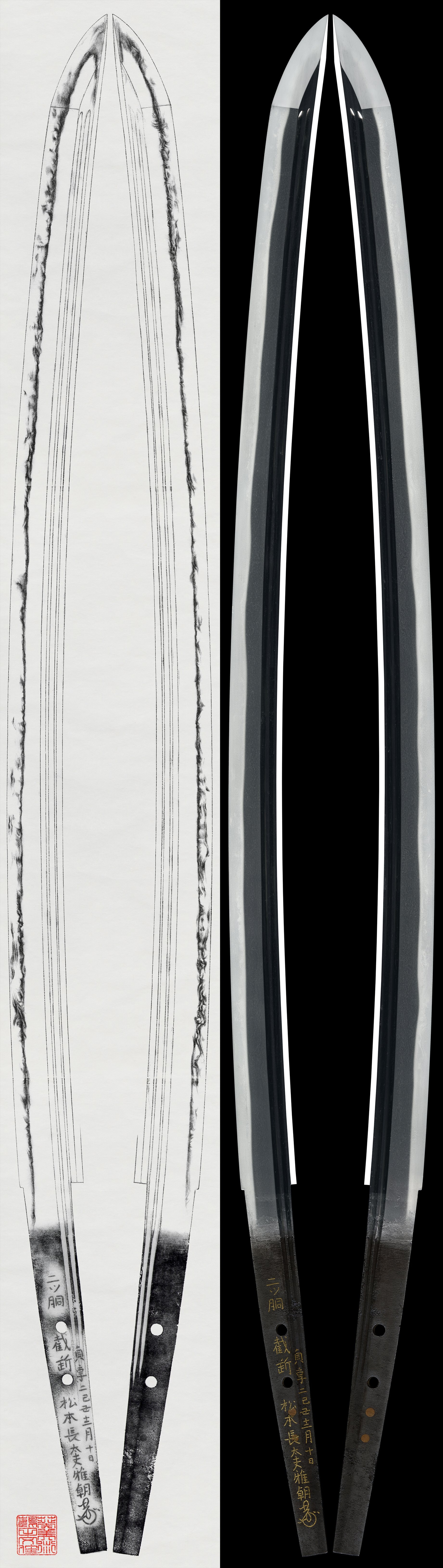
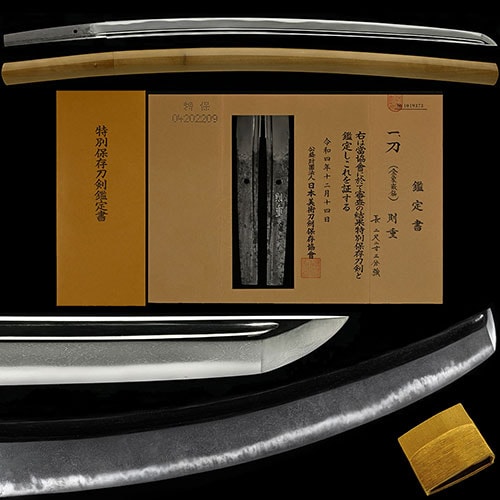
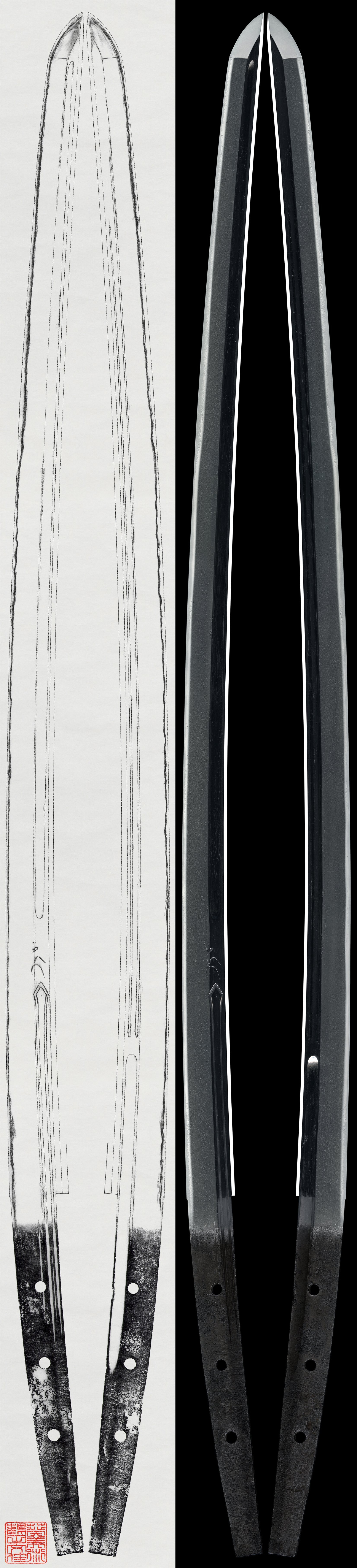
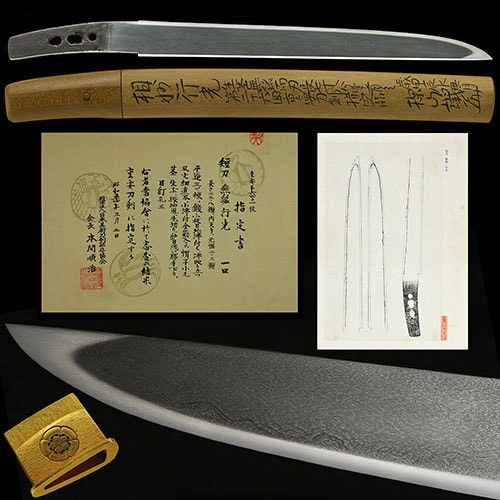
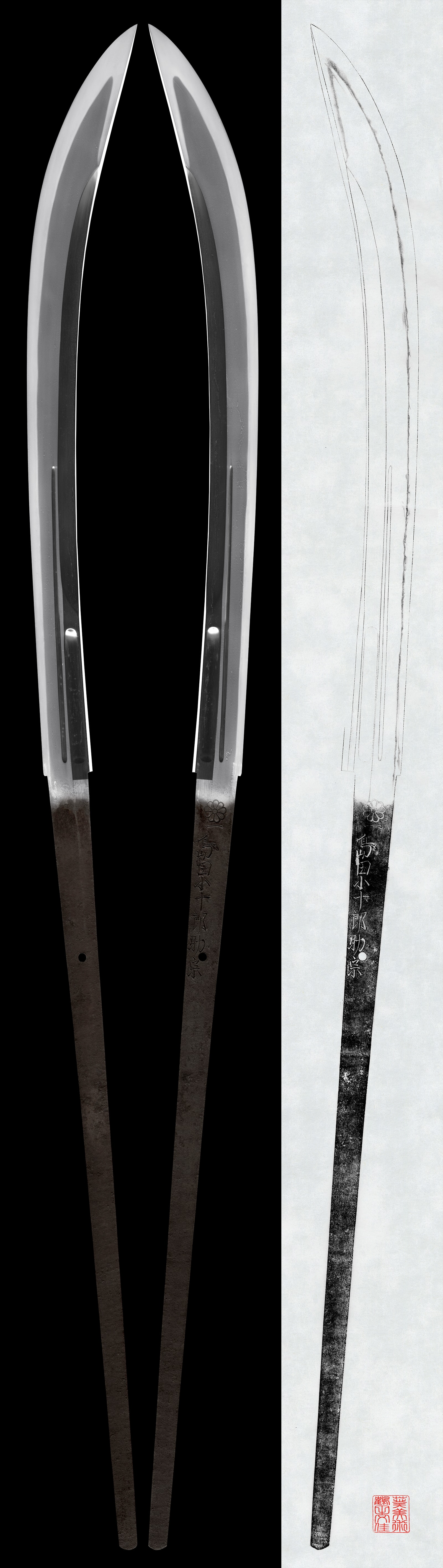
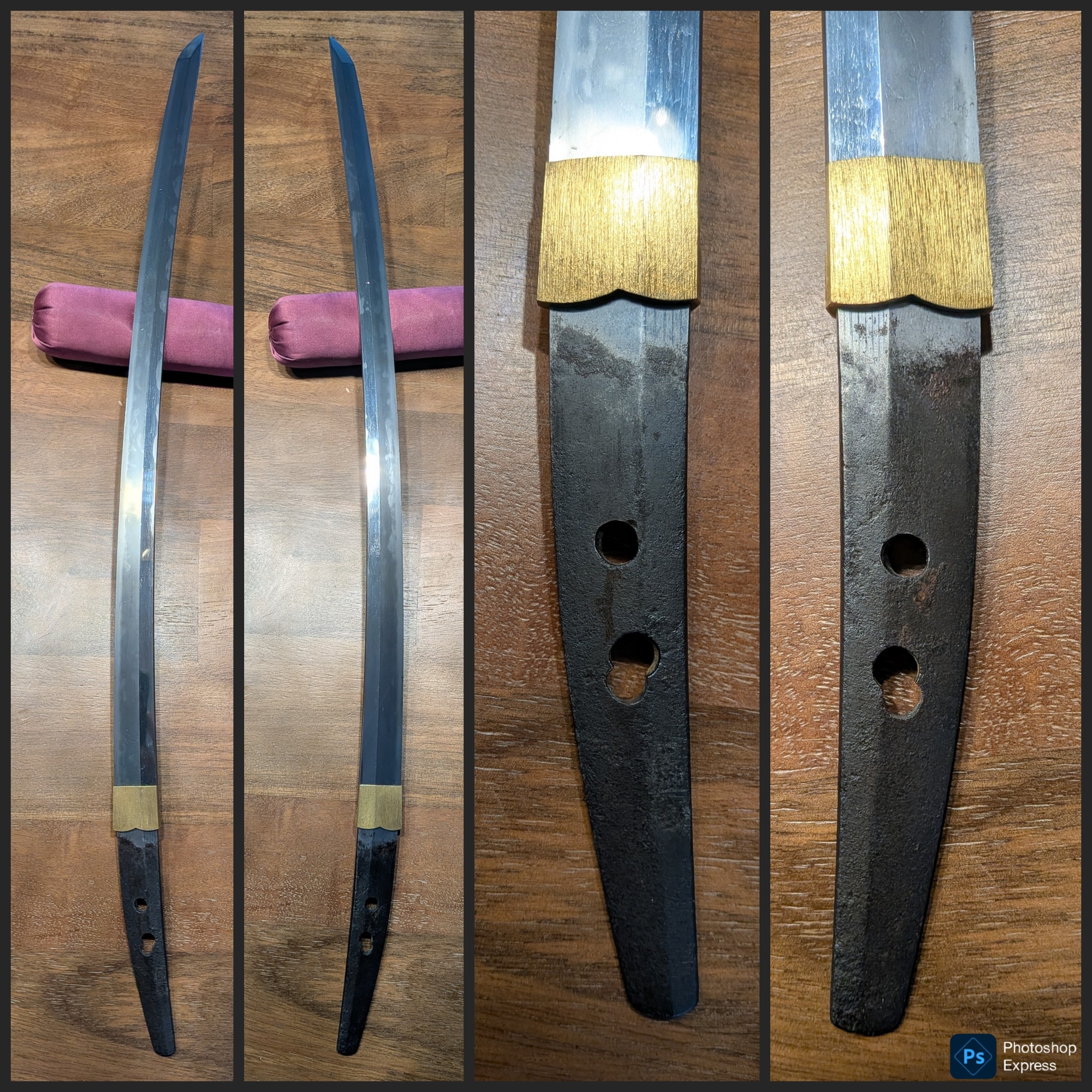
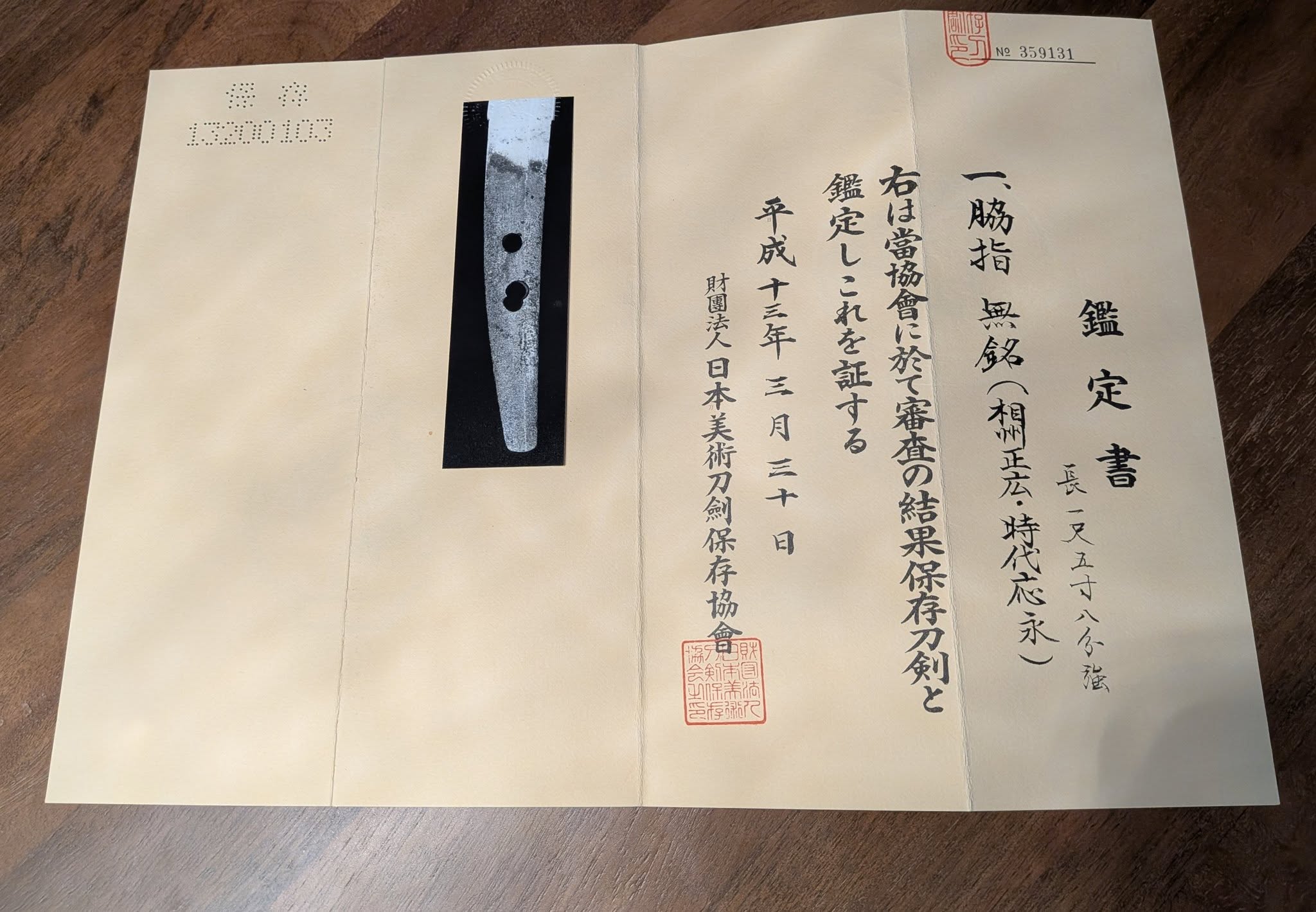
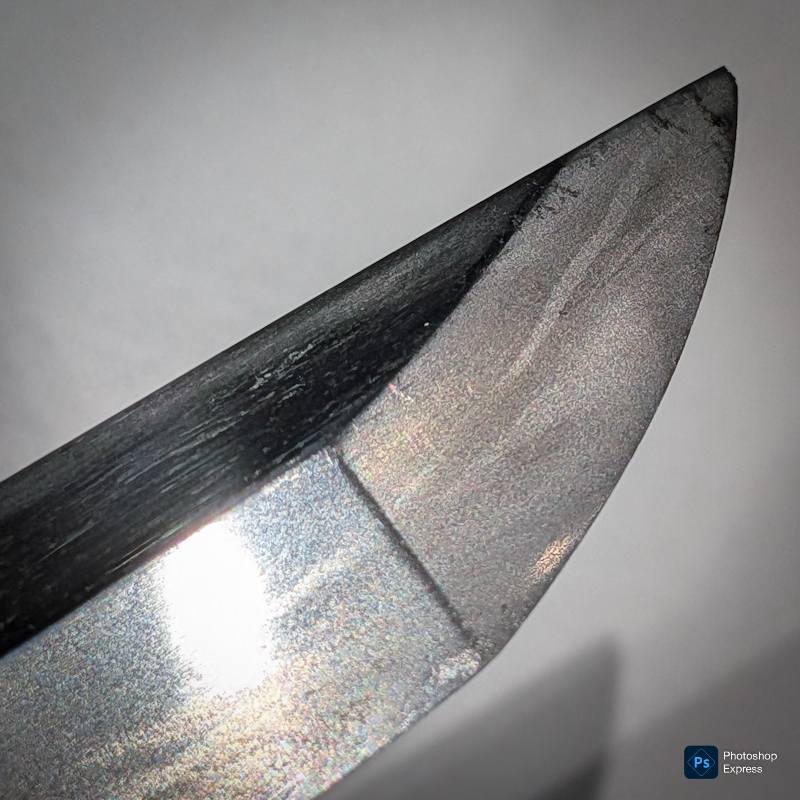
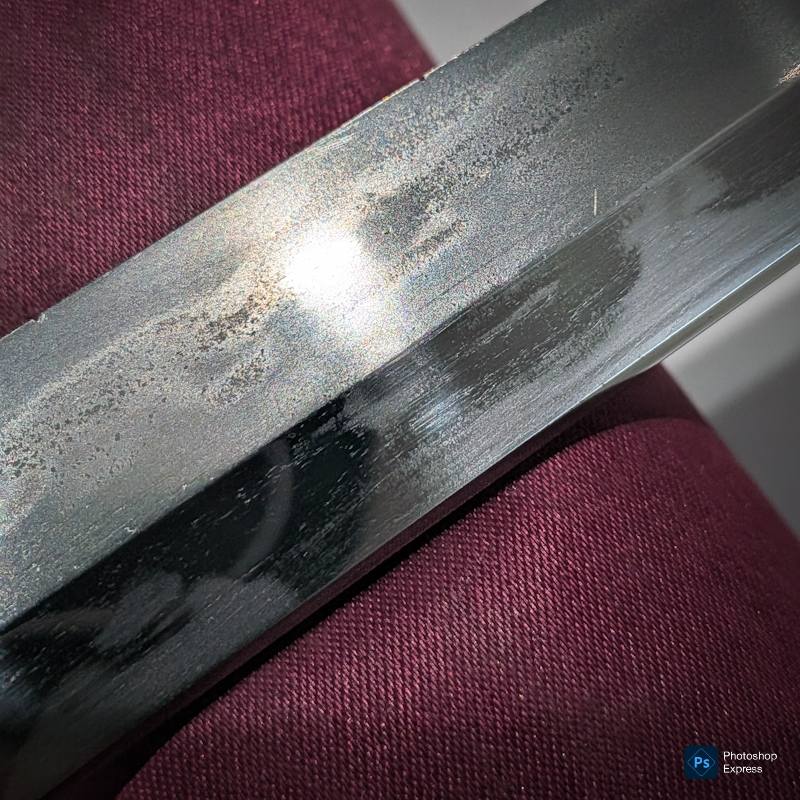
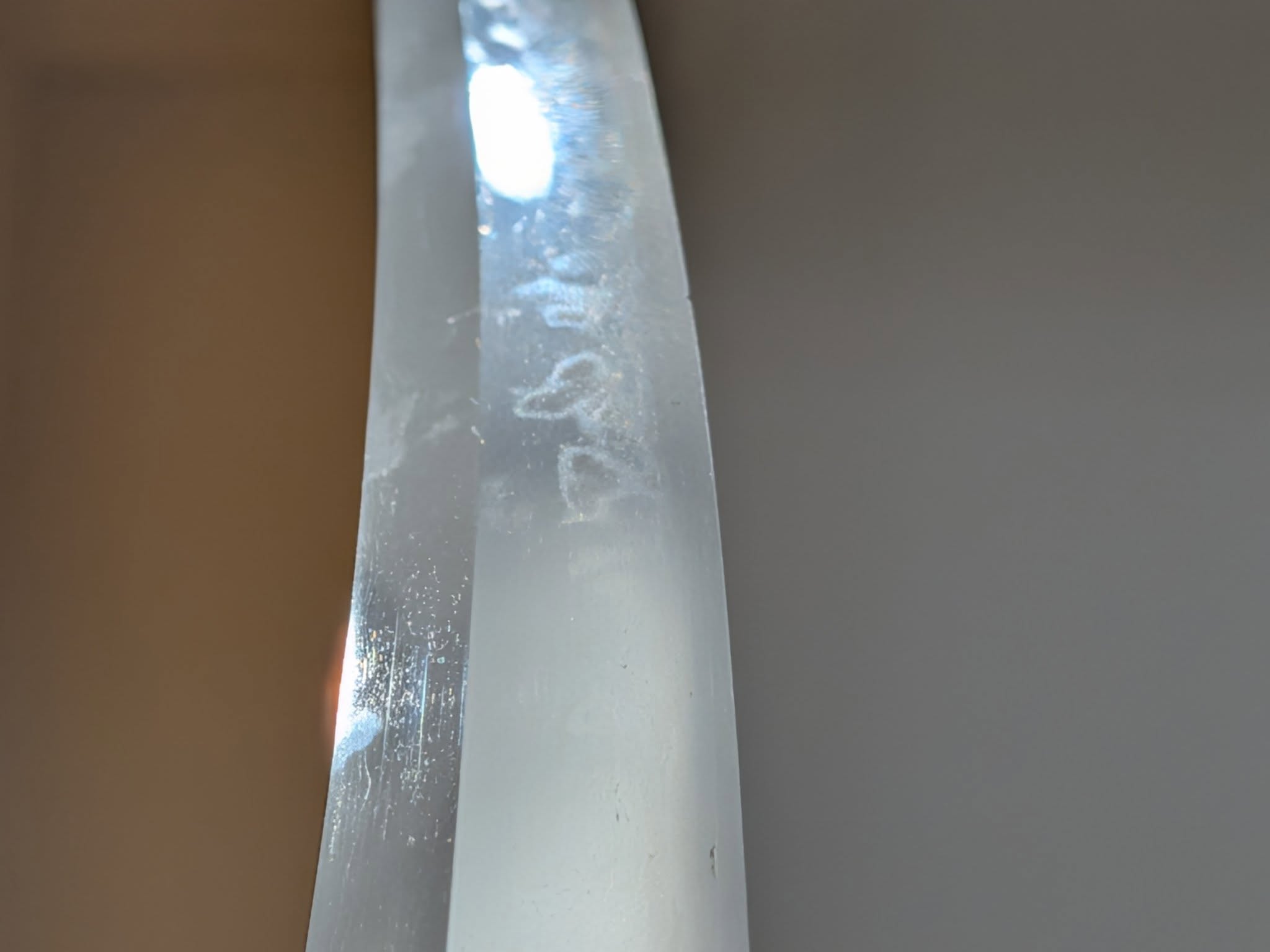
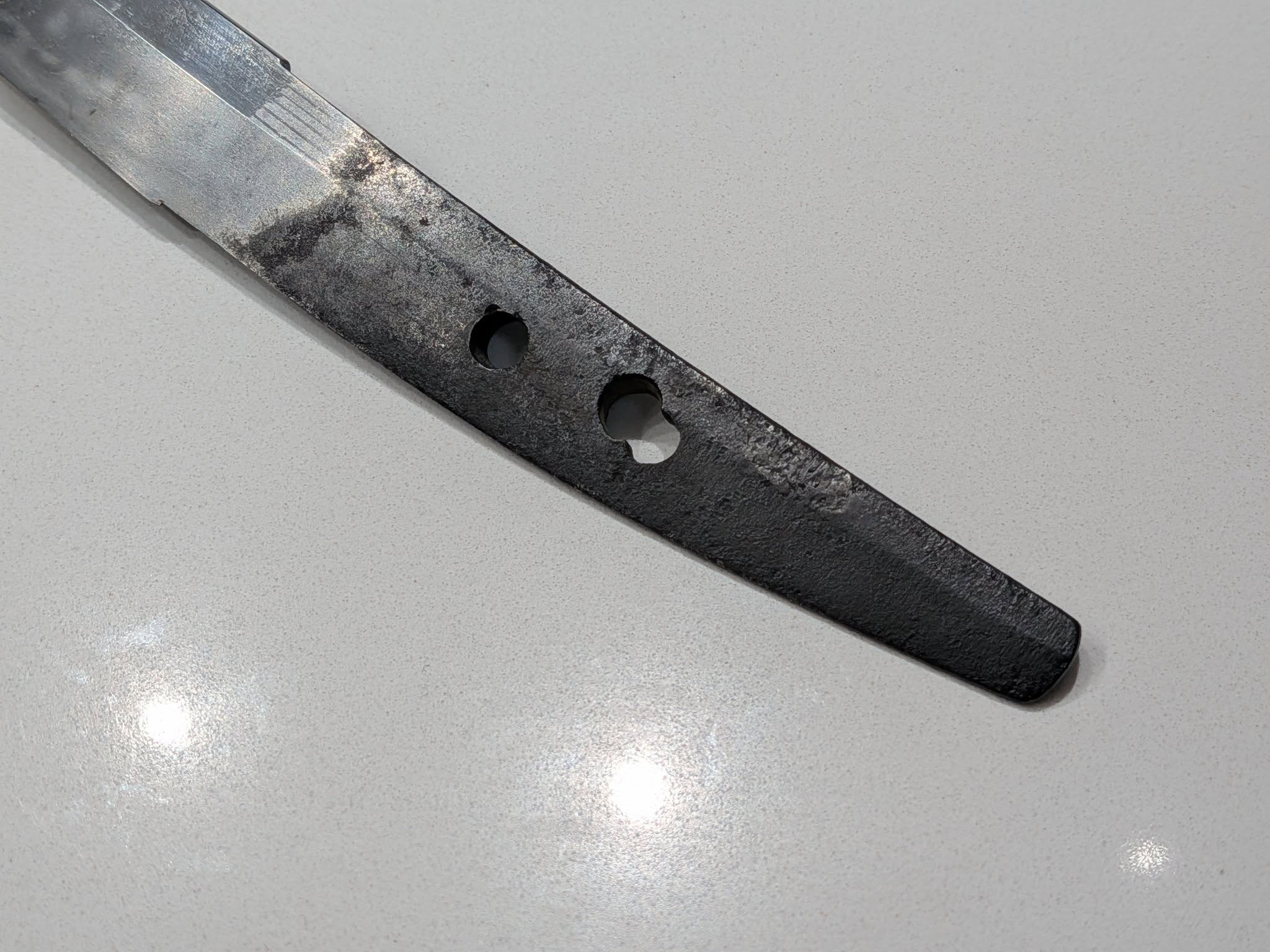
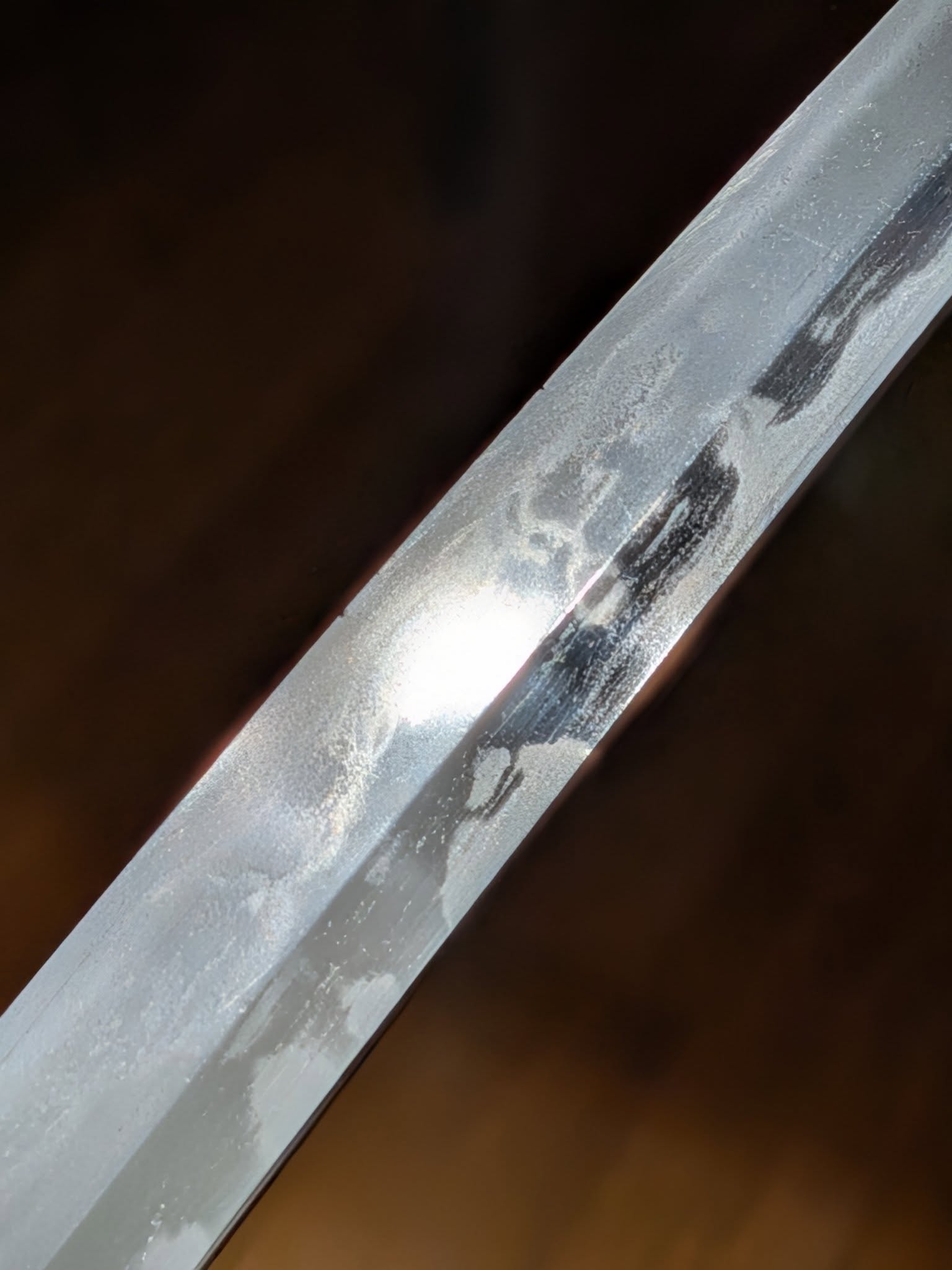
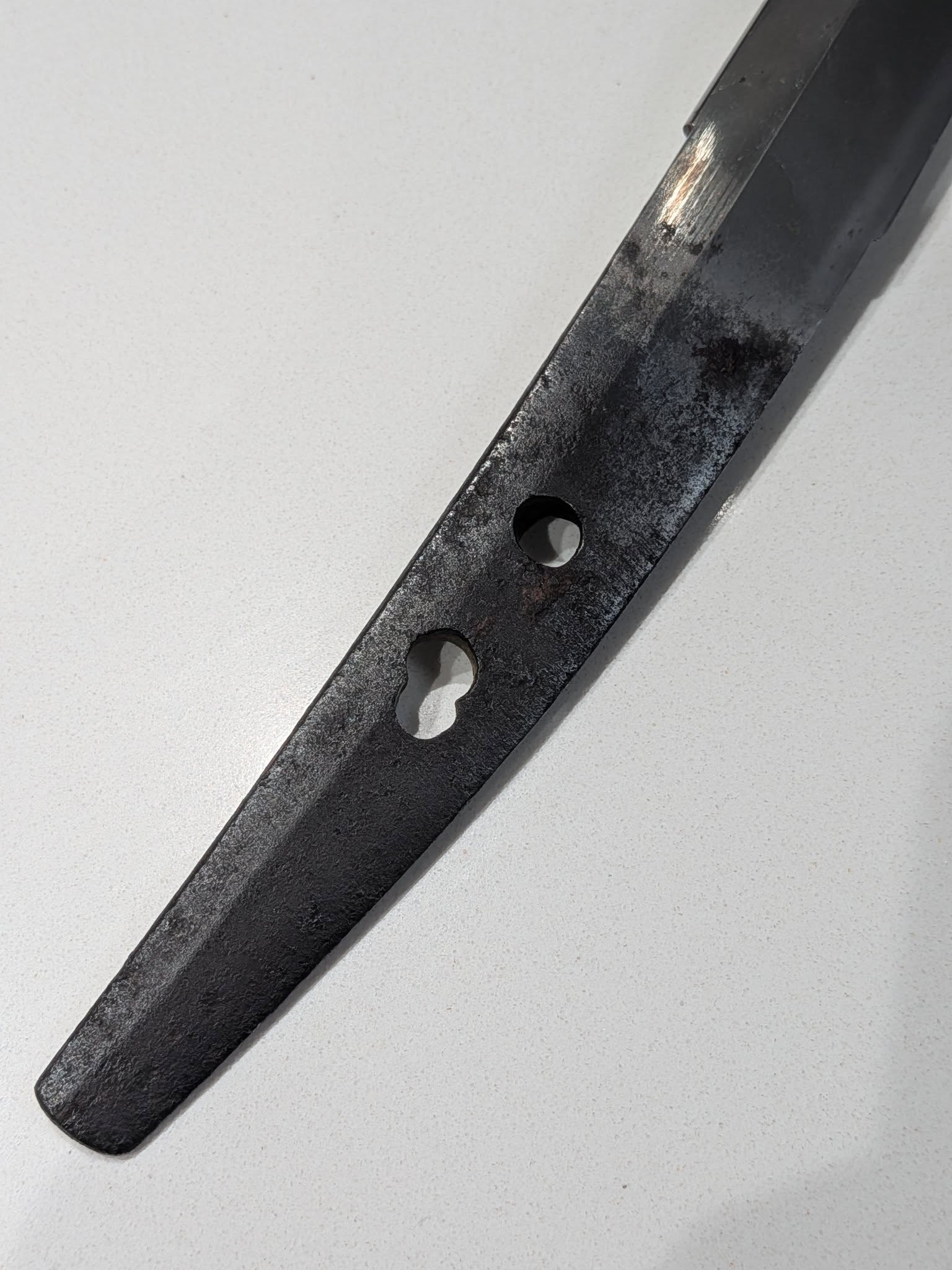
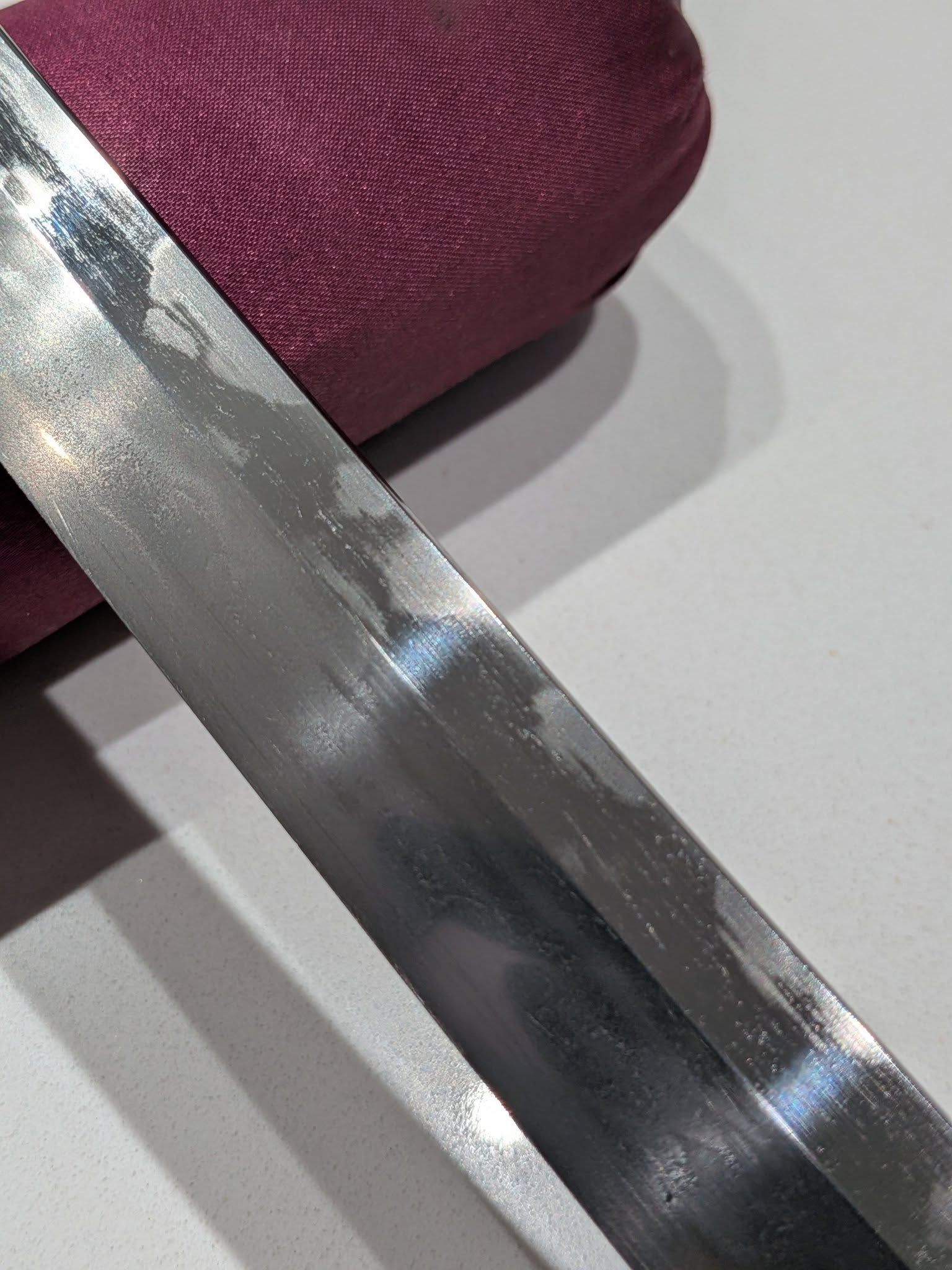
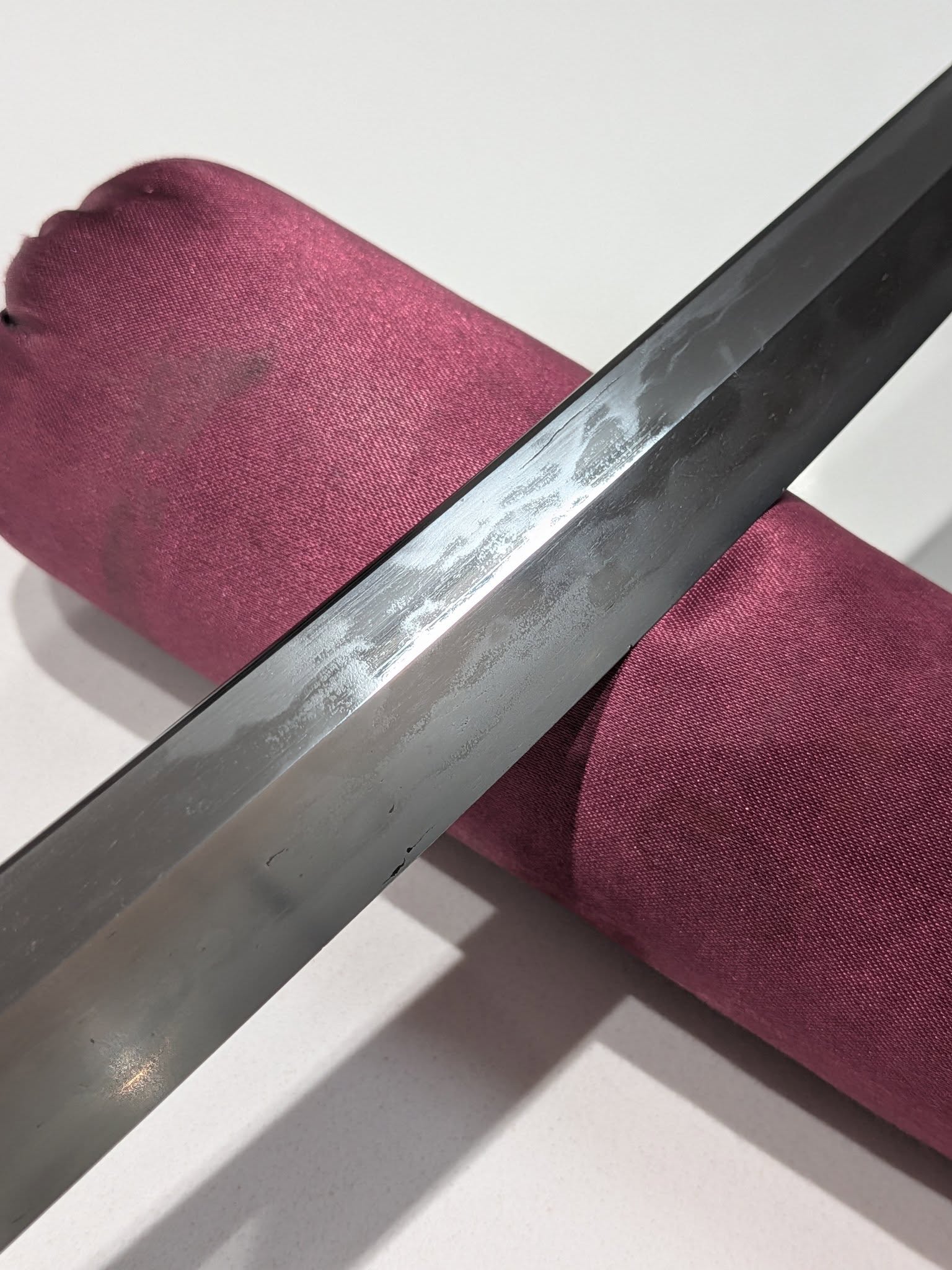
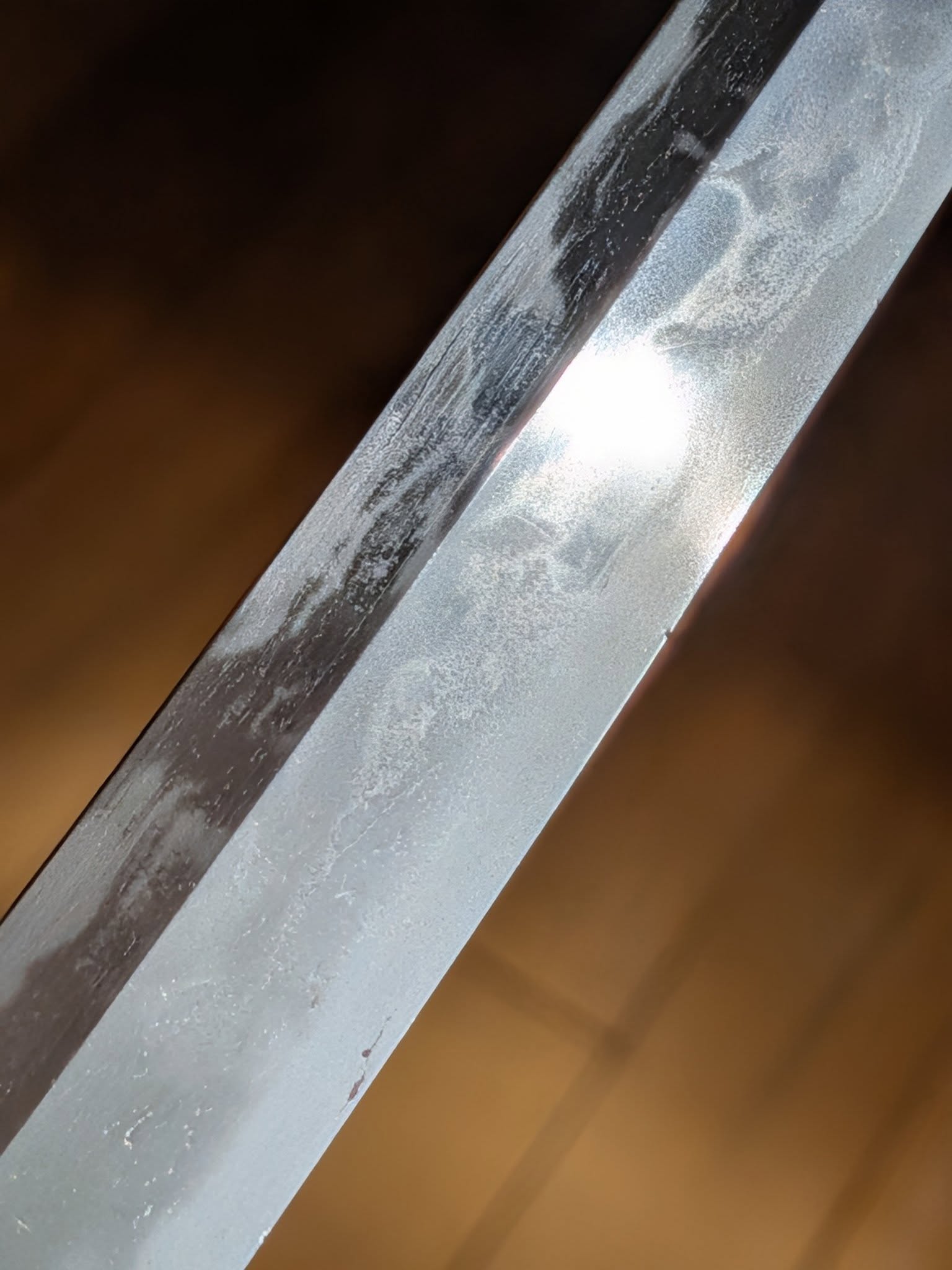
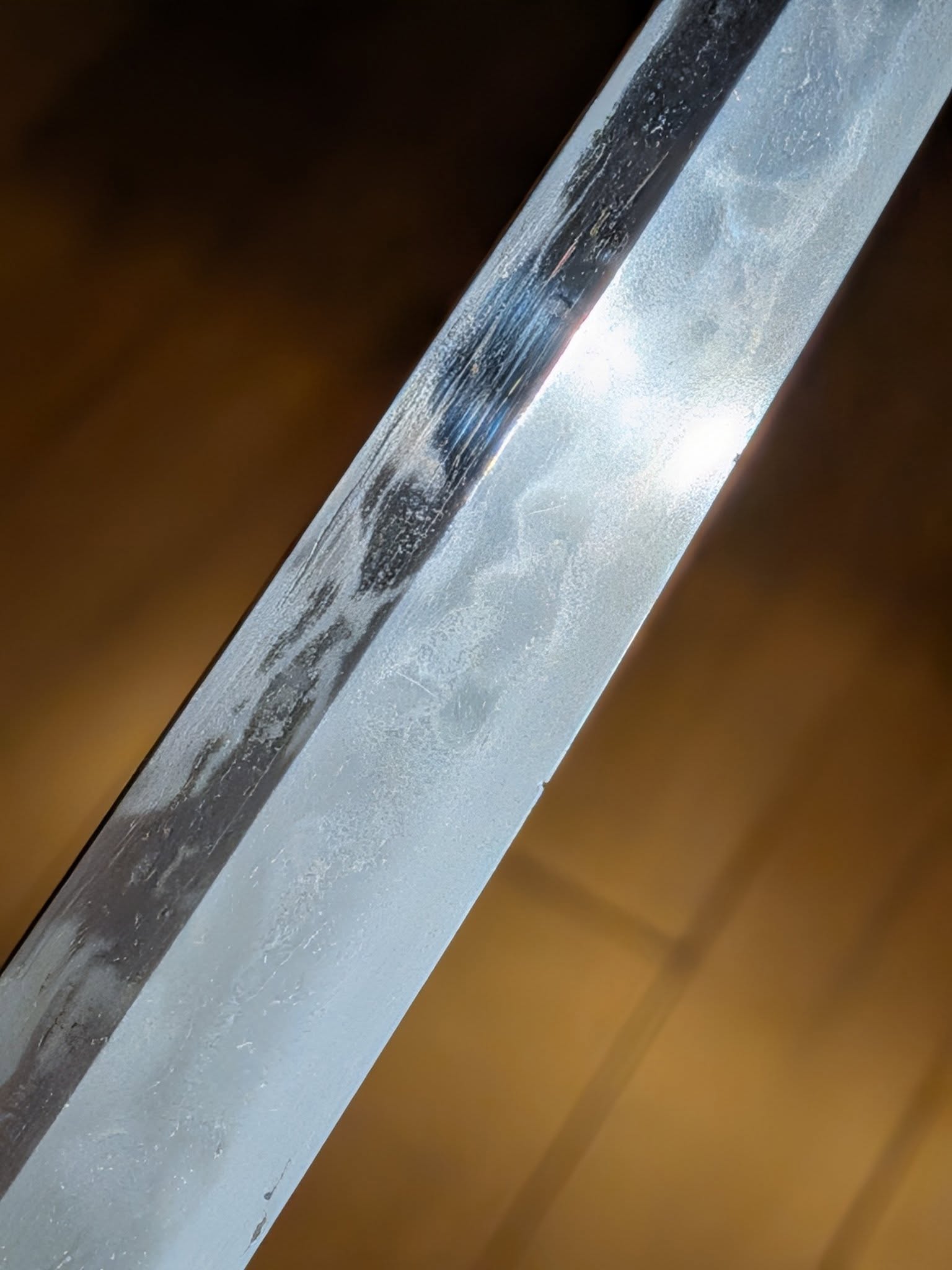
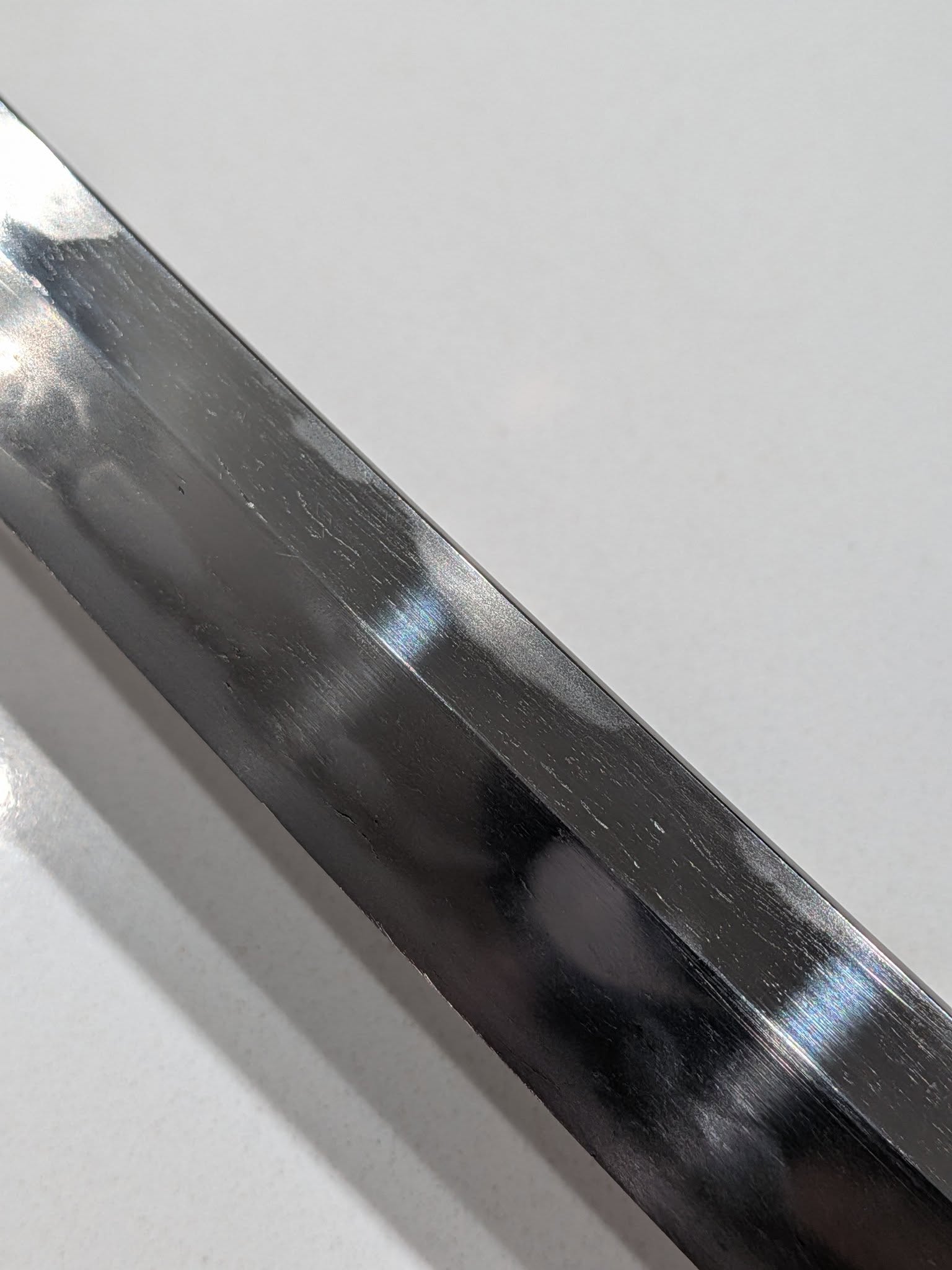
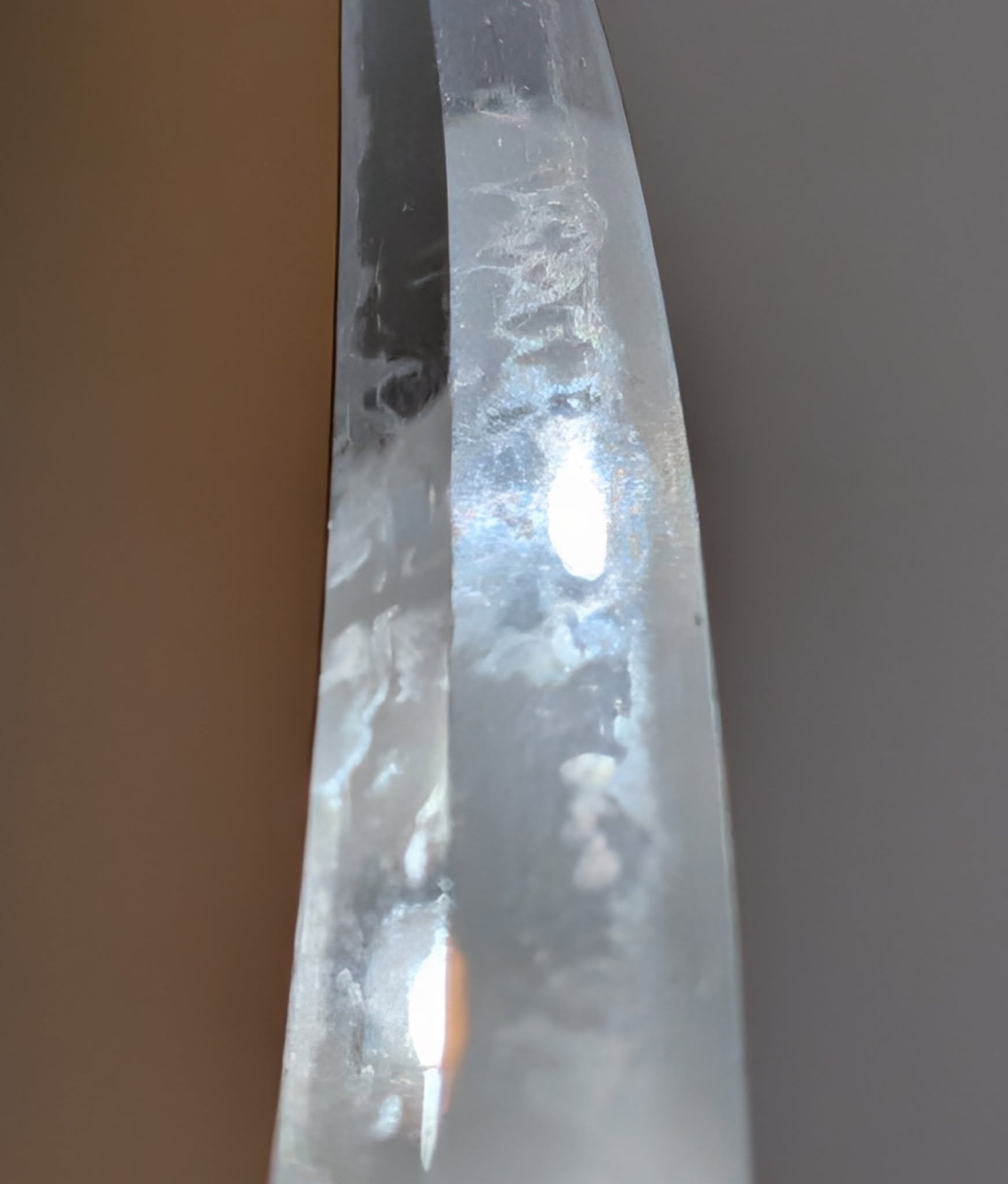
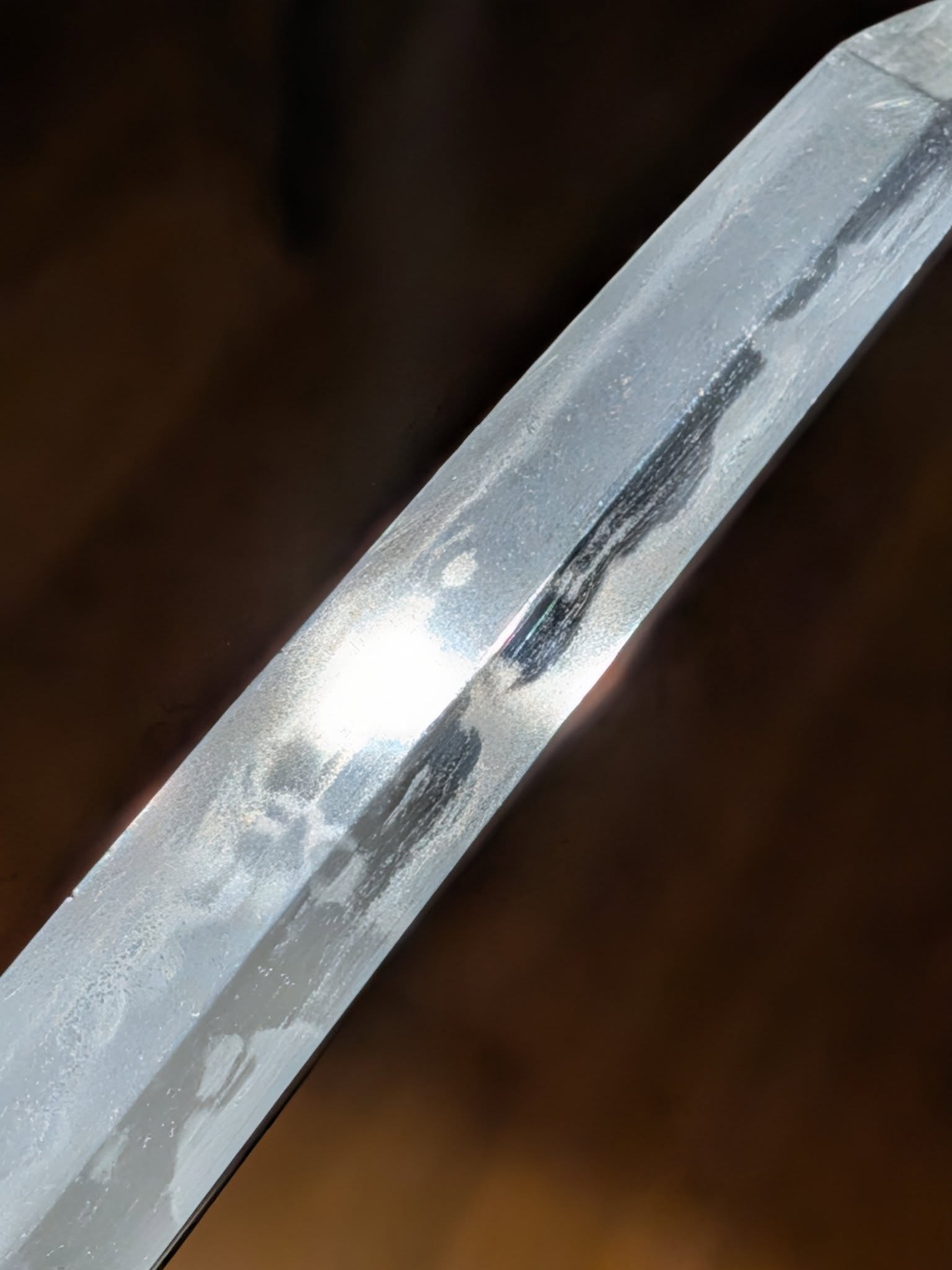
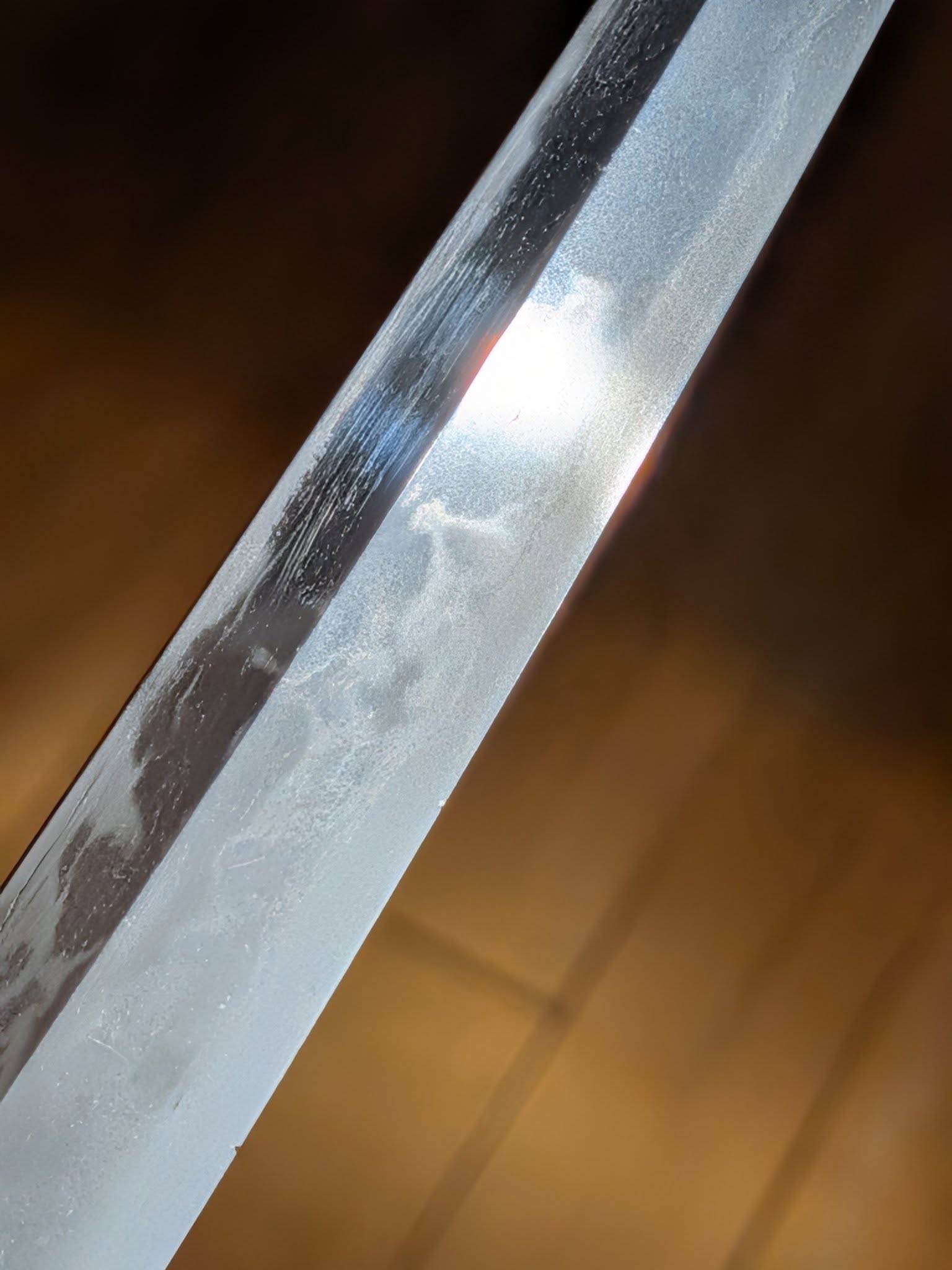
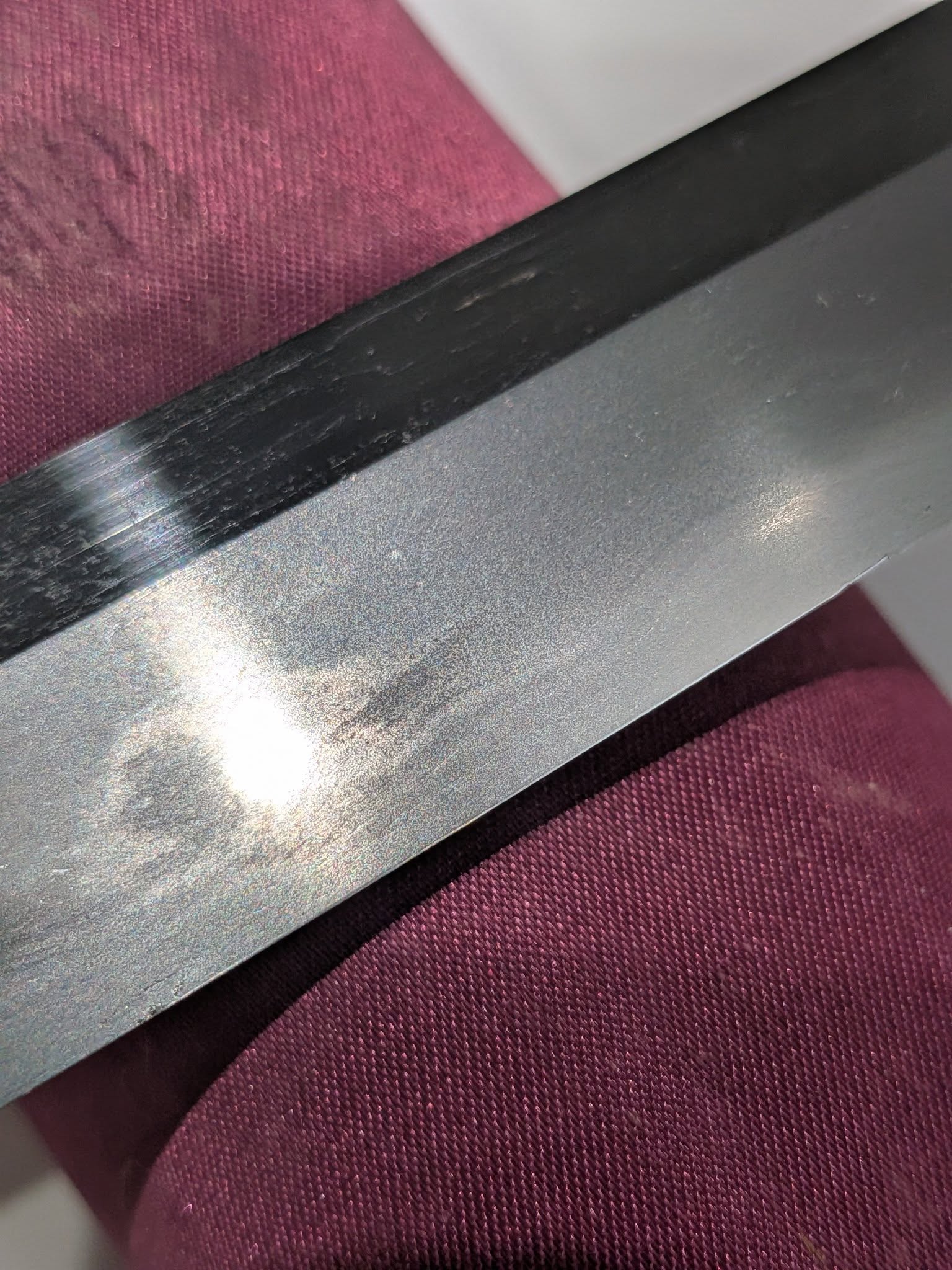
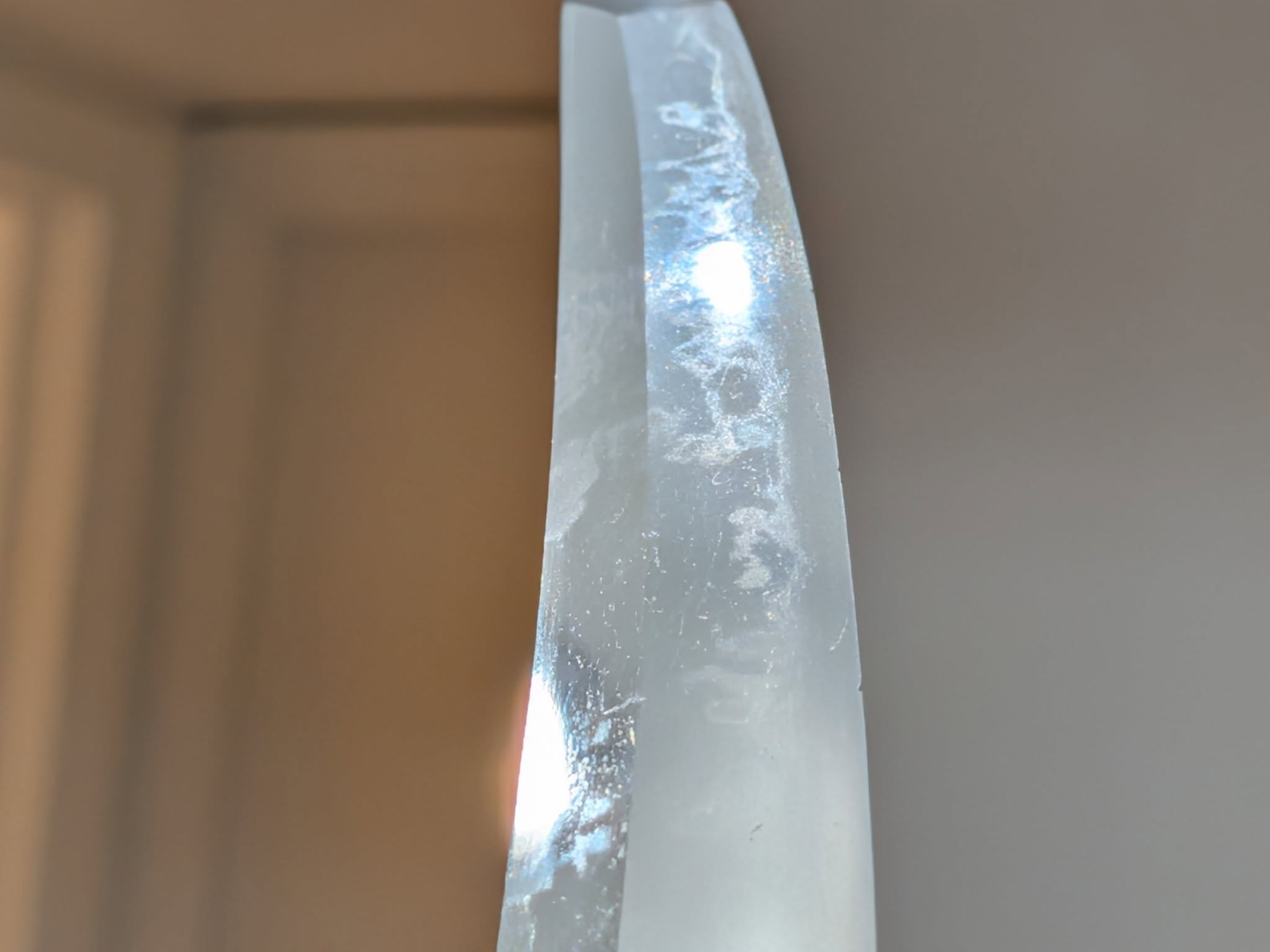
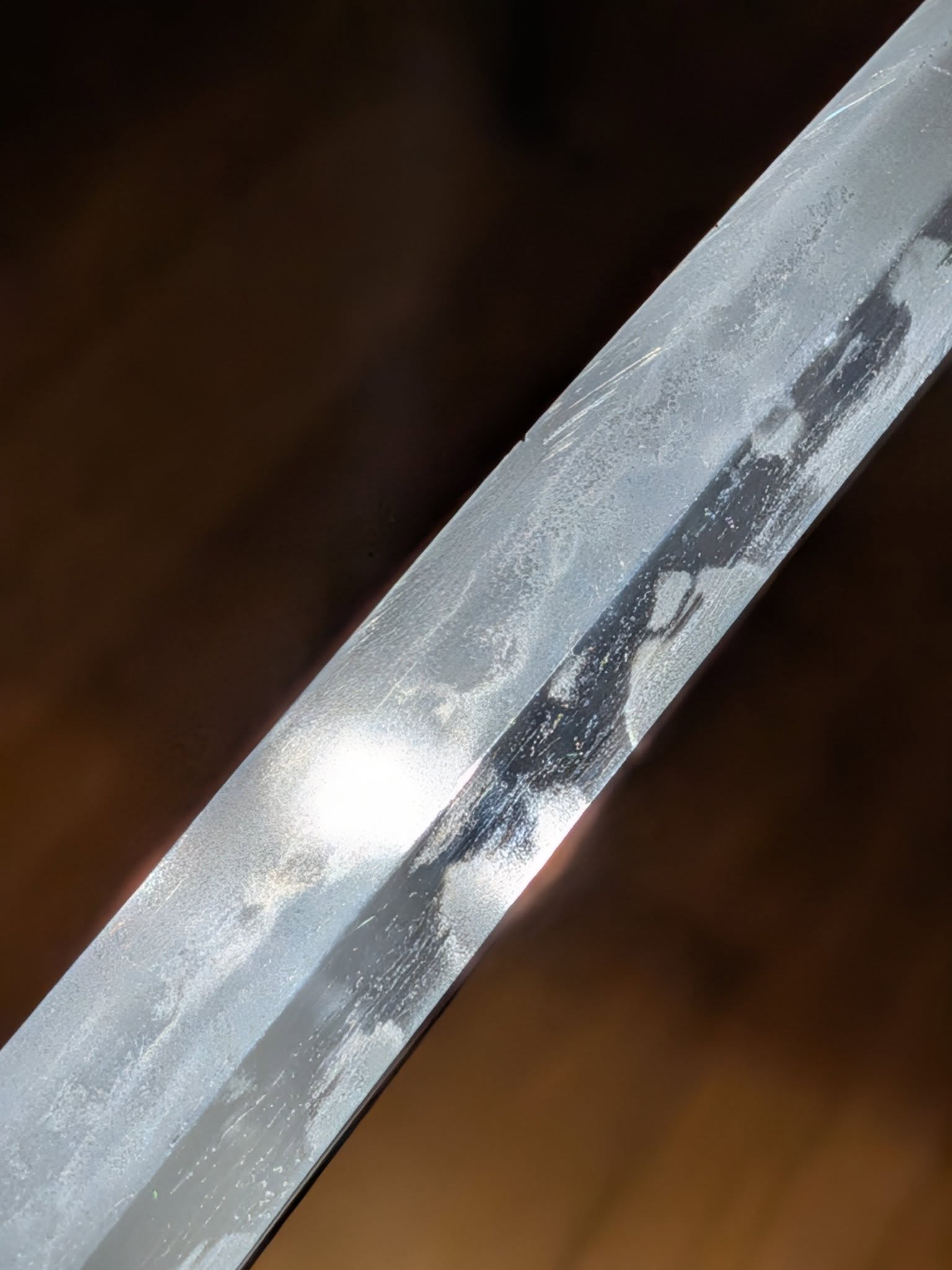
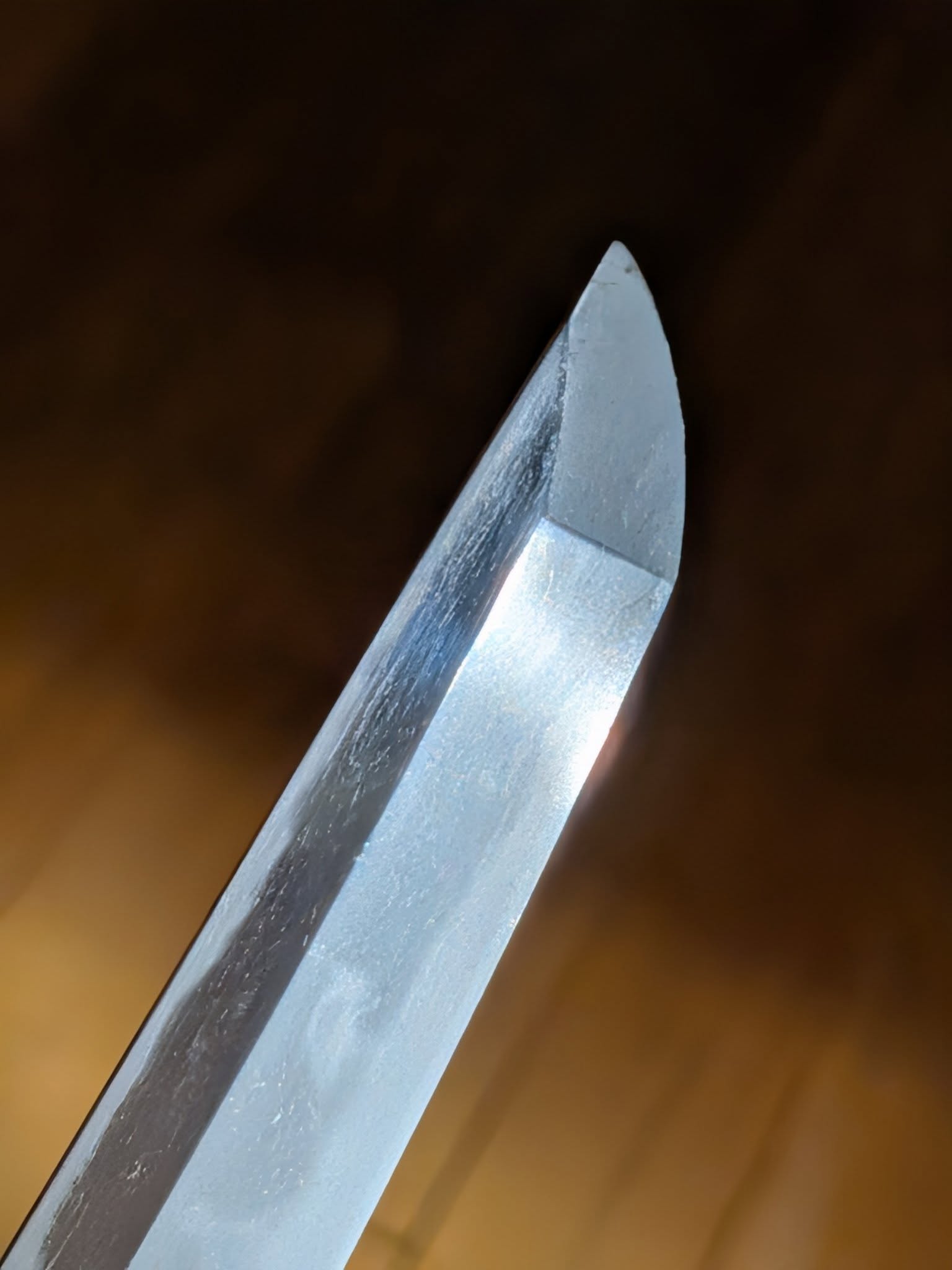
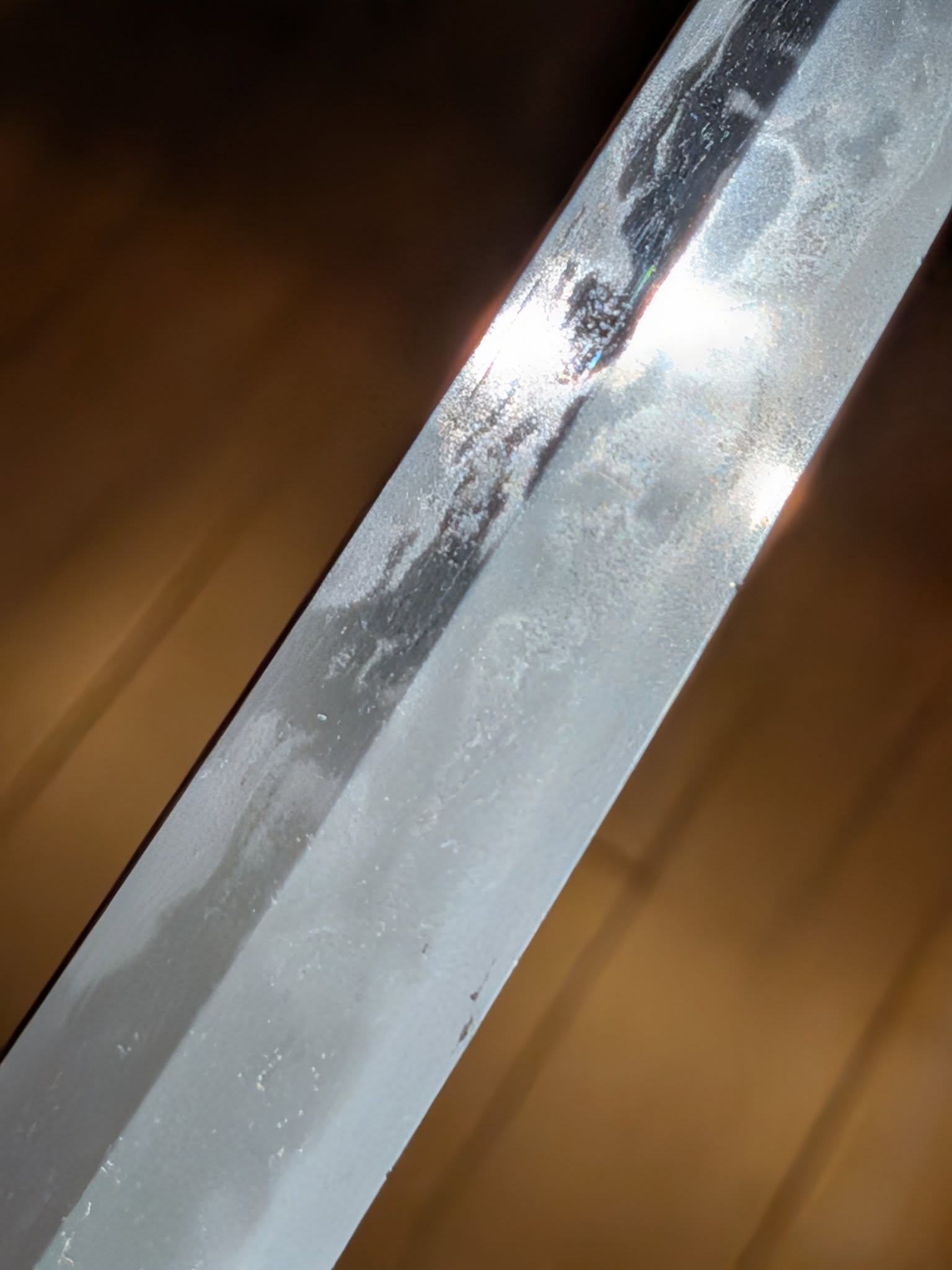
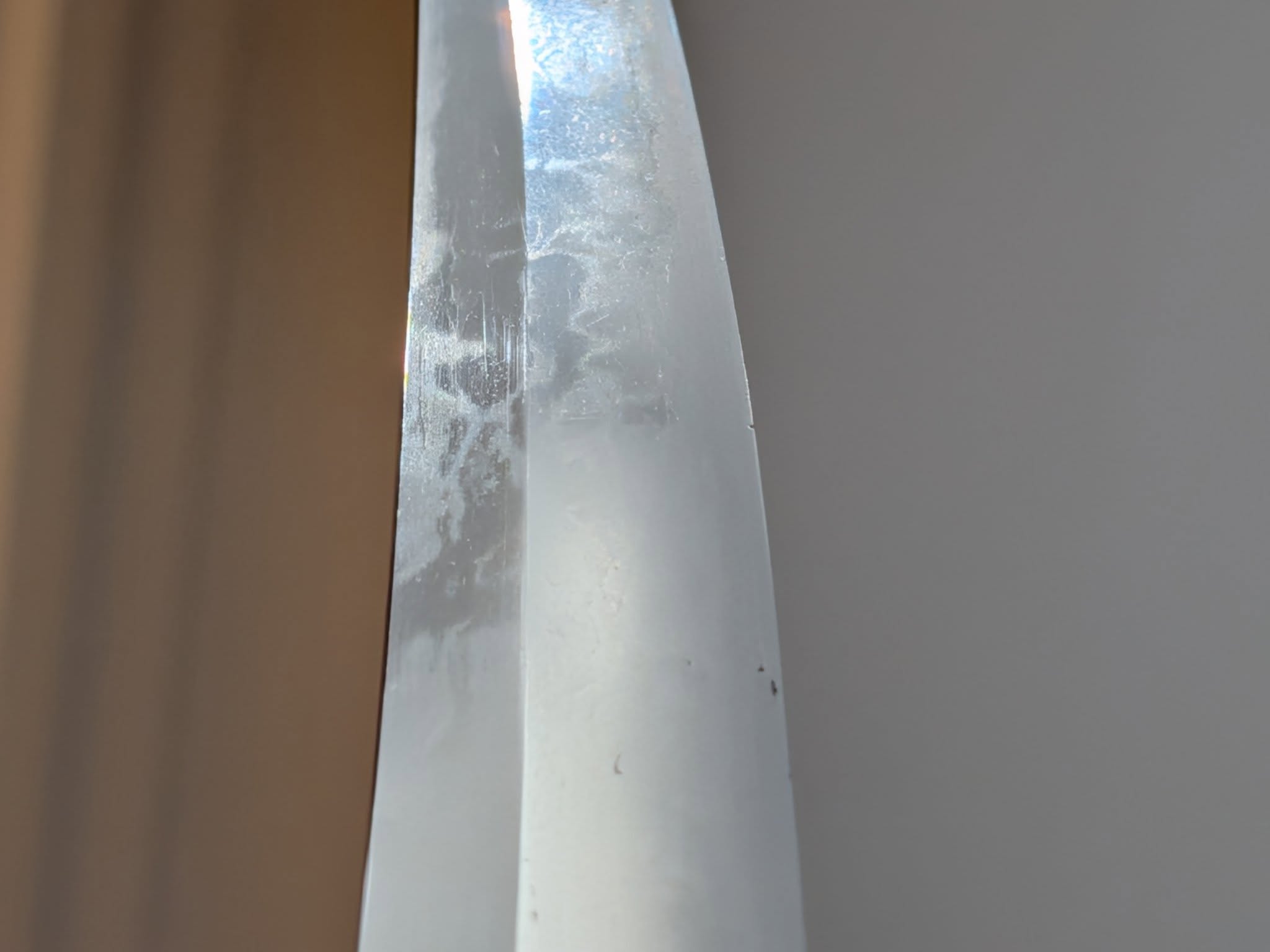
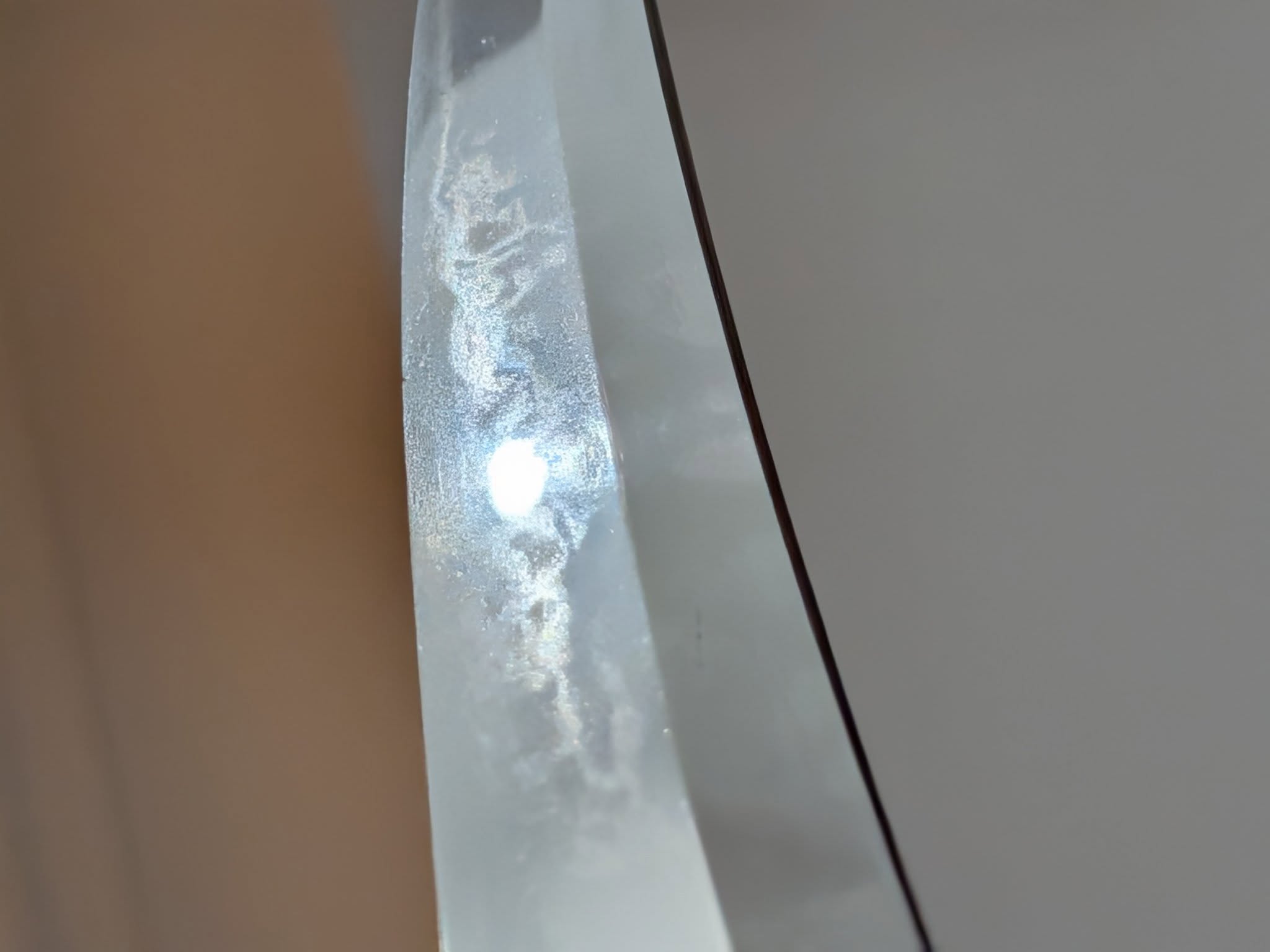
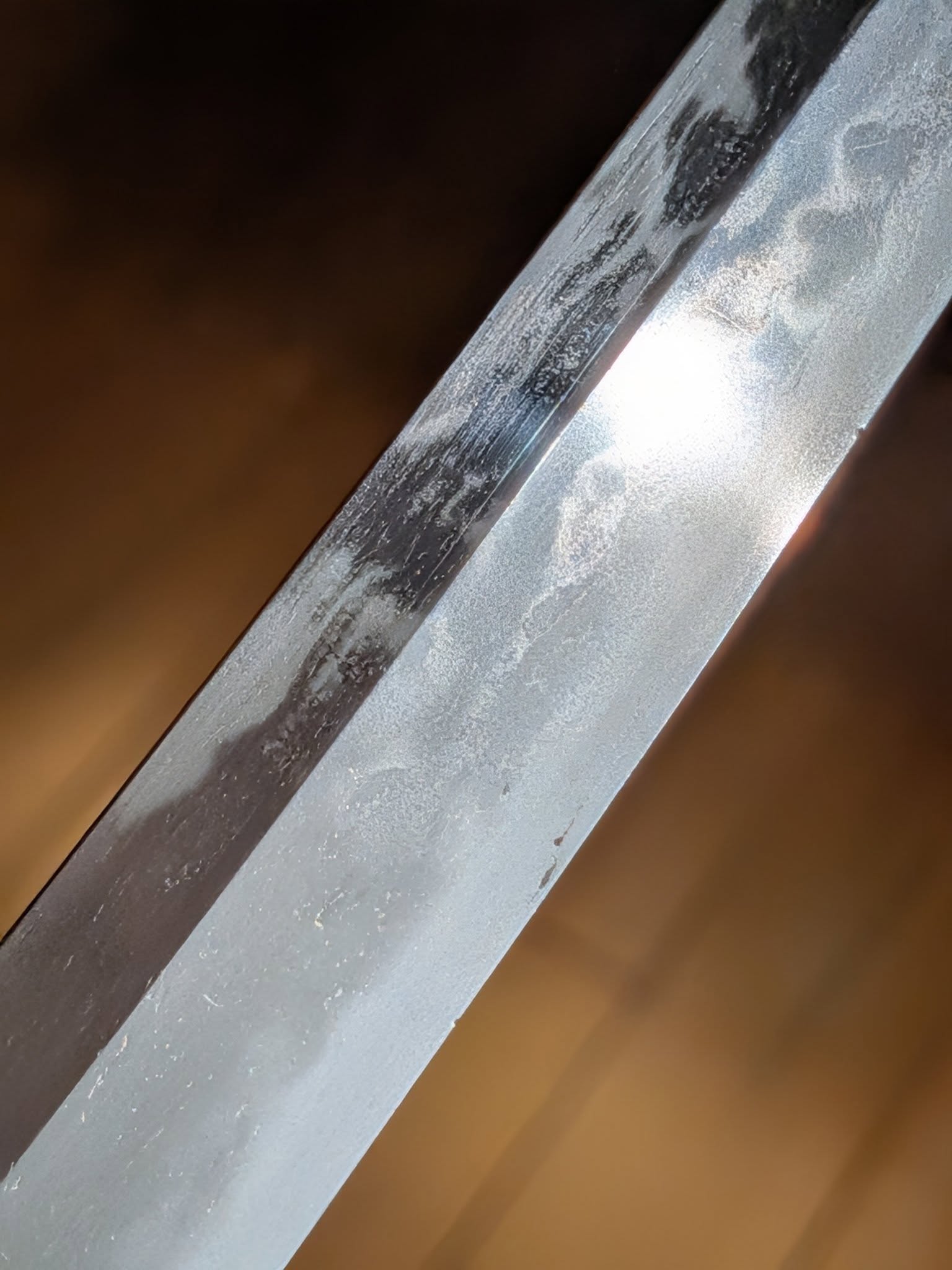
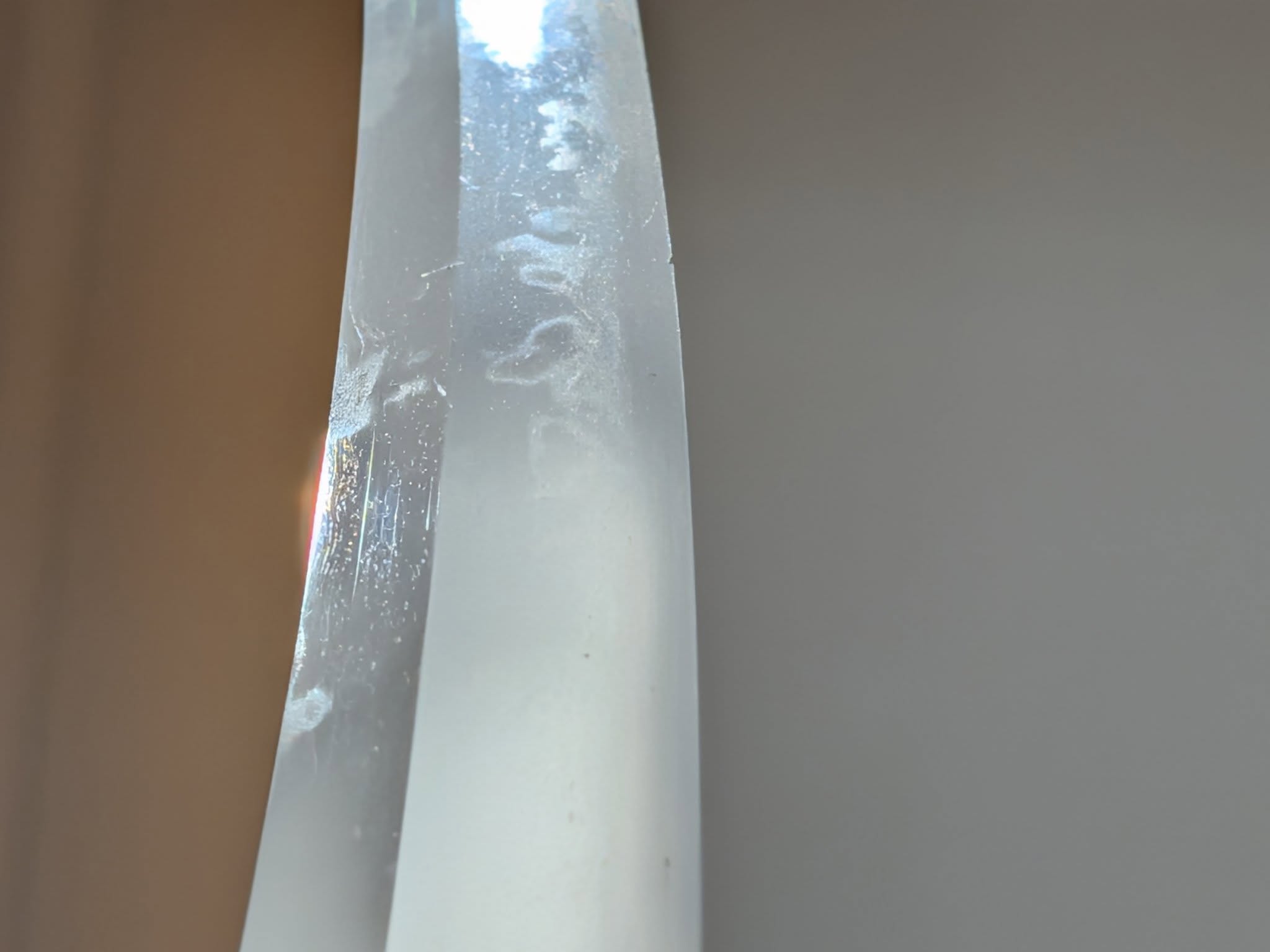
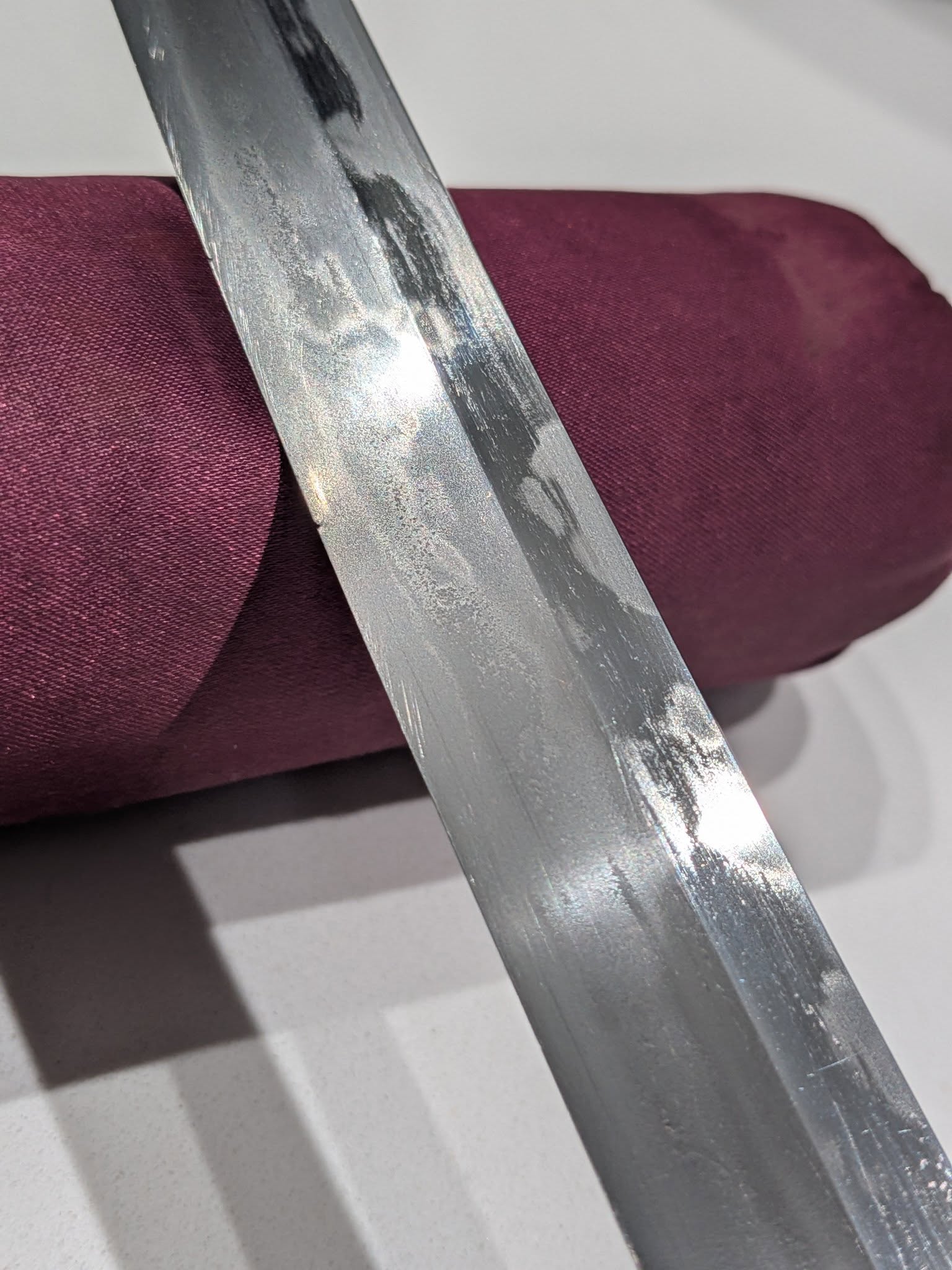
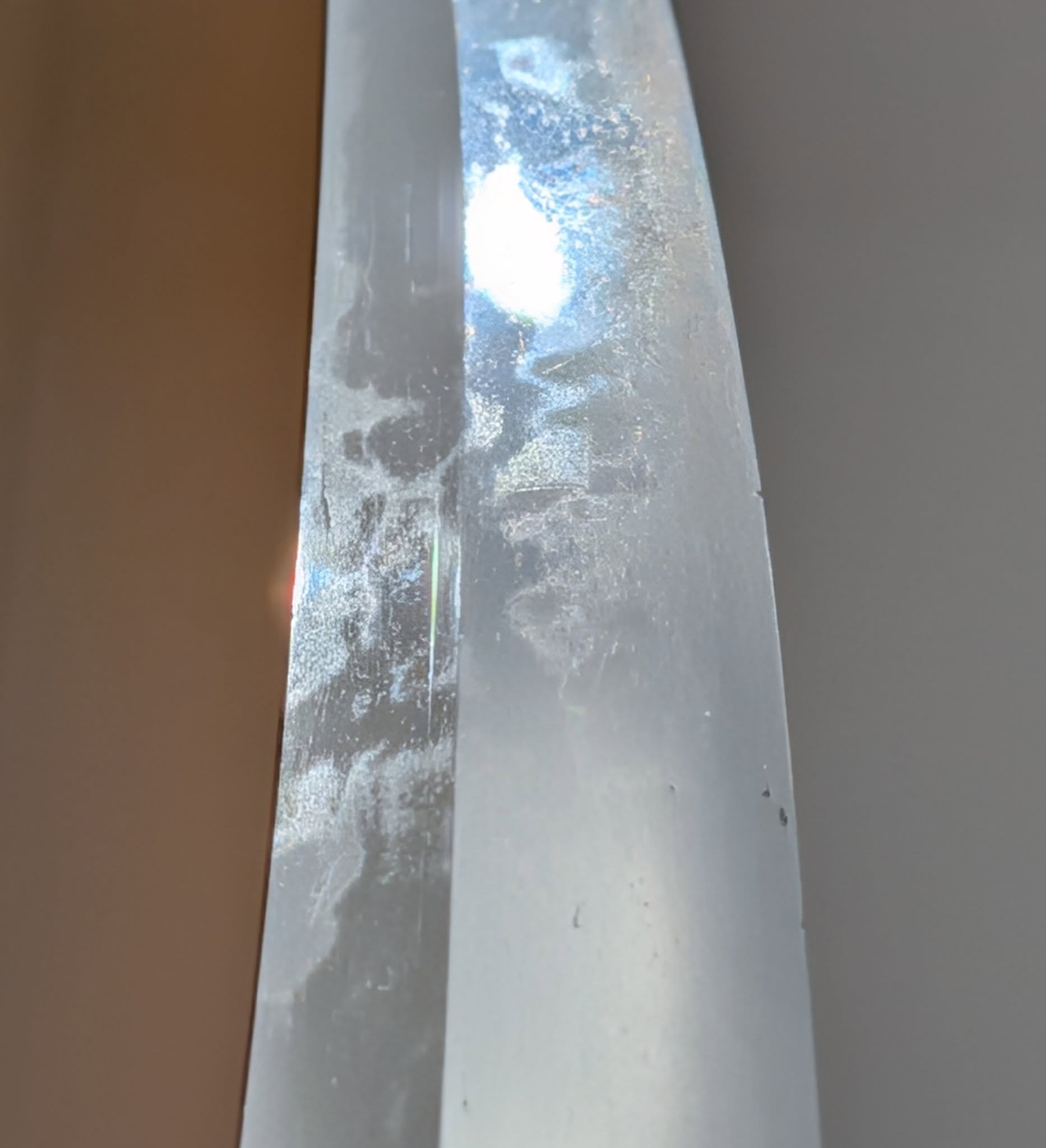
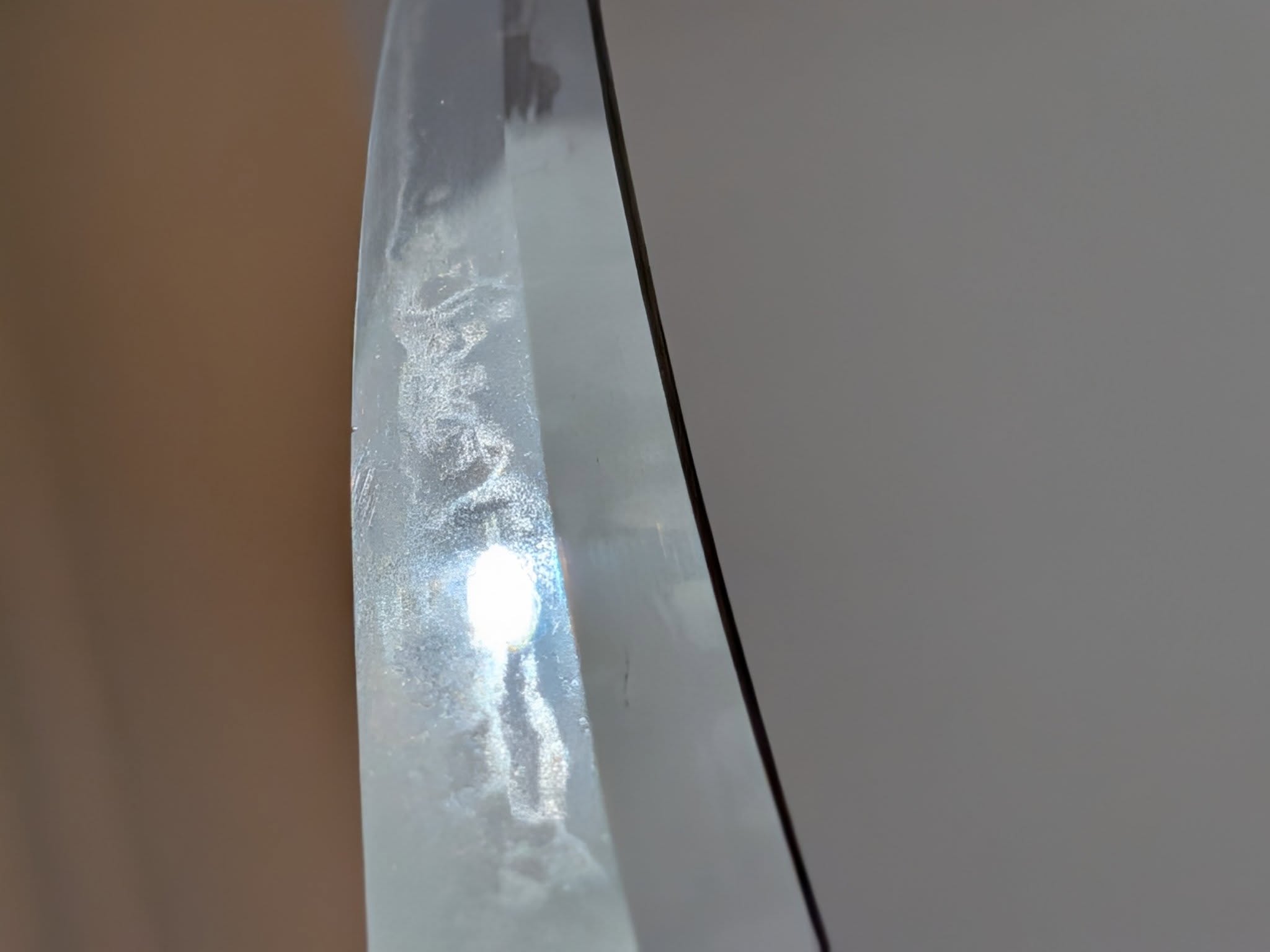
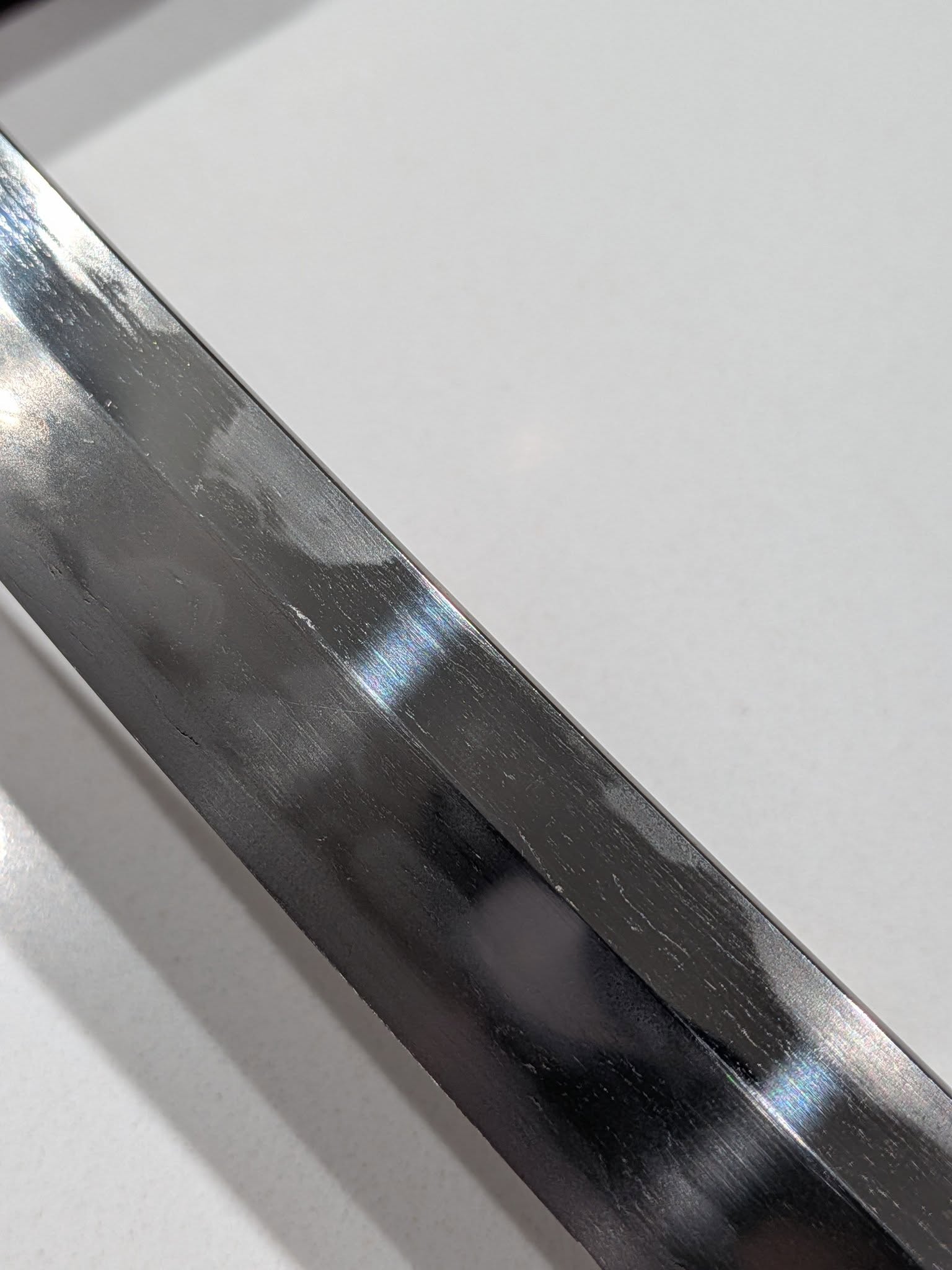
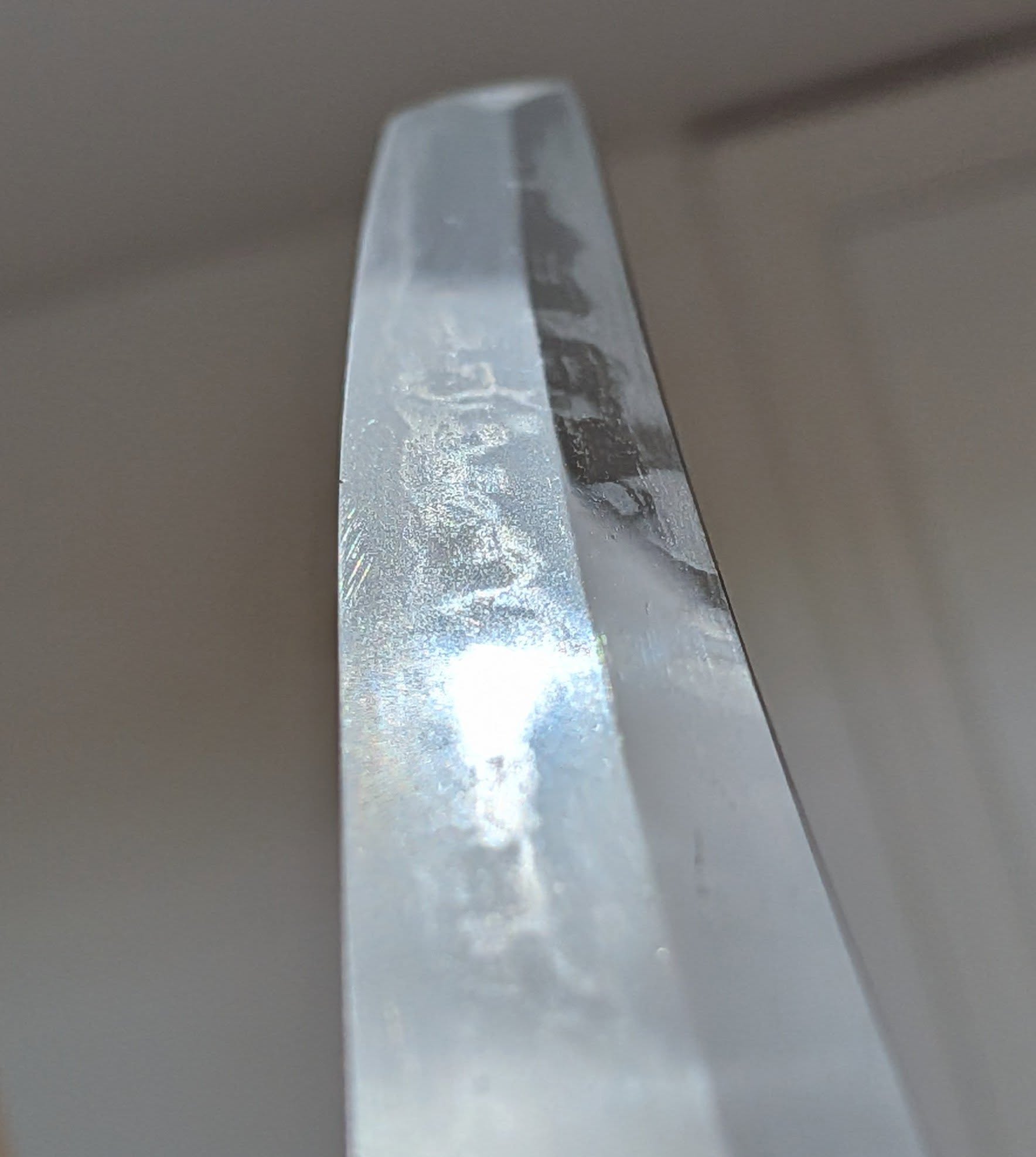
This is a mumei wakizashi attributed by the NBTHK to Sōshū Masahiro from the Ōei period. The blade features a vibrant hitatsura with bright nie, ara-nie, tobiyaki, and muneyaki, along with an active jihada. It measures 1 shaku 5 sun 8 bu and is in an older but intact polish with a few minor stains.
 NihontoWatchBETA
mumei · Sōshū · Teiji (1362-1368) ND
Soshu-den · Sagami
16 pieces on the market now
Within the province of Sagami, where Masamune and his successors had set the Soshu-den on its course, a late body of smiths carried that workmanship forward through the Muromachi period after the classic Nanbokucho masters had passed. These are the Sue-Soshu (末相州), the late Sagami line that took up the manner of Hiromitsu and Akihiro and worked it into the sixteenth century under the patronage of the Later Hojo of Odawara. Learn more →
| Smith | Era | Designated |
|---|---|---|
| Fusamune總宗 | 1504-1521 | 5 |
| Tsunahiro綱廣 | 1532-1555 | 12 |
| Hiromasa廣正 | 1444-1456 | 4 |
| Kiyohira清平 | 1673-1681 | 4 |
| Tsunaie綱家 | 1532-1555 | 3 |
We could not find an authenticity certificate on the seller’s listing. Japanese swords and fittings are normally papered by the NBTHK (or the NTHK). Without one, the attribution is the seller’s own assessment and has not been independently verified — treat it with caution and ask the dealer about certification before buying.
This is a mumei wakizashi attributed by the NBTHK to Sōshū Masahiro from the Ōei period. The blade features a vibrant hitatsura with bright nie, ara-nie, tobiyaki, and muneyaki, along with an active jihada. It measures 1 shaku 5 sun 8 bu and is in an older but intact polish with a few minor stains.
NihontoWatchBETAmumei · Sōshū · Teiji (1362-1368) ND
Soshu-den · Sagami
16 pieces on the market now
Within the province of Sagami, where Masamune and his successors had set the Soshu-den on its course, a late body of smiths carried that workmanship forward through the Muromachi period after the classic Nanbokucho masters had passed. These are the Sue-Soshu (末相州), the late Sagami line that took up the manner of Hiromitsu and Akihiro and worked it into the sixteenth century under the patronage of the Later Hojo of Odawara. Learn more →
| Smith | Era | Designated |
|---|---|---|
| Fusamune總宗 | 1504-1521 | 5 |
| Tsunahiro綱廣 | 1532-1555 | 12 |
| Hiromasa廣正 | 1444-1456 | 4 |
| Kiyohira清平 | 1673-1681 | 4 |
| Tsunaie綱家 | 1532-1555 | 3 |
We could not find an authenticity certificate on the seller’s listing. Japanese swords and fittings are normally papered by the NBTHK (or the NTHK). Without one, the attribution is the seller’s own assessment and has not been independently verified — treat it with caution and ask the dealer about certification before buying.