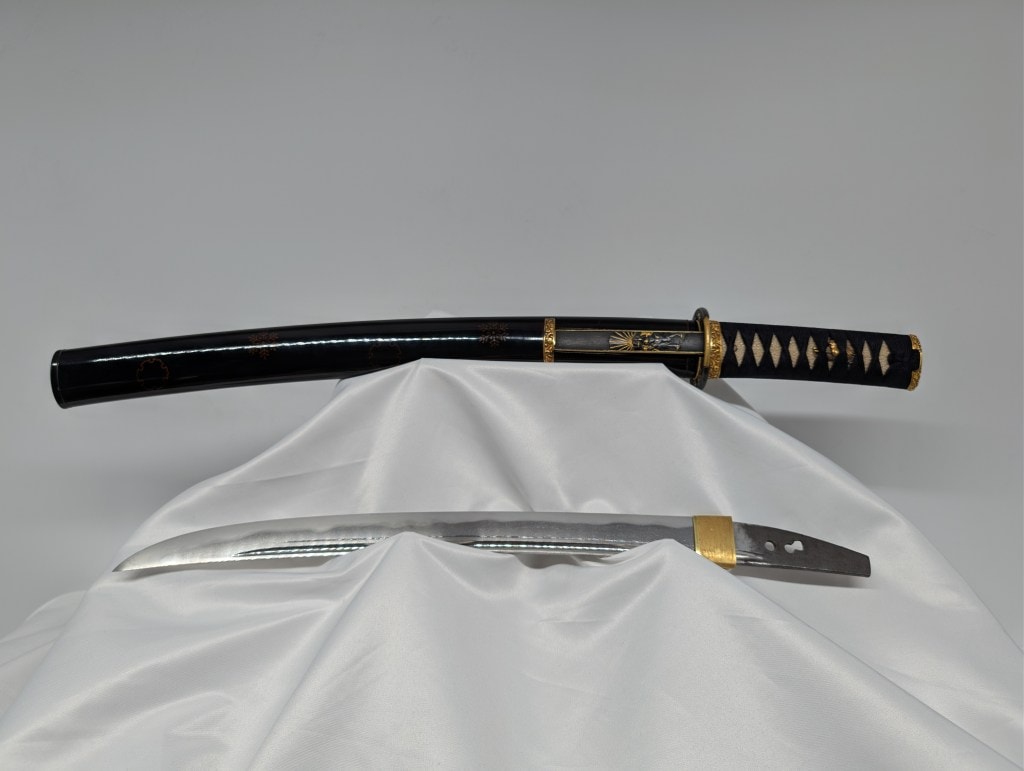
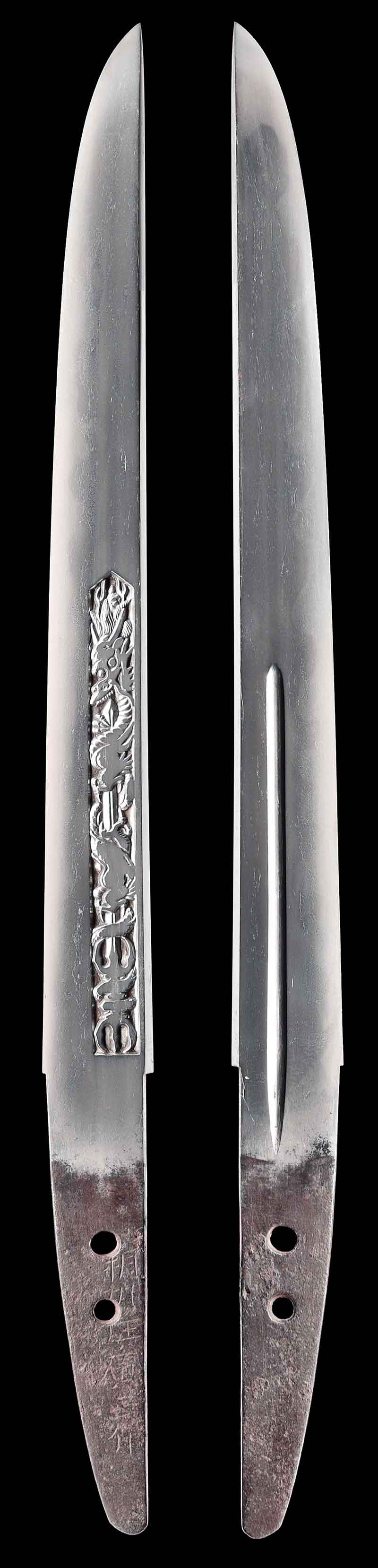
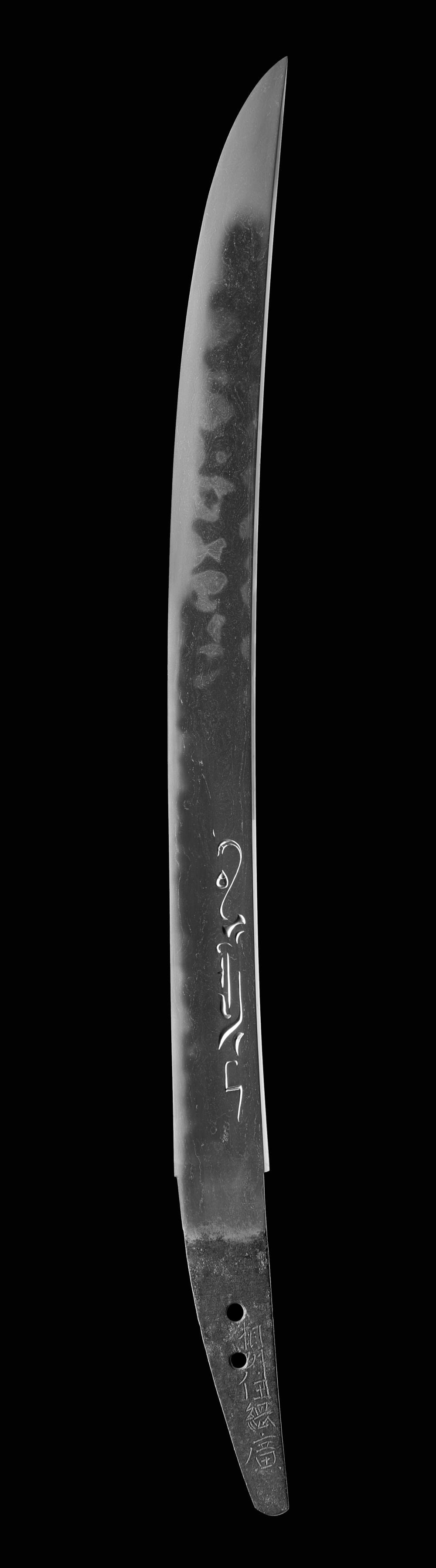
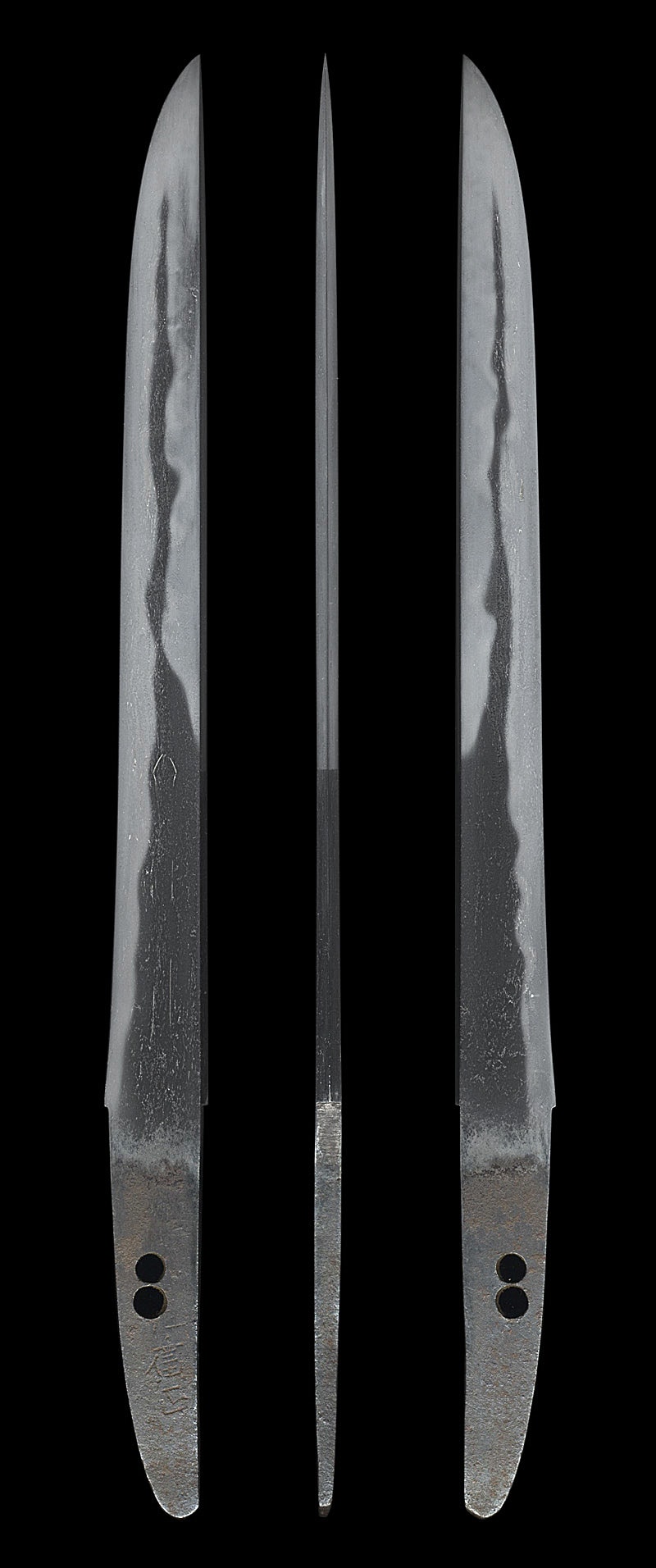
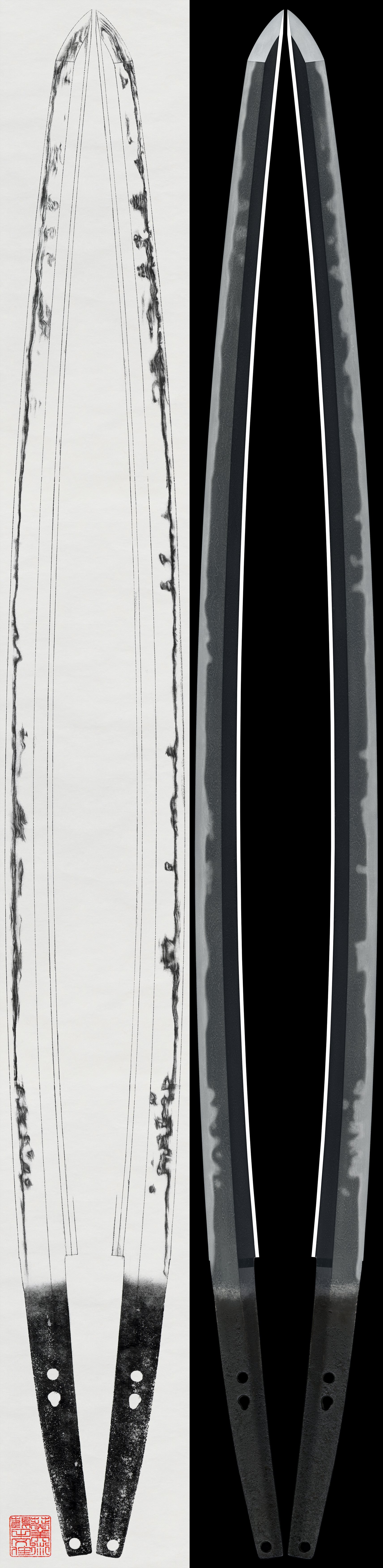
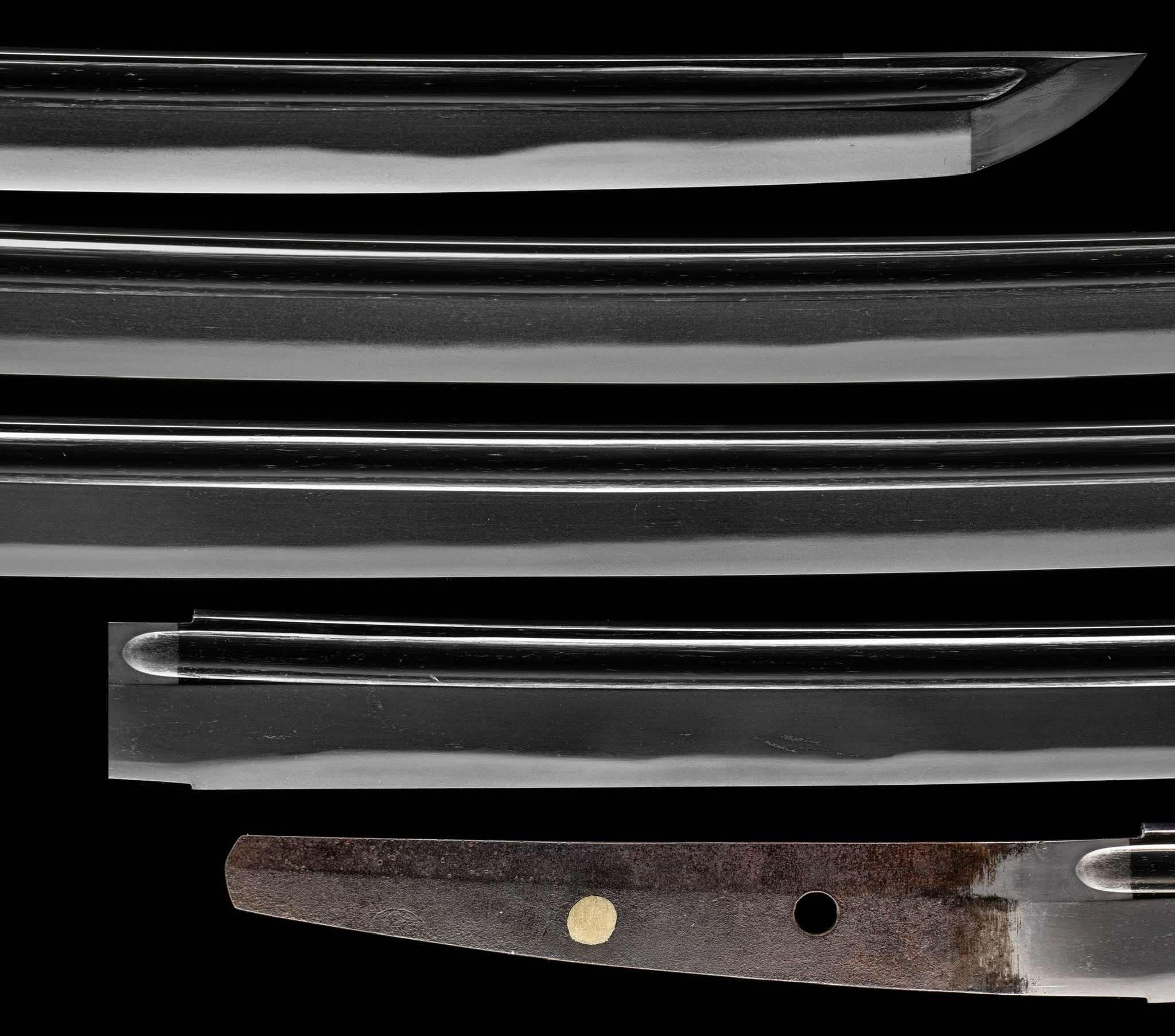
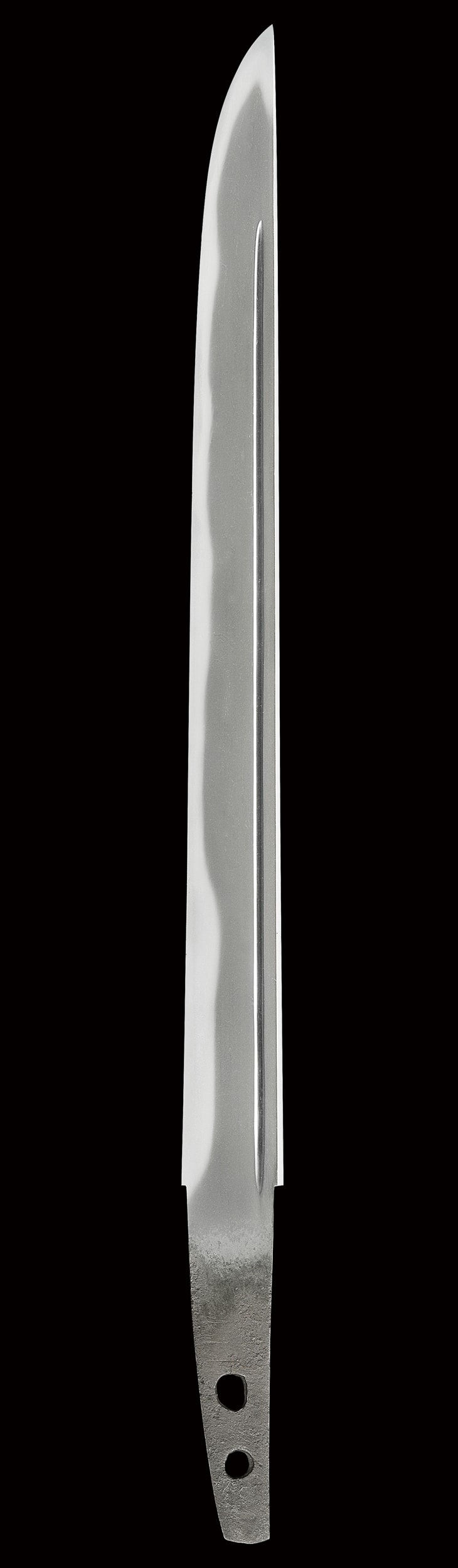
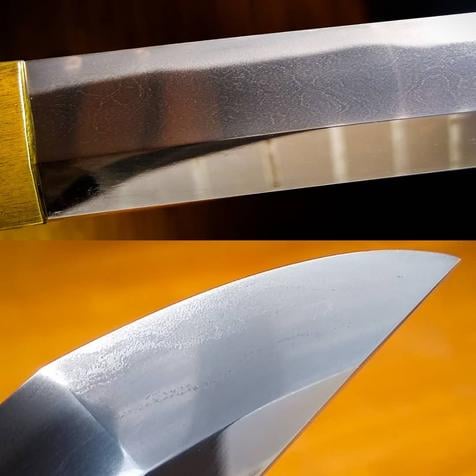
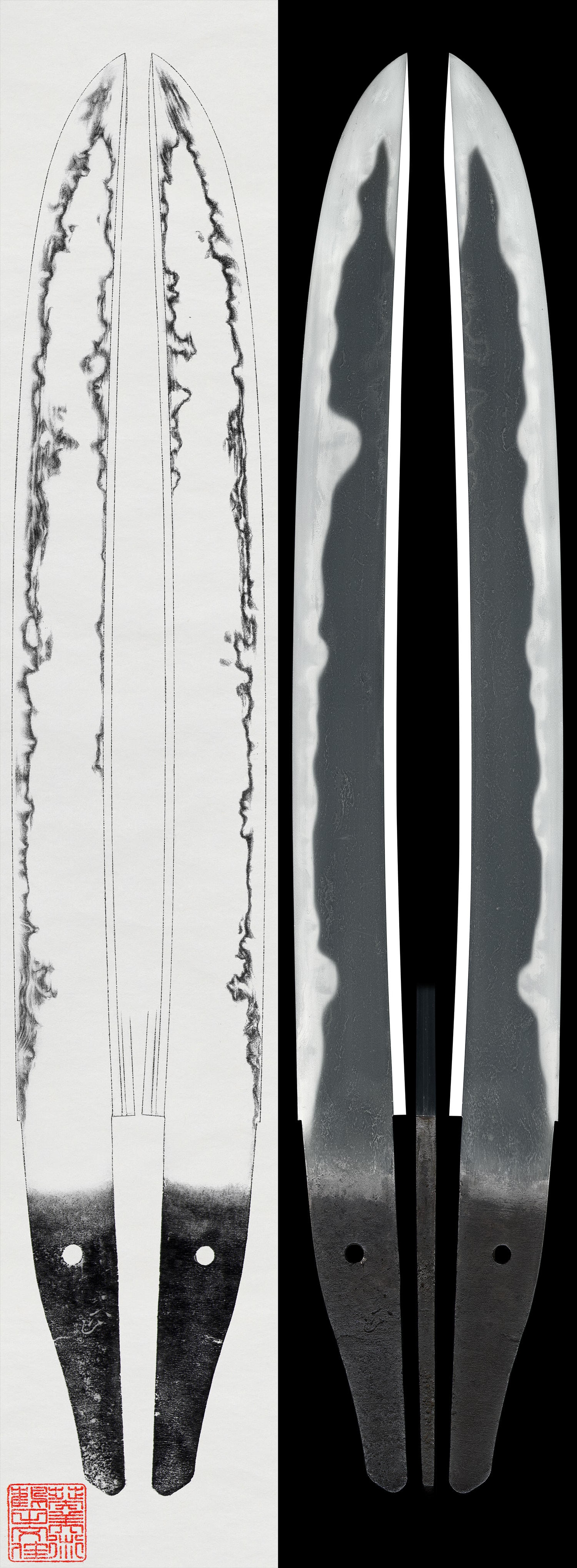
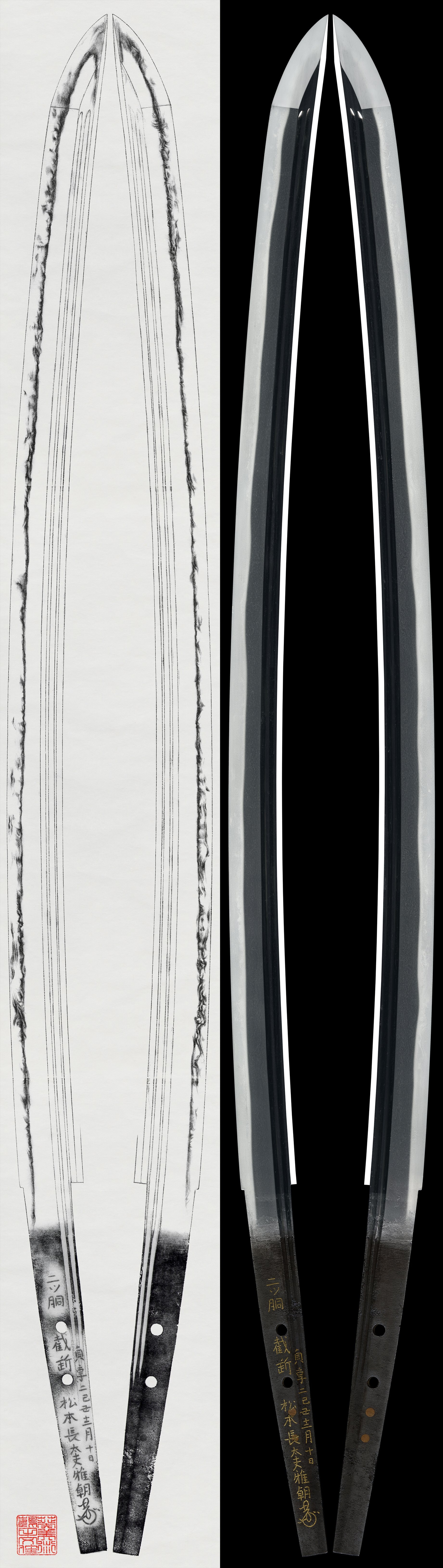
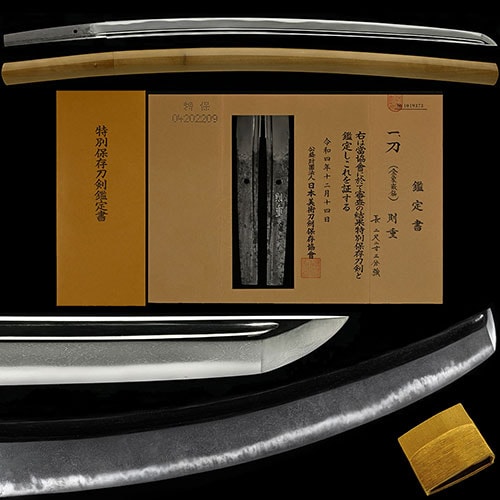
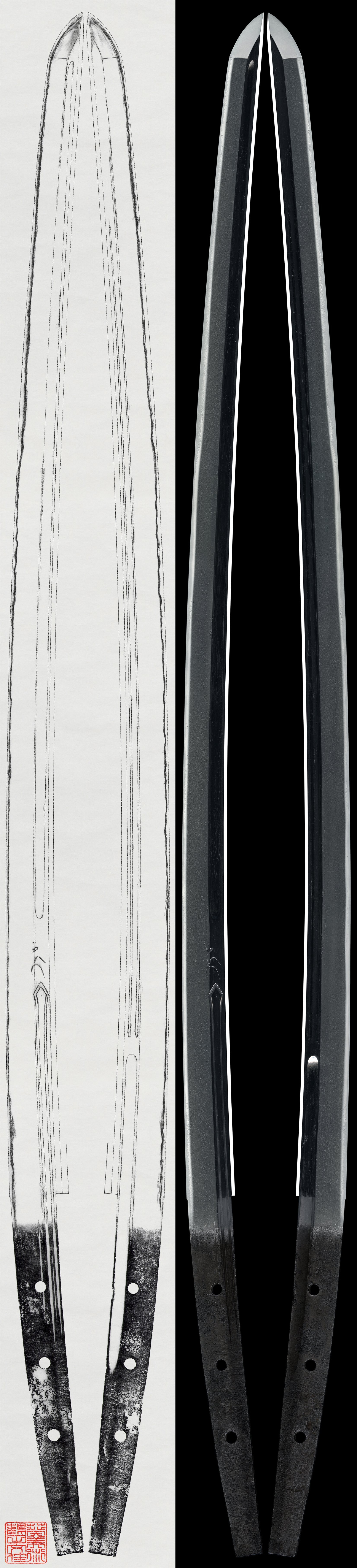
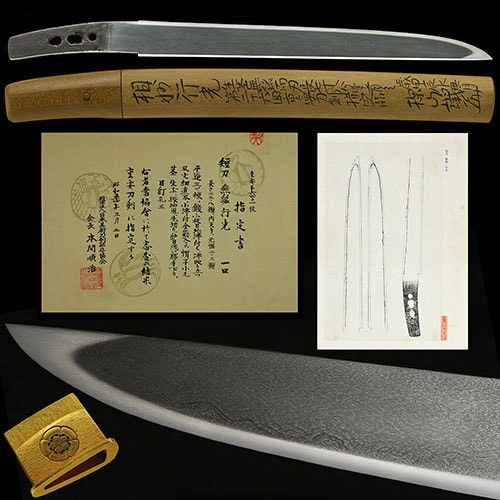
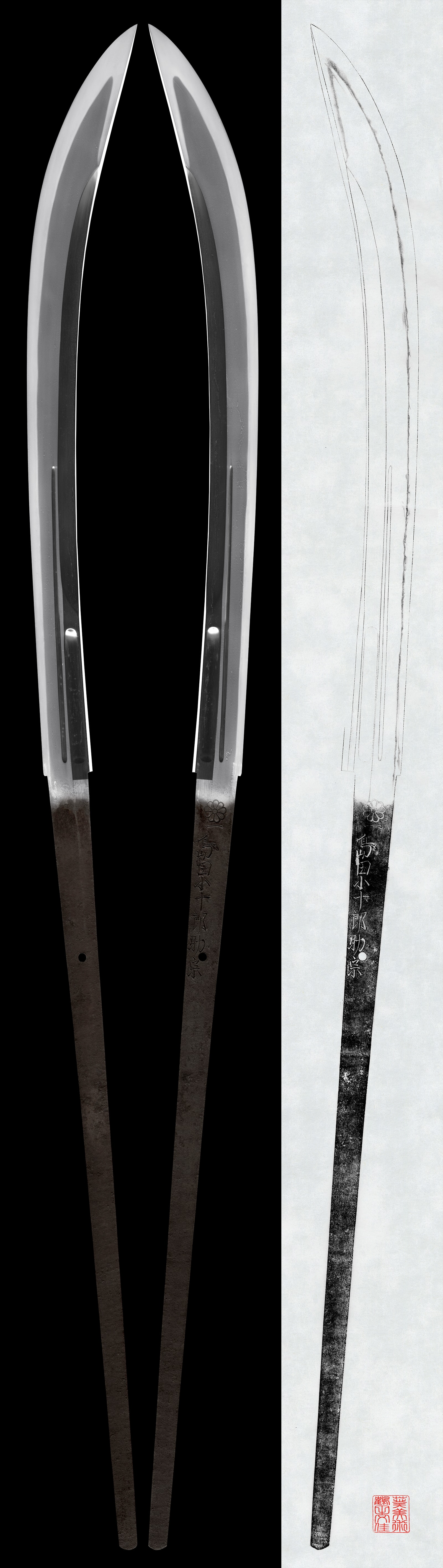
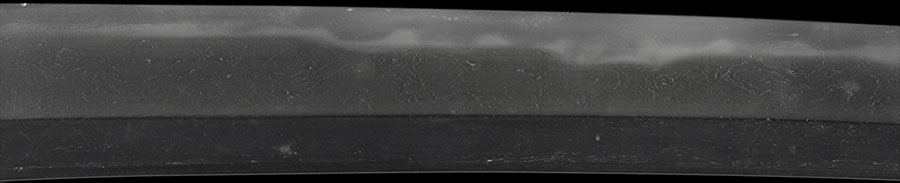
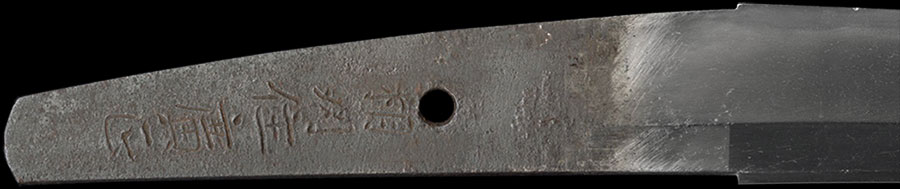
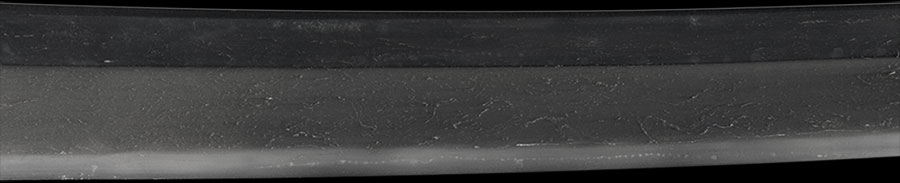
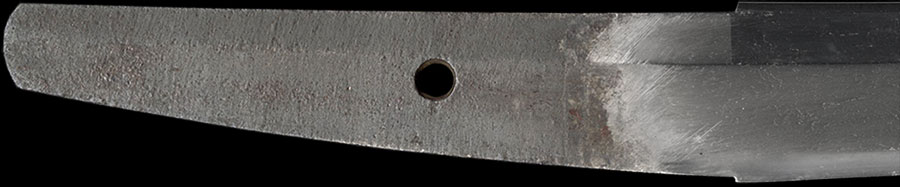
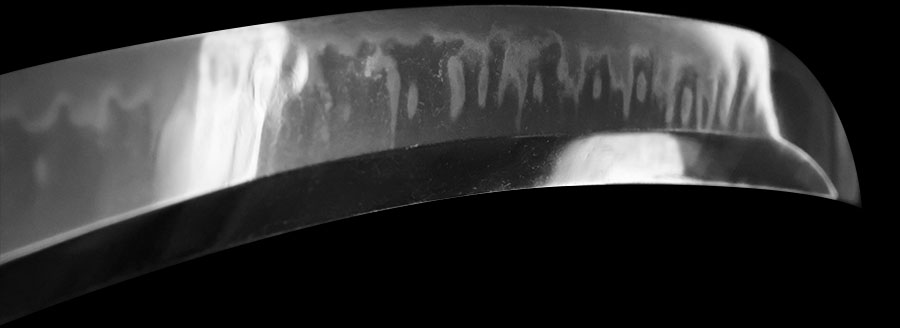
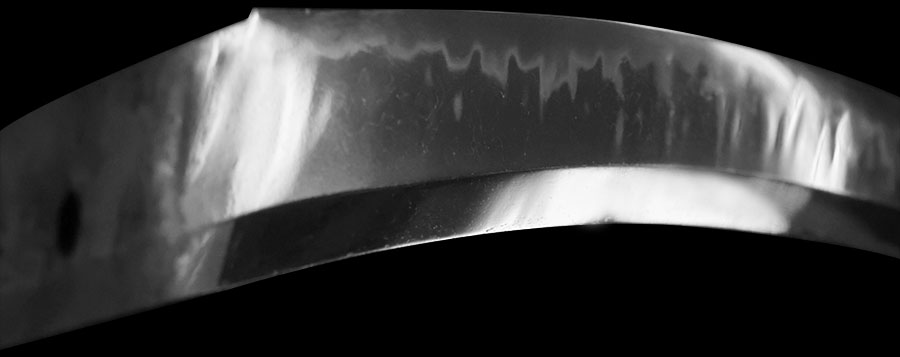
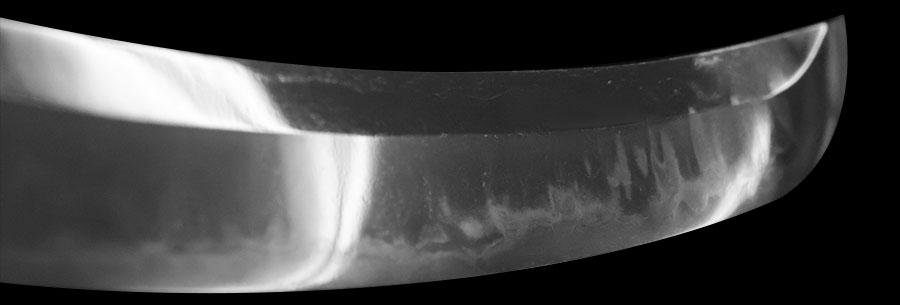
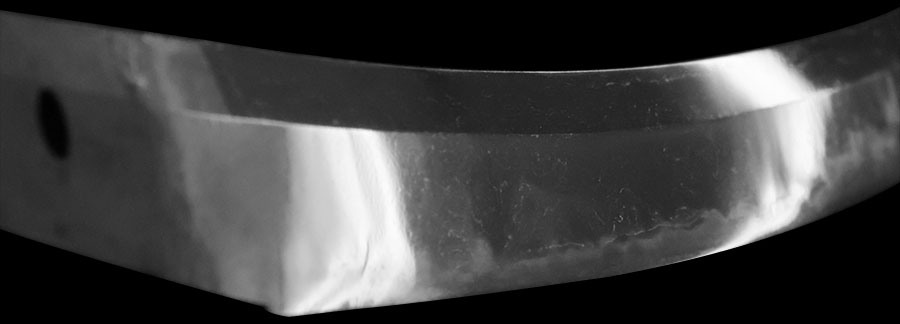
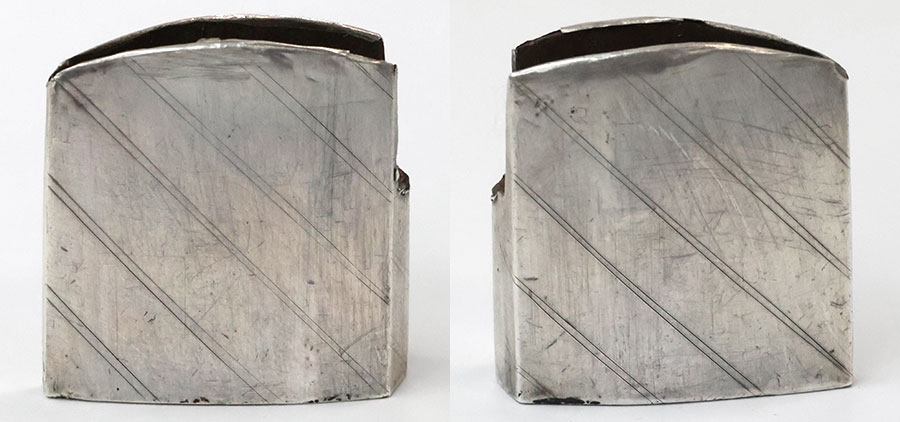
It has arrived, it has arrived—a wakizashi with hitatsura-ba by Soshu-ju Hiromasa has arrived. However, as it has not been submitted for shinsa, for now, please treat it as a kibo-mei (hopeful signature). The first generation Soshu-ju Hiromasa was a pupil of Hiromitsu, who was the son of the Nanbokucho period master Sadamune, a disciple of Masamune. This wakizashi is attributed to the 5th generation Soshu Hiromasa from around the Eisho era of the Muromachi period (1504, 522 years ago); however, as stated, please consider it a kibo-mei for the time being. Regarding the sugata, the mune is a Soshu-den mitsu-mune (shin-no-mune), showing a powerful wakizashi form with a difference between the moto-mihaba and saki-mihaba, a pronounced sori, and an extended kissaki. The jigane is forged in itame-hada, and the hamon is nioi-deki with ko-nie, featuring a gunome-midare-ba with tobi-yaki, resulting in a hitatsura-ba with a spirited temper line. The Edo-period deep-fitting gin-kise habaki is also precious. On this occasion, we received this from an old family who had cherished it for generations as a wakizashi by Soshu-ju Hiromasa; they have grown old and asked us to pass it on to someone who will treasure it. Although a wakizashi of this caliber is valued at over 4 million yen in the meikan, due to some light sabi on the mune and its status as a kibo-mei, we are offering it at a special bargain price. Please enjoy this piece.
 NihontoWatchBETA





Soshu-den · Sagami
16 pieces on the market now
Within the province of Sagami, where Masamune and his successors had set the Soshu-den on its course, a late body of smiths carried that workmanship forward through the Muromachi period after the classic Nanbokucho masters had passed. These are the Sue-Soshu (末相州), the late Sagami line that took up the manner of Hiromitsu and Akihiro and worked it into the sixteenth century under the patronage of the Later Hojo of Odawara. Learn more →
| Smith | Era | Designated |
|---|---|---|
| Fusamune總宗 | 1504-1521 | 5 |
| Tsunahiro綱廣 | 1532-1555 | 12 |
| Hiromasa廣正 | 1444-1456 | 4 |
| Kiyohira清平 | 1673-1681 | 4 |
| Tsunaie綱家 | 1532-1555 | 3 |
We could not find an authenticity certificate on the seller’s listing. Japanese swords and fittings are normally papered by the NBTHK (or the NTHK). Without one, the attribution is the seller’s own assessment and has not been independently verified — treat it with caution and ask the dealer about certification before buying.
For returns due to customer circumstances, the cost is the customer's responsibility. For returns due to our mis-shipment or a defective item, we bear the cost.
It has arrived, it has arrived—a wakizashi with hitatsura-ba by Soshu-ju Hiromasa has arrived. However, as it has not been submitted for shinsa, for now, please treat it as a kibo-mei (hopeful signature). The first generation Soshu-ju Hiromasa was a pupil of Hiromitsu, who was the son of the Nanbokucho period master Sadamune, a disciple of Masamune. This wakizashi is attributed to the 5th generation Soshu Hiromasa from around the Eisho era of the Muromachi period (1504, 522 years ago); however, as stated, please consider it a kibo-mei for the time being. Regarding the sugata, the mune is a Soshu-den mitsu-mune (shin-no-mune), showing a powerful wakizashi form with a difference between the moto-mihaba and saki-mihaba, a pronounced sori, and an extended kissaki. The jigane is forged in itame-hada, and the hamon is nioi-deki with ko-nie, featuring a gunome-midare-ba with tobi-yaki, resulting in a hitatsura-ba with a spirited temper line. The Edo-period deep-fitting gin-kise habaki is also precious. On this occasion, we received this from an old family who had cherished it for generations as a wakizashi by Soshu-ju Hiromasa; they have grown old and asked us to pass it on to someone who will treasure it. Although a wakizashi of this caliber is valued at over 4 million yen in the meikan, due to some light sabi on the mune and its status as a kibo-mei, we are offering it at a special bargain price. Please enjoy this piece.
NihontoWatchBETASoshu-den · Sagami
16 pieces on the market now
Within the province of Sagami, where Masamune and his successors had set the Soshu-den on its course, a late body of smiths carried that workmanship forward through the Muromachi period after the classic Nanbokucho masters had passed. These are the Sue-Soshu (末相州), the late Sagami line that took up the manner of Hiromitsu and Akihiro and worked it into the sixteenth century under the patronage of the Later Hojo of Odawara. Learn more →
| Smith | Era | Designated |
|---|---|---|
| Fusamune總宗 | 1504-1521 | 5 |
| Tsunahiro綱廣 | 1532-1555 | 12 |
| Hiromasa廣正 | 1444-1456 | 4 |
| Kiyohira清平 | 1673-1681 | 4 |
| Tsunaie綱家 | 1532-1555 | 3 |
We could not find an authenticity certificate on the seller’s listing. Japanese swords and fittings are normally papered by the NBTHK (or the NTHK). Without one, the attribution is the seller’s own assessment and has not been independently verified — treat it with caution and ask the dealer about certification before buying.
For returns due to customer circumstances, the cost is the customer's responsibility. For returns due to our mis-shipment or a defective item, we bear the cost.