In the Sengoku era the school served a second warrior court: the Later Hōjō at Odawara, whose patronage kept the Tsunahiro line forging hitatsura for the uchigatana age until the castle fell to Hideyoshi in 1590.
 NihontoWatchNihontoWatch
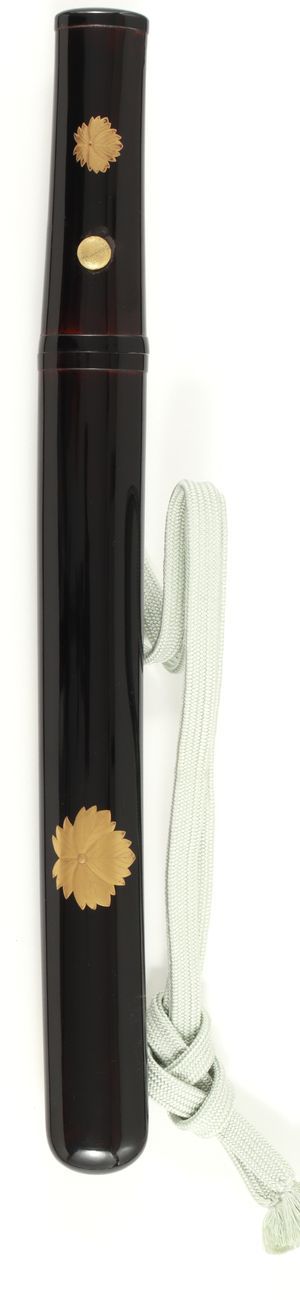
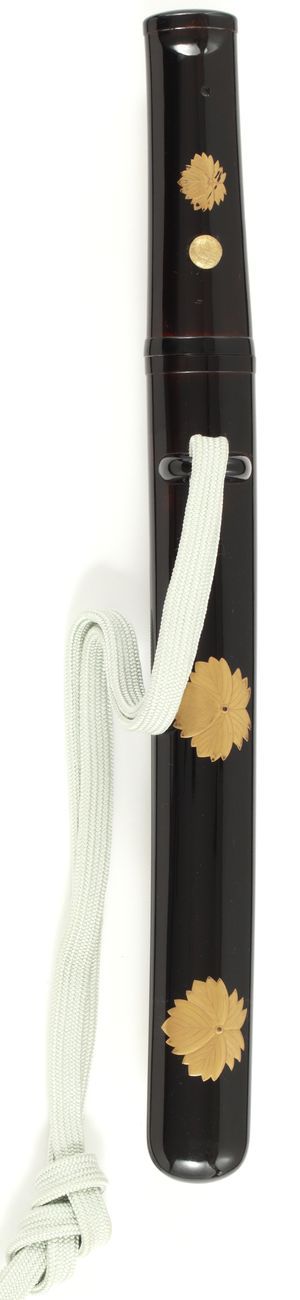
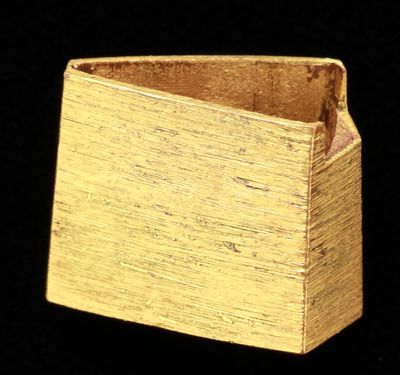
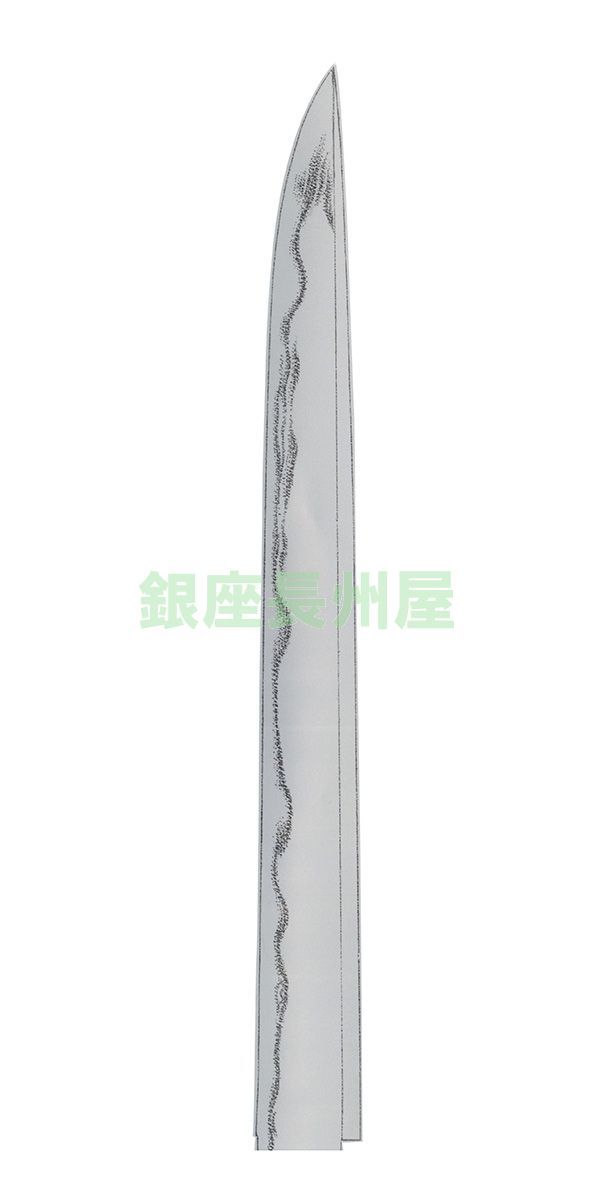
鎌倉後期に筑前に登場し、地刃の明るい刀や短刀で一世風靡したのが左文字。その門人の一人で南北朝末期至徳頃の永家は、筑後国三潴郡鳥飼村大石(現久留米市大石町)に居住したことから大石左(おおいし さ)と呼ばれている。以後、室町前期永享の家永、室町中期文明の資永と続き、鎮西の武士の需に応えて鎚を振るっている。 大石左と極められたこの短刀は、精悍鋭利な一口で、文明頃の資永の作。身幅尋常で重ねが頗る厚く、僅かに内反りが付き、ふくら枯れごころの鎧通しの造り込み。地鉄は流れごころの板目肌に地沸が厚く付き、細やかな地景が密に入って鉄色が一段と晴れやか。刃文は浅い湾れに互の目を交え、銀砂のような沸で刃縁が明るく、地中に湯走りが、沸付いて明るい刃中には小形の金線、砂流しが掛かる。突き上げて返る帽子に左文字の名残が窺え、冴え冴えとした地刃も筑州左を彷彿とさせる見事な出来栄えである。 金蒔絵の家紋が映える懐剣拵が付された、陸奥一関藩田村子爵家伝来(注)の一口である。 注...所伝によればこの短刀は、旧一関藩主で海軍少将の田村丕顕子爵の母貞子(佐賀七賢人の一人で、幕末・明治に活躍した佐野常民の娘)が嫁入時に所持したもの。田村丕顕子爵の子息は夭逝したが、祖母譲りのこの短刀を自分の病気看病のお礼として、旧制中学の親友山口氏へ贈り、本作は山口氏の子孫から託されたもの。九州佐賀の佐野家から出た短刀であることを考慮すると「大石左」の極めは至極妥当と頷けるものである。
NihontoWatchOffered by Choshuya
This piece has sold
9 on the market
Get an email when new Sa School work hits the market.




Soshu-den · Chikuzen
9 pieces on the market now
In Chikuzen Province, on the northern coast of Kyushu, the Sa school (左, the Samonji line) took shape in the early Nanbokucho period as a deliberate break with the Kyushu work that came before it. Its founder, the smith who cut the single character 左 on his tang, is read in the published sources as Saemon Saburo, commonly called O-Sa or Samonji; he is placed as the grandson of Sairen and son of Jitsua, the old Chikuzen line whose steel, in the words the NBTHK restates blade after blade, ran sunken and rustic in a restrained suguha inherited from Yamato. The Muromachi sword books count O-Sa among the pupils of Masamune, and his study under the Soshu-den masters of Sagami is the pivot of the school's identity: against his forebears' provincial manner he is the reformer who established a clear, unprovincial midare, lifting Chikuzen work to a rank it had not before held. The single-character 左 signature, often paired with 筑州住 on the reverse, became the mark of a lineage rather than one hand, and around the founder a large body of pupils formed. What the Sa smiths held in common is a steel that runs bright and clear where the older Kyushu work ran dark. The shared vocabulary is a well-knit itame, tight ko-itame on the small tanto and standing more open on the grand katana, carrying dust-fine ji-nie and frequent dark chikei, the recurring institutional verdict being that ji and ha alike run limpid and lucid, free of the whiteness or blackness of lesser Kyushu steel. Over that ground the school tempers a Soshu-den notare mixed with gunome and ko-gunome, the nie deep and the nioiguchi bright, with ashi and yo entering and fine kinsuji and sunagashi drawn through the ha; the boshi thrusts up (tsukiage) to a pointed tip with a long brushed return, the one structural trait the judges look to across the whole line. Within that idiom the hands diverge by degree.
O-Sa stands alone for the brilliance of his bright Chikuzen ji-nie and forceful pointed boshi; among the pupils and the later Sue-Sa generations the published sources read individual registers, Yukihiro set nearest the master in refined ko-itame, Yasuyoshi carrying a Bizen temperament with a whitish utsuri that strays toward Kanemitsu, Kunihiro the boldest and highest-tempered midare, Yoshisada the smallest and most compact pattern, Sadayoshi and Hiroyasu the quieter suguha-toned manner, and Hiroyuki a continuous restrained gunome. The school as a whole carries the Sagami manner into Kyushu and transforms it. A collector seeks Sa-mon work for what the founder accomplished and for how legibly the school can be read. Kantei proceeds first through the ji and the point: the bright, clear ji-nie free of whiteness is what tells a Sa blade from its Soshu fellows when the thrusting, pointed boshi alone will not, and the whole record divides cleanly into signed hira-zukuri tanto of fine flowing chisel and osuriage-mumei katana papered as Den Sa or simply to the school. O-Sa's own standing is the highest the Kyushu tradition reached, a Sai-jo saku hand whose register runs from the small signed tanto to the wide Nanbokucho katana held together as one hand by that limpid ji and ha; signature works such as the Kosetsu Samonji, his only signed tachi to survive, and named meibutsu held in the Owari Tokugawa, Date, Sakai, Tachibana, and Uesugi houses anchor his place, one katana having passed through Hideyoshi's hands. The pupils support that standing as members of the line rather than rivals to it: a signed Yasuyoshi, Yukihiro, or Yoshisada, or a securely papered Den Sa katana attributed to Kunihiro, Hiroyasu, Hiroyuki, or Sadayoshi, comes to open hands only rarely, and a signed O-Sa tanto is a landmark of a collection when it appears. For the student of Soshu-den, the Sa school is the place where the Sagami manner becomes a Kyushu one, and a Sa-mon blade in private keeping is a tangible record of that transformation. Learn more →
| Smith | Era | Designated |
|---|---|---|
| Sa左 | 1334-1338 | 71 |
| Yasuyoshi安吉 | 1346-1370 | 42 |
| Yoshisada吉貞 | 1345-1359 | 49 |
| Kunihiro國弘 | 1346-1370 | 51 |
| Hiroyasu弘安 | 1346-1370 | 24 |
Sōshū in the Muromachi period
In the Sengoku era the school served a second warrior court: the Later Hōjō at Odawara, whose patronage kept the Tsunahiro line forging hitatsura for the uchigatana age until the castle fell to Hideyoshi in 1590.
Certifies a genuine blade worth preserving: a signature confirmed correct, or, if unsigned, an era, province, and school that the NBTHK can reliably identify.
The NBTHK (Nihon Bijutsu Tōken Hozon Kyōkai, the Society for the Preservation of Japanese Art Swords) is a public-interest incorporated foundation founded in 1948 and supervised by Japan’s Agency for Cultural Affairs (Bunkachō); it is based at the Japanese Sword Museum in Tokyo. Its expert panels physically examine each submitted work (shinsa) and issue a certificate (kanteishō) ranking it by artistic and historical merit. NBTHK papers are the most widely recognized standard of authentication for Japanese swords and fittings.
NBTHK official siteIf, due to our fault, the item differs significantly from its proper condition, the item may be returned. Cooling-off is within one week of the item's arrival.