Around 1800 Suishinshi Masahide argued in his writings that the craft must return to the old masters’ methods: the fukkotō revival. His greatest successor Naotane worked convincingly in Bizen and Sōshū manners that had been dead for centuries.
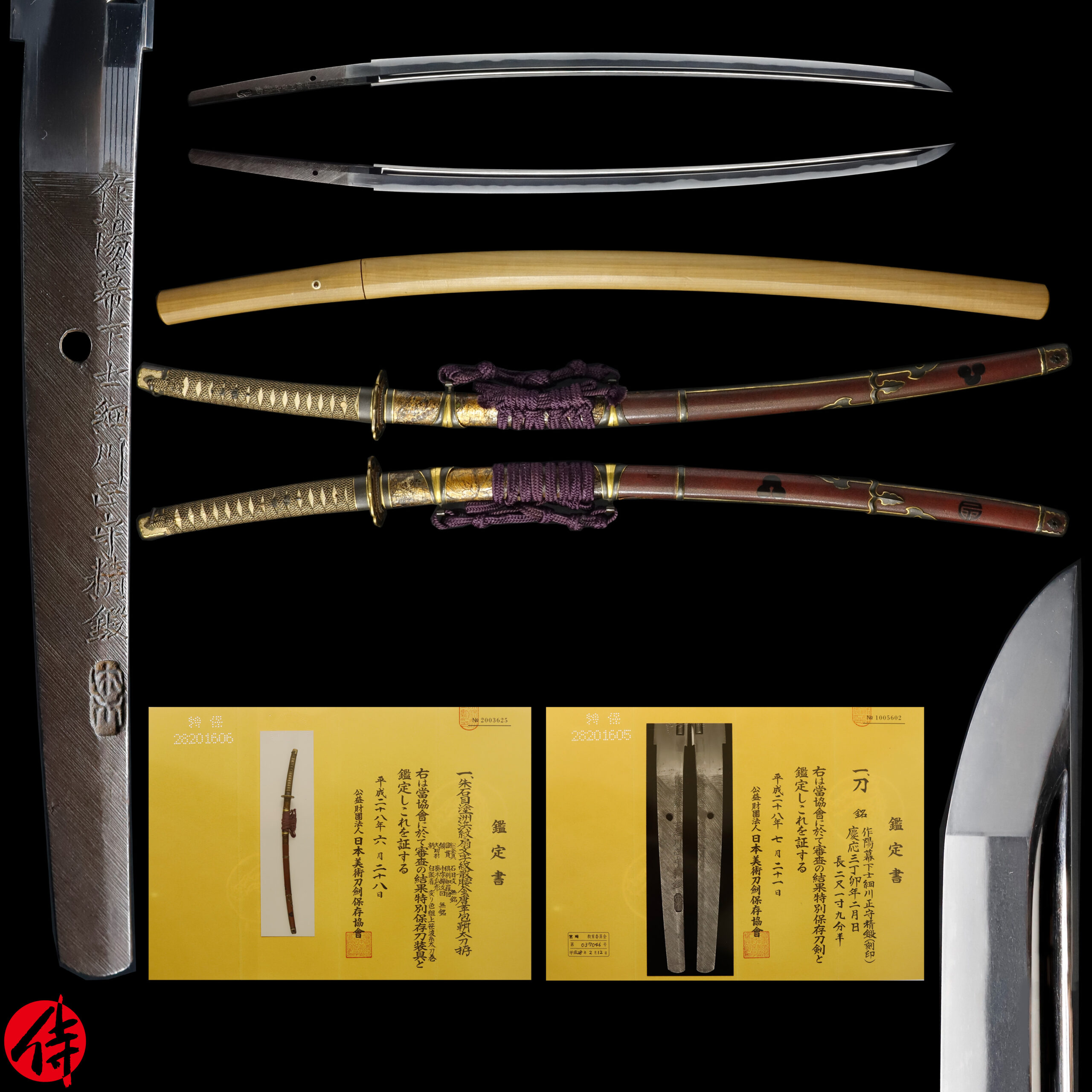
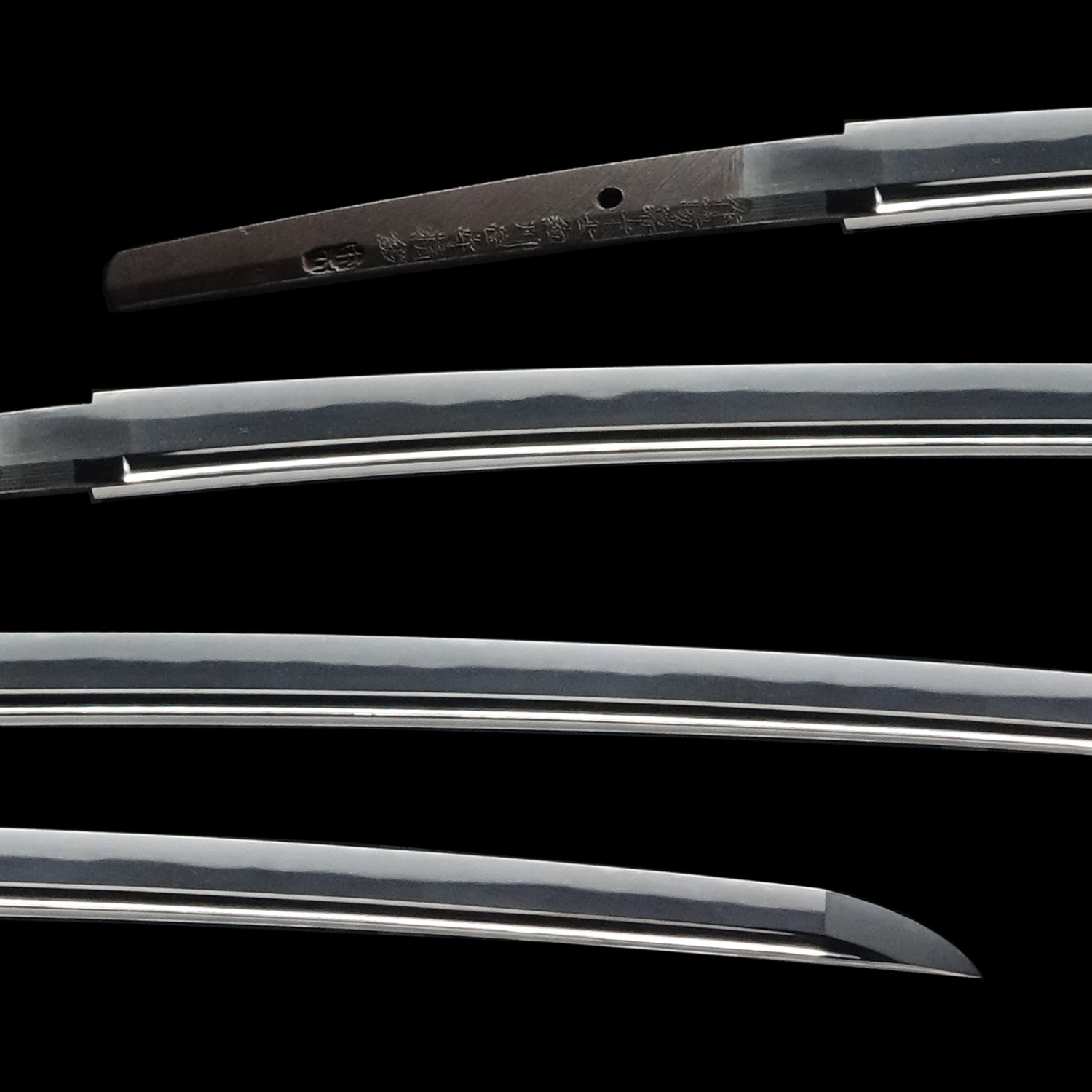
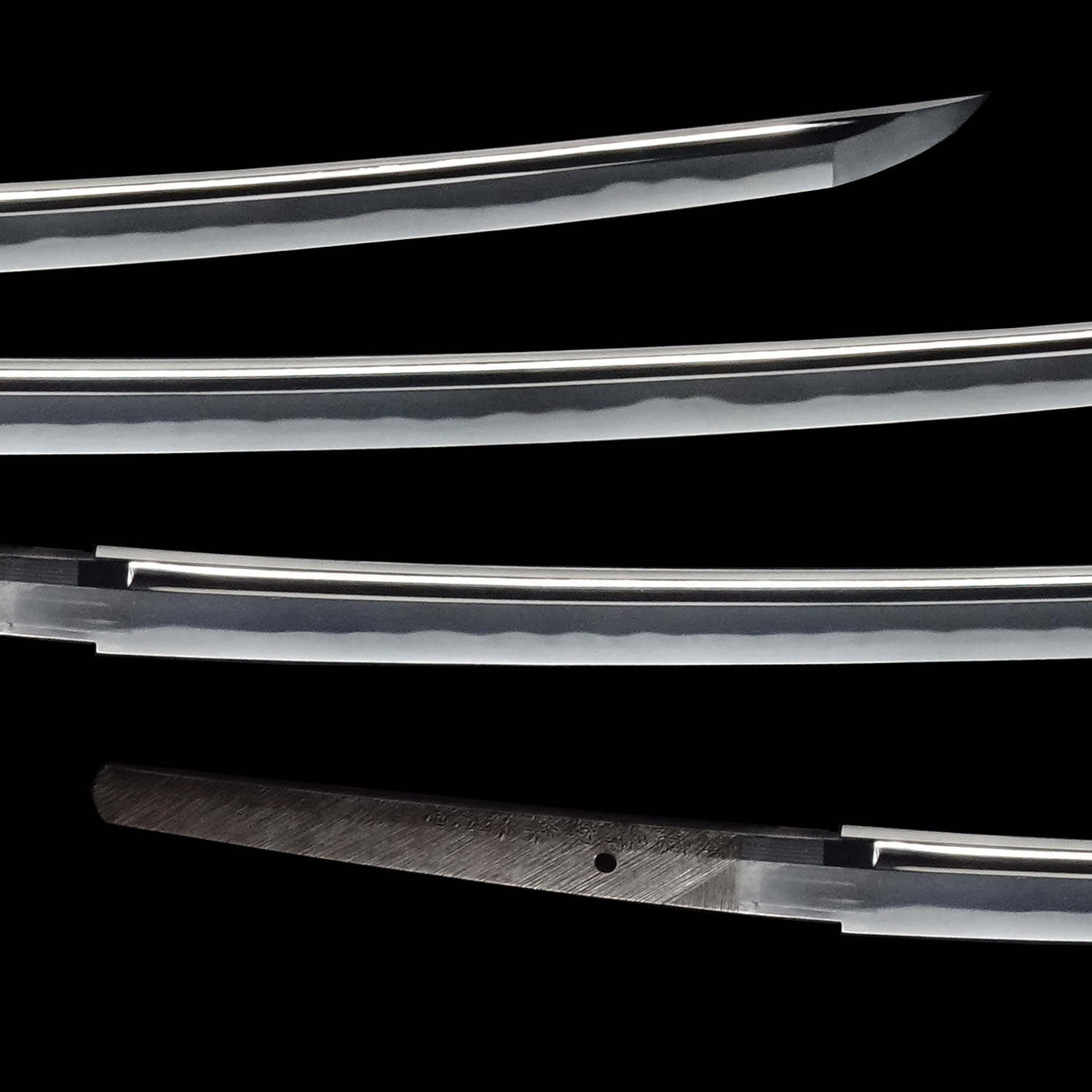
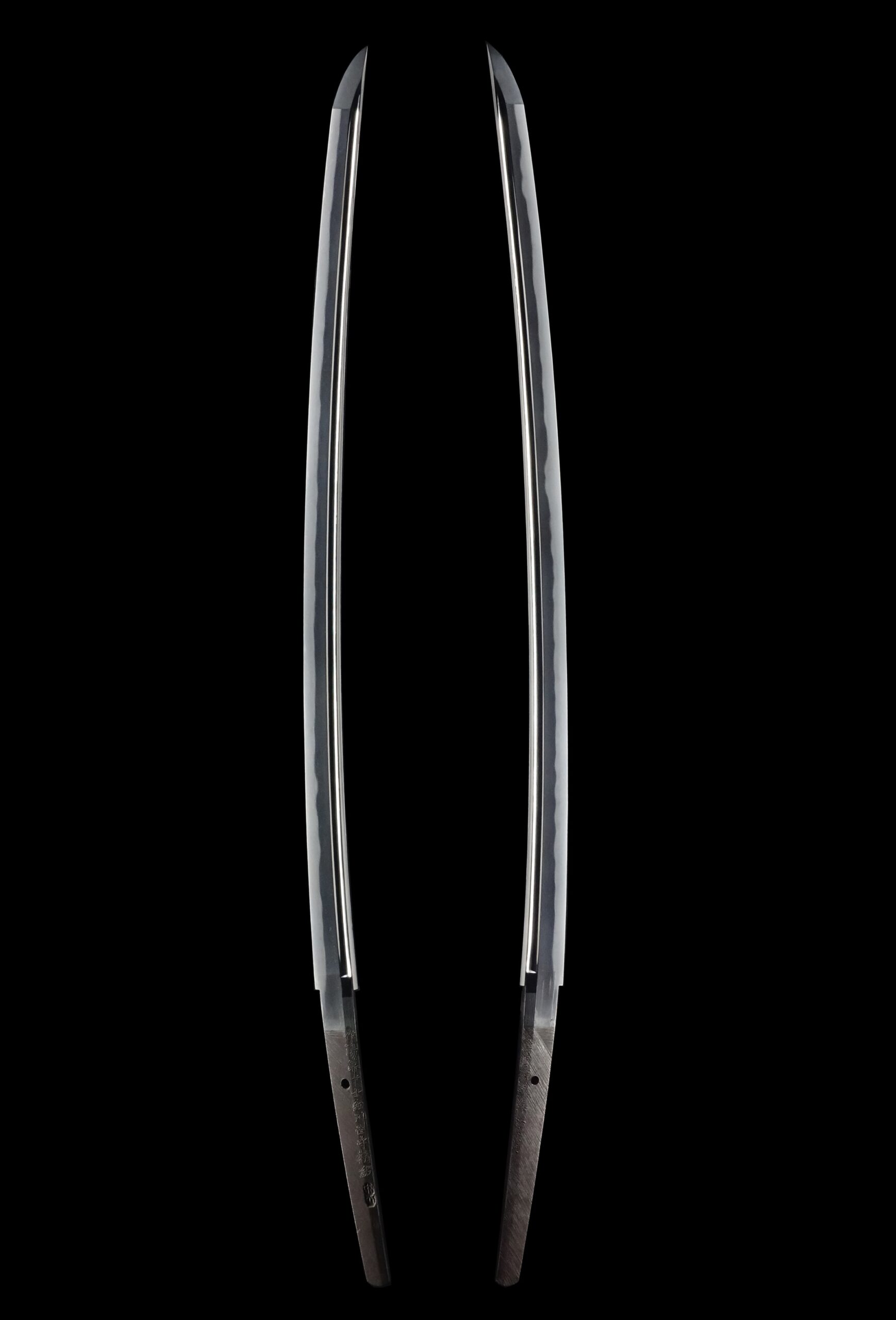
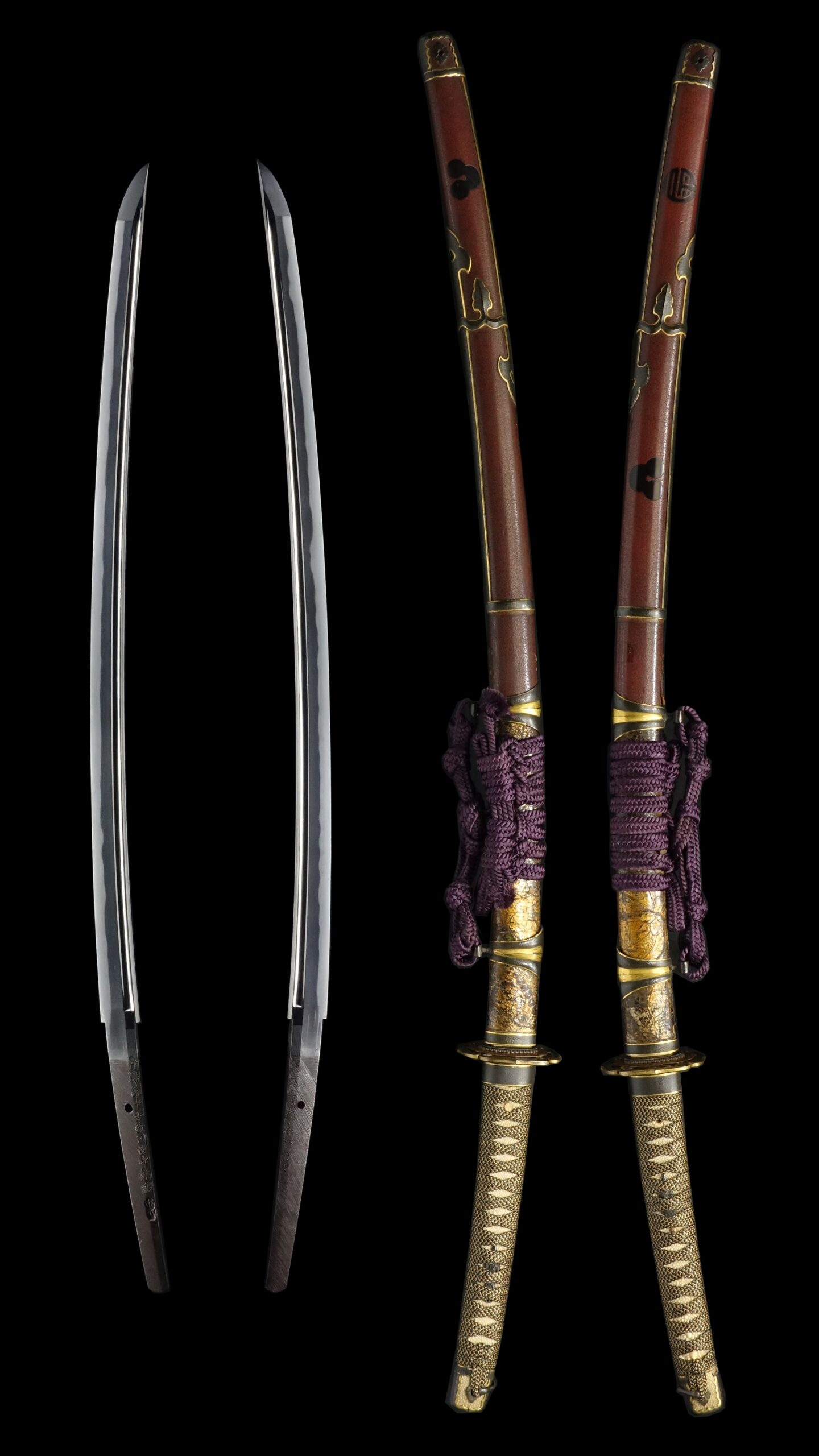
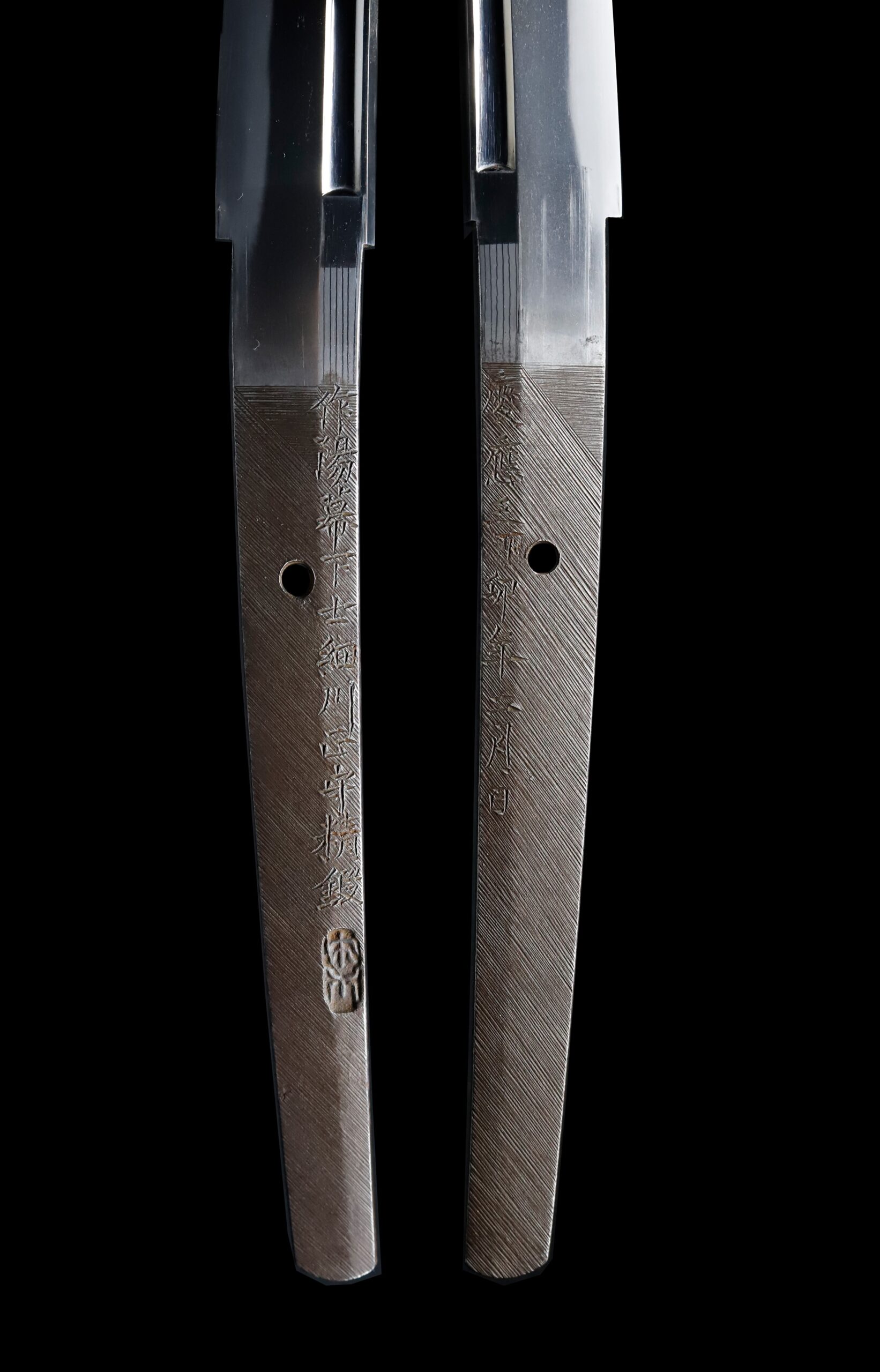
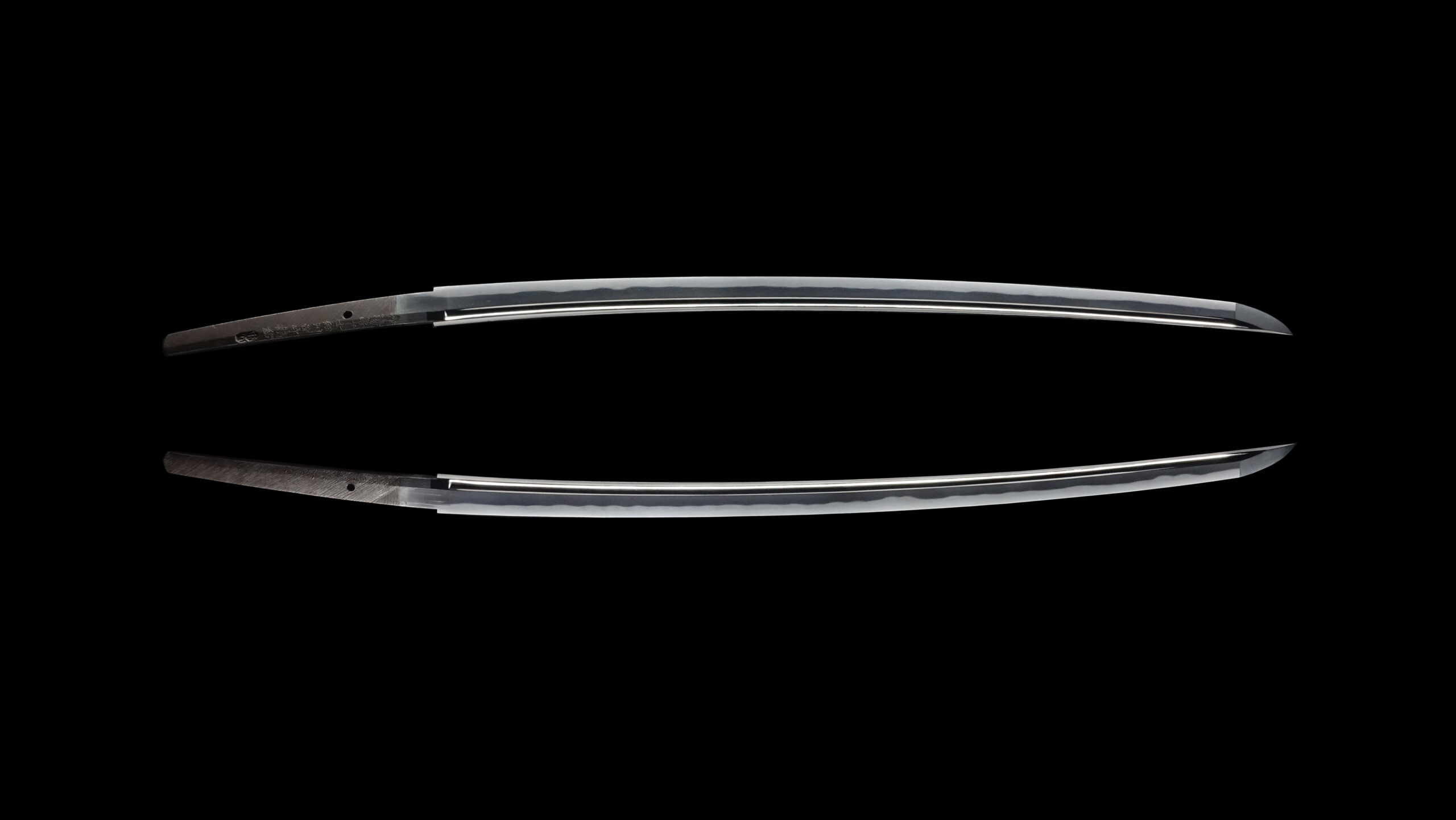
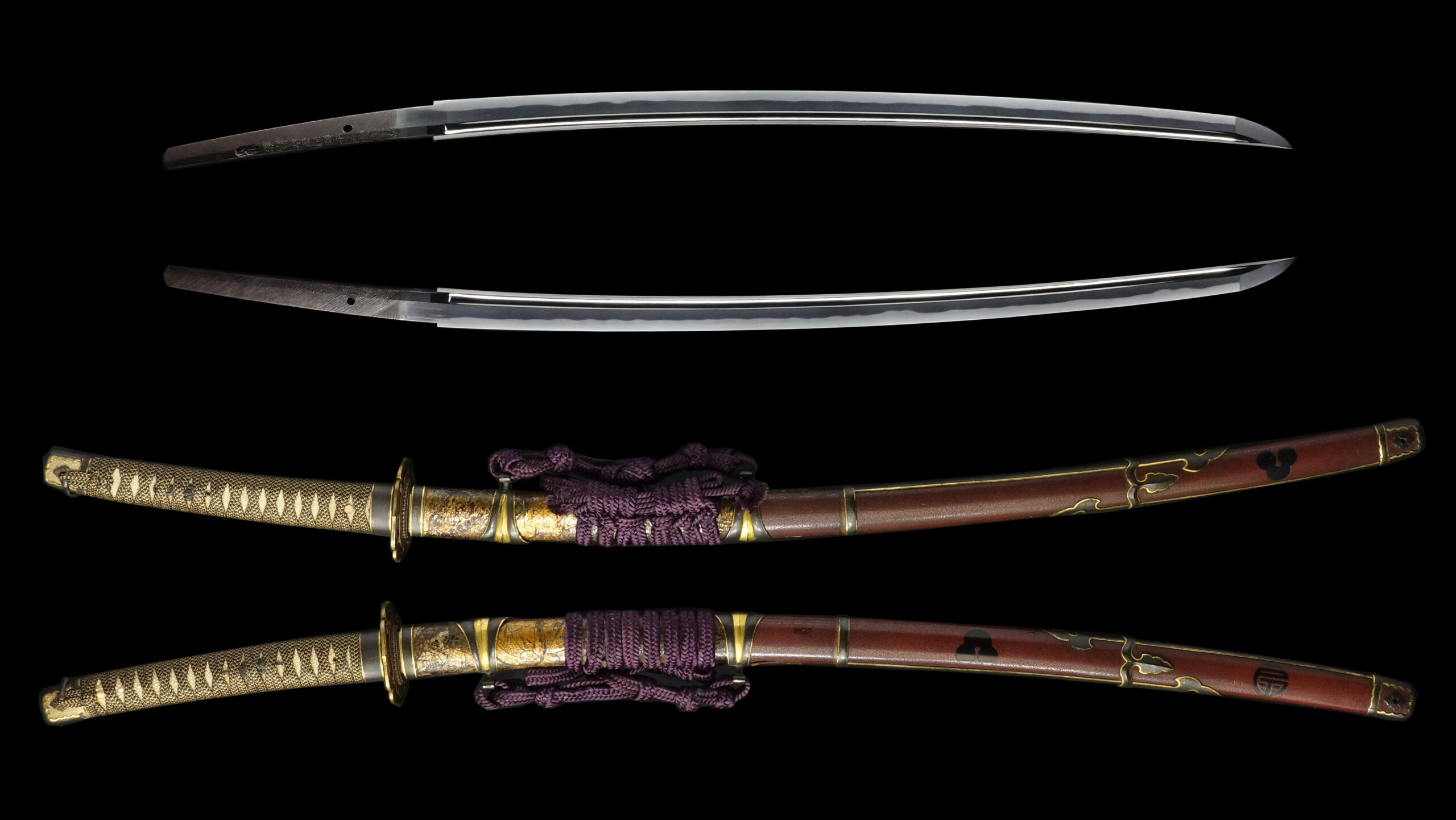
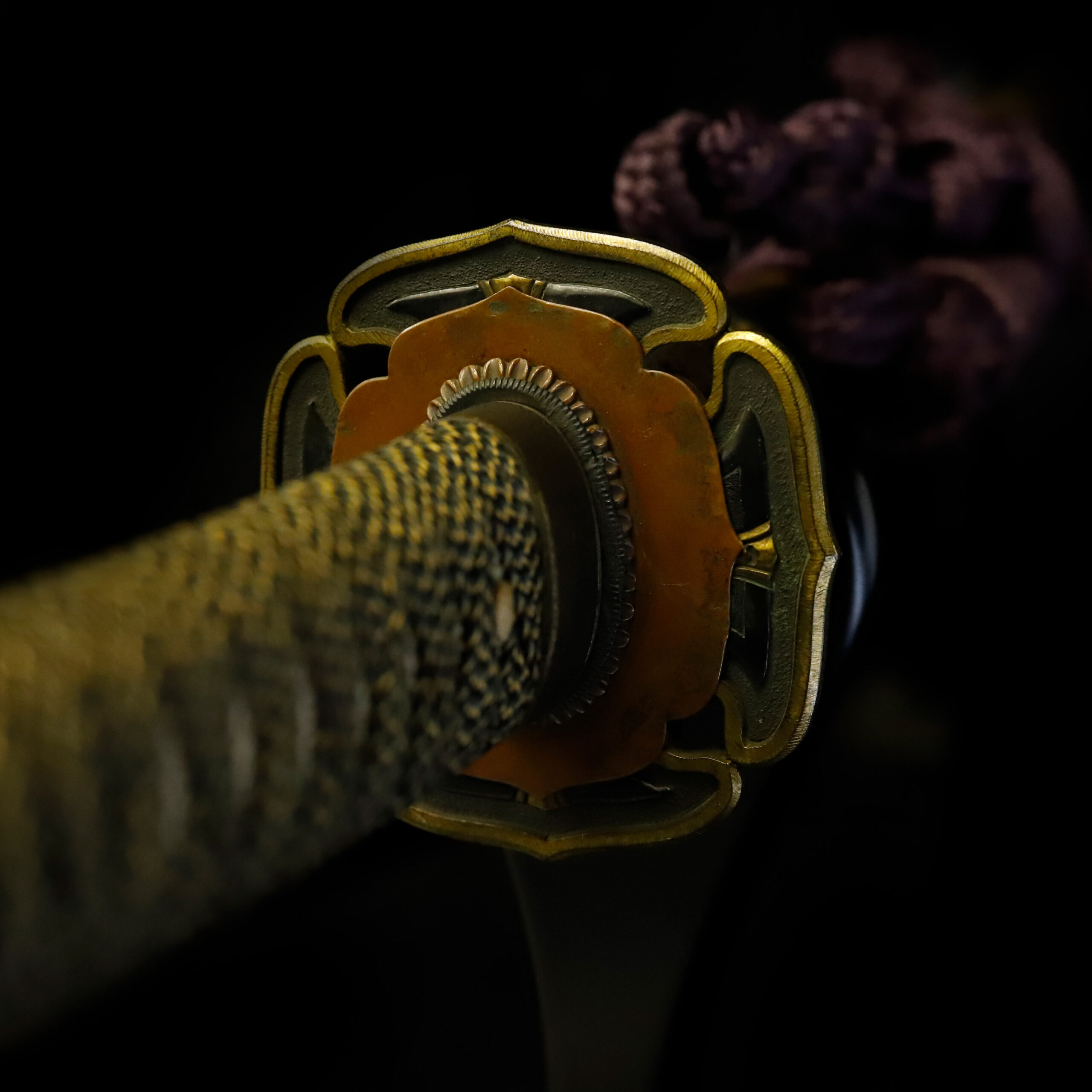
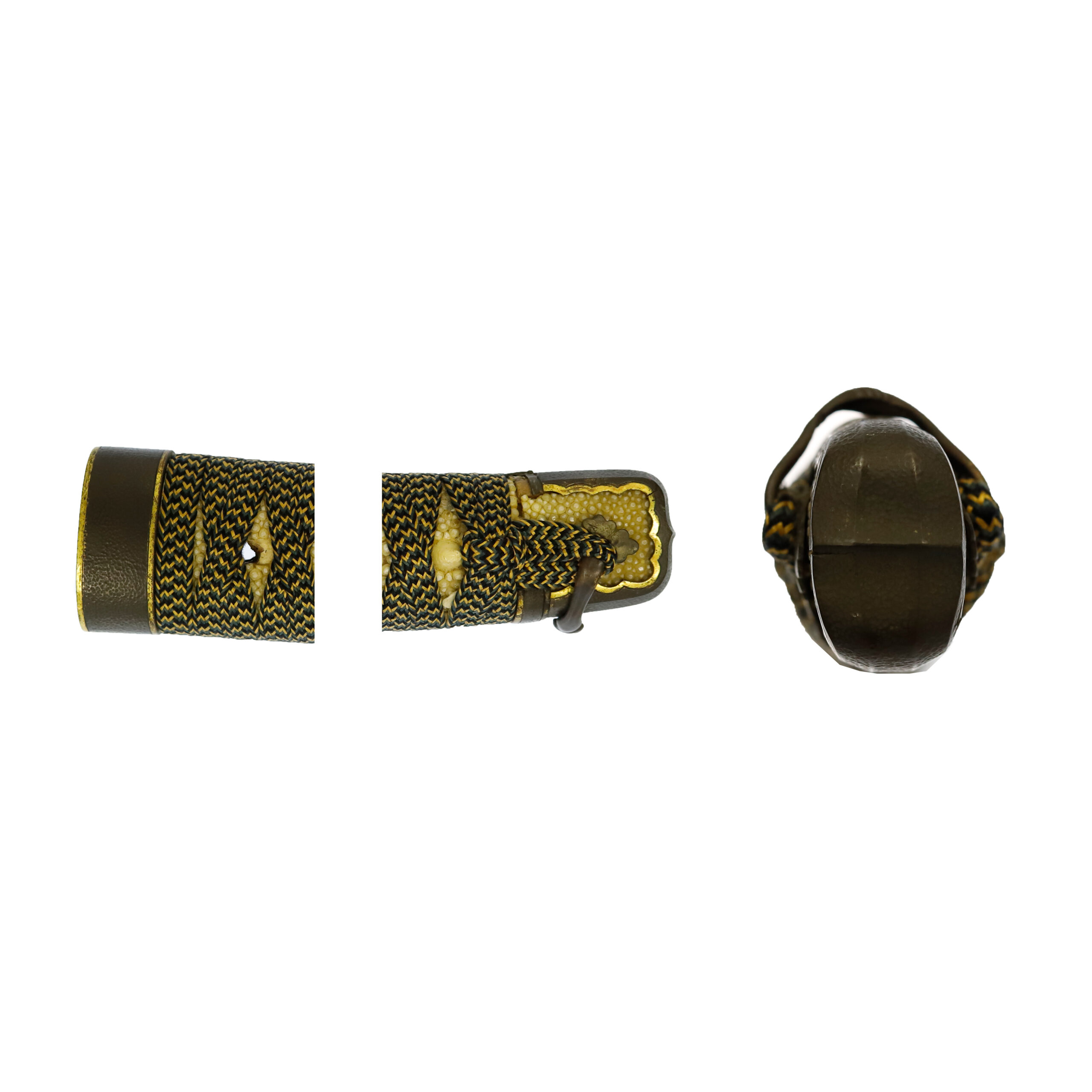
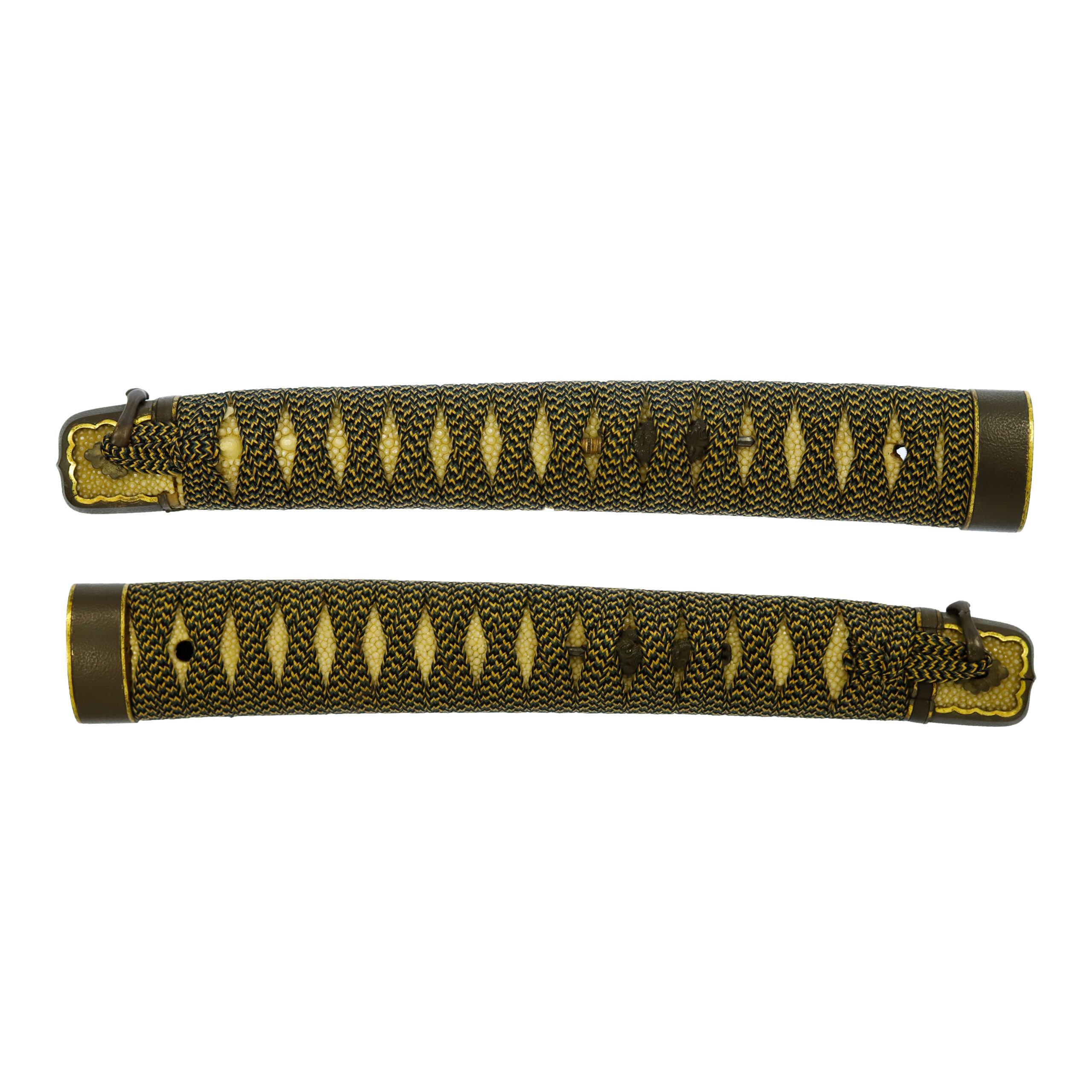
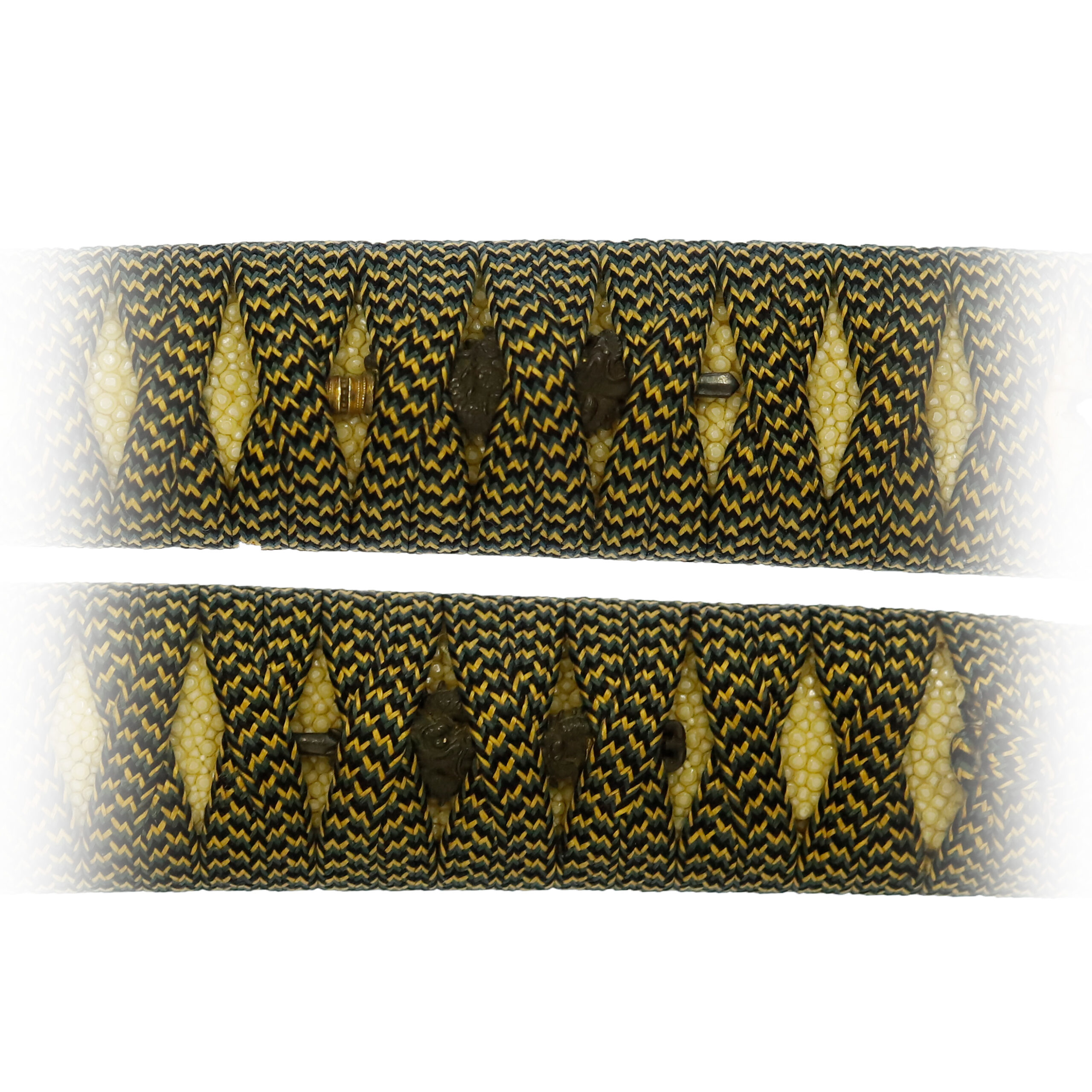
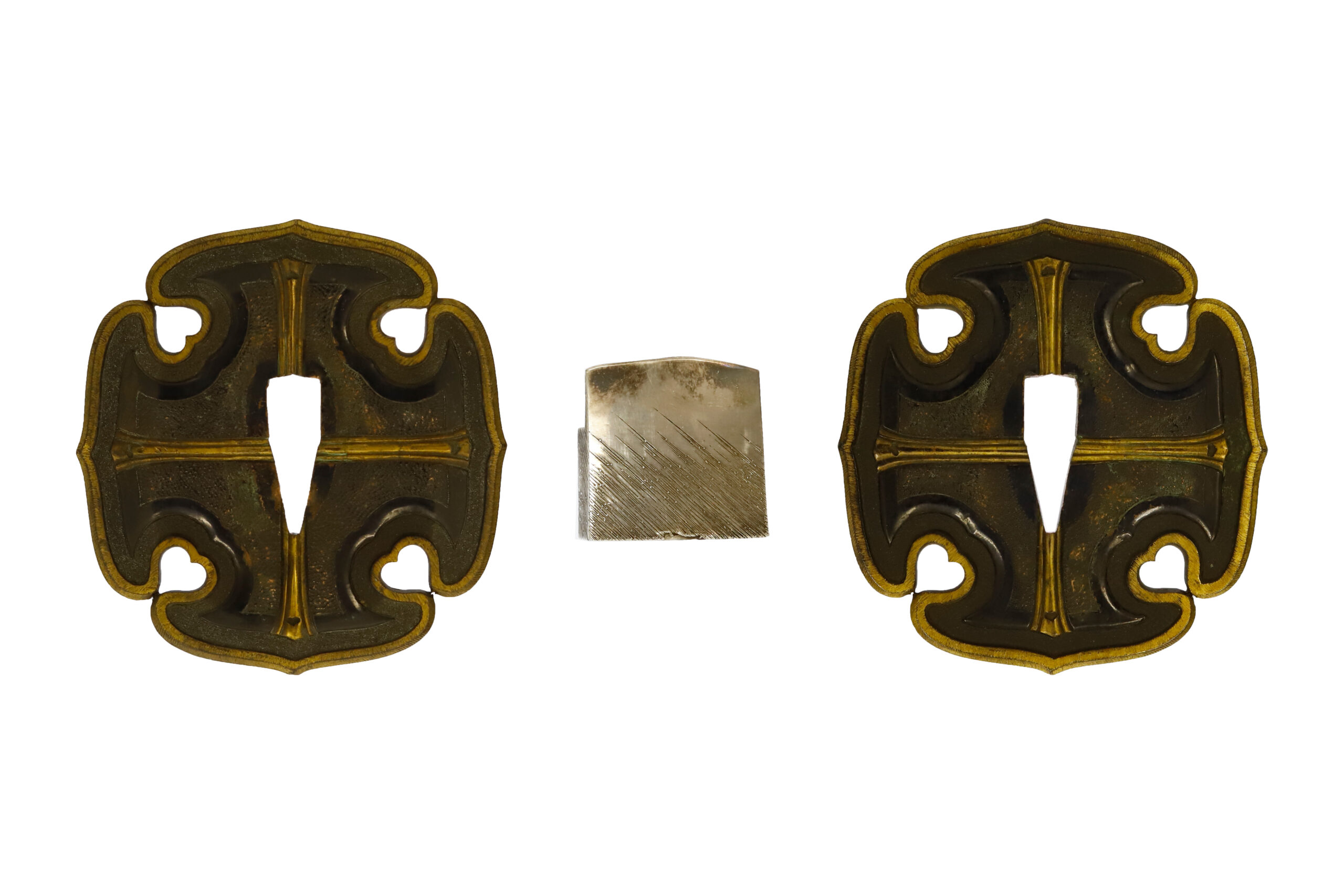
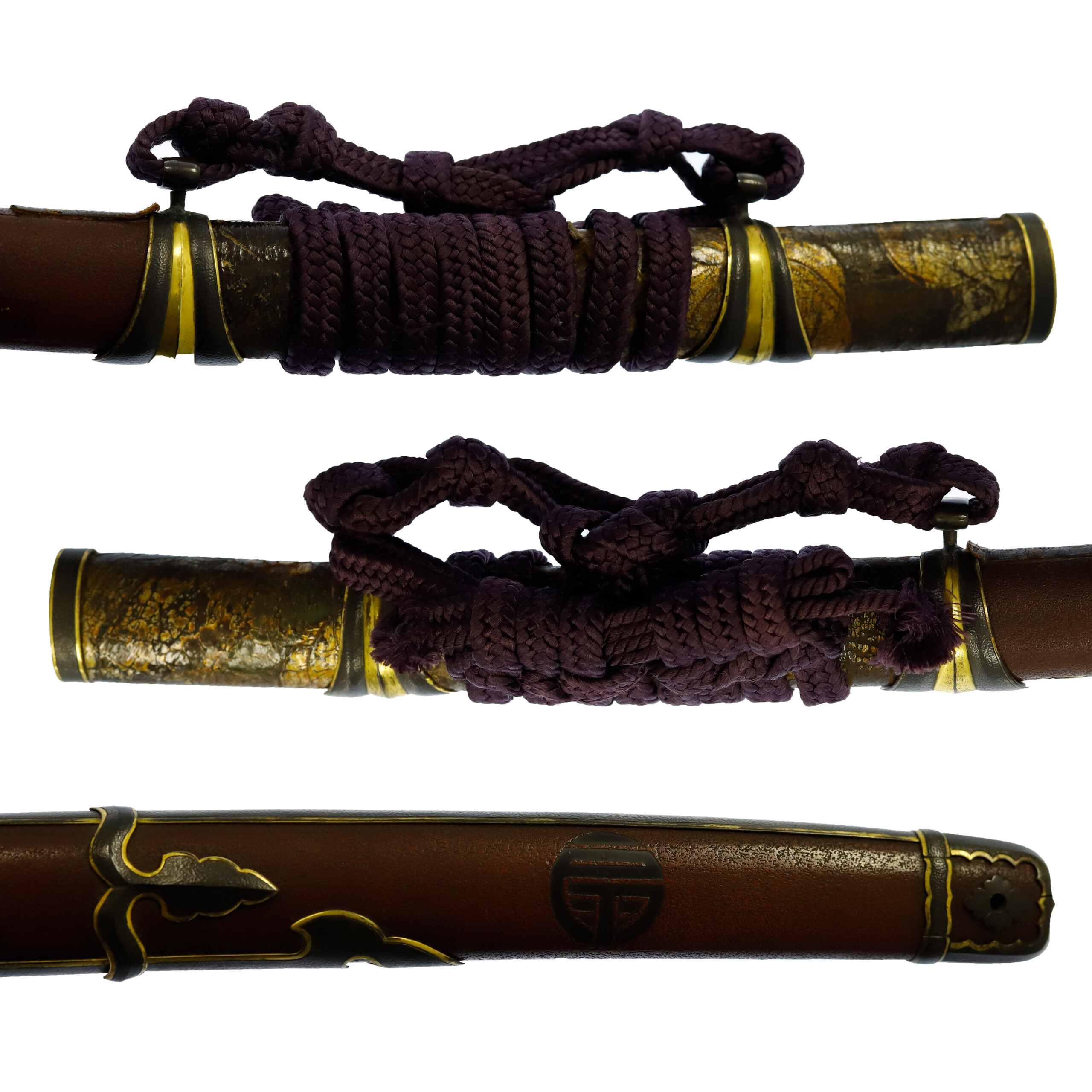
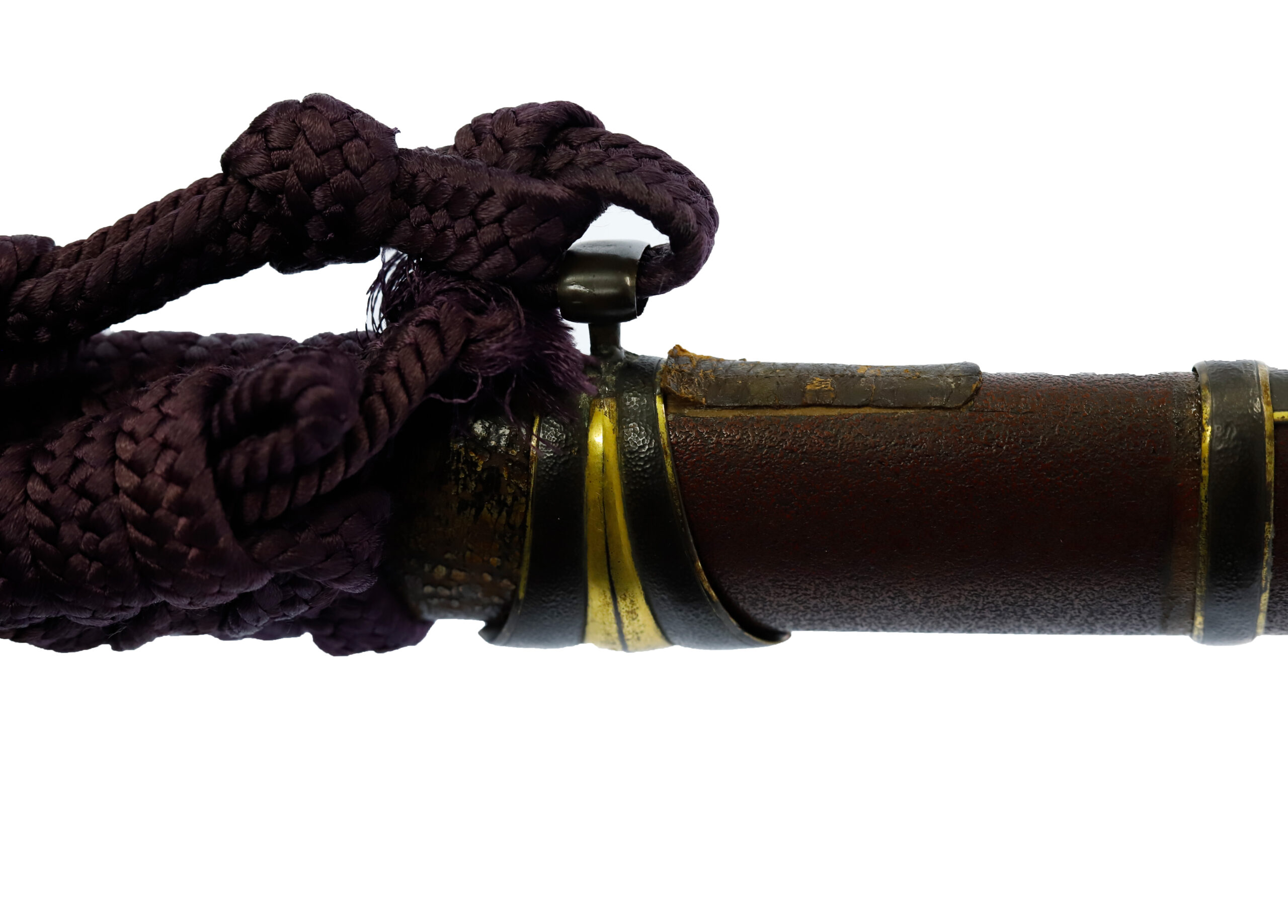
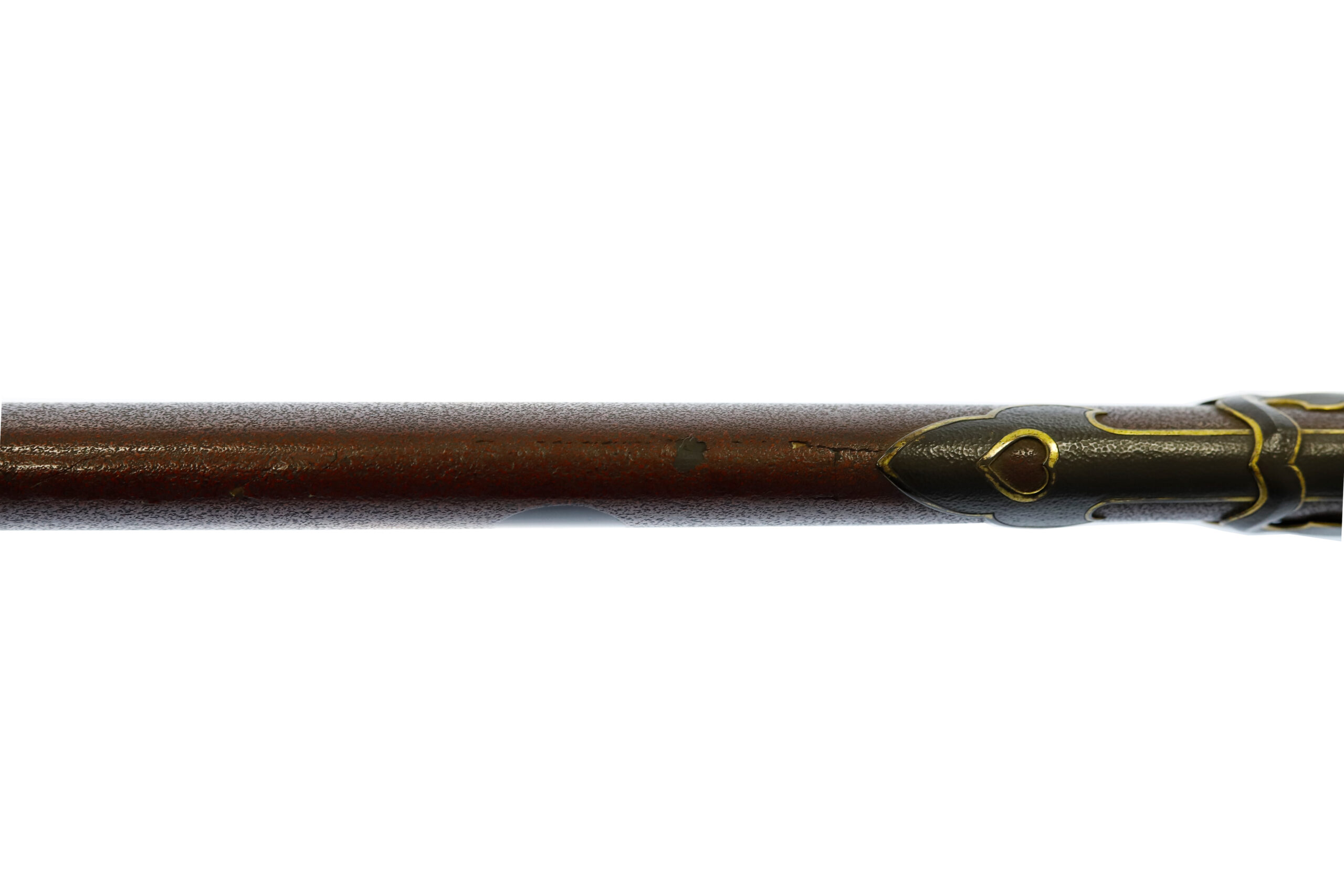
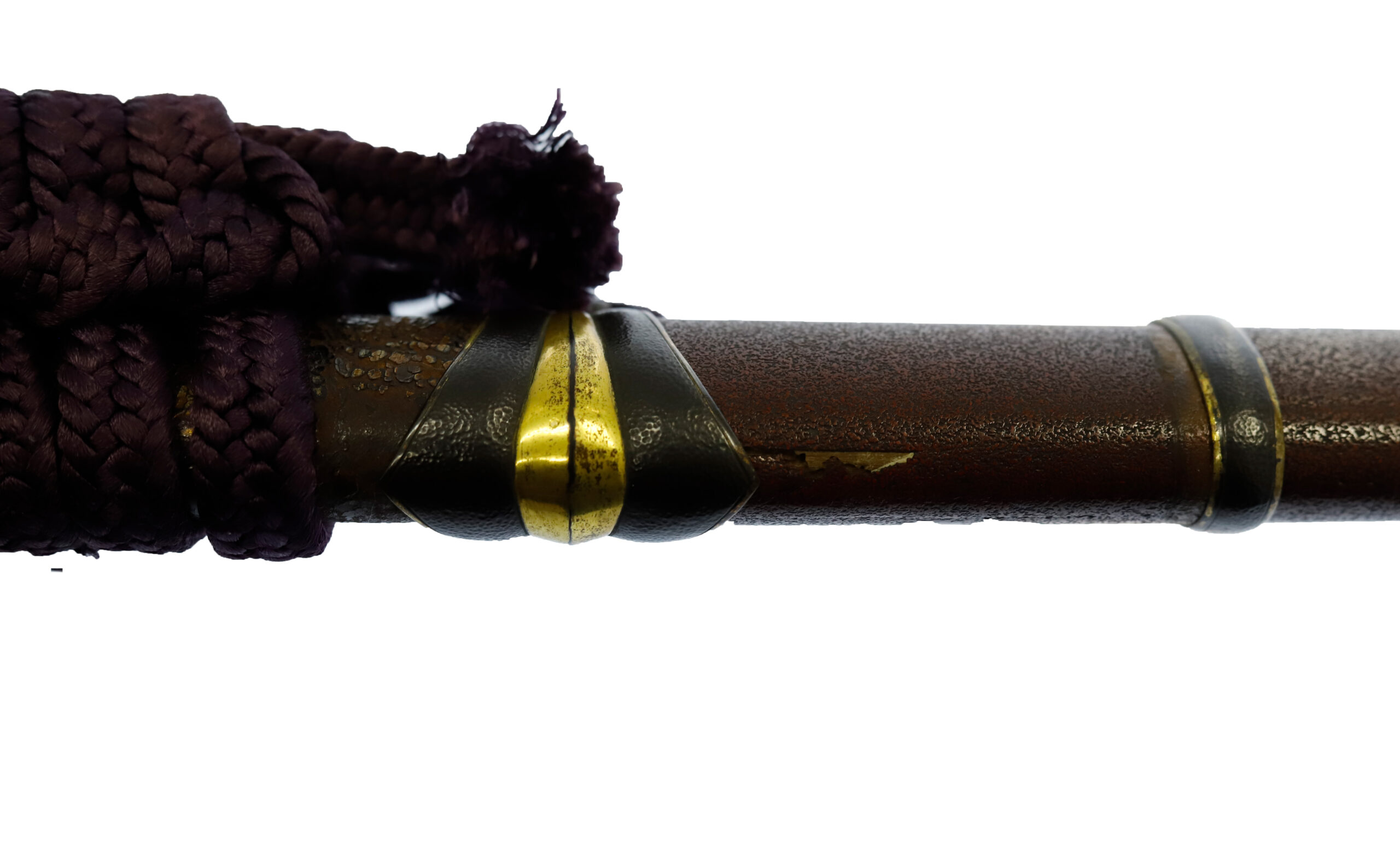
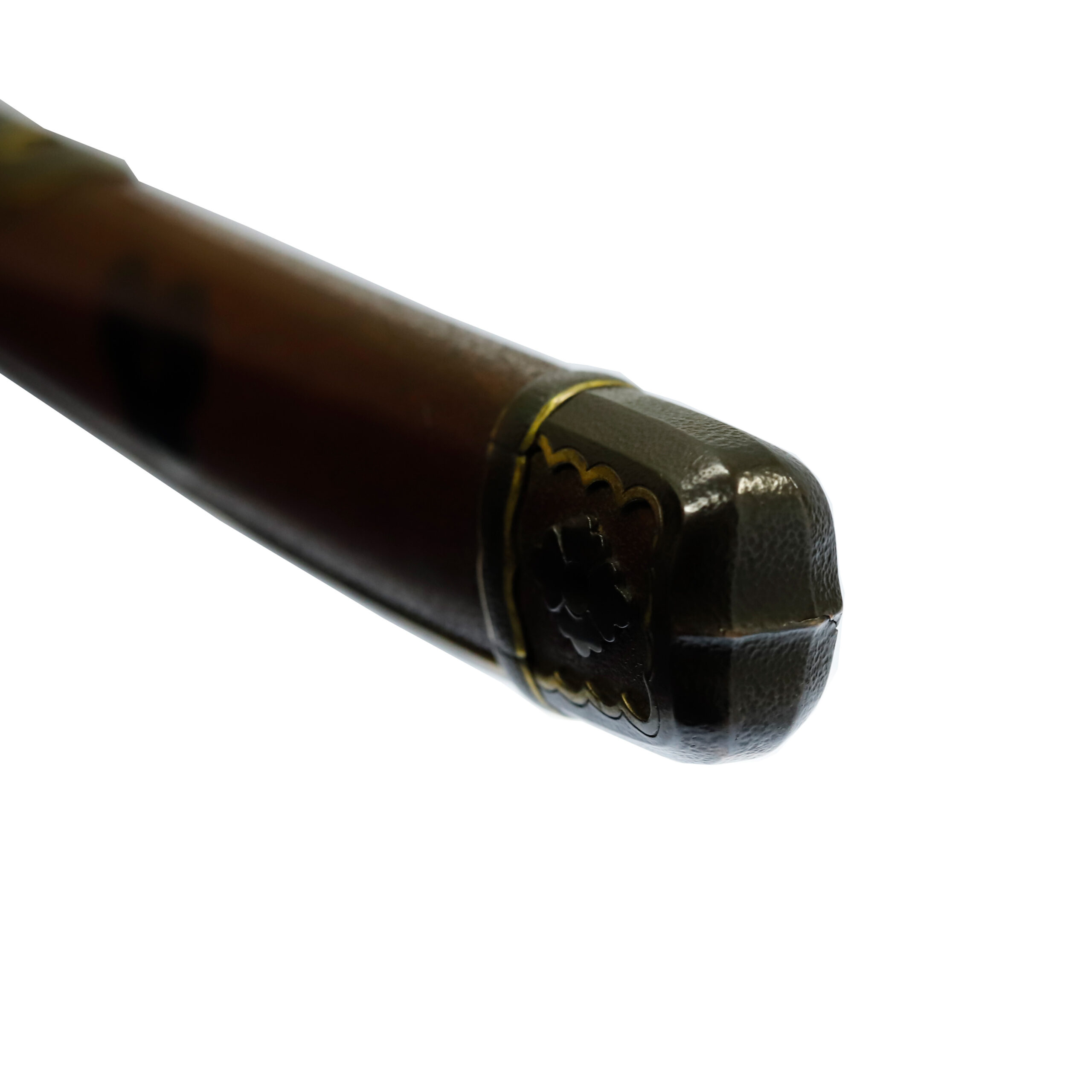
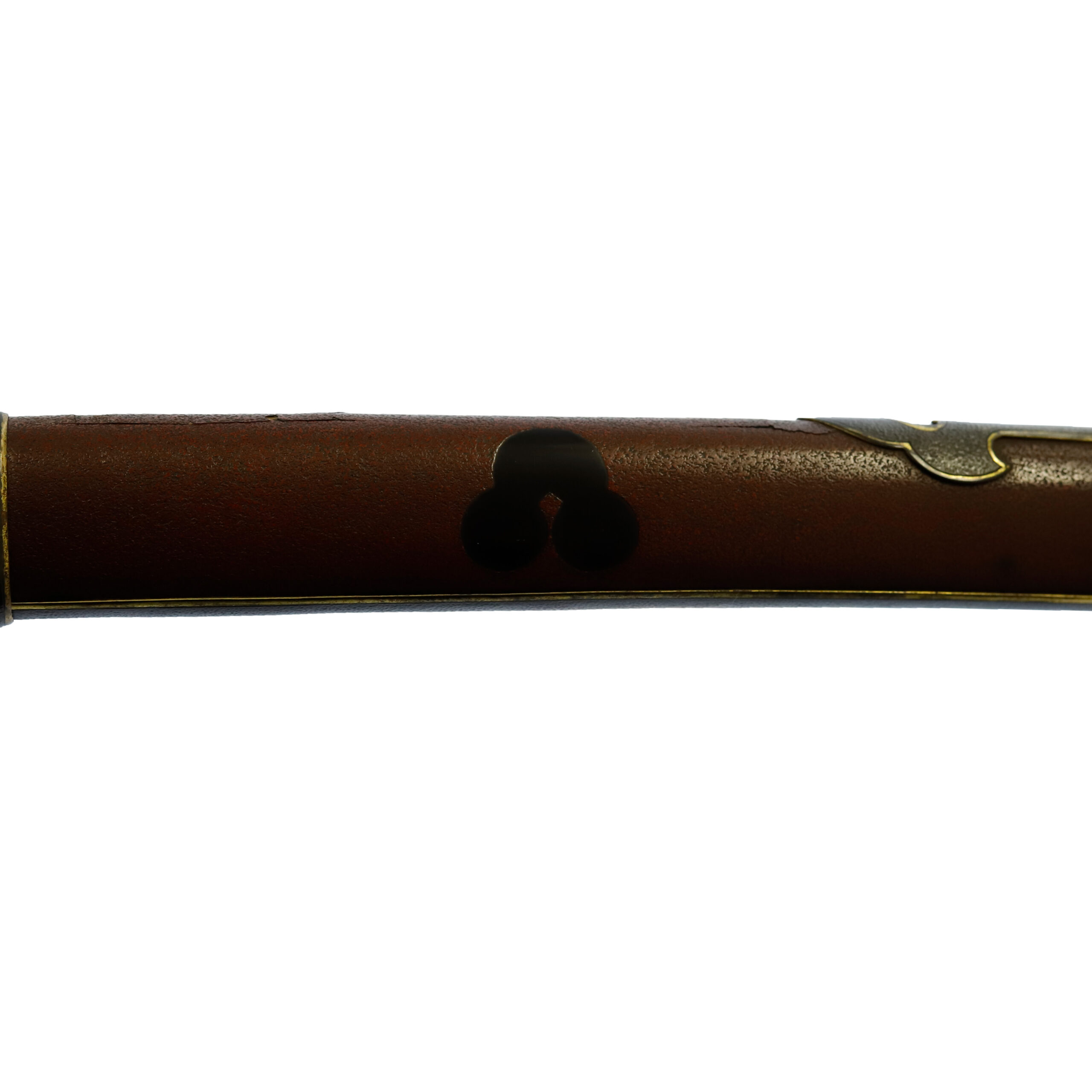
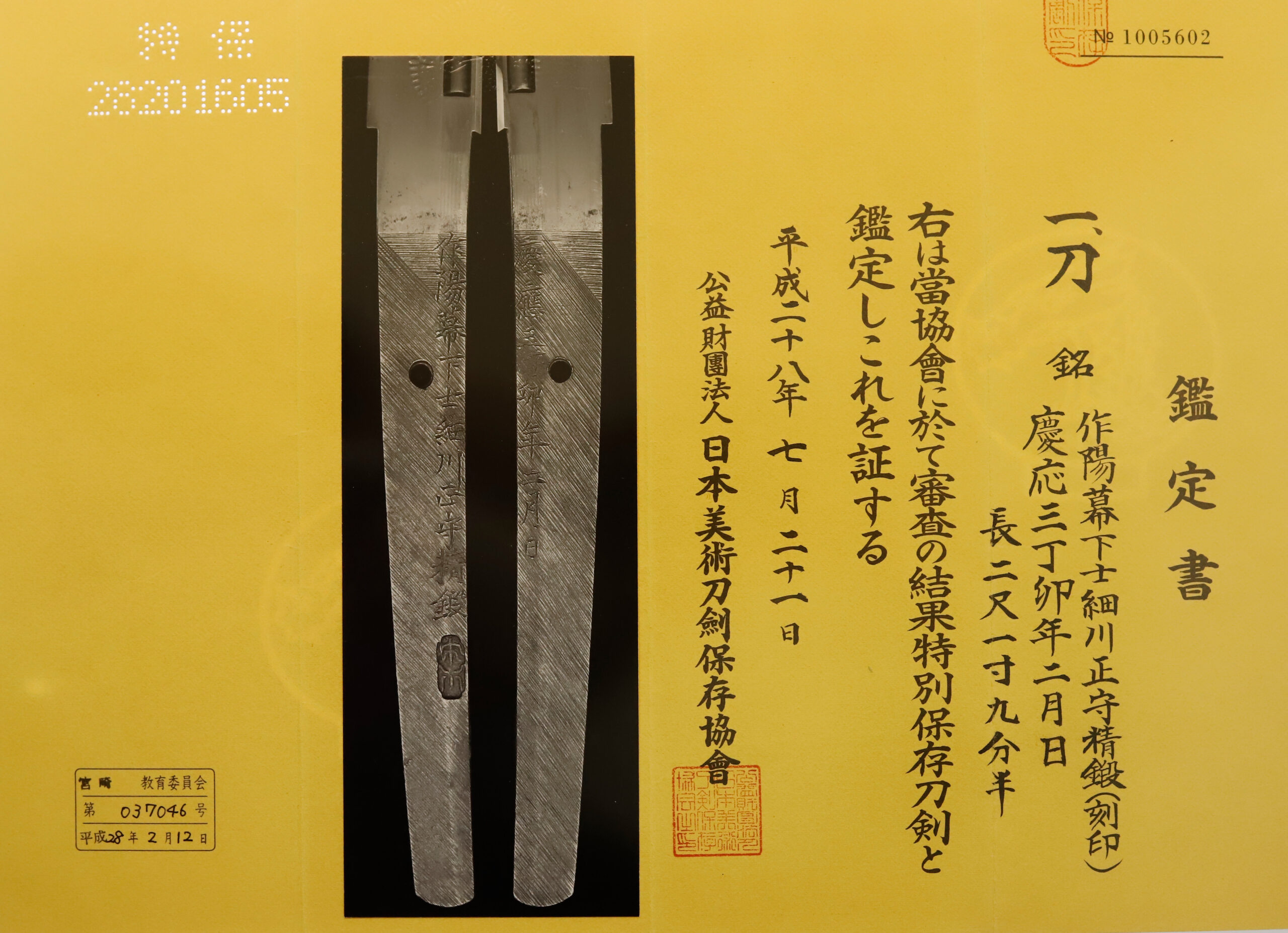
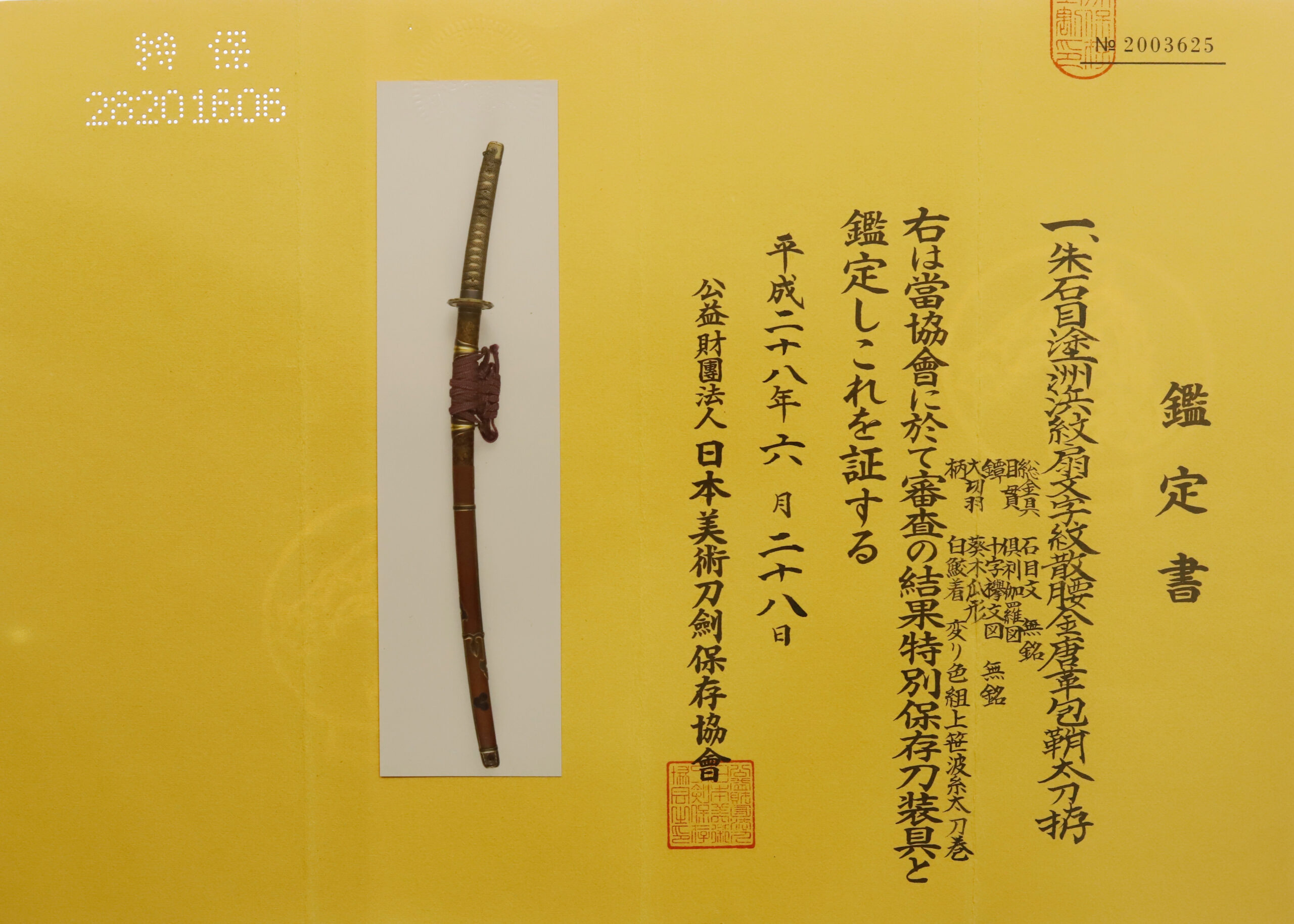
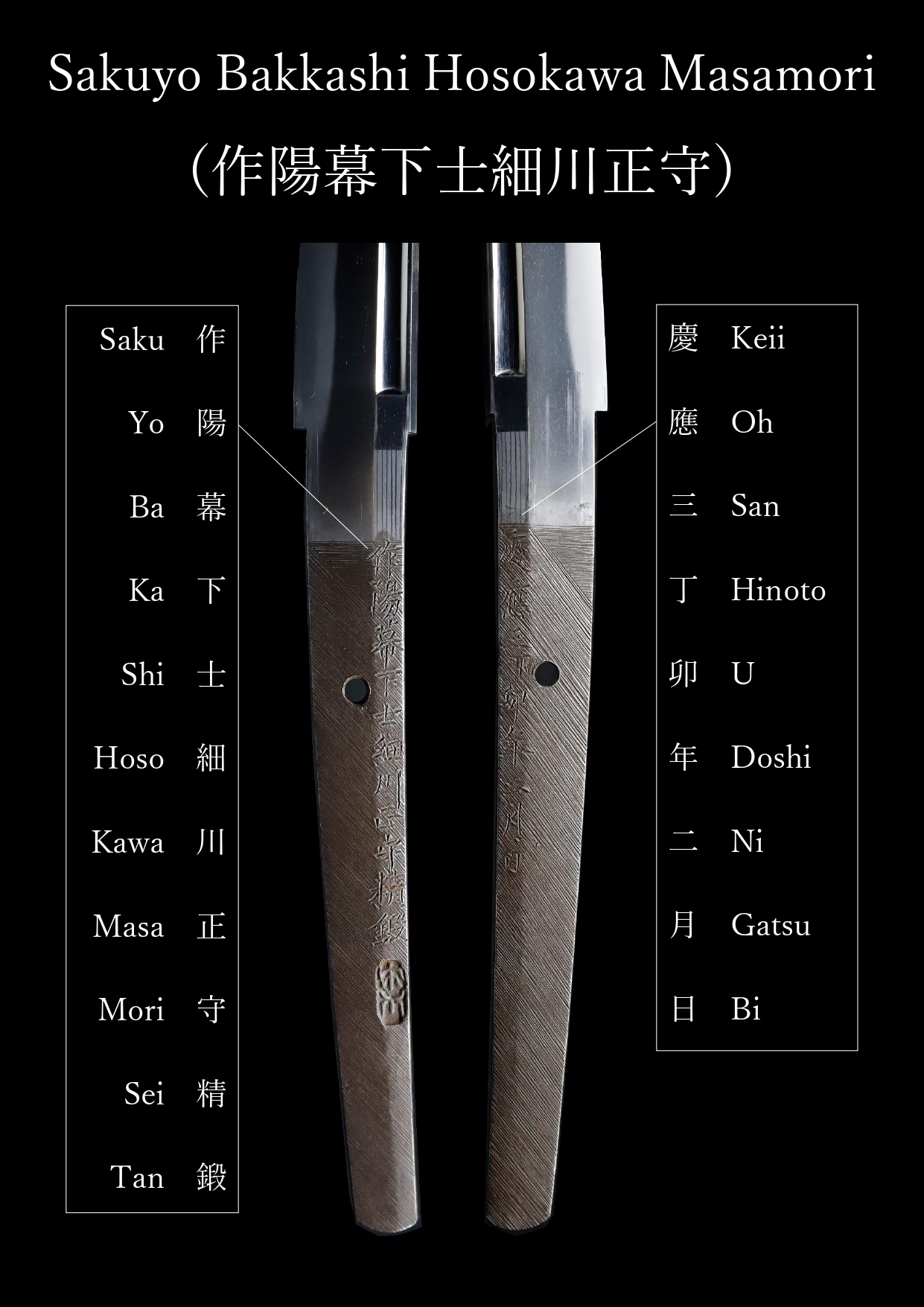
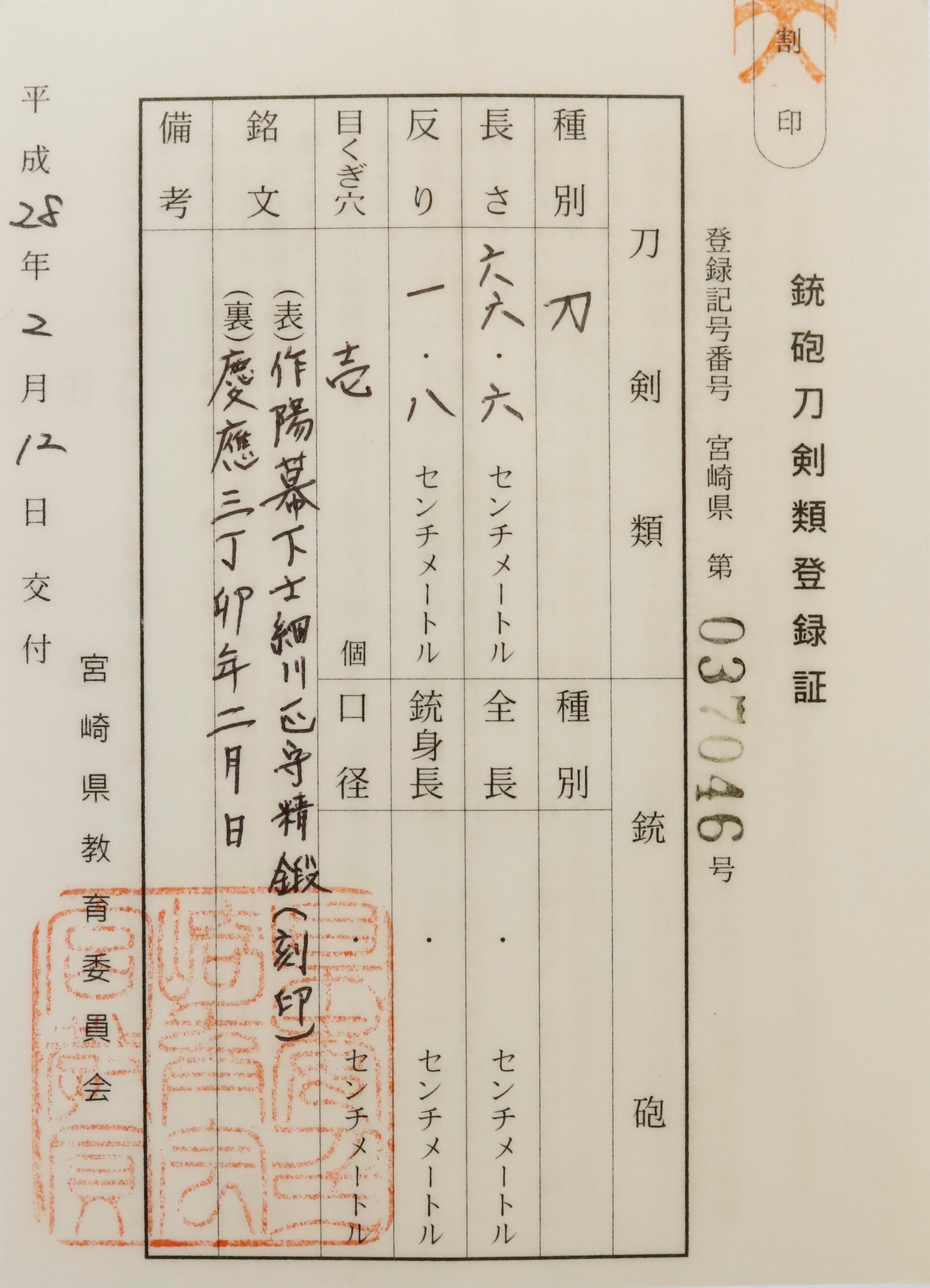
Summary This blade was signed by Saku Yo Bakkashi Hosokawa Masamori (作陽幕下士細川正守) in the 3rd year of the Keio era (1867: The end of the Edo period). Saku Yo Bakkashi signifies that he was also a Samurai, and we assume he engraved these letters to show his dignity for being a Samurai. Hosokawa Masamori was active during the Koka-early Meiji era (1844-early 1870s). He was the son of Hosokawa Masayoshi, one of the most renowned swordsmiths during the late Edo period. Hosokawa Masanori&Masayoshi His father, Hosokawa Masayoshi, had learned sword-forging techniques under the master, Suishinshi Masahide(水心子正秀), one of the most famous swordsmiths in Samurai history. Masamori learned sword-forging techniques in Edo city under master Taikei Naotane, an apprentice of Suishinshi Masahide. Masayoshi was an extremely skilled swordsmith, and he was excellent at forging blades with Choji Midare Hamon, which is the characteristic of the Bizen sword-forging style (BIZEN DEN). Masamori also mastered this excellent sword-forging technique from his father. Choji Midare Hamon is an Irregular wavy tempering line. Most of Masamori’s work reflects on Bizen Den (One of the Five Japanese sword-forging traditions). Hosokawa Masamori was famous for having a gorgeous groove (Hi: 樋) on his creations. Mamori and his father served the Matsudaira clan in the Sakushu Tsuyama domain(today’s Okayama prefecture). They served the clan as a Hanko(藩工), who exclusively forged swords for a specific clan. Tachi Koshirae This blade is stored in Tachi(太刀) Koshirae. Tachi was mainly used by an armored Samurai with one hand on horseback from the Heian period (794-1185 A.D.) until the early Muromachi period. TACHI was suspended loosely on the left waist with its edge facing the ground so that you could draw it faster to cut down soldiers on the ground. Because of its gorgeous looking, having a Tachi-style sword mounting became a social status among Samurai. This Koshirae was also appraised as a Tokubetsu Hozon Tosogu by NBTHK. It is appraised as a Tokubetsu Hozon Token(特別保存刀剣) issued by NBTHK(Nihon Bijutsu Touken Hozon Kyokai:日本美術刀剣保存協会). Fuchi-Kashira The Kabutogane (冑金/兜金) is a metal fitting that is attached to the end of a handle. And a Sarute/Sarude (猿手) is attached to this Kabutogane. The user of a sword passed the Udenukio (腕貫緒, a cord wrapped around the wrist to prevent a sword from falling out of the hand, mainly used when riding a horse) through this ring. In addition, the Fuchi Kanamono (縁金物) is also a metal fitting attached to the handle, but on the opposite side of Kabutogane. It seems all these black-colored metal parts of this handle have a stone-like surface. It is the same as other metal fittings such as Kuchi Kanamono (口金物, a metal fitting that is attached to the tip of the scabbard close to Tsuba), Seme Kanamono (責金物, a ring-shaped metal fitting placed in the middle of the scabbard to prevent the sheath from cracking), Ashi Kanamono (足金物, metal fittings attached to the positions where Sageo cord is wrapped), and Ishiduki Kanamono (石突金物, a metal fitting that is attached to the end of the scabbard). Tsuka and Menuki You could see the figure of the sword and a dragon wrapped around its blade part. This motif is called the Kurikara (倶利伽羅) pattern. It is the sword that Fudo Myo-O (不動明王, acalanātha) holds with his right hand. It is believed that this sword could cut off worldly desires: Sandoku (三毒). The Sandoku is the three fundamental earthly desires; Ton (貪, greed), Jin (瞋, anger, grudge), and Chi (癡, delusion, complaint). Fudo Myo-O is one of the objects of worship in Buddhism. According to a theory, it is the incarnation of Dainichi Nyorai (大日如来, Mahāvairocana, the principal image of esoteric Buddhism). Because of its sturdy appearance, it came to be worshiped as a god of war and is said to have been worshiped by many Samurai. Tsuba and Habaki This is a typical shape of the Tachi Goshirae Tsuba (太刀拵鐔). The difference between Tachi Tsuba (太刀鐔) and Katana Tsuba (刀鐔) is that the top and bottom positions of the Nakago hole (茎櫃, center hole) are reversed. The Tsuba of this Koshirae has Aoi (葵) Tsuba shape. The Ju-Ji (十字, cross) pattern is designed with golden metal. According to the certificate, the Tasuki (襷, geometric pattern with intersecting diagonal lines) pattern is also designed on this Tsuba. However, now it is challenging to see because of aging. If you focus on four corners and the tips of the golden cross mark, you will find a heart mark-shaped hole is engraved on each edge. It is called the Inome (猪の目) pattern. The Inome pattern has been used since ancient times. As its name implies, the boar’s eyes are the origin of this pattern. Some people believed the Inome design would work as an amulet to protect them from evil spirits or fire. Also, it is said it would bring good luck. On this Katana’s Koshirae, you could also find this Inome pattern on the scabbard. Saya If you focus on the middle and tip of this scabbard, you will find the Suhama (洲浜) patterns. The Suhama is an island-shaped sandbank that is formed on a coast. This design seems to be three circles arranged side by side and similar to the Japanese character’s shape: 品. We estimate that the Suhama patterns were designed on this scabbard as family crests. The Suhama pattern comes from Suhama-Dai (洲浜台), which was used in celebrations. It is said its auspiciousness is why Suhama patterns were incorporated into family crests. You would also capture a Japanese letter on the tip of this scabbard. It is written as 扇, which means a fan. We believe it is a type of Moji (文字, character) pattern because the character’s shape is deformed to fit in a circle. Many of the family crests depict animals and plants. However, some arranged characters, as seen on this family crest. *Please keep in mind that there are some areas where lacquer came off. If you like to see the detailed condition, please check other photos or contact us. Authentication Paper They authenticated the blade on July 21st in the 28th year of Heisei (2016). Its Koshirae (sword mounting) was also authenticated in the same year. They appraised them as Tokubetsu Hozon Touken& Tosogu, the blade&sword mounting especially worth preserving for Japanese society.
Offered by Samurai Museum
This piece has sold
Get an email when a new Suishinshi Masamori piece hits the market.


Shinshinto · Mimasaka · around 1854-1867
Fujishiro Chu-jo saku · Tōken Taikan top 76%
2 pieces on the market now
Hosokawa Masamori (細川正守) was a domain smith (hankō) of the Tsuyama fief in Mimasaka Province, active in the late Edo period and producing dated works through the Ansei, Genji, and Keiō years. He was the legitimate heir and eldest son of Hosokawa Masayoshi, who had originally come from Kanuma in Shimotsuke Province before going to Edo to study under Suishinshi Masahide. Through this paternal line Masamori inherited the Suishinshi current at one remove, and the NBTHK records that he "wholly inherited his teacher-father's manner," with a technical level standing "next to that of his teacher-father."
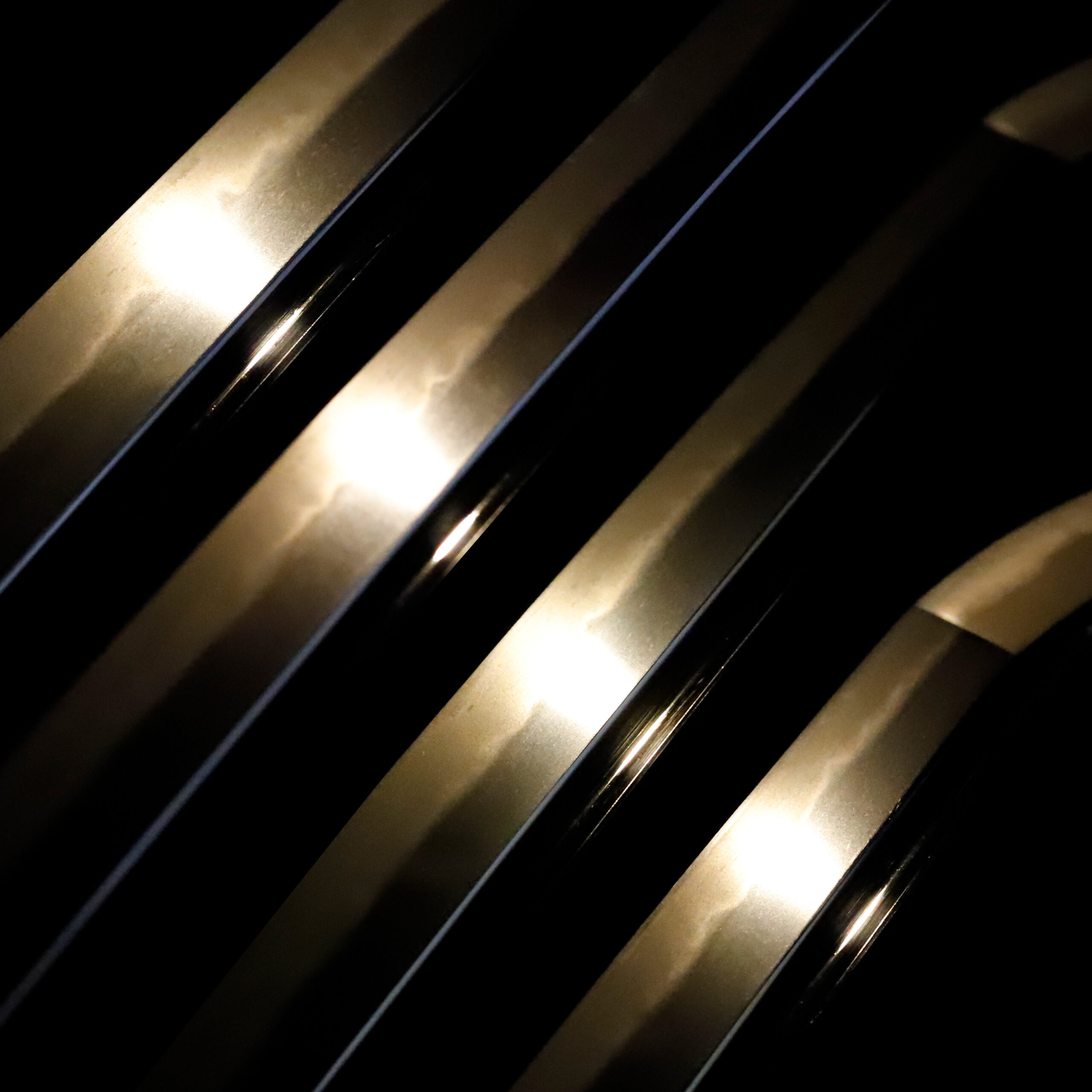
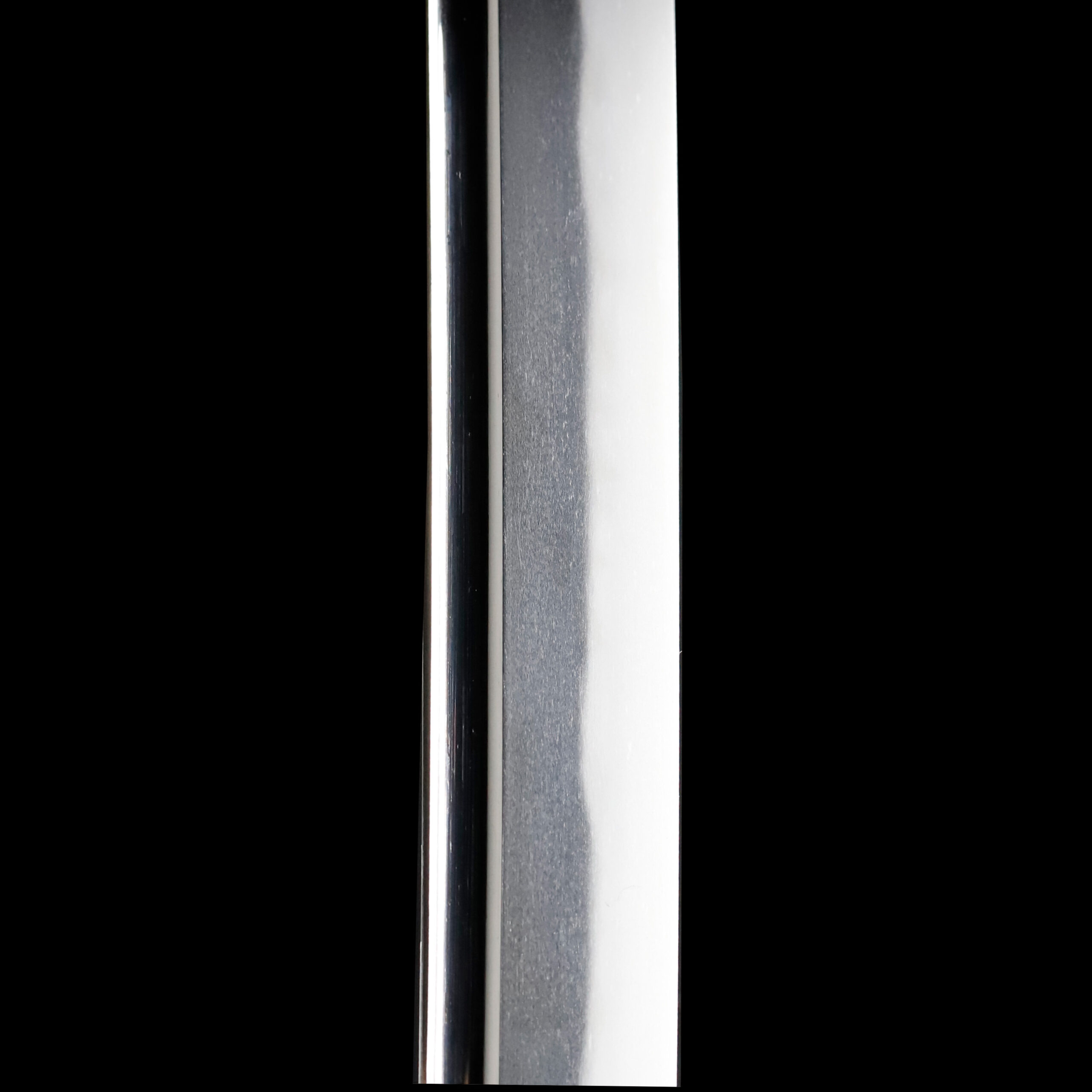
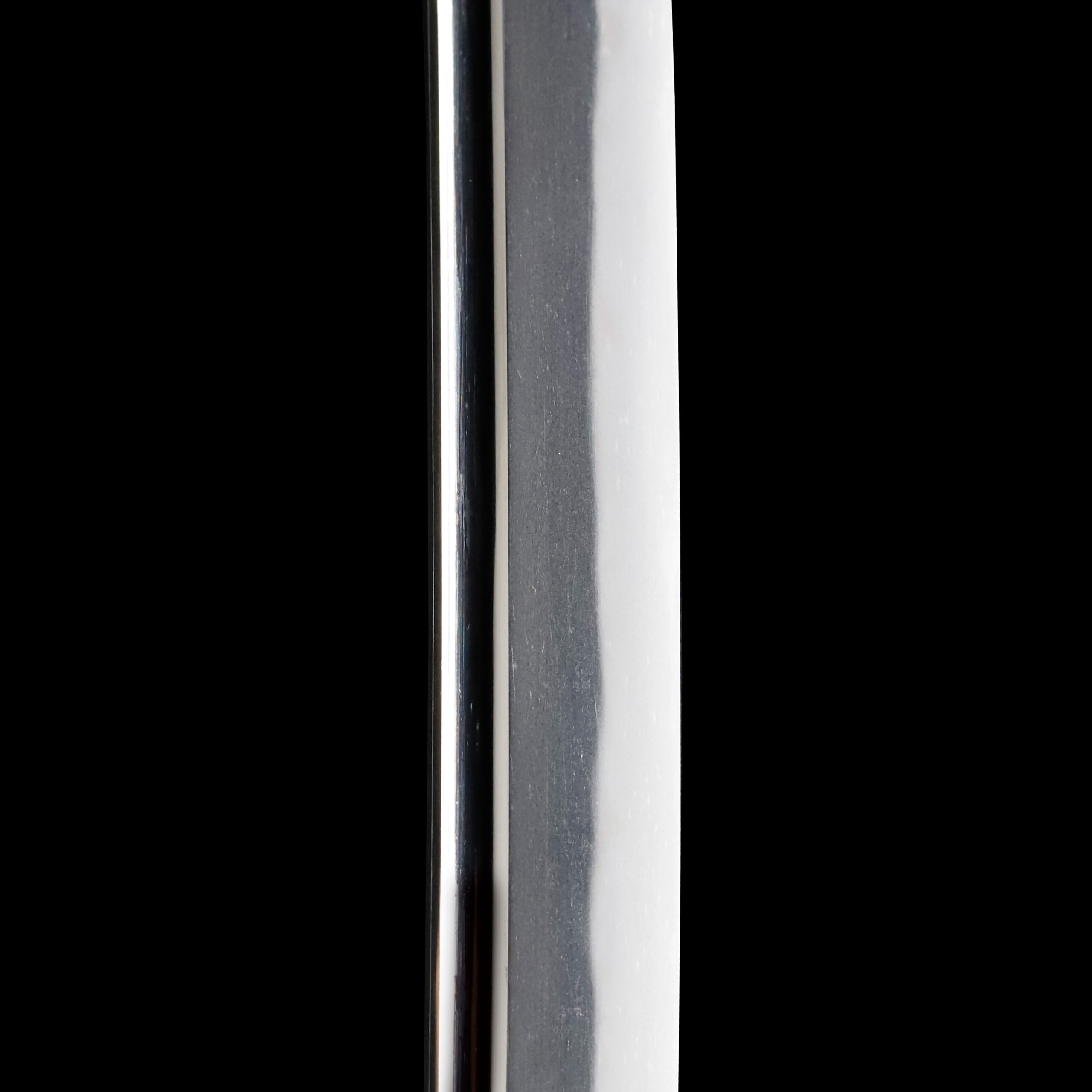
Masayoshi excelled in both Bizen-den and Sōshū-den, and his Bizen-den in particular is held to merit special attention; Masamori in turn favored the Bizen manner. The characteristic jigane is a tightly forged ko-itame-hada densely worked, with thick ji-nie adhering and chikei appearing. The hamon is fundamentally chōji mixed with gunome-chōji and togariba; ashi enter overall in long legs, ko-nie adheres well, and the nioiguchi is bright. In places coarser nie of "notably strong brilliance" emerges, while fine kinsuji and sunagashi run throughout. The bōshi tends to midare-komi with hakikake, turning back in ko-maru with a slightly pointed tendency. Signatures are characteristically cut in a long inscription toward the mune side of the nakago, with a stamped seal and a date on the ura.
Masamori is "famed within Masayoshi's circle as the craftsman whose skill is second only to that of the master." At his finest, where the chōji clusters grow larger than usual and the temper shows pronounced height variation, the result is "a particularly splendid and flamboyant midare" combined with a "grand, weighty, and heroic overall taihai"—work that approaches the level of his father Masayoshi and stands among Masamori's foremost masterworks.
Where Masamori stands among comparable artisans: across all of nihontō, and within tradition, era, and period. The tiers (Foremost · Leading · Major · Notable) weigh official designations from the NBTHK and Japan's Agency for Cultural Affairs, together with historical honors of lasting repute such as the Sansaku and Meibutsu-chō.
Select a lens to see how it's measured.
Shinshinto · Musashi
71 pieces on the market now
At Hamachō in Edo, in the closing decades of the eighteenth century and the opening ones of the nineteenth, Suishinshi Masahide[[c:1]] gathered the school that would turn Japanese swordmaking back toward its medieval models. Born Kawabe Gihachirō at Akayu in Dewa in 1750, signing first as Suzuki Takahide and then Eikoku, he studied under the Shitahara smith Yoshihide of Musashi, took the name Masahide in An'ei 3, and served the Akimoto house of Yamagata before settling in Edo, where he worked for nearly fifty years. He is the founding figure of the shinshintō and the theorist of the fukko-tō (revival-sword) doctrine, the argument that the sword ought to return to its Kamakura forms. Around that teaching he drew a large body of pupils, among them Taikei Naotane, who would give the revival its fullest practical form, the future second Masayoshi (Hosokawa Morihide), and a wider Edo and provincial following that carried the program into the Mito, Yonezawa, Tsuyama, and Tatebayashi domains. The shared vocabulary of the school is the deliberate reach back into the koto traditions, worked over a tightly forged, often muji-toned ko-itame with thick ji-nie. Masahide's own prime hand was the Ōsaka-utsushi, the surging tōran-midare of Tsuda Sukehiro opening from a long yakidashi and the broad suguha after Inoue Shinkai, betrayed on even his closest copies by a blackish, coarse nie that spills from the ha into the ji. Naotane gave the revival its Bizen and Sōshū faces: a reverse-leaning chōji-midare with angular kaku-gunome and saka-ashi, modeled on the late-Kamakura Osafune masters Kagemitsu and Kanemitsu and anchored by a consciously revived midare-utsuri that no ordinary shinshintō steel carries, set beside a Sōshū notare with its whorled uzumaki-hada and coarse, striped nie. The pupils divided this inheritance along their own lines. Jirōtarō Naokatsu, Naotane's adopted son, took a Bizen-den led by a kataochi-gunome from Kanemitsu with a pervasive saka-gakari slant and chōji- or midare-utsuri in the ji.
Suishinshi Masatsugu reproduced Naotane's two traditions, Sōshū and Bizen, down to the cut of his signature. Through Masayoshi the Bizen current passed to his heir Hosokawa Masamori of Tsuyama, whose chōji clusters mixed with gunome-chōji and togariba. The Osaka wave traveled separately into Mito through Naoe Sukemasa, who set a Shinkai-styled suguha and a Sukehiro tōran over a clear ko-itame, while Chōunsai Tsunatoshi of the Uesugi service carried a nioi-deki chōji mixed with gunome, suguha, and tōran-midare, often with carving by his own hand. To kantei the school is to weigh a tradition consciously copied against the period marks the copy cannot shed: the constant of the line is that the hamon is never the pure nioi-deki of old Bizen but carries nie throughout, a difference the NBTHK names outright as the divide between koto and shinshintō. The revived utsuri in Naotane and Naokatsu, the spilling nie in Masahide, the whorled uzumaki-hada shared across the line, and the broad, thick-kasane late-Edo sugata are the surest tells, narrowed further by the school's habit of full, dated signatures that make these smiths among the most exactly knowable of their age. Masahide stands at the head as the teacher and theorist, his finest work in his Ōsaka copies rather than the doctrine he proclaimed; Naotane stands ahead of him in execution, his Bizen-den held the finest among the shinshintō. Their pupils define the late-Edo Osafune and Sōshū revivals as practiced through Edo and the domains, with Naokatsu and Masatsugu read as the next hands after Naotane and Masayoshi. The provenance of the school runs through domain commission and bestowal (Mito blades forged at the Kōrakuen by lordly order, Tsuyama and Yonezawa fief work, Naotane's Sanada daishō and a tachi recorded in Honma's inventory of the Imperial collection) rather than ancient daimyō transmission, fitting for a movement that, within a single generation at Edo, redrew the direction of nineteenth-century swordmaking by turning it back toward the old models. Learn more →
| Smith | Era | Designated |
|---|---|---|
| Naotane直胤 | 1801-1837 | 40 |
| Masahide正秀 | 1777-1817 | 28 |
| Sukemasa助政 | 1804-1825 | 8 |
| Jirotaro Naokatsu直勝 | 1805-1858 | 7 |
| Masayoshi正義 | 1791-1860 | 5 |
The Shinshintō revival
Around 1800 Suishinshi Masahide argued in his writings that the craft must return to the old masters’ methods: the fukkotō revival. His greatest successor Naotane worked convincingly in Bizen and Sōshū manners that had been dead for centuries.
A Hozon-certified blade judged to show notably superior workmanship and a better state of preservation. The bar is higher: re-tempered blades and most unsigned Muromachi/Edo works are excluded.
The NBTHK (Nihon Bijutsu Tōken Hozon Kyōkai, the Society for the Preservation of Japanese Art Swords) is a public-interest incorporated foundation founded in 1948 and supervised by Japan’s Agency for Cultural Affairs (Bunkachō); it is based at the Japanese Sword Museum in Tokyo. Its expert panels physically examine each submitted work (shinsa) and issue a certificate (kanteishō) ranking it by artistic and historical merit. NBTHK papers are the most widely recognized standard of authentication for Japanese swords and fittings.
NBTHK official siteReturns/exchanges limited to defects caused by shipping (except willful misconduct or gross negligence by the company); customers must contact within 72 hours of receiving the product.