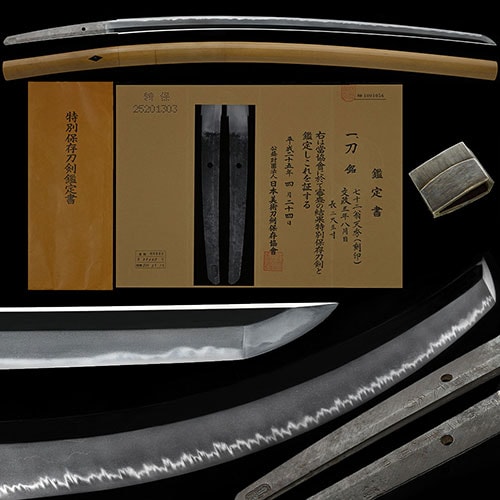
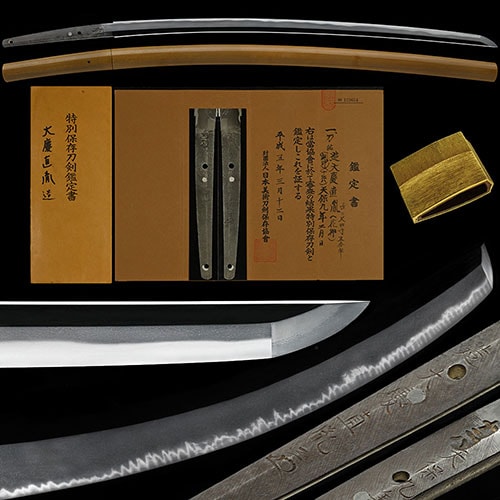
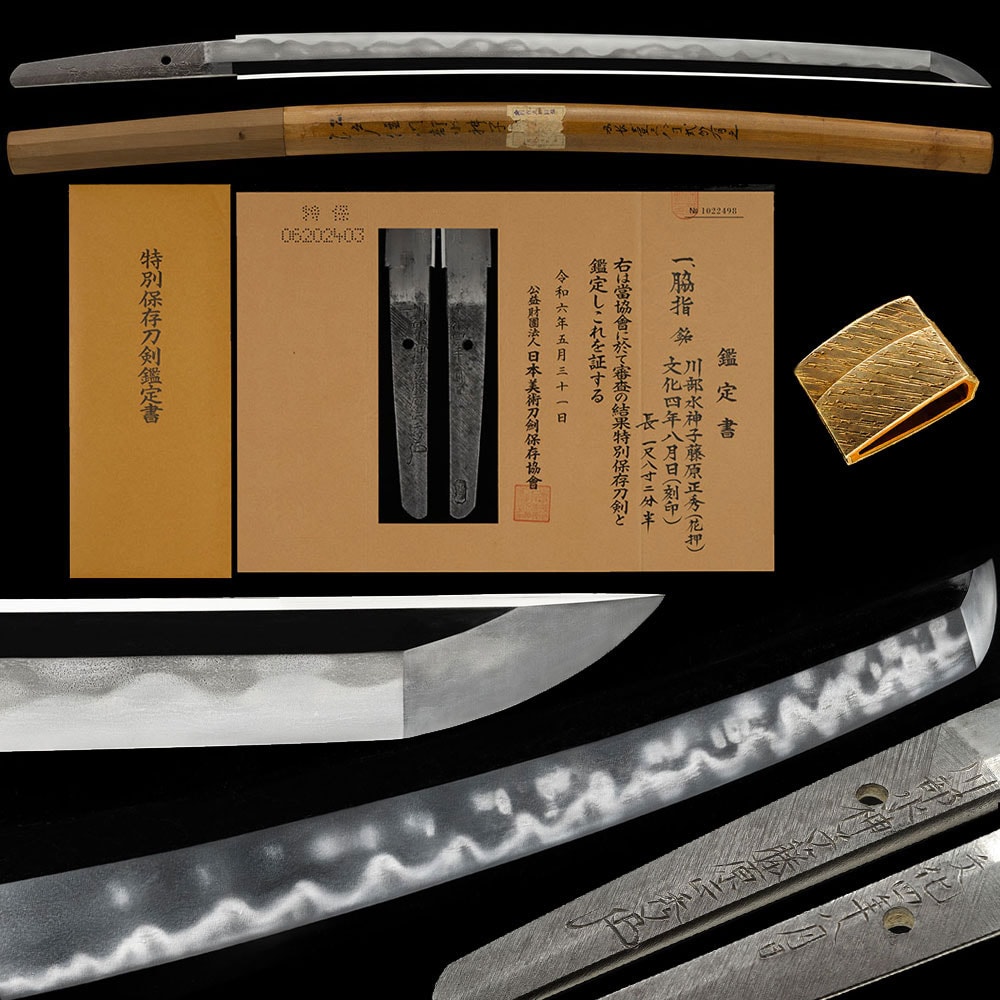
Hosokawa Masamori (細川正守) was a domain smith (hankō) of the Tsuyama fief in Mimasaka Province, active in the late period and producing dated works through the Ansei, Genji, and Keiō years. He was the legitimate heir and eldest son of Hosokawa Masayoshi, who had originally come from Kanuma in Shimotsuke Province before going to to study under Suishinshi Masahide. Through this paternal line Masamori inherited the Suishinshi current at one remove, and the records that he "wholly inherited his teacher-father's manner," with a technical level standing "next to that of his teacher-father."
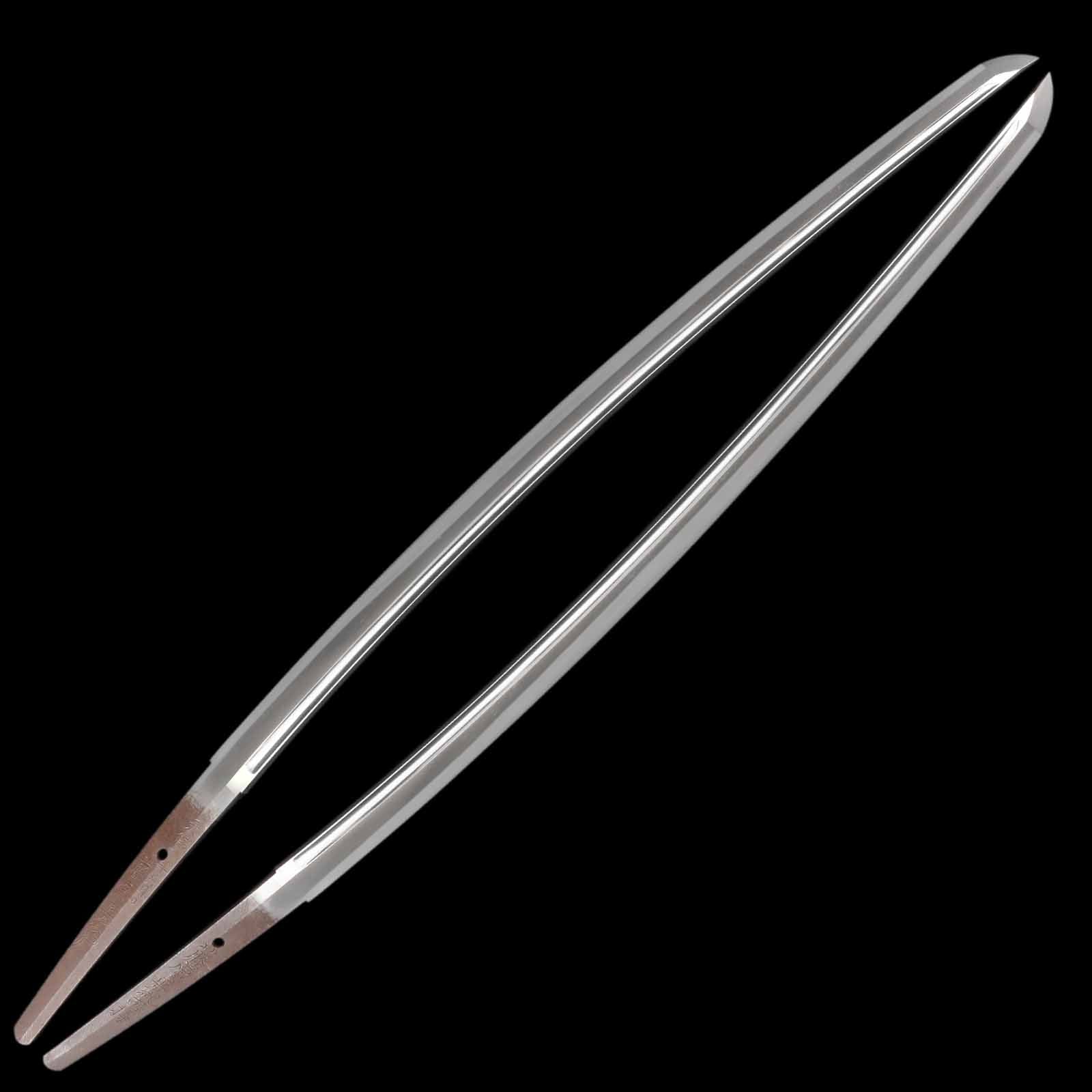
Masayoshi excelled in both - and Sōshū-den, and his - in particular is held to merit special attention; Masamori in turn favored the manner. The characteristic is a tightly forged densely worked, with thick adhering and appearing. The is fundamentally mixed with gunome-chōji and ; enter overall in long legs, adheres well, and the is bright. In places coarser of "notably strong brilliance" emerges, while fine and run throughout. The tends to with , turning back in with a slightly pointed tendency. Signatures are characteristically cut in a long inscription toward the side of the , with a stamped seal and a date on the .
Masamori is "famed within Masayoshi's circle as the craftsman whose skill is second only to that of the master." At his finest, where the clusters grow larger than usual and the temper shows pronounced height variation, the result is "a particularly splendid and flamboyant " combined with a "grand, weighty, and heroic overall "—work that approaches the level of his father Masayoshi and stands among Masamori's foremost masterworks.