
NihontoWatch Mon

NihontoWatch

マーケット
事典
鑑定
NihontoWatch Mon

NihontoWatch

マーケット
事典
鑑定

説明

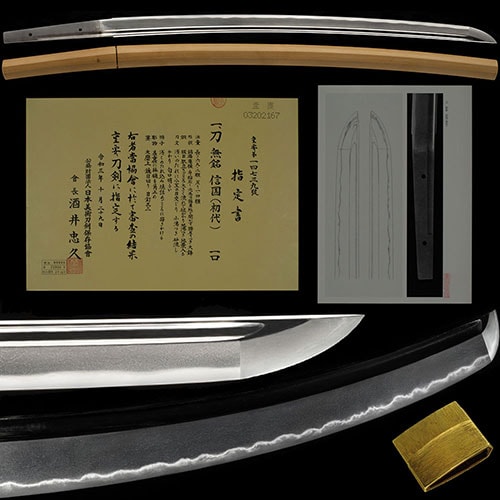
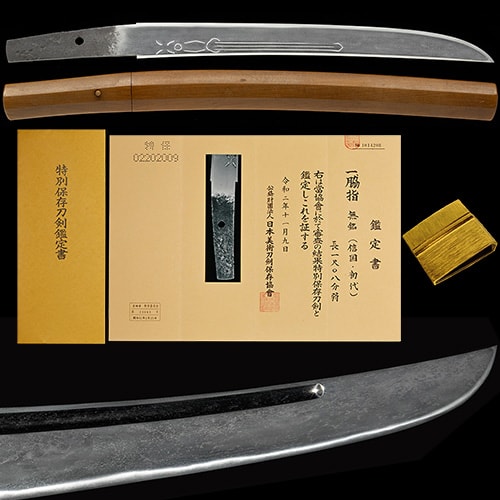
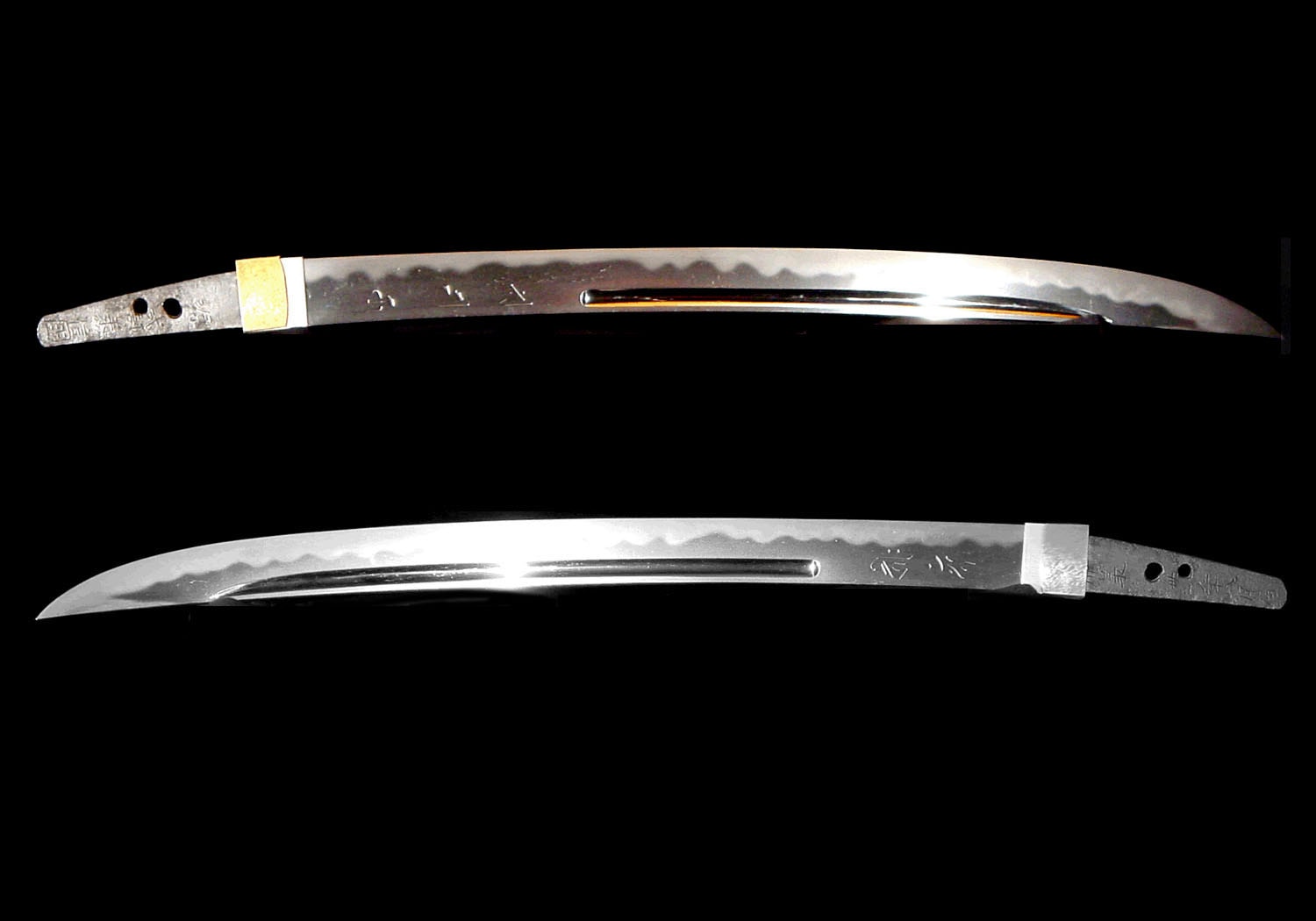
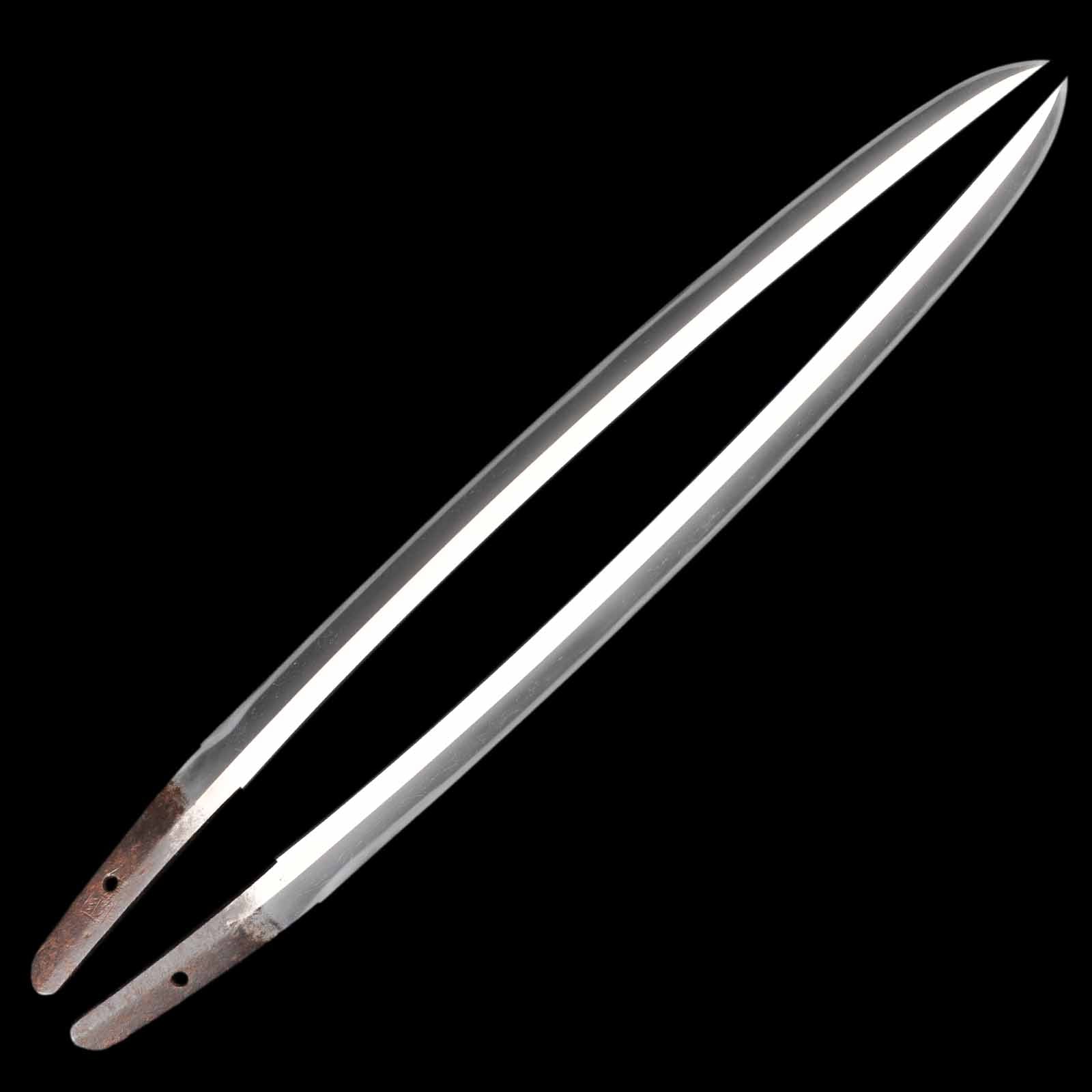
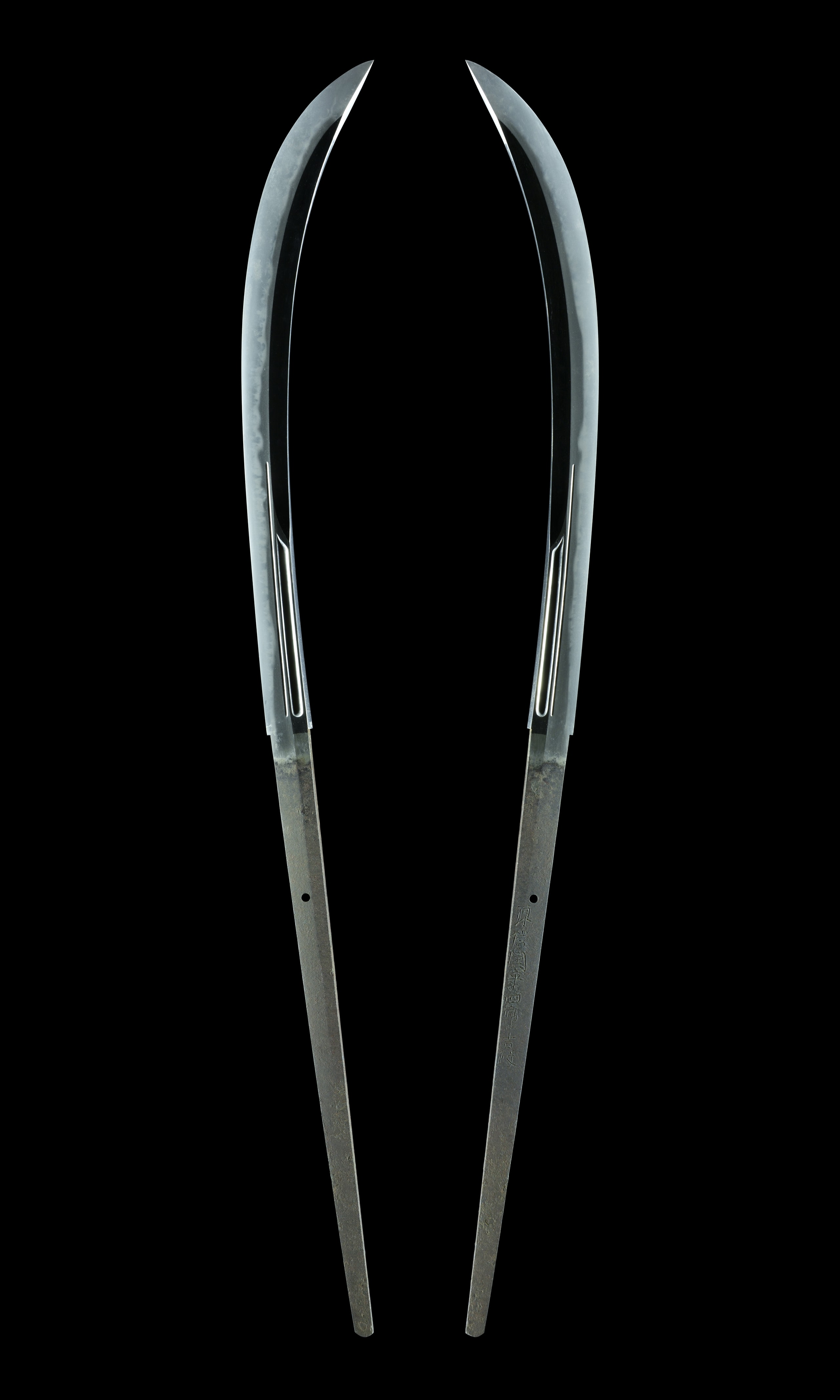
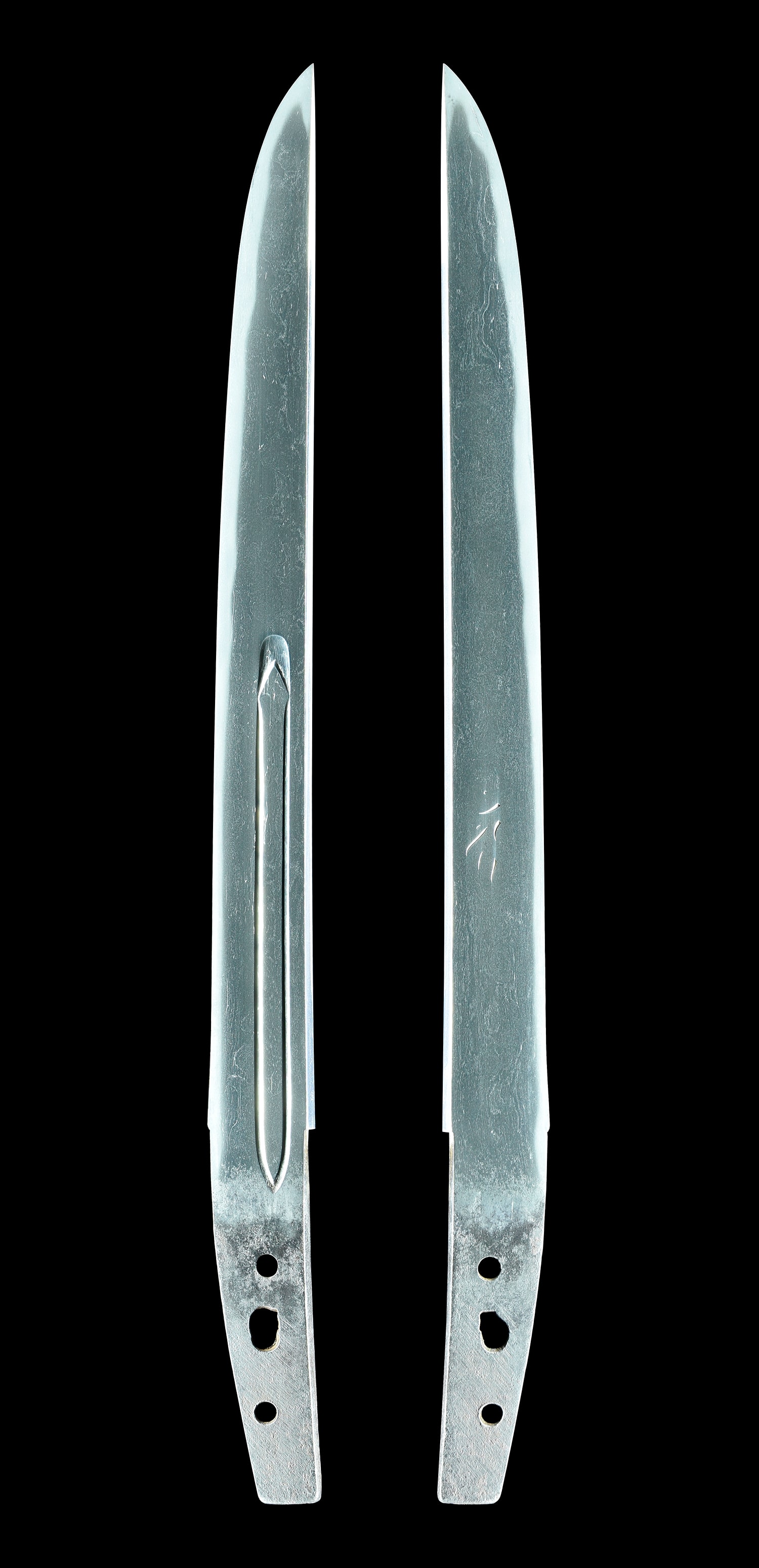
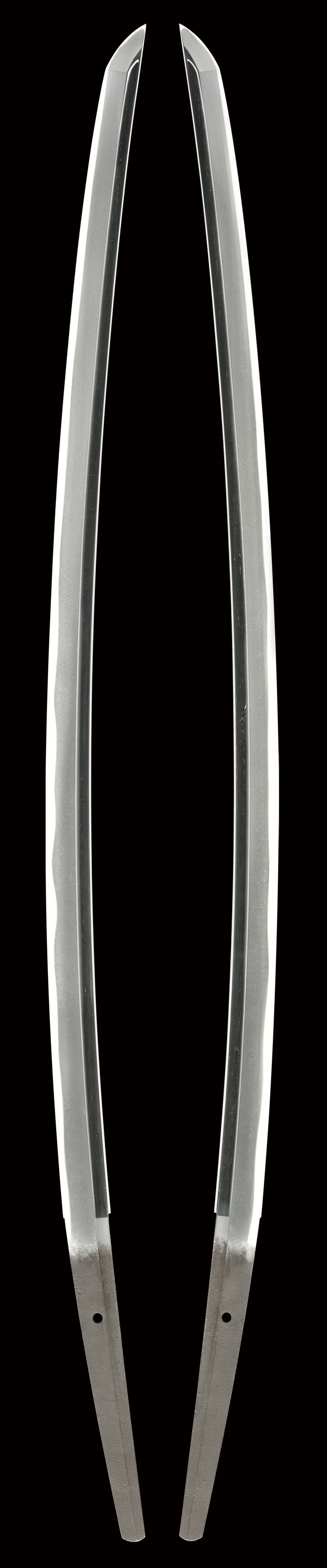
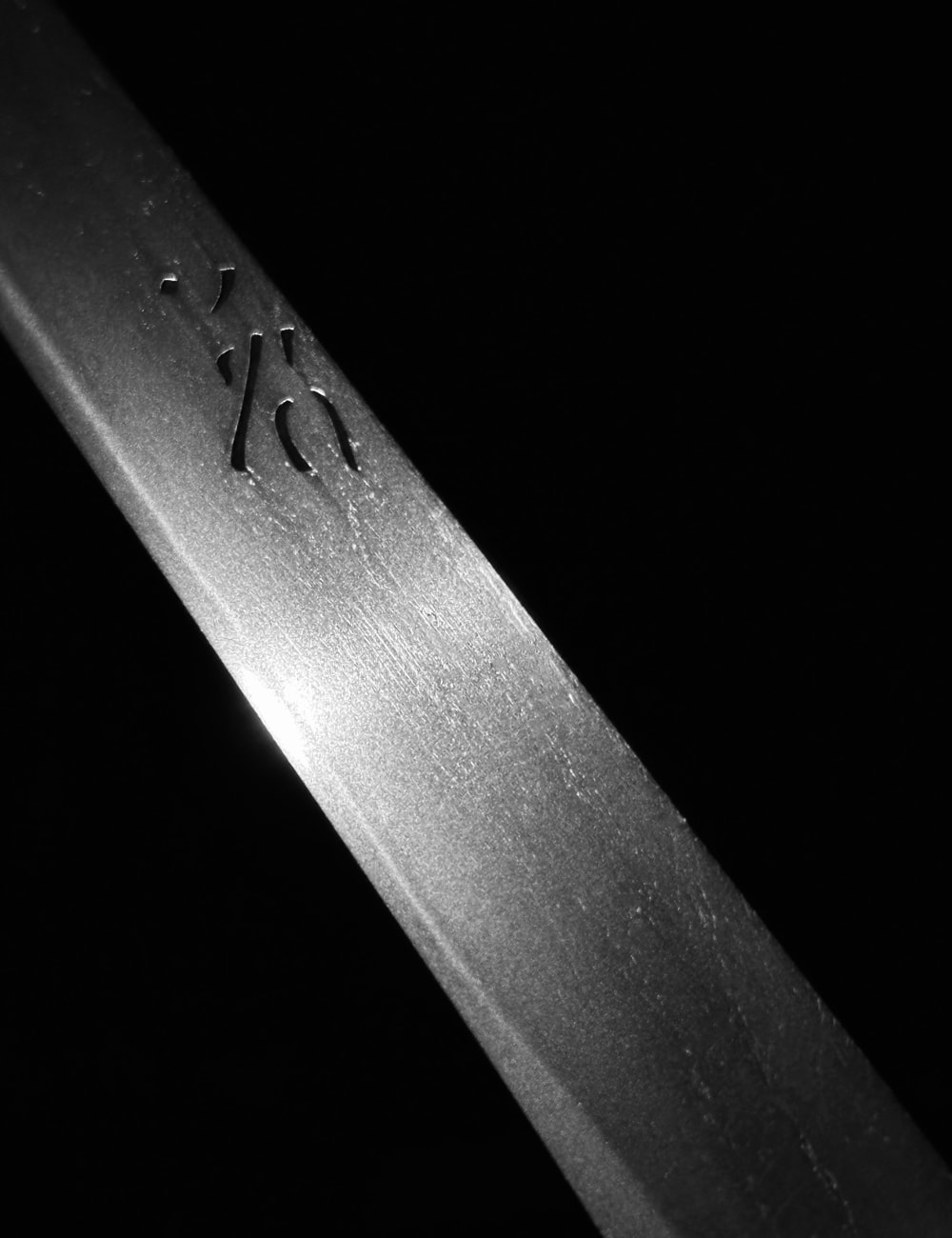
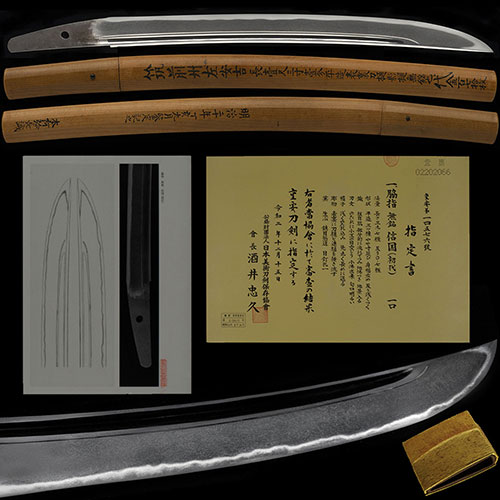
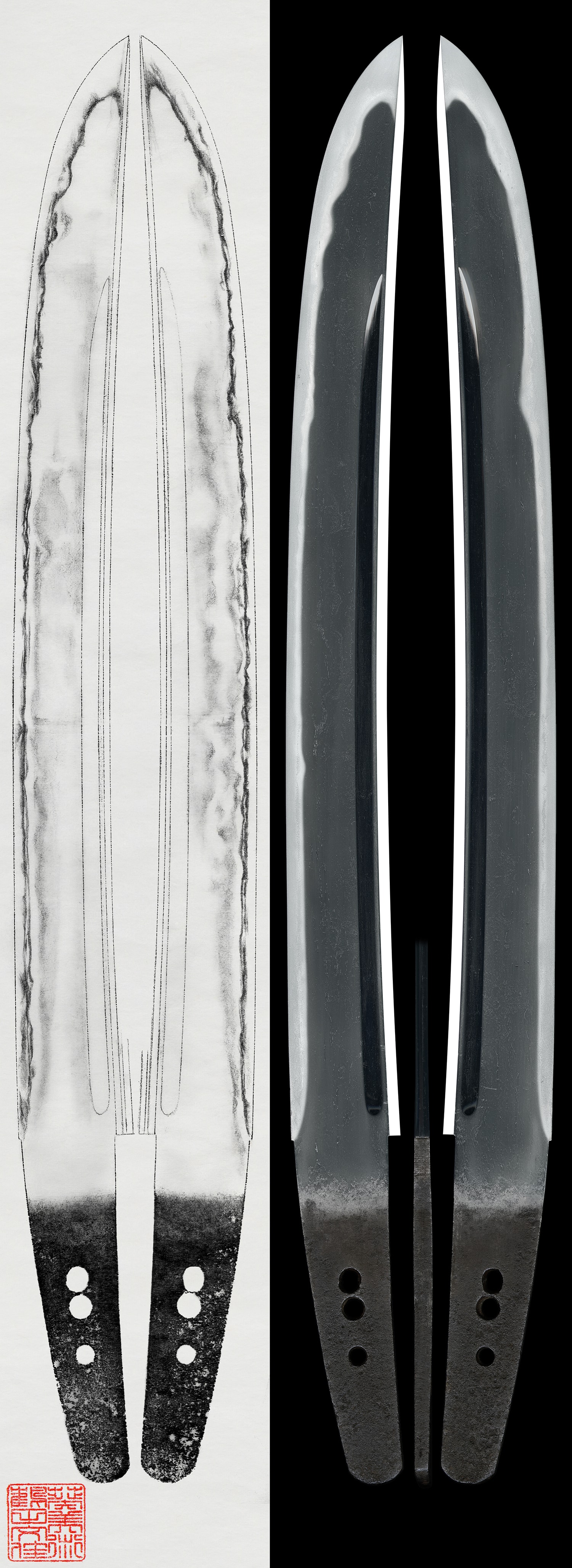
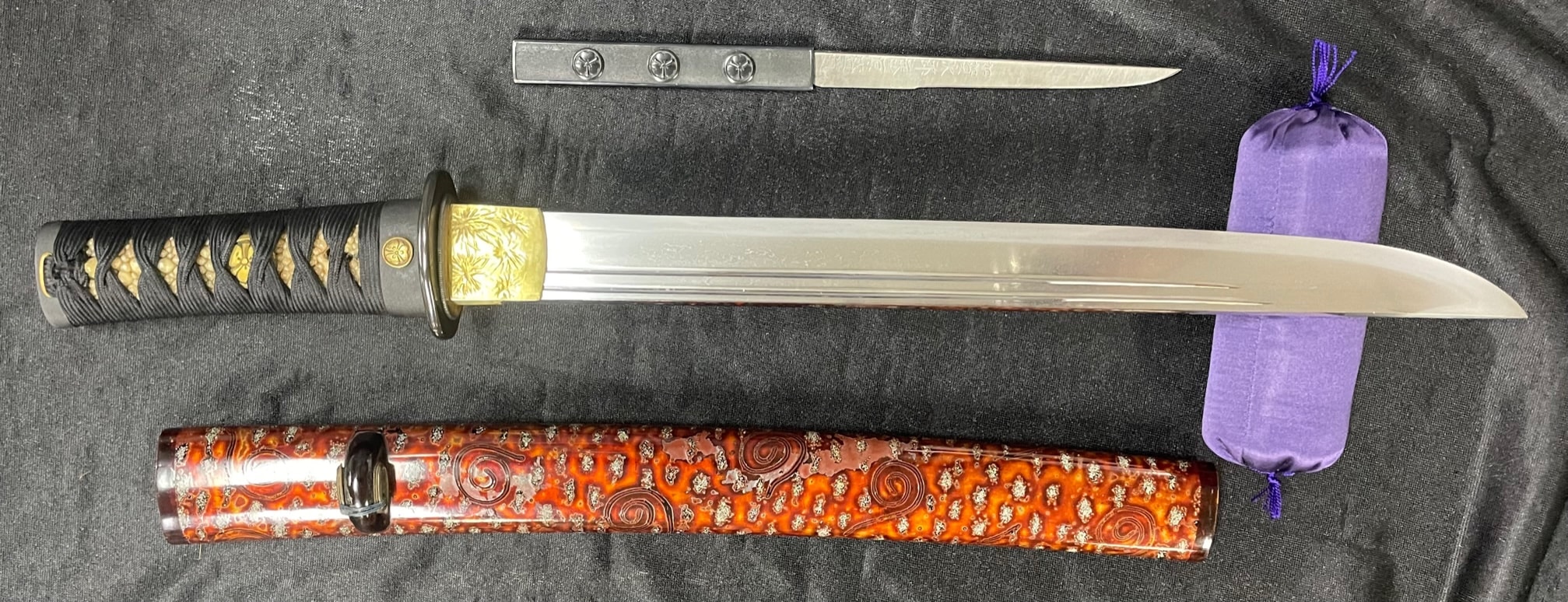
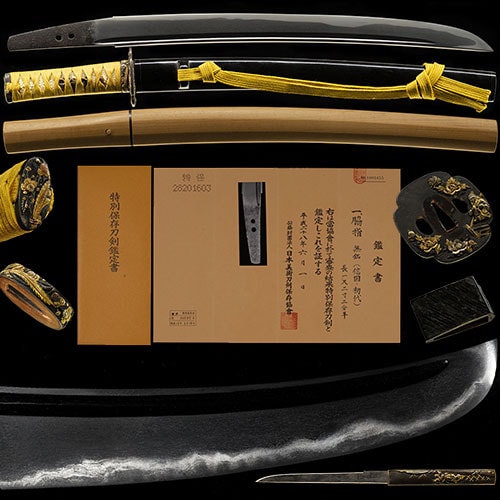
初代信国は来派了戒の孫で、貞宗に学び、五条堀川に住したと伝え、最も上手で、南北朝の京鍛治を代表する刀工である。信国派は、南北朝から室町初期にかけて大いに繁栄した。 この刀は、身幅広く3.1cmあり、ふくらつく豪壮な姿で、地沸が微塵につく詰んだ杢目肌に、地景入り、沸映りが立ち、浅くのたれて、小互の目交じり、足・葉よく入り、金筋・砂流し頻りに掛るなど刃中盛んに働き、匂口明るく冴える初代信国の傑作である。

図譜解説

Juyo-Token, 66th Session — Designated December 15, 2020 Wakizashi, mumei: Shodai Nobukuni (信国) Measurements Nagasa 42.3 cm, sori 2.1 cm Description Keijo: hira-zukuri with mitsu-mune; slightly sun-nobi; somewhat wide mihaba; moderate kasane; shallow sori. Kitae: itame-hada with areas of nagare and tsumi; the grain stands out; ji-nie adheres thickly, with abundant chikei. Hamon: notare mixed with ko-gunome; with a small amount of ashi; ko-nie-deki; the nioiguchi is bright. Boshi: shallow notare-komi; rounded at the point, with a rather long kaeri. Horimono: on both sides, bo-hi and soe-hi carved kaki-nagashi. Nakago: ubu; kurijiri; sujikai yasurime; one mekugi-ana; unsigned. Artisan Shodai Nobukuni (信国) Era Nanbokuchō period Explanation From old times, the first-generation Nobukuni has been said to have been a disciple of Sōshū Sadamune, and his era has traditionally been transmitted as the Kenmu period. However, among extant works there are no dated examples from Kenmu or its immediate vicinity, nor are there any works that can be inferred to go back so far; moreover, because the style of the earliest surviving Nobukuni blades—those bearing dates from the Bunwa and Jōji eras—connects directly with Sadamune, the prevailing view today is that the Enbun–Jōji period should be regarded as the time of the shodai. According to transmitted records, he is written as the son, or alternatively the grandson, of Ryōkai (son of Ryōhisa). Further, features such as the presence of suguha—a tradition of the Rai school—in works dated Enbun 3 and Kōan 1, and the tendency of the forging to show flowing areas regardless of whether the temper is straight or irregular, suggest the plausibility of such traditions. This wakizashi has the Nanbokuchō-period form characterized by slightly sun-nobi proportions, a wide width, and shallow curvature. In the jihada, the itame partially becomes flowing, thick ji-nie adheres, and chikei enters well; the hamon is notare mixed with small gunome, with finely appearing ashi. These features of both ji and ha demonstrate the characteristics of shodai Nobukuni, and thus the attribution is readily affirmed. The notare and the rounded boshi are tempered with refinement, and the nioiguchi is bright. Although simple, the bo-hi and soe-hi carved kaki-nagashi on both sides further display the highlights of this smith’s work, making this an example that fully presents his merits.
NihontoWatch MonNihontoWatch
MarketEncyclopediaKantei
刀剣›山城伝›信国›信國›初代信国 脇差 重要刀剣
脇差重要
信國

初代信国 脇差 重要刀剣

在銘 · 南北朝 · 長さ 39.8cm · 反り 0.6cm

売却済
信國 — 1 of 2
信國 — 2 of 2
1 / 2
1 / 2
信國 — 1 of 2信國 — 2 of 2
法量・詳細
刀工
信國
種別
脇差
流派
Nobukuni
活動期
1334–1338年頃(Kenmu ND)
国
山城
銘
在銘
法量
長さ 39.8cm反り 0.6cm元幅 3.1cm重ね 0.6cm重量 311g
説明

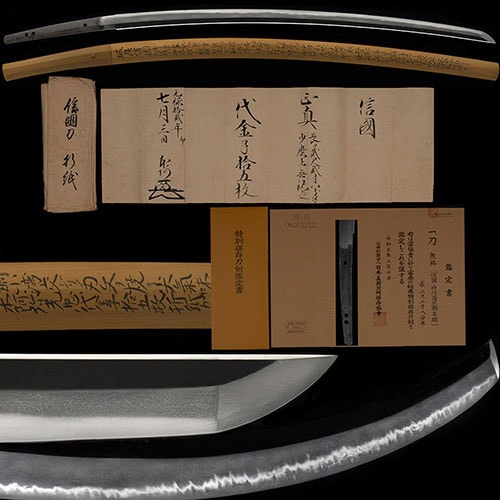
初代信国は来派了戒の孫で、貞宗に学び、五条堀川に住したと伝え、最も上手で、南北朝の京鍛治を代表する刀工である。信国派は、南北朝から室町初期にかけて大いに繁栄した。 この刀は、身幅広く3.1cmあり、ふくらつく豪壮な姿で、地沸が微塵につく詰んだ杢目肌に、地景入り、沸映りが立ち、浅くのたれて、小互の目交じり、足・葉よく入り、金筋・砂流し頻りに掛るなど刃中盛んに働き、匂口明るく冴える初代信国の傑作である。

NBTHK図譜解説

Juyo

AI翻訳 — 誤りが含まれる場合があります

Juyo-Token, 66th Session — Designated December 15, 2020

Wakizashi, mumei: Shodai Nobukuni (信国)

Measurements Nagasa 42.3 cm, sori 2.1 cm

Description Keijo: hira-zukuri with mitsu-mune; slightly sun-nobi; somewhat wide mihaba; moderate kasane; shallow sori. Kitae: itame-hada with areas of nagare and tsumi; the grain stands out; ji-nie adheres thickly, with abundant chikei. Hamon: notare mixed with ko-gunome; with a small amount of ashi; ko-nie-deki; the nioiguchi is bright. Boshi: shallow notare-komi; rounded at the point, with a rather long kaeri. Horimono: on both sides, bo-hi and soe-hi carved kaki-nagashi. Nakago: ubu; kurijiri; sujikai yasurime; one mekugi-ana; unsigned.

Artisan Shodai Nobukuni (信国)

Era Nanbokuchō period

Explanation From old times, the first-generation Nobukuni has been said to have been a disciple of Sōshū Sadamune, and his era has traditionally been transmitted as the Kenmu period. However, among extant works there are no dated examples from Kenmu or its immediate vicinity, nor are there any works that can be inferred to go back so far; moreover, because the style of the earliest surviving Nobukuni blades—those bearing dates from the Bunwa and Jōji eras—connects directly with Sadamune, the prevailing view today is that the Enbun–Jōji period should be regarded as the time of the shodai. According to transmitted records, he is written as the son, or alternatively the grandson, of Ryōkai (son of Ryōhisa). Further, features such as the presence of suguha—a tradition of the Rai school—in works dated Enbun 3 and Kōan 1, and the tendency of the forging to show flowing areas regardless of whether the temper is straight or irregular, suggest the plausibility of such traditions.

This wakizashi has the Nanbokuchō-period form characterized by slightly sun-nobi proportions, a wide width, and shallow curvature. In the jihada, the itame partially becomes flowing, thick ji-nie adheres, and chikei enters well; the hamon is notare mixed with small gunome, with finely appearing ashi. These features of both ji and ha demonstrate the characteristics of shodai Nobukuni, and thus the attribution is readily affirmed. The notare and the rounded boshi are tempered with refinement, and the nioiguchi is bright. Although simple, the bo-hi and soe-hi carved kaki-nagashi on both sides further display the highlights of this smith’s work, making this an example that fully presents his merits.
作者について

信國

山城伝 · 山城 · 1334-1338頃

刀剣大鑑 上位8%

現在2点販売中

›
信國の作 2点が現在販売中→
信國 — 詳細山城伝派
流派について

信国

山城伝 · 山城

現在33点販売中

›

信国派は山城国京都に興った名門で、その流れは南北朝時代に遡る。一派の祖と仰がれる信国は了戒系の京鍛冶で、血脈の上では来の伝統を承けながら、修業の上では相州貞宗の門に入って貞宗三哲の一人に数えられた。来の系譜と相州伝という二つの根がこの一門の作のすべてを導く。銘鑑は祖を建武に置くが、説明書はこれを繰り返し退ける。建武年間の作は残らず、現存最古の延文・貞治の年紀作が貞宗に直結することから、本会は延文・貞治の工をもって初代と見做す。南北朝の末期には永徳・至徳・明徳の代替りの信国が続き、同銘数工があったと見られる。室町初期には左衛門尉・式部丞を冠する応永信国が栄え、これを通常三代と数える。一派は後に豊前へ、さらに筑前へ移り、慶長の頃より明治初年まで福岡藩黒田家の抱え鍛冶として吉貞・吉政・吉次・吉包・重包の代々を出し、新々刀期まで栄えた。 一派に通う語法は、まず地鉄に現れる。鍛えは杢を交えた板目で、刃寄りに流れて柾となりやや肌立ち、地沸を厚くとり地景が頻りに入り、よくつんだ作には淡い沸映りが立つ。刃寄りに流れる鍛えは了戒系の所伝を首肯せしめる証とされ、厚い地沸と頻りの地景は貞宗に学んだ相州伝の痕跡として読まれる。刃文は文様の如何を問わず沸で焼かれ、砂流し・金筋が絶えず働き、匂口は明るい。その作域は二様を基とする。一つは来派の伝統を示した直刃で、中直刃・細直刃に小沸つき、細かにほつれ喰違刃・二重刃ごころを交えて京物の格調を伝える。いま一つは貞宗風ののたれ乱れで、小のたれに互の目・小互の目を交え、足・葉入り、沸厚く明るく、刃縁にほつれ湯走りがかかり、最も多く出会う作域をなす。帽子はのたれ込みまたは乱れ込んで小丸となり掃きかける。御家芸とも言うべき濃密な彫物も貞宗譲りで、梵字・素剣・護摩箸・三鈷剣・倶利迦羅を重ね彫りにし、刀身に八幡大菩薩の神号を切る作もあって、彫物によって一門を見分けうる。代を下ると差異が明瞭となる。南北朝末期の後代は一派に初めて太刀を生み、二様に加えて互の目主調の乱れ刃を新たに見せ、互の目が二つ宛連れたものを腰の低い小のたれで繋ぐ矢筈状の刃を見どころとする。応永信国は左衛門尉が「国」の字のクニ構えの中を左字に作る点を大きな鑑別点とし、直刃と互の目乱れの双方に冴えた沸を宿す。筑前に移った吉包・重包は相州伝の志向と、流れ肌の乱れ映りを伴う一派の丁子乱れとを高い技倆で並べ持ち、重包は名物写しの名手として石堂風に紛う華やかな丁子を、地沸・地景・刃中の沸の顕著さによって石堂と分かった。 鑑定の勘所は明快である。刃寄りに流れる柾がかった肌、厚い地沸と頻りの地景、沸で焼いた直刃と貞宗風ののたれ乱れ、重ね彫りの宗教彫物が一門を束ね、相州の同門とも後世の備前丁子とも分かつ拠りどころとなる。無銘極めも代の弁別も延文三年紀の作との照合によって決せられ、後代は連れ互の目と矢筈刃で、応永信国は逆字の銘で、筑前の工は流れ肌の乱れ映りで読み分けられる。藤代の極めは初代信国を上々作とし、後代から応永信国まで京古刀の上位に列し、筑前の吉包・重包は地方新刀の堅実な工として上作の評を得る。在銘作は祖において短刀・小脇指に限られて稀であり、それゆえ年紀のある後代の太刀・薙刀は何よりの好資料として貴ばれる。伝来は大名家と社寺に厚く、黒田家・浅野家・山内家・佐竹家らの蔵刀に加え、本願寺名物や富士山本宮浅間大社に奉納された式部丞の脇指がある。上位指定の多くは公私の蔵に秘められて市に現れず、在銘の信国が世に出ること自体が稀であって、現れた時は南北朝以来の山城物の蒐集で特筆すべき機会となる。 詳しく見る →

12名の刀工指定173口
主要刀工
刀工時代指定
信國1356-136170
信國1383-139233
信國1394-142844
吉包1661-16867
正信1356-13614
信国流派を見る →

歴史的背景

南北朝の戦乱は、山城の精緻を支えた公家社会を疲弊させた。来派最後の巨匠たちをもって古典の系譜は閉じ、長谷部と信国が新しい相州風を都に持ち込んでいる。

南北朝時代の山城 →

NBTHK鑑定書
Jūyō Tōken重要刀剣
Important Sword
›

特別保存刀剣の中から、特に出来が優れ、国認定の重要美術品に準ずると判断された名品です。年に一度の重要刀剣審査で選ばれます。

極めて選別的で、日本に登録された約250万口の刀剣のうち、重要刀剣に達したものは12,307口(約203口に1口)にすぎません。

NBTHKについて›

日本美術刀剣保存協会(NBTHK)は、1948年に設立され、文化庁の監督を受ける公益財団法人で、東京・刀剣博物館に本部を置きます。専門の審査員が出品作を直接審査し、美術的・歴史的価値に応じた鑑定書を発行します。NBTHKの鑑定書は、日本刀および刀装具の真正性を示す最も広く認知された基準です。

NBTHK公式サイト→
販売店
永
永楽堂
🇯🇵日本から発送
›
✓認証販売店eirakudo.shop
✓海外発送可✓英語対応銀行振込クレジットカード
返品ポリシー

商品発送後の返品・交換・キャンセルには、基本的に対応しておりません。商品に重大な瑕疵がある場合のみ、当サイトでご購入いただいた商品到着後3日以内であれば返品•交換が可能です。

永楽堂の出品一覧を見る→販売店サイトでこの商品を見る→

信國の他の作

すべて見る →
葵美術
重要
Wakizashi - Jūyō - by Nobukuni - 脇差:無銘(信国)(第54回重要刀剣)Wakizashi - Jūyō - by Nobukuni - 脇差:無銘(信国)(第54回重要刀剣)

脇差

作信國
34cm·南北朝
開始価格¥2,900,000
Nihonto Australia
Tanto - by Nobukuni - 信国 短刀 拵付(優品)Tanto - by Nobukuni - 信国 短刀 拵付(優品)

短刀

作信國
南北朝
お問い合わせ

信國の売約済み

永楽堂
特別保存
Wakizashi - Tokuho - by Nobukuni - 初代信国 脇差 特別保存刀剣Wakizashi - Tokuho - by Nobukuni - 初代信国 脇差 特別保存刀剣
売切れ

脇差

作信國
43.6cm·南北朝
売却済
Unique Japan
重要
Tanto - Jūyō - by Nobukuni - A SHODAI NOBUKUNI TANTO (信国)Tanto - Jūyō - by Nobukuni - A SHODAI NOBUKUNI TANTO (信国)
売切れ

短刀

作信國
28.7cm·Kenmu (1334-1338) ND
売却済
永楽堂
特別保存
Tanto - Tokuho - by Nobukuni - 初代信国 寸延短刀 特別保存刀剣Tanto - Tokuho - by Nobukuni - 初代信国 寸延短刀 特別保存刀剣
売切れ

短刀

作信國
37.2cm·南北朝
売却済
永楽堂
重要
Katana - Jūyō - by Nobukuni - 初代信国 刀 重要刀剣Katana - Jūyō - by Nobukuni - 初代信国 刀 重要刀剣
売切れ

刀

作信國
69.4cm·南北朝
売却済
永楽堂
特別保存
Wakizashi - Tokuho - by Nobukuni - 初代信国 脇差 特別保存刀剣Wakizashi - Tokuho - by Nobukuni - 初代信国 脇差 特別保存刀剣
売切れ

脇差

作信國
32.6cm·南北朝
売却済

信国派の作

すべて見る →
永楽堂
特別保存
Katana - Tokuho - by Nobukuni School - 信国 刀 特別保存刀剣Katana - Tokuho - by Nobukuni School - 信国 刀 特別保存刀剣

刀

作信国派
67.5cm·室町
¥1,200,000
Nihonto.com
重要
Wakizashi - Jūyō - by Nobukuni - 重要刀剣 脇差 式部丞信国 #110514Wakizashi - Jūyō - by Nobukuni - 重要刀剣 脇差 式部丞信国 #110514

脇差

作信國
44cm·Bunmei (1469-1487)
¥47,750
Tozando
保存
Wakizashi - Hozon - by Nobukuni - 日本刀分譲 - 古刀 脇差 - 信国 NBTHK保存刀剣鑑定書付|東山堂Wakizashi - Hozon - by Nobukuni - 日本刀分譲 - 古刀 脇差 - 信国 NBTHK保存刀剣鑑定書付|東山堂

脇差

作信國
42.7cm·室町
¥500,000
矢澤商会
特別保存
Tanto - Tokuho - by Nobukuni School - 特別保存刀剣 山村正信 南北朝時代後期 短刀 刃渡り27.5cm 無銘 平造りTanto - Tokuho - by Nobukuni School - 特別保存刀剣 山村正信 南北朝時代後期 短刀 刃渡り27.5cm 無銘 平造り

短刀

作信国派
27.5cm·南北朝
¥300,000
Yakiba
特別保存
Tanto - Tokuho - by Nobukuni School - 信国 短刀Tanto - Tokuho - by Nobukuni School - 信国 短刀

短刀

作信国派
30cm·南北朝
¥7,500
刀剣杉田
重要
Katana - Jūyō - by Nobukuni School - 筑州住源信國吉包(筑前) 以南蛮鉄作之 (第23回重要刀剣)Katana - Jūyō - by Nobukuni School - 筑州住源信國吉包(筑前) 以南蛮鉄作之 (第23回重要刀剣)

刀

作信国派
71.1cm·Kanbun (1661-1673)
¥6,800,000
刀心
特別保存
Naginata - Tokuho - by Nobukuni Yoshimasa - 源信国平四郎吉政 6-093Naginata - Tokuho - by Nobukuni Yoshimasa - 源信国平四郎吉政 6-093

薙刀

作吉政
43.71cm·Kanbun (1661-1673)
¥550,000
刀心
保存
Tanto - Hozon - by Nobukuni School - 無銘(信国) 4-283Tanto - Hozon - by Nobukuni School - 無銘(信国) 4-283

短刀

作信国派
24.5cm·南北朝
¥550,000

山城の伝統

すべて見る →
銀座長州屋
重要
Tanto - Jūyō - by Rai Kunitoshi - 短刀 銘 来國俊Tanto - Jūyō - by Rai Kunitoshi - 短刀 銘 来國俊

短刀

作國俊
23.27cm·鎌倉
お問い合わせ
コレクション情報
特重
Katana - Tokuju - by Awataguchi Kuniyoshi - 刀 無銘(伝粟田口国吉)Katana - Tokuju - by Awataguchi Kuniyoshi - 刀 無銘(伝粟田口国吉)

刀

作國吉
79.5cm·鎌倉
お問い合わせ
矢澤商会
特別保存
Tachi - Tokuho - by Rai Kuniyuki - 【委託】来国行(特別保存)鎌倉時代中期 刃渡り69.7cm 反り1.9cm 白鞘入り太刀拵付きTachi - Tokuho - by Rai Kuniyuki - 【委託】来国行(特別保存)鎌倉時代中期 刃渡り69.7cm 反り1.9cm 白鞘入り太刀拵付き

太刀

作國行
69.7cm·Shogen (1259-1260)
¥3,000,000
丸英刀剣
保存
Tanto - Hozon - by Heianjo Nagayoshi - 短刀 平安城長吉作Tanto - Hozon - by Heianjo Nagayoshi - 短刀 平安城長吉作

短刀

作長吉
16.7cm·室町
¥1,350,000
永楽堂
重要
Tachi - Jūyō - by Ayanokoji Sadatoshi - 定利 太刀 重要刀剣Tachi - Jūyō - by Ayanokoji Sadatoshi - 定利 太刀 重要刀剣

太刀

作定利
72.6cm·鎌倉
¥7,700,000
銀座長州屋
特別保存
Tanto - Tokuho - by Rai Kunitoshi - 短刀 銘 来國俊Tanto - Tokuho - by Rai Kunitoshi - 短刀 銘 来國俊

短刀

作國俊
21.1cm·鎌倉
¥4,300,000
銀座長州屋
特別保存
Katana - Tokuho - by Enju Kunitoki - 金粉銘 國時 本阿(光遜花押)Katana - Tokuho - by Enju Kunitoki - 金粉銘 國時 本阿(光遜花押)

刀

作國時
67.78cm·南北朝
¥2,700,000
永楽堂
重要
Katana - Jūyō - by Rai Kunimitsu - 来国光 刀 重要刀剣Katana - Jūyō - by Rai Kunimitsu - 来国光 刀 重要刀剣

刀

作國光
71.2cm·南北朝
¥7,800,000

刀剣

  • 刀
  • 脇差
  • 短刀
  • 太刀
  • 薙刀
  • 槍

刀装具

  • 鍔
  • 縁頭
  • 小柄
  • 目貫

甲冑武具

  • 兜
  • 甲冑

鑑定別

  • 特重
  • 重要
  • 特別保存
  • 保存

リソース

  • 刀剣商一覧
  • 刀工一覧
  • 誌上鑑定
  • すべて見る
Nihontowatch© 2026
利用規約プライバシーCookie運営者情報

説明

初代信国は来派了戒の孫で、貞宗に学び、五条堀川に住したと伝え、最も上手で、南北朝の京鍛治を代表する刀工である。信国派は、南北朝から室町初期にかけて大いに繁栄した。 この刀は、身幅広く3.1cmあり、ふくらつく豪壮な姿で、地沸が微塵につく詰んだ杢目肌に、地景入り、沸映りが立ち、浅くのたれて、小互の目交じり、足・葉よく入り、金筋・砂流し頻りに掛るなど刃中盛んに働き、匂口明るく冴える初代信国の傑作である。

図譜解説

Juyo-Token, 66th Session — Designated December 15, 2020 Wakizashi, mumei: Shodai Nobukuni (信国) Measurements Nagasa 42.3 cm, sori 2.1 cm Description Keijo: hira-zukuri with mitsu-mune; slightly sun-nobi; somewhat wide mihaba; moderate kasane; shallow sori. Kitae: itame-hada with areas of nagare and tsumi; the grain stands out; ji-nie adheres thickly, with abundant chikei. Hamon: notare mixed with ko-gunome; with a small amount of ashi; ko-nie-deki; the nioiguchi is bright. Boshi: shallow notare-komi; rounded at the point, with a rather long kaeri. Horimono: on both sides, bo-hi and soe-hi carved kaki-nagashi. Nakago: ubu; kurijiri; sujikai yasurime; one mekugi-ana; unsigned. Artisan Shodai Nobukuni (信国) Era Nanbokuchō period Explanation From old times, the first-generation Nobukuni has been said to have been a disciple of Sōshū Sadamune, and his era has traditionally been transmitted as the Kenmu period. However, among extant works there are no dated examples from Kenmu or its immediate vicinity, nor are there any works that can be inferred to go back so far; moreover, because the style of the earliest surviving Nobukuni blades—those bearing dates from the Bunwa and Jōji eras—connects directly with Sadamune, the prevailing view today is that the Enbun–Jōji period should be regarded as the time of the shodai. According to transmitted records, he is written as the son, or alternatively the grandson, of Ryōkai (son of Ryōhisa). Further, features such as the presence of suguha—a tradition of the Rai school—in works dated Enbun 3 and Kōan 1, and the tendency of the forging to show flowing areas regardless of whether the temper is straight or irregular, suggest the plausibility of such traditions. This wakizashi has the Nanbokuchō-period form characterized by slightly sun-nobi proportions, a wide width, and shallow curvature. In the jihada, the itame partially becomes flowing, thick ji-nie adheres, and chikei enters well; the hamon is notare mixed with small gunome, with finely appearing ashi. These features of both ji and ha demonstrate the characteristics of shodai Nobukuni, and thus the attribution is readily affirmed. The notare and the rounded boshi are tempered with refinement, and the nioiguchi is bright. Although simple, the bo-hi and soe-hi carved kaki-nagashi on both sides further display the highlights of this smith’s work, making this an example that fully presents his merits.
NihontoWatch MonNihontoWatch
MarketEncyclopediaKantei
刀剣›山城伝›信国›信國›初代信国 脇差 重要刀剣
脇差重要
信國

初代信国 脇差 重要刀剣

在銘 · 南北朝 · 長さ 39.8cm · 反り 0.6cm

売却済
信國 — 1 of 2
信國 — 2 of 2
1 / 2
1 / 2
信國 — 1 of 2信國 — 2 of 2
法量・詳細
刀工
信國
種別
脇差
流派
Nobukuni
活動期
1334–1338年頃(Kenmu ND)
国
山城
銘
在銘
法量
長さ 39.8cm反り 0.6cm元幅 3.1cm重ね 0.6cm重量 311g
説明

初代信国は来派了戒の孫で、貞宗に学び、五条堀川に住したと伝え、最も上手で、南北朝の京鍛治を代表する刀工である。信国派は、南北朝から室町初期にかけて大いに繁栄した。 この刀は、身幅広く3.1cmあり、ふくらつく豪壮な姿で、地沸が微塵につく詰んだ杢目肌に、地景入り、沸映りが立ち、浅くのたれて、小互の目交じり、足・葉よく入り、金筋・砂流し頻りに掛るなど刃中盛んに働き、匂口明るく冴える初代信国の傑作である。

NBTHK図譜解説

Juyo

AI翻訳 — 誤りが含まれる場合があります

Juyo-Token, 66th Session — Designated December 15, 2020

Wakizashi, mumei: Shodai Nobukuni (信国)

Measurements Nagasa 42.3 cm, sori 2.1 cm

Description Keijo: hira-zukuri with mitsu-mune; slightly sun-nobi; somewhat wide mihaba; moderate kasane; shallow sori. Kitae: itame-hada with areas of nagare and tsumi; the grain stands out; ji-nie adheres thickly, with abundant chikei. Hamon: notare mixed with ko-gunome; with a small amount of ashi; ko-nie-deki; the nioiguchi is bright. Boshi: shallow notare-komi; rounded at the point, with a rather long kaeri. Horimono: on both sides, bo-hi and soe-hi carved kaki-nagashi. Nakago: ubu; kurijiri; sujikai yasurime; one mekugi-ana; unsigned.

Artisan Shodai Nobukuni (信国)

Era Nanbokuchō period

Explanation From old times, the first-generation Nobukuni has been said to have been a disciple of Sōshū Sadamune, and his era has traditionally been transmitted as the Kenmu period. However, among extant works there are no dated examples from Kenmu or its immediate vicinity, nor are there any works that can be inferred to go back so far; moreover, because the style of the earliest surviving Nobukuni blades—those bearing dates from the Bunwa and Jōji eras—connects directly with Sadamune, the prevailing view today is that the Enbun–Jōji period should be regarded as the time of the shodai. According to transmitted records, he is written as the son, or alternatively the grandson, of Ryōkai (son of Ryōhisa). Further, features such as the presence of suguha—a tradition of the Rai school—in works dated Enbun 3 and Kōan 1, and the tendency of the forging to show flowing areas regardless of whether the temper is straight or irregular, suggest the plausibility of such traditions.

This wakizashi has the Nanbokuchō-period form characterized by slightly sun-nobi proportions, a wide width, and shallow curvature. In the jihada, the itame partially becomes flowing, thick ji-nie adheres, and chikei enters well; the hamon is notare mixed with small gunome, with finely appearing ashi. These features of both ji and ha demonstrate the characteristics of shodai Nobukuni, and thus the attribution is readily affirmed. The notare and the rounded boshi are tempered with refinement, and the nioiguchi is bright. Although simple, the bo-hi and soe-hi carved kaki-nagashi on both sides further display the highlights of this smith’s work, making this an example that fully presents his merits.
作者について

信國

山城伝 · 山城 · 1334-1338頃

刀剣大鑑 上位8%

現在2点販売中

›
信國の作 2点が現在販売中→
信國 — 詳細山城伝派
流派について

信国

山城伝 · 山城

現在33点販売中

›

信国派は山城国京都に興った名門で、その流れは南北朝時代に遡る。一派の祖と仰がれる信国は了戒系の京鍛冶で、血脈の上では来の伝統を承けながら、修業の上では相州貞宗の門に入って貞宗三哲の一人に数えられた。来の系譜と相州伝という二つの根がこの一門の作のすべてを導く。銘鑑は祖を建武に置くが、説明書はこれを繰り返し退ける。建武年間の作は残らず、現存最古の延文・貞治の年紀作が貞宗に直結することから、本会は延文・貞治の工をもって初代と見做す。南北朝の末期には永徳・至徳・明徳の代替りの信国が続き、同銘数工があったと見られる。室町初期には左衛門尉・式部丞を冠する応永信国が栄え、これを通常三代と数える。一派は後に豊前へ、さらに筑前へ移り、慶長の頃より明治初年まで福岡藩黒田家の抱え鍛冶として吉貞・吉政・吉次・吉包・重包の代々を出し、新々刀期まで栄えた。 一派に通う語法は、まず地鉄に現れる。鍛えは杢を交えた板目で、刃寄りに流れて柾となりやや肌立ち、地沸を厚くとり地景が頻りに入り、よくつんだ作には淡い沸映りが立つ。刃寄りに流れる鍛えは了戒系の所伝を首肯せしめる証とされ、厚い地沸と頻りの地景は貞宗に学んだ相州伝の痕跡として読まれる。刃文は文様の如何を問わず沸で焼かれ、砂流し・金筋が絶えず働き、匂口は明るい。その作域は二様を基とする。一つは来派の伝統を示した直刃で、中直刃・細直刃に小沸つき、細かにほつれ喰違刃・二重刃ごころを交えて京物の格調を伝える。いま一つは貞宗風ののたれ乱れで、小のたれに互の目・小互の目を交え、足・葉入り、沸厚く明るく、刃縁にほつれ湯走りがかかり、最も多く出会う作域をなす。帽子はのたれ込みまたは乱れ込んで小丸となり掃きかける。御家芸とも言うべき濃密な彫物も貞宗譲りで、梵字・素剣・護摩箸・三鈷剣・倶利迦羅を重ね彫りにし、刀身に八幡大菩薩の神号を切る作もあって、彫物によって一門を見分けうる。代を下ると差異が明瞭となる。南北朝末期の後代は一派に初めて太刀を生み、二様に加えて互の目主調の乱れ刃を新たに見せ、互の目が二つ宛連れたものを腰の低い小のたれで繋ぐ矢筈状の刃を見どころとする。応永信国は左衛門尉が「国」の字のクニ構えの中を左字に作る点を大きな鑑別点とし、直刃と互の目乱れの双方に冴えた沸を宿す。筑前に移った吉包・重包は相州伝の志向と、流れ肌の乱れ映りを伴う一派の丁子乱れとを高い技倆で並べ持ち、重包は名物写しの名手として石堂風に紛う華やかな丁子を、地沸・地景・刃中の沸の顕著さによって石堂と分かった。 鑑定の勘所は明快である。刃寄りに流れる柾がかった肌、厚い地沸と頻りの地景、沸で焼いた直刃と貞宗風ののたれ乱れ、重ね彫りの宗教彫物が一門を束ね、相州の同門とも後世の備前丁子とも分かつ拠りどころとなる。無銘極めも代の弁別も延文三年紀の作との照合によって決せられ、後代は連れ互の目と矢筈刃で、応永信国は逆字の銘で、筑前の工は流れ肌の乱れ映りで読み分けられる。藤代の極めは初代信国を上々作とし、後代から応永信国まで京古刀の上位に列し、筑前の吉包・重包は地方新刀の堅実な工として上作の評を得る。在銘作は祖において短刀・小脇指に限られて稀であり、それゆえ年紀のある後代の太刀・薙刀は何よりの好資料として貴ばれる。伝来は大名家と社寺に厚く、黒田家・浅野家・山内家・佐竹家らの蔵刀に加え、本願寺名物や富士山本宮浅間大社に奉納された式部丞の脇指がある。上位指定の多くは公私の蔵に秘められて市に現れず、在銘の信国が世に出ること自体が稀であって、現れた時は南北朝以来の山城物の蒐集で特筆すべき機会となる。 詳しく見る →

12名の刀工指定173口
主要刀工
刀工時代指定
信國1356-136170
信國1383-139233
信國1394-142844
吉包1661-16867
正信1356-13614
信国流派を見る →

歴史的背景

南北朝の戦乱は、山城の精緻を支えた公家社会を疲弊させた。来派最後の巨匠たちをもって古典の系譜は閉じ、長谷部と信国が新しい相州風を都に持ち込んでいる。

南北朝時代の山城 →

NBTHK鑑定書
Jūyō Tōken重要刀剣
Important Sword
›

特別保存刀剣の中から、特に出来が優れ、国認定の重要美術品に準ずると判断された名品です。年に一度の重要刀剣審査で選ばれます。

極めて選別的で、日本に登録された約250万口の刀剣のうち、重要刀剣に達したものは12,307口(約203口に1口)にすぎません。

NBTHKについて›

日本美術刀剣保存協会(NBTHK)は、1948年に設立され、文化庁の監督を受ける公益財団法人で、東京・刀剣博物館に本部を置きます。専門の審査員が出品作を直接審査し、美術的・歴史的価値に応じた鑑定書を発行します。NBTHKの鑑定書は、日本刀および刀装具の真正性を示す最も広く認知された基準です。

NBTHK公式サイト→
販売店
永
永楽堂
🇯🇵日本から発送
›
✓認証販売店eirakudo.shop
✓海外発送可✓英語対応銀行振込クレジットカード
返品ポリシー

商品発送後の返品・交換・キャンセルには、基本的に対応しておりません。商品に重大な瑕疵がある場合のみ、当サイトでご購入いただいた商品到着後3日以内であれば返品•交換が可能です。

永楽堂の出品一覧を見る→販売店サイトでこの商品を見る→

信國の他の作

すべて見る →
葵美術
重要
Wakizashi - Jūyō - by Nobukuni - 脇差:無銘(信国)(第54回重要刀剣)Wakizashi - Jūyō - by Nobukuni - 脇差:無銘(信国)(第54回重要刀剣)

脇差

作信國
34cm·南北朝
開始価格¥2,900,000
Nihonto Australia
Tanto - by Nobukuni - 信国 短刀 拵付(優品)Tanto - by Nobukuni - 信国 短刀 拵付(優品)

短刀

作信國
南北朝
お問い合わせ

信國の売約済み

永楽堂
特別保存
Wakizashi - Tokuho - by Nobukuni - 初代信国 脇差 特別保存刀剣Wakizashi - Tokuho - by Nobukuni - 初代信国 脇差 特別保存刀剣
売切れ

脇差

作信國
43.6cm·南北朝
売却済
Unique Japan
重要
Tanto - Jūyō - by Nobukuni - A SHODAI NOBUKUNI TANTO (信国)Tanto - Jūyō - by Nobukuni - A SHODAI NOBUKUNI TANTO (信国)
売切れ

短刀

作信國
28.7cm·Kenmu (1334-1338) ND
売却済
永楽堂
特別保存
Tanto - Tokuho - by Nobukuni - 初代信国 寸延短刀 特別保存刀剣Tanto - Tokuho - by Nobukuni - 初代信国 寸延短刀 特別保存刀剣
売切れ

短刀

作信國
37.2cm·南北朝
売却済
永楽堂
重要
Katana - Jūyō - by Nobukuni - 初代信国 刀 重要刀剣Katana - Jūyō - by Nobukuni - 初代信国 刀 重要刀剣
売切れ

刀

作信國
69.4cm·南北朝
売却済
永楽堂
特別保存
Wakizashi - Tokuho - by Nobukuni - 初代信国 脇差 特別保存刀剣Wakizashi - Tokuho - by Nobukuni - 初代信国 脇差 特別保存刀剣
売切れ

脇差

作信國
32.6cm·南北朝
売却済

信国派の作

すべて見る →
永楽堂
特別保存
Katana - Tokuho - by Nobukuni School - 信国 刀 特別保存刀剣Katana - Tokuho - by Nobukuni School - 信国 刀 特別保存刀剣

刀

作信国派
67.5cm·室町
¥1,200,000
Nihonto.com
重要
Wakizashi - Jūyō - by Nobukuni - 重要刀剣 脇差 式部丞信国 #110514Wakizashi - Jūyō - by Nobukuni - 重要刀剣 脇差 式部丞信国 #110514

脇差

作信國
44cm·Bunmei (1469-1487)
¥47,750
Tozando
保存
Wakizashi - Hozon - by Nobukuni - 日本刀分譲 - 古刀 脇差 - 信国 NBTHK保存刀剣鑑定書付|東山堂Wakizashi - Hozon - by Nobukuni - 日本刀分譲 - 古刀 脇差 - 信国 NBTHK保存刀剣鑑定書付|東山堂

脇差

作信國
42.7cm·室町
¥500,000
矢澤商会
特別保存
Tanto - Tokuho - by Nobukuni School - 特別保存刀剣 山村正信 南北朝時代後期 短刀 刃渡り27.5cm 無銘 平造りTanto - Tokuho - by Nobukuni School - 特別保存刀剣 山村正信 南北朝時代後期 短刀 刃渡り27.5cm 無銘 平造り

短刀

作信国派
27.5cm·南北朝
¥300,000
Yakiba
特別保存
Tanto - Tokuho - by Nobukuni School - 信国 短刀Tanto - Tokuho - by Nobukuni School - 信国 短刀

短刀

作信国派
30cm·南北朝
¥7,500
刀剣杉田
重要
Katana - Jūyō - by Nobukuni School - 筑州住源信國吉包(筑前) 以南蛮鉄作之 (第23回重要刀剣)Katana - Jūyō - by Nobukuni School - 筑州住源信國吉包(筑前) 以南蛮鉄作之 (第23回重要刀剣)

刀

作信国派
71.1cm·Kanbun (1661-1673)
¥6,800,000
刀心
特別保存
Naginata - Tokuho - by Nobukuni Yoshimasa - 源信国平四郎吉政 6-093Naginata - Tokuho - by Nobukuni Yoshimasa - 源信国平四郎吉政 6-093

薙刀

作吉政
43.71cm·Kanbun (1661-1673)
¥550,000
刀心
保存
Tanto - Hozon - by Nobukuni School - 無銘(信国) 4-283Tanto - Hozon - by Nobukuni School - 無銘(信国) 4-283

短刀

作信国派
24.5cm·南北朝
¥550,000

山城の伝統

すべて見る →
銀座長州屋
重要
Tanto - Jūyō - by Rai Kunitoshi - 短刀 銘 来國俊Tanto - Jūyō - by Rai Kunitoshi - 短刀 銘 来國俊

短刀

作國俊
23.27cm·鎌倉
お問い合わせ
コレクション情報
特重
Katana - Tokuju - by Awataguchi Kuniyoshi - 刀 無銘(伝粟田口国吉)Katana - Tokuju - by Awataguchi Kuniyoshi - 刀 無銘(伝粟田口国吉)

刀

作國吉
79.5cm·鎌倉
お問い合わせ
矢澤商会
特別保存
Tachi - Tokuho - by Rai Kuniyuki - 【委託】来国行(特別保存)鎌倉時代中期 刃渡り69.7cm 反り1.9cm 白鞘入り太刀拵付きTachi - Tokuho - by Rai Kuniyuki - 【委託】来国行(特別保存)鎌倉時代中期 刃渡り69.7cm 反り1.9cm 白鞘入り太刀拵付き

太刀

作國行
69.7cm·Shogen (1259-1260)
¥3,000,000
丸英刀剣
保存
Tanto - Hozon - by Heianjo Nagayoshi - 短刀 平安城長吉作Tanto - Hozon - by Heianjo Nagayoshi - 短刀 平安城長吉作

短刀

作長吉
16.7cm·室町
¥1,350,000
永楽堂
重要
Tachi - Jūyō - by Ayanokoji Sadatoshi - 定利 太刀 重要刀剣Tachi - Jūyō - by Ayanokoji Sadatoshi - 定利 太刀 重要刀剣

太刀

作定利
72.6cm·鎌倉
¥7,700,000
銀座長州屋
特別保存
Tanto - Tokuho - by Rai Kunitoshi - 短刀 銘 来國俊Tanto - Tokuho - by Rai Kunitoshi - 短刀 銘 来國俊

短刀

作國俊
21.1cm·鎌倉
¥4,300,000
銀座長州屋
特別保存
Katana - Tokuho - by Enju Kunitoki - 金粉銘 國時 本阿(光遜花押)Katana - Tokuho - by Enju Kunitoki - 金粉銘 國時 本阿(光遜花押)

刀

作國時
67.78cm·南北朝
¥2,700,000
永楽堂
重要
Katana - Jūyō - by Rai Kunimitsu - 来国光 刀 重要刀剣Katana - Jūyō - by Rai Kunimitsu - 来国光 刀 重要刀剣

刀

作國光
71.2cm·南北朝
¥7,800,000

刀剣

  • 刀
  • 脇差
  • 短刀
  • 太刀
  • 薙刀
  • 槍

刀装具

  • 鍔
  • 縁頭
  • 小柄
  • 目貫

甲冑武具

  • 兜
  • 甲冑

鑑定別

  • 特重
  • 重要
  • 特別保存
  • 保存

リソース

  • 刀剣商一覧
  • 刀工一覧
  • 誌上鑑定
  • すべて見る
Nihontowatch© 2026
利用規約プライバシーCookie運営者情報
NihontoWatch Mon

NihontoWatch

マーケット
事典
鑑定
NihontoWatch Mon

NihontoWatch

マーケット
事典
鑑定