三人の天下人が戦国の世紀を終わらせ、刀は新しい秩序の道具となった。1588年の刀狩は刀を武士の標章とし、名刀は条約のごとく家々の間を行き交い、鑑定は以後この境で古刀と新刀を分かつ。
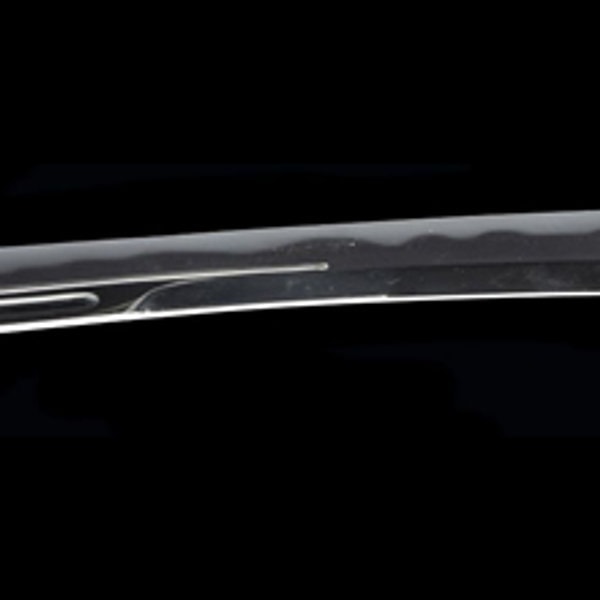
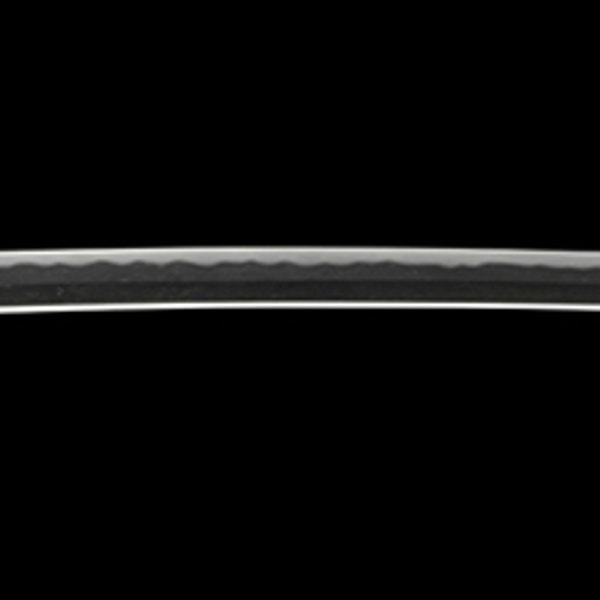
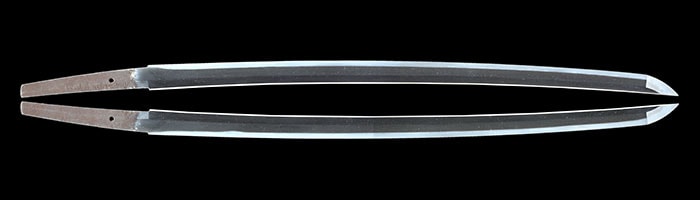
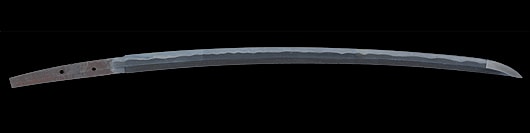
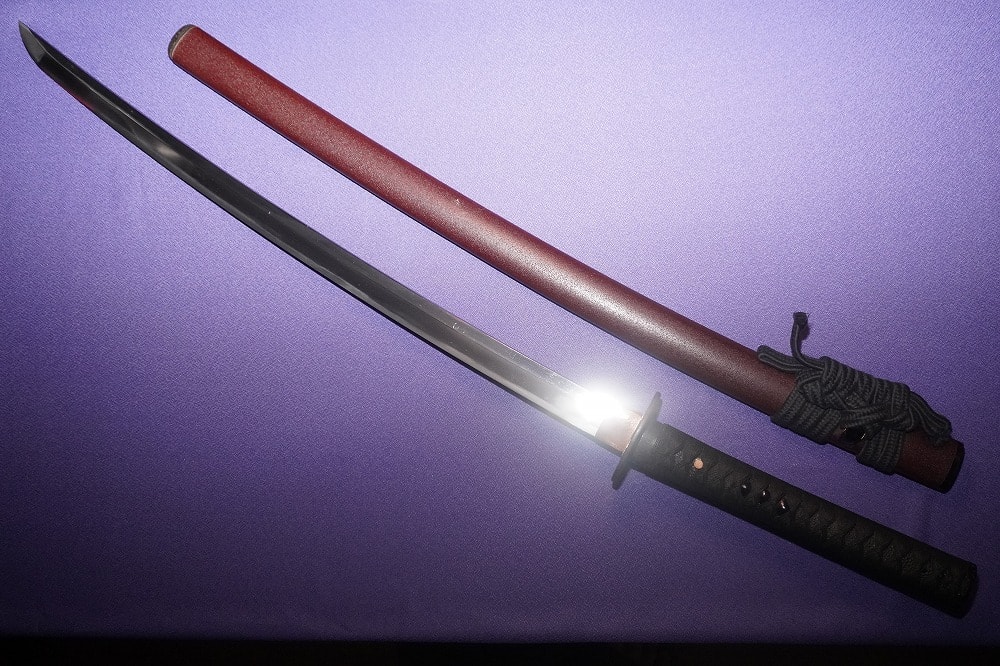
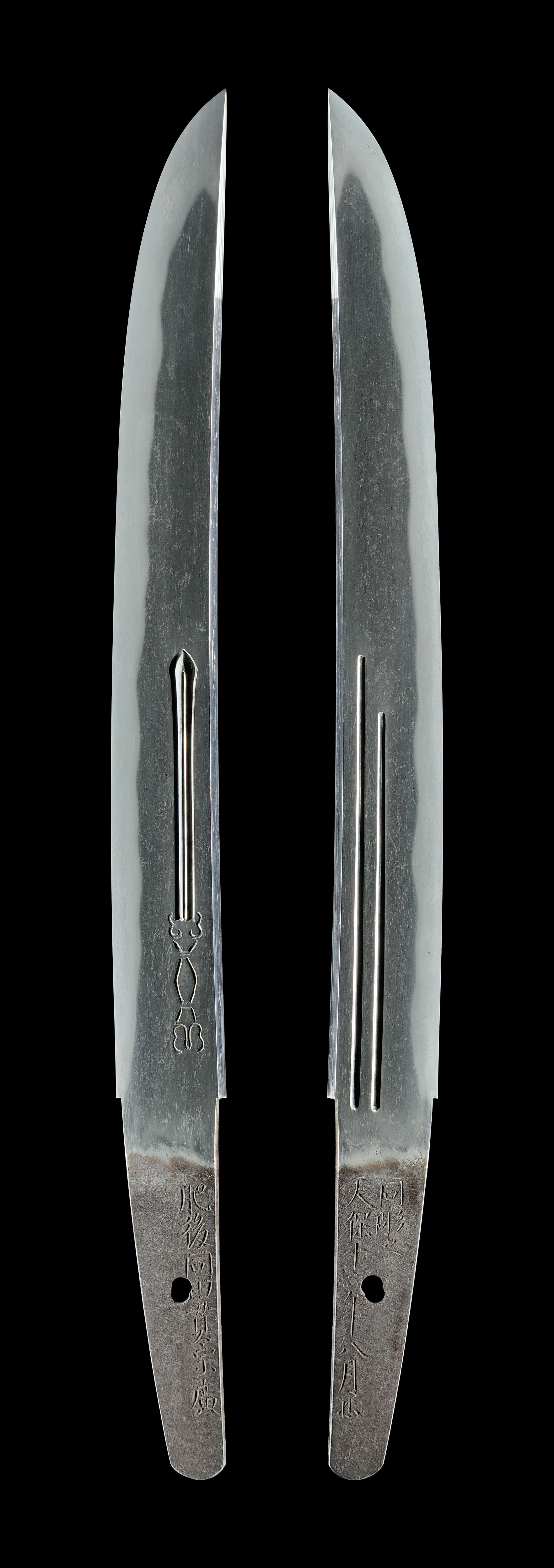
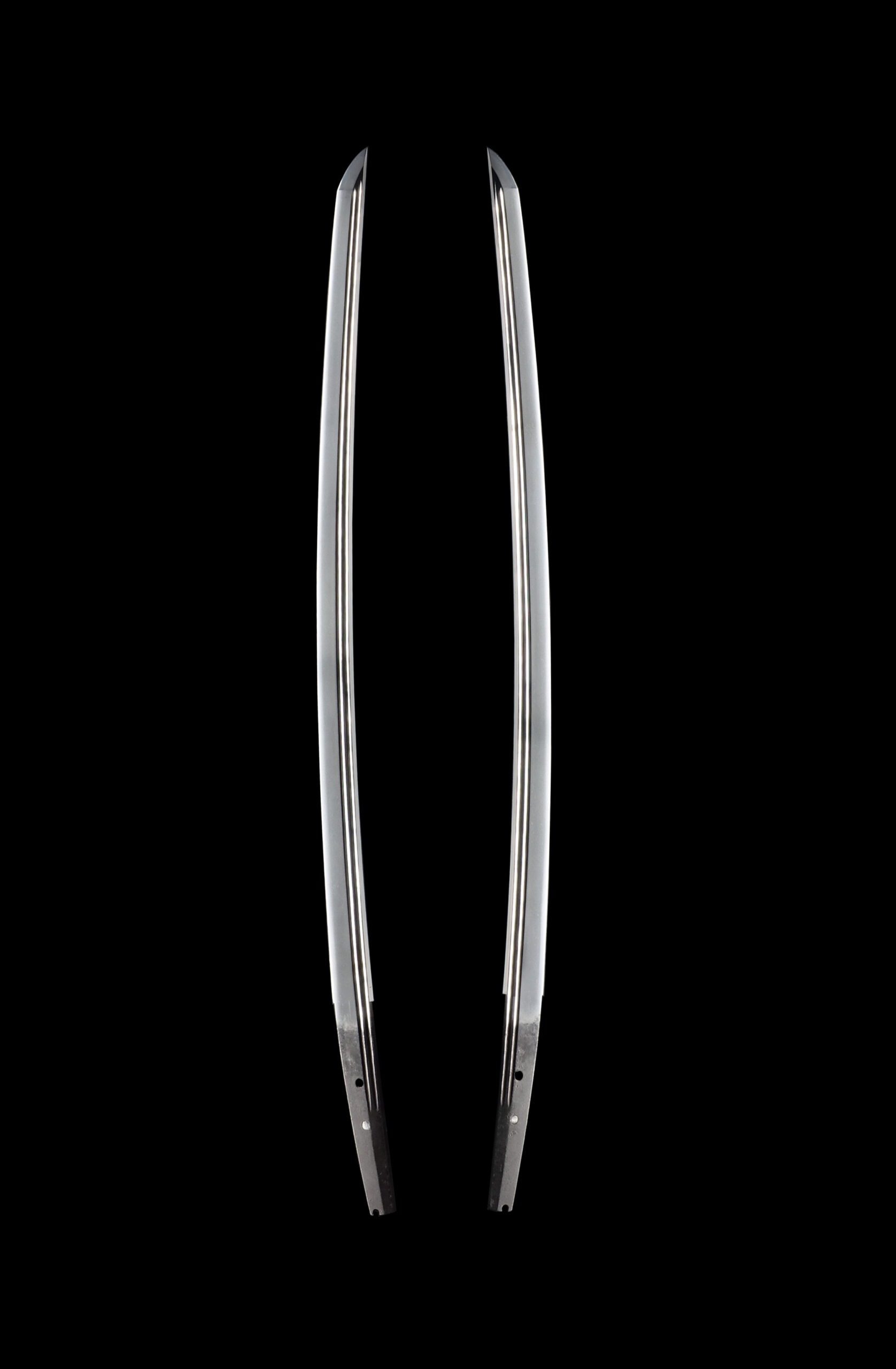
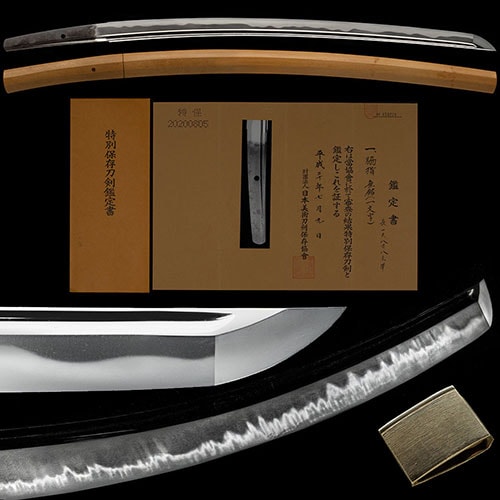
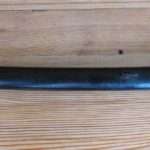
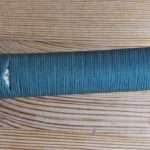
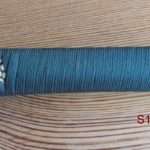
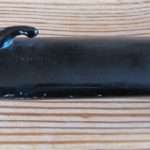
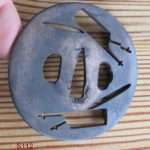
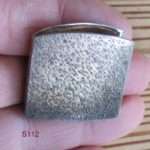
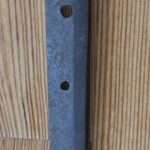
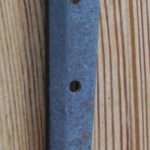
S112. Daito signed tachi mei in interesting, unusual mounts.Nagasa: 26 3/16′′ 66.7 cmNakago nagasa: 8 1/16′′ 20.4 cmSori: 9/16′′ 1.3 cmMoto haba: 1 1/8′′ 2.8 cmMoto kasane: 1/4′′ .55 cmSaki haba: 1.9 cmSaki kasane: .35 cmThe top half of a Kanji still hangs on the end of the o-suriage nakago. The hamon is suguba worked in shallow notare and very fine hataraki in ko-nie: suangashi and the like. The boshi is ko-maru with a short kaeri. The hada is itame/mokume with areas of larger hada. There is a small fukure near the kissaki on the tachi omote (pictured) and some small pin prick pits here and there. There are no chips in the edge, ha giri, nioi giri, or ware’; for the most part this is quite healthy.The saya is 100% intact (no lacqer loss) with horn ko jiri, koi guchi, kurikata, and kaeri zumi. The tsuba is shakudo sukashi and unfortunately some bone brain has abrasively cleaned it; it needs to be repatinated. There is a very nice silver foil habaki. Fuchi and kashira are plain iron. The tsuka is wrapped without menuki over lacquered same’. The koshirae puts me in mind of Satsuma.A friend and serious student of the sword has just sent me this, which I will include unedited.“Just my two cents, your tachi mei sword is most interesting. I am sure it is late ( Tenmon) koto, which swords became curved, sakizori and long. The kanji is the first of Kozure no Suke, therefore it is a Higo Dotanuki sword. ( lone wolf and cub)The koshirae is a Edo copy of the Tensho koshirae, and not Satsuma. It is likely carried by a real sword swinger. The handle wrap escaped me but you can look at Darcy’s Yamashro Kuniyoshi and the handle wrap is exactly the same ( plus gold menuki which is an late Edo touch). The tsuba is large for Satsuma, and it was an expensive tsuba–sakudo.Your description on the blade matches Higo also.It is very reasonable, and it should go to a good home, to restore, and keep the mount together. It is a period example, and worth preservation.”Other than a few scratches an
 NihontoWatch
備前伝 · 肥後 · 1596-1615頃
刀剣大鑑 上位77%
現在1点販売中
備前伝 · 肥後
現在18点販売中
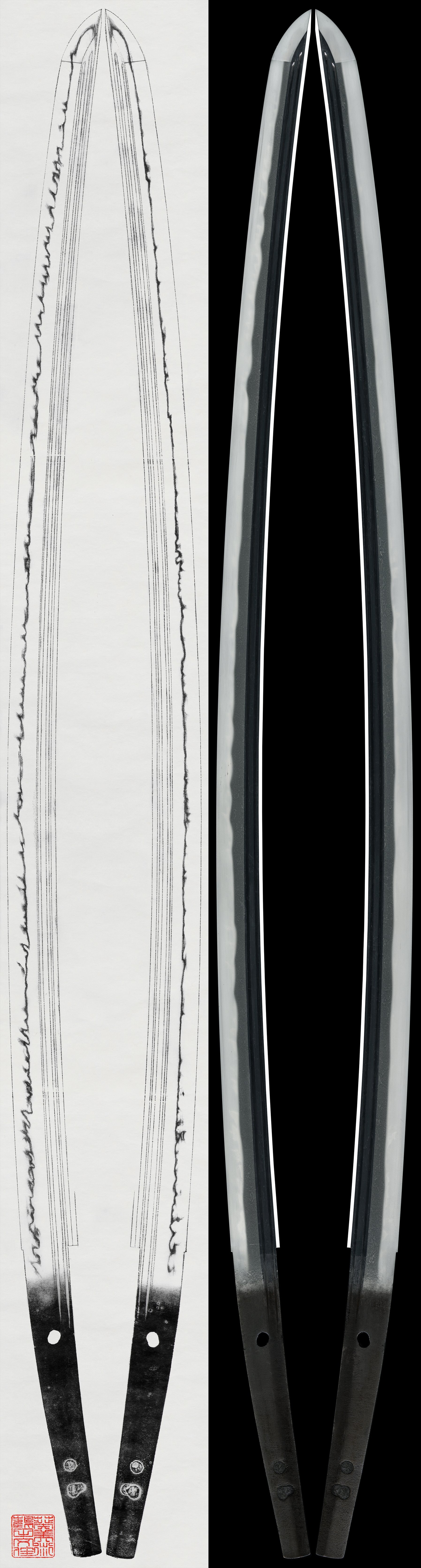
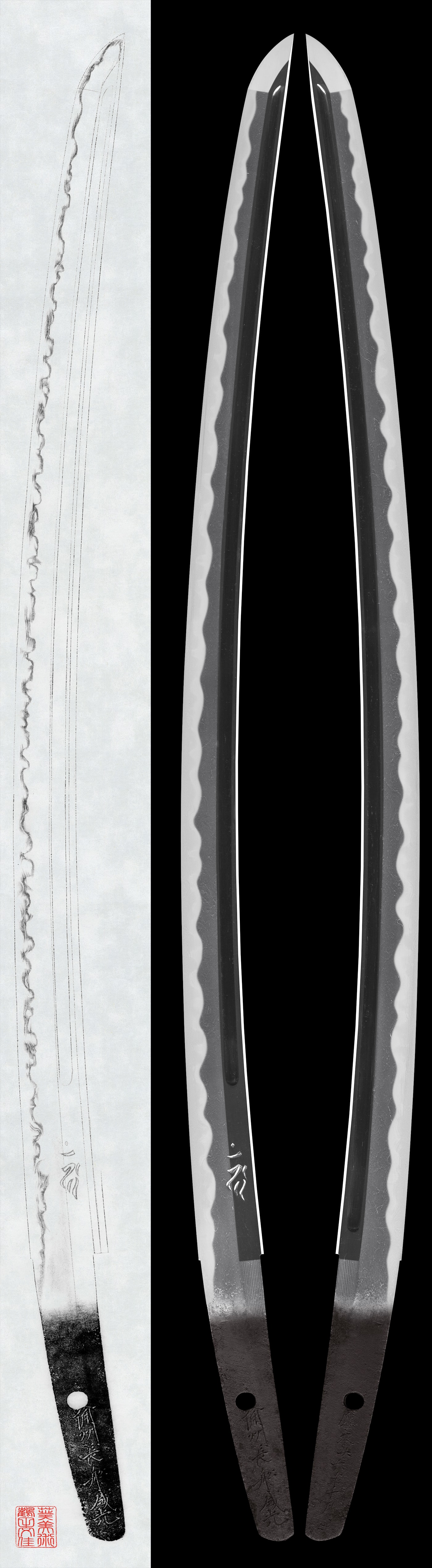
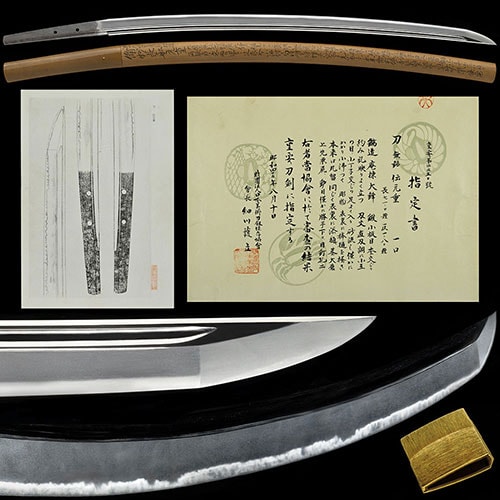
同田貫は肥後国の菊池に室町末期から興り、新刀期に及んで活躍した一派である。説示は本派を九州肥後を代表する流派として位置づけ、その一門に正国・上野介・又八(又八左衛門)・正広・兵部・左馬介・国勝らの工があったことを伝える。年紀を備えた遺例には天正から慶長に跨がる作が見られ、上野介には慶長九年・慶長十六年八月吉日の銘があって、新古を跨ぐ形でこの工が活躍したことが知られる。正国の薙刀は桃山時代の製作と鑑せられ、刀身とほぼ同時期に誂えられた拵を伴う例もある。説示の伝える工と年紀からは、戦国末から江戸初頭にかけての肥後にあって、実用の需に応えた工房の姿がうかがえる。 作風は、身幅広く重ね厚く平肉の豊かな豪壮な造込みを基調とする。説示はこれを武骨な姿とも記し、鎬造の刀のほかに大身槍や大振りの薙刀の作例も数多く経眼されると述べる。鍛えは板目肌で、処々に流れ肌や杢目を交え、やや肌立ちごころとなり、地沸がつく。刃文はのたれを基調に小互の目・小丁子・小尖り刃などが交じり、足・葉がよく入り、匂口は締りがちで叢沸となり、飛焼や棟焼を見せ、金筋・砂流しの細かにかかる作がある。互の目乱れを主とする例や、正広の薙刀のように直刃を焼いて匂口の沈む作も伝えられ、一派のうちに振幅のあることが説示から読み取れる。見分けに当たっては、頑健な姿態と、匂口の締まった乱刃に叢沸・飛焼・棟焼の交じる地刃の様相が手がかりとなる。 伝承の面では、説示はこの派の刀の鋭利さが古くから賞讃され、実用刀として知られてきたことを繰り返し記す。代表工とされる上野介には、常に見る同派の作域よりも変化に富み野趣の感じられる作があり、沈みごころの地刃に渋い味わいの醸される一口が同工および同派を代表する出来として挙げられている。正国の薙刀は、地沸の微塵に厚くついた鍛えと、同派の常以上に明るく沸づいて刃中の頻りに働く刃文をもって秀作と評され、黒漆金蒔絵柄鞘薙刀拵を附帯する。又八の薙刀には匂口の締まった作に沸のつく一派の特色がよく示され、黒塗薙刀拵を伴う。資料は僅少ながら、これらの遺例は、肥後にあって頑健と切れ味を旨とした同田貫の性格を、刀・薙刀の双方に即して伝えるものといえる。 詳しく見る →
桃山時代
三人の天下人が戦国の世紀を終わらせ、刀は新しい秩序の道具となった。1588年の刀狩は刀を武士の標章とし、名刀は条約のごとく家々の間を行き交い、鑑定は以後この境で古刀と新刀を分かつ。
販売店の出品ページで鑑定書を確認できませんでした。日本刀および刀装具は通常、NBTHK(または NTHK)の鑑定を受けます。鑑定書がない場合、極めは販売店の見解にとどまり、第三者による確認は行われていません。ご購入前に販売店へ鑑定書の有無をお問い合わせのうえ、慎重にご判断ください。
3-day return window from receipt.
S112. Daito signed tachi mei in interesting, unusual mounts.Nagasa: 26 3/16′′ 66.7 cmNakago nagasa: 8 1/16′′ 20.4 cmSori: 9/16′′ 1.3 cmMoto haba: 1 1/8′′ 2.8 cmMoto kasane: 1/4′′ .55 cmSaki haba: 1.9 cmSaki kasane: .35 cmThe top half of a Kanji still hangs on the end of the o-suriage nakago. The hamon is suguba worked in shallow notare and very fine hataraki in ko-nie: suangashi and the like. The boshi is ko-maru with a short kaeri. The hada is itame/mokume with areas of larger hada. There is a small fukure near the kissaki on the tachi omote (pictured) and some small pin prick pits here and there. There are no chips in the edge, ha giri, nioi giri, or ware’; for the most part this is quite healthy.The saya is 100% intact (no lacqer loss) with horn ko jiri, koi guchi, kurikata, and kaeri zumi. The tsuba is shakudo sukashi and unfortunately some bone brain has abrasively cleaned it; it needs to be repatinated. There is a very nice silver foil habaki. Fuchi and kashira are plain iron. The tsuka is wrapped without menuki over lacquered same’. The koshirae puts me in mind of Satsuma.A friend and serious student of the sword has just sent me this, which I will include unedited.“Just my two cents, your tachi mei sword is most interesting. I am sure it is late ( Tenmon) koto, which swords became curved, sakizori and long. The kanji is the first of Kozure no Suke, therefore it is a Higo Dotanuki sword. ( lone wolf and cub)The koshirae is a Edo copy of the Tensho koshirae, and not Satsuma. It is likely carried by a real sword swinger. The handle wrap escaped me but you can look at Darcy’s Yamashro Kuniyoshi and the handle wrap is exactly the same ( plus gold menuki which is an late Edo touch). The tsuba is large for Satsuma, and it was an expensive tsuba–sakudo.Your description on the blade matches Higo also.It is very reasonable, and it should go to a good home, to restore, and keep the mount together. It is a period example, and worth preservation.”Other than a few scratches an
NihontoWatch備前伝 · 肥後 · 1596-1615頃
刀剣大鑑 上位77%
現在1点販売中
備前伝 · 肥後
現在18点販売中
同田貫は肥後国の菊池に室町末期から興り、新刀期に及んで活躍した一派である。説示は本派を九州肥後を代表する流派として位置づけ、その一門に正国・上野介・又八(又八左衛門)・正広・兵部・左馬介・国勝らの工があったことを伝える。年紀を備えた遺例には天正から慶長に跨がる作が見られ、上野介には慶長九年・慶長十六年八月吉日の銘があって、新古を跨ぐ形でこの工が活躍したことが知られる。正国の薙刀は桃山時代の製作と鑑せられ、刀身とほぼ同時期に誂えられた拵を伴う例もある。説示の伝える工と年紀からは、戦国末から江戸初頭にかけての肥後にあって、実用の需に応えた工房の姿がうかがえる。 作風は、身幅広く重ね厚く平肉の豊かな豪壮な造込みを基調とする。説示はこれを武骨な姿とも記し、鎬造の刀のほかに大身槍や大振りの薙刀の作例も数多く経眼されると述べる。鍛えは板目肌で、処々に流れ肌や杢目を交え、やや肌立ちごころとなり、地沸がつく。刃文はのたれを基調に小互の目・小丁子・小尖り刃などが交じり、足・葉がよく入り、匂口は締りがちで叢沸となり、飛焼や棟焼を見せ、金筋・砂流しの細かにかかる作がある。互の目乱れを主とする例や、正広の薙刀のように直刃を焼いて匂口の沈む作も伝えられ、一派のうちに振幅のあることが説示から読み取れる。見分けに当たっては、頑健な姿態と、匂口の締まった乱刃に叢沸・飛焼・棟焼の交じる地刃の様相が手がかりとなる。 伝承の面では、説示はこの派の刀の鋭利さが古くから賞讃され、実用刀として知られてきたことを繰り返し記す。代表工とされる上野介には、常に見る同派の作域よりも変化に富み野趣の感じられる作があり、沈みごころの地刃に渋い味わいの醸される一口が同工および同派を代表する出来として挙げられている。正国の薙刀は、地沸の微塵に厚くついた鍛えと、同派の常以上に明るく沸づいて刃中の頻りに働く刃文をもって秀作と評され、黒漆金蒔絵柄鞘薙刀拵を附帯する。又八の薙刀には匂口の締まった作に沸のつく一派の特色がよく示され、黒塗薙刀拵を伴う。資料は僅少ながら、これらの遺例は、肥後にあって頑健と切れ味を旨とした同田貫の性格を、刀・薙刀の双方に即して伝えるものといえる。 詳しく見る →
桃山時代
三人の天下人が戦国の世紀を終わらせ、刀は新しい秩序の道具となった。1588年の刀狩は刀を武士の標章とし、名刀は条約のごとく家々の間を行き交い、鑑定は以後この境で古刀と新刀を分かつ。
販売店の出品ページで鑑定書を確認できませんでした。日本刀および刀装具は通常、NBTHK(または NTHK)の鑑定を受けます。鑑定書がない場合、極めは販売店の見解にとどまり、第三者による確認は行われていません。ご購入前に販売店へ鑑定書の有無をお問い合わせのうえ、慎重にご判断ください。
3-day return window from receipt.