NihontoWatch Mon

NihontoWatchBETA

マーケットオークション
事典
NihontoWatch Mon

NihontoWatchBETA

マーケットオークション
事典

説明

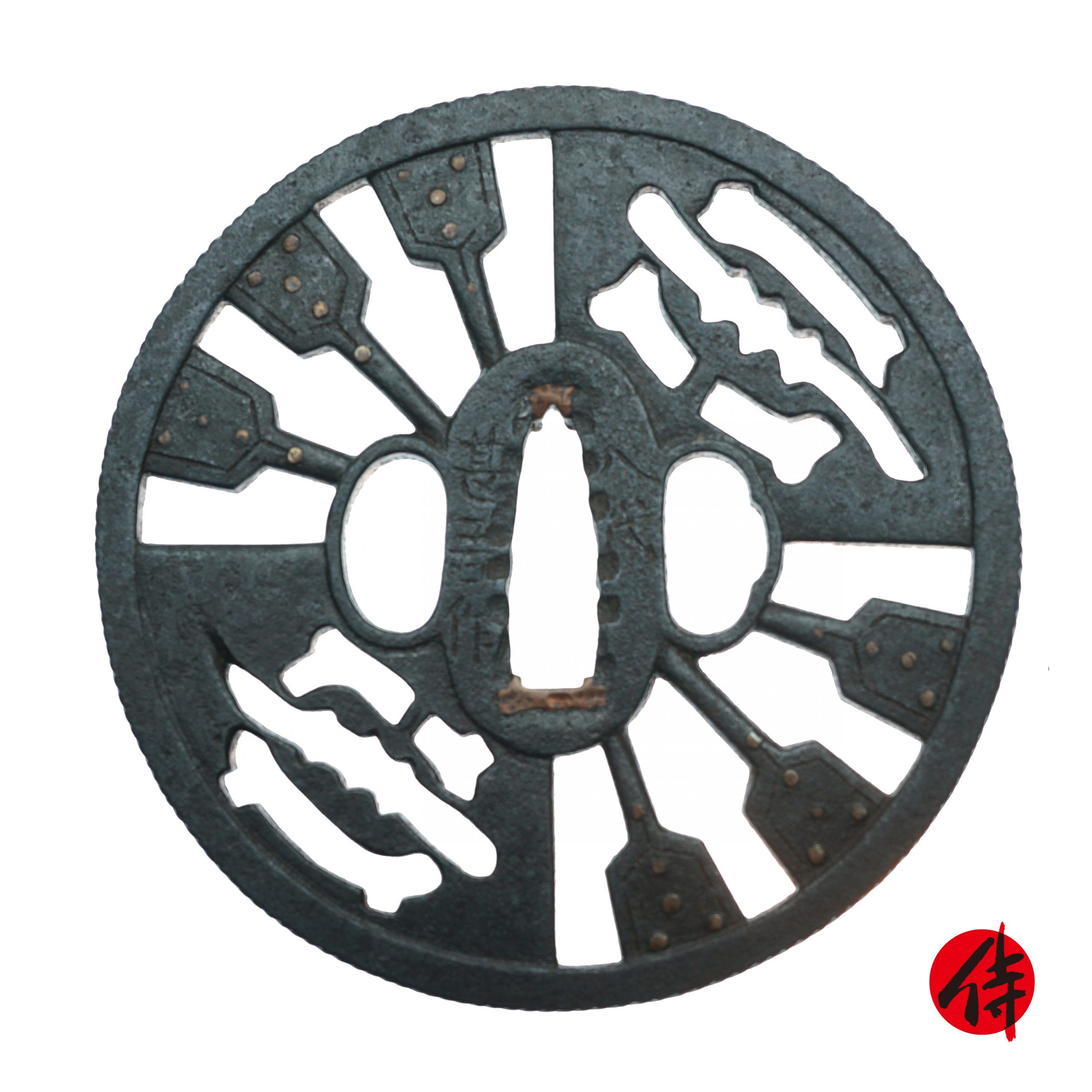
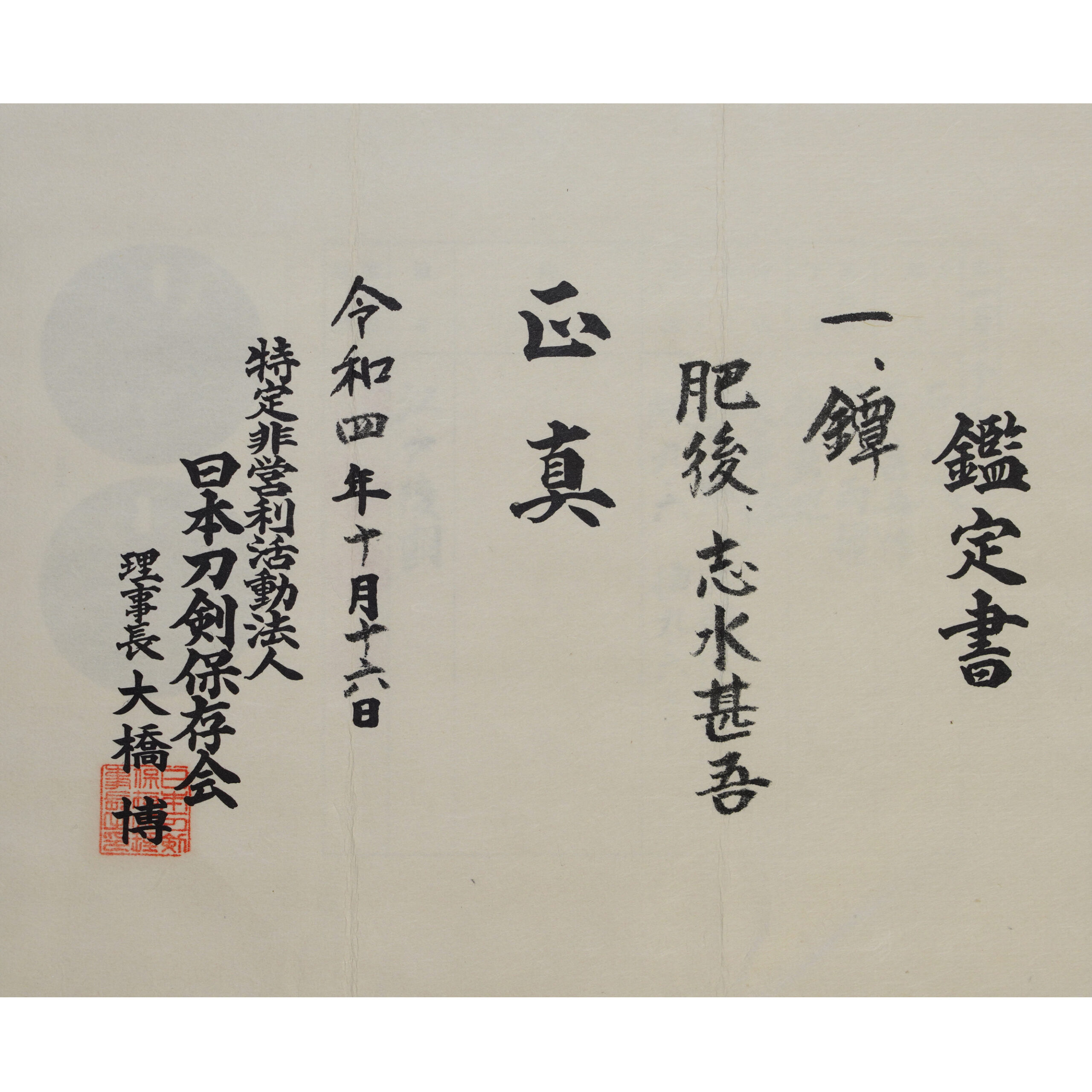
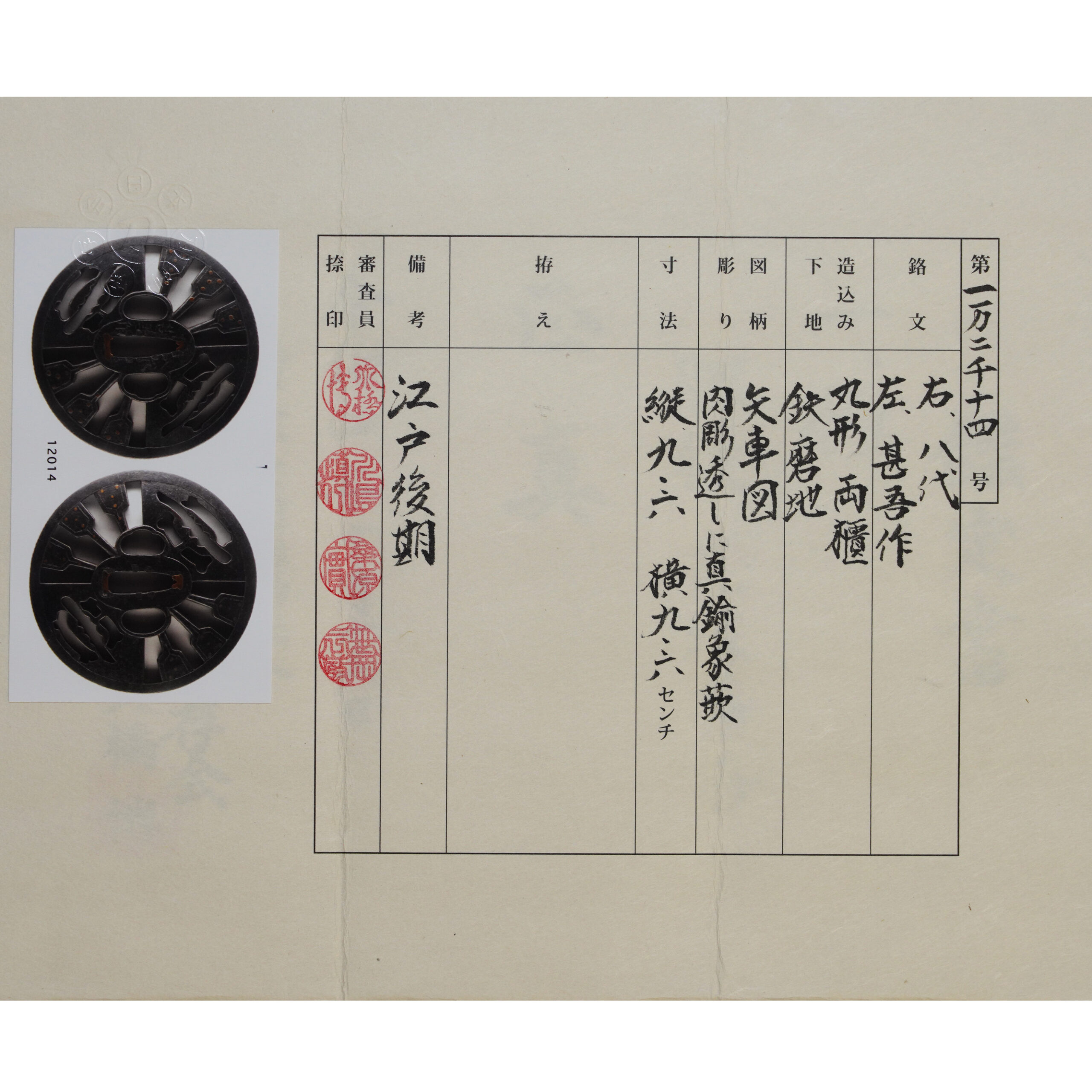
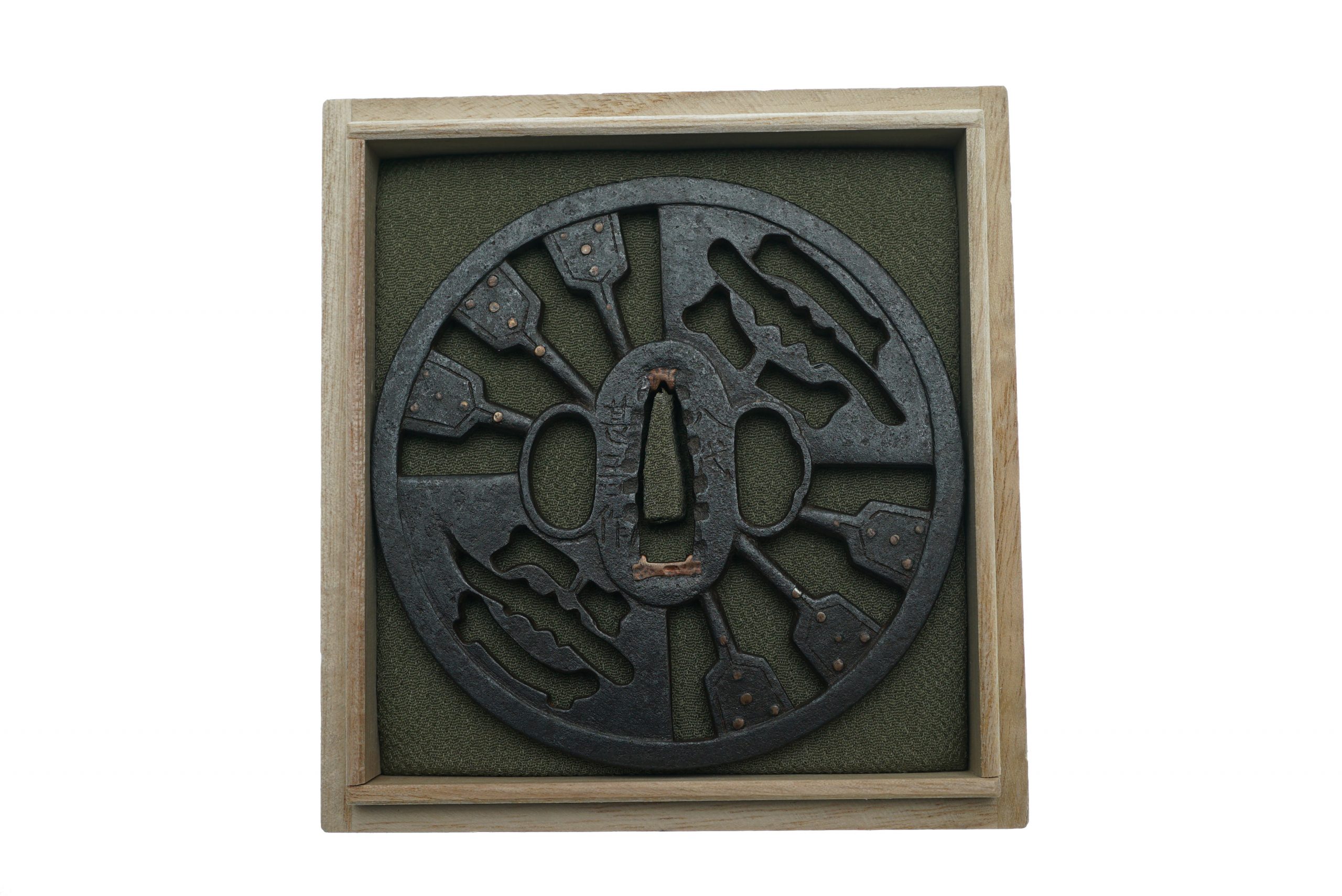
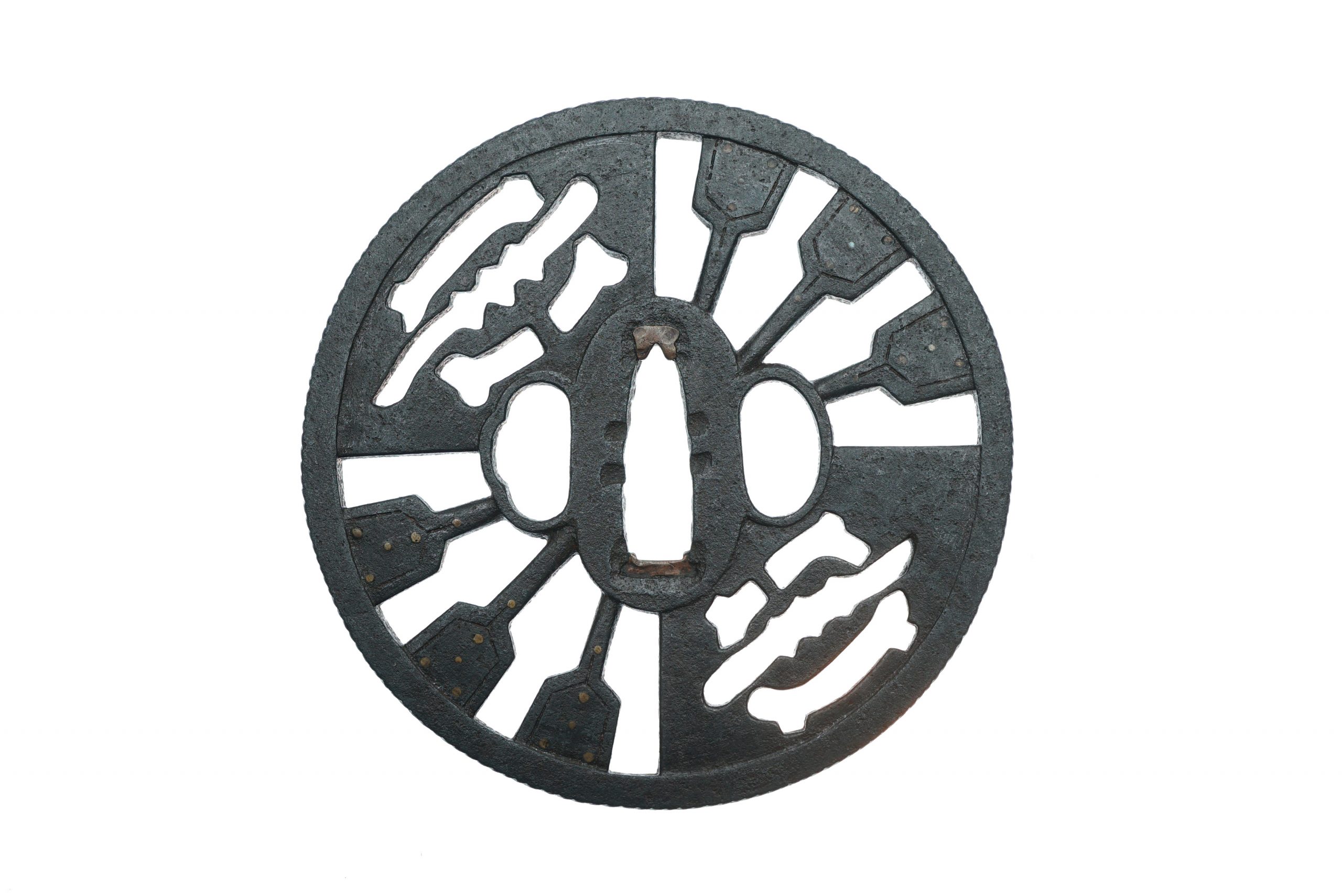
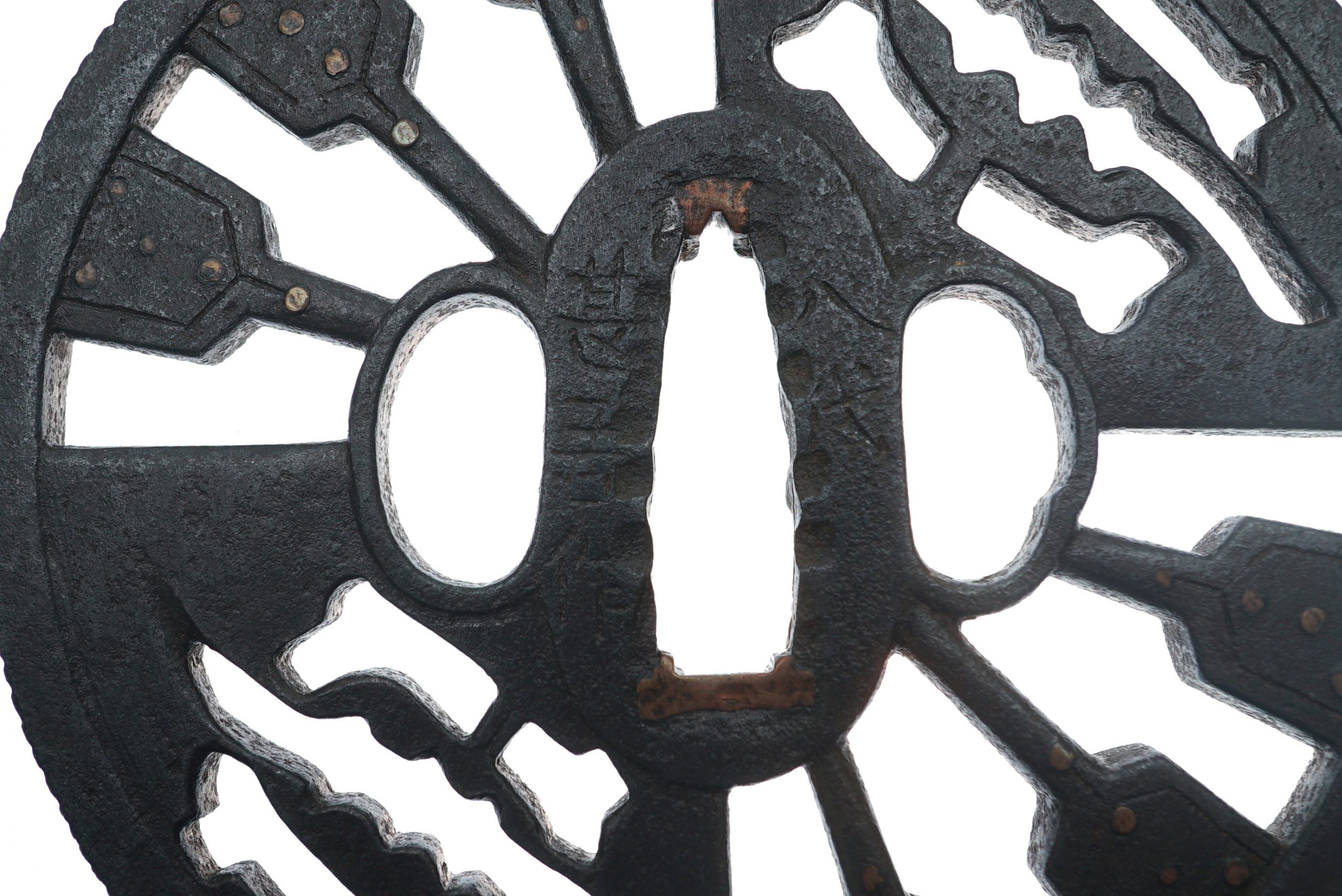
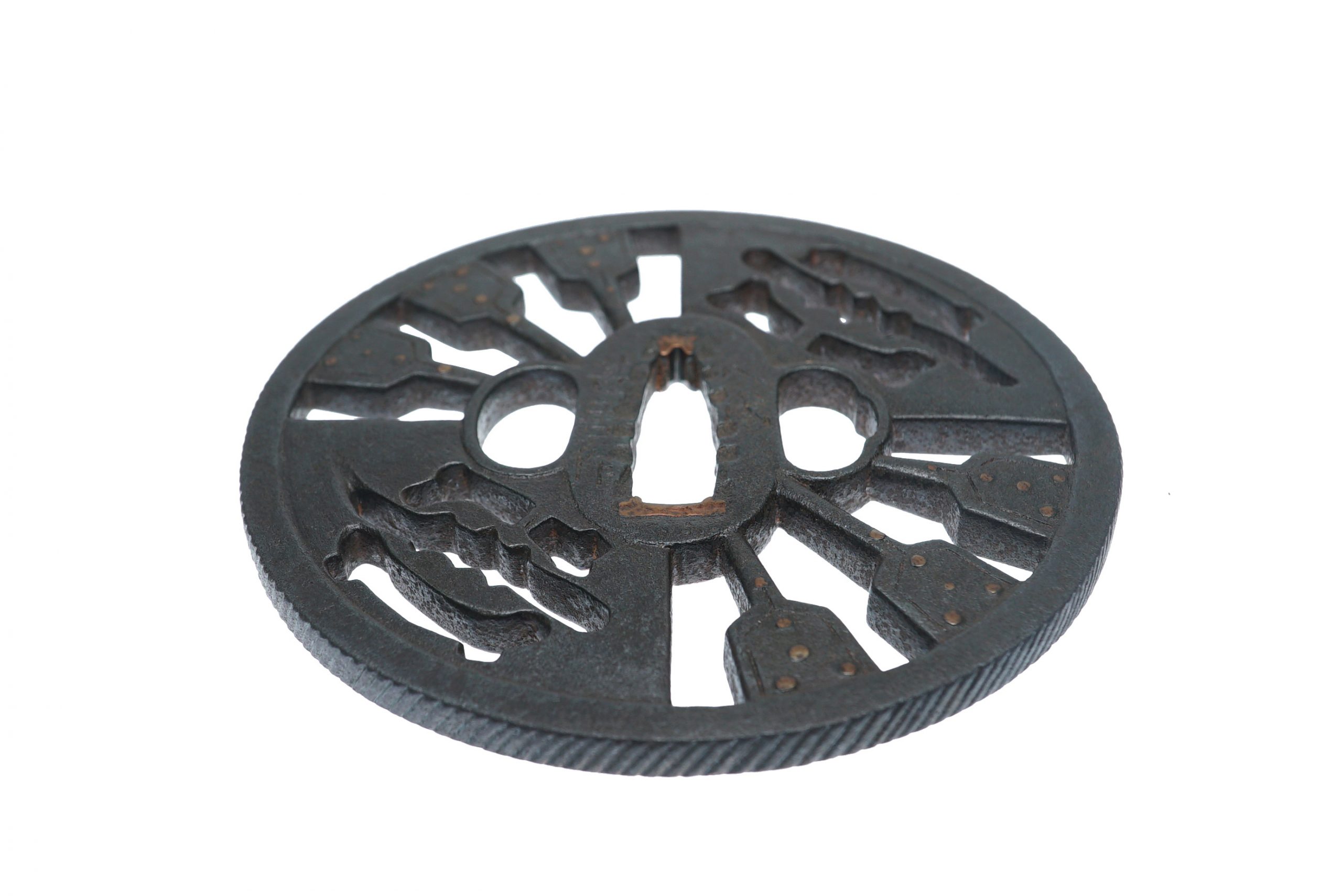
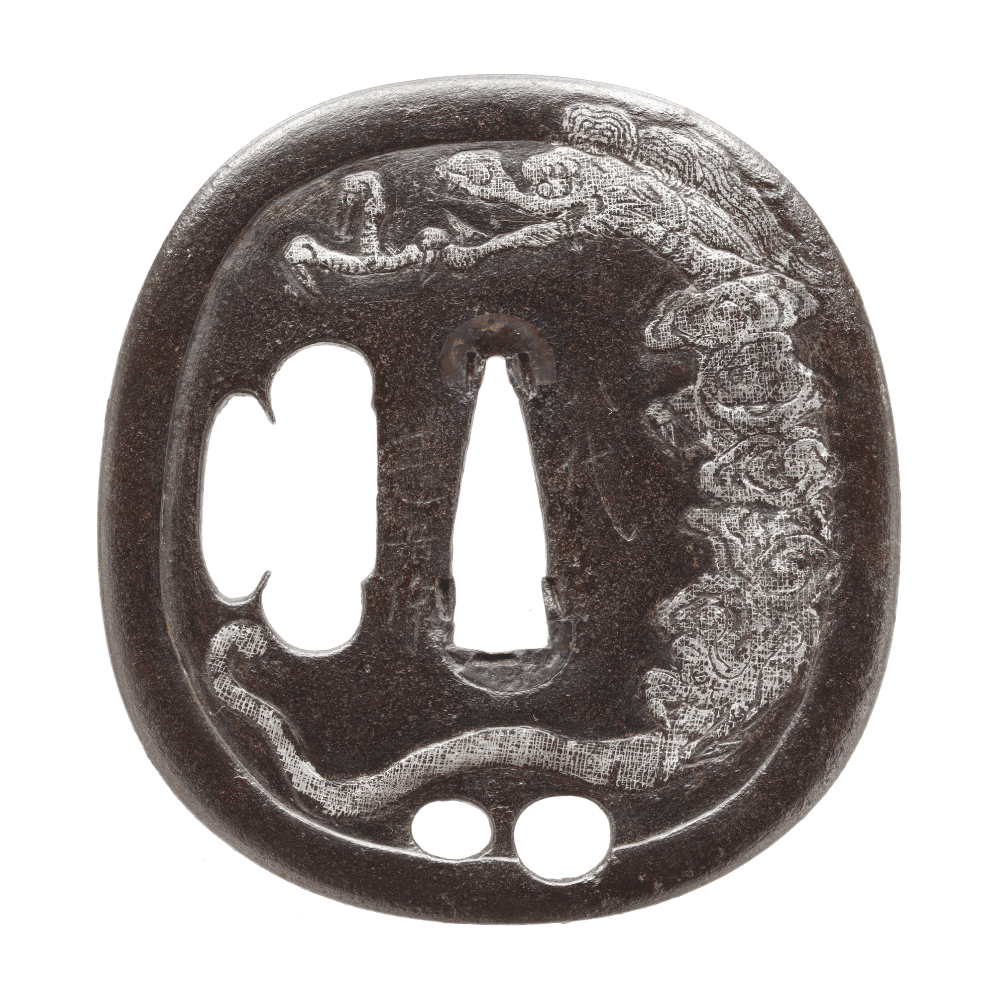
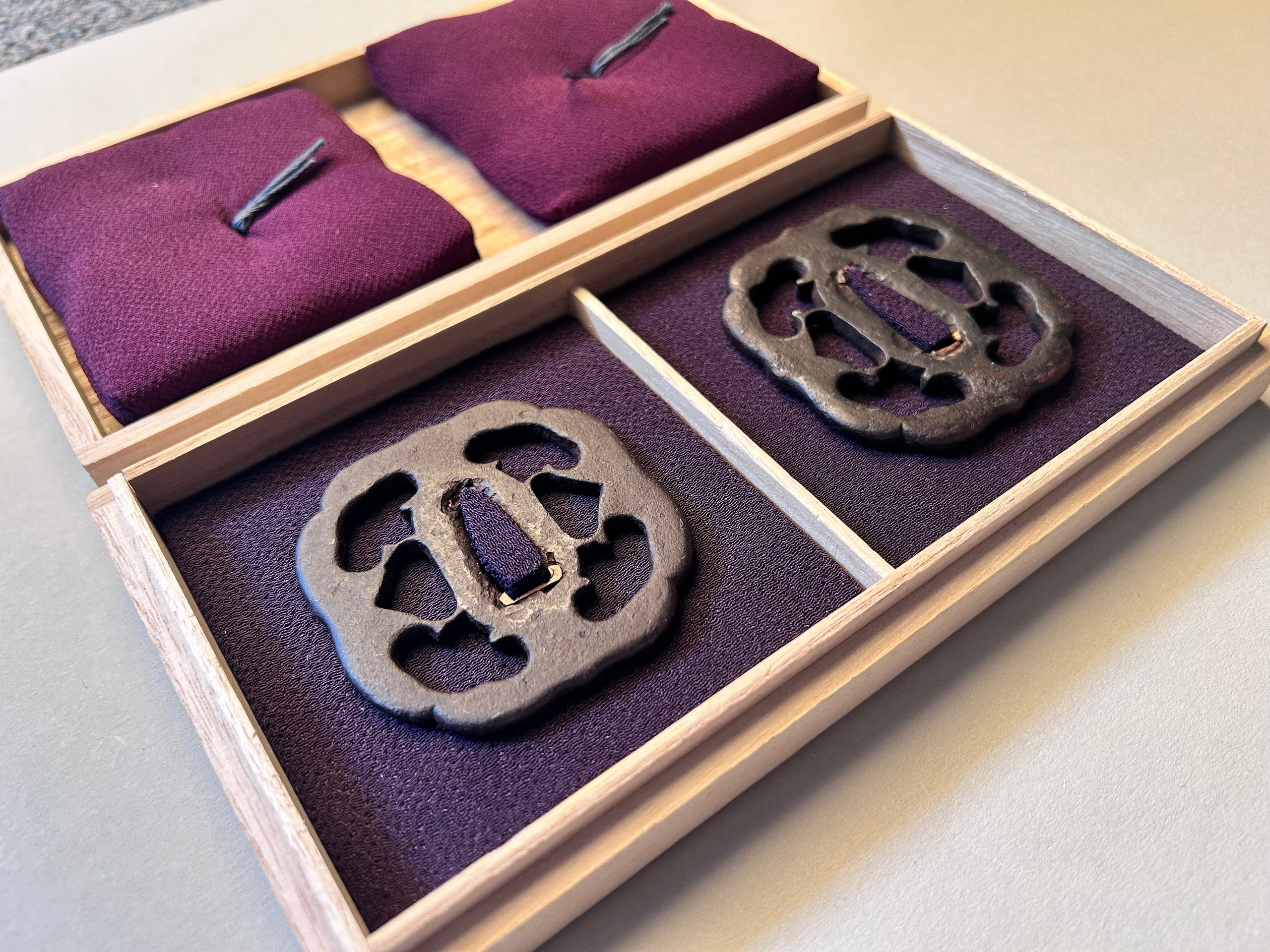
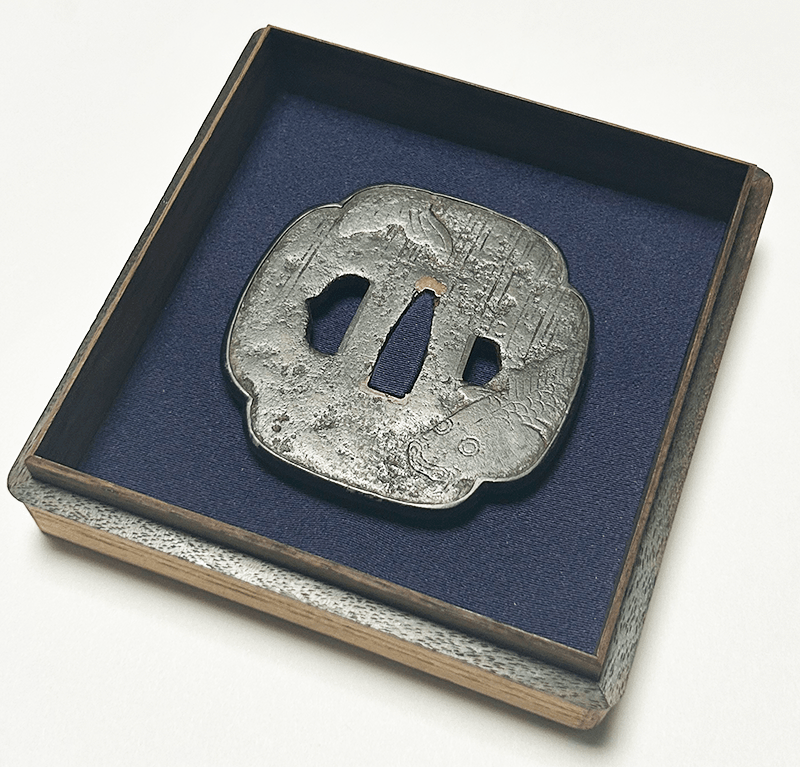
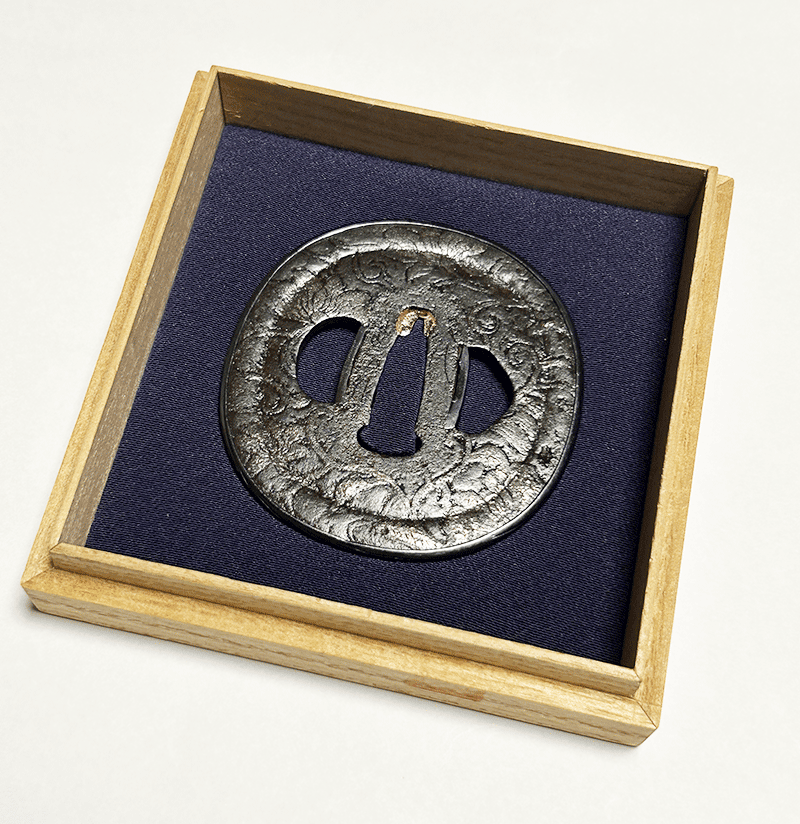
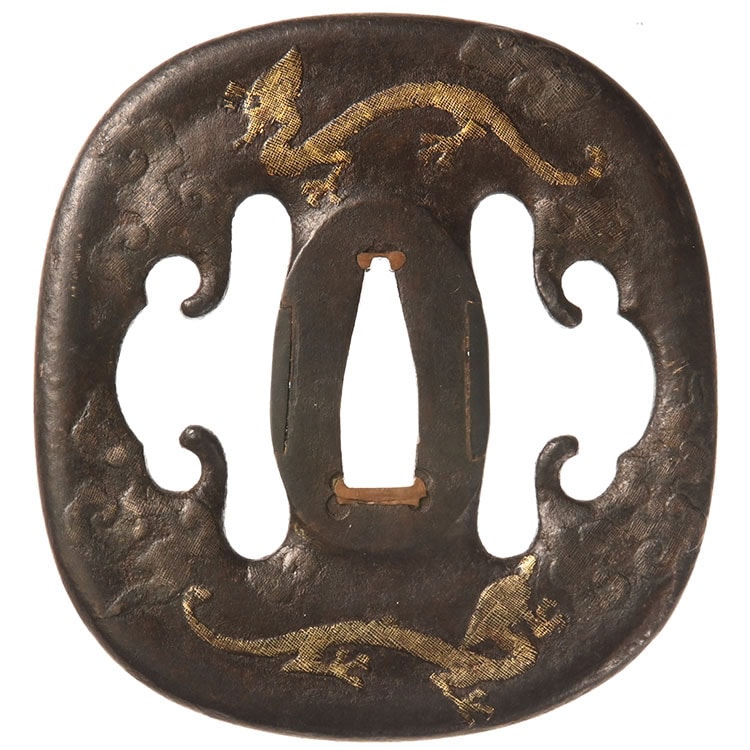
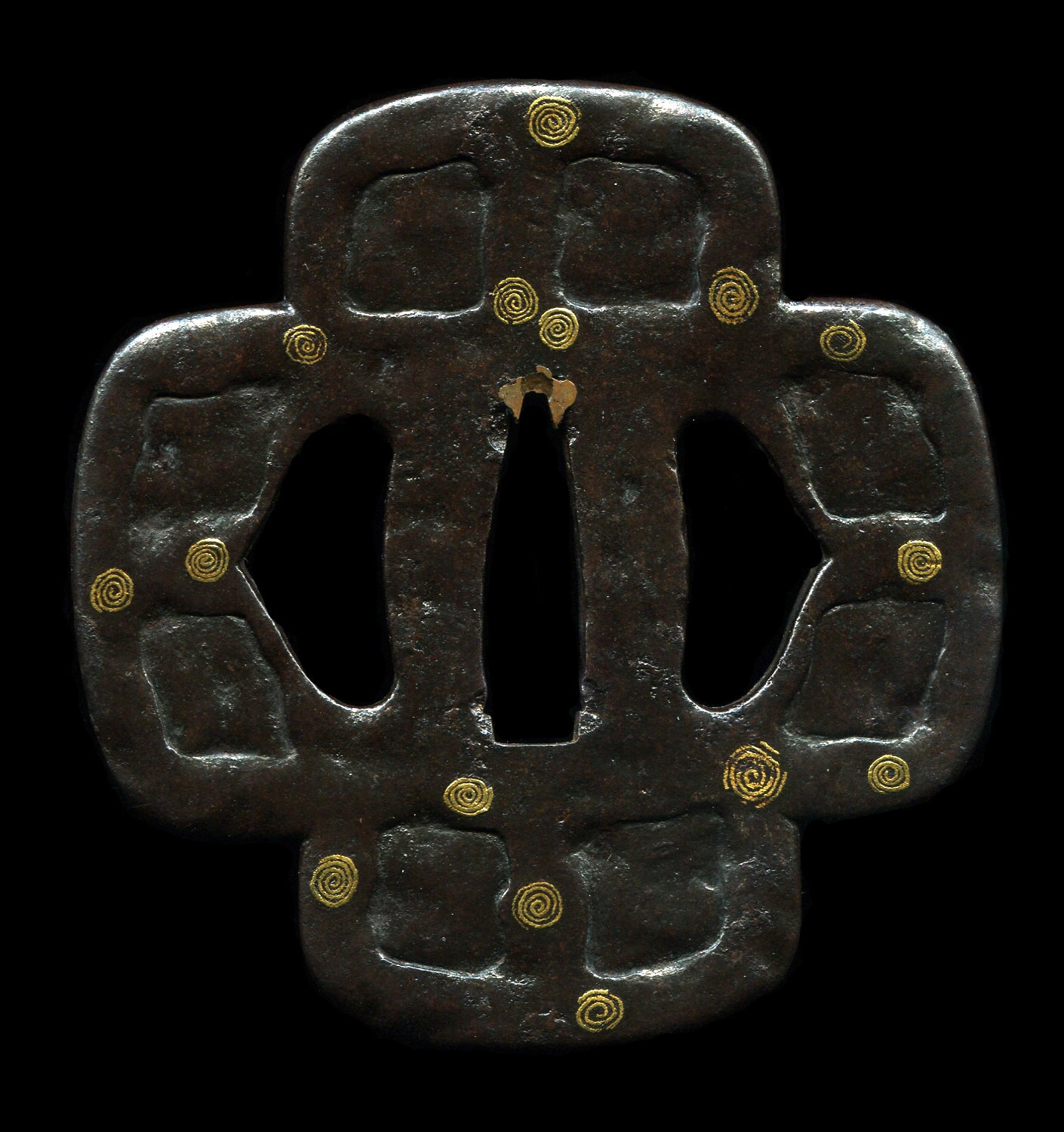
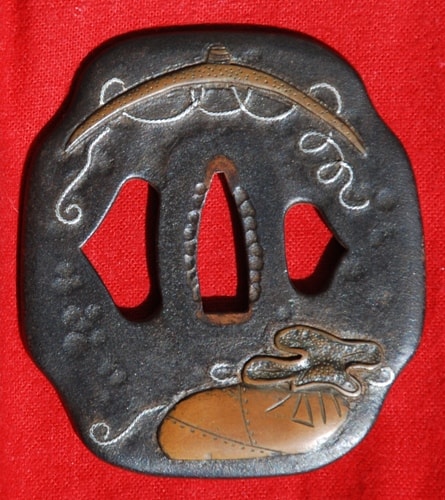
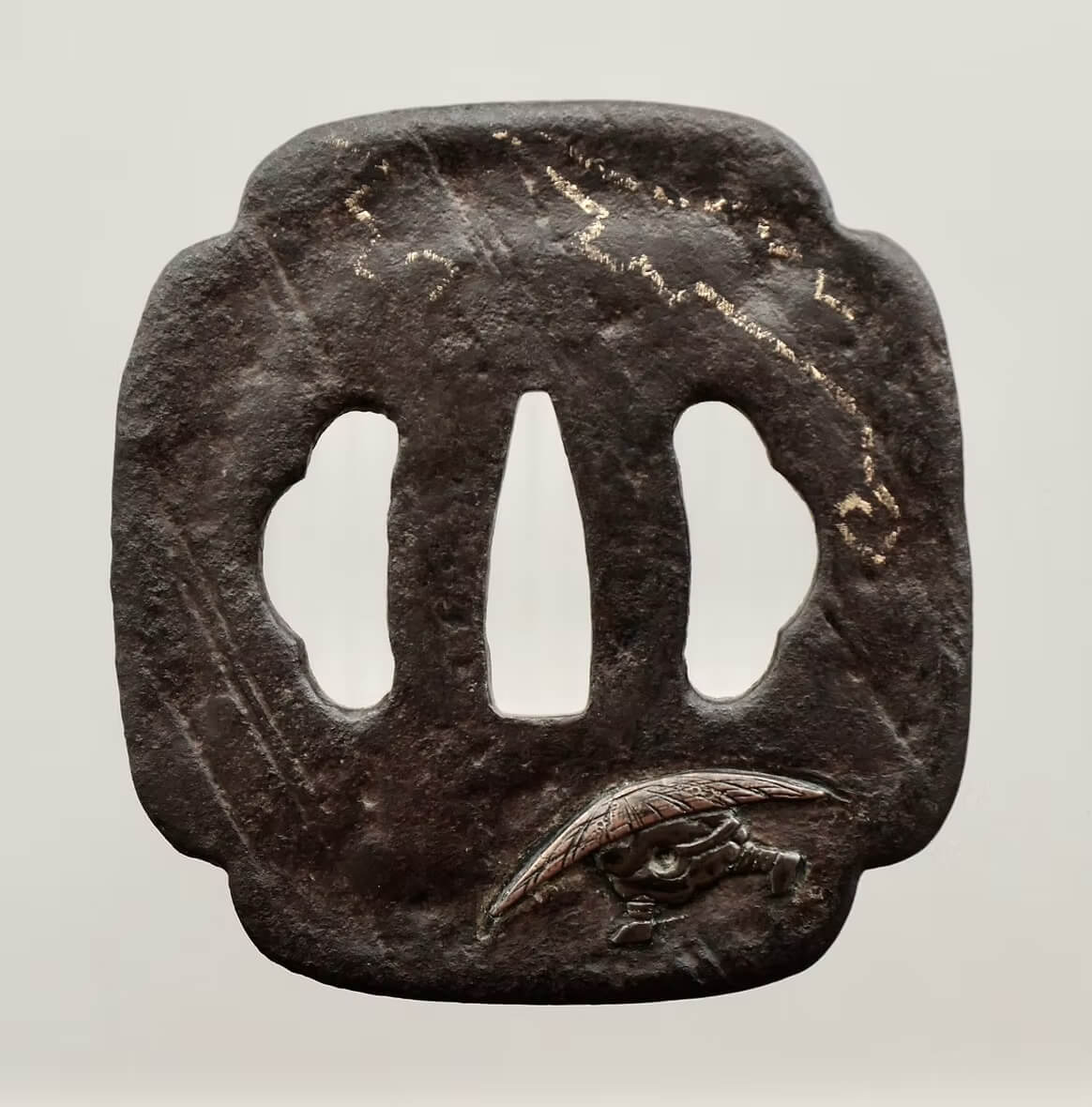
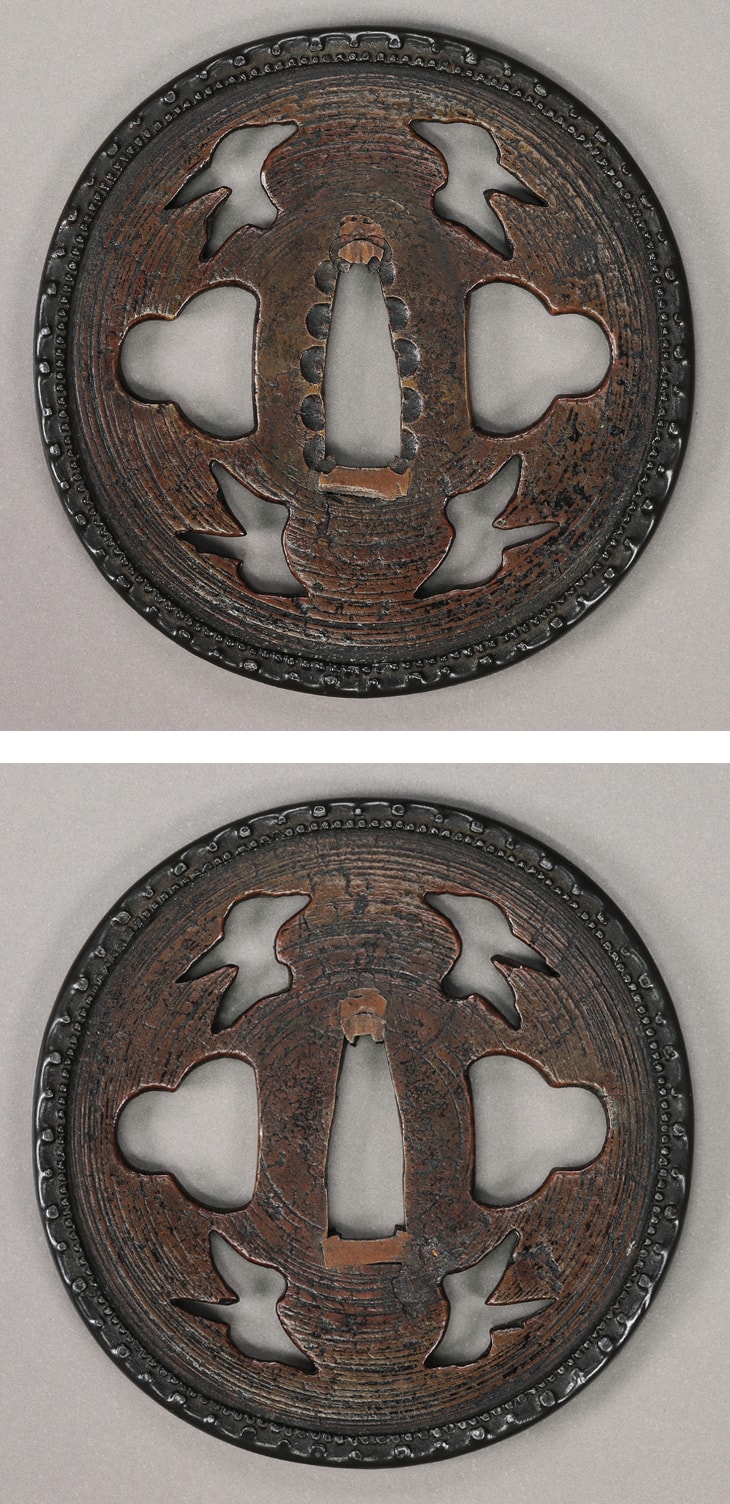
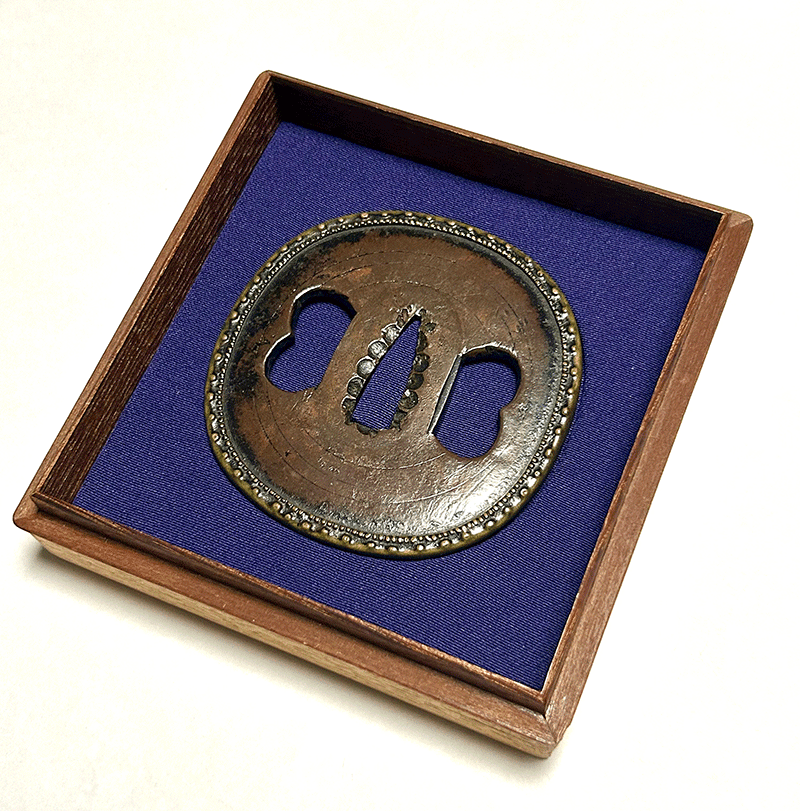
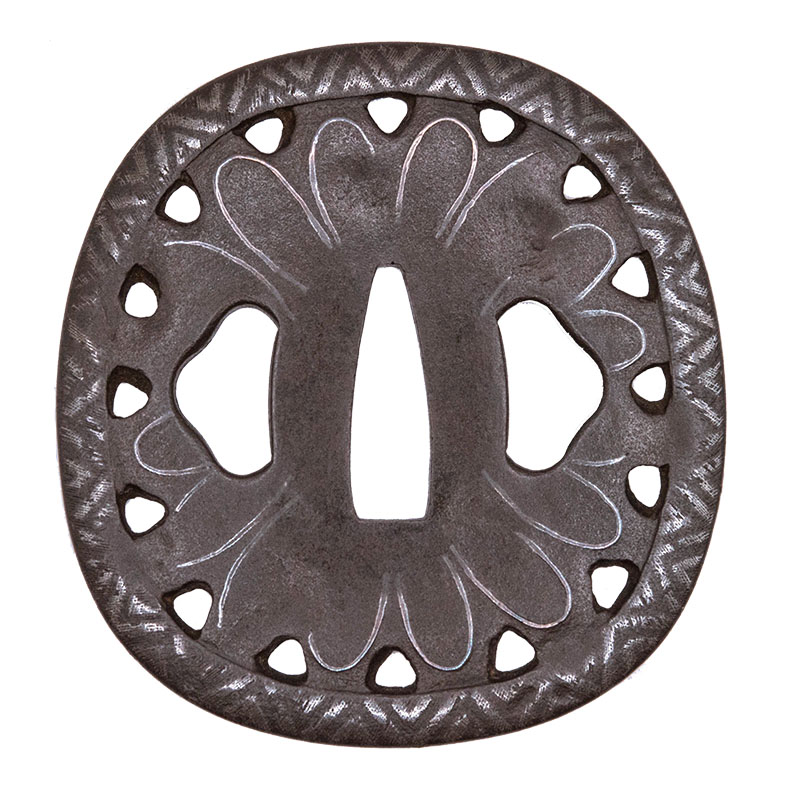
Title: Higo-style, Yaguruma Zu Description This Tsuba is appraised by the NTHK. According to the certificate, this Tsuba was made by Yatsushiro Jingo (八代 甚吾), who belonged to the Higo style. Yatsushiro is the name of the city in today’s Kumamoto prefecture. The metalworker Jingo, his family name was Shimizu (志水). The Shimizu family has lasted for generations until the 8th Jingo. It is challenging to distinguish which Jingo made this Tsuba. However, NTHK determined this Tsuba was made in the late Edo period. Initially, Jingo used 甚五 as his signature and later started using the character 吾 instead of 五 in the age of from third Jingo to fifth Jingo. Therefore, we estimate this Tsuba was made at least after this time. The Higo-style Tsuba was established in Kumamoto prefecture in the Edo period, Kanei era (1624-1645), and was made mainly in Kumamoto city and Yatsushiro city. Hosokawa Tadaoki (Sansai) (細川 忠興/三斎, 1563-1646) took the lead in producing this style with other artists. He worked for Ashikaga Yoshiteru (足利 義輝, 1536-1565), Oda Nobunaga (織田 信長, 1534-1582), Toyotomi Hideyoshi (豊臣 秀吉, 1537-1598), and Tokugawa Ieyasu (徳川 家康, 1543-1616). So, Tadaoki served people in authority of the time and laid the foundation for the Hosokawa family. Tadaoki is known as intellectual Samurai. He studied under Sen-no Rikyu (千利休, 1522-1591), who is considered the most profound influence of Japanese tea. And Tadaoki started the Sansai-style of Chanoyu (茶の湯, way of tea). In Higo-style metalworkers, four prestigious schools did excellent work; the Hayashi (林) family, Hirata (平田) family, Nishigaki (西垣) family, and Shimizu (志水) family. They were good at making Tsuba and other sword mountings, such as Fuchi Kashira and Menuki. In the Edo period, Higo-style Tsuba was a trendy brand among Samurai. This Shimizu family is the Shimizu mentioned above. It was one of the groups that prospered under the patronage of the Hosokawa domain as a metalworker school. About the design, its theme is the Yaguruma (矢車). It is a gear that arrow feathers are attached radially around the shaft so that it rotates in the wind. Small dots that were inlaid with brass describe drops of water. This Tsuba has beautiful harmony thanks to its symmetry design. This Tsuba is a valuable masterpiece recognized as the work of a famous and talented school. We hope you will add this Tsuba to your great collection. *As this item is an antique, please check each photo and ensure its condition. What is Tsuba? Tsuba is the hand-guard of the Japanese sword. High-class Samurai wore his Katana sword with its beautiful sword mountings such as Tsuba. Tsuba’s front design tends to be more decorative as this part was often seen by other Samurais when he was walking on the streets. Why is it that the sword mounting was important for Samurai? The sword mountings of the Japanese sword have many kinds of decorations such as handguards (Tsuba), sword hilt (Menuki), pommel (Fuchi Kashira). The Japanese sword worked as a weapon and as an object to show who he was. For example, it shows their personalities and beliefs. You could say that it is like decorations for smartphones today. We recommend you zoom in on the pictures of the sword fittings. When you do so, you can see the skill of Japanese metal engraving techniques. They are mainly made of iron and copper with inlays of gold, silver, and bronze. When it comes to handguard (Tsuba), each one has a different outline and weight. These sword fittings that have lived with Japanese swords of the same age might be worth as much as the Japanese swords. They are inconspicuous parts of the Japanese sword. Nevertheless, if you are knowledgeable or particular about it, you will become a connoisseur of the Samurai. Authentication Paper : NTHK Kanteisho Certificate NTHK, also known as NPO Nihon Touken Hozon Kai, is the oldest organization for sword authentication of Japanese swords in modern times. It was established in 1889 during the post-Samurai era. They authent

NihontoWatch MonNihontoWatchBETA
MarketAuctionsEncyclopedia
刀装具›肥後金工›志水›甚吾›late Edo period antique Tsuba for Samurai Sword (T-42)
鍔
甚吾

late Edo period antique Tsuba for Samurai Sword (T-42)

在銘 · 肥後 · 江戸

売却済
甚吾 — 1 of 7
甚吾 — 2 of 7
甚吾 — 3 of 7
甚吾 — 4 of 7
甚吾 — 5 of 7
甚吾 — 6 of 7
甚吾 — 7 of 7
1 / 7
1 / 7
甚吾 — 1 of 7甚吾 — 2 of 7甚吾 — 3 of 7甚吾 — 4 of 7甚吾 — 5 of 7甚吾 — 6 of 7甚吾 — 7 of 7
法量・詳細
作者

甚吾

時代

江戸

国

肥後

銘

在銘

説明

Title: Higo-style, Yaguruma Zu Description This Tsuba is appraised by the NTHK. According to the certificate, this Tsuba was made by Yatsushiro Jingo (八代 甚吾), who belonged to the Higo style. Yatsushiro is the name of the city in today’s Kumamoto prefecture. The metalworker Jingo, his family name was Shimizu (志水). The Shimizu family has lasted for generations until the 8th Jingo. It is challenging to distinguish which Jingo made this Tsuba. However, NTHK determined this Tsuba was made in the late Edo period. Initially, Jingo used 甚五 as his signature and later started using the character 吾 instead of 五 in the age of from third Jingo to fifth Jingo. Therefore, we estimate this Tsuba was made at least after this time. The Higo-style Tsuba was established in Kumamoto prefecture in the Edo period, Kanei era (1624-1645), and was made mainly in Kumamoto city and Yatsushiro city. Hosokawa Tadaoki (Sansai) (細川 忠興/三斎, 1563-1646) took the lead in producing this style with other artists. He worked for Ashikaga Yoshiteru (足利 義輝, 1536-1565), Oda Nobunaga (織田 信長, 1534-1582), Toyotomi Hideyoshi (豊臣 秀吉, 1537-1598), and Tokugawa Ieyasu (徳川 家康, 1543-1616). So, Tadaoki served people in authority of the time and laid the foundation for the Hosokawa family. Tadaoki is known as intellectual Samurai. He studied under Sen-no Rikyu (千利休, 1522-1591), who is considered the most profound influence of Japanese tea. And Tadaoki started the Sansai-style of Chanoyu (茶の湯, way of tea). In Higo-style metalworkers, four prestigious schools did excellent work; the Hayashi (林) family, Hirata (平田) family, Nishigaki (西垣) family, and Shimizu (志水) family. They were good at making Tsuba and other sword mountings, such as Fuchi Kashira and Menuki. In the Edo period, Higo-style Tsuba was a trendy brand among Samurai. This Shimizu family is the Shimizu mentioned above. It was one of the groups that prospered under the patronage of the Hosokawa domain as a metalworker school. About the design, its theme is the Yaguruma (矢車). It is a gear that arrow feathers are attached radially around the shaft so that it rotates in the wind. Small dots that were inlaid with brass describe drops of water. This Tsuba has beautiful harmony thanks to its symmetry design. This Tsuba is a valuable masterpiece recognized as the work of a famous and talented school. We hope you will add this Tsuba to your great collection. *As this item is an antique, please check each photo and ensure its condition. What is Tsuba? Tsuba is the hand-guard of the Japanese sword. High-class Samurai wore his Katana sword with its beautiful sword mountings such as Tsuba. Tsuba’s front design tends to be more decorative as this part was often seen by other Samurais when he was walking on the streets. Why is it that the sword mounting was important for Samurai? The sword mountings of the Japanese sword have many kinds of decorations such as handguards (Tsuba), sword hilt (Menuki), pommel (Fuchi Kashira). The Japanese sword worked as a weapon and as an object to show who he was. For example, it shows their personalities and beliefs. You could say that it is like decorations for smartphones today. We recommend you zoom in on the pictures of the sword fittings. When you do so, you can see the skill of Japanese metal engraving techniques. They are mainly made of iron and copper with inlays of gold, silver, and bronze. When it comes to handguard (Tsuba), each one has a different outline and weight. These sword fittings that have lived with Japanese swords of the same age might be worth as much as the Japanese swords. They are inconspicuous parts of the Japanese sword. Nevertheless, if you are knowledgeable or particular about it, you will become a connoisseur of the Samurai. Authentication Paper : NTHK Kanteisho Certificate NTHK, also known as NPO Nihon Touken Hozon Kai, is the oldest organization for sword authentication of Japanese swords in modern times. It was established in 1889 during the post-Samurai era. They authent

作者について

甚吾

肥後 · 肥後

現在3点販売中

›
甚吾の作 3点が現在販売中→
甚吾 — 詳細肥後派
流派について

志水

肥後 · 肥後

現在23点販売中

›

志水派は、林・平田・西垣と並び肥後金工の本流を代表する四家の一つである。初代志水仁兵衛は平田彦三の甥と伝えられ、その指導を受けた。四家の初代はいずれも細川三斎忠興に抱えられ、直接の指導を受けている。寛永九年(一六三二)、加藤家改易ののち三斎の子忠利が熊本五十四万石に封ぜられると、三斎は隠居の身となり肥後国八代城を隠棲の場と定めた。初代甚五はこのとき彦三と共に三斎に従い八代に移住し、以後志水家は細川家の庇護のもと八代の地で代々栄えた。二代目以降、家督を継ぐ者は甚五(甚五)の名を襲名したが、初代・二代には在銘作が皆無であり、無銘ながら鑑定により世代が判別される。 志水派の作風は、肥後金工諸派の中にあって「ひときわ強烈な個性」を発揮するものとして一貫して評される。その技法上の最大の特色は、槌目焼手仕立ての鉄地に大胆な真鍮据紋象嵌を施す手法にある。表には猛禽・鶏・梟・雨龍・蛸・蟹などの画題を大きく力強く配し、一方裏は意図的に空間を広くとり、文様は小さく、彩色や肉置きも穏やかにして表裏のバランスをとる。一見非対称に感ぜられるこの表裏の構図こそが志水派の真骨頂であり、説示は繰り返し「総体的にきわめて均整のとれた趣の深い作品」と評している。表の躍動感と裏の静寂感が渾然一体となり、寂(さび)ないし侘寂の趣を深くする剛毅な作風がそこに成立する。真鍮据紋象嵌は「恐らく平安城象嵌にならったもの」とされるが、「平安城象嵌と異なるところは大胆な図柄にあって、これが今日なお斬新な感じを与える」と説示に明記されている。また鋤出高彫に金銀布目象嵌を施した作や、素銅地の作もあり、素銅でありながら重厚な趣を醸し出せるのは「甚五の技量の高さを伺うに十分」と評されるように、地金を問わず深い造形力を示す。撫角形・障泥形を得意の鐔姿とし、変り櫃孔もまた同派に見る特色である。 志水派は肥後金工の伝統において最も異色かつ芸術的迫力に満ちた一派としての地位を占める。とりわけ初代甚五は卓越した作家として説示に高く讃えられ、松上の梟図や松上の猛禽図はその名と「ほとんど同義」とされるほどに密接に結びつく。説示は初代の最高作について「大智は愚の如し」の語を引き、「大巧は拙なるが如し――拙に見えて拙でないが故に常識を超越した力を発揮した」と述べ、技巧を超えた境地に達した芸術家として位置づけている。武人の魂を猛禽に託して無双の覇気を示す一方、余白を十分に生かした画面からは「物深い閑かな雅趣」が感じとられ、文武両道の達人であった三斎の指導に応えた入念の作と評される。また「魚金甚五」の銘を持つ稀少な在銘作や、銀布目象嵌・毛彫・色金を駆使した後世代の展開は同派の技法的幅の広さを証するものである。「他の金工にはみられない大らかな雰囲気」を醸し出し、「近代的感覚にもうったえる」と繰り返し評される志水派の絵画的造形は、肥後金工の枠を超えて刀装具史に独自の存在感を刻んでいる。

1名の刀工指定14口
主要刀工
刀工時代指定
甚五—14
永次1691-17770
甚五郎1620-17100
茂永1795-18540
甚吾—0
志水流派を見る →
NTHK(日本刀剣保存会)鑑定
Kanteishō鑑定書
NTHK Appraisal Certificate
›

NTHKの中心的な鑑定書で、相応の出来を備えた作に発行されます。在銘作は銘の正真を、無銘作は審査員による刀工・流派の極めを示します。点数を記す詳細な審査表が付されます。

NTHKについて›

NTHK(日本刀剣保存会)は、NBTHK(1948年設立)に先立つ1910年に創立された、日本で最も古い刀剣鑑定団体です。長く会を率いた会長の没後、NTHKとNTHK-NPOの二つに分かれ、いずれも審査を続けています。NTHKの鑑定書は、点数と審査員の所見を併記する詳細な審査表が特徴で、特に無銘作の極めに定評があります。

販売店
サ
サムライミュージアム
🇯🇵日本から発送
›
✓認証販売店samuraimuseum.jp
✓海外発送可✓英語対応PayPalクレジットカード
返品ポリシー

Returns/exchanges limited to defects caused by shipping (except willful misconduct or gross negligence by the company); customers must contact within 72 hours of receiving the product.
サムライミュージアムの出品一覧を見る→販売店サイトでこの商品を見る→

甚吾の他の作

すべて見る →
兵左衛門百観音堂
保存
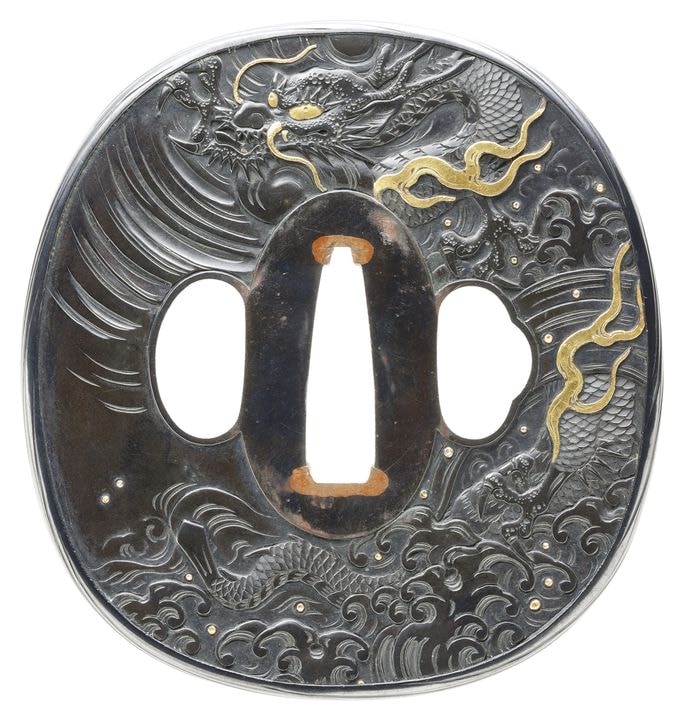
Tsuba - Hozon - by Shimizu Jingo - 左右松透かし雲龍図鐔 甚吾Tsuba - Hozon - by Shimizu Jingo - 左右松透かし雲龍図鐔 甚吾

鍔

作甚吾
江戸
¥85,000
Tsuba Info
保存
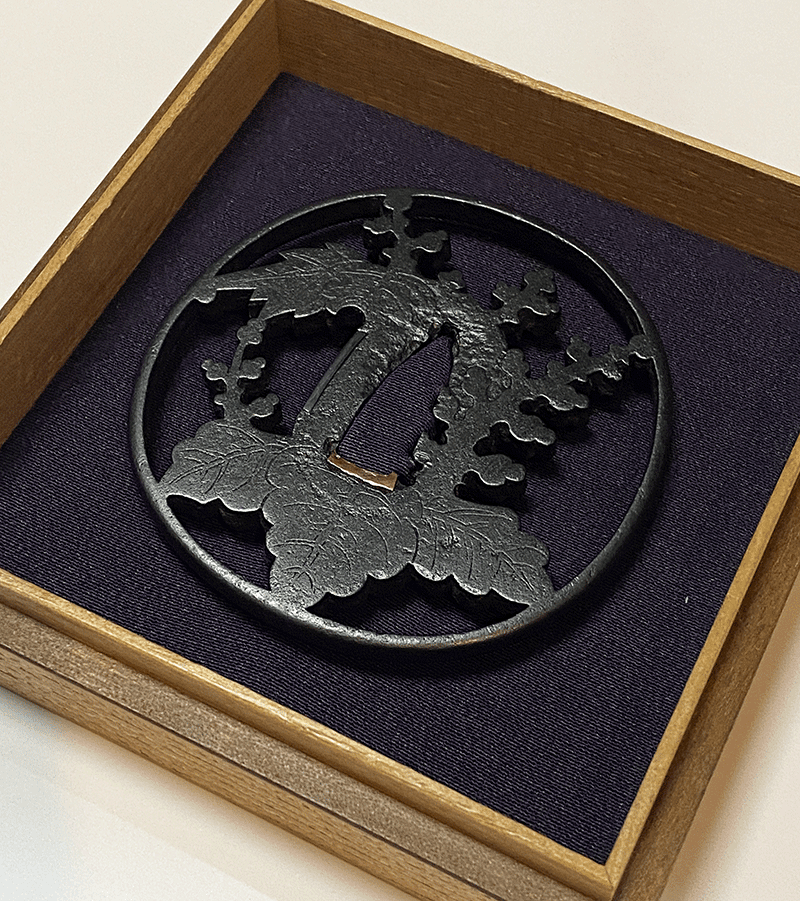
Tsuba - Hozon - by Shimizu Jingo - 肥後甚五 菊図 鍔Tsuba - Hozon - by Shimizu Jingo - 肥後甚五 菊図 鍔

鍔

作甚吾
Early–Mid Edo (1599–1710)
¥240,000
成蹊堂
保存
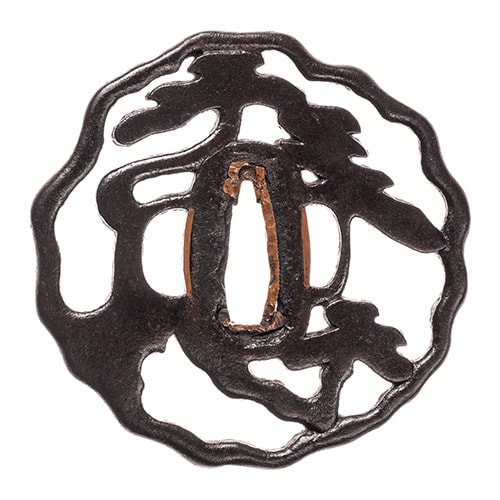
Tsuba - Hozon - by Shimizu Jingo - 鐔 T-0105Tsuba - Hozon - by Shimizu Jingo - 鐔 T-0105

鍔

作甚吾
江戸
お問い合わせ

甚吾の売約済み

成蹊堂
保存
Tsuba - Hozon - by Shimizu Jingo - 鐔 T-0003 蛙に捕虫蜘蛛図鐔Tsuba - Hozon - by Shimizu Jingo - 鐔 T-0003 蛙に捕虫蜘蛛図鐔
売切れ

鍔

作甚吾
Enkyō–Bunsei (1746–1823)
売却済

志水派の作

すべて見る →
飯田高遠堂
特別保存
Tsuba - Tokuho - by Shimizu Jingo - 刀装具Tsuba - Tokuho - by Shimizu Jingo - 刀装具

鍔

作甚吾
江戸
¥660,000
飯田高遠堂
特別保存
Tsuba - Tokuho - by Shimizu Jingo - 刀装具 銘 :無銘(甚五)Tsuba - Tokuho - by Shimizu Jingo - 刀装具 銘 :無銘(甚五)

鍔

作甚五
江戸
¥2,200,000
ギャラリー陽々
保存
Tsuba - Hozon - by Shimizu Jingoro - 雷文図鐔Tsuba - Hozon - by Shimizu Jingoro - 雷文図鐔

鍔

作甚五郎
江戸
¥320,000
Tetsugendo
保存
Tsuba - Hozon - by Shimizu Jingo - 甚五初期 鐔 美品Tsuba - Hozon - by Shimizu Jingo - 甚五初期 鐔 美品

鍔

作甚五
江戸
¥19,500
永楽堂
保存
Tsuba - Hozon - by Shimizu School - 後代甚吾 雲龍図鍔/鐔 保存刀装具Tsuba - Hozon - by Shimizu School - 後代甚吾 雲龍図鍔/鐔 保存刀装具

鍔

作志水派
江戸
¥160,000
イーソード
保存
Tsuba - Hozon - by Shimizu School - 円相琴柱散図鍔 無銘 後代甚吾Tsuba - Hozon - by Shimizu School - 円相琴柱散図鍔 無銘 後代甚吾

鍔

作志水派
江戸
¥100,000
ギャラリー陽々
保存
Tsuba - Hozon - by Shimizu Shigenaga - 雷雨傘人物図鐔Tsuba - Hozon - by Shimizu Shigenaga - 雷雨傘人物図鐔

鍔

作茂永
Kansei–Kaei (1795–1854)
¥380,000
Nihonto Art
Tsuba - by Shimizu Nagatsugu - 肥後三代清水甚五 鍔大小一対Tsuba - by Shimizu Nagatsugu - 肥後三代清水甚五 鍔大小一対

鍔

作永次
江戸
¥800

肥後金工の伝統

すべて見る →
飯田高遠堂
重要
Tsuba - Jūyō - by Nishigaki Kanshiro - 西垣勘四郎 投桐図透かしTsuba - Jūyō - by Nishigaki Kanshiro - 西垣勘四郎 投桐図透かし

鍔

作勘四郎
江戸
¥4,400,000
飯田高遠堂
特別保存
Tsuba - Tokuho - by Hayashi School - 刀装具 無銘 (林)Tsuba - Tokuho - by Hayashi School - 刀装具 無銘 (林)

鍔

作林派
江戸
¥880,000
コレクション情報
特別保存
Tsuba - Tokuho - by Hirata School - 鍔:左右紋透図 Tsuba:Sayumon Sukashi ZuTsuba - Tokuho - by Hirata School - 鍔:左右紋透図 Tsuba:Sayumon Sukashi Zu

鍔

作平田派
江戸
¥750,000
Legacy Swords
保存
Fuchi-Kashira - Hozon - by Kinko Misumi Masaharu - 肥後 肥後守三角公治(正治)銘 縁頭 稀少品 - Legacy ArtsFuchi-Kashira - Hozon - by Kinko Misumi Masaharu - 肥後 肥後守三角公治(正治)銘 縁頭 稀少品 - Legacy Arts

縁頭

作三角正治
江戸
¥3,900
Soryu
保存
Tsuba - Hozon - by Kumagai School - 保存刀装具 熊谷派 桐紋金布目象嵌鉄地鍔 江戸時代 縦82mm 横74mm 厚さ4mm 迫力ある逸品Tsuba - Hozon - by Kumagai School - 保存刀装具 熊谷派 桐紋金布目象嵌鉄地鍔 江戸時代 縦82mm 横74mm 厚さ4mm 迫力ある逸品

鍔

作熊谷派
江戸
¥1,600
飯田高遠堂
特別保存
Tsuba - Tokuho - by Nishigaki Kanshiro - 刀装具Tsuba - Tokuho - by Nishigaki Kanshiro - 刀装具

鍔

作勘四郎
Early Edo (1613-1693)
¥1,650,000
永楽堂
特別保存
Tsuba - Tokuho - by Kamiyoshi School - 神吉 三浦透鍔/鐔 特別保存刀装具Tsuba - Tokuho - by Kamiyoshi School - 神吉 三浦透鍔/鐔 特別保存刀装具

鍔

作神吉派
江戸
¥360,000
Tetsugendo
Fuchi-Kashira - by Nishigaki Kanshiro - 肥後名工 西垣勘四郎 揃金具 美品Fuchi-Kashira - by Nishigaki Kanshiro - 肥後名工 西垣勘四郎 揃金具 美品

縁頭

作勘四郎
江戸
¥4,500

刀剣

  • 刀
  • 脇差
  • 短刀
  • 太刀
  • 薙刀
  • 槍

刀装具

  • 鍔
  • 縁頭
  • 小柄
  • 目貫

鑑定別

  • 特重
  • 重要
  • 特別保存
  • 保存

リソース

  • 刀剣商一覧
  • 刀工一覧
  • すべて見る
Nihontowatch© 2026
利用規約プライバシーCookie運営者情報

説明

Title: Higo-style, Yaguruma Zu Description This Tsuba is appraised by the NTHK. According to the certificate, this Tsuba was made by Yatsushiro Jingo (八代 甚吾), who belonged to the Higo style. Yatsushiro is the name of the city in today’s Kumamoto prefecture. The metalworker Jingo, his family name was Shimizu (志水). The Shimizu family has lasted for generations until the 8th Jingo. It is challenging to distinguish which Jingo made this Tsuba. However, NTHK determined this Tsuba was made in the late Edo period. Initially, Jingo used 甚五 as his signature and later started using the character 吾 instead of 五 in the age of from third Jingo to fifth Jingo. Therefore, we estimate this Tsuba was made at least after this time. The Higo-style Tsuba was established in Kumamoto prefecture in the Edo period, Kanei era (1624-1645), and was made mainly in Kumamoto city and Yatsushiro city. Hosokawa Tadaoki (Sansai) (細川 忠興/三斎, 1563-1646) took the lead in producing this style with other artists. He worked for Ashikaga Yoshiteru (足利 義輝, 1536-1565), Oda Nobunaga (織田 信長, 1534-1582), Toyotomi Hideyoshi (豊臣 秀吉, 1537-1598), and Tokugawa Ieyasu (徳川 家康, 1543-1616). So, Tadaoki served people in authority of the time and laid the foundation for the Hosokawa family. Tadaoki is known as intellectual Samurai. He studied under Sen-no Rikyu (千利休, 1522-1591), who is considered the most profound influence of Japanese tea. And Tadaoki started the Sansai-style of Chanoyu (茶の湯, way of tea). In Higo-style metalworkers, four prestigious schools did excellent work; the Hayashi (林) family, Hirata (平田) family, Nishigaki (西垣) family, and Shimizu (志水) family. They were good at making Tsuba and other sword mountings, such as Fuchi Kashira and Menuki. In the Edo period, Higo-style Tsuba was a trendy brand among Samurai. This Shimizu family is the Shimizu mentioned above. It was one of the groups that prospered under the patronage of the Hosokawa domain as a metalworker school. About the design, its theme is the Yaguruma (矢車). It is a gear that arrow feathers are attached radially around the shaft so that it rotates in the wind. Small dots that were inlaid with brass describe drops of water. This Tsuba has beautiful harmony thanks to its symmetry design. This Tsuba is a valuable masterpiece recognized as the work of a famous and talented school. We hope you will add this Tsuba to your great collection. *As this item is an antique, please check each photo and ensure its condition. What is Tsuba? Tsuba is the hand-guard of the Japanese sword. High-class Samurai wore his Katana sword with its beautiful sword mountings such as Tsuba. Tsuba’s front design tends to be more decorative as this part was often seen by other Samurais when he was walking on the streets. Why is it that the sword mounting was important for Samurai? The sword mountings of the Japanese sword have many kinds of decorations such as handguards (Tsuba), sword hilt (Menuki), pommel (Fuchi Kashira). The Japanese sword worked as a weapon and as an object to show who he was. For example, it shows their personalities and beliefs. You could say that it is like decorations for smartphones today. We recommend you zoom in on the pictures of the sword fittings. When you do so, you can see the skill of Japanese metal engraving techniques. They are mainly made of iron and copper with inlays of gold, silver, and bronze. When it comes to handguard (Tsuba), each one has a different outline and weight. These sword fittings that have lived with Japanese swords of the same age might be worth as much as the Japanese swords. They are inconspicuous parts of the Japanese sword. Nevertheless, if you are knowledgeable or particular about it, you will become a connoisseur of the Samurai. Authentication Paper : NTHK Kanteisho Certificate NTHK, also known as NPO Nihon Touken Hozon Kai, is the oldest organization for sword authentication of Japanese swords in modern times. It was established in 1889 during the post-Samurai era. They authent

NihontoWatch MonNihontoWatchBETA
MarketAuctionsEncyclopedia
刀装具›肥後金工›志水›甚吾›late Edo period antique Tsuba for Samurai Sword (T-42)
鍔
甚吾

late Edo period antique Tsuba for Samurai Sword (T-42)

在銘 · 肥後 · 江戸

売却済
甚吾 — 1 of 7
甚吾 — 2 of 7
甚吾 — 3 of 7
甚吾 — 4 of 7
甚吾 — 5 of 7
甚吾 — 6 of 7
甚吾 — 7 of 7
1 / 7
1 / 7
甚吾 — 1 of 7甚吾 — 2 of 7甚吾 — 3 of 7甚吾 — 4 of 7甚吾 — 5 of 7甚吾 — 6 of 7甚吾 — 7 of 7
法量・詳細
作者

甚吾

時代

江戸

国

肥後

銘

在銘

説明

Title: Higo-style, Yaguruma Zu Description This Tsuba is appraised by the NTHK. According to the certificate, this Tsuba was made by Yatsushiro Jingo (八代 甚吾), who belonged to the Higo style. Yatsushiro is the name of the city in today’s Kumamoto prefecture. The metalworker Jingo, his family name was Shimizu (志水). The Shimizu family has lasted for generations until the 8th Jingo. It is challenging to distinguish which Jingo made this Tsuba. However, NTHK determined this Tsuba was made in the late Edo period. Initially, Jingo used 甚五 as his signature and later started using the character 吾 instead of 五 in the age of from third Jingo to fifth Jingo. Therefore, we estimate this Tsuba was made at least after this time. The Higo-style Tsuba was established in Kumamoto prefecture in the Edo period, Kanei era (1624-1645), and was made mainly in Kumamoto city and Yatsushiro city. Hosokawa Tadaoki (Sansai) (細川 忠興/三斎, 1563-1646) took the lead in producing this style with other artists. He worked for Ashikaga Yoshiteru (足利 義輝, 1536-1565), Oda Nobunaga (織田 信長, 1534-1582), Toyotomi Hideyoshi (豊臣 秀吉, 1537-1598), and Tokugawa Ieyasu (徳川 家康, 1543-1616). So, Tadaoki served people in authority of the time and laid the foundation for the Hosokawa family. Tadaoki is known as intellectual Samurai. He studied under Sen-no Rikyu (千利休, 1522-1591), who is considered the most profound influence of Japanese tea. And Tadaoki started the Sansai-style of Chanoyu (茶の湯, way of tea). In Higo-style metalworkers, four prestigious schools did excellent work; the Hayashi (林) family, Hirata (平田) family, Nishigaki (西垣) family, and Shimizu (志水) family. They were good at making Tsuba and other sword mountings, such as Fuchi Kashira and Menuki. In the Edo period, Higo-style Tsuba was a trendy brand among Samurai. This Shimizu family is the Shimizu mentioned above. It was one of the groups that prospered under the patronage of the Hosokawa domain as a metalworker school. About the design, its theme is the Yaguruma (矢車). It is a gear that arrow feathers are attached radially around the shaft so that it rotates in the wind. Small dots that were inlaid with brass describe drops of water. This Tsuba has beautiful harmony thanks to its symmetry design. This Tsuba is a valuable masterpiece recognized as the work of a famous and talented school. We hope you will add this Tsuba to your great collection. *As this item is an antique, please check each photo and ensure its condition. What is Tsuba? Tsuba is the hand-guard of the Japanese sword. High-class Samurai wore his Katana sword with its beautiful sword mountings such as Tsuba. Tsuba’s front design tends to be more decorative as this part was often seen by other Samurais when he was walking on the streets. Why is it that the sword mounting was important for Samurai? The sword mountings of the Japanese sword have many kinds of decorations such as handguards (Tsuba), sword hilt (Menuki), pommel (Fuchi Kashira). The Japanese sword worked as a weapon and as an object to show who he was. For example, it shows their personalities and beliefs. You could say that it is like decorations for smartphones today. We recommend you zoom in on the pictures of the sword fittings. When you do so, you can see the skill of Japanese metal engraving techniques. They are mainly made of iron and copper with inlays of gold, silver, and bronze. When it comes to handguard (Tsuba), each one has a different outline and weight. These sword fittings that have lived with Japanese swords of the same age might be worth as much as the Japanese swords. They are inconspicuous parts of the Japanese sword. Nevertheless, if you are knowledgeable or particular about it, you will become a connoisseur of the Samurai. Authentication Paper : NTHK Kanteisho Certificate NTHK, also known as NPO Nihon Touken Hozon Kai, is the oldest organization for sword authentication of Japanese swords in modern times. It was established in 1889 during the post-Samurai era. They authent

作者について

甚吾

肥後 · 肥後

現在3点販売中

›
甚吾の作 3点が現在販売中→
甚吾 — 詳細肥後派
流派について

志水

肥後 · 肥後

現在23点販売中

›

志水派は、林・平田・西垣と並び肥後金工の本流を代表する四家の一つである。初代志水仁兵衛は平田彦三の甥と伝えられ、その指導を受けた。四家の初代はいずれも細川三斎忠興に抱えられ、直接の指導を受けている。寛永九年(一六三二)、加藤家改易ののち三斎の子忠利が熊本五十四万石に封ぜられると、三斎は隠居の身となり肥後国八代城を隠棲の場と定めた。初代甚五はこのとき彦三と共に三斎に従い八代に移住し、以後志水家は細川家の庇護のもと八代の地で代々栄えた。二代目以降、家督を継ぐ者は甚五(甚五)の名を襲名したが、初代・二代には在銘作が皆無であり、無銘ながら鑑定により世代が判別される。 志水派の作風は、肥後金工諸派の中にあって「ひときわ強烈な個性」を発揮するものとして一貫して評される。その技法上の最大の特色は、槌目焼手仕立ての鉄地に大胆な真鍮据紋象嵌を施す手法にある。表には猛禽・鶏・梟・雨龍・蛸・蟹などの画題を大きく力強く配し、一方裏は意図的に空間を広くとり、文様は小さく、彩色や肉置きも穏やかにして表裏のバランスをとる。一見非対称に感ぜられるこの表裏の構図こそが志水派の真骨頂であり、説示は繰り返し「総体的にきわめて均整のとれた趣の深い作品」と評している。表の躍動感と裏の静寂感が渾然一体となり、寂(さび)ないし侘寂の趣を深くする剛毅な作風がそこに成立する。真鍮据紋象嵌は「恐らく平安城象嵌にならったもの」とされるが、「平安城象嵌と異なるところは大胆な図柄にあって、これが今日なお斬新な感じを与える」と説示に明記されている。また鋤出高彫に金銀布目象嵌を施した作や、素銅地の作もあり、素銅でありながら重厚な趣を醸し出せるのは「甚五の技量の高さを伺うに十分」と評されるように、地金を問わず深い造形力を示す。撫角形・障泥形を得意の鐔姿とし、変り櫃孔もまた同派に見る特色である。 志水派は肥後金工の伝統において最も異色かつ芸術的迫力に満ちた一派としての地位を占める。とりわけ初代甚五は卓越した作家として説示に高く讃えられ、松上の梟図や松上の猛禽図はその名と「ほとんど同義」とされるほどに密接に結びつく。説示は初代の最高作について「大智は愚の如し」の語を引き、「大巧は拙なるが如し――拙に見えて拙でないが故に常識を超越した力を発揮した」と述べ、技巧を超えた境地に達した芸術家として位置づけている。武人の魂を猛禽に託して無双の覇気を示す一方、余白を十分に生かした画面からは「物深い閑かな雅趣」が感じとられ、文武両道の達人であった三斎の指導に応えた入念の作と評される。また「魚金甚五」の銘を持つ稀少な在銘作や、銀布目象嵌・毛彫・色金を駆使した後世代の展開は同派の技法的幅の広さを証するものである。「他の金工にはみられない大らかな雰囲気」を醸し出し、「近代的感覚にもうったえる」と繰り返し評される志水派の絵画的造形は、肥後金工の枠を超えて刀装具史に独自の存在感を刻んでいる。

1名の刀工指定14口
主要刀工
刀工時代指定
甚五—14
永次1691-17770
甚五郎1620-17100
茂永1795-18540
甚吾—0
志水流派を見る →
NTHK(日本刀剣保存会)鑑定
Kanteishō鑑定書
NTHK Appraisal Certificate
›

NTHKの中心的な鑑定書で、相応の出来を備えた作に発行されます。在銘作は銘の正真を、無銘作は審査員による刀工・流派の極めを示します。点数を記す詳細な審査表が付されます。

NTHKについて›

NTHK(日本刀剣保存会)は、NBTHK(1948年設立)に先立つ1910年に創立された、日本で最も古い刀剣鑑定団体です。長く会を率いた会長の没後、NTHKとNTHK-NPOの二つに分かれ、いずれも審査を続けています。NTHKの鑑定書は、点数と審査員の所見を併記する詳細な審査表が特徴で、特に無銘作の極めに定評があります。

販売店
サ
サムライミュージアム
🇯🇵日本から発送
›
✓認証販売店samuraimuseum.jp
✓海外発送可✓英語対応PayPalクレジットカード
返品ポリシー

Returns/exchanges limited to defects caused by shipping (except willful misconduct or gross negligence by the company); customers must contact within 72 hours of receiving the product.
サムライミュージアムの出品一覧を見る→販売店サイトでこの商品を見る→

甚吾の他の作

すべて見る →
兵左衛門百観音堂
保存
Tsuba - Hozon - by Shimizu Jingo - 左右松透かし雲龍図鐔 甚吾Tsuba - Hozon - by Shimizu Jingo - 左右松透かし雲龍図鐔 甚吾

鍔

作甚吾
江戸
¥85,000
Tsuba Info
保存
Tsuba - Hozon - by Shimizu Jingo - 肥後甚五 菊図 鍔Tsuba - Hozon - by Shimizu Jingo - 肥後甚五 菊図 鍔

鍔

作甚吾
Early–Mid Edo (1599–1710)
¥240,000
成蹊堂
保存
Tsuba - Hozon - by Shimizu Jingo - 鐔 T-0105Tsuba - Hozon - by Shimizu Jingo - 鐔 T-0105

鍔

作甚吾
江戸
お問い合わせ

甚吾の売約済み

成蹊堂
保存
Tsuba - Hozon - by Shimizu Jingo - 鐔 T-0003 蛙に捕虫蜘蛛図鐔Tsuba - Hozon - by Shimizu Jingo - 鐔 T-0003 蛙に捕虫蜘蛛図鐔
売切れ

鍔

作甚吾
Enkyō–Bunsei (1746–1823)
売却済

志水派の作

すべて見る →
飯田高遠堂
特別保存
Tsuba - Tokuho - by Shimizu Jingo - 刀装具Tsuba - Tokuho - by Shimizu Jingo - 刀装具

鍔

作甚吾
江戸
¥660,000
飯田高遠堂
特別保存
Tsuba - Tokuho - by Shimizu Jingo - 刀装具 銘 :無銘(甚五)Tsuba - Tokuho - by Shimizu Jingo - 刀装具 銘 :無銘(甚五)

鍔

作甚五
江戸
¥2,200,000
ギャラリー陽々
保存
Tsuba - Hozon - by Shimizu Jingoro - 雷文図鐔Tsuba - Hozon - by Shimizu Jingoro - 雷文図鐔

鍔

作甚五郎
江戸
¥320,000
Tetsugendo
保存
Tsuba - Hozon - by Shimizu Jingo - 甚五初期 鐔 美品Tsuba - Hozon - by Shimizu Jingo - 甚五初期 鐔 美品

鍔

作甚五
江戸
¥19,500
永楽堂
保存
Tsuba - Hozon - by Shimizu School - 後代甚吾 雲龍図鍔/鐔 保存刀装具Tsuba - Hozon - by Shimizu School - 後代甚吾 雲龍図鍔/鐔 保存刀装具

鍔

作志水派
江戸
¥160,000
イーソード
保存
Tsuba - Hozon - by Shimizu School - 円相琴柱散図鍔 無銘 後代甚吾Tsuba - Hozon - by Shimizu School - 円相琴柱散図鍔 無銘 後代甚吾

鍔

作志水派
江戸
¥100,000
ギャラリー陽々
保存
Tsuba - Hozon - by Shimizu Shigenaga - 雷雨傘人物図鐔Tsuba - Hozon - by Shimizu Shigenaga - 雷雨傘人物図鐔

鍔

作茂永
Kansei–Kaei (1795–1854)
¥380,000
Nihonto Art
Tsuba - by Shimizu Nagatsugu - 肥後三代清水甚五 鍔大小一対Tsuba - by Shimizu Nagatsugu - 肥後三代清水甚五 鍔大小一対

鍔

作永次
江戸
¥800

肥後金工の伝統

すべて見る →
飯田高遠堂
重要
Tsuba - Jūyō - by Nishigaki Kanshiro - 西垣勘四郎 投桐図透かしTsuba - Jūyō - by Nishigaki Kanshiro - 西垣勘四郎 投桐図透かし

鍔

作勘四郎
江戸
¥4,400,000
飯田高遠堂
特別保存
Tsuba - Tokuho - by Hayashi School - 刀装具 無銘 (林)Tsuba - Tokuho - by Hayashi School - 刀装具 無銘 (林)

鍔

作林派
江戸
¥880,000
コレクション情報
特別保存
Tsuba - Tokuho - by Hirata School - 鍔:左右紋透図 Tsuba:Sayumon Sukashi ZuTsuba - Tokuho - by Hirata School - 鍔:左右紋透図 Tsuba:Sayumon Sukashi Zu

鍔

作平田派
江戸
¥750,000
Legacy Swords
保存
Fuchi-Kashira - Hozon - by Kinko Misumi Masaharu - 肥後 肥後守三角公治(正治)銘 縁頭 稀少品 - Legacy ArtsFuchi-Kashira - Hozon - by Kinko Misumi Masaharu - 肥後 肥後守三角公治(正治)銘 縁頭 稀少品 - Legacy Arts

縁頭

作三角正治
江戸
¥3,900
Soryu
保存
Tsuba - Hozon - by Kumagai School - 保存刀装具 熊谷派 桐紋金布目象嵌鉄地鍔 江戸時代 縦82mm 横74mm 厚さ4mm 迫力ある逸品Tsuba - Hozon - by Kumagai School - 保存刀装具 熊谷派 桐紋金布目象嵌鉄地鍔 江戸時代 縦82mm 横74mm 厚さ4mm 迫力ある逸品

鍔

作熊谷派
江戸
¥1,600
飯田高遠堂
特別保存
Tsuba - Tokuho - by Nishigaki Kanshiro - 刀装具Tsuba - Tokuho - by Nishigaki Kanshiro - 刀装具

鍔

作勘四郎
Early Edo (1613-1693)
¥1,650,000
永楽堂
特別保存
Tsuba - Tokuho - by Kamiyoshi School - 神吉 三浦透鍔/鐔 特別保存刀装具Tsuba - Tokuho - by Kamiyoshi School - 神吉 三浦透鍔/鐔 特別保存刀装具

鍔

作神吉派
江戸
¥360,000
Tetsugendo
Fuchi-Kashira - by Nishigaki Kanshiro - 肥後名工 西垣勘四郎 揃金具 美品Fuchi-Kashira - by Nishigaki Kanshiro - 肥後名工 西垣勘四郎 揃金具 美品

縁頭

作勘四郎
江戸
¥4,500

刀剣

  • 刀
  • 脇差
  • 短刀
  • 太刀
  • 薙刀
  • 槍

刀装具

  • 鍔
  • 縁頭
  • 小柄
  • 目貫

鑑定別

  • 特重
  • 重要
  • 特別保存
  • 保存

リソース

  • 刀剣商一覧
  • 刀工一覧
  • すべて見る
Nihontowatch© 2026
利用規約プライバシーCookie運営者情報
NihontoWatch Mon

NihontoWatchBETA

マーケットオークション
事典
NihontoWatch Mon

NihontoWatchBETA

マーケットオークション
事典