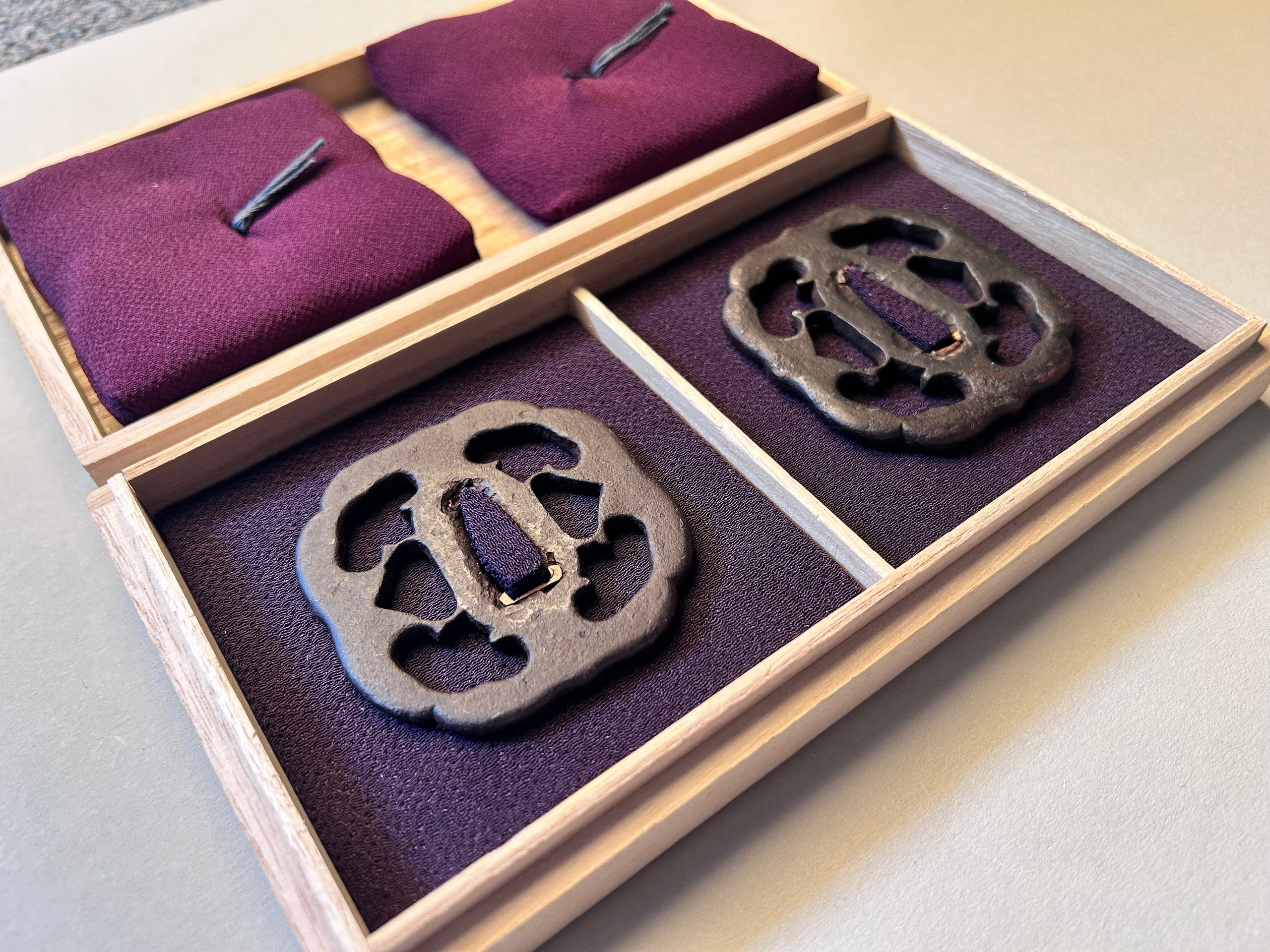
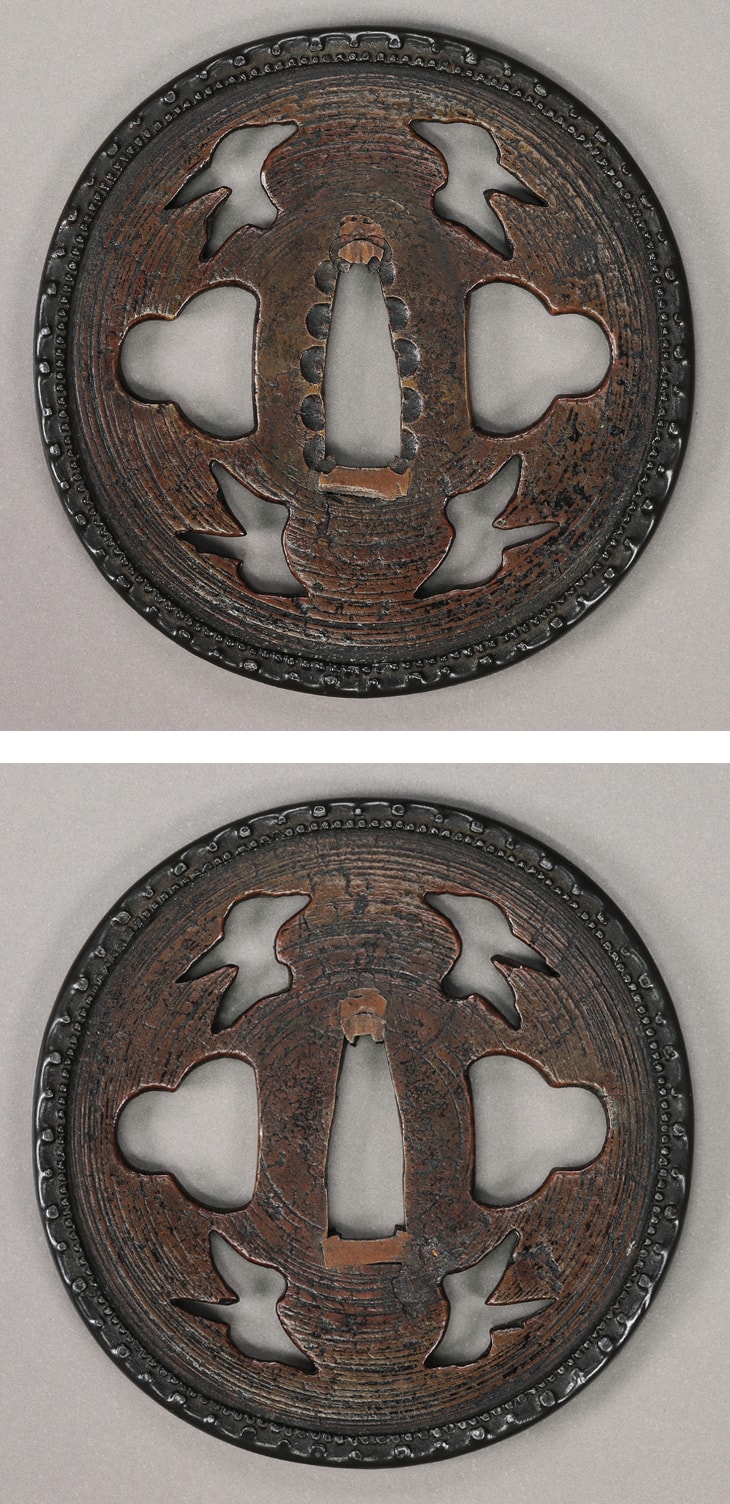
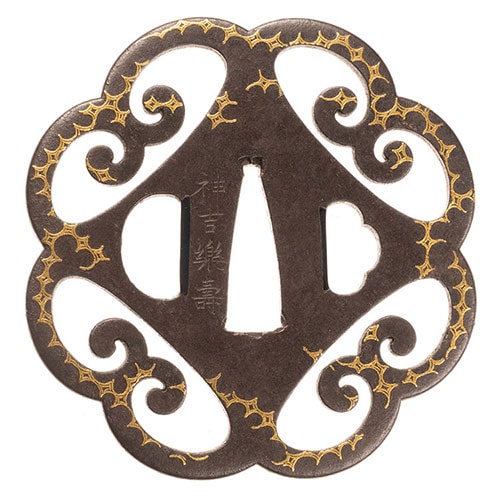
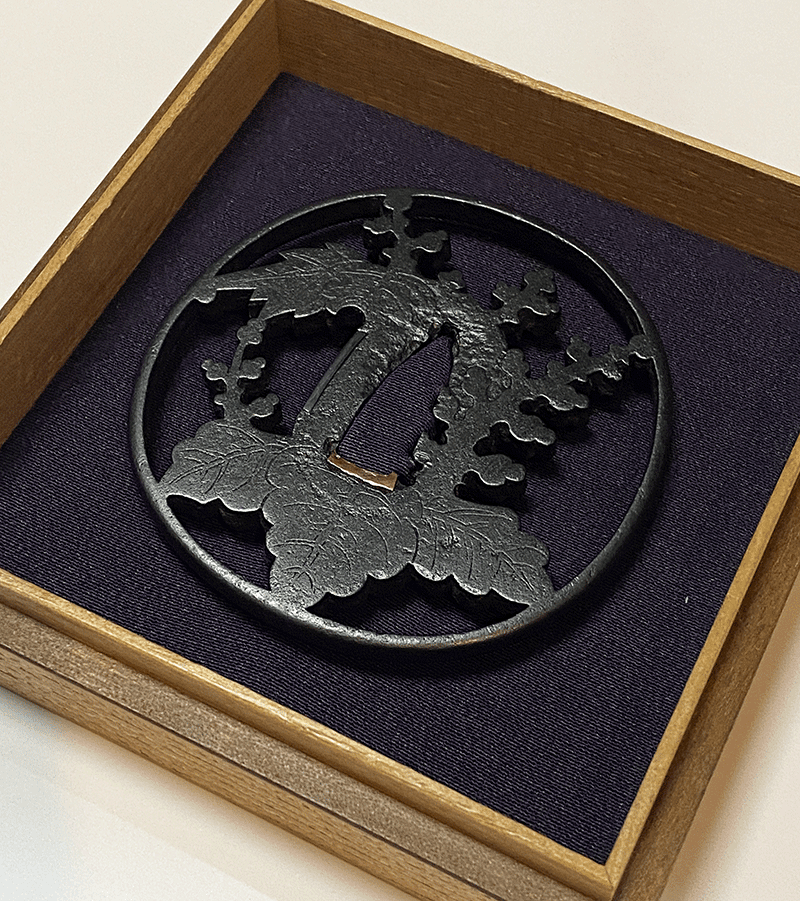
Shimizu Jingo, also read Shimizu Jingo (志水甚五), was the founder of the Shimizu lineage, one of the four principal houses — alongside Hayashi, Hirata, and Nishigaki — that constitute the orthodox mainline of metalwork. Said to have been a nephew of Hirata Hikozo, the first-generation Jingo entered the service of Hosokawa Sansai Tadaoki, the cultured renowned equally for military prowess and mastery of the tea ceremony as a leading disciple of Sen no Rikyu. When Hosokawa Tadatoshi was enfeoffed with 540,000 at Kumamoto following the dispossession of the Kato family in 'ei 9 (1632), Sansai retired to Yatsushiro Castle in Province. Jingo accompanied Hirata Hikozo in following Sansai to Yatsushiro, where he established his workshop and began producing the distinctive guard forms that would define his school for generations. No signed works by the first generation are known; attribution rests on connoisseurship of his highly individual manner, and the Jingo line continued to prosper as a major lineage well into the mid- period.
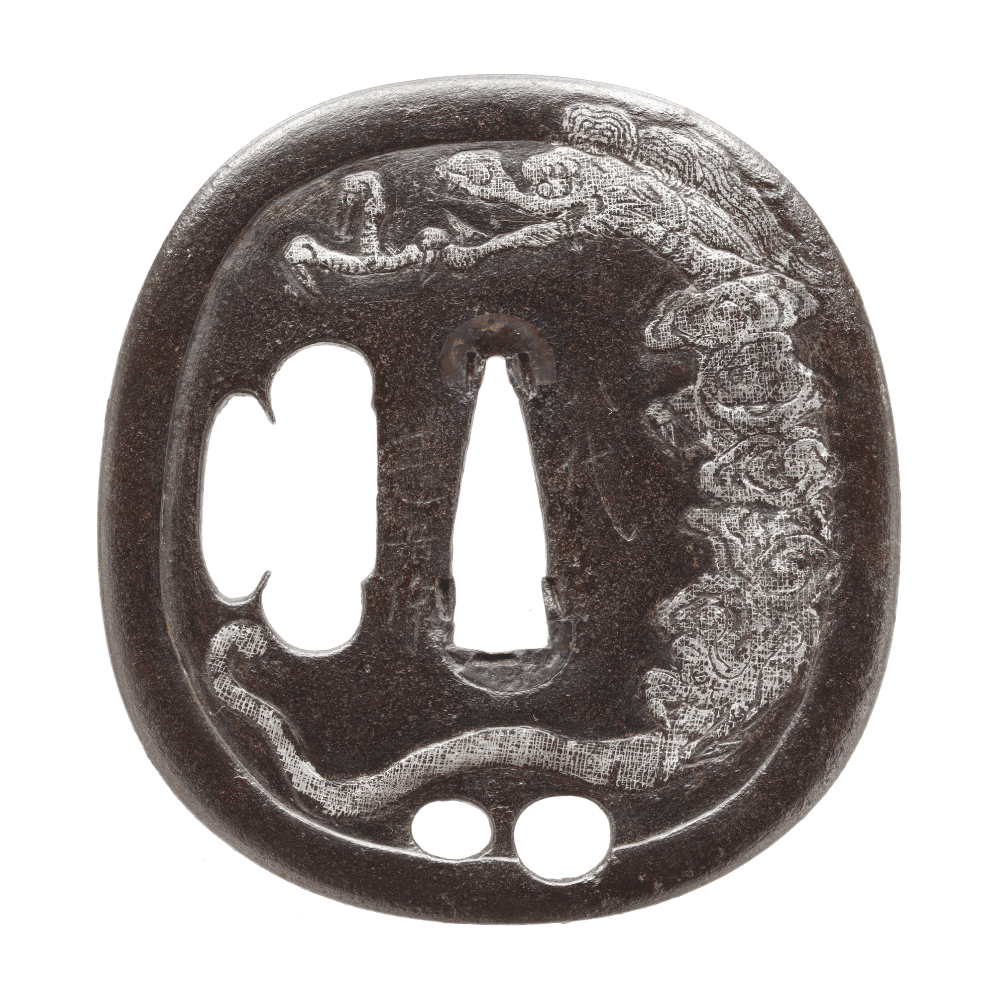
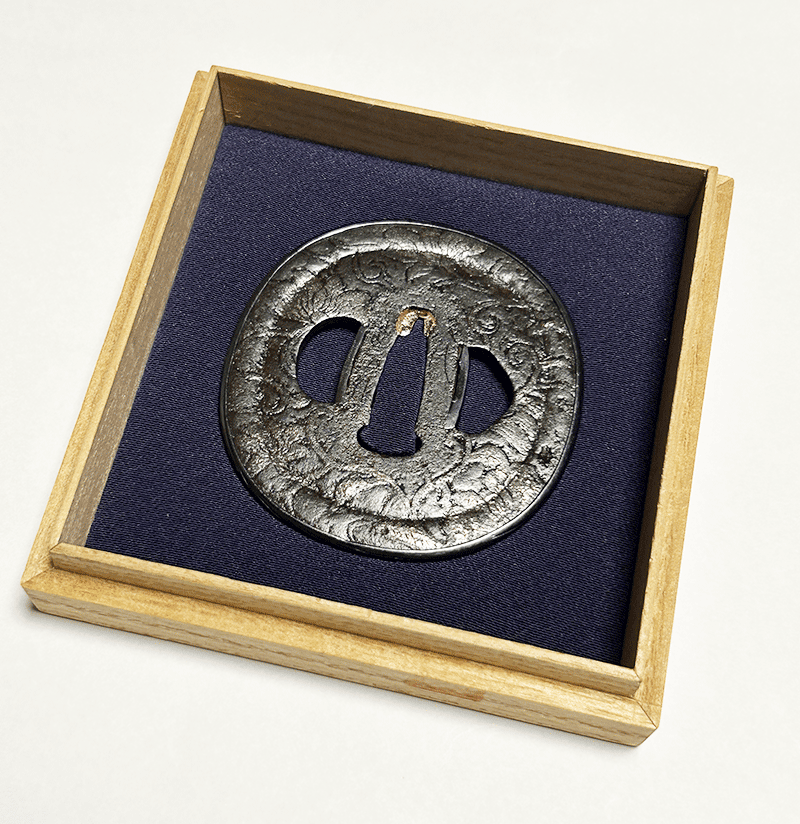
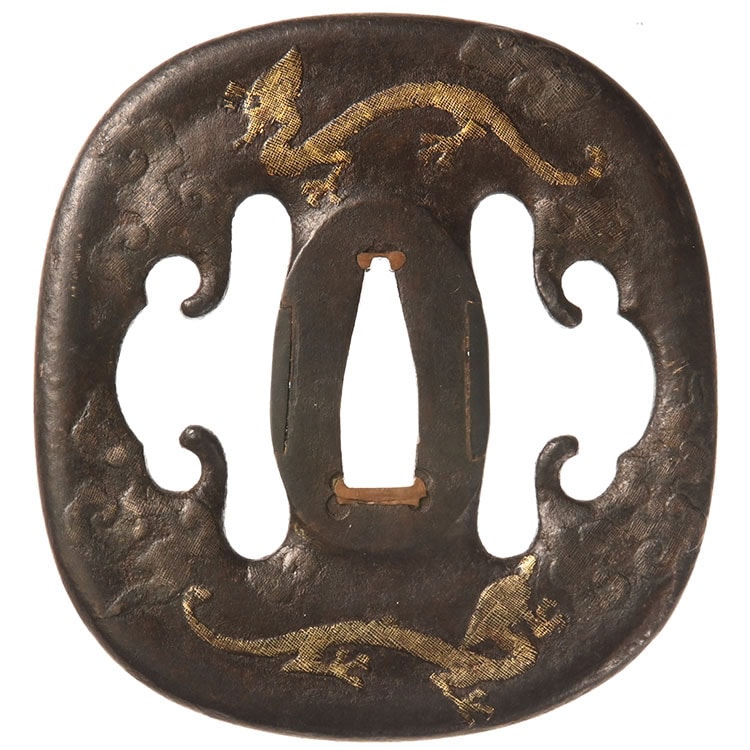
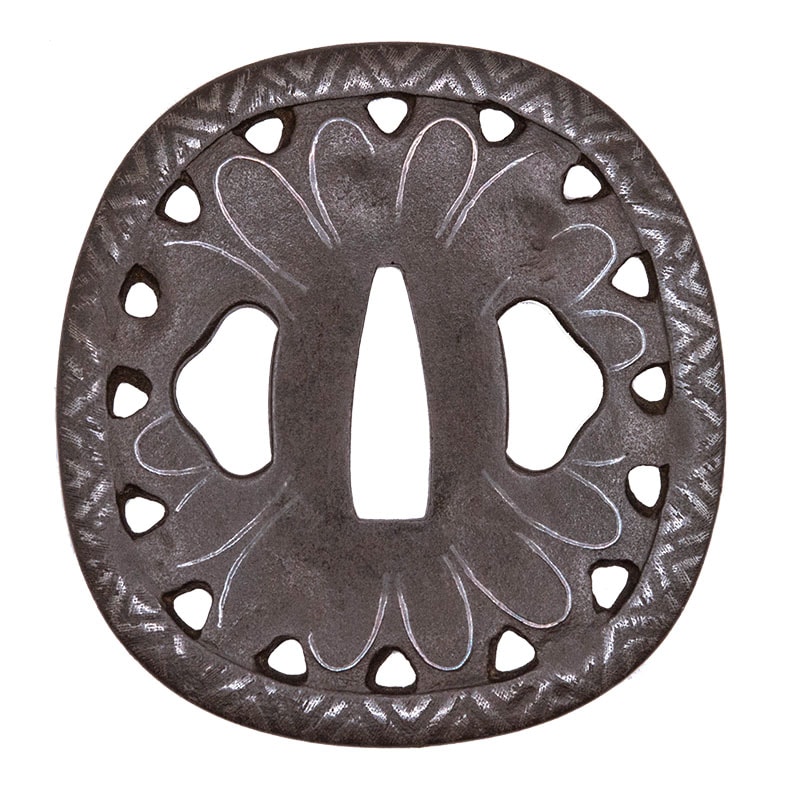
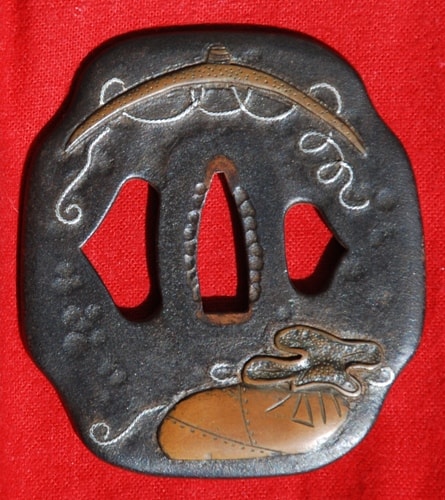
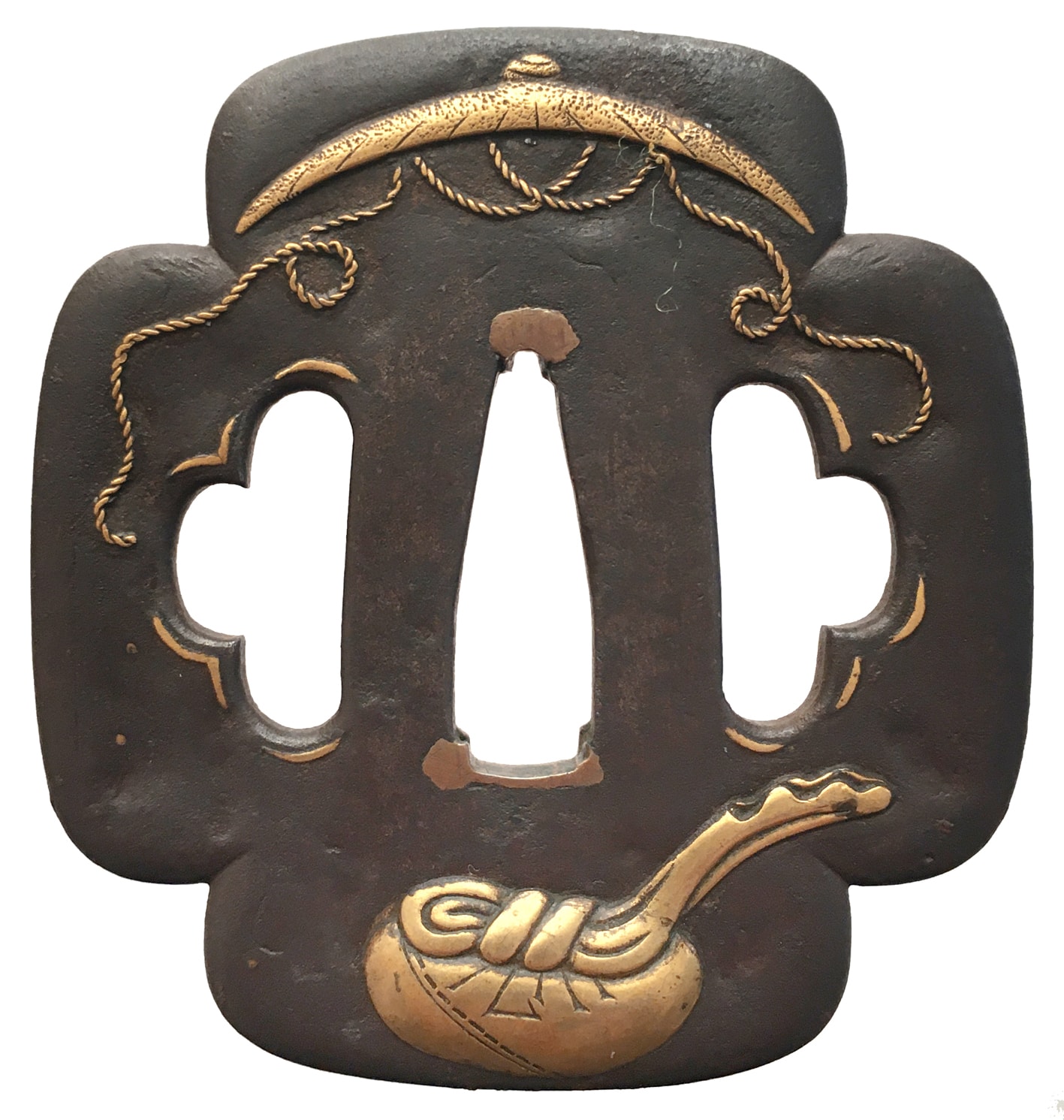
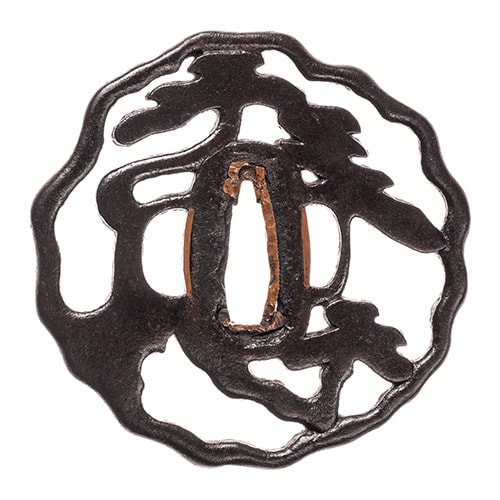
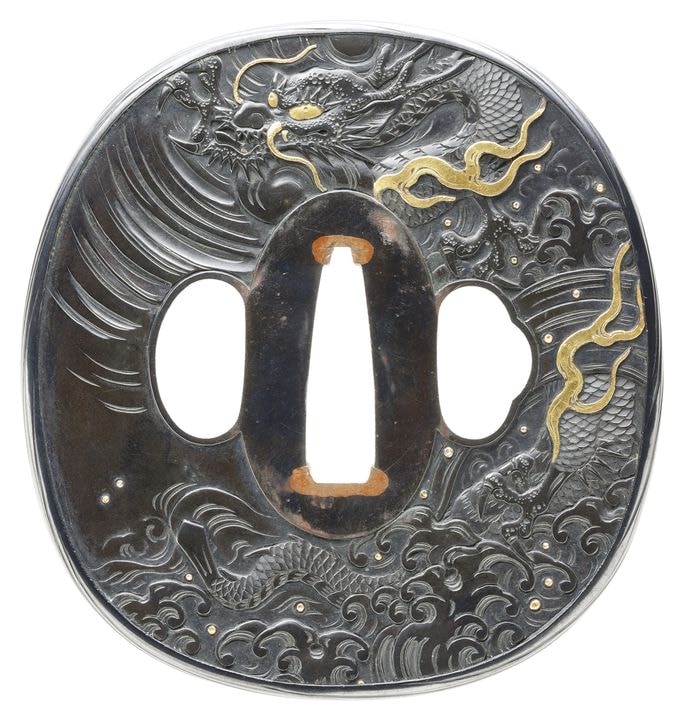
Among metalworkers, Jingo's technical manner exhibits the most intense individuality. His preferred medium was an iron plate finished in — a hammered ground augmented by a fired surface treatment known as — upon which he executed large-scale pictorial compositions in brass -, a flush-inlay technique that he elevated to an art of exceptional boldness. His characteristic forms include the (rounded-square) and (flared) silhouettes, and his decorative repertoire extended to (raised relief carving), (hairline engraving), silver (cloth-pattern inlay), and occasional black lacquer coating. The hallmark of his compositional method lies in a deliberate asymmetry between obverse and reverse: on the front, he renders his subjects — raptors, owls, roosters, rain dragons, octopi — with commanding scale and forceful presence; on the reverse, he intentionally reserves broad expanses of open space, arranging motifs in diminished scale with subdued coloring and softer modeling. Though this contrast may at first appear unbalanced, it is precisely through this tension that Jingo achieves an overall harmony imbued with a profound sense of , the quiet, austere beauty central to the Hosokawa aesthetic tradition.
Jingo's achievement stands apart within the metalworking tradition as the fullest artistic expression of the shibumi — understated elegance — cultivated under Sansai's personal guidance. His pictorial approach, likely modeled on the inlay conventions of the Heianjo school yet far surpassing them in boldness and scale, introduced a painterly sensibility to iron guard-making that remained without parallel. The owl perched in a pine, the eagle with talons clenched upon a branch, the rain dragon twisting across a hammered ground — these became iconic subjects inseparable from Jingo's name. Designation records consistently praise the extraordinary force of his artistic vision: a manner in which, to borrow the classical phrase invoked by the , "great skill appears clumsy" — seemingly artless yet transcending ordinary expectation. His works fuse martial vigor with contemplative restraint, embodying the warrior-aesthete ideal that Sansai himself personified.