ProvinceHigoEraEarly Edo (1590–1635)SchoolHigo Kinko>HirataTraditionHigoGeneration1st genTeacherTrained in the Shōami tradition; received metalwork instruction from Hosokawa Sansai (Tadaoki)Specialtiestsuba, inlayTypeTosogu MakerCodeHIR012
Hirata Hikozo, founder of the Hirata school of metalworkers, was a craftsman of Shoami lineage who served the celebrated warrior and tea master Hosokawa Sansai in Kyoto. When the Hosokawa domain was transferred, Hikozo accompanied his lord first to Tango and Kokura, and finally down to Kumamoto, where he died in 'ei 12 (1635). Under the guidance of Sansai — famed for his command of both martial and cultural refinement — Hikozo developed an aesthetic vision that merged outstanding practical function suited to the warrior's taste with a dignified, elevated artistic quality. From among his followers emerged Shimizu Jingo (his nephew) and Nishigaki Kanshiro; together with Hayashi Matahichi of the Owari lineage, these masters formed what came to be regarded as the four major schools of metalwork. It was Hikozo who established the artistic foundations upon which this entire tradition would rest.
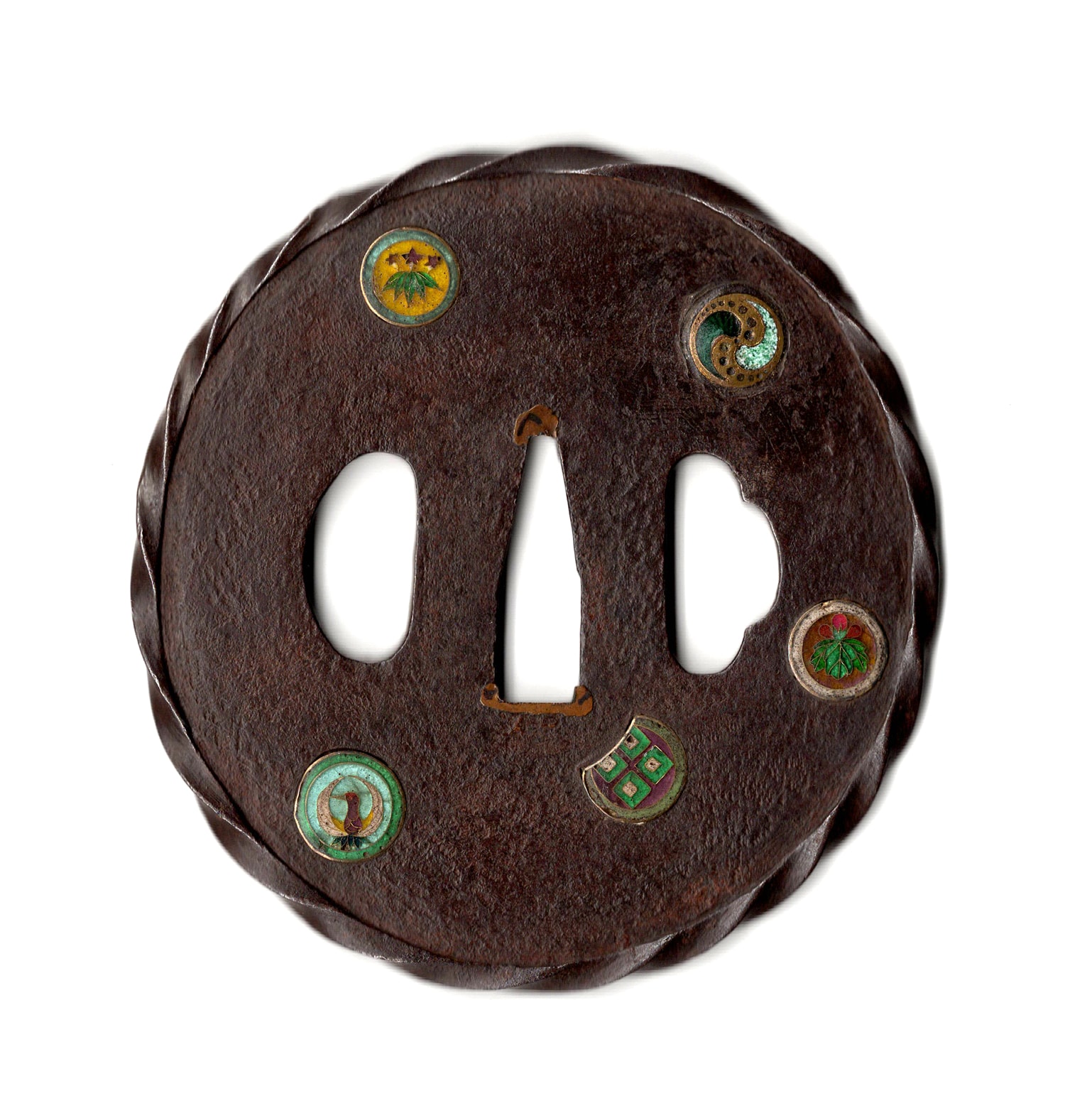
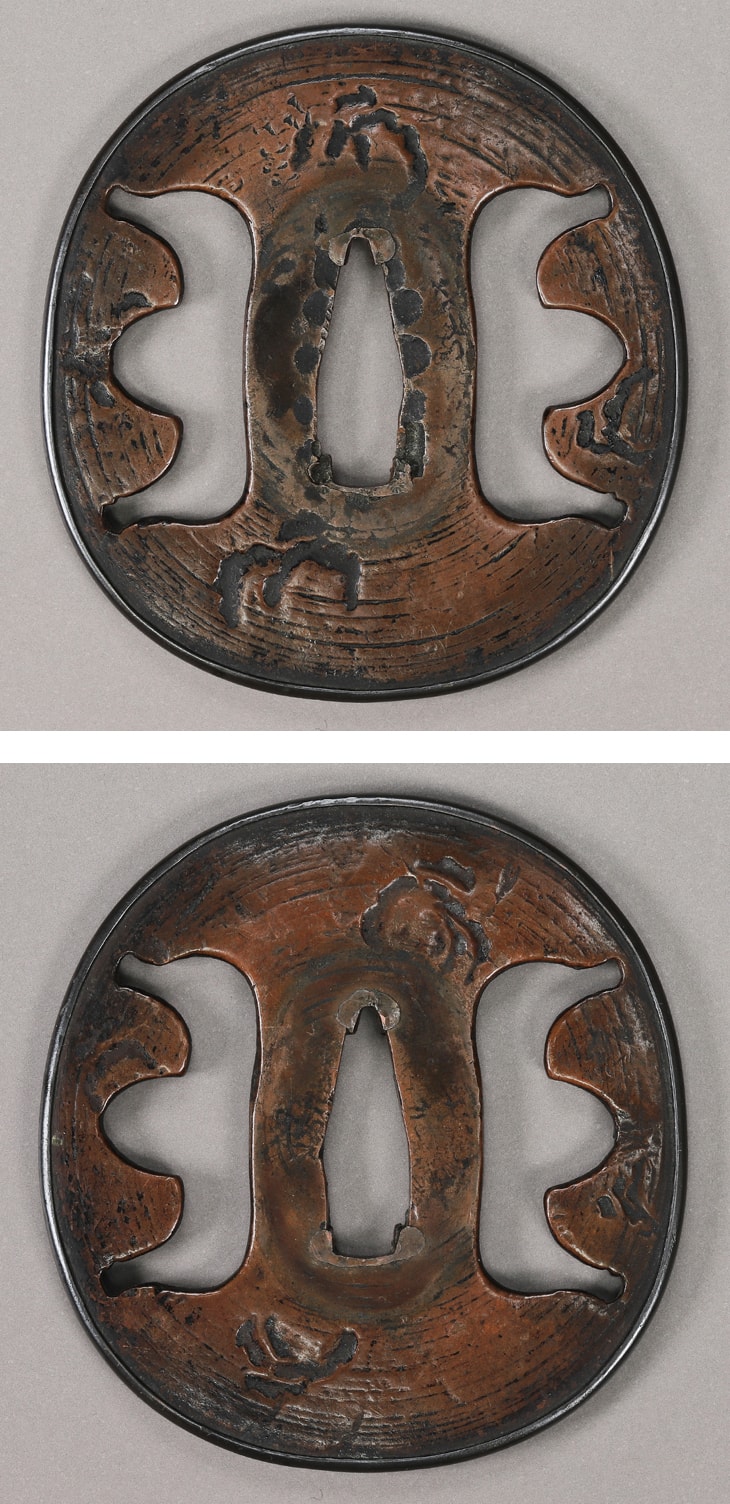
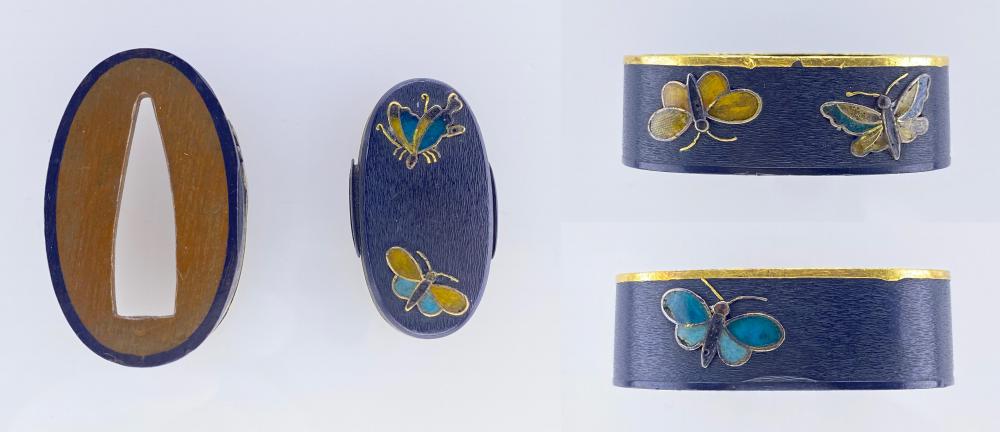
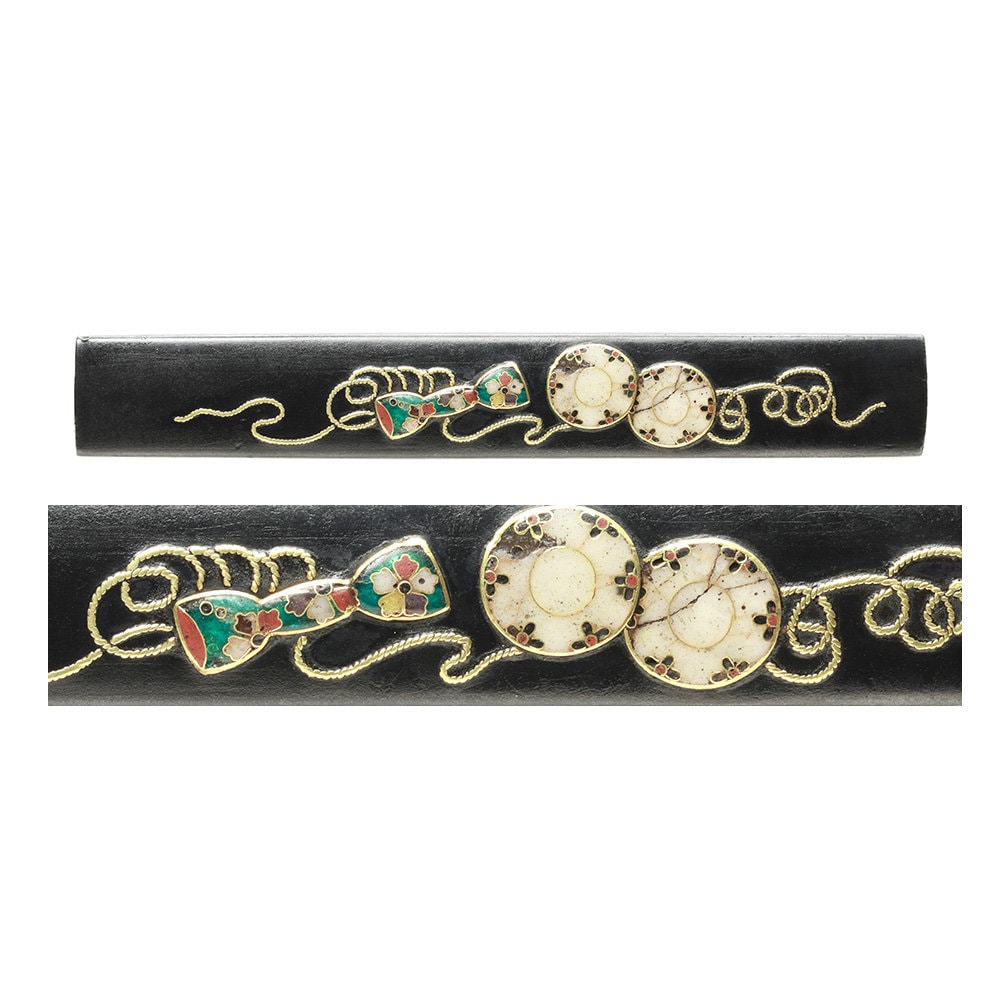
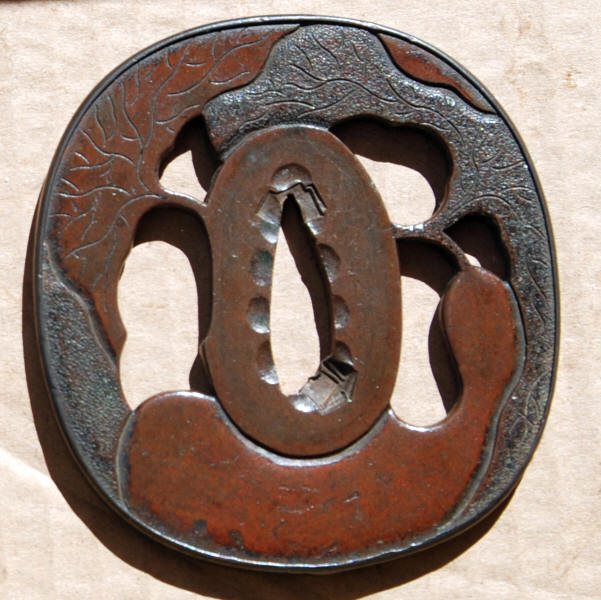
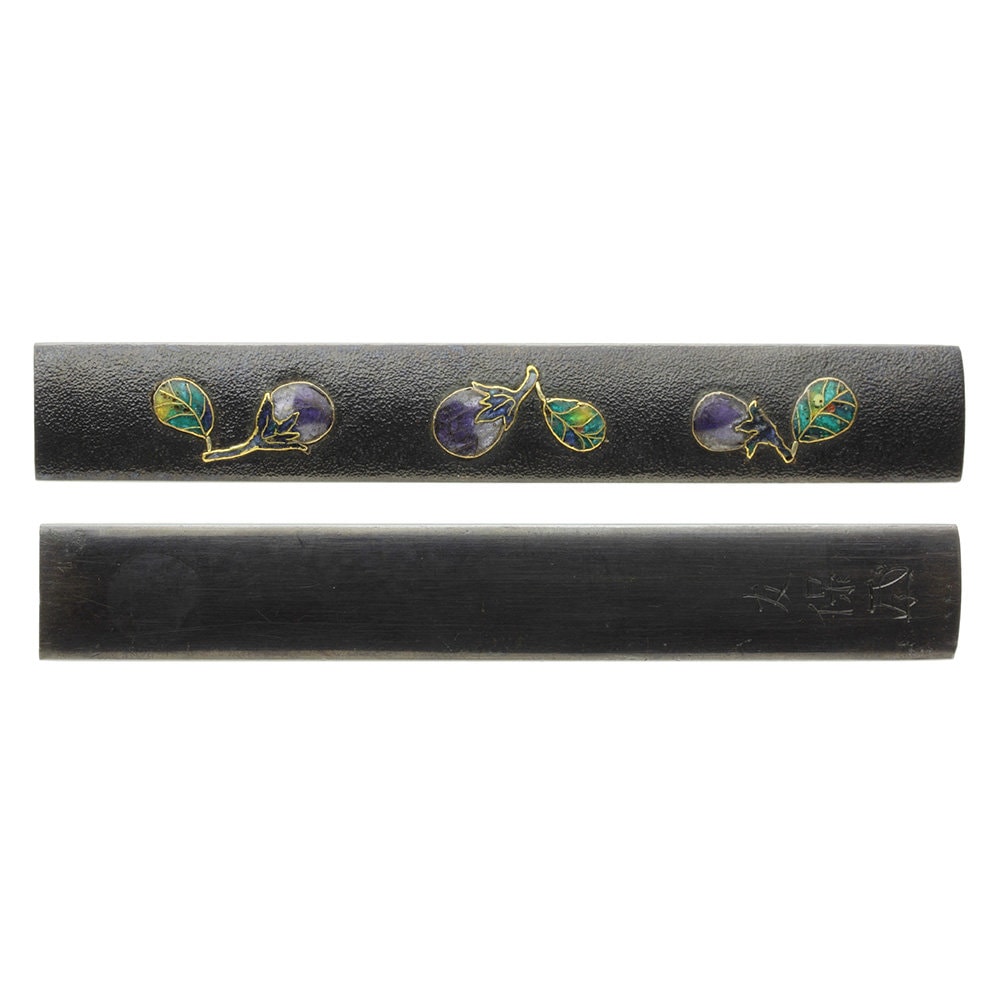
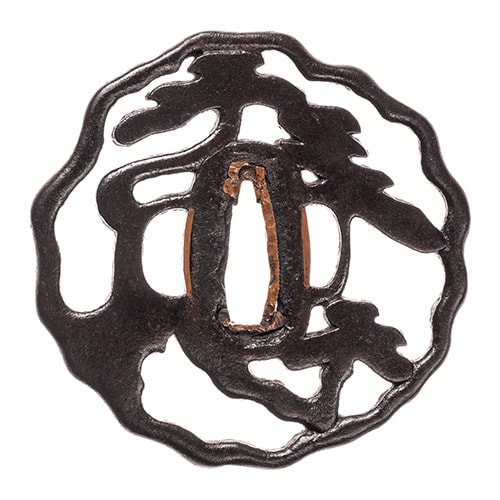
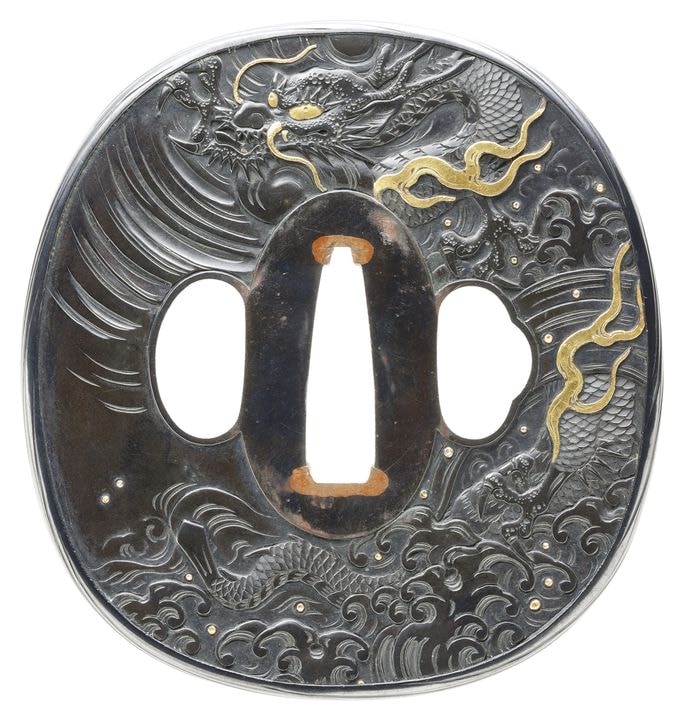
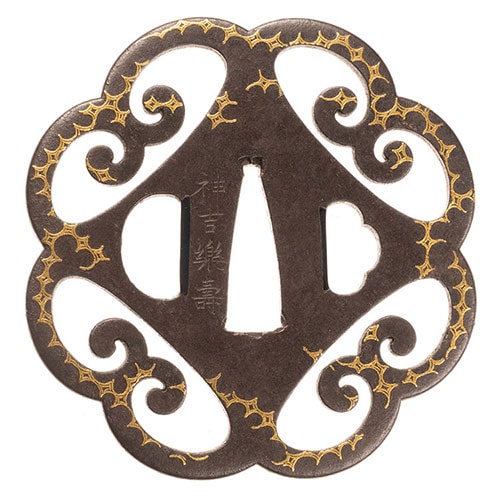
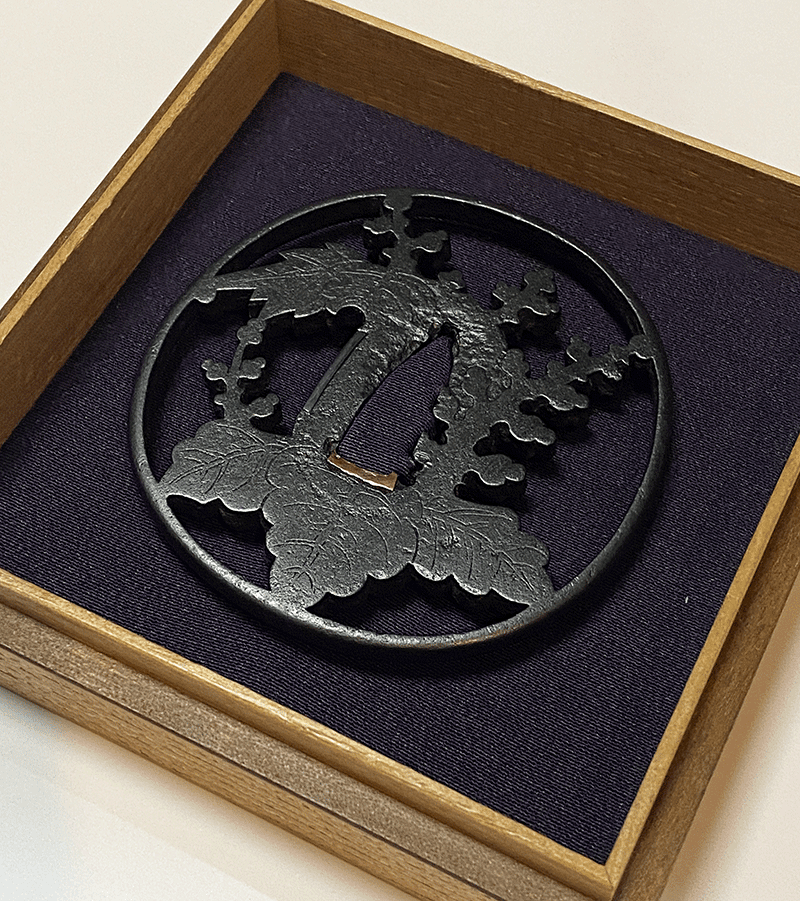
Technically, the Hirata school inherited much of the Shoami tradition. While iron-ground works are also encountered, Hikozo frequently employed such as yamagane, brass, and shakudo, producing the distinctive, richly toned coloration known as "Hikozo-gane." In addition to zogan inlay — including gold keshikomi-zogan, silver-wire inlay, and on rare occasions shippo-zogan (cloisonne inlay) — he heightened decorative elegance by applying characteristic filing treatments such as Amida-yasuri and Okina-yasuri, thereby adding an abundance of refined and courtly taste1. His invention of the Odawara fukurin rim technique became a hallmark of the school, executed in shakudo, brass, shibuichi, or yamagane with a rope-pattern (nawame) finish of dense workmanship. His openwork favored kage-sukashi — shadow or negative silhouettes — rendered with gentle chamfering that contributes to a prevailing softness of impression. Traces of black lacquer often remain upon the ground, producing an exquisite modulation of tone that harmonizes with the underlying metal surface.
What distinguishes Hikozo within the broader Higo tradition is the convergence of plainness and profundity in a single plate. The NBTHKsetsumei repeatedly identify in his work a "plain, sincere character" joined to "archaic elegance3," a sensibility "removed from the mundane" that yields results described as "mysterious, esoteric, and subtly profound." His tsuba are praised for expressing the quiet, tranquil beauty of kanjaku and the refined elegance of sabi — qualities rooted in the aesthetic of the Hosokawa school of tea. Through long years, the ground metal acquires a deeper flavor, and a quiet, dignified world is formed within the single plate2. Whether working in bold o-sukashi openwork or restrained enso compositions, Hikozo's pieces are consistently recognized as possessing an ineffable atmosphere: a subdued, moist feeling of finish4 in which the high level of technique is fully apparent precisely because the design is so direct and spare.
Historical importance
Where Hikozo stands among comparable artisans: across all of nihontō, and within tradition, era, and period. The tiers (Foremost · Leading · Major · Notable) weigh official designations from the NBTHK and Japan's Agency for Cultural Affairs, together with historical honors of lasting repute such as the Sansaku and Meibutsu-chō.