二世紀半の泰平のあいだ、刀は武器である以上に武士の身分の標章であった。江戸の実証と大坂の華やぎのように都市ごとの作風が育ち、時代の末には需要も細っていく。
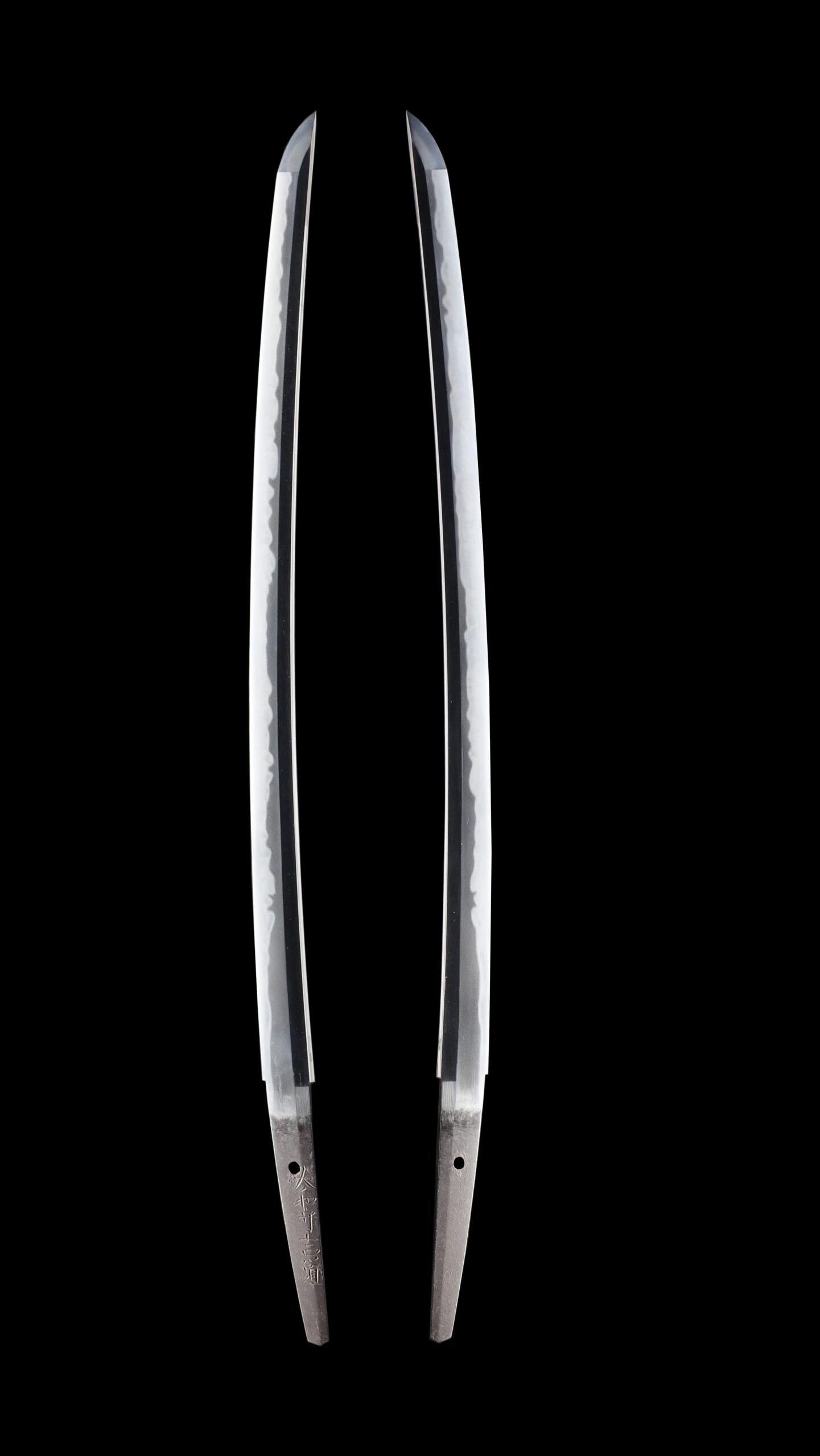
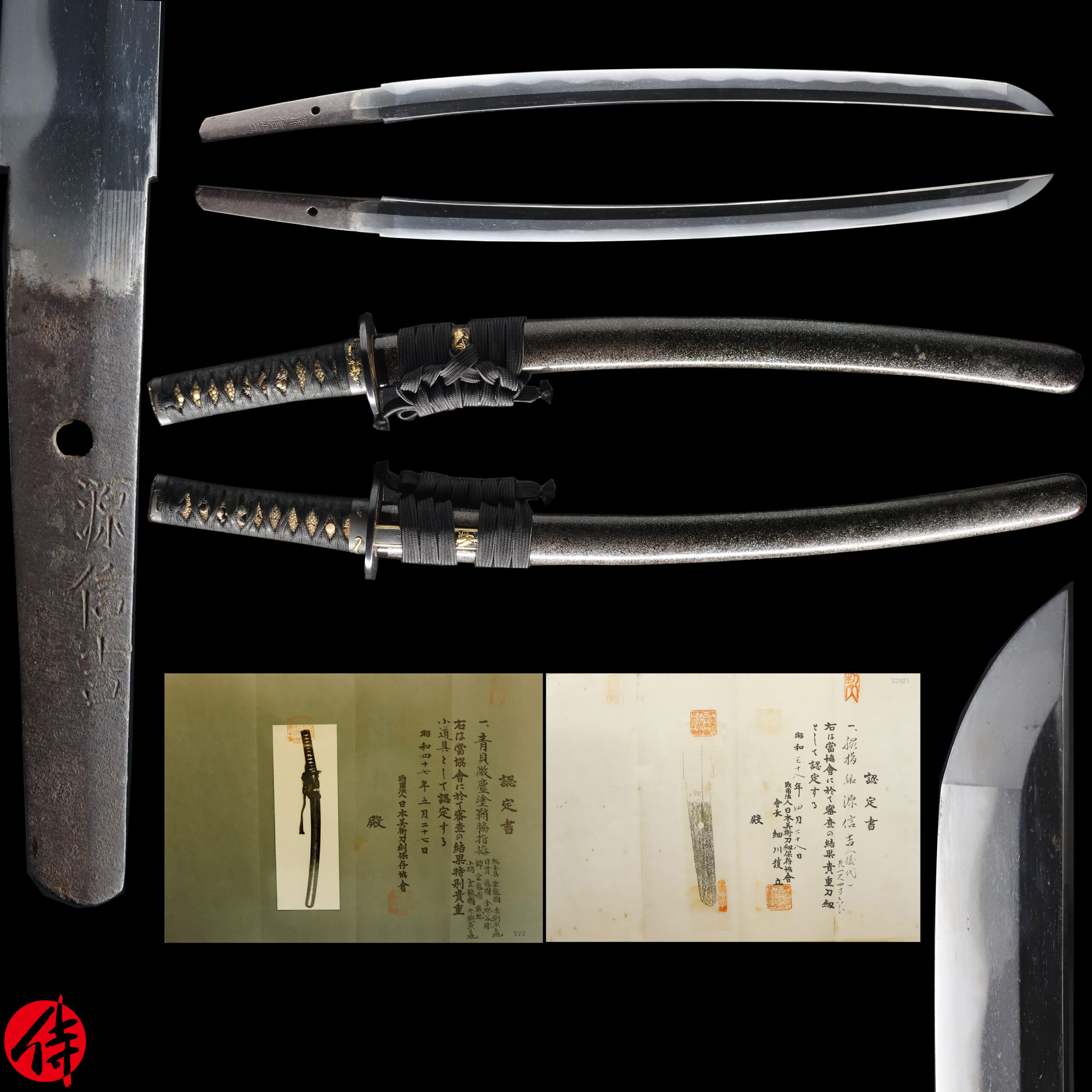
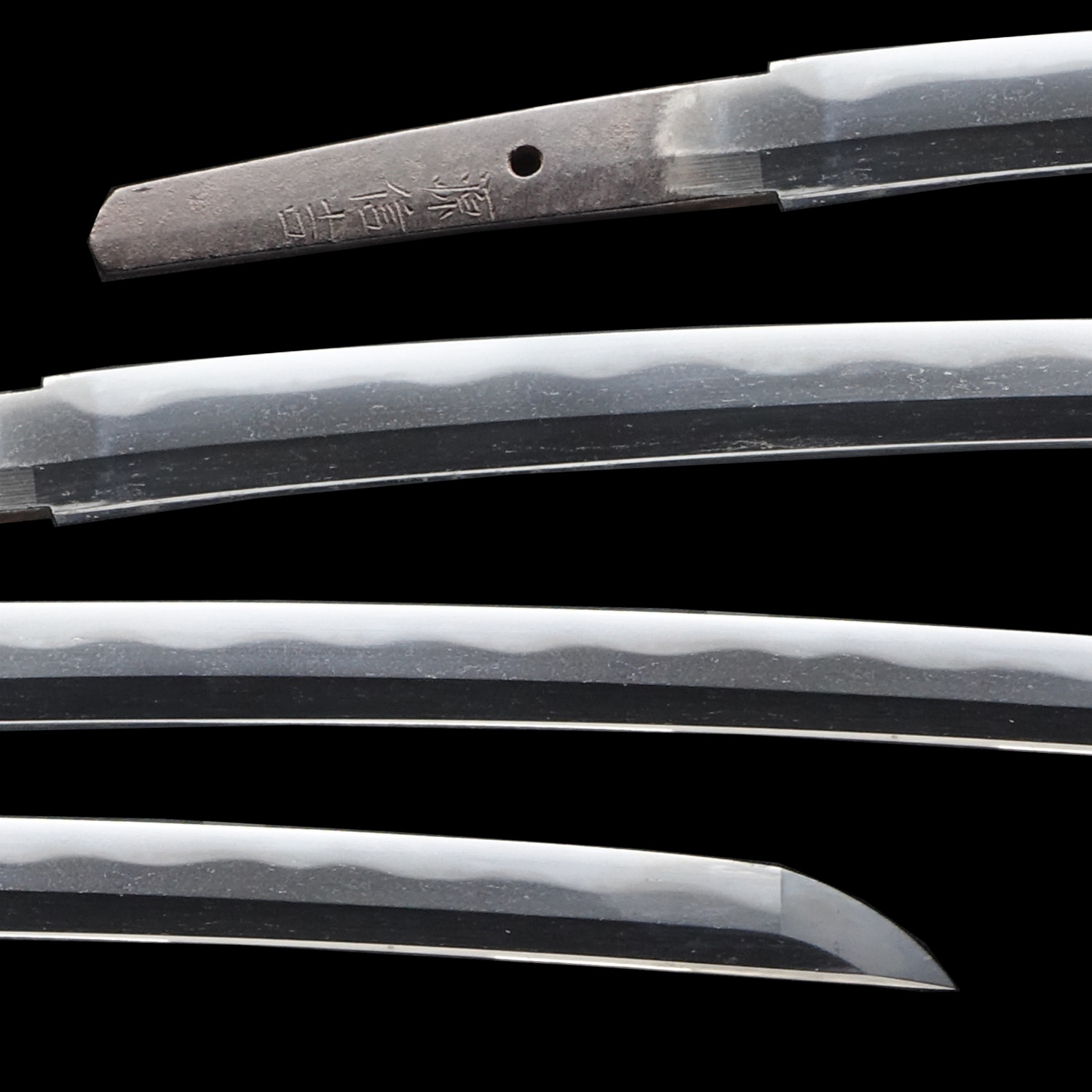
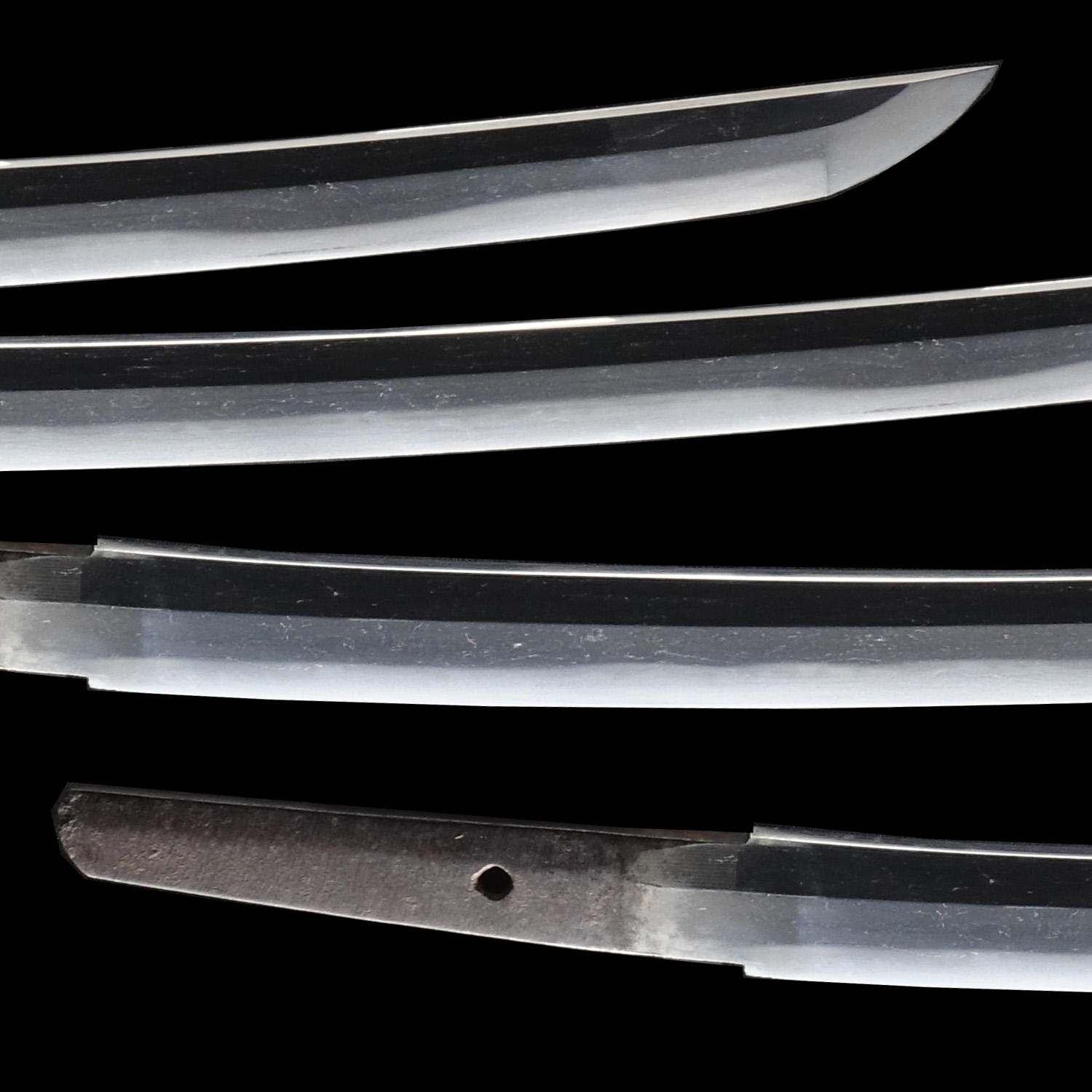
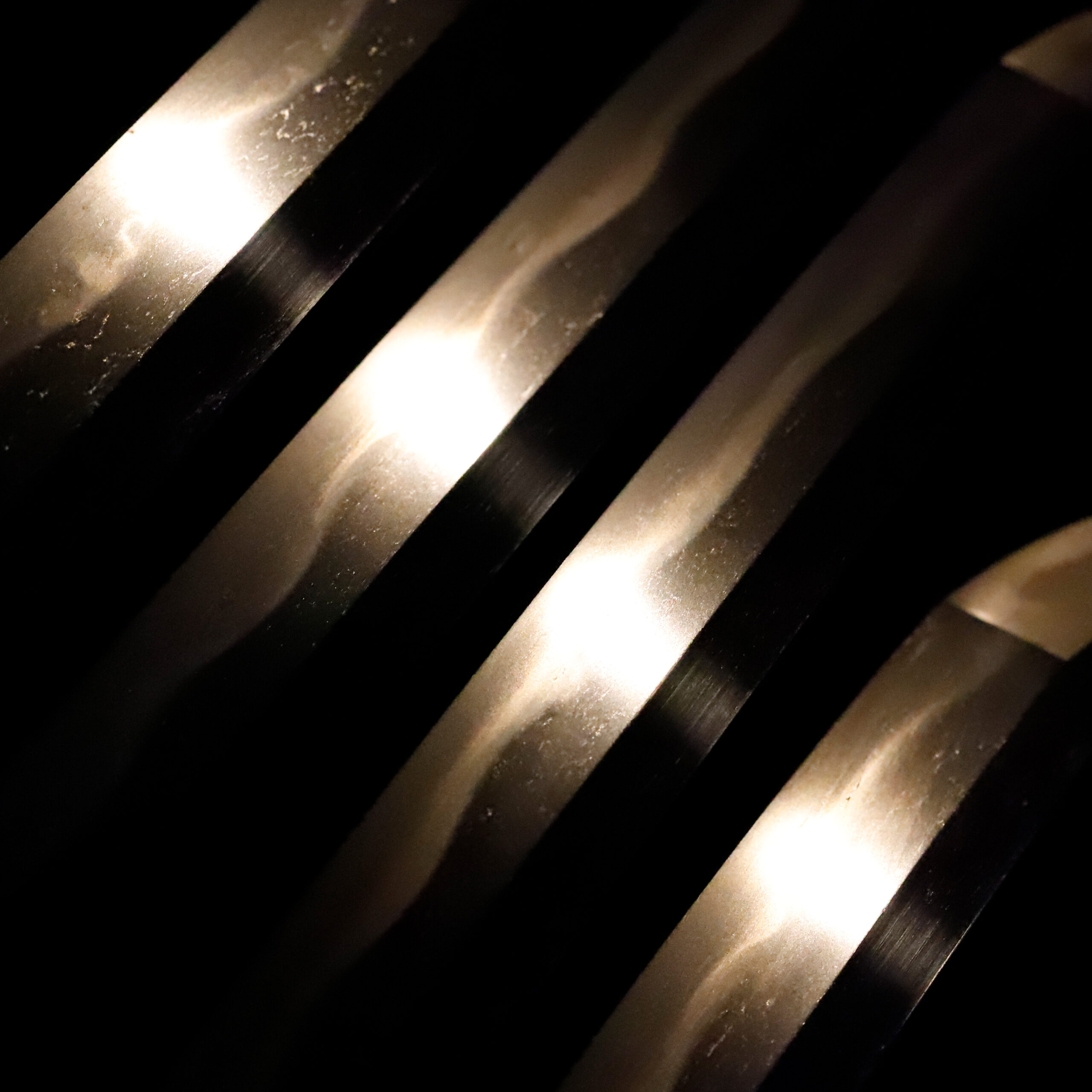
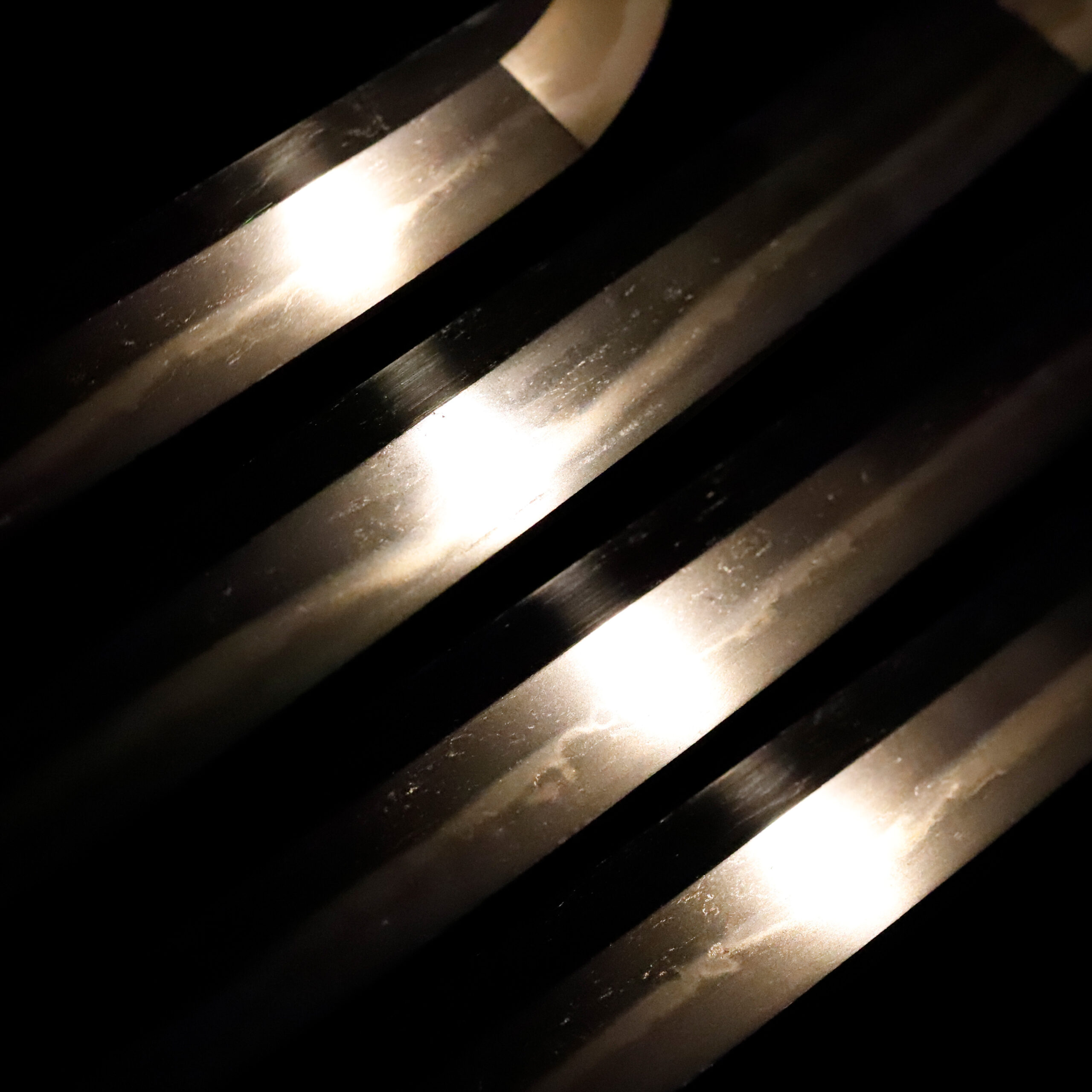
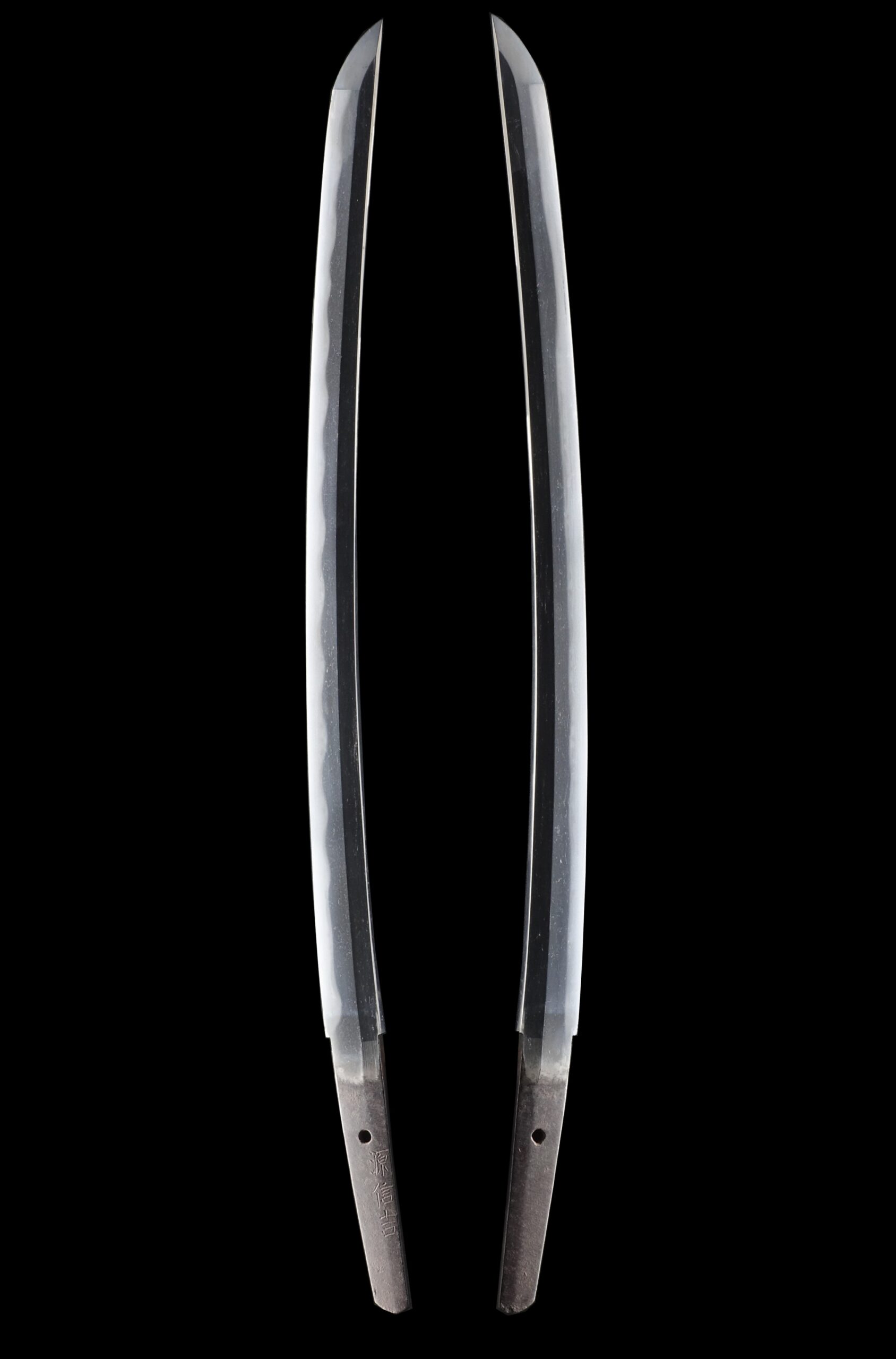
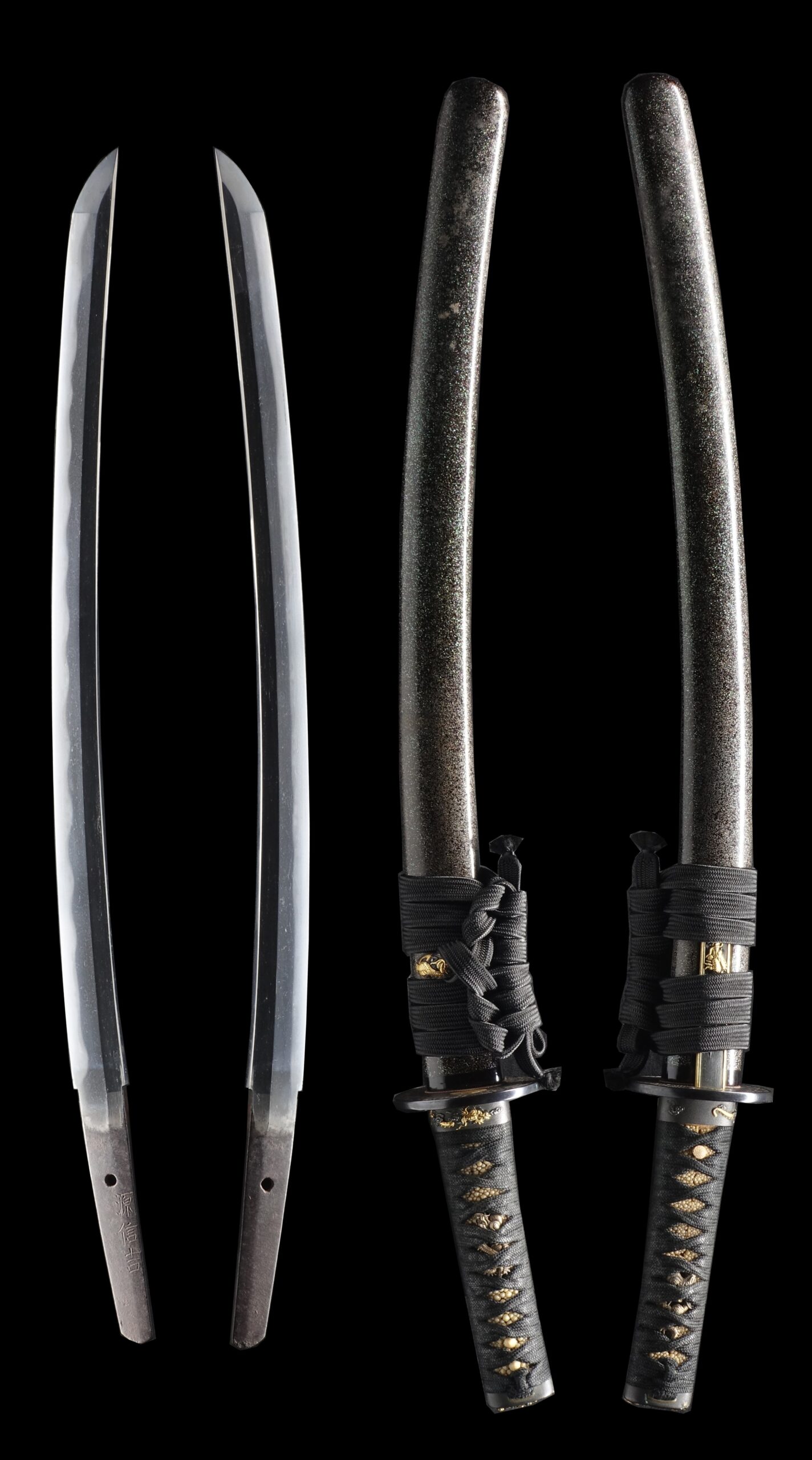
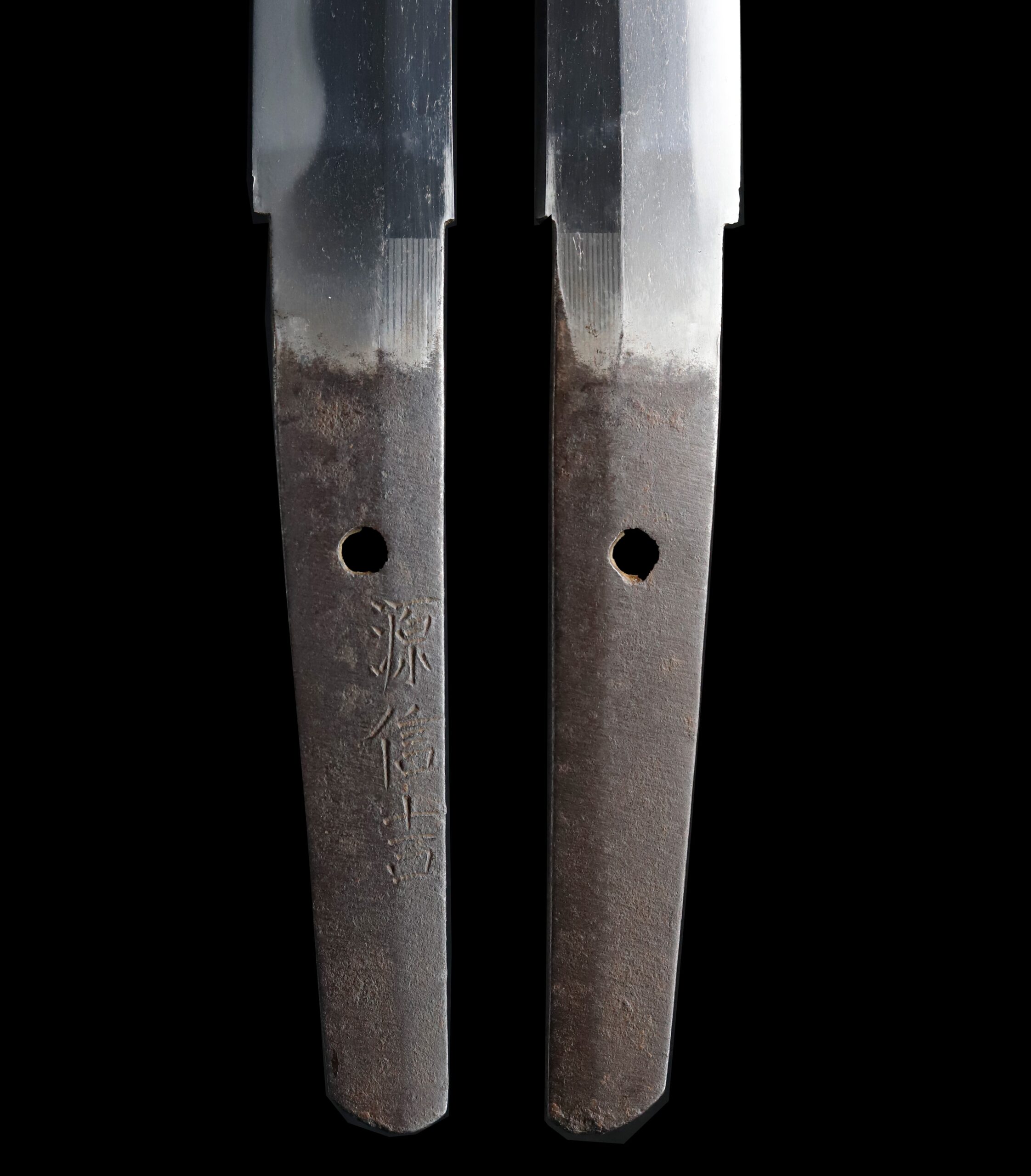
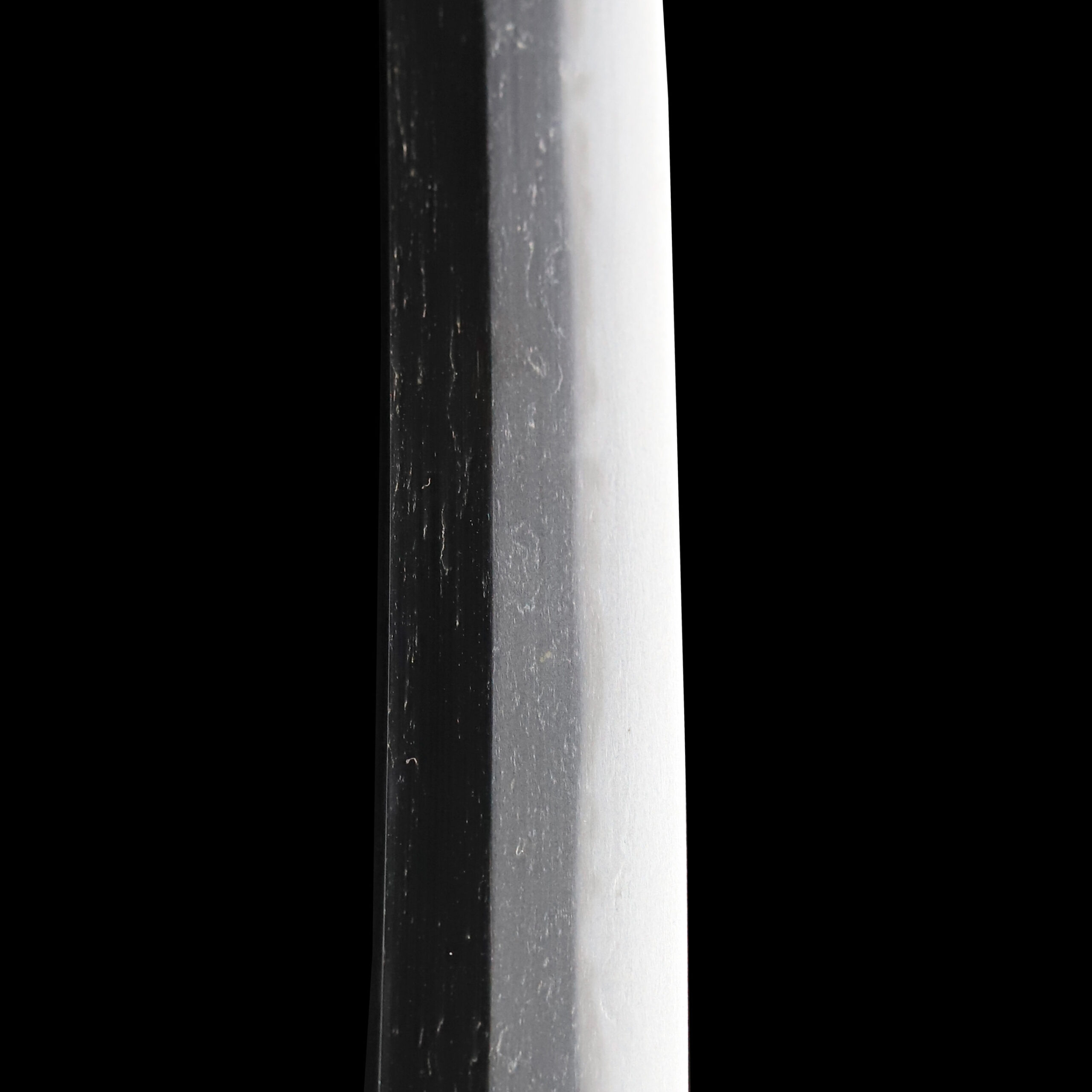
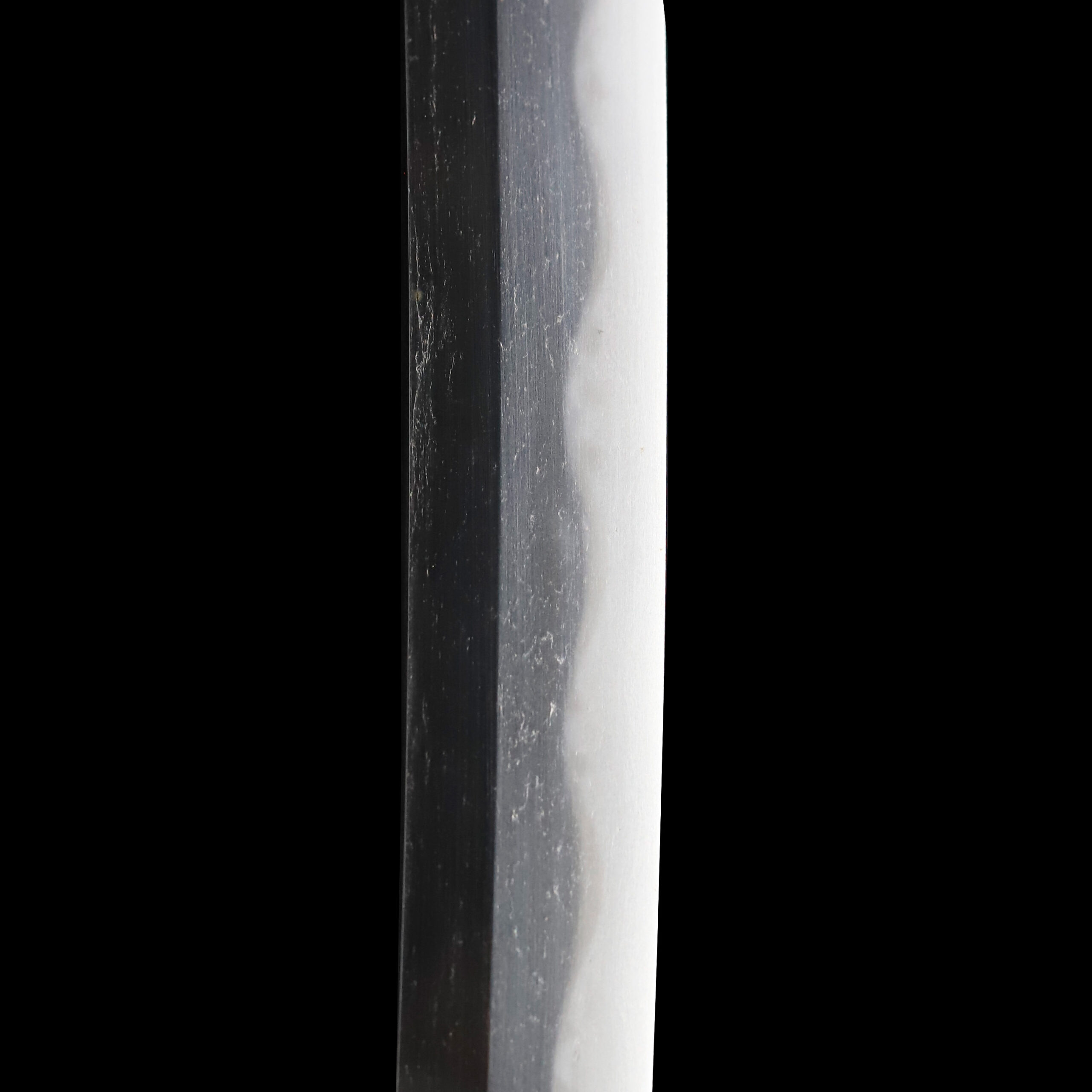
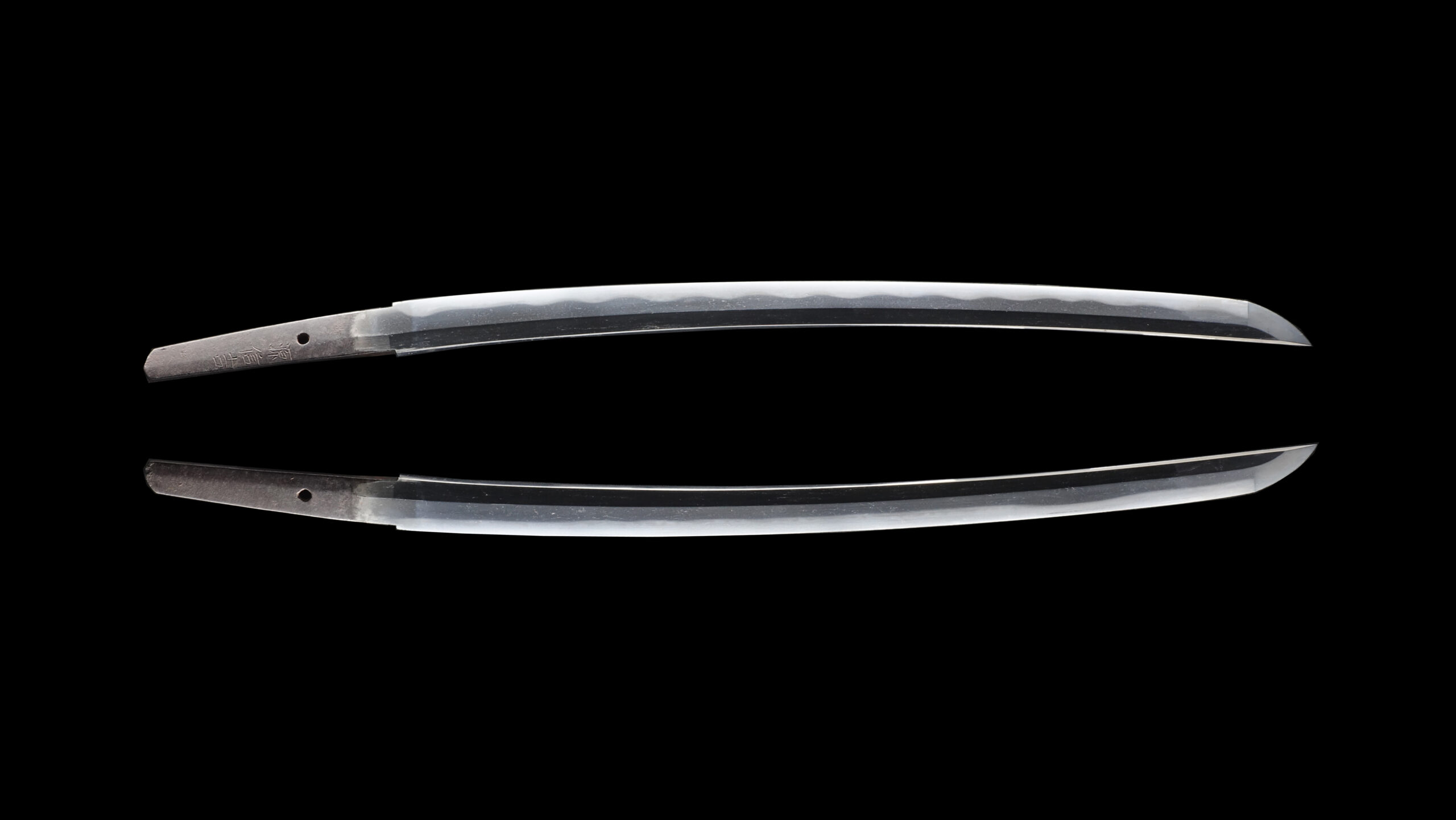
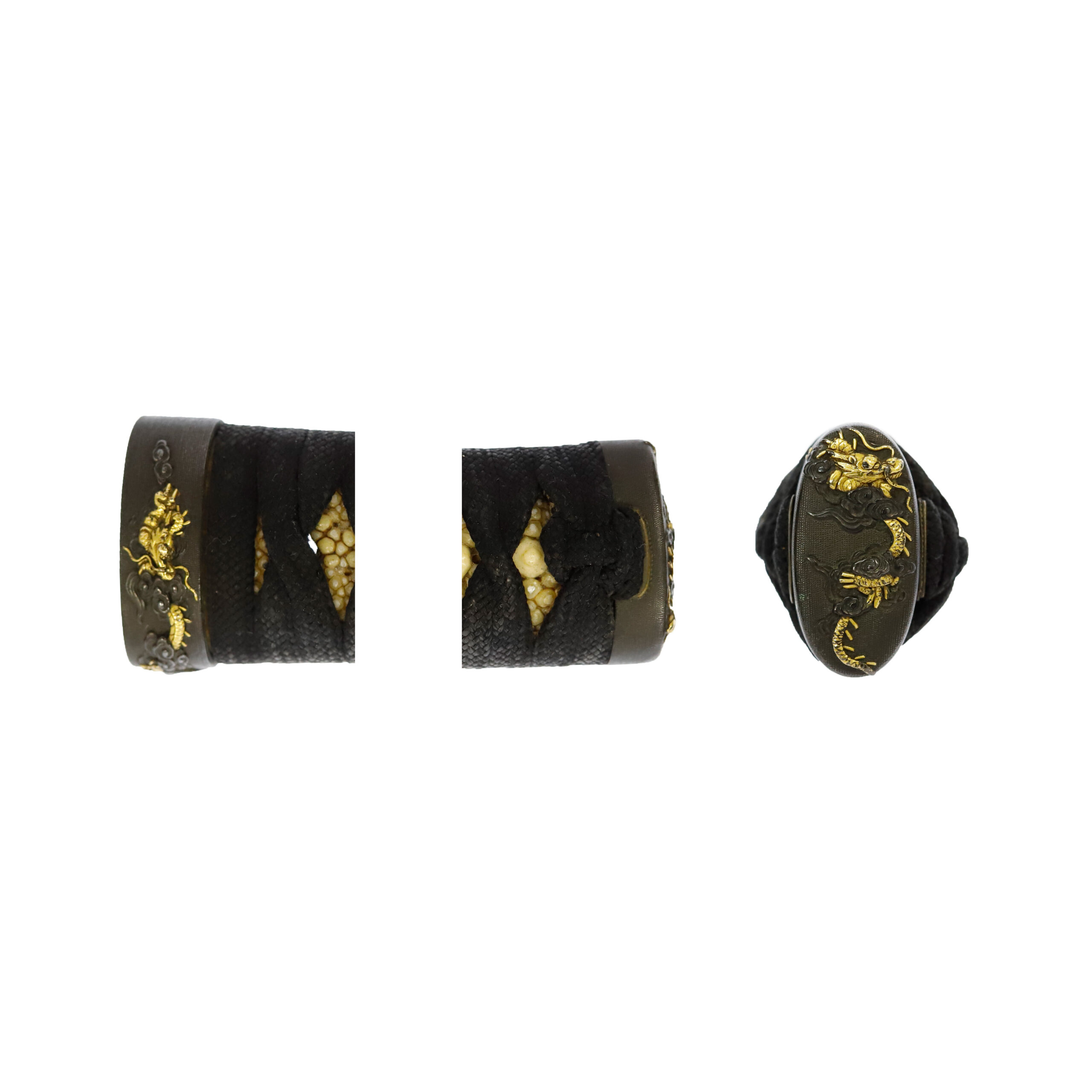
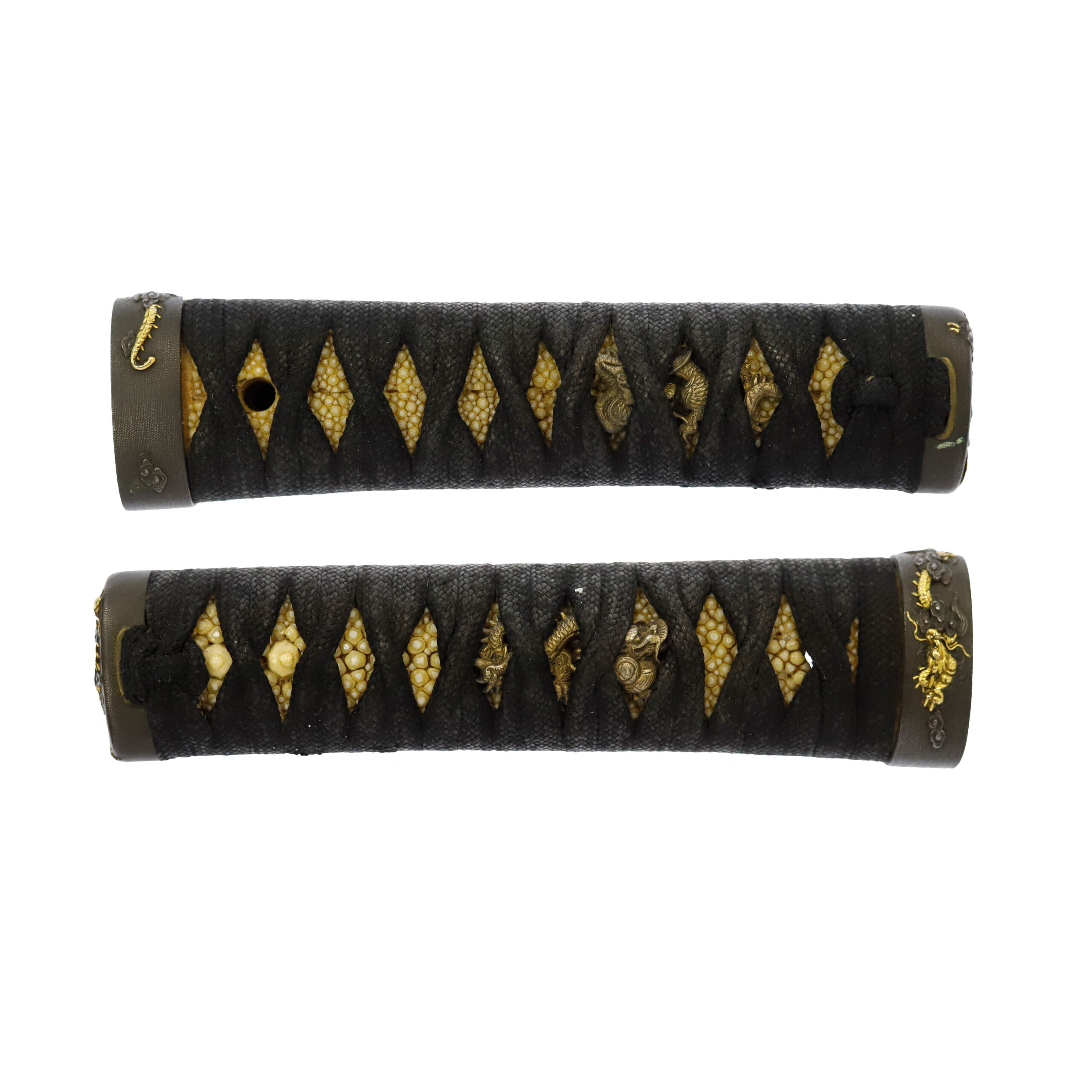
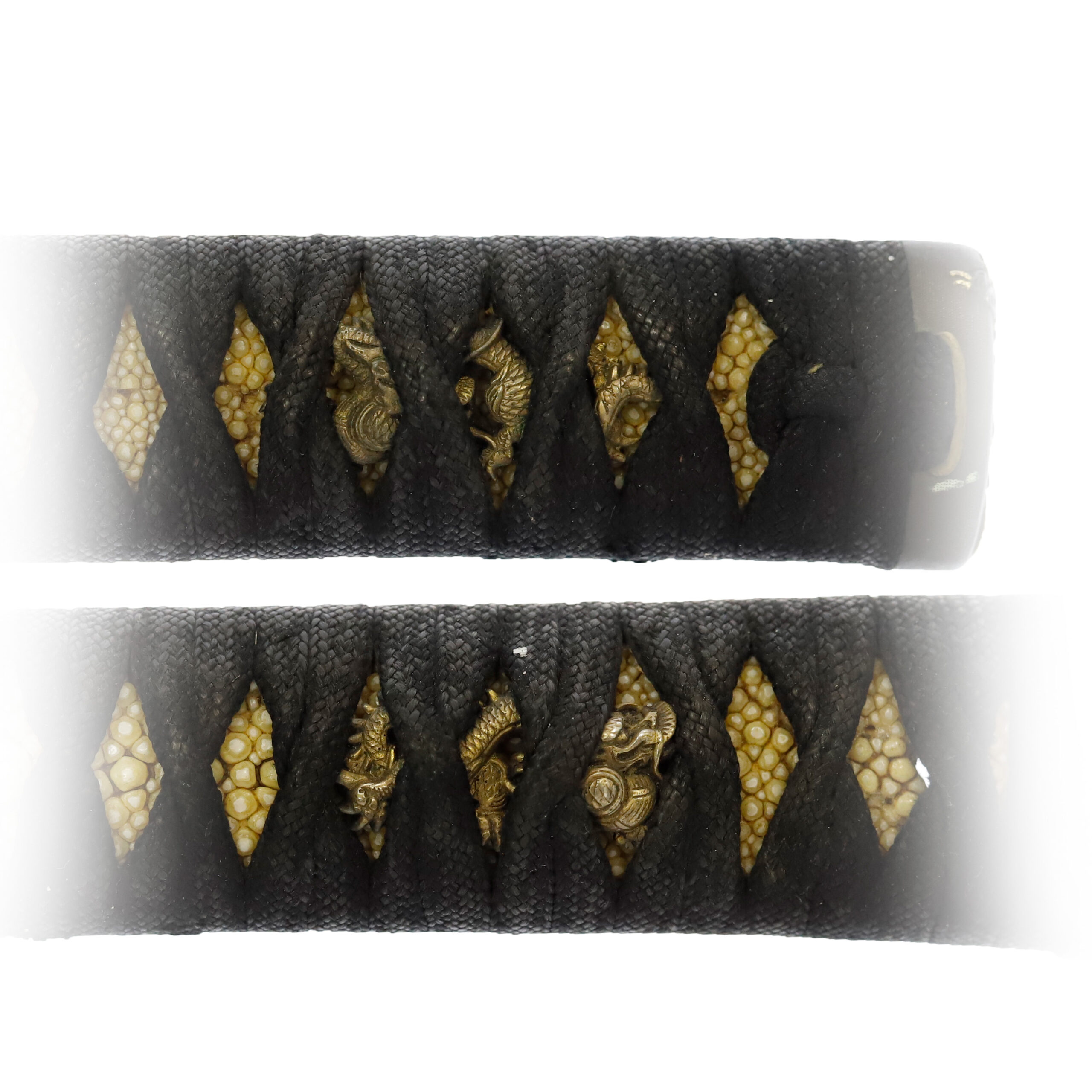
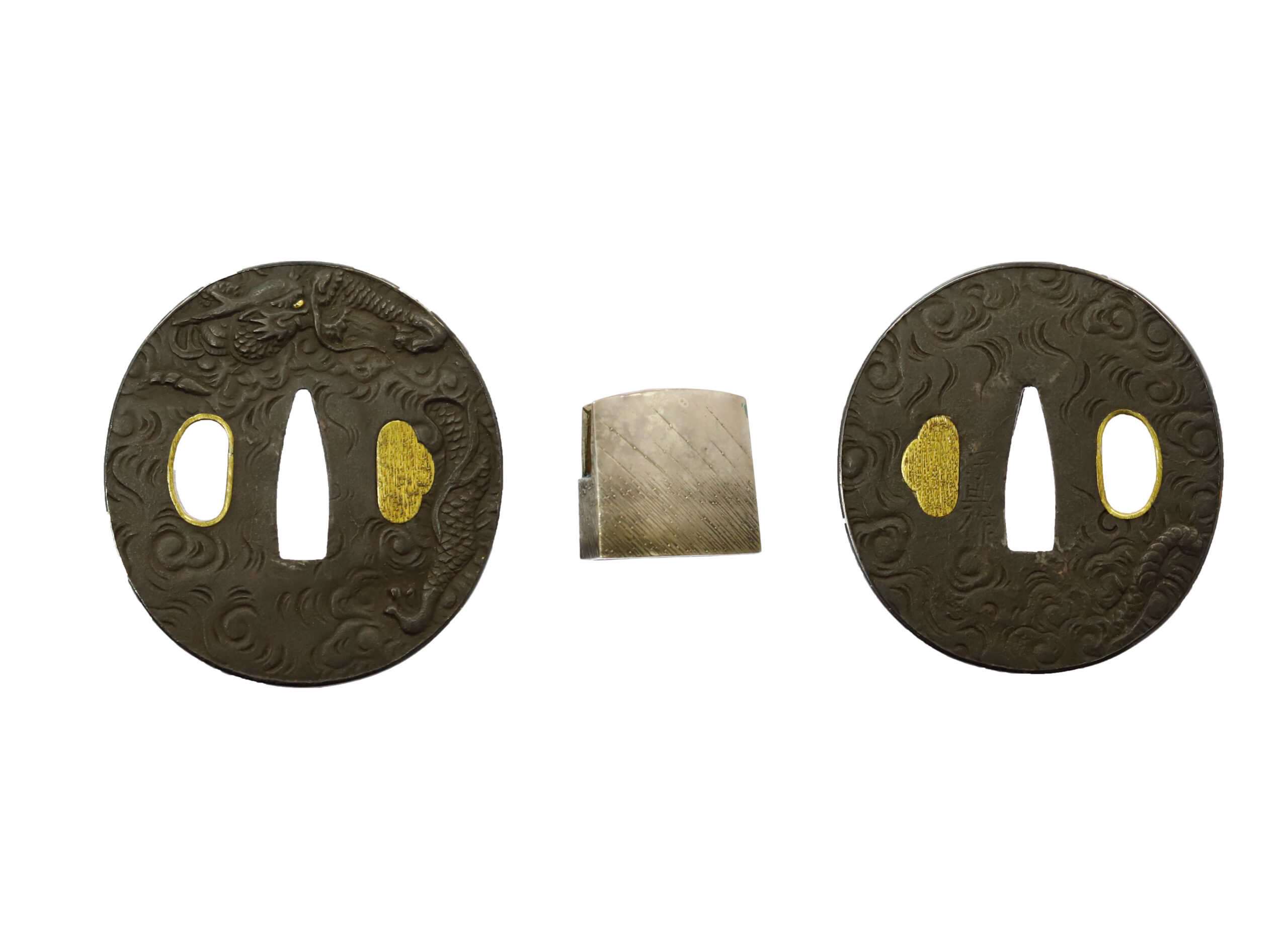
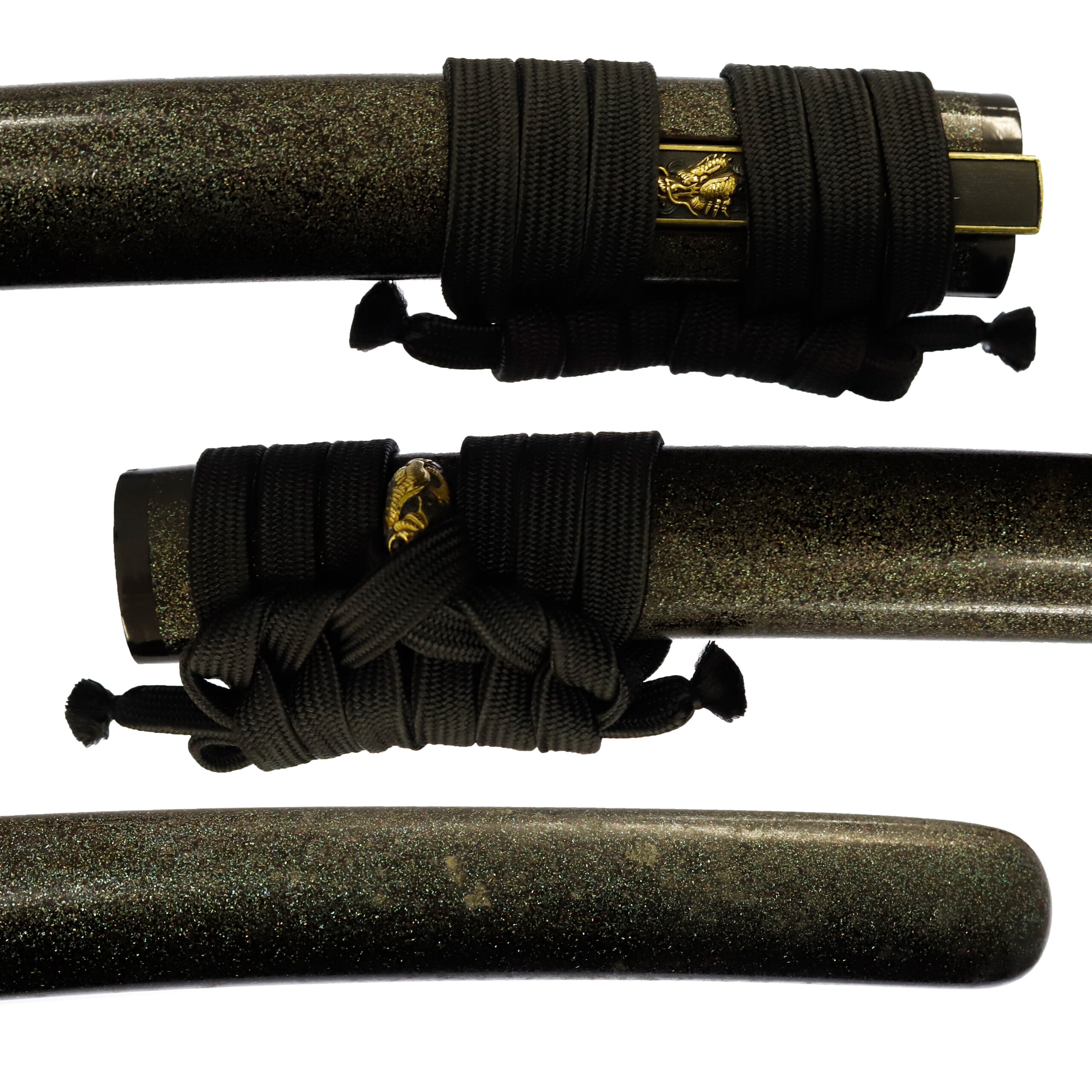
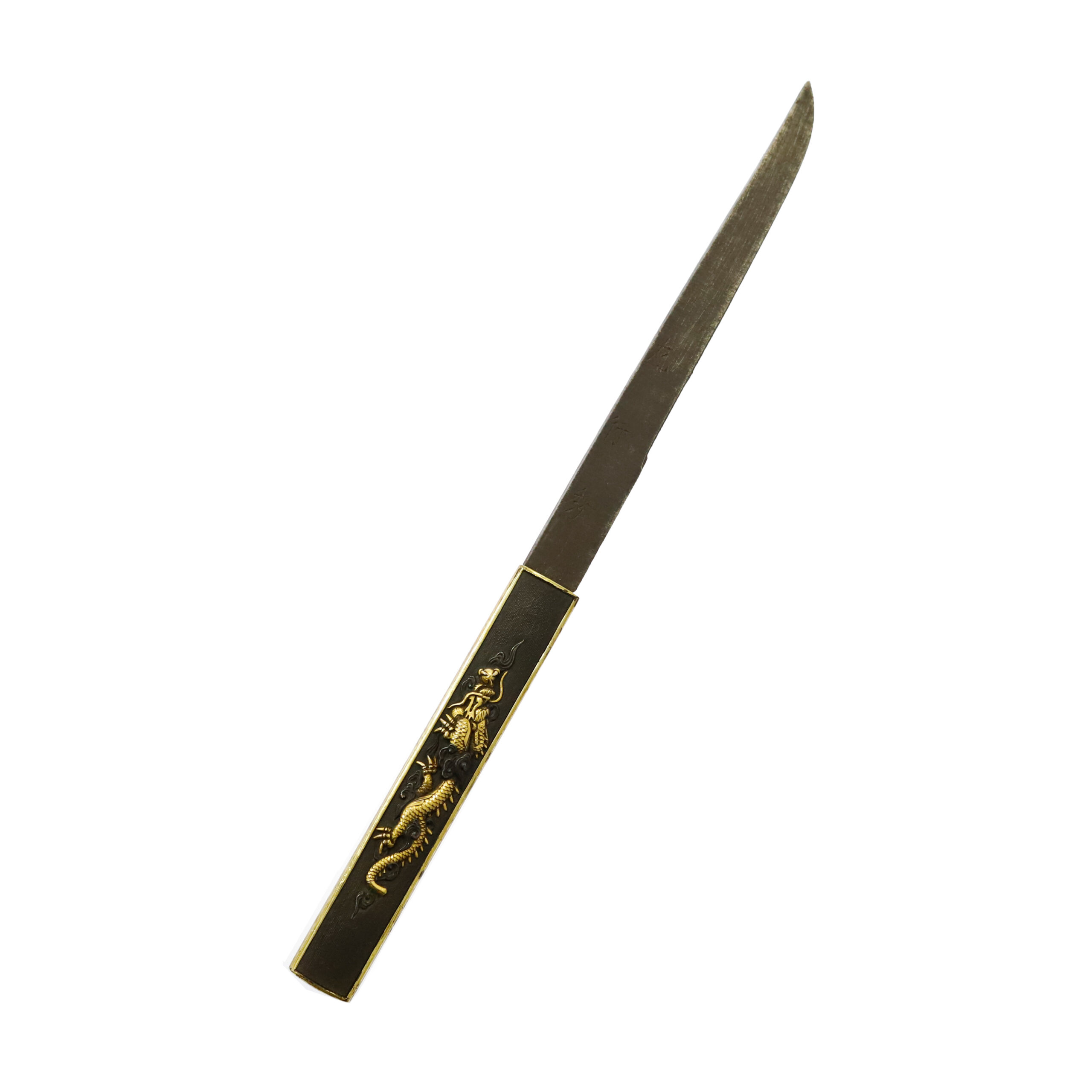
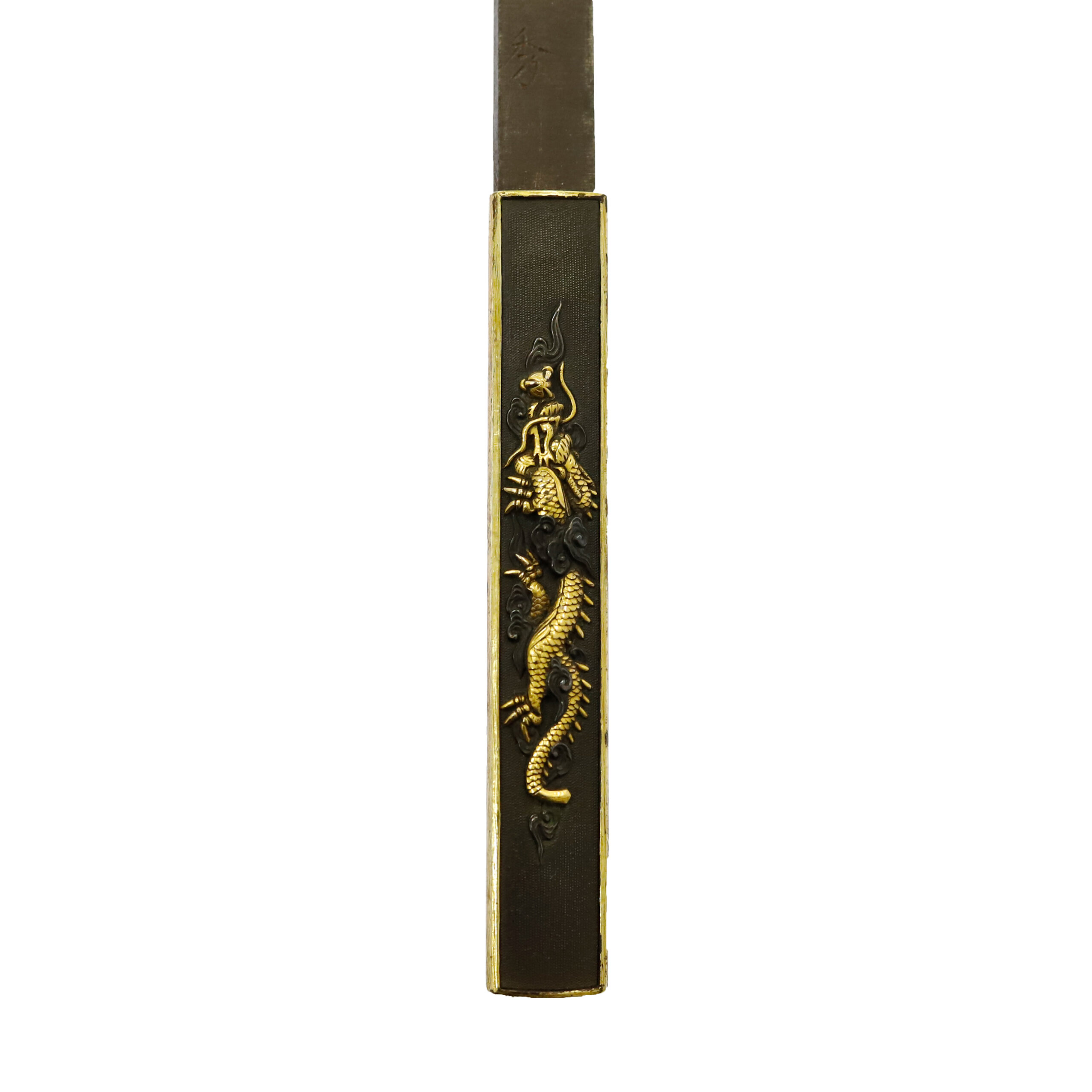
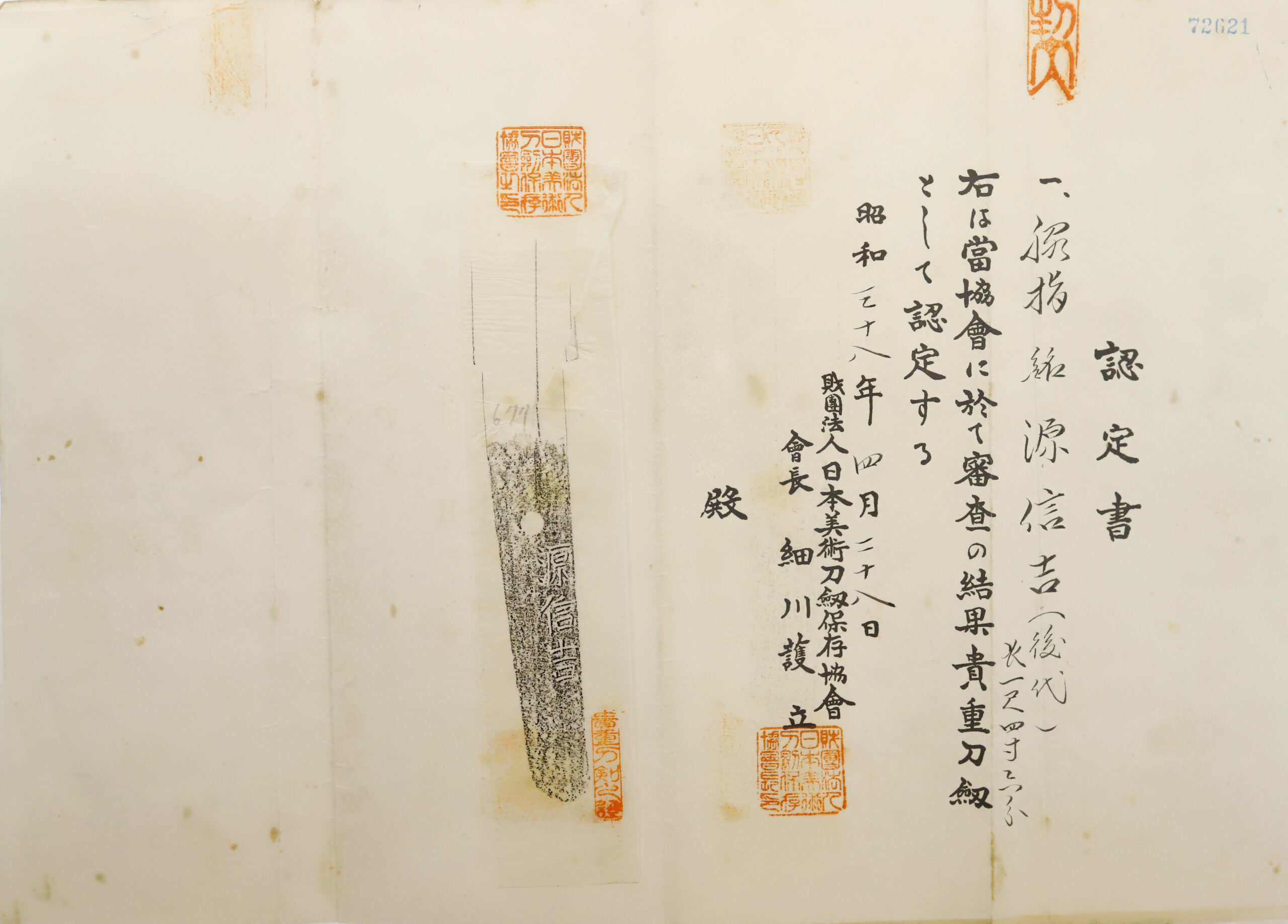
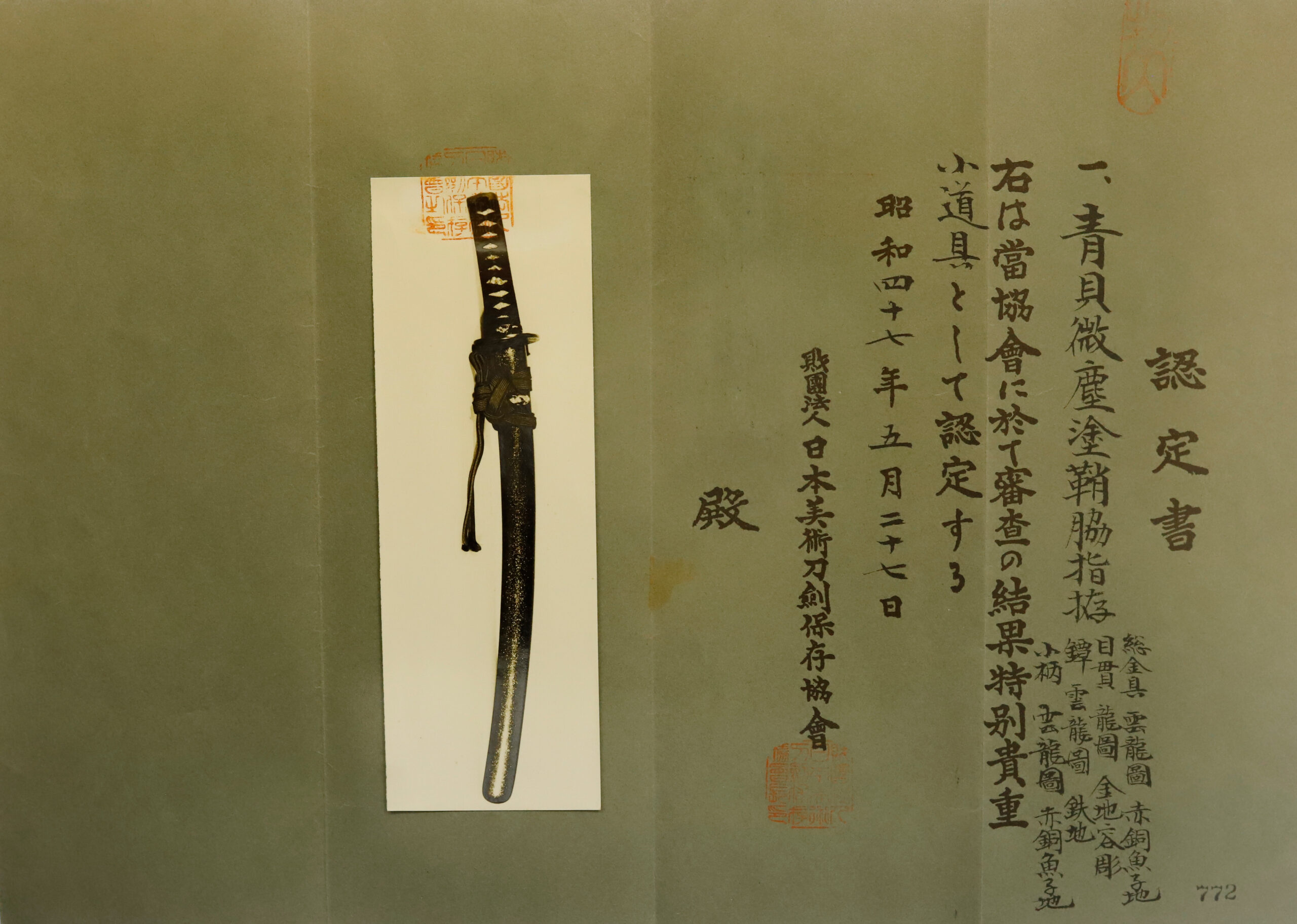
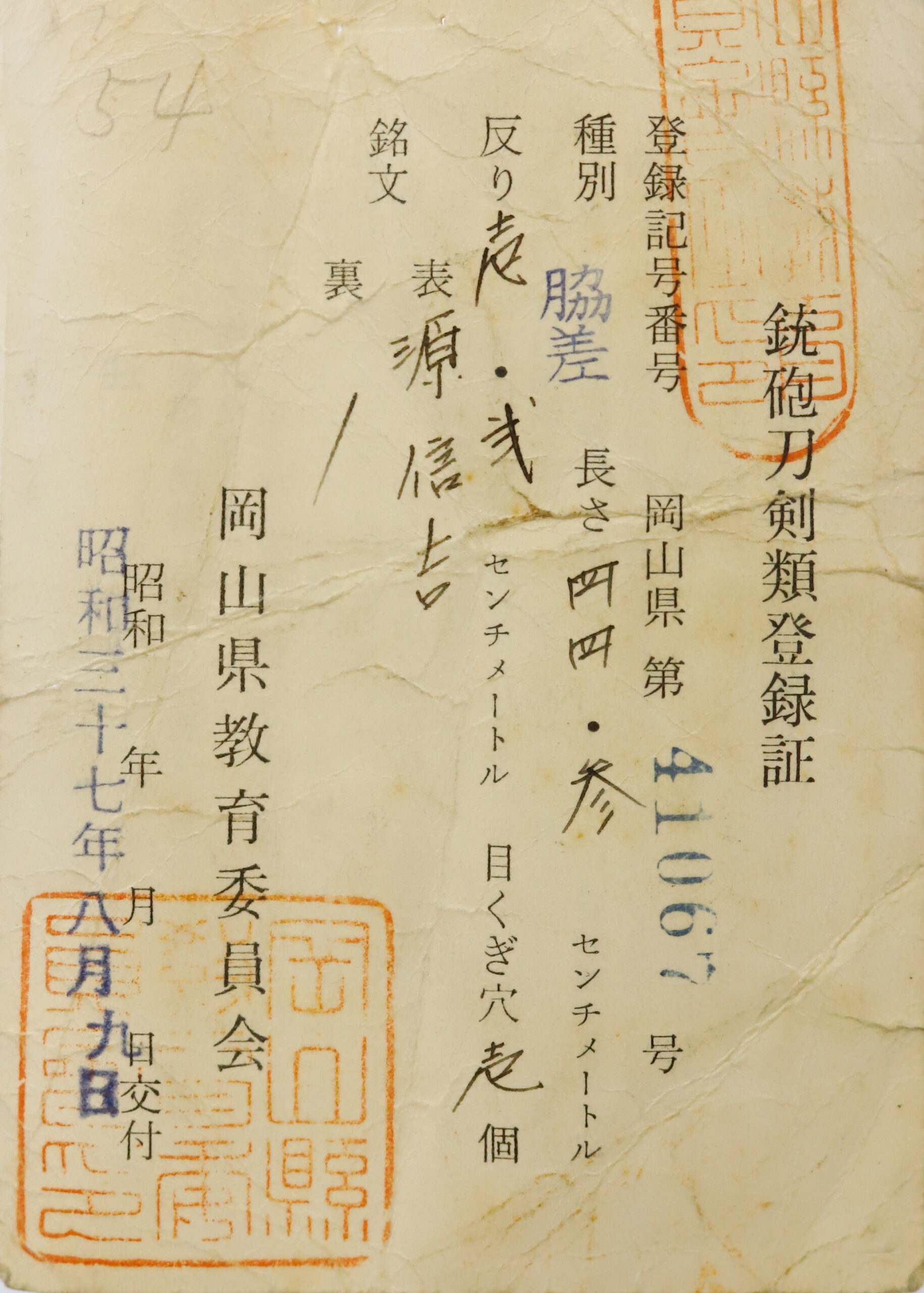
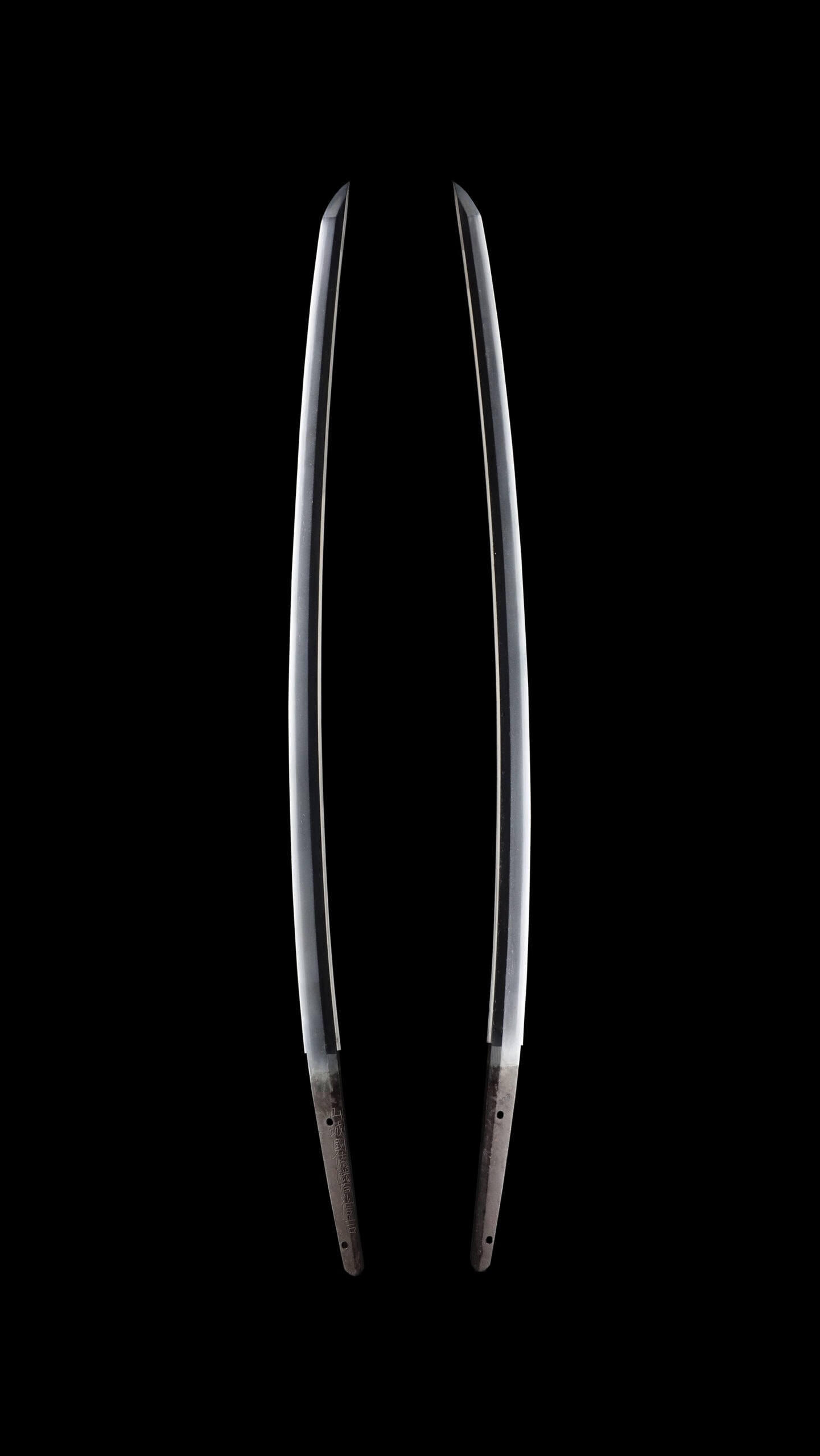
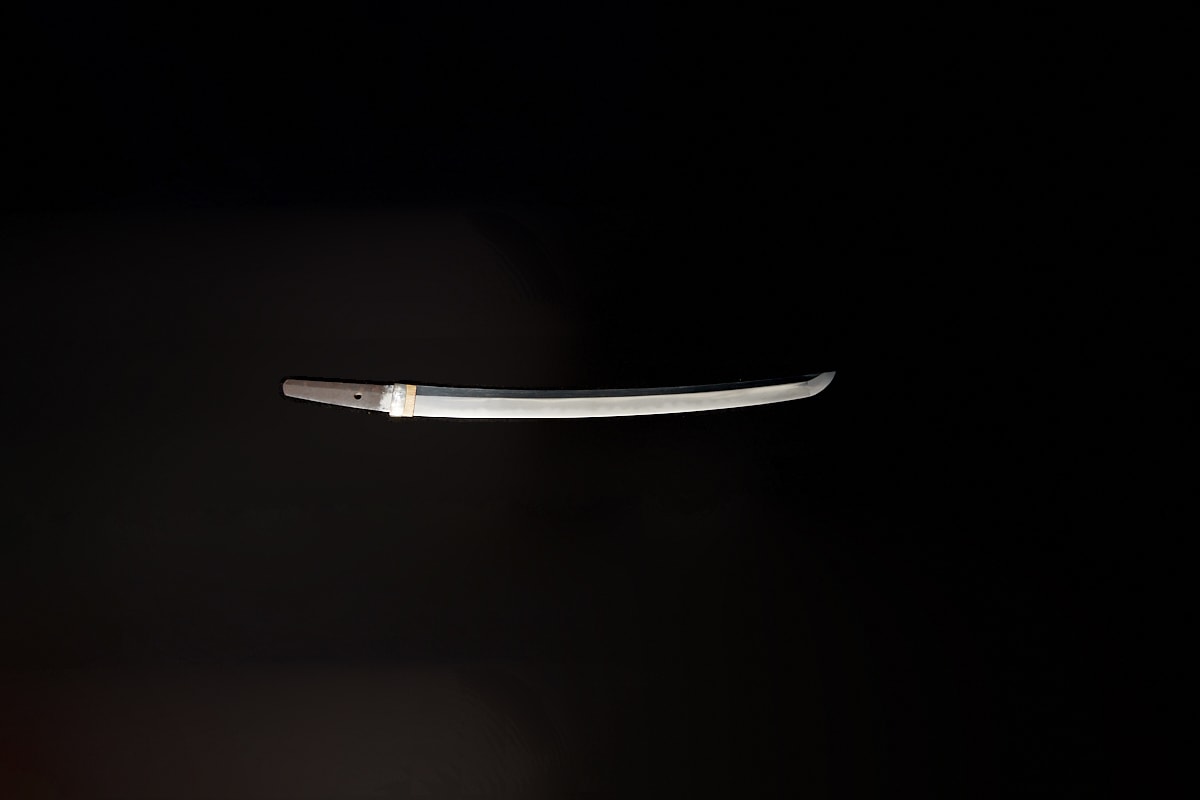
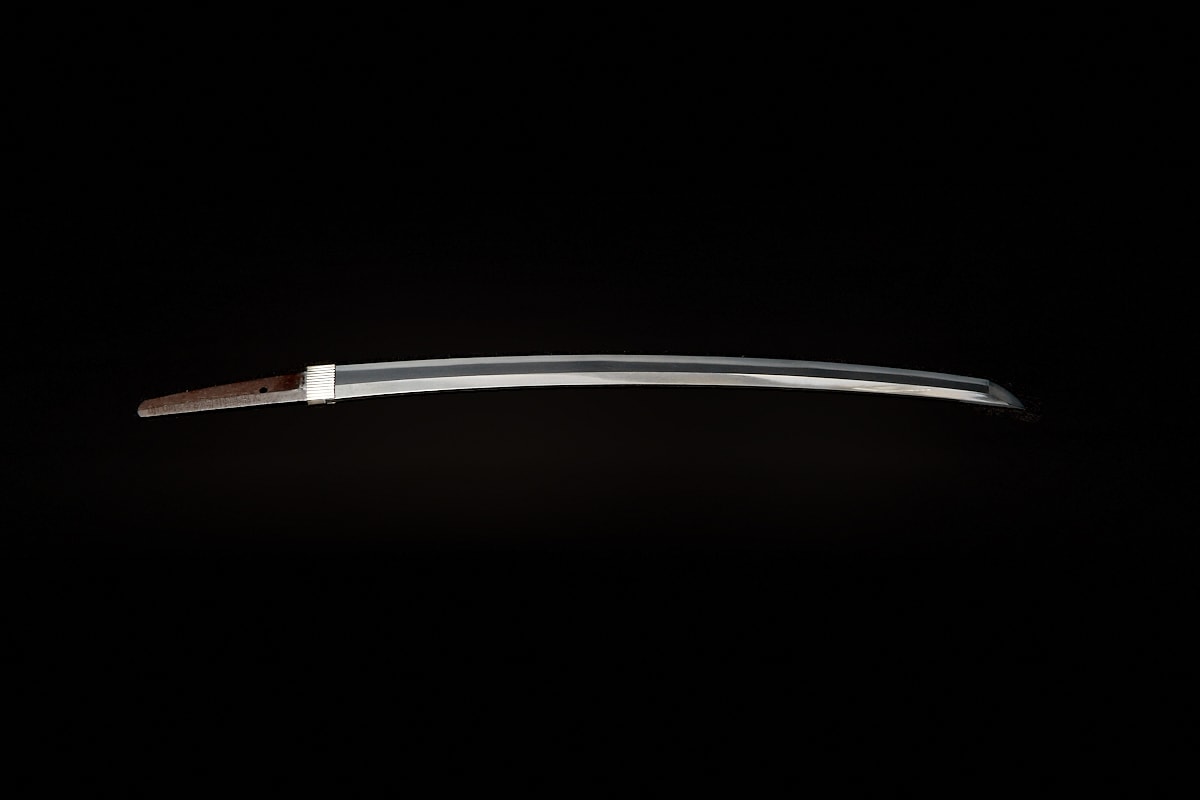
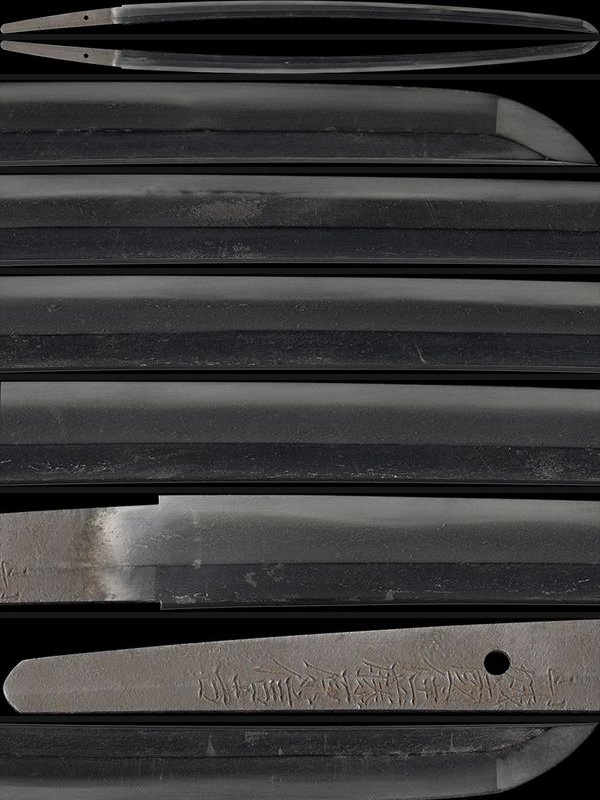
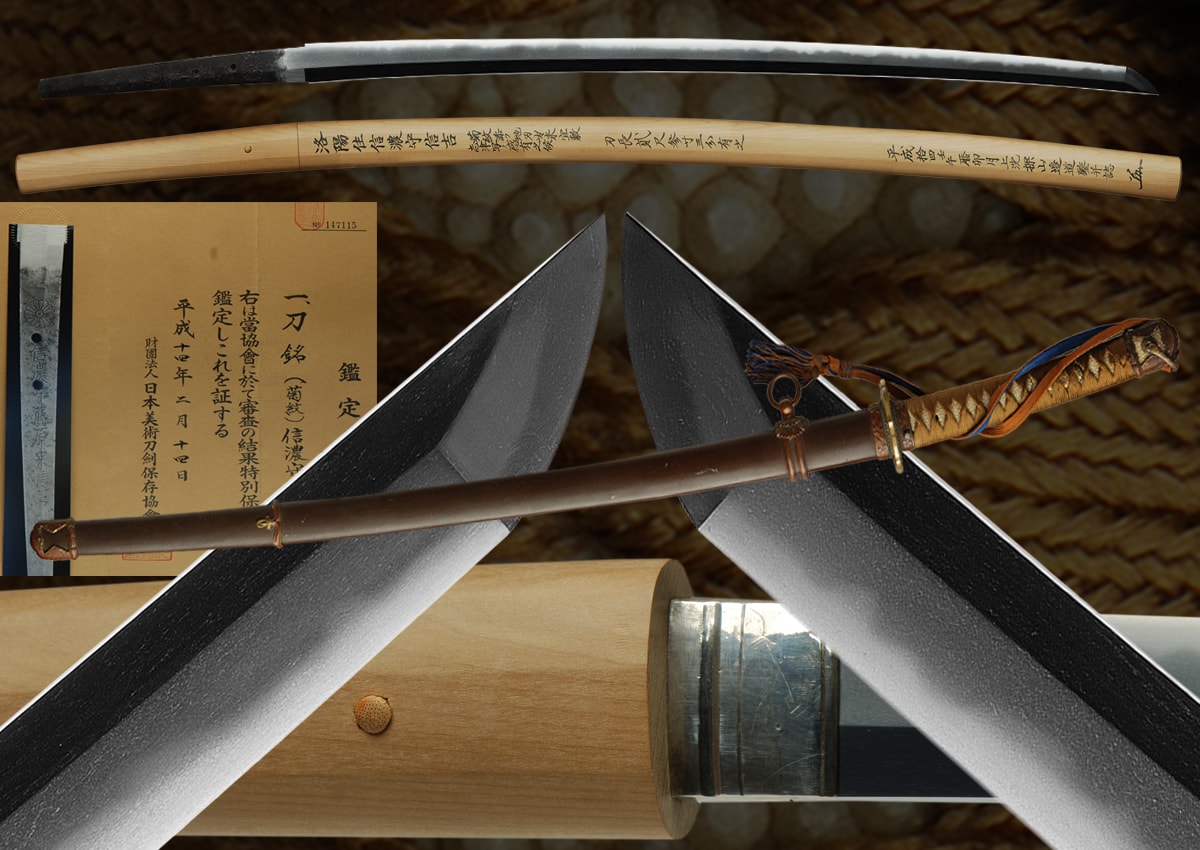
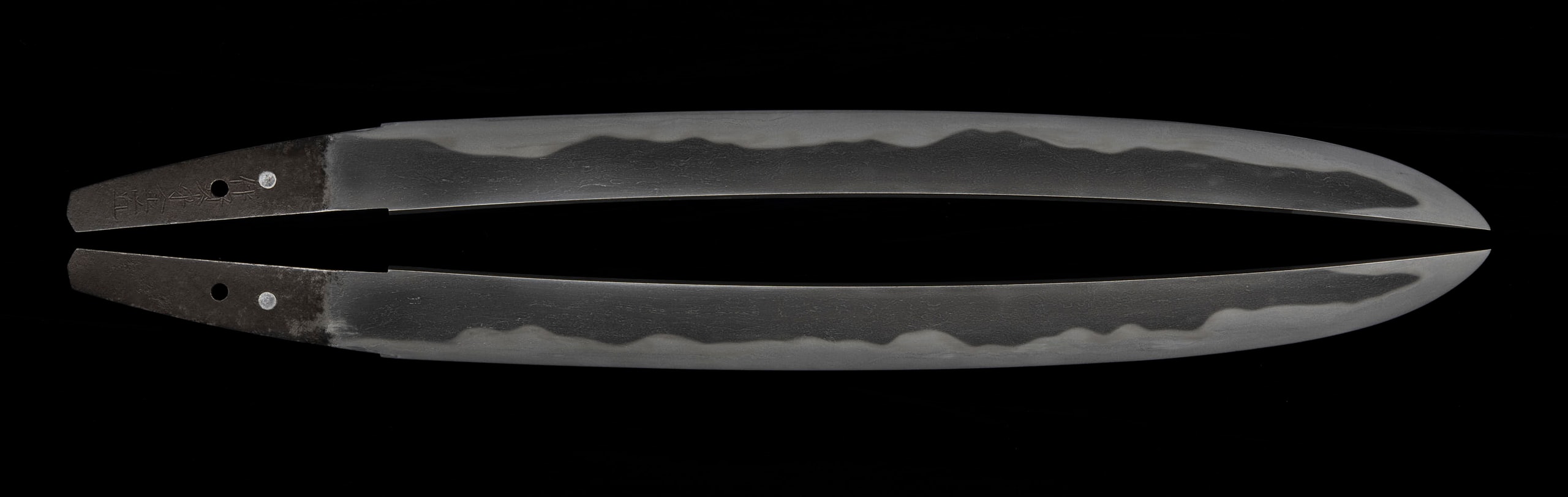
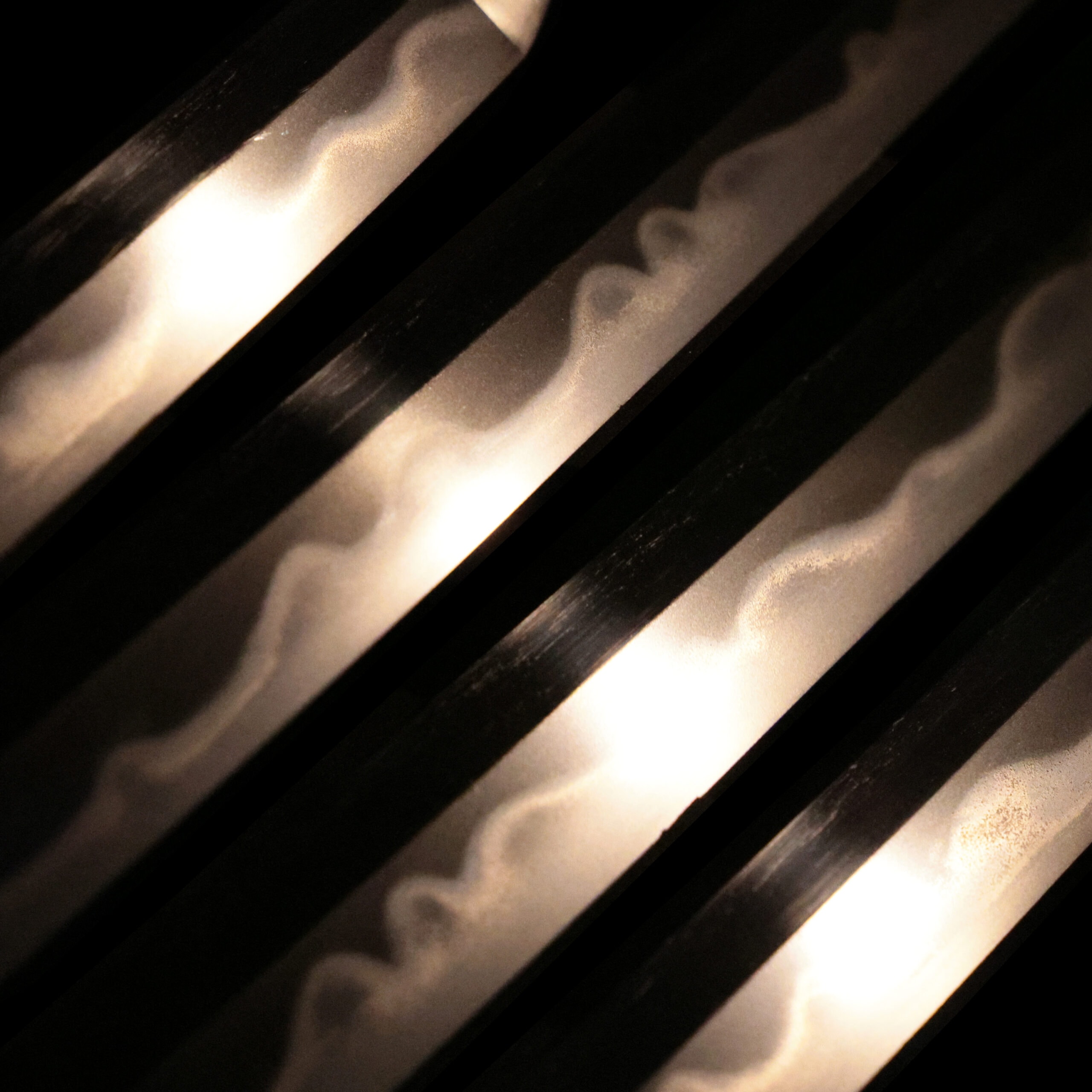
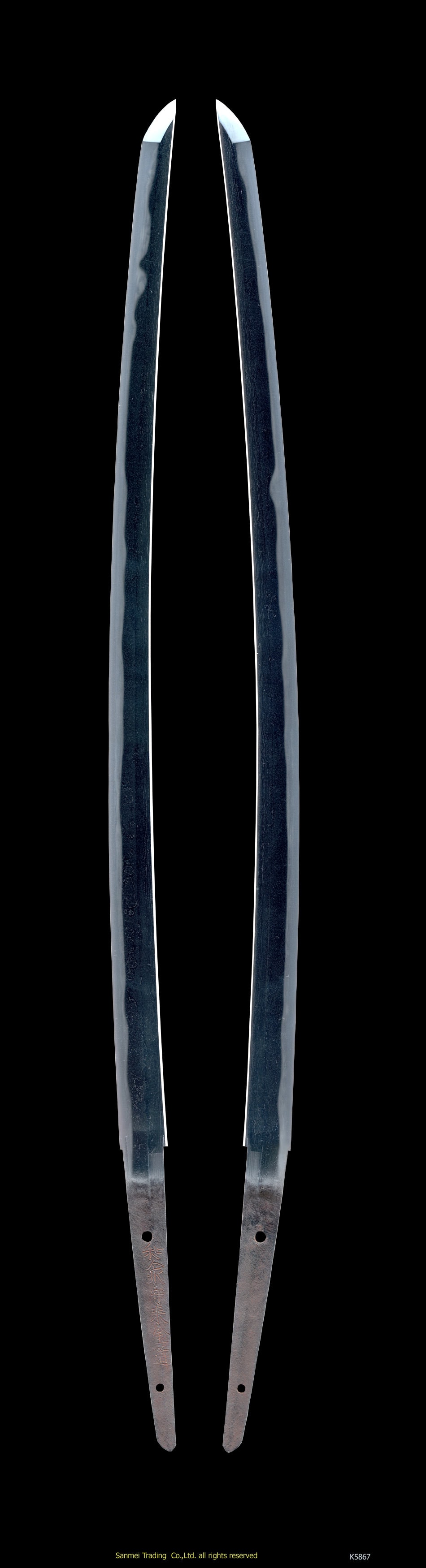
Antique Japanese Sword Wakizashi Signed by Nobuyoshi with NBTHK Kicho and Tokubetsu Kicho Tosogu Certificate 【Description】 Summary This blade was signed by Minamoto Nobuyoshi (源信吉). According to its NBTHK authentication paper, it was made by a late-gen Nubuyoshi. The first-gen Nobuyoshi is also known as Shinano Kami Minamoto Nobuyoshi (信濃守信吉), who was active during the early Edo period (1644-1673) in Yamashiro province (Today’s Kyoto prefecture). The first-gen Shinano Kami Nobuyoshi was allowed to inscribe a chrysanthemum emblem, which is the symbol of the Japanese emperor. His sword-forging technique was so great that the emperor licensed him to use this emblem, which was quite honorable for any swordsmiths. Echizen no Kami Rai Minamoto Nobuyoshi was also allowed to inscribe a chrysanthemum emblem. There are two late-gen Nobuyoshi. One of them is the second-gen Shinano Kami Nobuyoshi and Echizen no Kami Nobuyoshi. Both of them are the children of the first-gen. Mishina School The generations of Nobuyoshi belonged to Kyoto Mishina school. Mishina school was created by the first-gen Mutsu no Kami Omichi (陸奥守大道), also known as Kanemichi. It is said that initially, Kanemichi was from Mino province, exclusively forging blades for Shingen Takeda, a famous feudal lord. Later on, he moved to Kyoto by bringing his four sons and founded his school in Kyoto. Four sons were Iga no Kami Kinmichi(伊賀守金道)、Izumi no Kami Rai Kinmichi(和泉守来金道), Tanba no Kami Yoshimichi(丹波守吉道) and Echu no kami Masatoshi(越中守正俊). His sons and the first-gen Nobuyoshi were known as Kyoto Gokaji(京都五鍛冶), prestigious swordsmiths forging in Kyoto in the early Edo period. Mishina school was prosperous throughout the Edo period and spread to other parts of Japan, such as Osaka. The superb craftsmanship of the Mishina school was passed down for generations. *Please keep in mind that there are a couple of Kitae Kizu on this blade. If you like to see the detailed condition, please feel free to contact us. 【 Blade】 Cutting Edge Length(Nagasa) : 44.3 cm (17.4 inches) Curvature(Sori) : 1 .2 cm (0.47 inches) Hamon: The crystalline structure which forms along the cutting edge of a blade as a result of the hardening process Jimon(Jihada): visible steel surface pattern created by folding and hammering during forging process Nakago : Nakago is the tang of the Japanese sword. Japanese swordsmiths left the black rust on the tang on purpose to prevent red rust while the tang is in its handle. And the discoloration of the tang was created over time, which is a great indicator for a Japanese sword specialist to estimate when the sword was forged. Koshirae: Koshirae is the mounting of the Japanese sword. There are several parts that consist of Koshirae such as Saya(Scabbard), Tsuka( Handle), Tsuba(Handguard). Fuchi-Kashira : A pair of matching sword fittings that cover the upper and bottom parts of its sword hilt. Tsuka and Menuki : Tsuka is the handle of the Japanese sword and Menuki is its decoration. Tsuba and Habaki : Tsuba is the handguard for the Japanese Sword and Habaki is the equipment to make the blade not touch its scabbard inside. It prevents the blade from getting rusty and chipped. Kozuka : Kozuka is a small knife stored in Kozuka Hitsu(groove of the sheath of the Japanese sword). Saya : Saya is the scabbard for the Japanese sword. Authentication Paper : NBTHK Kicho Certificate for the blade and Tokubetsu Kicho for the Koshirae NBTHK , also known as Nihon Bijutsu Touken Hozon Kyokai (the Society for the Preservation of the Japan Art Sword), is one of the oldest Japanese sword appraising organizations in modern-day Japan. They authenticated the blade on April 28th in the 38th year of Showa (1963) and the Koshirae on May 27th in the 47th year of the Showa era (1972). They appraised the blade as Kicho Touken and its Koshirae as a Tokubetsu Kicho Kodogu , an old form of the authentication paper . The purchaser will receive this original certificate as well. We can also transla
 NihontoWatch
在銘 · Mishina · 新刀 · 長さ 44.3cm · 反り 1.2cm
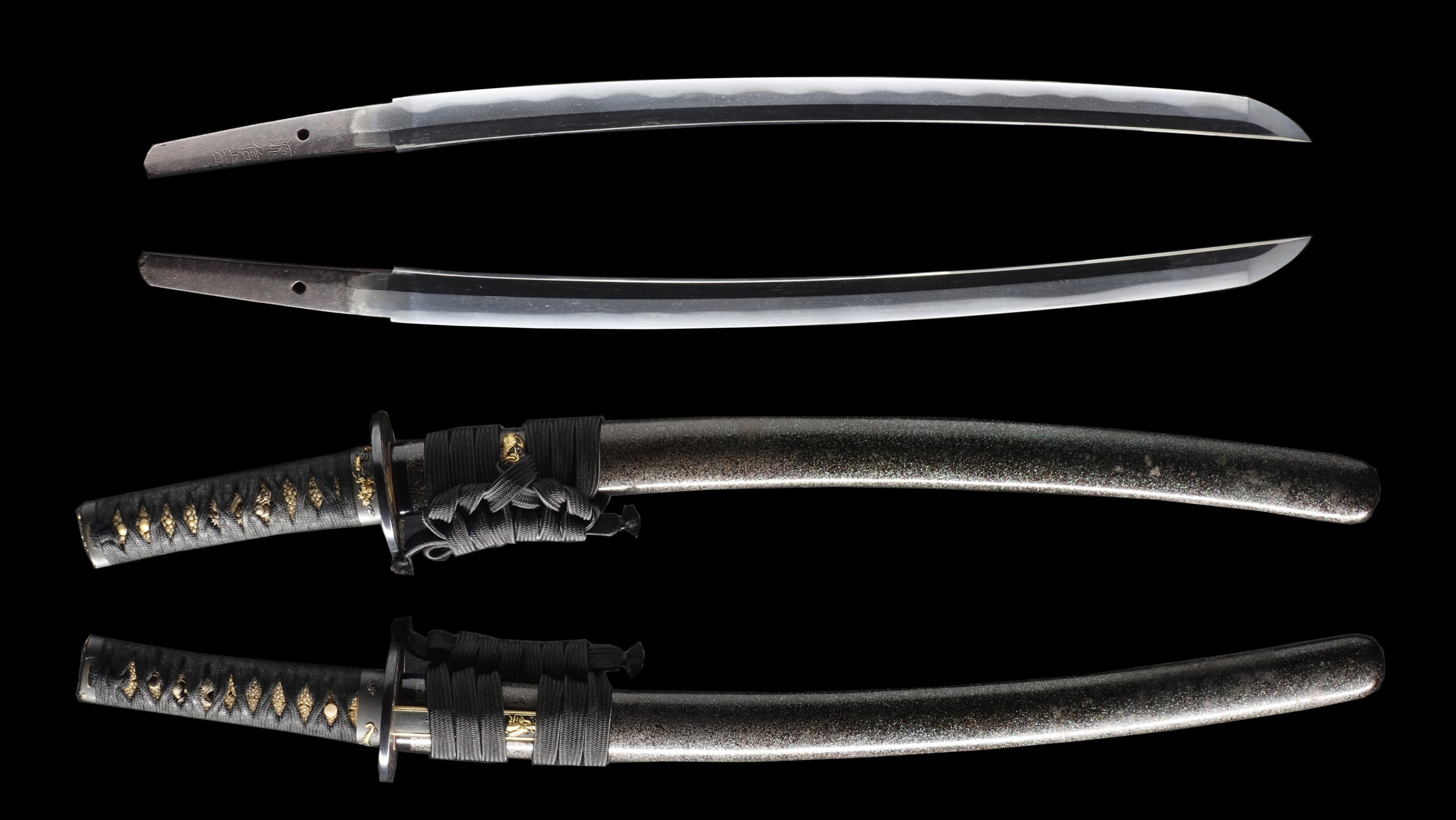
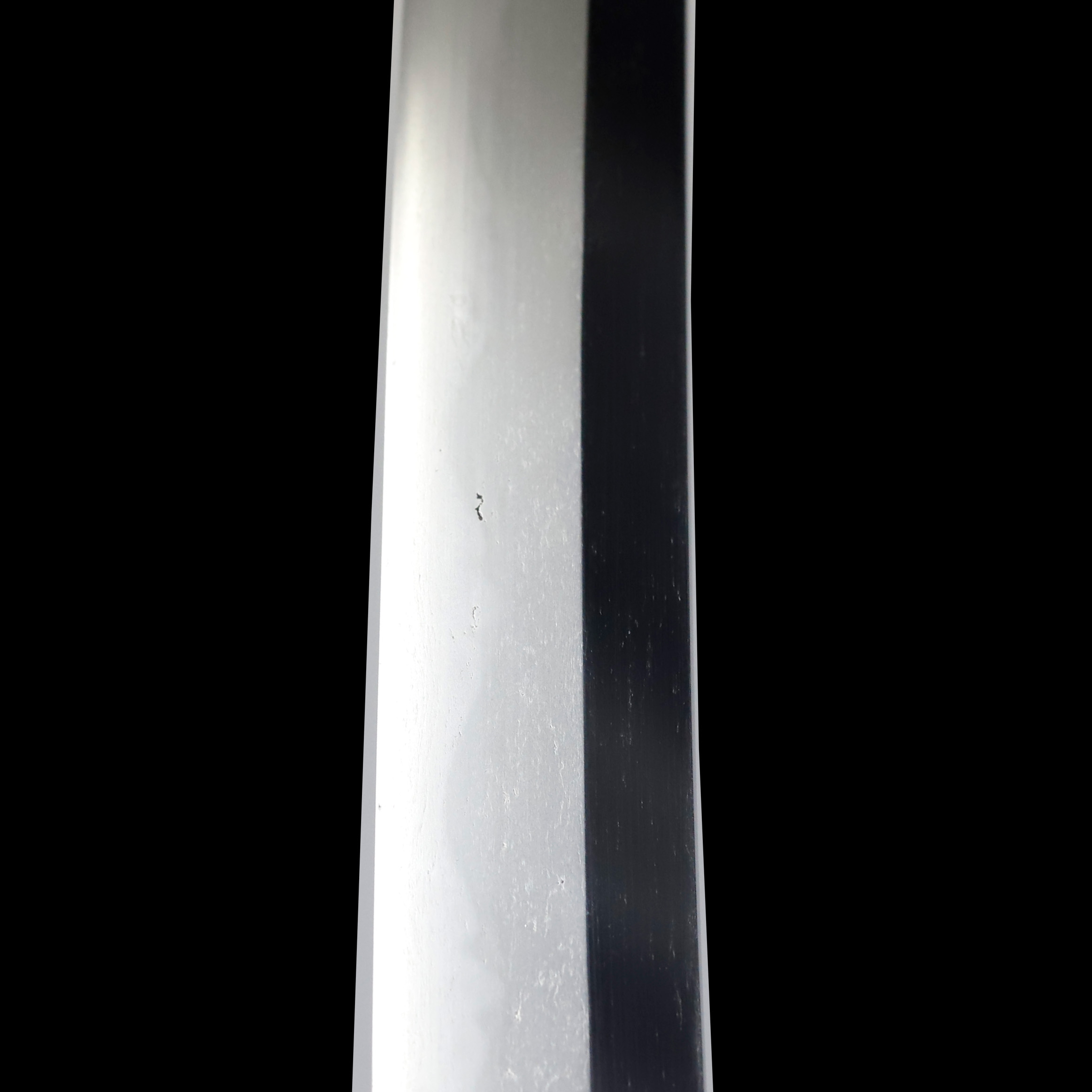
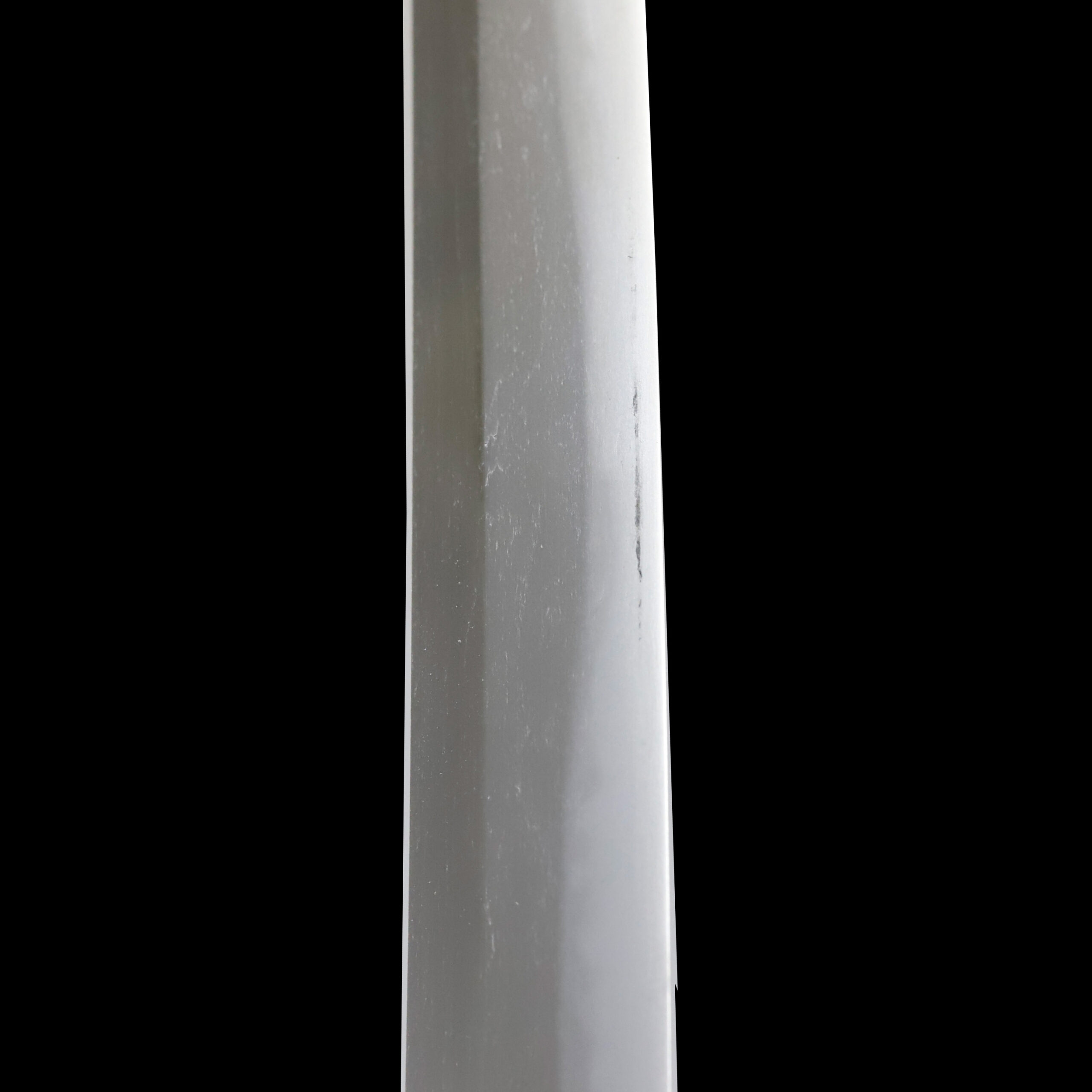
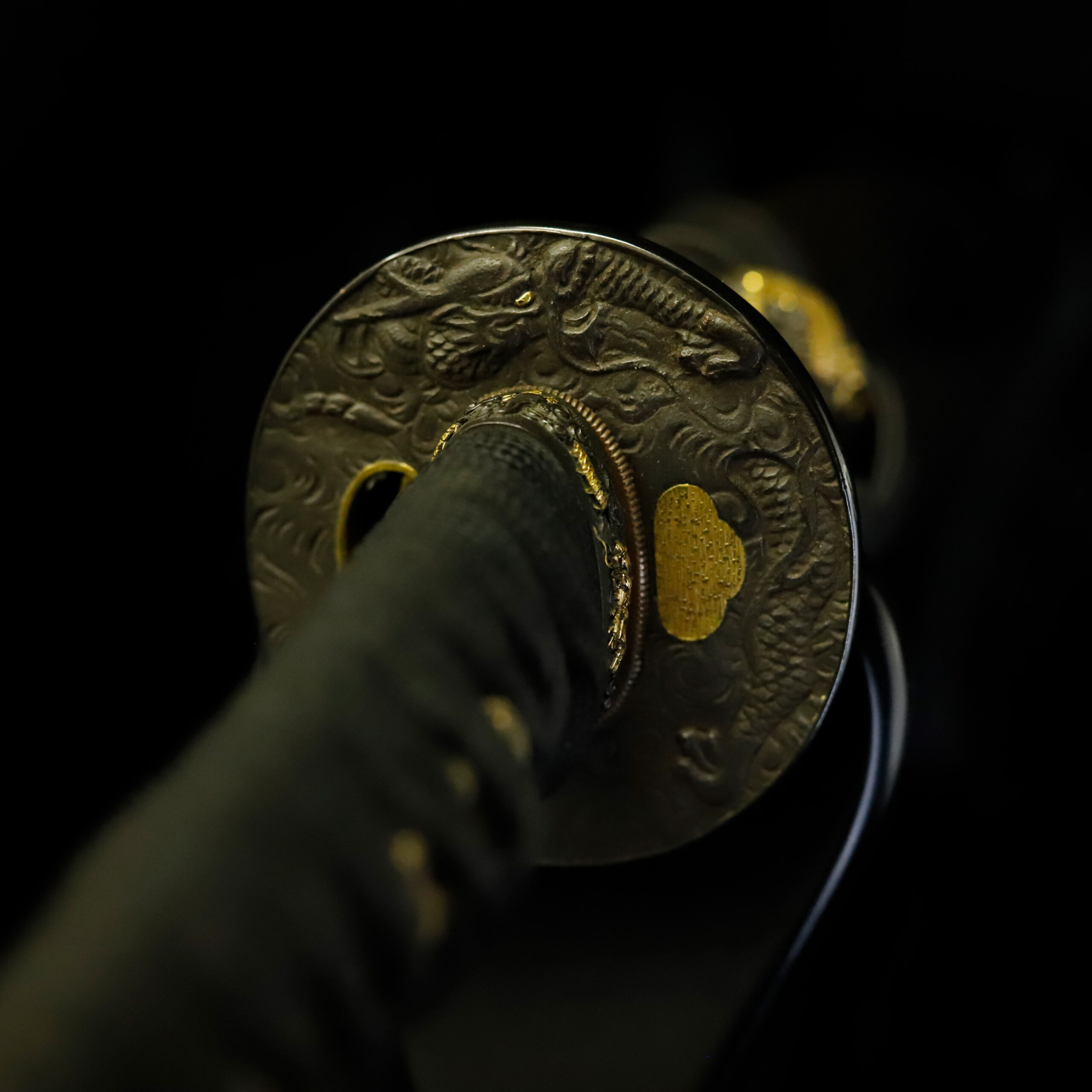
山城 · 1644-1648頃
藤代 Chu-jo saku · 刀剣大鑑 上位49%
現在5点販売中
江戸時代
二世紀半の泰平のあいだ、刀は武器である以上に武士の身分の標章であった。江戸の実証と大坂の華やぎのように都市ごとの作風が育ち、時代の末には需要も細っていく。
本作はNBTHKの旧鑑定書(貴重・特別貴重)を有しますが、これらは現在発行されておらず、信頼性に欠けるとされています。極めを確認するには、公的な鑑定機関(NBTHK・NTHKなど)への再提出による現代の鑑定をご検討いただけます。
Returns/exchanges limited to defects caused by shipping (except willful misconduct or gross negligence by the company); customers must contact within 72 hours of receiving the product.


![Katana - Hozon - 作 信吉 - Katana [Mumei Shinano-no-kami Nobuyoshi (Wazamono)][N.B.T.H.K] Hozon Token](/_next/image?url=https%3A%2F%2Fitbhfhyptogxcjbjfzwx.supabase.co%2Fstorage%2Fv1%2Fobject%2Fpublic%2Flisting-images%2Fworld-seiyudo%2FL31372%2F00.jpg&w=2560&q=90)



![Wakizashi - Tokuho - 作 廣房 - 脇差[桑名住三品義明斎広房][日本美術刀剣保存協会]特別保存刀剣](/_next/image?url=https%3A%2F%2Fitbhfhyptogxcjbjfzwx.supabase.co%2Fstorage%2Fv1%2Fobject%2Fpublic%2Flisting-images%2Fworld-seiyudo%2FL963052%2F01.jpg&w=2560&q=90)