江戸は刀の目利きの時代である。本阿弥の鑑定、1719年の享保名物帳、盛んな刀剣書が、戦で抜かれることのなくなった刀を学問の対象へと変えていった。
 NihontoWatchNihontoWatch
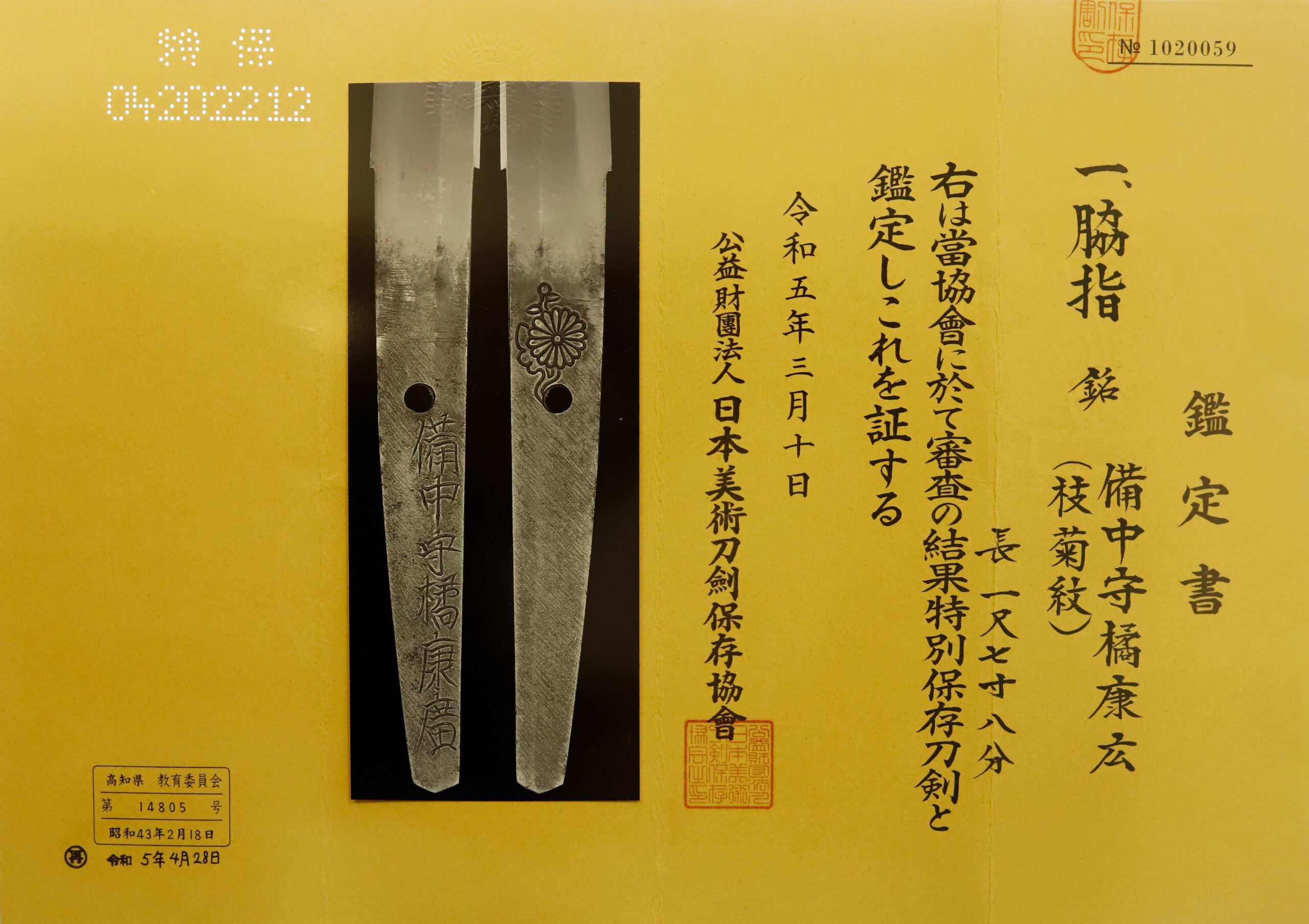
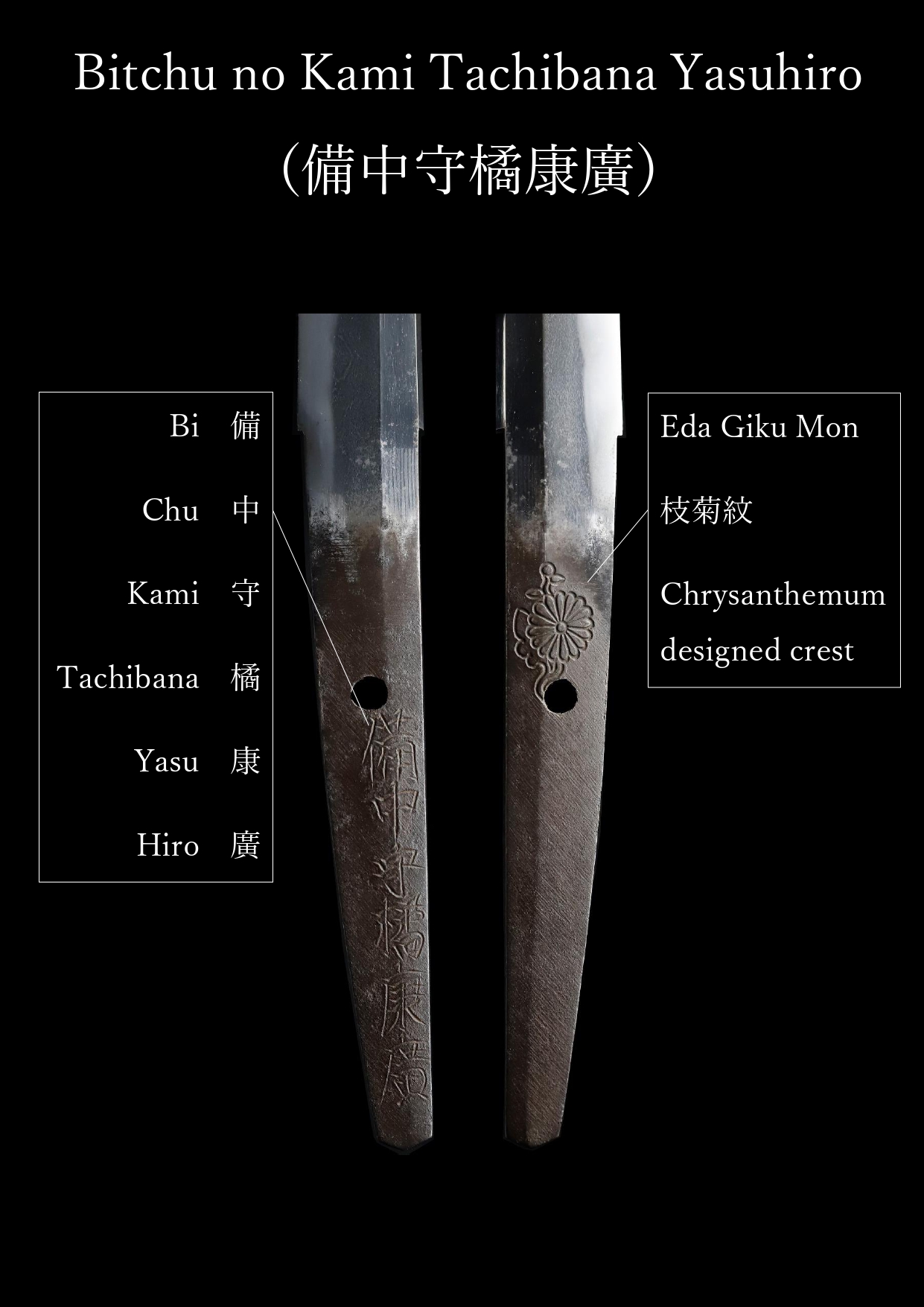
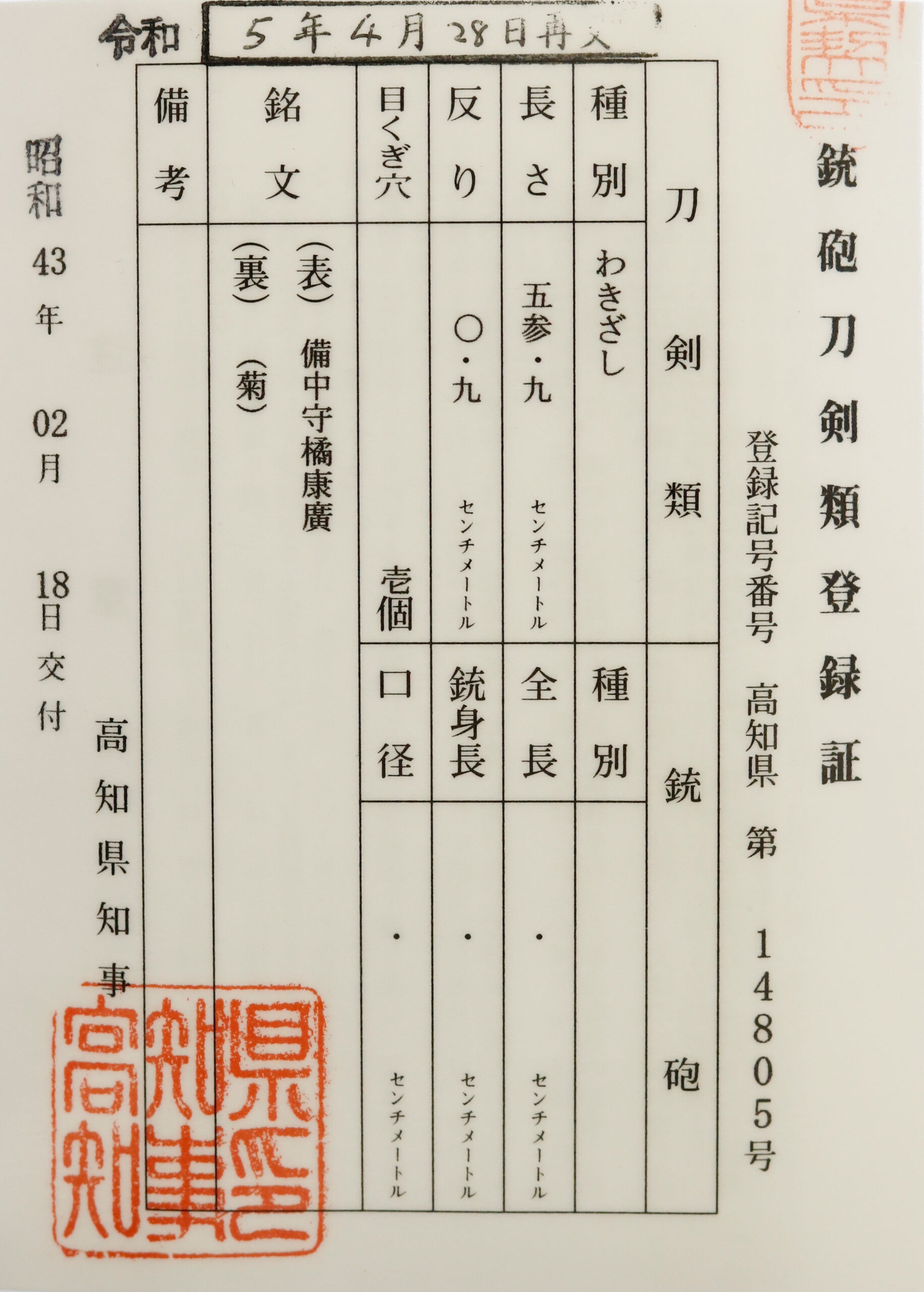
This blade was signed by Bitchu no Kami Tachibana Yasuhiro(備中守橘康広). Yasuhiro was active in sword-forging during the Kanbun (1661-1673: Early Edo Period). Yasuhiro belonged to a prestigious sword school called Kishu Ishido and Osaka Ishido School. The back of the tang has an inscription of Kikumon (chrysanthemum emblem). He was allowed to inscribe this emblem, which is the symbol of the Japanese emperor. His sword forging technique was so great that the emperor permitted him to use this emblem, which was honorable for any swordsmith. Ishido School His father, Tosa Shogen Tachibana Yasuhiro(土佐将監橘康廣), was born in Omi province, located in Shiga prefecture. And he belonged to Omi Ishido school during the early Edo period. Ishido school was initially founded by Sukenaga, an offspring of Ichimonji Sukemune, who made Fukuoka Ichimonji school in Bizen province(Today’s Okayama prefecture). During 1492-1501(Late Muromachi period), Sukenaga and his school moved from Bizen province to Omi province after being summoned by Gamou family, a powerful feudal line in that region. Sukenaga started to live in front of Ishido temple, and he changed his surname to Ishido. Kishu& Osaka Ishido School As of the early Edo period, many Ishido swordsmiths moved to other parts of Japan, looking for better opportunities. There are four areas: Edo, Osaka, Kishu(Wakayama prefecture), and Chikuzen(Fukuoka prefecture). Omi Ishido school is the origin of whole other Ishido branches that flourished during the Edo period. Following this trend, Yasuhiro’s father, who belonged to Omi Ishido school, moved from Omi province to Kishu province. It is said that the father was the founder of Kishu Ishido school and played an essential role in making this school prosperous. Yasuhiro was born as the son of the head of Kishu Ishido school. And he mastered excellent sword forging techniques from his father. And it is said that Yasuhiro served Tokugawa Yorinobu, the first head of Kishu domain, who was the 10th son of Tokugawa Ieyasu. Yasuhiro exclusively forged swords for Kishu domain for many years. Later in his career, Yasuhiro received the honorable title “Bitchu no Kami” in 1657 and moved to Settsu city in Osaka to spread the tradition of Ishido school. He built the foundation of Osaka Ishido school. Yasuhiro is known as one of the most prominent figures that made Osaka Isido school prosperous during the early Edo period. Osaka city flourished as a castle town and became the business center during the early Edo period. Many swordsmiths moved to Osaka to look for better opportunities. They not only forged swords for those Samurai who lived in Osaka but also for feudal lords nationwide. Among many swordsmiths active in the same period as Yasuhiro, he was one of the most famous figures in Osaka Ishido school. This blade is appraised as a Tokubetsu Hozon Token(特別保存刀剣) issued by NBTHK(Nihon Bijutsu Touken Hozon Kyokai:日本美術刀剣保存協会). Authentication Paper They authenticated the blade on March 10th in the 5th year of Reiwa (2023). They appraised it as Tokubetsu Hozon Touken, the blade especially worth preserving for Japanese society.

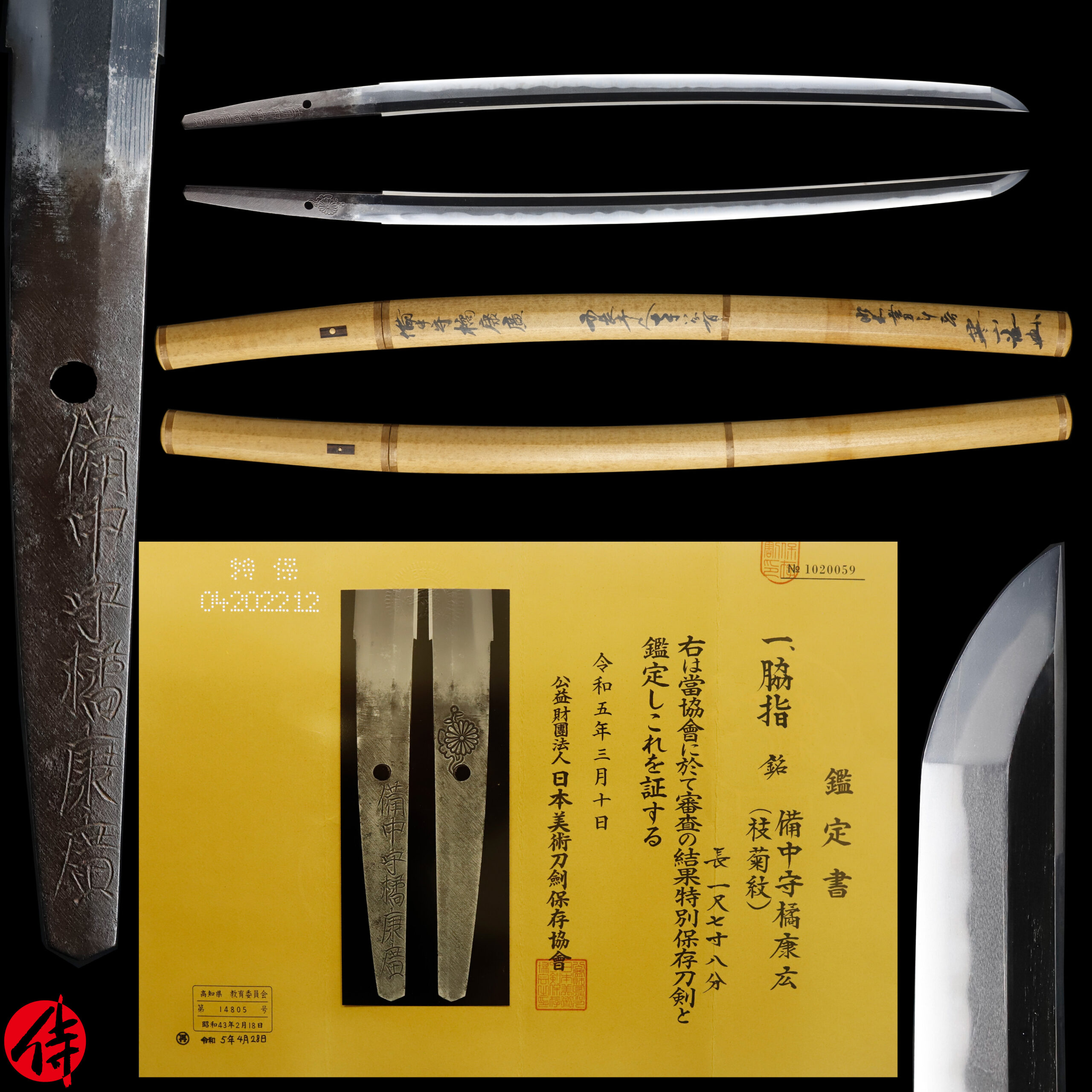
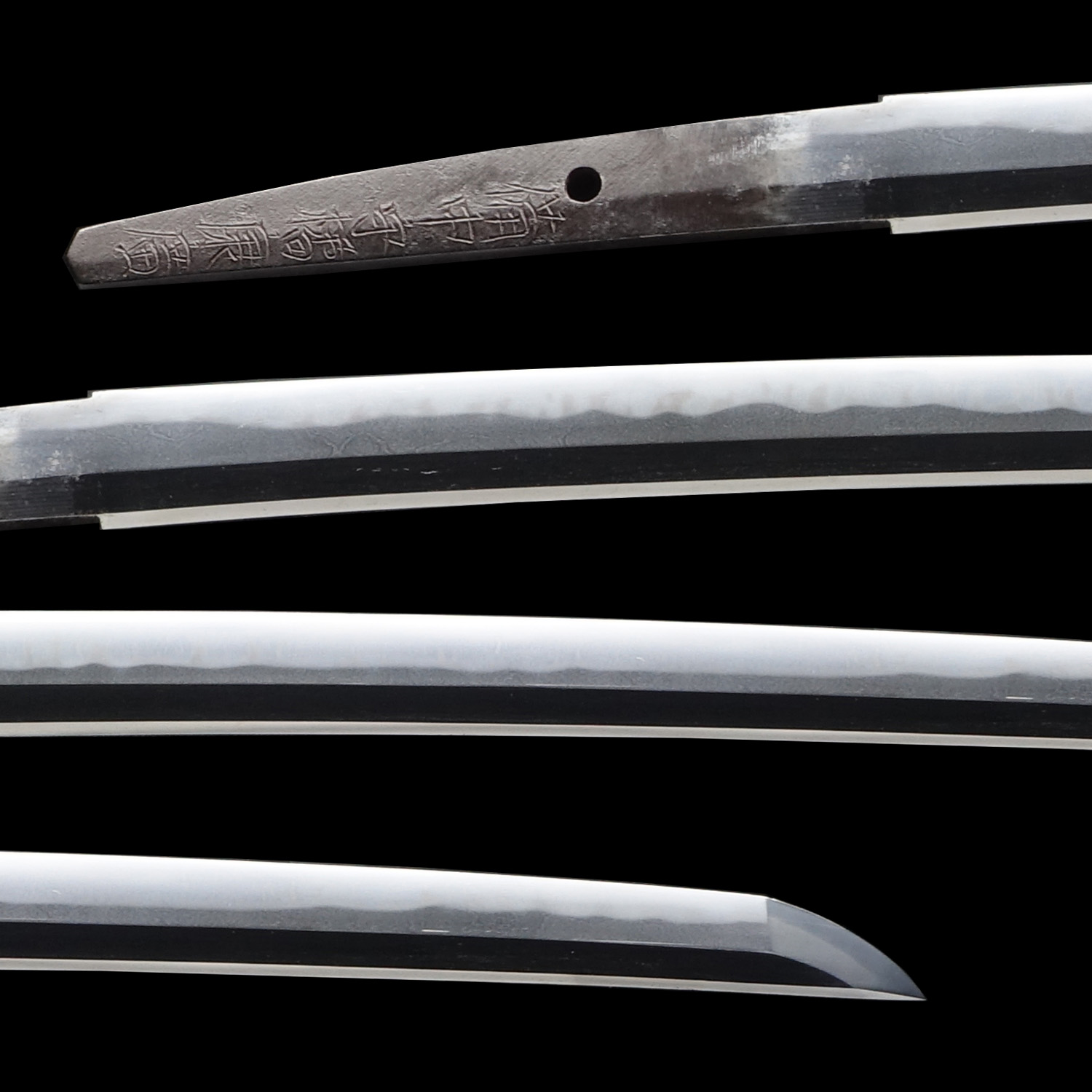
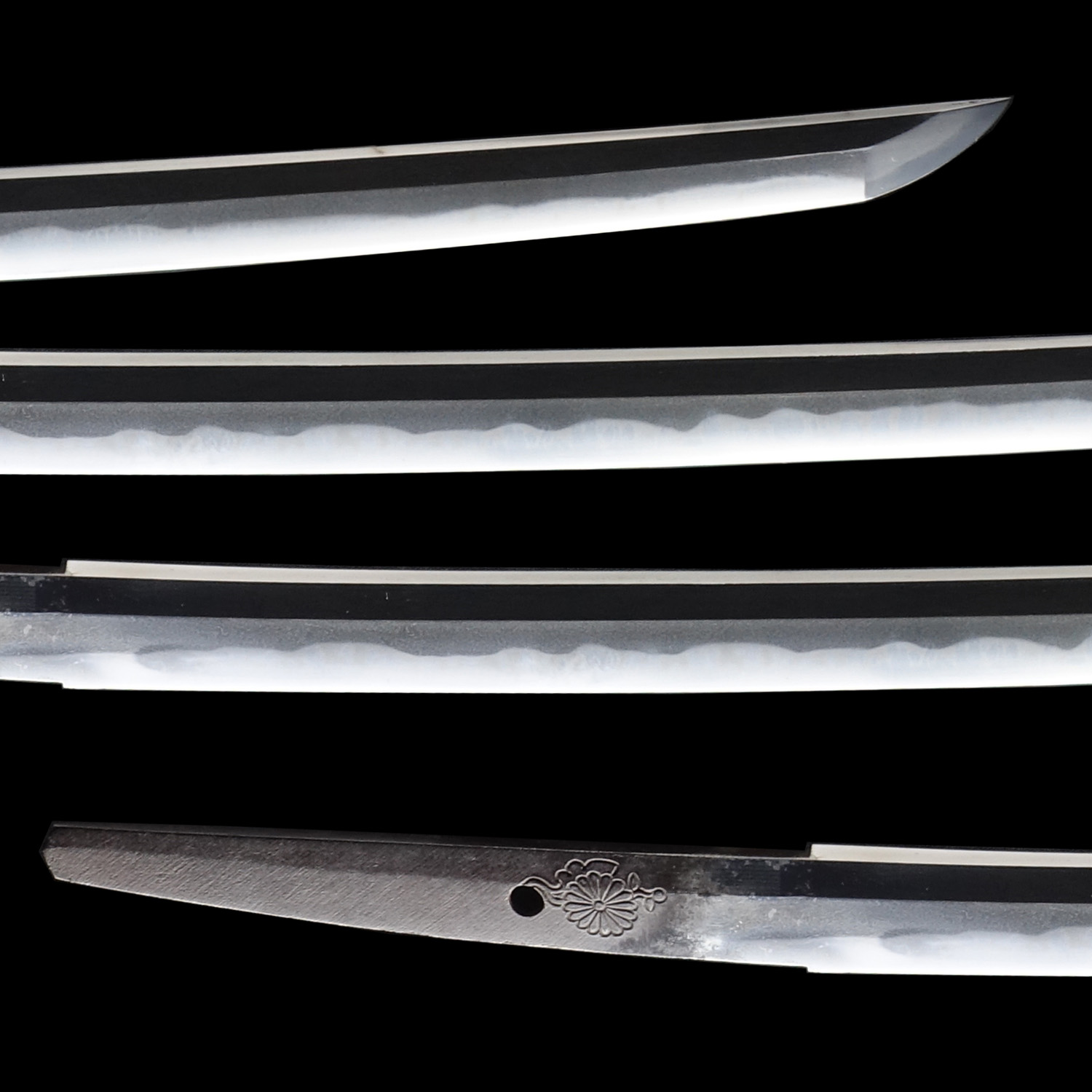
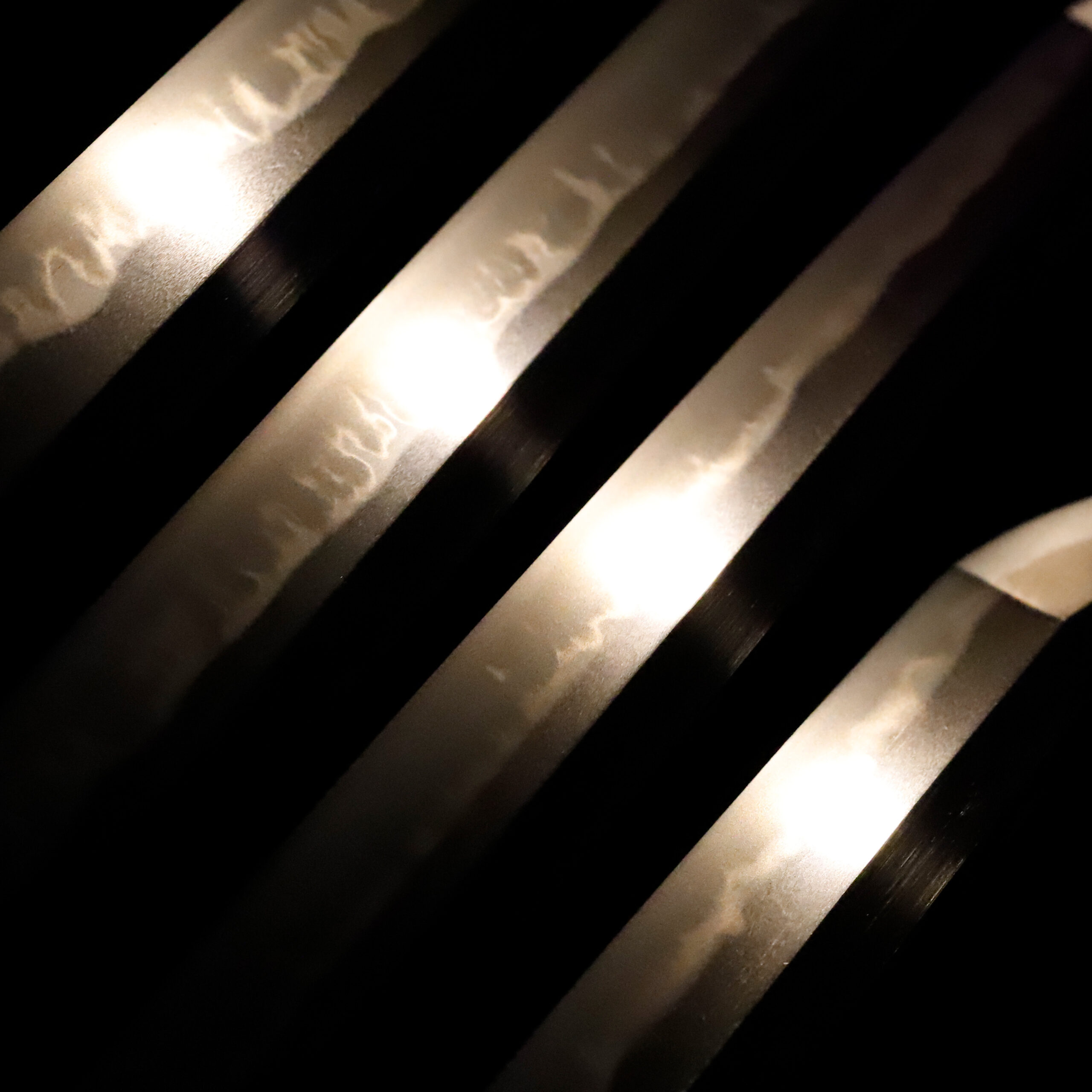
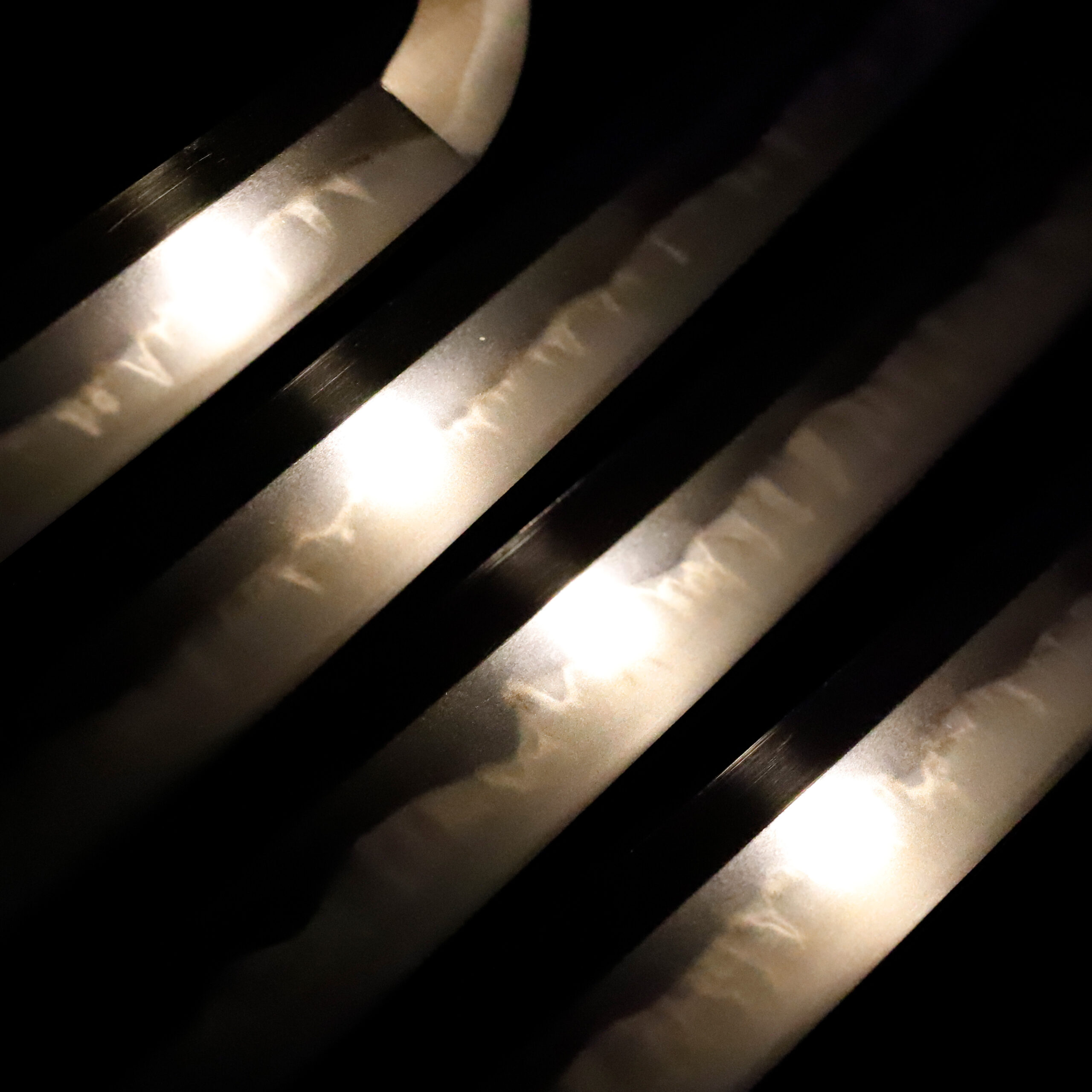
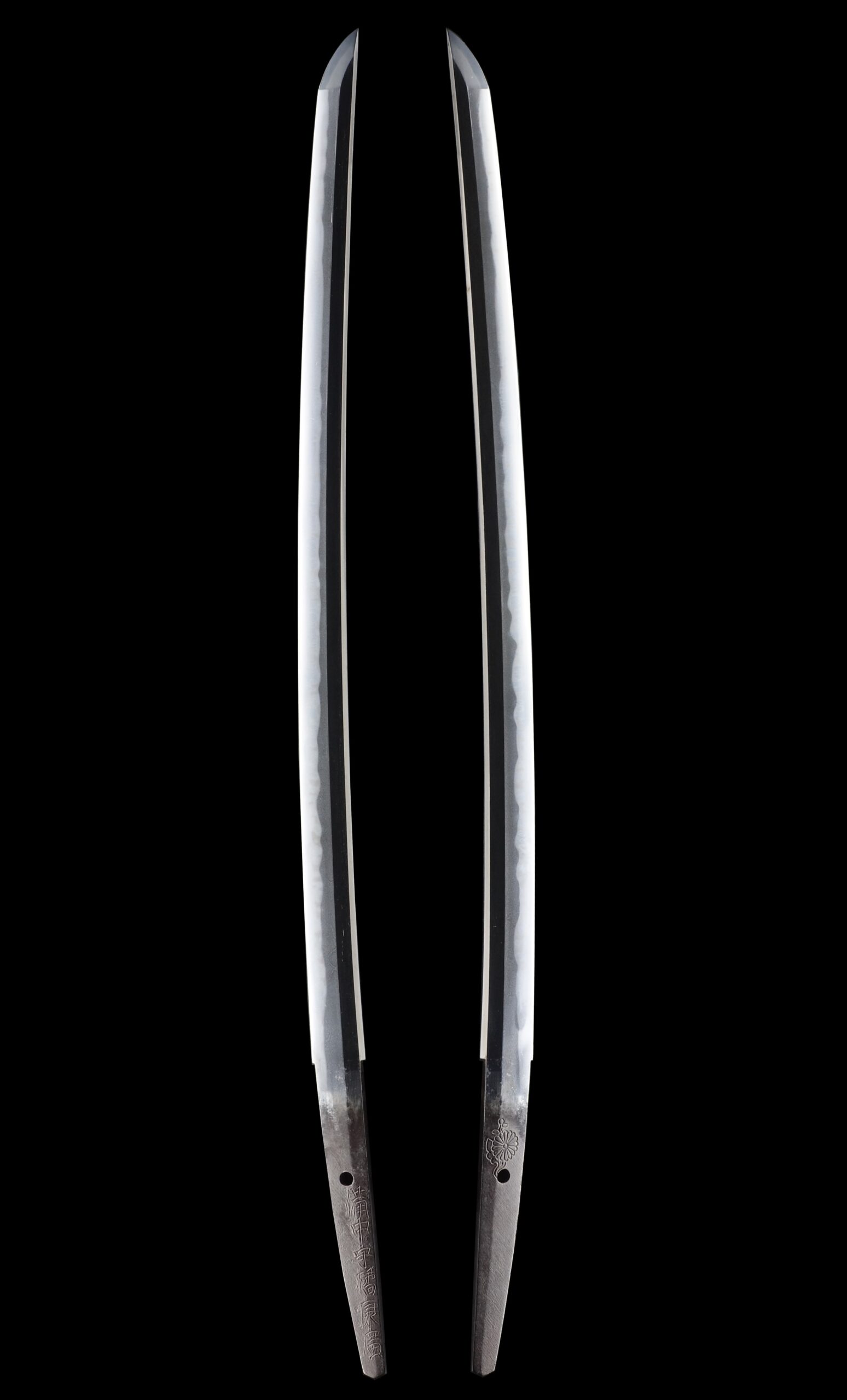
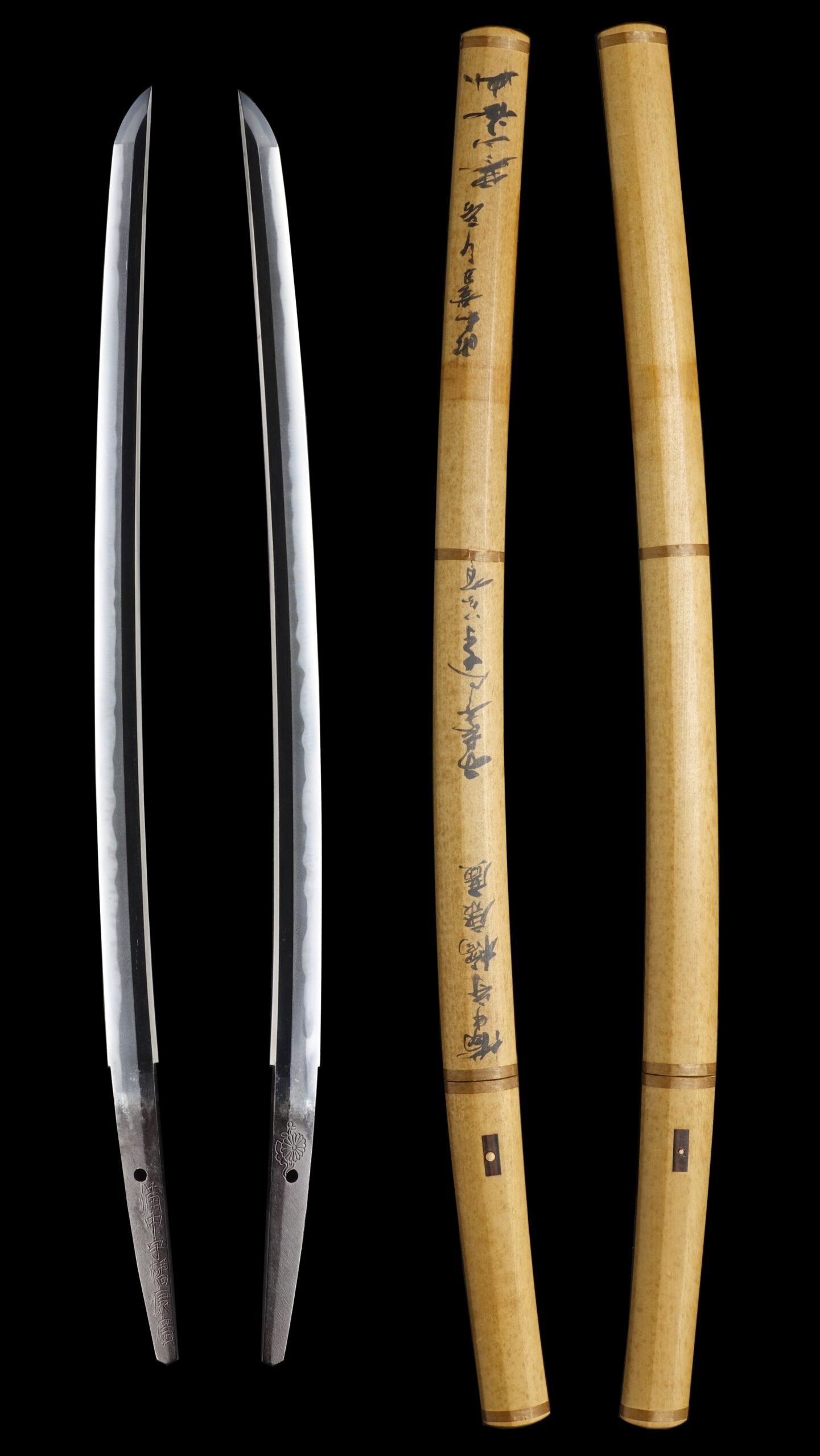
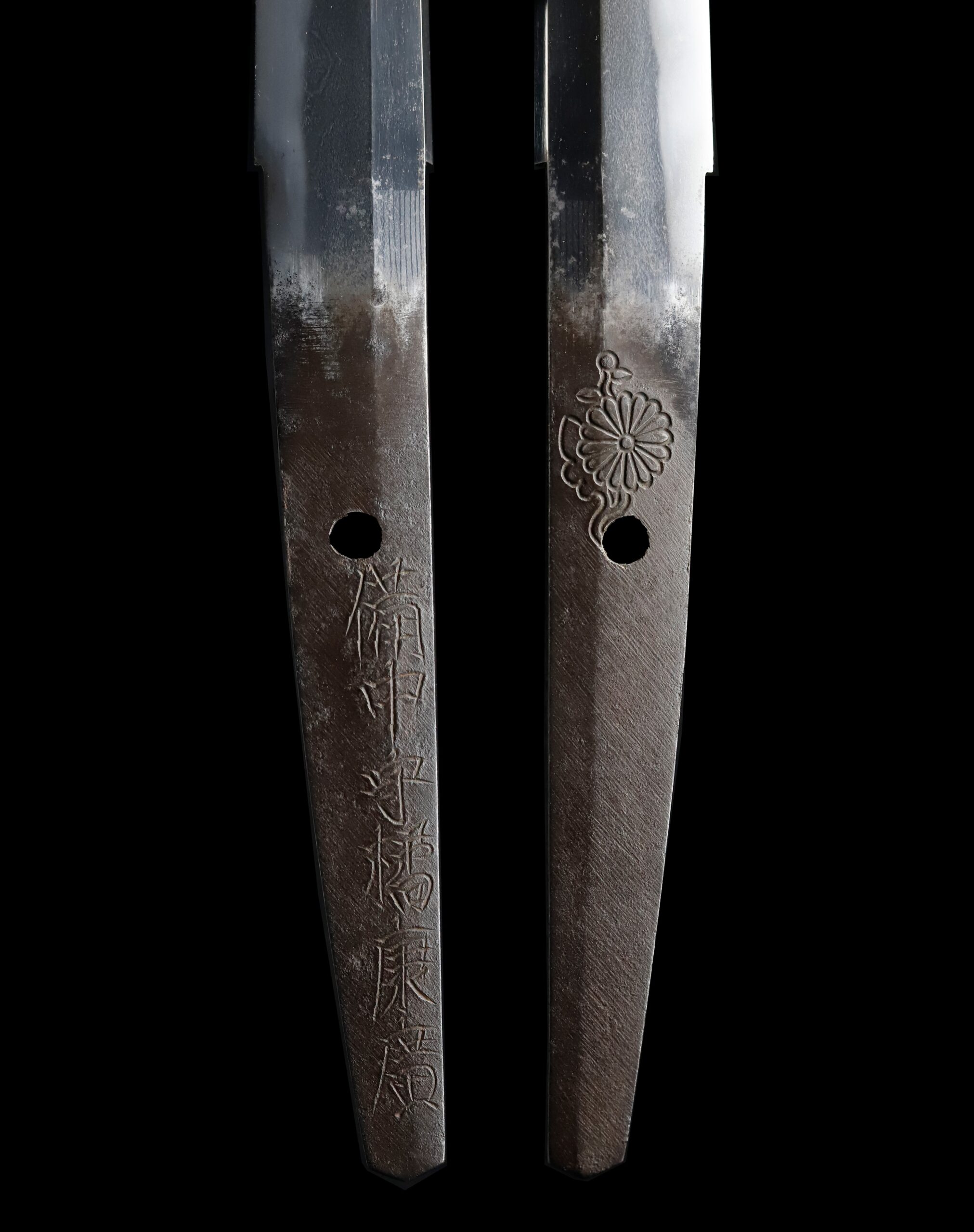
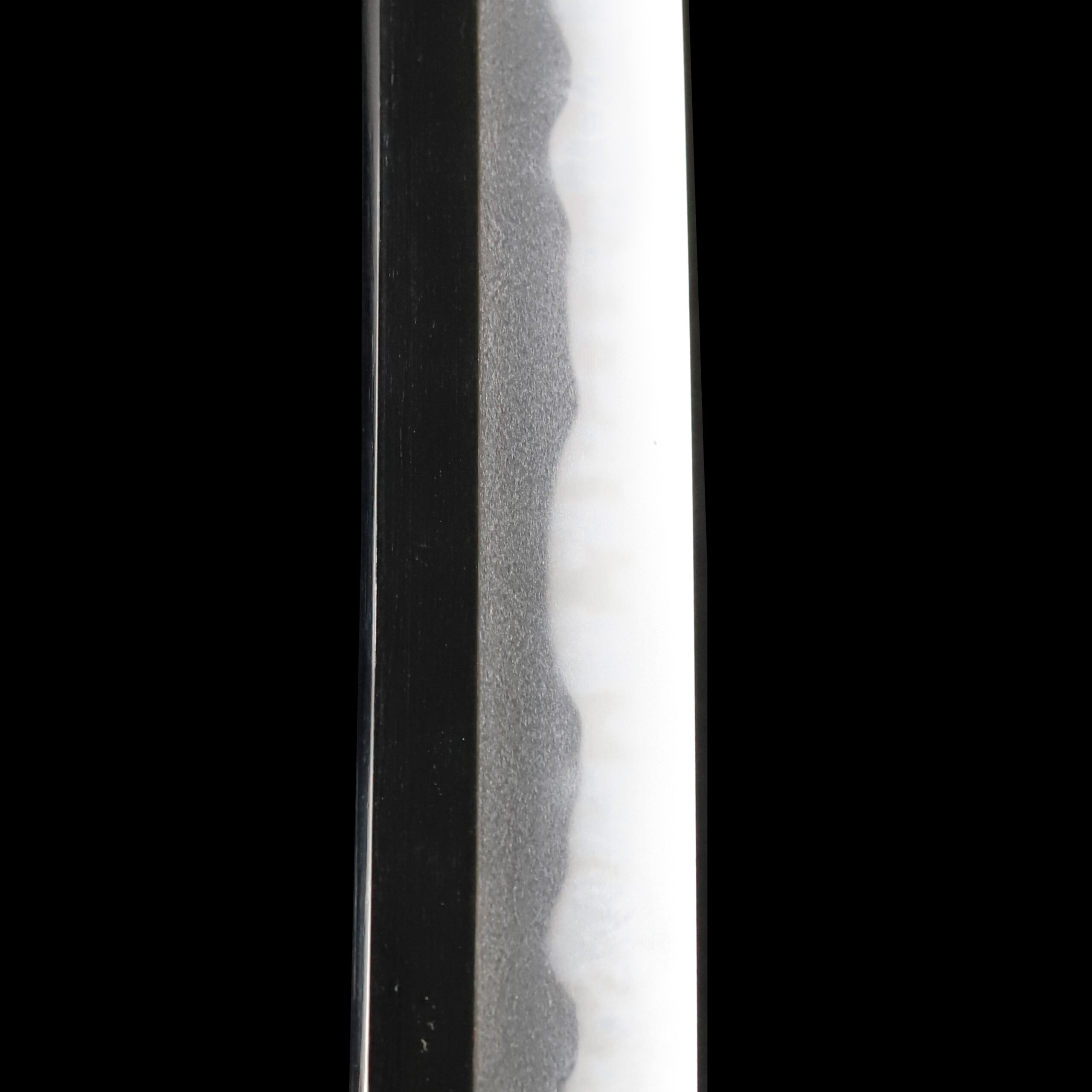
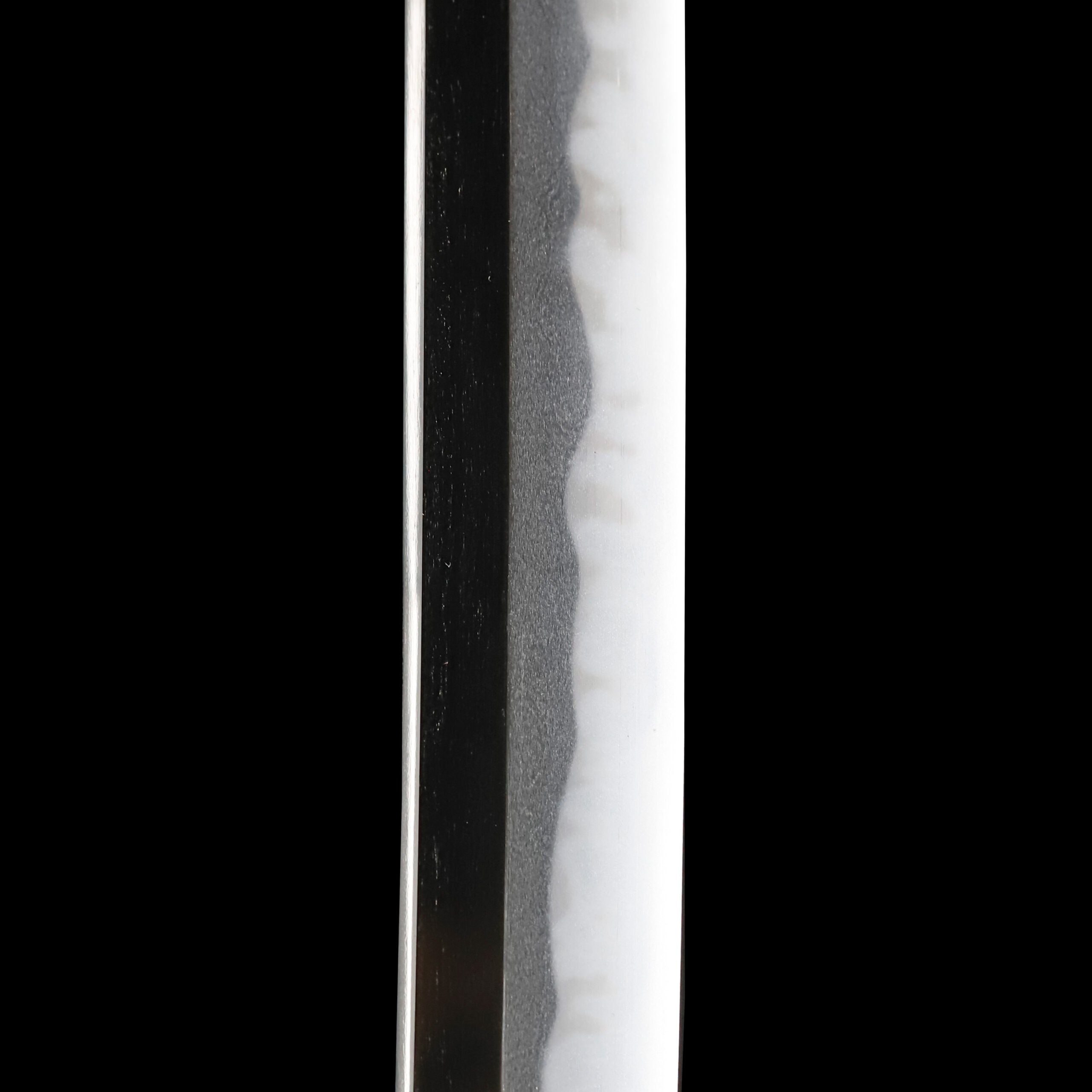
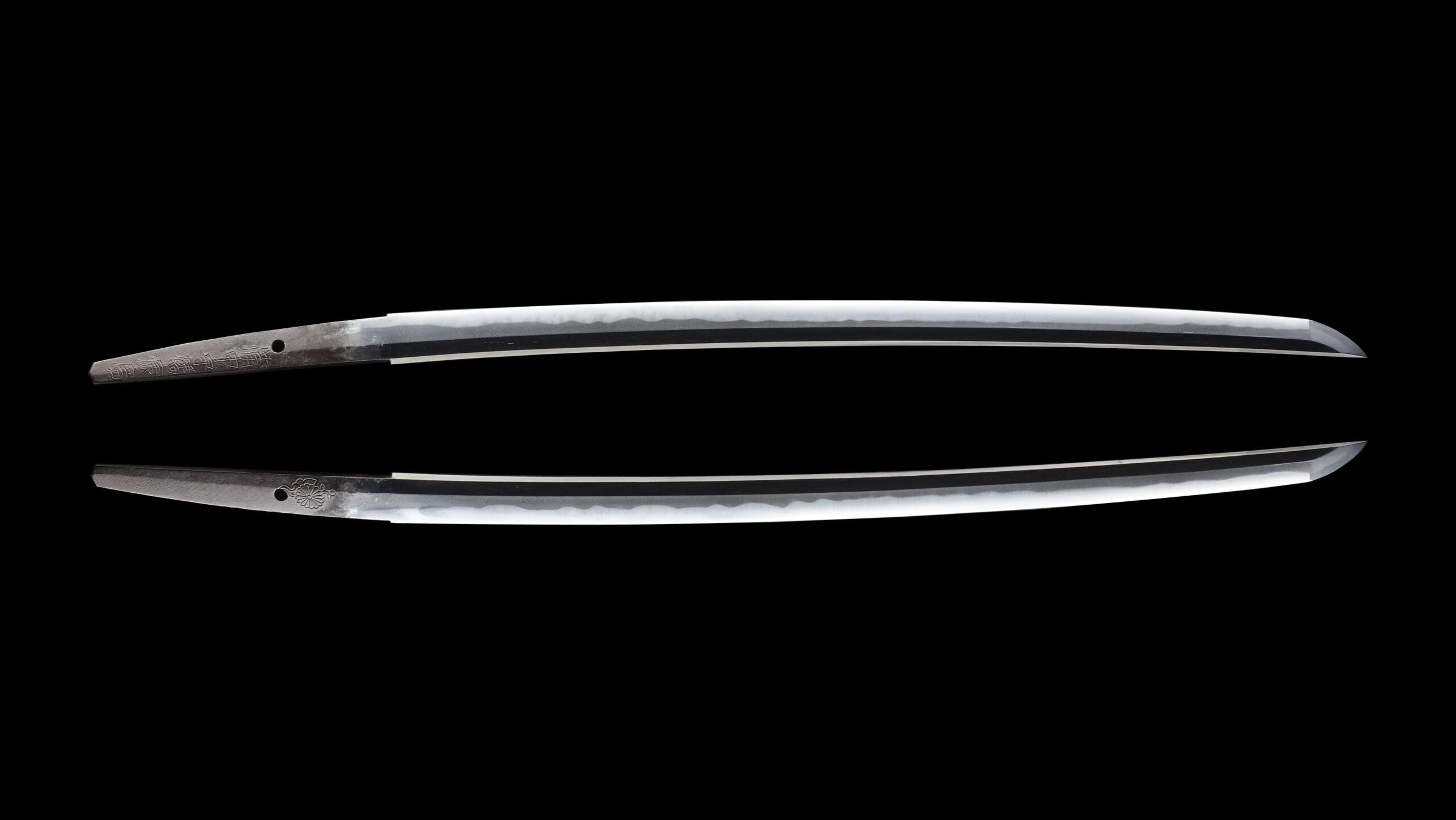
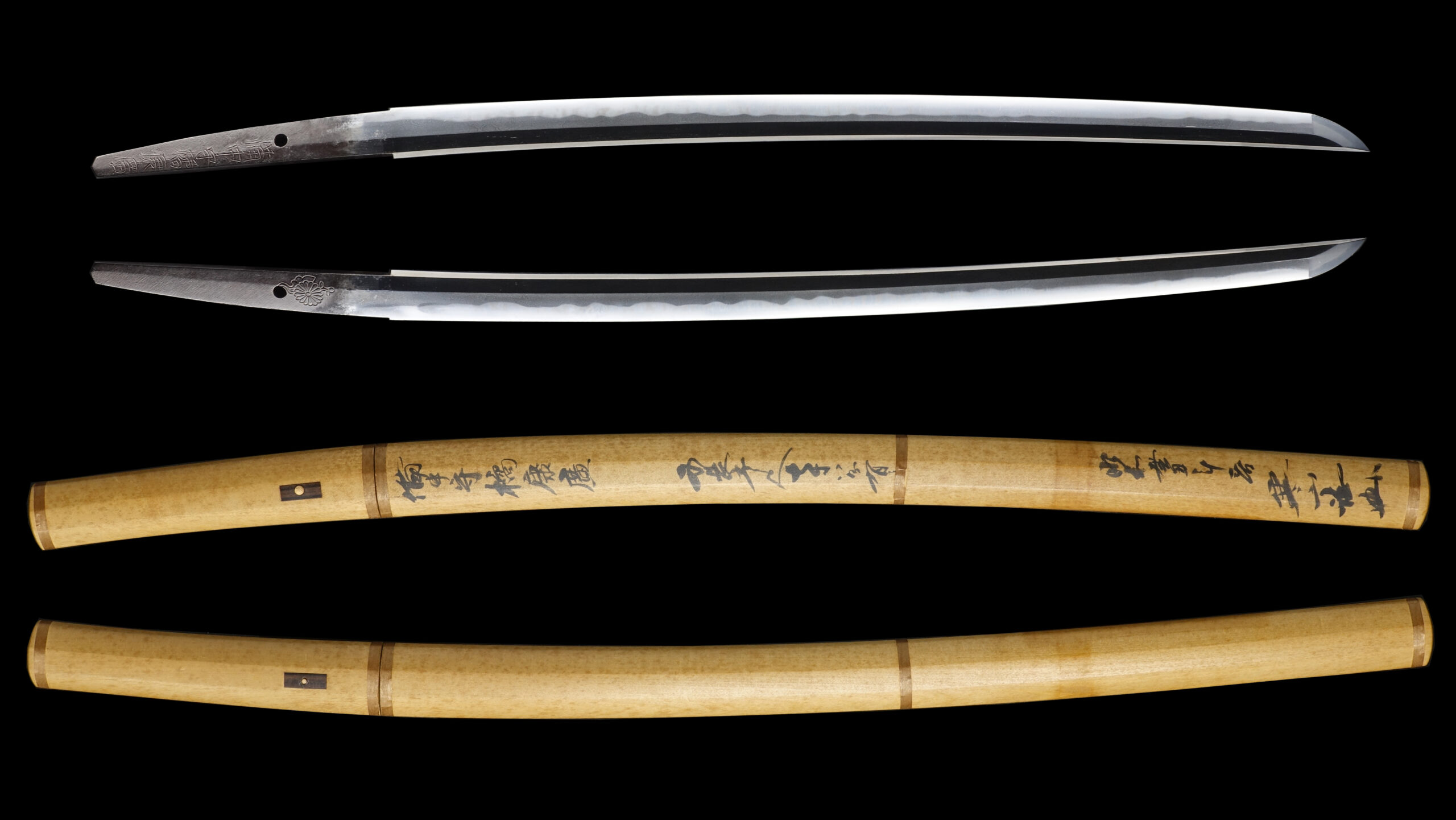
販売店の記載のまま
摂津 · 1684-1688頃
藤代 中上作 · 刀剣大鑑 上位76%
現在6点販売中
康廣の位置づけを、日本刀全体および伝法・時代・時期ごとに示します。各区分(随一・屈指・有数・著名)は、NBTHK および文化庁による指定に加え、三作や名物帳などの歴史的栄誉を加味したものです。
各項目を選ぶと評価方法が表示されます。
江戸時代
江戸は刀の目利きの時代である。本阿弥の鑑定、1719年の享保名物帳、盛んな刀剣書が、戦で抜かれることのなくなった刀を学問の対象へと変えていった。
保存刀剣のうち、出来が一層優れ、保存状態も良好と認められたものです。再刃や、室町・江戸期の多くの無銘作は対象外となり、保存刀剣より高い基準が課されます。
日本美術刀剣保存協会(NBTHK)は、1948年に設立され、文化庁の監督を受ける公益財団法人で、東京・刀剣博物館に本部を置きます。専門の審査員が出品作を直接審査し、美術的・歴史的価値に応じた鑑定書を発行します。NBTHKの鑑定書は、日本刀および刀装具の真正性を示す最も広く認知された基準です。
NBTHK公式サイトReturns/exchanges limited to defects caused by shipping (except willful misconduct or gross negligence by the company); customers must contact within 72 hours of receiving the product.