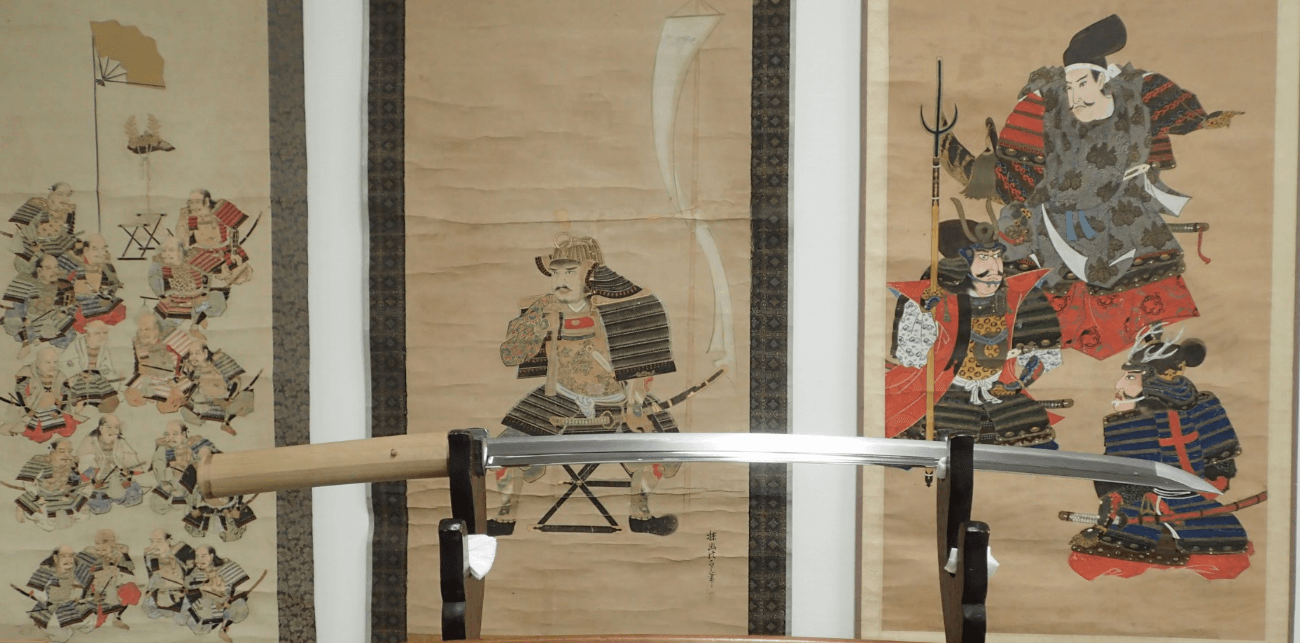
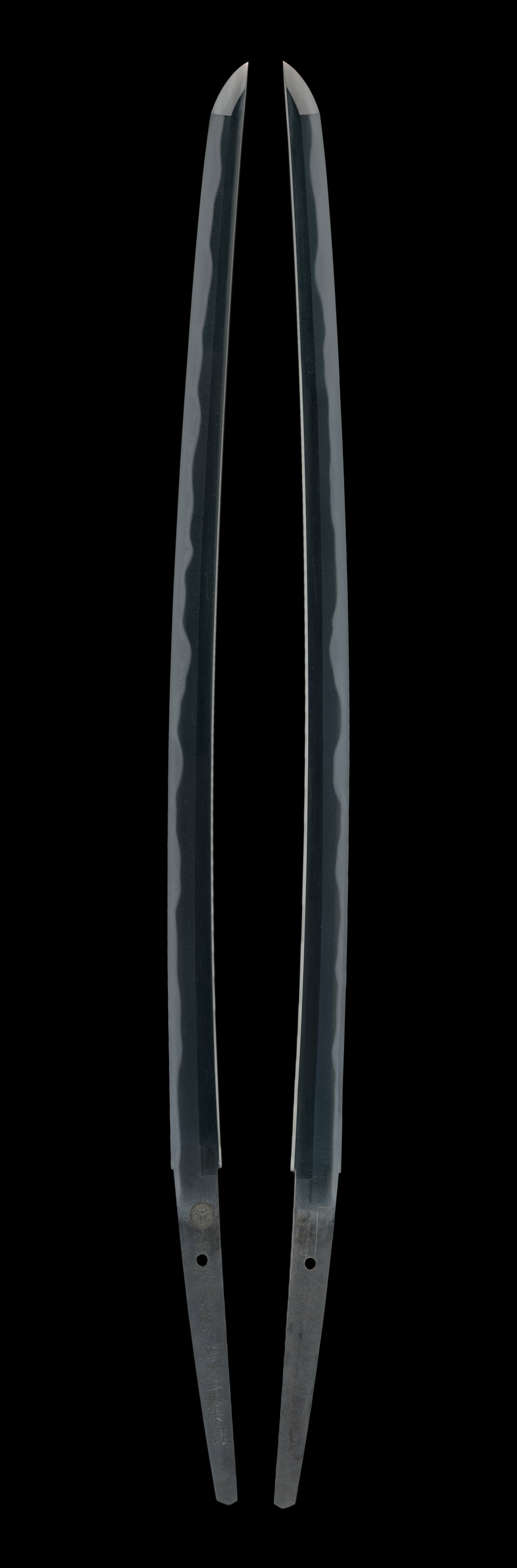
徳川の泰平のもと、大小は法度の定める身分の制服となり、需要は城下町、とりわけ江戸に集まった。工芸は二つに分かれる。目利きのための華やかな鑑賞の作と、截断の結果を金象嵌に刻む実証の刀である。
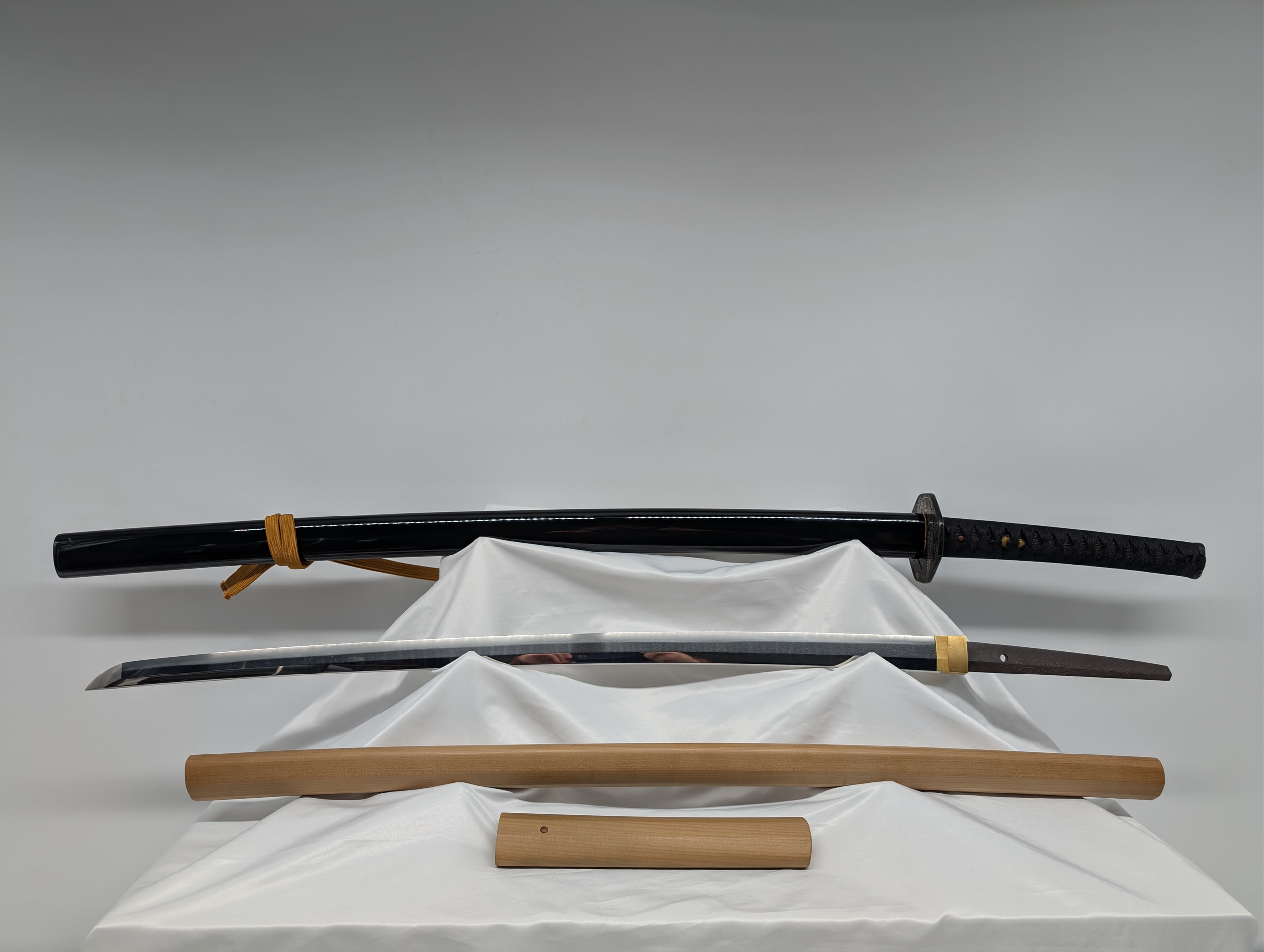
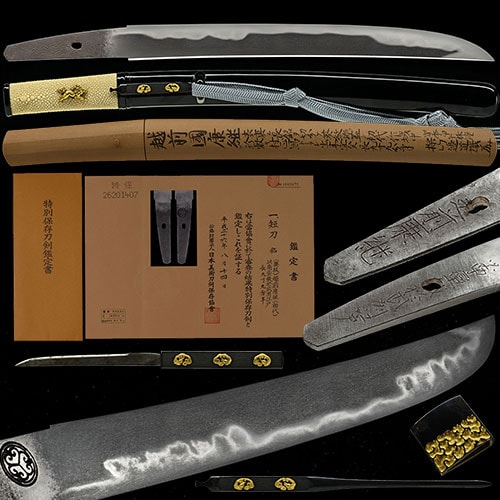
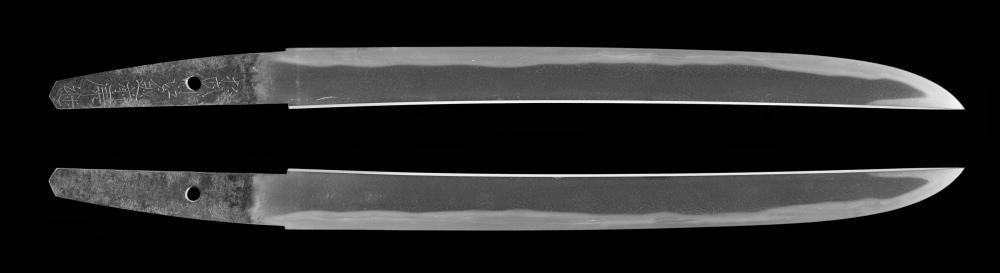
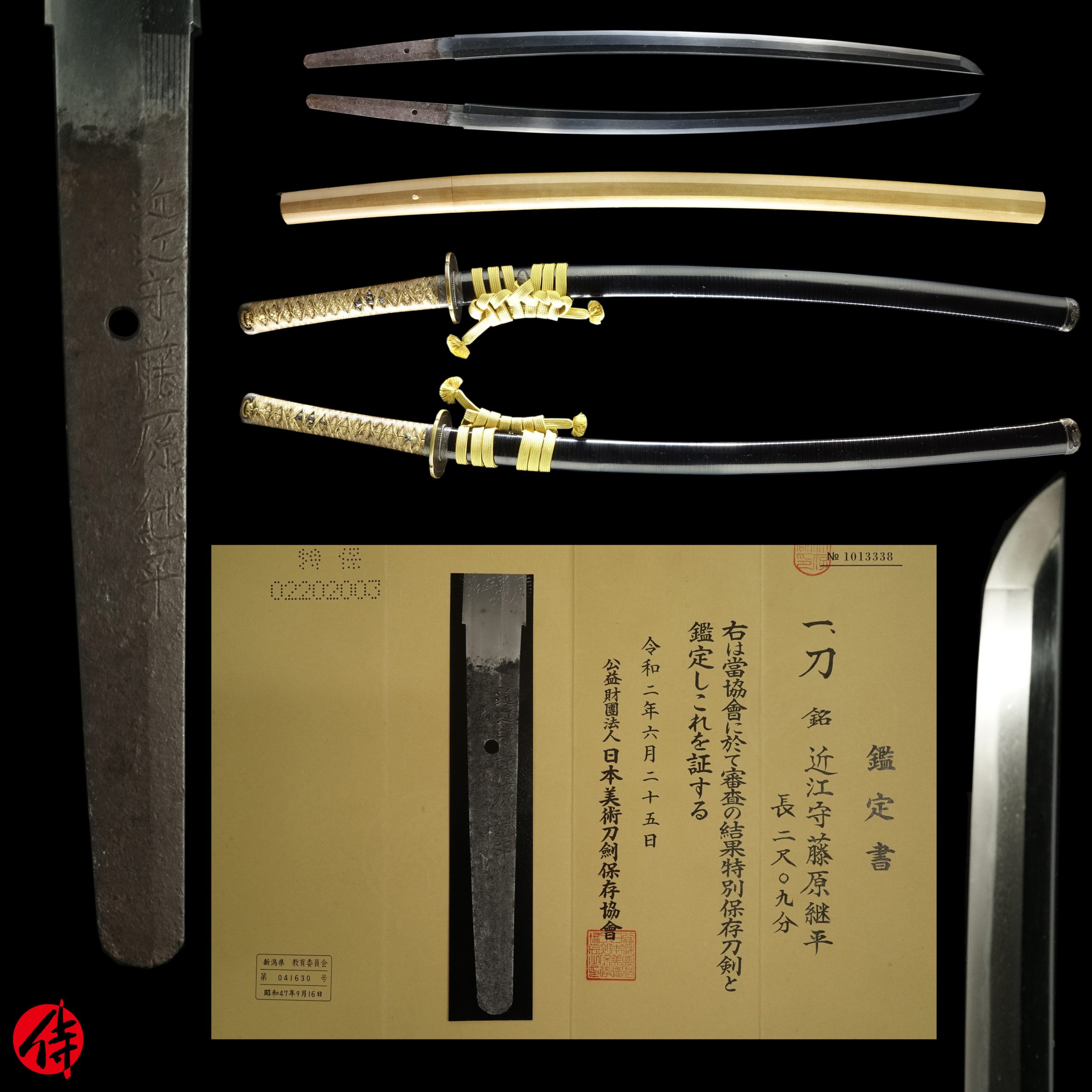
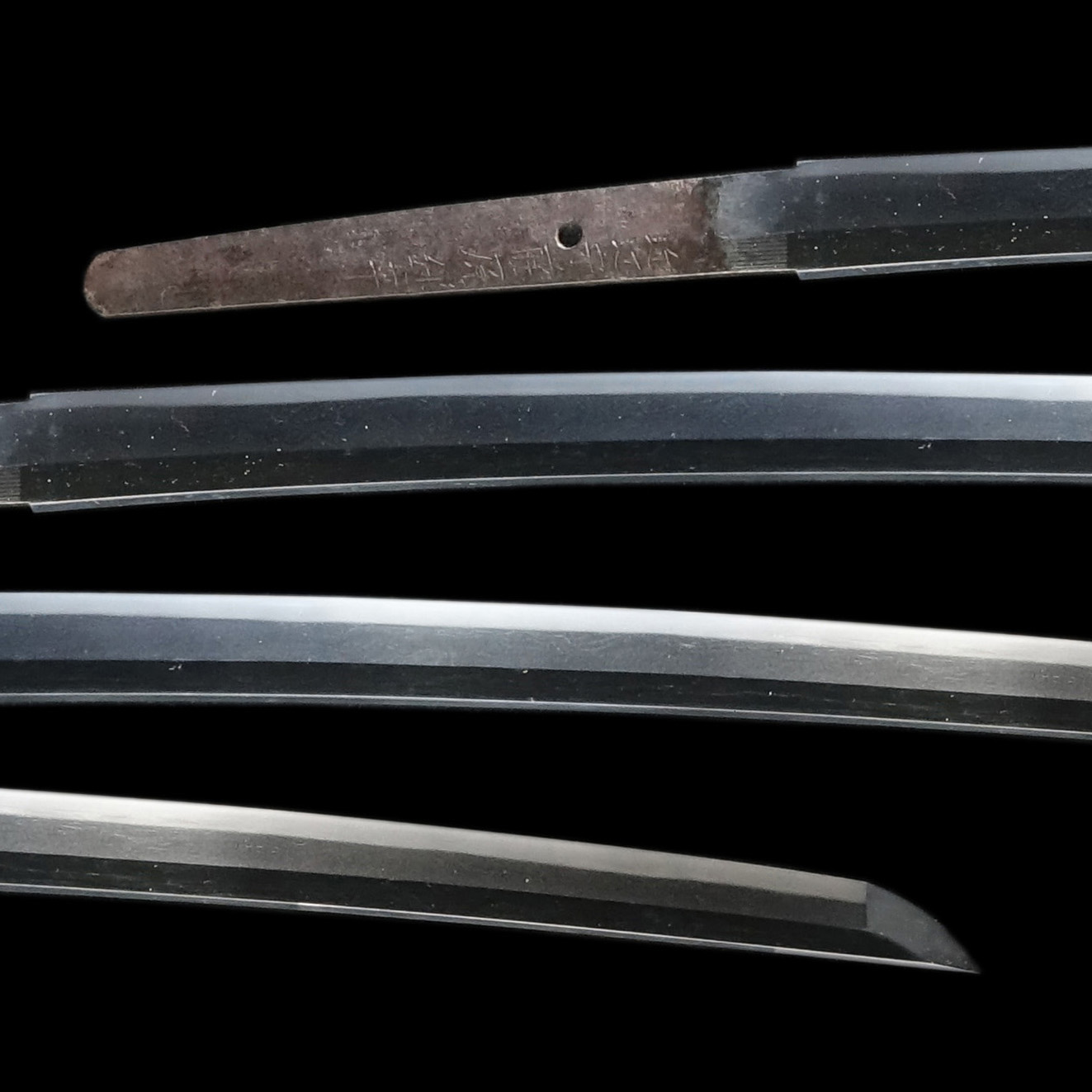
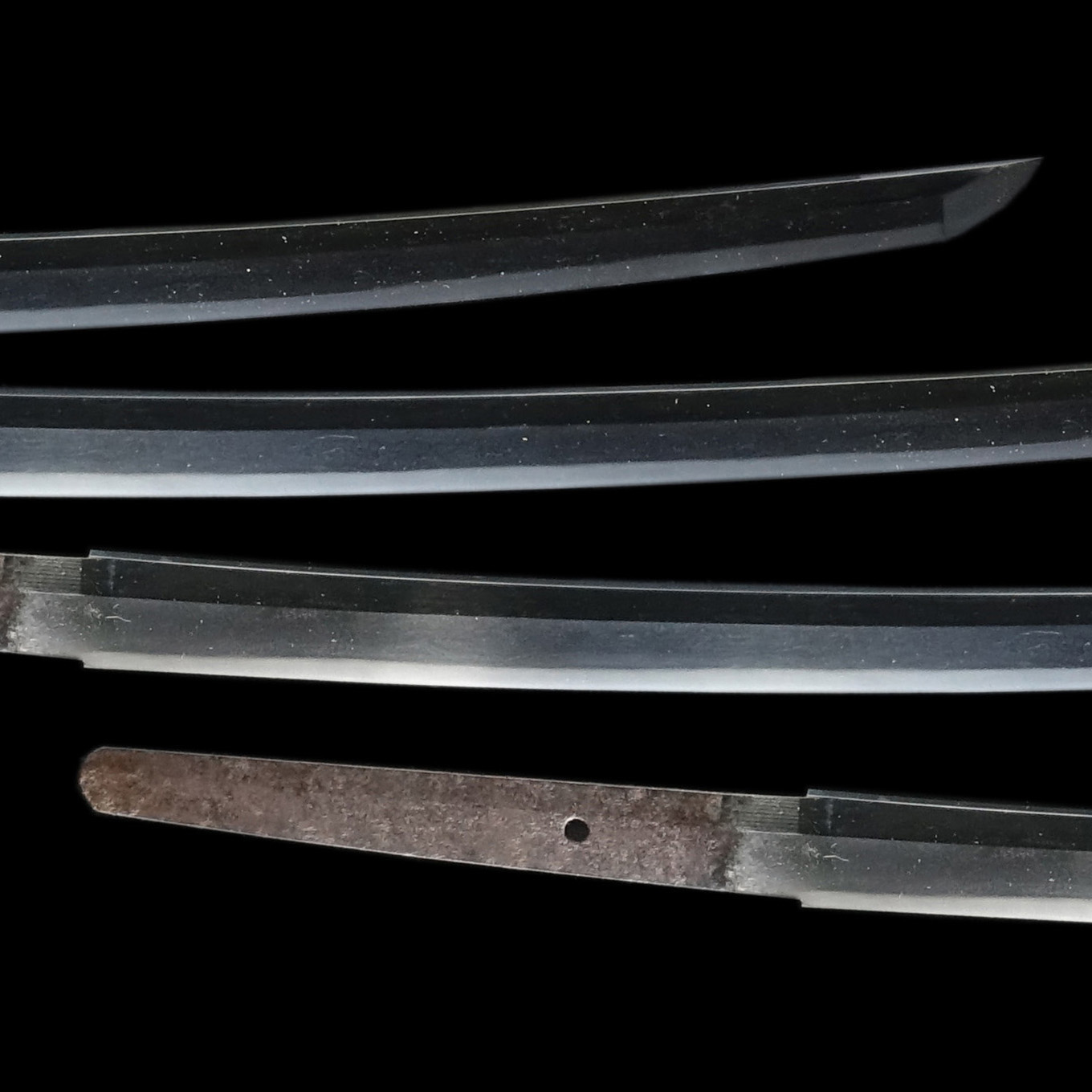
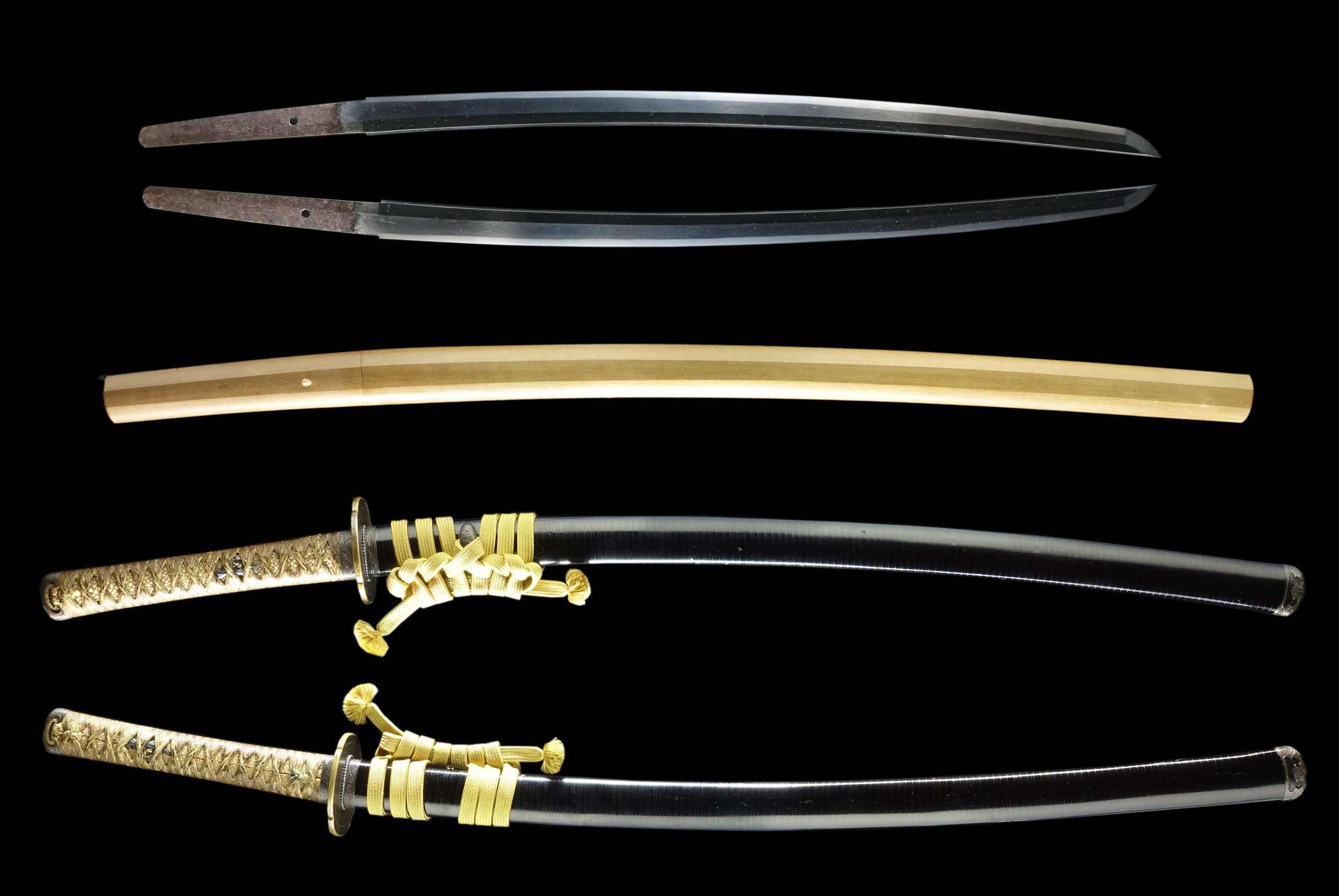
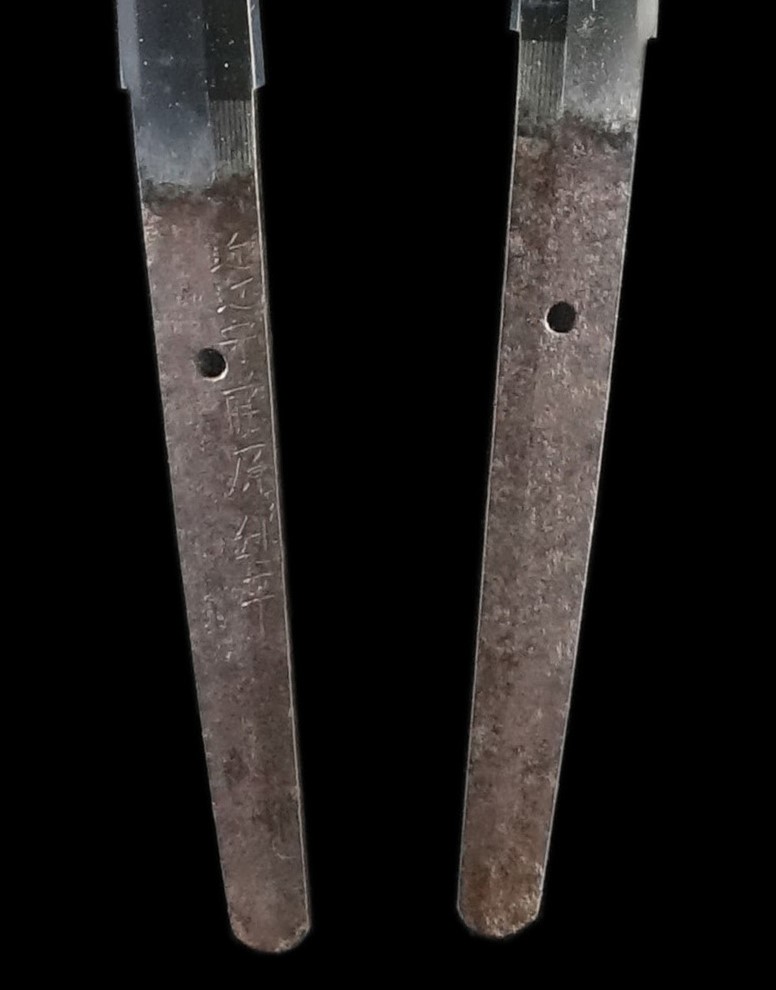
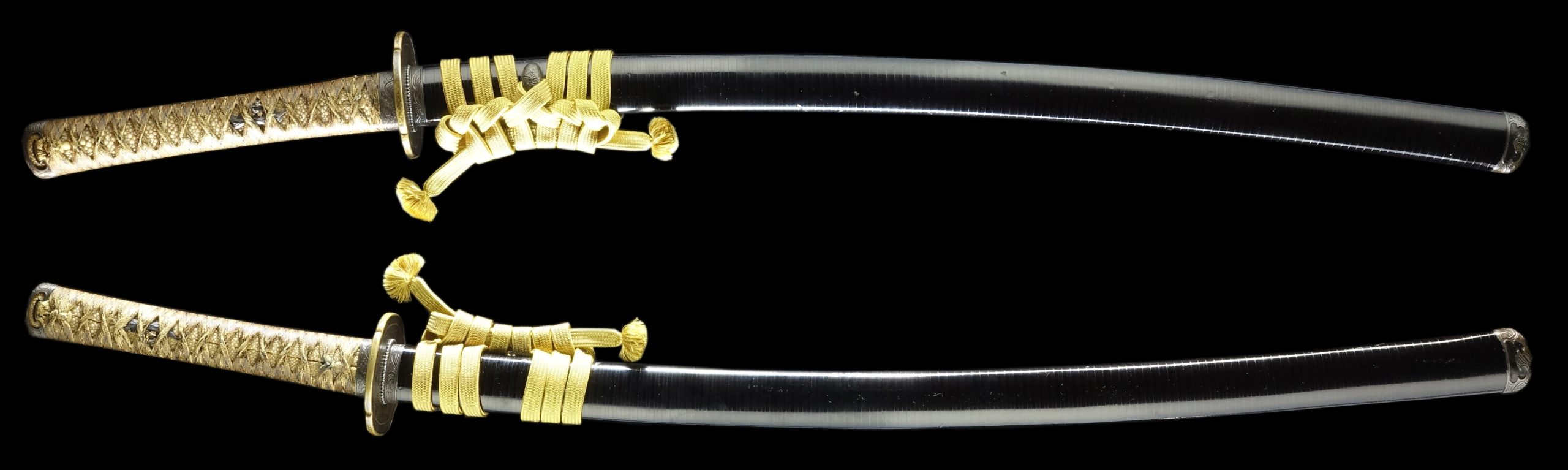
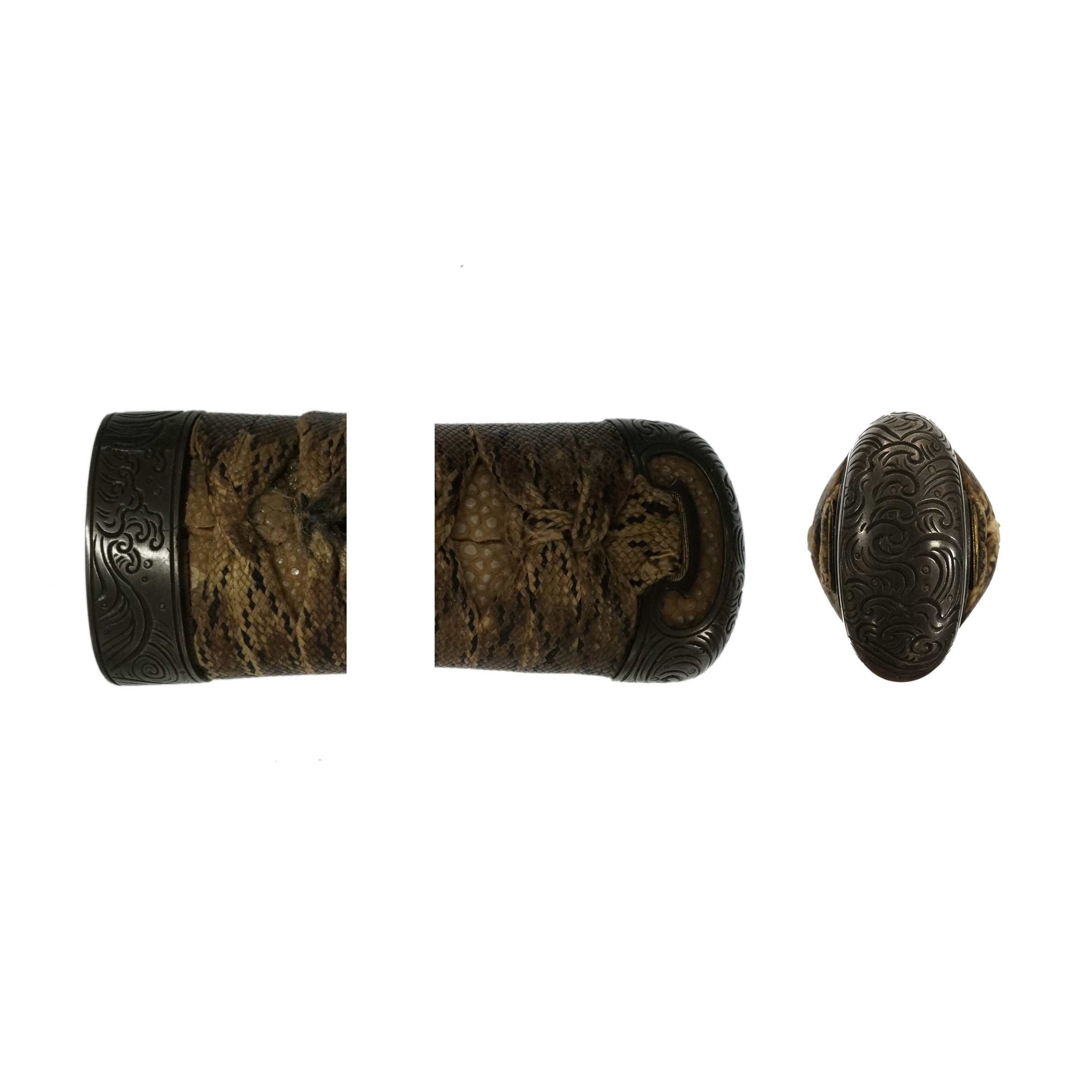
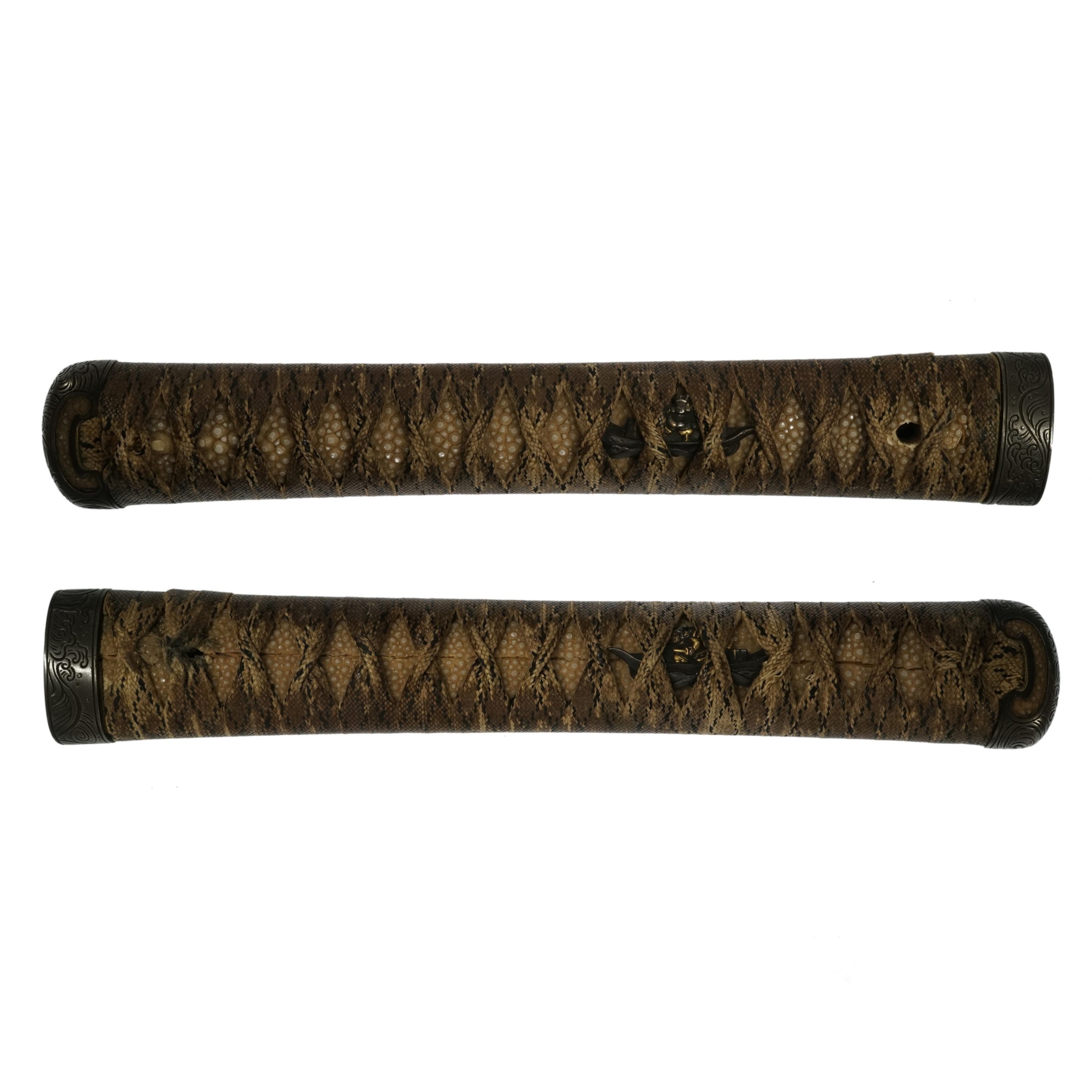
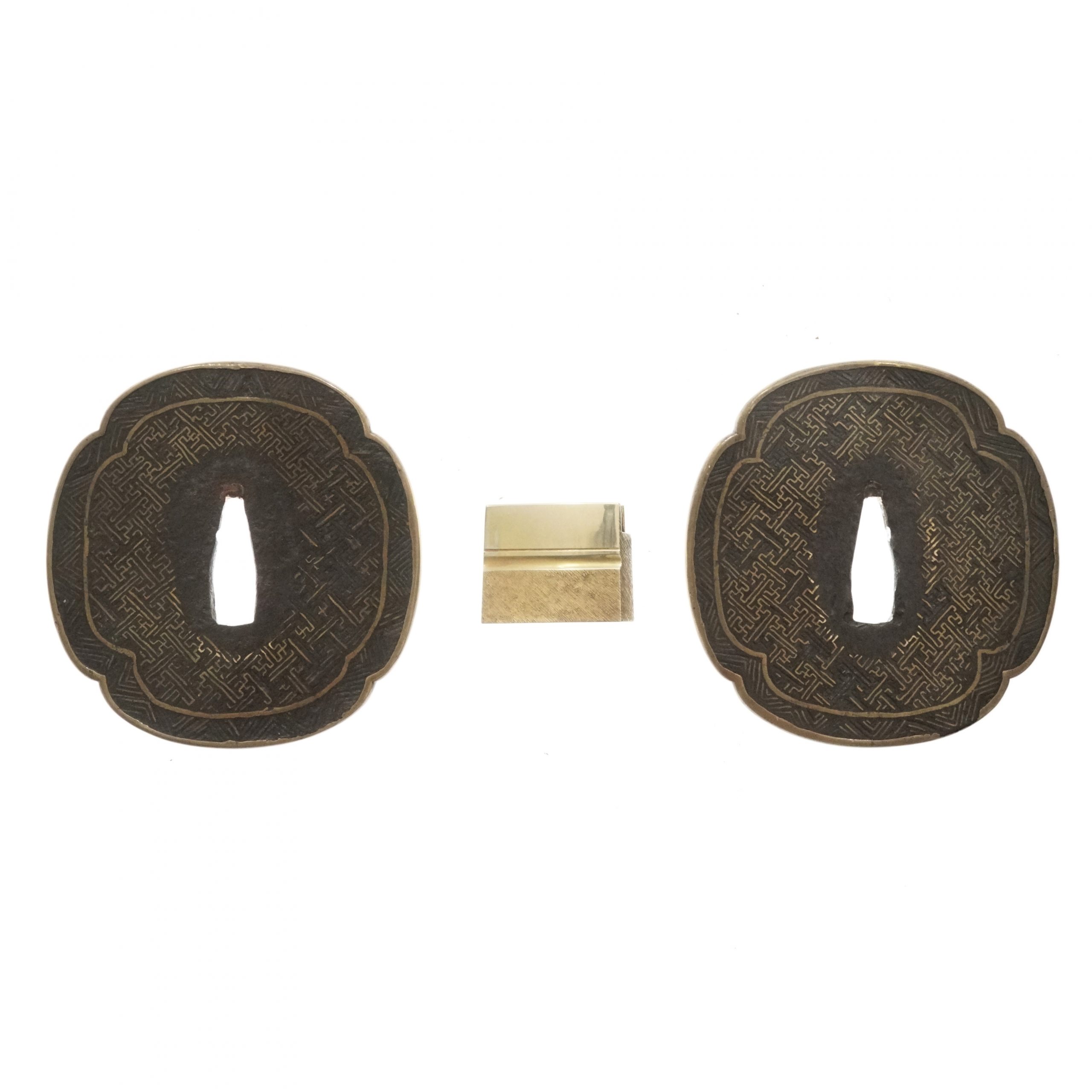
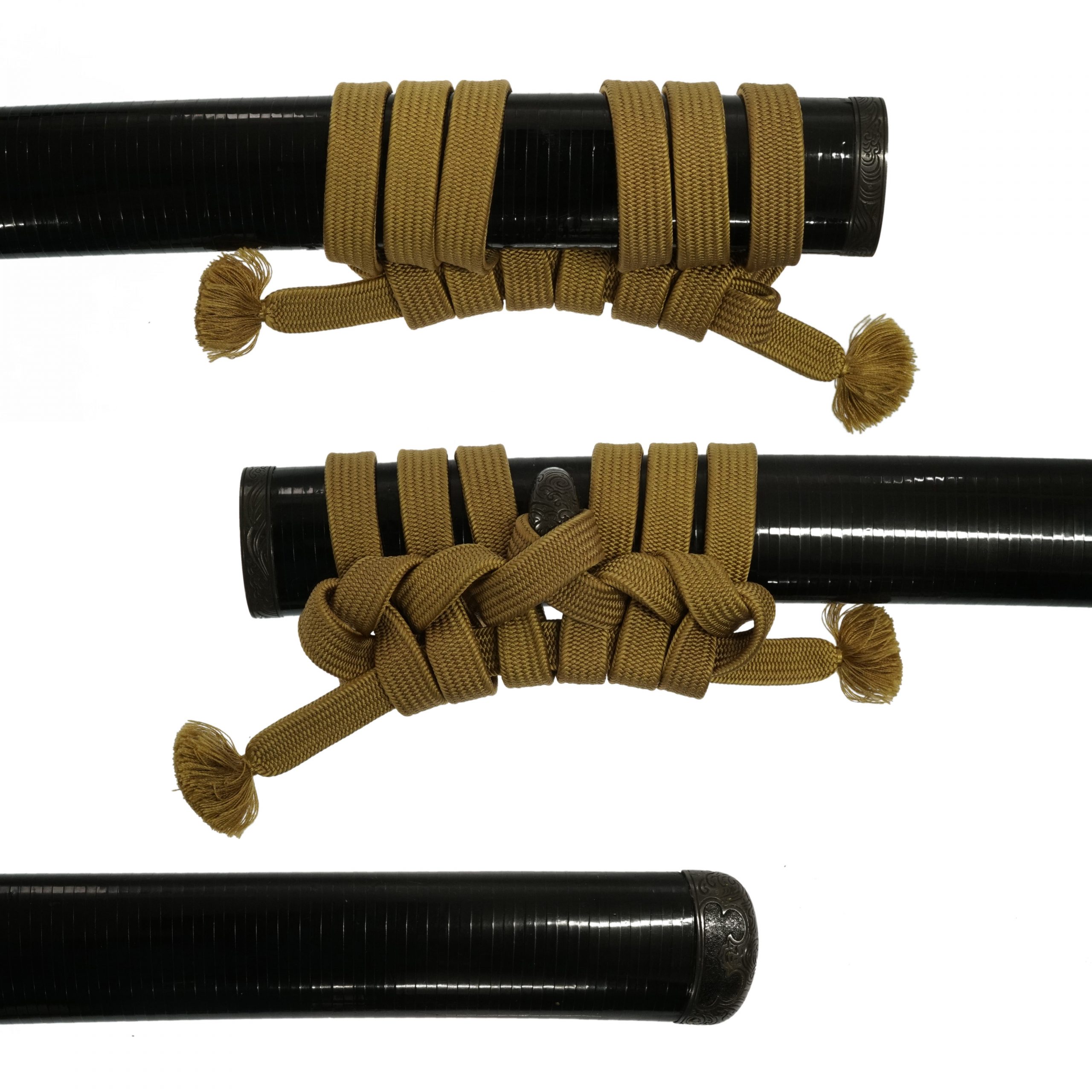
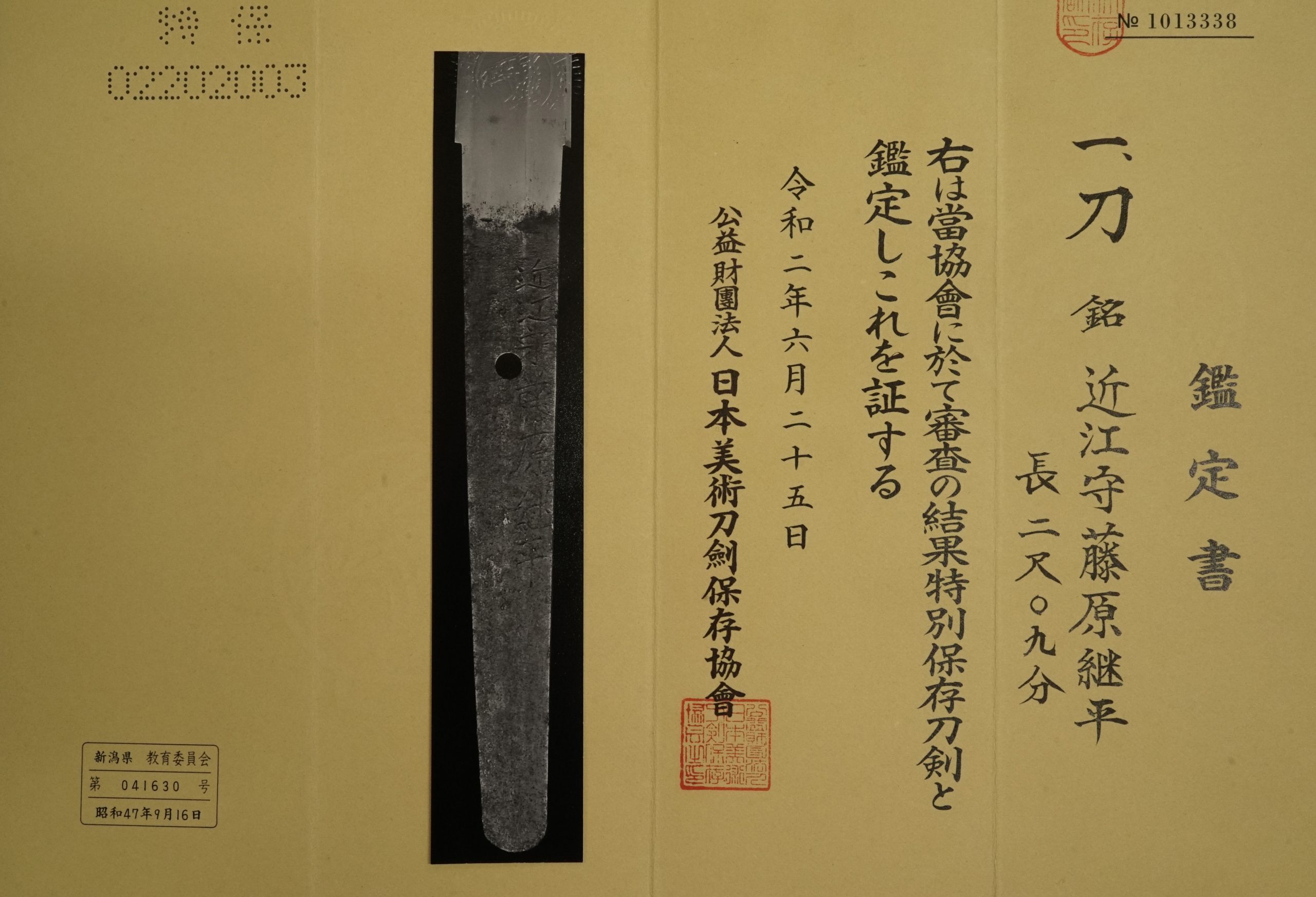
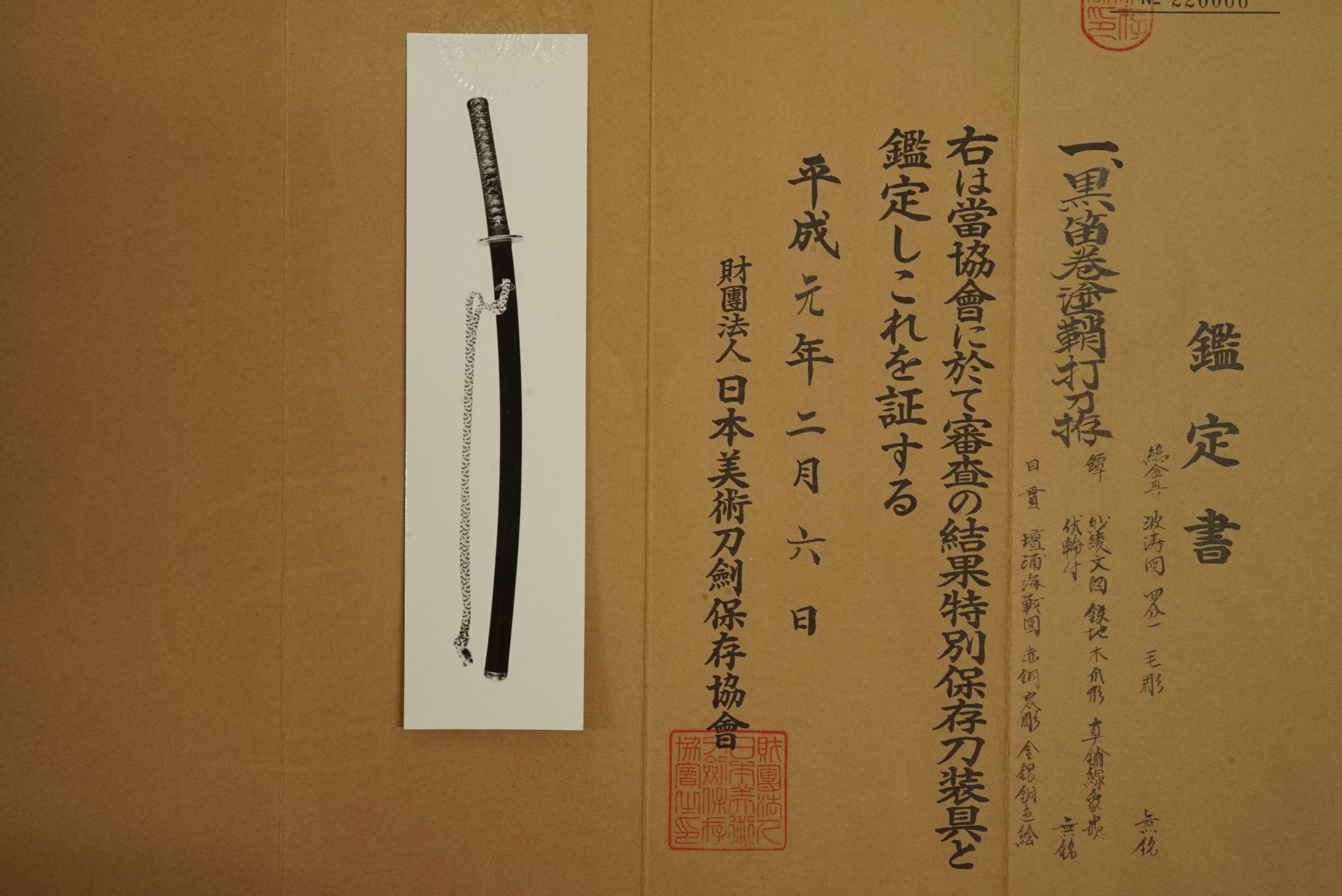
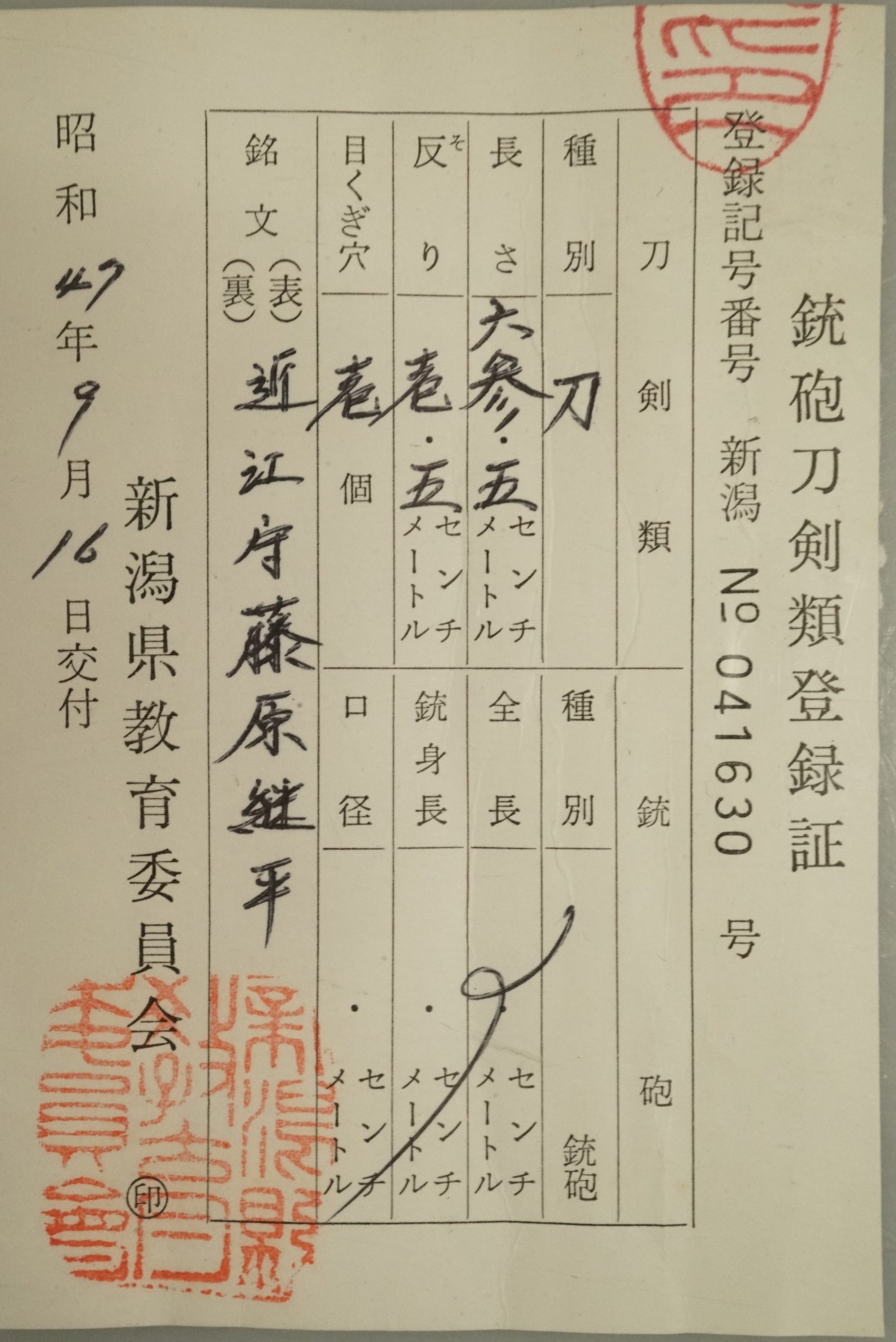
Antique Japanese Sword Katana Signed by Tsuguhira with NBTHK Tokubetsu Hozon Certificate 【Description】 The first-gen Omi no Kami Fujiwara Tsuguhira(近江守藤原継平) is an apprentice of the second-gen Yasutsugu(康継). The first-gen, Yasutusu, was one of the most famous swordsmiths in Echizen province during the early Edo Period(early 17th century). The master Yasutsu’s metalwork technique was so great that Shogun Ieyasu Tokugawa allowed him to engrave Mitsuba Aoi(a family crest of the Tokugawa) on his forged blades. The first-gen Tsuguhira lived in Echizen Province(today’s Fukui prefecture) first and then moved to Edo city with his master. The sword maker’s name Tsuguhira lasted 6th generations, and we believe this blade was forged by the second-gen Tsuguhira based on how he signed the blade. The second-gen Tsuguhira learned great sword forging techniques from his father. He forged swords during the mid Edo period,(Early 18th century) It is a rare item because there aren’t many remaining work created by the second-gen Tsuguhira today. The second-gen Tsuguhira us famous for having written a book called “Tsuguhira Oshigata,” where he hand-traced swords stored and inherited among Tokugawa shogun family for generations. He was allowed by the eighth Shogun Tokugawa Yoshimune to publish this book. This fact indicates that the second-gen Tsuguhira was a reputable swordsmith trusted by Tokugawa Shogunate family. Echizen Province, this swordsmith’s origin, was famous for forging razor-sharp, practically-designed swords. The Edo government, run by Tokugawa clan, ordered many blades from the swordsmiths in this province during the Edo period(1603-1868). Some swordsmiths moved from Echizen to Edo city because of Shogun’s request. This blade is appraised as Tokubetsu Hozon certificate issued by NBTHK. This authentication paper was only given to Japanese swords, especially worth preserving by Nihon Bijutsu Touken Hozon Kyokai(the Society for the Preservation of the Japan Art Sword). The excellent condition of this blade deserves the level of certificate it received and it accompanies with gorgeous sword mountings with the high ranked certificate. 【 Blade】 Cutting Edge Length(Nagasa) : 63.5 cm(25.0 inches) Curvature(Sori) : 1.5 cm(0.59 inches) Hamon : The crystalline structure which forms along the cutting edge of a blade as a result of the hardening process Jimon(Jihada) : visible steel surface pattern created by folding and hammering during forging process Nakago : Nakago is the tang of the Japanese sword. Japanese swordsmiths left the black rust on the tang because it prevents red rust while the tang is in its handle. And the discoloration of the tang was created over time, and it is a great indicator for a Japanese sword specialist to estimate when the sword was forged. Koshirae: Koshirae is the mounting of the Japanese sword. There are several parts that consist of Koshirae such as Saya(Sabbard), Tsuka( Handle), Tsuba(Handguard). Fuchi-Kashira : A pair of matching sword fittings that cover the upper and bottom parts of its sword hilt. The wave pattern is designed for this Fuchi Kashira. It seems the rough waves represent a heroic figure of Samurai attacking enemies. As the wave pattern has a dynamic design, it has been appreciated for Kimono (traditional Japanese costume), especially for men. Waves change the shape and terrain of the rocks repeatedly; therefore, it is said this design shows an indomitable spirit that to challenge again and again without giving up. Tsuka and Menuki : Tsuka is the handle of the Japanese sword and Menuki is its decoration. Two Samurais are designed for this Menuki. Both of them are getting a boat, and it looks they are going to battle on the sea. It is considered this Menuki and Fuchi Kashira above; these two parts were combined based on the same theme. This Menuki depicts Samurai’s figure, wearing gorgeous armor and holding his sword, staring at the enemy before his eyes. Tsuba and Habaki : Tsuba is the handguard fo
 NihontoWatch
在銘 · 寛文 · 長さ 63.5cm · 反り 1.5cm
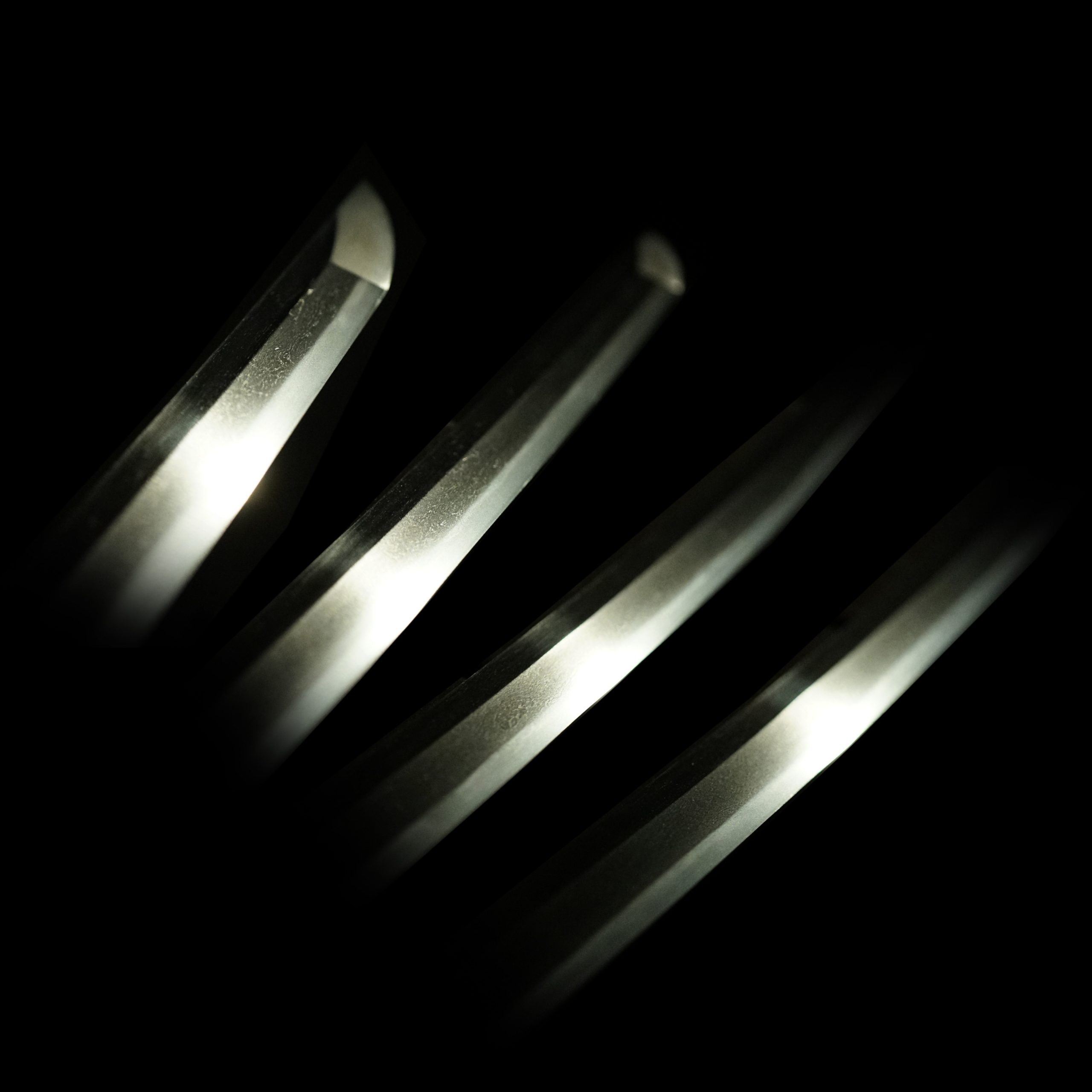
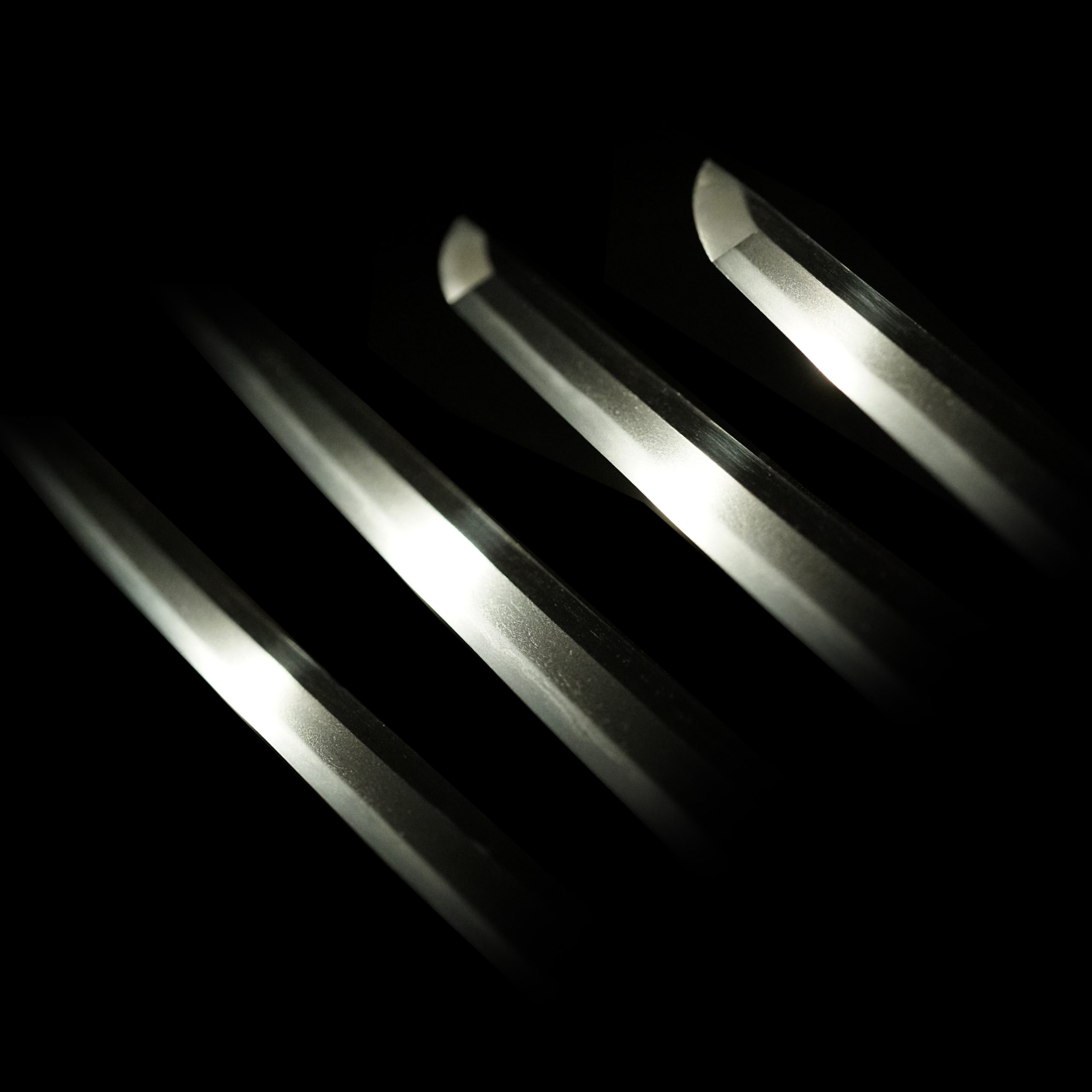
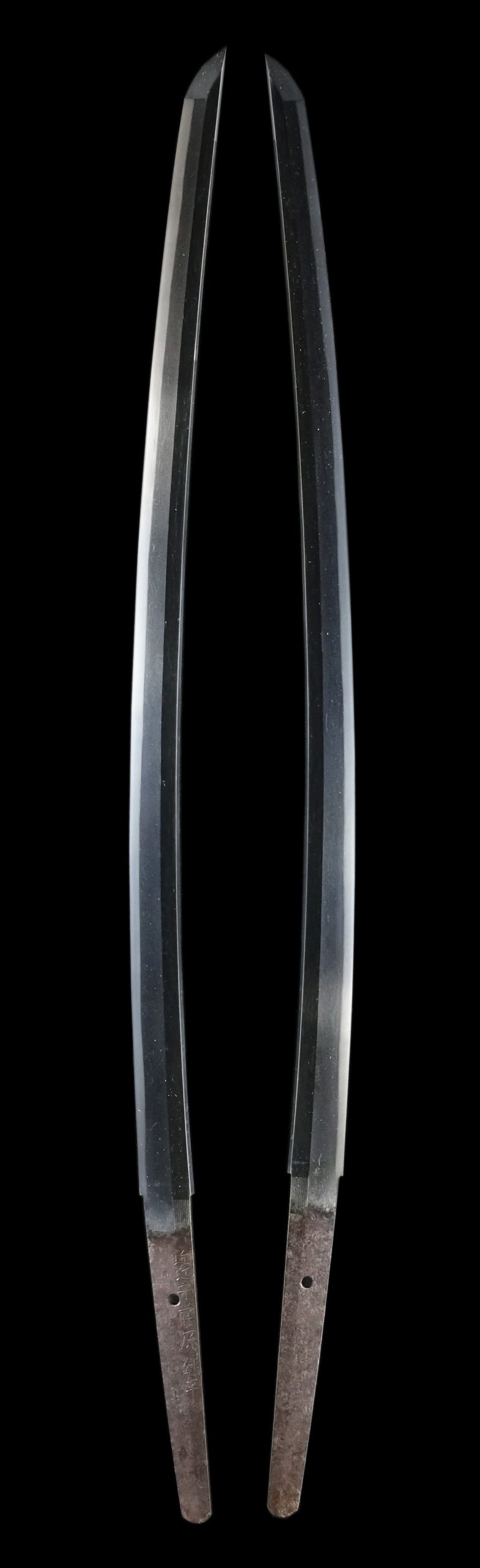
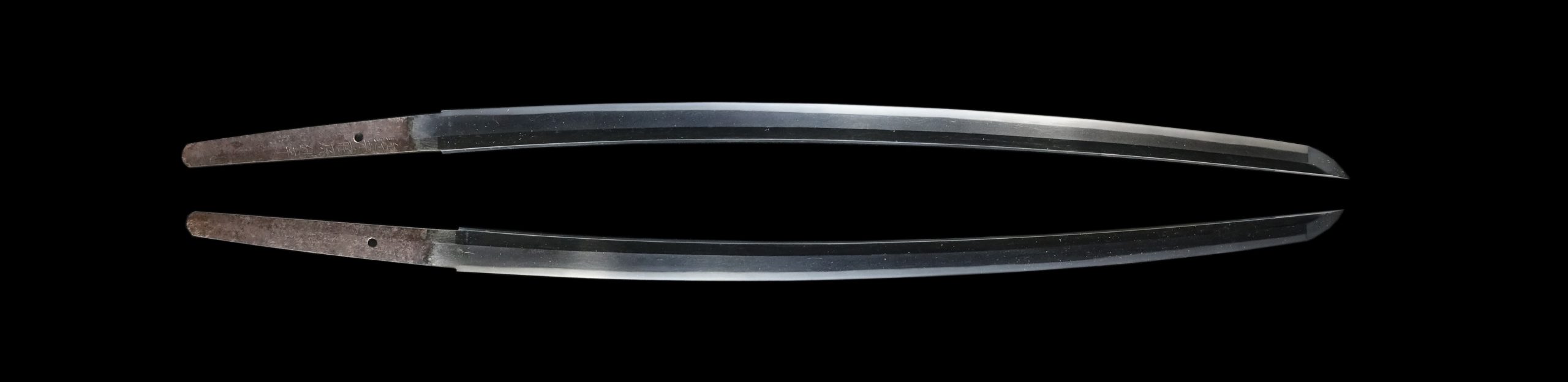
新刀 · 武蔵 · 1661-1673頃
藤代 Jo saku · 刀剣大鑑 上位49%
現在2点販売中
繼平の位置づけを、日本刀全体および伝統・時代・時期ごとに示します。各位(随一・屈指・有数・著名)は、NBTHK および文化庁による指定に加え、三作や名物帳などの歴史的栄誉を加味したものです。
各項目を選ぶと評価方法が表示されます。
新刀 · 越前
現在54点販売中
茎にきられた黒い鉄こそ、この一門の最も確かな標である。鍛えは板目に杢が目立って交じり、刃寄り棟寄りに流れて肌立ち、地沸厚く、地景細かに入って、かねが総じて黒みをおびる。説明書はこれを繰り返し「越前がねの特色」と名指し、初代康継から重高・貞国・貞次に至るまで終始変わらぬ見どころとする。この一団は近江国坂田郡下坂郷を本貫とし、新刀初頭の越前にあって「下坂」を商標として用いた幾人かの鍛冶の集まりであって、説明書は一人の刀工とみるよりは一団とみるのが妥当とし、初期は康継をその代表者とする。初代康継は下坂市左衛門と称して越前に移り結城秀康に仕え、初め肥後大掾下坂と銘した。慶長十年から十一年にかけて江戸に召され、家康・秀忠両将軍の御前で鍛刀した褒賞として「康」の一字と三つ葉葵紋を茎にきることを許されて康継と改名し、葵下坂・御紋康継の名はこれに発する。以後は将軍家の御抱工として越前と江戸を隔年に勤め、本国打には越前住、江戸打には於武州江戸と切り添え、南蛮鉄を以南蛮鉄と添えた。肥後大掾藤原下坂の康継前銘は貞国・兼法・国康らと鏨運びも筆意も酷似し、今日なお銘振りによってしか分かち得ぬほど近い。 この一門の手は静かで、同時代の備前・美濃の華やかな新刀の多くに対置される。刃文は浅いのたれ・中直刃を基調に小互の目を連れて交え、小足・葉入り、沸厚く、荒めの沸がむらにつき、本工らしいばさけを生じて、金筋・砂流しが長くかかり、棟焼・飛焼さかんに、時に皆焼風となり、匂口は沈みごころとなる。帽子は浅くのたれて先尖りごころに三品風を呈し、掃きかけて長く返る。姿は身幅広く元先の幅差少なく重ね厚め反り浅い慶長新刀体配で、平造脇指は幅広寸延びとなる。彫物がいま一つの恒常で、彫口深く力強い越前彫・記内彫が一門の手を示し、不動三体仏・倶利迦羅・梵字・護摩箸・素剣を巧みに彫る。記内ら越前の彫物師の手によるこの深い浮彫は、説明書が地方の特色と名指すものである。一門が最も称えられる作域は相州写しであって、初代・二代ともに大坂落城に焼失した名物の再刃を試み、中でも貞宗写しを最も得意とし、各写しに自らの作風を加えて徒らに模倣せぬところに特色がある。手は系統と目的とで分かれ、貞国は直刃を得意として地がつんで精美に、貞次は越前関の系譜を引いて丁子の目立つ明るい現れを示し、重高は茎尻を栗尻とする点で一門の剣形と分かたれる。 収集家がこの一門の作に向かうべき所以は、その見分けやすさにある。黒く肌立った越前がね、ばさけた刃縁、縞がかる砂流し、長く掃きかける小丸の返り、そして深い記内彫が併さって、写した古作によってではなく一門自らの語法によって読まれる。中心に立つのは初代康継で、駿府滞在中の駿州打や名物写しを残し、駿府御分物の一刀は紀州徳川家に、号風雷神の刀は越前松平家に伝来した。嫡子二代康継は父風を忠実に継ぎ、継の字形以外では殆ど区別し難く、晩年は初代に劣らぬ域に達した。二代の後、家は江戸三代を右馬助、越前家を四郎右衛門が継いで両系に分かれ、同名は幕末まで両地に栄えた。江戸三代は鍛えがつんで綺麗に、匂口は明るく、直ぐの焼出しを置いて法城寺一派など当時の江戸物に近づく。後援者本多飛騨守成重の立葵紋が貞次や康継一門の優品に多くきられ、截断銘がその伝来を彩る。藤代は上々作から上作に位し、一門は名だたる蔵伝よりも在銘の指定刀を通して出会われる。市に現れるのは葵紋を切った在銘の康継、あるいは下坂貞国・貞次・重高の在銘作であって、根気をもって待てば折にふれ世に現れ、現れれば家康の葵紋下賜に発する越前下坂の確かな一口となる。 詳しく見る →
江戸時代
徳川の泰平のもと、大小は法度の定める身分の制服となり、需要は城下町、とりわけ江戸に集まった。工芸は二つに分かれる。目利きのための華やかな鑑賞の作と、截断の結果を金象嵌に刻む実証の刀である。
保存刀剣のうち、出来が一層優れ、保存状態も良好と認められたものです。再刃や、室町・江戸期の多くの無銘作は対象外となり、保存刀剣より高い基準が課されます。
日本美術刀剣保存協会(NBTHK)は、1948年に設立され、文化庁の監督を受ける公益財団法人で、東京・刀剣博物館に本部を置きます。専門の審査員が出品作を直接審査し、美術的・歴史的価値に応じた鑑定書を発行します。NBTHKの鑑定書は、日本刀および刀装具の真正性を示す最も広く認知された基準です。
NBTHK公式サイトReturns/exchanges limited to defects caused by shipping (except willful misconduct or gross negligence by the company); customers must contact within 72 hours of receiving the product.
Antique Japanese Sword Katana Signed by Tsuguhira with NBTHK Tokubetsu Hozon Certificate 【Description】 The first-gen Omi no Kami Fujiwara Tsuguhira(近江守藤原継平) is an apprentice of the second-gen Yasutsugu(康継). The first-gen, Yasutusu, was one of the most famous swordsmiths in Echizen province during the early Edo Period(early 17th century). The master Yasutsu’s metalwork technique was so great that Shogun Ieyasu Tokugawa allowed him to engrave Mitsuba Aoi(a family crest of the Tokugawa) on his forged blades. The first-gen Tsuguhira lived in Echizen Province(today’s Fukui prefecture) first and then moved to Edo city with his master. The sword maker’s name Tsuguhira lasted 6th generations, and we believe this blade was forged by the second-gen Tsuguhira based on how he signed the blade. The second-gen Tsuguhira learned great sword forging techniques from his father. He forged swords during the mid Edo period,(Early 18th century) It is a rare item because there aren’t many remaining work created by the second-gen Tsuguhira today. The second-gen Tsuguhira us famous for having written a book called “Tsuguhira Oshigata,” where he hand-traced swords stored and inherited among Tokugawa shogun family for generations. He was allowed by the eighth Shogun Tokugawa Yoshimune to publish this book. This fact indicates that the second-gen Tsuguhira was a reputable swordsmith trusted by Tokugawa Shogunate family. Echizen Province, this swordsmith’s origin, was famous for forging razor-sharp, practically-designed swords. The Edo government, run by Tokugawa clan, ordered many blades from the swordsmiths in this province during the Edo period(1603-1868). Some swordsmiths moved from Echizen to Edo city because of Shogun’s request. This blade is appraised as Tokubetsu Hozon certificate issued by NBTHK. This authentication paper was only given to Japanese swords, especially worth preserving by Nihon Bijutsu Touken Hozon Kyokai(the Society for the Preservation of the Japan Art Sword). The excellent condition of this blade deserves the level of certificate it received and it accompanies with gorgeous sword mountings with the high ranked certificate. 【 Blade】 Cutting Edge Length(Nagasa) : 63.5 cm(25.0 inches) Curvature(Sori) : 1.5 cm(0.59 inches) Hamon : The crystalline structure which forms along the cutting edge of a blade as a result of the hardening process Jimon(Jihada) : visible steel surface pattern created by folding and hammering during forging process Nakago : Nakago is the tang of the Japanese sword. Japanese swordsmiths left the black rust on the tang because it prevents red rust while the tang is in its handle. And the discoloration of the tang was created over time, and it is a great indicator for a Japanese sword specialist to estimate when the sword was forged. Koshirae: Koshirae is the mounting of the Japanese sword. There are several parts that consist of Koshirae such as Saya(Sabbard), Tsuka( Handle), Tsuba(Handguard). Fuchi-Kashira : A pair of matching sword fittings that cover the upper and bottom parts of its sword hilt. The wave pattern is designed for this Fuchi Kashira. It seems the rough waves represent a heroic figure of Samurai attacking enemies. As the wave pattern has a dynamic design, it has been appreciated for Kimono (traditional Japanese costume), especially for men. Waves change the shape and terrain of the rocks repeatedly; therefore, it is said this design shows an indomitable spirit that to challenge again and again without giving up. Tsuka and Menuki : Tsuka is the handle of the Japanese sword and Menuki is its decoration. Two Samurais are designed for this Menuki. Both of them are getting a boat, and it looks they are going to battle on the sea. It is considered this Menuki and Fuchi Kashira above; these two parts were combined based on the same theme. This Menuki depicts Samurai’s figure, wearing gorgeous armor and holding his sword, staring at the enemy before his eyes. Tsuba and Habaki : Tsuba is the handguard fo
NihontoWatch在銘 · 寛文 · 長さ 63.5cm · 反り 1.5cm
新刀 · 武蔵 · 1661-1673頃
藤代 Jo saku · 刀剣大鑑 上位49%
現在2点販売中
繼平の位置づけを、日本刀全体および伝統・時代・時期ごとに示します。各位(随一・屈指・有数・著名)は、NBTHK および文化庁による指定に加え、三作や名物帳などの歴史的栄誉を加味したものです。
各項目を選ぶと評価方法が表示されます。
新刀 · 越前
現在54点販売中
茎にきられた黒い鉄こそ、この一門の最も確かな標である。鍛えは板目に杢が目立って交じり、刃寄り棟寄りに流れて肌立ち、地沸厚く、地景細かに入って、かねが総じて黒みをおびる。説明書はこれを繰り返し「越前がねの特色」と名指し、初代康継から重高・貞国・貞次に至るまで終始変わらぬ見どころとする。この一団は近江国坂田郡下坂郷を本貫とし、新刀初頭の越前にあって「下坂」を商標として用いた幾人かの鍛冶の集まりであって、説明書は一人の刀工とみるよりは一団とみるのが妥当とし、初期は康継をその代表者とする。初代康継は下坂市左衛門と称して越前に移り結城秀康に仕え、初め肥後大掾下坂と銘した。慶長十年から十一年にかけて江戸に召され、家康・秀忠両将軍の御前で鍛刀した褒賞として「康」の一字と三つ葉葵紋を茎にきることを許されて康継と改名し、葵下坂・御紋康継の名はこれに発する。以後は将軍家の御抱工として越前と江戸を隔年に勤め、本国打には越前住、江戸打には於武州江戸と切り添え、南蛮鉄を以南蛮鉄と添えた。肥後大掾藤原下坂の康継前銘は貞国・兼法・国康らと鏨運びも筆意も酷似し、今日なお銘振りによってしか分かち得ぬほど近い。 この一門の手は静かで、同時代の備前・美濃の華やかな新刀の多くに対置される。刃文は浅いのたれ・中直刃を基調に小互の目を連れて交え、小足・葉入り、沸厚く、荒めの沸がむらにつき、本工らしいばさけを生じて、金筋・砂流しが長くかかり、棟焼・飛焼さかんに、時に皆焼風となり、匂口は沈みごころとなる。帽子は浅くのたれて先尖りごころに三品風を呈し、掃きかけて長く返る。姿は身幅広く元先の幅差少なく重ね厚め反り浅い慶長新刀体配で、平造脇指は幅広寸延びとなる。彫物がいま一つの恒常で、彫口深く力強い越前彫・記内彫が一門の手を示し、不動三体仏・倶利迦羅・梵字・護摩箸・素剣を巧みに彫る。記内ら越前の彫物師の手によるこの深い浮彫は、説明書が地方の特色と名指すものである。一門が最も称えられる作域は相州写しであって、初代・二代ともに大坂落城に焼失した名物の再刃を試み、中でも貞宗写しを最も得意とし、各写しに自らの作風を加えて徒らに模倣せぬところに特色がある。手は系統と目的とで分かれ、貞国は直刃を得意として地がつんで精美に、貞次は越前関の系譜を引いて丁子の目立つ明るい現れを示し、重高は茎尻を栗尻とする点で一門の剣形と分かたれる。 収集家がこの一門の作に向かうべき所以は、その見分けやすさにある。黒く肌立った越前がね、ばさけた刃縁、縞がかる砂流し、長く掃きかける小丸の返り、そして深い記内彫が併さって、写した古作によってではなく一門自らの語法によって読まれる。中心に立つのは初代康継で、駿府滞在中の駿州打や名物写しを残し、駿府御分物の一刀は紀州徳川家に、号風雷神の刀は越前松平家に伝来した。嫡子二代康継は父風を忠実に継ぎ、継の字形以外では殆ど区別し難く、晩年は初代に劣らぬ域に達した。二代の後、家は江戸三代を右馬助、越前家を四郎右衛門が継いで両系に分かれ、同名は幕末まで両地に栄えた。江戸三代は鍛えがつんで綺麗に、匂口は明るく、直ぐの焼出しを置いて法城寺一派など当時の江戸物に近づく。後援者本多飛騨守成重の立葵紋が貞次や康継一門の優品に多くきられ、截断銘がその伝来を彩る。藤代は上々作から上作に位し、一門は名だたる蔵伝よりも在銘の指定刀を通して出会われる。市に現れるのは葵紋を切った在銘の康継、あるいは下坂貞国・貞次・重高の在銘作であって、根気をもって待てば折にふれ世に現れ、現れれば家康の葵紋下賜に発する越前下坂の確かな一口となる。 詳しく見る →
江戸時代
徳川の泰平のもと、大小は法度の定める身分の制服となり、需要は城下町、とりわけ江戸に集まった。工芸は二つに分かれる。目利きのための華やかな鑑賞の作と、截断の結果を金象嵌に刻む実証の刀である。
保存刀剣のうち、出来が一層優れ、保存状態も良好と認められたものです。再刃や、室町・江戸期の多くの無銘作は対象外となり、保存刀剣より高い基準が課されます。
日本美術刀剣保存協会(NBTHK)は、1948年に設立され、文化庁の監督を受ける公益財団法人で、東京・刀剣博物館に本部を置きます。専門の審査員が出品作を直接審査し、美術的・歴史的価値に応じた鑑定書を発行します。NBTHKの鑑定書は、日本刀および刀装具の真正性を示す最も広く認知された基準です。
NBTHK公式サイトReturns/exchanges limited to defects caused by shipping (except willful misconduct or gross negligence by the company); customers must contact within 72 hours of receiving the product.