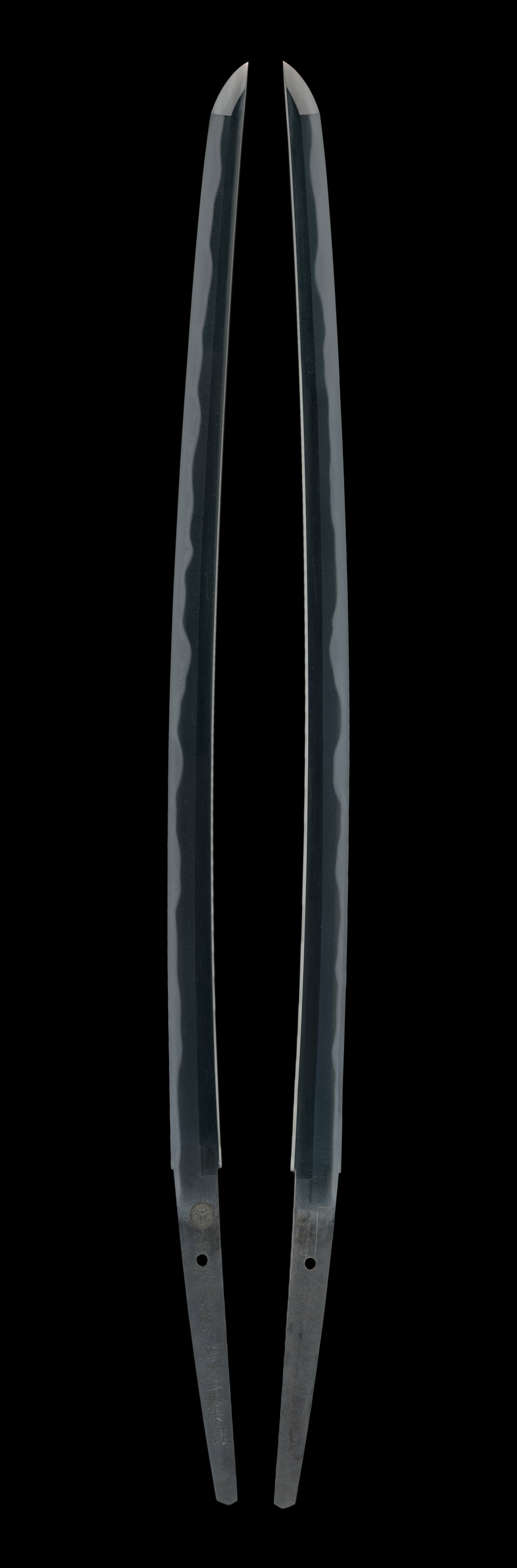
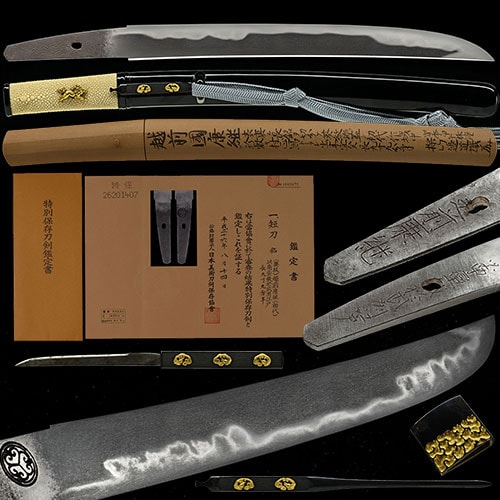
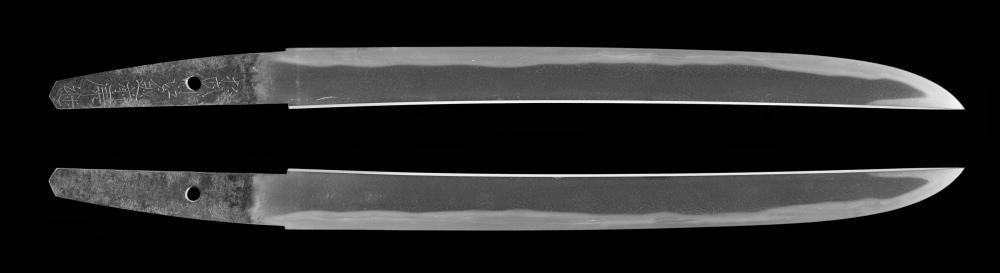
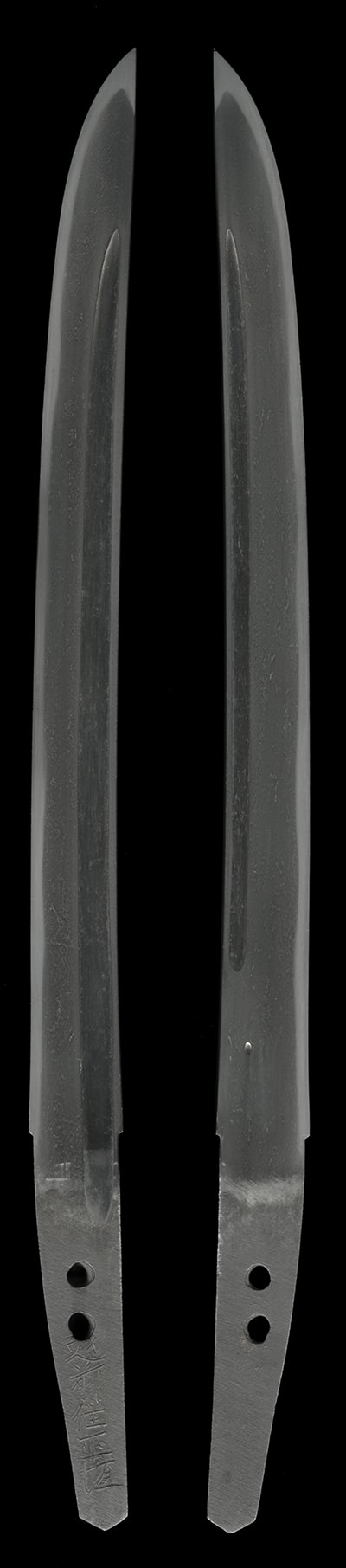
A single dated work fixes Daijo Sadakuni in time: a inscribed Keicho 14 (1609), the only year-dated blade of his that survives, from which his Keicho- activity is read. He was a smith of the Shimosaka school, the workshop of Yasutsugu, and the published sources judge him the Shimosaka hand most intimately bound to Yasutsugu himself. The connection was once read too literally. -period sword books and signature compendia scarcely record Sadakuni at all, and the few that do at times treat him as the man as Yasutsugu, an identification helped by the fact that he too received the court title Daijo. The modern verdict separates them while keeping them close: he is understood as a Shimosaka smith working alongside Yasutsugu, signing Daijo Fujiwara Sadakuni with -ju on the reverse, his earliest pieces still carrying the Shimosaka family name in the form -no- Shimosaka Sadakuni.
His hand is, before anything else, a hand. The published sources state plainly that he 「直刃を得意として」, specialized in the straight temper, and that works in are extremely rare. What he tempers is a calm or -toned line carrying only faint movement, a slight and small mixed in, entering and the breaking into a little . The is small and quiet and the sinks rather than glows, a tendency the sources note again and again across his blades, with thin and the occasional laid in. This is a restrained, almost austere temper, and it is the steadiest mark of his work. The answers it: straight to a small with at the point, sometimes drawn down long, now and then a touch pointed.
The is the second mark, and the one the published sources use to set him apart from his master. His is an that runs and flows, mixed with and a that leans toward , the grain standing somewhat and gathering over it. Against Yasutsugu the difference is stated as an absence and a refinement: there is little of the darkened moku- so often seen in Yasutsugu, and the forging is generally dense. As one of the published descriptions puts it, 「黒ずんだ杢肌などは少なく」 the blackish is scarce, the steel tightly worked, and the of both and gives an overall gentle impression. On his best blades the sources go further, finding the tighter and more refined than ordinary work, a seibi forging they name as the principal point of interest in his hand.
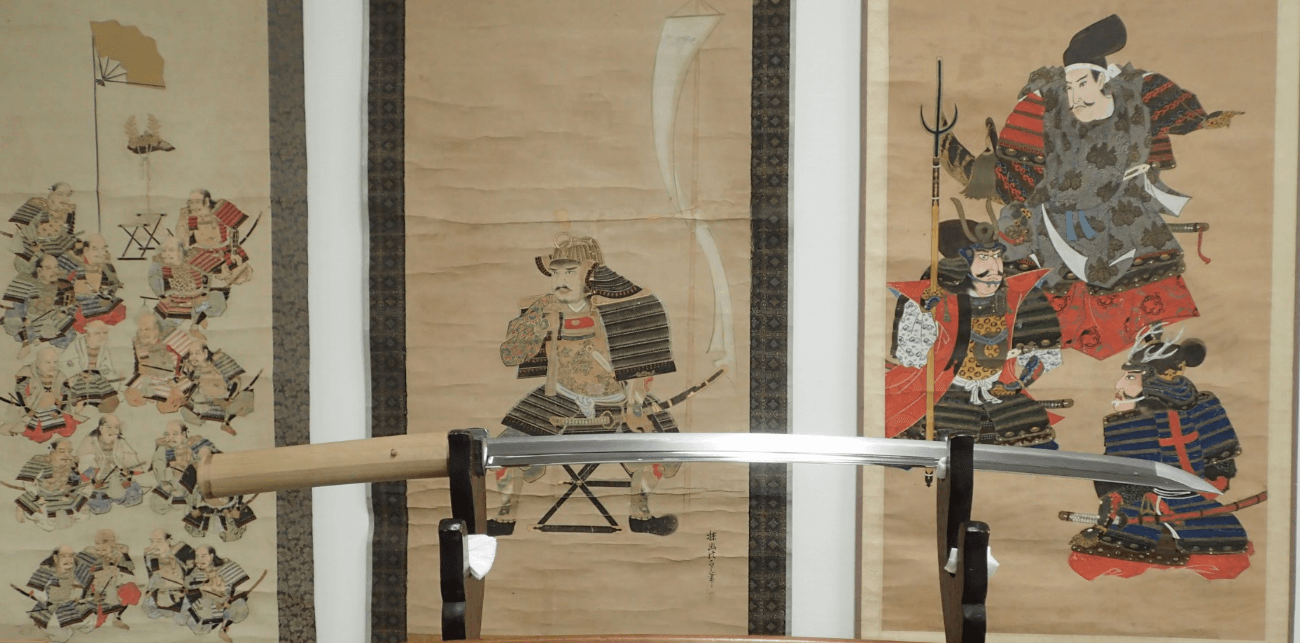
Within that quiet rule, a few show the breadth of his range, and the published sources treat them as exceptions worth remarking. One, a low and narrow mixed with over a dense, refined , is read as a work in which Sadakuni 「古作の貞宗や信国に範をとった」, took his models from the older Sadamune and , a blade of subdued, austere flavor that the sources call 「貞国会心の一口」, a piece of his full commitment. Another departs entirely from his norm: a broad mixing , round-headed and pointed teeth, long and frequent, thick with some coarse grains and along the spine. The sources align this flamboyant manner with 「最も丁子の目立つ日向大掾貞次」, the first-generation Daijo Sadatsugu, whose work is the most conspicuous for in the school, and they note how striking it is that a smith ordinarily given to the gentle should fire so brilliant an irregular temper, calling the result 「同作中抜群の出来映え」, outstanding among his works and evidence of the height of his skill. These are mostly wide-, of nearly no curvature, the characteristic Keicho- shape, and it is on that canvas that the showier hand appears.
Carving is the third strand of his identity, and possibly the original one. His blades carry full -bori: a Fudo Myo-o set in a recessed niche, a no , and long , plum and bamboo, deeply cut and powerful. The published sources call one such carving 「越前彫の典型であり」, a typical example of the style, and judge it likely the work of the smith himself. The reference texts go so far as to suggest that Sadakuni first supplied the carvings for the first-generation Yasutsugu's blades, and that the plum and bamboo motifs in which he specialized may stand at the source of the -bori tradition, before he remained in for the rest of his life. His teachers and pupils are not clearly recorded. What is recorded is the carving hand, and it sits on the blades as plainly as the temper.
The surviving designated record is small and almost entirely Important Swords, nine of them, with no National Treasure or Important Cultural Property among them, so a collector meets Sadakuni in the tier rather than in the locked register of national patrimony. Several of those blades carry the full long signature in fine chisel strokes, and the Keicho 14 dated , his only year-dated work, holds the documentary weight of the group. A pair of his are held in the Imperial Collection of the Imperial Household Agency, the most distinguished of his recorded whereabouts and a measure of how his quiet work was valued. Fujishiro rates him Jo , a solid upper grade rather than a summit, which suits him: he is not a famous name but a careful and individual one, the Shimosaka smith whose and carving reward close looking. Blades by him come to market only from time to time, a or at level, and a signed and dated example is the one most worth waiting for.