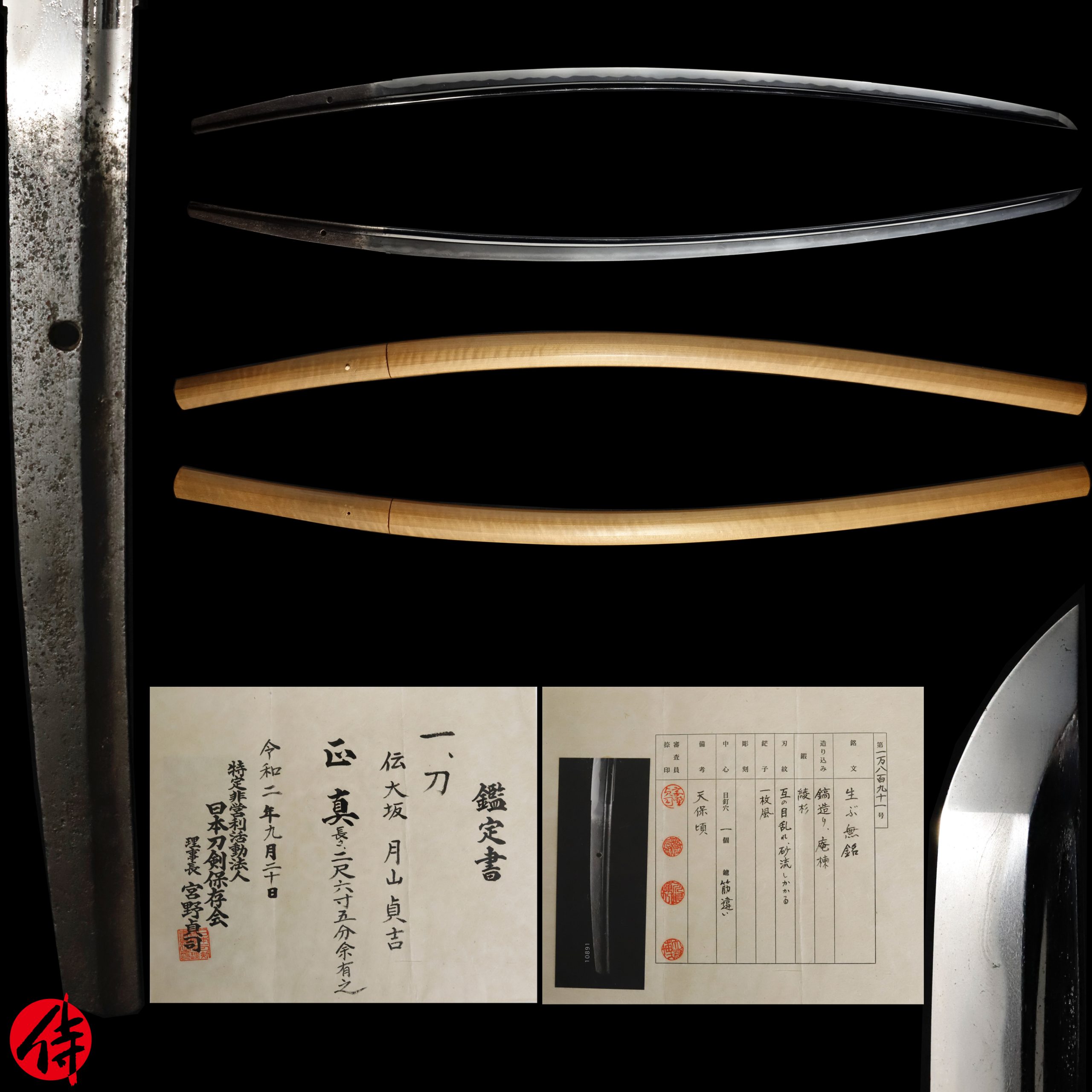
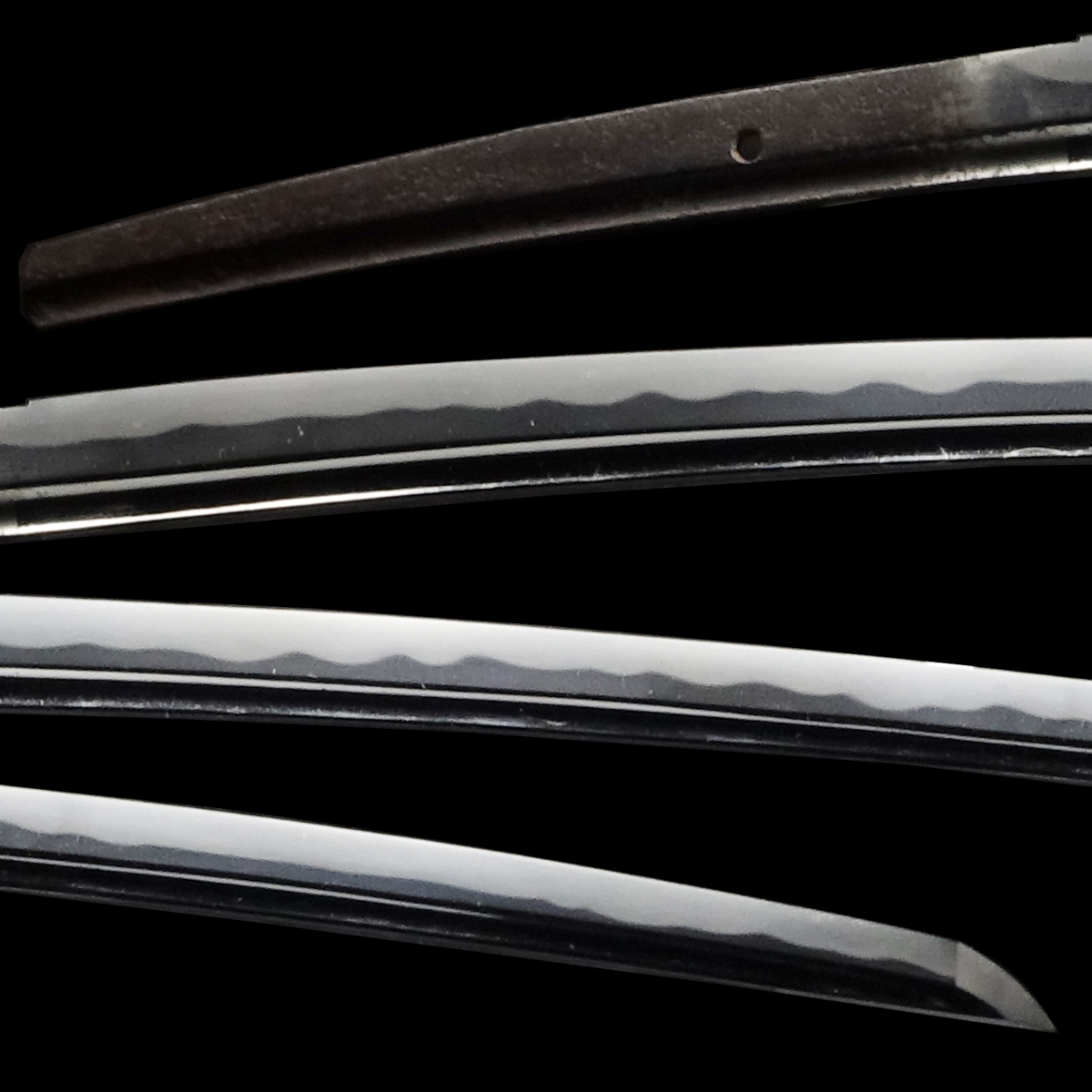
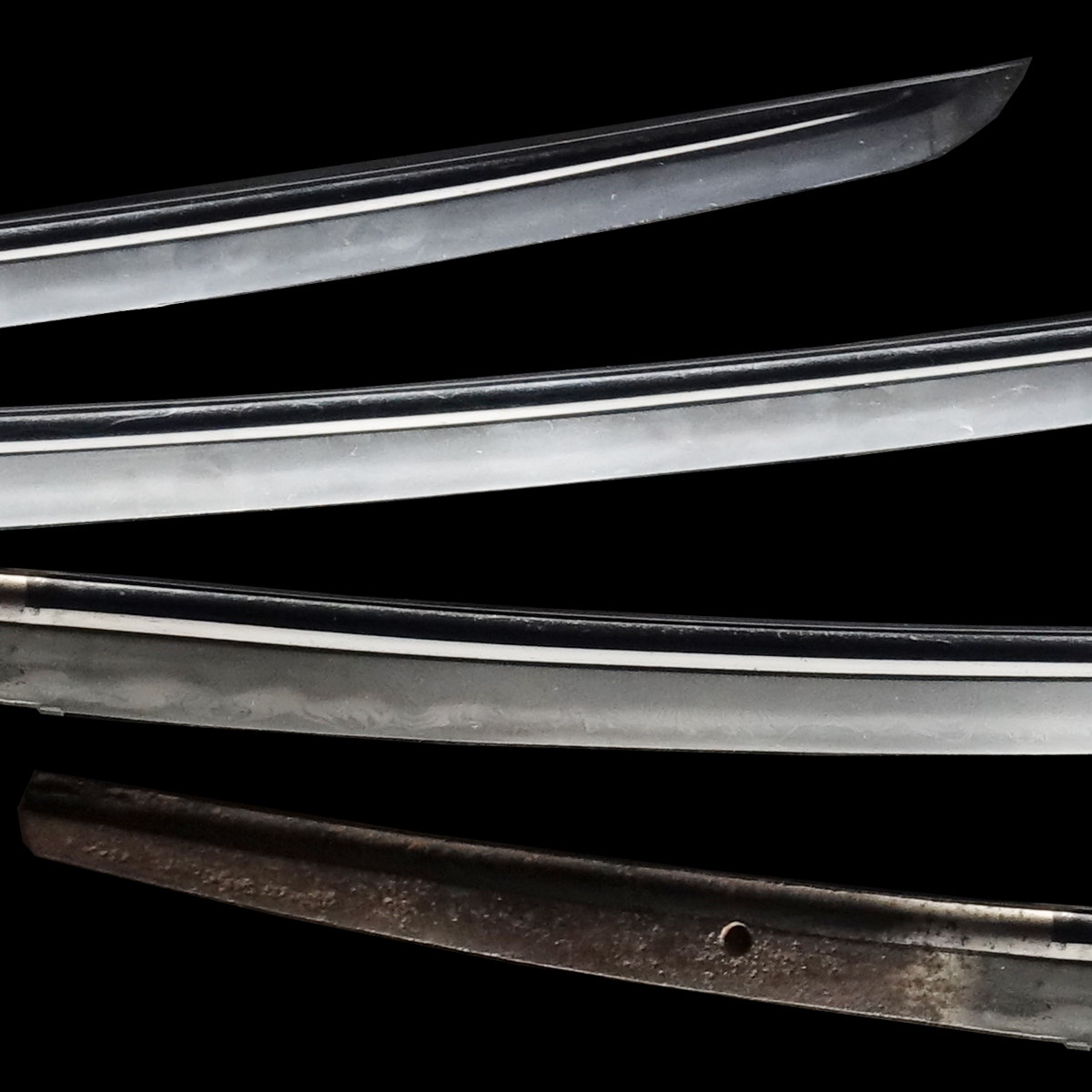
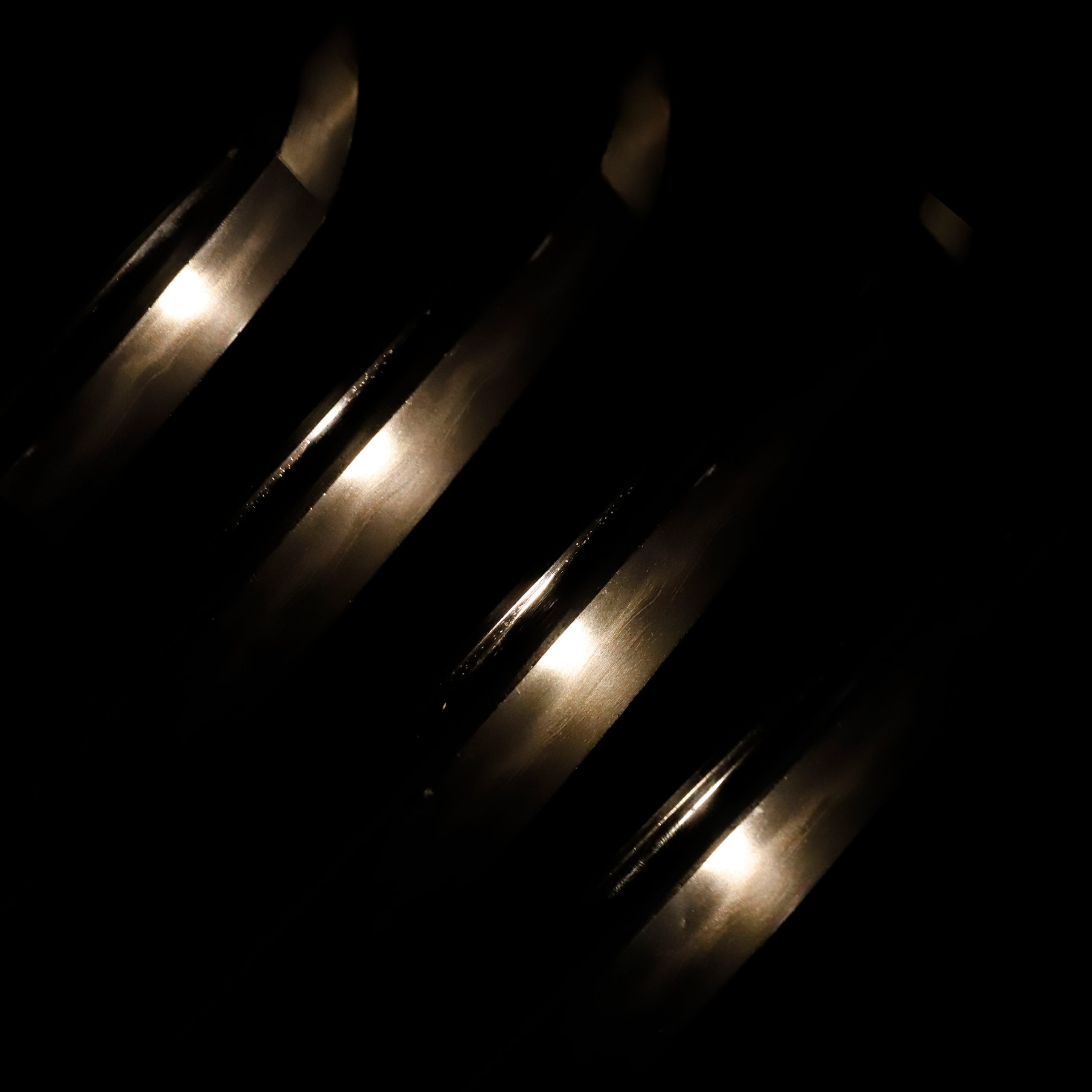
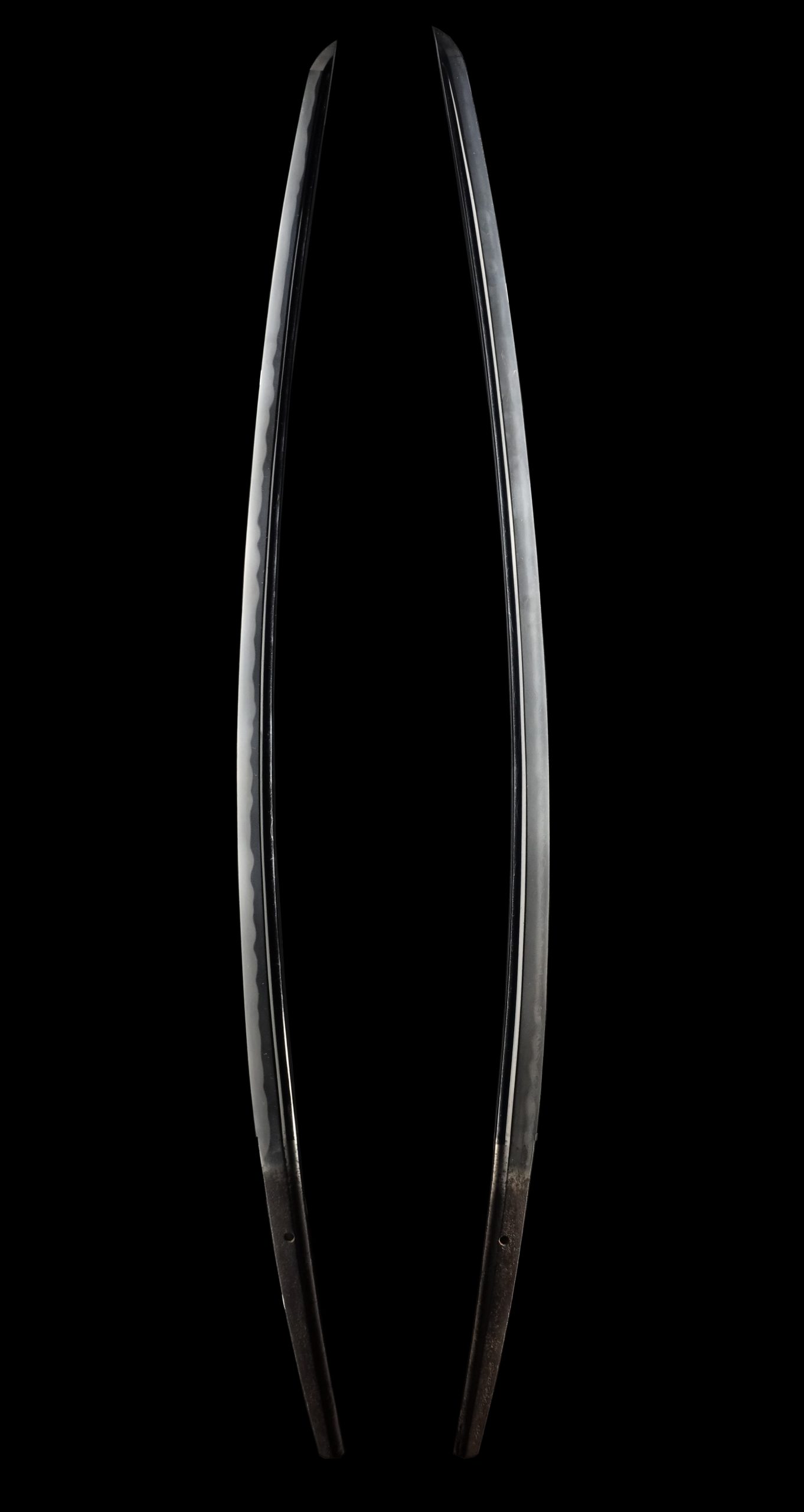
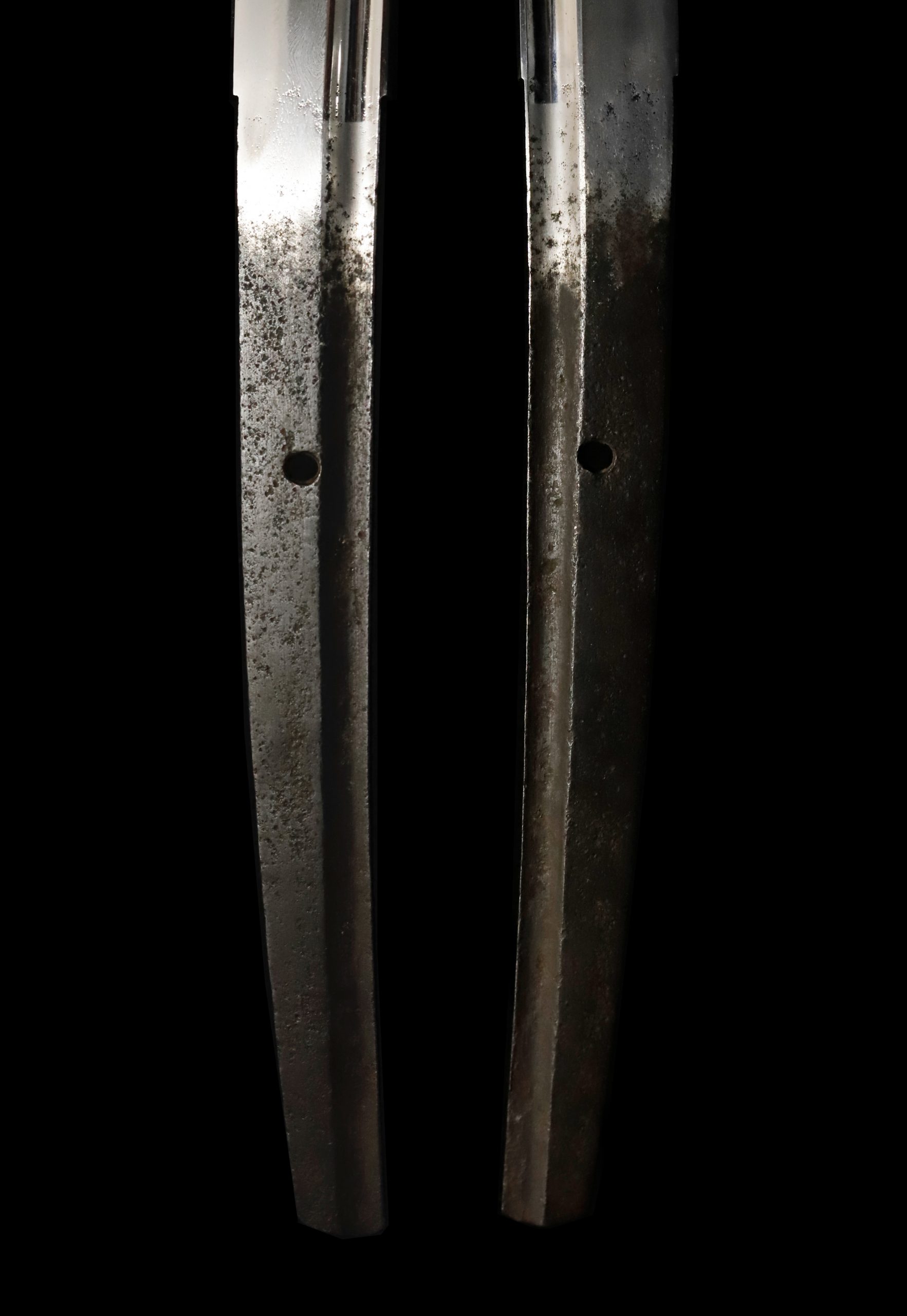
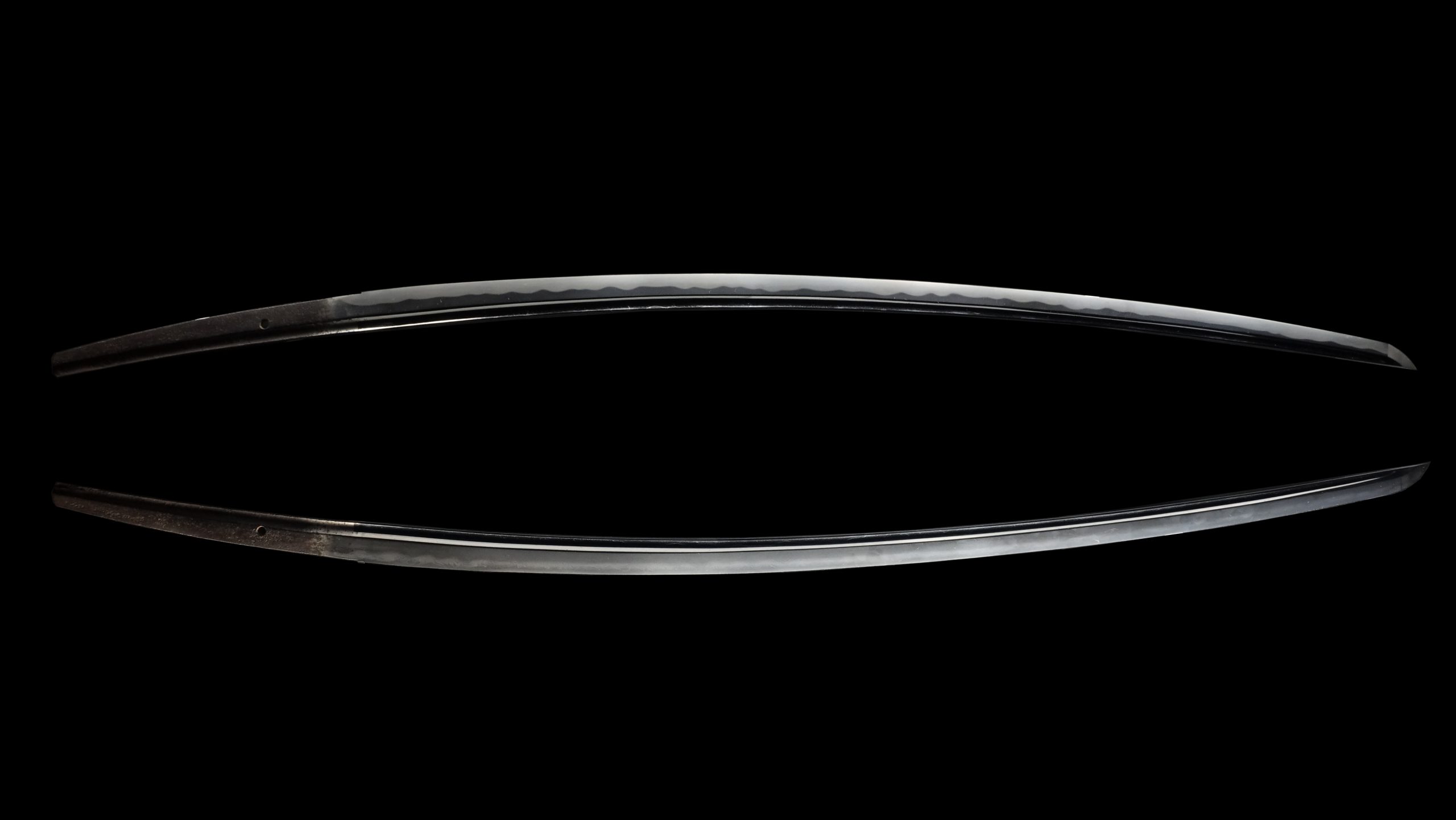
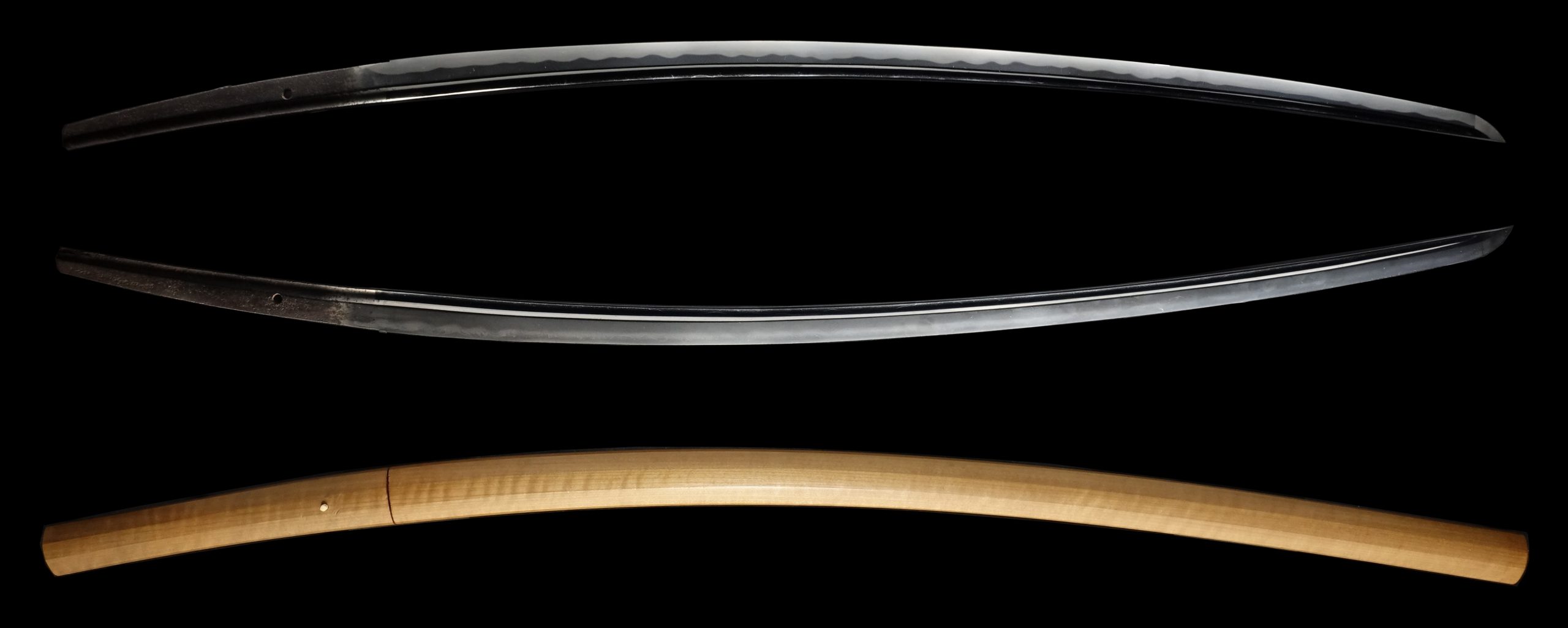
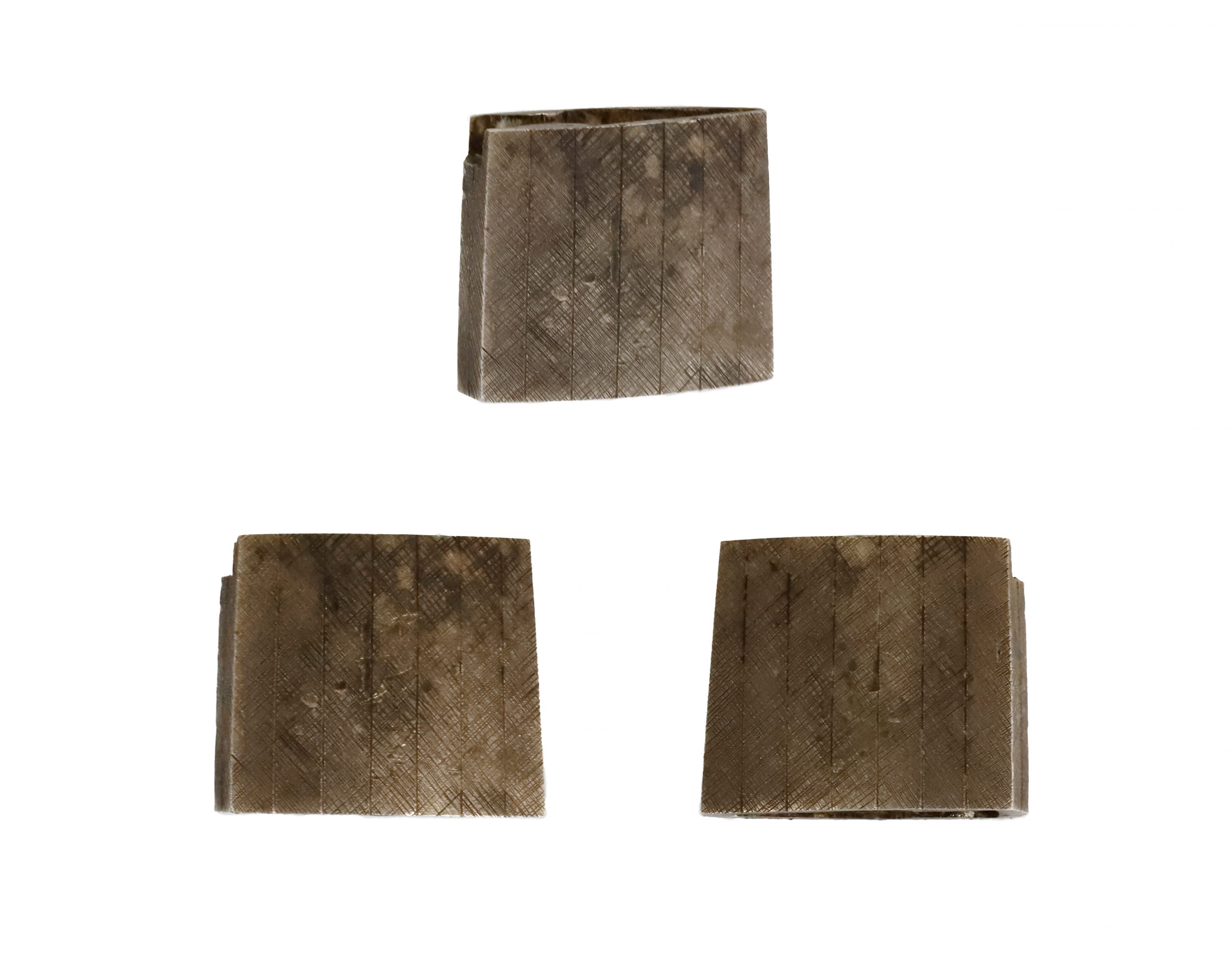
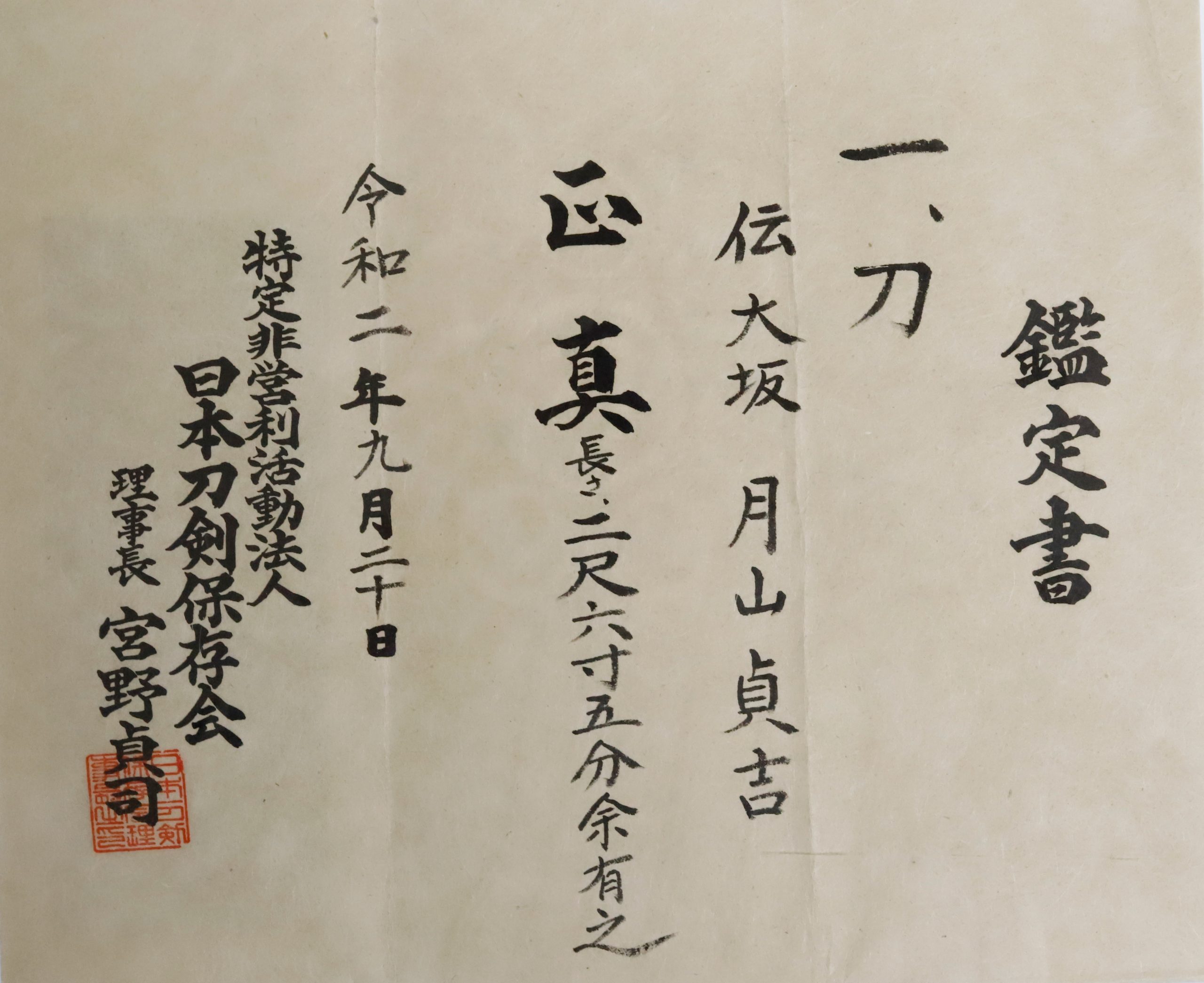
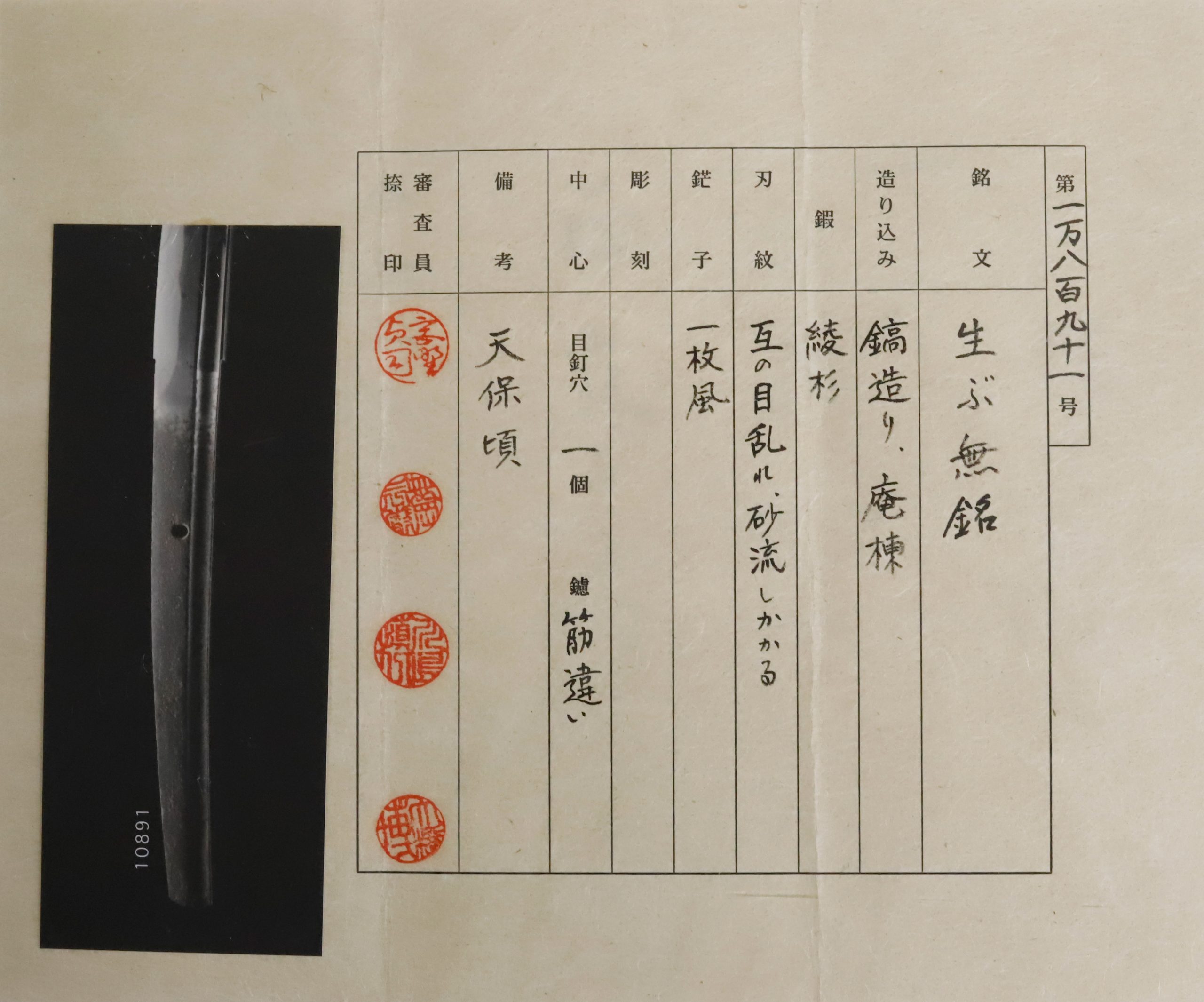
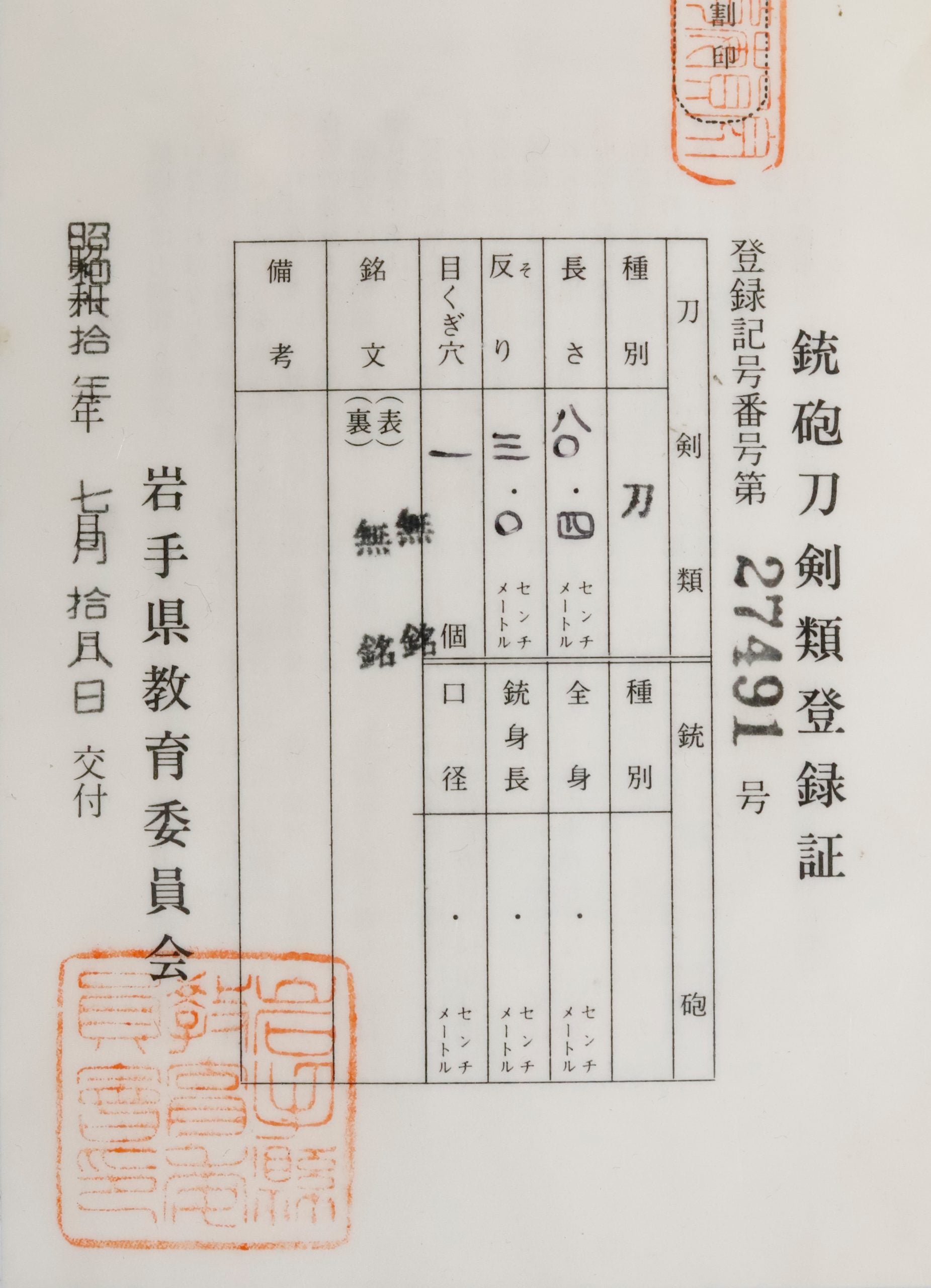
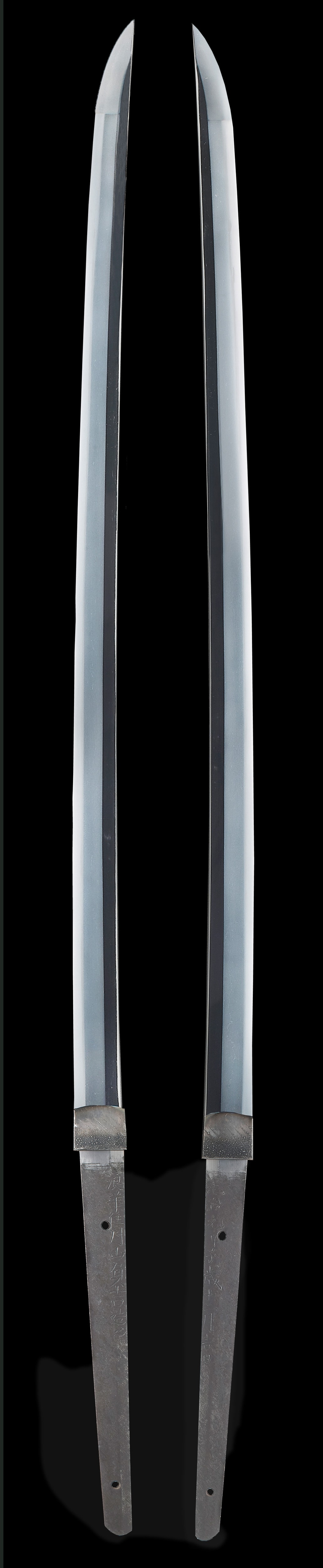
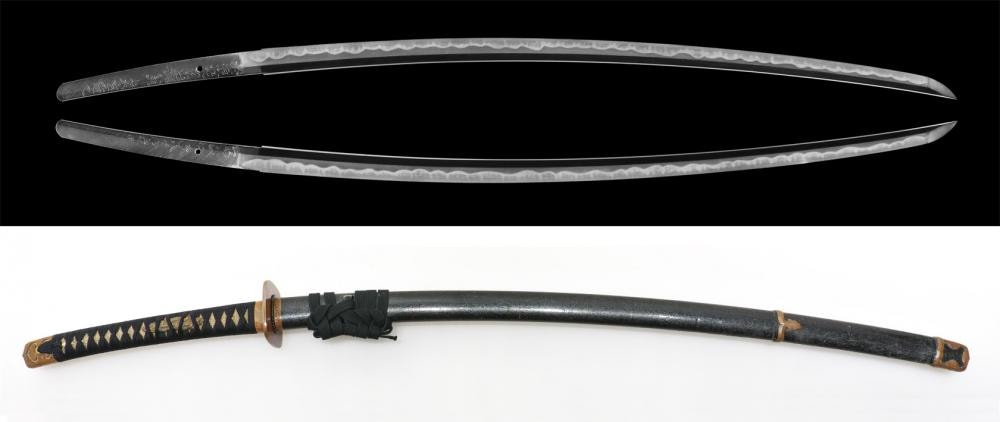
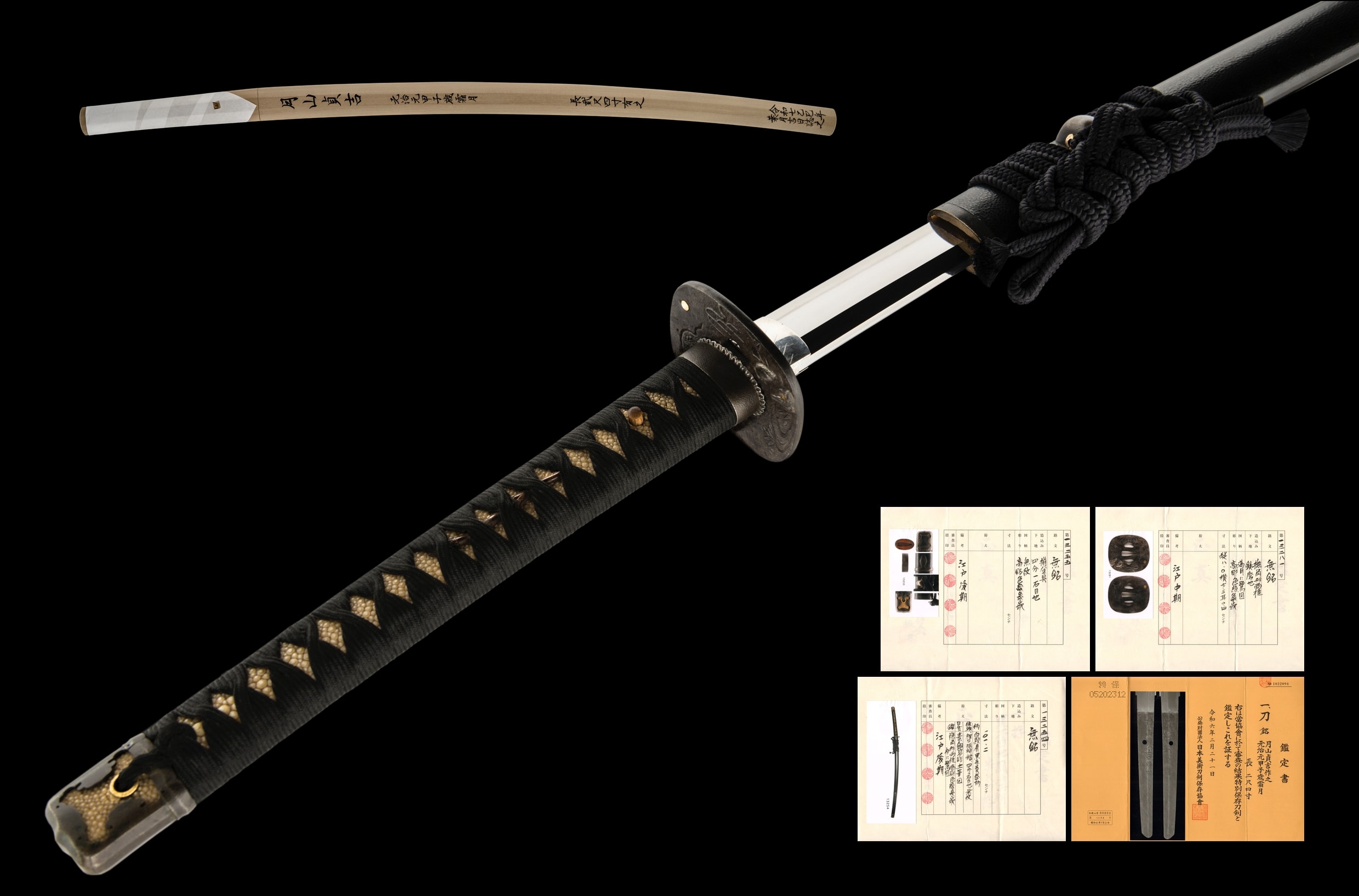
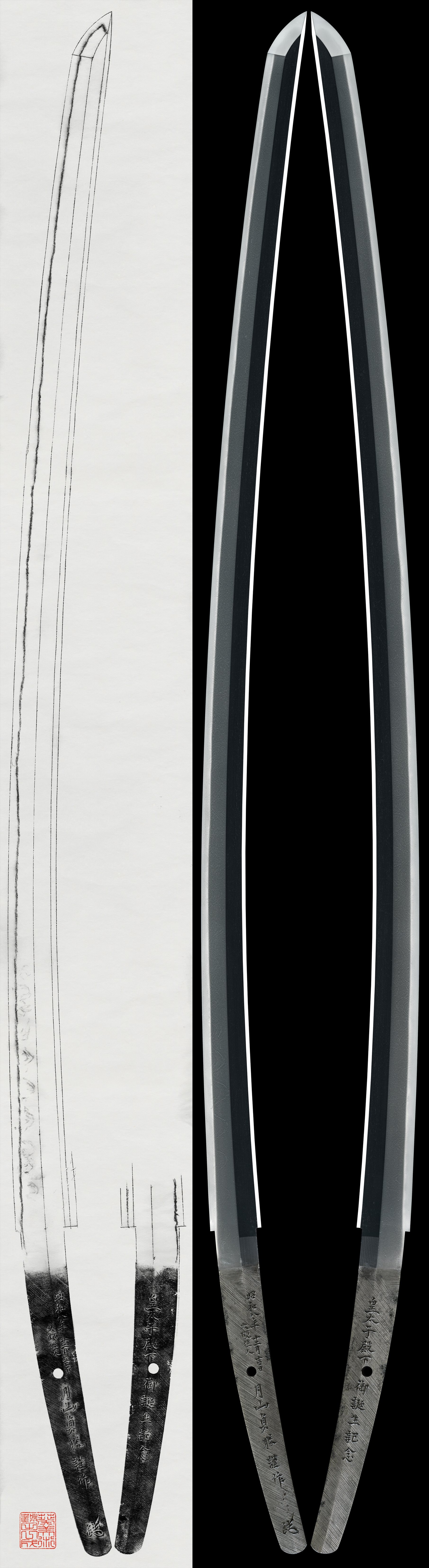
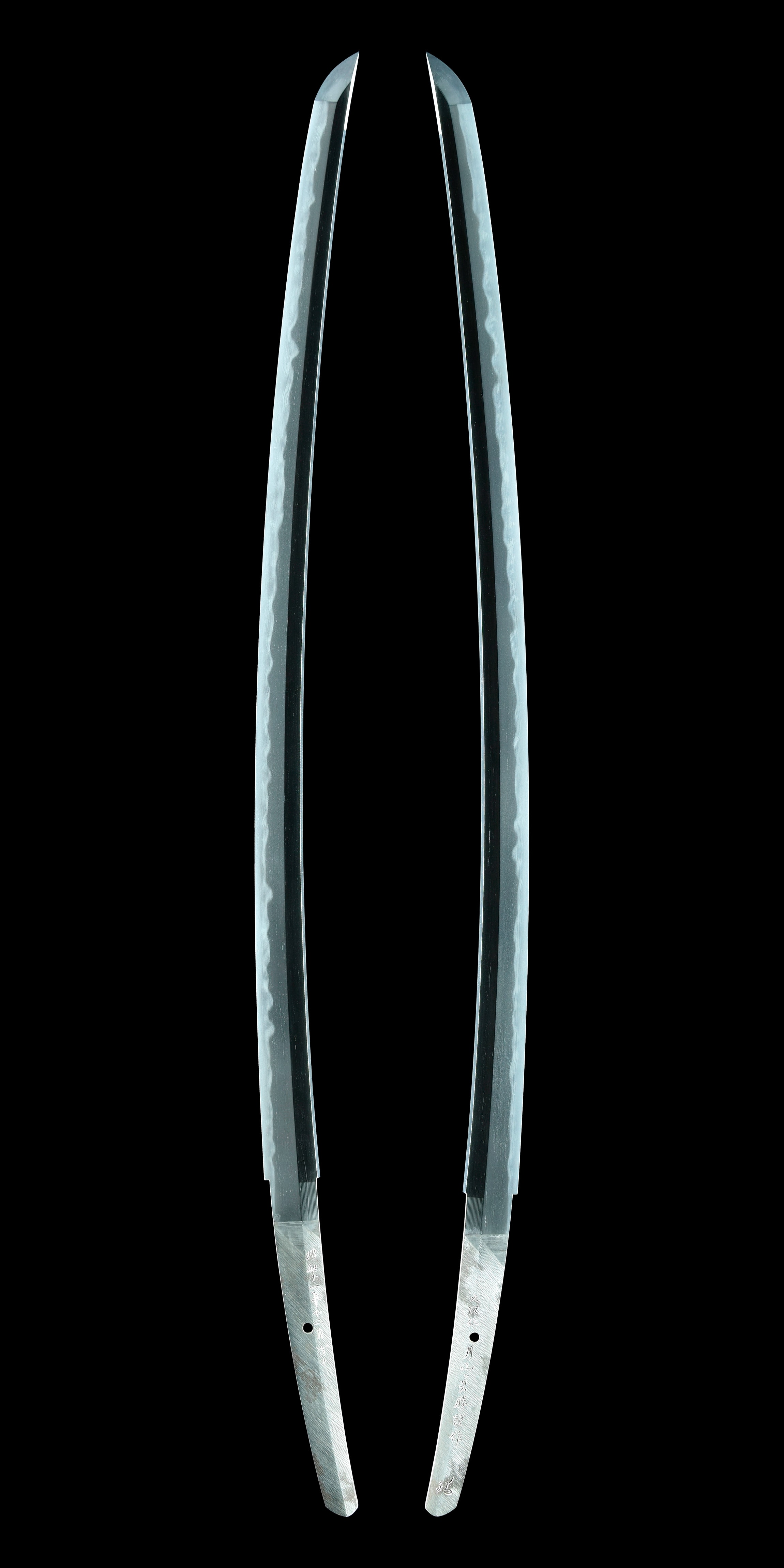
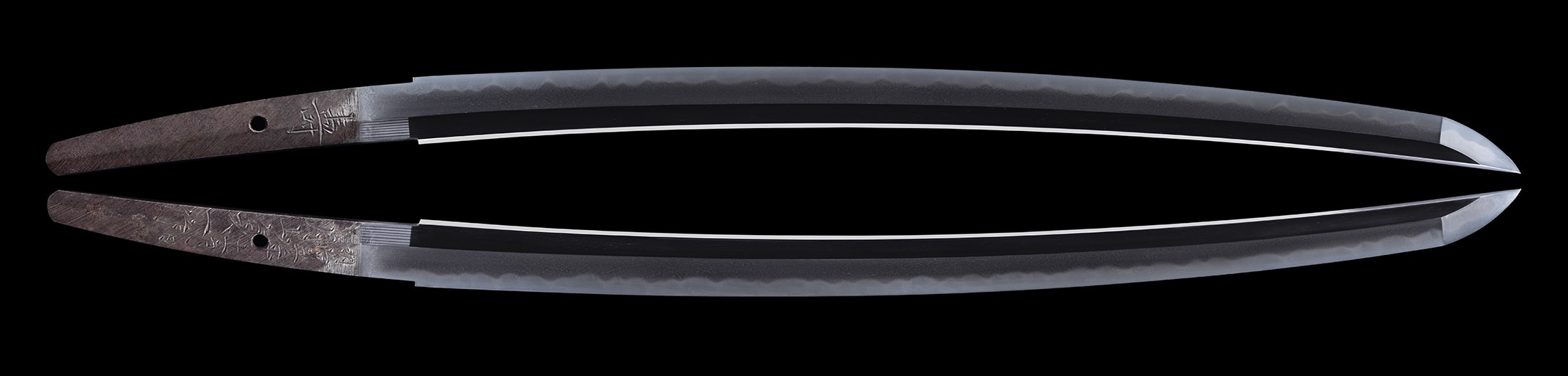
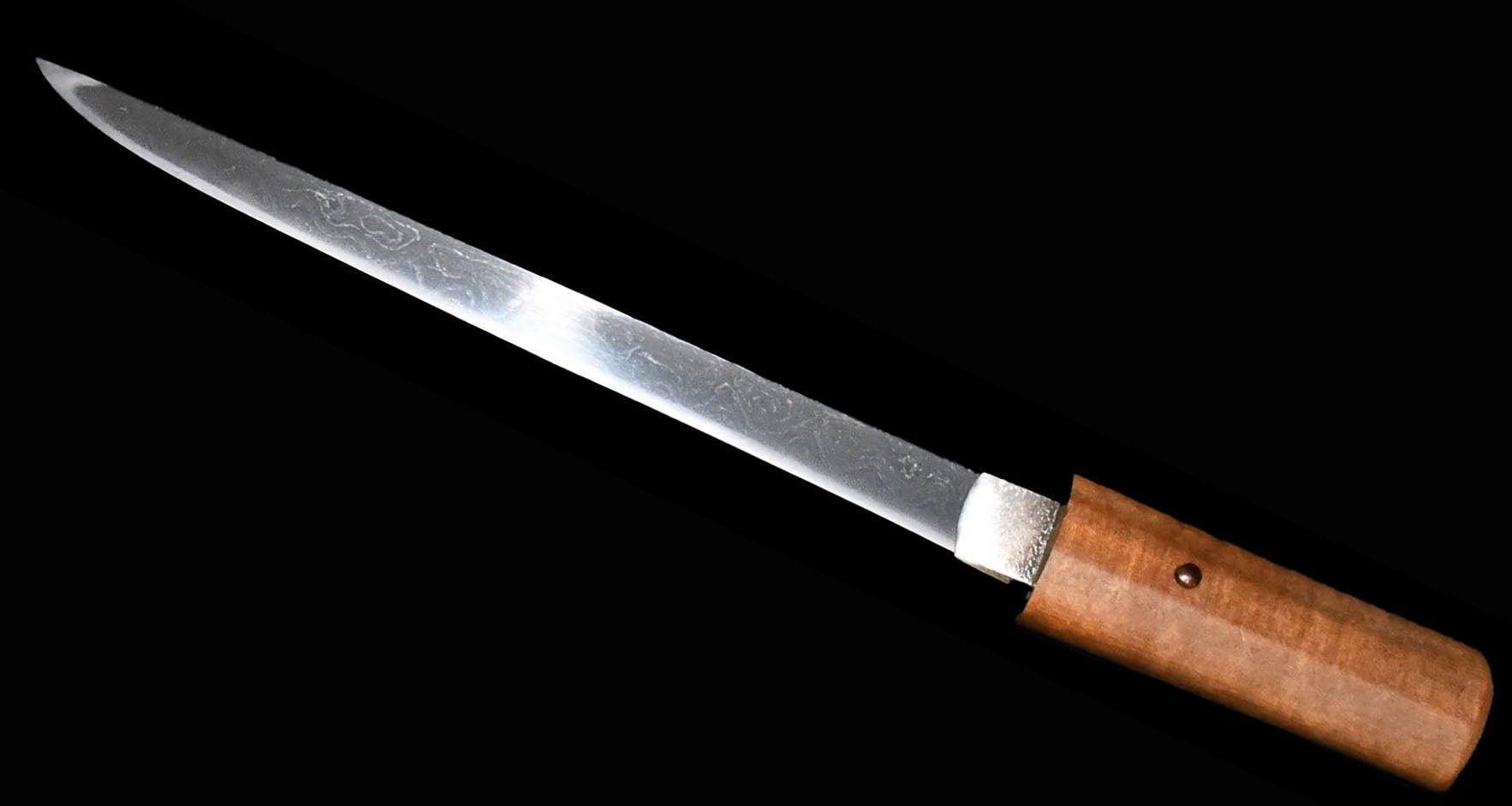
Antique Japanese Sword Shirasaya Katana Unsigned Gassan Sadayoshi with NBTHK Kanteisho Certificate 【Description】 This blade is attributed to the work of Gassan Sadayoshi(月山貞吉) by NTHK, which authenticated this blade. According to their appraisal, the blade was made in the Tenpo era(Late Edo period:1831-1845), and the sword was initially unsigned(Ubu Mumei:生ぶ無銘). Gassan Sadayoshi’s real name is Gassan Yahachiro. He was born in Dewakoku(Yamagata prefecture today) in 1781. In his early career, he learned sword forging technique from his father, Okuyama Yasaburo Sadachika(山弥三郎貞近), who is said to have been a descendant of O-Shu Gassan school. When Sadayoshi became about 20 years old, he went to Edo city and worked for Suishinshi Masahide as an apprentice. Sushinshi Masahide is known as one of the most skilled and famous swordsmiths at the end of the Edo period(150-200 years ago). After ten years of apprenticeship under Masahide, Sadayoshi moved to Osaka in 1833 when he was 30 years old. He founded Osaka Gassan school there and improved his sword-forging technique even more. Gassan school had been almost disappeared in the early-mid Edo period in the mainstream of Japanese history before Sadayoshi came along, it flourished again because of his effort. Sadayoshi adopted a son from Tsukamoto family and named him Sadakazu, who later became one of the most high-regarded swordsmiths in the post Samurai period(Meiji era). Father and son spent many years researching traditional Gassan style swords and finally achieved to make Ayasugihada, the signature design of Gassan school. Ayasguhihada looks undulating grain pattern in the Jihada, which resembles a Japanese cedar grain. Gassan Sadayoshi died at the age of 71 in the third year of the Meiji era(1870). His son, Sadakazu, preserved the tradition of Gassan, and he passed it down to Sadakatsu. The Gassan school has been running for the 6th generation. The current Gassan alive is Gassan Kazutoshi, and his son is Gassan Sadanobu. They still keep forging traditional Japanese swords in Nara prefecture. We are confident you will appreciate this gorgeous long blade with heavy curvature. When you take a closer look at the blade, you can easily see the beautiful Ayasugi Hada. 【Blade 】 Cutting Edge Length(Nagasa) : 80.4 cm( 31.65 inches) Curvature(Sori) : 3.0 c m(1.18 inches) For more detailed measurement of the blade/sword mounting Hamon : The crystalline structure which forms along the cutting edge of a blade as a result of the hardening process Jimon(Jihada) : visible steel surface pattern created by folding and hammering during forging process 【Other details】 Nakago : Nakago is the hilt of the Japanese sword. Japanese swordsmiths left the black rust on the tang because it prevents red rust while the tang is in its handle. And the discoloration of the tang was created over time, and it is a great indicator for a Japanese sword specialist to estimate when the sword was forged. Habaki : Habaki is the equipment to make the blade not touch its scabbard inside. It prevents the blade from getting rusty and chipped. Authentication Paper : NTHK Kanteisho Certificate for the blade NTHK , also known as NPO Nihon Touken Hozon Kai, is the oldest organization for sword authentication of Japanese swords in modern times. It was established in 1889 during the post-Samurai era. They authenticated the blade on Sep 20th in the second year of Reiwa (2020).The purchaser will receive this original certificate as well. We can also translate what is written into English and make a PDF file for your record if you request. Registration Number : Iwate 27491 The Board of Education in Iwate prefecture issued a registration paper for this sword . It is called Jyu Token Rui Torokusho(銃刀剣類登録証). Bunkacho(The Agency for Cultural Affairs) acknowledges a Japanese sword with this paper as a work of art. The sword needs to be traditionally hand-forged and made of Tamahagane carbon steel to be registered in the system. With this paper
無銘 · Gassan · 天保 · 長さ 80.4cm · 反り 3cm


新々刀 · 摂津 · 1830-1863頃
藤代 Jo saku · 刀剣大鑑 上位49%
現在1点販売中
新々刀 · 摂津
現在40点販売中
NTHKの中心的な鑑定書で、相応の出来を備えた作に発行されます。在銘作は銘の正真を、無銘作は審査員による刀工・流派の極めを示します。点数を記す詳細な審査表が付されます。
NTHK(日本刀剣保存会)は、NBTHK(1948年設立)に先立つ1910年に創立された、日本で最も古い刀剣鑑定団体です。長く会を率いた会長の没後、NTHKとNTHK-NPOの二つに分かれ、いずれも審査を続けています。NTHKの鑑定書は、点数と審査員の所見を併記する詳細な審査表が特徴で、特に無銘作の極めに定評があります。
Returns/exchanges limited to defects caused by shipping (except willful misconduct or gross negligence by the company); customers must contact within 72 hours of receiving the product.
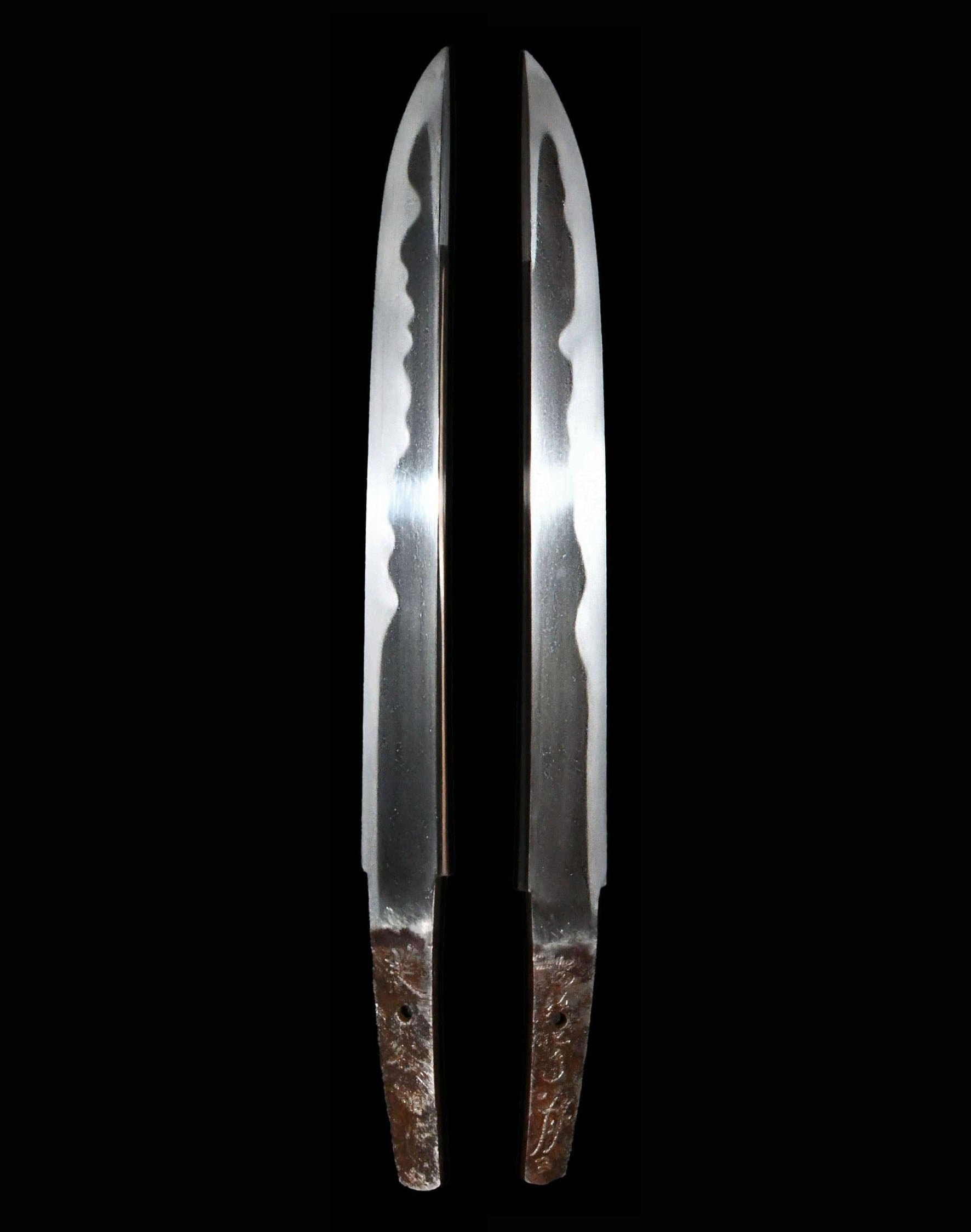
Antique Japanese Sword Shirasaya Katana Unsigned Gassan Sadayoshi with NBTHK Kanteisho Certificate 【Description】 This blade is attributed to the work of Gassan Sadayoshi(月山貞吉) by NTHK, which authenticated this blade. According to their appraisal, the blade was made in the Tenpo era(Late Edo period:1831-1845), and the sword was initially unsigned(Ubu Mumei:生ぶ無銘). Gassan Sadayoshi’s real name is Gassan Yahachiro. He was born in Dewakoku(Yamagata prefecture today) in 1781. In his early career, he learned sword forging technique from his father, Okuyama Yasaburo Sadachika(山弥三郎貞近), who is said to have been a descendant of O-Shu Gassan school. When Sadayoshi became about 20 years old, he went to Edo city and worked for Suishinshi Masahide as an apprentice. Sushinshi Masahide is known as one of the most skilled and famous swordsmiths at the end of the Edo period(150-200 years ago). After ten years of apprenticeship under Masahide, Sadayoshi moved to Osaka in 1833 when he was 30 years old. He founded Osaka Gassan school there and improved his sword-forging technique even more. Gassan school had been almost disappeared in the early-mid Edo period in the mainstream of Japanese history before Sadayoshi came along, it flourished again because of his effort. Sadayoshi adopted a son from Tsukamoto family and named him Sadakazu, who later became one of the most high-regarded swordsmiths in the post Samurai period(Meiji era). Father and son spent many years researching traditional Gassan style swords and finally achieved to make Ayasugihada, the signature design of Gassan school. Ayasguhihada looks undulating grain pattern in the Jihada, which resembles a Japanese cedar grain. Gassan Sadayoshi died at the age of 71 in the third year of the Meiji era(1870). His son, Sadakazu, preserved the tradition of Gassan, and he passed it down to Sadakatsu. The Gassan school has been running for the 6th generation. The current Gassan alive is Gassan Kazutoshi, and his son is Gassan Sadanobu. They still keep forging traditional Japanese swords in Nara prefecture. We are confident you will appreciate this gorgeous long blade with heavy curvature. When you take a closer look at the blade, you can easily see the beautiful Ayasugi Hada. 【Blade 】 Cutting Edge Length(Nagasa) : 80.4 cm( 31.65 inches) Curvature(Sori) : 3.0 c m(1.18 inches) For more detailed measurement of the blade/sword mounting Hamon : The crystalline structure which forms along the cutting edge of a blade as a result of the hardening process Jimon(Jihada) : visible steel surface pattern created by folding and hammering during forging process 【Other details】 Nakago : Nakago is the hilt of the Japanese sword. Japanese swordsmiths left the black rust on the tang because it prevents red rust while the tang is in its handle. And the discoloration of the tang was created over time, and it is a great indicator for a Japanese sword specialist to estimate when the sword was forged. Habaki : Habaki is the equipment to make the blade not touch its scabbard inside. It prevents the blade from getting rusty and chipped. Authentication Paper : NTHK Kanteisho Certificate for the blade NTHK , also known as NPO Nihon Touken Hozon Kai, is the oldest organization for sword authentication of Japanese swords in modern times. It was established in 1889 during the post-Samurai era. They authenticated the blade on Sep 20th in the second year of Reiwa (2020).The purchaser will receive this original certificate as well. We can also translate what is written into English and make a PDF file for your record if you request. Registration Number : Iwate 27491 The Board of Education in Iwate prefecture issued a registration paper for this sword . It is called Jyu Token Rui Torokusho(銃刀剣類登録証). Bunkacho(The Agency for Cultural Affairs) acknowledges a Japanese sword with this paper as a work of art. The sword needs to be traditionally hand-forged and made of Tamahagane carbon steel to be registered in the system. With this paper
無銘 · Gassan · 天保 · 長さ 80.4cm · 反り 3cm


新々刀 · 摂津 · 1830-1863頃
藤代 Jo saku · 刀剣大鑑 上位49%
現在1点販売中
新々刀 · 摂津
現在40点販売中
NTHKの中心的な鑑定書で、相応の出来を備えた作に発行されます。在銘作は銘の正真を、無銘作は審査員による刀工・流派の極めを示します。点数を記す詳細な審査表が付されます。
NTHK(日本刀剣保存会)は、NBTHK(1948年設立)に先立つ1910年に創立された、日本で最も古い刀剣鑑定団体です。長く会を率いた会長の没後、NTHKとNTHK-NPOの二つに分かれ、いずれも審査を続けています。NTHKの鑑定書は、点数と審査員の所見を併記する詳細な審査表が特徴で、特に無銘作の極めに定評があります。
Returns/exchanges limited to defects caused by shipping (except willful misconduct or gross negligence by the company); customers must contact within 72 hours of receiving the product.