新刀の時代は、その大部分が京都で発明された。埋忠明寿の工房が運動を育て、堀川国広が一世代を鍛え、鎚を持たぬ本阿弥家が名刀の意味を司った。
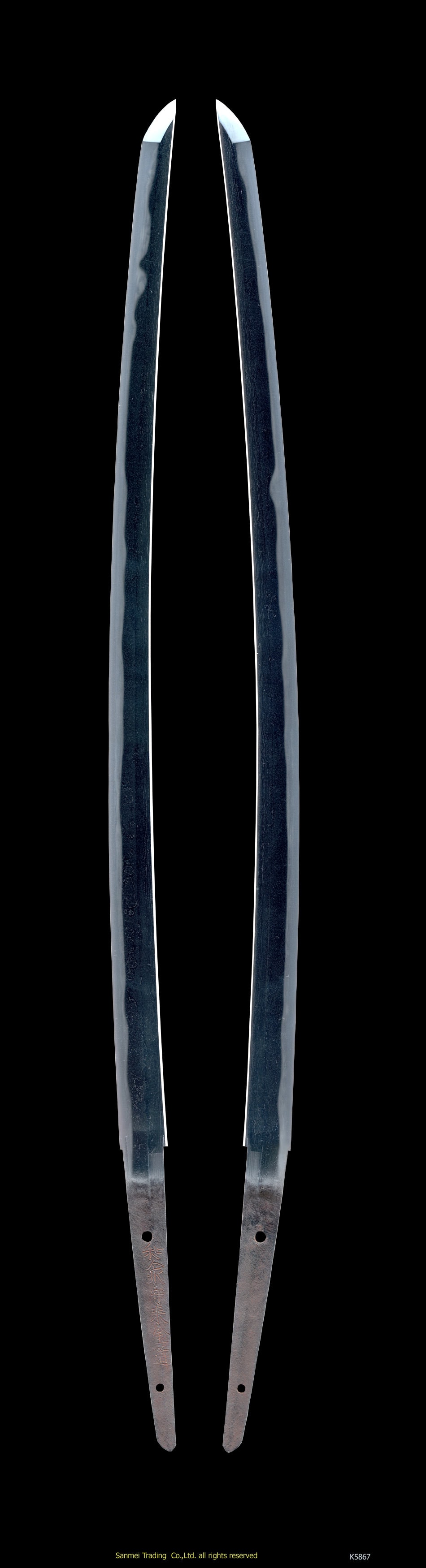
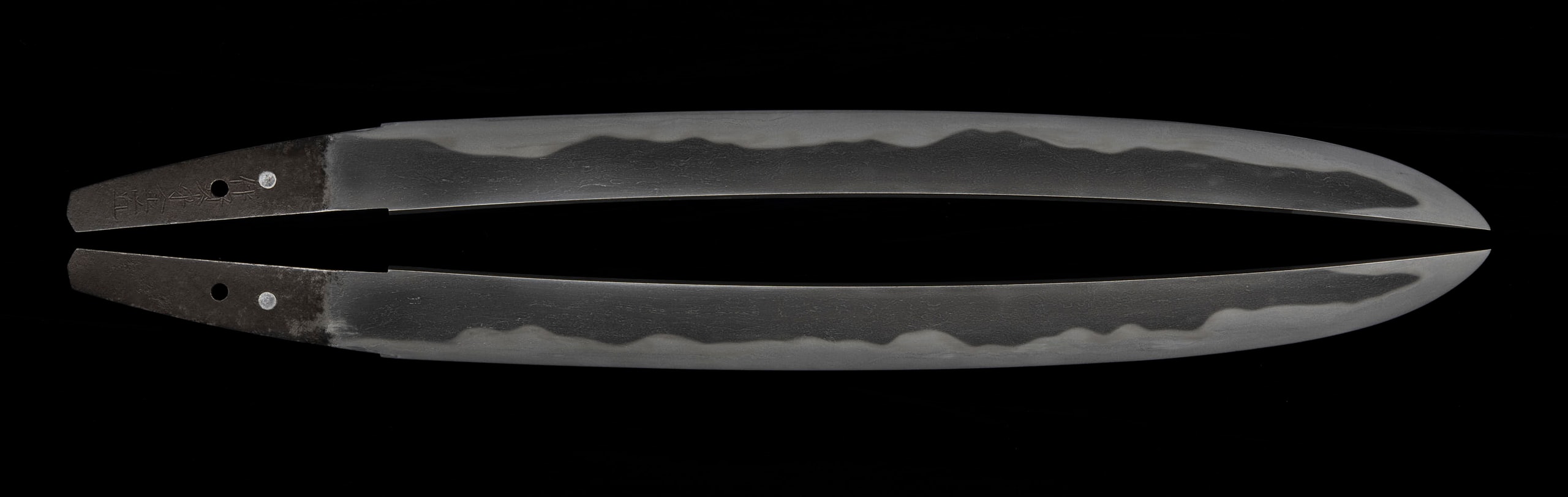
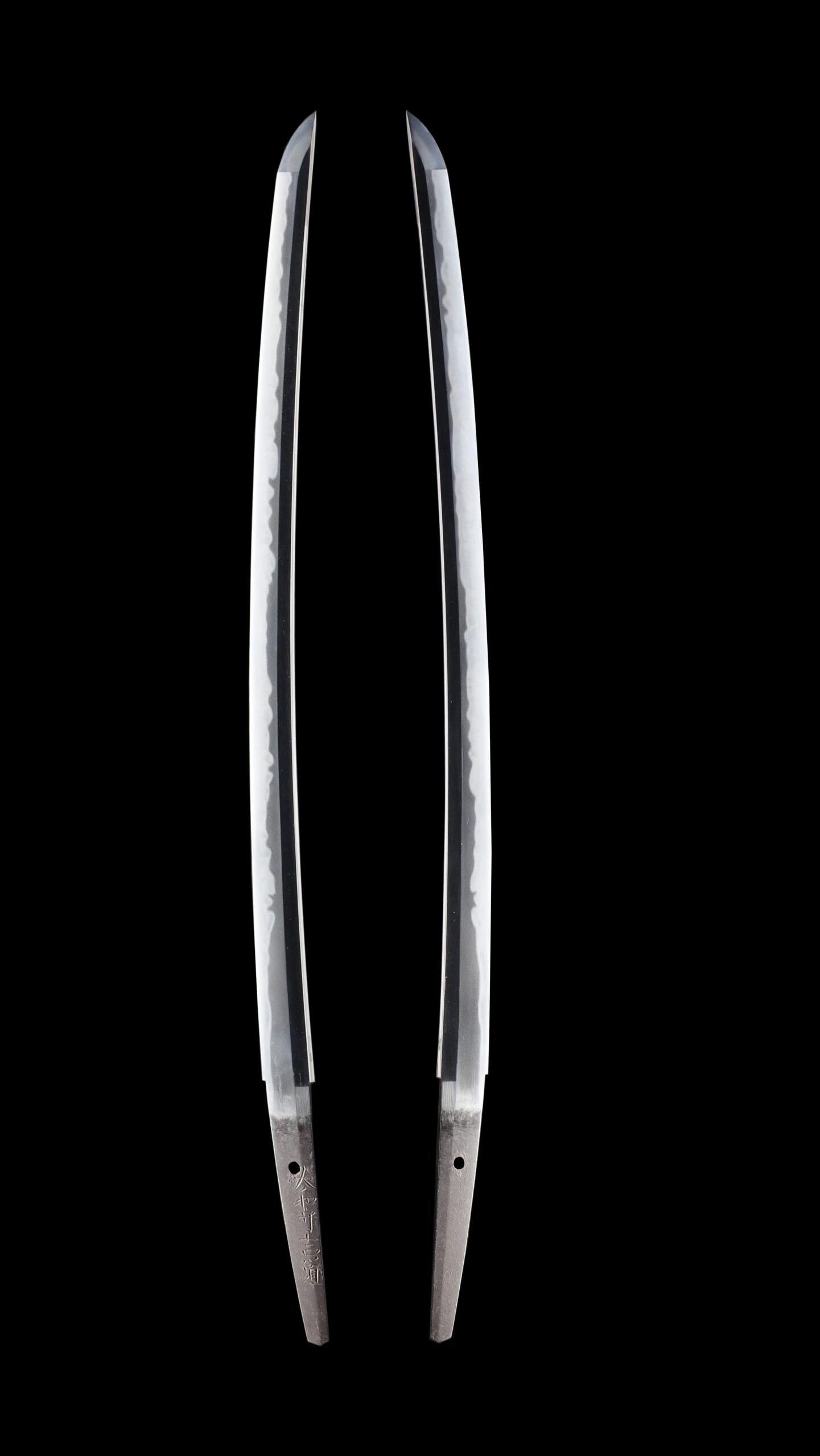
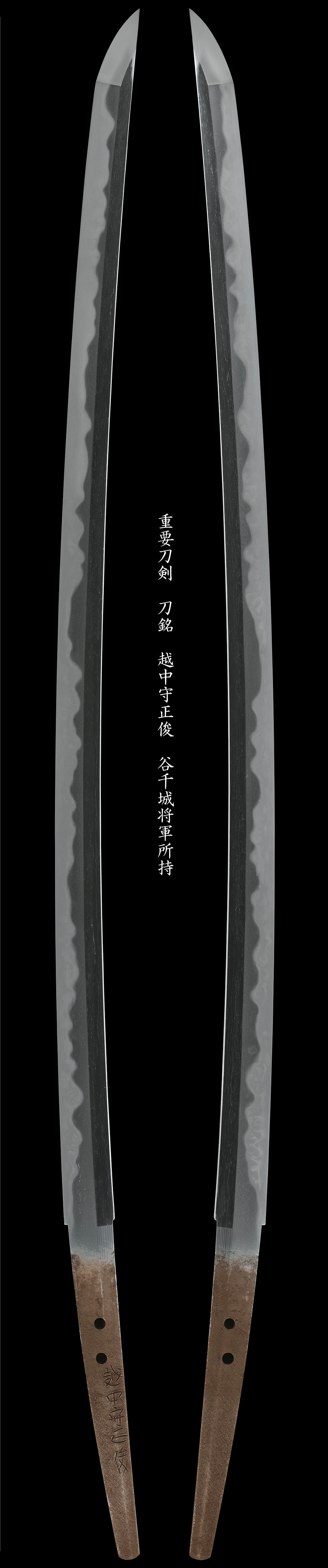
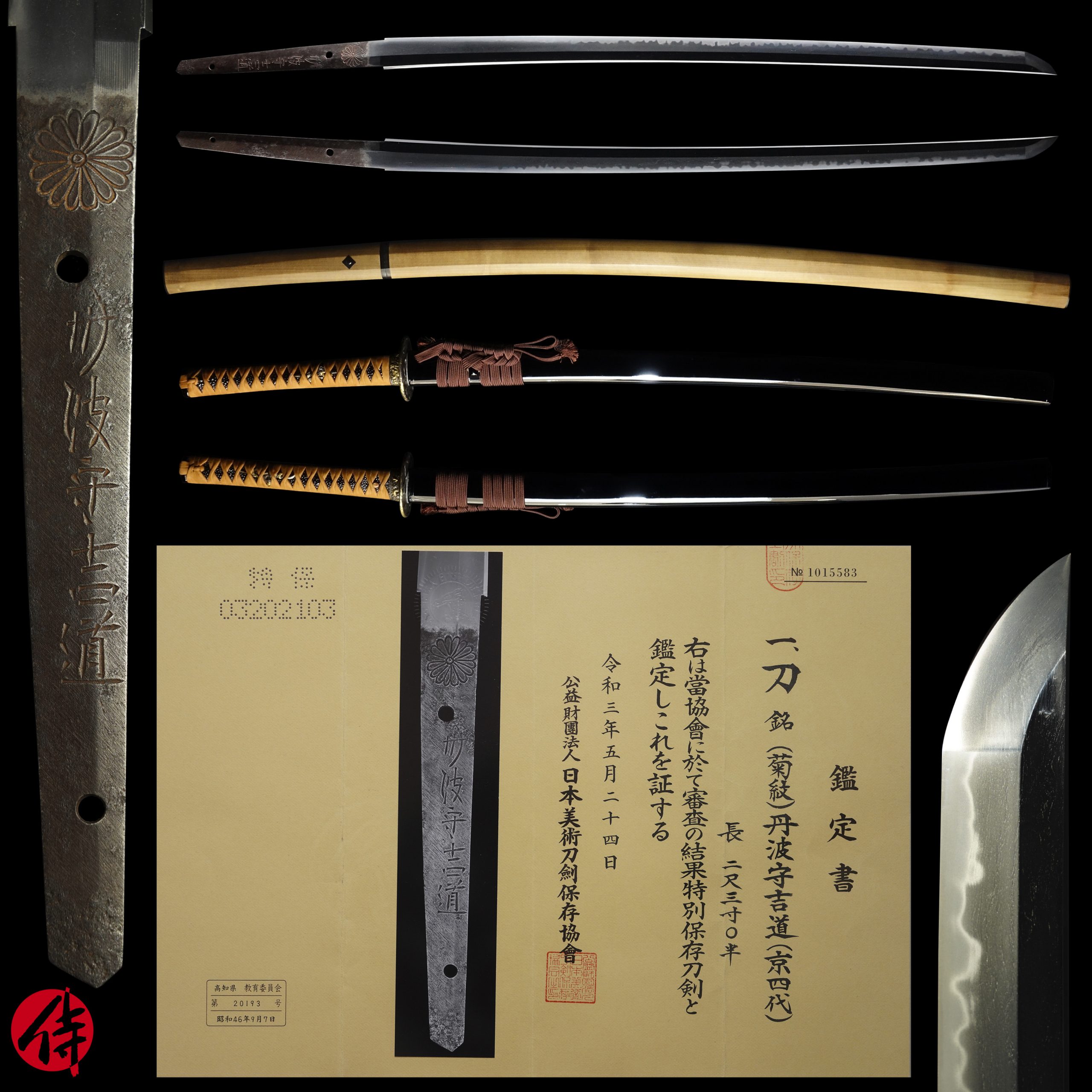
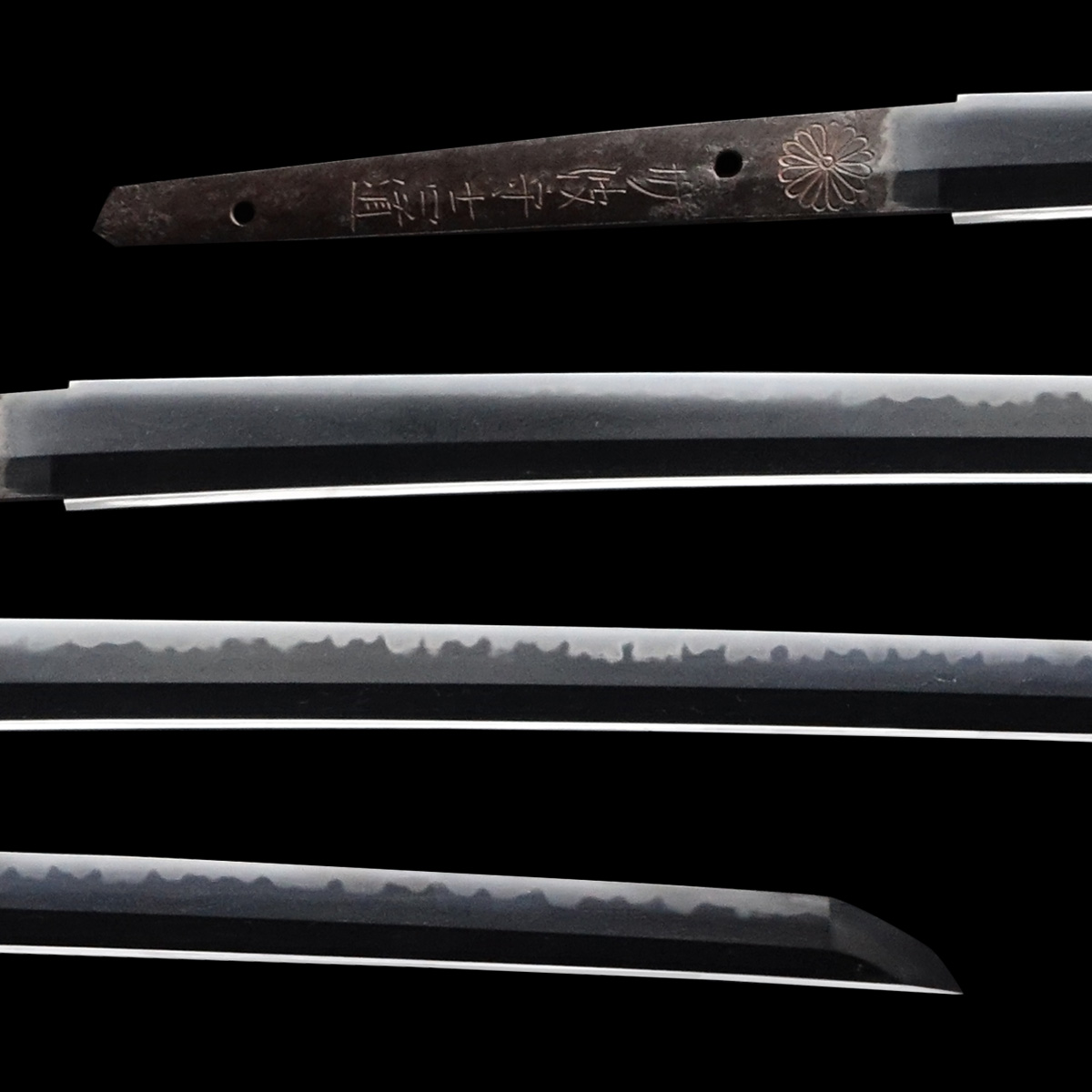
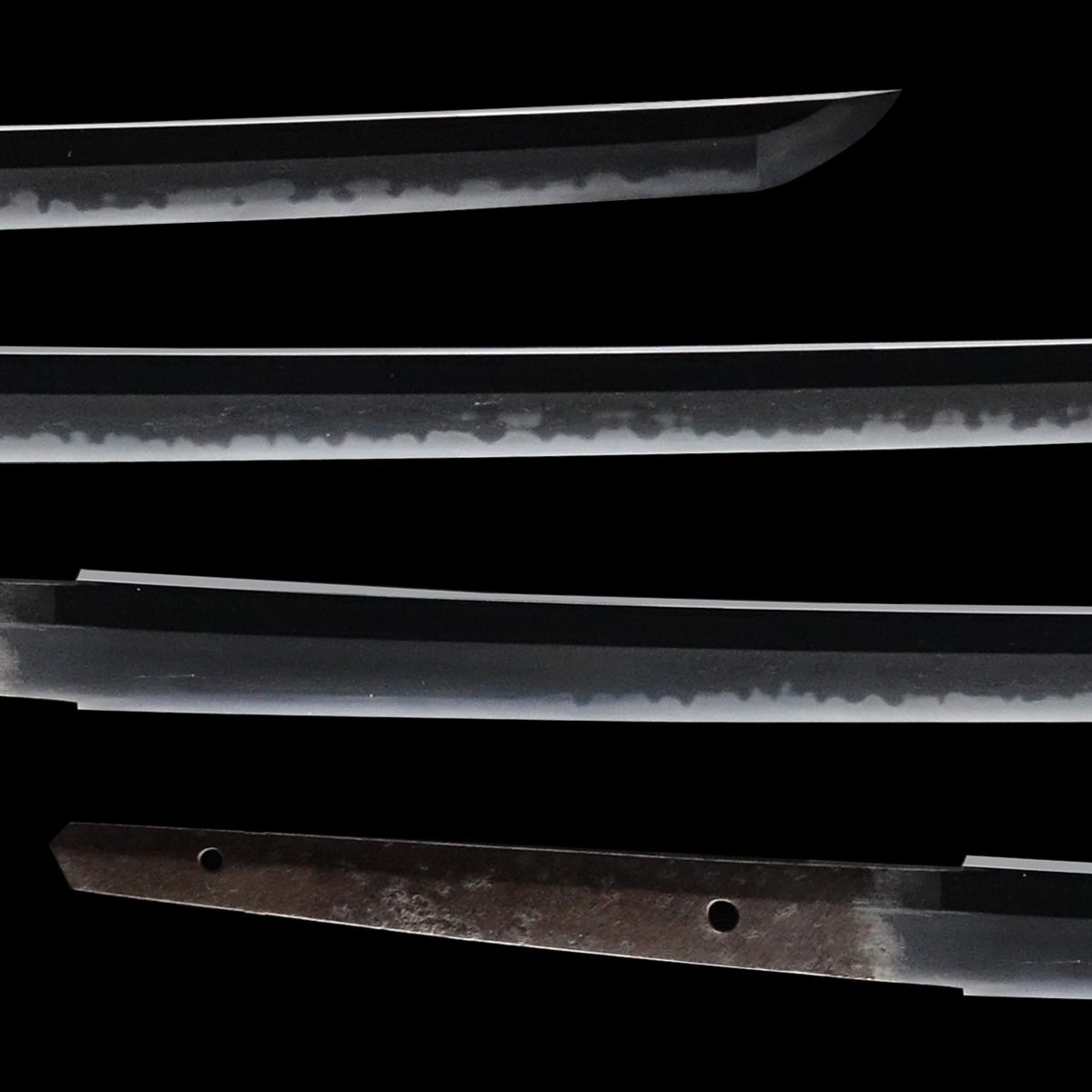
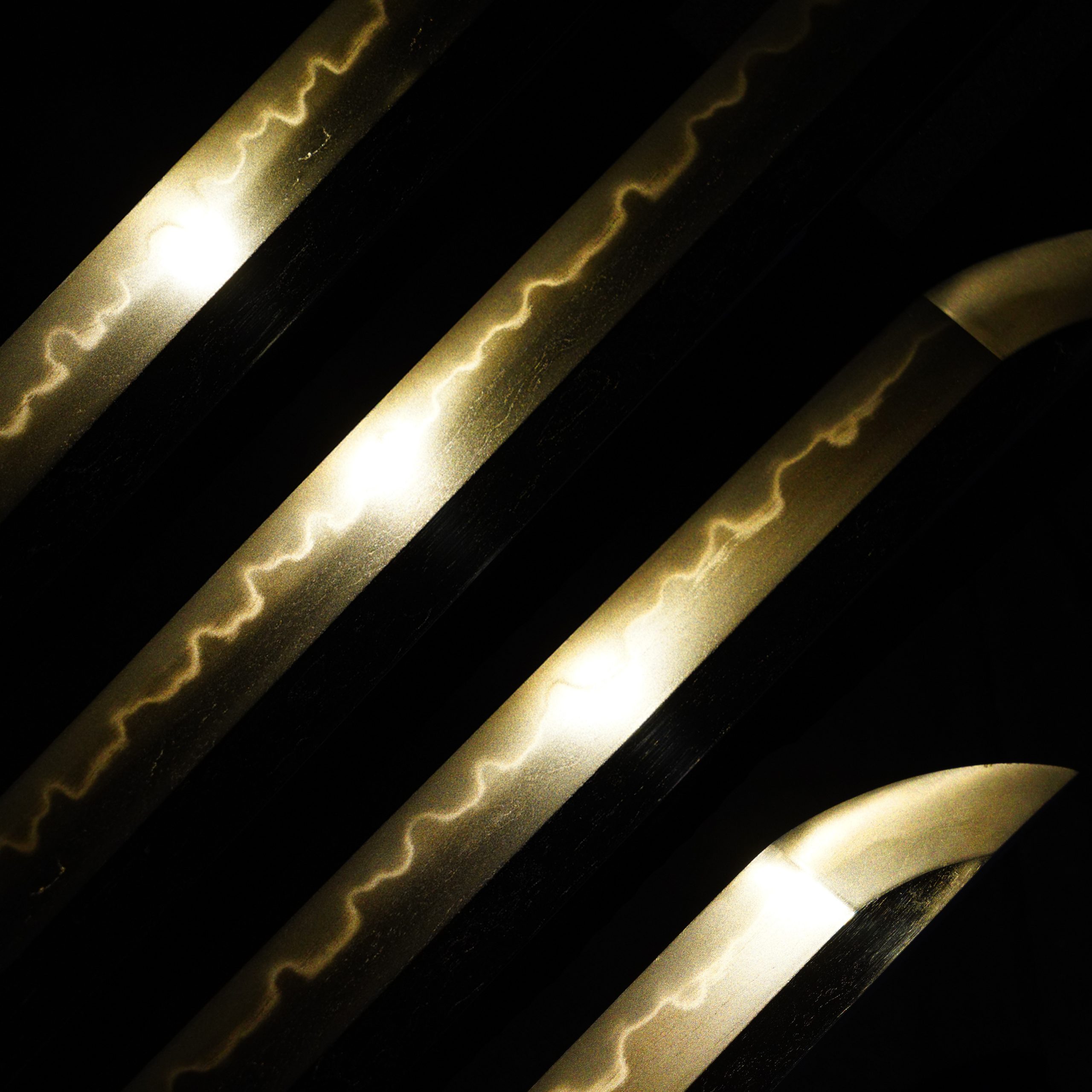
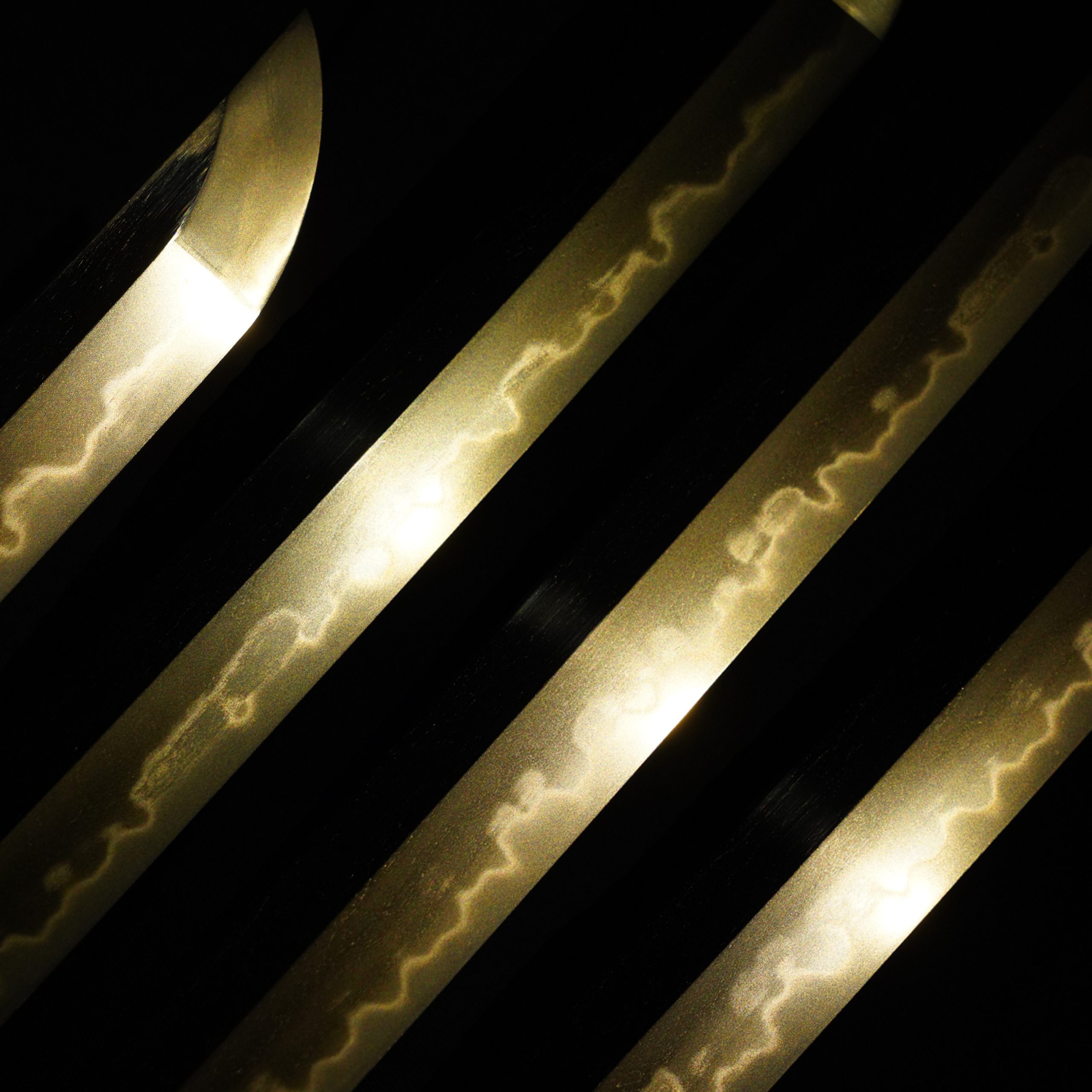
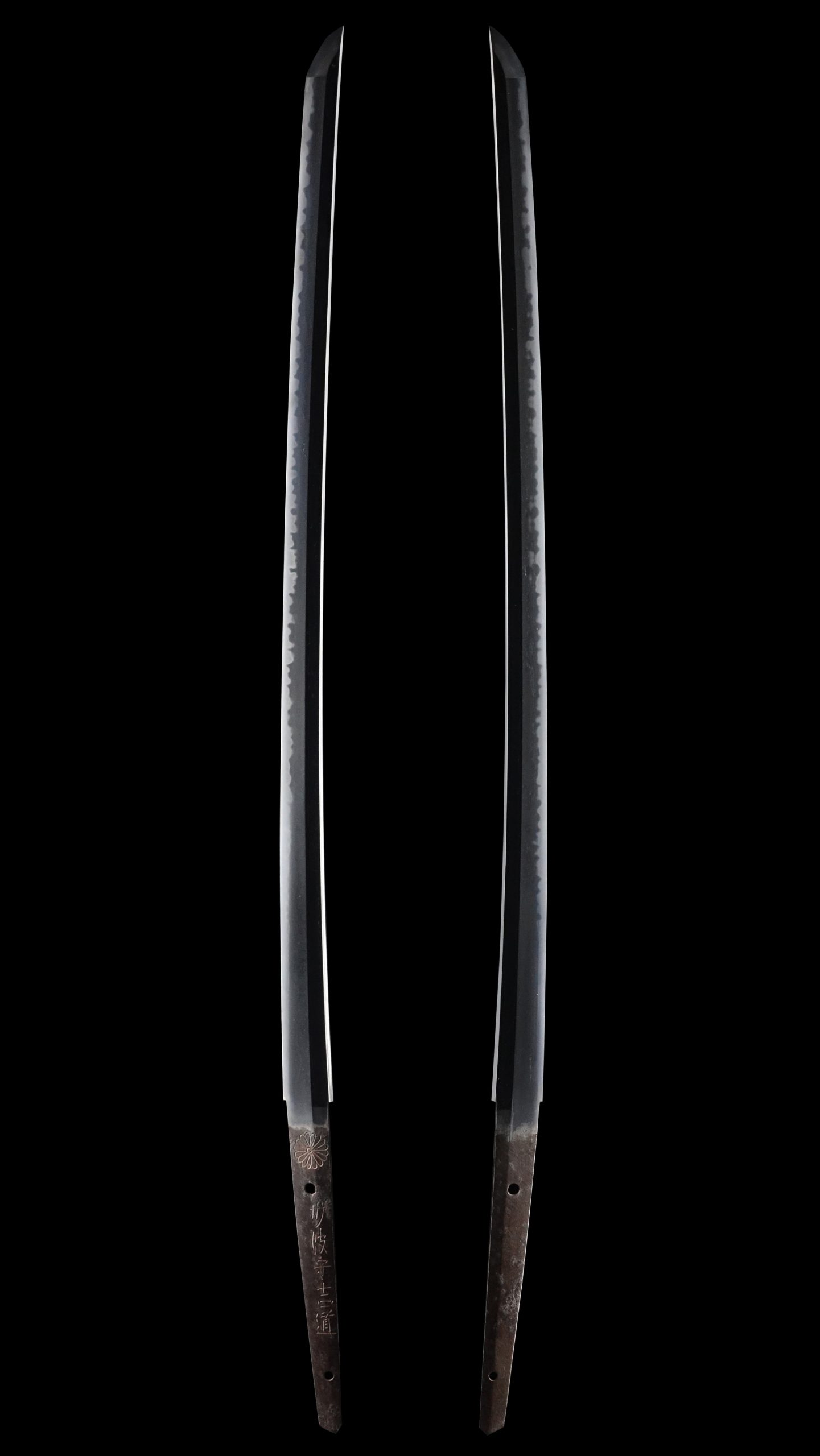
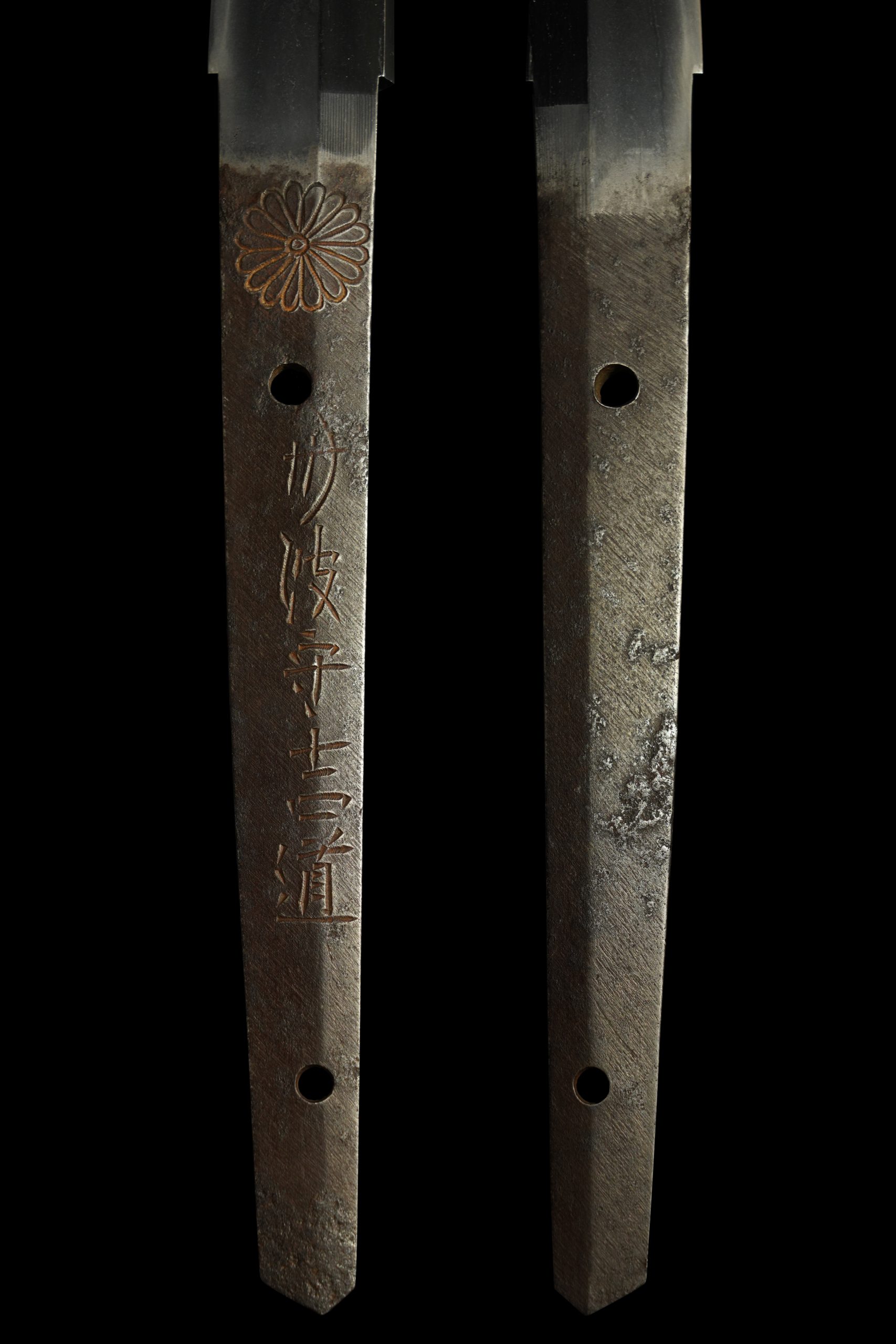
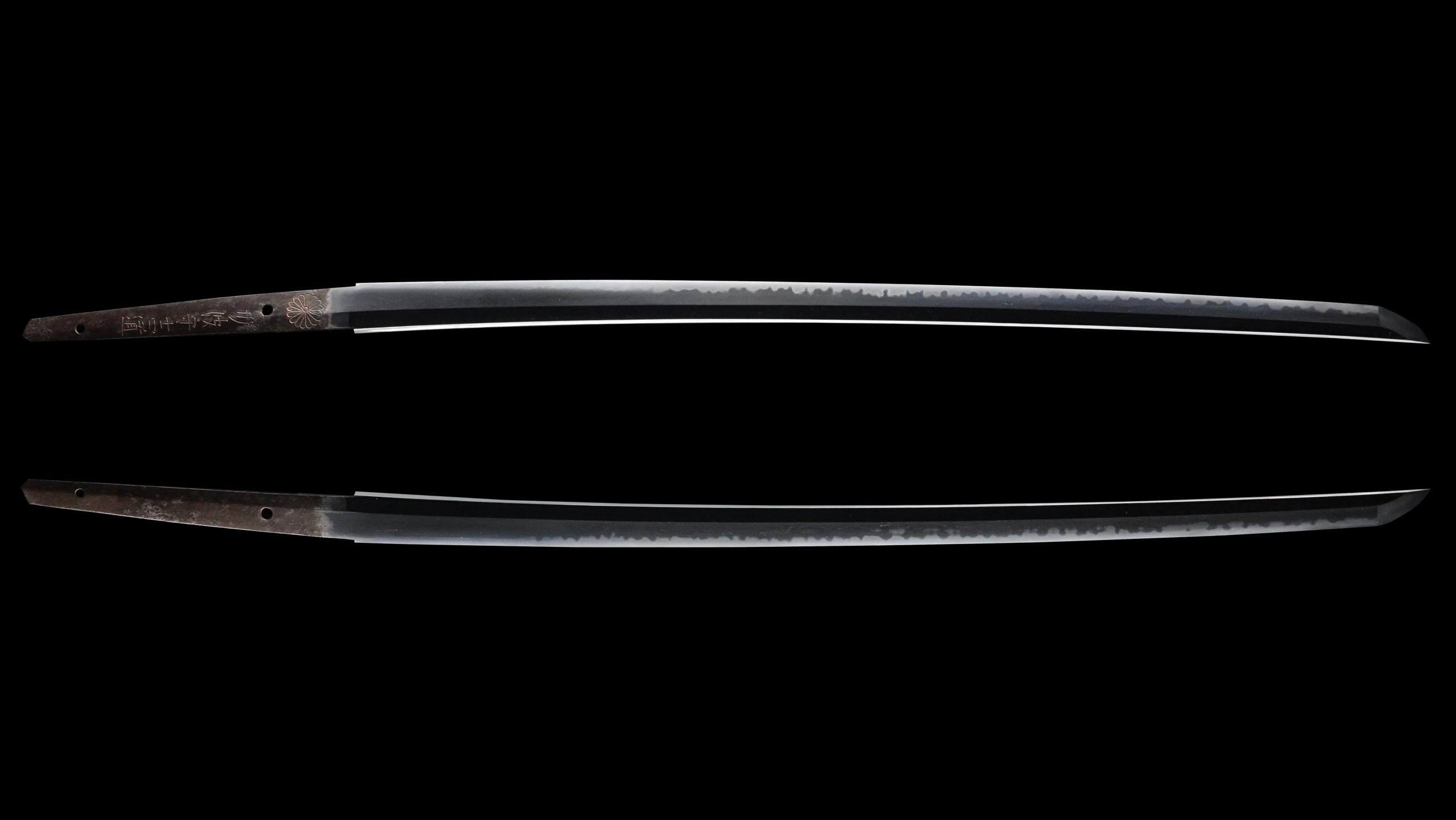
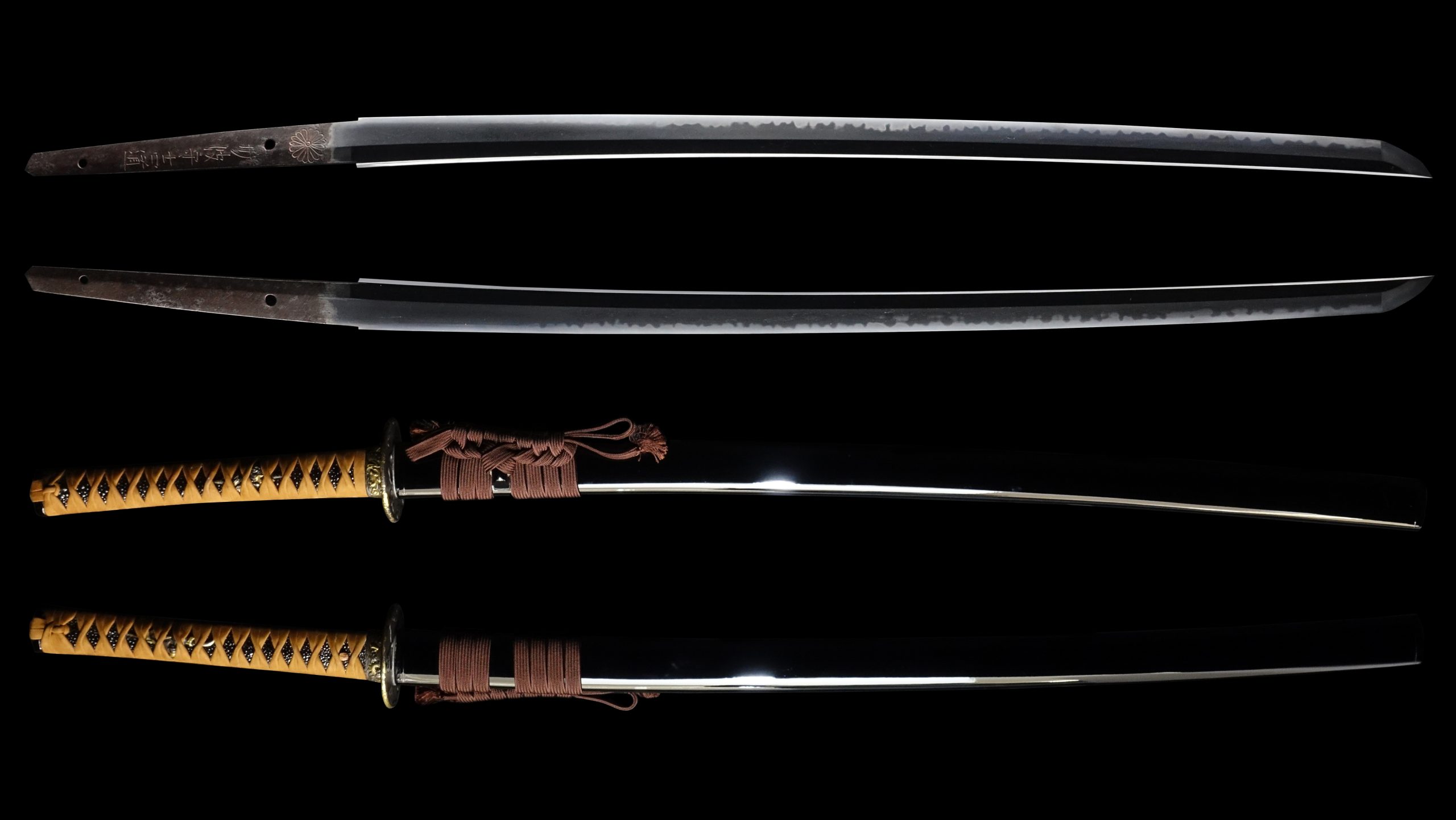
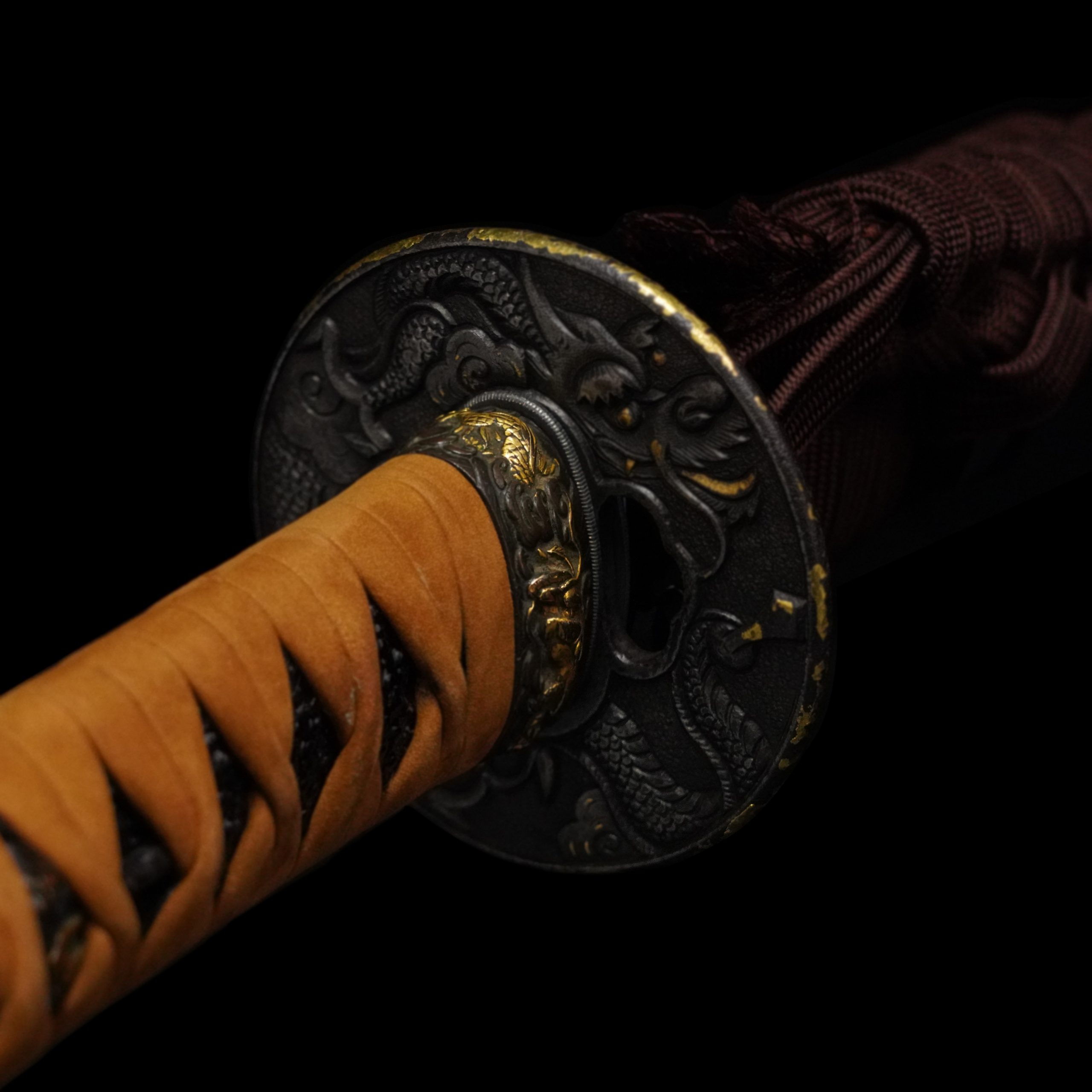
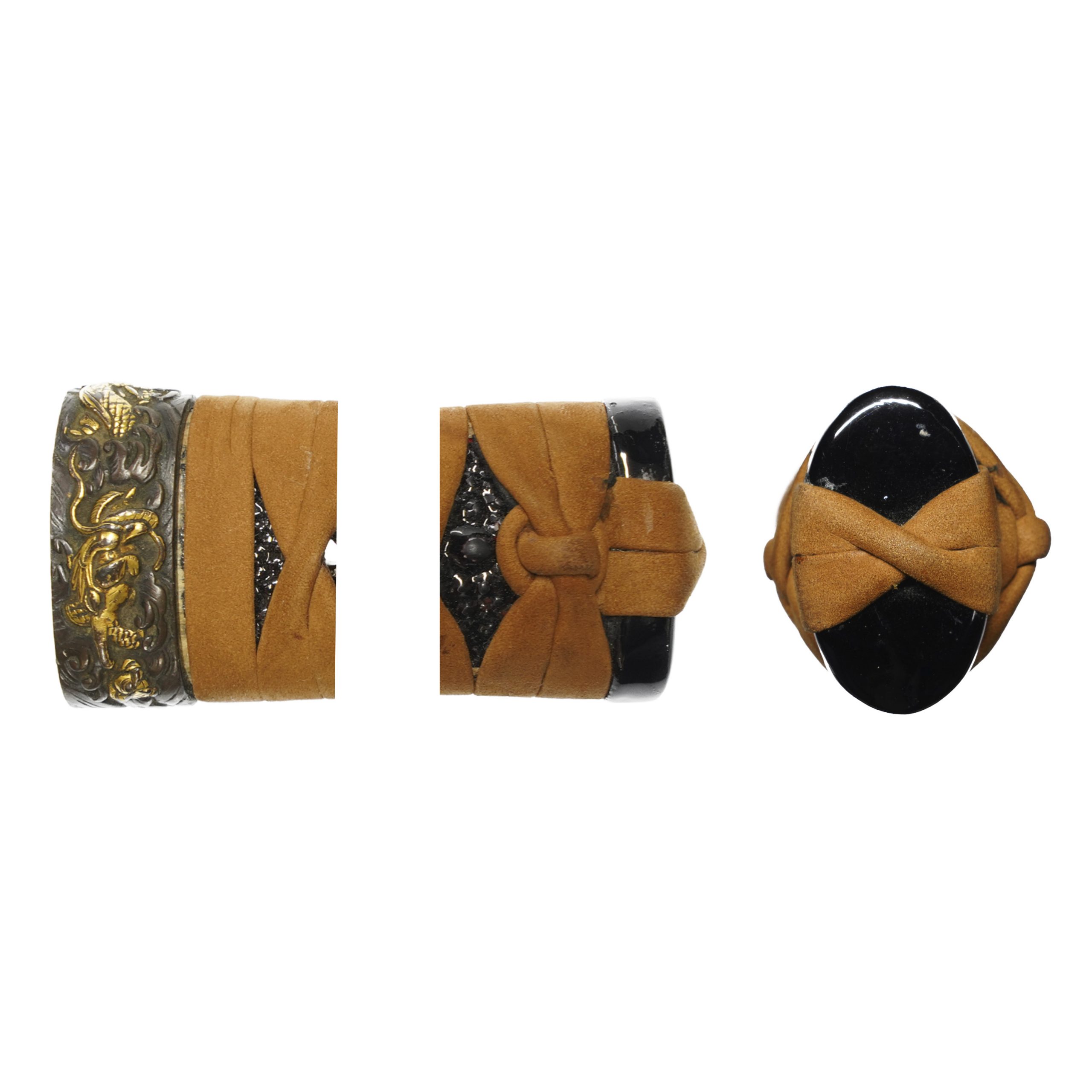
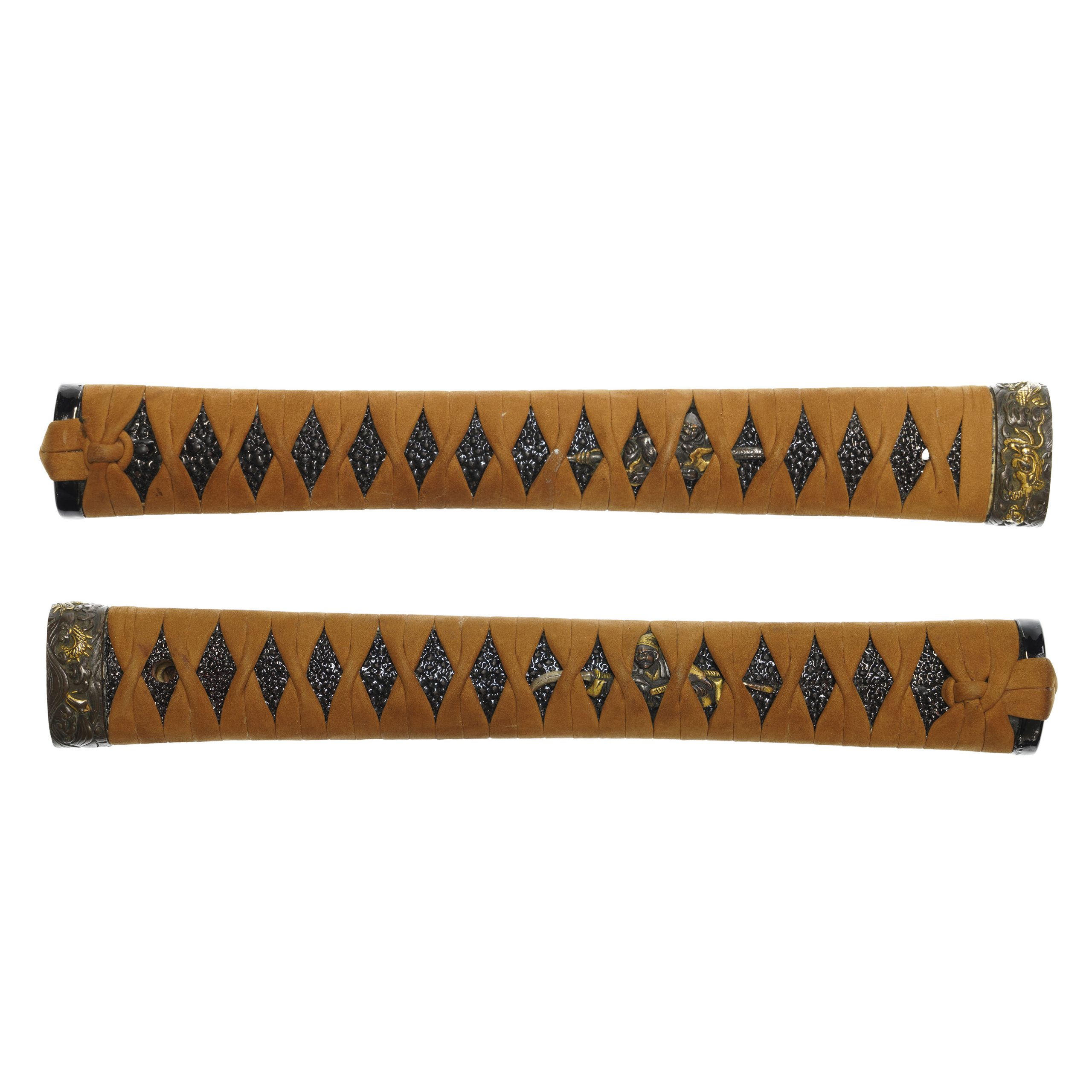
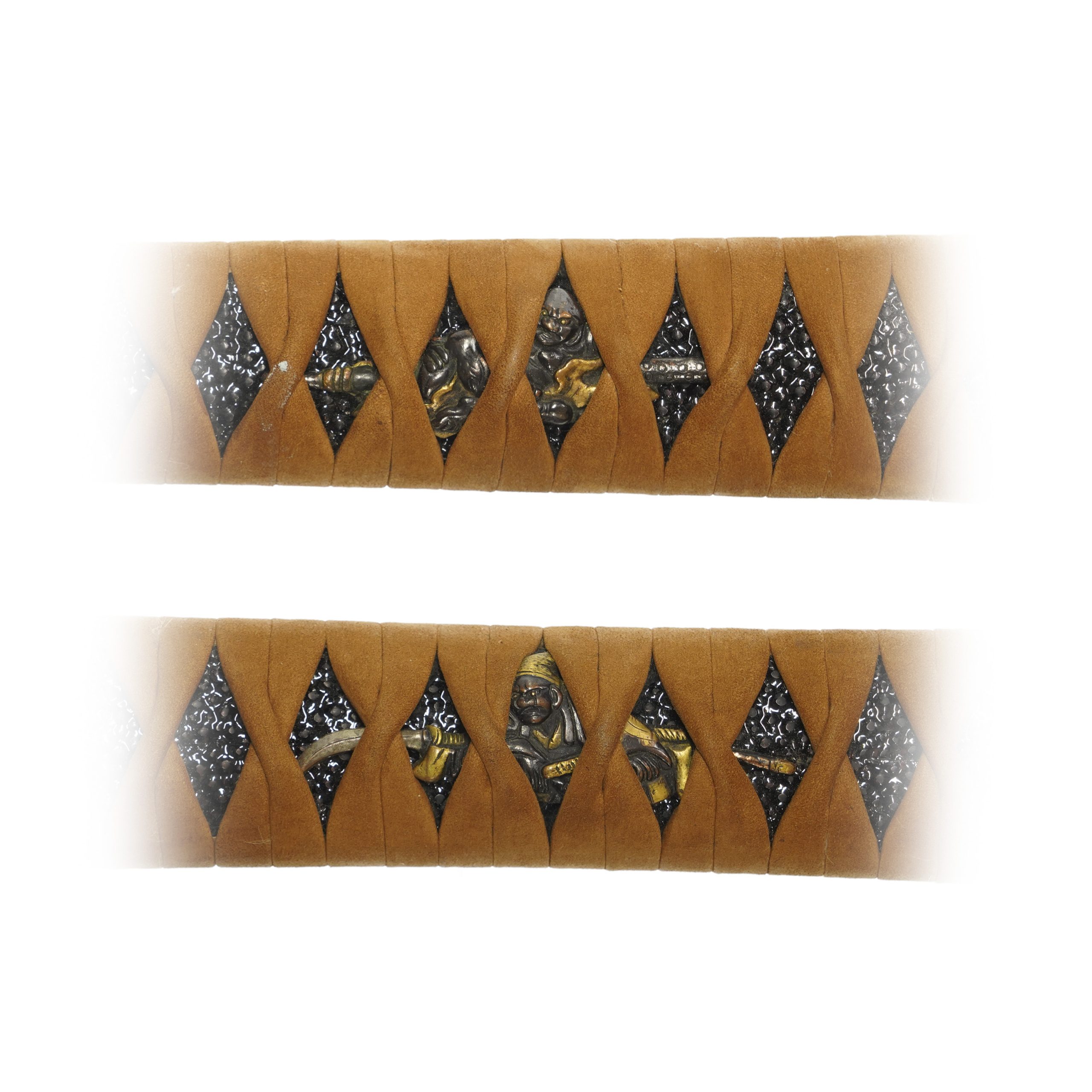
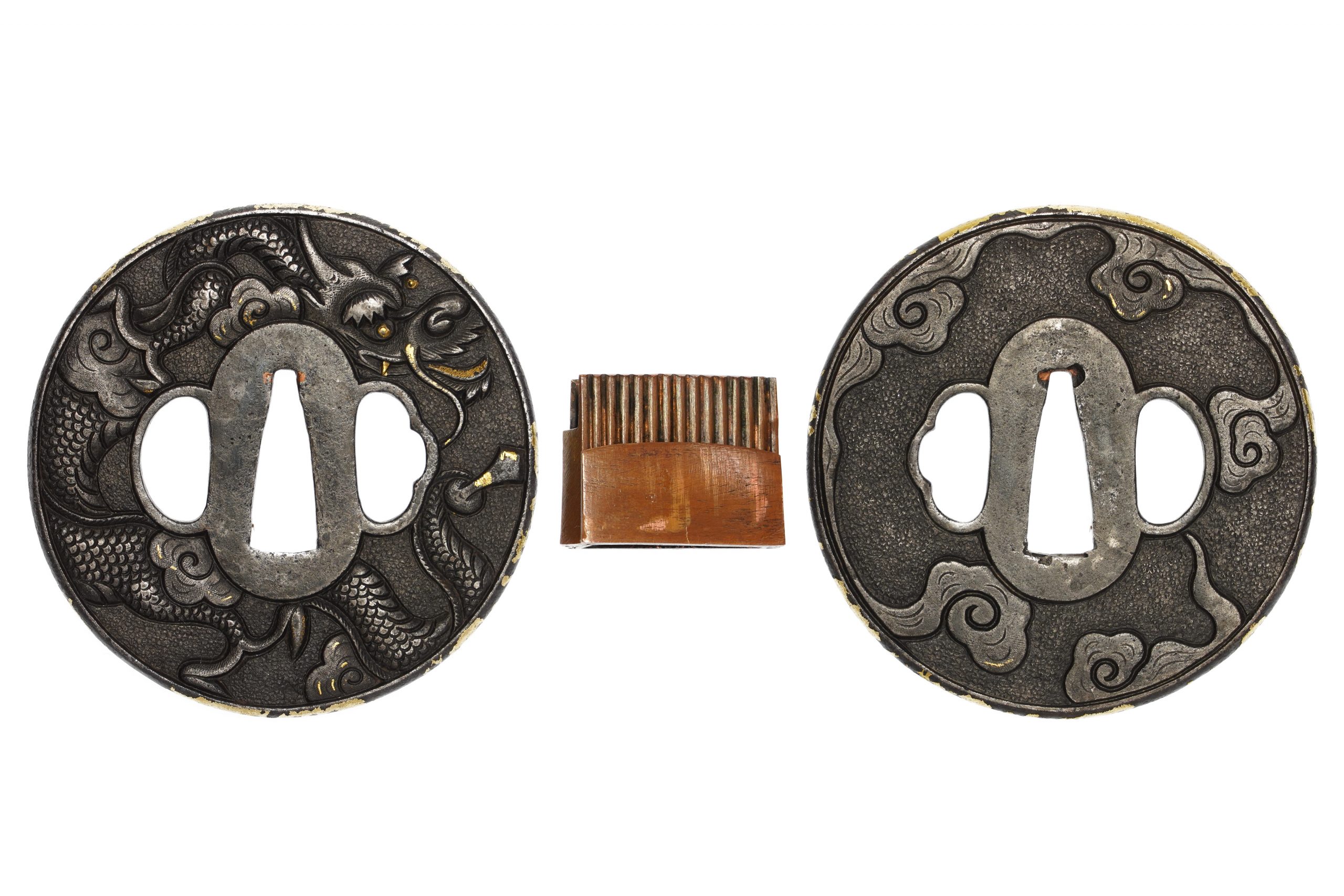
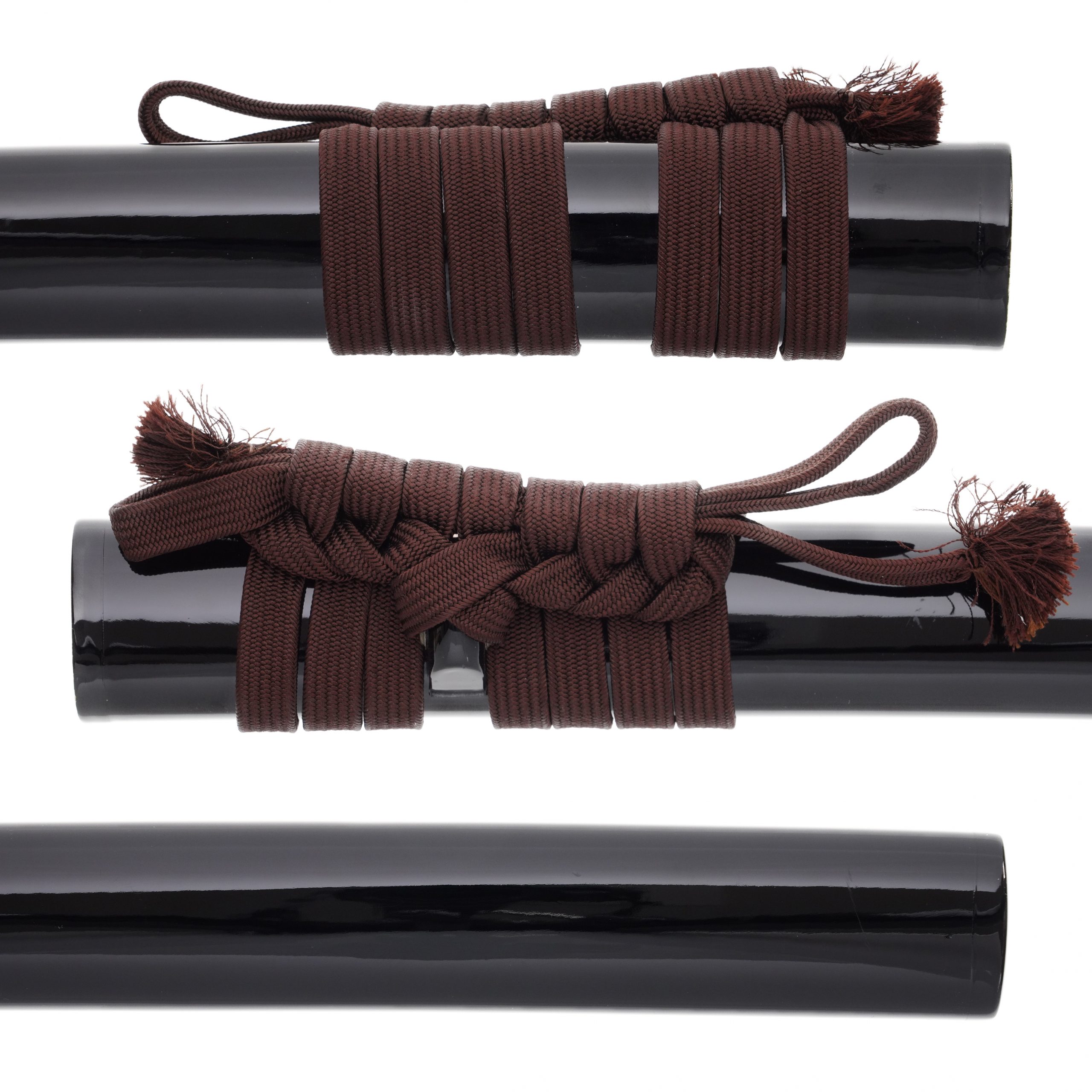
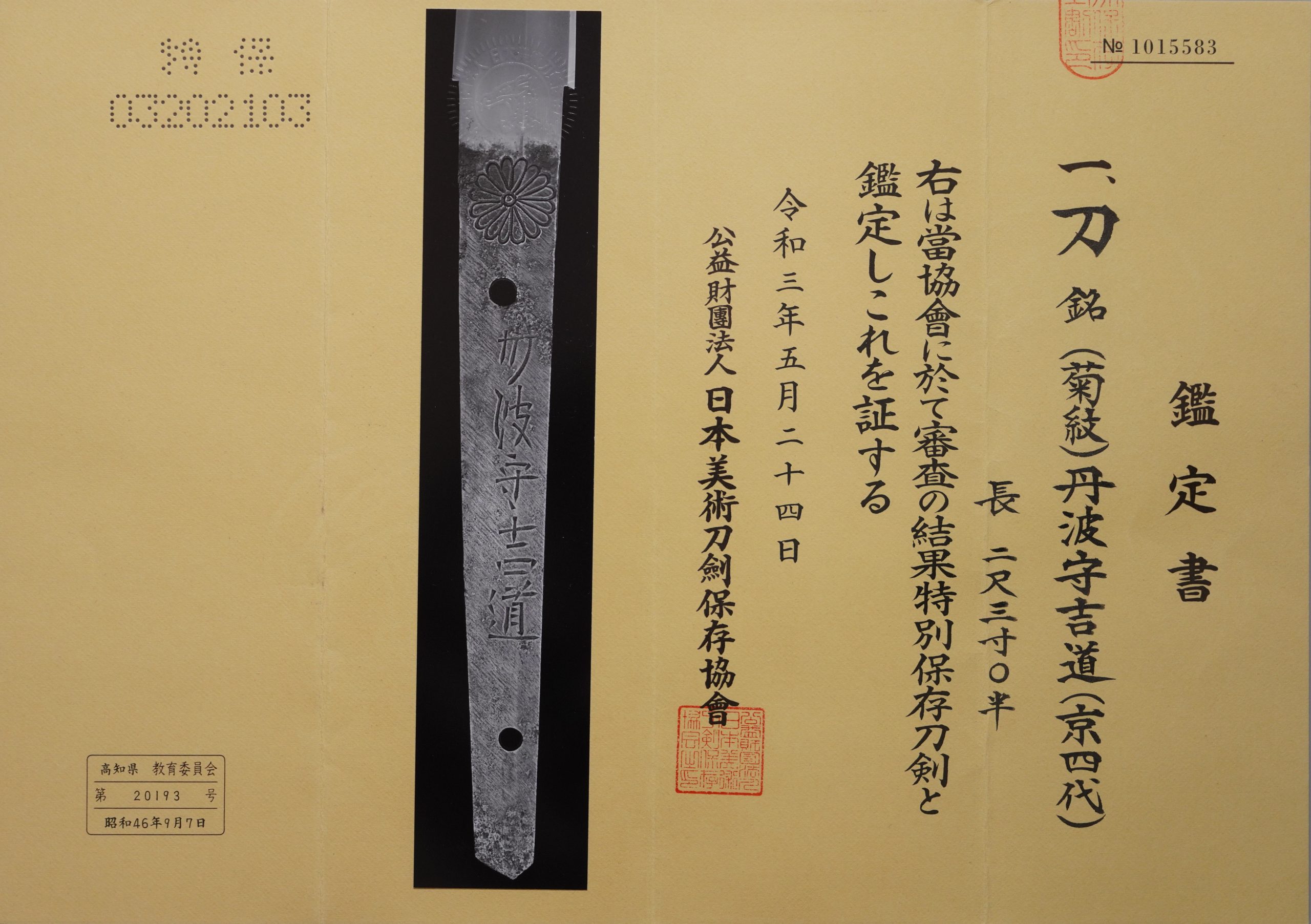
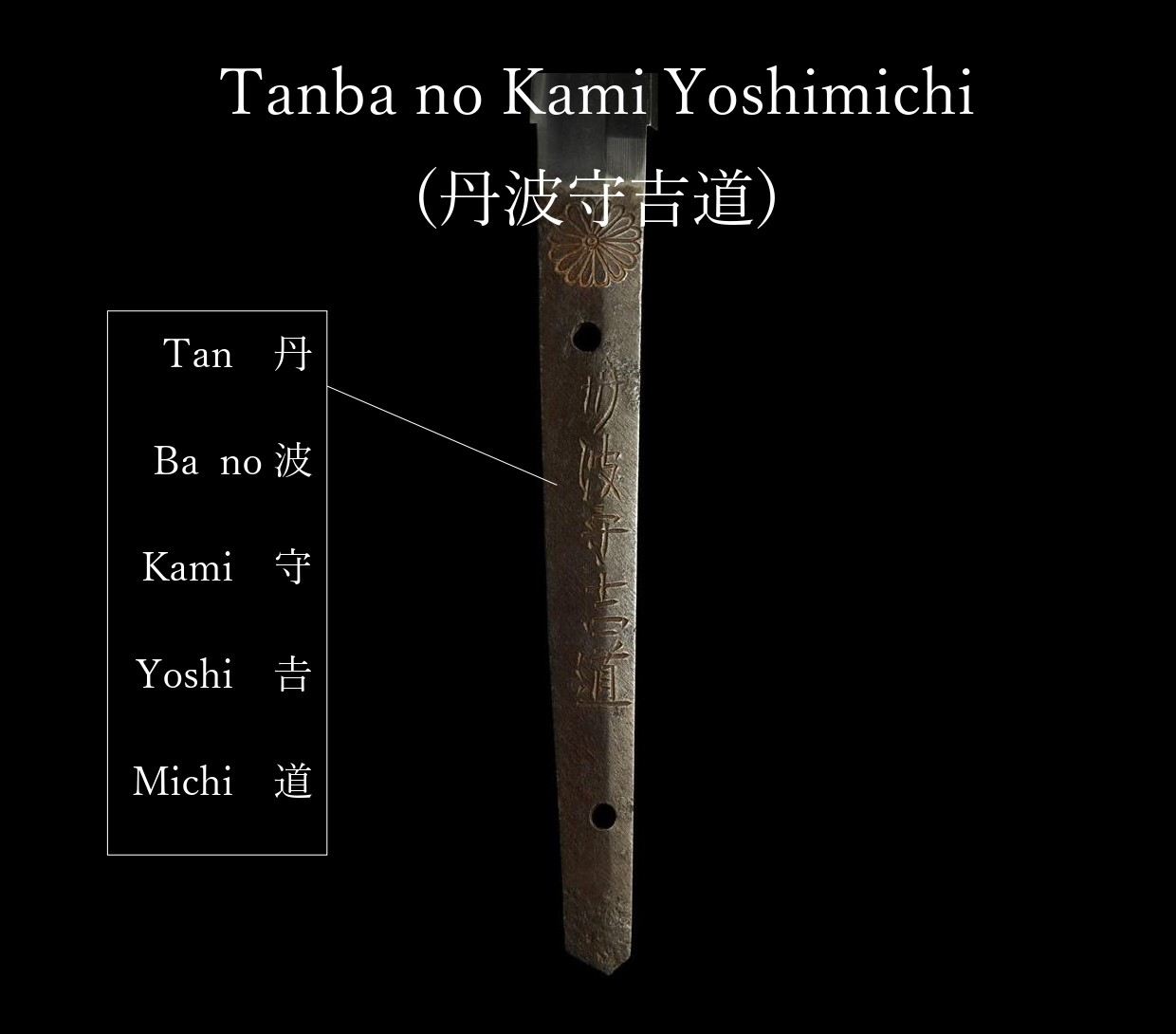
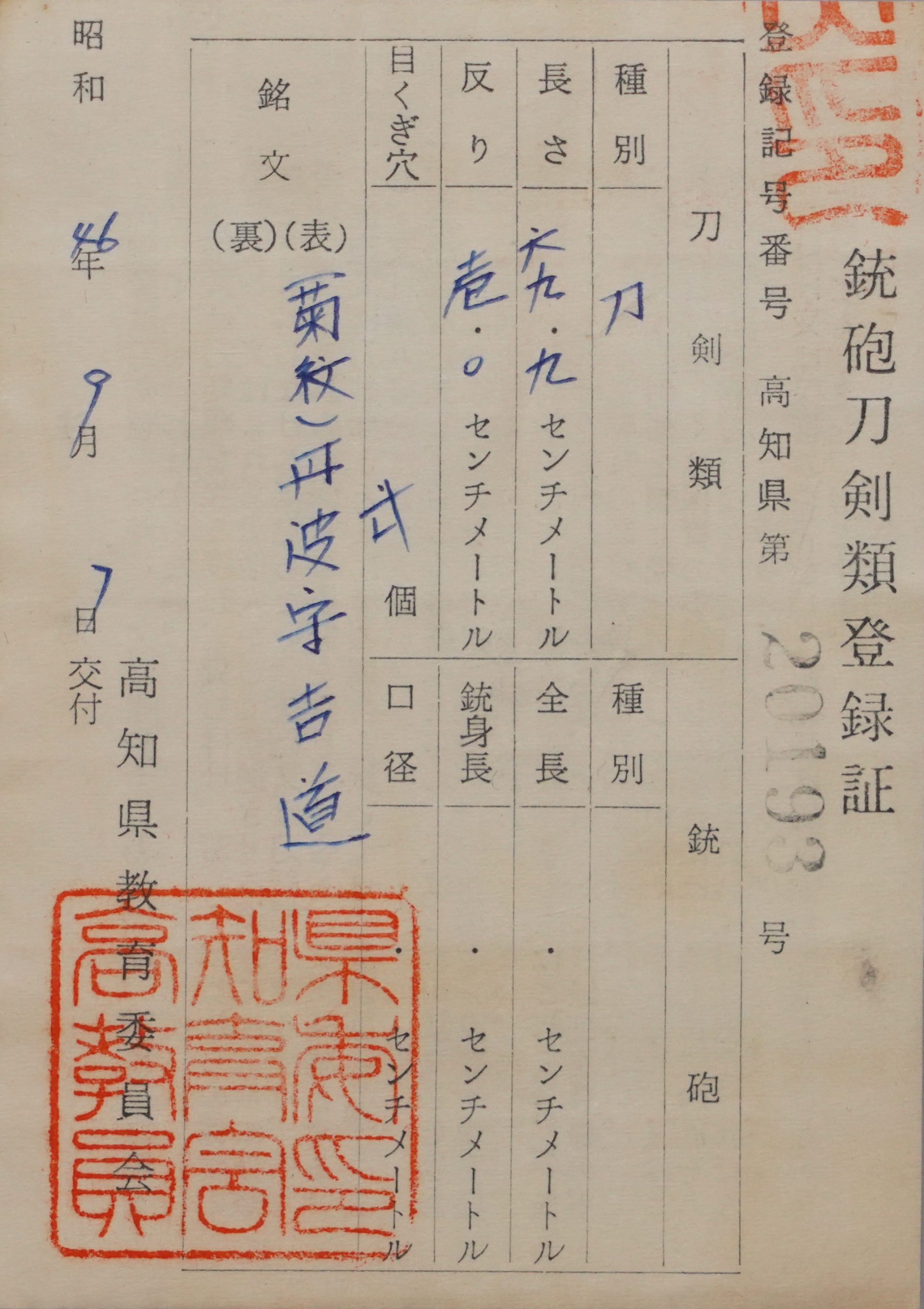
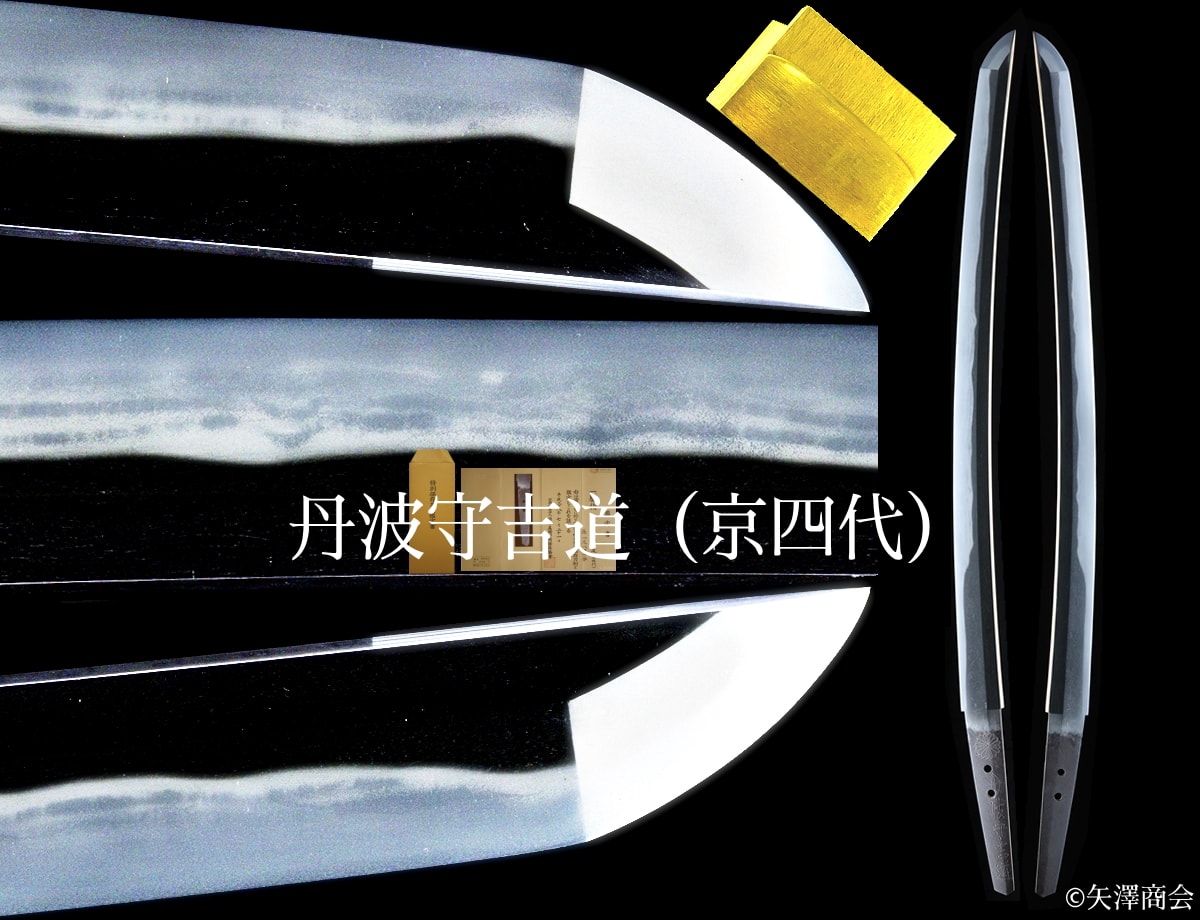
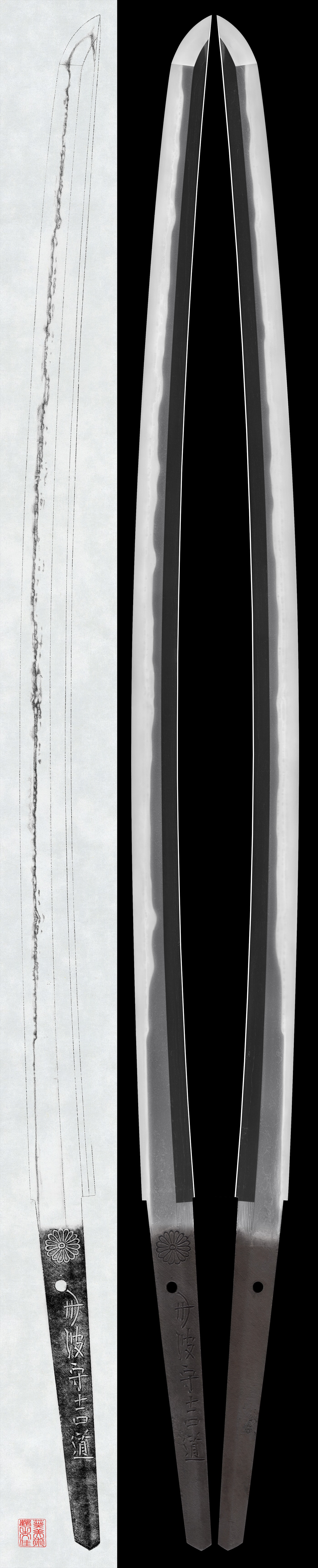
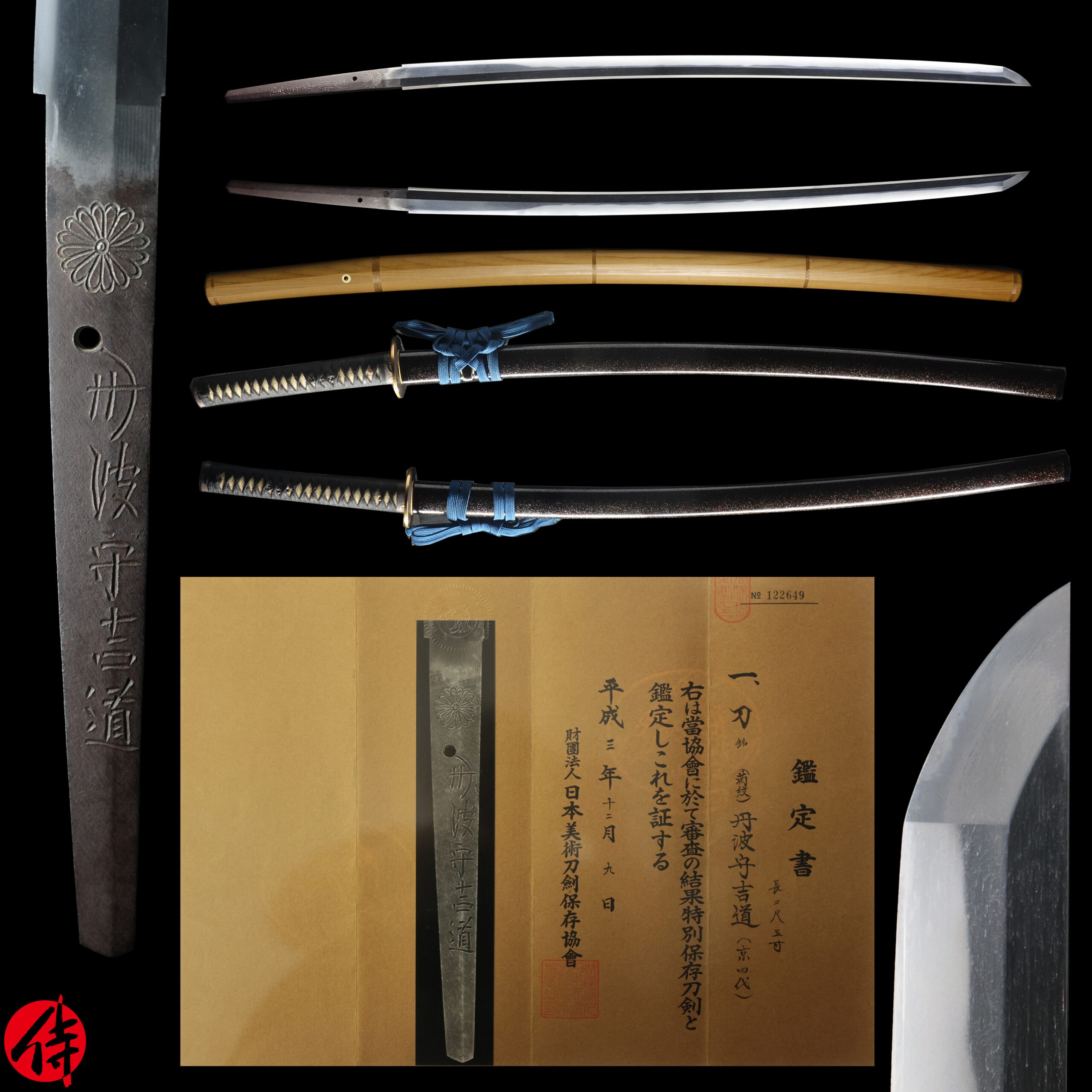
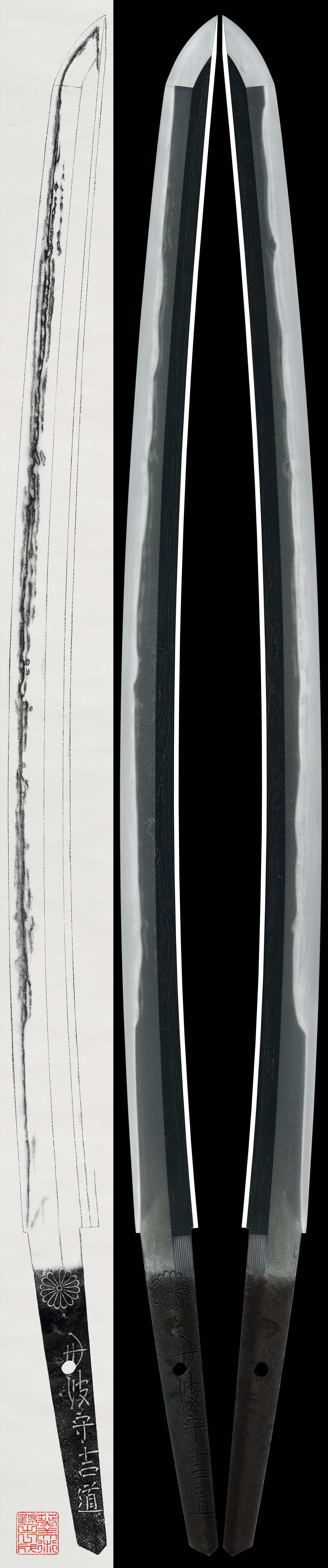
Antique Japanese Sword Katana Signed by the 4th-gen Yoshimichi with Tokubetsu Hozon Certificate 【Description】 Tanba no Kami Yoshimichi This blade was signed by Tanba no Kami Yoshimichi (丹波守吉道). According to NBTHK’s appraisal, it was forged by the 4th-gen Yoshimichi in Kyoto. The swordsmith name Yoshimichi prospered in both Osaka and Kyoto for generations during the Edo period. And to distinguish two Yoshimichi, The one in Kyoto is called Kyo Yoshimichi, and the other one is called Osaka Yoshimichi. The 4th-gen Kyo Yoshimichi belonged to the prestigious school called Mishina (三品) school. He was especially active in sword-forging during 1673-1703 . He received the high official title “Tango no Kami (丹後守)” in the 12th year of the Kanbun Era (1672). His birth name was Mishina Kichinojyo (三品吉之丞). He was allowed to inscribe a chrysanthemum emblem, which is the symbol of the Japanese emperor. His sword forging technique was so great that the emperor permitted him to use this emblem, which was honorable for any swordsmith. A chrysanthemum emblem remains in the tang of this blade. Mishina School The first-gen Tanba no Kami Yoshimichi belonged to Kyoto Mishina school and was one of the sons of the Mishina school’s founder. Mishina school was created by the first-gen Mutsu no Kami Omichi (陸奥守大道), also known as Kanemichi. It is said that initially, he was from Mino province, exclusively forging blades for Shingen Takeda, a famous feudal lord. Later on, he moved to Kyoto by bringing his four sons and founded his school in Kyoto. Five sons were Iga no Kami Kinmichi(伊賀守金道)、Izumi no Kami Rai Kinmichi(和泉守来金道), Tanba no Kami Yoshimichi(丹波守吉道) and Echu no kami Masatoshi(越中守正俊). His sons were known as Kyoto Gokaji(京都五鍛冶), prestigious swordsmiths forging in Kyoto in the early Edo period. Mishina school was prosperous throughout the Edo period and spread to other parts of Japan, such as Osaka. The superb craftsmanship of the Mishina school was passed down for generations. The 4th-gen Yoshimichi is a good example, and you can see excellent artistry from this blade. Kyo Yoshimichi school lasted seven generations by the end of the Edo period. You can feel his superb craftsmanship by appreciating this blade. We are confident you will be satisfied with this blade’s beautiful Sugata (appearance9 as well as its Hamon (tempering line). This blade is appraised as a Tokubetsu Hozon Token (特別保存刀剣) issued by NBTHK(Nihon Bijutsu Touken Hozon Kyokai:日本美術刀剣保存協会). This authentication paper was only given to authentic Japanese swords, especially well preserved and high quality with artistic value. 【 Blade】 Cutting Edge Length(Nagasa) : 69.9 cm( 27.5 inches) Curvature(Sori) : 1.0 cm(0.39 inches) Hamon : The crystalline structure which forms along the cutting edge of a blade as a result of the hardening process Jimon(Jihada) : visible steel surface pattern created by folding and hammering during forging process Nakago : Nakago is the tang of the Japanese sword. Japanese swordsmiths left the black rust on the tang because it prevents red rust while the tang is in its handle. And the discoloration of the tang was created over time, and it is a great indicator for a Japanese sword specialist to estimate when the sword was forged. Koshirae: Koshirae is the mounting of the Japanese sword. There are several parts that consist of Koshirae such as Saya(Scabbard), Tsuka(Handle), Tsuba(Handguard). Fuchi-Kashira : A pair of matching sword fittings that cover the upper and bottom parts of its sword hilt. The Kashira part has a simple look that is colored with black lacquer. On the other hand, the Fuchi part is decorative. You would find a dragon that is swimming in the sea. Although some coloring has already been flaked off due to aging, it seems golden paint was initially applied to this dragon’s body. The figure of a dragon swimming in the rough waves looks brave and dignified. In Japan, there is a belief that worships the dragon as a water god. It is said that some Samurais f
 NihontoWatch
在銘 · Mishina · 延宝 · 長さ 69.9cm · 反り 1cm
新刀 · 山城 · 1673-1681頃
藤代 Chu-jo saku · 刀剣大鑑 上位76%
現在6点販売中
新刀 · 山城
現在73点販売中
三品派は、美濃国関の兼道を源流とし、その子らが京へ上って興した新刀の一門である。説明書は、兼道の四子すなわち長兄伊賀守金道、来金道、丹波守吉道、末弟越中守正俊が父と共に美濃より上京し、西洞院夷川に住して三品派の名を大いに高めたと記す。長兄金道は京五鍛冶の頭領にして、その家は刀工の受領を朝廷に推薦する権を世襲し、銘に「日本鍛冶宗匠」と添えて幕末に及んだ。やがて一門は京にとどまらず大坂へも枝を張り、京初代丹波守吉道の子が大坂に移って大坂丹波の祖となり、その周囲に大和守吉道が連なり、丹後守兼道のごとく大坂に住して元禄頃に活躍した工も出た。末関の量産地に発しながら、堀川派と並ぶ京新刀の一大勢力に育ち、さらに大坂へと展開した点に、この一門の歩みがある。 作風を貫くのは、工と世代の差を越えて繰り返される三品の共通語法である。地鉄は板目に杢や流れ肌を交えて棟寄りに強く流れ、刃寄りで柾がかって肌立ち、地沸微塵に厚くつき地景のよく入るもので、美濃関の継承を京の作にまで伝える。京の古い手が肌立つ板目を見せるのに対し、大坂の系では小板目をよくつめ清く澄んだ地に転ずる差がある。刃文は美濃由来の互の目と尖り刃を基調に、これを京風に洗練して小のたれの大乱れに展開し、沸が強く時に荒くむら立ち、砂流しさかんに金筋長く入る。最も明快な見どころは帽子で、のたれ込みに先尖って掃きかける三品帽子は一門の標識をなし、末弟正俊にことに顕著である。いま一つの標識が丹波守吉道の創案した簾刃で、湯走り・飛焼・砂流しが幾重にも縞がかって簾の如く焼かれる。金道と正俊が志津風を共に得意として作域広く、吉道はこの簾刃の一手に己を結び、大坂の系はその簾刃を最もよく継いだ。同じ語法のうちに、各工の手が読み分けられる。 収集の観点では、三品派は新刀草創の格と明快な鑑定の勘所をあわせ持つ一門である。先尖って掃きかける三品帽子と、縞がかって平行に焼かれる簾刃の二つの見どころは、地と刃のいずれにも紛れなく現れて工と作域を定める手懸りとなり、大坂の直ぐで均一の焼出しは京の手と分かつ目印となる。主要工の格は説明書の評にそのまま現れ、初代伊賀守金道は一派中最も優れた手とされ、初代丹波守吉道は初期新刀屈指の名工に数えられ、末弟正俊は器用さ兄弟中第一と評される。一門の作はおおむね在銘で、銘そのものが時の標識となり、由緒の確かさをもって賞翫される。来歴の知られる作は谷干城の愛刀、佐竹家、織田有楽斎、北野天満宮、皇室、大坂城代青山家の蔵を経て伝わり、一口は京都国立博物館に納まる。最上手の在銘作が市に現れるのは折々のことで容易ではないが、一たび相見えれば、三品派が美濃関より京・大坂へいかに展開したかを語る確かな証となる。 詳しく見る →
京 新刀の源流
新刀の時代は、その大部分が京都で発明された。埋忠明寿の工房が運動を育て、堀川国広が一世代を鍛え、鎚を持たぬ本阿弥家が名刀の意味を司った。
保存刀剣のうち、出来が一層優れ、保存状態も良好と認められたものです。再刃や、室町・江戸期の多くの無銘作は対象外となり、保存刀剣より高い基準が課されます。
日本美術刀剣保存協会(NBTHK)は、1948年に設立され、文化庁の監督を受ける公益財団法人で、東京・刀剣博物館に本部を置きます。専門の審査員が出品作を直接審査し、美術的・歴史的価値に応じた鑑定書を発行します。NBTHKの鑑定書は、日本刀および刀装具の真正性を示す最も広く認知された基準です。
NBTHK公式サイトReturns/exchanges limited to defects caused by shipping (except willful misconduct or gross negligence by the company); customers must contact within 72 hours of receiving the product.
Antique Japanese Sword Katana Signed by the 4th-gen Yoshimichi with Tokubetsu Hozon Certificate 【Description】 Tanba no Kami Yoshimichi This blade was signed by Tanba no Kami Yoshimichi (丹波守吉道). According to NBTHK’s appraisal, it was forged by the 4th-gen Yoshimichi in Kyoto. The swordsmith name Yoshimichi prospered in both Osaka and Kyoto for generations during the Edo period. And to distinguish two Yoshimichi, The one in Kyoto is called Kyo Yoshimichi, and the other one is called Osaka Yoshimichi. The 4th-gen Kyo Yoshimichi belonged to the prestigious school called Mishina (三品) school. He was especially active in sword-forging during 1673-1703 . He received the high official title “Tango no Kami (丹後守)” in the 12th year of the Kanbun Era (1672). His birth name was Mishina Kichinojyo (三品吉之丞). He was allowed to inscribe a chrysanthemum emblem, which is the symbol of the Japanese emperor. His sword forging technique was so great that the emperor permitted him to use this emblem, which was honorable for any swordsmith. A chrysanthemum emblem remains in the tang of this blade. Mishina School The first-gen Tanba no Kami Yoshimichi belonged to Kyoto Mishina school and was one of the sons of the Mishina school’s founder. Mishina school was created by the first-gen Mutsu no Kami Omichi (陸奥守大道), also known as Kanemichi. It is said that initially, he was from Mino province, exclusively forging blades for Shingen Takeda, a famous feudal lord. Later on, he moved to Kyoto by bringing his four sons and founded his school in Kyoto. Five sons were Iga no Kami Kinmichi(伊賀守金道)、Izumi no Kami Rai Kinmichi(和泉守来金道), Tanba no Kami Yoshimichi(丹波守吉道) and Echu no kami Masatoshi(越中守正俊). His sons were known as Kyoto Gokaji(京都五鍛冶), prestigious swordsmiths forging in Kyoto in the early Edo period. Mishina school was prosperous throughout the Edo period and spread to other parts of Japan, such as Osaka. The superb craftsmanship of the Mishina school was passed down for generations. The 4th-gen Yoshimichi is a good example, and you can see excellent artistry from this blade. Kyo Yoshimichi school lasted seven generations by the end of the Edo period. You can feel his superb craftsmanship by appreciating this blade. We are confident you will be satisfied with this blade’s beautiful Sugata (appearance9 as well as its Hamon (tempering line). This blade is appraised as a Tokubetsu Hozon Token (特別保存刀剣) issued by NBTHK(Nihon Bijutsu Touken Hozon Kyokai:日本美術刀剣保存協会). This authentication paper was only given to authentic Japanese swords, especially well preserved and high quality with artistic value. 【 Blade】 Cutting Edge Length(Nagasa) : 69.9 cm( 27.5 inches) Curvature(Sori) : 1.0 cm(0.39 inches) Hamon : The crystalline structure which forms along the cutting edge of a blade as a result of the hardening process Jimon(Jihada) : visible steel surface pattern created by folding and hammering during forging process Nakago : Nakago is the tang of the Japanese sword. Japanese swordsmiths left the black rust on the tang because it prevents red rust while the tang is in its handle. And the discoloration of the tang was created over time, and it is a great indicator for a Japanese sword specialist to estimate when the sword was forged. Koshirae: Koshirae is the mounting of the Japanese sword. There are several parts that consist of Koshirae such as Saya(Scabbard), Tsuka(Handle), Tsuba(Handguard). Fuchi-Kashira : A pair of matching sword fittings that cover the upper and bottom parts of its sword hilt. The Kashira part has a simple look that is colored with black lacquer. On the other hand, the Fuchi part is decorative. You would find a dragon that is swimming in the sea. Although some coloring has already been flaked off due to aging, it seems golden paint was initially applied to this dragon’s body. The figure of a dragon swimming in the rough waves looks brave and dignified. In Japan, there is a belief that worships the dragon as a water god. It is said that some Samurais f
NihontoWatch在銘 · Mishina · 延宝 · 長さ 69.9cm · 反り 1cm
新刀 · 山城 · 1673-1681頃
藤代 Chu-jo saku · 刀剣大鑑 上位76%
現在6点販売中
新刀 · 山城
現在73点販売中
三品派は、美濃国関の兼道を源流とし、その子らが京へ上って興した新刀の一門である。説明書は、兼道の四子すなわち長兄伊賀守金道、来金道、丹波守吉道、末弟越中守正俊が父と共に美濃より上京し、西洞院夷川に住して三品派の名を大いに高めたと記す。長兄金道は京五鍛冶の頭領にして、その家は刀工の受領を朝廷に推薦する権を世襲し、銘に「日本鍛冶宗匠」と添えて幕末に及んだ。やがて一門は京にとどまらず大坂へも枝を張り、京初代丹波守吉道の子が大坂に移って大坂丹波の祖となり、その周囲に大和守吉道が連なり、丹後守兼道のごとく大坂に住して元禄頃に活躍した工も出た。末関の量産地に発しながら、堀川派と並ぶ京新刀の一大勢力に育ち、さらに大坂へと展開した点に、この一門の歩みがある。 作風を貫くのは、工と世代の差を越えて繰り返される三品の共通語法である。地鉄は板目に杢や流れ肌を交えて棟寄りに強く流れ、刃寄りで柾がかって肌立ち、地沸微塵に厚くつき地景のよく入るもので、美濃関の継承を京の作にまで伝える。京の古い手が肌立つ板目を見せるのに対し、大坂の系では小板目をよくつめ清く澄んだ地に転ずる差がある。刃文は美濃由来の互の目と尖り刃を基調に、これを京風に洗練して小のたれの大乱れに展開し、沸が強く時に荒くむら立ち、砂流しさかんに金筋長く入る。最も明快な見どころは帽子で、のたれ込みに先尖って掃きかける三品帽子は一門の標識をなし、末弟正俊にことに顕著である。いま一つの標識が丹波守吉道の創案した簾刃で、湯走り・飛焼・砂流しが幾重にも縞がかって簾の如く焼かれる。金道と正俊が志津風を共に得意として作域広く、吉道はこの簾刃の一手に己を結び、大坂の系はその簾刃を最もよく継いだ。同じ語法のうちに、各工の手が読み分けられる。 収集の観点では、三品派は新刀草創の格と明快な鑑定の勘所をあわせ持つ一門である。先尖って掃きかける三品帽子と、縞がかって平行に焼かれる簾刃の二つの見どころは、地と刃のいずれにも紛れなく現れて工と作域を定める手懸りとなり、大坂の直ぐで均一の焼出しは京の手と分かつ目印となる。主要工の格は説明書の評にそのまま現れ、初代伊賀守金道は一派中最も優れた手とされ、初代丹波守吉道は初期新刀屈指の名工に数えられ、末弟正俊は器用さ兄弟中第一と評される。一門の作はおおむね在銘で、銘そのものが時の標識となり、由緒の確かさをもって賞翫される。来歴の知られる作は谷干城の愛刀、佐竹家、織田有楽斎、北野天満宮、皇室、大坂城代青山家の蔵を経て伝わり、一口は京都国立博物館に納まる。最上手の在銘作が市に現れるのは折々のことで容易ではないが、一たび相見えれば、三品派が美濃関より京・大坂へいかに展開したかを語る確かな証となる。 詳しく見る →
京 新刀の源流
新刀の時代は、その大部分が京都で発明された。埋忠明寿の工房が運動を育て、堀川国広が一世代を鍛え、鎚を持たぬ本阿弥家が名刀の意味を司った。
保存刀剣のうち、出来が一層優れ、保存状態も良好と認められたものです。再刃や、室町・江戸期の多くの無銘作は対象外となり、保存刀剣より高い基準が課されます。
日本美術刀剣保存協会(NBTHK)は、1948年に設立され、文化庁の監督を受ける公益財団法人で、東京・刀剣博物館に本部を置きます。専門の審査員が出品作を直接審査し、美術的・歴史的価値に応じた鑑定書を発行します。NBTHKの鑑定書は、日本刀および刀装具の真正性を示す最も広く認知された基準です。
NBTHK公式サイトReturns/exchanges limited to defects caused by shipping (except willful misconduct or gross negligence by the company); customers must contact within 72 hours of receiving the product.
![Katana - Tokuho - 作 吉道 - 刀 [丹波守吉道(京四代目)(良工)][日本美術刀剣保存協会]特別保存刀剣](/_next/image?url=https%3A%2F%2Fitbhfhyptogxcjbjfzwx.supabase.co%2Fstorage%2Fv1%2Fobject%2Fpublic%2Flisting-images%2Fworld-seiyudo%2FL873488%2F01.jpg&w=2560&q=90)


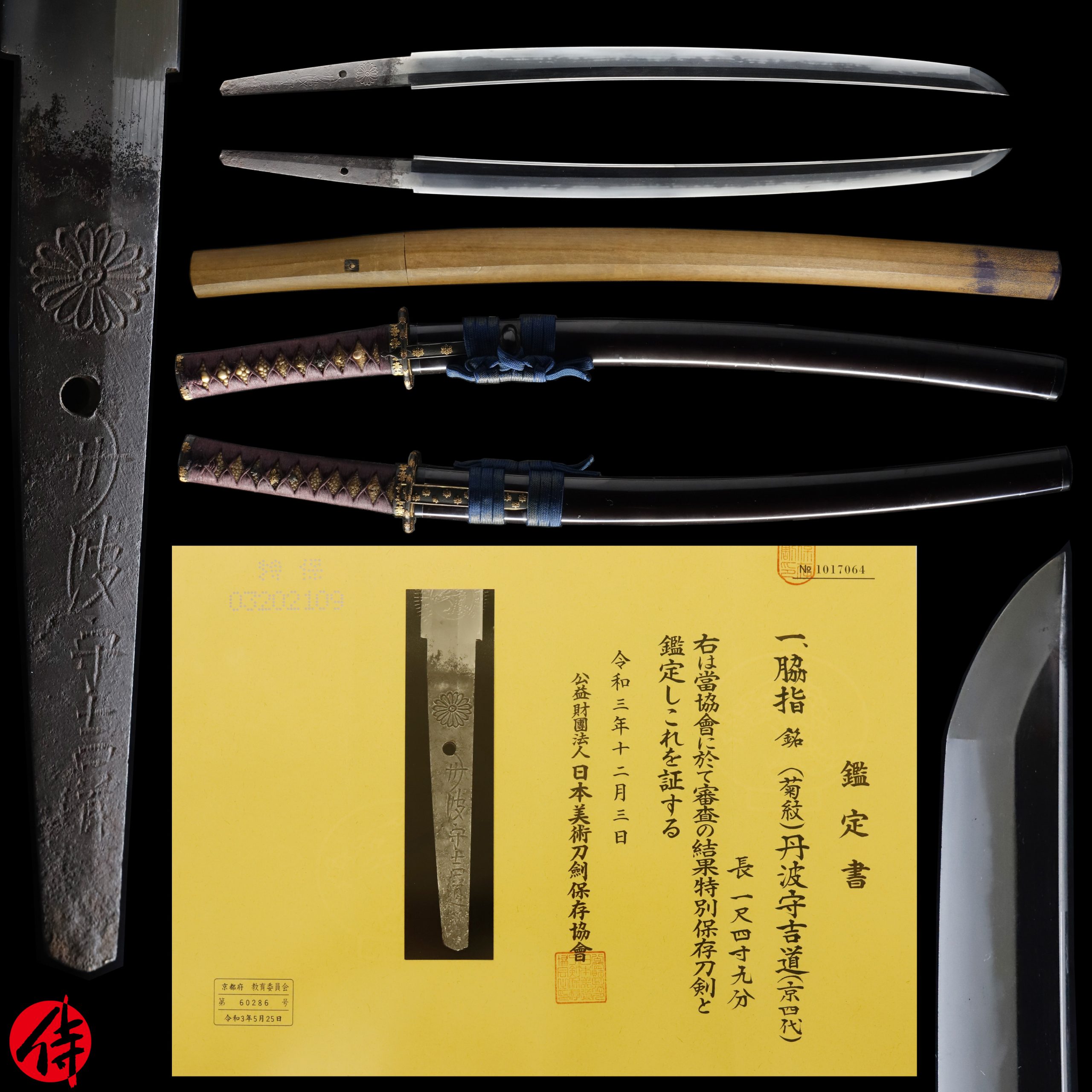
![Wakizashi - Tokuho - 作 吉道 - 脇差[丹波守吉道(京都四代)(良工・和哉物)][日本美術刀剣保存協会]特別保存刀剣](/_next/image?url=https%3A%2F%2Fitbhfhyptogxcjbjfzwx.supabase.co%2Fstorage%2Fv1%2Fobject%2Fpublic%2Flisting-images%2Fworld-seiyudo%2FL31328%2F00.jpg&w=2560&q=90)

![Wakizashi - Tokuho - 作 吉道 - 脇差[丹波守吉道(京四代)(和物)][日本美術刀剣保存協会]特別保存刀剣](/_next/image?url=https%3A%2F%2Fitbhfhyptogxcjbjfzwx.supabase.co%2Fstorage%2Fv1%2Fobject%2Fpublic%2Flisting-images%2Fworld-seiyudo%2FL31368%2F00.jpg&w=2560&q=90)
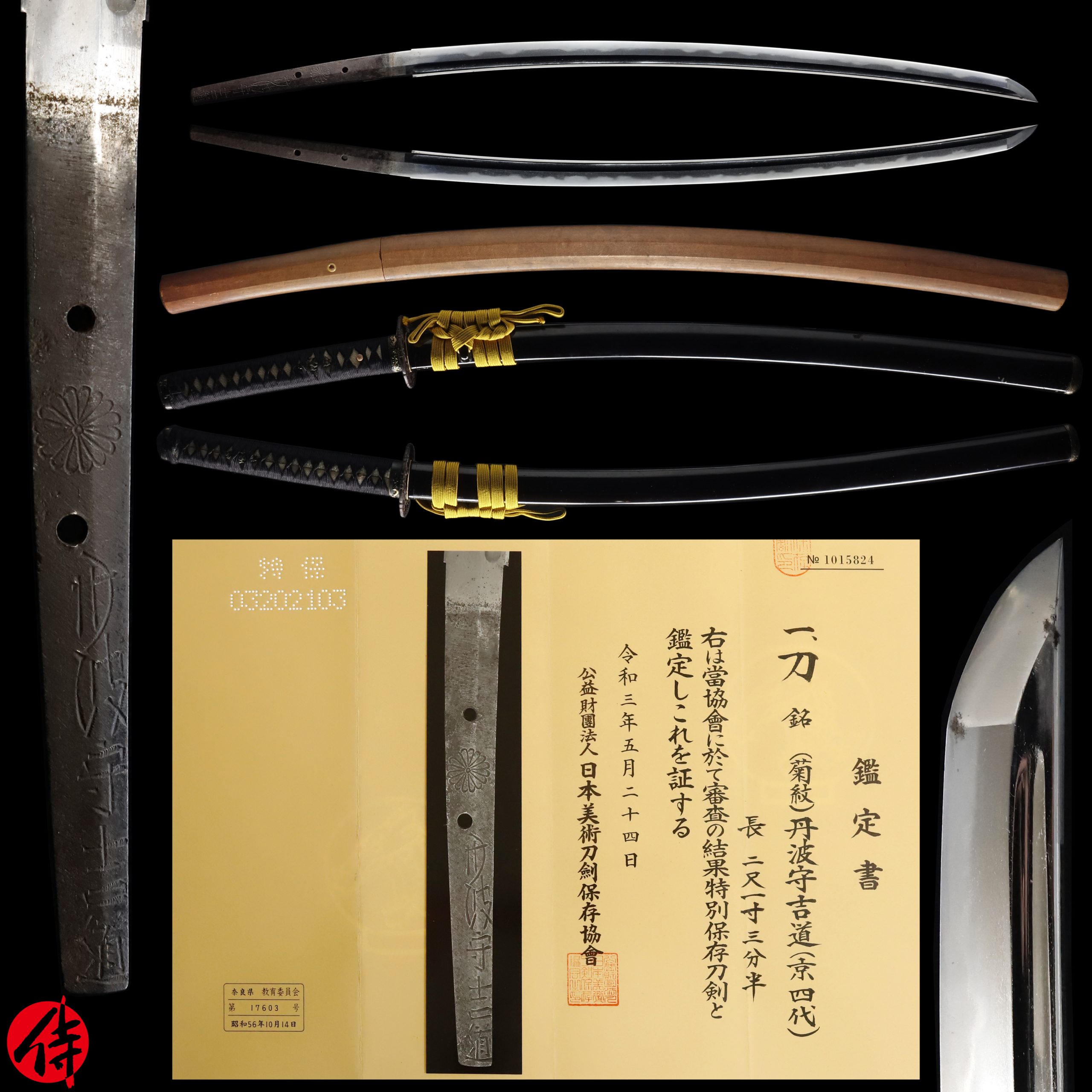
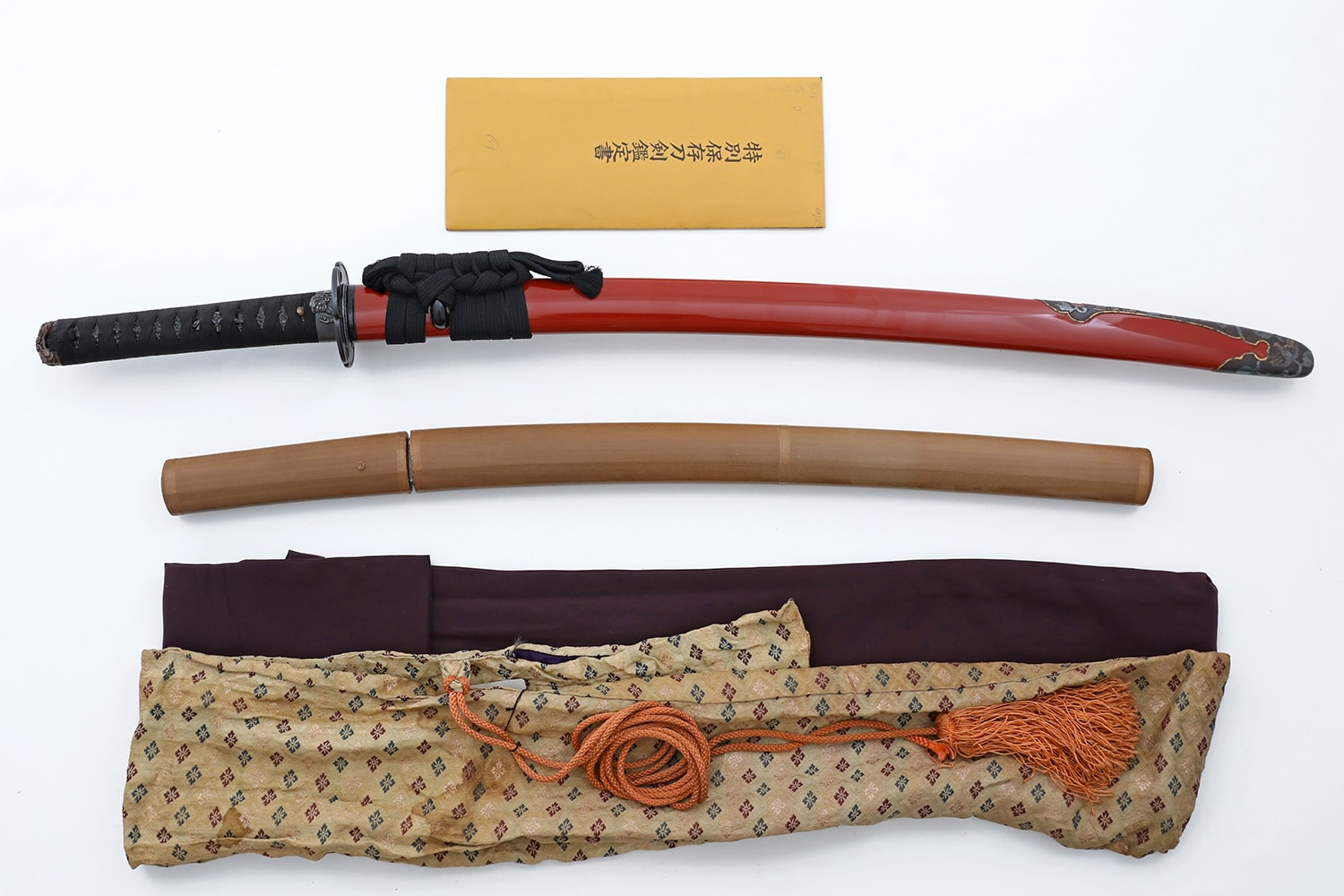

![Katana - Tokuho - 作 兼道 - 刀[丹後守兼道(良武公)][日本美術刀剣保存協会]特別保存刀剣](/_next/image?url=https%3A%2F%2Fitbhfhyptogxcjbjfzwx.supabase.co%2Fstorage%2Fv1%2Fobject%2Fpublic%2Flisting-images%2Fworld-seiyudo%2FL868801%2F01.jpg&w=2560&q=90)
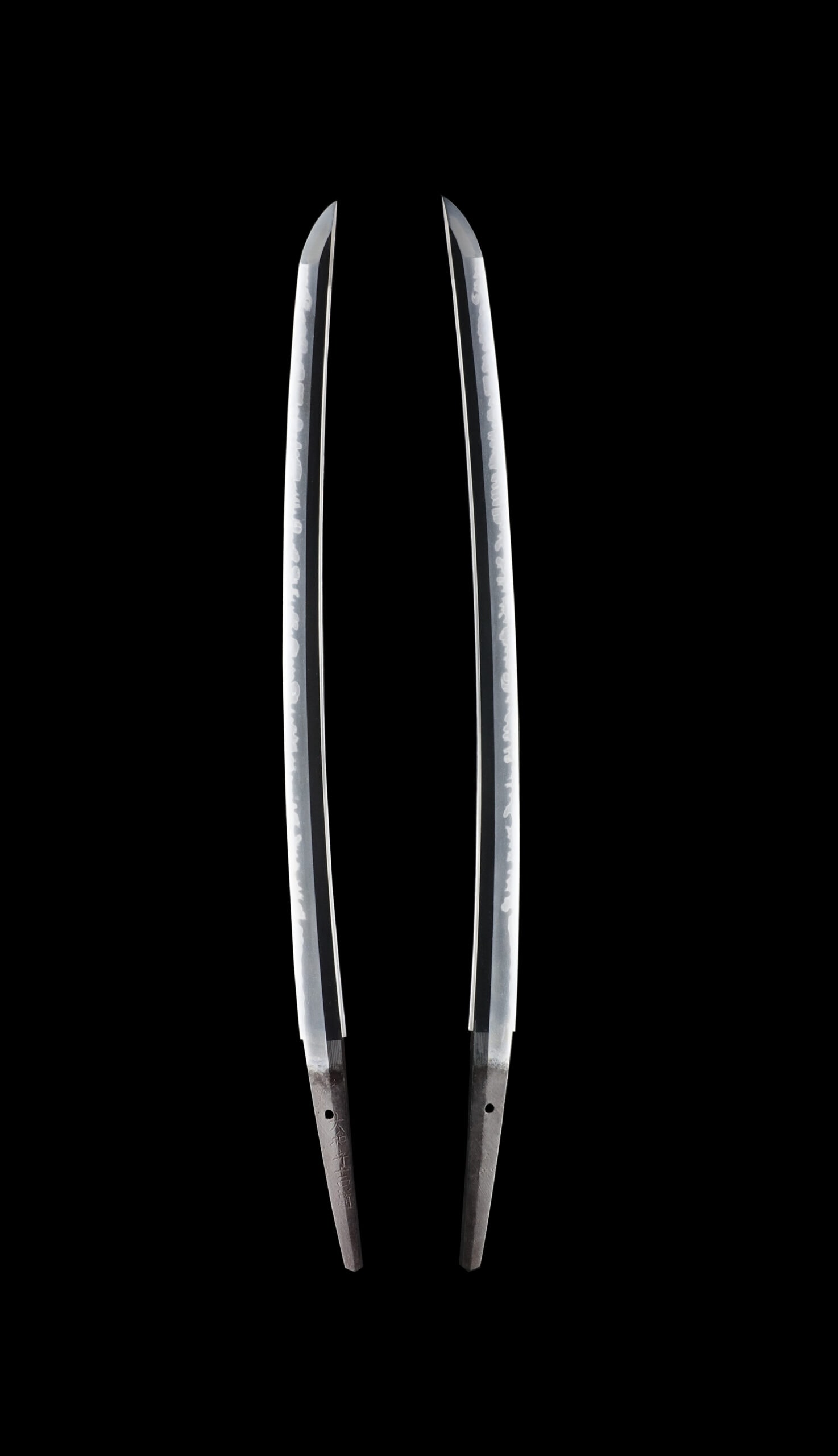
![Wakizashi - Tokuho - 作 吉道 - 脇差[大和守吉道(良武公)][日本美術刀剣保存協会]特別保存刀剣](/_next/image?url=https%3A%2F%2Fitbhfhyptogxcjbjfzwx.supabase.co%2Fstorage%2Fv1%2Fobject%2Fpublic%2Flisting-images%2Fworld-seiyudo%2FL837552%2F01.jpg&w=2560&q=90)