二世紀半の泰平のあいだ、刀は武器である以上に武士の身分の標章であった。江戸の実証と大坂の華やぎのように都市ごとの作風が育ち、時代の末には需要も細っていく。
 NihontoWatchNihontoWatch
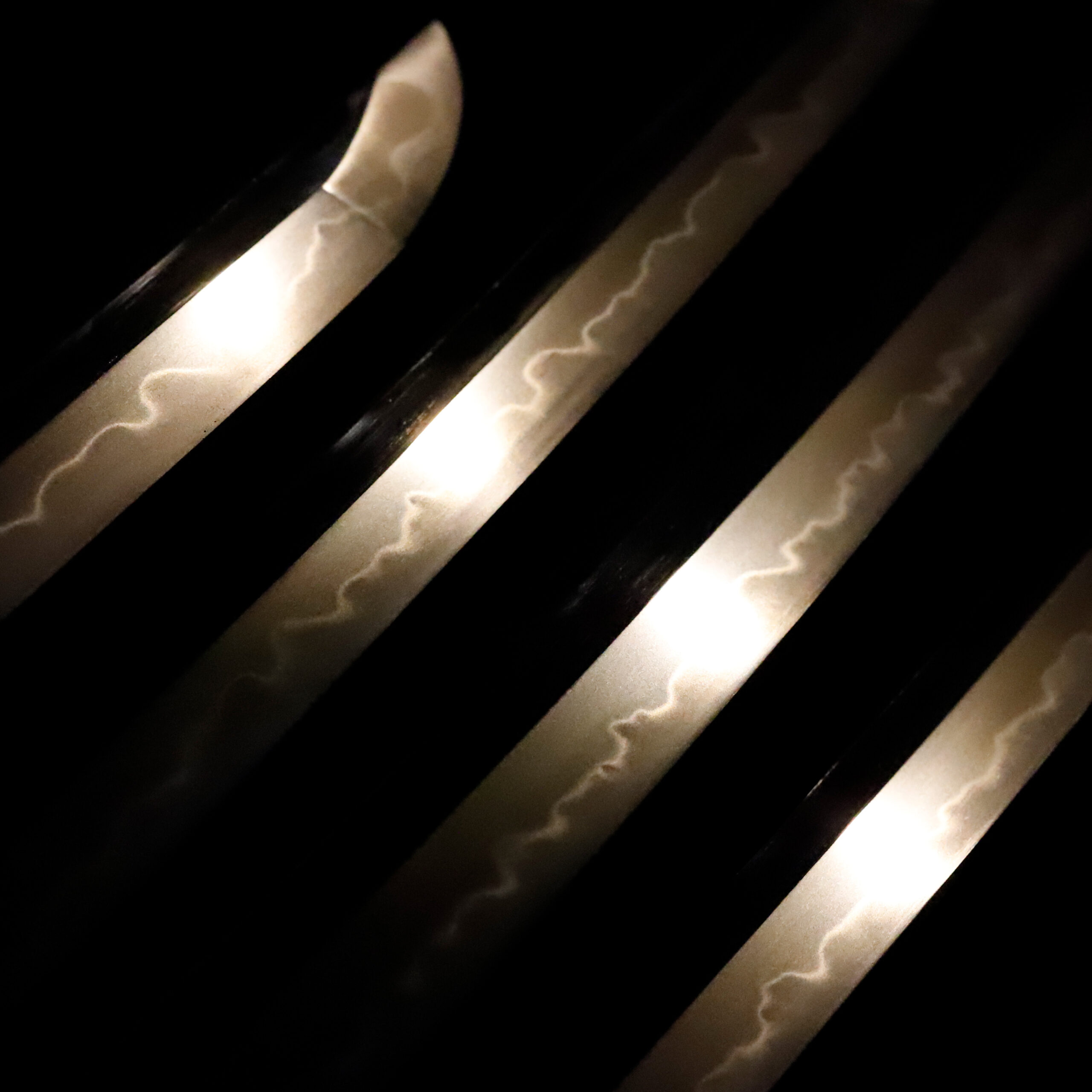
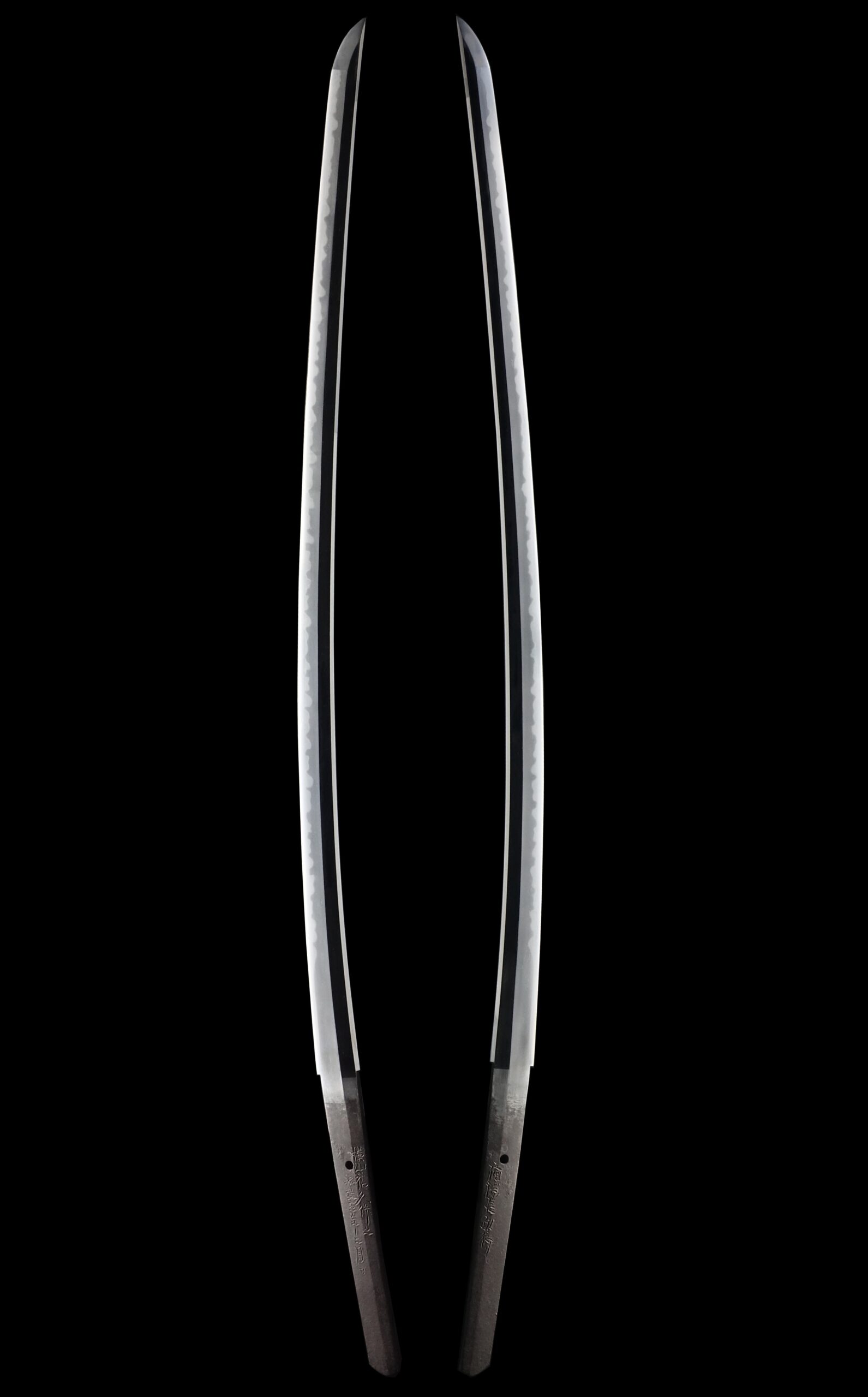
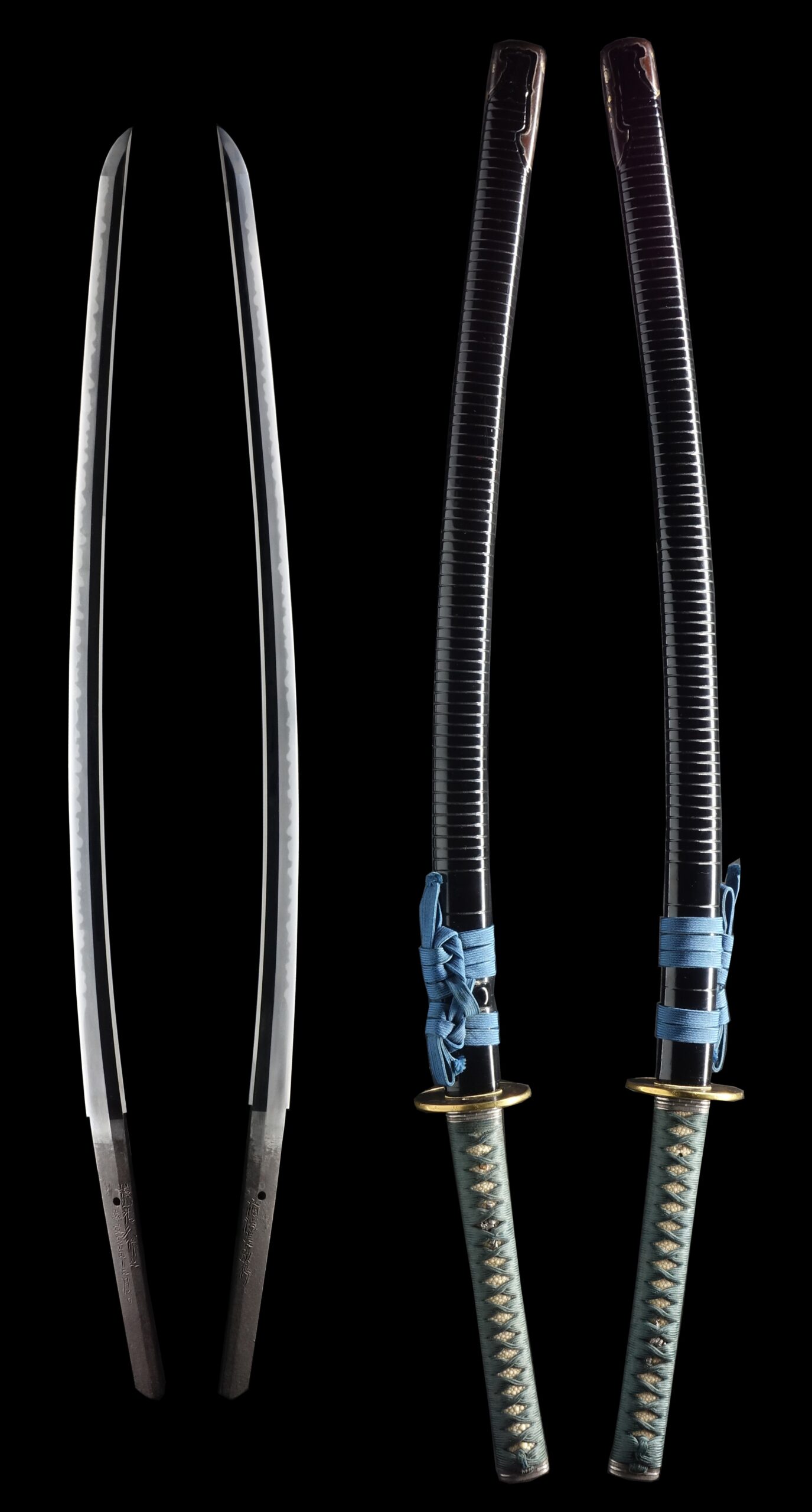
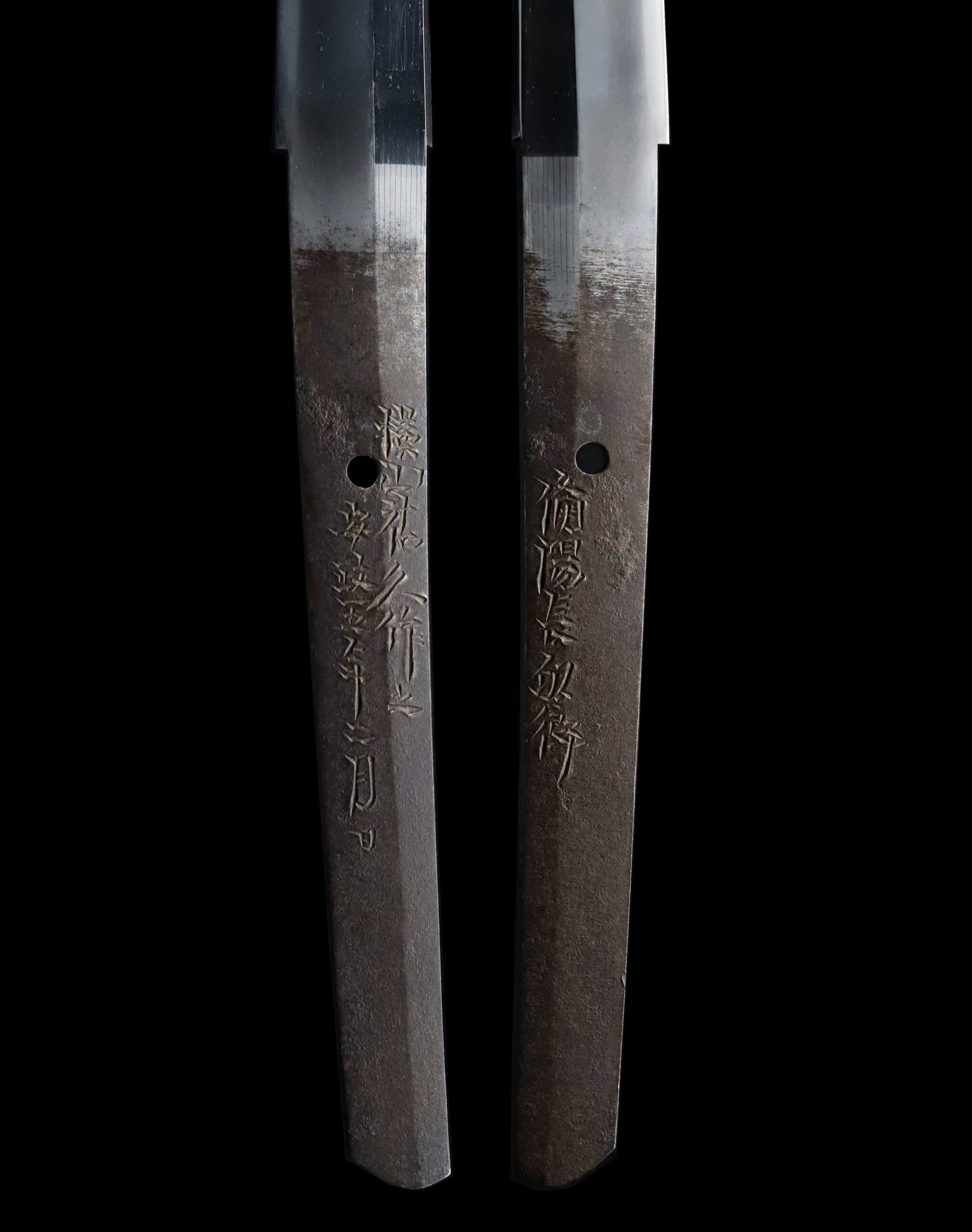
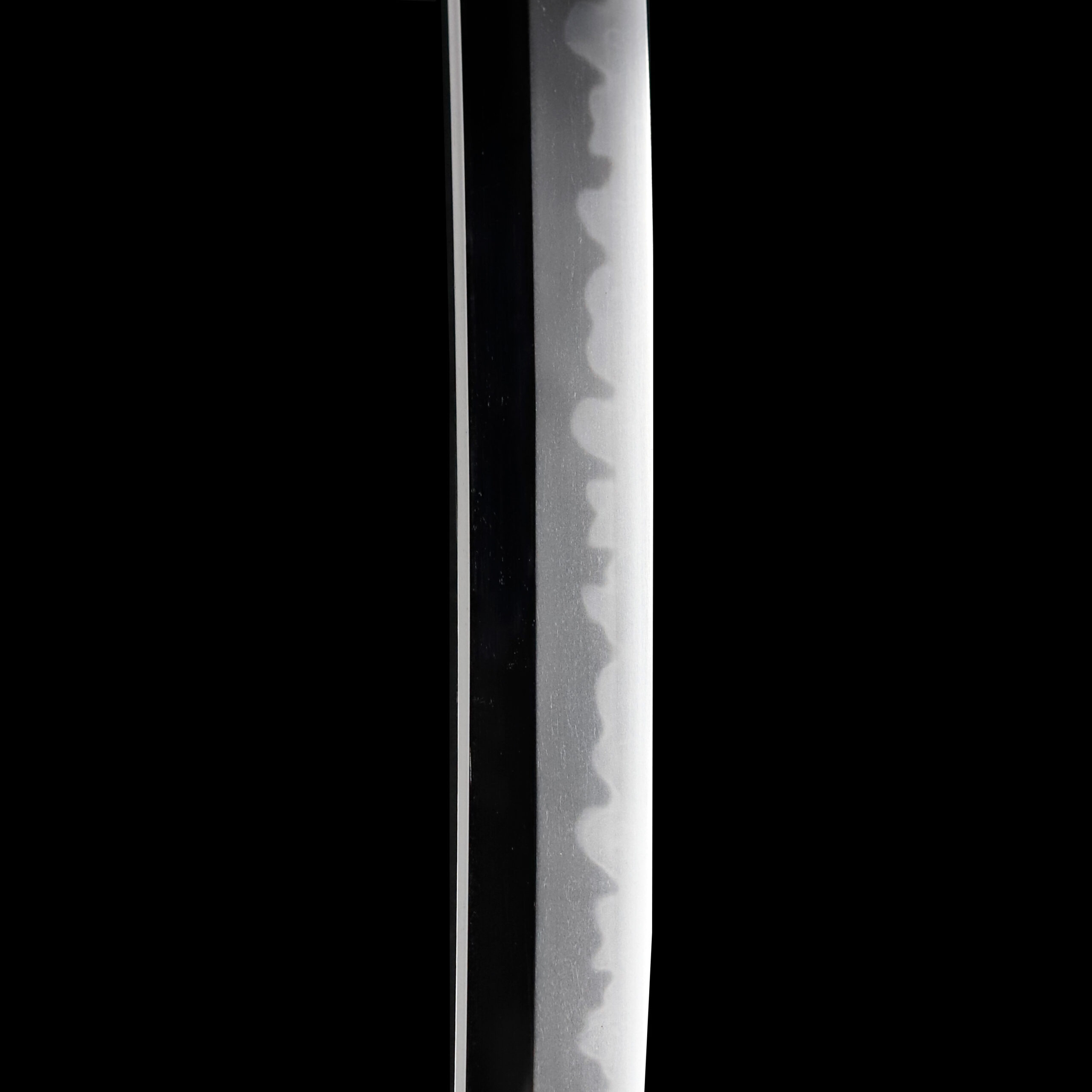
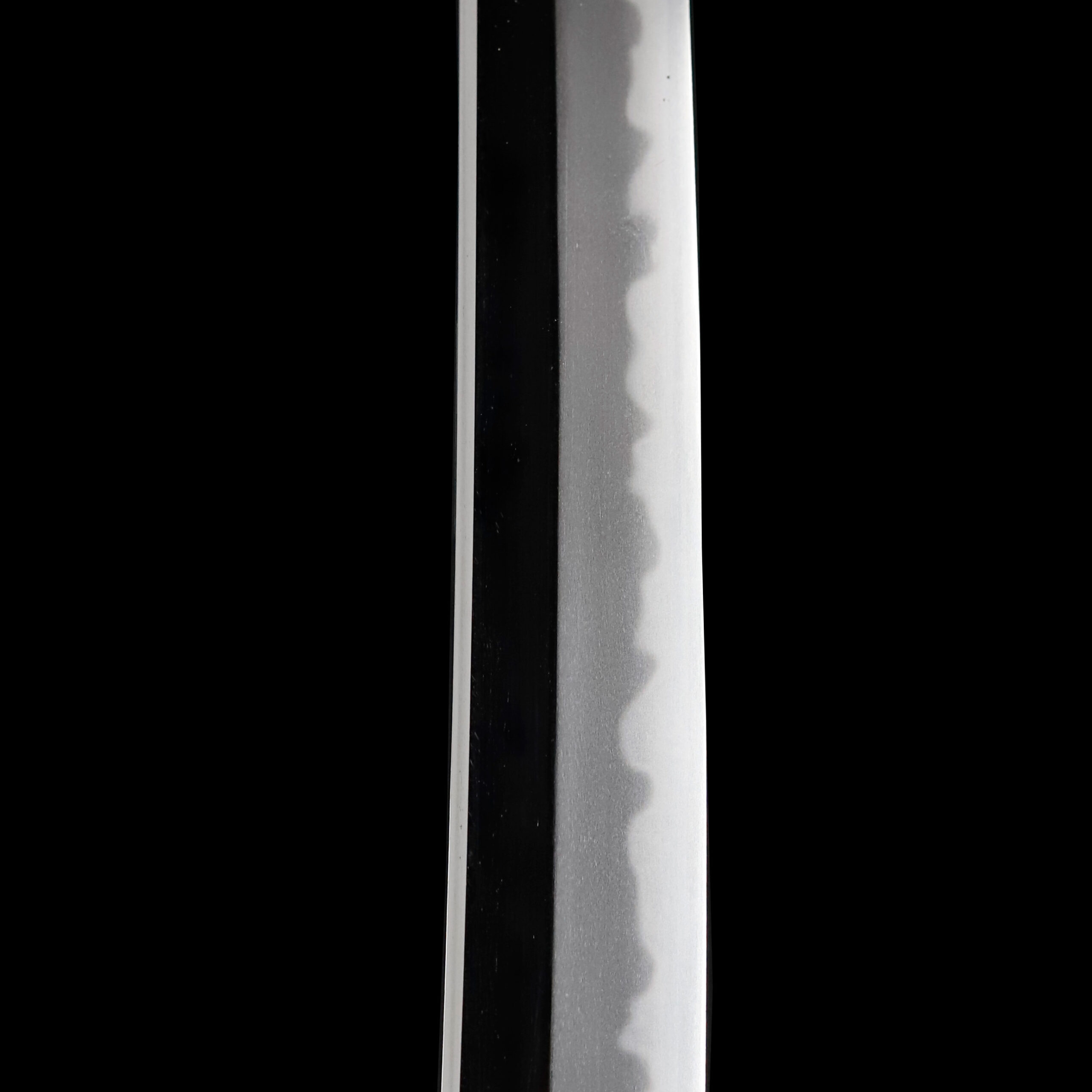
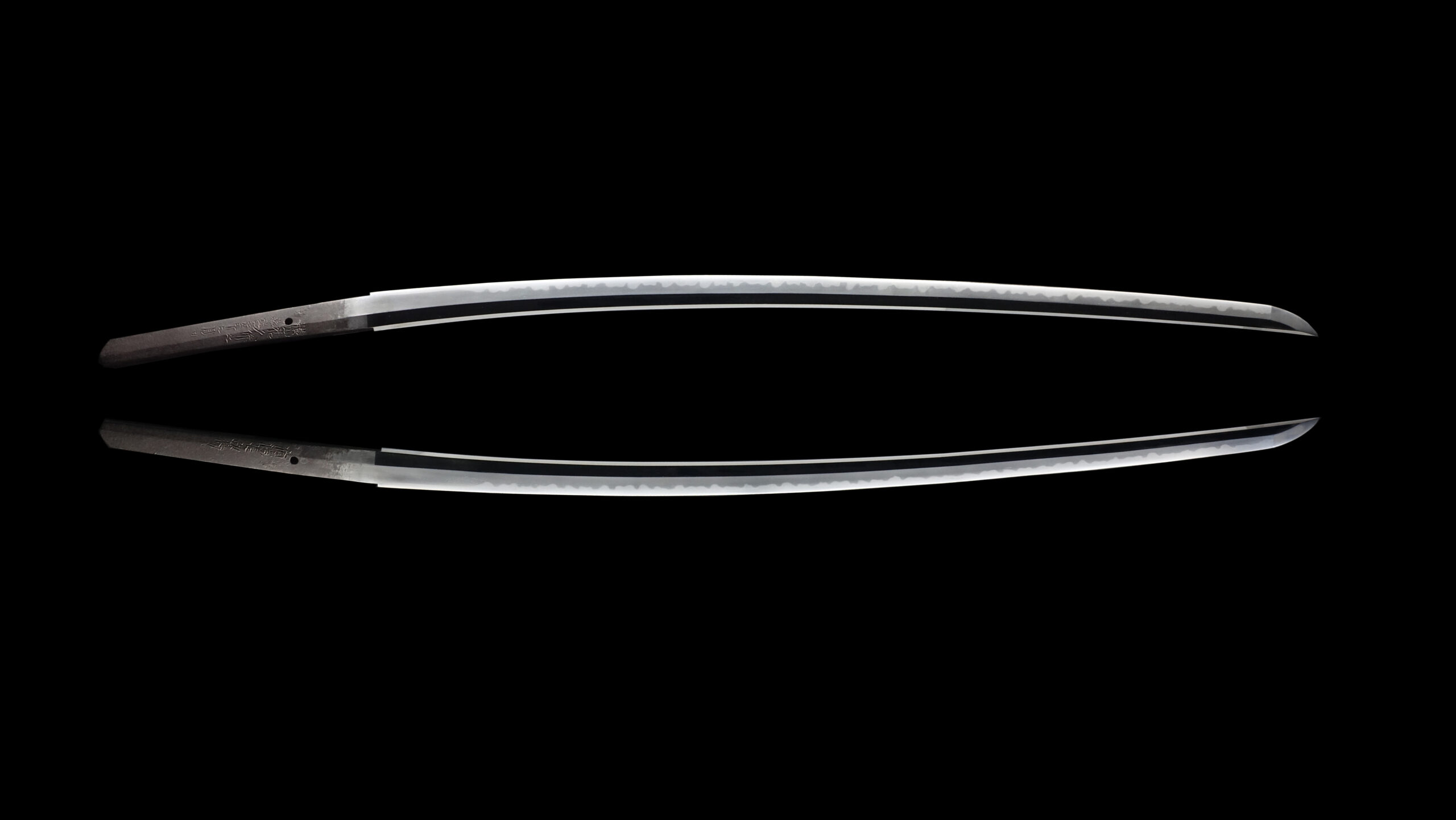
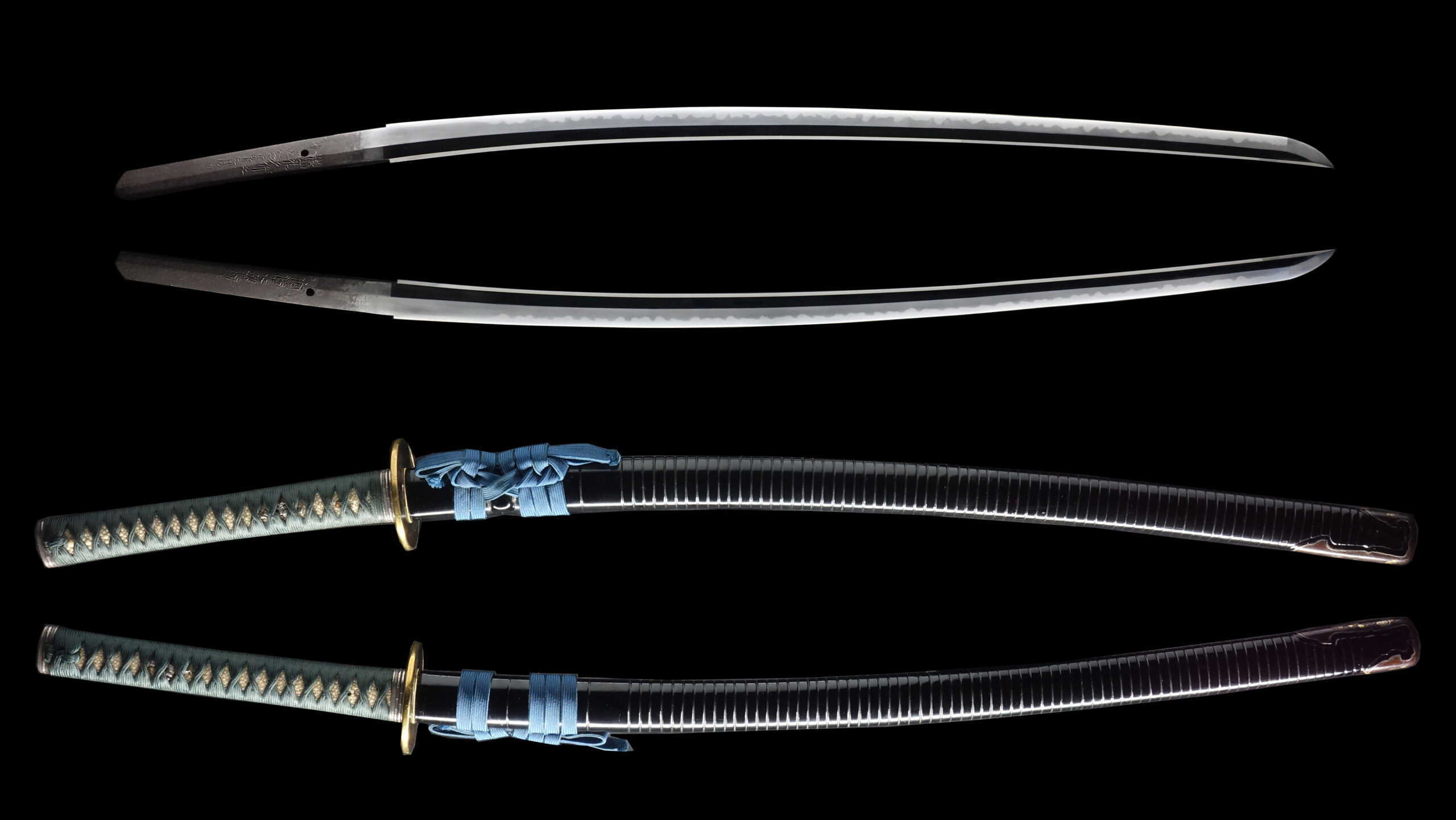
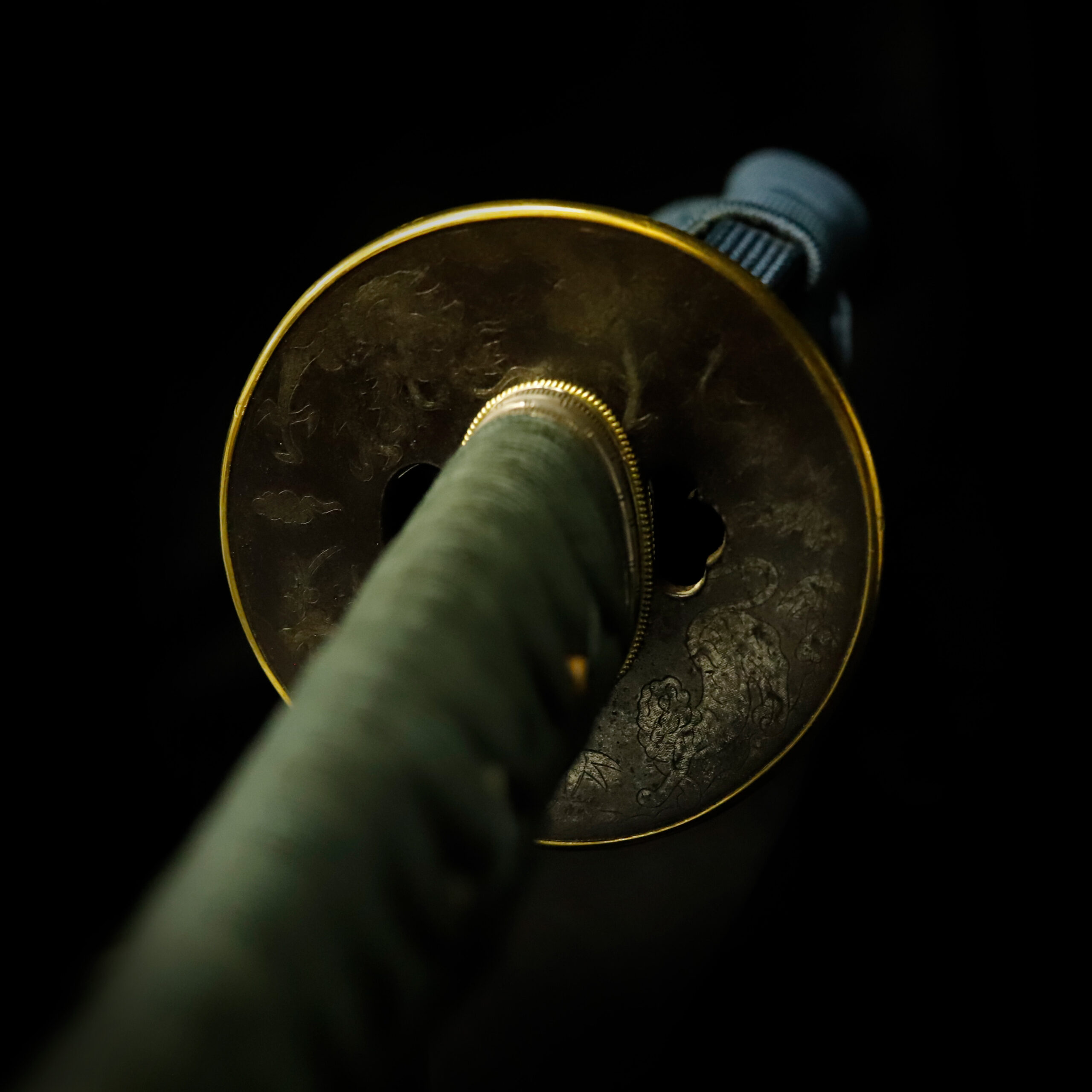
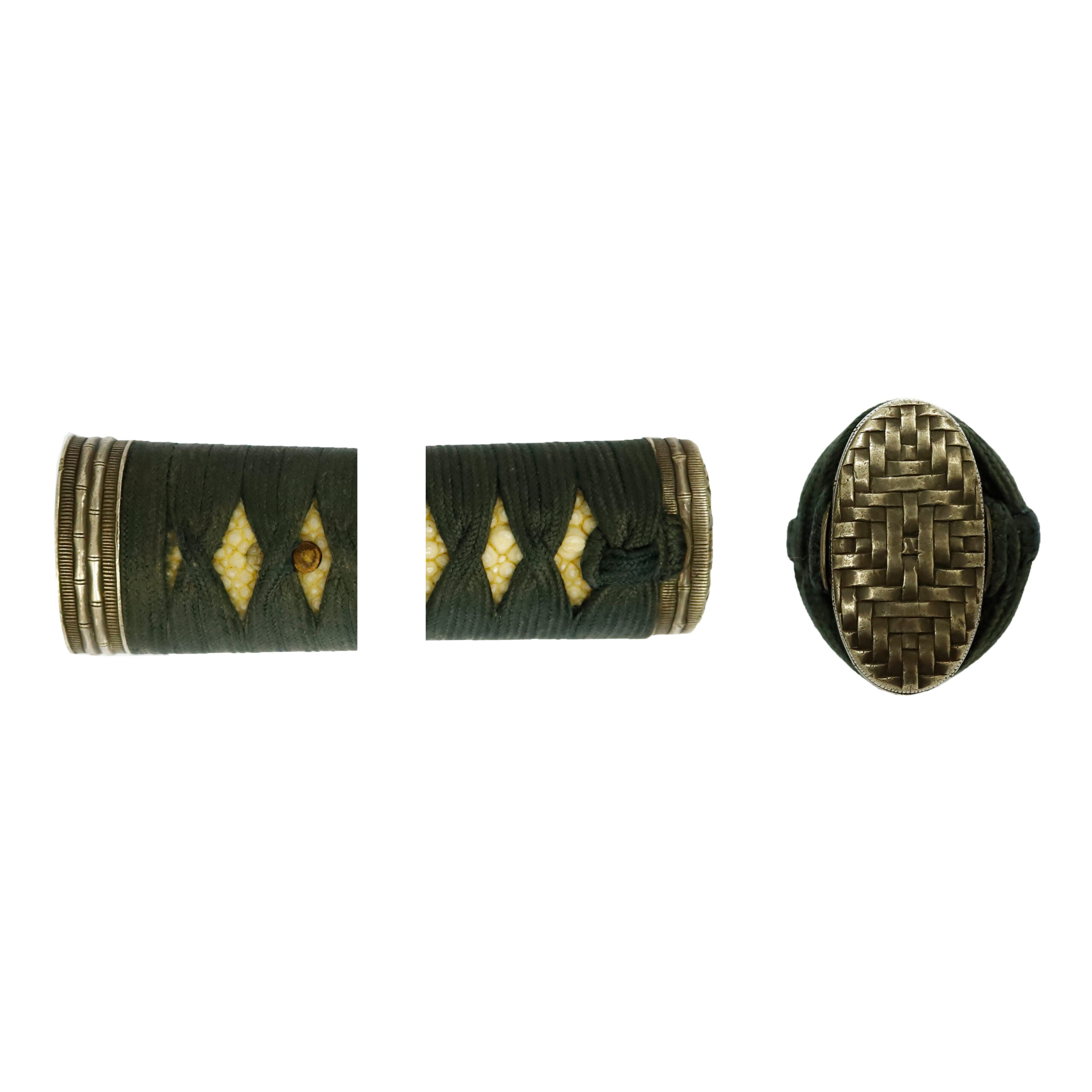
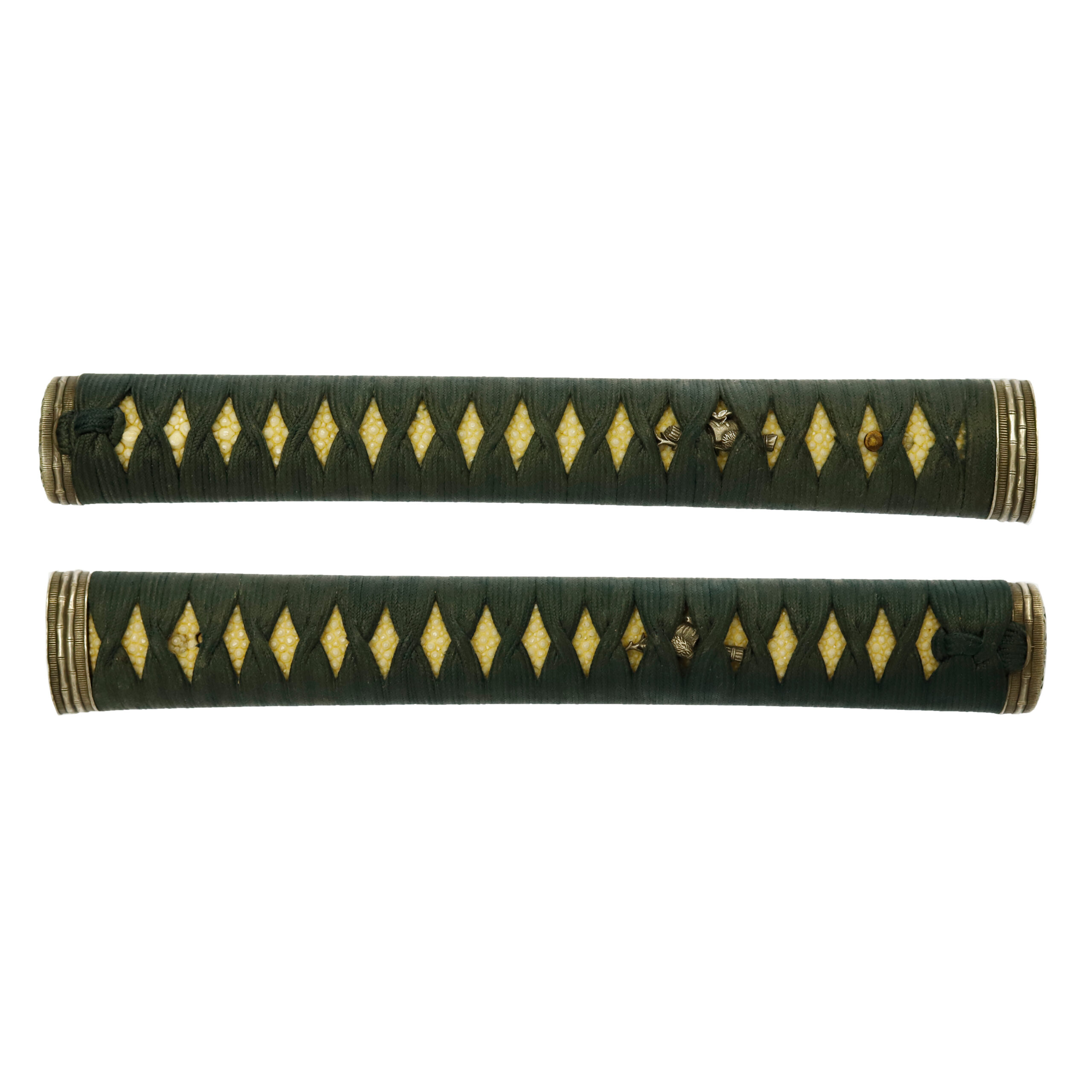
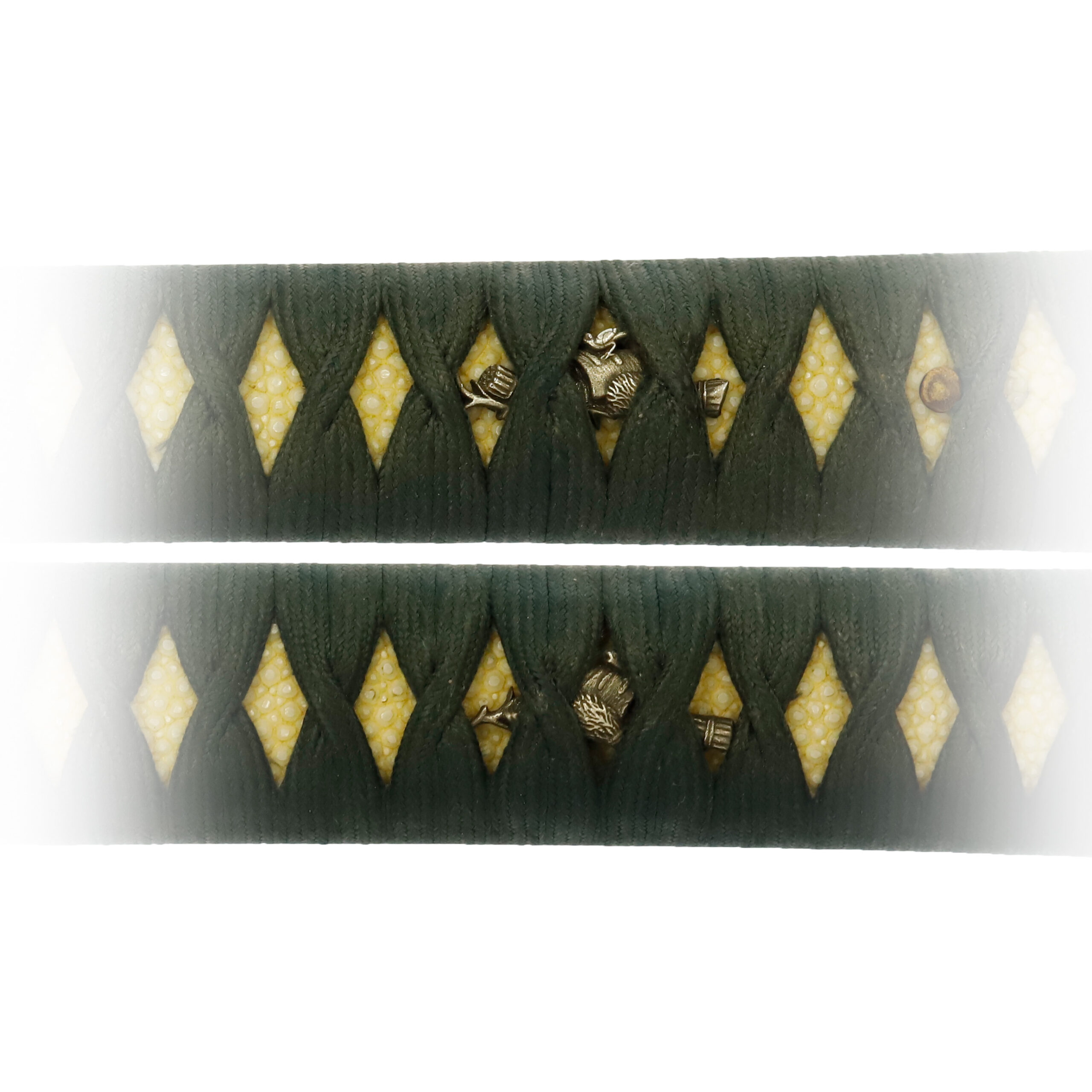
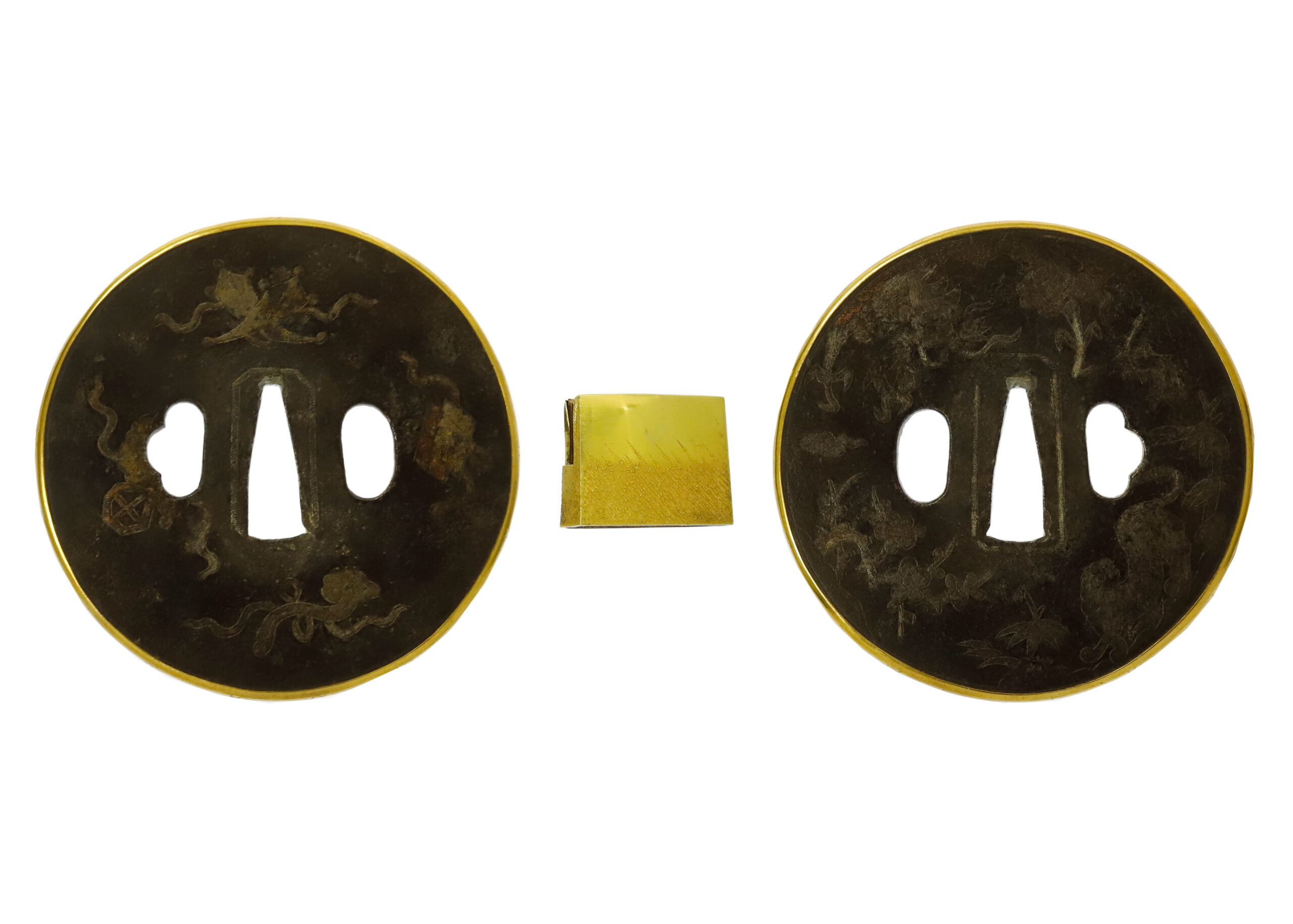
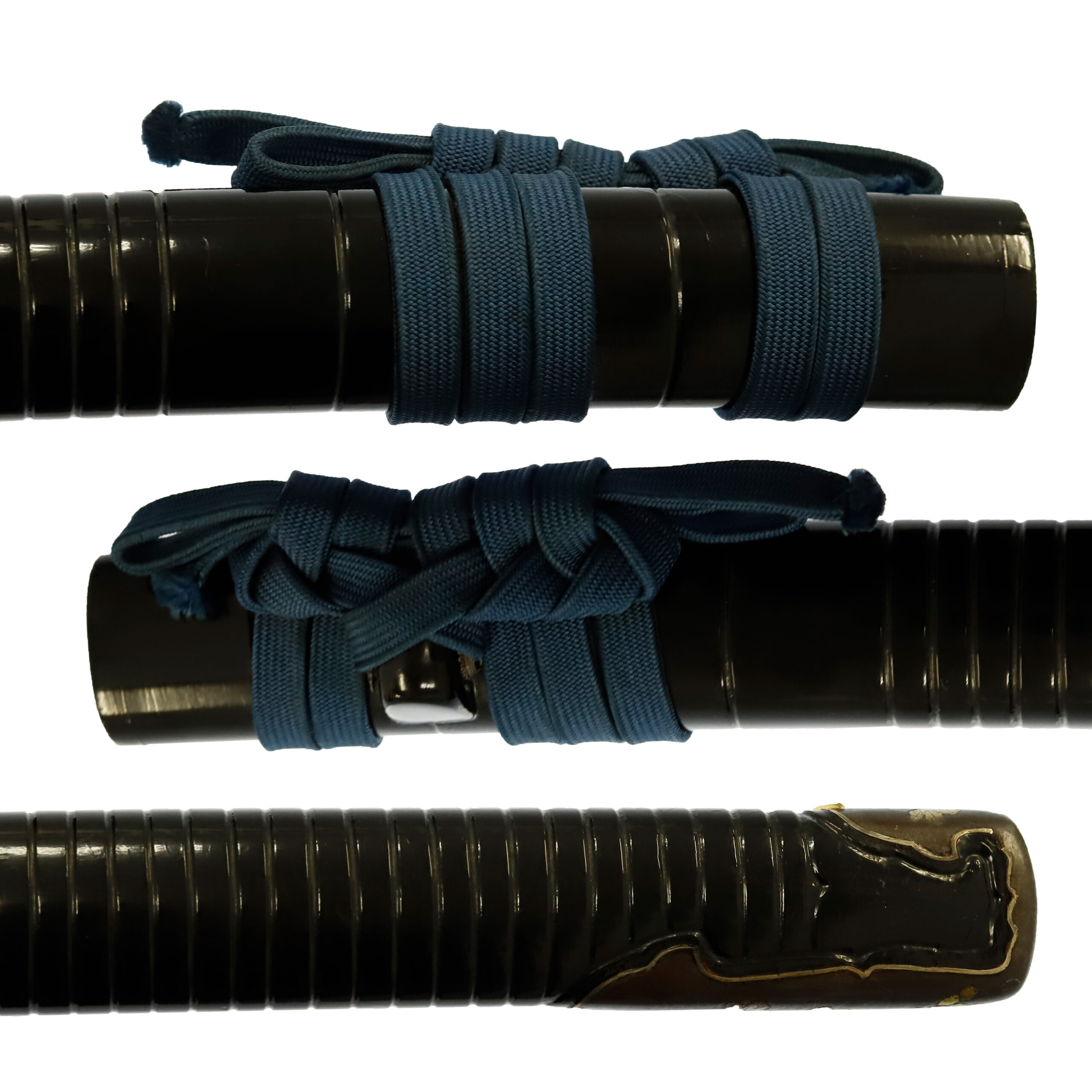
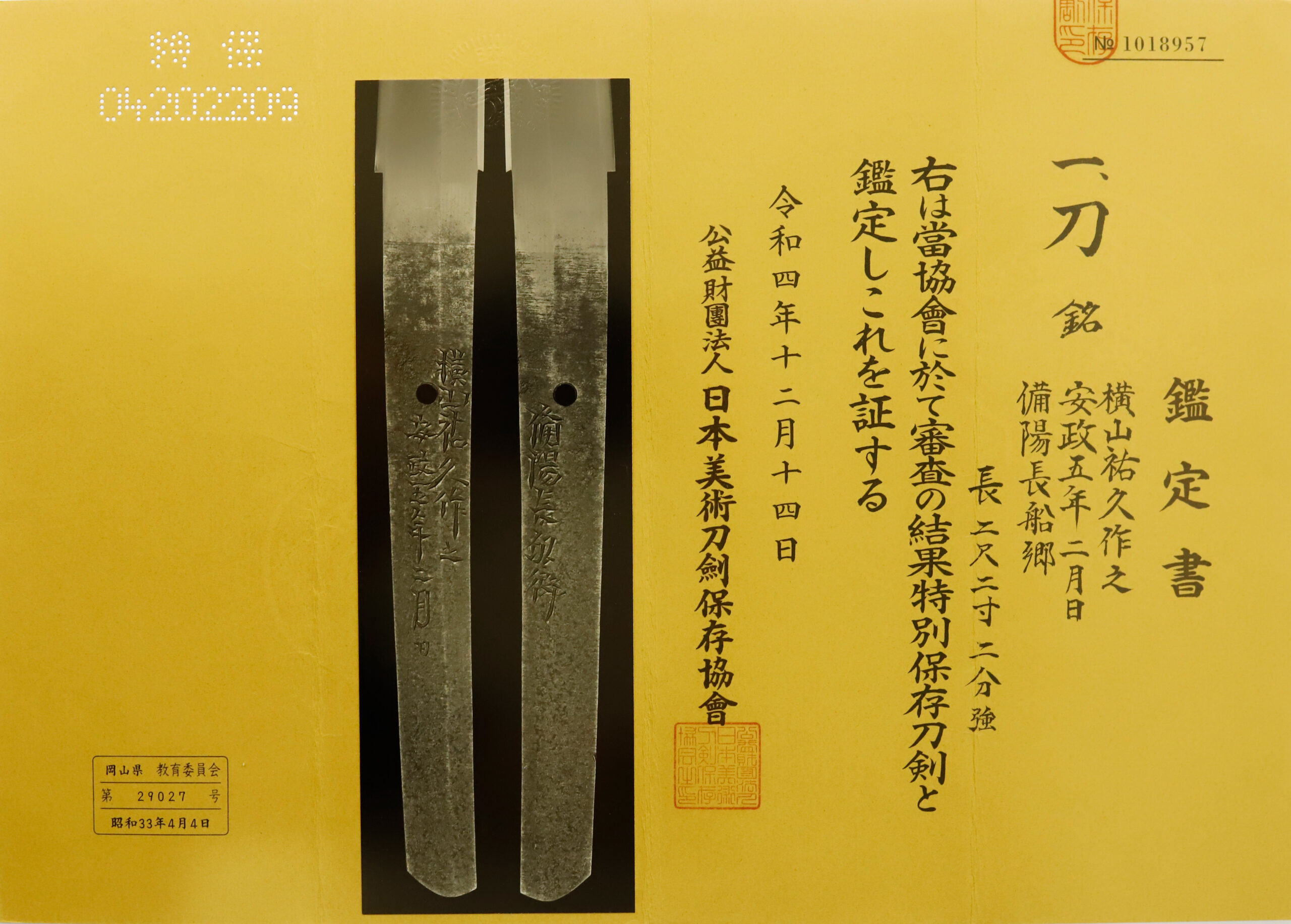
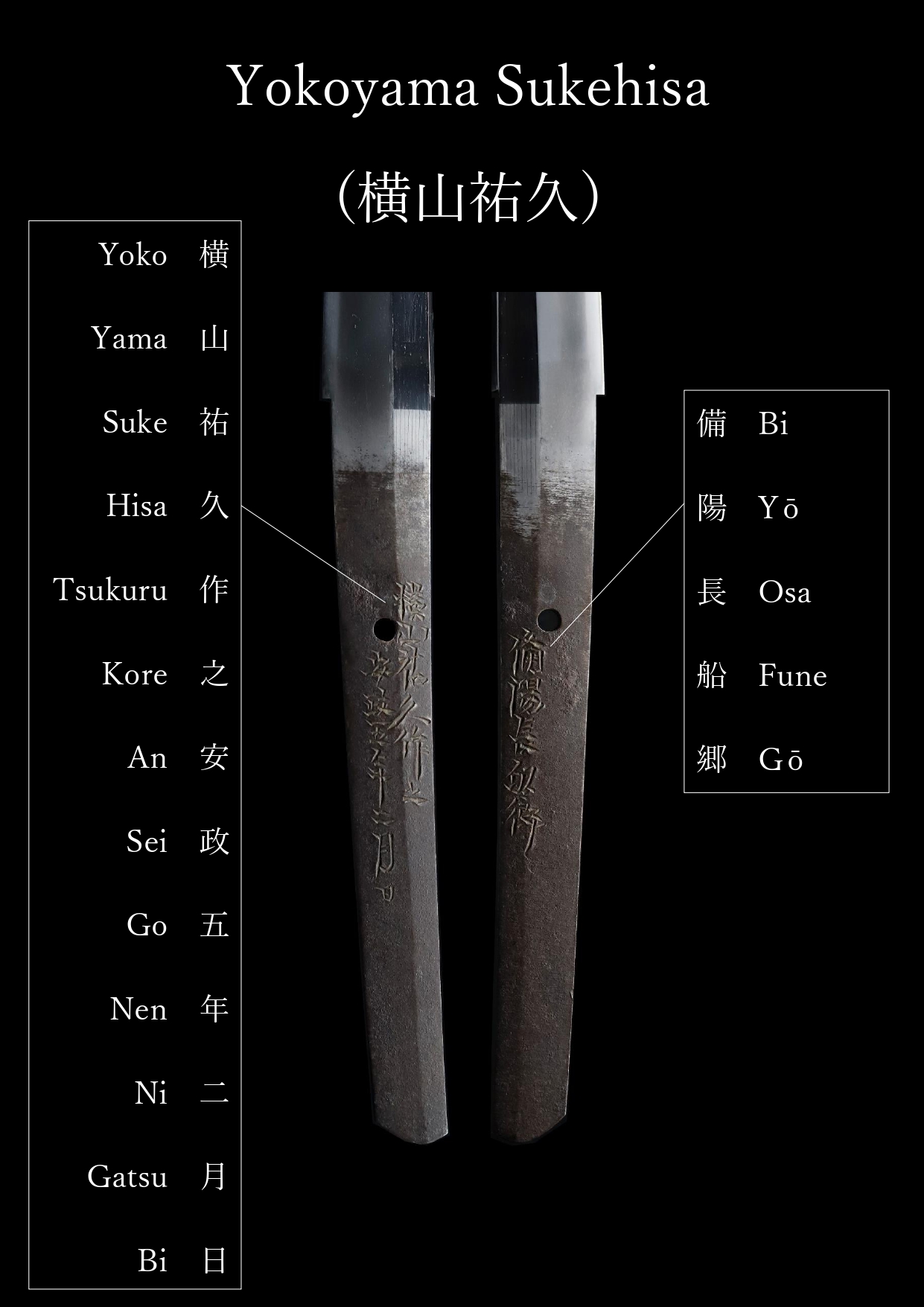
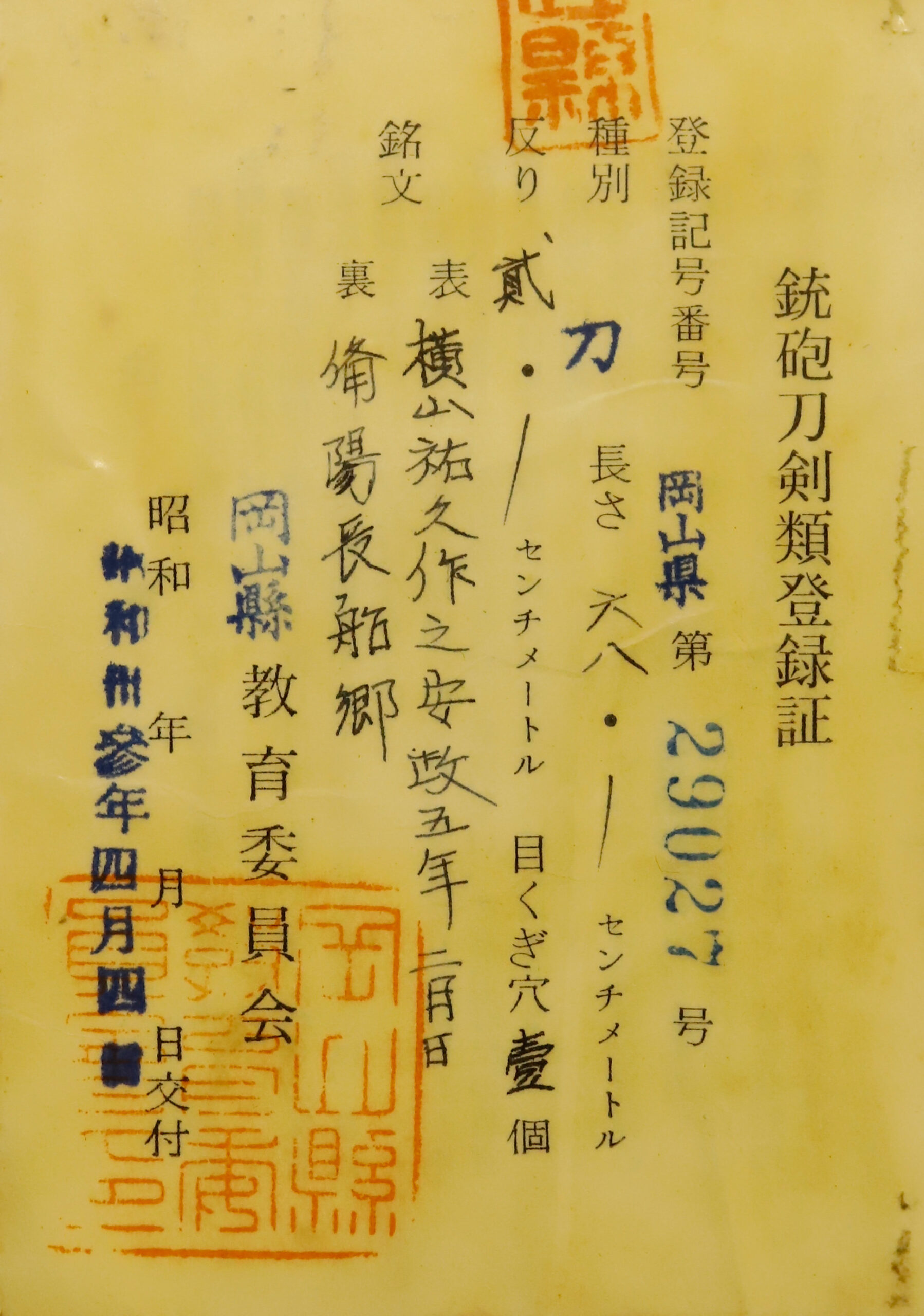
The Summary This blade was signed by Yokoyama Sukehisa (横山祐久) in the 5th year of the Ansei era (1858:The end of the Edo period). He belonged to Bizen Osafune school, located in today’s Okayama prefecture. He was especially active during the Ansei-Keio era (1855-1868). He was an apprentice of Yokoyama Sukenaga. About Sukenaga(His master) Bizen Osafune Jyu Sukenaga(備前長船住祐永) is one of the most famous swordsmiths in Bizen province at the end of the Edo period(Bakumatsu). Born as the second son of Yokoyama Sukehira, he belonged to the Yokoyama school in Bizen province(today’s Okayama prefecture). He eventually became the head of this school. He called himself the 56th-gen of Tomonari, a renowned swordsmith in the mid-late Heian period in Bizen province. He was allowed to inscribe a chrysanthemum emblem, which is the symbol of the Japanese emperor. His sword forging technique was so great that the emperor allowed him to use this emblem, which was quite honorable for any swordsmith. He trained many apprentices. Sukehisa was one of his students. And we believe Sukehisa was a very skilled swordsmith while there aren’t many remaing works today. This History of Bizen Osafune School It is said that Osafune school was founded by Mitsutada (光忠), who was active during the mid-Kamakura period. Bizen Osafune school was the biggest one of all other schools in Bizen province, and they received many orders from feudal lords or renowned Samurai. They were called Osafunemono and were beloved by Samurai warriors. Among the swordsmiths who belonged to this school, Nagamitsu, Sanenaga, and Kagemitsu are known as Osafune Sansaku, the three renowned Osafune swordsmiths. There are also four other prominent swordsmiths who were from Bizen Osafune school. They are called Osafune Shiten-no, the four masters of Osafune school. Their names are Nagamitsu, Kanemitsu, Nagayoshi, and Motoshige. BIZEN is located near the Chugoku Mountains, where iron sands, one of the essential materials for making Japanese swords, were abundant. Furthermore, BIZEN swordsmiths had close access to the Yoshi River, where they could find water and charcoal. This geological location contributed to the swordsmiths forging high-quality refined blades. We presume BIZEN was quite active in sword-forging from ancient times. It is said that BIZEN DEN was created by groups of swordsmiths there during the late Heian era (Late 12th century). These ancient swordsmiths in Bizen province are called Ko-Bizen (Old Bizen) swordsmiths. By inheriting the sword forging techniques from Ko-Bizen swordsmiths, the Bizen Osafune school flourished from the mid-Kamakura period. It is appraised as a Tokubetsu Hozon Token(特別保存刀剣) issued by NBTHK(Nihon Bijutsu Touken Hozon Kyokai:日本美術刀剣保存協会). Fuchi-Kashira We think this Fuchi Kashira’s design is a kind of Ajiro (網代) pattern, which is also called the Higaki (檜垣, a fence made of thin cypress boards with wickerwork). It is the design in which rows of oblique right and left rectangles are alternately combined. The intersection angle is not a right angle, and the rectangle sometimes becomes a parallelogram. It is used for dyeing and weaving tint patterns and is also seen in bamboo works. The Ajiro is a wickerwork trap, fishing gear made of bamboo instead of a net. Therefore, this design represents a large catch. Also, some people believed it would exorcise evil spirits. These meanings might have inspired this Fuchi Kashira’s design. Also, please check the design of the Fuchi part and the side of the Kashira part. It seems that an elongated bamboo is wrapped around them. As mentioned above, the Ajiro pattern has been used for bamboo works. It is probably why bamboos were designed on this Fuchi Kashira. In addition, the bamboo design itself is favored as an auspicious motif for long time. Since this plant keeps its green color even in cold winter, people thought the bamboo pattern shows eternity and longevity. Tsuka and Menuki The same as the Fuchi Kashira, this Menuki is also colored with silvery paint. Seeing from the gaps of the Tsukamaki thread, we estimate that a tree branch and a small bird perched on it are engraved. Tsuba and Habaki The surface of this Tsuba has worn away over time, making it challenging to see the engraving lines, and now it is uneasy to determine what kind of motifs were initially engraved on it. At the lower side of its front, we could see the Ume (梅, Japanese apricot blossom) tree and a figure of an animal which seems to be a tiger or lion. We assume this animal is a Karajishi (唐獅子). The Shishi (獅子) means a lion in Japanese, and the Karajishi is a lion brought from the continent to Japan in the Toh period (唐, Tang dynasty, 618-907). The Karajishi typically has curly hair for its head, neck, body, and tail. In Buddhism, the Karajishi is regarded as a symbol of wisdom, and Monju Bosatu (文殊菩薩, Manjushri Bodhisattva) rides lions. According to a theory, the Karajishi is the origin of Komainu (狛犬, stone guardian dogs that exorcize evil spirits). It shows this beast motif has been familiar to Japanese people since ancient times. Japanese apricot blossoms begin to bloom in winter that snow still covers its tree. Therefore, people thought this flower told the arrival of spring. Same as cherry blossom, it has been appreciated for a long time in Japan. People enjoy its adorable petal shape and scent and gracefully branched tree and compose many poems. As it comes out in the cold season, it symbolizes the power of perseverance and vitality. On the backside of this Tsuba, we estimate its design is the Takaradukushi (宝尽くし, combination of several treasures) pattern. It is because we could find a Chouji (丁子, precious medicine, fragrance, dye). It is a plant that represents happy marriage, good health, and longevity. We are uncertain about other engraved motifs; these might also be elements of the Takaradukushi pattern, the same as the Chouji. Authentication Paper They authenticated the blade on December 14th in the 4th year of Reiwa (2022). They appraised it as Tokubetsu Hozon Touken, the blade especially worth preserving for Japanese society.

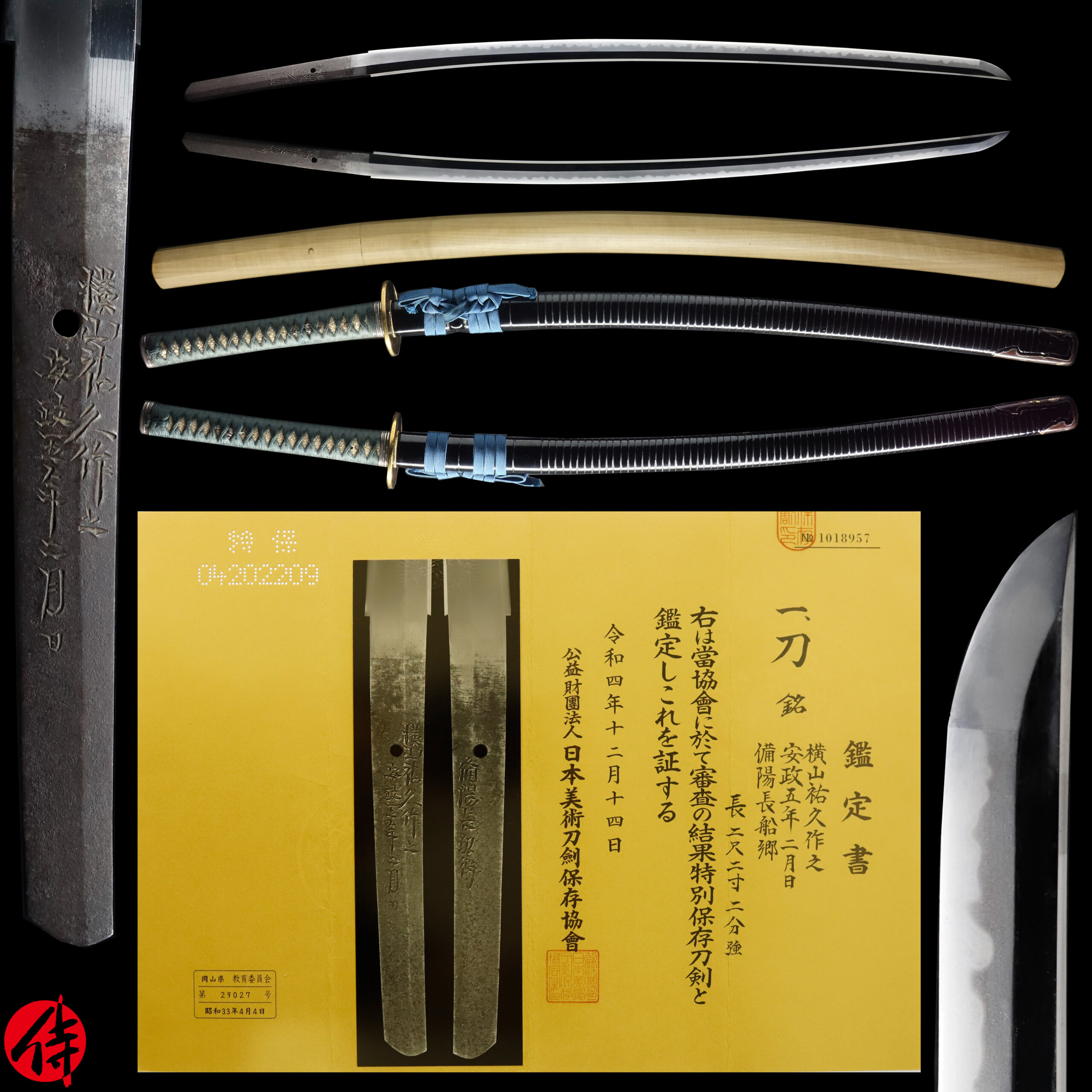
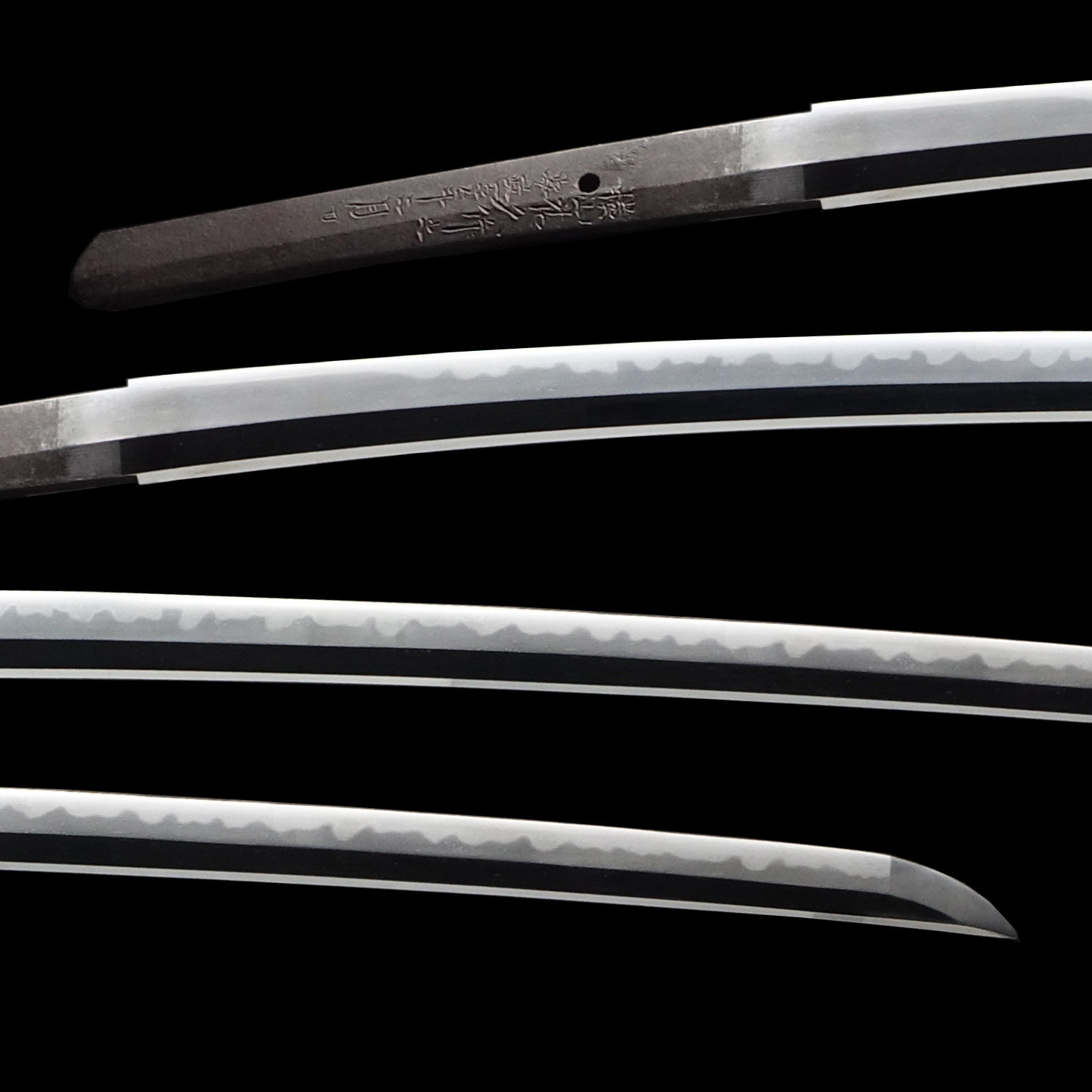
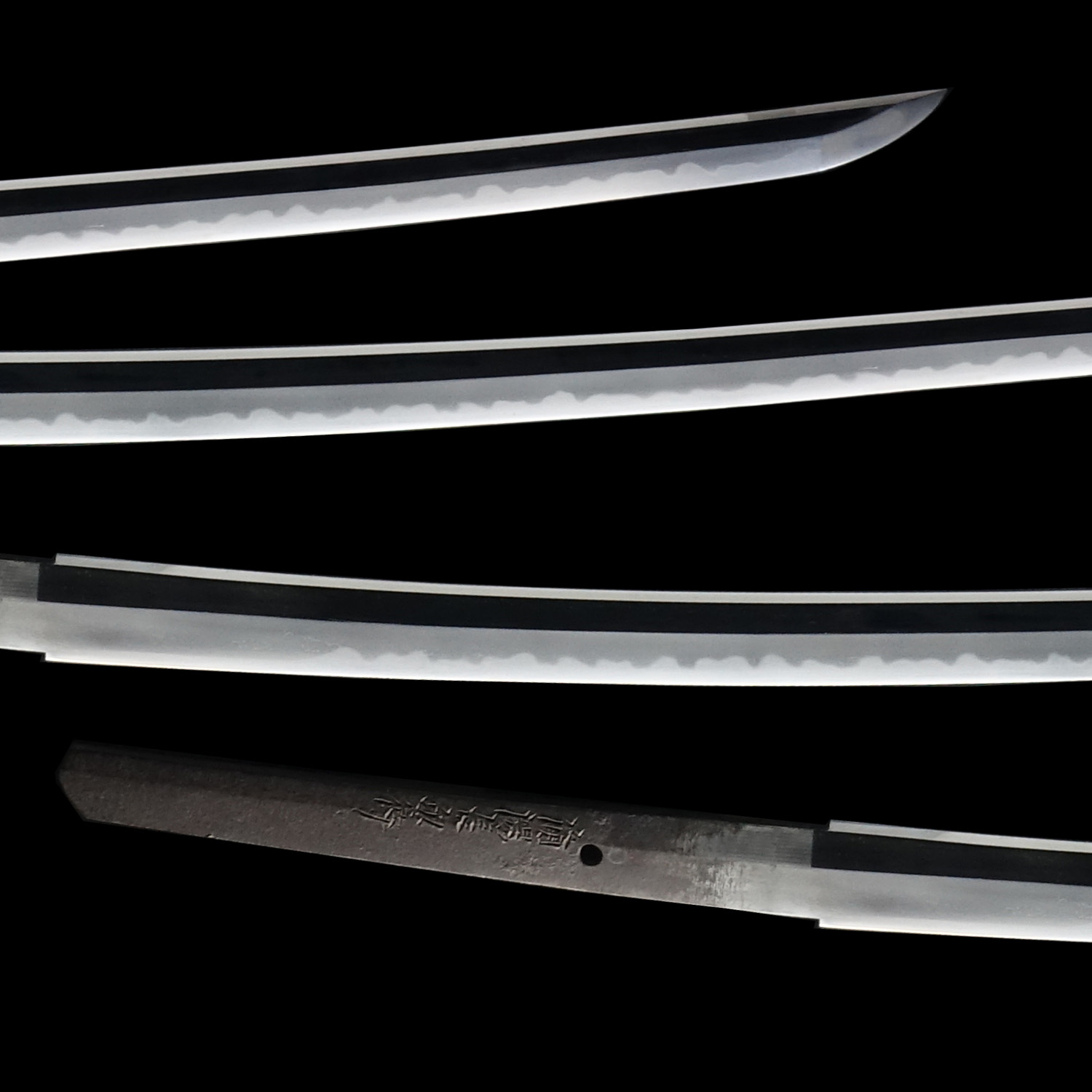
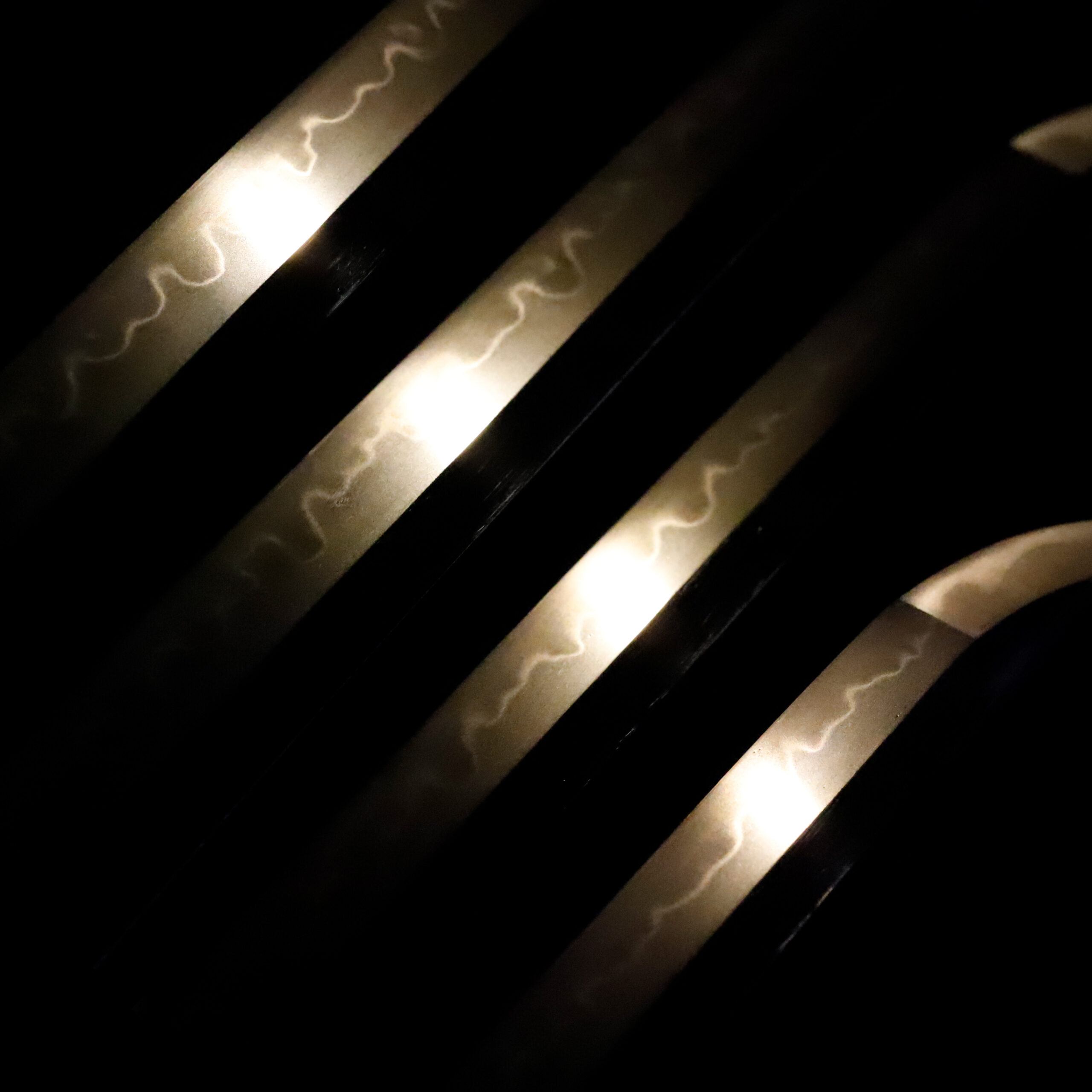
販売店の記載のまま
備前伝 · 備前 · 1865-1868頃
現在1点販売中
備前伝 · 備前
現在24点販売中
江戸時代
二世紀半の泰平のあいだ、刀は武器である以上に武士の身分の標章であった。江戸の実証と大坂の華やぎのように都市ごとの作風が育ち、時代の末には需要も細っていく。
保存刀剣のうち、出来が一層優れ、保存状態も良好と認められたものです。再刃や、室町・江戸期の多くの無銘作は対象外となり、保存刀剣より高い基準が課されます。
日本美術刀剣保存協会(NBTHK)は、1948年に設立され、文化庁の監督を受ける公益財団法人で、東京・刀剣博物館に本部を置きます。専門の審査員が出品作を直接審査し、美術的・歴史的価値に応じた鑑定書を発行します。NBTHKの鑑定書は、日本刀および刀装具の真正性を示す最も広く認知された基準です。
NBTHK公式サイトReturns/exchanges limited to defects caused by shipping (except willful misconduct or gross negligence by the company); customers must contact within 72 hours of receiving the product.