江戸は刀の目利きの時代である。本阿弥の鑑定、1719年の享保名物帳、盛んな刀剣書が、戦で抜かれることのなくなった刀を学問の対象へと変えていった。
 NihontoWatchNihontoWatch
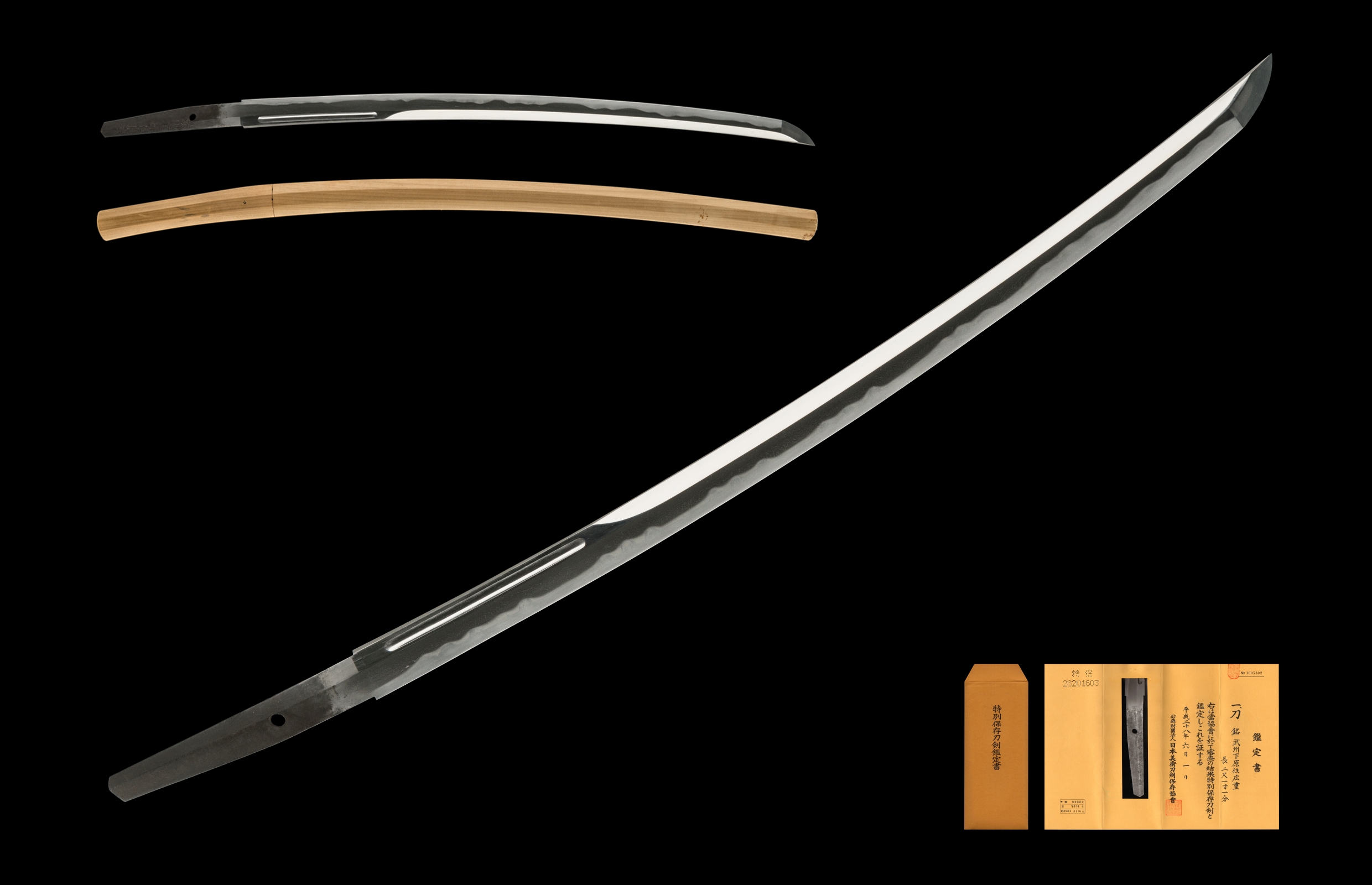
Skip to content ITEM# UJKA197 – Catalogue 30 – Sold A Hiroshige Katana (武州下原住広重) Some swords simply feel invincible. Forged in the rare unokubi-zukuri shape – derived from the great naginata pole arms of the warrior monks – this muscular katana by Hiroshige glides effortlessly in the hand. The secret lies in the skillfully bevelled spine, which sheds excess weight without sacrificing any structural integrity. It is a form that speaks directly to purpose: fast, powerful, and entirely reliable. The Shitahara school of Musashi province (present-day Hachioji, Tokyo) built a formidable reputation for producing swords the samurai warrior class could trust with their lives. They are the only school known to have worked in the Bushu region prior to the 1600s, and this blade – datable from the Kan’ei to Kanbun eras (circa 1624 to 1673) – represents the school at the height of its output. The original, unaltered ubu-nakago carries a distinctive tanago-bara shape, its upper section bulging before tapering into a narrow lower body – said to resemble the belly of a bitterling fish. The hamon is a lively composition of wavy notare mixed with ko-gunome , punctuated by bright scattered spots of tobiyaki and the crab-claw formations of kanitsume on the reverse. A golden flash of kinsuji rips through the temper line, while the spine has been tempered in the Sôshû tradition – the distinctive muneyaki confirming this smith’s stylistic debt to that great lineage. Completing the package is a stunning custom koshirae commissioned in 2019, built around the theme of inoshishi (the wild boar) to mark the Year of the Wild Boar. Item Number UJKA197 Sword Type Katana Swordsmith Hiroshige School Shitahara Province Musashi (Bushu) Period Shintô – Early Edo period (circa Kan’ei to Kanbun: 1624-1673) Nagasa 65.1cm Sori 1.5cm Moto-haba 3.15cm Weight 785g (omosa) Nakago Ubu (original, unaltered); tanago-bara shape; katte-sagari file marks; 1 mekugi-ana Jihada Ko-mokume with masame; tobiyaki Hamon Not
NihontoWatch取扱店 Unique Japan
新刀 · 武蔵
現在7点販売中
下原派は武蔵国八王子の地に拠った刀工の一群で、室町末期に興り、以後江戸末期に至るまで作刀を続けた。古刀期の武蔵国を代表する鍛冶とされ、説示では周重・康重・照重・広重の四工を著名な工として挙げる。なかでも照重は康重・広重と並んで一派を代表する存在で、山本源二郎照重、山本与五郎康重のように山本姓を称した工も知られる。照重については銘鑑が初代を享禄、二代を永禄、三代を天正に充てており、永禄から天正の頃の作がもっとも時代の上がるものと鑑せられている。甲州の注文に応じて鍛えた薙刀も伝わり、地方を越えて求められた様子がうかがえる。 作風は末相州および村正一派の風に末関風を加味したものと説かれる。鍛えは板目に杢がしきりに交じって肌立ち、刃寄りが流れて綾杉風となり、渦を巻いたような肌があらわれる点に地がねの特色がある。刃文は湾れを基調に互の目が二つ三つ連れて尖り刃を交え、やや規則的に乱れて小沸がつき、砂流しのかかるものもある。帽子は乱れ込んで丸く返るものや先の尖って返るものがみられる。細かに肌立った杢目の地がねと、規則的に連れる互の目乱れにのたれを交えた刃文の組み合わせが、この一派を見分ける手がかりとなる。 鑑定にあたっては、肌立った地がねに綾杉風の流れと渦巻く肌があらわれること、互の目が規則的に連れて乱れる刃文の調子を要点とする。彫物では表に棒樋を掻き、倶利迦羅竜や不動、梵字を添えるものが多く、倶利迦羅竜の尾の巻き方に一派らしさが出るとされる。茎は栗尻に切鑢を施し、棟寄りに長銘を切るものが多い。室町末期の打刀や薙刀を代表する優品が重要刀剣に列せられており、照重の薙刀は両刃造という珍しい形状を伝える。武蔵国の在地鍛冶として実用に応えつつ、相州と関の風を併せ呑んだ独自の地刃を築いた点に、下原一派の位置づけがある。 詳しく見る →
江戸時代
江戸は刀の目利きの時代である。本阿弥の鑑定、1719年の享保名物帳、盛んな刀剣書が、戦で抜かれることのなくなった刀を学問の対象へと変えていった。
保存刀剣のうち、出来が一層優れ、保存状態も良好と認められたものです。再刃や、室町・江戸期の多くの無銘作は対象外となり、保存刀剣より高い基準が課されます。
日本美術刀剣保存協会(NBTHK)は、1948年に設立され、文化庁の監督を受ける公益財団法人で、東京・刀剣博物館に本部を置きます。専門の審査員が出品作を直接審査し、美術的・歴史的価値に応じた鑑定書を発行します。NBTHKの鑑定書は、日本刀および刀装具の真正性を示す最も広く認知された基準です。
NBTHK公式サイトAll swords come with a three-day inspection period beginning from the date of delivery. If not satisfied, the sword may be returned within this period for a full refund of the purchase price. Outside of this period, all sales are final. Swords purchased on a layaway payment plan are not eligible for the three-day inspection period.