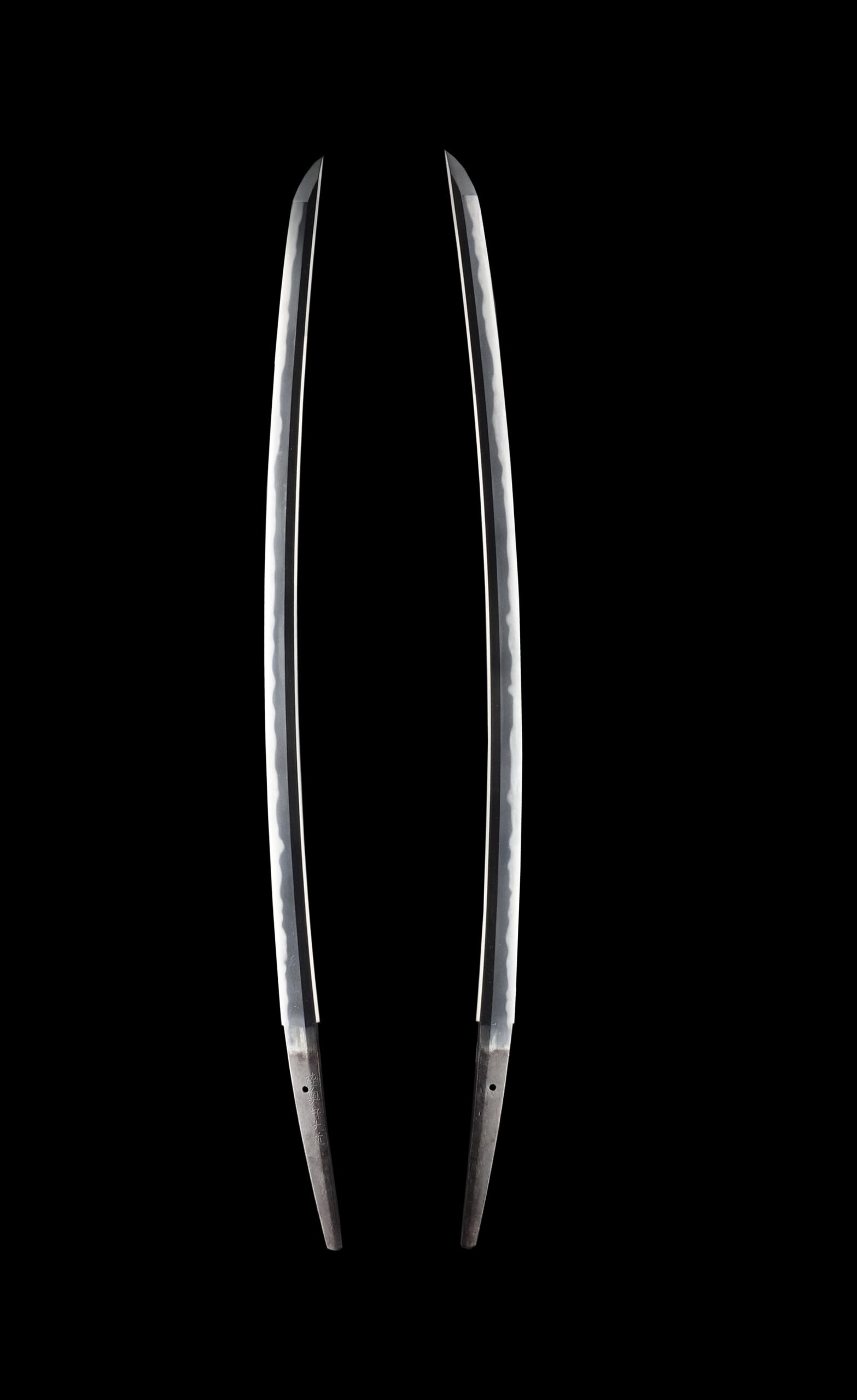
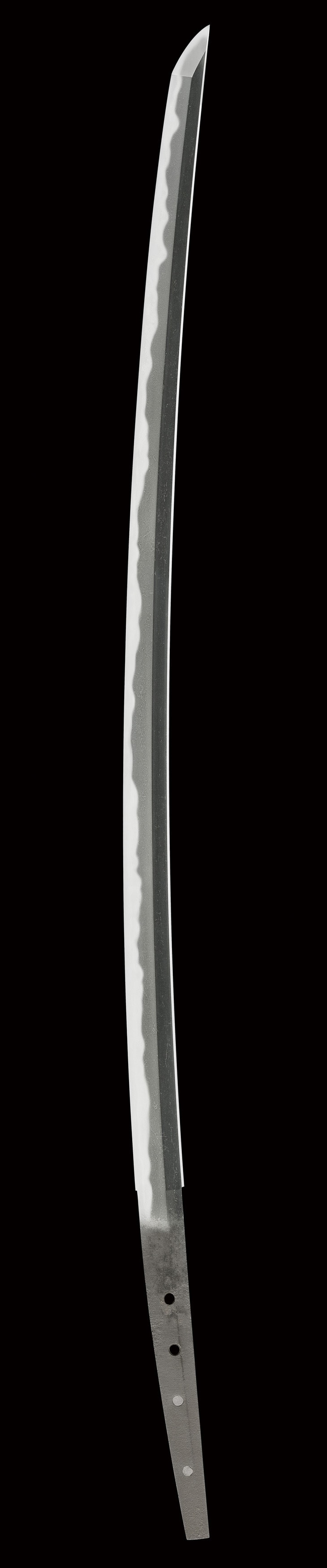
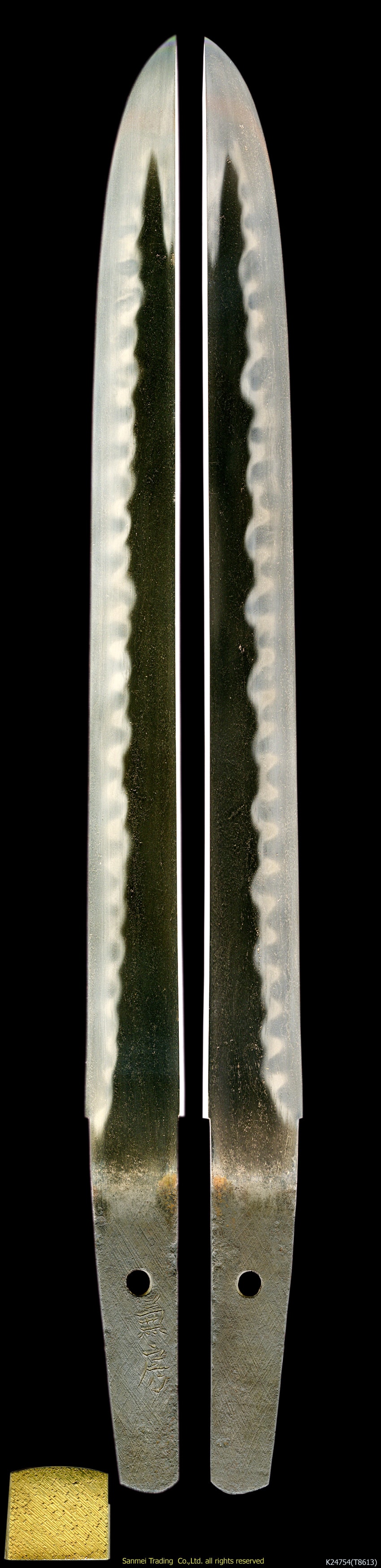
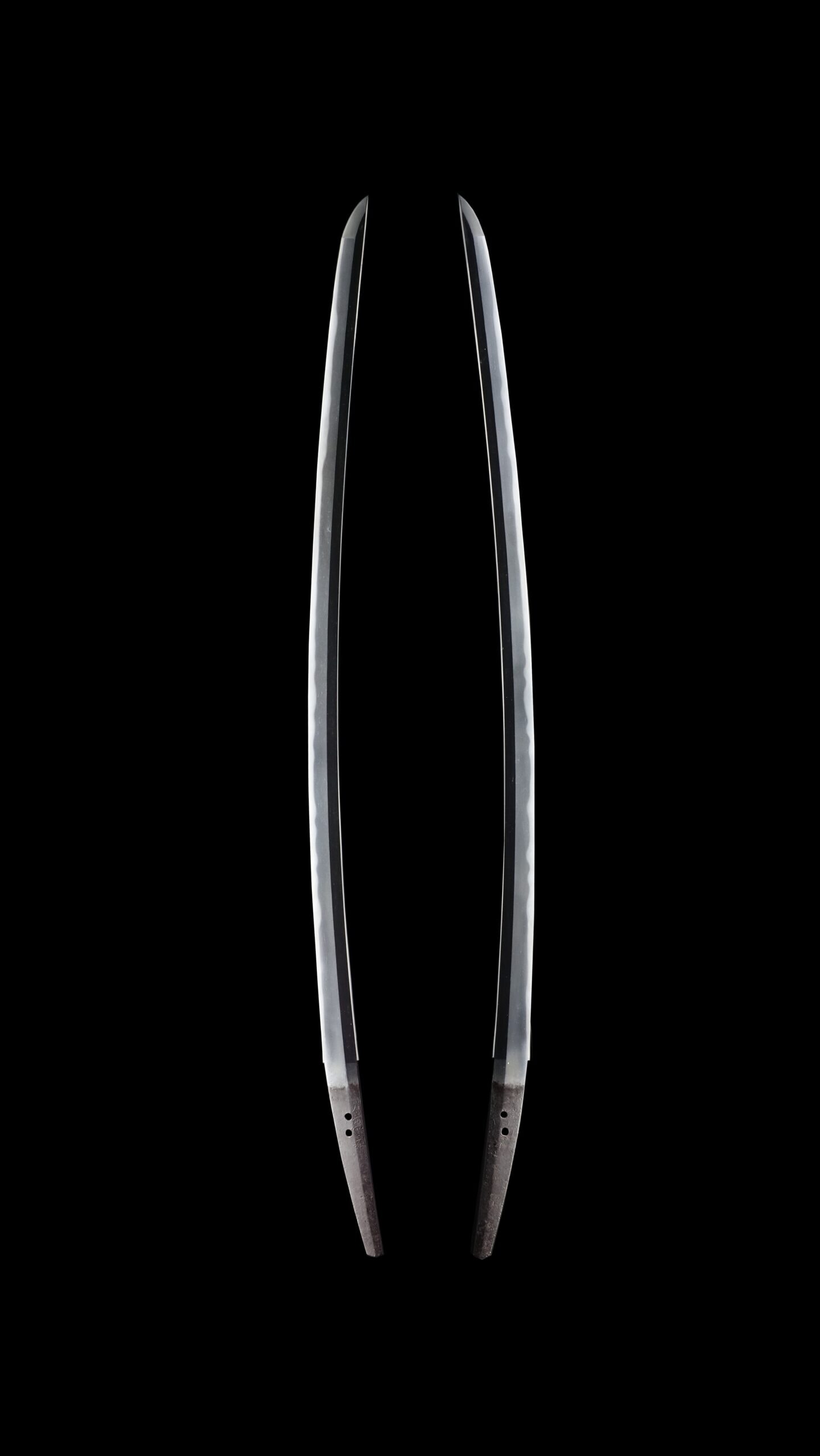
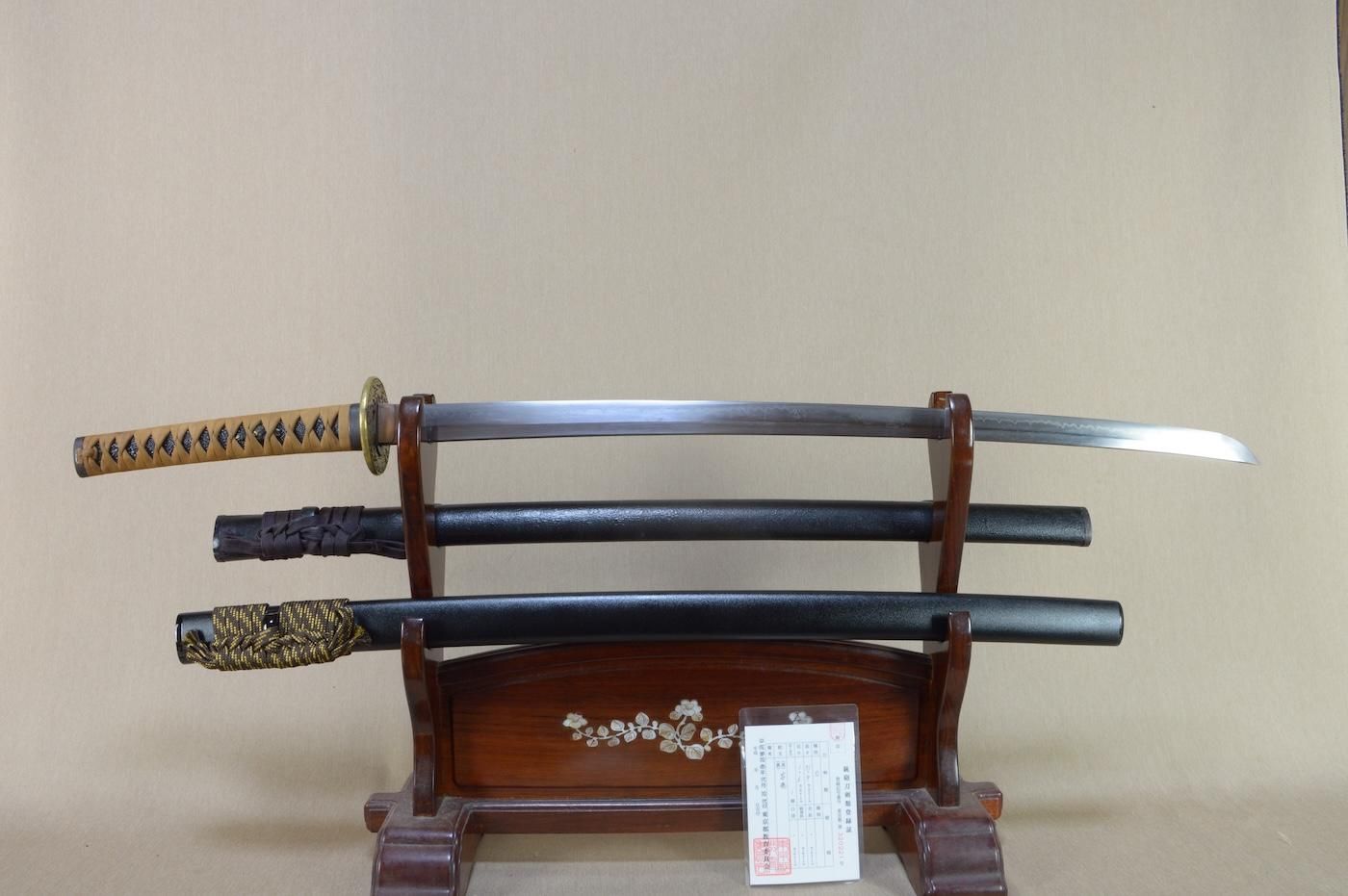
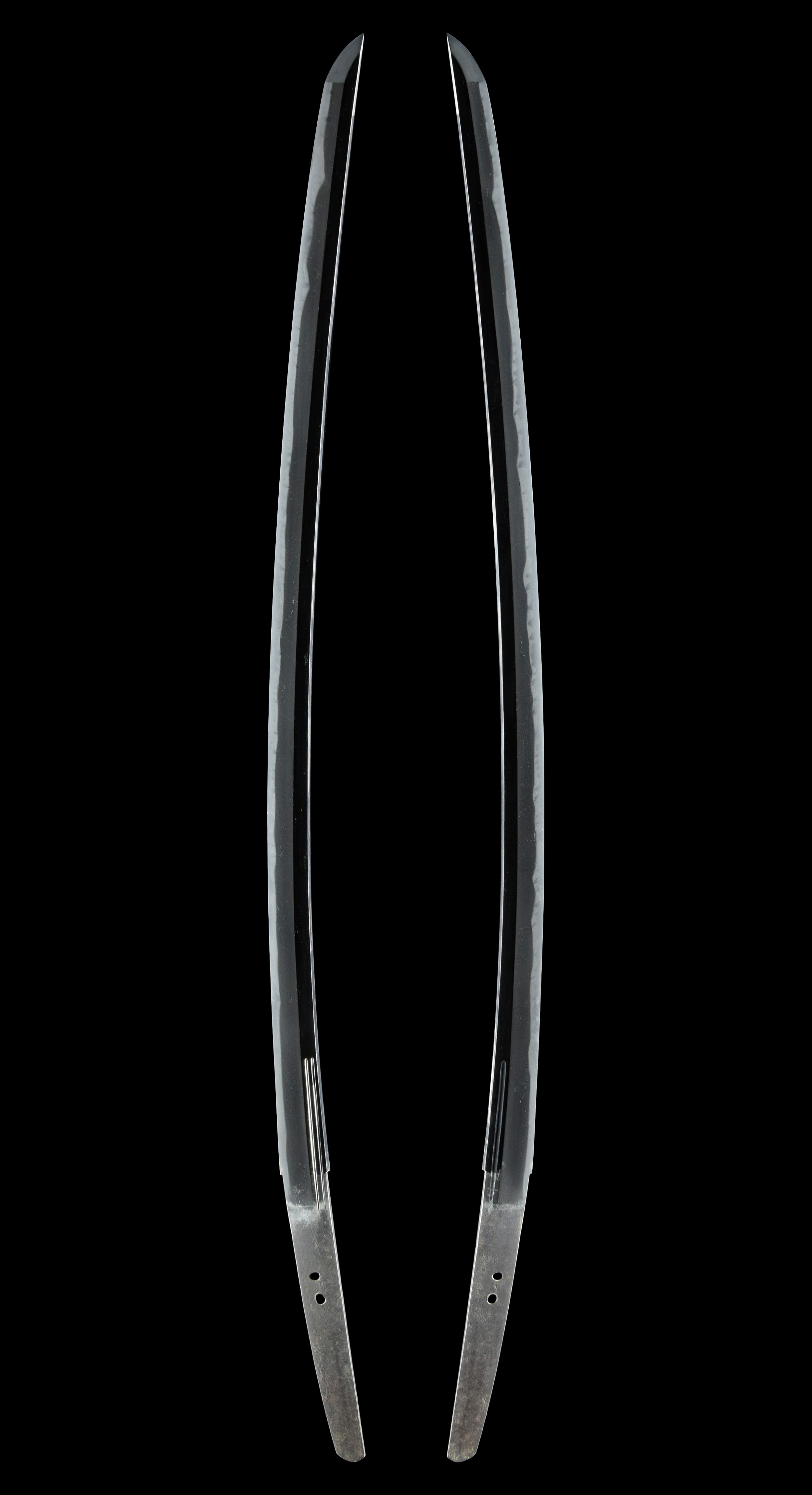
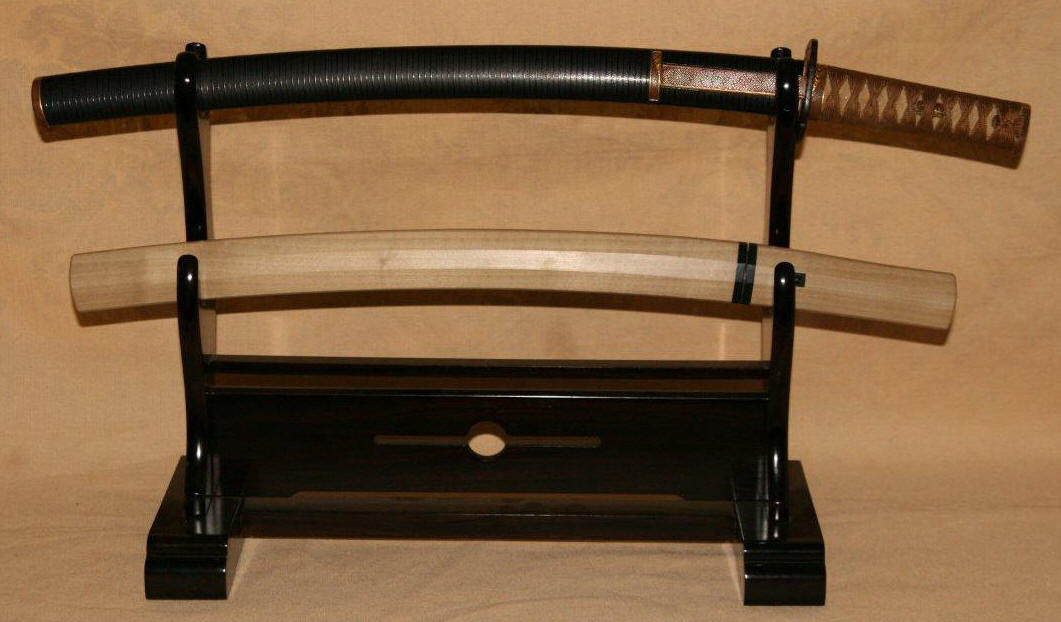
Skip to content ITEM# UJKA327 – Catalogue 31 – Sold A Jumyô Katana (常陸守藤原寿命) The Jumyô school traces its origins to Yamato province (modern Nara) before relocating to Mino during the Kamakura period, eventually settling in Shimizu in Mino province under the long patronage of the Owari Tokugawa clans. The name Jumyô – written with the characters for *kotobuki* (congratulations) and *inochi* (life) – translates as “happy [long] life,” and blades bearing this signature were prized as auspicious gifts to *daimyô* families. This long, well-proportioned katana dates to the Middle Edo period, circa the Kyôho era, and carries the full signed title of *Hitachi no Kami Fujiwara Jumyô* – Lord of Hitachi province, of the Fujiwara clan, Jumyô. The blade’s character is thoroughly Mino in tradition: a bright *gunome-midare hamon* in rich *ko-nie deki* with rhythmic *togari* peaks, active *ashi*, *kinsuji* formations, and brushed *sunagashi* threading through the temper line. The *jihada* is a tight *itame-hada* with a quality that rewards careful examination under light. The *boshi* is a refined *hakikake* with a small turnback (*ko-maru*), requiring considerable skill from the smith. Despite a slight trim at the *nakago-jiri* – approximately 2cm removed to fit a desired *tsuka* at some point in the sword’s history – the full *mei* survives perfectly intact. The provenance of this katana is exceptional. It carries a *sayagaki* written personally by Dr. Honma Junji (1904-1991), known as Kunzan, the former director of the NBTHK and the foremost sword scholar of the 20th century. Honma gifted this katana to his brother-in-law Mori Kazuo – an inscription on the shirasaya reads *”Mori Kazuo-kei no tame”* (for my brother-in-law Mori Kazuo), with the attribution title *Iehisa Yokei Jumyô* (Fortunate Family Heredity Jumyô). It was very likely a wedding present, given the auspicious nature of the Jumyô signature. The *koshirae* is an Edo-period *uchigatana* mounting lacquered in black with
 NihontoWatch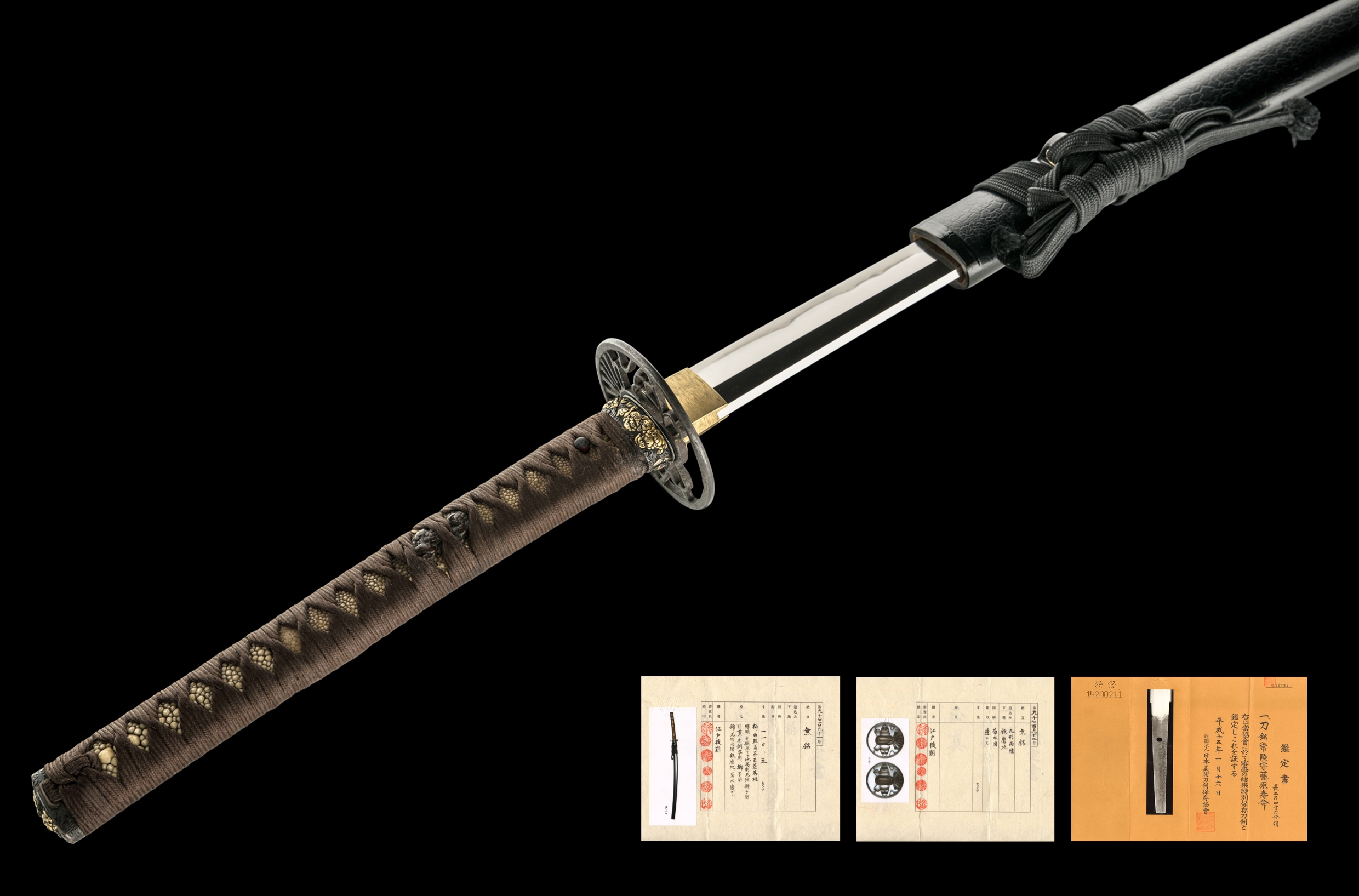
美濃伝 · 美濃
現在15点販売中
保存刀剣のうち、出来が一層優れ、保存状態も良好と認められたものです。再刃や、室町・江戸期の多くの無銘作は対象外となり、保存刀剣より高い基準が課されます。
日本美術刀剣保存協会(NBTHK)は、1948年に設立され、文化庁の監督を受ける公益財団法人で、東京・刀剣博物館に本部を置きます。専門の審査員が出品作を直接審査し、美術的・歴史的価値に応じた鑑定書を発行します。NBTHKの鑑定書は、日本刀および刀装具の真正性を示す最も広く認知された基準です。
NBTHK公式サイトAll swords come with a three-day inspection period beginning from the date of delivery. If not satisfied, the sword may be returned within this period for a full refund of the purchase price. Outside of this period, all sales are final. Swords purchased on a layaway payment plan are not eligible for the three-day inspection period.
Skip to content ITEM# UJKA327 – Catalogue 31 – Sold A Jumyô Katana (常陸守藤原寿命) The Jumyô school traces its origins to Yamato province (modern Nara) before relocating to Mino during the Kamakura period, eventually settling in Shimizu in Mino province under the long patronage of the Owari Tokugawa clans. The name Jumyô – written with the characters for *kotobuki* (congratulations) and *inochi* (life) – translates as “happy [long] life,” and blades bearing this signature were prized as auspicious gifts to *daimyô* families. This long, well-proportioned katana dates to the Middle Edo period, circa the Kyôho era, and carries the full signed title of *Hitachi no Kami Fujiwara Jumyô* – Lord of Hitachi province, of the Fujiwara clan, Jumyô. The blade’s character is thoroughly Mino in tradition: a bright *gunome-midare hamon* in rich *ko-nie deki* with rhythmic *togari* peaks, active *ashi*, *kinsuji* formations, and brushed *sunagashi* threading through the temper line. The *jihada* is a tight *itame-hada* with a quality that rewards careful examination under light. The *boshi* is a refined *hakikake* with a small turnback (*ko-maru*), requiring considerable skill from the smith. Despite a slight trim at the *nakago-jiri* – approximately 2cm removed to fit a desired *tsuka* at some point in the sword’s history – the full *mei* survives perfectly intact. The provenance of this katana is exceptional. It carries a *sayagaki* written personally by Dr. Honma Junji (1904-1991), known as Kunzan, the former director of the NBTHK and the foremost sword scholar of the 20th century. Honma gifted this katana to his brother-in-law Mori Kazuo – an inscription on the shirasaya reads *”Mori Kazuo-kei no tame”* (for my brother-in-law Mori Kazuo), with the attribution title *Iehisa Yokei Jumyô* (Fortunate Family Heredity Jumyô). It was very likely a wedding present, given the auspicious nature of the Jumyô signature. The *koshirae* is an Edo-period *uchigatana* mounting lacquered in black with
NihontoWatch美濃伝 · 美濃
現在15点販売中
保存刀剣のうち、出来が一層優れ、保存状態も良好と認められたものです。再刃や、室町・江戸期の多くの無銘作は対象外となり、保存刀剣より高い基準が課されます。
日本美術刀剣保存協会(NBTHK)は、1948年に設立され、文化庁の監督を受ける公益財団法人で、東京・刀剣博物館に本部を置きます。専門の審査員が出品作を直接審査し、美術的・歴史的価値に応じた鑑定書を発行します。NBTHKの鑑定書は、日本刀および刀装具の真正性を示す最も広く認知された基準です。
NBTHK公式サイトAll swords come with a three-day inspection period beginning from the date of delivery. If not satisfied, the sword may be returned within this period for a full refund of the purchase price. Outside of this period, all sales are final. Swords purchased on a layaway payment plan are not eligible for the three-day inspection period.
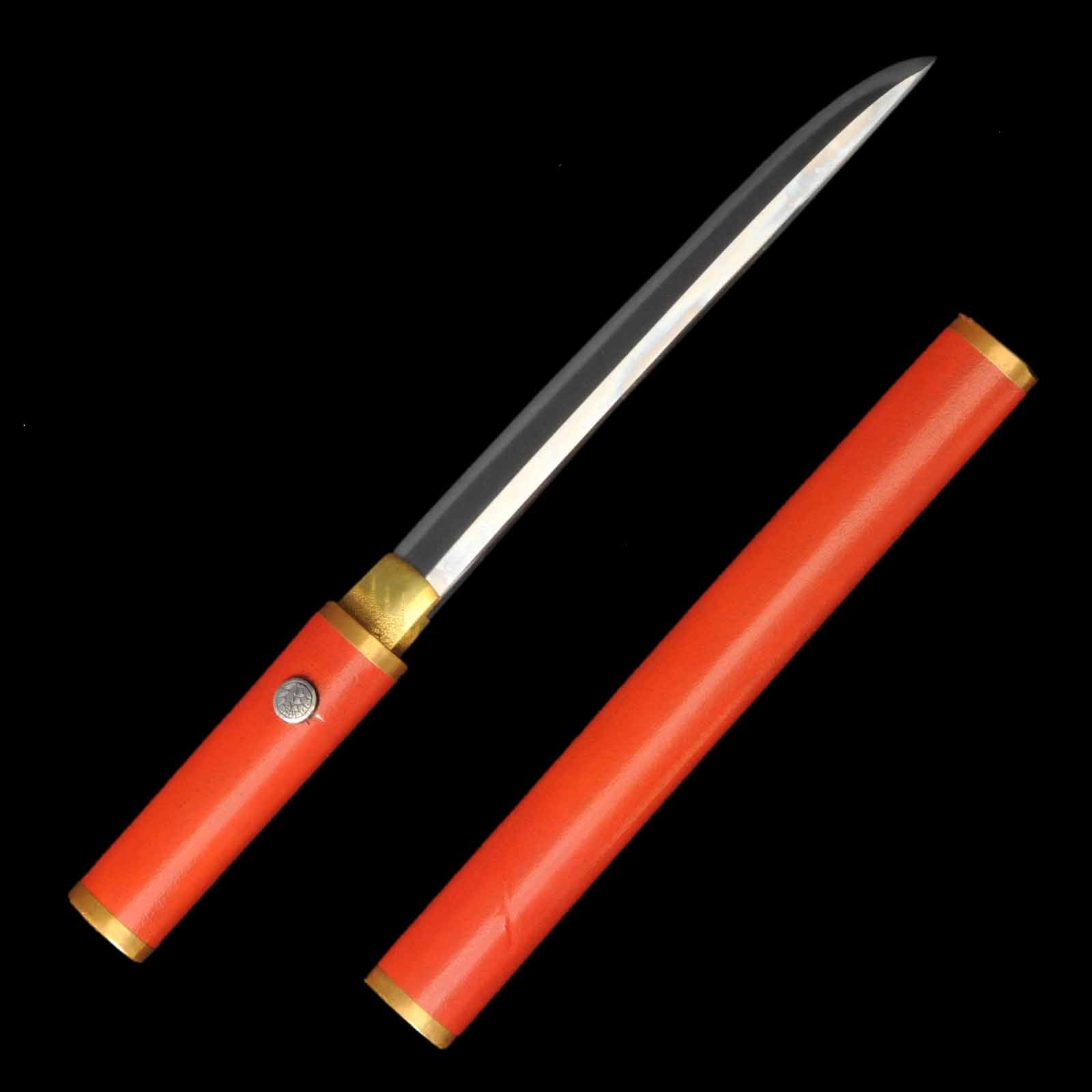

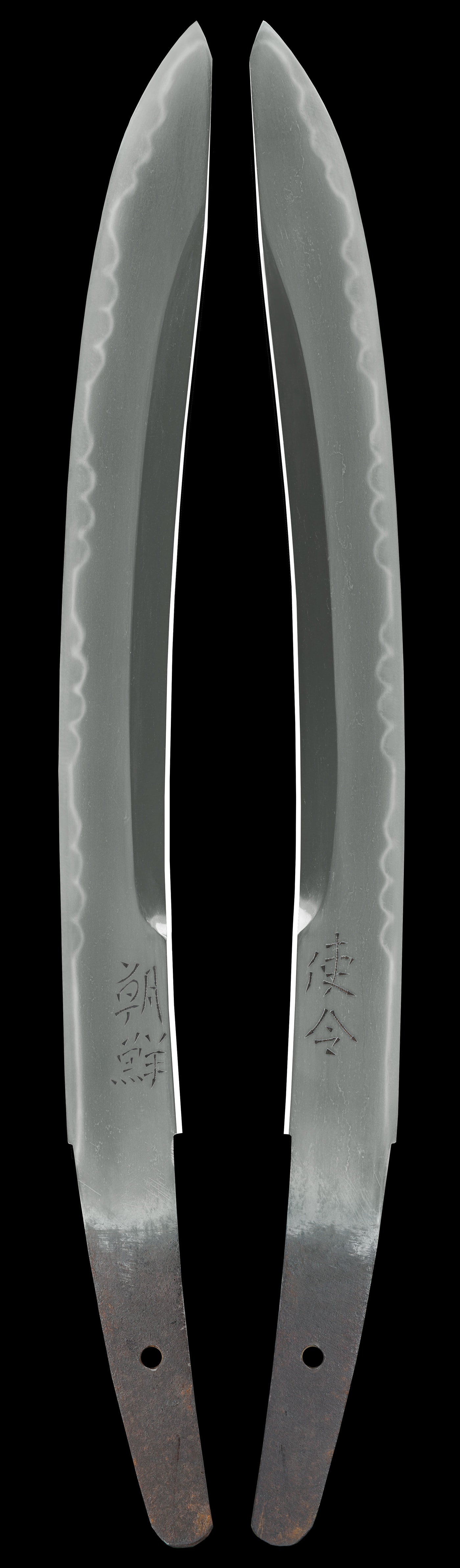
![Tanto - Tokuho - by Jumyo School - 短刀[無銘 寿長(新々刀寿命)][日本美術刀剣保存協会]保存刀剣/特別保存刀装具](/_next/image?url=https%3A%2F%2Fitbhfhyptogxcjbjfzwx.supabase.co%2Fstorage%2Fv1%2Fobject%2Fpublic%2Flisting-images%2Fworld-seiyudo%2FL32101%2F00.jpg&w=2560&q=90)






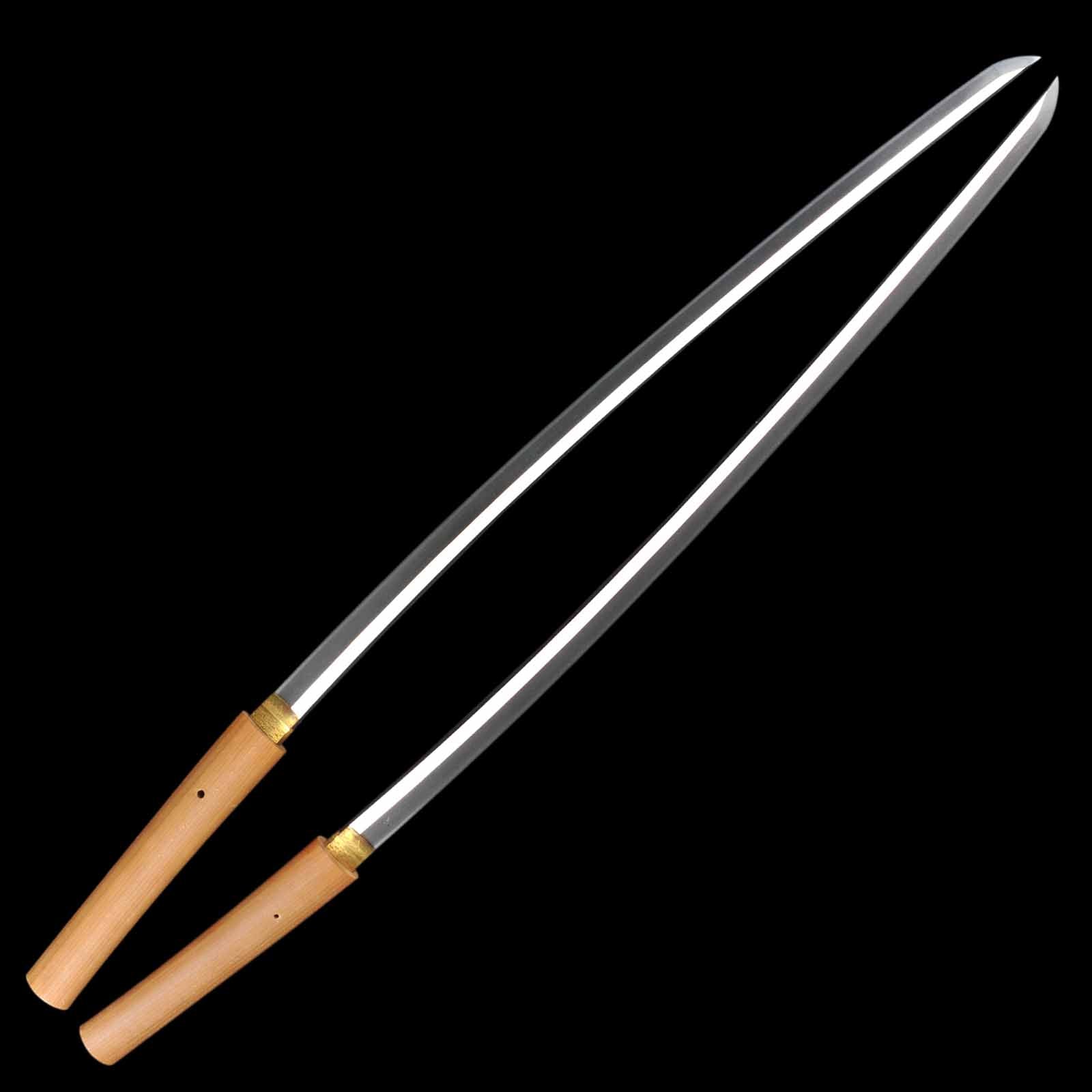
![Katana - Hozon - by Kanemoto - 刀 兼元(孫六) (切付銘)三七郎[神戸信孝]](/_next/image?url=https%3A%2F%2Fitbhfhyptogxcjbjfzwx.supabase.co%2Fstorage%2Fv1%2Fobject%2Fpublic%2Flisting-images%2Fshoubudou%2FL598722%2F06.jpg&w=2560&q=90)