天下統一は大量の市場を閉じ、関の鍛冶は新しい富の在り処へ移った。三品の一門は受領名を得て京に、大道系は諸国の城下町に。美濃は新刀時代の最大の祖先となった。
 NihontoWatchNihontoWatch
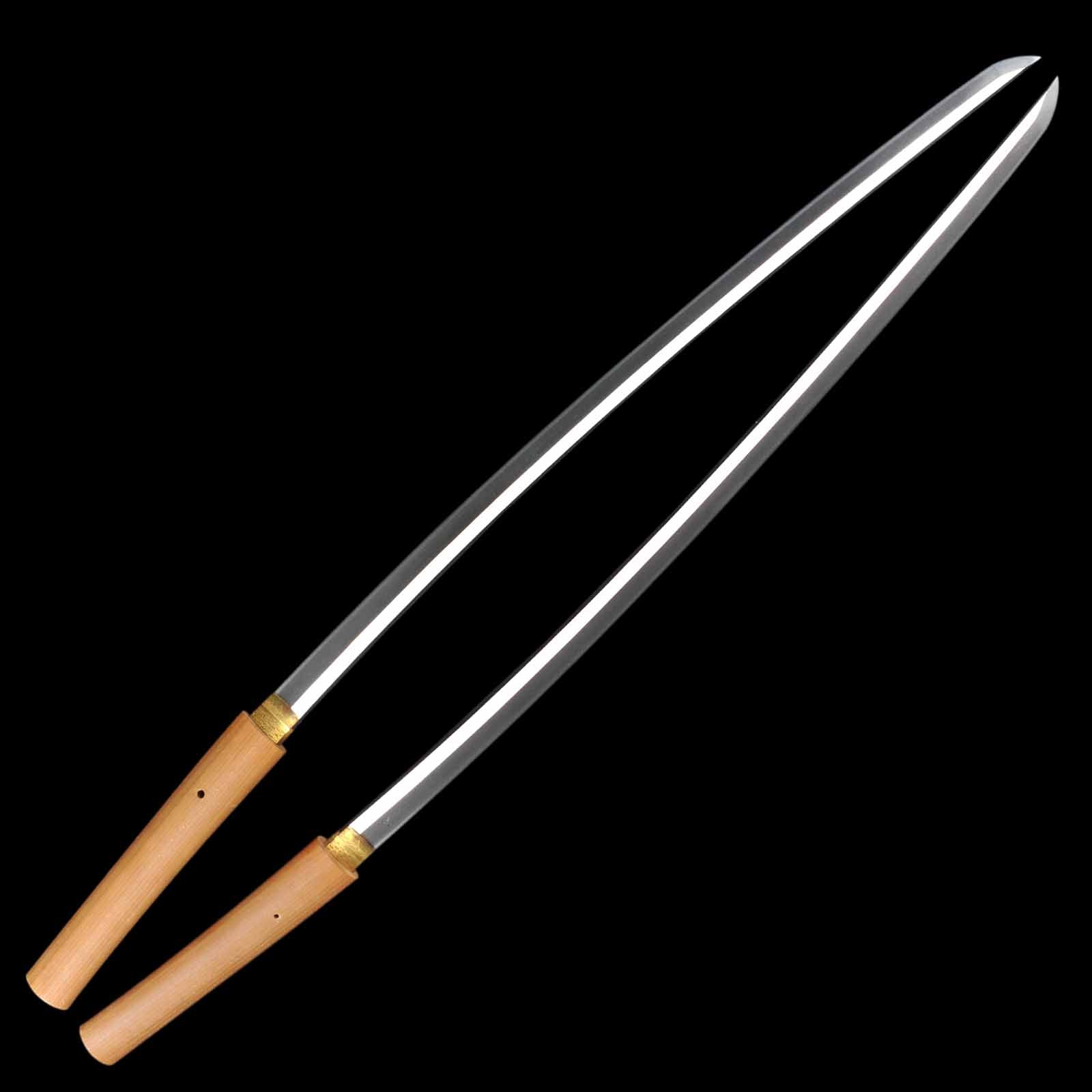
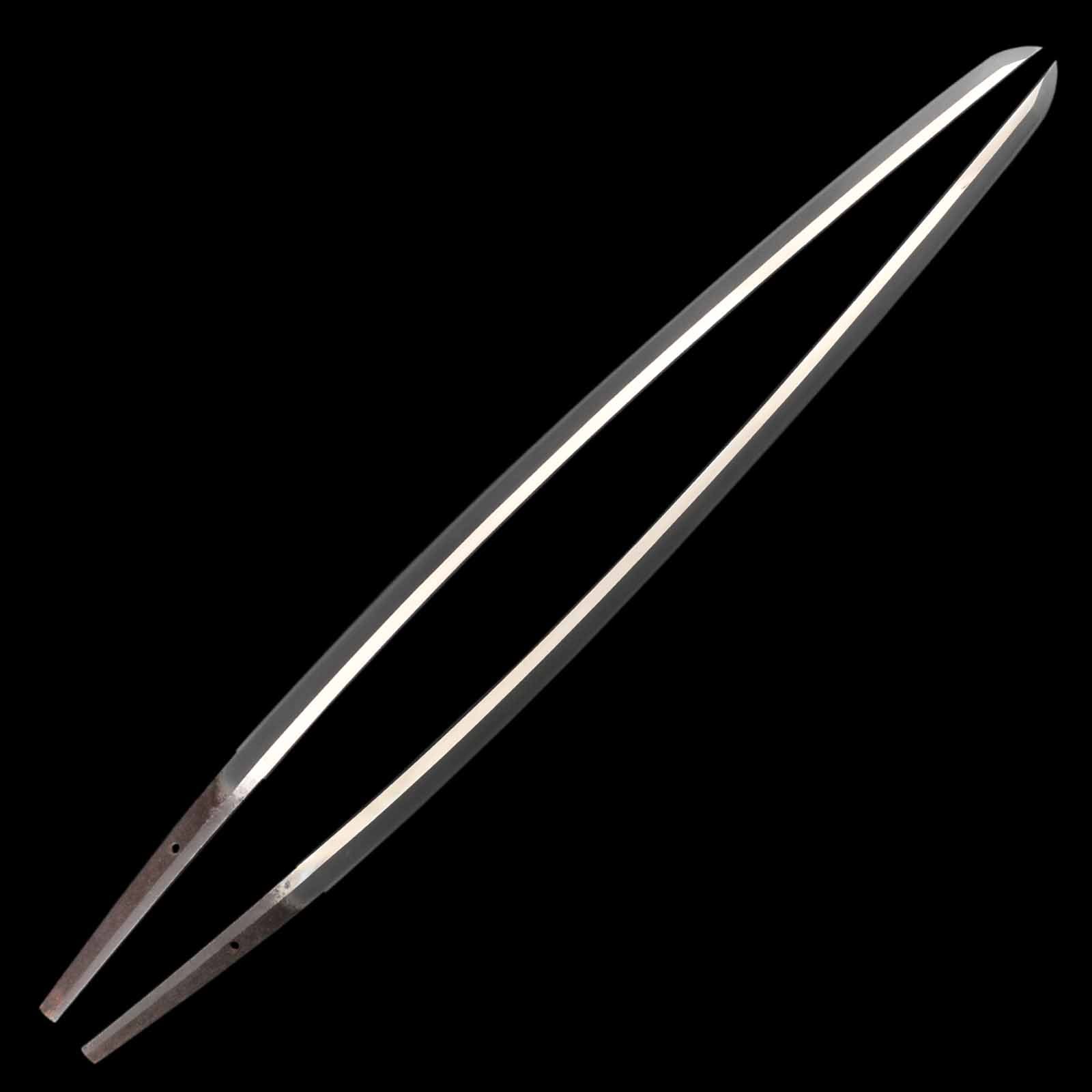
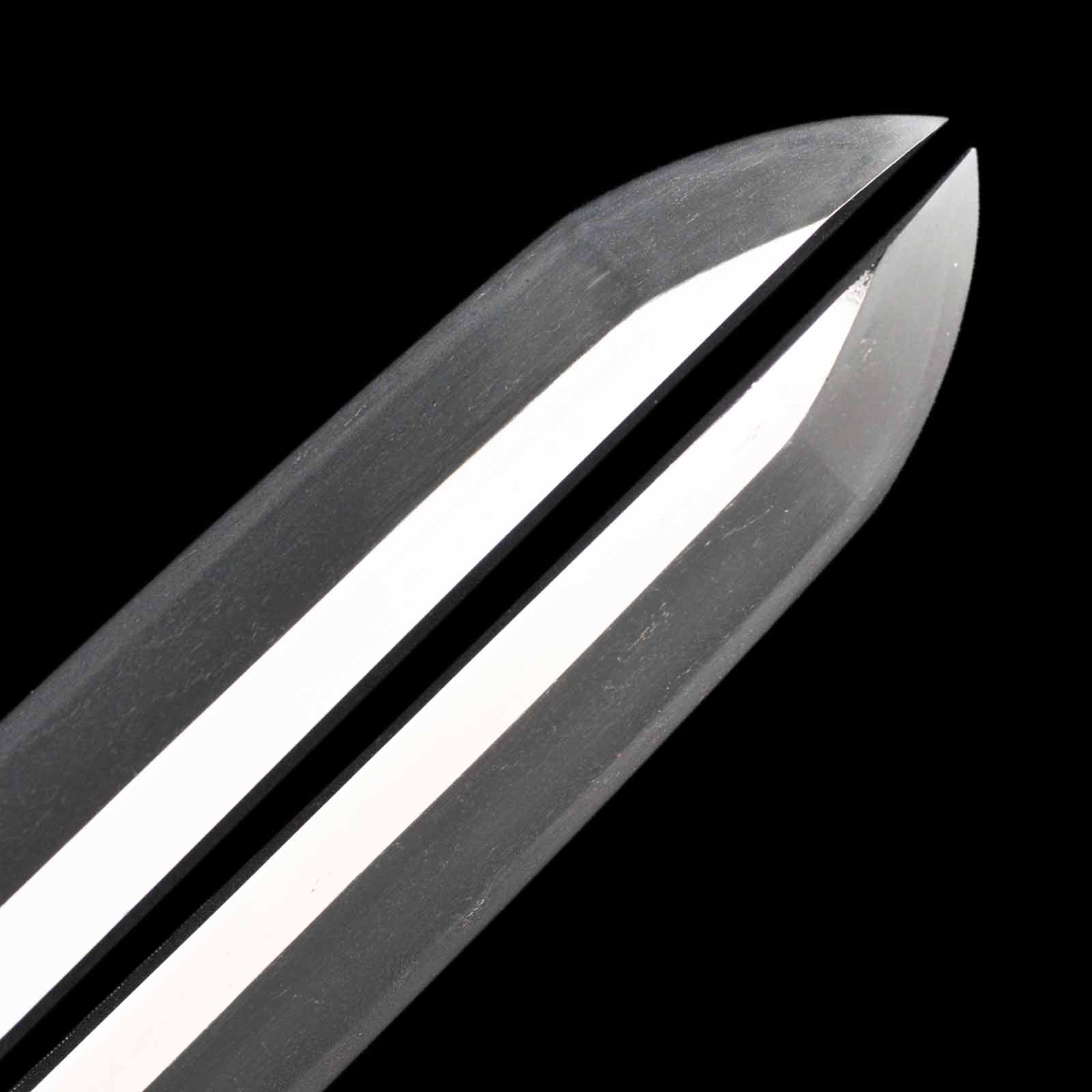
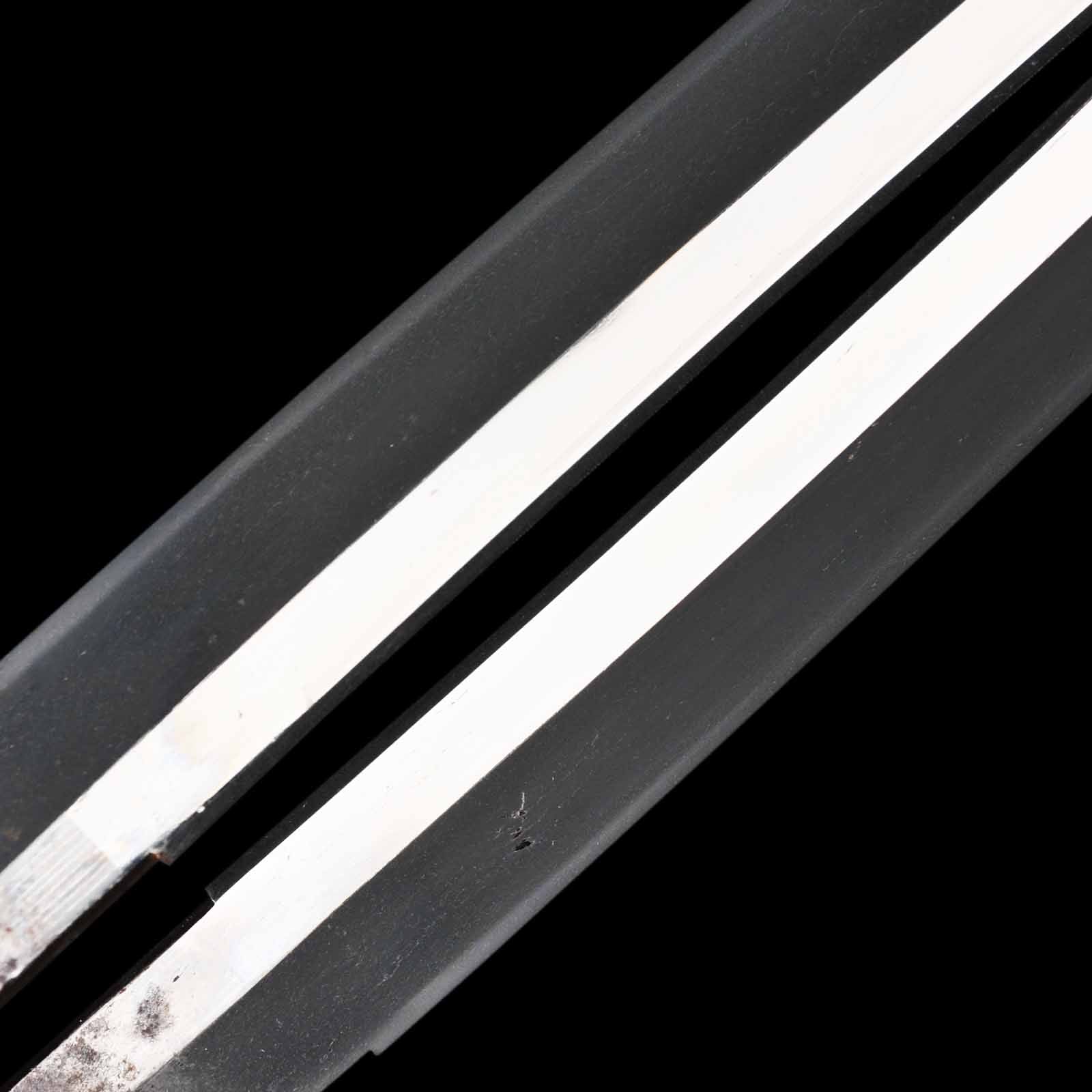
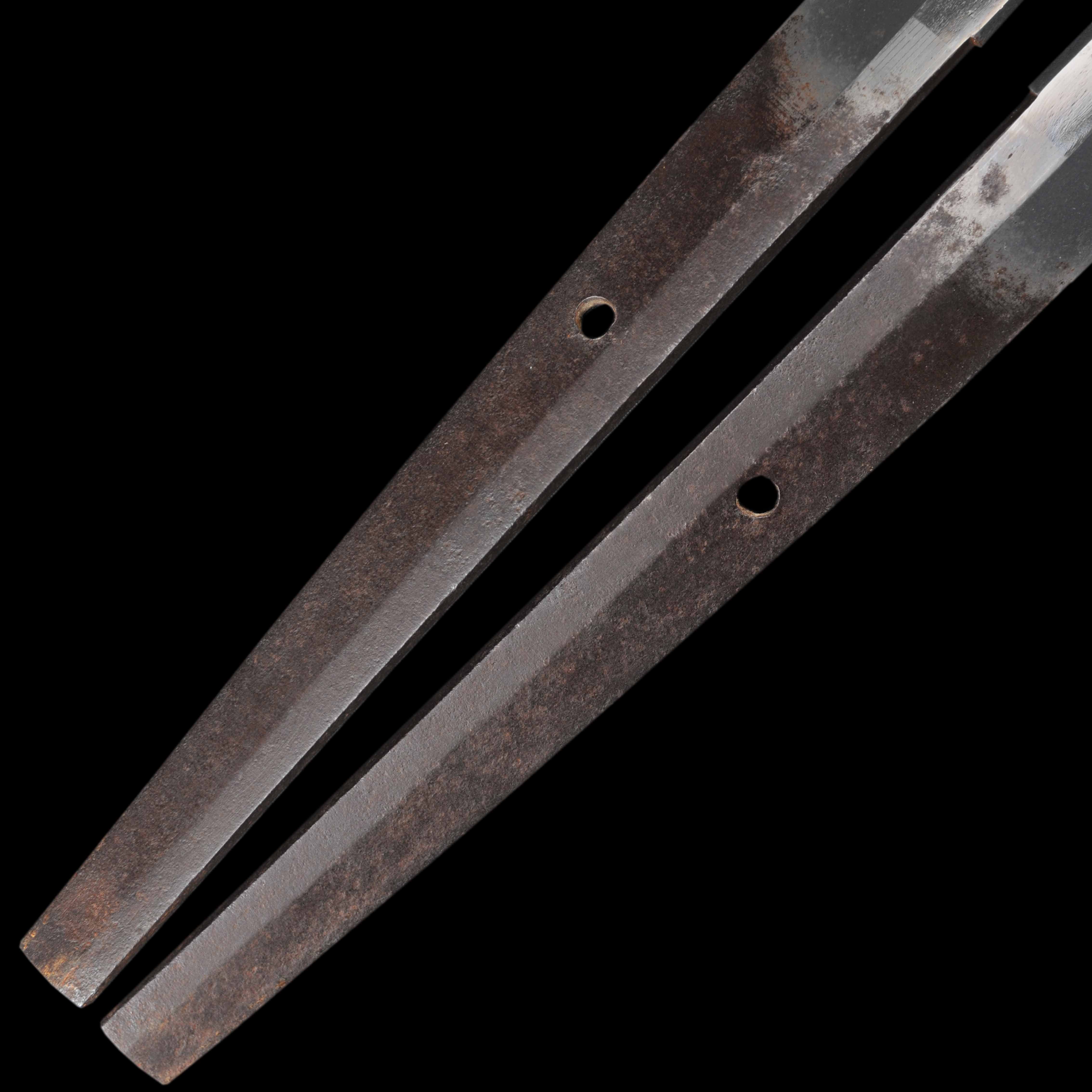
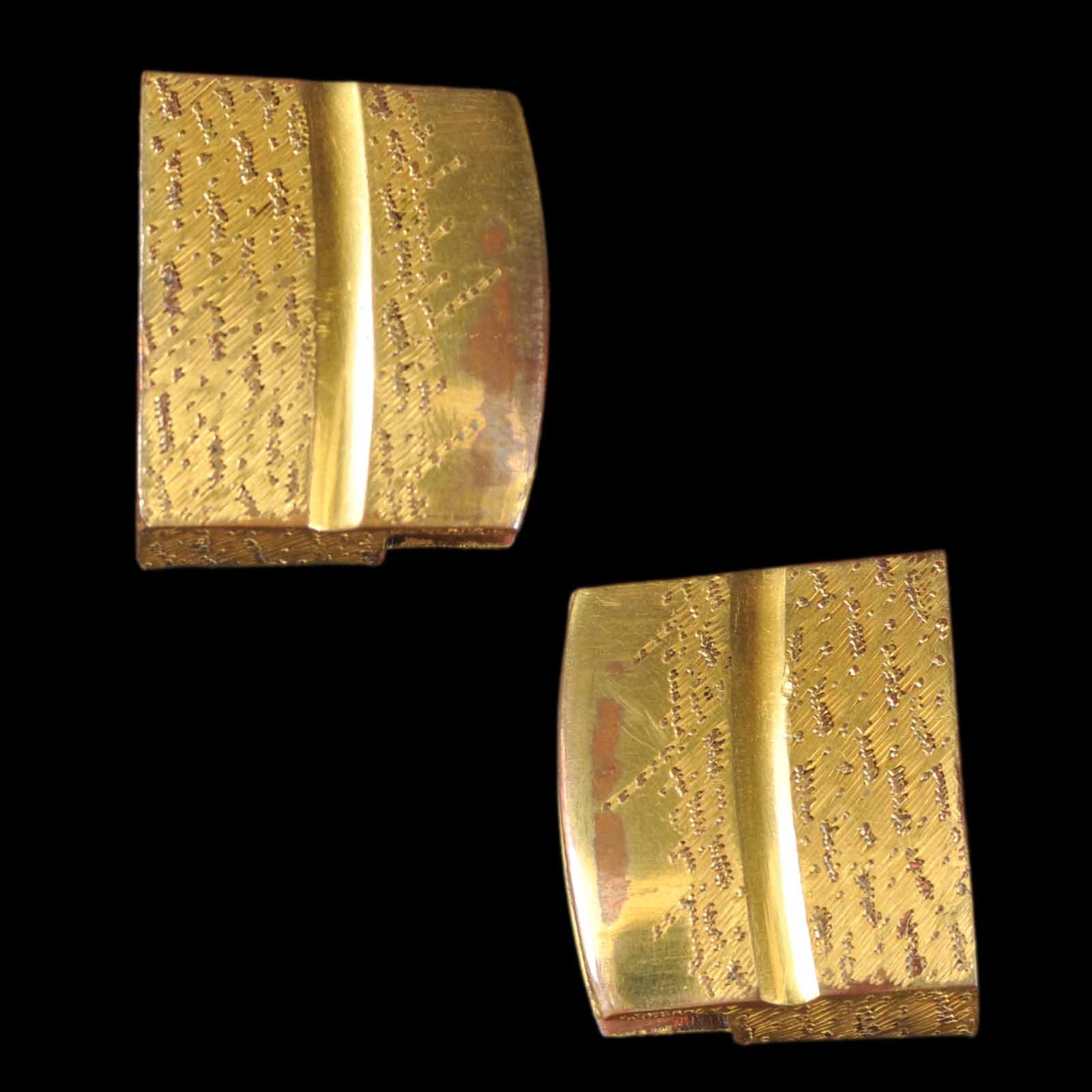
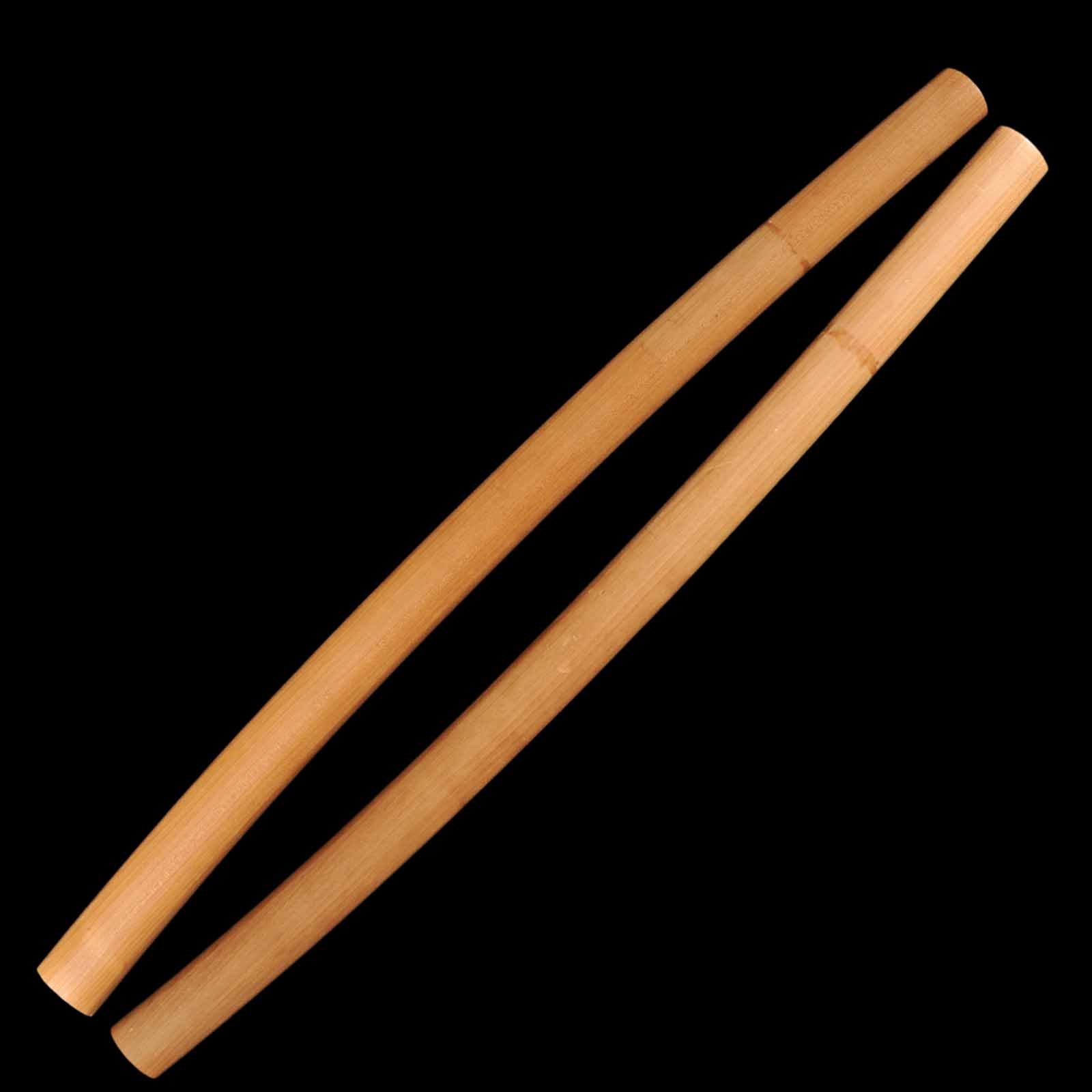
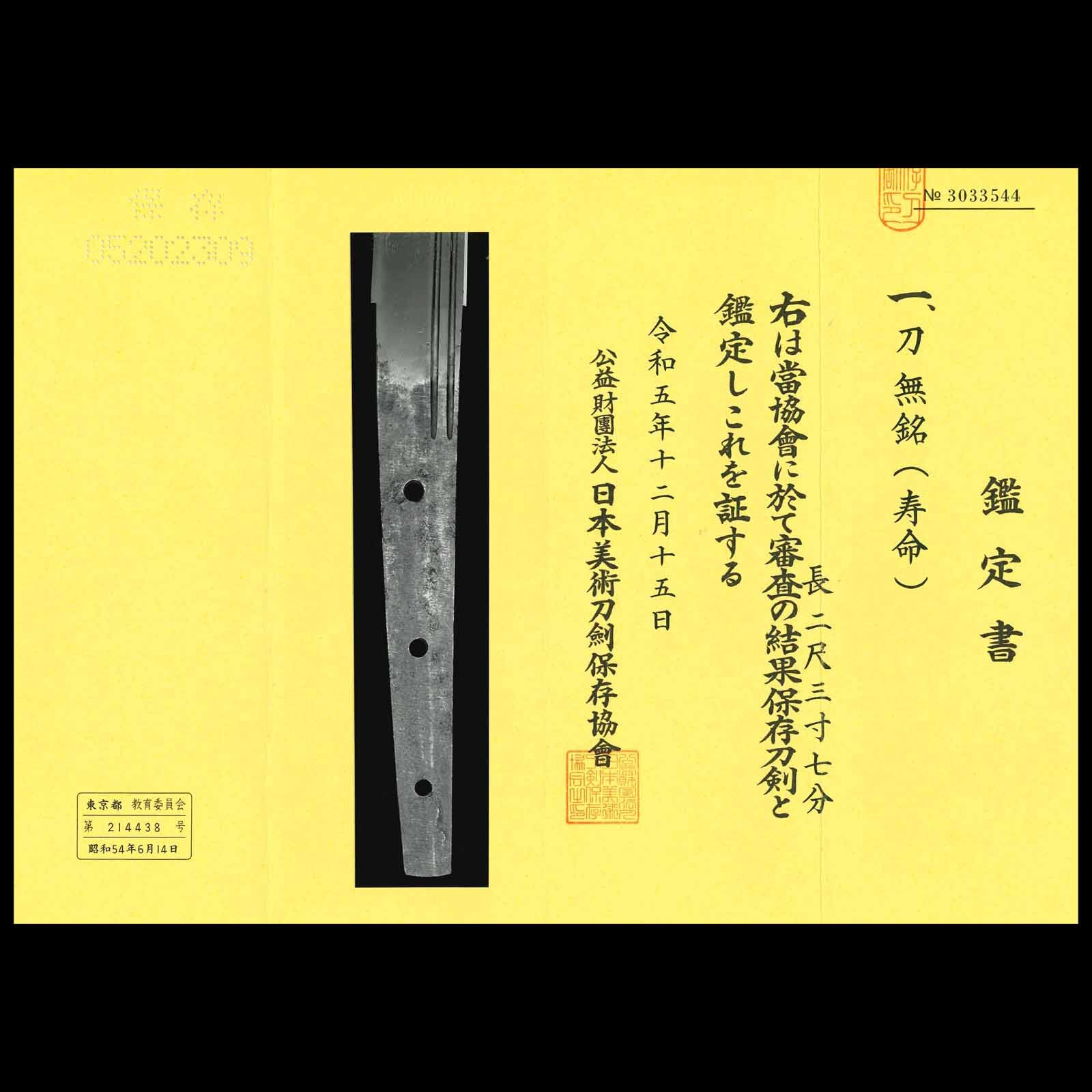
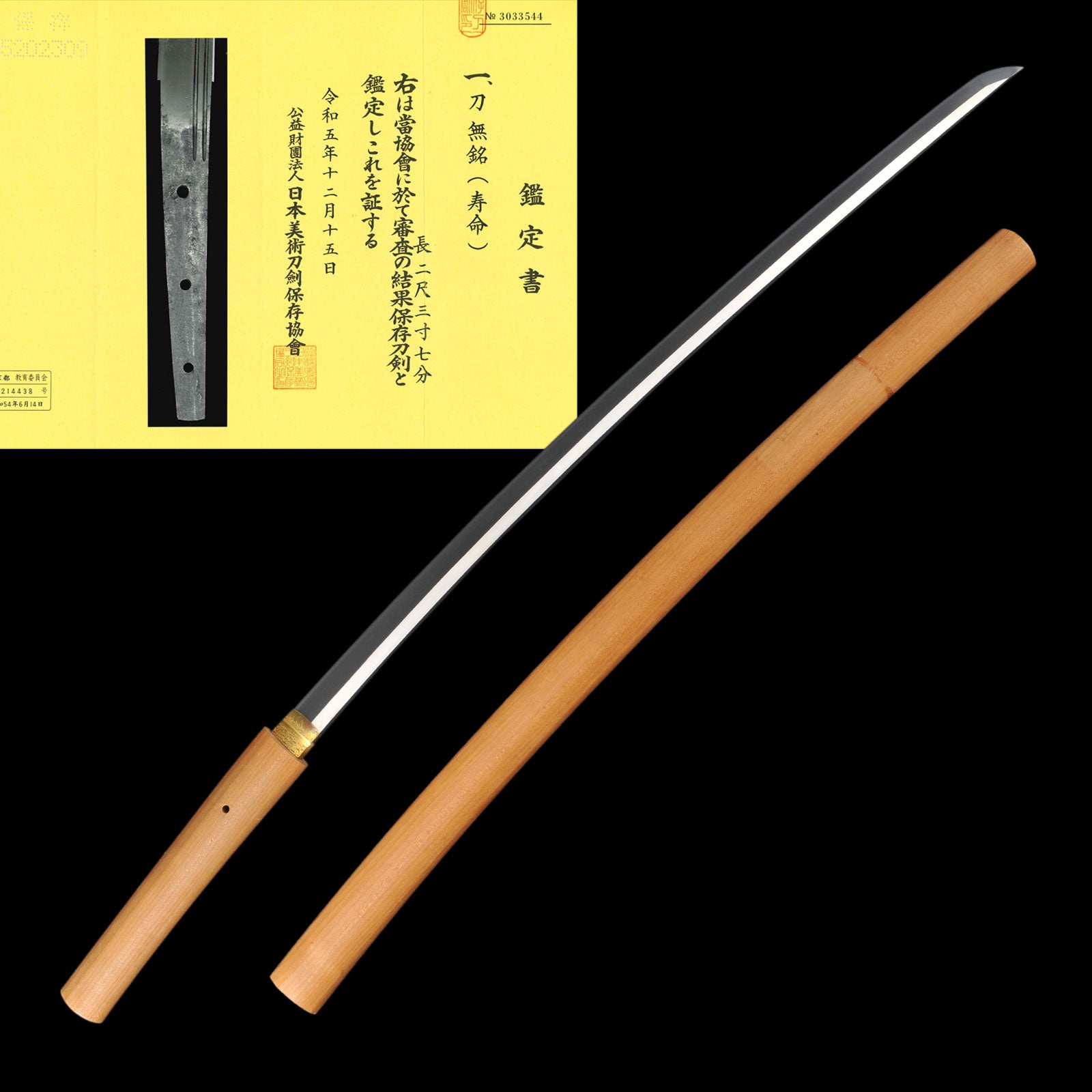
Proudly present a well-preserved, unsigned katana accompanied by a scabbard note from Kansan, a master appraiser of Japanese swords, and an authentication certificate from the Society for the Preservation of Japanese Art Swords. What makes this piece unique is that while Kansan identified it as “Ko-yoshii,” the Society for the Preservation of Japanese Art Swords authenticated it as a work by Toshinaga, resulting in completely different appraisal conclusions. The blade is in excellent condition and has been fully polished. The jigane features a well-compacted itame-hada with visible chikei. The hamon displays fine, orderly gunome patterns, and the niokuchi is tightly defined. Kin-sen is also visible within the hamon. Although this is an unsigned sword, Sato Kanzan, an authority on Japanese sword appraisal, identified it as a work by Ko-yoshii during the Year of the Rabbit in the Showa era and inscribed the scabbard. The Year of the Rabbit in the Showa era can be presumed to be either 1951 or 1963. The Yoshii school is a group of swordsmiths descended from Noritsune, who forged swords on the opposite bank of the Yoshii River in Bizen, across from Osafune Village, from the late Kamakura period onward. Swords from the late Kamakura period through the Nanbokucho period are referred to as “Ko-yoshii.” On the other hand, in December 2023, the Society for the Preservation of Japanese Art Swords certified this as a work by Toshinaga. Toshinaga refers to a school of swordsmiths active from the late Kamakura period through the end of the Edo period in Mino Province (present-day Gifu Prefecture) and other regions. Because the kanji for “Toshinaga” can also be read as “Jumyo” (meaning “long life”), the name was considered auspicious, making these swords highly prized among the samurai class as gifts or celebratory items. While their style draws from the Yamato tradition, they possessed a wide range of techniques. They are characterized by the powerful jigane and hamon typical of
NihontoWatch

美濃伝 · 美濃
現在11点販売中
桃山時代の美濃
天下統一は大量の市場を閉じ、関の鍛冶は新しい富の在り処へ移った。三品の一門は受領名を得て京に、大道系は諸国の城下町に。美濃は新刀時代の最大の祖先となった。
銘が正しい、または無銘でも年代・国・系統を確実に指摘できる、保存に値する真正の作と鑑定されたものです。
日本美術刀剣保存協会(日刀保)は、1948年に設立され、文化庁の監督を受ける公益財団法人で、東京・刀剣博物館に本部を置きます。専門の審査員が出品作を直接審査し、美術的・歴史的価値に応じた鑑定書を発行します。日刀保の鑑定書は、日本刀および刀装具の真正性を示す最も広く認知された基準です。
日刀保公式サイトAs a general rule, returns/exchanges are not accepted on Japanese sword orders unless damaged upon delivery. Other items: returns/exchanges accepted within 7 days of delivery. Cancellation for personal reasons incurs a 30% restocking fee (70% refunded). Return shipping must be prepaid and insured by the buyer; shipping/handling fees are non-refundable. Contact katana@tozando.co.jp to initiate a return.