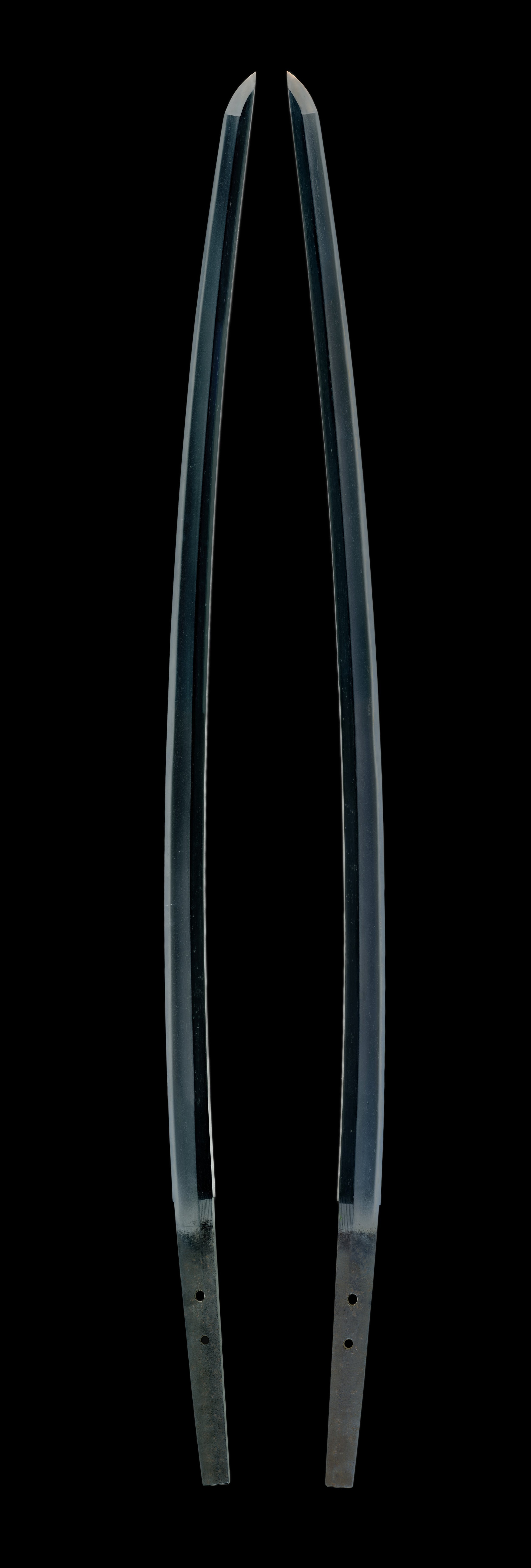
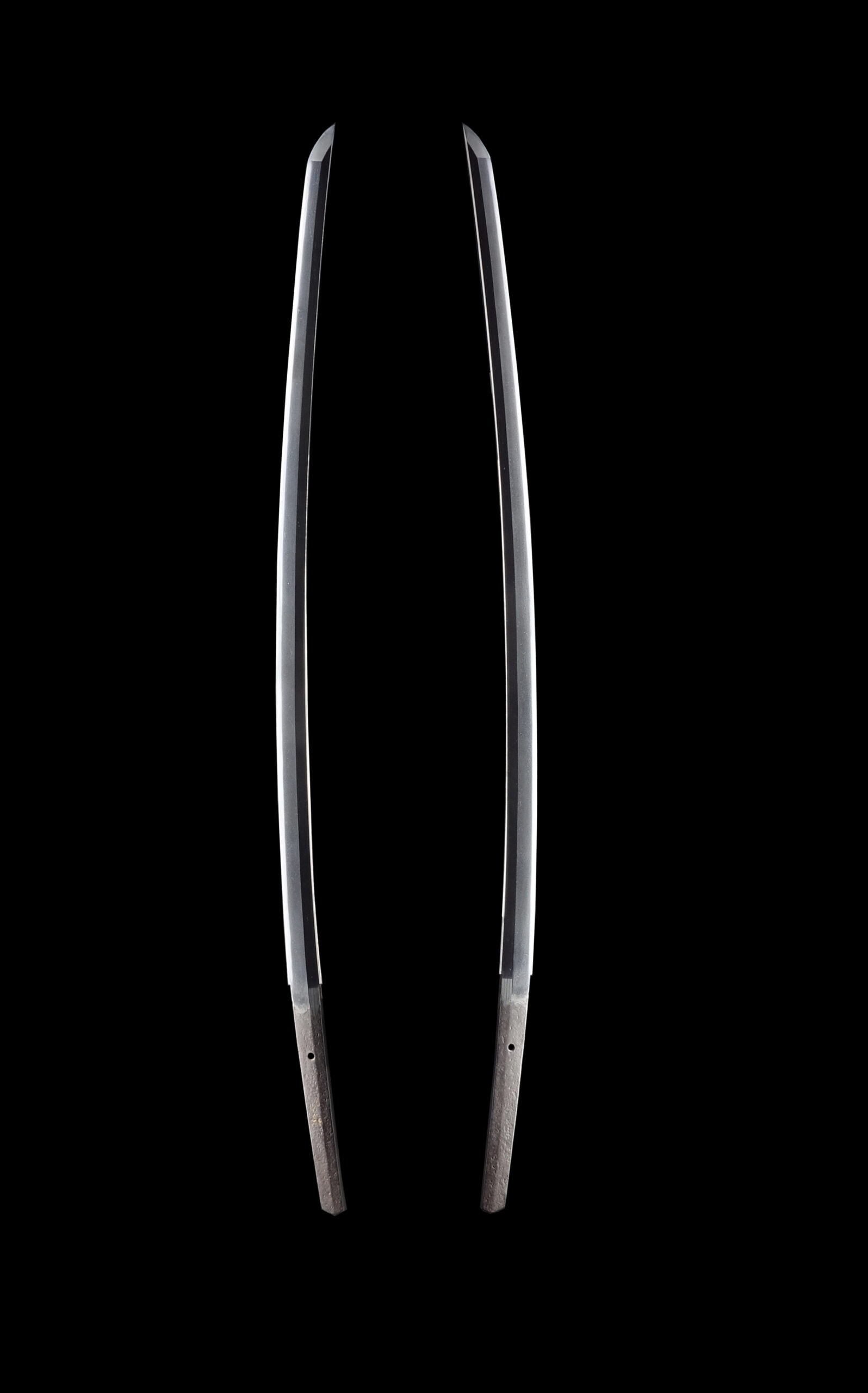
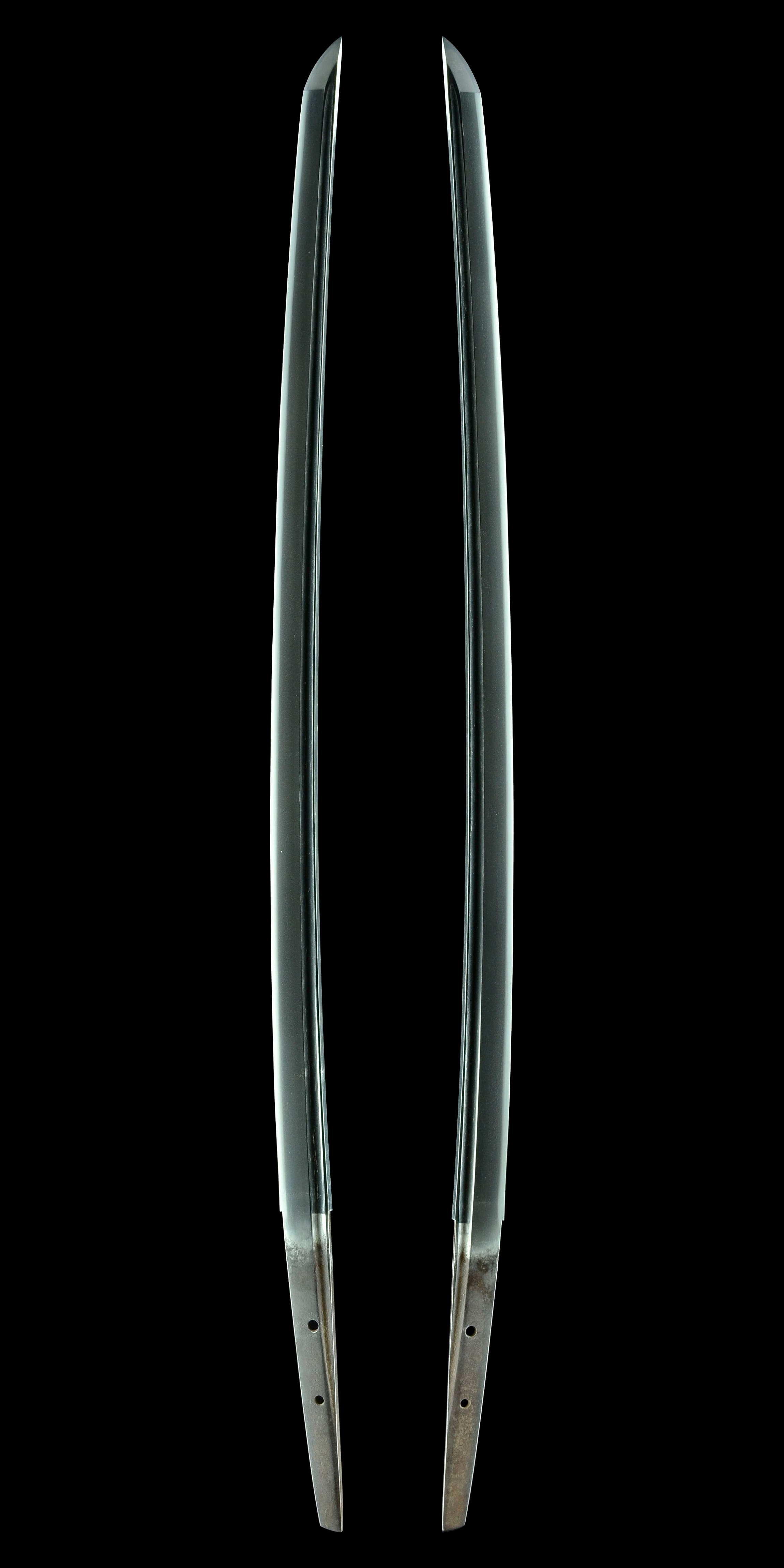
江戸は刀の目利きの時代である。本阿弥の鑑定、1719年の享保名物帳、盛んな刀剣書が、戦で抜かれることのなくなった刀を学問の対象へと変えていった。
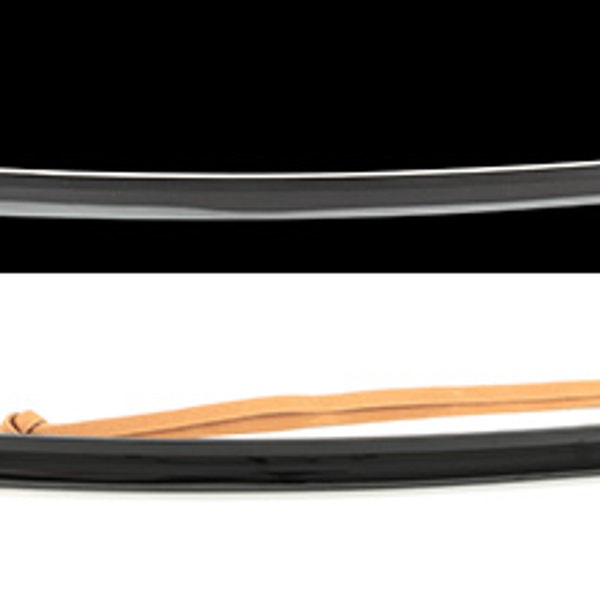
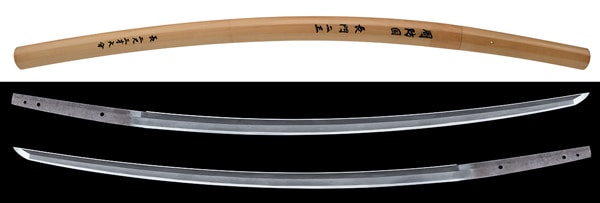
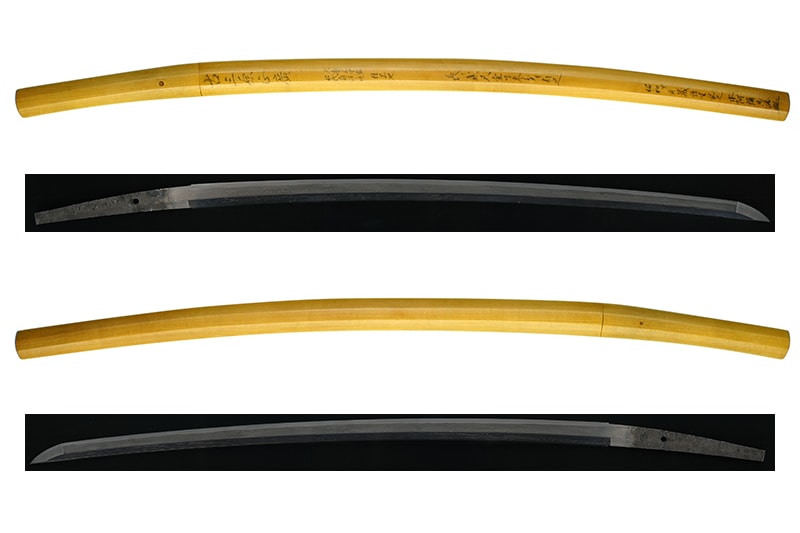
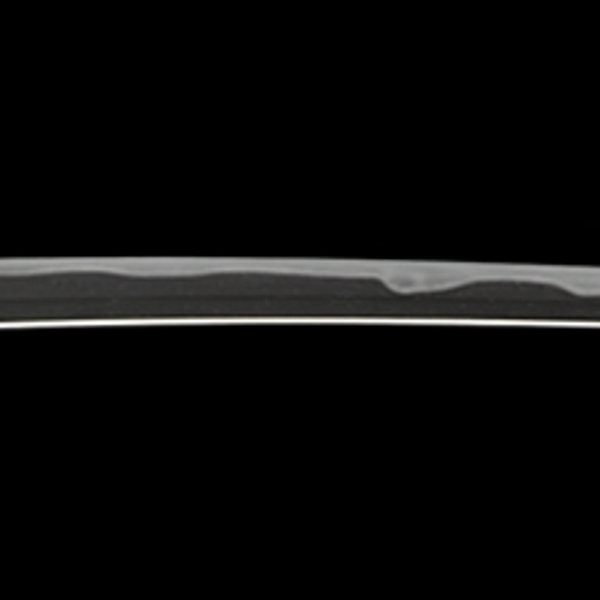
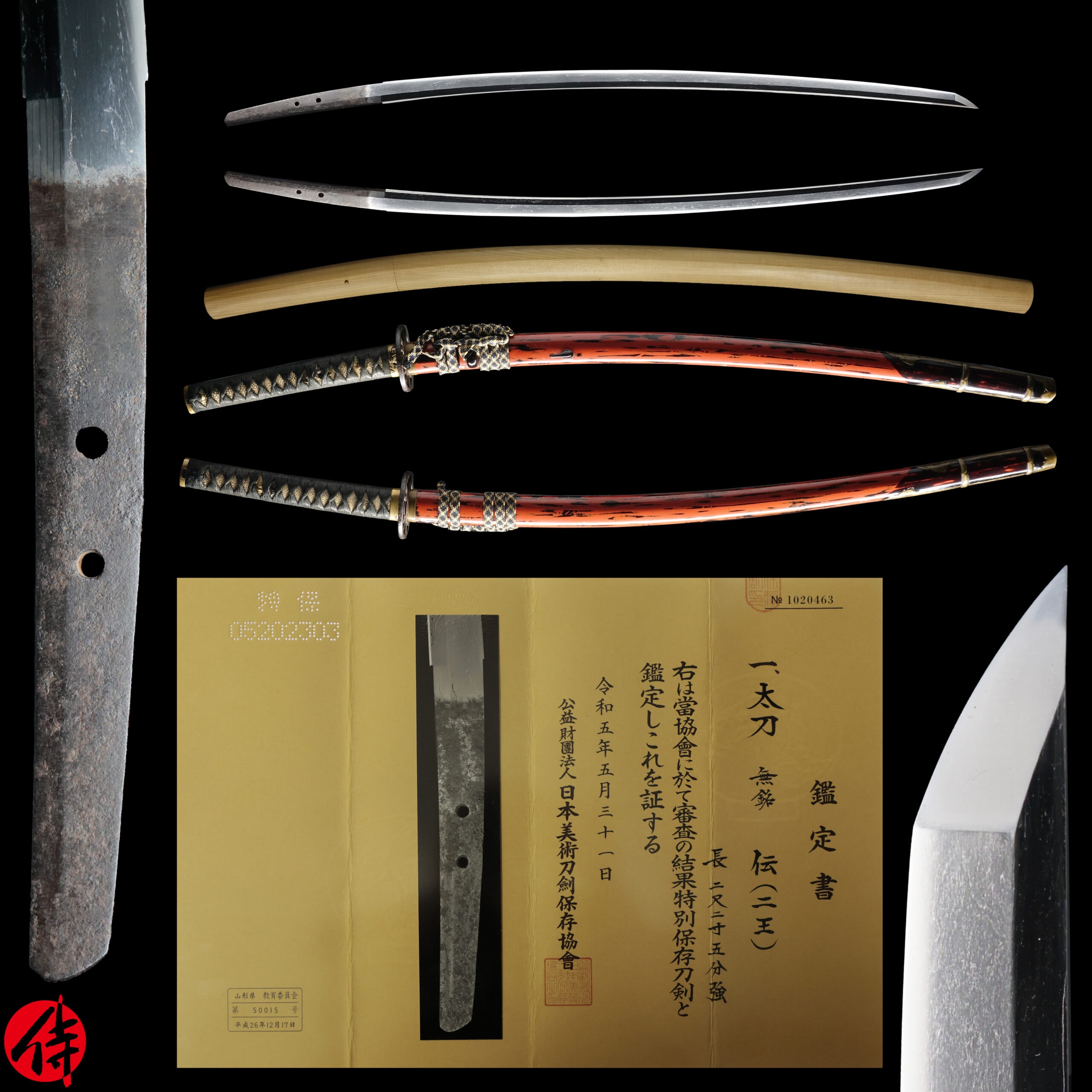
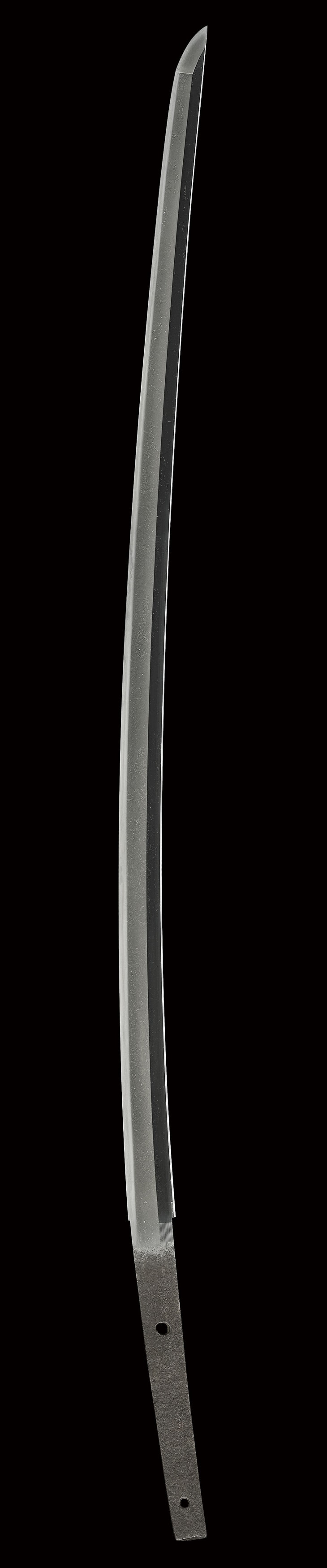
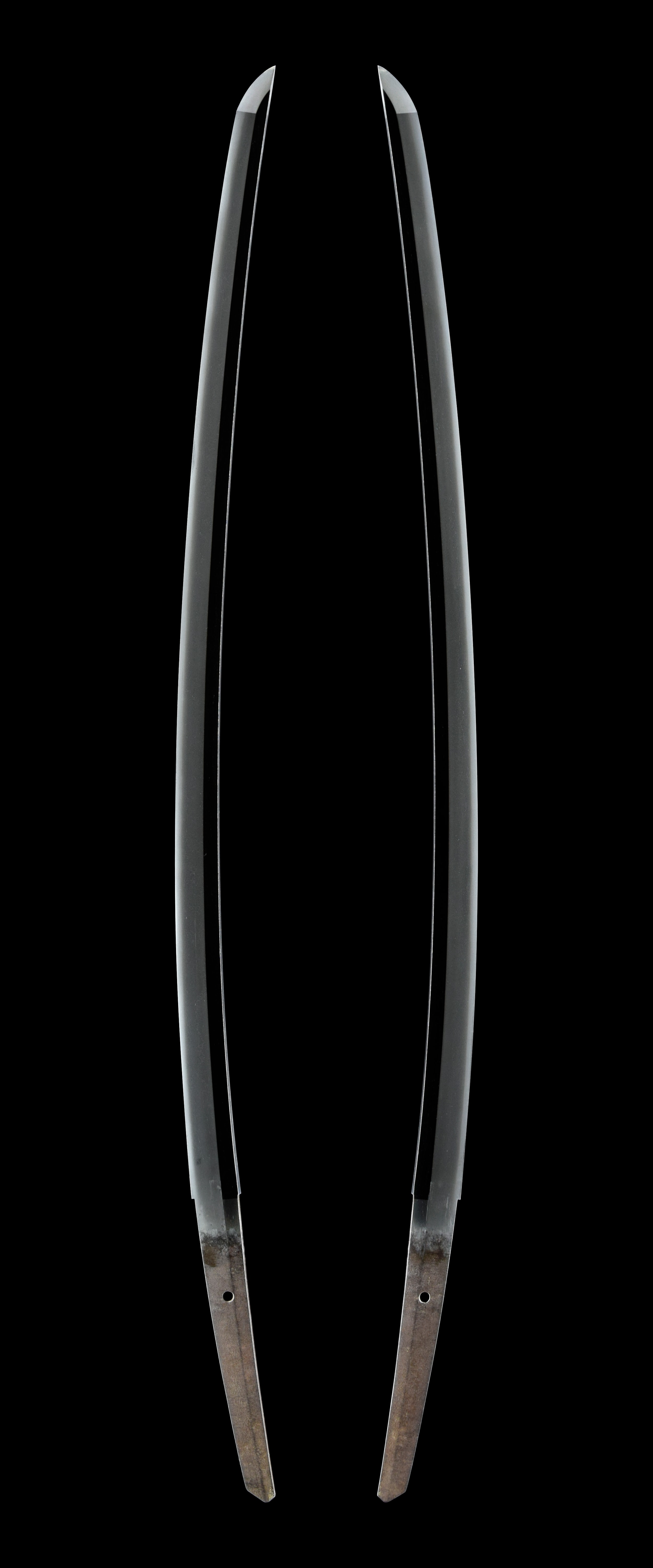
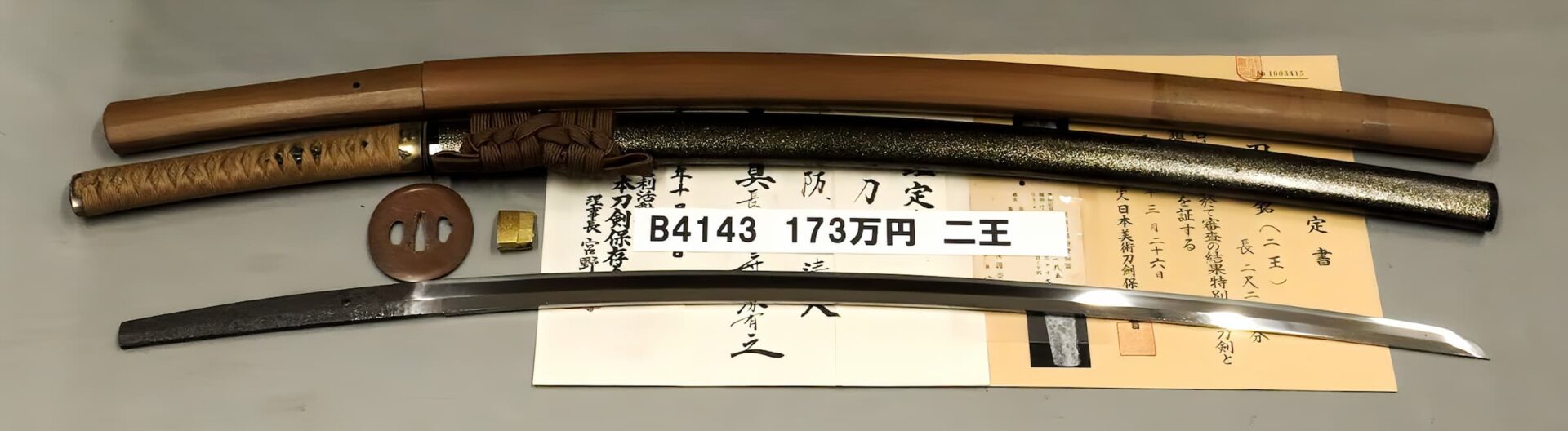
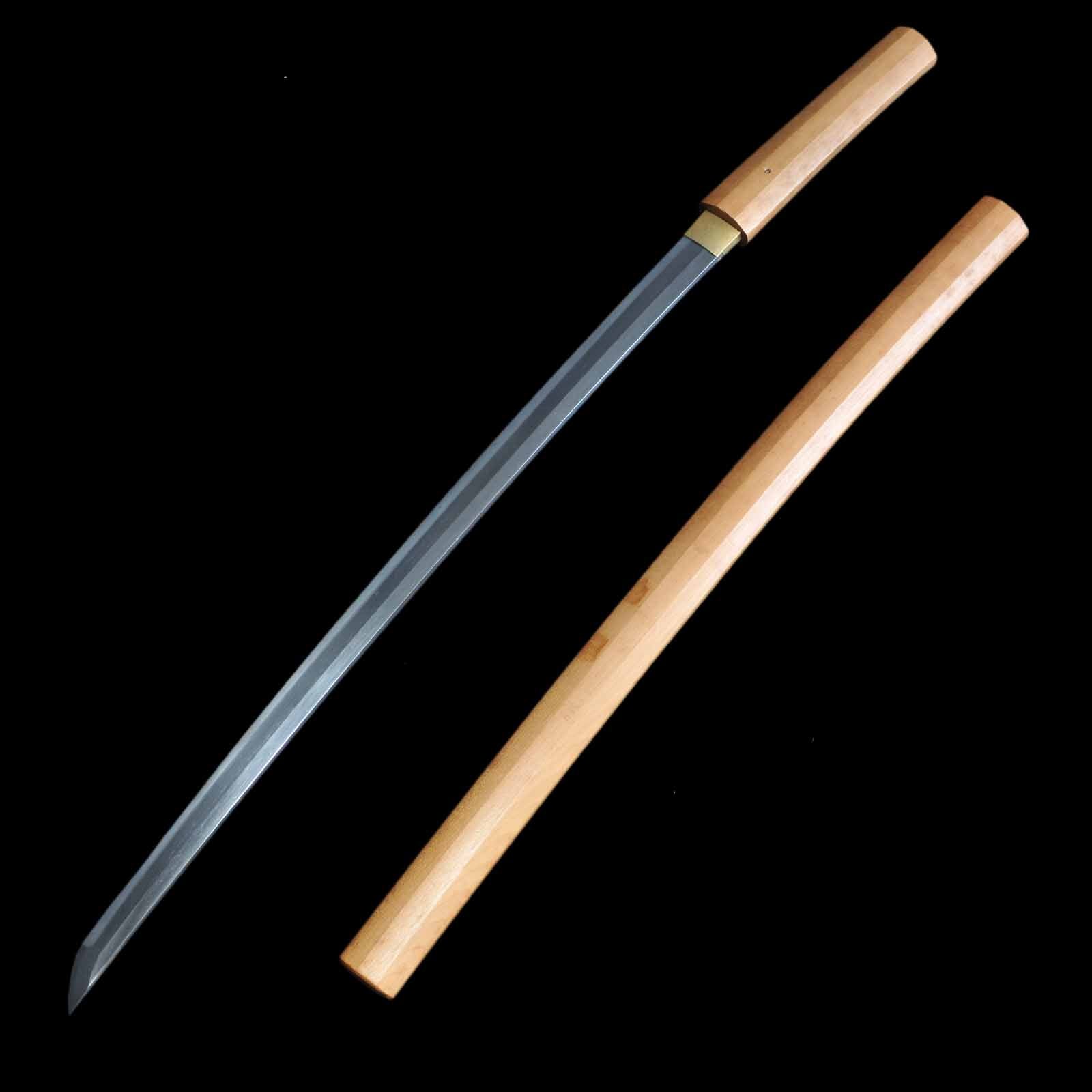
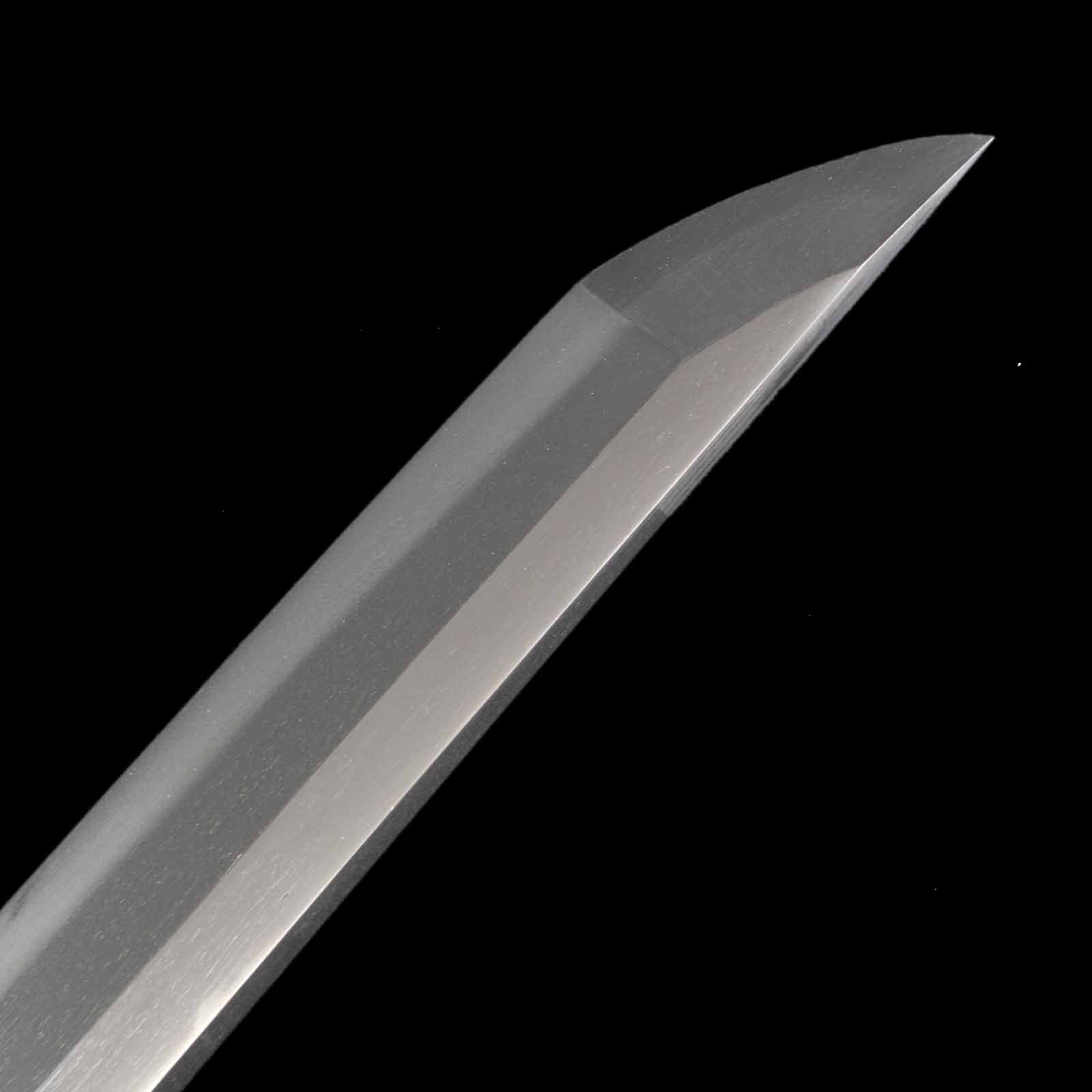
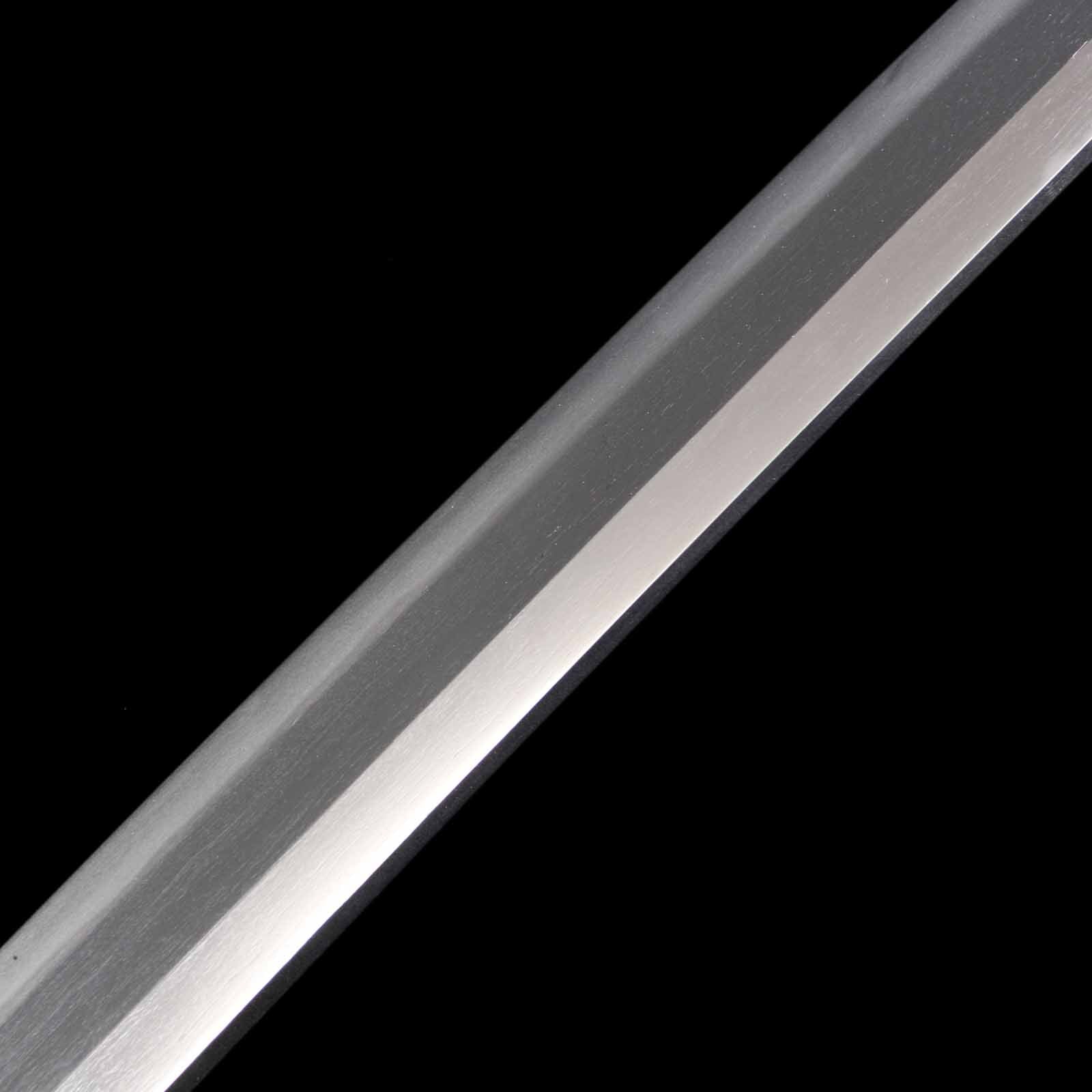
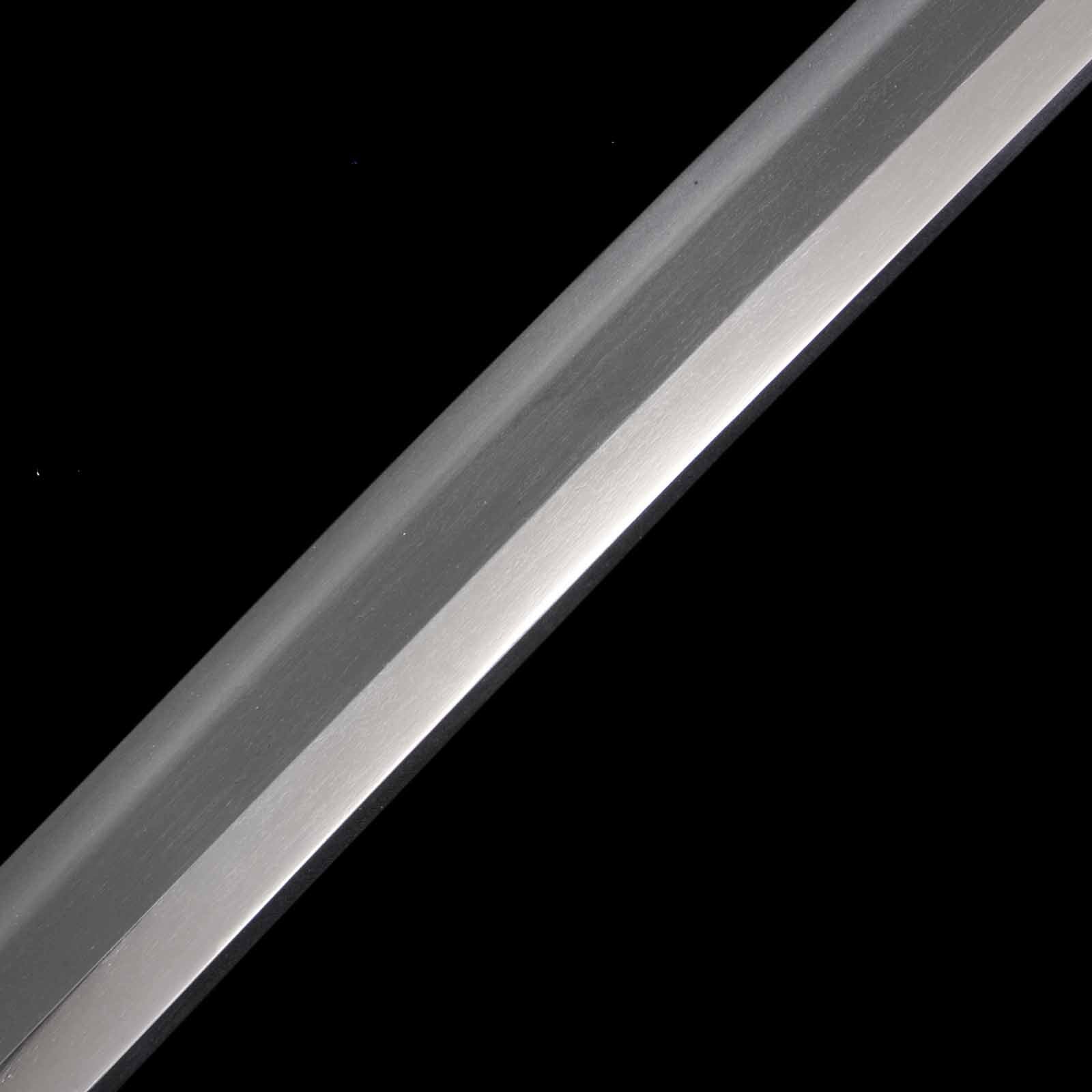
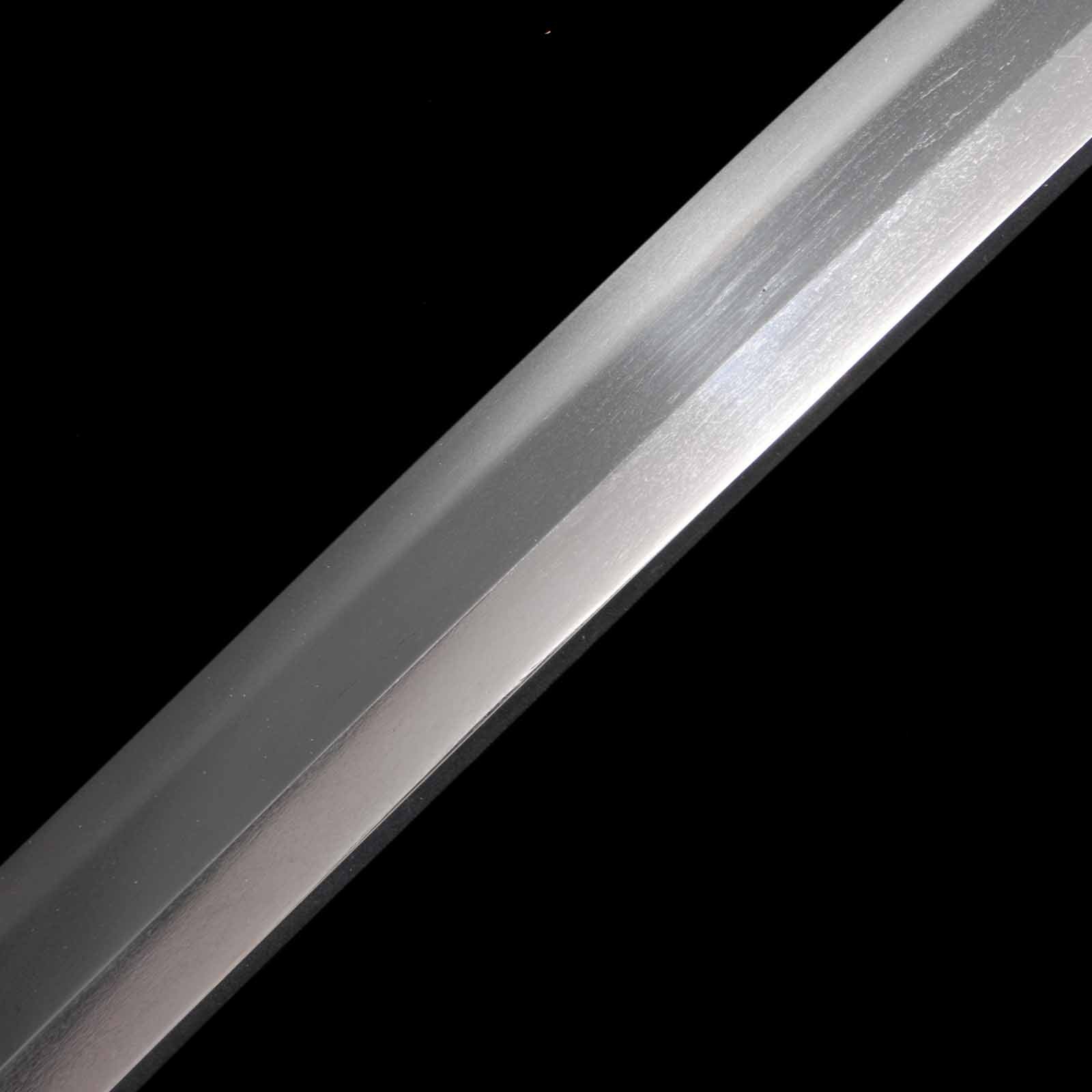
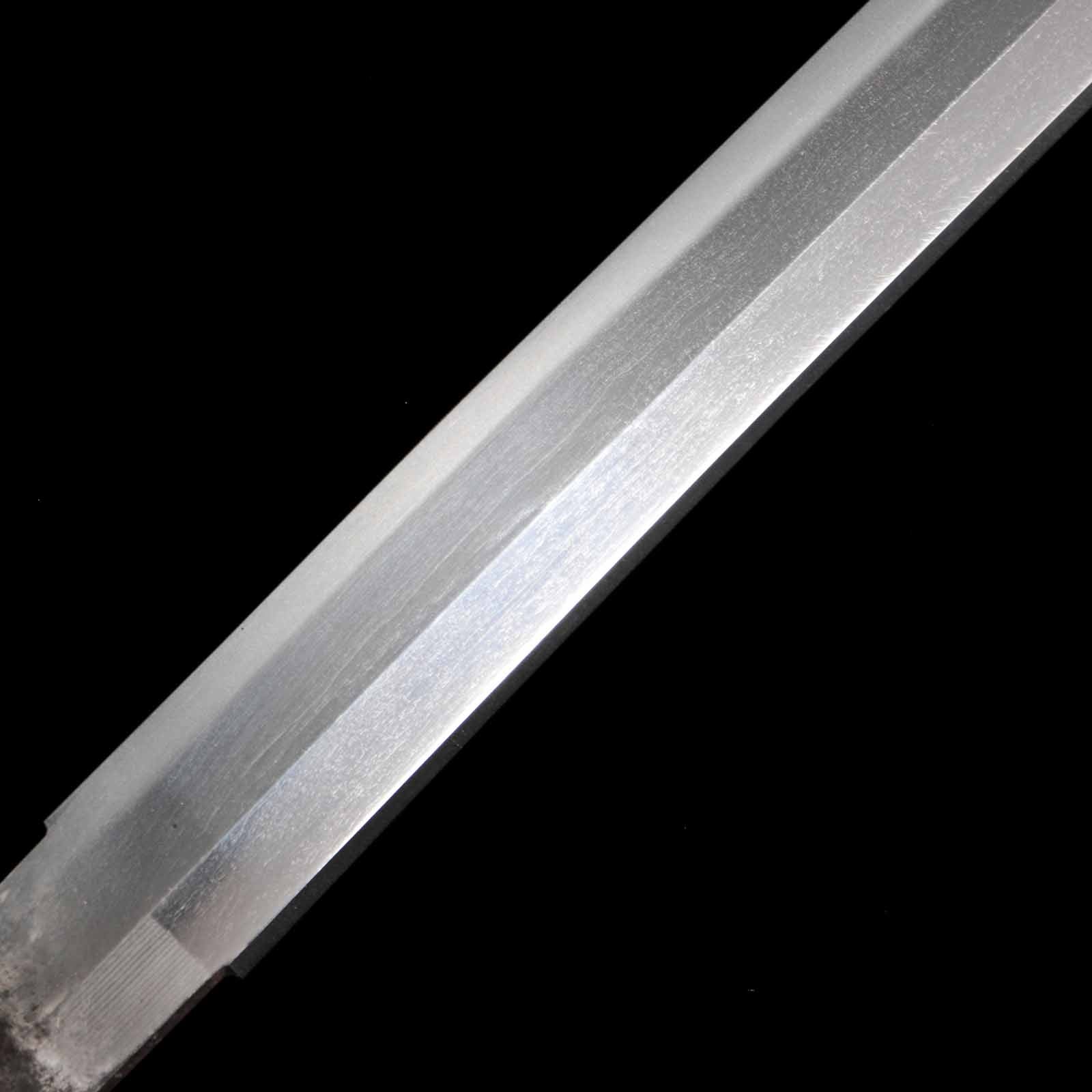
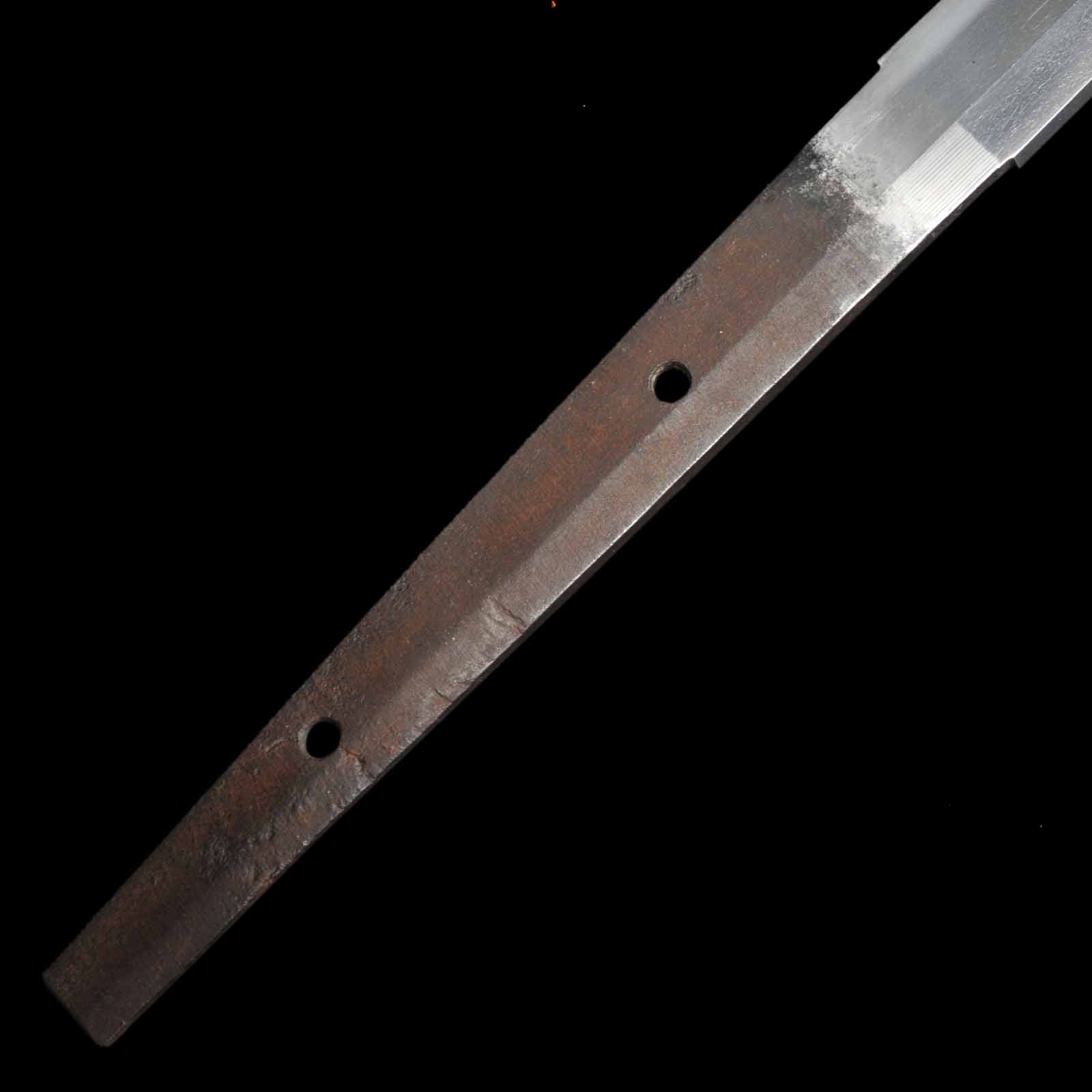
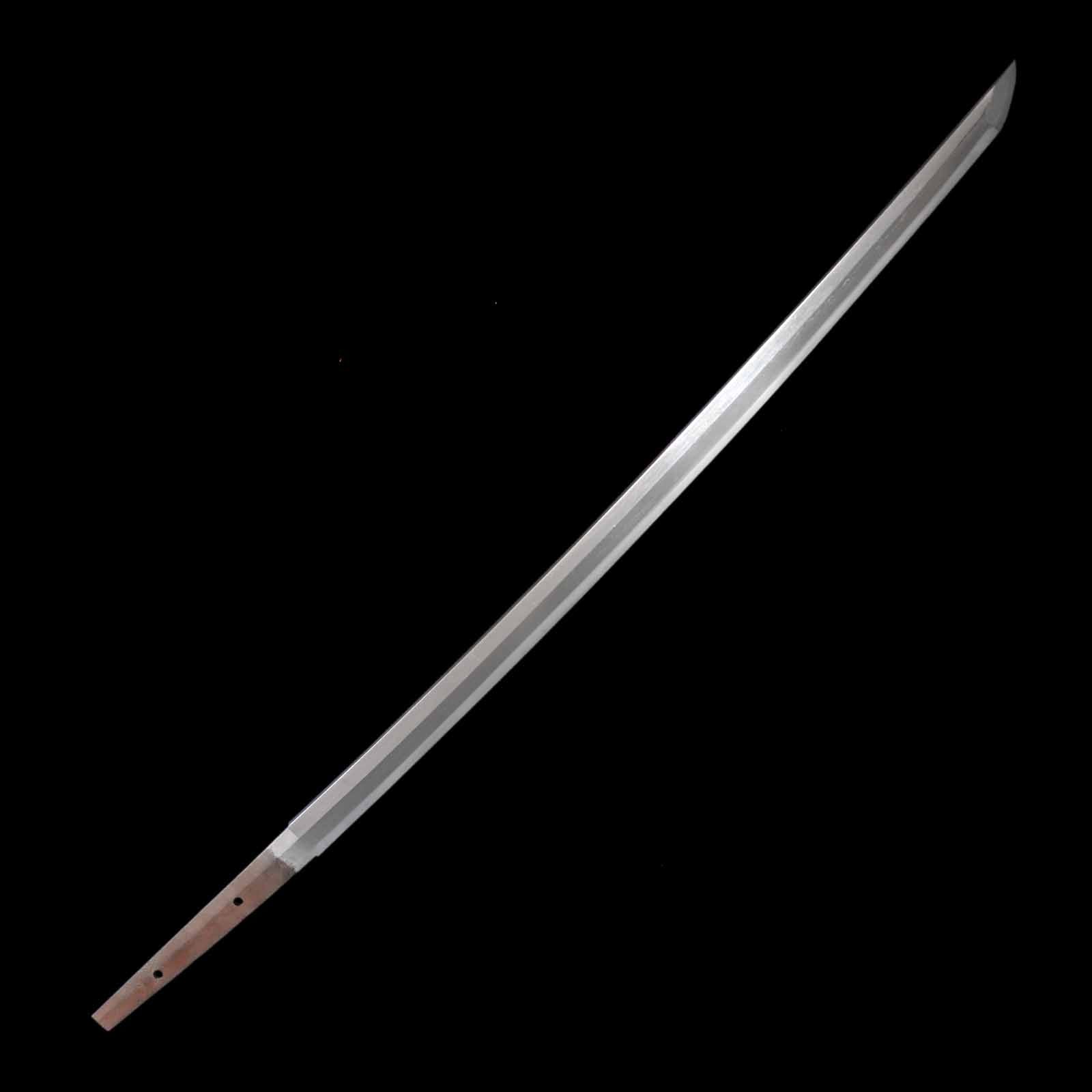
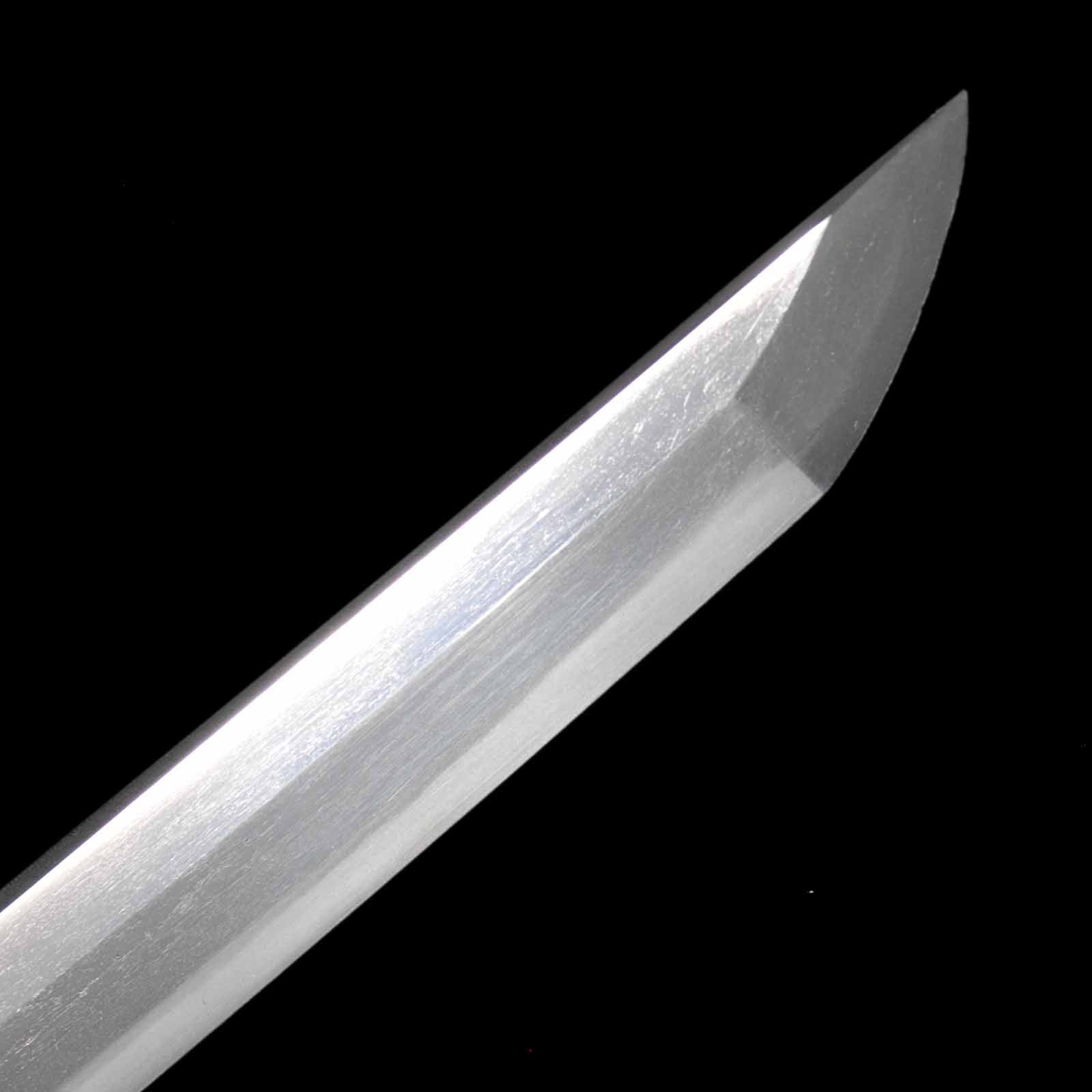
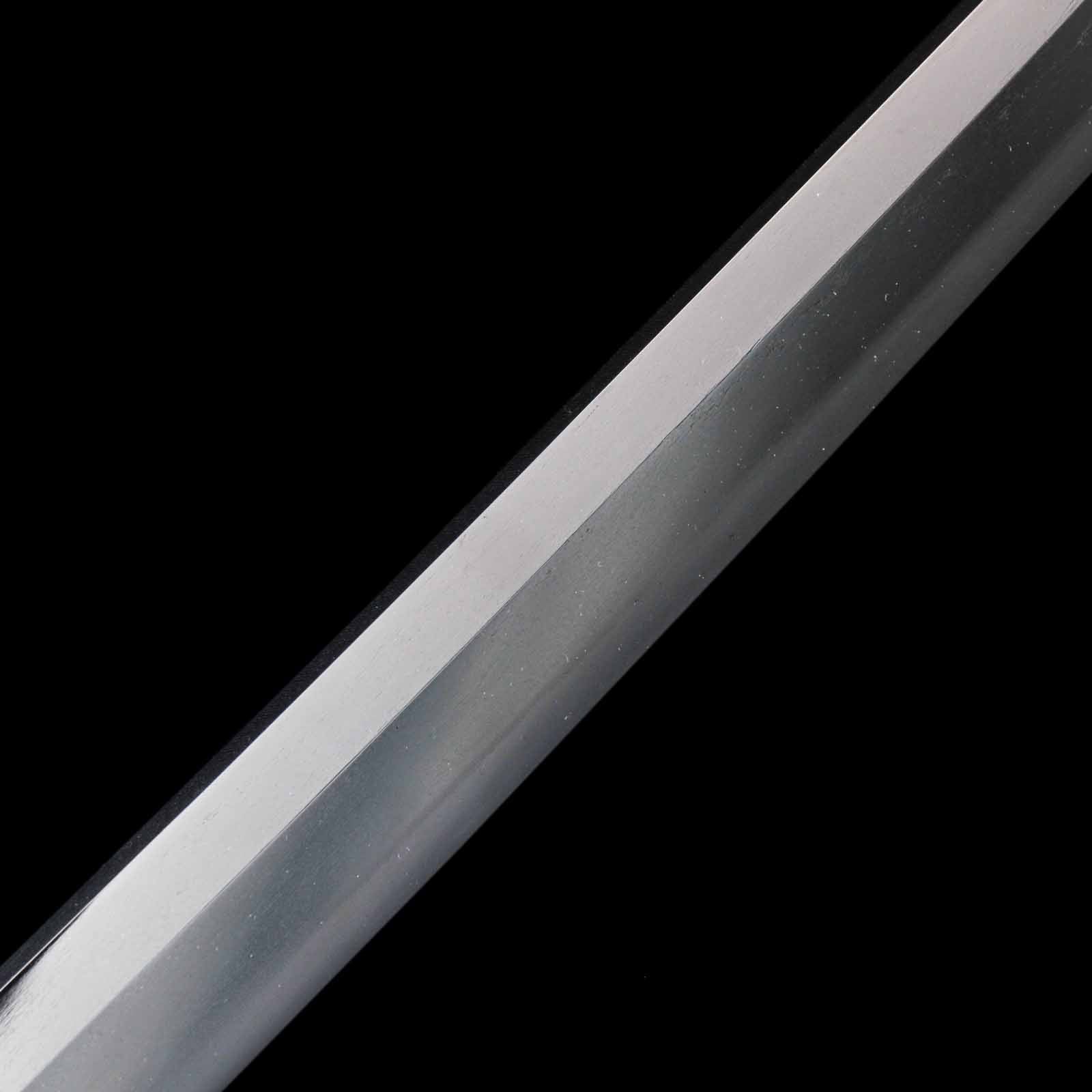
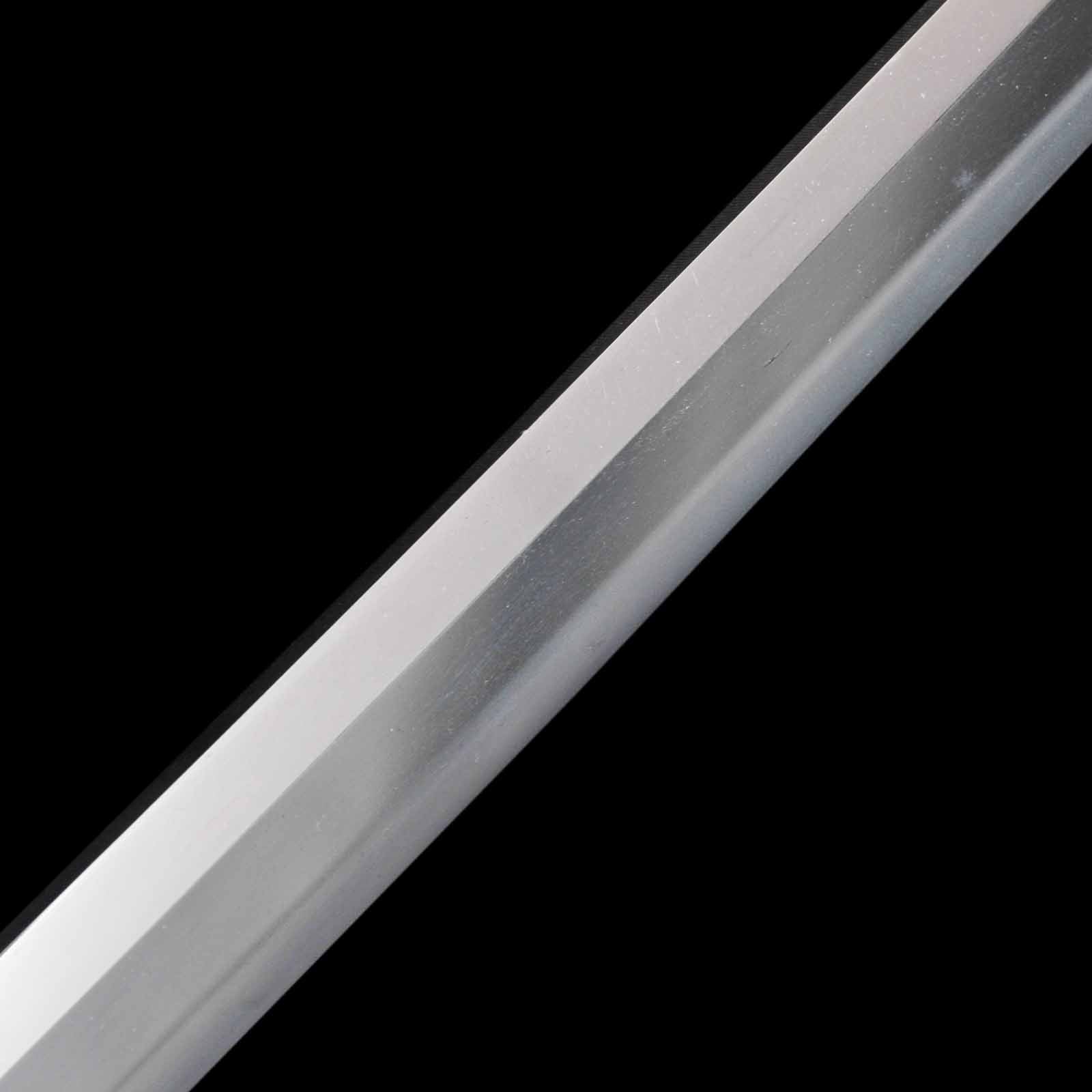
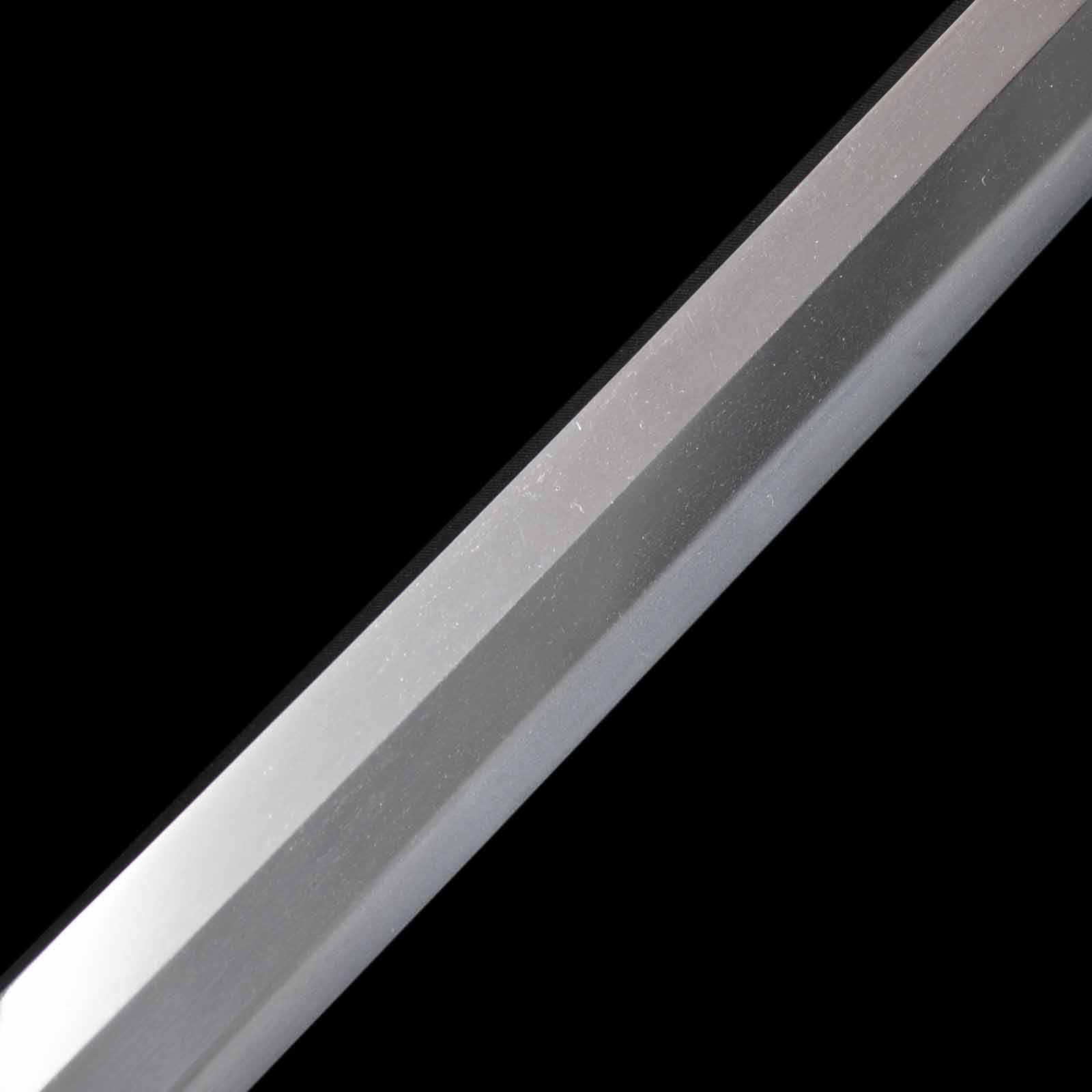
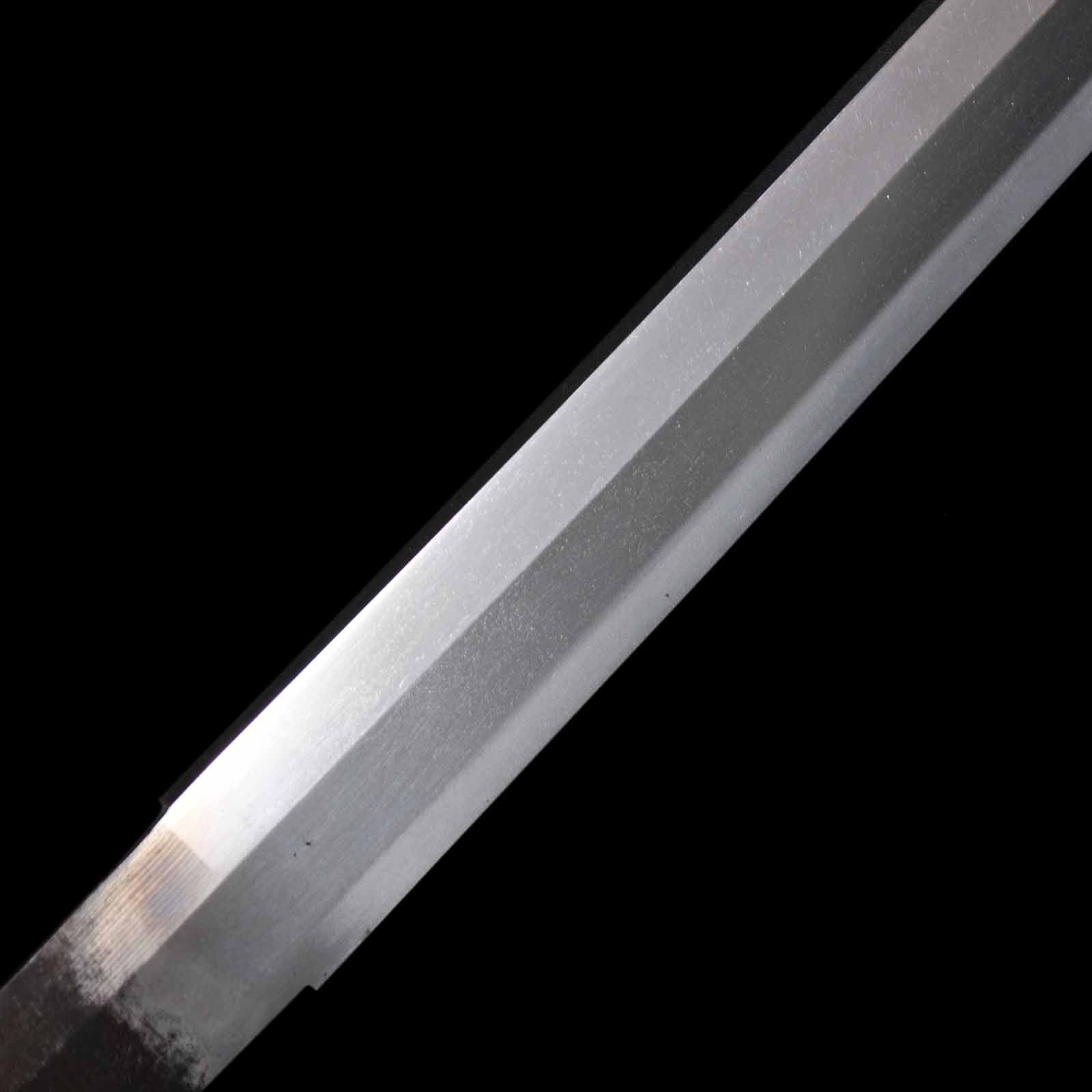
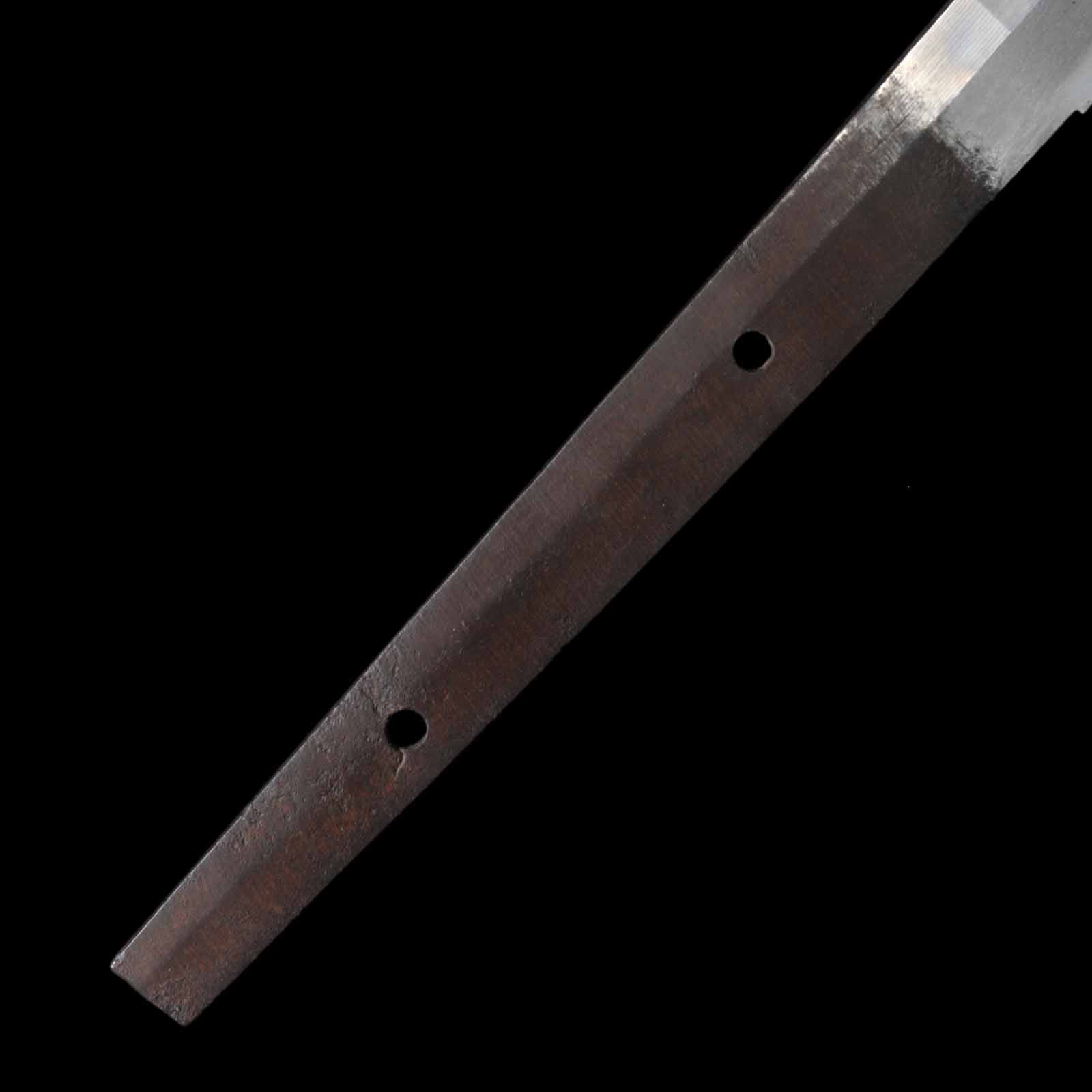
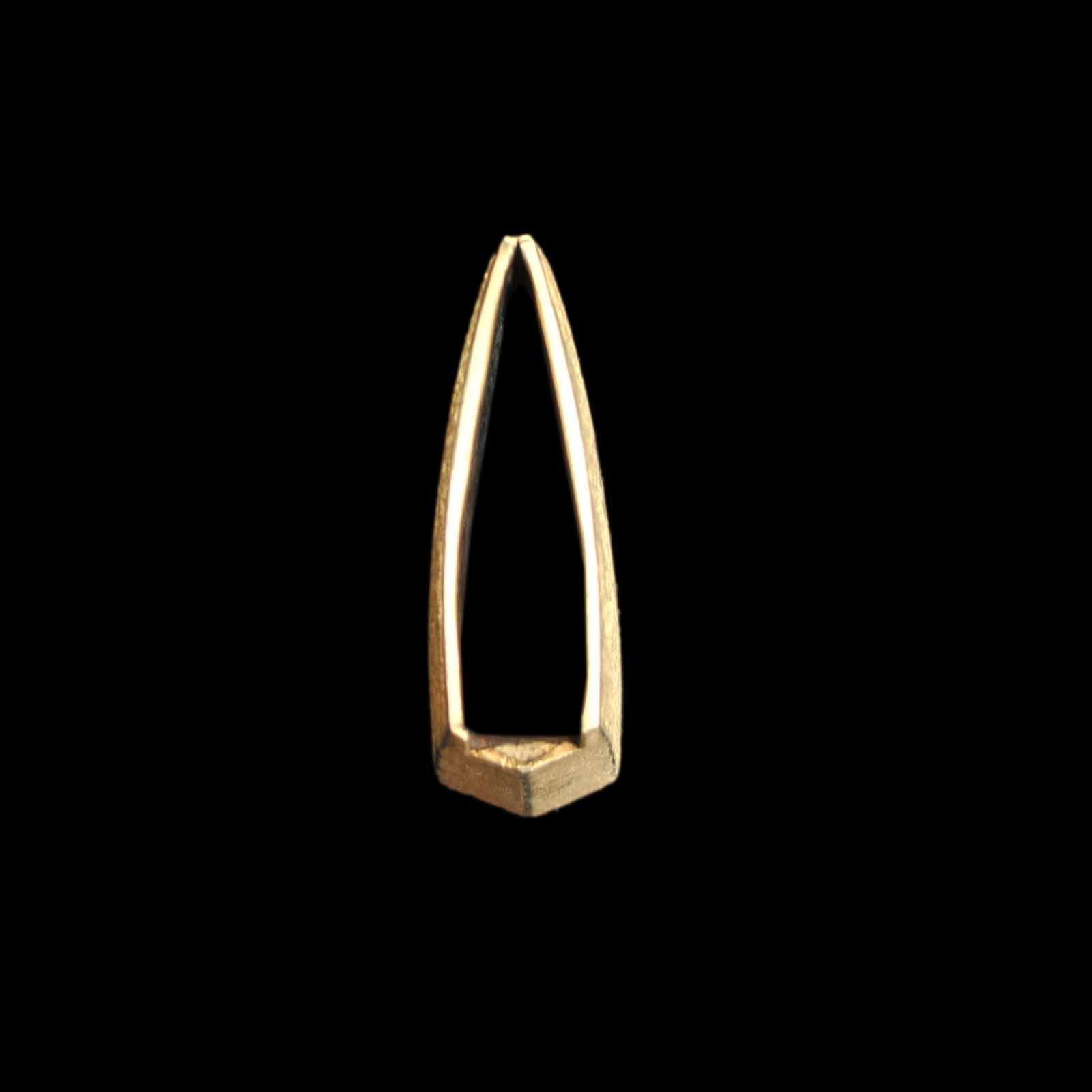
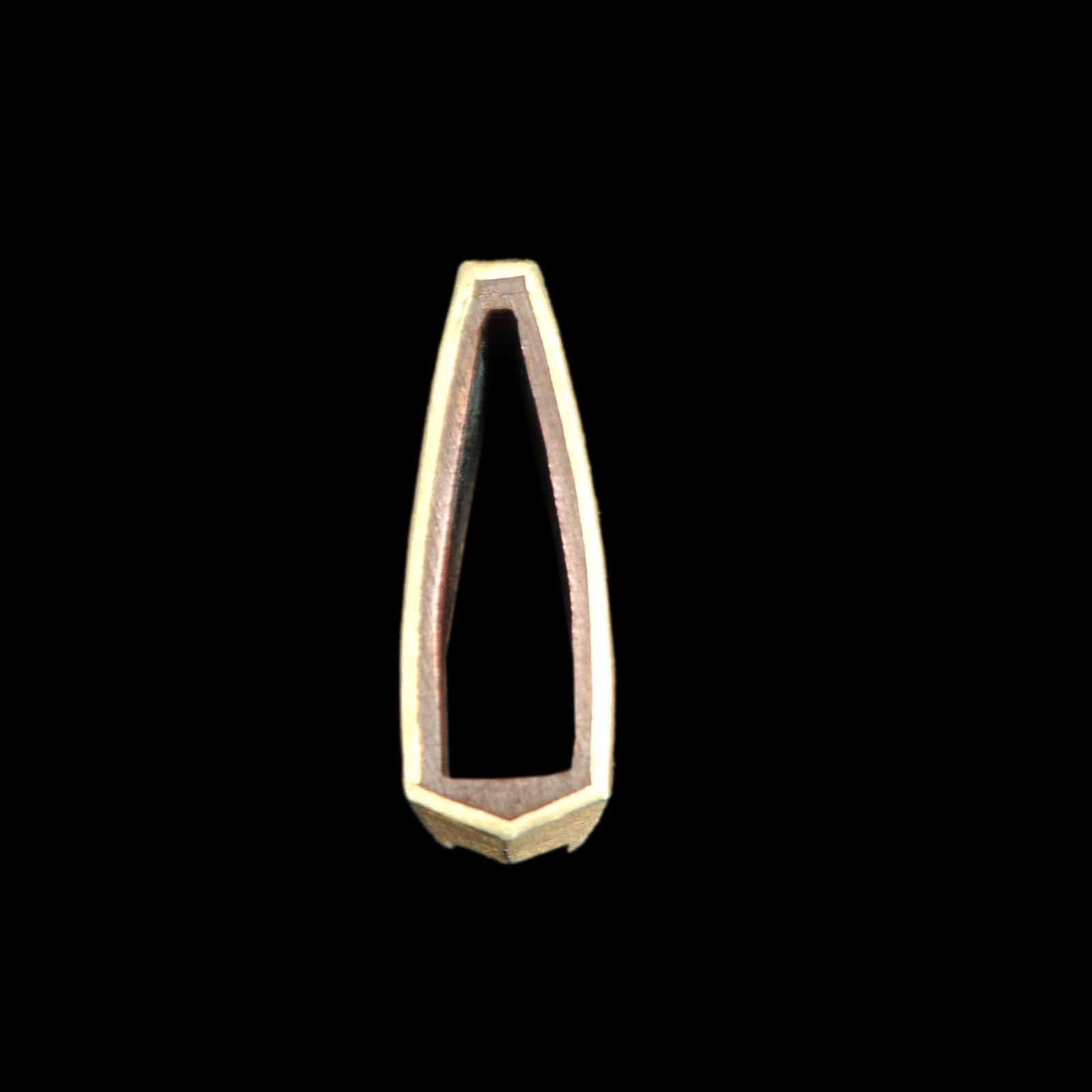
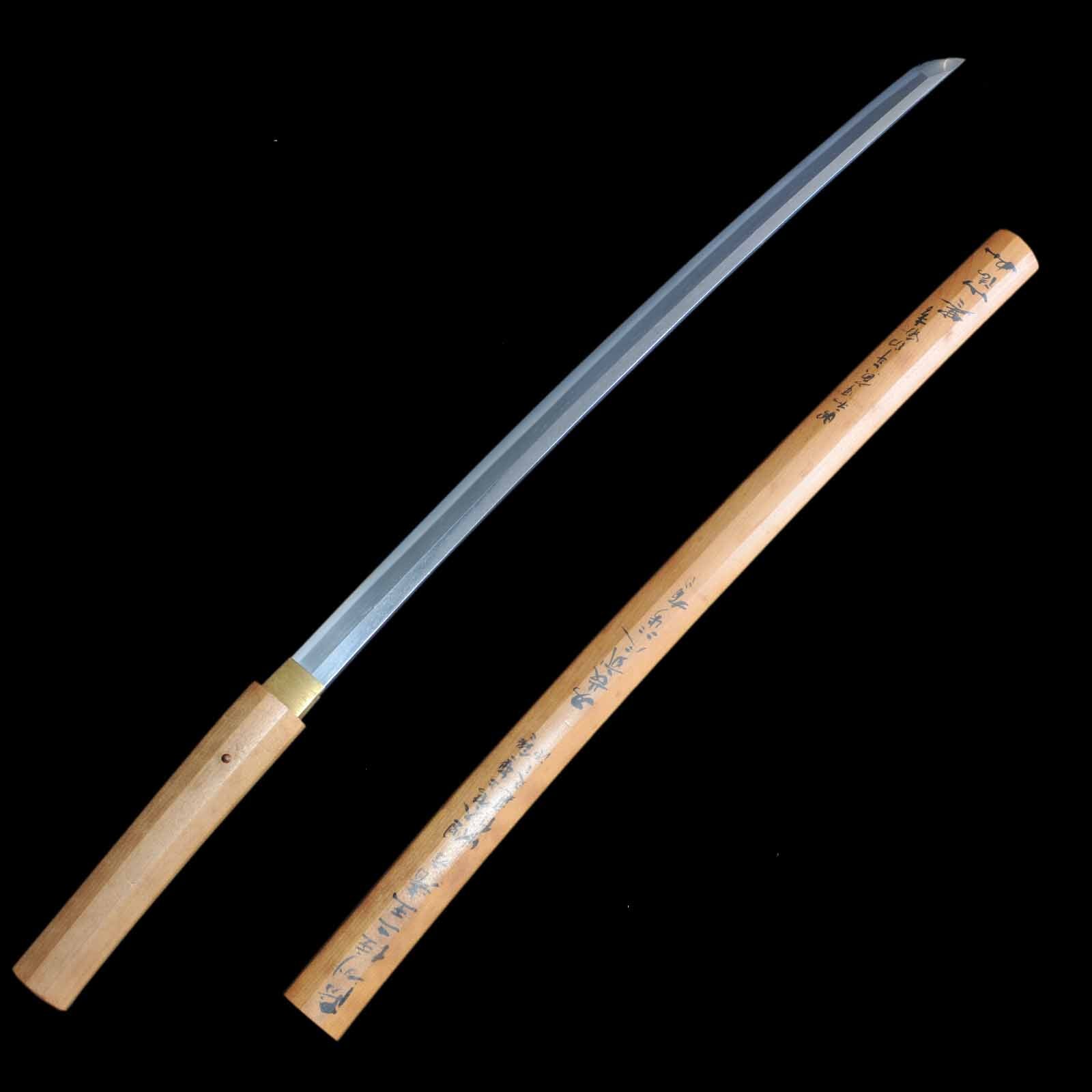
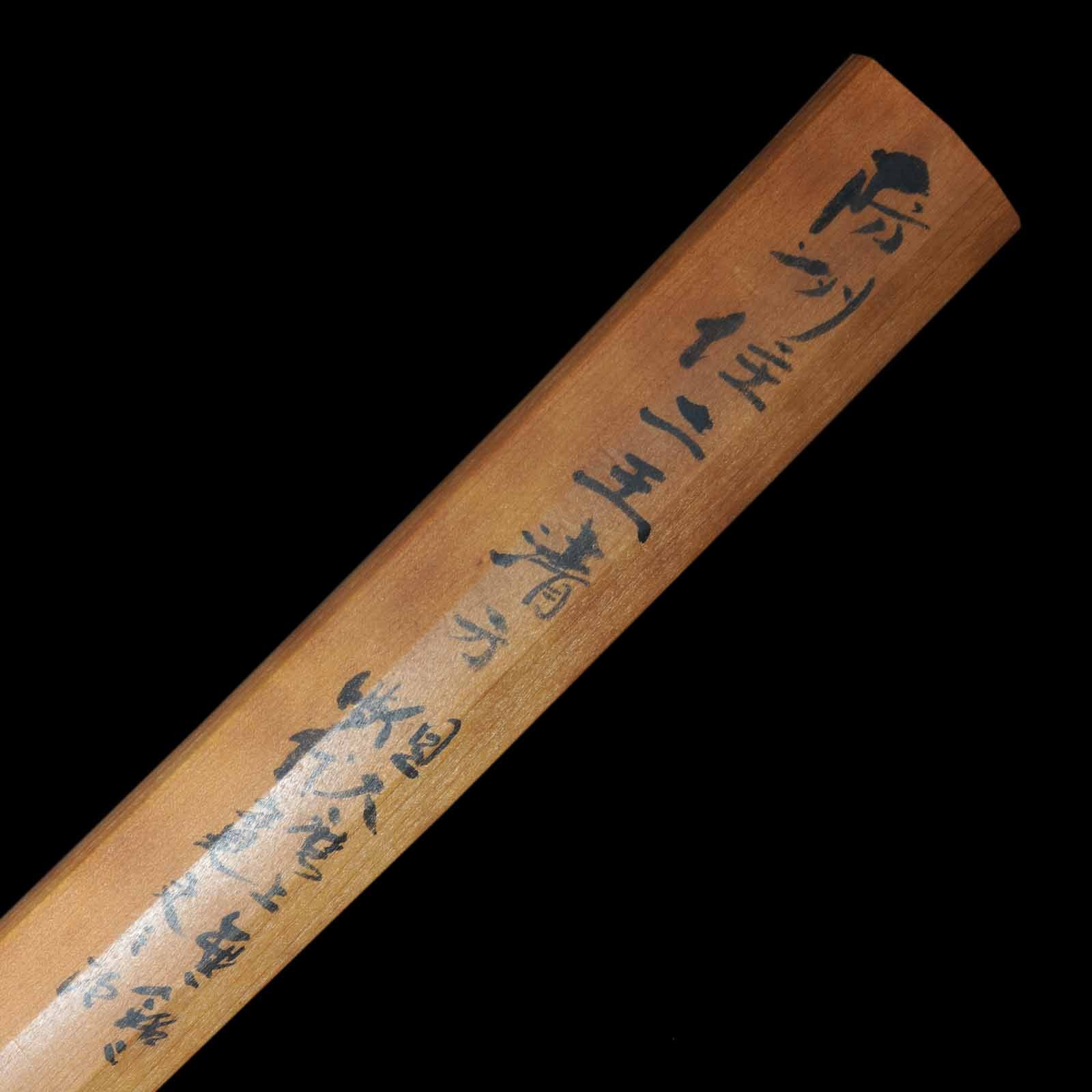
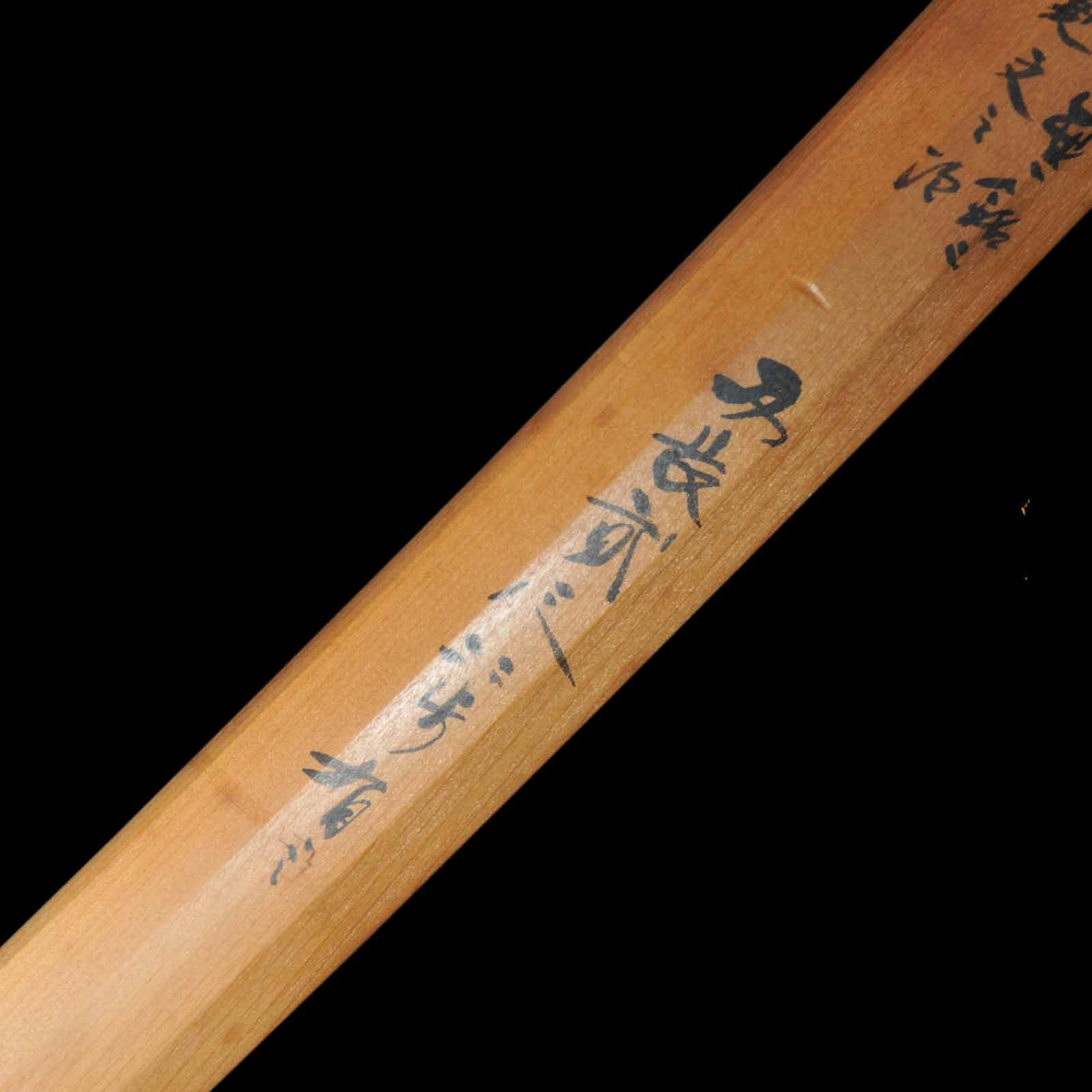
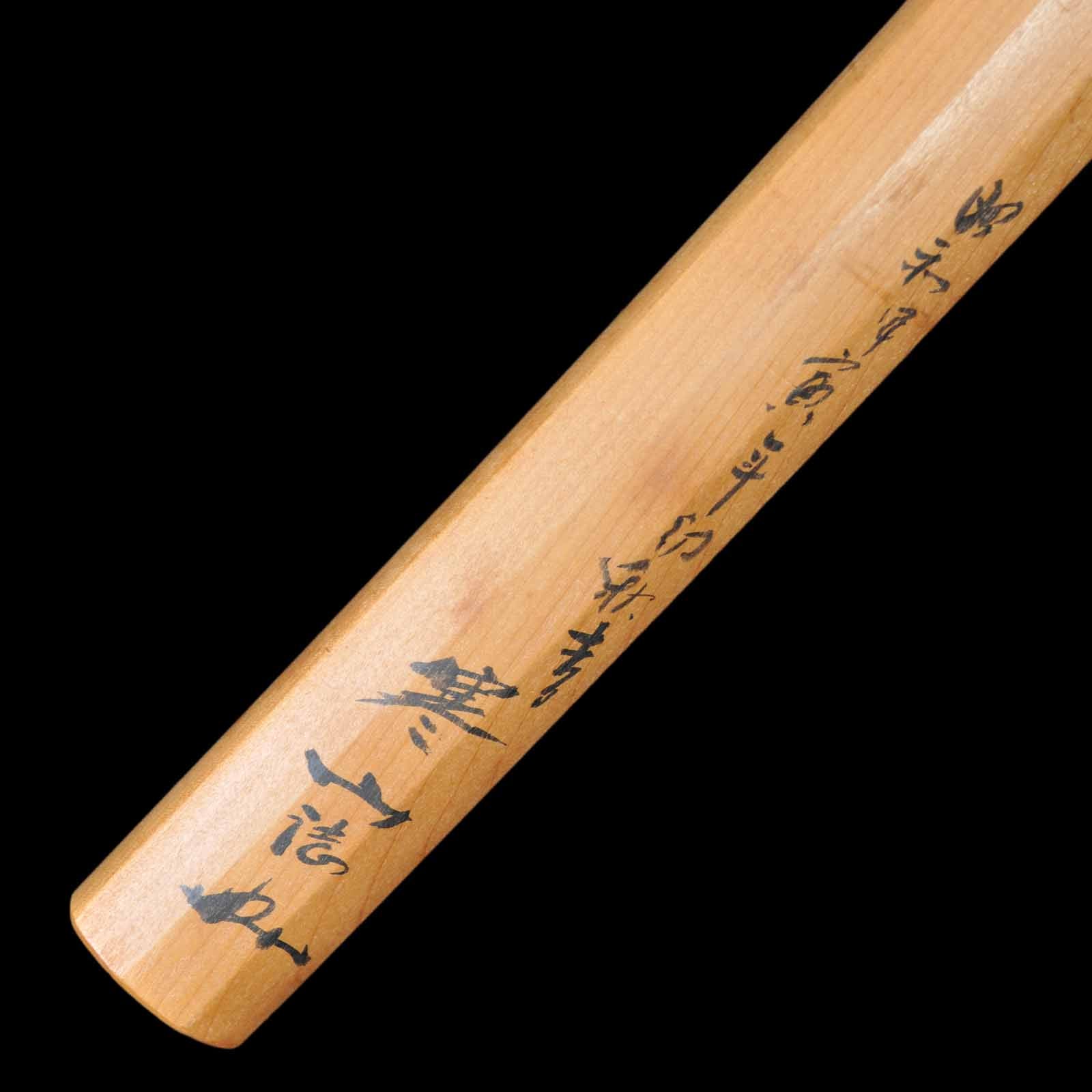
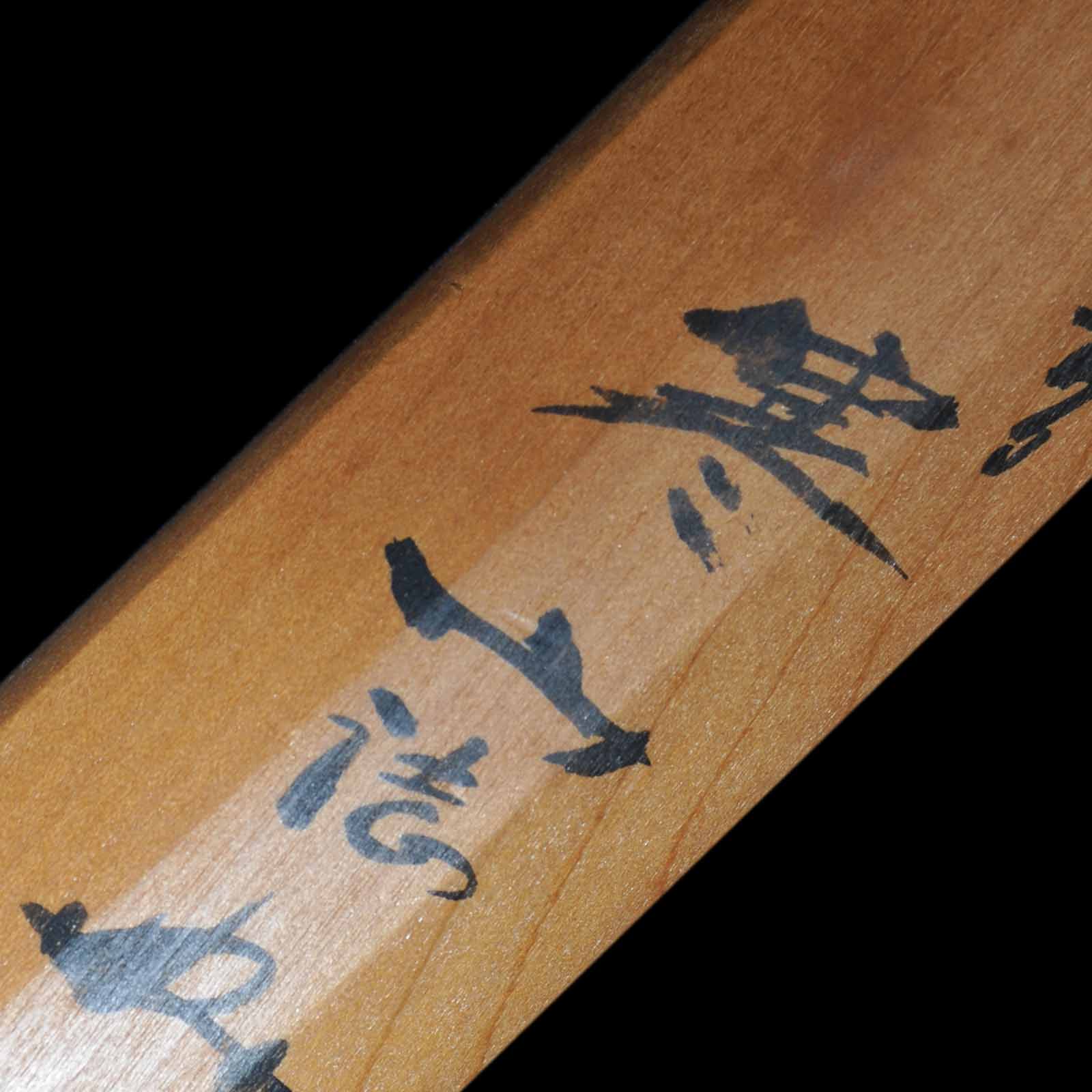
本作は、新刀研究の権威である佐藤寒山先生によって「二王清真」と極められた無銘の刀です。刀身の状態は極めて良好で、欠点や打ち傷、刃こぼれなどは一切見られません。肌目は詰んだ板目肌となり、刃文は沸のついた美しい直刃を焼いています。帽子は真っ直ぐに入り、大丸へと返っています。 白鞘には佐藤寒山先生による以下の鞘書きがございます。 「防州住二王清真 大磨上無銘 時代寛文 刃長二尺二分有 昭和甲寅歳初秋吉日 寒山」 これは、本作が周防国(現在の山口県)の二王派の絵師、清真の手による大磨上無銘の作であることを示しています。刃長は二尺二分で、昭和49年(1974年)の初秋に寒山先生によって鑑定されました。 二王派は、周防国において二王三郎清綱を実質的な祖とする刀工集団です。鎌倉時代中期から室町時代末期にかけて隆盛を極め、江戸時代の新刀期に至るまでその伝統は途絶えることなく続きました。周防国には大和国・東大寺の荘園が多く存在したことから、二王派は大和伝の刀工と密接な交流があり、その作風には大和伝の気質が強く反映されているのが特徴です。 この素晴らしい名刀を、家宝としてお手元に置く絶好の機会です。今回はお求めやすい価格にてご案内させていただきます。 長さ:62.1 cm(二尺五分) 反り:0.8 cm 目釘穴:2個 先幅:20.3 mm 先重ね:4.3 mm 元幅:28.3 mm 元重ね:6.2 mm 銘:無銘 時代:新刀(寛文頃) 体配:鎬造、庵棟 地鉄:板目肌 刃文:直刃 帽子:直ぐに入り大丸に返る 刀身重量:630 g 茎:大磨上 外装:白鞘 登録証:栃木県 第33519号 ご希望の刀剣が掲載されていない場合は、お気軽にお問い合わせください。
 NihontoWatch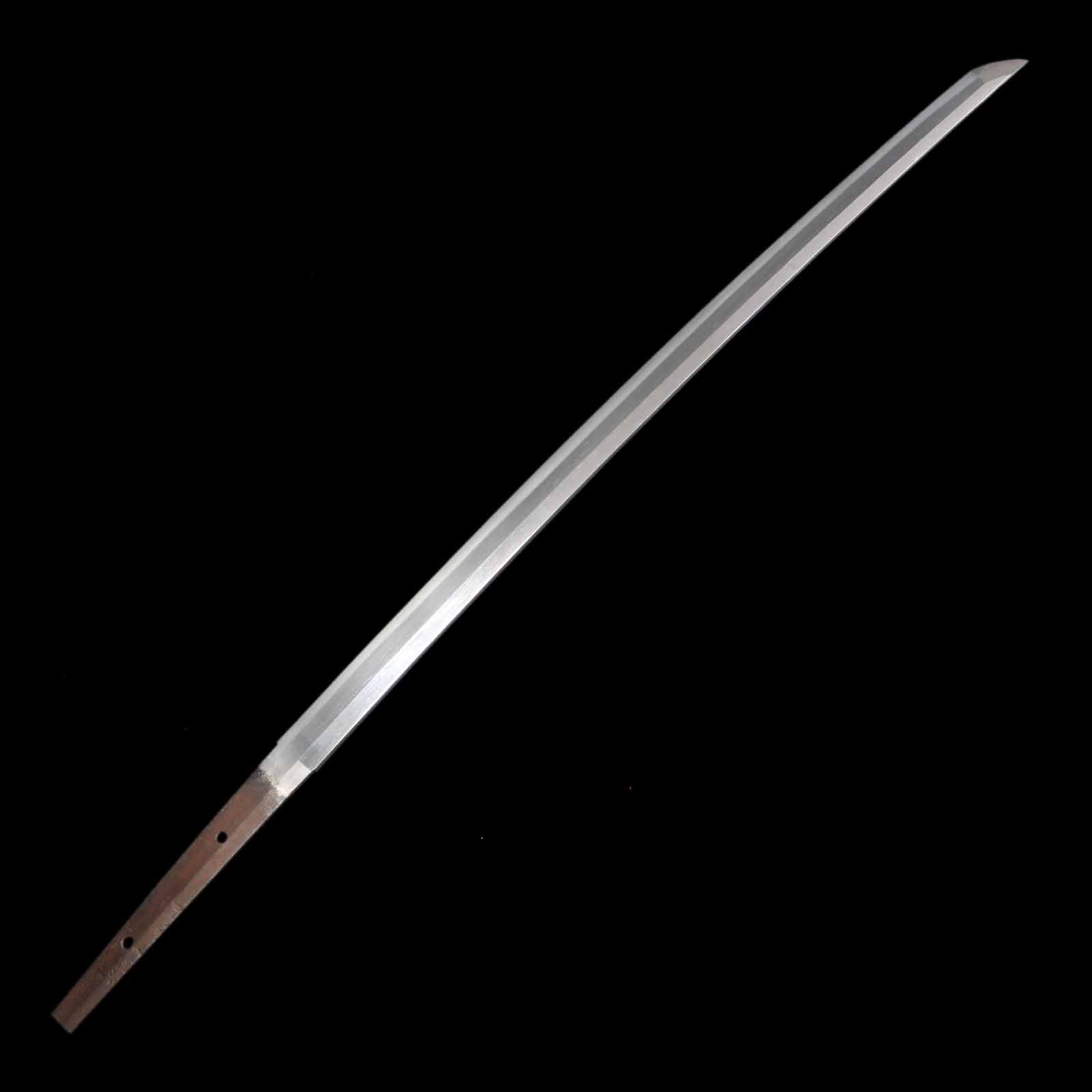
脇物 · 周防
現在13点販売中
周防国二王派は、山陽道の西端、大和より海路と陸路で結ばれたこの国に興った古刀の一派である。保延頃の清真または清平を祖と伝えるが、いずれにも確かな遺作を見ず、今日では鎌倉時代の清綱を事実上の祖と仰ぐ。同派の在銘作として最も古いのは「文永二年三月 清綱」[[c:1]]と書き下しの銘をもつ太刀で、厳島神社に伝わり、初代を鑑する基準作とされる。次いで建武二年紀の「防州玖珂庄清綱」銘の短刀が知られ、清綱の名が鎌倉末より南北朝、室町を経て新刀期に至るまで代を重ねて続いたことを示す。二王の呼称は同国仁保庄に居住したことに由来するとの説が有力である。周防には東大寺をはじめとする寺領が多く存し、二王派の作風に大和色が濃いのは、この大和本国との交流に負うものと考えられている。 構成員がそろって記すのは、柾がかって肌立つ地と、湿りをふくんだ直刃調の刃である。鍛えは板目に杢や流れ肌を交え、処々強く流れて柾がかり、細かに肌立ち、地沸がつき、地景の入るものもある。刃文は細直刃を基調とし、小互の目、小乱れ、小のたれを交え、小足・葉が入り、刃縁にほつれ・打のけ・喰違刃を見せ、小沸つき、金筋・砂流しがかかる。そして地鉄には冴えた映りではなく白け映りが立ち、これと対をなして匂口がうるむ。この白け映りとうるみの取り合わせこそ、構成員が立ち返って同派の個性と名指すところである。帽子は直ぐに小丸へ返るものが多い。鎌倉末期の古二王、すなわち清綱の手は、太刀が細身で鎬高く腰反り高い姿を示し、短刀は平造でわずかに内反りつく。これに対し応永頃の清永ら後代の末二王は、小板目のよく約んだ地に流れ柾を交え、身幅広く反りの浅い平造短刀を多く遺し、櫃内に鶴亀や二王の彫を施す作も見せて、古二王の静けさからやや作域を広げる。 鑑定の勘所は、拠り所を同じくする大和や青江、山城来の直刃とどう分かつかにある。流れて柾がかる鍛えは大和の血脈を望ませ、細直刃の素地は来を望ませるが、来や手掻に見る冴えた匂口は、ここではより湿った沈みごころの態に替わる。白け映りとうるみの一方ではなく、その二つが地と刃に並び立つことが、同派を他と分かつ見どころである。在銘の太刀・短刀は棟寄りに細鏨の二字銘を切り、原鑢の鷹の羽を残すものがあり、これを古い手の清綱の典型として初代に充てる。無銘大磨上の刀は、流れて柾がかり肌立った鍛え、白け映り、うるみ刃文という同じ拠り所を裏から読んで極められる。主要工としては事実上の祖たる清綱が同派を測る代であり、末二王の清永がこれに次いで一派の継続を支える。遺例は確実なものこそ多くないが、最古手の在銘太刀をはじめ在銘・無銘の数口が基準作に列なり、地刃に緩みなく同派の特色をよくあらわす。来歴の遺るところには格があり、ある太刀は徳川宗家の手を経て後に美術館へ納まり、在銘の一口は大阪の旧蔵を経て伝来し、年紀の基準作は厳島神社に伝存する。鷹の羽の鑢目と古い二字銘を残した在銘の清綱は、西国の鎌倉作を集める者が出会い得る最も稀なもののひとつで、現れたときには一里塚となる。 詳しく見る →
江戸時代
江戸は刀の目利きの時代である。本阿弥の鑑定、1719年の享保名物帳、盛んな刀剣書が、戦で抜かれることのなくなった刀を学問の対象へと変えていった。
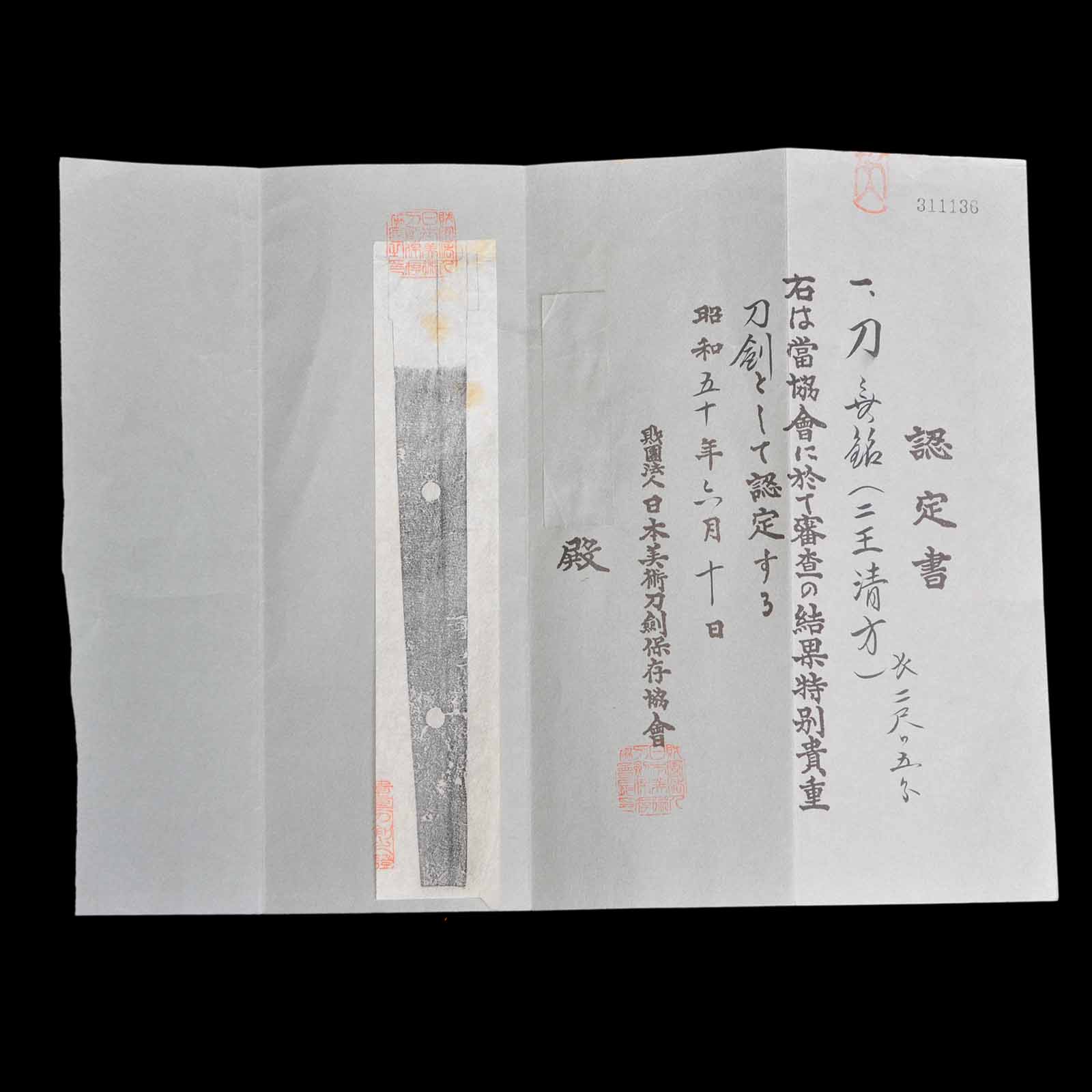
本作はNBTHKの旧鑑定書(貴重・特別貴重)を有しますが、これらは現在発行されておらず、信頼性に欠けるとされています。極めを確認するには、公的な鑑定機関(NBTHK・NTHKなど)への再提出による現代の鑑定をご検討いただけます。
As a general rule, returns/exchanges are not accepted on Japanese sword orders unless damaged upon delivery. Other items: returns/exchanges accepted within 7 days of delivery. Cancellation for personal reasons incurs a 30% restocking fee (70% refunded). Return shipping must be prepaid and insured by the buyer; shipping/handling fees are non-refundable. Contact katana@tozando.co.jp to initiate a return.
本作は、新刀研究の権威である佐藤寒山先生によって「二王清真」と極められた無銘の刀です。刀身の状態は極めて良好で、欠点や打ち傷、刃こぼれなどは一切見られません。肌目は詰んだ板目肌となり、刃文は沸のついた美しい直刃を焼いています。帽子は真っ直ぐに入り、大丸へと返っています。 白鞘には佐藤寒山先生による以下の鞘書きがございます。 「防州住二王清真 大磨上無銘 時代寛文 刃長二尺二分有 昭和甲寅歳初秋吉日 寒山」 これは、本作が周防国(現在の山口県)の二王派の絵師、清真の手による大磨上無銘の作であることを示しています。刃長は二尺二分で、昭和49年(1974年)の初秋に寒山先生によって鑑定されました。 二王派は、周防国において二王三郎清綱を実質的な祖とする刀工集団です。鎌倉時代中期から室町時代末期にかけて隆盛を極め、江戸時代の新刀期に至るまでその伝統は途絶えることなく続きました。周防国には大和国・東大寺の荘園が多く存在したことから、二王派は大和伝の刀工と密接な交流があり、その作風には大和伝の気質が強く反映されているのが特徴です。 この素晴らしい名刀を、家宝としてお手元に置く絶好の機会です。今回はお求めやすい価格にてご案内させていただきます。 長さ:62.1 cm(二尺五分) 反り:0.8 cm 目釘穴:2個 先幅:20.3 mm 先重ね:4.3 mm 元幅:28.3 mm 元重ね:6.2 mm 銘:無銘 時代:新刀(寛文頃) 体配:鎬造、庵棟 地鉄:板目肌 刃文:直刃 帽子:直ぐに入り大丸に返る 刀身重量:630 g 茎:大磨上 外装:白鞘 登録証:栃木県 第33519号 ご希望の刀剣が掲載されていない場合は、お気軽にお問い合わせください。
NihontoWatch脇物 · 周防
現在13点販売中
周防国二王派は、山陽道の西端、大和より海路と陸路で結ばれたこの国に興った古刀の一派である。保延頃の清真または清平を祖と伝えるが、いずれにも確かな遺作を見ず、今日では鎌倉時代の清綱を事実上の祖と仰ぐ。同派の在銘作として最も古いのは「文永二年三月 清綱」[[c:1]]と書き下しの銘をもつ太刀で、厳島神社に伝わり、初代を鑑する基準作とされる。次いで建武二年紀の「防州玖珂庄清綱」銘の短刀が知られ、清綱の名が鎌倉末より南北朝、室町を経て新刀期に至るまで代を重ねて続いたことを示す。二王の呼称は同国仁保庄に居住したことに由来するとの説が有力である。周防には東大寺をはじめとする寺領が多く存し、二王派の作風に大和色が濃いのは、この大和本国との交流に負うものと考えられている。 構成員がそろって記すのは、柾がかって肌立つ地と、湿りをふくんだ直刃調の刃である。鍛えは板目に杢や流れ肌を交え、処々強く流れて柾がかり、細かに肌立ち、地沸がつき、地景の入るものもある。刃文は細直刃を基調とし、小互の目、小乱れ、小のたれを交え、小足・葉が入り、刃縁にほつれ・打のけ・喰違刃を見せ、小沸つき、金筋・砂流しがかかる。そして地鉄には冴えた映りではなく白け映りが立ち、これと対をなして匂口がうるむ。この白け映りとうるみの取り合わせこそ、構成員が立ち返って同派の個性と名指すところである。帽子は直ぐに小丸へ返るものが多い。鎌倉末期の古二王、すなわち清綱の手は、太刀が細身で鎬高く腰反り高い姿を示し、短刀は平造でわずかに内反りつく。これに対し応永頃の清永ら後代の末二王は、小板目のよく約んだ地に流れ柾を交え、身幅広く反りの浅い平造短刀を多く遺し、櫃内に鶴亀や二王の彫を施す作も見せて、古二王の静けさからやや作域を広げる。 鑑定の勘所は、拠り所を同じくする大和や青江、山城来の直刃とどう分かつかにある。流れて柾がかる鍛えは大和の血脈を望ませ、細直刃の素地は来を望ませるが、来や手掻に見る冴えた匂口は、ここではより湿った沈みごころの態に替わる。白け映りとうるみの一方ではなく、その二つが地と刃に並び立つことが、同派を他と分かつ見どころである。在銘の太刀・短刀は棟寄りに細鏨の二字銘を切り、原鑢の鷹の羽を残すものがあり、これを古い手の清綱の典型として初代に充てる。無銘大磨上の刀は、流れて柾がかり肌立った鍛え、白け映り、うるみ刃文という同じ拠り所を裏から読んで極められる。主要工としては事実上の祖たる清綱が同派を測る代であり、末二王の清永がこれに次いで一派の継続を支える。遺例は確実なものこそ多くないが、最古手の在銘太刀をはじめ在銘・無銘の数口が基準作に列なり、地刃に緩みなく同派の特色をよくあらわす。来歴の遺るところには格があり、ある太刀は徳川宗家の手を経て後に美術館へ納まり、在銘の一口は大阪の旧蔵を経て伝来し、年紀の基準作は厳島神社に伝存する。鷹の羽の鑢目と古い二字銘を残した在銘の清綱は、西国の鎌倉作を集める者が出会い得る最も稀なもののひとつで、現れたときには一里塚となる。 詳しく見る →
江戸時代
江戸は刀の目利きの時代である。本阿弥の鑑定、1719年の享保名物帳、盛んな刀剣書が、戦で抜かれることのなくなった刀を学問の対象へと変えていった。
本作はNBTHKの旧鑑定書(貴重・特別貴重)を有しますが、これらは現在発行されておらず、信頼性に欠けるとされています。極めを確認するには、公的な鑑定機関(NBTHK・NTHKなど)への再提出による現代の鑑定をご検討いただけます。
As a general rule, returns/exchanges are not accepted on Japanese sword orders unless damaged upon delivery. Other items: returns/exchanges accepted within 7 days of delivery. Cancellation for personal reasons incurs a 30% restocking fee (70% refunded). Return shipping must be prepaid and insured by the buyer; shipping/handling fees are non-refundable. Contact katana@tozando.co.jp to initiate a return.
![Wakizashi - Tokuho - 作 二王派 - 脇差[長州萩住二王清貞・清忠]特別保存刀剣(日本美術刀剣保存協会)](/_next/image?url=https%3A%2F%2Fitbhfhyptogxcjbjfzwx.supabase.co%2Fstorage%2Fv1%2Fobject%2Fpublic%2Flisting-images%2Fworld-seiyudo%2FL31408%2F00.jpg&w=2560&q=90)