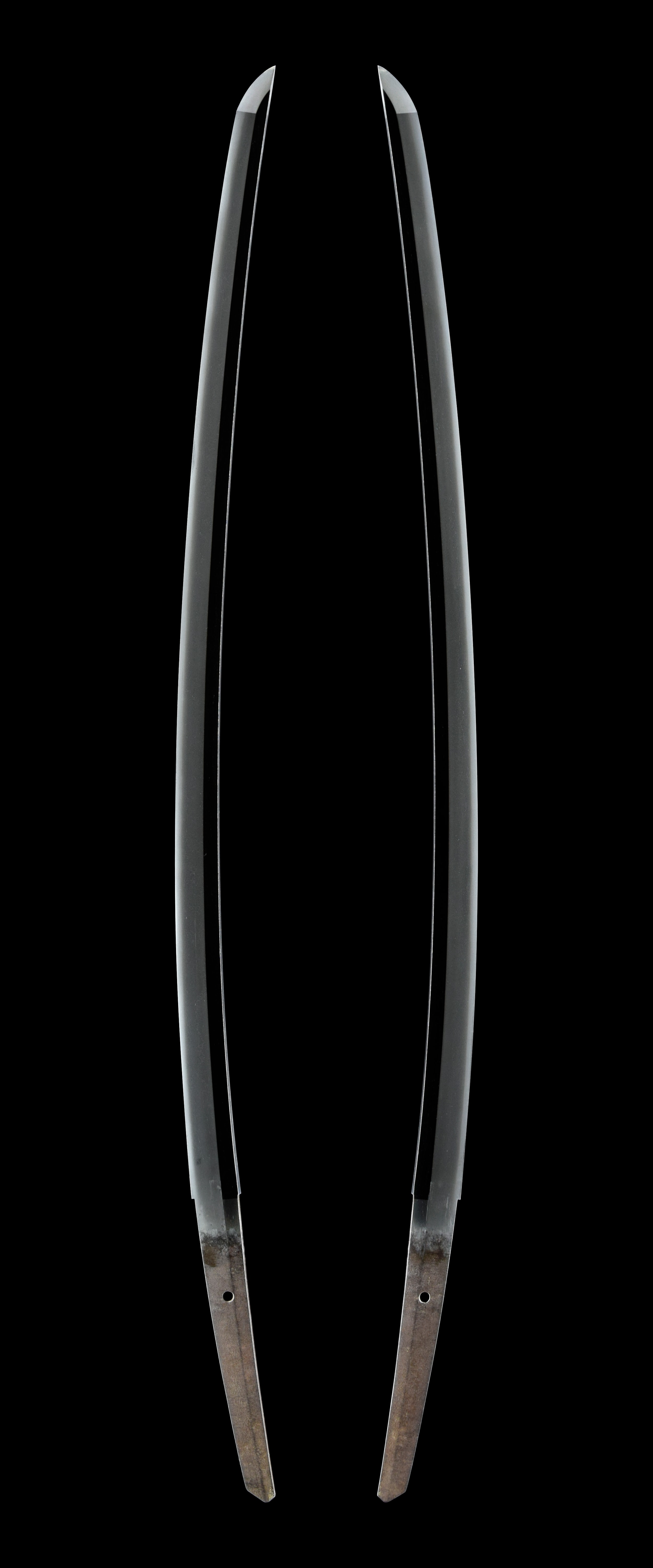
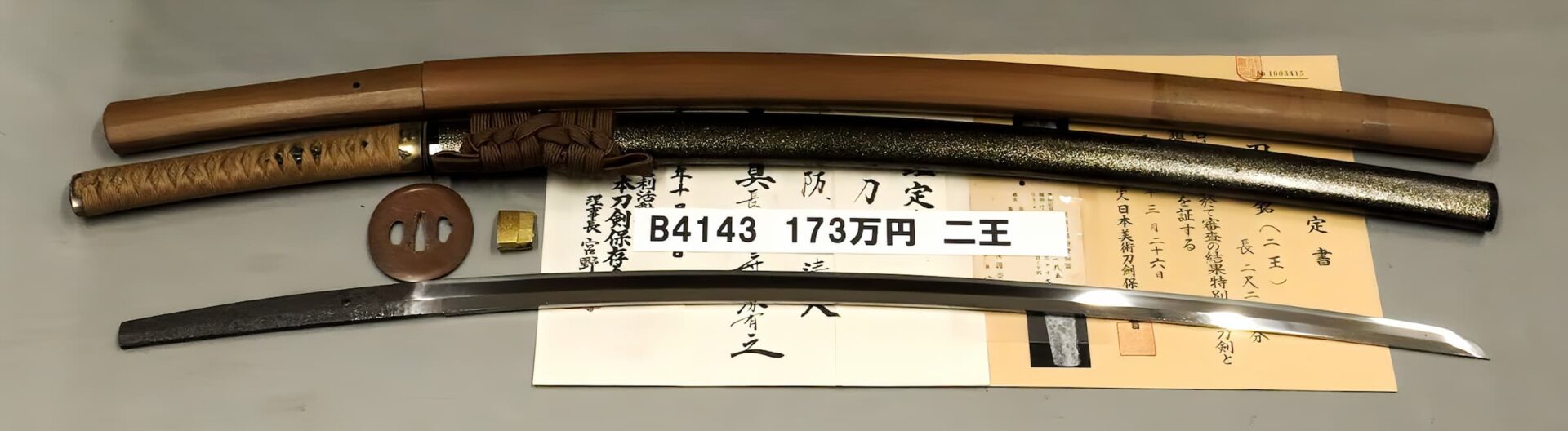
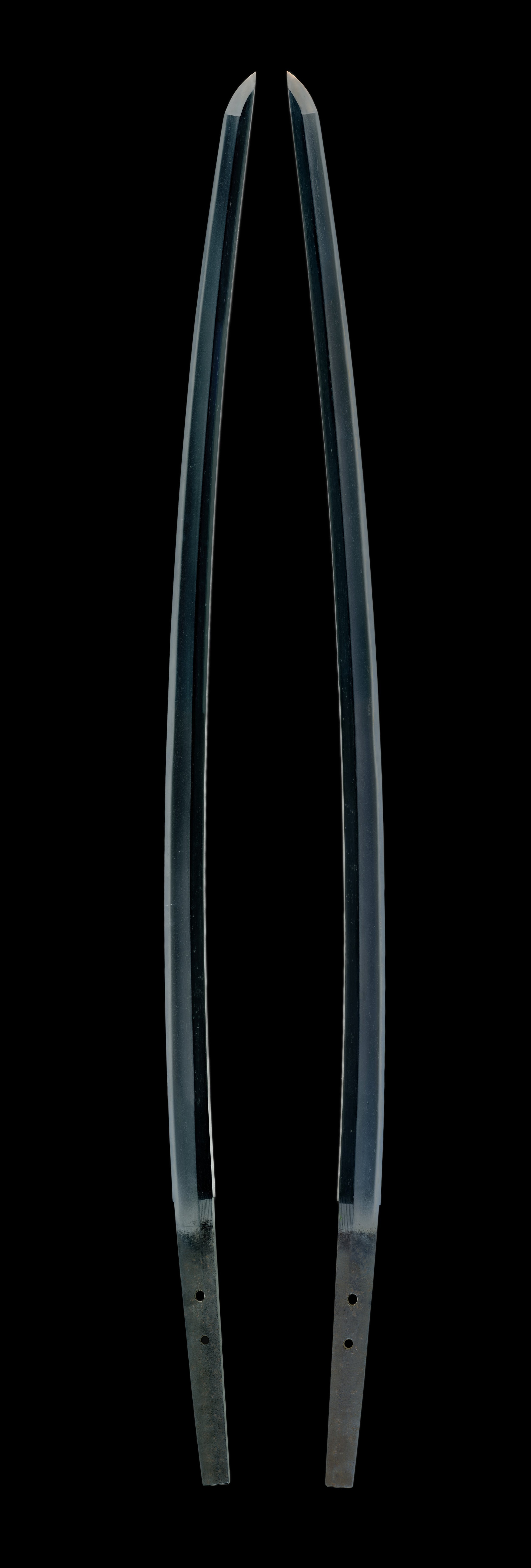
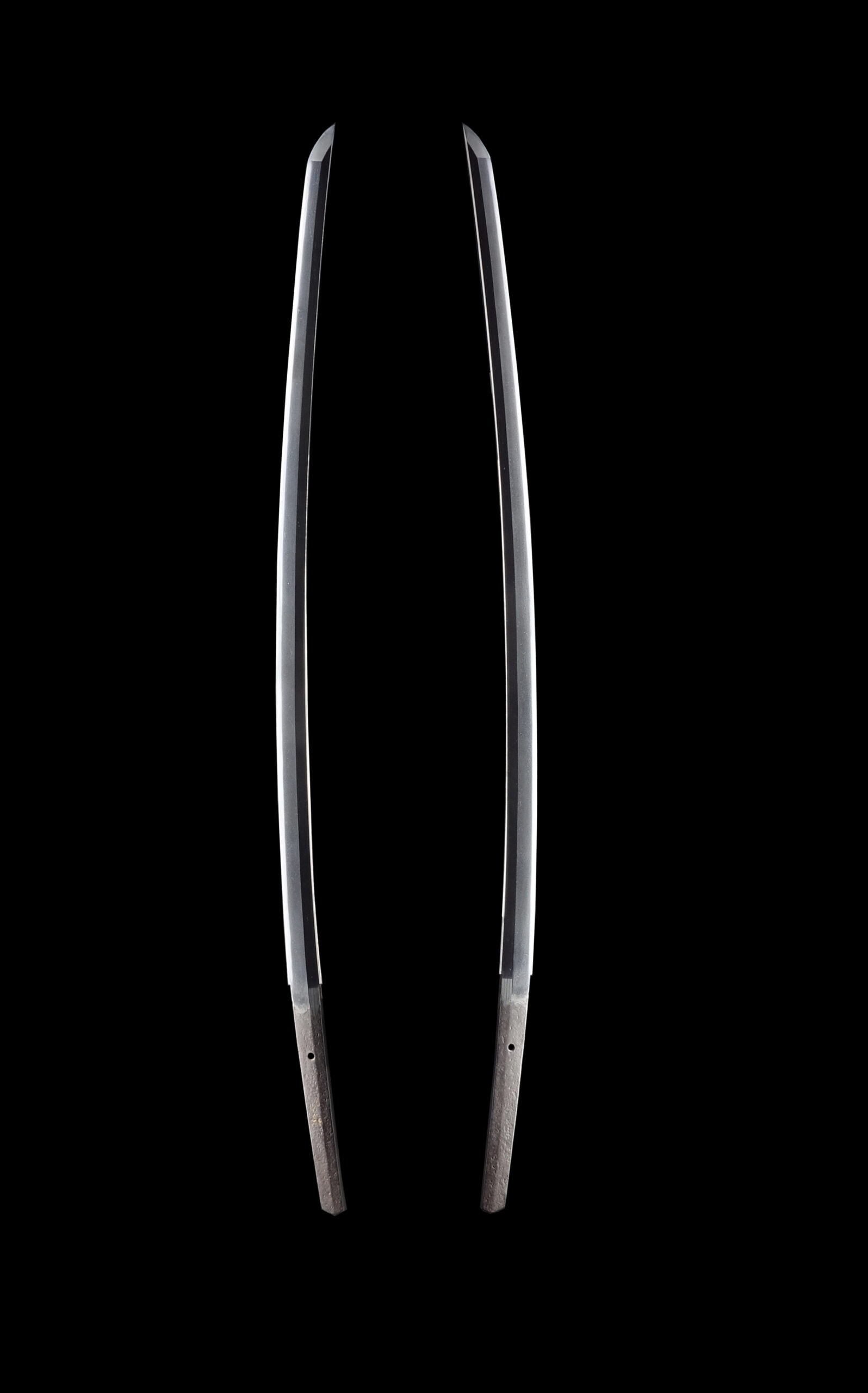
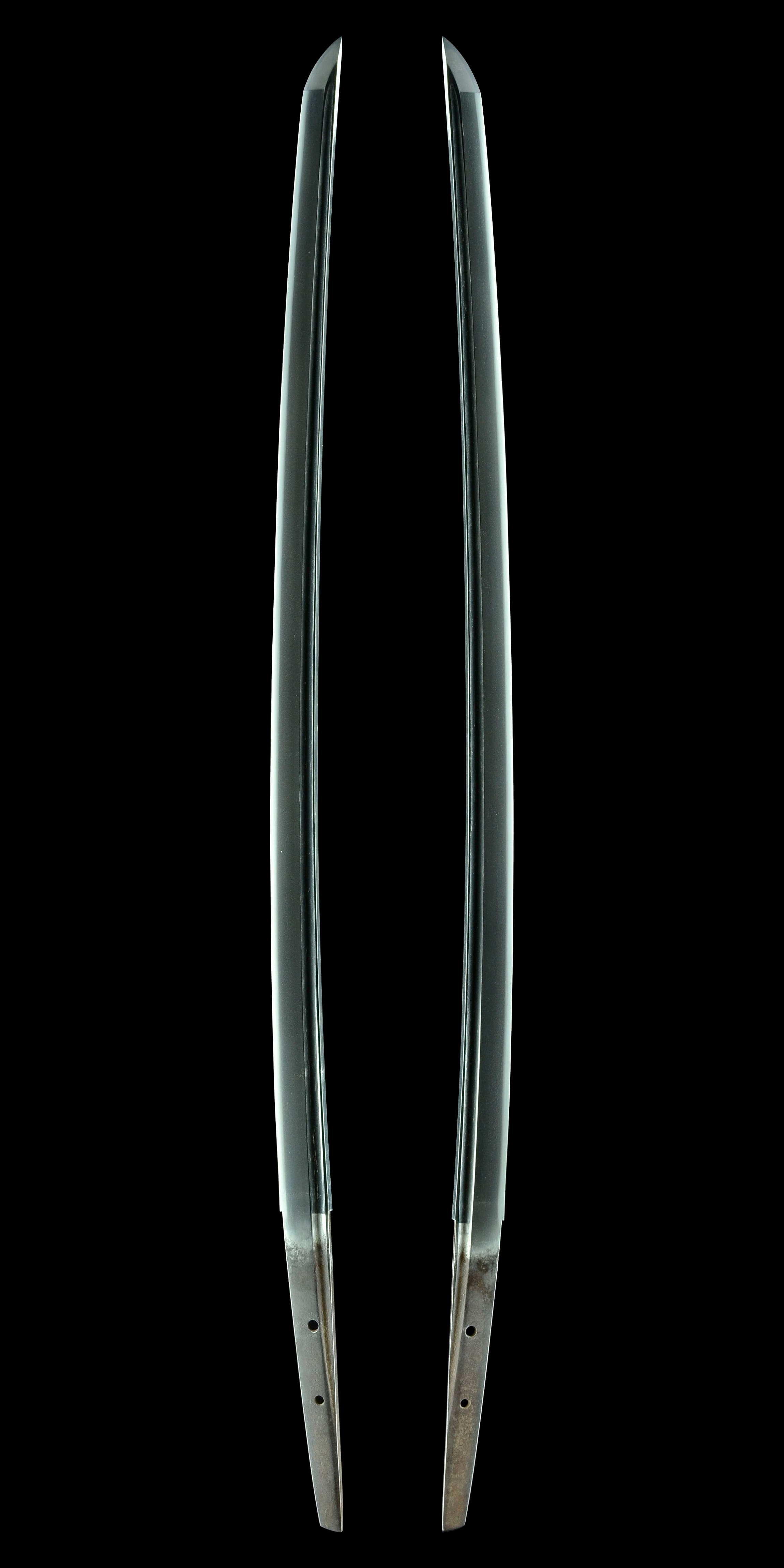
Niō Kiyonaga belongs to the Niō group of Suō Province, a lineage whose de facto founder was Kiyotsuna, with the earliest extant work being a dated Bun'ei 2 (1265). The school continued from the period through the era and into the period, with later generations extending into the age. Suō Province held many estates belonging to Tōdai-ji, and it is considered that the strongly Yamato-like character of the Niō group's work derives from exchanges with Yamato, the home province of that tradition. Kiyonaga is transmitted in sword signature compendia as an early smith active around the Ōei era (1394–1428), and his works are representative of the later Niō line, sometimes referred to as sue-Niō.
Kiyonaga's forging is characteristically mixed with , packed closely and sometimes carrying a slightly whitish tone. Fine adheres, and toward the a standing appears — a distinctive hallmark of the Niō group. His favors a narrow tendency, at times mixed with or carrying a faint, shallow element. Along the , activities such as , uchi-noke, and may be observed, with entering and adhering to form a bright and clear . His tends toward with . On , Kiyonaga is known for relief carvings of Niō guardian figures within recesses — an iconographic signature consistent with the school's name.
Signed works by Kiyonaga are uncommon but constitute valuable material for the study of this provincial school. His output demonstrates the coexistence of the Yamato temperament intrinsic to the Niō lineage with a soft, -like quality in the that is recognized as a distinctive trait of the group. As a representative craftsman of the later Niō tradition active at the transition from the into the early period, his work provides essential evidence for understanding the continuation and regional character of swordsmithing in Suō Province.