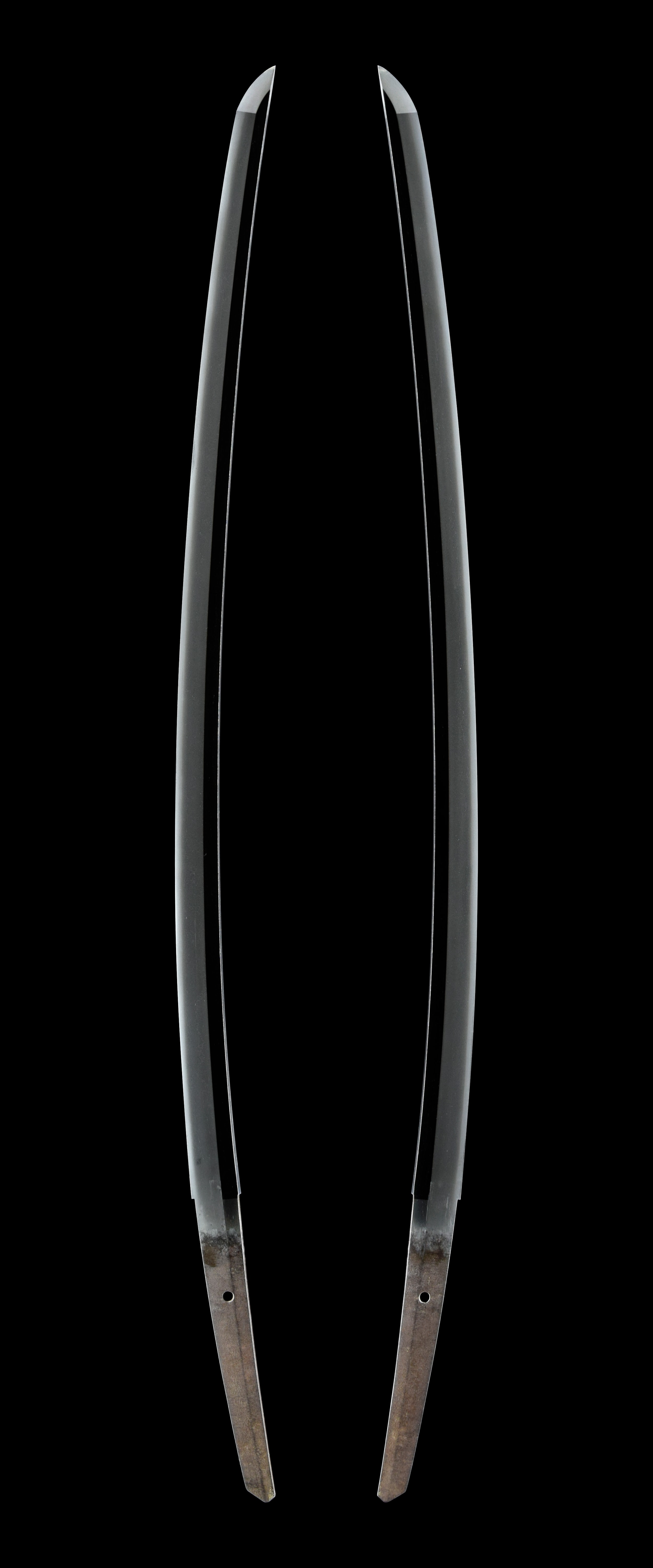
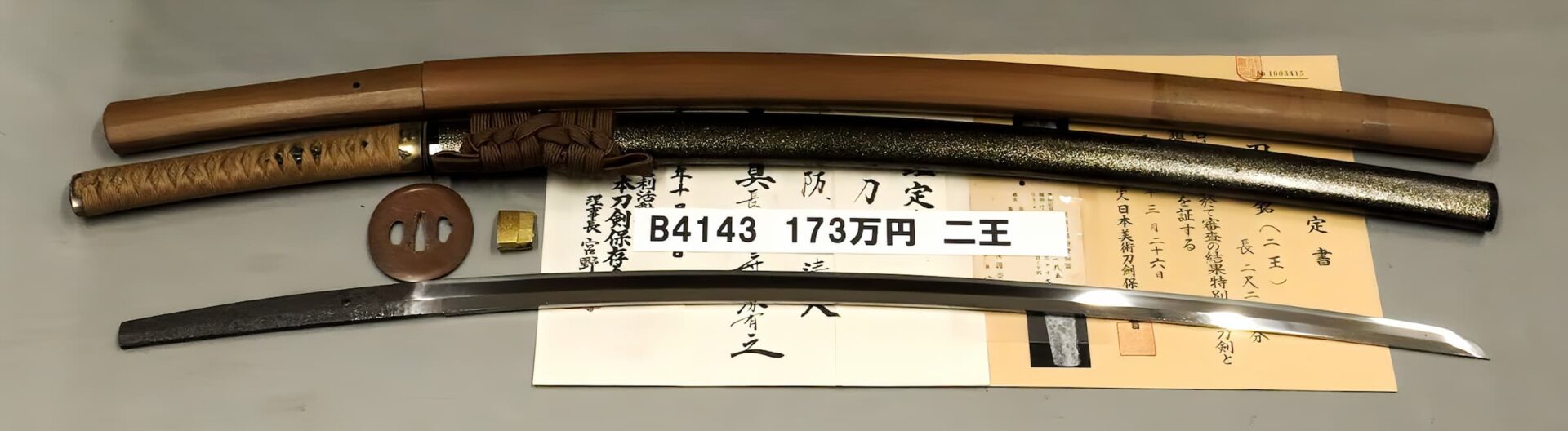
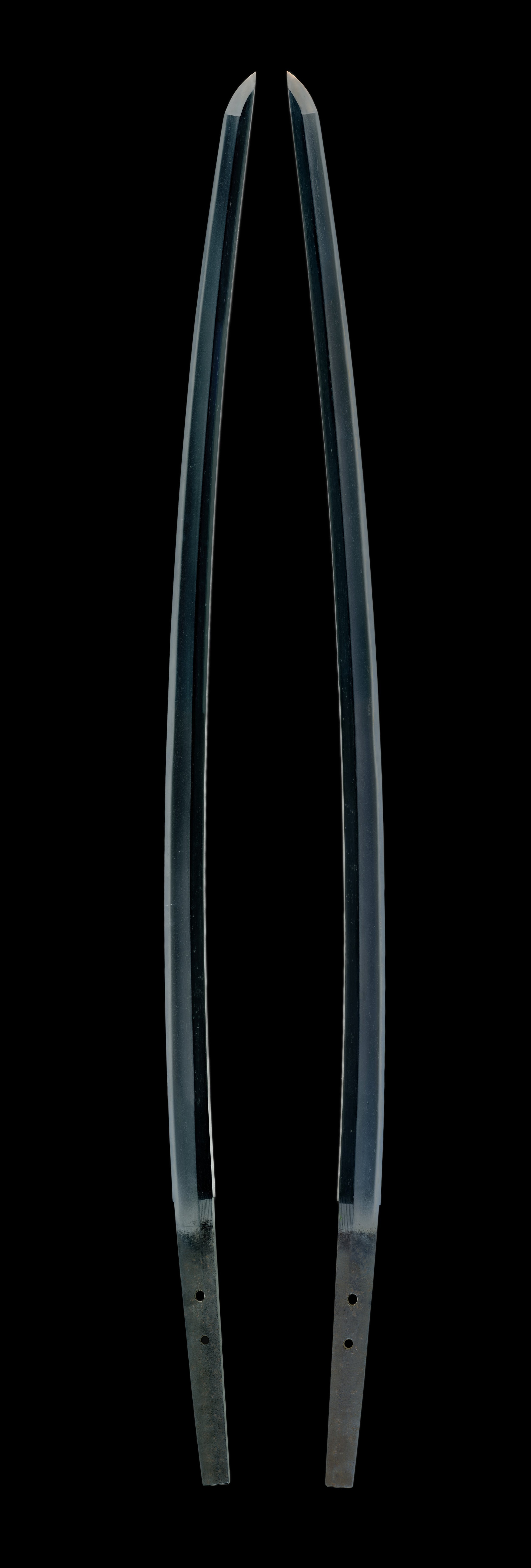
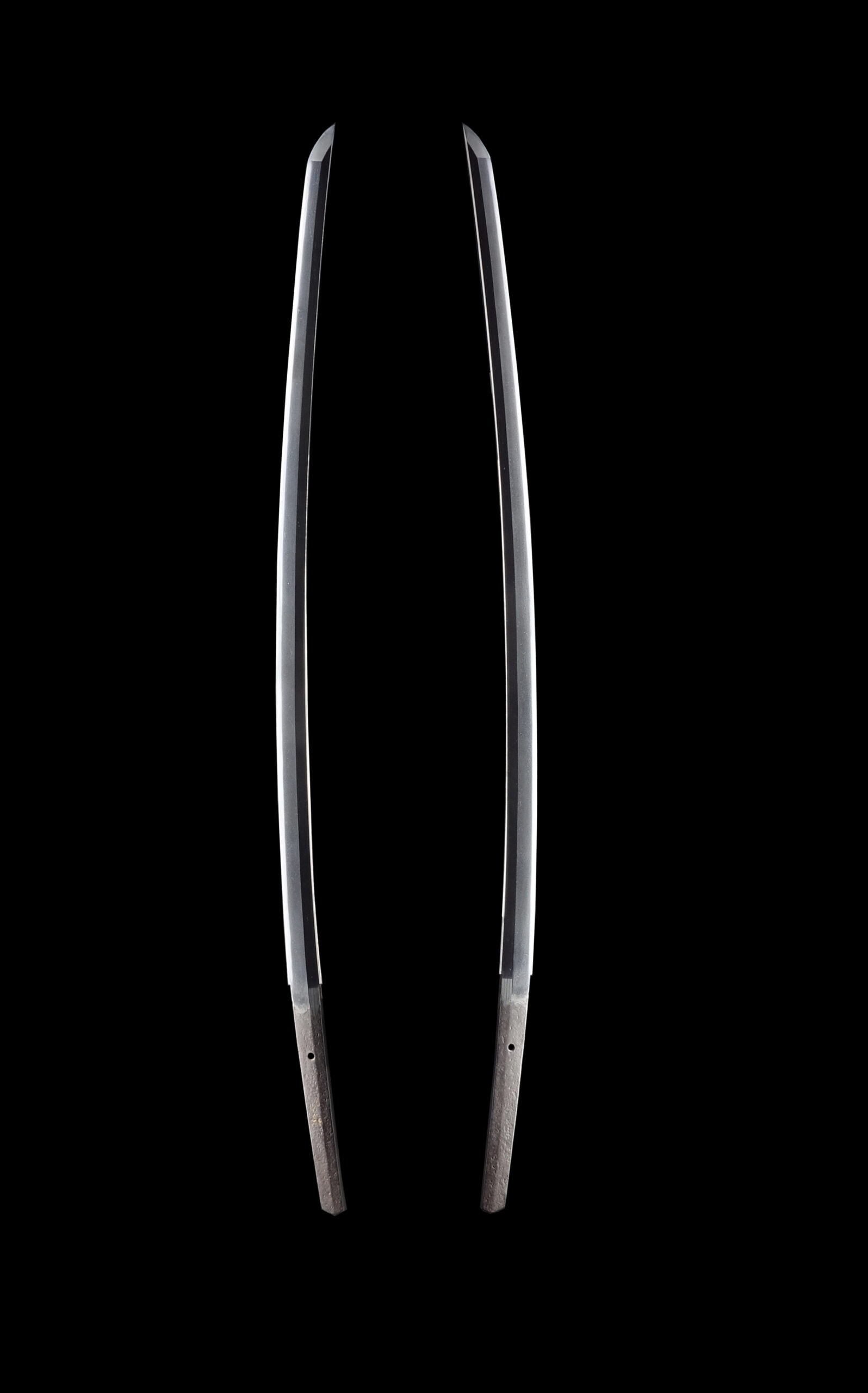
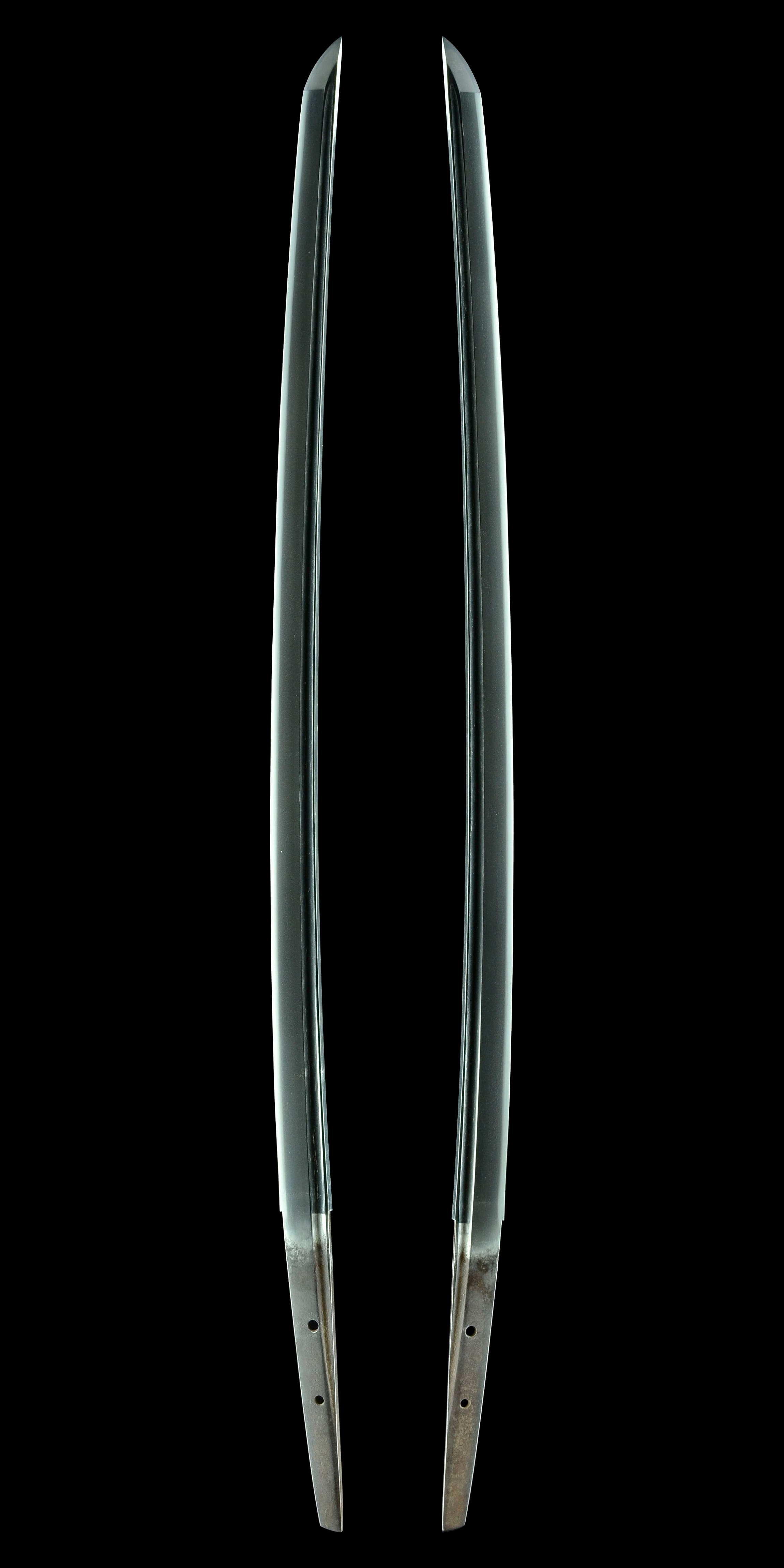
Kiyosada belonged to the Nio group of Suo Province, a lineage tracing its origin to Kiyotsuna. Among extant works by the school's progenitor, the earliest is a dated Bun'ei 2 (1265), and the line continued through the period and even into the era. Smiths signing "Kiyo" as a leading character are a hallmark of the school. According to the , smiths named Kiyosada are recorded in eras such as Kakitsu, Daiei, and Tenbun, though a in the Imperial Collection is appraised as a -period work -- described as the son of the second-generation Nio Kiyomitsu -- making it the earliest known example under this name.
While the style of Nio work conveys a strong temperament, the notes that the flowing grain is "not as conspicuous as in Yamato blades" and the is "comparatively restrained." The is typically tight with a tendency toward , accompanied by and slight . The centers on -- from medium with brightened in earlier works to with gentle and active in later examples. Works at times show , and the tang tip in katakiri form is a distinctive feature. Later Tenbun-era pieces display carvings executed in ranma- style, demonstrating the characteristic manner of late Nio craftsmanship.
The appraises Kiyosada's works as clearly demonstrating "the characteristic manner of contemporary Nio workmanship," and the -period in the Imperial Collection is described as being "in healthy condition with excellent workmanship" -- a rare survival of which "very few similar examples survive today." Signed examples remain comparatively few across all periods, lending additional significance to each extant blade as reference material for the study of Suo Province sword-making.