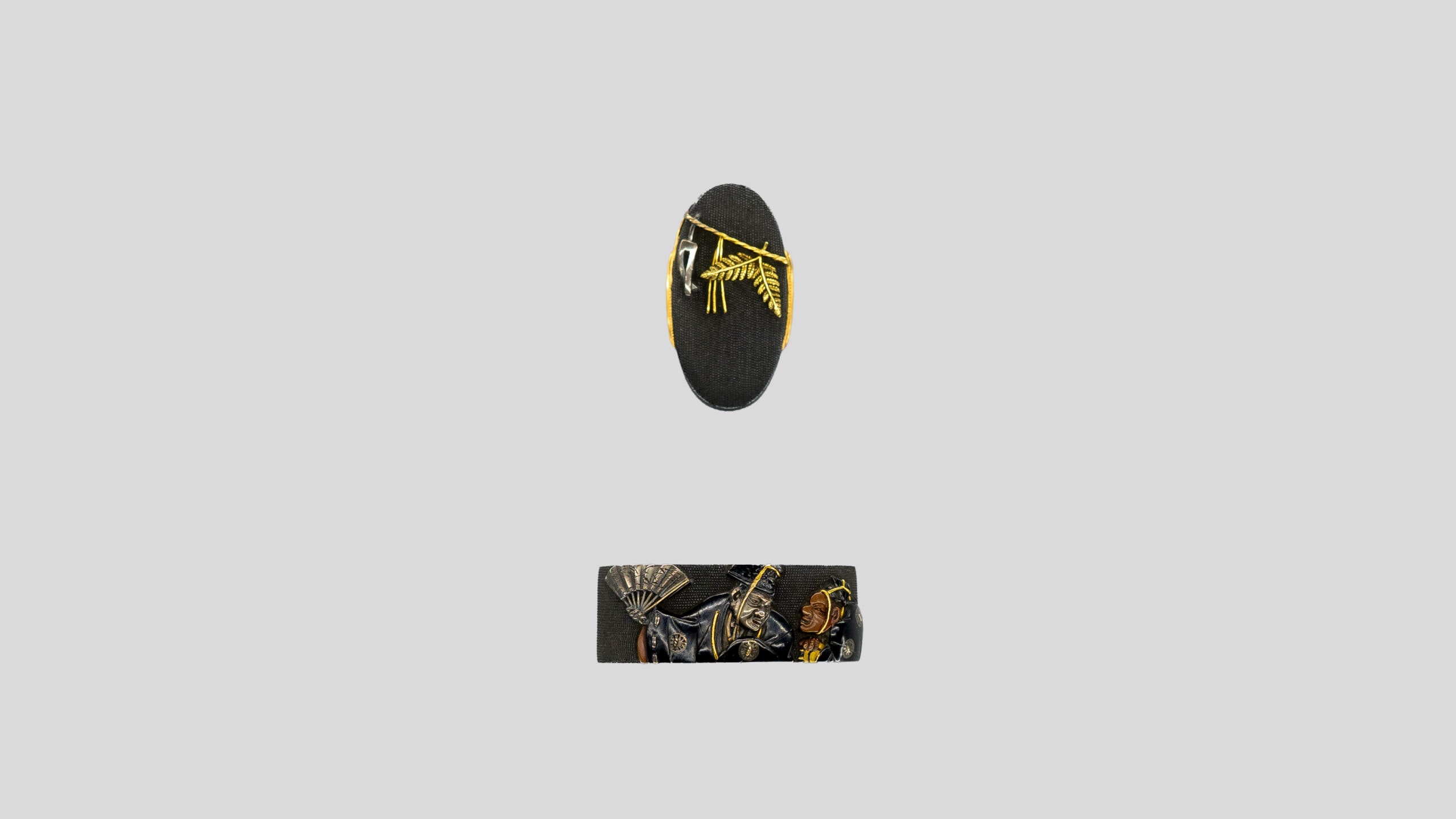
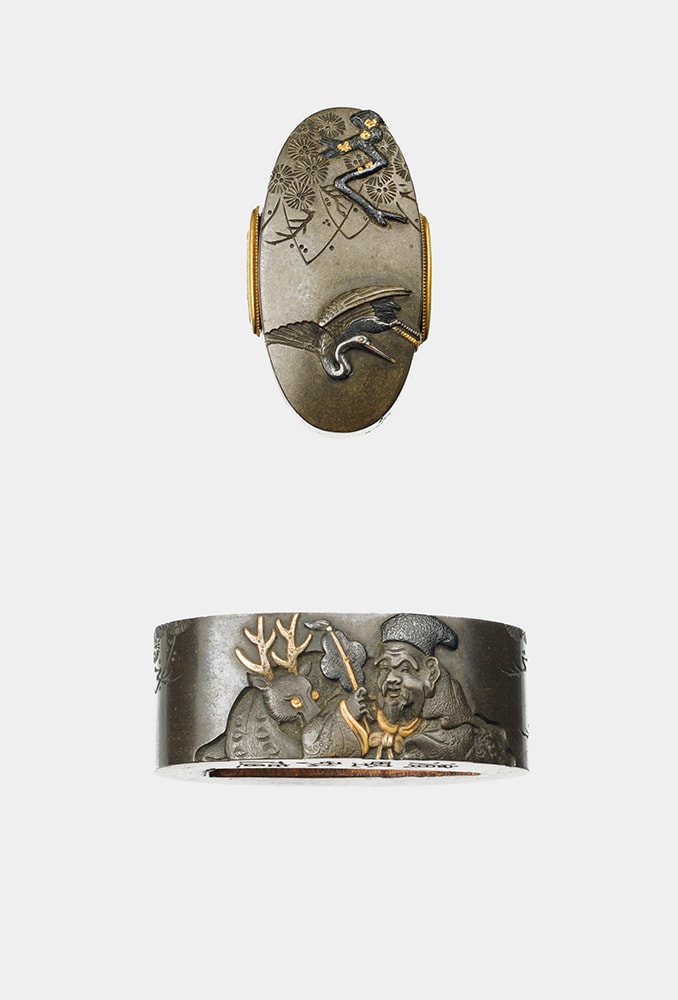
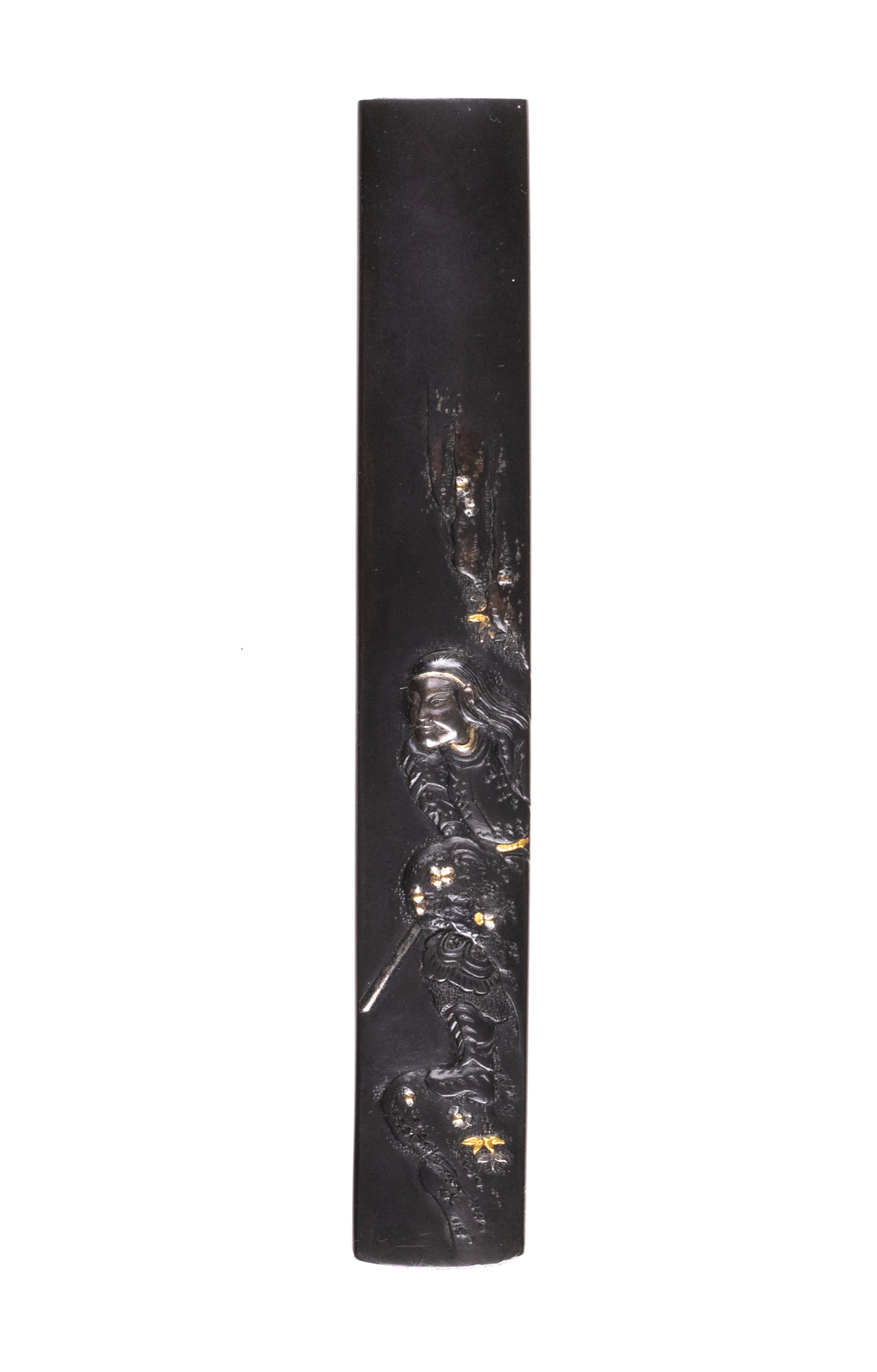
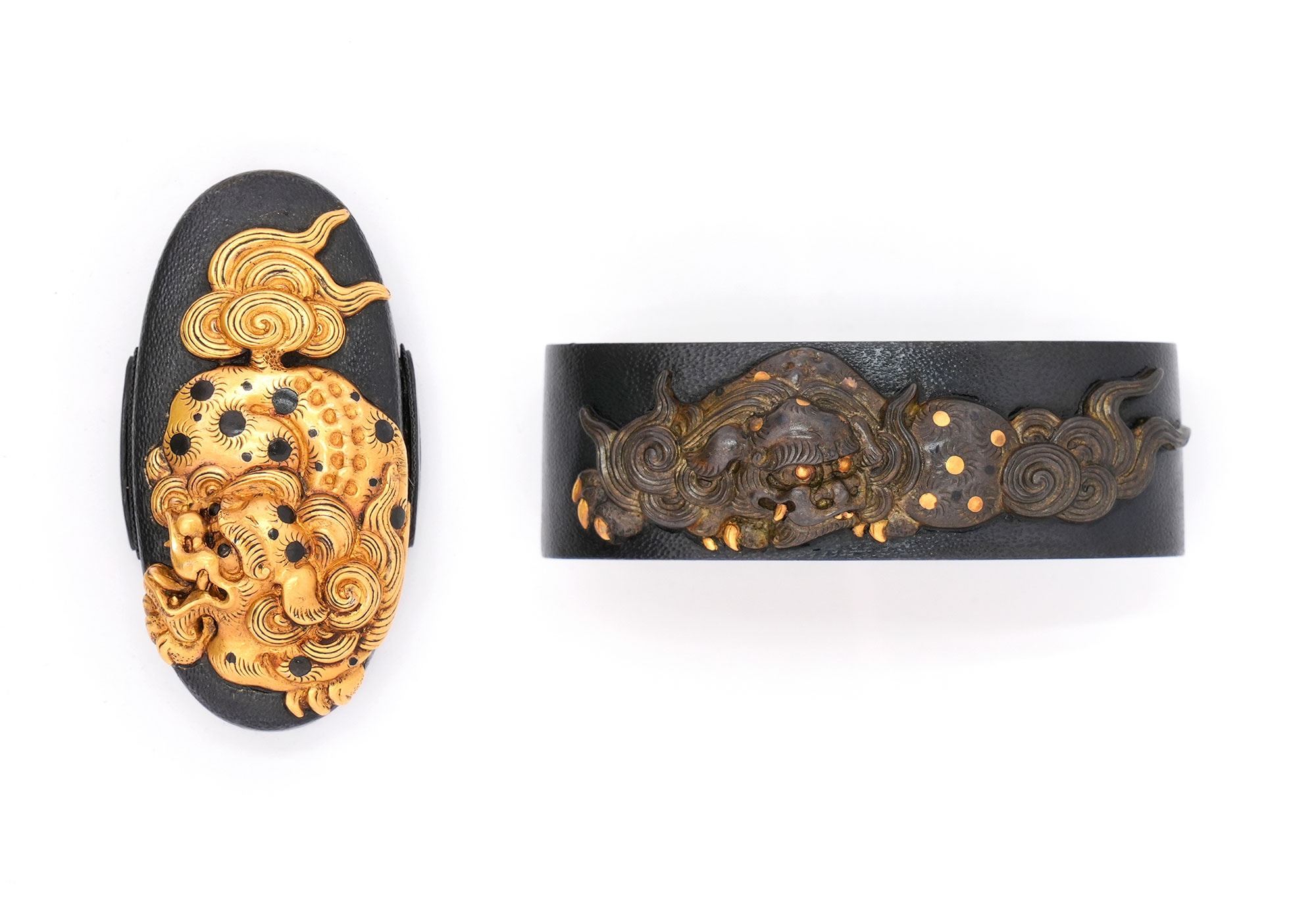
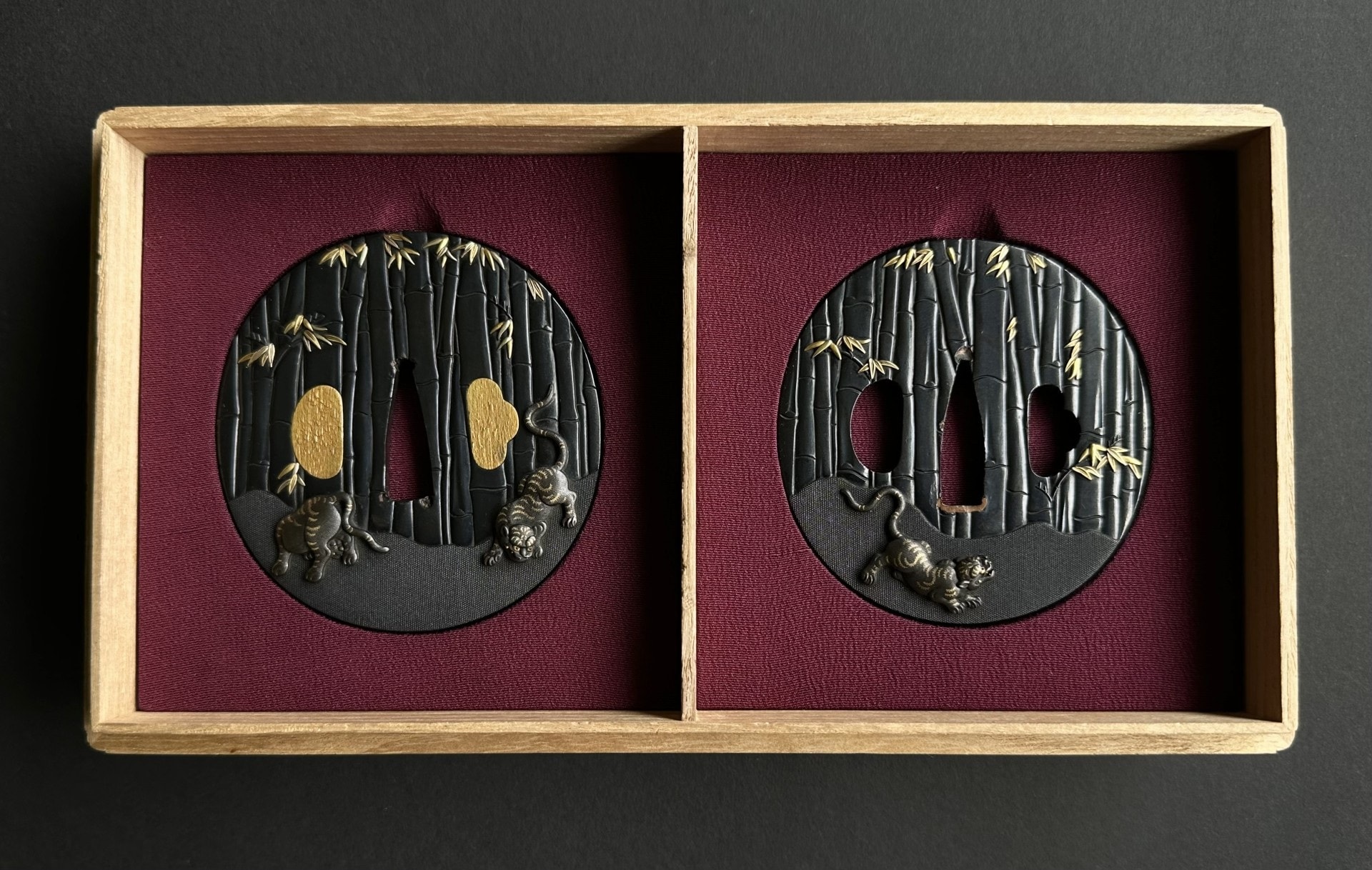
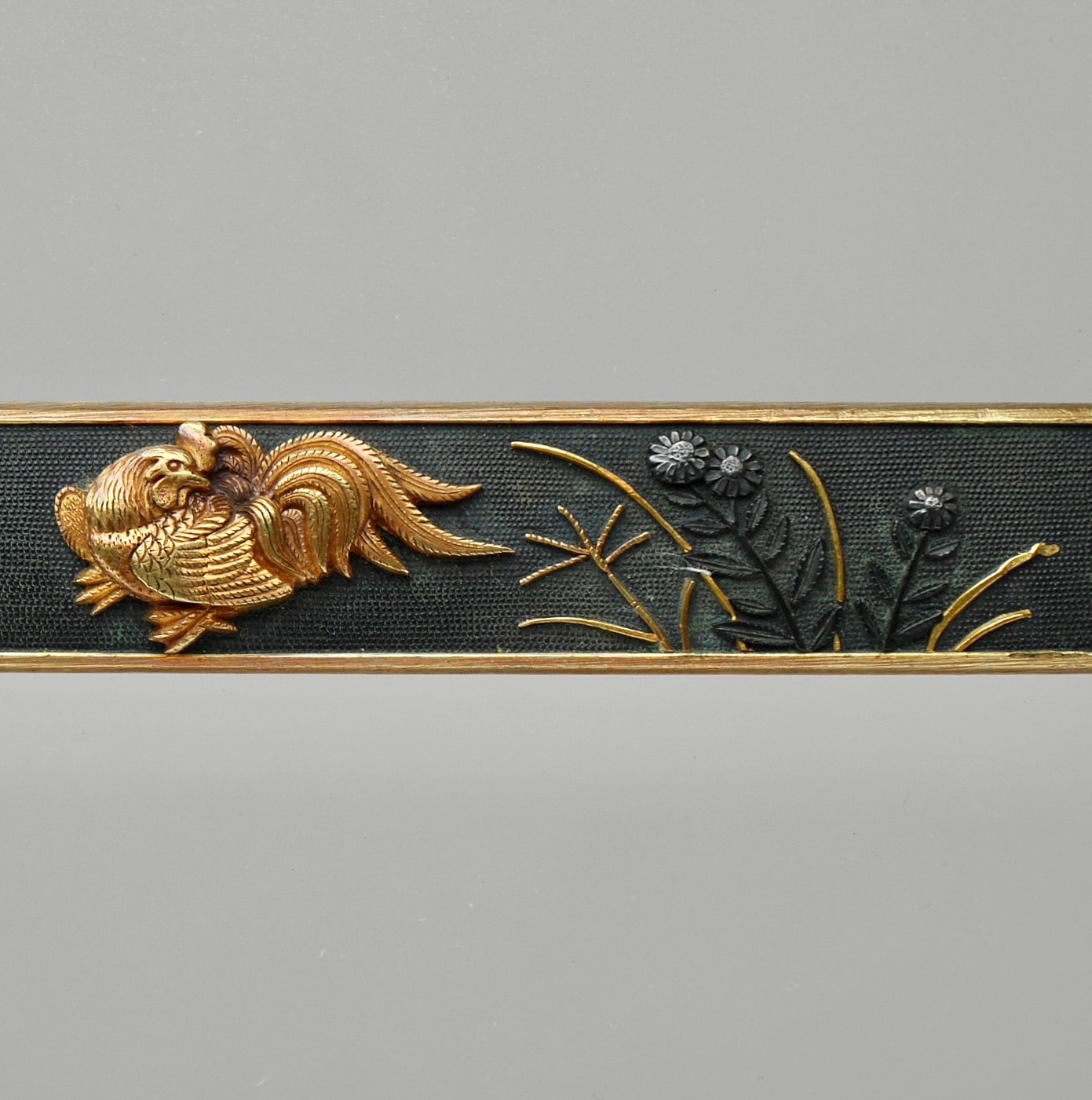
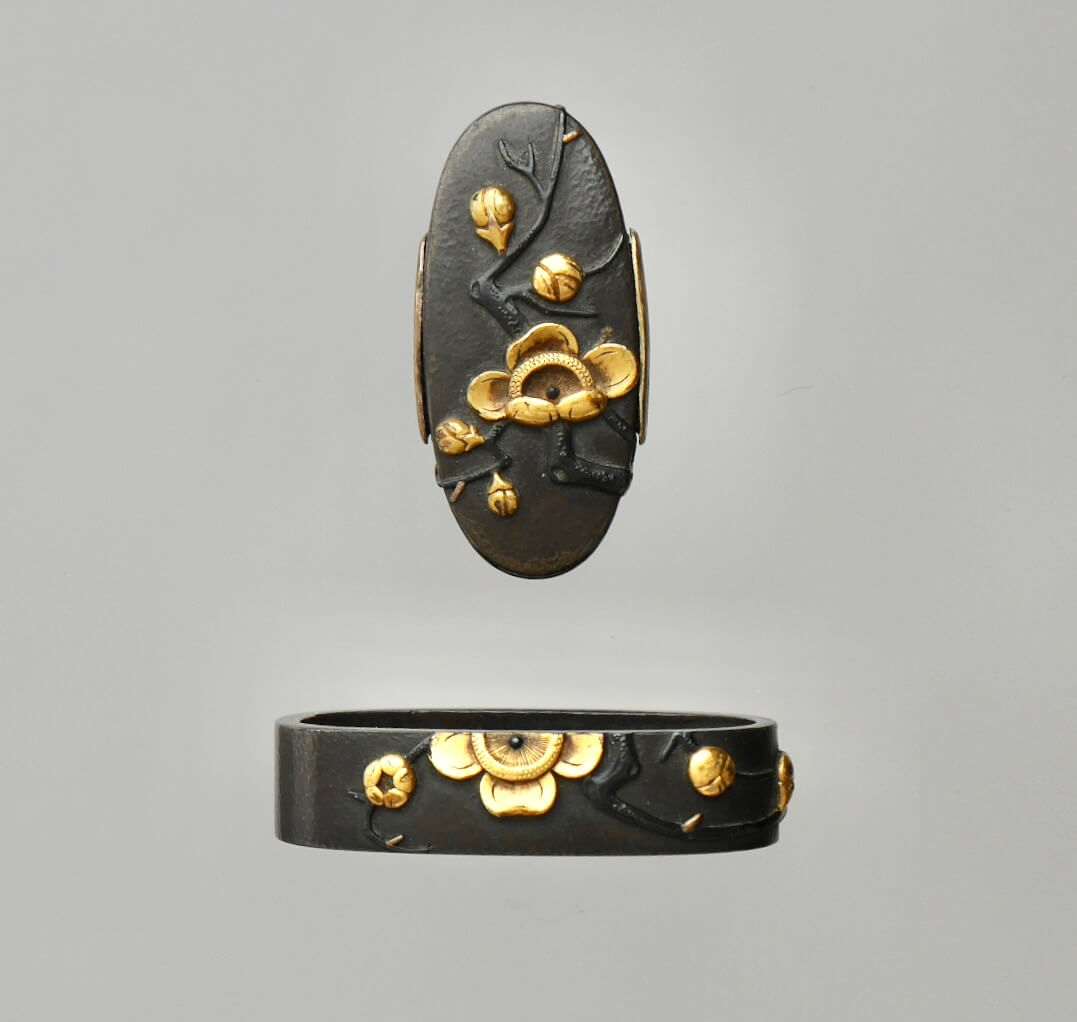
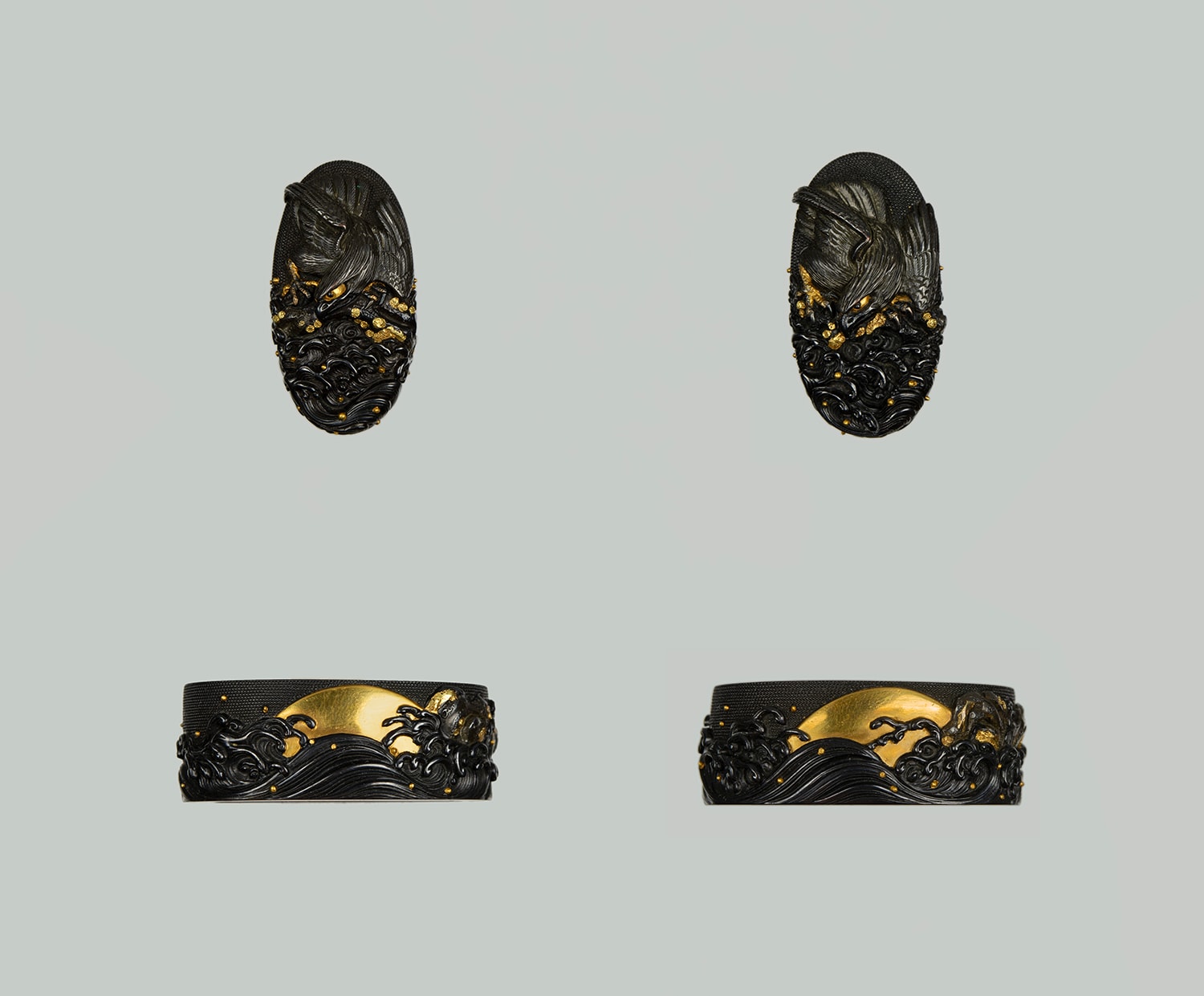
Edo period Antique Nara Fuchi Kashira for Samurai Sword with NBTHK Hozon Certificate (F-27)
売却済
世界81社の刀剣商を横断追跡 · 価格履歴 · 売却アーカイブ
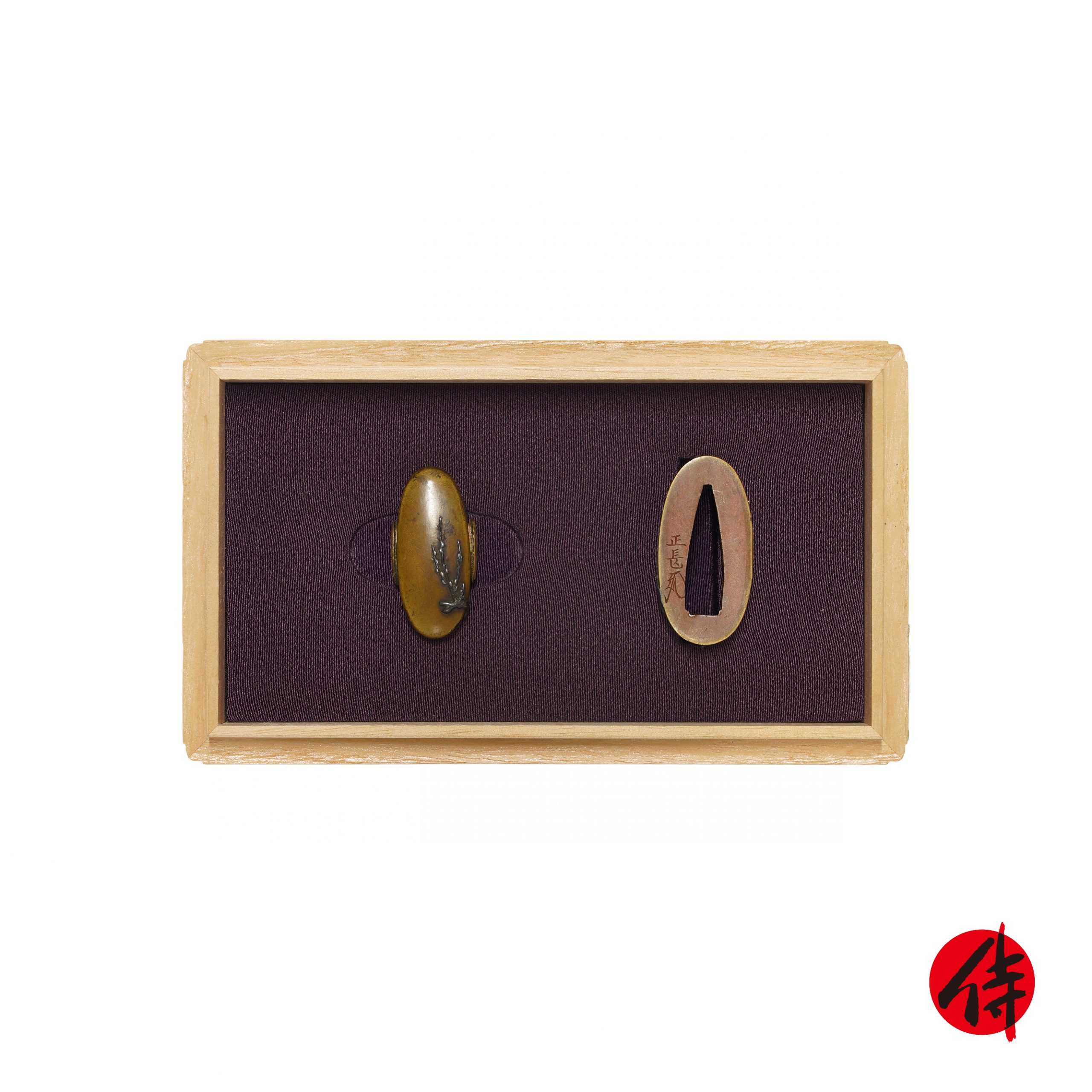
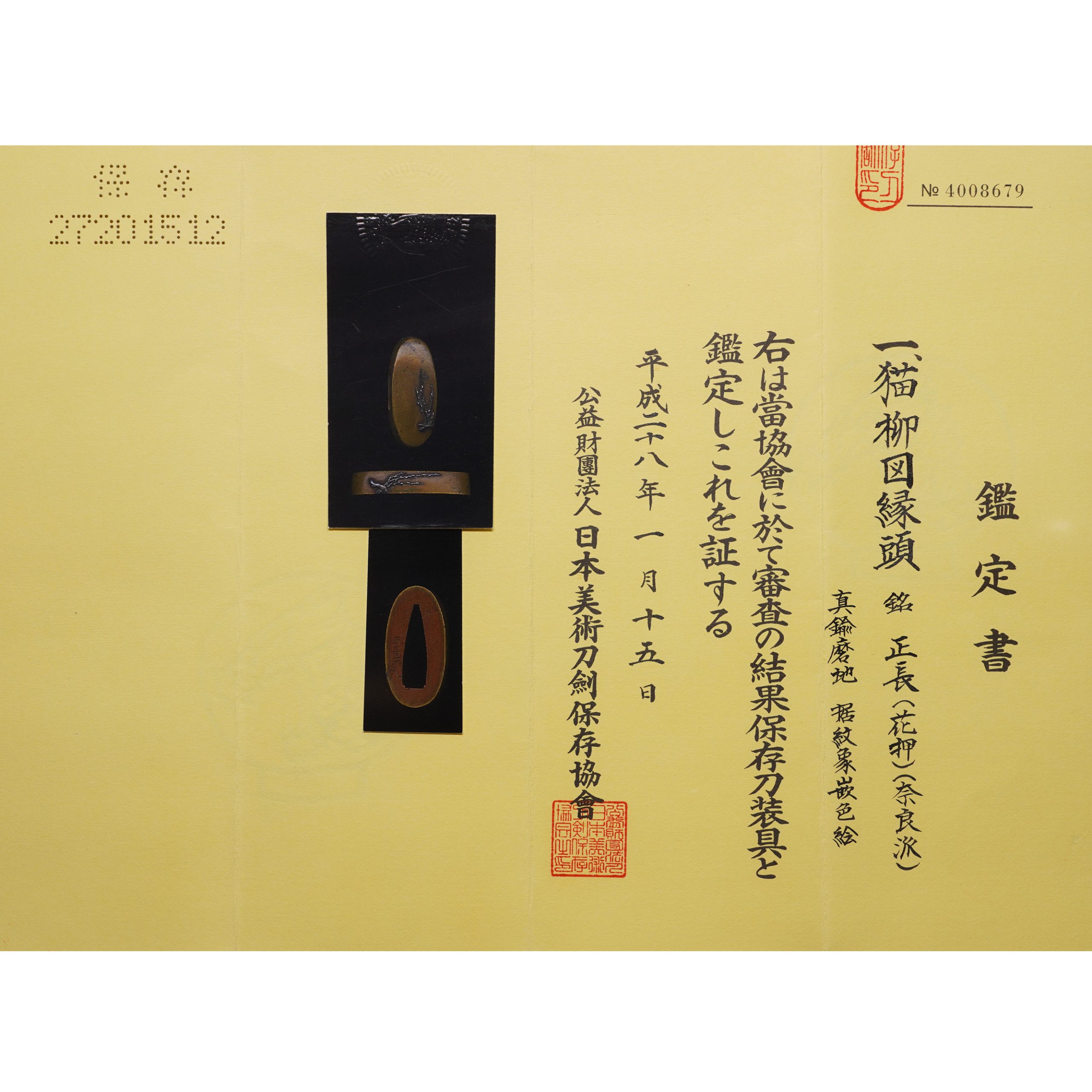
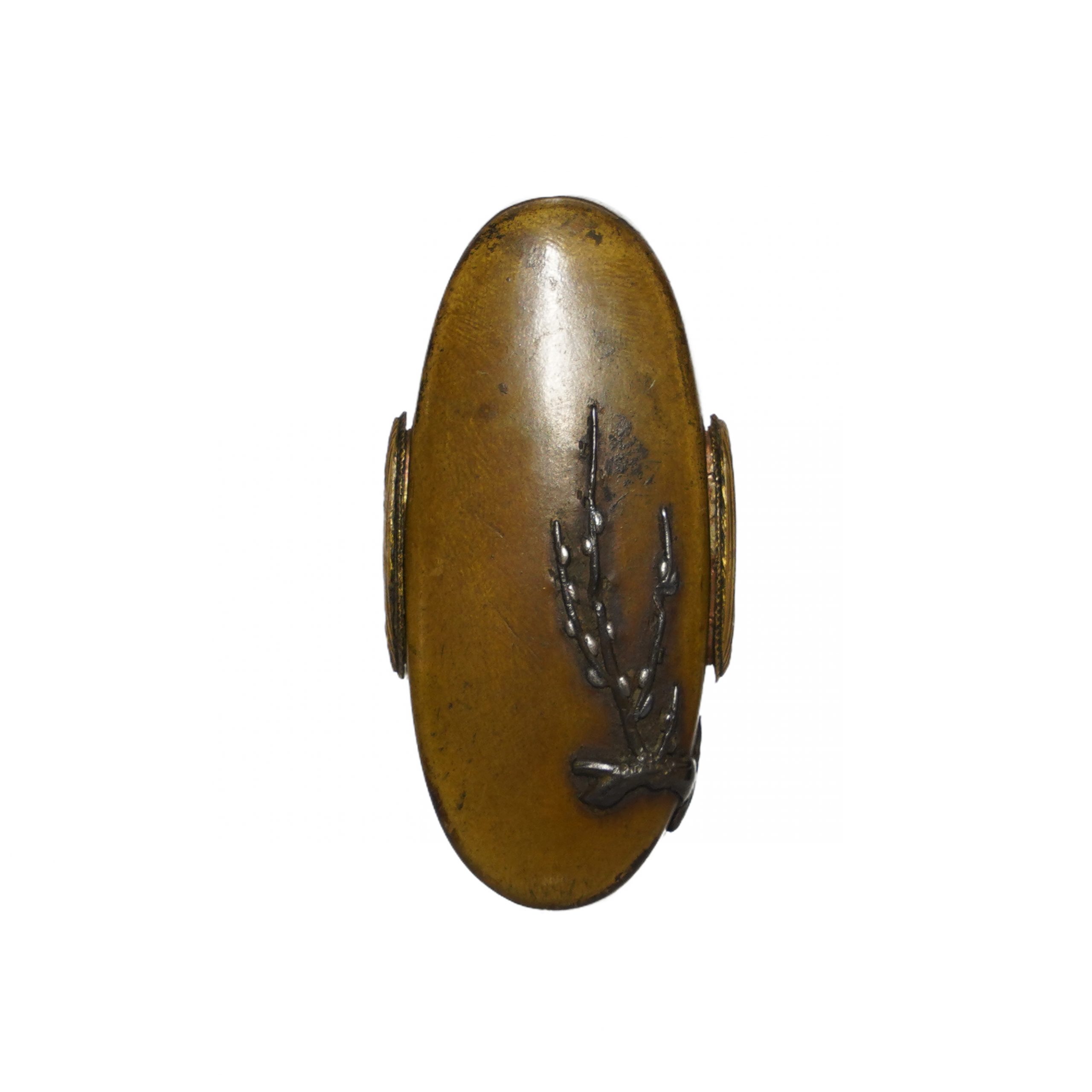
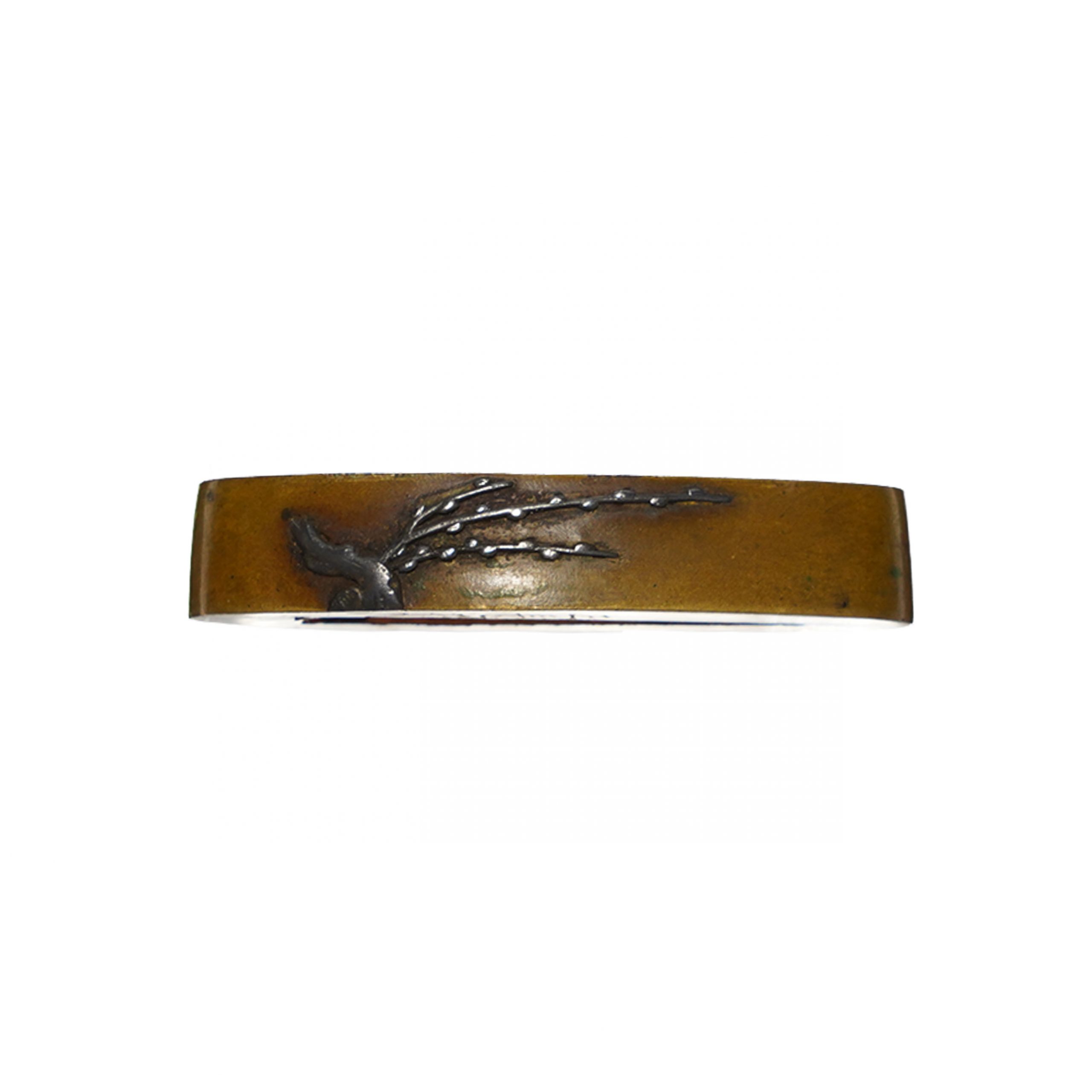
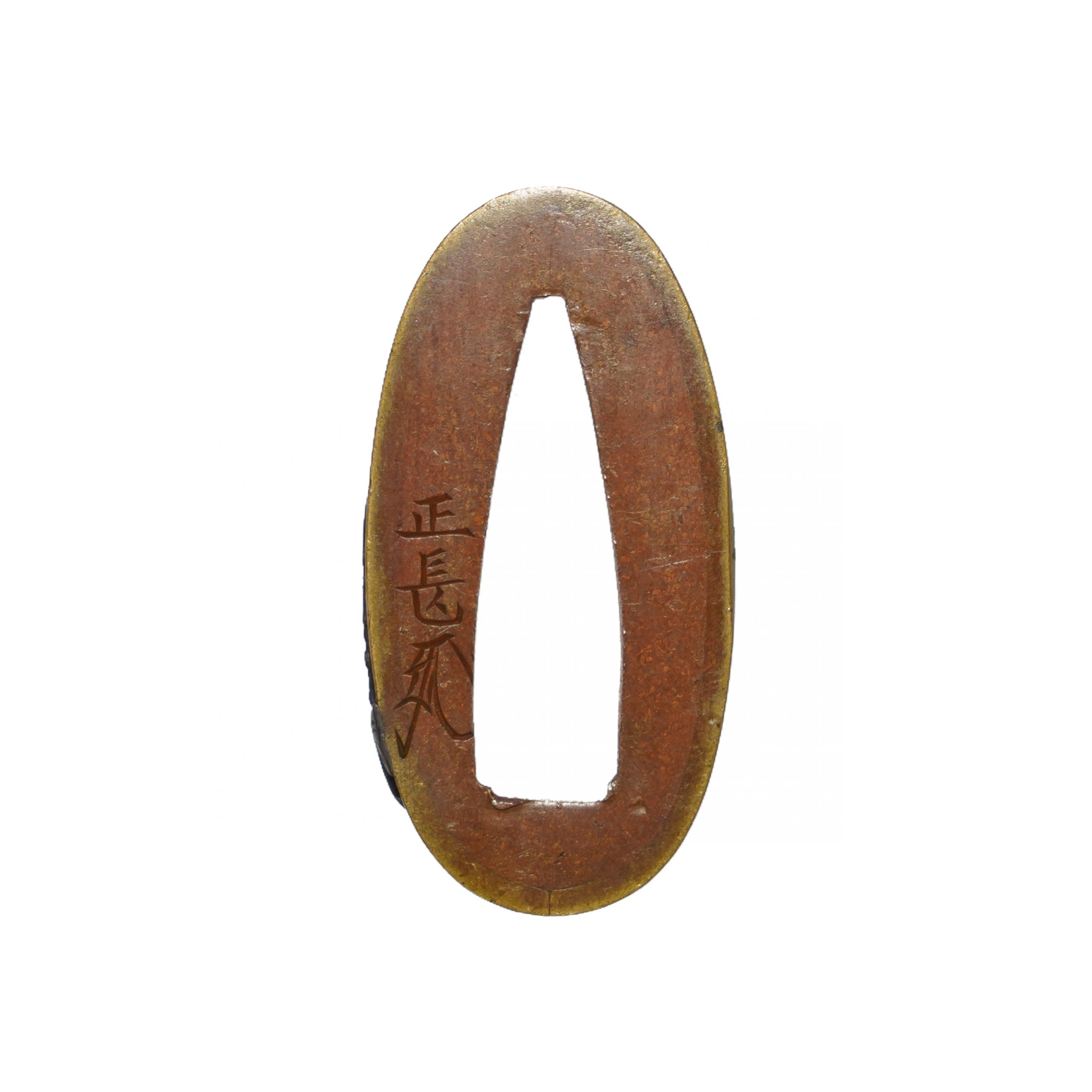
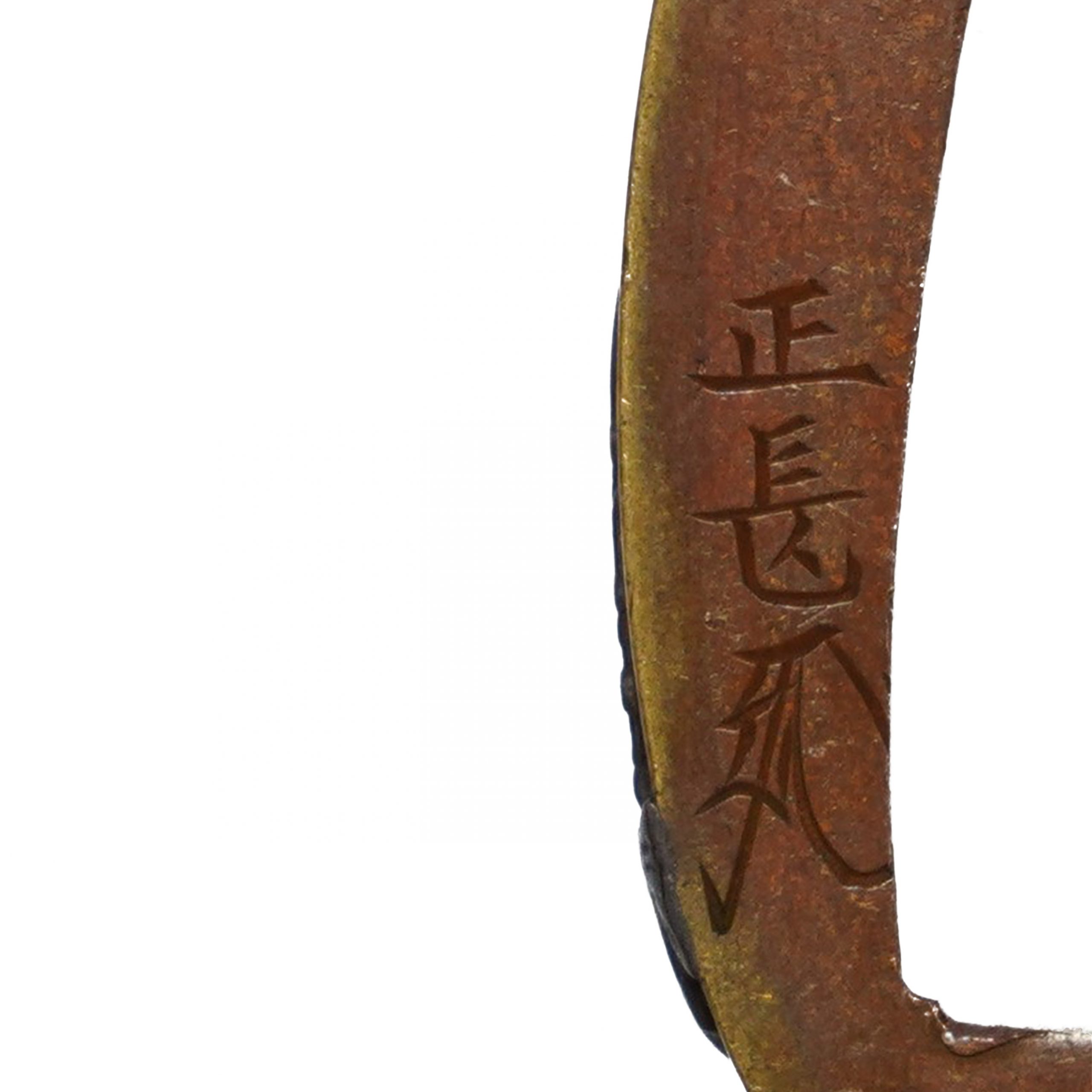
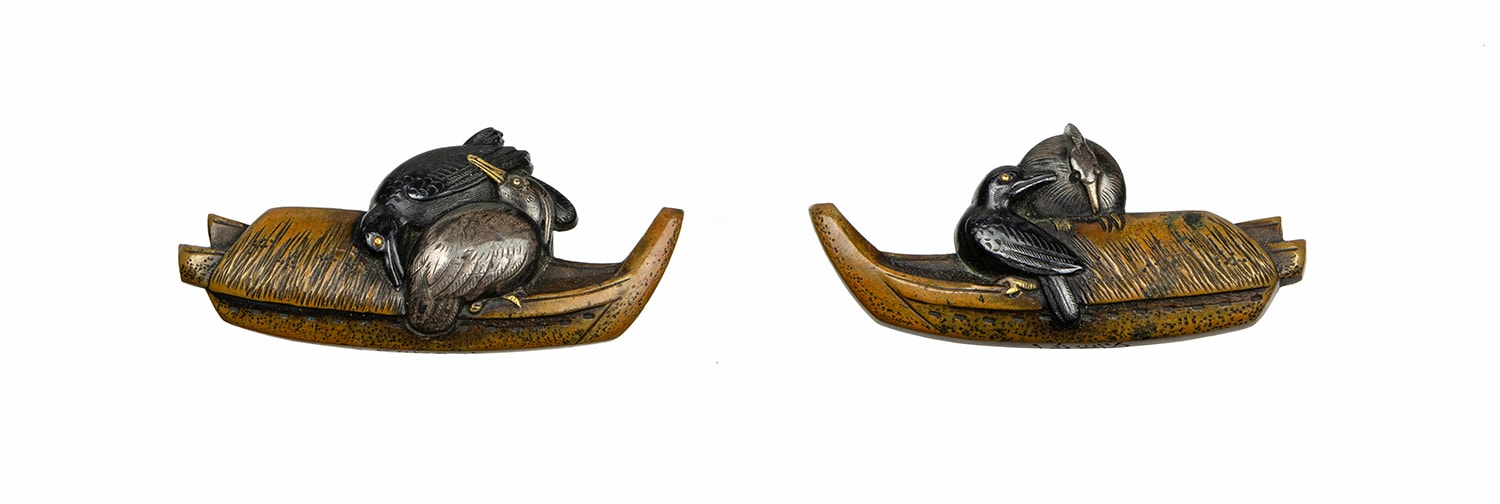
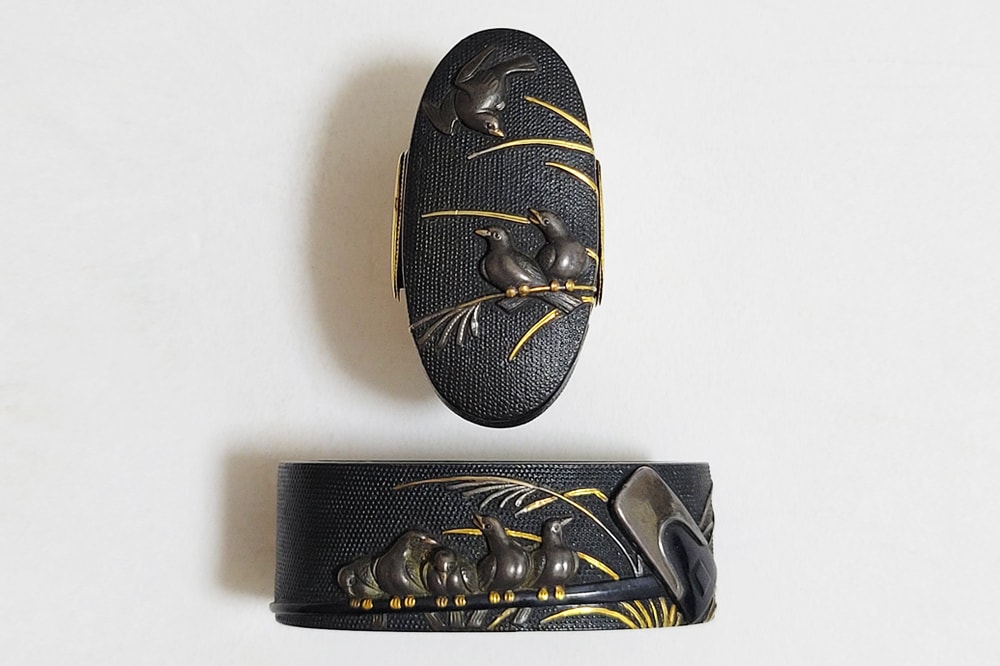
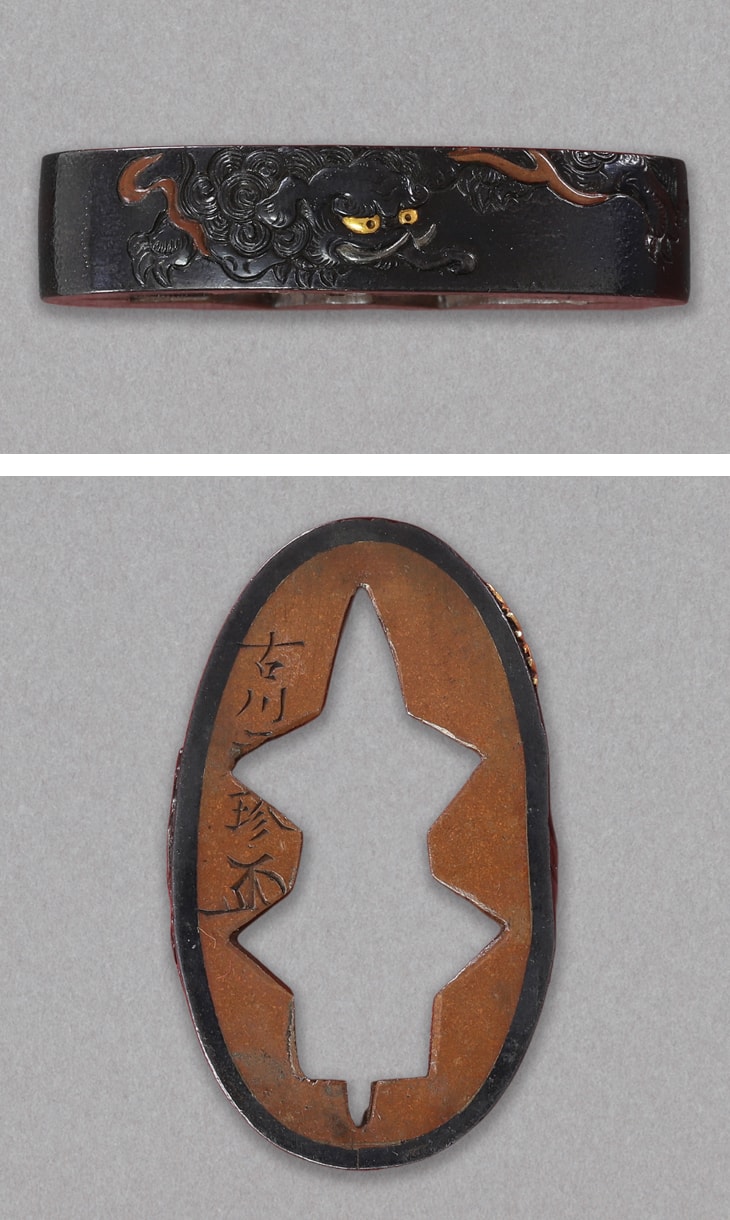
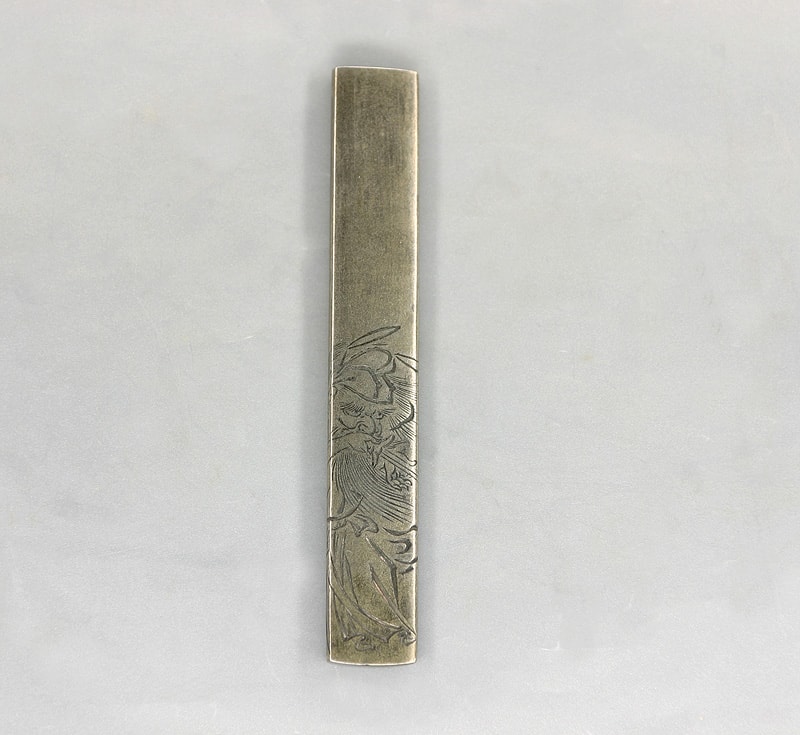
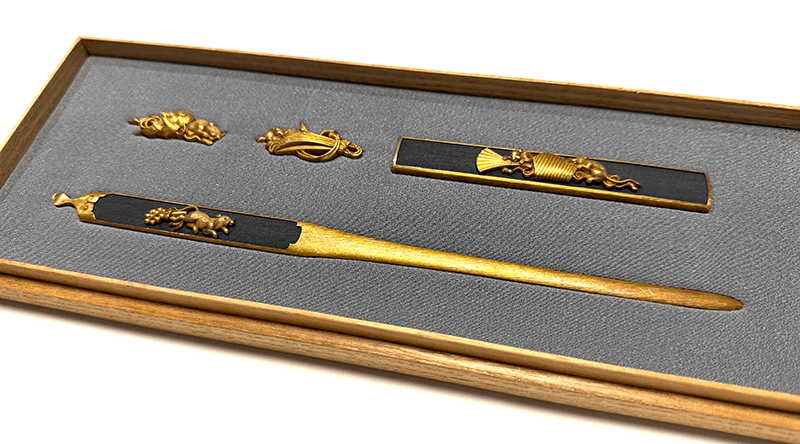
Title: Nara-style, Neko Yanagi Zu Description This Fuchi Kashira is made from brass. The motif of this work is the Neko Yanagi (猫柳, pussy willow). Tips of pussy willows are colored with silvery metal. Since this plant blooms earlier than other willows, some people regard pussy willow as a plant that tells us the arrival of spring. This Fuchi Kashira is recognized by The Society for the Preservation of Japanese Art Swords, which is known as NBTHK. According to the certificate, this Fuchi Kashira was made by Masanaga (正長), who belonged to the Nara (奈良) school. This school did well in the Edo period and was one of the essential metalworking schools. It is said that many affiliated schools were born from the Nara school. Nara Toshinaga (奈良 利寿, 1667-1736), Tsuchiya Yasuchika (土屋 安親, 1670-1744), and Sugiura Johi (杉浦 乗意, 1701-1761) are the most famous three metalworkers in this school, and they were called as the Nara Sansaku (奈良三作). *As this item is an antique, please check each photo and ensure its condition. What is Fuchi Kashira? Fuchi Kashira is a kind of metal fitting of the Japanese sword, which improves the handle’s strength. Fuchi Kashira is a combination of two parts; Fuchi and Kashira. Fuchi was put next to Tsuba (hand-guard), and Kashira was put on the grip bottle. Fuchi Kashira had developed not only its practicality but also beauty for the decoration of the Japanese sword. Why is it that the sword mounting was important for Samurai? The sword mountings of the Japanese sword have many kinds of decorations such as handguards (Tsuba), sword hilt (Menuki), pommel (Fuchi Kashira). The Japanese sword worked as a weapon and as an object to show who he was. For example, it shows their personalities and beliefs. You could say that it is like decorations for smartphones today. We recommend you zoom in on the pictures of the sword fittings. When you do so, you can see the skill of Japanese metal engraving techniques. They are mainly made of iron and copper with inlays of gold, silver, and bronze. When it comes to handguard (Tsuba), each one has a different outline and weight. These sword fittings that have lived with Japanese swords of the same age might be worth as much as the Japanese swords. They are inconspicuous parts of the Japanese sword. Nevertheless, if you are knowledgeable or particular about it, you will become a connoisseur of the Samurai. Authentication Paper : NBTHK Hozon Certificate NBTHK, also known as Nihon Bijutsu Touken Hozon Kyokai (the Society for the Preservation of the Japan Art Sword), is one of the oldest Japanese sword appraising organizations in modern-day Japan. They authenticated the Fuchi Kashira on Jan 15th in the 28th year of Heisei (2016). They appraised it as Hozon Tousougu, the Fuchi Kashira worth preserving for Japanese society. The purchaser will receive this original certificate as well. We can also translate what is written into English and make a PDF file for your record if you request. 【About us】 Samurai Museum is located in Tokyo, Japan, exhibiting antique artifacts related to the Samurai history. Samurai Museum Shop is the place for those who are interested in Japanese culture and craftsmanship. We deal with antique Samurai swords/armor, traditional crafts made in Japan and so on. 【Payment method】 We accept payment through Stripe (Credit card), PayPal , Apple Pay or ChromePay, all of which are secure payment methods. Also, you don’t need to make an account on Stripe for the checkout. If you prefer other payment method, please contact us. You may either pay in JPY , USD , AUD , CAD , EUR , CHF or GBP . The price is set in Japanese Yen. Prices in other currencies are automatically calculated based on the latest exchange rate. 【Shipping duration】 We normally ship via EMS (Express Mail Service) provided by Japan Post. It usually takes at least 5-14 days to deliver the package after you place an order. Time of delivery is estimated as accurately as possible by the carrier but does not take in

売却済
世界81社の刀剣商を横断追跡 · 価格履歴 · 売却アーカイブ
Title: Nara-style, Neko Yanagi Zu Description This Fuchi Kashira is made from brass. The motif of this work is the Neko Yanagi (猫柳, pussy willow). Tips of pussy willows are colored with silvery metal. Since this plant blooms earlier than other willows, some people regard pussy willow as a plant that tells us the arrival of spring. This Fuchi Kashira is recognized by The Society for the Preservation of Japanese Art Swords, which is known as NBTHK. According to the certificate, this Fuchi Kashira was made by Masanaga (正長), who belonged to the Nara (奈良) school. This school did well in the Edo period and was one of the essential metalworking schools. It is said that many affiliated schools were born from the Nara school. Nara Toshinaga (奈良 利寿, 1667-1736), Tsuchiya Yasuchika (土屋 安親, 1670-1744), and Sugiura Johi (杉浦 乗意, 1701-1761) are the most famous three metalworkers in this school, and they were called as the Nara Sansaku (奈良三作). *As this item is an antique, please check each photo and ensure its condition. What is Fuchi Kashira? Fuchi Kashira is a kind of metal fitting of the Japanese sword, which improves the handle’s strength. Fuchi Kashira is a combination of two parts; Fuchi and Kashira. Fuchi was put next to Tsuba (hand-guard), and Kashira was put on the grip bottle. Fuchi Kashira had developed not only its practicality but also beauty for the decoration of the Japanese sword. Why is it that the sword mounting was important for Samurai? The sword mountings of the Japanese sword have many kinds of decorations such as handguards (Tsuba), sword hilt (Menuki), pommel (Fuchi Kashira). The Japanese sword worked as a weapon and as an object to show who he was. For example, it shows their personalities and beliefs. You could say that it is like decorations for smartphones today. We recommend you zoom in on the pictures of the sword fittings. When you do so, you can see the skill of Japanese metal engraving techniques. They are mainly made of iron and copper with inlays of gold, silver, and bronze. When it comes to handguard (Tsuba), each one has a different outline and weight. These sword fittings that have lived with Japanese swords of the same age might be worth as much as the Japanese swords. They are inconspicuous parts of the Japanese sword. Nevertheless, if you are knowledgeable or particular about it, you will become a connoisseur of the Samurai. Authentication Paper : NBTHK Hozon Certificate NBTHK, also known as Nihon Bijutsu Touken Hozon Kyokai (the Society for the Preservation of the Japan Art Sword), is one of the oldest Japanese sword appraising organizations in modern-day Japan. They authenticated the Fuchi Kashira on Jan 15th in the 28th year of Heisei (2016). They appraised it as Hozon Tousougu, the Fuchi Kashira worth preserving for Japanese society. The purchaser will receive this original certificate as well. We can also translate what is written into English and make a PDF file for your record if you request. 【About us】 Samurai Museum is located in Tokyo, Japan, exhibiting antique artifacts related to the Samurai history. Samurai Museum Shop is the place for those who are interested in Japanese culture and craftsmanship. We deal with antique Samurai swords/armor, traditional crafts made in Japan and so on. 【Payment method】 We accept payment through Stripe (Credit card), PayPal , Apple Pay or ChromePay, all of which are secure payment methods. Also, you don’t need to make an account on Stripe for the checkout. If you prefer other payment method, please contact us. You may either pay in JPY , USD , AUD , CAD , EUR , CHF or GBP . The price is set in Japanese Yen. Prices in other currencies are automatically calculated based on the latest exchange rate. 【Shipping duration】 We normally ship via EMS (Express Mail Service) provided by Japan Post. It usually takes at least 5-14 days to deliver the package after you place an order. Time of delivery is estimated as accurately as possible by the carrier but does not take in

売却済
世界81社の刀剣商を横断追跡 · 価格履歴 · 売却アーカイブ