 NihontoWatchNihontoWatch
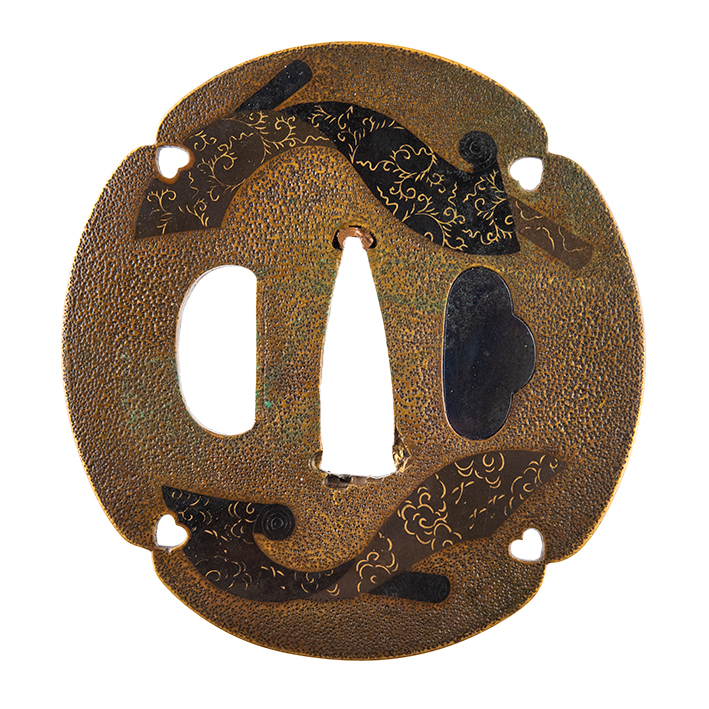
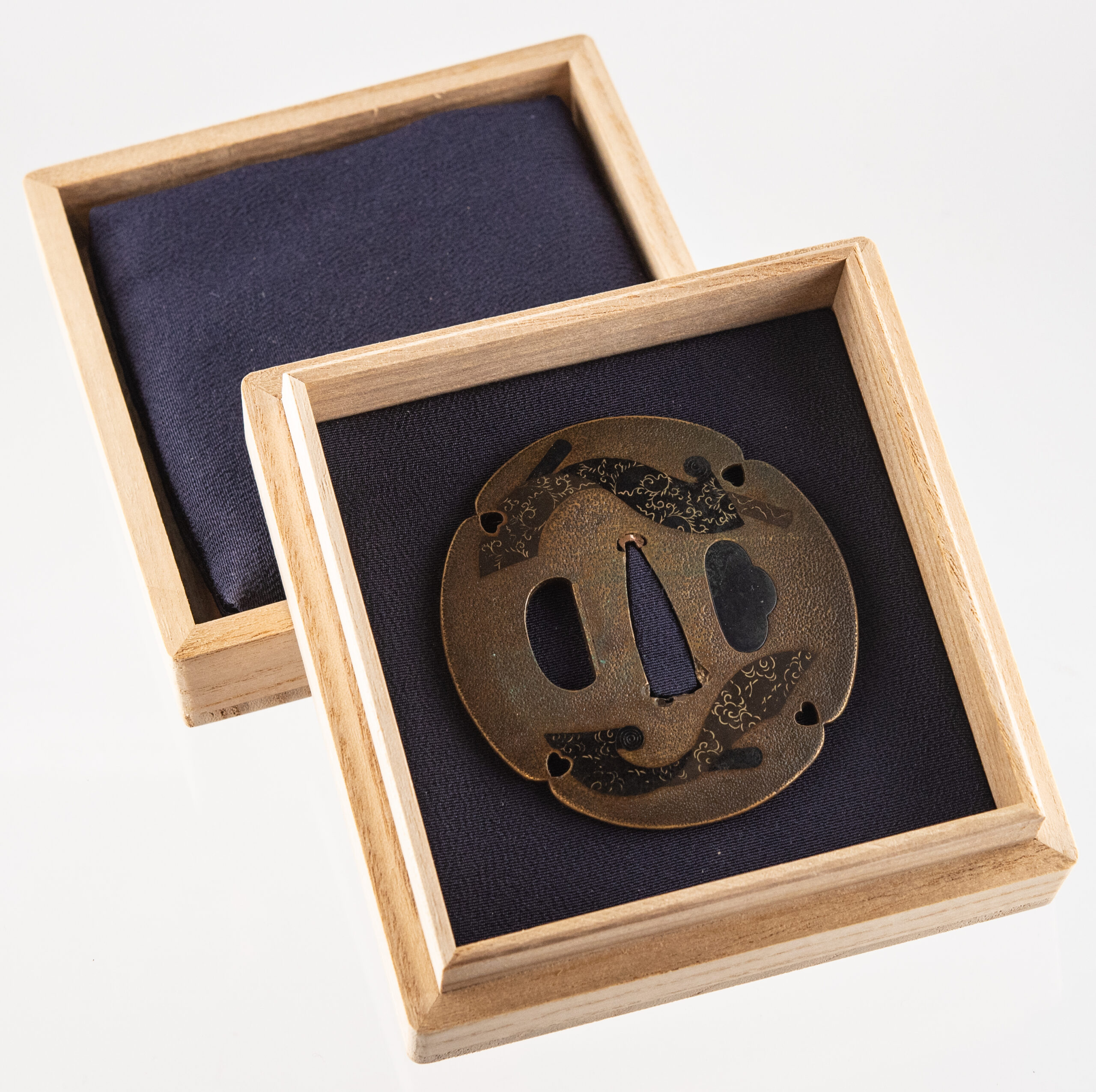
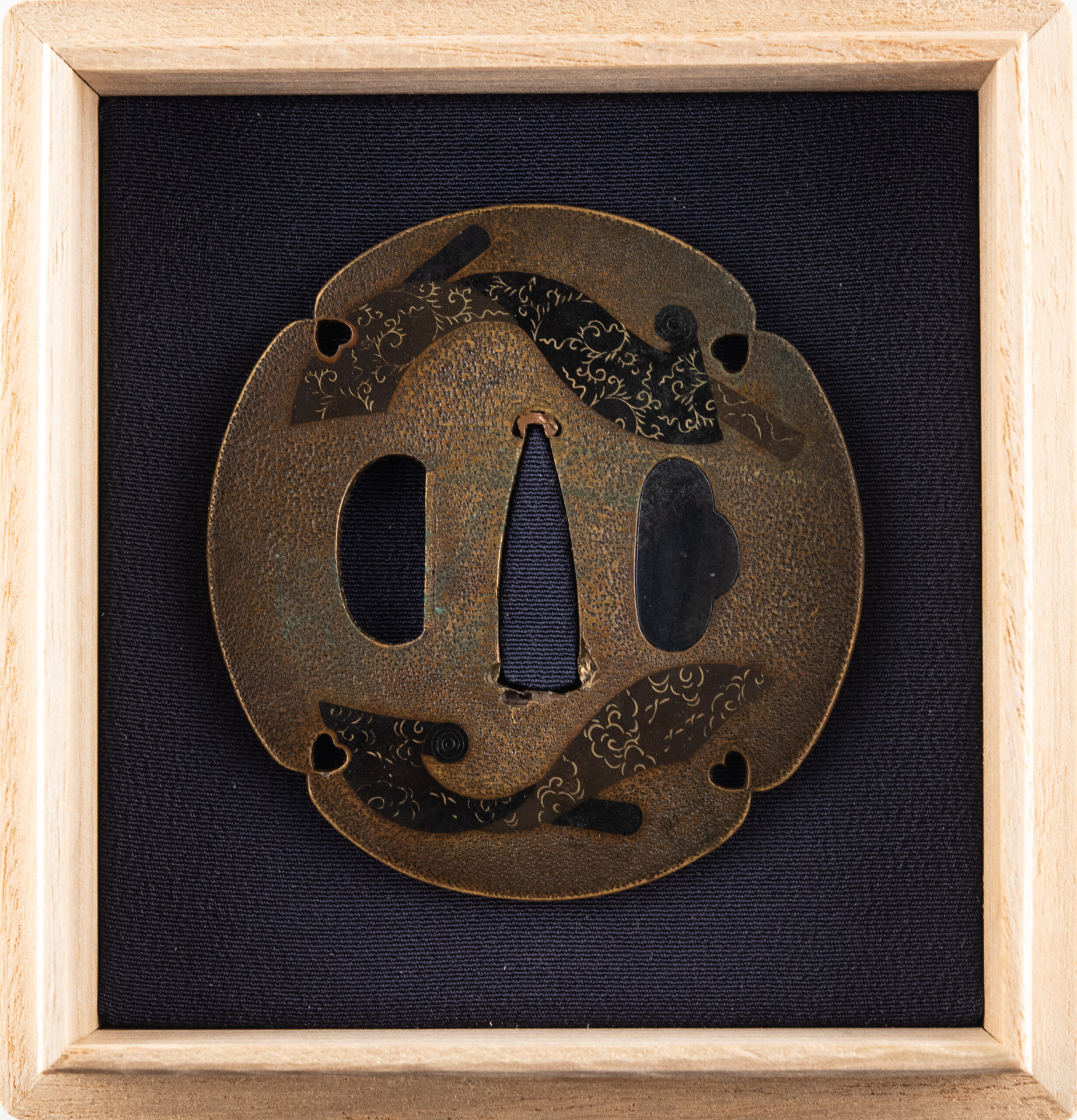
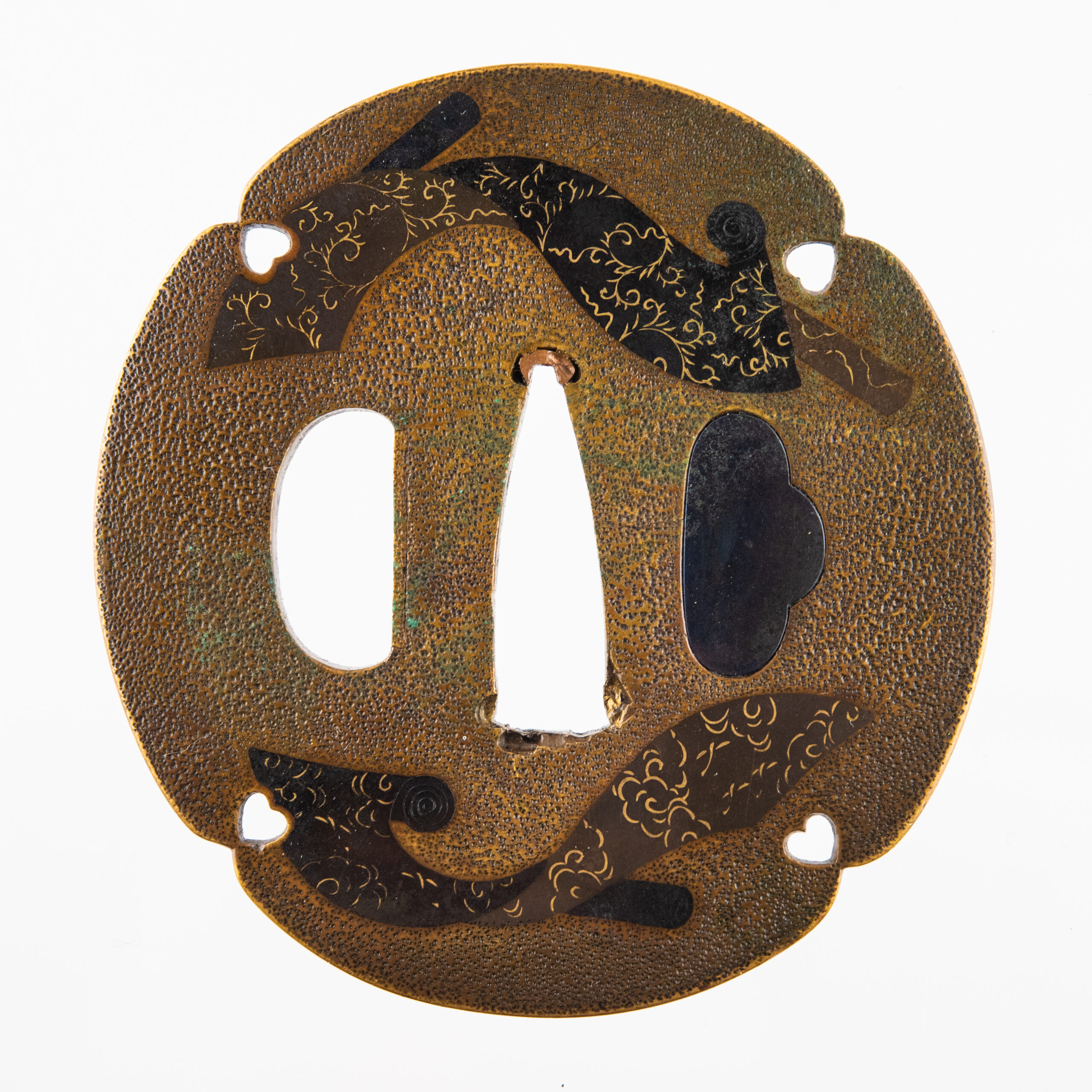
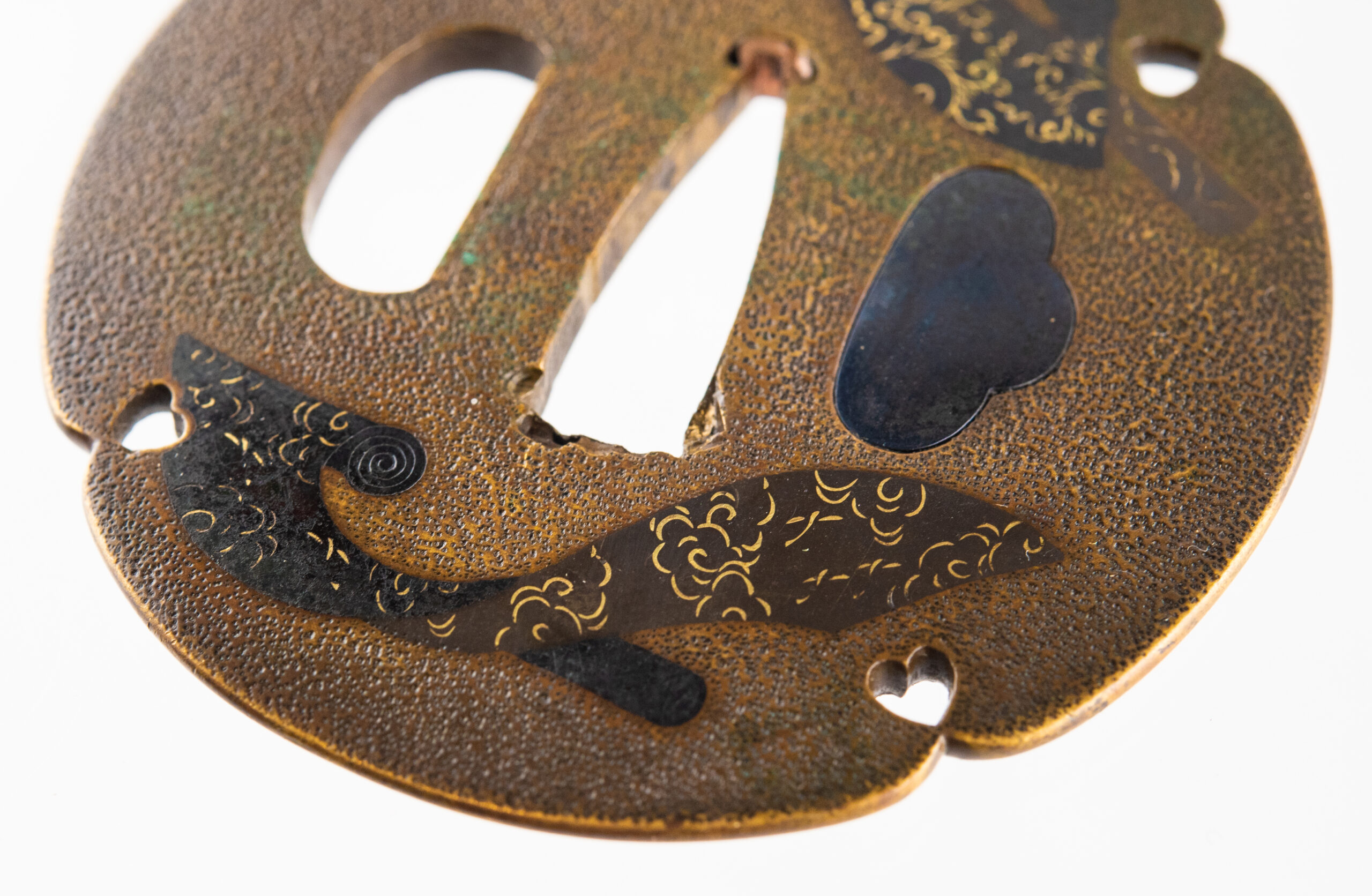
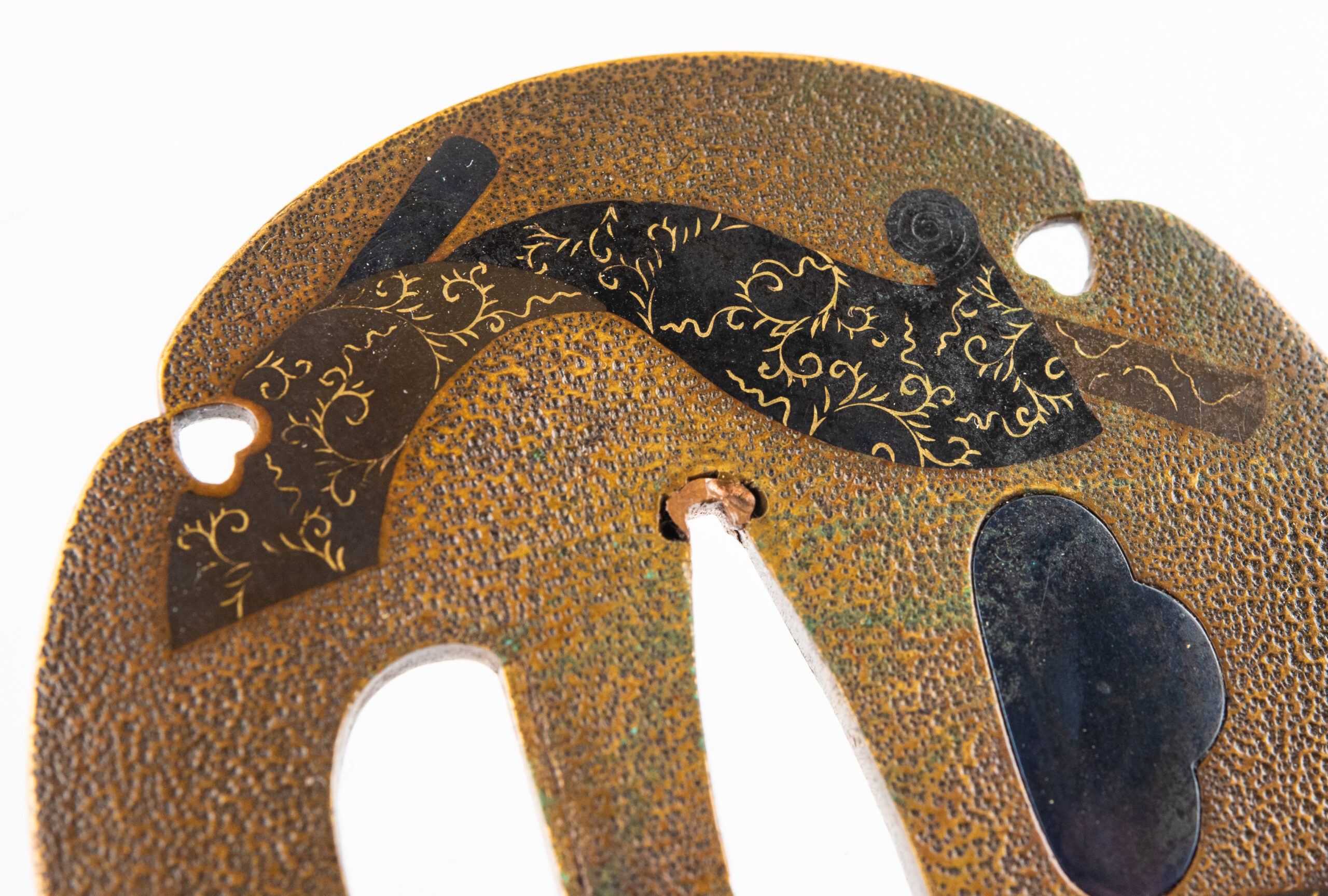
This unusual Tsuba probably dates from the middle Edo period and can most plausibly be associated with the Umetada tradition. Certain aspects of its workmanship also resemble Kaga Zogan, however, so an attribution to an unusual Kaga work cannot be entirely excluded. Workmanship and Design The plate is made of sentoku and has developed a deep dark greenish-brown patina. Its outline appears almost circular at first glance, but it is essentially mokogata. Small indentations at the upper left, upper right, lower right and lower left articulate the four lobes. Small inome-like forms accent these recesses and give the outline a character reminiscent of older Tachi Tsuba. Dense tsuchime covers the entire sentoku surface. The numerous small rounded hammer marks create a subtly rough texture and give the plate a lively, hand-worked appearance. The cross-section has a lens-like profile. It measures 4 mm at the seppa-dai and gradually thins toward the rim, where it measures approximately 1.8 mm. Both sides show rolled textiles, possibly rolls of patterned silk or brocade. The visible front faces of the rolls are rendered in shakudo, while their reverse sides are sentoku. This restrained change of alloy creates a subtle color contrast against the dark patinated ground. Extremely fine gold decoration forms the patterns on the textiles. The gold appears within very shallow engraved or recessed lines. The appearance reflects a gilding process in which gold applied by keshikomi zogan remained in the recessed design after the surrounding surface was finished. Attribution The sentoku plate, tsuchime surface, alloy contrasts and treatment of the gold decoration point most strongly toward the Umetada tradition of the middle Edo period. At the same time, the materials and decorative approach show notable similarities to Kaga Zogan work. The piece may therefore represent an unusual Kaga Zogan Tsuba, although Umetada remains the more plausible attribution. Details Comes with a custom made Kiri box この珍しい鍔は、おそらく江戸時代中期の作と考えられ、最も妥当な帰属としては埋忠系が挙げられます。ただし、その作風の一部には加賀象嵌との類似点も見られるため、加賀における異色の作である可能性も完全には否定できません。 作風と意匠 地鉄は宣徳で、深みのある暗い緑褐色の美しい古色を呈しています。外形は一見するとほぼ円形に見えますが、基本的には木瓜形です。左上、右上、右下、左下の四か所に小さな窪みを設けることで、木瓜形の四つの張り出しを表しています。さらに、これらの窪みには小さな猪目風の形が添えられており、古式の太刀鍔を思わせる趣のある輪郭となっています。 宣徳地の全面には密に槌目が施されています。無数の小さな丸みを帯びた槌跡が、わずかに粗い質感を生み出し、地に生き生きとした手仕事ならではの表情を与えています。 断面はレンズ状を呈しています。切羽台では厚さ4 mmあり、耳に向かって徐々に薄くなり、耳際では約1.8 mmとなっています。 表裏には、巻かれた織物が表されています。文様を施した絹織物、あるいは錦の反物を表現したものと思われます。巻物の表側として見える部分には赤銅が用いられ、裏側には宣徳が用いられています。この控えめな異金属の使い分けによって、暗く古色を帯びた地に繊細な色彩の対比が生まれています。 織物の文様は、極めて精緻な金の装飾によって表されています。金は、ごく浅く彫られた、あるいは窪ませた線の中に施されています。その外観から、消込象嵌によって施された金が、周囲の表面を仕上げた後も窪んだ文様部分に残るという技法が用いられたものと考えられます。 帰属 宣徳地、槌目を施した表面、異金属による色彩の対比、そして金の装飾技法などを総合すると、江戸時代中期の埋忠系の作と見るのが最も妥当と思われます。一方で、素材の選択や装飾表現には加賀象嵌の作例と共通する特徴も認められます。そのため、本作が加賀象嵌の異色作である可能性も考えられますが、現時点では埋忠系への帰属がより有力と考えられます。
取扱店 Tsuba Info

この品の現在有効な鑑定書は確認できませんでした。審査に出されたことがあるか、出せるかを刀剣商にお尋ねください。 — Hoshi

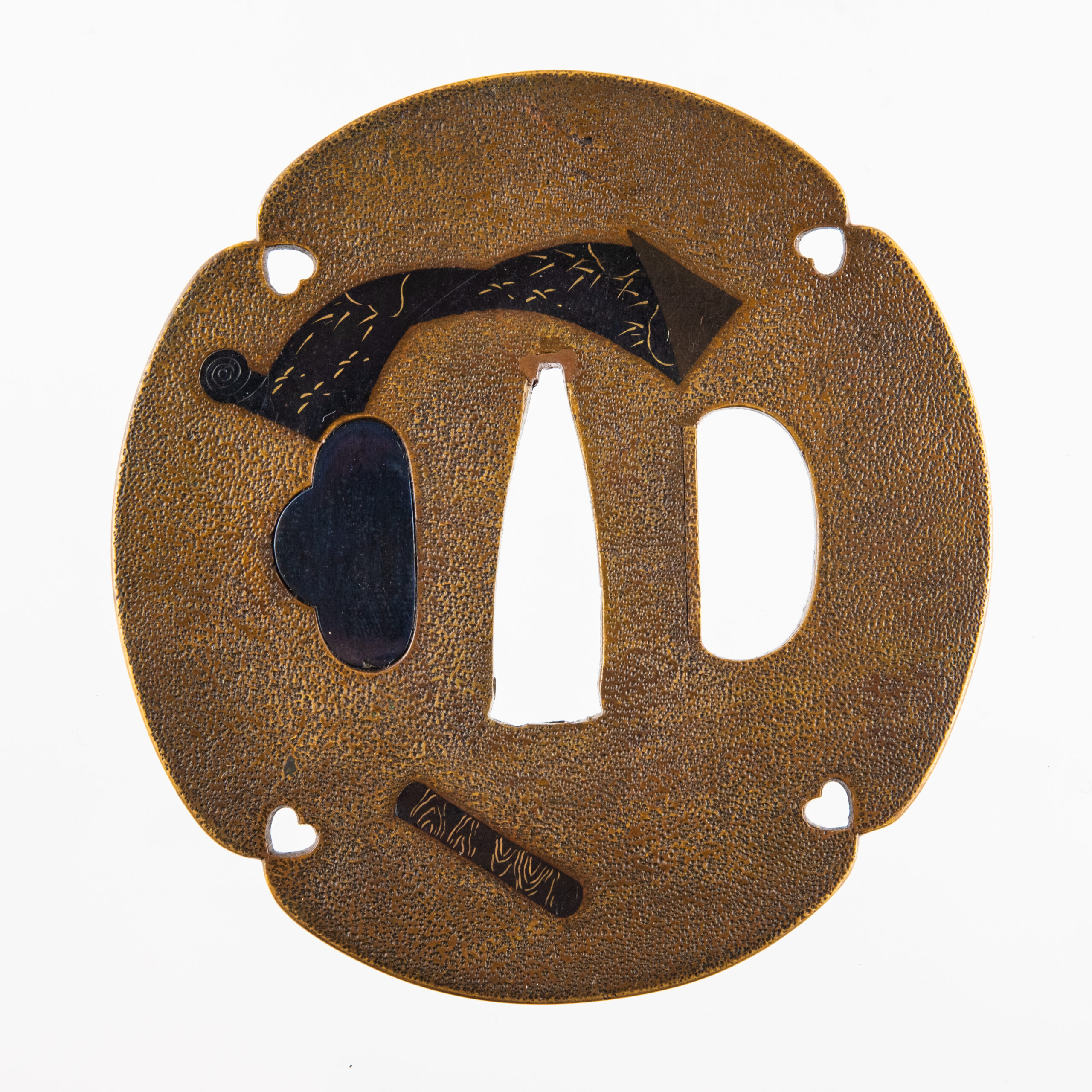
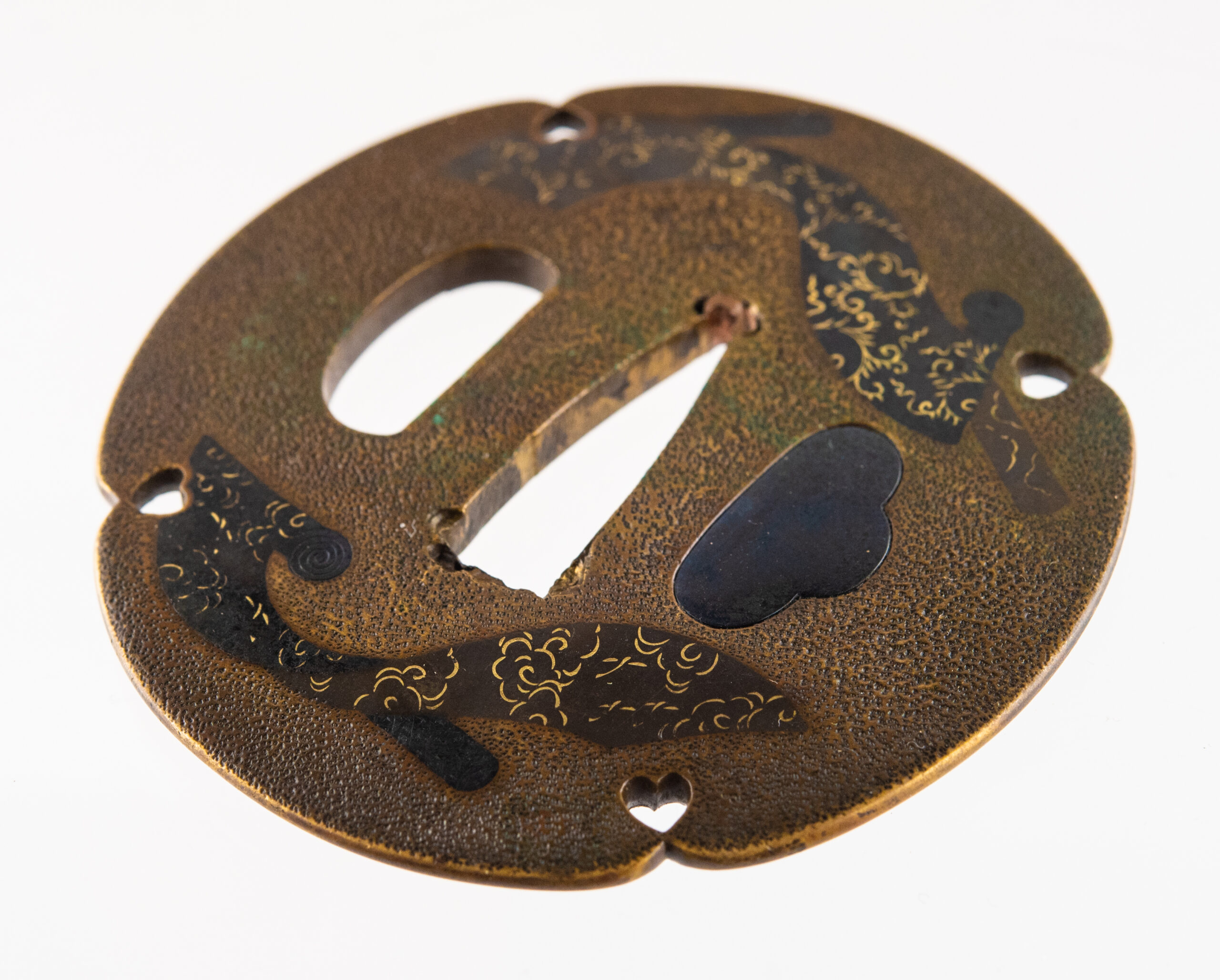
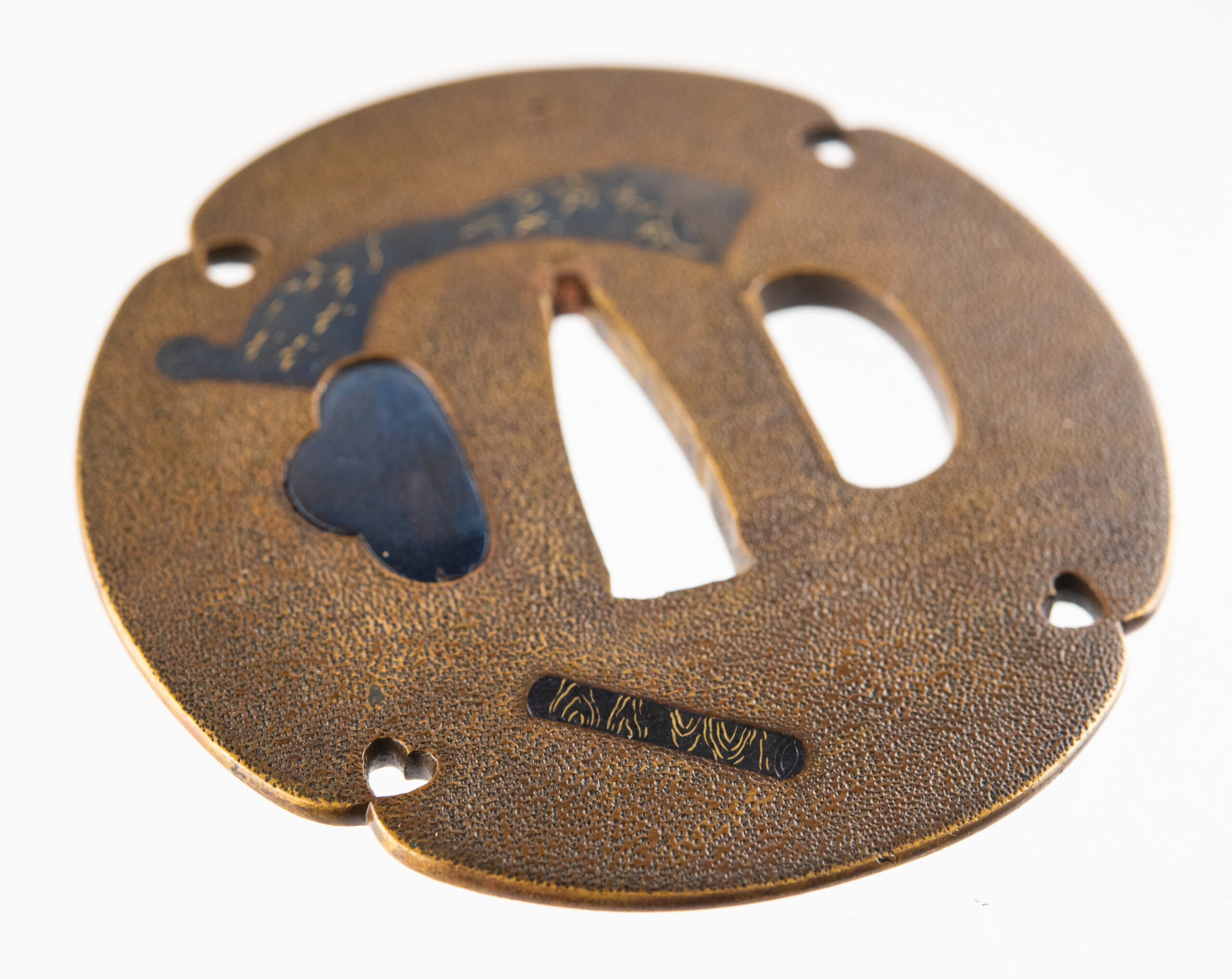
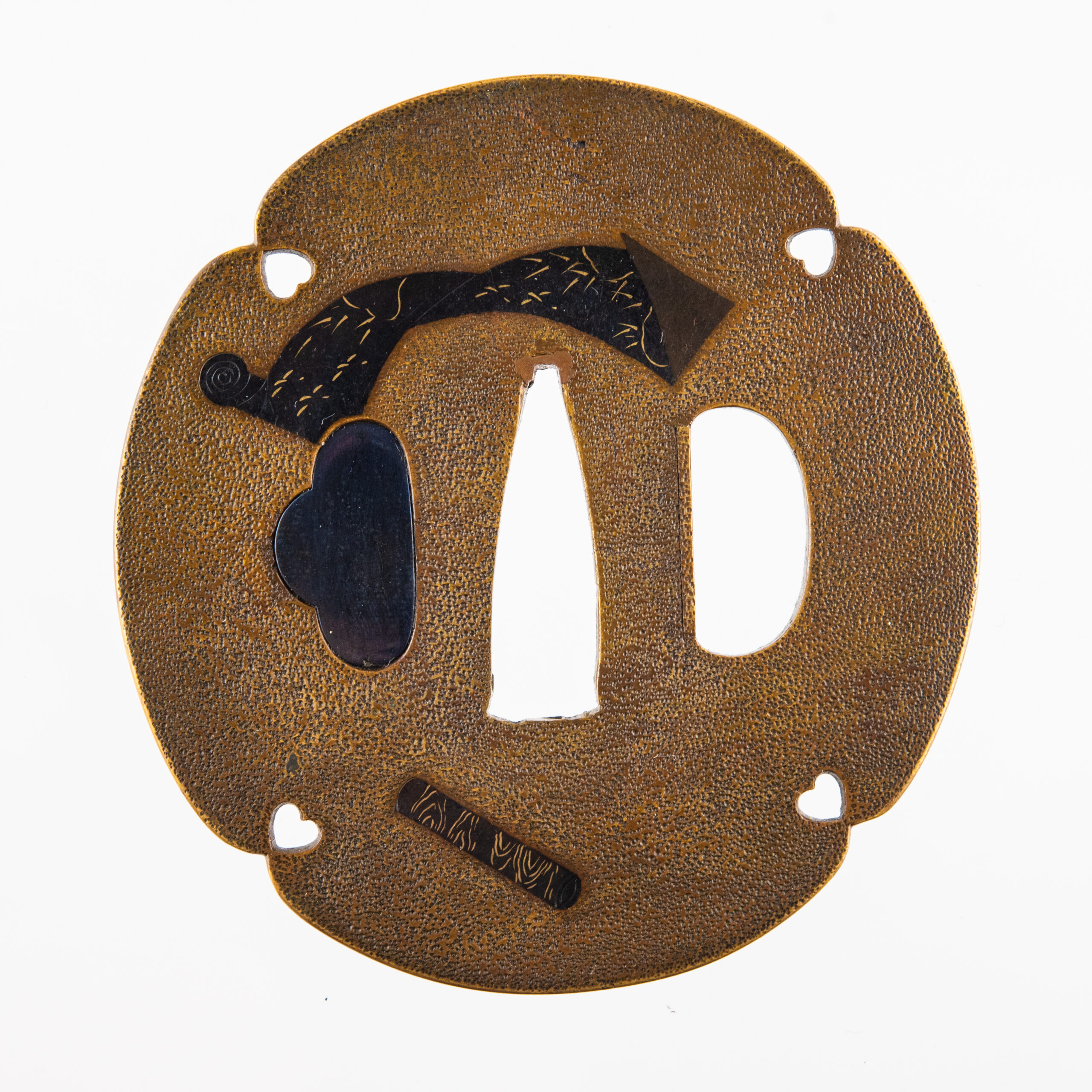
販売店の記載のまま
新刀 · 京都
現在45点販売中
埋忠派は桃山時代を代表する金工集団であり、刀装具制作において後藤家と並び称される名流である。その鐔制作の技術は他の追随を許さず、古来より「埋忠鐔」の名を以て絶賛されている。特に埋忠彦次郎を中心とする本流は、吉川広家指料の「碇切り」に代表される苔鑢の妙技で知られ、金無垢地に施された鑢目の高尚な品格は筆舌に尽くせないほどである。桃山期における溌剌とした芸術精神を反映し、鐔の世界に新生面を拓いた。 作風の特徴として、金無垢、素銅、真鍮など多様な地金を用い、絶妙な肉取りの平地に締まった肉置きを見せる。斜めに掛けられた鑢や角耳の鑢仕立ては埋忠の真髄であり、切羽台外周に施された微妙な角度の配慮は、拵や刀装具を熟知した技術者ならではの工夫である。意匠は桜花透、胡蝶透、葡萄文、菊唐草文など図案化された文様を陰透や平象嵌で表し、明寿が創始した赤銅・銀・金の平象嵌研出しの技法は極めて効果的である。家紋を散らした刻印打込や七宝象嵌など装飾性に富み、絵画的で雅な雰囲気が満ちている。 江戸時代に入ると京都金工界において後藤、平田、正阿弥と各派が互いに影響し合い、埋忠派もその作風に変化を見せている。埋忠寿斉の銘がある慶長十年正月の縁頭は、金無垢地に家紋散図を施した豪華な仕立てであり、上層武家の需要に応えた作例として知られる。金無垢の鐔は度々の激動期に鋳潰されたため桃山期以前の作品は極めて少なく、現存する作例は資料的にも貴重である。埋忠二字銘の作品も江戸前期に見られ、明寿に近い出来を示すものもある。 詳しく見る →
刀剣商の出品ページで鑑定書を確認できませんでした。日本刀および刀装具は通常、日刀保(または日本刀剣保存会)の鑑定を受けます。鑑定書がない場合、極めは刀剣商の見解にとどまり、第三者による確認は行われていません。ご購入前に刀剣商へ鑑定書の有無をお問い合わせのうえ、慎重にご判断ください。
All sales are final and no refund will be issued. Individual refund conditions may be offered on request. For items with third-party certificates (e.g. NBTHK), a return is offered if the certificate is proven falsified and claimed within one year after shipment.
¥120,000