1853年のペリー来航は徳川の泰平をほどき、二世紀ぶりに実用刀の大量需要を生んだ。四谷正宗と呼ばれた清麿はその前夜に世を去り、宗次や行秀が最後の好況を担った。
 NihontoWatchNihontoWatch
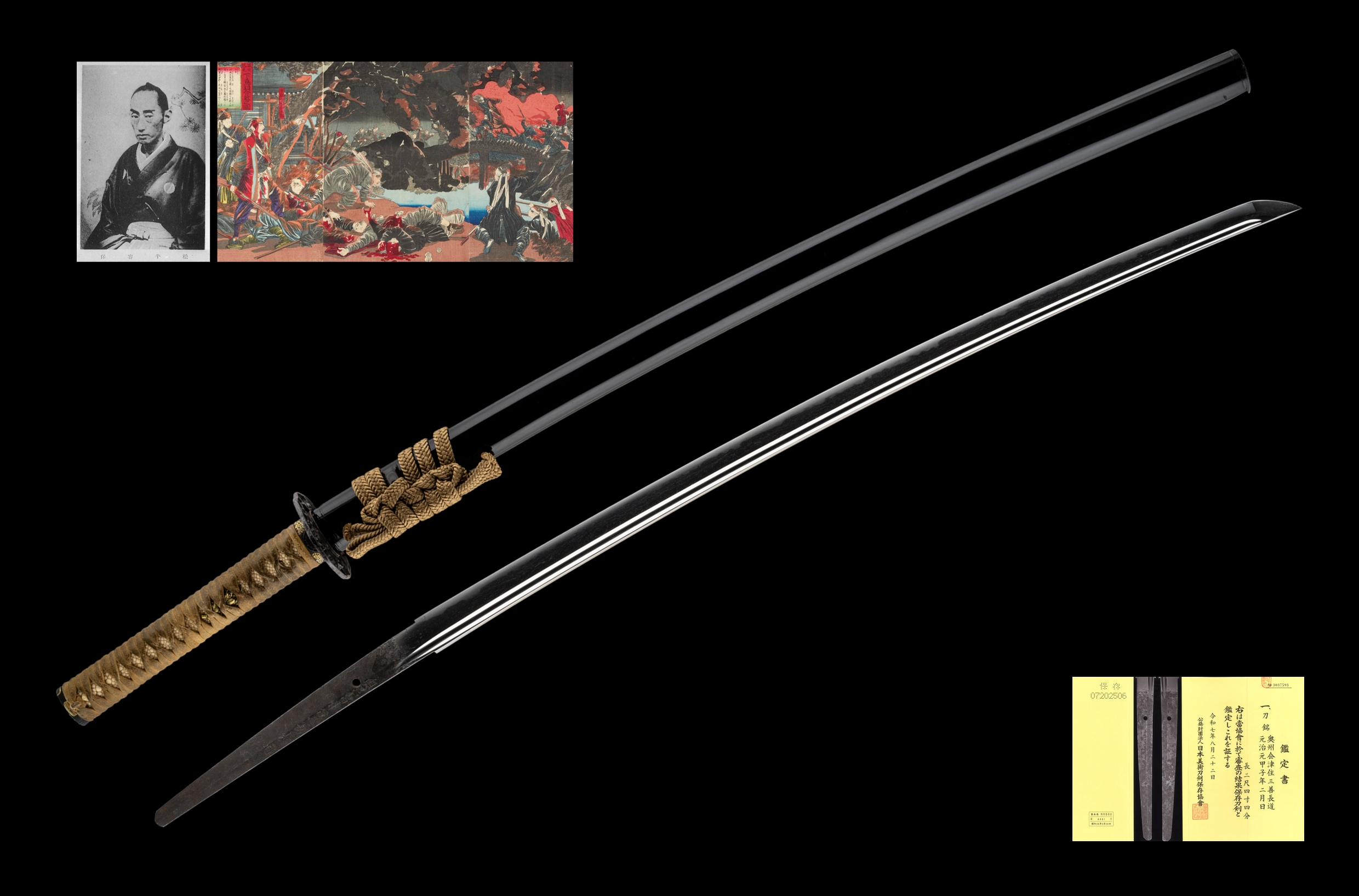
This long, very curvy katana is by the eighth-generation Miyoshi Nagamichi, a member of a prestigious lineage of swordsmiths who served the Aizu clan from the early Edo period through the Meiji era. The first-generation Nagamichi was the son of Miyoshi Masanaga, studied under the great Ôsaka Shintô master Tsuda Sukehiro, and mastered the art of cutting under the renowned sword-tester Yamano Kanjûrô Hisahide. His blades were so sharp that he was praised as the “Kotetsu of Aizu” and the “Masamune of Aizu”, earning the highest rank of saijô-ôwazamono. Inheriting that lineage, Hachidai served as official smith to the Matsudaira family of the Aizu domain and rose to the title Aizu Katana-kaji Tôryô, Head of the Aizu Swordsmiths, a testament to the trust he commanded. The nakago carries a date inscription from the first year of the Genji era (February 1864), placing the blade at the edge of one world, just four years before the Boshin War brought the Aizu domain to its tragic end and closed the Edo period. The Ikedaya Incident and the Kinmon Rebellion had turned Kyôto into a battleground, and Hachidai worked under the patronage of Matsudaira Katamori, the Kyôto Shugoshoku, whose men patrolled its streets. This was a commission for real use. The jigane shows nagare-hada mixed with itame and chikei, and the gunome-midare hamon is enlivened by tobiyaki, kinsuji and sunagashi, a wealth of activity along the whole blade. A practical work with a unique provenance, it was used for decades by a former police officer who is now a retired iaidô master, and the scratches and natural patina record that honest service. The Edo period koshirae carries the same weight of genuine training. The tsuka, wrapped over white samegawa, is worn smooth in the grip area, and gold dragon menuki glow through the wrap. A polished iron tsuba with sukashi openwork shows a plum tree in early spring, buds forming before the blossoms open, an emblem of resilience and quiet optimism. The shakudô nanako fuchi-kashira depicts a waterwheel beside flowers and grass at a water’s edge, a tranquil scene of the Japanese countryside. The original torokusho card, registered in Kumamoto prefecture in Shôwa 26 (1951), the very first year swords were formally registered in Japan, suggests this blade was once held by a prominent family. A mount that balances quiet beauty with honest, rugged practicality.
販売店の記載のまま
幕末 最後の需要
1853年のペリー来航は徳川の泰平をほどき、二世紀ぶりに実用刀の大量需要を生んだ。四谷正宗と呼ばれた清麿はその前夜に世を去り、宗次や行秀が最後の好況を担った。
銘が正しい、または無銘でも年代・国・系統を確実に指摘できる、保存に値する真正の作と鑑定されたものです。
日本美術刀剣保存協会(NBTHK)は、1948年に設立され、文化庁の監督を受ける公益財団法人で、東京・刀剣博物館に本部を置きます。専門の審査員が出品作を直接審査し、美術的・歴史的価値に応じた鑑定書を発行します。NBTHKの鑑定書は、日本刀および刀装具の真正性を示す最も広く認知された基準です。
NBTHK公式サイトAll swords come with a three-day inspection period beginning from the date of delivery. If not satisfied, the sword may be returned within this period for a full refund of the purchase price. Outside of this period, all sales are final. Swords purchased on a layaway payment plan are not eligible for the three-day inspection period.