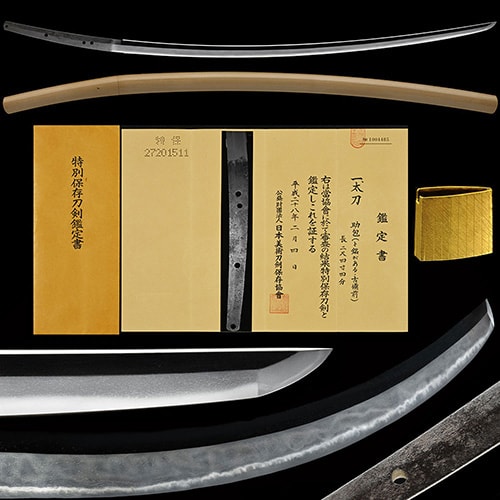
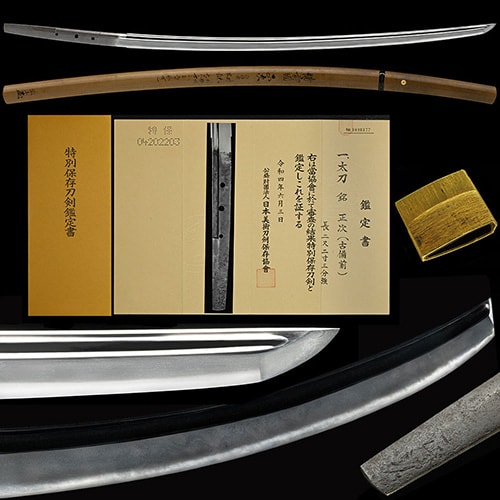
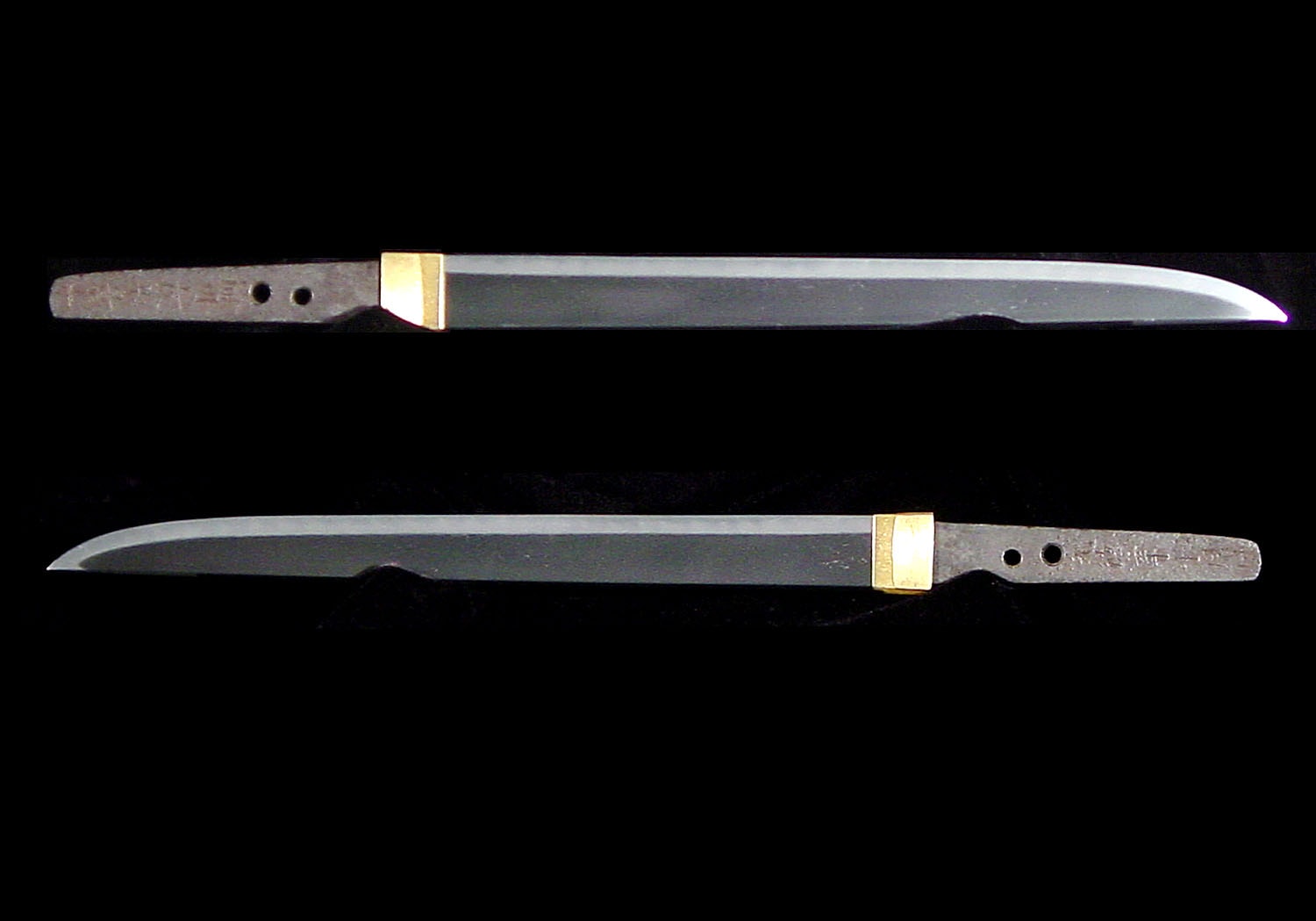
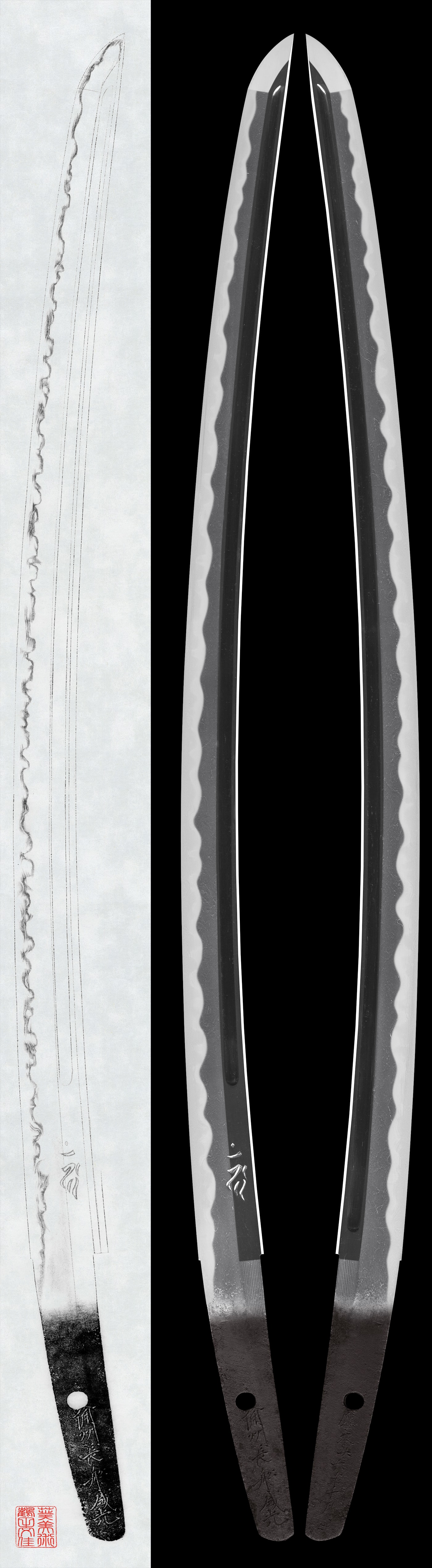
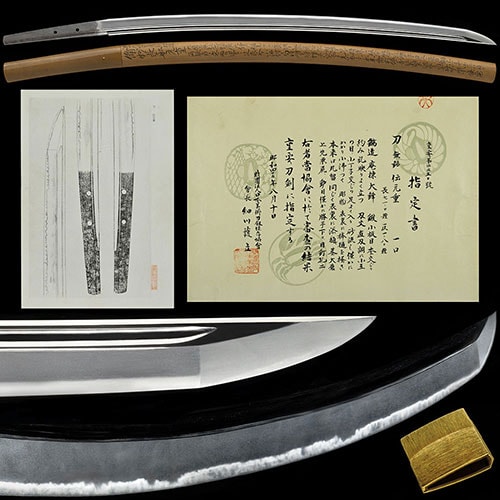
Tsuneto (恒遠) is recorded in the meikan as "Bizen, two characters, before Genryaku," placing him in the late Heian to early Kamakura period as a smith of the Ko-Bizen group. Judging from the workmanship of his jihada and hamon, as well as the manner of cutting his signature, it is readily accepted that he belongs to the Masatsune (正恒) lineage. His works are exceedingly rare, and signed tachi by Tsuneto represent some of the scarcest survivals among Ko-Bizen smiths. One example is held in the Imperial Collection (Gyobutsu), further attesting to the esteem in which his craft has been held.
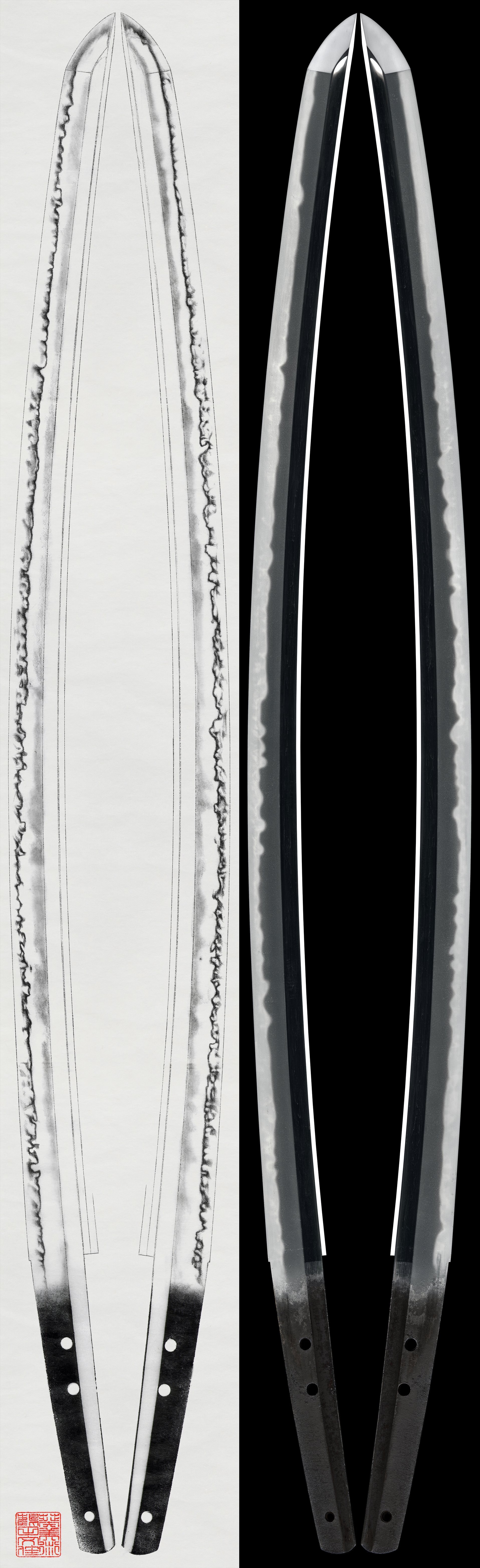
Tsuneto's forging exhibits itame with a slight nagare tendency and somewhat standing grain, upon which ji-nie adheres and nie-utsuri stands out prominently. His hamon typically mixes ko-choji and ko-midare with frequent ashi and yo, accompanied by sunagashi and well-attached ko-nie. The nioiguchi often shows an urumi tendency characteristic of early Bizen work. In certain examples, however, the yakihaba broadens considerably and incorporates large choji-midare, resulting in a flamboyant and brilliant workmanship that departs from the narrow, restrained temperament more commonly associated with Ko-Bizen smiths. The boshi is typically rendered in komaru or with a slight notare tendency, and when horimono are present they take the form of bo-hi carved kaki-nagashi.
Tsuneto's surviving oeuvre constitutes valuable reference material for understanding the stylistic range within the Ko-Bizen tradition during the transitional period from late Heian into early Kamakura. His works convey an archaic and elegant flavor while demonstrating that the Masatsune lineage was capable of both restrained suguha-based compositions and more vigorous choji interpretations. That both ji and ha in his extant blades remain kenzen speaks to the soundness of his forging, and each signed example holds exceptionally high documentary value given the rarity of his authenticated corpus.