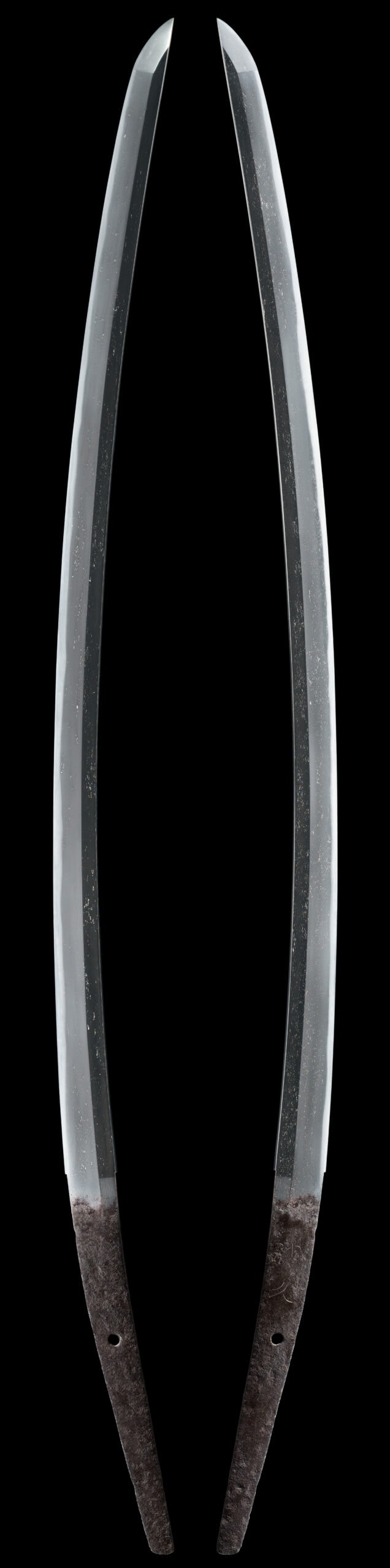
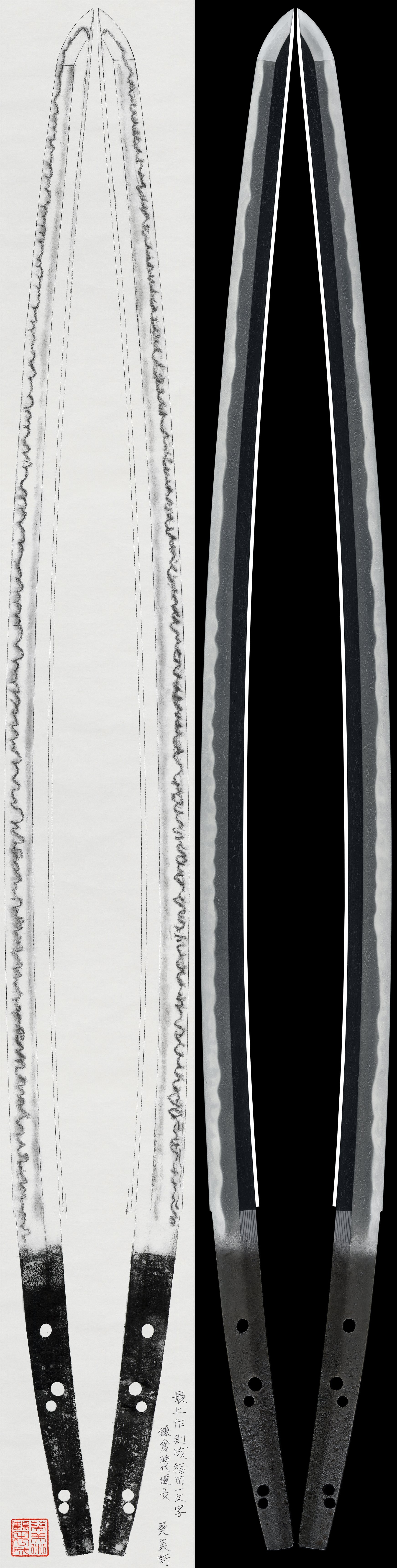
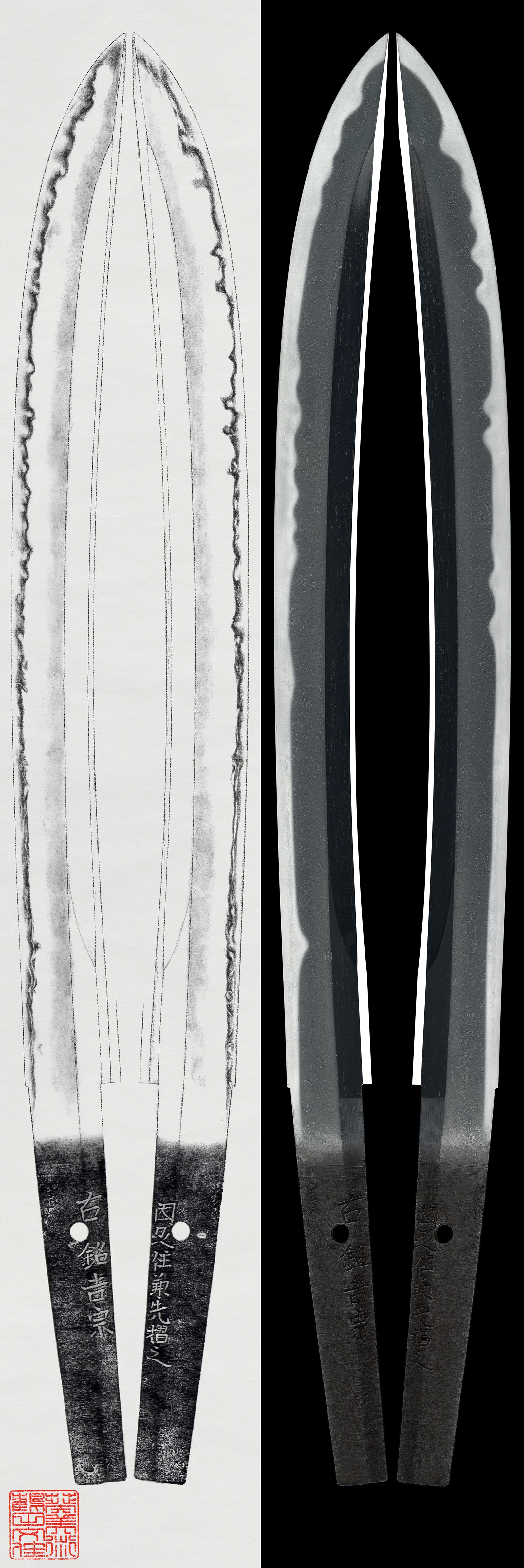
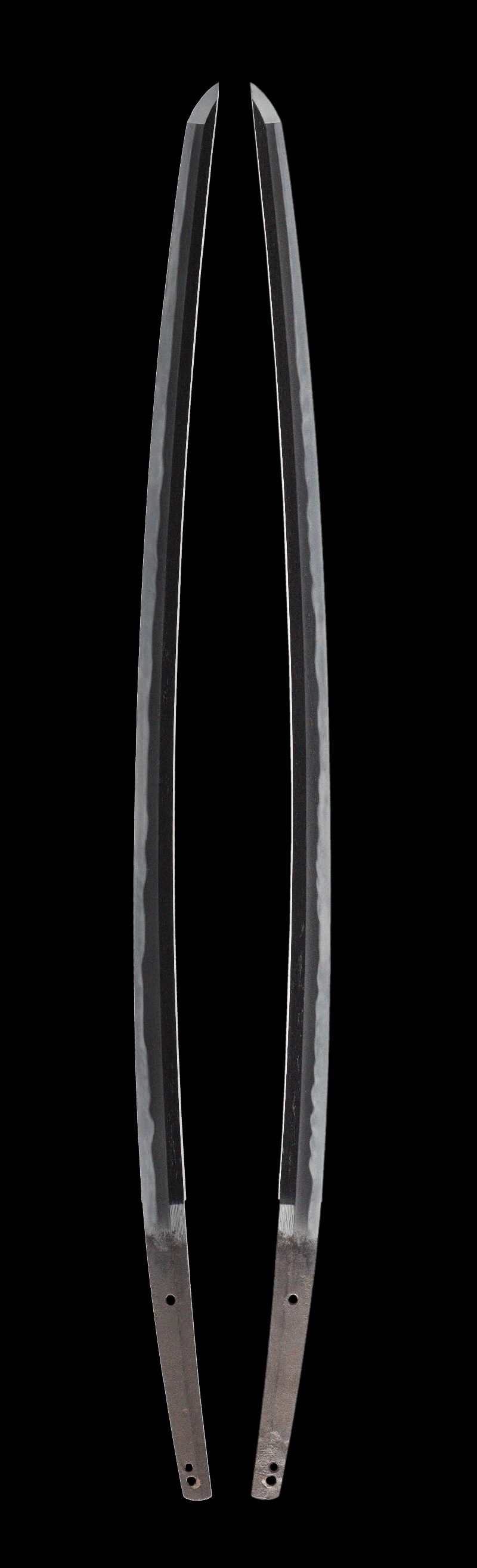
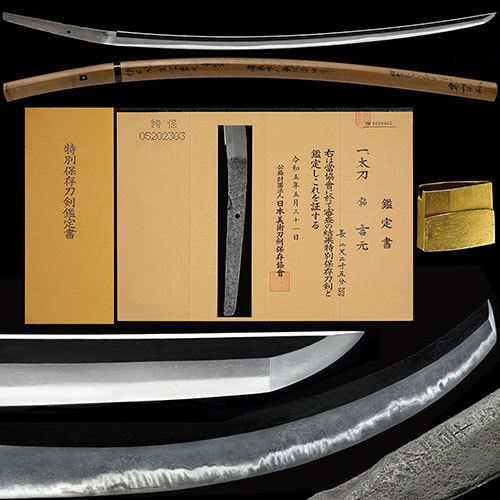
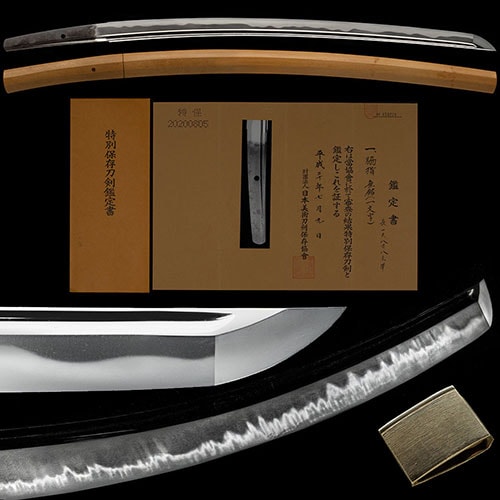
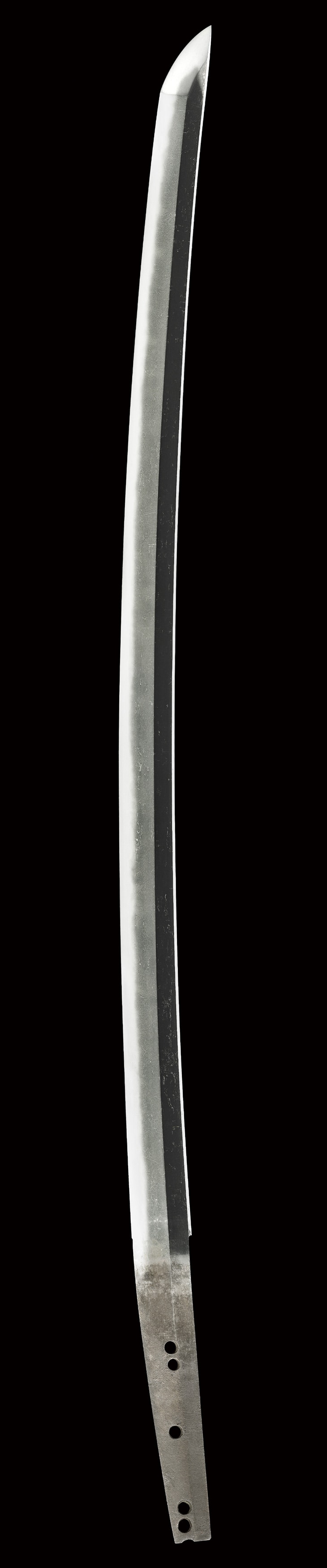
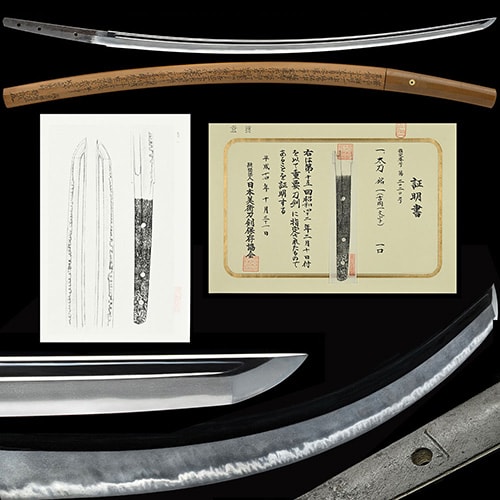
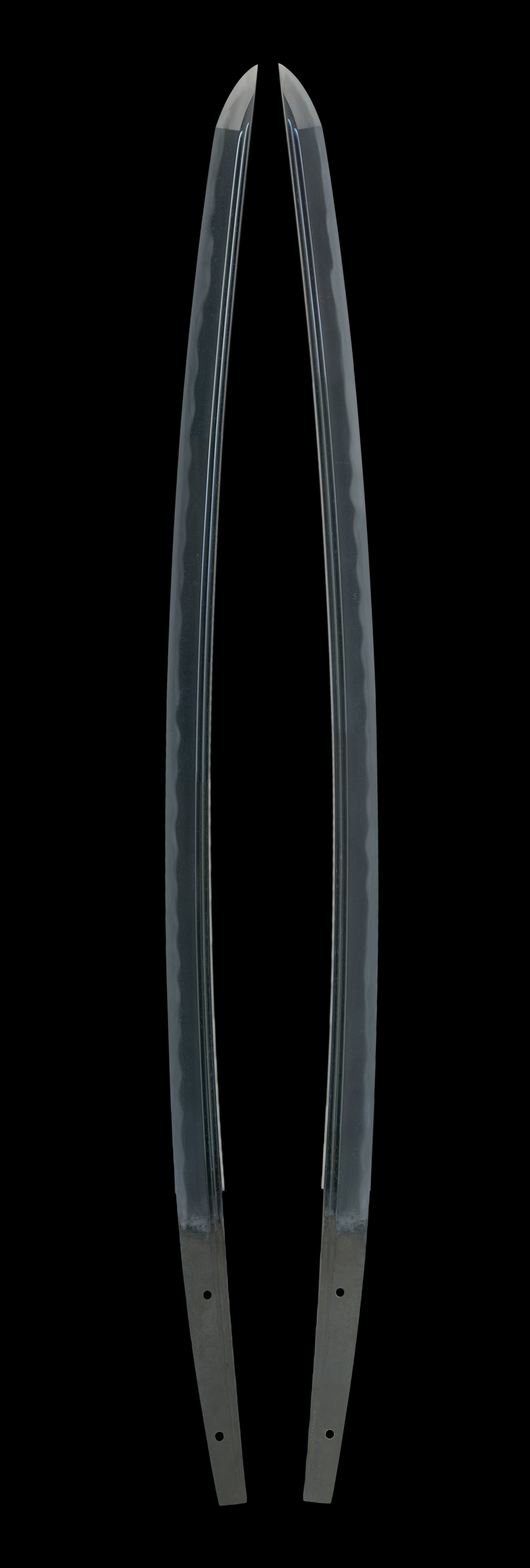
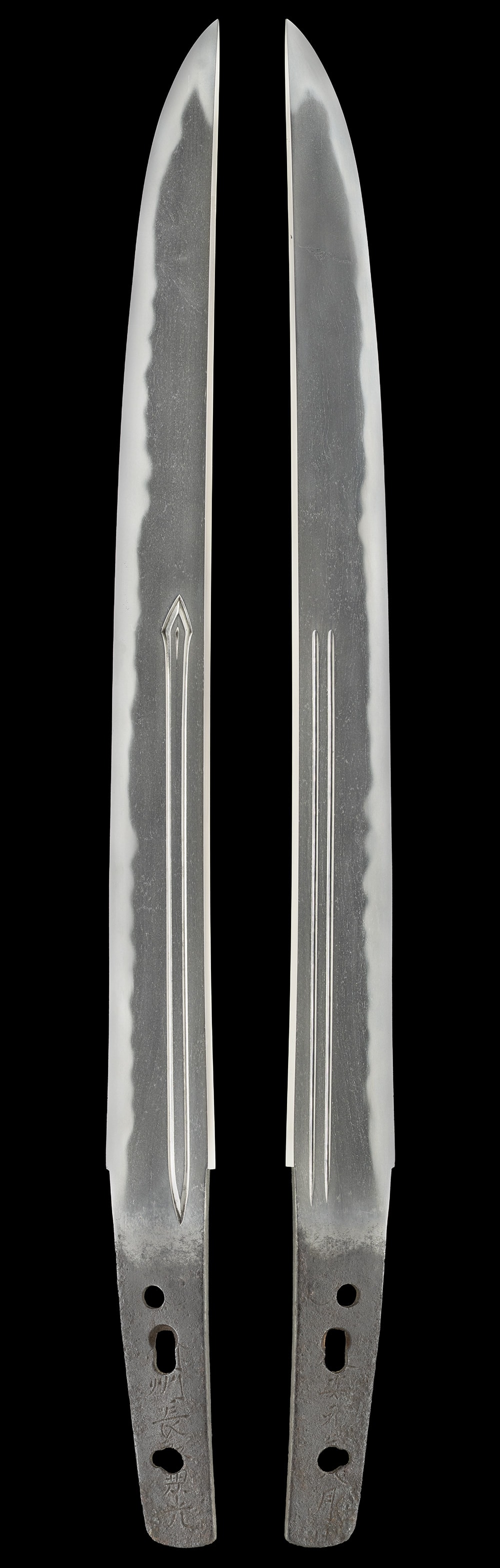
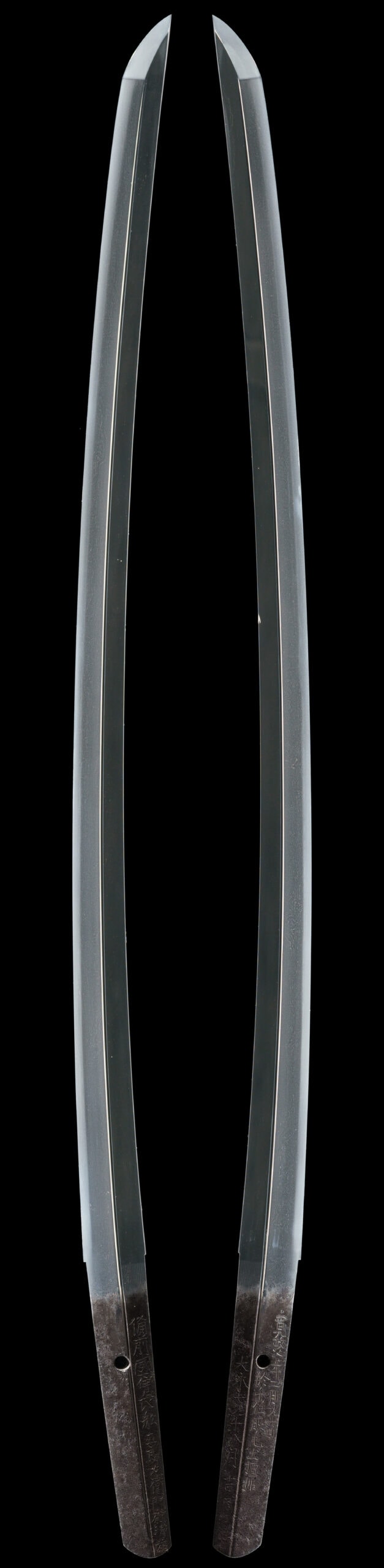
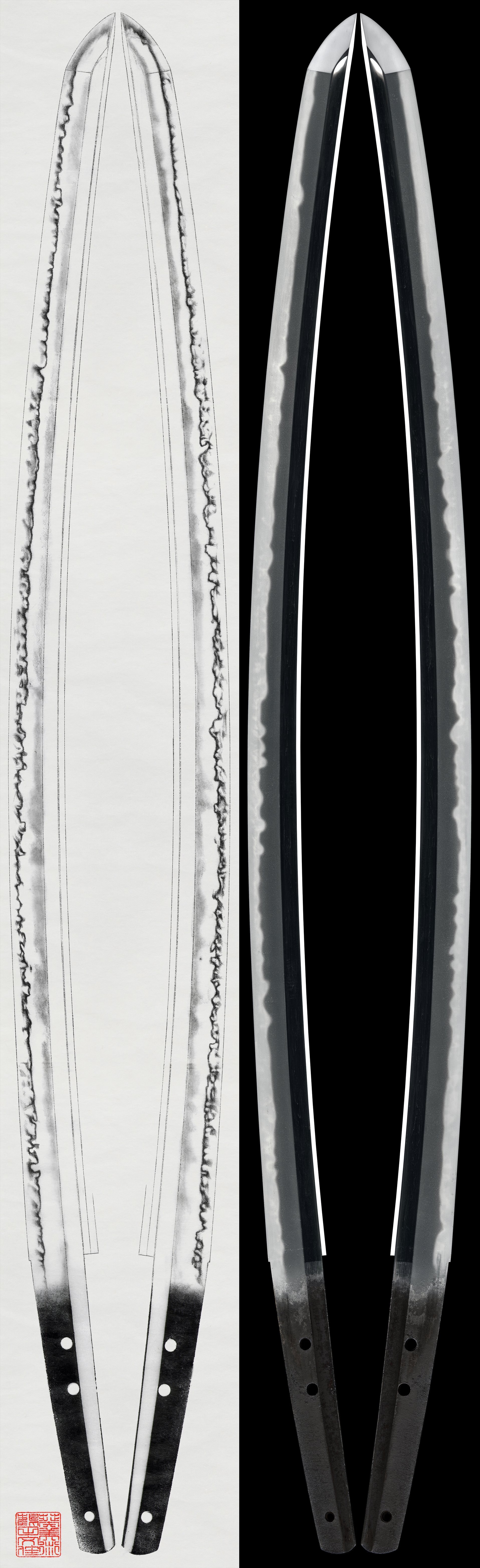
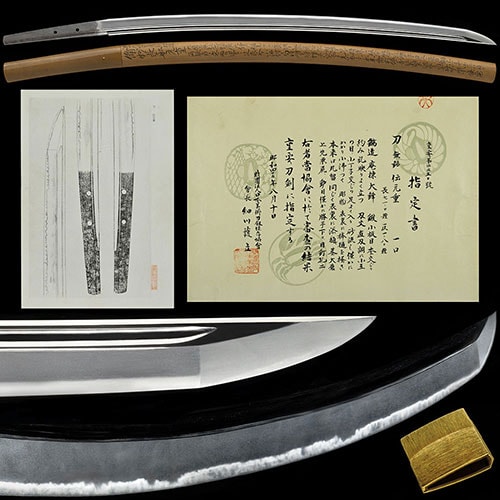
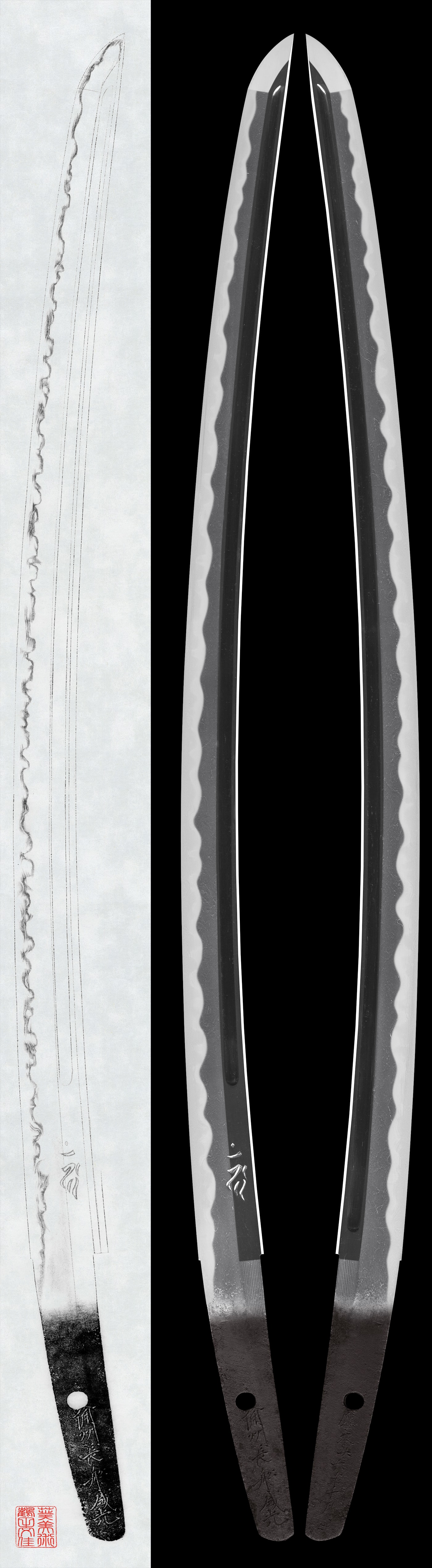
Sukemura is a smith of the group, active from the late period through the early period, whose works belong to the earliest stratum of the forging tradition. The smiths and their works from this era are collectively distinguished from later production by their classically archaic character, termed koko by the . Within this lineage, Sukemura is consistently described as a smith of whom comparatively few extant signed works survive, lending each authenticated example a heightened documentary significance. Sword signature references record the name Sukemura in both the group and the school; however, the distinguishes his work on the basis of its characteristic tempering, firmly placing him within the affiliation.
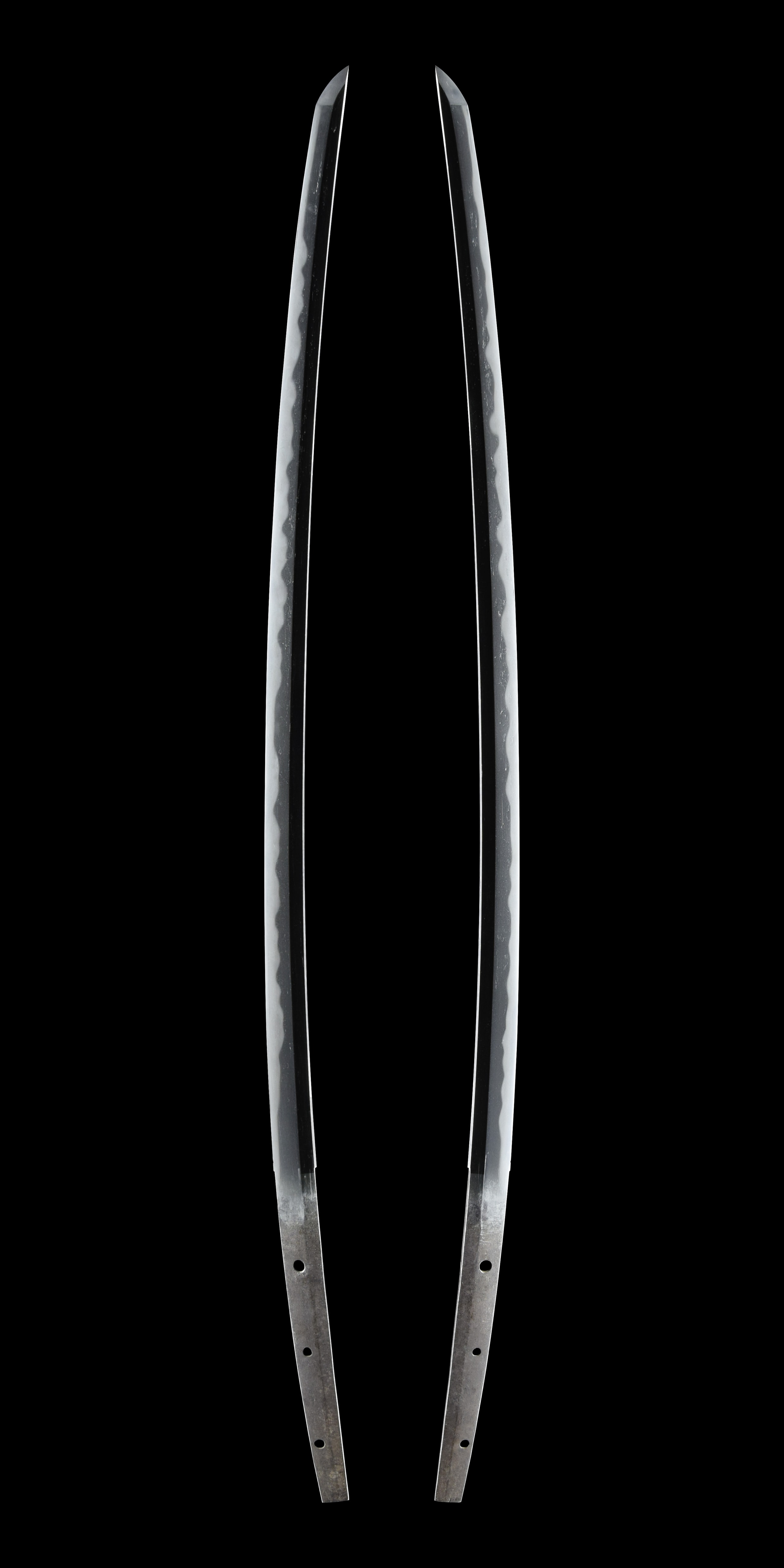
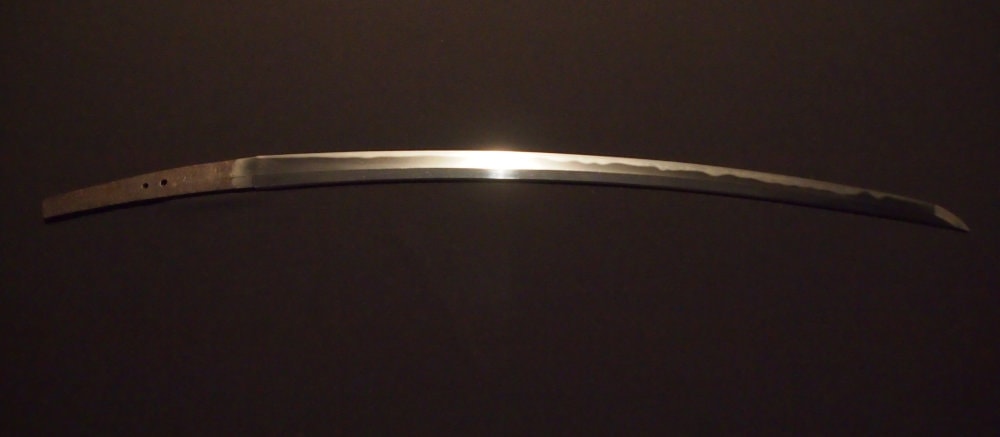
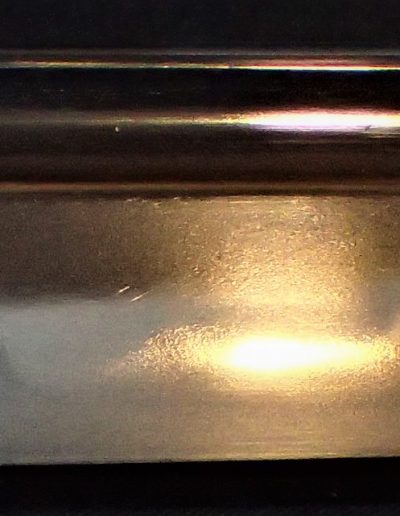
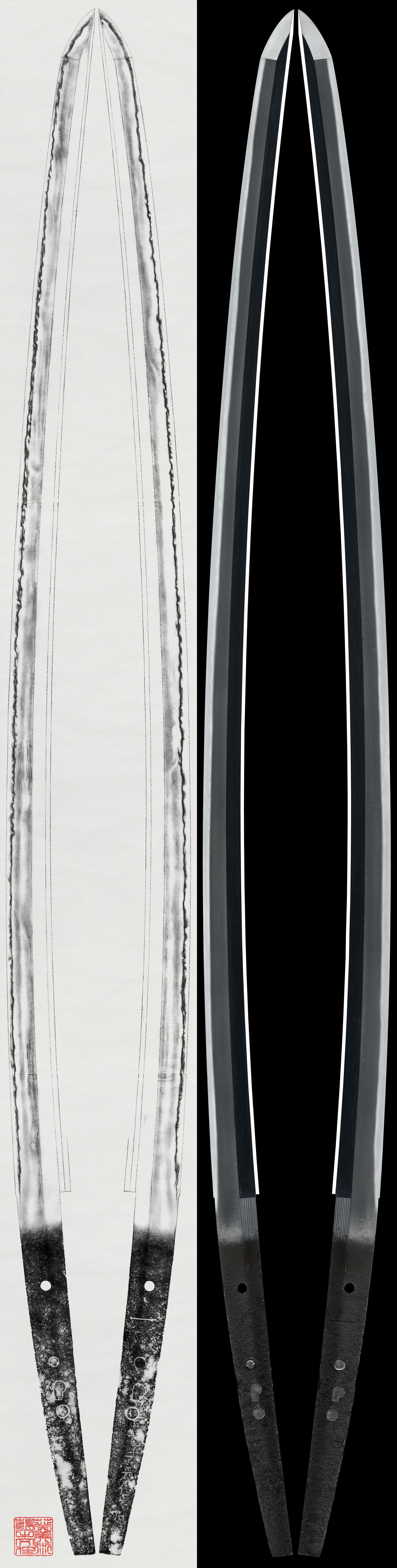
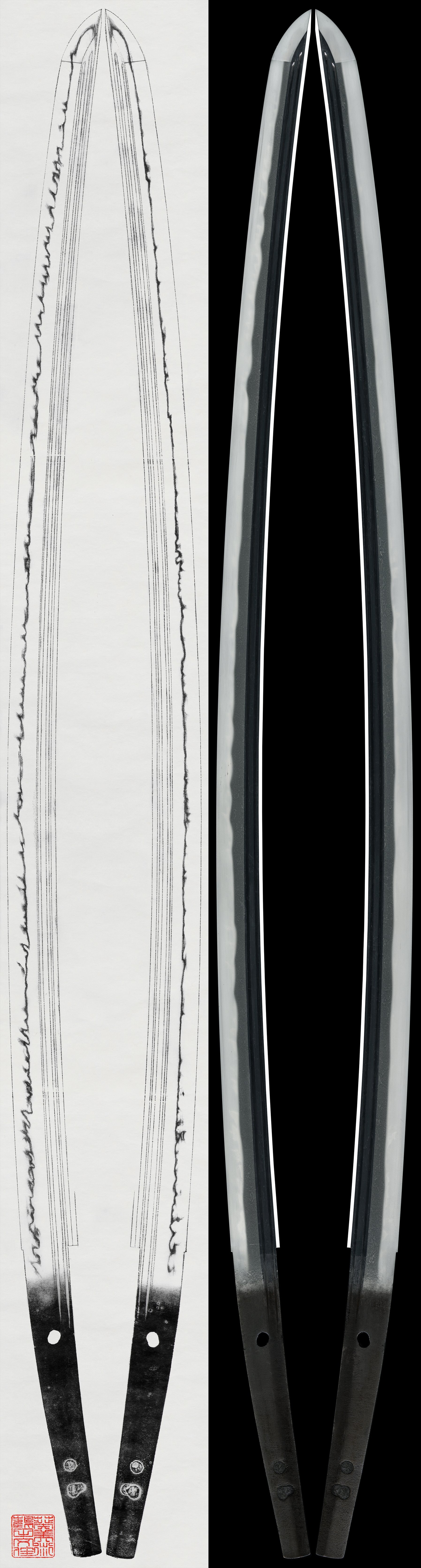
Sukemura's style is defined by a temper grounded in with small irregularity — a mixed with , , and at times small -like elements. The identifies as particularly characteristic the presence of running along the , the appearance of -otoshi near the , and an overall subdued and austere quality described as shibumi. His is typically with and , and a clearly defined — whether or the distinctive particular to this period — stands out vividly in the . In certain works, form in concert with the , creating additional points of scenic interest, while and appear within the temper. The , though it does not show striking rises and falls, is rich in variation and internal activity.
The 's evaluative language positions Sukemura as a smith of high technical accomplishment whose works, though rare, reward close study. His unshortened are praised as imposing and dignified, and even heavily shortened examples are recognized for preserving the essential characteristics of his manner. The board repeatedly emphasizes the excellence of both and , noting that his works allow one to discern the high level of skill of this smith. Each surviving piece is valued not only for its superior workmanship but equally as precious reference material for understanding the earliest flowering of the school.